• MISSION STATEMENT
  • TERMS
  • PRIVACY
The Occidental Observer
  • HOME
  • BLOG
  • SUBSCRIBE TOQ
  • CONTACT USPlease send all letters to the editor, manuscripts, promotional materials, and subscription questions to Editors@TheOccidentalObserver.net.
  • DONATE
  • Click to open the search input field Click to open the search input field Search
  • Menu Menu

Western Culture

Fall Issue of The Occidental Quarterly, and a Call for Papers

November 8, 2011/70 Comments/in Anti-Semitism, Featured Articles, Libertarianism, Western Culture/by Kevin MacDonald

The Fall issue of The Occidental Quarterly is now available. Yearly subscriptions (4 issues) can be obtained at the here—hardcopy: $60.00, including postage to U.S. addresses; digital: $30.00. See page for all purchase options.

TOO readers will be very interested in this material. In addition to the intellectual stimulation provided by these articles (and a handsome addition to your coffee table if you purchase the hardcopy subscription), subscribing to TOQ is an excellent way to support media that presents intellectually honest perspectives on Western peoples and culture that simply cannot be published in the mainstream intellectual media in today’s climate of political correctness. We complain endlessly about the stranglehold on the media enjoyed by our enemies. Subscribing to TOQ helps change all that.

The Spring issue of TOQ will be on the topic of “Collapse: Perspectives on the Impending Crisis of the West.” Thinkers on the political right have been prophesying the collapse of our current political and economic system for some time, but recent developments seem to make this a realistic possibility. The problems leading to the this crisis are daunting and quite possibly insoluble without a political cataclysm: Exploding and unsustainable debt at all levels of government;  unsustainable levels of immigration requiring unrealistic levels of economic growth to prevent chronic high unemployment; endless costly foreign wars fought to appease the Israel Lobby; a corrupt financial elite that has plunged the Western world into its worst economic crisis since the Great Depression; rapidly expanding populations of low-IQ non-Whites requiring unsustainably high levels of social support; large numbers of Whites inchoately angry about their impending displacement and the fact that they are being forced to adjust to a multicultural world they do not desire. This multicultural world promises increased racial conflict (a characteristic of all multicultural societies) and diminished political and cultural influence for Whites. Read more
https://www.theoccidentalobserver.net/wp-content/uploads/2018/06/TOO-Full-Logo-660x156-1.png 0 0 Kevin MacDonald https://www.theoccidentalobserver.net/wp-content/uploads/2018/06/TOO-Full-Logo-660x156-1.png Kevin MacDonald2011-11-08 00:33:192015-04-26 17:35:36Fall Issue of The Occidental Quarterly, and a Call for Papers

Celebrating America’s European Heritage: Leif Erikson

October 14, 2011/26 Comments/in Featured Articles, Western Culture/by E.R.E. Knutsson

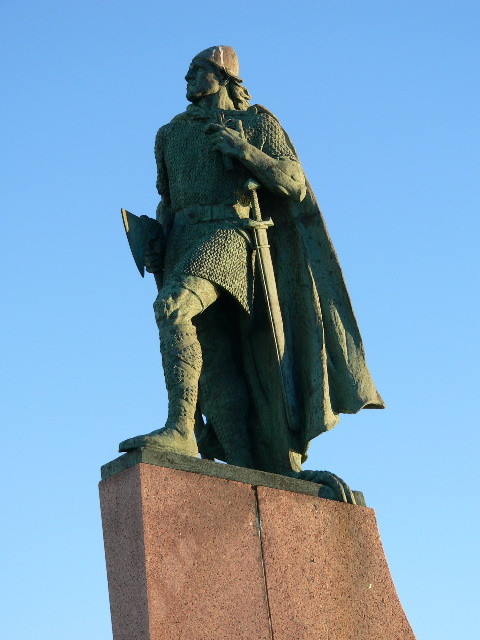
Leif Erikson statue at the Hallgrimskirkja, the largest church in Iceland

Joseph F. Healey has pointed out that White ethnic identities are evolving into new shapes and forms, merging the various “hyphenated” ethnic identities into a single, generalized “European American” identity based on race and a common history of immigration and assimilation.  In light of the fact that virtually every minority group has generated a protest movement — Black Power, Red Power, Chicanismo — proclaiming a recommitment to its own heritage and to the authenticity of its own culture, European Americans should seize the opportunity to reclaim their ethnic and historical heritage on festive October occasions such as Columbus Day (Oct. 12) and Leif Erikson Day (Oct. 9).

Regarding Columbus, it should be remembered that the great Admiral of the Seas may well have had knowledge of earlier Norse explorations.  In 1477 he sailed to Ireland and Iceland with the merchant marine, as attested by his son, Fernando, who quotes a note of his father stating:

I sailed in the year 1477, in the month of February, a hundred leagues beyond the island of Tile [Thule, i.e. Iceland], whose northern part is in latitude 73 degrees north and not 63 degrees as some would have it … the season when I was there the sea was not frozen.

In all societies with a history of migrations, the question “who came first?” becomes important.  Centuries before Columbus and the Waldseemüller world map known as “America’s baptismal certificate,” the Icelandic sagas answered this question by immortalizing the names and deeds of the pioneers for posterity. Read more

https://www.theoccidentalobserver.net/wp-content/uploads/2018/06/TOO-Full-Logo-660x156-1.png 0 0 E.R.E. Knutsson https://www.theoccidentalobserver.net/wp-content/uploads/2018/06/TOO-Full-Logo-660x156-1.png E.R.E. Knutsson2011-10-14 17:33:262011-10-15 10:52:04Celebrating America’s European Heritage: Leif Erikson

Art in the Third Reich: 1933-1945 (Part 2)

October 9, 2011/33 Comments/in Featured Articles, The Arts and Culture, Western Culture/by Tom Sunic, Ph.D.

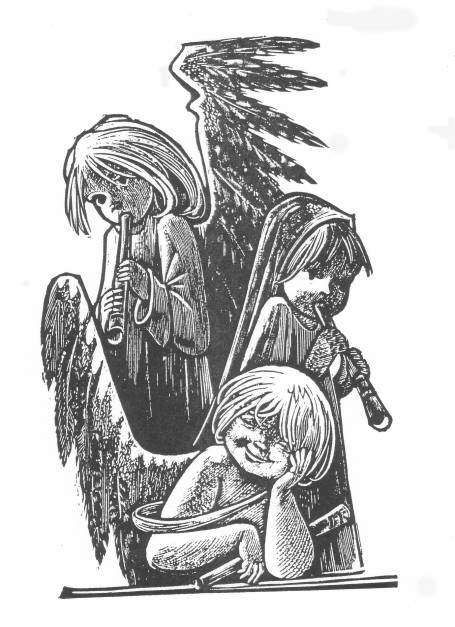
Ernst von Dombrowski (1896-1985), “Little Angels” (woodcut)

The Archaic Postmodernity

National Socialist dignitaries devoted much energy to the promotion of German sculptors and helped them considerably in the execution of massive bas-reliefs and in the erection of monumental stone and bronze sculptures. The political goal was obvious: to bring German art as close as possible to the German people, so that any German citizen, regardless social standing, could identify himself or herself with a specific artistic achievement.

It should, therefore, come as no surprise that the German art of that time witnessed a return to classicism. Models from Antiquity and the Renaissance were to some extent adapted to the needs of National Socialist Germany. Numerous German sculptors benefited from the logistic and financial support of the political elite. Their sculptures resembled, either by form, or by composition, the works of Praxiteles or Phidias of ancient Greece, or the sculptures of Michelangelo during the Renaissance. Read more

https://www.theoccidentalobserver.net/wp-content/uploads/2018/06/TOO-Full-Logo-660x156-1.png 0 0 Tom Sunic, Ph.D. https://www.theoccidentalobserver.net/wp-content/uploads/2018/06/TOO-Full-Logo-660x156-1.png Tom Sunic, Ph.D.2011-10-09 16:06:492011-10-09 23:47:16Art in the Third Reich: 1933-1945 (Part 2)

Art in the Third Reich: 1933–1945 (Part 1)

October 8, 2011/12 Comments/in Featured Articles, The Arts and Culture, Western Culture/by Tom Sunic, Ph.D.

Carl Spitzweg (1808–1885), The Butterfly Hunter

This is a slightly edited version of an article was first published in Ecrits de Paris (Nr. 645, July-August 2002, L’Art dans l’IIIème Reich. Translated by the author.)

When writing about or discussing the plastic and figurative arts in Germany during the period from 1933 to 1945, one must inevitably mention the art that highlighted the epoch of National Socialism. During that short and troubled period of time, art was also a reflection of modern European history, and, therefore, it must be examined, or, for that matter, conceptualized, within the larger geopolitical framework of Europe as a whole.

National Socialist culture has always been a sensitive subject, whose controversial nature is more apparent today than ever before in the ongoing media warfare between so-called anticommunists and antifascists. If one accepts the conventional wisdom, widely accepted in all corners of he world, that National Socialism was a form of totalitarianism, one must then also raise the question as to whether there were any authentic cultural successes achieved during the Third Reich at all. Certain parallels can and should be drawn between artistic efforts in the U.S.S.R. and National Socialist Germany, in view of the fact that culture in both systems was dominated by a specific ideology. Does this therefore mean that there were no valuable works of art created in the U.S.S.R. or in National Socalist Germany? What both National Socialism and Communism had in common was the rejection of “art for art’s sake” (l’art pour l’art) and the repudiation of middle-class aestheticism. Instead, both political systems favored a committed and normative approach to art, which was supposed to be a tool for the creation of the “new man.” On the other hand, from the thematic, aesthetic and stylistic point of view, the differences between art in Communism and art in National Socialism were immense. Read more

https://www.theoccidentalobserver.net/wp-content/uploads/2018/06/TOO-Full-Logo-660x156-1.png 0 0 Tom Sunic, Ph.D. https://www.theoccidentalobserver.net/wp-content/uploads/2018/06/TOO-Full-Logo-660x156-1.png Tom Sunic, Ph.D.2011-10-08 12:53:022011-10-09 10:18:28Art in the Third Reich: 1933–1945 (Part 1)

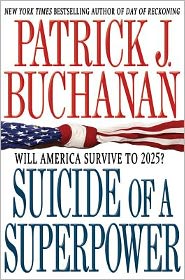
National Suicide: Review of Pat Buchanan’s “Suicide of a Superpower”

October 1, 2011/187 Comments/in Decline of Whites, Featured Articles, Western Culture/by Cooper Sterling

Pat Buchanan, Suicide of a Superpower (New York: Thomas Dunne, 2011, 496pp.).

Pat Buchanan takes the gloves off in his new book.

During a question and answer session after his Bradley Lecture on “the State of White America,” author Charles Murray called on Sam Kazman, general counsel of the Competitive Enterprise Institute. He prefaced his question with this dictum, “there will always be an America, it just may not be in the United States.”

The sentiment captures the sweeping transformation of American society since the mid-1960s — a society that was largely European (in values, population, culture, and folkways) now is on a demographic trajectory to become a majority-minority cesspool by 2050 with the White population declining to minority status.

An apt description of American society isn’t merely the metaphorical “salad bowl” replacing the “melting pot” — the lettuce is a vanishing ingredient!

The quintessential dilemma that seems to be on the minds of more and more Middle Americans is the question Pat Buchanan poses in the preface of his latest book: “What happened to the country we grew up in?” It is a question weighing heavily on the minds of Midwesterners and other citizens as they see their communities rapidly becoming Third World sinkholes.

The question is one that preoccupies Buchanan in Suicide of a Superpower. It is indisputably his boldest and most passionate assessment of our nation’s fate — an America vanishing before our eyes.

As Buchanan notes, the nation of our forefathers will be unrecognizable to future generations of Americans. It is, as he puts it, a country that lost a nation. Read more

https://www.theoccidentalobserver.net/wp-content/uploads/2018/06/TOO-Full-Logo-660x156-1.png 0 0 Cooper Sterling https://www.theoccidentalobserver.net/wp-content/uploads/2018/06/TOO-Full-Logo-660x156-1.png Cooper Sterling2011-10-01 09:29:482011-10-03 10:04:06National Suicide: Review of Pat Buchanan’s “Suicide of a Superpower”

Extreme Sports as a Context of Implicit Whiteness

September 28, 2011/104 Comments/in Featured Articles, Western Culture/by Kevin MacDonald

A reader sent along this video of Jeb Corliss, an extreme athlete, flying through the Alps.

httpv://www.youtube.com/watch?v=TWfph3iNC-k

Here’s extreme surfer Laird Hamilton surfing waves so big that he has to be towed into the path of the wave.

httpv://www.youtube.com/watch?v=pYQQtxb8wv0&feature=related

Corliss and Hamilton are White, and being White seems to be part of a pattern for extreme athletes. The reader also sent a link for Revolt of the White Athlete: Race, Media, and the Emergence of  Extreme Athletes in Amerca (2007), an academic book on the phenomenon which is predictably bogged down with words like ‘interrogate’ (as in “interrogating the racial, gender, and nationalistic aspects of Generation X discourse) and using ‘privilege’ as a verb (as in a complaint about a scholar who [Gasp!] “implicitly privileged the contributions, perspectives and interests of white men over and against all others”).

The author is Kyle Kusz who was rewarded for his efforts by being nominated for the Multicultural Center Diversity Award at the University of Rhode Island where he teaches. Kusz notes that he was inspired to enter the field of cultural aspects of sports by taking a sport sociology class taught by Dr. Stephen Mosher at Ithaca college.

What we have here is a clear case of implicit Whiteness, but of course Kusz takes a typical cultural Marxist attitude towards his subject.

Extreme athletics is where “white everymen perform supra-normal athletic feats in high-risk sporting activities like BASE jumping and sky surfing. Extreme sports are also portrayed as sporting activities which have revived a sense of traditional American masculine values and pursuits: rugged individualism, conquering new frontiers, and achieving individual progress” (p. 63). Predictably, for Kusz, engaging in such sports by Whites is the politics of backlash and resentment that “attempt to deny the racialized privileges of whites while masking (and thus ensuring the reproduction of) asymmetrical relations of power in the present. [They are also an attempt] to reverse the minimal gains made by historically marginalized groups since the 1960s” (p. 69).

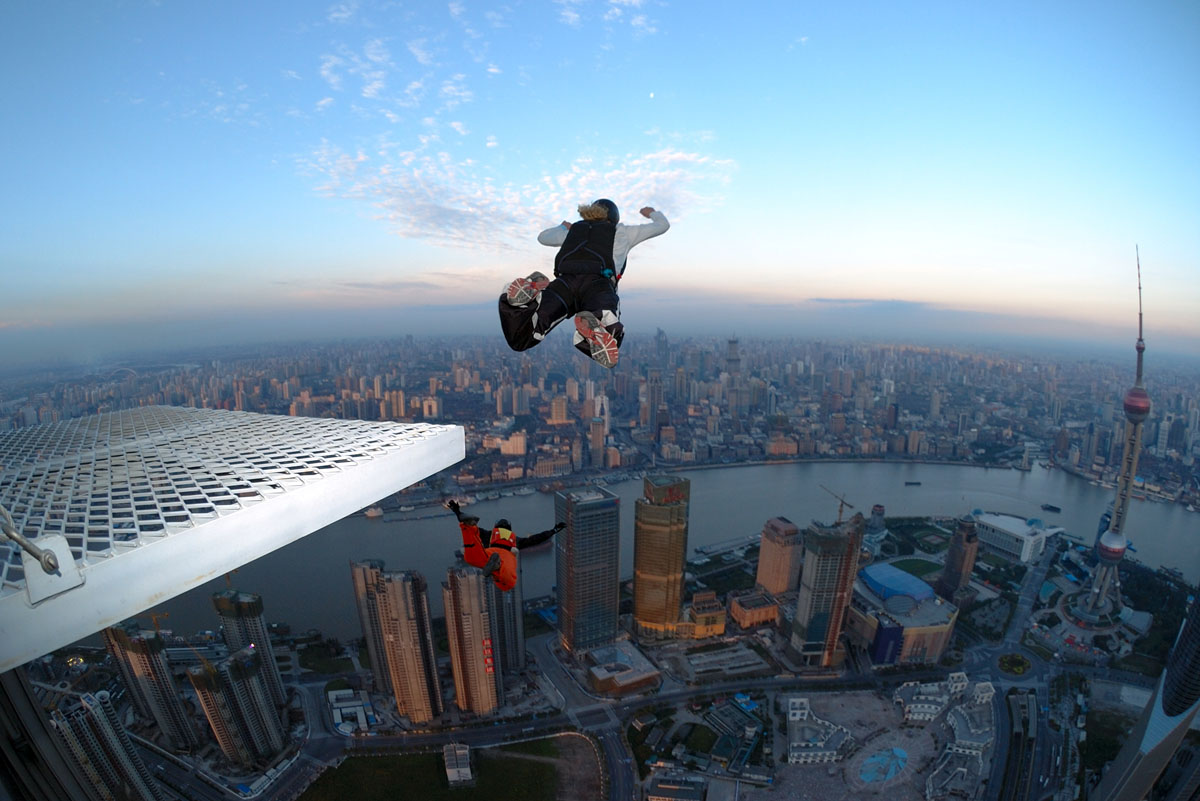
BASE jumper jumping off a building

Read more

https://www.theoccidentalobserver.net/wp-content/uploads/2018/06/TOO-Full-Logo-660x156-1.png 0 0 Kevin MacDonald https://www.theoccidentalobserver.net/wp-content/uploads/2018/06/TOO-Full-Logo-660x156-1.png Kevin MacDonald2011-09-28 00:23:032011-09-29 16:00:40Extreme Sports as a Context of Implicit Whiteness

Mark Rothko, Abstract Expressionism and the Decline of Western Art, Part 2

September 23, 2011/124 Comments/in Featured Articles, Jewish Ethnic Networking, Jewish Influence, Western Culture/by Brenton Sanderson

Creating a new “American” Art

Before the rise of Abstract Expressionism, the American art scene after World War I was defined by two main currents. The first were what one might call the Regionalists (e.g. Grant Wood, Thomas Hart Benton and John Steuart Curry) who used their own signature styles to portray the virtues of the hard-working rural American population. In the second group were the artists of Social Realism (e.g. Ben Shahn and Diego Rivera), whose work reflected urban life during the Great Depression, and reflected a preoccupation with international socialism.

Neither of these two schools was interested in abstract art. Despite the leftwing view of the social realists, both groups held rather conservative attitudes on figurative representation. Yet, even as these two styles dominated, the artists of the nascent New York School “met frequently at the legendary Cedar Bar, where they discussed their radical theses. They argued endlessly about the problems of art, about how to effect a total break with the art of the past, about the mission of creating an abstract art that no longer had anything to do with conventional techniques and motifs.”[i]

Spring in the Country by Grant Wood (1941)

The Museum of Modern Art did not yet exist; the Metropolitan Museum tended to “look down its WASP patrician nose at modernism”; and the Whitney favoured exactly the kind of American painting young Rothko most despised: scenic, provincial, anecdotal, and conservative.[ii] For a Jewish outsider like Rothko, who in 1970 declared that he would never feel entirely at home in a land to which he had been transplanted against his will, urban America was his America.

Read more

https://www.theoccidentalobserver.net/wp-content/uploads/2018/06/TOO-Full-Logo-660x156-1.png 0 0 Brenton Sanderson https://www.theoccidentalobserver.net/wp-content/uploads/2018/06/TOO-Full-Logo-660x156-1.png Brenton Sanderson2011-09-23 10:10:022011-09-25 10:39:42Mark Rothko, Abstract Expressionism and the Decline of Western Art, Part 2
Page 25 of 27«‹2324252627›»
RSS Feed Logo RSS Feed Logo Subscribeto RSS Feed

Kevin MacDonald on Mark Collett’s show reviewing Culture of Critique

James Edwards at the Counter-Currents Conference, Atlanta, 2022

Watch TOO Video Picks

video archives

DONATE

DONATE TO TOO

Follow us on Facebook

Keep Up To Date By Email

Subscribe to get our latest posts in your inbox twice a week.

Name

Email


Topics

Authors

Monthly Archives

RECENT TRANSLATIONS

All | Czech | Finnish | French | German | Greek | Italian | Polish | Portuguese | Russian | Spanish | Swedish

Blogroll

  • American Free Press
  • American Freedom Party
  • American Mercury
  • American Renaissance
  • Arktos Publishing
  • Candour Magazine
  • Center for Immigration Studies
  • Chronicles Magazine
  • Council of European Canadians
  • Counter-Currents
  • Curiales—Dutch nationalist-conservative website
  • Denmark's Freedom Council
  • Diversity Chronicle
  • Folktrove: Digital Library of the Third Way
  • Human Biodiversity Bibliography
  • Institute for Historical Review
  • Mondoweiss
  • Pat Buchanan
  • Paul Craig Roberts
  • Project Nova Europea
  • Red Ice
  • Richard Lynn
  • Rivers of Blood
  • Sobran's
  • The Occidental Quarterly Online
  • The Political Cesspool
  • The Raven's Call: A Reactionary Perspective
  • The Right Stuff
  • The Unz Review
  • VDare
  • XYZ: Australian Nationalist Site
NEW: Individualism and the Western Liberal Tradition

Also available at Barnes & Noble

Culture of Critique

Also available at Barnes & Noble

Separation and Its Discontents
A People That Shall Dwell Alone
© 2025 The Occidental Observer - powered by Enfold WordPress Theme
  • Link to X
  • Link to Dribbble
Scroll to top Scroll to top Scroll to top

By continuing to browse the site, you are legally agreeing to our use of cookies and general site statistics plugins.

CloseLearn more

Cookie and Privacy Settings


How we use cookies

We may request cookies to be set on your device. We use cookies to let us know when you visit our websites, how you interact with us, to enrich your user experience, and to customize your relationship with our website.

Click on the different category headings to find out more. You can also change some of your preferences. Note that blocking some types of cookies may impact your experience on our websites and the services we are able to offer.

Essential Website Cookies

These cookies are strictly necessary to provide you with services available through our website and to use some of its features.

Because these cookies are strictly necessary to deliver the website, refusing them will have impact how our site functions. You always can block or delete cookies by changing your browser settings and force blocking all cookies on this website. But this will always prompt you to accept/refuse cookies when revisiting our site.

We fully respect if you want to refuse cookies but to avoid asking you again and again kindly allow us to store a cookie for that. You are free to opt out any time or opt in for other cookies to get a better experience. If you refuse cookies we will remove all set cookies in our domain.

We provide you with a list of stored cookies on your computer in our domain so you can check what we stored. Due to security reasons we are not able to show or modify cookies from other domains. You can check these in your browser security settings.

Other external services

We also use different external services like Google Webfonts, Google Maps, and external Video providers. Since these providers may collect personal data like your IP address we allow you to block them here. Please be aware that this might heavily reduce the functionality and appearance of our site. Changes will take effect once you reload the page.

Google Webfont Settings:

Google Map Settings:

Google reCaptcha Settings:

Vimeo and Youtube video embeds:

Privacy Policy

You can read about our cookies and privacy settings in detail on our Privacy Policy Page.

Privacy Policy
Accept settingsHide notification only