Sines v. Kessler Plaintiffs Coordinated with Refuse Fascism, an Anti-White Terrorist Organization

“Antifa WILL claim they are bystanders so they can file lawsuits.
@Aeyannic_Order, Unite the Right Discord Server, August 11, 2017

Two plaintiffs in the upcoming Sines v Kessler lawsuit have ties to, and coordinated activities with, the anti-White terrorist organization Refuse Fascism in the months prior to and during the rally. The organization, a “mass line” front group for the Revolutionary Communist Party, rioted across numerous states in the months before Unite the Right in order to “shut down” the events of their political opponents, including the inauguration of President Donald J. Trump. The two plaintiffs connected to the terrorist organization, Natalie Romero and Seth Wispelwey, have both alleged that Unite the Right speakers and organizers conspired to violate their rights at the 2017 Charlottesville rally. A new report by Occidental Observer reveals the extent of these ties, and how a founding leader of the organization was brought in to violate the rights of the defendants.

Refuse Fascism’s 2017 Terrorist Rampage

Following the election of Donald J. Trump in 2016, Refuse Fascism was founded by members of the Revolutionary Communist Party and other anti-White extremists such as Bill Ayers, a member of the infamous anti-White, Judeo-Bolshevik terrorist cell that not only bombed the U.S. Capital in 1971, but discussed the “merits” of murdering all newborn White babies. Numerous protests the group have attended, organized or participated in have descended into violent riots as participants attacked those they were “protesting.”

All the more terrifying is the organization’s connections with several extraordinarily wealthy and powerful anti-White Jewish billionaires. In June of 2020, a Project Veritas undercover operation revealed that the head of the organization’s Atlanta chapter, Tee Stern, claimed to have received funding from George Soros for a side project and was in talks with Jewish billionaire Tom Steyer’s assistant. Steyer was the top Jewish donor to the Democratic party during the 2020 election cycle, contributing 54 millions dollars to Democrats and 35 Million to Republicans.

On January 14, 2017, the homosexual, Jewish libertarian Milo Yiannopoulos was scheduled to speak to students at UC Davis. Refuse Fascism was among the terrorist groups who showed up and shut the event down. As with the Unite the Right rally, mob participants brandished genocidal anti-White “antifa” terrorist symbols, as well as the bold black and white Refuse Fascism signs that have various demands such as “NO! STOP TRUMP/PENCE FASCIST REGIME BEFORE IT STARTS” with the organization’s website at the bottom.

In a now deleted video, a Breitbart photographer is shoved and spit on by Refuse Fascism protesters. Ringleader calls for his comrades to steal the photographer’s camera.

During the fracas, numerous attendees were assaulted. Milo’s guest speaker had dog feces thrown at him. Nathan Damigo, a current defendant in the Sines v Kessler lawsuit who conducted an interview with CNN that evening was assaulted while livestreaming the riotous mob. Breitbart cameraman Mike Perdie was assaulted after a member of Refuse Fascism demanded he stop filming. He then called for his comrades to remove Perdie from the area. After pushing and shoving Perdie around, a man shouted directly in front of him with a bullhorn screaming “Fuck off” and then spit in his face. It was then that the man who appeared to be the leader of the Refuse Fascism group yelled for his comrades to steal Perdie’s equipment, “Get that camera! Someone grab that expensive camera!

Mob participants then began inciting violence, chanting “No justice, no peace!” and “If we don’t get it, shut it down.” Animated by the rhetoric, the agitated mob tore down the barricades and blocked the door of the venue. Administrators and campus police called the event off with little attempt to apprehend the perpetrators of the violence and chaos.

#DisruptJ20

A week later Refuse Fascism would carry out a conspiracy to disrupt the inauguration of President Donald Trump. Days before the event, undercover footage of Refuse Fascism organizer Sunsara Taylor was released by Project Veritas revealing their plan to disrupt the inauguration with various anti-White terrorist groups. The conspirators included numerous organizations who later that summer would descend upon the Unite the Right rally in Charlottesville, Virginia, such as Antifa Seven Hills, Ashville Anti-Racism, Industrial Workers of the World (IWW), Metropolitan Anarchist Coordinating Council (MACC), Redneck Revolt, and The Revolutionary Communist Party (RevCom), to name just a few.

The night prior to the inauguration, members of Refuse Fascism clashed with police outside Trump International Hotel. They then met up with other anti-White “antifa” terrorists outside the Deploraball, an event put on by Donald Trump’s most vocal supporters. Mob participants threw objects such as eggs and batteries at those entering the venue and attacked multiple attendees. Among those attacked was James Allsup, a young college student from Washington state who would go on to attend Unite the Right. While debating a member of the mob, he was surrounded by the anti-White “antifa” terrorists who stole his hat. When he attempted to retrieve it, the terrorists beat him. They then proceeded to stalk him and attacked him again, hitting him in the back of the head leaving him bleeding so profusely that he had to be taken to the hospital.

A young James Allsup was taken to the hospital following an attack by anti-White “Antifa” terrorists outside the DeploraBall, January 19, 2017.

On the day of the inauguration, Refuse Fascism stormed a highway, shutting down all traffic. Code Pink also blocked streets in an attempt to stop the inauguration from taking place. During the human blockade Tighe Barry, a member of Code Pink who’s in a relationship with the organization’s cofounder, Medea Benjamin, was wearing a large Refuse Fascism sticker on his chest and claimed that “we blocked this street because…we feel like we have the right to tell them not to go into our city.” The stunt created chaos, but unlike Unite the Right, police stepped in and made arrests. Code Pink has a history protesting with Refuse Fascism, and its leaders Tighe Barry and cofounder Medea Benjamin were among those who attended the Unite the Right Rally.

In other parts of the city, Refuse Fascism members participated in a goon march with black bloc terrorists where they proceeded to riot through the streets, smashing windows and setting a limousine on fire. Several hundred were arrested, although only around 20 of the 234 people arrested were ever convicted, and those were primarily due to plea deals. Unlike the majority of the January 6 capital protesters who were refused bail, the majority of those arrested in 2017 received bail and had their charges dropped by prosecutors.

It was during the chaos that defendant Richard Spencer was famously punched in the head by an anti-White black bloc terrorist, igniting a media firestorm about the “ethics of punching Nazis.” One writer for Politico resigned in disgrace after implying that Spencer should be beaten with a baseball bat. A Huffington Post writer instructed his readers to assault White advocates, referring to them with the pejorative, anti-White racial slur of “nazi.” The racial incitement of the public to violence by the mainstream corporate media would contribute to the chaos in Charlottesville that summer, as well as help to cover up attacks on Unite the Right participants.

Crashing Berkeley

With the success of their heckler’s veto at UC Davis and close attempt at a successful coup at the inauguration, Refuse Fascism members launched another aggressive attack several week later against Yiannopoulos’ UC-Berkeley speaking engagement. Following a similar pattern, Refuse Fascism showed up early along with other anti-White terrorist organizations. These groups included the TORCH Antifa Network’s local chapter Northern California Anti-Racist Action (NoCARA) whom law enforcement claimed had attacked a pro-White rally in Sacramento in 2016 hosted by Sines v. Kessler defendants Matt Parrot and Matthew Heimbach’s Traditionalist Worker Party (TWP). Other organizations included By Any Means Necessary (BAMN), whose founding members worked with and were members of the openly pedophile organization North American Man/Boy Love Association (NAMLBA), as well as Refuse Fascism’s parent group, the Revolutionary Communist Party (RevCom). A Buzzfeed livestream filmed the entire event, and showed Refuse Fascism members instigating the riot, pulling down the barricades and leading the mob up to the building where the event was set to occur.

After pulling down police barricades, Refuse Fascism member with shield and sign (second from the right) leads the mob into the prohibited area, kicking off the riot.

As the mob attacked the building using the metal barricades as battering rams against the glass windows, they fired explosives at law enforcement. Several women who came to see Yiannopolus speak were then attacked. One of the young female students was giving an interview with local media when she was pepper sprayed. Another woman was attacked with a club disguised as a flagpole. After fending off her attacker, another masked terrorist sprayed her in the face with pepper spray. She was then beaten mercilessly by multiple terrorists with wooden clubs.

A mobile light tower illuminating the plaza was knocked over and caught fire. Numerous trash cans were knocked over and lit on fire, and even a bank  had a  flare thrown in it as the mob proceeded to celebrate the success of their heckler’s veto by parading down the street adjacent to the school and vandalizing local businesses. The San Francisco Chronicle estimated $100,000 in damage to the school and the surrounding area.

Yvette Felarca, a leading member of BAMN openly bragged on Fox News to Tucker Carlson about how her terrorist group had helped shut down the event. Refuse Fascism claimed on their website that “what happened at UC Berkeley is part of the kind of broad, powerful and meaningful protest which needs to continue on an unprecedented scale to OUST this regime from power” and that their actions were “righteous” with “much more like this…[is] needed.”

Plaintiff Natalie Romero, Movimiento Cosecha, and Refuse Fascism

Sines v Kessler plaintiff Natalie Romero, who admitted her parents were in the country illegally, travelled from Houston to Charlottesville on August 12, 2017 to call for the ethnic cleansing of European cultural symbols from the city’s parks. She is among those who filed a lawsuit that same year alleging speakers and organizers of the event “conspired” with James Fields to hit her with his vehicle. Despite a law enforcement investigator involved with the Fields case admitting under oath that there was no evidence of communication between Fields and other Unite the Right defendants of the Sines v Kessler lawsuit, Romero and her fellow plaintiffs have continued to make the unsubstantiated allegation. Why, despite lack of evidence, Romero has continued to make such allegations which have destroyed the lives of the plaintiffs is unknown. However, new evidence reveals that Romero had a history of blocking traffic and was a member of an organization with deep ties to the anti-White terrorist organization Refuse Fascism.

Movimiento Cosecha & Refuse Fascism

At the time of the Unite the Right event in 2017, Romero was a member of the anti-White, racial replacement organization Movimiento Cosecha. The group calls for open borders and the amnesty of all illegal aliens residing in the United States; it had conducted numerous acts of civil disobedience across the country in the months prior to, and in the years following, Unite the Right. In Michigan, three of their members were arrested in April of 2017 for blocking a highway. Two months later, in an event Romero would help lead, 15 members (of whom four were illegally in the country) were arrested in Austin, Texas for sitting in the street and blocking traffic in front of the State’s Capitol. In 2019, 22 members were arrested in Detroit for blocking the Windsor Tunnel.

Movimiento Cosecha’s president Dylan Lazerow, is unsurprisingly Jewish. A recent in-depth report by the National Justice Party revealed that Israel’s strategy outside its borders is the exact opposite of what it advocates for its own people, and that the majority of organizations assisting migrants in ethnically replacing Europeans in all White countries are run by Jews. Even in cases where Christian churches are involved, they are receiving Jewish funding to the tune of hundreds of thousands of dollars. While Lazerow has opposed Israeli settlement policy of Palestine, he promotes the settlement of tens of millions of unwanted non-Whites into European nations.

Movimiento Cosecha President Dylan Lazerow with Refuse Fascism Co-Founder Cornel West.

In March of 2017, Lazerow posted a photo on his Facebook page of himself posing with Cornel West, a cofounder and lead spokesman of Refuse Fascism who has fielded various interviews for the terrorist organization. West was recently denied tenure and compelled to resign from his position at Harvard by the institute’s Jewish leadership for criticism of Israel’s ethnic cleansing of Palestine. Like Lazaro, however, West has no problem promoting the ethnic replacement of European peoples, but he does have a problem with ethnically cleansing Palestinians.

While it is common for popular people to have their photo taken with random individuals they don’t know, this was not the case with Lazerow and West. Lazerow once posted a Movimiento Cosecha advertisement with Cornel West quoting him as sayingIn this moment in history, the people dedicated to loving their neighbors must resist. Stand with me as I join Movimiento Cosecha and our immigrant brothers and sisters on May 1st for the #DayWithoutImmigrants — and beyond — as we work to win permanent protection, dignity, and respect.” Furthermore, Movimiento Cosecha also has a history of demonstrating with Refuse Fascism. These facts reveal close ties between the two organizations.

Refuse Fascism members participate in Movimiento Cosecha’s Austin, Texas action.  

Less than a month prior to the now infamous Unite the Right rally Natalie Romero and other members of her organization, along with members of Refuse Fascism, blocked traffic in Austin, Texas to demand citizenship for millions illegally living within the country. Video of the incident revealed Romero to be playing a major role, practicing and then leading the group in chants with a megaphone as they approached the state capitol. Romero initiated chants such as “The power, is in our hands. This is our state!” and “Undocumented and unafraid.” She even went so far as to parrot a slogan taken straight out of the Communist ManifestoOne struggle, one fight. Workers of the world unite!

As the group approached the intersection of Congress Avenue and 15th Street, a number of agitators marched into the center of the road. Romero can be seen in the background, wearing an orange reflective safety vest blocking traffic on Congress. Fifteen Movimiento Cosecha members were arrested during the action. As those arrested were moved into transport vehicles, Romero led those still remaining in further chants celebrating their actions calling for policy that would further the ongoing racial replacement Americans.

Following the Unite the Right rally, Movimiento Cosecha published a photo of Romero wearing a t-shirt with their logo emblazoned on it and holding a megaphone, claiming her as a member. Another photo published on the organization’s Facebook page on July 25, prior to their July action, shows Romero lying on a pile of Movimiento Cosecha t-shirts with another activist with the caption “We are in Austin! Text “RESISTE” to 41411 to stay updated as we launch the first DACAmented sit-in of the Trump era TOMORROW at 11am. Stay tuned!” This evidence reveals that Romero was no average member, but a very active participant with the organization.

“We are in Austin! Text “RESISTE” to 41411 to stay updated as we launch the first DACAmented sit-in of the Trump era TOMORROW at 11am. Stay tuned!” Natalie Romero (bottom left) poses on a pile of t-shirts for Movimiento Cosecha days prior to blocking traffic in Austin, Texas and a month prior to Unite the Right.

As Unite the Right attendees headed to their vehicles on August 12, 2017 the anti-White mob who managed to shut down the rally followed them to the parking lot on South Street where they blocked attendees in and then attacked and chased their vehicles as they attempted to leave. Moments before Romero and several of her co-plaintiffs were struck by Fields’ vehicle, the mob she was marching with were celebrating how they successfully shut the rally down, chanting “who shut shit down, we shut shit down!” Those Romero was illegally blocking the street with during the state of emergency consisted of various anti-White terrorist cells, such as the Revolutionary Abolitionist Movement, several chapters of the TORCH Antifa Network, along with members of Refuse Fascism.

Seth Wispelwey Invites Refuse Fascism’s lead spokesman Cornel West to Help Him Shut Down Unite the Right

In preparation for Unite the Right, plaintiff Seth Wispelwey’s organizations, Congregate Charlottesville and the United Church of Christ, hosted direct action training in preparation for violating the rights of those he is now frivolously suing. During a press conference on July 31, 2017, Wispelwey claimed that Refuse Fascism’s spokesman Cornel West and others “had already responded to the call and are committing to join Congregate’s efforts in Charlottesville to confront the rise of White Nationalist’s political power and refuse to let Charlottesville be used as a platform towards those ends.”  It is no surprise then that several days prior to Unite the Right, West’s anti-White terrorist organization Refuse Fascism called on their members to go to Charlottesville to “protest” the event, a word which the organization had previously used to describe mass rioting and violence they instigated at UC Berkeley.

On the night before Unite the Right, West gave a sermon at St. Paul’s Memorial Church in Charlottesville where he proclaimed to thunderous applause “We have to take a stand! That’s why some of us came to fight and get arrested if necessary!”  During the church service Wispelwey took the microphone and announced thatThis [service] is the result of Congregate [C’Ville] being in existence for one month. Think about what we could do in Charlottesville over one year,” and “We are working as the fiscal sponsors for this work.” Prior to the rally the following morning, West gave another sermon at First Baptist Church where he further called on the congregation to get arrested with them to stop the rally, telling the congregantsWhen we march this morning. We hold hands and lock in this morning. When we’re seen this morning. When we get arrested this morning. When we go to jail this morning, let’s try to remember those, the best of those who came before who sacrificed so much for us. Who paid a greater cost than we gonna pay today.” West then marched to the park with Wispelwey and blocked the entrance.

Cornel West joined Seth Wispelway and other clergy block the entrance to the park and discuss tactics with anti-White terrorists.

Wispelwey blocked UTR participants from entering the park just yards away from where Refuse Fascism members attacked numerous event attendees. Newly released drone footage shows some of the attacks which are all clearly unprovoked. Other video and photographic evidence shows Refuse Fascism members knocking individuals to the ground, kicking and stomping on their heads. The Charlottesville police department never prosecuted the assailants, despite the large black and white signs they were holding during the assaults clearly displaying what organization they were with.

Following the rally, in an attempt to separate himself from the violence of Refuse Fascism and other anti-White terrorist organizations while simultaneously showing his approval of their actions, Wispelwey claimed in an interview with Slate magazine that “They [“antifa”] have their tools to achieve their purposes, and they are not the ones I will personally use, but let me stress that our purposes were the same: block this violent tide and do not let it take a pedestal.” Britany “Smash” Cain-Coneley, who co-founded Congregate Charlottesville with Wispelwey claimed in a now deleted interview with United Church of Christ that “We were all there with the same goal,” in reference to the violent anti-White “antifa” terrorists.

Far from exculpating Wispelwey, these statements, in concert with what is now known about his connection to the Refuse Fascism leadership, indicate his intentions at Unite the Right. During a Q&A session following Unite the Right, Wispelwey was asked about his cooperation with anti-White terrorists; he responded “I encourage a perspective shift. Because when you start to see that that violent ideology, systemically and directly, bodily and physically, harms everyone who doesn’t look like me. Then to stand and confront White Supremacy in its many forms is not an act, is not obstructing someone’s constitutional rights. It is an act of love. Maybe they have a right to the rally, we have a right to block them.”

Wispelwey went on to bemoan his co-religionists who rebuked his actions, admitting that he had “been accused of inciting violence by liberal White Christians so many times for showing up and trying to block their [UTR participants] entrance.” This statement reveals that it was very clear to many in his community that what he was doing would lead to violence. Numerous statements made by Wispelwey on social media since Unite the Right clearly demonstrate that this charlatan was in fact inciting violence and vandalism against his political opponents. Wispelwey encouraged his followers to damage the property of relatives who watch Fox News, assault people with milkshakes; he also follows various anti-White “Antifa” terrorist accounts on social media such as Bat City Antifa, New York City Antifa, and It’s Going Down.

Wispelwey went on to make numerous unsubstantiated, hyperbolic claims that “antifa” had saved his life. After reviewing hundreds of hours of video footage and volumes of photographic evidence of Unite the Right, my colleagues and I  were unable to discover any instance where Wispelwey’s life was anywhere close to being in danger. This cannot be said of Unite the Right attendees whose heads were kicked and stomped on by Refuse Fascism members after being knocked to the ground in unprovoked attacks. Furthermore, evidence conclusively demonstrates that the riots that occurred on the night of the torchlight ceremony at the University of Virginia on the rotunda the night of August 11 and the brawl on 2nd and E. Market street the following day would not have occurred had it not been for the instigation of well-known anti-White “antifa” terrorist groups.

Video evidence has revealed that the night of the torchlight ceremony, several participants were assaulted by known anti-White terrorists, particularly Thomas Keenan and Thomas Massey. While demonstrators were coming down onto the rotunda, Massey, who was arrested for rioting at Donald Trump’s inauguration and was quoted in The Washington Post as being disappointed he and his comrades weren’t able to commit more violence and hoped that he would at future events,  splashed an unknown liquid from a water bottle on torchlight participants. He then turned to journalist Dave Reilly and smacked his camera out of his hand. One “antifa” went so far as to spit on an attendee who did not retaliate. Another man who confronted the two had his arm hit by Keenan in an attempt to knock his torch out of his hand. It was only after these repeated assaults against torchlight participants and refusal of local law enforcement to intervene, that the rioting kicked off. The following year, Keenan and Massey would be arrested for the beating of two U.S. Marines in Philadelphia, in which they were charged with racial intimidation, among other things.

Thomas Massey (Left) and Thomas Keenan (Right) at the August 11, 2017 Charlottesville Torchlight ceremony (Top), 2018 mugshots for the beating of two U.S. Marines in Philadelphia (bottom).

The day of the rally, minutes after Richard Spencer was attacked with bear mace as he entered the park, Keenan, Massey, and various other anti-White terrorists rushed to barricade the street to block the National Front’s entrance to the park. A flag bearer at the head of the parade attempted to push his way through them and was immediately punched by various individuals so as to not let him through. As other National Front members came to his aid, the anti-White gang members pulled out weapons, including a hammer, to attack them with. The situation was the complete opposite of defendant Wispelwey’s claim.

The facts regarding just how these altercations were initiated reveal that there was no threat to the people of Charlottesville and minorities from Unite the Right participants. The violence that broke out was a direct result of known anti-White terrorist networks coming to Charlottesville to utilize violence and intimidation to stop White Americans from expressing themselves and participating in the democratic process in what has been the greatest modern civil rights violation in modern American history. These organizations and their anti-White terrorist members openly claimed they were heading to the rally to disrupt it. The Governor of Virginia, Terry McAuliffe, claimed they had intelligence that extremist groups planned to attack rally participants and law enforcement. Afterwards they bragged on their websites about how they attacked the rally while relying on the anti-White, Jewish-owned mass media to cover up the terrorist’s actions.

Adding insult to injury, the real victims of racial violence and intimidation are now on trial in a SLAPP (Strategic Lawsuit Against Public Participation) lawsuit launched by the very individuals who conspired with the anti-White terrorists in the months prior to and during the rally to violate their rights. We will soon see if the Charlottesville jury will buy the outrageous conspiracy theory concocted by Roberta Kaplan and her slimy plaintiffs, though the psychological effects of widespread anti-White terrorism over the last few years means that even if the jury doesn’t buy it, they are likely to be too terrified to clear the defendants of all allegations for fear of their lives and careers.

Evil Genius: Constructing Wagner as Moral Pariah – PART 4

Go to Part 1.
Go to Part 2.
Go to Part 3.

Wagner and National Socialist Germany

Richard Wagner has long been reviled by Jews as the intellectual and spiritual precursor to Adolf Hitler who, according to William Shirer, once declared: “Whoever wants to understand National Socialist Germany must know Wagner.”[1] This line is spoken by the Hitler character in the 2008 Hollywood film Valkyrie (the Wagnerian title of the film being taken from the codename for the failed Wehrmacht plot to assassinate Hitler in 1944). For music critic Larry Solomon, no other composer in history had a greater impact on world events than Richard Wagner; and “his devastating political legacy is second only to Adolf Hitler.”[2] In his book Anti-Semitism: A Disease of the Mind: A Psychiatrist Explores the Psychodynamics of a Symbol Sickness, Theodore Rubin states that a psychologically sick Adolf Hitler “borrowed from the almost equally sick anti-Semitic Wagner.”[3] Jewish activist and prolific writer on anti-Semitism, the late Robert Wistrich, likewise proposed that: “Wagner’s essentially racist vision of Jewry would have a profound influence on German and Austrian anti-Semites, including the English born Houston S. Chamberlain, Lanz von Liebenfels, and above all on Adolf Hitler himself.”[4]

This widely accepted notion of a direct intellectual line of descent from Wagner to Hitler has, however, been challenged by historians like Richard Evans who points out that “the composer’s influence on Hitler has often been exaggerated,” and that while Hitler “admired the composer’s gritty courage in adversity,” he “did not acknowledge any indebtedness to his ideas.”[5] Magee likewise maintains that “if one studies the intellectual development of the young Hitler one finds no evidence that he got any of his anti-Semitism from Wagner.”[6] While Evans and Magee slightly overstate their case, they are right to attempt to put the issue of Wagner’s influence on Hitler into a more rational perspective.

Wagner’s intellectual influence on Hitler was mainly secondhand through his son-in-law Houston Stewart Chamberlain, who developed some of Wagner’s ideas in his bestselling 1899 book The Foundations of the Nineteenth Century, which did influence Hitler’s ideas on race and the Jewish Question. The man who founded the library at the National Socialist Institute in Munich, Friedrich Krohn, compiled an inventory of the titles borrowed by Hitler between 1919 and 1921. The four page list contains over a hundred entries. Listed alongside Chamberlain’s Foundations of the Nineteenth Century is the German translation of Henry Ford’s The International Jew: The World’s Foremost Problem, and condensations of titles such as Luther and the Jews, Goethe and the Jews, Schopenhauer and the Jews, and Wagner and the Jew. Clearly Hitler had some exposure to Wagner’s anti-Jewish writing.[7] It is also clear that Hitler read and greatly admired Wagner’s autobiography, and the title of his book Mein Kampf (My Struggle) was conceivably modeled on Wagner’s Mein Leben (My Life).[8] According to German historian Guido Knopp, “It was not just the title, but also one of the key sentences, that Hitler copied from Richard Wagner. Just as the composer has written in Mein Leben: ‘I decided to become a composer,’ so did the prisoner [Hitler] now write: ‘I decided to become a politician.’”[9]

In his book Hitler’s Private Library: The Books That Shaped His Life, Timothy Ryback notes that among the books that found their way into Hitler’s vast private collection was a biography of Wagner by Chamberlain entitled Richard Wagner: The German as Artist, Thinker, Politician.[10] This book contains only a few minor references to Jews. In 1933, Hitler received a volume entitled Wagner’s Resounding Universe which was inscribed by its author, Walter Engelsmann, to “the steward and shaper of the descendants of Siegfried upon the earth.”[11] Among the books found in the bunker complex after the fall of Berlin in 1945 was a 1913 treatise on Wagner’s Parsifal.[12] Wagner’s ideas clearly exerted some influence on Hitler’s intellectual development. However, just three known volumes on Wagner (with none by Wagner himself) out of an estimated 16,000 books in Hitler’s collection at the time of his death, hardly suggests Wagner’s intellectual influence was “profound.”

There is certainly no evidence to support the extravagant claim of Joachim Fest in his biography of Hitler that: “Wagner’s political writing was Hitler’s favorite reading, and the sprawling pomposity of his style was an unmistakable influence on Hitler’s own grammar and syntax.” Fest even ventured to claim that Wagner’s “political writings together with the operas form the entire framework of Hitler’s ideology,” and that in these he “found the granite foundation for his view of the world.”[13] This assessment of Wagner’s influence on Hitler is utterly rejected by Jonathan Carr in his 2007 book The Wagner Clan. Carr makes the point that:

If Wagner’s works really were “the exact spiritual forerunner” of Nazism, surely the Fuhrer of all people would have drummed that point home ad infinitum. But one looks to him in vain not only for fascist interpretations of the music dramas but, stranger still, for direct references to the theoretical writings. There is, indeed, surprisingly little evidence that Hitler read Wagner’s prose works, though he evidently did borrow some from a library before he rose to power and the wording of some of his speeches indicates that he imbibed at least Das Judentum in der Musik. Why then did he not use the Master more clearly as an ally, especially in his anti-Semitic cause? In Mein Kampf, for instance, he notes that his early hostility to Jews owed much to the example set by Karl Lueger, the anti-Semitic mayor of Vienna. He also praises Goethe for acting according to the spirit of “blood and reason” in treating “the Jew” as a foreign element. He pays no similar tribute to the Master, indeed he only mentions Wagner by name once in the whole book (although he refers elsewhere to the “Master” of Bayreuth).[14]

In one of three brief references to Wagner in Mein Kampf, Hitler reflects on his early experiences attending Wagner’s operas: “I was captivated. My youthful enthusiasm for the Bayreuth master knew no limits. Again and again I was drawn to hear his operas, and today it still seems to me a great piece of luck that these modest productions in a little provincial city prepared the way and made it possible for me to appreciate the better productions later on.”[15] Among the “great men” in history that Hitler singled out in Mein Kampf were Luther, Frederick the Great, and Wagner. He praised Wagner as a “combination of theoretician, organizer, and leader in one person” which he regarded as “the rarest phenomenon of this earth. And it is that union which produces the great man.”[16]

Despite the paucity of evidence for Wagner having exercised the high level of intellectual influence on Hitler that is widely alleged, for the Jewish music writer David Goldman, Wagner’s name is eminently worthy of execration on the basis that he “mixed the compost heap in which the flowers of the twentieth century’s greatest evil took root.” According to Goldman:

The Nazis embraced Wagner not by accident or opportunism but because they recognized in him the cultural trailblazer of the world they set out to rule. … Wagner may not have been the only anti-Semite among the composers of the 19th century, nor even the worst, but he did more than anyone else to mold the culture in which Nazism flourished. The Jewish people have had no enemy more dedicated and more dangerous, precisely because of his enormous talent. In a Jewish state, the public has a right to ask Jewish musicians to be Jews first and musicians second. With reluctance, and in cognizance of all the ambiguities, I think the Israelis are right to silence him. [Goldman here refers to the unofficial ban on performances of Wagner’s music in Israel][17]

For Goldman, Hitler’s intellectual debt to Wagner and the “proto-Nazi” nature of Wagner’s musical dramas are unambiguous. Magee questions the idea that Wagner’s works inherently support National Socialist notions of heroism, and notes that Wagner’s last opera Parsifal (frequently cited as Wagner’s most “racist” opera) was denounced by the regime in 1933 for being “ideologically unacceptable” and was not performed at Bayreuth during the war.[18] Moreover, while Wagner’s music and operas were frequently performed during the Third Reich, his popularity in Germany actually declined in favor of Italian composers like Verdi and Puccini. In the theatrical year in which Hitler came to power, 1932–33, there were 1,837 separate performances of operas by Wagner in Germany. The number of performances then went steadily down until, by 1939–40, they were less than two-thirds of that figure, 1,154.[19] Evans notes that by the 1938–39 opera season, Wagner had only one opera in the top fifteen most popular operas of the season, with the list being headed by Leoncavallo’s Pagliacci.[20]

It is well known that the Berlin Philharmonic’s last performance prior to their evacuation from Berlin in April 1945 was of a scene from the conclusion to Wagner’s Götterdämmerung to an audience that included Speer, Dönitz and Goebbels. Likewise, when the Reich Radio announced Hitler’s death, the funeral march from Götterdämmerung was played. With these events in mind, Wagner’s music has been used in countless Third Reich documentaries—in the process consolidating the misleading impression that Wagner’s music was uniquely bound up with the cultural politics of the National Socialist state.

It is clear that the supposed National Socialist fascination with Wagner, to the extent it genuinely existed, was mostly Hitler’s inspiration. Hitler’s boyhood friend, August Kubizek, noted in his book The Young Hitler I Knew that what made the young Hitler so receptive to Wagner’s operas was not the composer’s political outlook, but rather Hitler’s own “constant, intensive preoccupation with the heroes of German mythology,” and Wagner’s ability to translate “his boyish dreams into poetry and music” which satisfied “his longing for the sublime world of the German past.”[21] Kubizek writes that, “listening to Wagner meant to him not a simple visit to the theater, but the opportunity of being transported into that extraordinary state which Wagner’s music produced in him, that trance, that escape into a mystical dream-world which he needed in order to sustain the enormous tension of his turbulent nature.”[22]

Kubizek describes the time they first went to a Wagner opera—Rienzi, an early work by Wagner that established him as a composer. “We were shattered by the death of Rienzi,” he writes of that fateful evening in 1906, “and although Hitler would usually begin to talk immediately after being moved by an artistic experience, and to voice sharp criticism of the performance, on this occasion Adolf remained silent for a long time.” Rienzi was a Roman who rose to be tribune of the people but was then betrayed and died within the ruins of the Capitol. Kubizek described how his friend suddenly announced with “grand and thrilling images,” how he would lead the German people “out of servitude to the heights of freedom.”[23] According to Kubizek, Hitler’s decision to become a politician “was seized in that hour on the heights above the city of Linz,” when “in a state of complete ecstasy and rapture,” he transferred the character of Rienzi “to the plane of his own ambitions.”[24] Describing that fateful night to Winifred Wagner in 1939, Kubizek claims that Hitler solemnly declared “In that hour it began!”[25]

Hitler heard Tristan and Isolde at least thirty or forty times during the Vienna phase of his life. At one stage, he even wrote a brief sketch for a Wagner-style opera entitled Wieland the Smith. Gretl Mitlstrasser, the woman who managed the daily running of the Berghof “recounted numerous stories of Hitler’s private ‘communing’ on the property… when he held late-night vigils on the Berghof balcony, watching the Untersberg bathed in moonlight; when he let the ethereal strains of Wagner’s Lohengrin fill his study as he watched the jagged cliffs peek through the enfolding mists.”[26] Hitler had a bust of Wagner by Arno Breker in his private quarters, and in his table talk once claimed that “when I listen to Wagner I hear the rhythms of a bygone world.”[27]

In the 1920s, Hitler became a friend of Wagner’s children and grandchildren, and particularly of his English-born daughter-in-law Winifred, who joined the NSDAP in 1926, and who proposed marriage to him. She later wrote that “the bond between us was purely human and personal, an intimate bond founded on our reverence and love for Richard Wagner.”[28] In the summer of 1933 she found that hundreds of foreign ticket reservations for that year’s Bayreuth Festival had been cancelled, threatening its financial viability. Lieselotte Schmidt, a close friend of Winifred, noted at the time that “we have been frozen into isolation. The hate campaign against Bayreuth, which is at root of purely Jewish origin, stops at nothing in its lies and unpleasantness.” When the matter came to Hitler’s attention, he summoned Winifred to Berlin, and Schmidt noted that: “She flew there, and within a quarter of an hour we had the necessary help—and how!” The festival was made exempt from all taxes during the Third Reich, and Hitler donated 50,000 Reichsmarks of his own money for each new production.[29]

Wagner’s grandson and daughter-in-law with Hitler

Evans points out that Hitler’s personal patronage meant that “neither Goebbels nor Rosenberg nor any of the other cultural politicians of the Third Reich could bring Bayreuth under their aegis.”[30] Winifred Wagner and the managers of the Festival were “granted an unusual degree of cultural autonomy” by Hitler, and Knopp states that “It is a fact that even the Bayreuth productions during the Nazi era hardly display any evidence of distortion for propaganda reasons.”[31] Hitler was a regular guest at the Bayreuth festivals between 1933 and 1939, and on his fiftieth birthday Winifred arranged for him to be presented with the manuscript draft to Wagner’s Rienzi and original scores of Das Rheingold and Die Walküre, as well as a sketch for Götterdämmerung.[32]

When considering Wagner’s posthumous relationship with the National Socialists, we need to draw a clear distinction between Hitler as an individual and the Third Reich as a regime. Magee is careful to do so:

It was not the case that the Nazi regime in general was devoted to Wagner, or did anything to promote his works. Many people nowadays write and talk as if Wagner provided a sort of sound-track to the Third Reich, and that on organized party occasions there was always, or usually, Wagner. This conception has become a cliché on film and television, where it is usual for any depiction of the Nazis to be literally accompanied by Wagner’s music, for preference at its most brassy and bombastic, as in the Ride of the Valkyries or the Prelude to Act III of Lohengrin, and played very loud. The whole picture that this conjures up, and is meant to conjure up, is false.

Supporting this thesis, Evans maintains that there was a “lack of interest” in Wagner “on the part of almost everyone in the Party leadership except Hitler himself.”[33] In 1933, Hitler ordered that each Nuremberg Rally would open with a performance of Die Meistersinger, although these performances were very unpopular with other Party functionaries who had be ordered to attend. Evans notes that when Hitler “entered his box he found the theater almost empty; the party men had all chosen to go off to drink the evening away at the town’s numerous beer halls and cafes rather than spend five hours listening to classical music. Furious, Hitler sent out patrols to order them out of their drinking-dens, but even this could not fill the theater. The next year was no better. … After this Hitler gave up and the seats were sold to the public instead.”[34]

While Joseph Goebbels seems to have shared some of Hitler’s affinity with Wagner, and often visited Bayreuth, his diaries reveal no special insights into Wagner’s works or ideas, and nor do his public speeches. He praised Die Meistersinger as “the incarnation of all that is German.” It contained everything “that defines and fulfills the cultural soul of Germany.”[35] The 1933 Bayreuth Festival was opened by Goebbels with the words: “There is probably no work so close in spirit to our age and its intellectual and psychological tensions as Richard Wagner’s Die Meistersinger. How often in recent years has its rousing chorus, ‘Wacht auf, es nahet gen dem Tag’ (Awake for morn approaches), echoed the faith and longing of Germans, as a tangible symbol of the reawakening of the German people from the deep political and spiritual slumber coma of 1918.”[36]

Joseph Goebbels attending the Bayreuth Festival in 1937

Albert Speer, Hitler’s personal architect, and later also his armaments minister, was another Bayreuth regular, ostensibly motivated more by duty than genuine interest. He notes in his memoirs that Hitler often discussed Wagner with Winifred and seemed to know what he was talking about. Evidently Speer did not know enough to be sure.[37] For the leading ideologist of the party, Alfred Rosenberg, the real National Socialist musical model was Beethoven who “took fate by the throat and acknowledged force as the highest morality of man. … Whoever understands the essence of our movement knows that there is a drive in us all like that which Beethoven embodied to the highest degree.” While he also believed Wagner embodied the strength of the “Nordic soul,” Rosenberg criticized the composer’s Gesamtkunstwerk approach, noting that “the inner harmony between word content and physical content is often hindered by the music. … An attempt to wed these forces destroys spiritual rhythm and prevents emotive expression.”[38]

Rosenberg was certainly not alone in his view. The general manager at Bayreuth during the Third Reich, Hans Tietjen, made the point after the war that “In reality, the leading party officials throughout the Reich were hostile to Wagner. … The party tolerated Hitler’s Wagner enthusiasm, but fought, openly or covertly, those who, like me, were devoted to his works—the people around Rosenberg openly, those around Goebbels covertly.”[39] Aside from the hostility to Wagner grounded in aesthetics and ideology, Carr makes a more general point:

The truth is that many Nazis, in high and low places, were bored to tears by Wagner. There is nothing very odd about that. Lots of people past and present who may well have a certain interest in other music will run a mile to escape a seemingly interminable evening with the Master. Too few tunes, too many scenes in which people stand about for ages apparently doing nothing much. The point is only worth stressing here because the Nazis are reputed to have had a special affinity to Wagner’s music. The evidence suggests this was simply not so.[40]

It has been sometimes alleged that Wagner’s music provided a “soundtrack to the Holocaust” and was played at concentration camps during wartime. The German historian Guido Fackler claims that Wagner’s music was sometimes used at the Dachau concentration camp in 1933 and 1934 to “reeducate” political prisoners through the beneficial exposure to nationalistic music.[41] There is, however, no documentary evidence supporting claims that Wagner’s music was used in this way during the war. Larry David mocked this urban legend (and the unhealthy Jewish obsession with Wagner) in an episode of Curb Your Enthusiasm where he is rebuked by a Jewish stranger for whistling a Wagner tune in the street.[42]

Conclusion

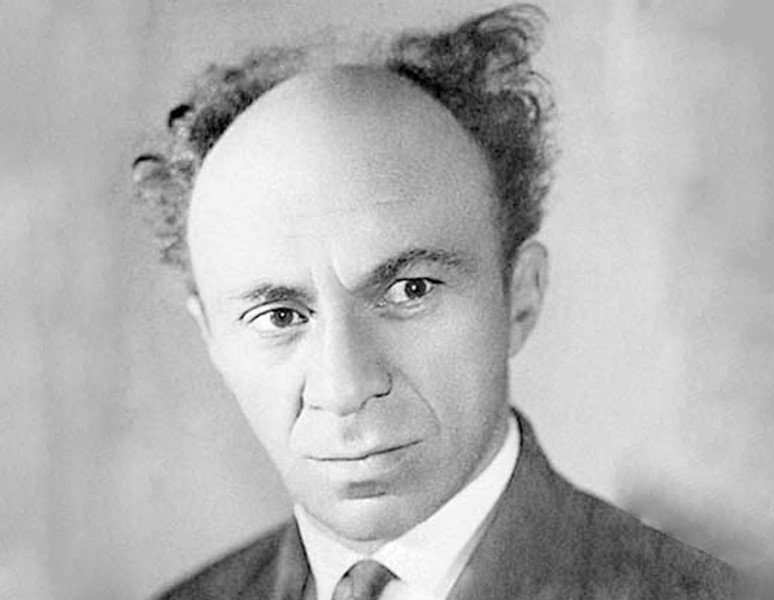
The ethno-political motivation that underpins the construction of Richard Wagner as moral pariah is exemplified by the contrasting way that Jewish commentators have reflected on the life and legacy of the Jewish composer Hanns Eisler who once declared Wagner to be “a great composer, unfortunately.” A committed Marxist, Eisler began in 1930 a long-standing collaboration with the poet and playwright Bertolt Brecht. With Hitler’s ascent to power, Eisler left Germany and eventually settled in Hollywood, where he was nominated for Oscars for writing the music for the films Hangmen Also Die (1942) and None but the Lonely Heart (1944). In 1947, Eisler appeared before the Un-American Activities Committee, and despite the intercession of Albert Einstein, Aaron Copland and Leonard Bernstein, was deported to East Germany in 1948 where he remained for the rest of his life, writing music for the totalitarian state (including its national anthem, and the Comintern anthem). Eisler collaborated with T.W. Adorno in 1947 to produce the book Composing for the Films. Instead of reproaching Eisler for his ardent commitment to a regime and ideology that destroyed millions of lives, Jewish commentators invariably portray him as the innocent victim of the anti-Semitism of the Third Reich, and then of the HUAC hearings and the Hollywood blacklist.

Jewish communist composer Hanns Eisler

The Jewish-dominated intellectual and media elite eagerly invoke Wagner’s life and legacy as a salutary lesson in the evils of anti-Semitism and White nationalism. Constructing Wagner as moral pariah allows the composer and his works to be constantly used as a springboard for intensive reflections on “the Holocaust,” the evils of white racial feeling, and the moral necessity of state-sponsored multiculturalism and mass non-White immigration to the West. Only these policies, after all, will ensure that Wagner’s “morally loathsome” intellectual legacy (which amounts to a proposal for a European group strategy in opposition to Judaism) can never again find a receptive White audience—by progressively doing away with White people altogether.

In the meantime, the construction of Wagner as an anti-Semitic exemplar and moral pariah ensures the composer, whose achievement far surpasses that of any Jewish composer, can never become a locus of White racial pride and group cohesion. Richard Wagner has been a particular target for Jewish denigration because of his strong and unashamed ethnic and racial identification, and for his willingness to publicly oppose Jewish influence. This, together with his status as one of the most stupendous musical geniuses that the world has ever seen, endows him with rich potential to re-emerge as a rallying point for White Nationalists. The rebirth of a strong sense of racial feeling among White people will be greatly aided by reclaiming cultural heroes like Richard Wagner from the manufactured taint of moral censure that distorts their popular remembrance.

Brenton Sanderson is the author of Battle Lines: Essays on Western Culture, Jewish Influence and Anti-Semitism, banned by Amazon, but available here and here.


[1] William Shirer, The Rise and Fall of the Third Reich (New York: Random House, 2002), 101.

[2] Solomon, “Wagner and Hitler,” op. cit.

[3] Rubin, Anti-Semitism: A Disease of the Mind, 127.

[4] Robert S. Wistrich, Anti-Semitism: The Longest Hatred (London: Thames Mandarin, 1992), 56.

[5] Richard Evans, The Third Reich in Power (New York, Penguin, 2005), 199.

[6] Magee, Wagner and Philosophy, 362.

[7] Timothy Ryback, Hitler’s Private Library: The Books That Shaped His Life (New York: Vintage, 2010), 50.

[8] Guido Knopp, Hitler’s Women, trans. by Angus McGeoch (Phoenix Mill: Sutton, 2003) 158.

[9] Ibid., 169.

[10] Ryback, Hitler’s Private Library, 134.

[11] Ibid., 146.

[12] Ibid., 239.

[13] Joachim Fest, Hitler (London: Harcourt Brace Jovanovich, 1992), 56.

[14] Carr, The Wagner Clan, 187.

[15] Adolf Hitler, Mein Kampf, trans. by James Murphy (Bottom of the Hill, 2010), 23.

[16] Ibid., 488.

[17] David Goldman, “Muted: Performances of Wagner’s music are effectively banned in Israel. Should they be?” op. cit.

[18] Magee, Wagner and Philosophy, 366.

[19] Ibid., 365.

[20] Evans, The Third Reich in Power, 201.

[21] August Kubizek, The Young Hitler I Knew, trans. by Geoffrey Brooks (London: Greenhill Books, 2006), 84.

[22] Ibid.

[23] Ibid., 118.

[24] Ibid., 116-8.

[25] Ibid., 118-9.

[26] Ryback, Hitler’s Private Library, 176.

[27] Nicholson, Richard and Adolf, 21.

[28] Knopp, Hitler’s Women, 152.

[29] Ibid., 181.

[30] Evans, The Third Reich in Power, 200.

[31] Knopp, Hitler’s Women, 189.

[32] Ibid., 193.

[33] Evans, The Third Reich in Power, 201.

[34] Ibid.

[35] Knopp, Hitler’s Women, 184.

[36] Ibid., 182.

[37] Jonathan Carr, The Wagner Clan, 184.

[38] Ibid.

[39] Quoted in Magee, Wagner and Philosophy (London: Penguin, 2000), 366.

[40] Jonathan Carr, The Wagner Clan, 184.

[41] Guido Fackler, “Music in Concentration Camps 1933-1945,” trans. by Peter Logan, Music & Politics, Undated. http://www.music.ucsb.edu/projects/musicandpolitics/archive/2007-1/fackler.html

[42] To view this scene see: http://www.youtube.com/watch?v=_nS66Ivbvc

Evil Genius: Constructing Wagner as Moral Pariah—PART 3

Scene from Barrie Kosky’s 2017 Bayreuth production of Die Meistersinger von Nürnberg with an outsize image of Beckmesser, the putative Jew

Go to Part 1.
Go to Part 2.

Wagner’s Music Dramas as Coded Anti-Semitism

T.W. Adorno and Wagner biographer Robert Gutman began a modern Jewish intellectual tradition when they proposed that Wagner’s antipathy to Jews was not limited to articles like Judaism in Music, but included hidden anti-Semitic and racist messages embedded in his operas. Numerous Jewish writers have taken up this theme and encouraged audiences to retrospectively read into Wagner’s operas latent signs of anti-Semitism. The gold-loving Nibelung lord Alberich in Siegfried is, for instance, supposedly a symbol of Jewish materialism. Solomon writes that Alberich is clearly “the greedy merchant Jew, who becomes the power-crazed goblin-demon lusting after Aryan maidens, attempting to contaminate their blood, and who sacrifices his lust in order to acquire the gold…”[1]

Wagner’s Die Meistersinger von Nürnberg (originally written in 1845), is frequently touted as his most anti-Semitic opera. The character Beckmesser, who is incapable of original work and resorts to stealing the work of others, is said to symbolize the lack of Jewish originality that Wagner highlighted in Judaism in Music. According to Gutman, Beckmesser was modeled after Eduard Hanslick, the powerful half-Jewish music critic who constantly disparaged Wagner. Beckmesser purportedly draws directly on a common fund of nineteenth-century anti-Semitic stereotypes: he shuffles and blinks, is scheming and argumentative, and is not to be trusted. He slinks up the alley behind the night watchman in Act II, and limps and stumbles about the stage in Act III, blinking with embarrassment when Eva turns away from his ingratiating bow at the song contest. Furthermore, when he sings, he wrongly accents certain syllables and sings with disjointed rhythms, parodying the Jewish cantorial style. For British musicologist Barry Millington, the fact that Wagner invested Beckmesser with such traits “is a startling fact that almost of itself provides proof of Wagner’s anti-Semitic intent in Die Meistersinger.”

At the 2017 Bayreuth Festival, Barrie Kosky—the first Jewish director to stage a work at the festival—played up such notions, portraying Beckmesser with stereotypical Jewish features (see the lead photograph). In the production, Kosky embedded the opera’s setting of Nuremberg in the twentieth century as the birthplace of the race laws enacted by the National Socialists, the setting of the NSDAP’s giant torch-lit rallies, and the scene for the postwar show trials of Hitler’s henchmen. Kosky’s “edgy” production won rapturous applause from an audience that included Chancellor Angela Merkel. Spiegel Online called the production “chillingly relevant” in using Wagner’s anti-Semitism to take on “hatred of Jews” in today’s Europe. Die Welt said Wagner’s “toxic ideology” had always been an “elephant in the room” which Kosky had ingeniously opted to make “the actual subject of his staging.”

Jewish Opera director Barrie Kosky

Like Beckmesser, the characters of Mime in the Ring and Klingsor in Parsifal are also widely identified as Jewish stereotypes, although none of these were actually identified as Jews by Wagner in the libretto. Mime is, for Solomon, depicted by Wagner “as a stinking ghetto Jew” while “Siegfried represents the conscience-free, fearless Teuton, he feels no remorse. … He is glorified as the warrior hero of the Ring, the archetypal proto-Nazi.”[2] Unconcerned at the lack of any real evidence for his thesis, Solomon maintains that virulent racism “permeates all aspects of his music dramas through metaphorical suggestion. Wagner is always just a step away from actually calling his evil characters ‘Jews,’ even though it was obvious to his contemporaries.” He claims that Wagner was too clever to identify Jews in his music dramas, especially after the critical reactions he received to his essay Judaism in Music. “His intent was far more artful and covert, but nevertheless still political: to reach his audience on an emotional, subliminal level, bypassing their critical faculties.” In the final analysis, Wagner’s operas are, for Solomon, “tools of racist, proto-Nazi hate propaganda, written for the purpose of redeeming the German race from Jewish contamination, and for expelling the Jews from Germany.” Moreover, the malign influence of Wagner continues insofar as “the subtext of racist metaphors has not diminished in Wagner’s operas, so they will continue to exert a subliminal influence.”[3]

In his book Richard Wagner and the Anti-Semitic Imagination (1997), Marc A. Weiner likewise argued that Wagner deliberately used the characters in his operas to promote his sociological theories of a pure Germany purged of Jewish influence. According to Weiner:

Wagner’s anti-Semitism is integral to an understanding of his mature music dramas. … I have analyzed the corporeal images in his dramatic works against the background of 19th-century racist imagery. By examining such bodily images as the elevated, nasal voice, the “foetor judaicus” (Jewish stench), the hobbling gait, the ashen skin color, and deviant sexuality associated with Jews in the 19th century, it’s become clear to me that the images of Alberich, Mime, and Hagen [in the Ring cycle], Beckmesser [in Die Meistersinger], and Klingsor [in Parsifal], were drawn from stock anti-Semitic clichés of Wagner’s time.[4]

For Weiner, Wagner’s anti-Semitic caricatures can be readily identified from their manner of speech, their singing, their roles, and their body language. “All of the stereotypical cardboard, cookie-cutter features of a Jew … show up all over the place in his musical dramas.” Under Weiner’s deconstruction of Wagner’s characters it emerges that his Teutonic heroes are “invariably clear-eyed, deep-voiced, straight-featured and sure-footed. The Jewish anti-heroes have dripping eyes, high voices, bent, crooked bodies and a hobbling, awkward step, with these embodied metaphors all serving to reinforce the ideology of racism.”[5] In response to Weiner’s critique, one is reminded of the aptness of Goldwin Smith’s remark that the “critics of Judaism are accused of bigotry of race, as well as bigotry of religion. This accusation comes strangely from those who style themselves the Chosen People, make race a religion, and treat all races except their own as Gentile and unclean.”[6]

Viktor Chernomortsev, left, as Alberich and Vasliy Gorshkov as Mime in the Kirov Opera production of Wagner’s “Siegfried” at the Orange County Performing Arts Center in 2006.

Numerous Jewish commentators cite Wagner’s Parsifal, the last of his music dramas, as his most racist opera. Gutman, for example, labels it “a brooding nightmare of Aryan anxiety.” According to Jewish academic Paul Lawrence Rose in his book Wagner, Race and Revolution, Wagner intended Parsifal to be

a profound religious parable about how the whole essence of European humanity had been poisoned by alien, inhuman, Jewish values. It is an allegory of the Judaization of Christianity and of Germany—and of purifying redemption. In place of theological purity, the secularized religion of Parsifal preached the new doctrine of racial purity, which was reflected in the moral, and indeed religious, purity of Parsifal himself. In Wagner’s mind, this redeeming purity was infringed by Jews, just as devils and witches infringed the purity of traditional Christianity. In this scheme, it is axiomatic that compassion and redemption have no application to the inexorably damned Judaized Klingsor and hence the Jews.[7]

This theory sits rather incongruously alongside the fact that when the National Socialists came to power in 1933, Parsifal was condemned as “ideologically unacceptable” and unofficially banned throughout Germany after 1939.[8] In his diaries Goebbels dismissed the opera as “too pious.”[9] If Parsifal truly is the racist opera that Rose alleges, one might have expected it to have been given a place of prominence in the Third Reich.

In Wagner, Race and Revolution, Rose claims the philosophical revolution brought about by Kant in the late eighteenth century was a response to the Jewish Question, with Kant’s transcendental idealism intended as liberation from the shackles of Jewish ways of looking at the world. The corollary of this, for Rose, is that Schopenhauer’s philosophy (with its heavy debt to Kant) is thoroughly infused with anti-Semitism, and, consequently, Wagner’s Schopenhauerian opera Tristan and Isolde is deeply anti-Semitic. Rose proposes that: “Such is the most fundamental anti-Jewish message that underlies the apparently ‘non-social’ and ‘non-realistic’ opera composed in Wagner’s Schopenhauerian phase, Tristan.”[10] Magee trenchantly observes that:

We are no longer surprised when he goes on to tell us that “Hatred of Jewishness is the hidden agenda of virtually all the operas.” It is no good Wagner trying to slip this past Professor Rose by making no mention of it: Rose is not to be so easily fooled. … Rose often sees the omission of any mention of Jews or Jewishness as being due to anti-Semitism, and this enables him throughout his book to expose anti-Semitism in undreamt-of places, in fact in all forms of art and ideas that are not either Jewish or about Jews. … Writers like Professor Rose can be endlessly resourceful in arguing that the apparent absence of something is proof of its presence. … Such a procedure is intellectually fraudulent from beginning to end.[11]

Jewish music critics and intellectuals, like those cited above, have enthusiastically seized upon Wagner’s great-grandson Gottfried for having backed their various theories about the inherently anti-Semitic nature of Wagner’s operas, and Wagner’s firm standing as a moral pariah. Gottfried Wagner has made a virtual career out of attacking his ancestors—constantly denouncing his great-grandfather and other family members as evil anti-Semites. In his book The Wagner Legacy, he declares: “Richard Wagner, through his inflammatory and anti-Semitic writings, was co-responsible for the transition from Bayreuth to Auschwitz.”[12] In writing his Twilight of the Wagners: The Unveiling of a Family’s Legacy, Gottfried Wagner had, according to Solomon, “in an act of self-imposed moral obligation and great personal sacrifice, restored to his roots the conscience that Wagner and Hitler took away.”[13] Gottfried Wagner appeared at a symposium at the American Jewish University in 2010 where he continued “to set the record straight today. Always on the side of the Jews, he stopped off on Shabbos to mingle with congregants at a local temple.”[14]

Despite all the claims made about the allegedly anti-Semitic nature of Wagner’s operas, Strahan points out that it is equally possible to point to cultural references in Wagner’s work that are sympathetic to the Jewish place in European culture. For Strahan, “the hero of the early opera The Flying Dutchman is synonymous with the ‘Wandering Jew,’ the Dutchman’s endless journeying analogous to that symbol of the Jewish Diaspora.”[15] Wagner himself referred to his eminently non-Jewish personification of redemption through love, the Flying Dutchman, as an “Ahasverus of the Ocean.” Despite this, Rose argues that Wagner’s making the Wandering Jew a Dutchman was itself an anti-Semitic act, claiming that: “Wagner’s use of this universalized figure of a wanderer has a profoundly anti-Semitic implication; for Wagner’s heroes—and especially the Dutchman—are able to achieve redemption precisely because they are not Jewish.”[16]

Wagner explicitly states in Judaism in Music that what makes Jews such unsatisfactory characters in real life also makes them unsuitable for representation in art, including dramatic art. He writes:

In ordinary life the Jew, who as we know possesses a God of his own, strikes us first by his outward appearance which, whatever European nationality we belong to, has something unpleasantly foreign to that nationality. We instinctively feel we have nothing in common with a man who looks like that. … Ignoring the moral aspect of this unpleasant freak of nature, and considering only the aesthetic, we will merely point out that to us this exterior could never be acceptable as a subject for a painting; if a portrait painter has to portray a Jew, he usually takes his model from his imagination, and wisely transforms or else completely omits everything that in real life characterizes the Jew’s appearance. One never sees a Jew on the stage: the exceptions are so rare that they serve to confirm this rule. We can conceive of no character, historical or modern, hero or lover, being played by a Jew, without instinctively feeling the absurdity of such an idea. This is very important: a race whose general appearance we cannot consider suitable for aesthetic purposes is by the same token incapable of any artistic presentation of its nature.[17]

In this passage (first published in 1850 and then again unchanged in 1869), Wagner totally rejects the idea of Jews playing characters and characters playing Jews on stage, stating categorically that the Jewish race is “incapable of any artistic presentation of his nature,” and leading into the statement with the words: “This is very important.” Magee notes that here Wagner “positively and actively repudiates the idea of trying to present Jews on the stage; and if we seek an explanation of why he never did so, here we have it.” Wagner would not, contrary to the wishes of many of his friends, have gone out of his way to publish this again in 1869 if, as alleged, he had just done the opposite and made Beckmesser a Jewish character in Die Meistersinger which had premiered the previous year.[18]

Wagner produced thousands of pages of written material analyzing every aspect of himself, his operas, and his views on Jews (as well as many other topics); and yet the purportedly “Jewish” characterizations identified by Adorno, Gutman and countless others are never mentioned—nor are there any references to them in Cosima Wagner’s copious diaries. It can hardly be argued that Wagner was hiding his true feelings for he took great pride in speaking out fearlessly and vociferously on the subject of Jews, and did not worry about offending anyone. None of Wagner’s supposedly obvious characterizations were ever used in the propaganda of the Third Reich. To identify such characters as Beckmesser, Alberich, Mime, Klingsor and Kundry as Jews is, therefore, entirely speculative.

The Jewish pianist and conductor Daniel Barenboim makes the point that: “Whoever wants to see a repulsive attack on Jews in Wagner’s operas can of course do so. But is it really justified? Beckmesser, for example, who might be suspected of being a Jewish parody, was a state scribe in the year 1500, a position that was unavailable to Jews.”[19] Barenboim is also quick to point out that Wagner’s anti-Semitism did not prevent his music from being performed by Jews even after Hitler came to power. In Tel Aviv in 1936, for example, the Palestine Symphony Orchestra—precursor to today’s Israel Philharmonic—performed the prelude to Act 1 and Act 3 of Lohengrin under the baton of Arturo Toscanini. “Nobody had a word to say about it,” Barenboim observes. “Nobody criticised [Toscanini]; the orchestra was very happy to play it.”

Arturo Toscanini with the Palestine Symphony Orchestra

Even Nietzsche, who attacked Wagner on numerous occasions for his personal anti-Semitism, never alleged there was anti-Semitism in the operas. Moreover, the audiences that flocked to Wagner’s works all over the world did not seem to perceive their supposedly obvious anti-Semitic subtexts for, as Magee points out, “in the huge literature we have on the subject, unpublished as well as published, the question arises rarely until the middle of the twentieth century.”[20] For Magee, a great many writers (especially Jewish writers) are simply “swept forward by the momentum of their own anger” into alleging the omnipresence of anti-Semitism in Wagner’s operas. “To a number of them it comes easily anyway, for they are adept at finding anti-Semitism in places where no one had detected it before. … At the root of it all is an unforgiving rage at the mega-outrage of anti-Semitism—and at the root of that in the modern world is the Holocaust.”[21]

“Sarcasm and Satire Run Riot on the Stage”

Even when not overtly propagandistic like Kosky’s 2017 production of Die Meistersinger or the 2013 Düsseldorf production of Tannhäuser which depicted people dying in gas chambers, productions of Wagner’s operas in the modern era almost invariably seek to satirize the drama in order to subvert the message Wagner attempts to convey. Scruton observes that, notwithstanding the increasingly tiresome preoccupation with dissecting The Ring for anti-Jewish and proto-fascistic themes and images (and counteracting them), Wagner’s celebrated tetralogy is also, on a more basic level, problematic for opera producers because its “world of sacred passions and heroic actions offends against the skeptical and cynical temper of our times. The fault, however, lies not in Wagner’s tetralogy, but in the closed imagination of those who are so often invited to produce it.”1203

The template for modern productions was set with the Bayreuth production of 1976, when Pierre Boulez sanitized the music, and Patrice Chereau satirized the text. Scruton notes that:

Since that ground-breaking venture, The Ring has been regarded as an opportunity to deconstruct not only Wagner but the whole conception of the human condition that glows so warmly in his music. The Ring is deliberately stripped of its legendary atmosphere and primordial setting, and everything is brought down to the quotidian level, jettisoning the mythical aspect of the story, so as to give us only half of what it means. The symbols of cosmic agency—spear, sword, ring—when wielded by scruffy humans on abandoned city lots, appear like toys in the hands of lunatics. The opera-goer will therefore very seldom be granted the full experience of Wagner’s masterpiece.

This certainly describes the Ring I attended in Melbourne in 2016. While the soloists and the orchestra were excellent, the postmodernist, Eurotrash-inspired production detracted from the power of the music and drama. Following established precedent, much of the action was set in a space akin to an industrial wasteland. Siegfried’s heroic forging scene was lampooned by being set it in a tawdry apartment replete with fluorescent lighting, microwave, bar fridge and bunk beds. Fafner (meant to have transformed himself into a dragon) was depicted as a transvestite-like figure smearing make-up on his face and appearing naked on the stage.

Productions like these deliberately sabotage Wagner’s attempt to engage his audiences at the emotional level of religion. They let “sarcasm and satire run riot on the stage, not because they have anything to prove or say in the shadow of this unsurpassably noble music, but because nobility has become intolerable. The producer strives to distract the audience from Wagner’s message, and to mock every heroic gesture, lest the point of the drama should finally come home.”

Brenton Sanderson is the author of Battle Lines: Essays on Western Culture, Jewish Influence and Anti-Semitism, banned by Amazon, but available here and here.

Go to Part 4.


[1] Solomon, “Wagner and Hitler,” op. cit.

[2] Ibid.

[3] Ibid.

[4] Mourby, “Can we forgive him?,” op. cit.

[5] Quoted in Lisa Norris, “Jewish Dwarfs and Teutonic Gods,” H-Net Reviews, September 1997. http://www.h-net.org/reviews/showrev.php?id=1318

[6] Quoted in MacDonald, Separation and its Discontents, 56.

[7] Paul Lawrence Rose, Wagner, Race and Revolution (Yale University Press, 1998), 166.

[8] Magee, Wagner and Philosophy, 366.

[9] Quoted in Carr, The Wagner Clan, 182.

[10] Magee, Wagner and Philosophy, 373.

[11] Ibid., 373; 377 & 380.

[12] Gottfried Wagner, The Wagner Legacy: An Autobiography (Sanctuary, 2000), 240.

[13] Solomon, “Wagner and Hitler,” op. cit.

[14] Carol Jean Delmar, “Let the Truth be Heard!,” Ring Festival LA Protest Campaign, June 14, 2010. http://ringfestlaprotest.wordpress.com/2010/06/14/gottfried-wagner-at-the-american-jewish-university-june-6-2010/

[15] Strahan, “Was Wagner Jewish: an old question newly revisited,” op. cit.

[16] Magee, Wagner and Philosophy, 373.

[17] Wagner, “Judaism in Music,” trans. by Bryan Magee, In: Wagner and Philosophy (London: Penguin, 2000), 375.

[18] Ibid., 375-6.

[19] Daniel Barenboim, “Wagner, Israel and the Palestinians,” op. cit.

[20] Magee, Wagner and Philosophy, 374.

[21] Ibid., 373; 380.

Evil Genius: Constructing Wagner as Moral Pariah—PART 2

Jewish activists protesting the 2010 production of The Ring by the LA Opera

Go to Part 1.

Wagner’s Racial Thinking

In addition to his concern about the baleful Jewish influence on German culture, Wagner, under the influence of Darwinism and the French racial theorist Arthur de Gobineau, became increasingly concerned about the fate of the White race generally. Wagner met Gobineau in Rome in 1876 and again in Venice in 1880 when he read the French author’s bestselling An Essay on the Inequality of the Human Races. Wagner thought that Gobineau had demonstrated in this famous essay that “we should have no History of Man at all, had there been no movements, creations, and achievements of the White man,” and was taken with his pessimistic notion that Western society was doomed because miscegenation would inevitably lead to the degeneration of the White race. He nevertheless disagreed with Gobineau’s claim that this degeneration was unstoppable. In his essay “Hero-dom and Christianity,” Wagner writes that: “We cannot withhold our acknowledgment that the human family consists of irremediably disparate races, whereof the noblest well might rule the more ignoble, yet never raise them to their level by commixture, but simply sink to theirs.” The Jews, however, offered a unique exception to this general rule:

The Jew, on the contrary, is the most astounding instance of racial congruence ever offered by world history. Without a fatherland, a mother tongue midst every people’s land and tongue he finds himself again, in virtue of the unfailing instinct of his absolute and indelible idiosyncrasy: even commixture of blood does not hurt him; let Jew or Jewess intermarry with the most distinct of races, a Jew will always come to birth.[1]

While accepting many of Gobineau’s basic premises, Wagner, in his 1881 essay about the German people entitled “Know Thyself,” rejects the idea of Aryan superiority and writes about the “enormous disadvantage at which the German race… appears to stand against the Jewish.” Furthermore, when Gobineau stayed with the Wagners for five weeks in 1881, their conversations were punctuated with frequent arguments. Cosima Wagner’s diary recounts one exchange in which Wagner “positively exploded in favor of Christianity as compared to racial theory.” Wagner proposed that a “true Christianity” could provide for the moral harmonization of all races, which could, in turn, help prevent the physical unification of the races, and thereby the degeneration of the White race through miscegenation:

Incomparably fewer in individual numbers than the lower races, the ruin of the white races may be referred to their having been obliged to mix with them; whereby, as remarked already, they suffered more from the loss of their purity than the others could gain by the ennobling of their blood. … To us Equality is only thinkable as based upon a universal moral concord, such as we can but deem true Christianity elect to bring about.[2]

Wagner had first developed the idea of a revolutionary new Christianity in the opera text Jesus of Nazareth (1849), which depicted Jesus as redeeming man from the materialism of the “Roman world … and still more, of that [Jewish] world subject to the Romans. … I saw the modern world of the present day as a prey to the worthlessness akin to that which surrounded Jesus.”[3] Wagner here drew heavily on Kant’s critique of Judaism. Enslaved to the Law, the Jews had rejected Jesus’ message of love; Jewish egoism and lovelessness had led Judas to betray Him. The Jews had preferred “power, domination… [and] the loveless forces of property and law, symbolized by Judaism.”[4] Wagner’s hope for the emergence of a “new Christianity” to act as a bulwark against miscegenation and the degeneration of the White race has not transpired, although some Jewish commentators see it as having being realized in the ideology and practices of National Socialism.

For the Jewish music critic Larry Solomon, in Richard Wagner “all the racist historical models from Luther to Fichte, Feuerbach, Gobineau, Hegel, Schopenhauer, and Chamberlain, come to full maturity.”[5] Yet, despite the irate epithets routinely directed at Wagner, most of his assertions are objectively true—not least his many warnings about the dangers of the Jewish economic and cultural domination of Western nations. The evidence shows that the races are unequal intellectually and physically, and race mixing does lead (on average) to the cognitive decline of the more intelligent racial party to the admixture. It should also be noted that Wagner’s racial views were mainstream opinions at the time he expressed them—including among the leading Jewish intellectuals I cited in my review of Jews & RaceWritings on Identity and Difference 1880-1940.

Wagner’s views on the Jewish Question strongly paralleled those of the Zionist leader Theodor Herzl. Both Wagner and Herzl saw the Jews as a distinct and foreign group in Europe. Herzl saw anti-Semitism as “an understandable reaction to Jewish defects” brought about by the Jewish persecution of gentiles. Jews had, he claimed, been educated by Judaism to be “leeches” and possessed “frightful financial power.”[6] For Herzl, the Jews were a money worshipping people incapable of understanding any other motives than money. Kevin MacDonald notes in Separation and its Discontents that Herzl argued that “a prime source of modern anti-Semitism was that emancipation had brought Jews into direct economic competition with the gentile middle classes. Anti-Semitism based on resource competition was rational.” Herzl “insisted that one could not expect a majority to ‘let itself be subjugated’ by formally scorned outsiders that they had just released from the ghetto.”[7] Pianist and conductor Daniel Barenboim notes that “Wagner’s conclusion about the Jewish problem was not only verbally similar to Herzl’s” but that “both Wagner and Herzl favored the emigration of the German Jews.”[8] Despite their convergence of opinion on the Jewish Question, Herzl avoided the opprobrium posthumously heaped on Wagner; intellectual consistency being the first casualty of Jewish ethnic warfare through the construction of culture.

Jewish Responses to Wagner’s Ideas

Basically ignoring whether Wagner’s views on Jewish influence on German art and culture had any validity, a long line of Jewish music writers and intellectuals have furiously attacked the composer for just having expressed them. In his essay “Know Thyself,” Wagner writes of the fierce backlash that followed his drawing “notice to the Jews’ inaptitude for taking a productive share in our Art,” which was “met by the utmost indignation of Jews alike and Germans; it became quite dangerous to breathe the word ‘Jew’ with a doubtful accent.”[9] Wagner was surprised by the hornet’s nest he had stirred up, and in a letter to the composer Franz Liszt noted that “I seem to have struck home with terrible force, which suits my purpose admirably, since that is precisely the sort of shock that I wanted to give them. For they will always remain our masters—that much is as certain as the fact that it is not our princes who are now our masters, but bankers and philistines.”[10]

Wagner’s critique of Jewish influence on German art and culture could not be dismissed as the ravings of an unintelligent and ignorant fool. Richard Wagner was, by common consent, one of the most brilliant human beings to have ever lived, and his views on the Jewish Question were cogent and rational. Accordingly, Jewish critics soon settled on the response of ascribing psychiatric disorders to the composer, and this has been the stock approach ever since. As early as 1872, the German-Jewish psychiatrist Theodor Puschmann offered a psychological assessment of Wagner that was widely reported in the German press. He claimed Wagner was suffering from “chronic megalomania, paranoia … and moral derangement.”[11] Cesare Lombroso, the famous nineteenth-century Italian-Jewish criminologist, branded Wagner “a sexual psychopath.”[12]

Later, drawing on this approach, and with the advent of Freudian psychoanalysis and Expressionism in art and music, the habit arose of treating Wagner’s operas as journeys into the inner life of their creator. Scruton observes that:

From the first days of psychoanalysis, Wagner’s works were singled out as both confirming and demanding a psychoanalytic reading. Their super-saturated longing, their cry for redemption through sexual love, their exultation of Women as the vehicle of purity and sacrifice—all these features have naturally suggested, to the psychoanalytic mind, incestuous childhood fantasies, involving a fixation on the mother as wife. Such is the interpretation maintained by [the Jewish psychoanalysts] Max Graf and Otto Rank, both writing in 1911. Thereafter the habit of reading the works in terms of the life became firmly established in the literature.1183

Such interpretations have strongly influenced the discussion of Wagner’s works—“revenge on Wagner” has for some time been “an almost obligatory part of the intellectual’s apprenticeship.” Books like Jean-Jacques Nattiez’s Wagner Androgyne and Joachim Kohler’s Richard Wagner: Last of the Titans continue a now venerable tradition in regarding “anti-Semitism as the meaning and Oedipal confusion as the cause of just about everything the master composed.” Even the respected British musicologist Barry Millington frequently writes “as though anti-Semitism is somewhere near the top of Wagner’s musical and intellectual agenda.”

The denigration of Wagner in the post-World War II era, spearheaded by Jewish musicologists and intellectuals like T.W. Adorno, established the pattern of treating his works as expressions of a deeply pathological personality, where the musicological task at hand was to “analyse them as exhibits in a medical case study, and to create the impression that we can best understand them not for what they say but for what they reveal about their creator.” Adorno condemned Wagner as a symbol of all that was hateful in the culture of nineteenth-century Germany. Scruton notes how Adorno’s criticisms of Wagner were deeply influenced by “the Holocaust and all that it meant concerning the roots of German nationalism.” Wagner’s autobiography is regularly trawled for evidence of psychopathology and “for the proof—however fleeting and arcane—that in this or that respect he was just as ordinary as the rest of us, even though the mind revealed in the book is one of the most extraordinary and comprehensive that has ever existed.”

T.W. Adorno

In 1968, the Jewish writer Robert Gutman published a biography of Wagner (Richard Wagner: the Man, his Mind and his Music) in which he portrayed his subject as a racist, psychopathic, proto-Nazi monster. Gutman’s scholarship was questioned at the time, but this did not prevent his book from becoming a best-seller, and as one source notes: “An entire generation of students has been encouraged to accept Gutman’s caricature of Richard Wagner. Even intelligent people, who have either never read Wagner’s writings or tried to penetrate them and failed … have read Gutman’s book and accepted his opinions as facts.”[13] The long-time music critic for The New York Times, the Jewish Harold Schonberg, was one of them, describing Wagner in his Lives of the Great Composers as “Amoral, hedonistic, selfish, virulently racist, arrogant, filled with gospels of the superman … and the superiority of the German race, he stands for all that is unpleasant in human character.”[14] Likewise, for Jewish music critic David Hurwitz, Wagner was “an obnoxious, jackboot-stomping Nazi pygmy.” He regards Verdi, that other great opera composer of the nineteenth century, as “so overwhelmingly more important and deeper and more emotionally significant and a more finished and talented composer than Wagner could ever aspire to being.”[15] According to the composer Thomas Adès, Wagner is more than bad; he is pathologically bad, and his “music grows parasitically … It has a laboratory atmosphere—a sort of fungus.”

Another prominent refrain from Jewish commentators like Jacob Katz, the author of The Darker Side of Genius: Richard Wagner’s Anti-Semitism, is that Wagner’s concern about the Jewish influence on German culture stemmed from his morbid jealousy of all the brilliant Jews around him like Mendelssohn, Meyerbeer and Heine. Taking up this theme, the music writer David Goldman insists that “Wagner ripped off the scenario for his opera ‘The Flying Dutchman’ from Heine and knocked off Mendelssohn’s ‘Fingal’s Cave’ overture in the ‘Dutchman’s’ evocation of the sea. Wagner tried to cover his guilty tracks by denouncing Jewish composers he emulated, including Giacomo Meyerbeer. Wagner was not just a Jew-hater, then, but a backstabbing self-promoter who defamed the Jewish artists he emulated and who (in Meyerbeer’s case) had advanced his career.”[16] Boroson, writing in the Jewish Standard, likewise claims Wagner’s envy of Meyerbeer’s success “played a pivotal role in Wagner’s suddenly becoming a Jew-hater.”[17]

Numerous sources trace Wagner’s anti-Semitism to his perception that a clique of powerful Jews (led by Meyerbeer and Halevy) had thwarted the staging of his Rienzi in Paris, and “at his dependence on money lenders, mostly presumably Jewish, at this time.”[18] Carr notes that from early in his career Wagner’s profligacy “put him in hock with moneylenders who were usually Jews.” Already in Magdeburg where he courted his first wife Minna, “he railed at having to deal with the ‘Jewish scum’ because ‘our people’ offered no credit. In Paris he pawned his goods to Jews and did work he felt was menial for, amongst others, Maurice Schlesinger, a Jewish music publisher. Schlesinger’s cash helped ward off starvation but that made the struggling composer feel no better.”[19] Magee notes that the two and half years Wagner spent in Paris trying and failing to establish himself was “the worst period of deprivation and humiliation he ever had to suffer.”[20]

Invoking Freud, the Jewish music writer Marc A. Weiner in his Richard Wagner and the Anti-Semitic Imagination, claims that: “Wagner’s vehement hatred of Jews was based on a model of projection involving a deep-seated fear of precisely those features within the Self (diminutive stature, nervous demeanor and avarice, as well as lascivious nature) that are projected upon and then recognized and stigmatized in the hated Other.”[21] Weiner’s view echoes that of the Jewish psychiatrist Theodore Rubin who views anti-Semitism as a “symbol sickness” that involves envy, low self-esteem and projection of one’s inner conflicts onto a stereotyped other.[22]

All these various theories, where Wagner’s criticism of Jewish influence is made a scapegoat for his own psychological frustrations, vastly overemphasize the irrational sources of prejudice, and effectively serve to clothe Jews in defensive innocence. According to these theories, anti-Jewish statements are never rational but invariably the product of a warped mind, while Jewish critiques of Europeans always have a thoroughly rational basis.

A Self-hating Jew?

Another well-worn theory has it that Wagner may have been part-Jewish, and that his anti-Semitism was his way of dealing this unedifying prospect (a variation of the “self-hating Jew” hypothesis). It is claimed that Wagner’s biological father was not his presumed father, the police registrar Friedrich Wagner who died of typhus shortly after Wagner’s birth, but his stepfather, the successful actor and painter Ludwig Geyer. However, there is no evidence that Geyer had any Jewish roots. In his biography of Wagner, John Chancellor states plainly that he had none, and “He [Geyer] claimed the same sturdy descent as the Wagners. His pedigree also went back to the middle of the seventeenth century and his forefathers were also, for the most part, organists in small Thuringian towns and villages.”[23] Magee is even more categorical, stating, “Geyer was not Jewish, and it had never occurred to anyone who knew him to think that he might be. He came from a long line of church musicians; for generations his forebears had been Lutheran cantors and organists in the town of Eisleben. There was nothing Jewish about his appearance that might have misled people who were ignorant of his background.”[24]

Ludwig Geyer

Chancellor blames Friedrich Nietzsche for first raising the question of Geyer’s possible Jewishness to add extra sting to his charge of illegitimacy, after the philosopher famously fell out with Wagner after years of close friendship. In his 1888 book Der Fall Wagner (The Case of Wagner), Nietzsche claimed that Wagner’s father was Geyer, and made the pun that “Ein Geyer ist beinahe schon ein Adler” (A vulture is almost an eagle)—Geyer also being the German word for a vulture and Adler being a common (but not exclusively) Jewish surname. Magee, while agreeing that Nietzsche undoubtedly intended to rile Wagner with the suggestion of his possible Jewish ancestry, believes Nietzsche’s words also represented a jibe of a quite different kind.

Wagner, a provincial with a regional accent, a lower-middle class family background, and a long personal history of penury, had risen late in life to walk with kings and emperors; and somewhere along the way (strikingly reminiscent of Shakespeare, this, as so often) he allotted himself a coat of arms. This was revealingly (it shows what he thought his descent was), the “Geyer” coat of arms, prominently featuring a vulture against the shield while the kings and emperors would have been displaying their royal or imperial eagles. I think it is more than likely that Nietzsche was being sarcastic about Wagner’s self-promotion to the arms-bearing ranks of society with his “a vulture is almost an eagle.”[25]

If, as has been often claimed, Wagner was concerned with denying the possibility that Geyer may have been his father (because of Geyer’s possible Jewish ancestry), why would he have adopted the Geyer coat of arms and insist it be prominently displayed on the cover of his autobiography? This obvious fact did not deter Gutman who contended that Richard Wagner and his wife Cosima tried to outdo each other in their anti-Semitism because they both had Jewish roots to conceal. While offering no proof Geyer was Jewish, Gutman insists that Wagner in his later years discovered letters from Geyer to his mother which led him to suspect that Geyer was his biological father, and that Geyer might have been Jewish. Wagner’s anti-Semitism was, according to Gutman, his way of dealing with the fear that people would think he was Jewish. Derek Strahan recycles this discredited theme, noting that:

Geyer’s affair with Wagner’s mother pre-dated the death of Wagner’s presumed father, Friedrich Wagner, a Police Registrar who was ill at the time young Richard was conceived, and who died six months after his birth. Soon after this, Wagner’s mother Johanna married Ludwig Geyer. Richard Wagner himself was known as Richard Geyer until, at the age of 14, he had his name legally changed to Wagner. Apparently he had taken some abuse at school because of his Jewish-sounding name. Could his later anti-Semitism have been motivated, at least in part, by sensitivity to this abuse, and by a kind of pre-emptive denial to prevent difficulties and suffering arising from prejudice?[26]

According to the only evidence we have on this point (Cosima’s diaries, 26 December 1868) Wagner “did not believe” that Ludwig Geyer was his real father. Cosima did, however, once note a resemblance between Wagner’s son Siegfried and a picture of Geyer.[27] Pursuing the theme that anyone who expresses antipathy toward Jews must be psychologically unhealthy, Solomon draws a parallel between Wagner and Adolf Hitler in that “both feared they had Jewish paternity, which led to fierce denial and destructive hatred.”[28] For Magee, these theories, which are now widely entrenched in the Wagner literature, are the “crassest falsehood.” Moreover, “the idea that Geyer might have been Jewish, or even that Wagner thought that he might have been, is pure fabrication, distilled nonsense.”[29]

Brenton Sanderson is the author of Battle Lines: Essays on Western Culture, Jewish Influence and Anti-Semitism, banned by Amazon, but available here and here.

Go to Part 3.


[1] Richard Wagner, “Religion and Art,” trans. by William Ashton Ellis, In: Richard Wagner’s Prose Works, Vol. 6 (London: 1897; repr. 1966), 211-52. http://users.belgacom.net/wagnerlibrary/prose/wlpr0126.htm

[2] Richard Wagner, “Hero-dom and Christianity,” trans. by William Ashton Ellis, In: Richard Wagner’s Prose Works Vol. 6 (London: 1897; repr. 1966), 275-84. http://users.belgacom.net/wagnerlibrary/prose/waghero.htm

[3] Richard Wagner, “Know Thyself,” trans. by William Ashton Ellis, In: Richard Wagner’s Prose Works Vol. 6 (London: 1897; repr. 1966), 264-74. http://users.belgacom.net/wagnerlibrary/prose/wagknow.htm

[4] Quoted in Paul Lawrence Rose, German Question/Jewish Question, 361.

[5] Larry Solomon, Wagner and Hitler, (Online article: 2002) http://solomonsmusic.net/WagHit.htm

[6] MacDonald, Separation and its Discontents, 57.

[7] Ibid., 54.

[8] Daniel Barenboim, “Wagner, Israel and the Palestinians,” Blog post, Undated. http://www.danielbarenboim.com/index.php?id=72

[9] Richard Wagner, “Know Thyself,” op. cit.

[10] Magee, Wagner and Philosophy, 352.

[11] Quoted in Martin Kitchen, The Cambridge Illustrated History of Germany, op. cit.

[12] Christopher Nicholson, Richard and Adolf: Did Richard Wagner Incite Adolf Hitler to Commit the Holocaust (Jerusalem: Gefen Publishing House, 2007) 131.

[13]

[14] Harold Schonberg, The Lives of the Great Composers (New York: W.W. Norton, 1997), 268.

[15] https://www.youtube.com/watch?v=2ax4N2B4GNs&t=662s

[16] David P. Goldman, “Muted: Performances of Wagner’s music are effectively banned in Israel. Should they be?” Tablet, August 17, 2011. http://www.tabletmag.com/jewish-arts-and-culture/music/75247/muted

[17] Warren Boroson, “Richard Wagner—The Devil Who Had Good Tunes,” Jewish Standard, August 7, 2009, 16.

[18] Michael Steen, The Lives and Times of the Great Composers (London: Icon Books, 2005), 464.

[19] Carr, The Wagner Clan, 83.

[20] Magee, Aspects of Wagner, 26.

[21] Marc A. Weiner, Richard Wagner and the Anti-Semitic Imagination (Lincoln: University of Nebraska Press, 1997), 6.

[22] Theodore Isaac Rubin, Anti-Semitism: A Disease of the Mind (New York: Barricade, 2011), 12.

[23] John Chancellor, Wagner (New York: HarperCollins, 1980), 6.

[24] Magee, Wagner and Philosophy, 358.

[25] Ibid., 360.

[26] Derek Strahan, “Was Wagner Jewish: an old question newly revisited,” Online article, Undated. http://www.revolve.com.au/polemic/wagner.html

[27] Quoted in John Deathridge, Wagner: Beyond Good and Evil (Los Angeles: University of California Press, 2008), 1.

[28] Solomon, “Wagner and Hitler,” op. cit.

[29] Magee, Wagner and Philosophy, 358.

Evil Genius: Constructing Wagner as Moral Pariah—PART 1

Note: This is a greatly expanded and updated version of an essay that first appeared on TOO in 2012.

A long line of books and documentaries have explored Richard Wagner’s anti-Semitism and his putative role as the spiritual and intellectual godfather to Adolf Hitler. In the Jewish-dominated cultural milieu of the contemporary West, this meme has taken on such a life that Wagner’s name is seldom mentioned today without the obligatory disclaimer that, while admittedly (and unfortunately) a musical genius, his reputation is forever sullied by his standing as a morally-loathsome anti-Semite. A consequence of this is that, for many people, Wagner “has become symbolic of everything evil in the world.”[1]

Richard Wagner was a one-man artistic and intellectual movement whose shadow fell across all of his contemporaries and most of his successors. Other composers had influence; Wagner had a way of thinking named after him. A significant biographical feature of the composers that followed Wagner was how they grappled with his legacy. Some, like Bruckner and Strauss, imitated him; some, like Debussy and Bartok, rejected him; and some, like Hugo Wolf were almost paralyzed by the immensity of his achievement. Wagner’s influence extended to writers and intellectuals like Proust, Joyce, Lawrence, Mann, Baudelaire, Eliot, Nietzsche and Shaw. Given his huge impact on Western culture, Bryan Magee has strong grounds for his contention that “Wagner has had a greater influence than any other single artist on the culture of our age.”[2]

Wagner was a deeply polarizing figure in his lifetime, and no other composer has provoked such extreme antipathy or adulation. It has been said that his music has been loved and hated more immoderately than that of any other composer. Wagner was notoriously unscrupulous in his personal life—but his sexual and financial misdemeanors pale into insignificance beside the vastness and originality of his compositions. Even the anti-Wagnerites have had to acknowledge the enormity of his achievement, and his most fanatical detractors (a great many of them Jewish) have reluctantly agreed with the Russian composer Tchaikovsky, who wrote of the Ring: “Whatever one might think of Wagner’s titanic work, no one can deny the monumental nature of the task he set himself, and which he has fulfilled; nor the heroic inner strength needed to complete the task. It was truly one of the greatest artistic endeavors which the human mind has ever conceived.”[3]

The essence of Wagnerian opera lies in the music which deepens and subtilizes the overt meaning of the storyline. Profound, far-reaching psychic changes are accomplished through the music with little or no help from the words, and Wagner’s oeuvre includes some of the most powerful scenes in all opera. Wagner’s music dramas are notable for their use of leitmotifs, musical phrases associated with an idea or character. Not simply accompanying the libretto, they reveal the subconscious feelings of the characters or anticipate what will happen later in the story. There is no one-for-one correspondence between a leitmotif and the concept, idea or emotion that is first attached to it. The leitmotif has a potential to develop—but to develop musically. Scruton observed how “by implanting the principal of musical development in the heart of the drama Wagner is able to lift the action out of the events portrayed on the stage, and to endow it with a universal, cosmic and religious significance.”

One hundred and forty years after his death, Wagner retains a cultural prominence that surpasses any of his contemporaries. The excellence of his music has ensured its popularity has never waned, and Wagner is still well represented on recordings, on radio, and in the theater. Wealthy Wagner devotees travel the world in pursuit of live performances of his fifteen-hour, four-night opera cycle, Der Ring des Nibelungen. Every year thousands still make a pilgrimage to the small Bavarian town of Bayreuth where in 1876 he inaugurated a festival devoted to his own music. The appeal of Wagner’s music, libretti and stagecraft have ensured his music dramas remain useful to opera companies around the world as a reliable income source, even in straitened economic times.

It is, however, Wagner’s standing as “a notorious anti-Semite,” and the intellectual establishment’s obsession with him on this basis, that has increasingly shaped his image in the popular consciousness. Wagner’s reputation is now so thoroughly tainted that one almost never encounters a serious examination of his ideas. For some, Wagner’s anti-Semitism diminishes or even invalidates his accomplishment as a composer. As the commentator Adrian Mourby noted: “The notion that artists don’t have to be as beautiful as the works they create is a commonplace now—except in the case of Wagner. ‘Judaism in Music’ is what has made him the unforgivable exception.”[4]

Judaism in Music

Kevin MacDonald observes in Separation and its Discontents that Richard Wagner is perhaps the best known intellectual who focused on the Jewish domination of culture.[5] Wagner first expounded on what he saw as the pernicious Jewish influence on German art and culture in his 1850 tract Das Judenthum in der Musik (usually translated as Judaism in Music or Jewishness in Music), which was published under pseudonym in 1850.[6] Wagner’s essay took up the theme of a previous article by Theodor Uhlig in the Neue Zeitschrift für Musik that was critical of the “Hebraic art taste” that Uhlig thought manifest in Jewish composer Giacomo Meyerbeer’s grand opera Le Prophète.

Wagner attempted in his essay to account for the “popular dislike of the Jewish nature,” and “the involuntary repellence possessed for us by the nature and personality of the Jews.” He concludes that Germans instinctively disliked Jews due to their alien appearance, speech and behavior, noting that “with all our speaking and writing in favor of the Jews’ emancipation [i.e., the result of German high-mindedness and dedication to abstract principles of human rights], we always felt instinctively repelled by any actual, operative contact with them.”[7] Wagner here simply stated an obvious fact: that Germans, like all other racial and ethnic groups, were ethnocentric, and this colored their interactions with a fiercely-competitive, immensely ethnocentric resident outgroup like the Jews. According to Wagner, “We are deliberately distorting our own nature if we feel ashamed to proclaim the natural revulsion aroused in us by Jewishness. … Despite our pretended liberalism we still feel this aversion.”[8]

A 1910 English language edition of Judaism in Music

Wagner argued in Judaism in Music that Jewish musicians were only capable of producing music that was shallow and artificial because they had no connection to the genuine spirit of the German people. He observed that: “So long as the separate art of music had a real organic life-need in it down to the epochs of Mozart and Beethoven, there was nowhere to be found a Jewish composer. … Only when a body’s inner death is manifest, do outside elements win the power of lodgment in it—yet merely to destroy it.”[9] Jews had not fully assimilated into German culture, so did not identify with and merge themselves into the deepest layers of that culture, including its religious and ethnic influences—the Volksgeist. According to Wagner, “our whole European art and civilization … remained to the Jew a foreign tongue.” The Jews “through an intercourse of two millennia with European nations” had never fully abandoned the posture of “a cold, nay more, a hostile looker-on.” The entry of the Jews into nineteenth-century European society was, for Wagner, the infiltration of an alien and antagonistic group whose success symbolized the spiritual and creative crisis of German and European culture.

The same thesis was advanced by Zionist intellectuals like Ahad Ha’Am (the pseudonym of Asher Ginsburg). Kevin MacDonald notes that both Wagner and Ginsburg “developed the idea that Jews could not have their own artistic spirit because they failed to identify completely with the surrounding culture.”[10] In Wagner’s view, higher culture springs ultimately from folk culture. In the absence of Jewish influence, German music would once again reflect the deeper layers of German folk culture. For Wagner, “Judaic works of music often produce on us the impression as though a poem of Goethe’s, for instance, were being rendered in the Jewish jargon. … Just as words and constructions are hurled together in this jargon with wondrous inexpressiveness, so does the Jewish musician hurl together the diverse forms and styles of every age and every master. Packed side by side, we find the formal idiosyncrasies of all the schools, in motleyest chaos.”[11]

For Wagner, Jewish art was characterized by imitativeness, and therefore, by shallowness and superficiality. This was exemplified by the compositions that dominated the music scene of his time. From the depth and intensity of Bach, Mozart and Beethoven, the music of the concert hall had descended to the comparative superficiality of Mendelssohn—who had diverted the “tempests of revolution” into soothing salon music. Similarly, opera had fallen from the musical-dramatic peaks of Gluck and Mozart to the barren flatlands of Meyerbeer and Halevy. For Wagner, all that was meretricious in Grand Opera could be ascribed to the Jewishness of its composers—whose work amounted to a series of glib surface effects. He writes: “Of necessity what comes out of attempts by Jews to make art must have the property of coldness, of non-involvement, to the point of being trivial and absurd. We are forced to categorize the Jewish period in modern music as the period of consummate uncreativeness—stagnation run to seed.”

Writing in 1988, philosopher and cultural historian Bryan Magee observes that “to write works of this kind was to make use of art as a mere means—a means of entertainment, a means of giving pleasure and getting to be liked, a means of achieving status, money, fame. For Jews it was a means of making their way in an alien society.”[12] It certainly worked for Meyerbeer, with the first hundred performances of Le Prophète in Berlin alone netting him 750,000 marks—almost 200,000 marks more than the entire sum Wagner received over nearly two decades from his patron King Ludwig II of Bavaria.[13]

Wagner’s thesis has been roundly condemned by Jewish commentators, and yet the Jewish academic David Rodwin, while labelling Wagner’s essay “a vile anti-Semitic screed,” admits there is substantial truth in the “aesthetic eclecticism” that Wagner identified as a unifying feature of Jewish composers.[14] Regarding Wagner’s attribution of “imitativeness” as a particularly Jewish trait, Jacob Katz likewise acknowledges that: “Jewish qualities may quite naturally appear—for better or for worse—in artistic creations of Jews, even of those who have joined non-Jewish culture. It would therefore be preposterous to dismiss categorically all observations from the mouths of anti-Semites as prejudicial misconceptions.”[15] Magee calls Wagner’s thesis “unbelievably original” and notes:

One does not need to share Wagner’s view of Mendelssohn, who came from a Christianized and highly assimilated family, to see that his argument is substantially correct. … A really great creative artist is one who, in freely expressing his own needs, aspirations, and conflicts, articulates those of an entire society. This is made possible by the fact that, through his earliest relationships, mother tongue, upbringing, and all his first experience of life, the cultural heritage on which he has entered at birth is woven into the whole fabric of his personality. He has a thousand roots in it of which he is unaware, nourishing him below the level of consciousness, so that when he speaks for himself he quite unconsciously speaks for others. Now in Wagner’s time it was impossible for a Jewish artist to be in this position. The ghettos of Western Europe had only begun to be opened in the wake of the French Revolution, and their abolition was going on throughout the nineteenth century. The Jewish composers of Wagner’s day were among the very first emancipated Jews, pastless in the society in which they were living and working. They spoke its language with, literally, a foreign accent.[16]

According to Magee, Wagner failed to notice that he was describing a transitional phenomenon—that the creations of Jewish composers would inevitably become “deeper” and more culturally authentic as the descendants of emancipated Jews assimilated into their host societies. Magee cites the emergence of Mahler and Schoenberg in the late nineteenth century to illustrate his point.

Richard Wagner

Drawing on the thesis of Heinrich Laube’s book Struensee, Wagner argued in Judaism in Music that Jews had also degraded German art by introducing their commercializing spirit into it. In February of 1848, at the funeral of Wagner’s mother, Laube had commiserated with his friend Wagner, equating the sadness of the hour with their mutual despair at the state of German art and culture, noting that “On the way to the station, we discussed the unbearable burden that seemed to us to lie like a dead weight on every noble effort made to resist the tendency of the time to sink into utter worthlessness.” As the preface to Struensee makes clear, this “worthlessness” consisted in the flowering of Jewish commercial values. Wagner’s only remedy was to “plunge dully and coldly into the only thing that could cheer me and warm me, the working out of my Lohengrin and my studies of German antiquity.”[17] Regarding the Jewish tendency to convert art into a branch of commerce, Wagner writes:

[All] is turned to money by the Jew. Who thinks of noticing that the guileless looking scrap of paper is slimy with the blood of countless generations? What the heroes of the arts … have invented … from two millennia of misery, today the Jew converts into an art-bazaar. … We have no need first to substantiate the Jewification [Verjudung] of modern art. It springs to the eye and thrusts upon the senses. … But if emancipation from the yoke of Judaism appears to us the greatest of necessities, we must hold it crucial above all to assemble our forces for this war of liberation. But we shall never gain these forces by merely defining the phenomenon [of Judaism] in an abstract way. This will be done only by accurately knowing the nature of that involuntary feeling of ours which utters itself as an instinctive repugnance against the Jew’s prime essence. … Then we can rout the demon from the field … where he has sheltered under a twilit darkness … which we good-natured humanists ourselves have conferred on him.[18]

For Wagner, Judaism was the embodiment of the bourgeois money-egoist spirit, and he observes that: “When our social evolution reached that turning-point at which the power of money to bestow rank began to be openly admitted, it was no longer possible to keep the Jews at bay. They had enough money to be admitted to society.” Wagner believed that Jews “will continue to rule as long as money remains the power to which all our activities are subjugated.” He later confessed to his fellow composer friend (and future father-in-law) Franz Liszt, “I felt a long-repressed hatred for this Jewish money-world, and this hatred is as necessary to my nature as gall is to blood. An opportunity arose when their damnable scribbling annoyed me most, and so I broke forth at last.”[19] In Judaism in Music Wagner finds the plea for Jewish emancipation to be “more than commonly naive, since we see ourselves rather in the position of fighting for emancipation from the Jews. The Jew is in fact, in the current state of the world, already more than emancipated. He rules.”

While stressing the harmful effects of the Jewish financial domination of German society, Wagner believed that the Jewish manipulation of language and art was infinitely more pernicious than their control over money. In his essay “What is German?” (1878, but based on a draft written in the 1860s) he states that culture, not economy, lies at the heart of German identity, and that Jews had bought the German soul and turned German Kultur into a sham, a mere image; and in doing this had destroyed “one of the finest natural dispositions in all the human race.”[20]

Wagner believed that the German people had been endowed with a uniquely rich inner life which had been forged during the crucible of the Thirty Years War. The body of the nation had almost been annihilated, “but the German spirit had passed through,” and amidst the physical ruins the Germans once again realized they were a nation of the spirit. This spirit had been preserved in the music of Johann Sebastian Bach, and the German spiritual mission in the world was to proclaim “that the Beautiful and the Noble came not into the world for sake of profit, nay, not for the sake of even fame and recognition.”[21] Wagner thus viewed the new festival theater he built in the Bavarian town of Bayreuth in 1876 as the Grail Castle of a reborn, spiritual Germany. Far from the cosmopolitan theaters owned and operated by city-dwelling Jews, Bayreuth would allow the German nation to regain a sense of its true self by experiencing the mythic force of its own ancient epic—the Nibelungen. Through Bayreuth, Wagner wanted to reclaim German art and culture from that “race of mediators and negotiators whose influence was … to spread its truly ‘international’ power more and more widely over Germany.”[22]

Wagner repeatedly observed (and lamented) the fact Jews had stormed the fortress of German high culture and had successfully “brought the public art-taste of our time between the busy fingers of the Jew.”[23] A host of Jewish middlemen had gained a hold over the critical press, publishing, theaters, operas, orchestras, art galleries and agencies.  This Jewish cultural ascendancy in Germany was, of course, to reach its zenith in the Weimar Republic. Despite his stated views, Wagner twice refused to sign the “Anti-Semites Petition” of 1880 (presented to Bismarck) which complained about the very economic domination that so troubled him. The Petition, which quickly won 225,000 signatures, stated:

Wherever Christian and Jew enter into social relations, we see the Jew as master, the indigenous Christian population in a subservient position. The Jew takes part only to a negligible extent in the heavy labor of the great mass of the nation. But the fruits of his [the German’s] labor are reaped mainly by the Jew. By far the largest part of the capital which national labor produces is in Jewish hands. … Not only do the proudest palaces of our large cities belong to Jewish masters whose fathers and grandfathers, huckstering and peddling, crossed the frontiers into our fatherland, but rural holdings too, that most significant preservative basis of our political structure fall more and more into the hands of the Jews. … What we strive for is solely the emancipation of the German Volk from a form of alien domination which it cannot endure for any length of time.[24]

Cosima Wagner gave several explanations for her husband’s refusal to sign the petition, among them that he had already done as much as he could for the cause, that a petition he had signed against vivisection had failed, and that the new appeal was addressed in servile language to Bismarck, who by this time Wagner loathed.[25] Wagner deplored the “Jewishness” of the new German empire, which he thought, thanks to Bismarck, had turned out to be a real-politischer state, rather than a truly German one. In 1878, Wagner wrote that “Bismarck is creating German unity, but he has no conception of its nature. … His conduct is a disgrace for Germany … his decisions have brought forth from the Jews a petition of thanks.” When Bismarck spoke out against the Anti-Semites Petition it only confirmed Wagner in his conviction that Bismarck had “a pact with the Jews.”[26]

For Roger Scruton, central to Wagner’s genius was his determination to use his art to escape from the increasingly commercialized world of art he detested—a world “where value is price and price is value,” and where entertainment is considered more important than art. Wagner escaped “to a garret, high above the market place” in conscious reaction against the sentimentality and disingenuousness of the art and music at his time.

The operas of Wagner attempt to dignify the human being in something like the way he might be dignified by an uncorrupted common culture. Acutely conscious of the death of God, Wagner proposed man as his own redeemer and art as a transfiguring rite of passage to a higher world. The suggestion is visionary, and its impact on modern culture so great that the shockwaves are still overtaking us. … In the mature operas of Wagner our civilization gave voice for the last time to its idea of the heroic, through music that strives to endorse that idea to the full extent of its power. And because Wagner was a composer of supreme genius, perhaps the only one to have taken forward the intense inner language forged by Beethoven and to have used it to conquer the psychic spaces that Beethoven shunned, everything he wrote in his mature idiom has the ring of truth, and every note is both absolutely right and profoundly surprising.[27]

Wagner fled from the commercialized world of art into the inner realm of the imagination. He believed the idealism and heroism of a bygone age could be rekindled again. He strove to create a new music public that would not just identify with the Germanic heroic ideal, but embrace it as part of an idealistic nationalism that eschewed the bourgeois values of the mid-nineteenth century. In this endeavor, he strived to connect at an emotional rather than a rational level with his audience. As Wagner once wrote of his Ring cycle: “I shall within these four evenings succeed in artistically conveying my purpose to the emotional—not the critical—understanding of the spectators.”[28] This was in keeping with his dictum that art should be “the presentation of religion in a lively form.”

It was precisely this quality in Wagner’s works that most repelled the Frankfurt School music theorist and leading Wagner critic T.W. Adorno, who likened Wagner’s famous system of leitmotifs to advertising jingles in the way they imprinted themselves on the memory. For Adorno, Wagner’s musical innovations led to feelings of disorientation and intoxication that seduced audiences and rendered them docile and dangerously susceptible to political persuasion. In every crowd applauding a Wagnerian work, Adorno insisted, lurked “the old virulent evil” of “demagogy.” Elizabeth Whitcombe notes that

Adorno believed that Wagner’s work is “proselytizing” and “collective-narcissistic.” Adorno’s complaint about the “collective-narcissistic” quality of Wagner’s music is really a complaint that Wagner’s music appeals to deep emotions of group cohesion. Like the Germanic myths that his music was often based on, Wagner’s music evokes the deepest passions of ethnic collectivism and ethnic pride. In Adorno’s view, such emotions are nothing more than collective narcissism, at least partly because a strong sense of German ethnic pride tends to view Jews as outsiders—as “the other.” It is also not surprising that Adorno, as a self-consciously Jewish intellectual, would find such music abhorrent.[29]

Adorno’s jaundiced assessment of Wagner was encapsulated in Woody Allen’s quip that: “When I hear Wagner I have the irresistible urge to invade Poland.” Scruton points out that Wagner’s attempt to engage his audiences at the emotional level of religion (which so perturbed Adorno) was already doomed when Wagner first conceived it. The main problem being that:

[Wagner’s] sacerdotal presumptions have never ceased to alienate those who feel threatened by his message. Hence modern producers, embarrassed by dramas that make a mockery of their way of life, decide in their turn to make a mockery of the dramas [in so-called Regietheater/Eurotrash productions]. Of course, even today, musicians and singers, responding as they must to the urgency and sincerity of the music, do their best to produce the sounds that Wagner intended. But the action is invariably caricatured, wrapped in inverted commas, and reduced to the dimensions of the television sitcom. Sarcasm and satire run riot on the stage, not because they have anything to prove or say in the shadow of this unsurpassably noble music, but because nobility has become intolerable. The producer strives to distract the audience from Wagner’s message, and to mock every heroic gesture, lest the point of the drama should finally come home.

As Michael Tanner has argued, in his succinct and penetrating defense of the composer, modern productions attempt to “domesticate” Wagner, to bring his dramas down from the exalted sphere in which the music places them, to the world of human trivia, usually in order to make a “political statement” which, being both blatant and banal, succeeds only in cancelling the rich ambiguities of the drama. In contemporary Wagner productions we see exactly what the transition from modernism to the “post-modern” world involves, namely, the final rejection of high culture as a redemptive force and the ruination of the sacred in its last imagined form.[30]

In the conclusion to Judaism and Music, Wagner asserts of the Jews that “only one thing can redeem you from the burden of your curse: the redemption of Ahasverus—going under!”[31] Although this has been taken by some commentators to denote actual physical annihilation, in the context of the essay it refers to the eradication of Jewish separateness and traditions. Wagner advises Jews to follow the example of the German-Jewish political writer and satirist Ludwig Börne by abandoning Judaism. In this way Jews will take part in “this regenerative work of deliverance through self-annulment; then we are one and un-dissevered!”

Wagner was calling for the assimilation of Jews into mainstream German culture and society. He thus offered to take Hermann Levi, the first conductor of his last opera Parsifal, to be baptized. Under the influence of Darwinian thinking (promoted in Germany by Ernst Häckel), Wagner later came to favor expulsion over conversion, and thus paralleled the trajectory of German anti-Semitism over the course of the nineteenth century, which “shifted from demands for Jewish assimilation by intellectuals such as Kant and the young Hegelians in the early part of the century, to an increasing emphasis on the ethnic divide separating Germans and Jews.”[32]

Wagner republished Judaism in Music under his own name in 1869 with an extended introduction, leading to several protests by Jews at the first performances of Die Meistersinger von Nürnberg. In the introduction he writes: “Whether the downfall of our culture can be arrested by a violent ejection of the destructive foreign element I am unable to decide, since that would require forces with whose existence I am unacquainted.”[33] In that year Wagner wrote a letter to the French philosopher Edouard Schoure in which he lamented that the assimilation of Jews into French society was preventing the French people from discerning the “corrosive influence of the Jewish spirit on modern culture.”

The second edition of Judaism in Music was published in the same year as Wilhelm Marr’s influential Der Sieg des Judenthums über das Germanenthum (The Victory of Jewishness over Germanism). Historian Richard Evans claims that by the end of the 1870s Wagner had read Wilhelm Marr’s essay and had “broadly agreed with it.”[34] In 1878, Wagner confessed that “It is distressing to me always to come back to the theme of the Jews. But one cannot escape it if one looks to the future.” In his late essay “Religion and Art” (1881), he described the Jews as “the plastic demon of the decline of mankind,” and declared: “I regard the Jewish race as the born enemies of humanity and everything that is noble in it; it is certain we Germans will go under before them, and perhaps I am the last German who knows how to stand up as an art-loving man against the Judaism that is already getting control of everything.”[35]

Brenton Sanderson is the author of Battle Lines: Essays on Western Culture, Jewish Influence and Anti-Semitism, banned by Amazon, but available here and here.

Go to Part 2.


[1] William Berger, Wagner Without Fear: Learning to Love—and Even Enjoy—Opera’s Most Demanding Genius (New York, Viking, 1998), 373.

[2] Bryan Magee, Aspects of Wagner (Oxford: Oxford University Press, 1988), 56.

[3] Quoted in Martin Kitchen, The Cambridge Illustrated History of Germany (London: Cambridge University Press, 2000), 195.

[4] Adrian Mourby, “Can we forgive him?,” The Guardian, July 21, 2000. http://www.guardian.co.uk/friday_review/story/0,3605,345459,00.html

[5] Kevin MacDonald, Separation and its Discontents: Toward an Evolutionary Theory of Anti-Semitism (1st Books Library, 2004), 60.

[6] Richard Wagner, “Judaism in Music,” trans. by William Ashton Ellis, In: Richard Wagner’s Prose Works Vol. 3 (London: 1894; repr. 1966), 79-100. http://www.jrbooksonline.com/PDF_Books/JudaismInMusic.pdf

[7] Ibid.

[8] Bryan Magee, Wagner and Philosophy (London: Penguin, 2001), 349.

[9] Wagner, “Judaism in Music,” op. cit.

[10] MacDonald, Separation and its Discontents, 184.

[11] Wagner, “Judaism in Music,” op. cit.

[12] Magee, Aspects of Wagner, 27.

[13] Jonathan Carr, The Wagner Clan (London: Faber and Faber, 2007) 83-4.

[14] David Rodwin, “Wagner Was Right: Eclecticism and the Jewish Aesthetic,” (Los Angeles: 2011). http://www.youtube.com/watch?v=RkfGEqo3YjQ

[15] Quoted in MacDonald, Separation and its Discontents, 98.

[16] Magee, Aspects of Wagner, 24.

[17] Paul Lawrence Rose, German Question/Jewish Question: Revolutionary Anti-Semitism from Kant to

Wagner (Princeton, New Jersey: Princeton University Press, 1992) 360.

[18] Wagner, “Judaism in Music,” op. cit.

[19] Richard Wagner, letter of April 1851 trans. by W. Ashton Ellis, In: Correspondence of Wagner and Liszt 1841-1853, (London: 1897; repr. 1973), 145.

[20]Richard Wagner, “What is German?” trans. by William Ashton Ellis, In: Richard Wagner’s Prose Works Vol. 4 (London: 1894; repr. 1966), 151-69. http://users.belgacom.net/wagnerlibrary/prose/wagwiger.htm

[21] Ibid. (Italics in the original)

[22] Rose, German Question/Jewish Question, 376.

[23] Wagner, “Judaism in Music,” op. cit.

[24] Quoted in MacDonald, Separation and its Discontents, 52.

[25] Jonathan Carr, The Wagner Clan, 75.

[26] Rose, German Question/Jewish Question, 372.

[27] Roger Scruton, Modern Culture (London: Continuum, 2000), 69.

[28] Richard Wagner, “A Communication to my Friends,” trans. by William Ashton Ellis, In: Richard Wagner’s Prose Works Vol. 1 (London: 1895; repr. 1966), 269-392. http://users.belgacom.net/wagnerlibrary/prose/wagcomm.htm

[29] Elisabeth Whitcombe, “Adorno as Critic: Celebrating the Socially Destructive Force of Music,” The Occidental Observer, August 28, 2009. http://www.theoccidentalobserver.net/2009/08/adorno-as-critic/

[30] Scruton, Modern Culture, 69.

[31] Wagner, “Judaism in Music,” Ibid.

[32] MacDonald, Separation and its Discontents, 165.

[33] Richard Wagner, “Some Explanations Concerning ‘Judaism in Music,’” trans. by William Ashton Ellis, In: Richard Wagner’s Prose Works Vol. 3 (London: 1894; repr. 1966), 77-122. http://users.belgacom.net/wagnerlibrary/prose/wagjuda2.htm

[34] Richard Evans, The Coming of the Third Reich (New York: Penguin, 2005), 33.

[35] Rose, German Question/Jewish Question, 377-8.


Identity politics: On the edge of self-destructing chaos?

Doom: The Politics of Catastrophe
Niall Ferguson
Penguin, 2021

What could be less surprising than a mainstream academic, a pop historian at that, who misunderstands the social revolution? Niall Ferguson’s pandemic-inspired book Doom: The Politics of Catastrophe looks at a range of disasters past, present, and possibly future while downplaying the upheaval all around us. But he unwittingly reinforces an interesting perspective on the fragility of the multi-faceted coalition intent on destroying the West.

Before addressing that, however, it’s worth looking at the insights Ferguson offers for the apocalyptically preoccupied. Whether catastrophes are biological, political, social, economic, geological, environmental, or even inter-stellar, he maintains, “at some level all disasters are man-made.” Regardless of cause, humanity has a way of aggravating circumstances.

He writes about the Spanish flu that started in 1918, killing 40 to 50 million, more than World War I but less than the catastrophe of communism. After typhus killed up to three million in the Russian Civil War, the victors unleashed two man-made famines on Ukraine, from 1921–1923, and 1932–1933. The latter spilled into Russia and especially Kazakhstan, killing about five million people altogether. “Stalin’s conception of class war implied not just terror but mass murder,” Ferguson states.

The agricultural disaster imposed by China’s Great Leap Forward from 1959 to 1961 killed between 30 and 60 million. Ethiopian communists caused their 1984–1985 famine, an atrocity overlooked by pop fans swooning over the Live Aid music fest.

Ferguson surveys epidemics from fifth-century BC Athens, through the bubonic plague in the early modern period, to the recent outbreaks of Asian flu, AIDS/HIV, SARS, MERS, and Ebola, up to the current pandemic. China, he says, responded to Covid-19 as it did to SARS. The difference this time: they did it with the “acquiescence” of the World Health Organization, with the WHO’s China-backed Ethiopian director-general “supine, if not sycophantic.”

About seven million people left Wuhan in January 2020. When China finally restricted travel, the country imposed tighter controls on movement between Wuhan and the rest of China than between Wuhan and the rest of the world. Let that sink in.

This planet’s history of disasters includes “an infinity of non-events” too. Only luck has (so far) prevented a meteor strike of existential proportions. Other possible threats might include an alien invasion (although the distances are incomprehensibly vast), solar activity, planet-swallowing black holes, or an exponential expansion of the universe.

Humanity’s contribution to its demise might come from nuclear war, terrorism or accidents, biological weapons, cyber warfare, genetic engineering, or nanotechnology—any of which could cause “some self-perpetuating and unstoppable process that drowns us in gloop.” Artificial intelligence can be used to enhance totalitarianism or justify its creation. Or AI could turn against us.

Ferguson notes AI theorist Eliezer Yudkowsky’s warning: Every 18 months, the minimum IQ necessary to destroy the world drops by one point. (Ferguson doesn’t provide the minimum starting point. Yudkowsky said that in 2008, nearly nine points ago.)

Ferguson completed this book before the vaccine controversies. Yet in discussing “science and the revival of magic,” he writes of “that vague deference to ‘the science,’ which proves, on close inspection, to be a new form of superstition.”

As for the obsessions of Greta Thunberg, “the child saint of the twenty-first-century millennialist movement,” Ferguson says an eruption of Wyoming’s Yellowstone supervolcano “would render discussion of man-made climate change superfluous in the brief period before mass extinction ensued.”

Comparing the near-catastrophe of Cold War I with the potential catastrophe of Cold War II, he mentions that America’s allies the first time around prefer to remain non-aligned in the second. He points out that Western pop culture helped undermine Soviet power in CW I, but doesn’t acknowledge that it’s now undermining the West. Nor does he mention that, while the Soviets had Cold War spies, agents, and sympathizers working abroad, as China does now, Beijing also has fifth columns across the West in CCP-loyal immigrant spies and potential spies who are welcomed by universities, corporations, and even as government employees throughout the West.

As at least some of Ferguson’s previous 15 books indicate, he finds fascination in networks—social, political, economic, cultural, communications, infrastructure, and so on. Each can be described as a complex system with many components held together only through a delicate equilibrium. The networks also intertwine into an even more complex entity.

As Ferguson explains, “Some such systems operate somewhere between order and disorder—‘on the edge of chaos,’ in the phrase of the computer scientist Christopher Langton.”

Bernice Cohen’s 1997 book The Edge of Chaos: Financial Booms, Bubbles, Crashes and Chaos applies that perspective to a highly technical but often fascinating analysis of economic disasters dating back to the 1630s Dutch Tulip Mania. Ferguson points out how American subprime mortgages shattered the delicate equilibrium of global finance to crash the world economy in 2008. Lionel Shriver refers to complex systems in The Mandibles: A Family, 2029–2047, a 2016 novel that wonderfully expresses the human element of a financially induced societal collapse. (Ferguson’s survey of sci-fi and dystopian fiction ignores this American classic, yet he praises Margaret Atwood and the equally lame TV series Survivors.)

A very delicate equilibrium might be seen in the current social revolution. Certainly not a movement of reform, it proposes nothing remotely realistic to replace the society and culture it’s destroying. That will delight the many activists who simply hate normality. But they themselves could be threatened by ensuing chaos.

As a complex system, the social revolution shows what Ferguson would call phase transitions. Some examples include the 2016 election of Donald Trump, the 2017 Charlottesville confrontation, the 2020 George Floyd martyrdom, and probably the 2021 Jan. 6 Capitol Hill protest. Canada took these American events to heart and experienced an additional phase transition this year with sudden allegations that unmarked native graves that had long been publicly known indicate mass burials of atrocity victims. Each of these transitions brought a wildly disproportionate and seemingly irreversible escalation of activism, mainstream propaganda, and sometimes official policy.

In addition to phase transitions, the revolution features a more fluid radicalization that continues through almost every aspect of Western society and culture. For example increasing levels of weirdness become mainstream with public celebrations of homosexuality, then homo marriage, homo adoption, sex change operations, and now gender fluidity and hormone injections for children.

Could all this constitute an overly complex system doomed for self-destruction?

The delicate equilibrium might face infighting. Some early indications came from Blacks who delayed the 2016 Toronto Pride Parade and forced cancellation of its 2021 Boston counterpart, as well as the CCP-loyal Chinese who disrupted the 2019 Montreal Pride Parade. Of course those actions would be considered intolerable hate crimes were they not committed by privileged minorities—and supposed allies with homosexual culture in the war on the West.

It doesn’t take a chaos theorist to imagine where this might lead. How long will BLM get along with antifa, anti-Zionists with the old guard Jewish left, feminists with transgendered “women,” Muslims with feminists, immigrant Hutus with Tutsis, Shiites with Sunnis, Blacks with Hispanics, Blacks with Asians, Blacks with other Blacks, and Whites with all of the above? Meanwhile resource-hungry China watches for opportunity in chaos, as might some regional cartels and maybe an up-and-coming caliphate.

The delicate equilibrium applies to institutions too. Schooling and academia have already collapsed under the Gleichschaltung of identity politics. Law enforcement and justice don’t have far to go. As medical care (staffed through affirmative action) prioritizes patients from a hierarchy of group identities, the spoils system should provoke greater resentment. And if education and employment denigrate merit, who’ll keep complex infrastructure running? “Traditional indigenous knowledge” somehow seems inadequate to provide nuclear power.

Comparisons can be made with some aspects of the French Revolution’s Great Terror, the USSR, the Maoist Cultural Revolution and other eras of madness. Vicious as they were, they lacked the complexity of today’s morass. A question for our time might be whether we endure a period of total chaos before a totalitarian regime imposes order, or whether we slide straight into totalitarianism.

Ferguson misses these possible scenarios, although he does mention some quasi-religious aspects of what he calls the “Great Awokening.” Examples include White cops washing the feet of Black marchers, White BLM supporters displaying wounds (real or fake) from self-flagellation, and Whites kneeling on the pavement praying to Blacks for forgiveness.

But in downplaying the extent of these manifestations, Ferguson seems oblivious to our possible oblivion. The cover photo for one printing of his book shows a golfer intent on his game while a raging wildfire approaches. That image might serve as a metaphor for academics like Ferguson himself.

Wayne Northrup is a pen name for the author of  a novella, You Can’t Say That (http://youcantsaythat.ca/), a racial dystopia set in Canada.


Soul Man: The Genesis of Cancel Culture

On October 24, 1986 (35 years ago this week), the American comedy Soul Man was released in theaters. The film was a box office success, as it debuted at No. 3 on its opening weekend (behind only Crocodile Dundee and The Color of Money). It ultimately grossed $35 million on a $4.5 million budget. The movie instantly became entangled in controversy, and was canceled almost immediately because the plot depicted a White actor in blackface:

Mark Watson (Howell) is the pampered son of a rich family who is about to attend Harvard Law School along with his best friend Gordon (Gross). Unfortunately, his father’s neurotic psychiatrist talks his patient into having more fun for himself instead of spending money on his son. Faced with the prospect of having to pay for law school by himself, Mark decides to apply for a scholarship, but the only suitable one is for African-Americans only. He decides to cheat by using tanning pills in a larger dose than prescribed to appear as an African-American. Watson then sets out for Harvard, naïvely believing that black people have no problems at all in American society.

However, once immersed in a black student’s life, Mark finds out prejudice and racism truly exist. He meets a young African-American student named Sarah Walker (Chong), whom he first only flirts with; gradually, however, he genuinely falls in love with her. In passing, she mentions that he received the scholarship she was in the running for at the last minute. Due to this, she not only has to handle her classes but work as a waitress to support herself and her young son George.

Slowly, Mark begins to regret his deed since he has landed in jail under suspicion of stealing his own car, been the subject of stereotypes of black men and pursued by his landlord’s daughter and classmate Whitney (Melora Hardin) simply because he’s not white.

After a chaotic day in which Sarah, his parents (who are not aware of his double life) and Whitney all make surprise visits at the same time, he drops the charade and publicly reveals himself to be white. Most people he has come into contact with realize this makes sense, but Sarah is furious.

Once the charade is over, Mark speaks to his professor (Jones). He has learned more than he bargained for since he admits that he didn’t know what it was like to truly be black because he could have changed back to being white at any time.

Because Mark must forfeit his scholarship, his father agrees to loan him the money for school, but with exorbitant interest. He goes to Sarah and begs for another chance, to which she agrees after Mark stands up for her and George when two male students tell a racist joke in front of them.

The movie is a comedy, so obviously it’s going to try to make people laugh. Different comedies do that in different ways, but there is usually some degree of ridiculousness involved. Soul Man‘s shtick was to grossly exaggerate stereotypical behaviors in the hopes of being funny. The depictions presented in the film were intended to make fun of both Black and White people, with the idea of highlighting the cultural misconceptions that each group held of the other, then present them in an outlandish way, so that the audience could laugh at the ignorant nature of racist generalizations. In doing so, the movie could moonlight as a tool of social justice, which would also help debunk racism by showing the stupidity and evil associated with racial stereotypes.

As an illustration of the aforementioned humor, the following clip is perhaps the most memorable scene of the movie and illustrates why the movie could never be made today—for a lot of reasons, including that most people would find the “humor” forced and awkward. It’s also reminiscent of the goofiness of 80s comedies, which also included movies such as Airplane, Spaceballs, and Police Academy:

However, not everybody thought the comedy was funny. A young filmmaker named Spike Lee became the biggest spokesperson against the movie. Lee had just made his directorial debut with She’s Gotta Have It, and was making rounds on the talk show circuit in support of his project. During one of the interviews, Lee went into a tirade about Soul Man‘s portrayal of Black people as “idiots.” He admitted that he had never actually seen the movie, but “watched clips.” He insisted that the movie was “so phony” that it had to be maliciously mocking the intelligence of Black people by implying that Black people were so dumb that they couldn’t tell that it was actually a White guy in blackface:

“The whole premise is that he’s passing as Black, and it’s so phony, that means all the Black people in the movie are idiots … that they could think that this guy is Black,” said Lee, who had watched clips from the movie but refused to see it in full.

“They’re trying to pass it off as an attack on racism. I really don’t see it that way. That’s not funny to me.”

Of course, the filmmakers and actors denied the film was racist (yes, White people groveled to Blacks in the 80s, too). But, as we all know, “sorry” and “actually,….” never suffice.

Thus, it became futile when the film’s creators posited that “a white man can’t understand racism until he’s the one being discriminated against.” Or, that they intended “to use comedy as a device to expose racial stereotyping.”

Nor did it matter that the star of the movie (C. Thomas Howell) reiterated the producer’s message of anti-racism when asked about his decision to play the blackface character (the role had been offered to, and turned down by, several popular actors of the time, including: Anthony Micheal Hall, Tim Robbins, Val Kilmer and John Cusak):

“A white man donning blackface is taboo. Conversation over, you can’t win,” said Howell. “But our intentions were pure: We wanted to make a funny movie that had a message about racism.”

Even though there is no reason to suggest the creators or Howell were lying, it didn’t matter. Lee had the moral high ground because he was Black. He then used his black skin morality to determine what was supposedly funny. And if anybody wanted to contest his definition of humor, he would’ve slandered them with epithets (e.g., “racist”). Hence, there was no other choice but to cancel a movie that people evidently thought was funny and were willing to pay to watch.

Lee added clarity to his primary critique of the movie. It wasn’t just that it wasn’t funny to him, he also insisted that the ulterior motive was that it was “really an attack on affirmative action.”

Interestingly, during the clearly uncomfortable interview, Lee failed to comment on the intellectual stereotypes (and realities) associated with affirmative action. It would seem if he was opposed to Black people looking like “idiots,” he would be adamantly against affirmative action—especially considering that affirmative action was/is a real thing and not just some ignorant stereotype in a movie. Non-Black people actually did/do lose out to intellectually inferior Blacks who can’t compete without special privileges. If Lee were seriously concerned about the intellectual image of Blacks, he would’ve been the one leading the “attack on affirmative action.”

Furthermore, affirmative action programs are racist by design. Consequently, by the mere existence of such programs, they create negative stereotypes on their own. If Lee (or the creators of the movie) were actually hoping to eliminate racial stereotypes associated with Black people, they would’ve advocated for the elimination of affirmative action programs. Instead, they are allowed to exist, which give us more fodder to laugh at. Like Rachael Dolezal, who pretended to be Black so she could be the leader of her local NAACP chapter. And Dave Wilson, who pretended to be Black so he could win an elected position in a predominately Black district. Or Vijah Jojo Chokal-Ingam, who pretended to be Black to get into medical school.

Just recently a survey found that 34% of White college applicants lied about their race in order to get admitted or to get financial aid, and 77% were accepted. A whole generation of college students is using Elizabeth Warren as a role model. Amazingly the Black activist Ibram Kendi tweeted the story, presumably because it makes these Whites look dishonest—forgetting that it also demolishes his narrative about systemic racial oppression. He quickly deleted the tweet.

Each of these Whites presented a real-life version of Soul Man as a direct result of unequal privileges that come with being Black in America. That “privilege” is explicitly based on the intellectual inferiority of Black people (although of course the advocates claim it’s about making up for that  elusive “systemic racism”). If Lee really cared about the stigmas associated with Black intelligence, he would use his skin color powerful privilege to point out how dumb affirmative action programs make Black people look.

Ironically, Ronald Reagan’s son played a minor role in the film. Reagan was President at the time and was openly opposed to affirmative action programs. The President and First Lady screened the movie from Camp David and a White House spokesman reported that they “really enjoyed the film and especially enjoyed seeing their son Ron in the movie.”

The film’s co-star was Tommy Chong’s daughter, Rae Dawn Chong. Chong played the “Black” love interest of Howell (Howell and Chong later married after meeting on the film). Chong (who is White, Black, Chinese and Indian) and Howell both remained staunch supporters of the movie years later—albeit from an anti-racist/anti-White perspective. Chong even publicly blamed Lee for making the film controversial, and said if he had actually watched the film, he would’ve seen that the film was really just “making white people look stupid”:

“It was only controversial because Spike Lee made a thing of it,” the actress said in a 2016 interview with The Wrap. “He’d never seen the movie and he just jumped all over it… He was just starting and pulling everything down in his wake. If you watch the movie, it’s really making white people look stupid.”

Imagine that. A mulatto actress defended her position that the movie she starred in wasn’t really racist, because if anyone actually took the time to watch it they would’ve seen that it was “really just making White people look stupid.”

Isn’t it funny how everyone’s feelings matter until you get to White people?

All joking aside, the actors and filmmakers said their comedy was an attack on racism, and some whiny anti-racist Black guy said it wasn’t. So, who was right?

Therein lies the foundational problem of multiculturalism, abstract isms (e.g., racism) and feelings-based social hierarchies (e.g., cancel-culture). When those dynamics become the arbitrators of society, the feelings of a few determine the social norms of the many. Those social norms become revolutionary, to the degree that they redefine truth and reason. They do this using social-engineering techniques (i.e., censorship) that ultimately reconstruct reality, in the sense that reality becomes a social construct.

What started with a whiny Black guy who didn’t like the humor in a movie paved the way for a Jewish man in a dress to not only be the nation’s leading authority on public health, but also the nation’s first female 4-star admiral.

Now do you get it?