Vulture Capitalism, Jews — and Hollywood, Part 1
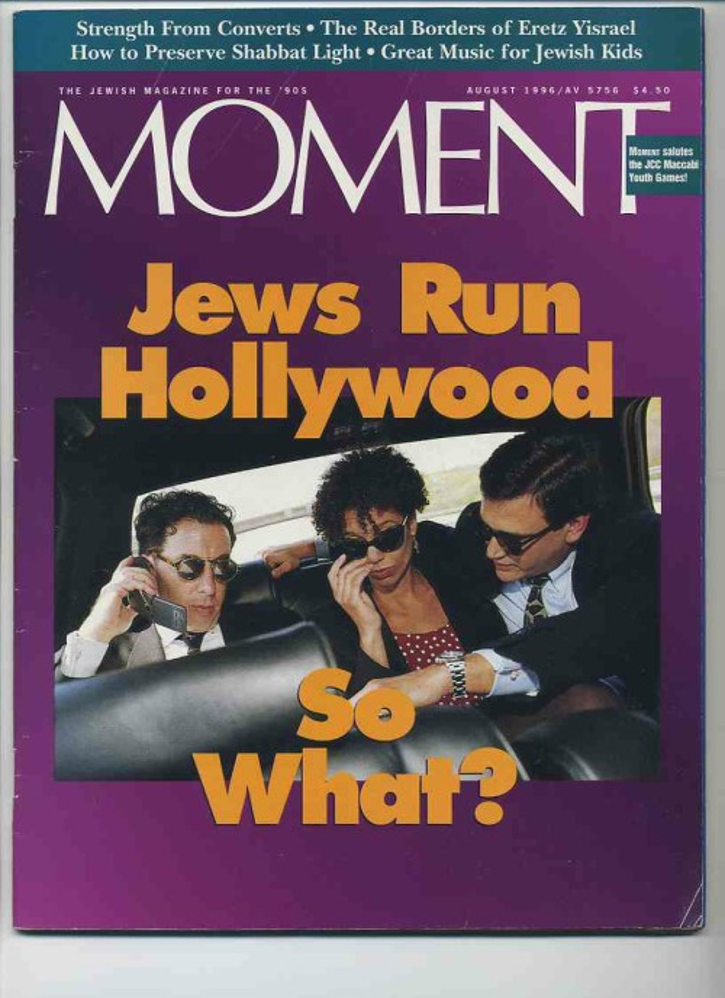
August 1996 Cover of Moment Magazine
Just before Christmas, TOO contributor Andrew Joyce came out with a very courageous and informative account of the damage various Jews have done through their activities at the upper end of the Western economic system in an area often labeled “vulture capitalism.” I will build on Joyce’s insights in this essay with a simple goal in mind: To further expose Jewish practices that enrich them while causing great harm to a huge number of non-Jews. I will do this by repeating many things I have written about already on this site, some of which are now over a dozen years old, which is ancient by Internet standards. Hopefully, my analysis will enlighten new readers or those just catching on to the Jewish Question. Most hopefully, my examples will allow TOO readers to spread this message to the masses of non-Jews thus far ignorant of the grave threats in our midst. And I will do this through the painless way of using Hollywood hit films to show how Jews hide their economic malfeasance right in plain sight.
After all, what can be plainer than Hollywood blockbusters starring the likes of George Clooney, Julia Roberts, Leonardo DiCaprio, John Travolta, Brad Pitt, Richard Gere, Susan Sarandon, Tim Roth, Jeremy Irons, Kevin Spacey, Danny DeVito, Gregory Peck, Ryan Gosling, Christian Bale and Steve Carell? All of these stars have been pawns brought in to conceal the facts about massive Jewish involvement in Wall Street finance — including immense malfeasance and endless instances of shady practices. Not only does Hollywood conceal these facts, it also projects them onto innocent Whites. And the tactic appears to work, which is why we TOO writers can never rest.
Joyce in his article aims to describe the “scavenging and parasitic nature” of these Jewish practices, labeling them “vulture funds” practicing “vulture capitalism,” thus explaining the essay’s title and use of a photo of a vulture:

Vulture Capitalism is Jewish Capitalism (December 18, 2019)
As good as Joyce’s metaphor is, however, there is a competing one: the vampire sucking the lifeblood out of all it touches. Recall that course on Marxism you may have taken in the 1970s or 80s, where Marx wrote in Volume I, Ch. 10 of Capital that “Capital is dead labour, that, vampire-like, only lives by sucking living labour, and lives the more, the more labour it sucks.”
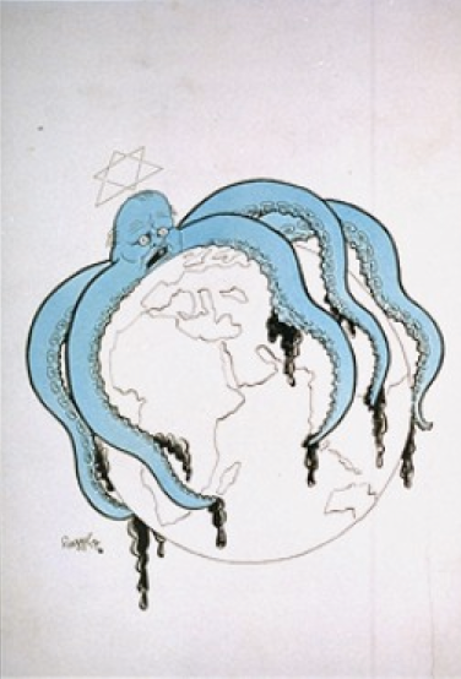
Vampire Squid
That apt quote was updated for modern sensibilities when Rolling Stone reporter Matt Taibbi gave us this priceless quip in “The Great American Bubble Machine,” his essay on the 2008 market meltdown,
The first thing you need to know about Goldman Sachs is that it’s everywhere. The world’s most powerful investment bank is a great vampire squid wrapped around the face of humanity, relentlessly jamming its blood funnel into anything that smells like money.
Damn, I love that quote.
It’s justified, too, just like Joyce’s use of the term “vulture capitalism.” See how Joyce does not mince words here:
That’s because it’s Jewish enterprise — exploitative, inorganic, and attached to socio-political goals that have nothing to do with individual freedom and private property. This might not be the free enterprise [Tucker] Carlson learned about, but it’s clearly the free enterprise Jews learn about — as illustrated in their extraordinary over-representation in all forms of financial exploitation and white collar crime. The Talmud, whether actively studied or culturally absorbed, is their code of ethics and their curriculum in regards to fraud, fraudulent bankruptcy, embezzlement, usury, and financial exploitation. Vulture capitalism is Jewish capitalism.
This issue of Jewish economic power mixed with morally questionable practices in gaining immense wealth has been an enduring theme I’ve written about for TOO, so I will use the present essay to resurrect some of my older writing likely long since forgotten. While I will add to the valuable information Joyce shared with us last December, as well as the follow-up article by “John Q. Publius” called Hedging their Bets (Who Really Decides Elections), where he notes that “Jewish hedge fund managers and plutocrats decide under what guise the neo-liberal machine will continue to operate, for it is in fact all window dressing,” my primary contribution will be to show how Jews in Hollywood create a deceitful medley of films that prevents the mass of goyim from ever connecting Jews to financial manipulation and theft.
In short, I aim to answer part of the question posed in the purple cover story posted above following the main title “Jews Run Hollywood.” The question I will work on is “So What?” The short answer is that in fact it matters a lot that Jews run Hollywood, from promoting diversity and holocaust guilt—subjects for another time, to erecting a mask that hides Jewish involvement in financial crime. Our task is to get behind the mask.
The Money Films
Wall Street. Although I haven’t reviewed it previously, I’ll start with Oliver Stone’s 1987 Wall Street, where (half-Jewish) director Stone was at pains to avoid portraying any of the leading characters as Jewish, despite the fact that the 1980s were famous for the rise of Jewish financiers on both sides of legality — Boesky, Milken, et al. The first book to read on this subject is Connie Bruck’s The Predators’ Ball: The Inside Story of Drexel Burnham and the Rise of the Junk Bond Traders. The book is a convincing account of Jewish financial mischief — that it is pervasive and has a massively negative effect on the greater non-Jewish world.
An even better book is James B. Stewart’s Den of Thieves, in which Stewart chronicles the misdeeds of Ivan Boesky, Martin Siegel, Dennis Levine (who wrote his own book, Inside Out: The Dennis Levine Story), and most of all, Michael Milken, the mastermind behind it all. Simply by describing all the Jews involved, Stewart makes it clear that it was a cabal of Jews that pillaged and destroyed some of the most well-known corporations in America at the time by inventing and peddling “junk bonds” as an “advance in capitalism” which enabled hostile takeovers of corporations while typically saddling them with huge debt and enriching themselves. A must-have book. (Intriguingly, the obituary of Stewart’s mother notes that her son James’ “spouse” is one Benjamin Weil, who is Jewish.)
Predictably, Den of Thieves was attacked as “anti-Semitic.” Jewish activist Alan Dershowitz called Den of Thieves an “anti-Semitic screed” and attacked a review by Michael M. Thomas in the New York Times Book Review because of his “gratuitous descriptions by religious stereotypes.” Thomas’s review contained the following passage:
James B. Stewart . . . charts the way through a virtual solar system of peculation, past planets large and small, from a metaphorical Mercury representing the penny-ante takings of Dennis B. Levine’s small fry, past the middling ($10 million in inside-trading profits) Mars of Mr. Levine himself, along the multiple rings of Saturn — Ivan F. Boesky, his confederate Martin A. Siegel of Kidder, Peabody, and Mr. Siegel’s confederate Robert Freeman of Goldman, Sachs — and finally back to great Jupiter: Michael R. Milken, the greedy billion-dollar junk-bond kingdom in which some of the nation’s greatest names in industry and finance would find themselves entrapped and corrupted.
Thomas was attacked as an anti-Semite simply for mentioning so many Jewish names all in one paragraph. His defense was to note that “If I point out that nine out of 10 people involved in street crimes are black, that’s an interesting sociological observation. If I point out that nine out of 10 people involved in securities indictments are Jewish, that is an anti-Semitic slur. I cannot sort out the difference.”
Other People’s Money. While not the first film I parsed regarding Jews and money, Other People’s Money, released in 1991, follows most closely the famous 1987 film Wall Street. The former film stars Gregory Peck in his last major performance, pitted against Danny DeVito as the peripatetic Wall Street takeover artist Lawrence Garfield. As I showed in my review, the movie is fully cleansed of Jewish identity, instead giving us the diminutive Italian-American DeVito outsmarting the more WASPy figure played by Peck.
Remarkably, this thirty-year-old film represents the exact same topic that Andrew Joyce started with in his Vulture Capitalism essay where he cited a recent Tucker Carlson segment called “Hedge Funds Are Destroying Rural America.” Joyce’s link to this segment describes it:
Tucker Carlson is perhaps the only major media figure in America willing to attack across party lines to make his point. On Tuesday night he went after Republican mega-donor Paul Singer in a withering 10-minute special segment on how Singer destroyed a small town in Nebraska in a hostile takeover of the sporting goods retailer Cabela’s.
Now watch the opening of Other People’s Money, with DeVito’s stark “I Love Money” soliloquy. Which ethnic stereotype does that fit? (Hint: think of Shakespeare’s The Merchant of Venice, whose main character’s name starts with “Sh” and rhymes with “High Rock.”)
The genesis of Other People’s Money is important, for it began as a play of the same name by Bronx-born Jerry Sterner. The original play’s protagonist, “a Jewish corporate takeover artist, was named Larry Garfinkle, not Garfield.” And stage actor Kevin Conway played him as a very Jewish character, to the point that “some critics and audiences … found Conway’s performance to be larger-than-life — uncomfortably so. Some reviewers called Conway’s Garfinkle a Wall Street Jackie Mason — a performance more akin to stand-up comedy than straight theater, one that emphasized the character’s ethnicity and loaded Sterner’s play with potentially anti-Semitic ‘Merchant of Venice’ overtones.”
Sterner worried about this, as he related in an interview with the New York Times, saying “I did not want the play to become controversial about what it is not about. It’s not about Garfinkle’s being Jewish, it’s about his doing good or not.” Because of his discomfort with Conway’s portrayal of the explicitly Jewish Garfinkle, Sterner added a “cautionary postscript” to the play’s published text: “The character of Garfinkle can be played in many ways. The one way he should not be played is overly, coarsely, ‘ethnic.’”
Even with this controversy, when the play moved to Hollywood, the script retained the name Larry Garfinkle, but it was crossed out and changed to “Garfield.” Director Normal Jewison (by most sources, not Jewish) admitted that he changed it. “It’s not important that Larry Garfinkle is Jewish. Boone Pickens isn’t Jewish. Jimmy Goldsmith is, as are nine out of the 12 top corporate raiders in America, but there are three others that aren’t. What does it matter, anyway? This isn’t about religion.”
Yeah, what does it matter? (Sigh)
In short, here’s the message: Jorgenson (played by Peck) and his family are the old America, captured nicely in a touching recreation of Norman Rockwell’s Thanksgiving Day feast. But the sad reality is that Jorgenson loses his factory, the workers are thrown out of work, and the man who loves money has won. Clearly, the impression is that White America has become a very different place, a place led by those like Larry Garfield — or Paul Singer, as in Tucker Carlson’s updated account from small-town Nebraska.
The Taking of Pelham 123. Jump ahead to the year 2009 and we find a remake of The Taking of Pelham 123, featuring the “Always-Better-Than-Whites” Denzel Washington up against John Travolta as a Wall Street mastermind who has first committed massive fraud, then gone insane.
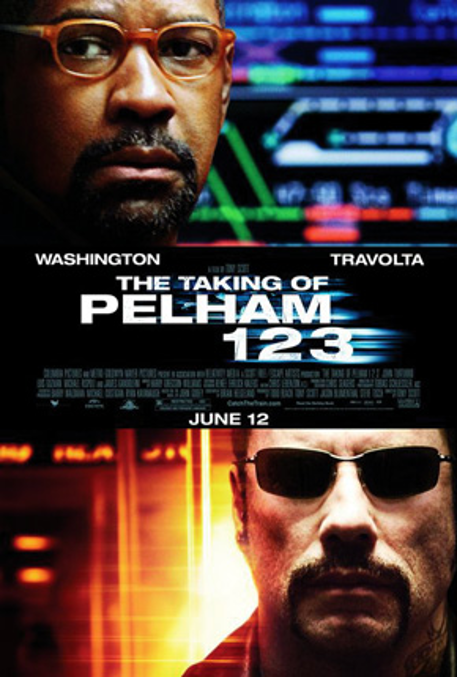
In this version, Travolta’s character is a New York ethnic Catholic very prone to guilt. He was also a high-rolling Wall Streeter who skimmed millions of dollars until he was caught and sent to prison. Upon his release, he concocts a scheme to make a killing on stocks when he induces panic in the city with a subway hijacking. Return to James Stewart’s account of the 1980s savings and loan swindles in Den of Thieves and you’ll find out that the thieves were ethnic New Yorkers all right, but they sure weren’t Catholic. Clearly, this deceit is part of a concerted media effort to blame others for Jewish (mega) misdeeds.
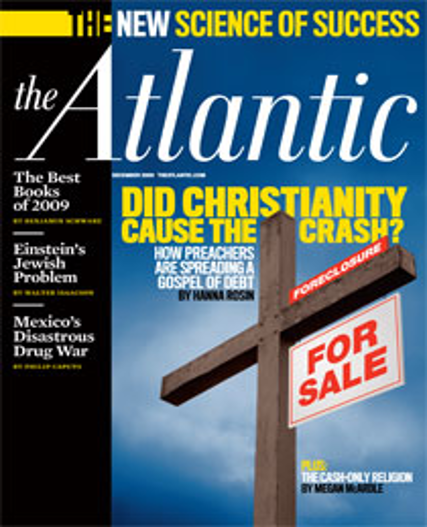
Just to crosspollinate, the Tribe that year called on Israel-born Hanna Rosin to fill out a cover story for the December 2009 Atlantic Monthly. Coming a year after mind-boggling economic swindles and bailouts that used up a significant portion of the universe’s zeroes, who gets blamed? Christians. Now that’s why Jews are so often credited with chutzpah.
Margin Call. Two years later, we come to the film Margin Call, starring Kevin Spacey and Jeremy Irons. J.C. Chandor’s 2011 film tells a story that loosely mirrors the fall of Wall Street giant Lehman Brothers. Even for Hollywood, however, the deception in this movie is staggering, and it occurs on many levels. It terrifies me to think that the masses likely swallowed this tale, particularly the images that have such a powerful subliminal impact.
Now picture this: The Margin Call premise is that a group of WASPs and a Catholic or two run a leading investment bank on Wall Street. Things turn sour, however, and the firm is looking at bankruptcy unless they can pull off a miracle.
Obviously, such a scenario makes little real-world sense. In the real world, Wall Street is heavily Jewish, especially the investment banks. This is so obvious that Wiki has a special segment called Jewish investment banks.
Lehman Brothers was a classic Jewish investment bank. For those wishing to find more explicit discussion about the Jewish origins and uninterrupted Jewish roots of Lehman Brothers, see the following indispensable books:
- Stephen Birmingham: Our Crowd: The Great Jewish Families of New York(Harper and Row, 1967) and The Rest of Us: The Rise of America’s Eastern European Jews (Little, Brown & Company, 1984);
- Jean Baer’s The Self-Chosen: “Our Crowd” is Dead — Long Live Our Crowd(Arbor House, 1982);
- Richard L. Zweigenhaft and G. William Domhoff’s, Jews in the Protestant Establishment(Praeger Publishers, 1982);
- Gerald Krefetz, Jews and Money: The Myths and the Reality(Ticknor and Fields, 1982).
Of particular note, however, is The New Crowd: The Changing of the Jewish Guard on Wall Street (HarperPerennial, 1989), by Judith Ramsey Ehrlich and Barry J. Rehfeld. The authors interviewed many of the Jewish participants under discussion here. They also fill in the background on Lehman partners and traders, contrasting, for example, “Our Crowd’s” Bobbie Lehman with the coarse and brash Lewis Glucksman. After reading this book, return to Margin Call to see how you have been lied to.
Margin Call sure was a deception sandwich. The head of the trading floor, Sam Rogers, is played by Kevin Spacey, who looks, acts and talks exactly like the middle-class White man he played in American Beauty. In Margin Call there is not even an attempt to give him a Brooklyn accent or exaggerated mannerisms.
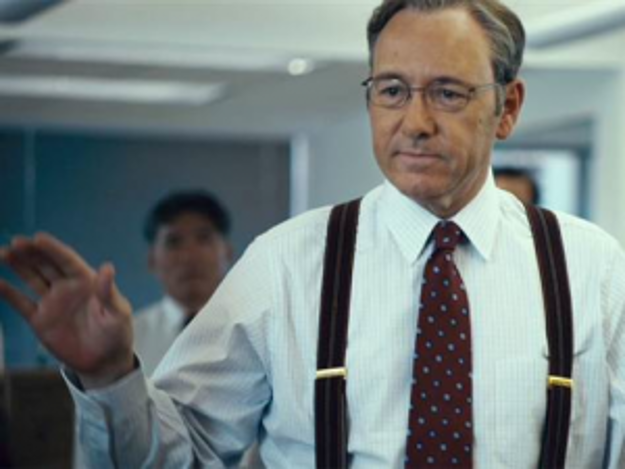
Kevin Spacey in Margin Call
Most egregiously, however, is the fact that the part of Lehman Bros. CEO is played by none other than the arch-British actor Jeremy Irons.
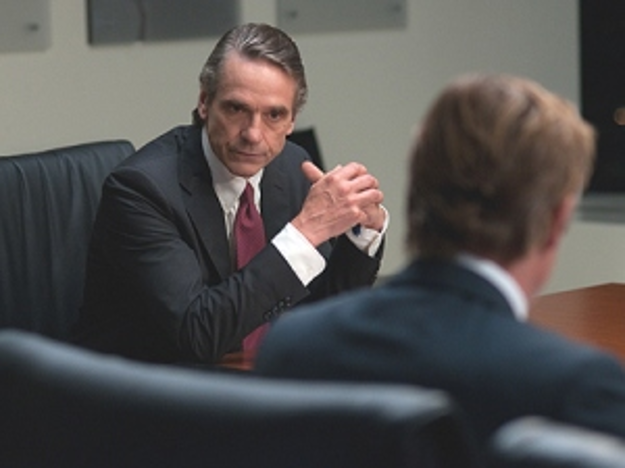
Jeremy Irons as the CEO of Lehman Bros.
Arbitrage. A year later, the lying continued as Richard Gere starred opposite aging beauty Susan Sarandon and Tim Roth in Arbitrage. Gere plays a Wall Street character quite willing to bend and break all kinds of rules. As in the other Wall Street films just mentioned, the mission of Arbitrage is to mask the Jew and project the blame onto gentiles. It really is breathtaking.
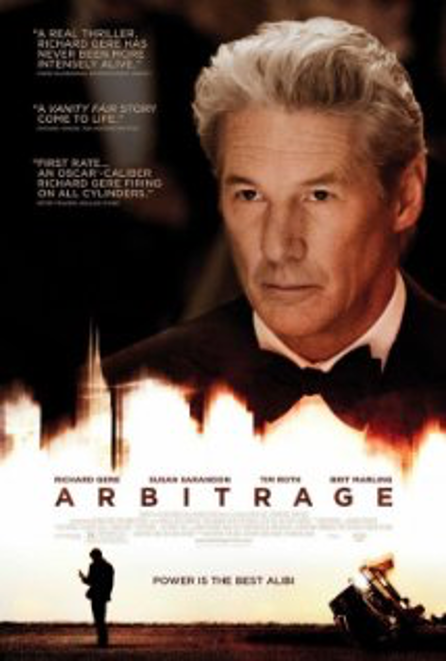
The film’s opening solidly sets up the identity of Robert Miller (Gere) and his clan as thoroughly White and Christian. In an interview, millionaire Miller attributes his innate pessimism about events to his parents, who had grown up with the Depression, Pearl Harbor and The Bomb. His everyman Christian American background is confirmed by a comment that his father was a welder in the Navy and his mother worked for the Veteran’s Administration.
Soon after, he returns home to a surprise birthday party, where he is surrounded by a large extended family. His wife, played by Sarandon, is clearly European-American, as is his daughter Brooke and each and every child running about the room. There is not one hint that Miller, his family, or anything in his home could be anything other than gentile American.
Soon Miller gets himself in trouble and ends up short of cash, so he manipulates $412 million to paper things over. Along the way he also gets his mistress killed and burned to a crisp when he crashes a car after a few drinks. (Naturally, he flees the scene and tries to pin it on a young African American; those rich WASPs are really horrible people.)
The finale of the film lays it on thick: Rich gentiles are thoroughly corrupt when it comes to money. In the last fifteen minutes, we see how Miller is able to deviously escape the suspicions about him, even though his wife has connected the dots and figured out how guilty her husband is. Crushed by his infidelity and the suffering he has put their daughter Brooke through, she responds — by coldly blackmailing him. Either he coughs up a significant sum of money for her favorite charity, or she divorces him and walks away with perhaps far more.
Next, we cut to a scene with the man who bought Miller’s firm, James Mayfield (who may as well have been named James Mayflower, given his mien and surroundings), who is shown riding in his limousine to the “Benefit Gala in honor of The Miller Oncology Center.” He then exits the limo and ascends the stairs to the goy gala — the entire affair is sheer goy hypocrisy. The money for the new center is tainted, and everyone in attendance pretends that everything is honorable. Miller is all smiles, his wife smiles, even his disillusioned daughter goes along, cynically but without conviction feting her father: “A dedicated businessman, a family man, a philanthropist, and an all-around humanitarian. A man I am very lucky to call my mentor, my friend, and my father.” The message: behind America’s most sterling institutions and leaders lie deceit and insincerity — gentile deceit and insincerity, of course.
The reality, we know, is different, as TOO writers Joyce et al. have shown, along with others. Former Counter-Currents writer Andrew Hamilton, for instance, showed four years ago what real hedge fund managers were doing and who they were:
More often than not the privileged Jews turn around and use [their] vast wealth … to advance anti-White, pro-Jewish, and Left-wing causes, thereby harming America and the world in two ways — economically through callous and shortsighted market operations, and politically through their “philanthropy” and lavish political donations. George Soros has done enormous harm to Whites worldwide in this manner. . . .
Hamilton specifically notes the shocking wealth concentrated in such hands, referring to Forbes Magazine’s recent ranking of the richest hedge fund managers in the United States by estimated personal net worth: “Twenty-four of the 32 names on the list (75%) are Jewish. Of the 10 wealthiest, 8 (80%) are Jewish.” He further adds that “Despite their social and economic power and privilege the names of hedge fund managers are virtually unknown even to educated and informed people, never mind the general public.” In good part, we can thank Hollywood for this.
The Wolf of Wall Street. Thus far, I’ve been a good sport about reviewing these deceptive Wall Street films, but 2013 saw a blockbuster that left me speechless. Here was a film with one of Hollywood’s biggest goy actors, directed by one of Hollywood’s top maker of Mafia films, and based on the autobiography of a convicted Jewish Wall Street swindler who positively reveled in his Jewish identity and that of his cohorts. Yet the film completed whitewashed this.
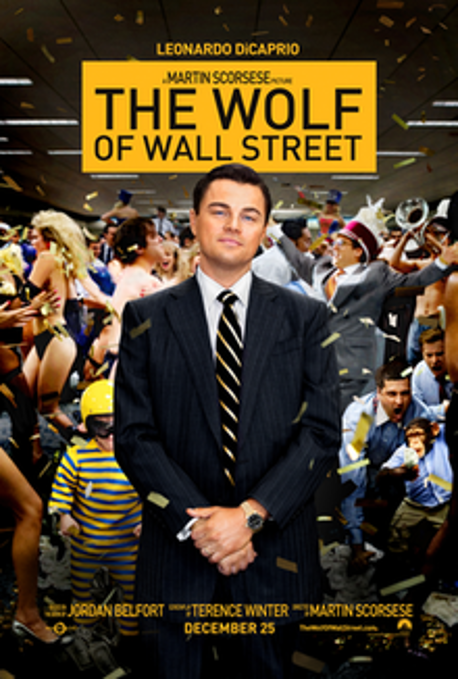
Here’s the howler: As the bantam Jewish stock fraudster Jordan Belfort, director Martin Scorsese chose none other than six-foot-tall, (sometimes) blond-haired Leonardo DiCaprio to bleach the story of anything Semitic. This has to go down as one of the most egregious miscastings in Hollywood history.
Why did it happen?
My view is that this is a classic case of Hollywood deceiving the public, and I have plenty of evidence for this.
In the film, at exactly five minutes into the story — just after DiCaprio’s character has snorted cocaine with a hundred dollar bill and done a little trick by making us think “this shit” (cocaine) will make you invincible, when it fact he means the money he is using as a straw — he launches into a speech as he enters his busy trading floor:
See, money doesn’t just buy you a better life — better food, better cars, better pussy — it also makes you a better person. You can give generously to the church, or political party of your choice. Save the fuckin’ spotted owl with money (italics added).
“To the church.” I like that. In his memoir from which the film springs, Belfort is refreshingly forthright that he is Jewish — and that, with one exception, all of his close associates are Jewish — as are the majority of his traders. Now in the film — which “happened” to open on Christmas Day 2013 — we are informed that rich people like DiCaprio’s Belfort can give “to the church,” not synagogue or ADL or a Jewish think tank. It is this kind of subtle deception that would, in my view, prevent the vast, vast majority of Gentile viewers from understanding that these financial criminals are Jewish at all.
Back in 2007, the convicted trader Jordan Belfort released his autobiography that engendered the later film. In this book, The Wolf of Wall Street, Jewish themes are front and center, beginning with the conflation of Jews and money. Belfort founded the trading firm of Stratton Oakmont (a very British-sounding name) and went on to amass a fortune. His descriptions of his escapades spending that money are hilarious, along the lines of Hunter S. Thompson in Fear and Loathing in Las Vegas. I honestly loved Belfort’s book.
Lust for the “shiksa goddess” is another main theme, as Belfort is absolutely smitten with the gentile woman he manages to marry. If one wants an initiation into Jewish attitudes toward ethnicity, Jewish and otherwise, this is the book to start with. The real fascination surrounding Jewish characters comes with Belfort’s descriptions of his comrades, beginning with his right-hand man, Danny Porush. Danny, Belfort begins, “was a Jew of the ultrasavage variety.” With “steel-blue eyes,” Porush did not appear to be “a member of the Tribe,” a situation Porush himself helped along by dressing and acting like a Gentile. Like many other Jews, “Danny burned with the secret desire to be mistaken for a WASP and did everything possible to cloak himself in complete and utter WASPiness.”
Stratton Oakmont’s head of the finance department, Andy Greene, however, would never pass as a WASP, beginning with the fact that he had “the worst toupee this side of the Iron Curtain.” To Belfort, Greene’s toupee “looked like someone had taken a withered donkey’s tail and slapped it onto his egg-shaped Jewish skull, poured shellac over it, stuck a cereal bowl over the shellac, and then placed a twenty-pound plate of depleted uranium over the cereal bowl and let it sit for a while.”
When discussing another Greene who worked for him — this time Kenny “the Blockhead” Greene — Belfort describes Greene’s mother Gladys: “Starting from the very top of her crown, where a beehive of pineapple blond hair rose up a good six inches above her broad Jewish skull, and all the way down to the thick callused balls of her size-twelve feet, Gladys Greene was big.”
She was also quite willing to break the law, beginning with evasion of taxes on the cigarettes she and the adolescent Kenny smuggled into New Jersey. When Kenny turned fifteen and began smoking pot, his mother immediately became a pot dealer, providing her son “with finance, encouragement, a safe haven to ply his trade, and, of course protection, which was her specialty.” And because cocaine “offered too high a profit margin for ardent capitalists like Gladys and the Blockhead to resist,” they were soon enough plying that trade on Long Island, too.
One gets the feeling that for Belfort, the descriptor “savage” has a redeeming quality to it, as he describes many Jews that way, such as “the most savage young Jews anywhere on Long Island,” those from the towns of Jericho and Syosset. Then there is the Wall Street legend, J. Morton Davis, “a savage Jew,” and even Belfort himself, “the most savage Jew of all.” And don’t forget the “Quaalude-addicted, potbellied savage Jew with a thousand-watt social smile and a secret life’s mission to be mistaken for a WASP” who ripped Belfort off when selling him horses. Belfort’s book unashamedly celebrates Jews.
The film, however, cannot be more different, for reasons stated above. I positively scoured this film and found next to nothing — and it’s nearly a three-hour film. Here’s about all I could find: When one character demands that another come pick up millions in elicit earnings, the latter is insulted and says “I’m not fuckin’ schvartze.” How many caught that one?
One more example that will surely crop up concerns Belfort’s father Max — and the character who plays him, Rob Reiner. In this case, it again comes down to insider/outsider interpretations. Those who know that Reiner is himself Jewish and know that the real Belfort is Jewish will get it. Others, probably not. Back in the early ‘70s, did American viewers see “All In the Family” character Michael “Meathead” Stivic as Jewish? Same actor. Same ethnic undermining without the goyim knowing about it, either.







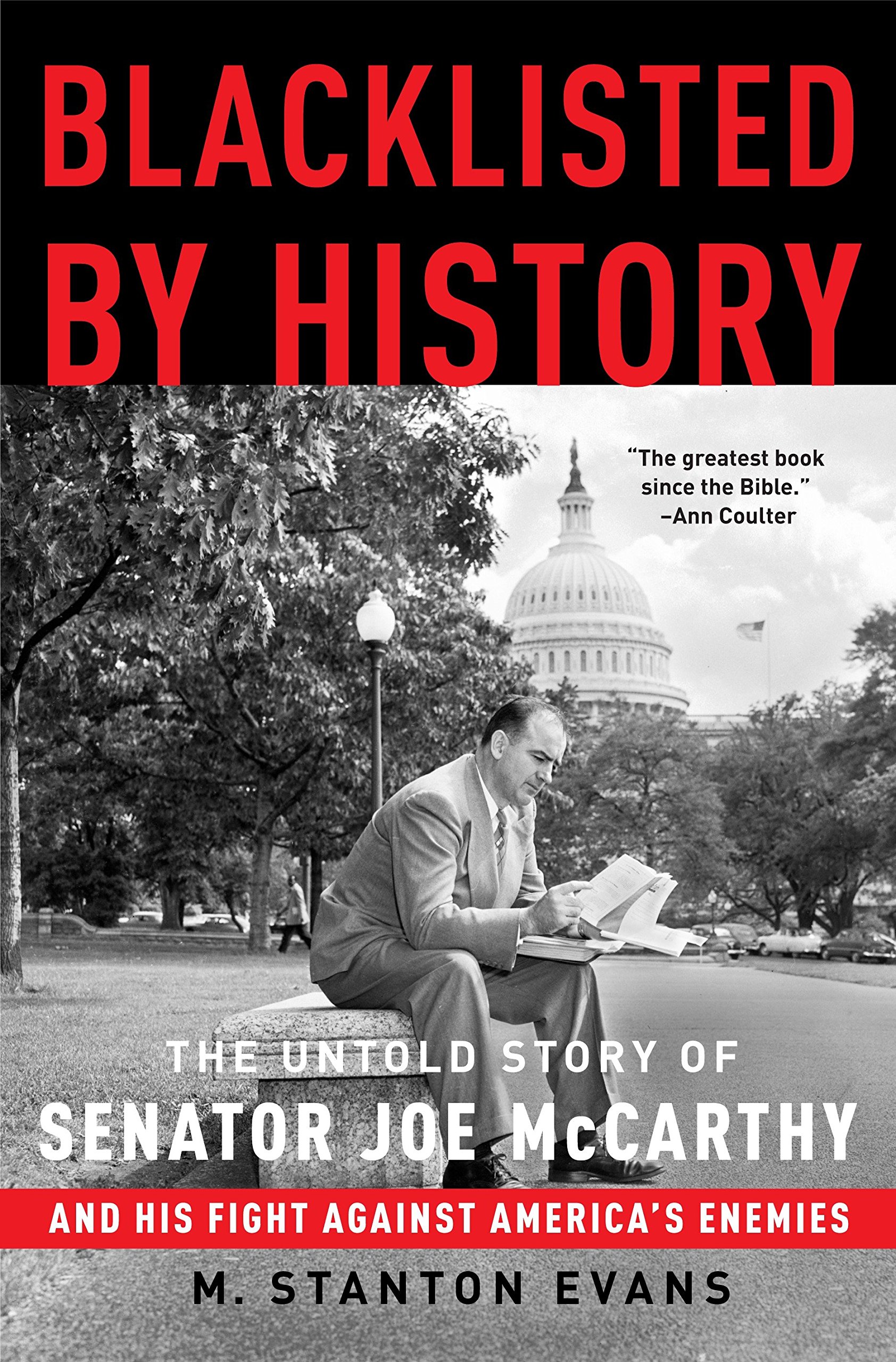 I believe the present political crisis should be seen as a struggle between our new, Jewish-dominated elite, stemming from the 1880–1920 First Great Wave of immigration, and the traditional white Christian majority of America, significantly derived from pre-Revolutionary colonial stock but augmented by subsequent white Christian immigration. This new elite, while influential prior to World War II, had increasing influence throughout the 1950s—typically seen as a rather placid decade of peace and prosperity, but in reality, a decade of intense Kulturkampf roiling just below the surface but bursting out periodically, most spectacularly with the controversies surrounding Sen.
  Even more importantly, the Jewish community has been
  As Peter Novick