Petliura and the Pogroms in Interwar Ukraine, Part 1
The fall of the Romanov dynasty saw Russia descend into chaos and even as the First World War was raging, yet more conflicts would spring up. In Ukraine, the violent confusion that came with the end of the Romanov’s empire has become particularly controversial because of the impact it had upon Jewry living there. One figure in particular is contentious, Symon Petliura, who for much of the last century has been vilified as a murderer of Jews. His death and its aftermath have had an impact not only in Ukraine but elsewhere in Europe, particularly France, where the trial of his Jewish assassin would have effects still felt to this day.
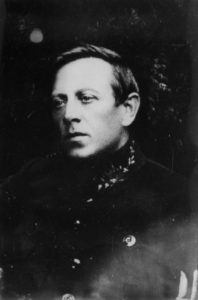
Symon Petliura
After the first Russian revolution ended the monarchy, leading members of the Ukrainian intelligentsia came together to form the Central Rada. The Rada was not initially in favour of independence, but began acting almost immediately as if they were an independent government. With the rise of the Bolsheviks, however, they would proclaim an independent Ukrainian People’s Republic. The leader of this new entity was the historian and socialist Mykhailo Hrushevsky. Indeed, all the members of the Rada were socialist to some degree or another, including Symon Petliura. The first incarnation of the Ukrainian People’s Republic would prove short-lived thanks to the Bolsheviks, who, in January of 1918 successfully captured Kiev. With the help of the German and Austro-Hungarian armies, the Bolsheviks were driven out shortly thereafter. However, instead of the Rada the new Ukrainian government was that of the conservative Pavlo Skoropadskyi. He was proclaimed Hetman, but his Hetmanate did not last the year. His government was overthrown by the Directory, which was led by Volodymyr Vynnychenko, Fedir Shvets, Andrii Makarenko and Symon Petliura. The Directory was in many ways a continuation of the Central Rada as both were socialist, both claimed leadership of a People’s Republic and many of the leading figures in the Directory, like Petliura, had been part of the Central Rada in 1917.
Even after the Treaty of Brest-Litovsk and the end of the Great War in Eastern Europe, conflict raged on. The Bolsheviks saw their chance to once again strike at Ukraine, but they were not the only rivals the Directory had to face. So-called White armies — conservative forces loyal to an autocratic Russia of some description, often monarchist but not exclusively — and even an army of led by the Ukrainian Nestor Makhno were also vying for control of Ukraine. Read more