Dresden
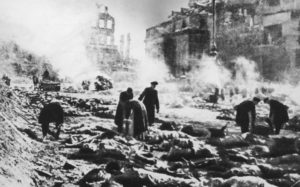
A visit to Dresden provides proof positive that Germans, staggering under a monumental weight of white guilt, lead the way in the suicide of the west.
On a recent visit to Germany I was quickly disabused of my notion that atonement for the sins of the fathers would be perhaps subject to some kind of statute of limitations. Surely, generations after the cataclysm of the Second World War, Germans would be entitled to feel at least some diminution of the guilt attached to their country’s supposed single-handed initiation of a world war (no, make that total blame for two world wars) and the alleged attempted genocide of a charmingly innocent racial/religious group.
But no, this peculiar brand of evil appears to have leached into the very DNA of the Germans. It is as though babies born in Germany of White mothers arrive with indelibly blood-stained hands. Like children born into religions, they are born into guilt. Ironically, the efforts of Hitler and the entire apparatus of the Third Reich in tirelessly identifying who were Germans and who were not has made it ridiculously easy to determine who to pin the everlasting blame on — those who are unable to identify as anyone other than a German. Non-German citizens of Germany need not be concerned.
What has led me to so unshakable a conviction? In a word, Dresden — more specifically, the murder of Dresden over two apocalyptic days in February 1945. This is a subject which has fascinated and appalled me since long ago reading The Destruction of Dresden by David Irving. It is this book from which most of the facts and figures relating to the atrocity given here come, as well as from Thomas Goodrich’s Hellstorm: The Death of Nazi Germany, 1944–1947. One cannot read these two books without being forced to conclude that the holocaust that consumed Dresden was a war crime reaching a level of evil on a par with those committed against Hiroshima, Nagasaki and Tokyo. But guilt in these atrocities has never been expressed, let alone admitted, nor will ever be admitted. Platitudes and rationalizations are offered instead. Read more
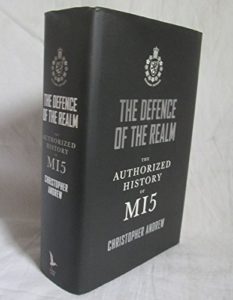 One such was revealed by Christopher Andrew, the official historian of Britain’s security service MI5, in 2009, when he said in his magisterial history, that at the end of the war there was a ban on the service recruiting any more Jews to its ranks because of fears they would be disloyal. This informal ban stood for thirty years. It was a startling revelation, but produced little further comment.