The Testament of a European Patriot: A Review of Dominique Venner’s “Breviary of the Unvanquished” (Part 2)

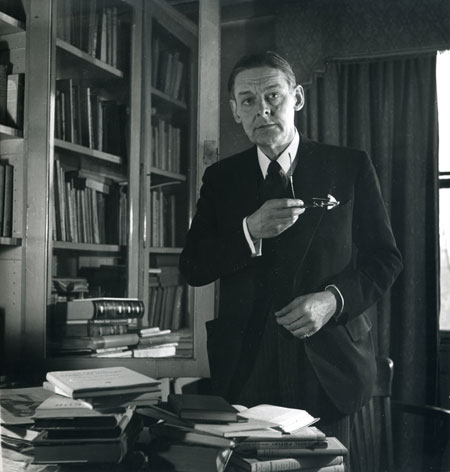
Dominique Venner in his youth

Part 1

We Heretics: A Thankless Struggle

Venner has no doubt that, if we are to live amidst the existential threats against us, we must struggle. Again illustrating his attraction to the heroic Western tradition noted in Part 1, struggle is integral to life. In a particularly inspiring passage for those of us at war with the present system, Venner writes:

To exist is to struggle against that which is denying me. To be unbowed does not consist in collecting heretical books, dreaming of fantastical conspiracies, or taking to the maquis in the Carpathians. It means holding oneself up to one’s own standard in the name of a higher standard. To be loyal to oneself in the face of the void. To ensure one is never cured of one’s youthfulness. To prefer alienating people to living on one’s knees. Amidst the setbacks, to never ask oneself the question of the uselessness of the struggle. We act because it is disgraceful to give up, and it is better to go down fighting than to surrender. (28)

Venner often notes that history is filled with surprises and unexpected reversals. As a result, the demobilization caused by hopelessness is somewhat irrational and in any case unhelpful: You never know in what circumstances our labors could prove salutary. Read more

The Testament of a European Patriot: A Review of Dominique Venner’s “Breviary of the Unvanquished” (Part 1)

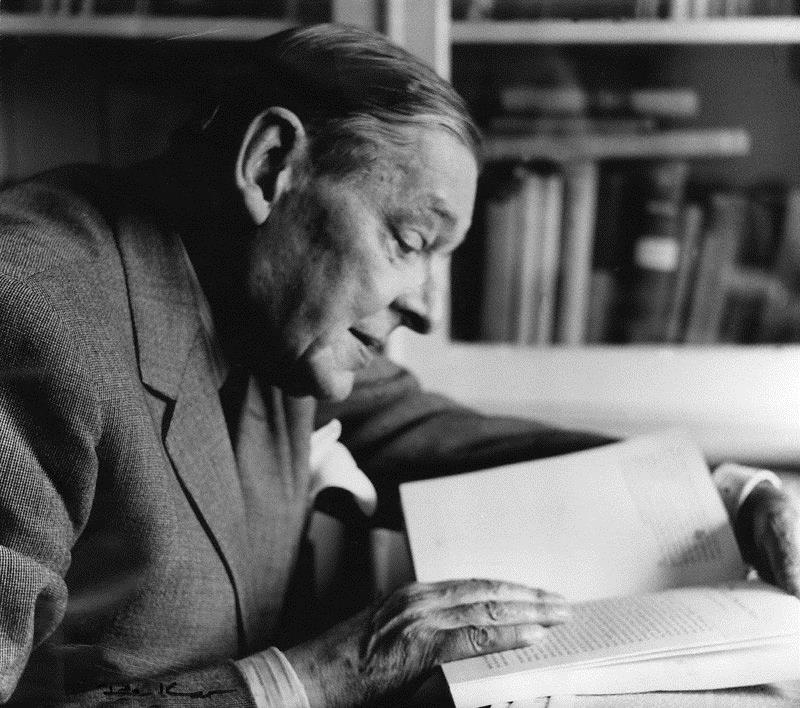
Venner

Dominique Venner, Un samouraï d’Occident: Le Bréviaire des insoumis (A Samurai of the West: Breviary of the Unvanquished; Pierre-Guillaume de Roux, 2013).

All Europeans, whether they are of the Old World or the New, are suffering today. Their very existence is demonized by a reigning culture which would prefer to see them blended into oblivion. Whereas the old beliefs — Christianity, communism, fascism — are dead or dying, no new faith has replaced them. We, ourselves, are dying as peoples, slowly vanishing from the face of the Earth. But some Europeans refuse to go down quietly, notwithstanding the base allures of comfort. So it was with Dominique Venner, an erudite historian and European patriot, who lived, fought, and died by the pen and the sword.

Venner’s last book — which translates as A Samurai of the West: The Breviary of the Unvanquished — presents itself as his political testament and his final attempt to reconnect Europeans with their tradition and thus awaken them ethnically and politically. This Breviary is not a traditional prayer book but rather presents “the substantive core” of the European tradition and is “a collection of writings, thoughts, and examples to which one can turn to every day to nourish one’s thoughts, one’s acts, and one’s life” (34). Venner says that the world-view implicit in this work can form the basis “to build the personal life of each of us, of families, of nations, and of living communities” (36).

The Breviary is then not only a wonderful introduction to Homeric and Stoic wisdom, but also has practical advice on day-to-day life: On establishing one’s own “breviary” of quotes from sacred texts and great thinkers, on communing with nature in the woods, on traveling across Europe like the Wandervögel, on cultivating beauty in one’s own life, or on the reconstruction of one’s family tree. Read more

Dr. Daryl G. Smith’s Imperative for Diversity (Part 3 of 3)

Part 1
Part 2

So let us examine some realistic aspects of those three foundational branches of “Diversity’s Promise”:  It must be an imperative; it must be inclusive; and it must differentiate:

Since this campus is in San Diego County, there is a perfect example that I personally recall regarding the U.S. Navy in San Diego.  LT Kara Hultgreen was a Navy Pilot over twenty years ago who was artificially thrust forward through a jet training pipeline because there was a “Top-Down Imperative” (from Washington) to produce a female F-14 Fighter Pilot.  Her flight performance record as a student would never have permitted her to get as far as she had if she were a male F-14 pilot.  She was killed in 1994 behind the tail of the USS Abraham Lincoln, having stalled her airplane out through pilot-error, crashing the $38 million dollar fighter jet into the Pacific Ocean, and almost killing her backseat Radar Intercept Officer (who safely ejected).

My point is not that women don’t have a place as Navy Jet Pilots (there are countless women in the field of aviation), but they would have fallen naturally into this position as those with “The Right Stuff” were given the opportunities.  The point is the Navy’s affirmative action imperative resulted in an unqualified candidate and a real-life catastrophe.   Similarly, the line of thought Dr. Smith makes can be compared to making it an imperative to fit a square peg into a round hole, wishing to fit as many different shapes as possible into that round hole.  If the square peg or other shapes don’t fit into the round hole, then modify the round hole until that new peg can be forced in!

As an employee in a field that requires demanding skills, experience and scientific knowledge, the idea of rewriting the job descriptions to reflect this new diversity mandate essentially trivializes serious professions, and I view this as more a disservice to the institution, one that could easily produce an accident as in the Hultgreen story or at least drag down its overall effectiveness or efficiency. Read more

Eine Rezension von „Warum die Deutschen? Warum die Juden?” — Teil 2

  1. Januar 2016

    English version: Review of Why the Germans? Why the Jews?

Brenton Sanderson

Teil 1.

Götz Alys Neidtheorie als Erklärung für den deutschen „Antisemitismus”

Wie in Teil 1 erwähnt, ist die zentrale These in Warum die Deutschen? Warum die Juden?, dass die deutsche Judenfeindschaft im 19. und frühen 20. Jahrhundert durch den Neid des durchschnittlichen Deutschen auf den rapiden sozialen und wirtschaftlichen Aufstieg der Juden motiviert war. Aly baut auf der These seines vorherigen Buches, Hitlers Volksstaat auf, in dem behauptet wird, dass die Beliebtheit der Nationalsozialisten der Tatsache zugeschrieben werden kann, dass „die Mehrheit der Deutschen in materieller Weise, direkt oder indirekt, von der Enteignung der Juden profitierten.”[i]

Aly hält fest, dass das gleiche Argument ursprünglich vom jüdischen Intellektuellen Siegfried Lichtenstaedter vertreten wurde, der beim Versuch, den Aufstieg des Nationalsozialismus und seine antijüdische Politik in Deutschland zu begründen, 1937 bemerkte, dass die NSDAP „eine Partei von Emporkömmlingen” sei. Juden wurden gehasst, weil sie Konkurrenten waren, was „Überleben, Ehre und Prestige” anging. Der aggressive Antisemitismus” in Deutschland basiere auf Neid und dem Wunsch nach sozialer Besserstellung. Wenn Juden als Gruppe als „unverhältnismäßig glücklicher” angesehen wurden als andere Gruppen, schrieb Lichtenstaedter, „warum sollte dies nicht zu Missgunst und Ressentiments, Sorgen und Bedenken führen, was die eigene Zukunft angeht, wie es allzu oft der Fall ist zwischen Einzelpersonen.”[ii]

Theodor Herzl

Die gleiche grundlegende Argumentation vertrat der wegweisende zionistische Führer Theodore Herzl. Kevin MacDonald zitiert in Absonderung und ihr Unbehagen Herzl: „Ein Hauptgrund für den modernen Antisemitismus ist, dass durch die Emanzipation Juden in direkte wirtschaftliche Konkurrenz mit der nichtjüdischen Mittelklasse getreten waren. Antisemitismus, der auf der Konkurrenz um Ressourcen basierte, war rational.” Laut Herzl „konnte man nicht von einer Mehrheit erwarten, ‘sich unterjochen zu lassen’ von ehemals verachteten Außenseitern, die man gerade aus dem Ghetto gelassen hatte.”[iii]

Was laut Aly Deutschlands Juden so beneidenswert machte war die Art, wie sie die neuen wirtschaftlichen Chancen ergriffen, die sich im Laufe des 19. Jahrhunderts ergaben, als die alte Feudalordnung der modernen Welt Platz machte. Nichtsdestotrotz, um die unangenehme Schlussfolgerung zu vermeiden, dass der deutsche „Antisemitismus” des 19. und 20. Jahrhunderts somit rational war, behauptet Aly, dass der eigentliche Grund für die von Neid getriebene Feindschaft gegen Juden ausschließlich in den psychologischen Unzulänglichkeiten und Deformierungen der Deutschen selber begründet lag. Somit waren es für ihn geistige Defizite der Deutschen, und nicht irgendein jüdisches Benehmen, das die deutsche Nation einen Weg einschlagen ließ, der im „Holocaust” gipfelte. Read more

Dr. Daryl G. Smith’s Imperative for Diversity (Part 2 of 3)

Part 1.

The Q and A

The first questioner noted that at a recent student meeting Whites who advocated an all-inclusive Student Union were “shouted down as being racist.  Clearly on campuses across the nation the White European-Americans have been disenfranchised and marginalized to the extent that these are now the students with poor self-esteem, because the system is not inclusive, but exclusive. Whites are denied the right to association and denied the right to be who they are! The pendulum of racism has swung this last century clear from one side to the other without ever centering!  The time is now to abandon the childish, well-worn, weaponized words like ‘bigot’ and ‘racist’, and to begin building on communities that can tolerate all the people they live with, including the majority that have been responsible for the unique contributions to the Western Civilization we enjoy.”  He went on, quoting from a statement she made earlier about her inclusivity clause:  “You stated that there is ‘not a single identity that you wouldn’t stand and fight for’.  If that’s the case, then will you help me here today with your administrative connections and expertise in the field in establishing a White student union on this campus?”

This seemed to disorient the professor, and her response seemed to shift from one explanation to another without completing her thoughts.  But basically she was saying that you have to consider the structure of the system as a whole. She agreed that not every White person is privileged — “There are a lot of poor [White] folks in the Appalachians.  And we should be standing… as a matter of fact if Martin Luther King had not been assassinated, he would have dealt with class issues.”

But she insisted that Whites have a whole host of privileges denied others. “Just as I have a privilege called walking I need to recognize that I have a privilege called Whiteness.  I don’t get followed.  My son doesn’t get stopped by the police.  That doesn’t diminish who I am.”

She also claimed that for Whites to have their own identity groups would be the same as being under “the banner of the Klu Klux Klan.”  And the fact is that White people still run the universities. “As you go up [to the higher echelons], look at the faculty, the demographics of most faculties are quite White, and it’s historically White male.  Now I’m not going to ban Whites or males … My son is one.  But if we don’t begin to understand the histories….” Read more

Dr. Daryl G. Smith’s Imperative for Diversity (Part 1 of 3)

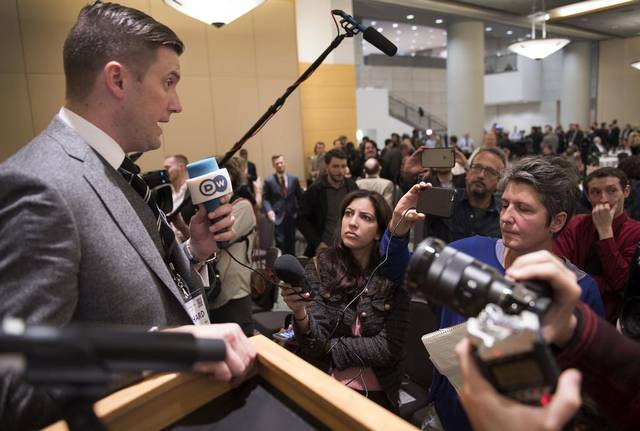
“Just as I have a privilege called walking, I need to recognize that I have a privilege called Whiteness!”  That was one of several points strongly asserted by Dr. Daryl G. Smith in her response to an audience question regarding the absence of any White Student Associations on campuses across the nation.  Prof. Smith, a Senior Research Fellow and Professor Emeritus of Education and Psychology at Claremont Graduate University, was giving her presentation at Cal State San Marcos on “Diversity’s Promise for Higher Education” to a group of about 40 minority students and a small cadre of curious community members.  Her speech and the accompanying slideshow were intended to publicize her book with the same name, subtitled “Making it Work.”

As a White man in my fifties, I sat through the twenty-minute Q and A session, particularly interested in how she would deal with perhaps the most profound issue facing American students today:  the myriad identities in today’s identity smorgasbord and how Whites should respond to it.

The professor’s walking-privilege analogy stresses that if not disabled, people are rarely cognizant of their abilities — they don’t normally recognize or even appreciate their common, typically human abilities.  In the same way, so the analogy goes, Whites don’t give a thought to the life-long perks they receive because of their European racial ancestry.

This is certainly a grave charge against White students forced to live and breathe the multi-cultural society that’s been thrust upon them. Born long after the Civil Rights Movement, they have been thoroughly conditioned and indoctrinated by forces like the mainstream media and the public education system on the evils of “racism” — but now they are told that they are still the problem and the struggle against them must continue indefinitely. Read more

The Simon Wiesenthal Center Trump Card in the Serb-Croat War of Memories

Zuroff

Ephraim Zuroff of the Simon Wiesenthal Center, pictured in Croatia, 2007, at the main square in Zagreb

The Jewish and Serbian communities in Croatia have decided to boycott the official commemoration of their World War II dead, which is scheduled to take place in Croatia from April 15 to April 22 of this year. Their boycott was expectable. Over the last twenty years there has been an increasing effort among Croat historians and an array of nationalist politicians to downplay Croatia’s involvement in crimes with their National Socialist allies during World War II, while significantly increasing the numbers of casualties incurred by disarmed Croat NS-allied soldiers and civilians who were victims of Yugoslav Communist partisans after WWII.

Predictably, the Simon Wiesenthal Center and its chief moral admonisher for  East  European governments, Ephraim Zuroff, are now playing an important role in reprimanding the Croat government and public for not emphasizing the primacy of Jewish victimhood — never mentioning massive post-war crimes committed by early Communist governments in Yugoslavia and elsewhere in Eastern Europe. With his frequent criticism of East Europeans, who had allegedly failed to come to the rescue of persecuted Jews in war-torn Europe, Zuroff has managed to pit diverse nationalist narratives in East Europe against each other. The simmering conflict of World War II memories between Croatia and Serbia has again reached a boiling point with insults of “Fascists”, “Communists”, “anti-Semites” flowing around on both sides. From the point of view of international security, the relationship between Serbia and Croatia does not look good. It is at its lowest point since their bloody divorce following the break-up of Yugoslavia in 1991. Read more