• MISSION STATEMENT
  • TERMS
  • PRIVACY
The Occidental Observer
  • HOME
  • BLOG
  • SUBSCRIBE TOQ
  • CONTACT USPlease send all letters to the editor, manuscripts, promotional materials, and subscription questions to Editors@TheOccidentalObserver.net.
  • DONATE
  • Search
  • Menu Menu

The Inevitable Republic: Should White Australia Ditch The Monarchy?

April 30, 2023/23 Comments/in Featured Articles/by Jason Cannon

As the vote on the Indigenous Voice to Parliament referendum looms, Australian dissidents and other supporters of White Australia should also begin casting their eyes to the next item on the left-wing constitutional amendment agenda: a second referendum on whether Australia’s constitutional ties to the British monarchy should be severed. Prime Minister Albanese publicly poured cold water on a republic move in the days after the death of Queens Elizabeth II, stating that the federal Labor government has no plan to pursue a referendum on the monarchy within the current term of office. Behind the scenes however, moves are being made to prepare the groundwork for another referendum push. The result of the failed referendum in 1999 has shown once again that a democratic vote in support of a change desired by progressives is binding, but a democratic vote against is merely a temporary setback to be overcome at a later date.

In June 2022, just months before the death of the Queen, Federal MP Matt Thistlethwaite was appointed to the newly created position of Assistant Minister for the Republic, a role dedicated to officially campaigning for an Australian republic on behalf of the government. The Reserve Bank of Australia decided, without much outcry, that King Charles III would not replace Elizabeth II on future Australian $5 banknotes. Then in October 2022, the Australian Republican Movement (ARM), a nationwide campaign group first formed in 1991, elected a fresh group of directors, led by former soccer player and refugee activist Craig Foster.[1] The stalwarts of the ARM appear invigorated by the scandals of Princes Harry and Andrew and the passing of Elizabeth (and with her the weakening of the popularity of the institution she represented for 70 years), which has presented the perfect opportunity to renew the fight.

How should patriotic Australians approach the question of a republic? Certainly the debate is older than the formation of the country itself and there are no hard or fast rules on whether a defender of White Australia must necessarily be a Republican or a Monarchist. The recurrent split down the centre of pro-White activism in Australia over the years has always been between two broad camps. On the one side are those who favour a nativist republic and look towards an Australian ethnogenesis and a new national identity that has, with geographical distance and the arrival of non-British White migrants, evolved away from its strict Anglo-Celtic origins. On the other are those who side with the monarchy and highlight the “necessity of Britishness” and British race patriotism in the construction and maintenance of Australia’s identity, that Australia is but an extension of the history and culture of the British Isles.[2] Lest it get side-tracked by the above ethnicity debate, this essay contends only with how the broad racial principle or ideal of a White Australia (one that sits above questions of ethnicity) relates to a position on the republic question.

Delving into Australia’s pre-Federation history, in the latter days of the colonies it was republicanism which once found strong association with the burgeoning cause for White Australia. The first large swell of fervour for an Australian republic came in tandem with the workers strikes and the economic upheaval of the late nineteenth century that spurred the growth of a radical nationalist and socialist movement, one ultimately leading to the formation of the Australian Labor Party. Republicanism swam with a political current that clamoured for national manhood through some form of independence from the Crown, and was resolutely opposed to Chinese immigration and the importation of cheap Pacific Islander labourers. The fear that British imperial policy, in particular in matters affecting immigration, was no longer wholly in-line with the interests of native Australians was a common refrain.
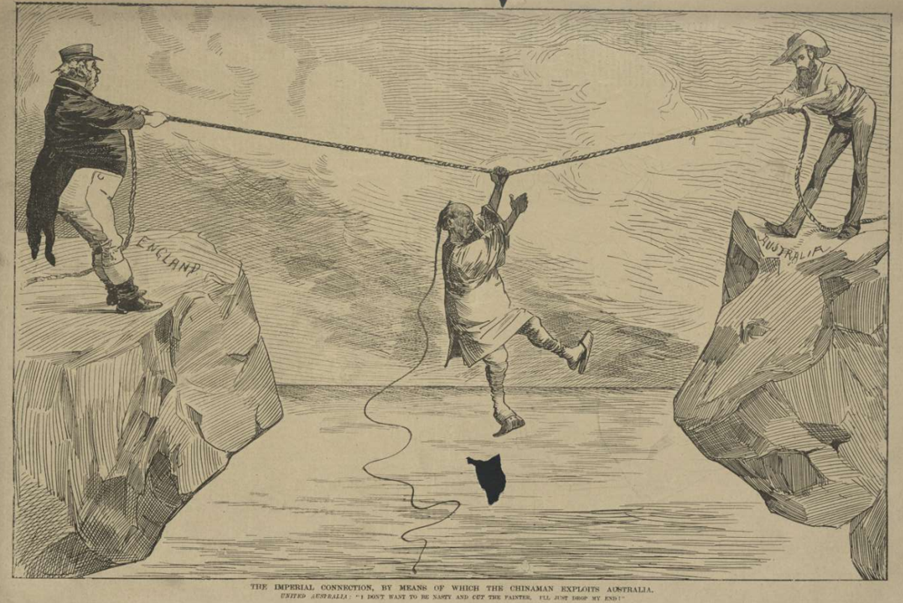
Cartoon from The Bulletin, 1888: “The Imperial Connection” providing the access point for the Chinese migrant[3]

A series of republican riots hit Sydney in 1887 in the leadup to celebrations of Queens Victoria’s Golden Jubilee and the radical nationalist magazine The Bulletin raised the cry on July 2, 1887 with its editorial “Australia for the Australians!”, a credo that would soon appear on the masthead of the magazine until replaced with “Australia for the White Man” in 1908:

…all men who leave the tyrant-ridden lands of Europe for freedom of speech and right of personal liberty are Australians before they set foot on the ship which brings them hither. Those who fly from an odious military conscription; those who leave their fatherland because they cannot swallow the worm-eaten lie of the divine right of kings to murder peasants, are Australians by instinct—Australian and Republican are synonymous. No nigger, no Chinaman, no lascar, no kanaka, no purveyor of cheap coloured labour, is an Australian.[4]

A string of republican magazines and associations cropped up across the country proclaiming the inevitable arrival of a republic (a tradition continued to this day[5]), and among those enthralled by the fervour in Sydney was the young poet Henry Lawson, whose famous poem Song of the Republic appeared a few months later in The Bulletin:

Sons of the South, make choice between
(Sons of the South, choose true),
The Land of Morn and the Land of E’en,
The Old Dead Tree and the Young Tree Green,
The Land that belongs to the lord and the Queen,
And the Land that belongs to you.

A strong republican sentiment reared its head again in 1972 with the election of the Whitlam Labor government and reached a crescendo in the aftermath of the constitutional crisis known as the Dismissal. On November 11, 1975, the Governor-General Sir John Kerr, the Queen’s representative in Australia, had taken the drastic step of using his reserve powers to dismiss the Whitlam Labor government from office, in order to resolve a parliamentary deadlock that had created a loss of supply. The exact role played by the British royal family in the constitutional crisis is still up for debate, but the Dismissal invigorated a generation of Labor leaders, leading to Prime Minister Paul Keating’s unsuccessful republic push in the 1990s.

What I seek to sketch out in this essay is that, given the current state of the country, defenders of White Australia — whether they be Anglo or Nativist — would be wise to hold to the side of constitutional monarchy, irrespective of any historical alignment republicanism has had with White Australia. Many Australian nationalists who considered the issue in the leadup to the 1999 referendum came to similar conclusions, but the situation has devolved further over the last quarter-century and calls for another stocktake of the nation of sorts.

This conclusion is not derived from any particular sentiment in favour of the British Monarchy itself or any delusional belief that the royal family is somehow a supporter of White Australia. Instead, it comes from the recognition of the fact that the current republic alterative on offer will leave the country worse off and is not being pursed on terms that are acceptable to the maintenance of the principle of White Australia. Should the political conditions of Australia change, it may well be that republicanism can, as it did in the nineteenth century, find co-existence with White Australia. Furthermore, should the monarchy itself expire in the UK, a republic may simply become an administrative necessity devoid of any symbolic change. But as it stands now, with the monarchy still firmly in place in the UK, an Australian republic is a poisoned chalice that should be spurned.

The Republic as Political Asset

Two key questions provide us the framework for making this decision. The first question to ask is a more technical one; will becoming a republic improve the Australian political system and/or make the defence of White Australia an easier task politically?

As modern-day monarchists often point out, history shows us that there is nothing axiomatically beneficial about casting aside a constitutional monarch and becoming a republic. It does not overnight turn your country into a more successful or cohesive nation, and there is strong reason to suggest that a constitutional monarchy is a more politically stable arrangement. In such countries, wilder democratic passions can find an outlet only in the legislature — a place where parliamentary convention, the need for compromise, and the presence of an opposition tends to temper the intensity of the demands of  voters — and ultimate power or the trappings of royal pomp and presidential status are always out of reach of an upstart despot or demagogue.

List the names of some of the most highly developed, peaceful and politically stable countries in the world — Sweden, Norway, Denmark, the Netherlands, Luxembourg, Japan, Canada, New Zealand and Australia itself — and you will find they are all constitutional monarchies. Likewise, if you had to pick the most politicly divided and chaotically multi-racial countries in the West right now, you would have to pick the USA and France, the birthplaces of modern republicanism. Historical and modern-day tyrannies also tend to bear the name republic: the USSR, the German Democratic Republic, the Democratic People’s Republic of Korea, and the People’s Republic of China. Of course, republics exist amongst the ranks of the highly developed, such as Iceland or Finland, though these tend to be parliamentary republics — recent converts to republicanism after long histories of monarchy, where the president is as ceremonial as a constitutional monarch and there is no real possibility of him or her coming into conflict with the legislature.

As regarding republicanism specifically in the defence of White Australia, the benefits also remain elusive. Historically, the racially conscious republicanism of the late nineteenth century quickly dissipated in favour of the realisation that national pride could peacefully co-exist with British imperial pride, and that White Australia was safer from Japan and the “rising tide of colour” within the Empire than without. Constitutional monarchy and the Westminster System of government turned out to be no significant impediment on the adoption of the White Australia Policy in 1901. The Policy was assented to over protests from the British government, and with the right government in charge again, it can be re-adopted by parliament just the same.

Nor is it possible to envisage how a republic could have succeeded in saving White Australia in the 1960s and 1970s where possession of a strong presidential republic failed to avert a similar outcome in America. Neither multiculturalism nor multiracialism were implemented in Australia via a democratic process that could have been opposed democratically. Instead, both outcomes were accomplished by stealth, in a form of elite (substantially Jewish) conspiracy carried out in the depths of the Australian bureaucracy, using “salami-slice” or “thin-edge-of-the-wedge” tactics that would have left voters in a hypothetical Australian republic just as much in the dark.

Furthermore, if the minimalist republican model presented to voters in 1999 had been implemented, a ceremonial position whereby a candidate would be exclusively chosen by the Prime Minister of the day, the Australian president would have no more power to arrest the current demographic situation than the Governor-General currently does. The new Australia Choice Model of a republic developed by the ARM for use in a new referendum would fare no better. Even if given significant executive powers, a president elected by the Australian people with a popular mandate to end multiculturalism would still be impotent against an oppositional legislature, or cause political chaos at best. Ultimately, in the Australian political system, power to affect Australia’s cultural and racial makeup lies with the legislature and hopes for a political revival of White Australia must be focused on that body alone.

The Republic as Symbolic Act

This leads us to the second and far more important question. If becoming a republic does not benefit White Australia in the sense of the country’s political structure, then benefits of its adoption lie solely in rhetoric or symbolism, with a cultural argument that puts forth a statement of Australia’s destiny. In that case, what is the current symbolic positioning for the creation of an Australian republic?

For the longest time, mainstream supporters of a republic defended it as an egalitarian patriotic cause allied with nationalism, and believed it symbolised a positive identity for Australia’s future, not a violent break with its British past. To them, a republic was the pronouncement of an Australia that wanted to show the world it was an independent nation-state that could now go along without the ties to the motherland. The direct British connection was seen as a colonial leftover, an obstacle to the development of a truly Australian national identity, and once cast aside, the country could pursue its own place in the world with a born-and-bred Australian, not a foreign monarch, occupying the role of head of state. The popular imagery of republican arguments was one of filial affection, a mutually beneficial departure from the home by a child that had now reached adulthood and wanted to function on its own terms, and the parent that knew at some point it had to let the child leave the nest in order to grow. Republicanism of this type is perfectly consistent with the principle of White Australia and offers no barrier, in symbolic terms, to its conservation and continuance.

This twentieth-century republican sentiment, prefigured by the writings of nationalist P.R. Stephensen in the 1930s and moulded later by prominent voices such as Donald Horne and Geoffrey Dutton[6], still held true for the majority of republic-supporting voters in the 1999 referendum, and was the main symbolic argument presented to the voting public by the campaign, but there was another type of sentiment at play then too. This alternative sentiment had germinated amongst the cultural revolutionaries in the 1960s but was still hidden in the background in the leadup to the referendum for fear of needlessly jeopardising the Yes vote. Though subtle, both nationalists and monarchists identified the link between Keating’s republicanism and the ascendant multiculturalist ideology which sought greater enmeshment in Asia and indigenous reconciliation.

In the years since, the “multicultural republic” sentiment has mutated beyond even the worst fears of patriots and has come to the fore to be the dominant positioning of republican sentiment in the country, the one publicly held by the leaders of the ARM and espoused by the media, academic and political elite who speak for the republican case. If the republic campaign is launched today, it is this sentiment, not the old one, that will drive the debate and animate the discussions of its supporters, and be the one that would ultimately carry a victory.

This is the republicanism borne not out of love for Australia, but out of hatred. A republicanism that, whilst retaining its original egalitarianism and desire for a local-born head of state, has almost nothing to do with national unity, patriotism, or a sense of pride in Australia and its unique history as a European country on the other side of the planet. Instead, it is driven by a destructive anti-White impulse, one that seeks to sever the ties with Britain as a way of immunising the country from the moral contagion of colonialism and slavery and all the other racial ills lain now at the foot of the British Empire and Western Civilisation as a whole. It is a republicanism borne out of rejection of Australia’s racial, political and cultural origins in Britain and wider Europe; articulated in the loathing of the fact that Australia’s head of state is an “old white man,” and the aggrieved realisation that unless multiple royals in the line of succession die early deaths, it will continue to be an old White man for at least the next 70 years.

Scenes from anti-monarchy protests held around the country in September 2022.  Republicanism has also become an intimate companion to the “indigenous sovereignty” dogma, which claims that the scattered nomadic tribes somehow possessed legal sovereignty over the Australian landmass prior to 1788.

In this form of self-flagellating republicanism, Australia’s inheritance from Britain is not something to cherish and value, but something to scorn or destroy. References are always made to the supposedly detrimental impact of the monarchy and the British connection on “first nations people”, and the words “modern” and “multicultural” are always present on the lips of these types of republicans, as it was when Minister for the Republic Matt Thistlethwaite recently appeared on the television program QandA:

But over the longer term, we see Australia as a mature, independent nation, making its own way in the world, reflecting our true multiculturalism, our unique culture and identity by having one of our own as our head of state in the future.[7]

Craig Foster, the leader of the ARM, appearing on the same program a few months earlier, went a step further and made the case that the push for the republic is an integral part of the “decolonisation” of Australia:

The answer for Australia is yes, and it has been for some time. And so, overwhelmingly, the research says that Australians are in favour of…decolonisation, really, and this is one part of it. That’s another part of it, right? Decolonisation of thinking and moving and walking together [8]

For academics and leading public intellectuals who speak on the debate[9], the issue has become overwhelmingly enmeshed with the ‘Black Armband’ view of history, arguing that a republic has no moral or symbolic weight unless it is combined with the push for indigenous reconciliation. For prominent republican scholar Mark Mckenna, this means that a republic has to be based on “an entirely different conception of Australian independence”, one that re-writes Australia’s history and grounds it not on British settlement but on “thousands of generations of Indigenous occupation”.[10] Another republican, Dennis Altman, contends that:

A republican movement that begins with the Uluru Statement from the Heart[11], rather than concerns about the symbolic links to the British crown, is a project more likely to capture the imagination of Australians.[12]

Elsewhere, Federal Greens Senator Mehreen Faruqi, a Pakistani-born migrant, has no fear in publicly declaring the British Monarchy to be a “racist, colonial institution”[13] and that the death of the Queen is a reminder for Australians of the urgency of becoming a republic and of carrying out reconciliation.

If the Australian republic is to be pursued for symbolic reasons, then the first act of symbolism that would be pursed under a new “decolonised” and “indigenously reconciled” Australian republic should be now clear to us — the first Australian president (or whichever title it ends up being) must not be an “old white man.” The person chosen will almost certainly be some sort of intersectionality concoction; perhaps a disabled Aboriginal woman, a transgender Asian man, or a Jewish Lesbian.

Whatever the eventual combination, this new president will be hailed as a symbol to the world that White Australia is on its way out and that the new multi-racial Australian republic has succeeded it. His or her speeches will surely be replete with references to the success of multiculturalism and a racially diverse Australia with 60,000 years of history, and the need to correct the alleged genocidal dispossession of First Nations people by Australia’s illegitimate founders. Would-be migrants from around the world will take it as a sign of a conquered nation where the White man is no longer in control of his destiny.

So long as Australia remains a constitutional monarchy and it is King Charles III, King William V, or King George VII that sit on the throne as Australia’s Head of State, White Australia is spared this indignity and this symbolic vanquishment. If Australia is to become a republic, it must be done on terms that are acceptable to and compatible with the nation’s foundational principle of White Australia, even if this means the “inevitable” republic must wait for another century.


[1] Also on the new executive board is long-time multicultural activist Vic Alhadeff, the former CEO of the New South Wales Jewish Board of Deputies.

[2] See the article “Revolt of the Anglophiles” by Australia First Party leader Jim Saleam, where Alan James and The Occidental Observer contributor Andrew Fraser intervene in the comments section. A similar dynamic could be seen between Australia’s two most prominent patriotic historians, the republican Manning Clark and the constitutional monarchist Geoffrey Blainey — J. Saleam 2013, ‘The Revolt of the Anglophiles: The New Political Anglos & Frank Salter’s Deconstruction of Australianity’, Counter Currents, December 26, retrieved from: https://counter-currents.com/2013/12/the-revolt-of-the-anglophiles

[3] The Bulletin 1888, The Imperial Connection, Saturday 14 April, p.10, retrieved from: https://nla.gov.au/nla.obj-706788911/view?partId=nla.obj-706792675

[4] The Bulletin 1887, Australia for the Australians, Saturday 2 July, p.4, retrieved: from https://nla.gov.au/nla.obj-693332894/view?partId=nla.obj-746241180

[5] The notion of “inevitability” has ironically enough long since been a detriment to the republican case, with successive republicans citing the inevitability of an Australian republic as a reason why it is a change that should not be vigorously or urgently pursued – See: M. Mckenna 1996, The Captive Republic: A History of Republicanism in Australia 1788–1996, Cambridge University Press, New York.

[6] Anti-racist undertones were present in the writings of both Horne and Dutton, though its impact on their republican arguments was limited.

[7] QandA – Words That Offend and Referendums 2023, television broadcast, 6 March, Australian Broadcasting Corporation, Sydney, Australia, transcript retrieved from: https://www.abc.net.au/qanda/2023-06-03/102019930

[8] QandA – The Year of the Voice 2023, television broadcast, 30 January, Australian Broadcasting Corporation, Sydney, Australia, transcript retrieved from: https://www.abc.net.au/qanda/2023-30-01/101868690

[9] See Jones. B T & McKenna. M 2013, Project republic: plans and arguments for a new Australia, (B. T. Jones & M. McKenna, Eds.), Black Incorporated, Collingwood, Australia.

[10] M. McKenna 2021, ‘The Stunted Country’, The Monthly, Dec 2021-Jan 2022 Issue, retrieved from: https://www.themonthly.com.au/issue/2021/december/1638277200/mark-mckenna/stunted-country#mtr

[11] A statement of principles derived from the Final Report of the Referendum Council in 2015, which recommended a constitutional amendment to enshrine an ‘Indigenous Voice to Parliament. ‘ The referendum council was co-chaired by Australia’s leading Jewish activist Mark Leibler.

[12] D. Altman 2022, ‘The republic debate is back (again) but we need more than a model to capture Australians’ imagination’, The Conversation, January 19, retrieved from: https://theconversation.com/the-republic-debate-is-back-again-but-we-need-more-than-a-model-to-capture-australians-imagination-175058

[13] M. Faruqi 2022, ‘There’s nothing to celebrate about the British Monarchy, The Greens Magazine, 25 March, retrieved from: https://greens.org.au/magazine/theres-nothing-celebrate-about-british-monarchy

https://www.theoccidentalobserver.net/wp-content/uploads/2018/06/TOO-Full-Logo-660x156-1.png 0 0 Jason Cannon https://www.theoccidentalobserver.net/wp-content/uploads/2018/06/TOO-Full-Logo-660x156-1.png Jason Cannon2023-04-30 13:18:022023-04-30 13:18:02The Inevitable Republic: Should White Australia Ditch The Monarchy?

Tomislav Sunic Interdit par Twitter

April 30, 2023/in Translations: French/by Tom Sunic, Ph.D.

Tomislav Sunic, TOO, 25.4.2023

Hier, j’ai été banni de Twitter, en même temps que Kevin MacDonald et James Edwards. Je suppose qu’aux Etats-Unis bien d’autres « gêneurs » ont été également bannis ce jour-là. Absolument aucune explication n’a été fournie pour ce blocage. Je dois avouer que je n’ai jamais écrit de tweets élogieux sur la diversité multiraciale du monde antifa. Je n’ai jamais non plus montré mon admiration pour les homélies du pape François agenouillé aux pieds des migrants extra-européens. Pourtant, je n’ai jamais publié non plus de propos haineux envers des individus en particulier, ni envers des groupes ethniques extra-européens.
Cette décision de Twitter ne me surprend pas du tout ; il y a 30 ans que j’écris, notamment dans The Occidental Observer, que la censure aux États-Unis a pris la succession de celle de l’Union soviétique. Je suis bien placé pour le savoir. Dans l’ancienne Yougoslavie communiste, ma famille et moi avons vécu une existence de proscrits durant des décennies. Mon père, qui avait été avocat, a même purgé une longue peine de prison pour « propagation de littérature anticommuniste ». Aujourd’hui, nous assistons à des purges intellectuelles du même type, même si elles sont enrobées d’un discours lénifiant, fait d’euphémismes fantaisistes et démonologiques, comme « lutte contre les discours de haine » et « formation à la sensibilité ethnique ». Et cela se déroule aux États-Unis comme dans l’Union européenne, où semble ressusciter ce qu’était le Commissariat du peuple aux affaires intérieures de l’Union soviétique, c’est-à-dire le NKVD.
Historiquement, ce sont des processus qui se développent lorsqu’un système est voué à l’implosion. On peut se remémorer la guerre civile entre Marius et Sulla au premier siècle avant J.-C., ou, plus tard, la « damnatio memoriae » quand on s’efforçait d’effacer le souvenir de certains empereurs romains. C’étaient des empereurs dont le règne ne durait souvent que quelques mois. On sent le chaos à nos portes.                                        

https://www.theoccidentalobserver.net/wp-content/uploads/2018/06/TOO-Full-Logo-660x156-1.png 0 0 Tom Sunic, Ph.D. https://www.theoccidentalobserver.net/wp-content/uploads/2018/06/TOO-Full-Logo-660x156-1.png Tom Sunic, Ph.D.2023-04-30 08:37:092023-04-30 08:48:54Tomislav Sunic Interdit par Twitter

The New Baby-Killers

April 29, 2023/31 Comments/in General/by Ann Coulter
THE NEW BABY-KILLERS

Extremists have got to learn to take half a loaf. Just like the cheap labor-demanding GOP donors, pro-lifers need to be told: You can’t get everything you want. If Republicans give you this, they’ll lose their jobs, and the people who’ll replace them want you dead.

Unlike a lot of people complaining about the anti-abortion zealots, I am an anti-abortion zealot. That’s why I’m begging them to stop pushing wildly unpopular ideas. These fanatics are going to get millions more babies killed when Democrats win supermajorities in both houses of Congress and immediately pass a federal law making abortion-on-demand the law of the land.

They’re also going to get a lot more adults killed when those same Democratic supermajorities pass laws taking our guns, defunding the police and packing the court, among other great Democratic ideas.

We’ve been rolling our eyes at pro-choicers forever, telling them to calm down, that overturning Roe would just return the issue to the states. Blue states would make abortion legal until the kid turns 14. A few states, like Louisiana, would impose tough restrictions, but most states would come out in the middle — allowing abortions in the first trimester, plus parental notification laws, and exceptions for rape and incest.

Instead, the moment Dobbs was released, pro-life nuts rushed to the mics, saying, This is gonna be great! We’re going to ban abortion from the moment of conception and prosecute the mothers for murder!

The Democratic Party has been using abortion to scare suburban women in every election cycle for 50 years. Now, Republicans are finally giving them something to be scared about.

In Michigan, the Republican gubernatorial nominee, Tudor Dixon, said she opposed abortion for 14-year-old girls who’d been raped because giving birth to her rapist’s baby could be “healing.”

Does the name Todd Akin mean anything to you? Anything at all? Richard Mourdock?

Dixon lost by 11 points.

Pennsylvania responded, Watch this! Doug Mastriano, Republican candidate for governor, called abortion the “number one” issue of his campaign and said he looked forward to signing a six-week abortion ban. In 2019, he’d called for criminally prosecuting women who got abortions and doctors who performed them.

Mastriano lost by 15 points, taking the Republican Senate candidate down with him.

If we don’t bind and gag these pro-life militants, in about two more election cycles, we’ll have no Republicans in office anywhere. Good luck saving babies then!

Of course, it’s possible that there were other things voters didn’t like about Dixon and Mastriano.

Ah, but we also have pure test cases. Since Dobbs, there have been a total of six statewide ballot initiatives exclusively about abortion. The pro-life side lost every single time. They lost in blue states, in purple states and in red states. They were not outspent. These were direct-to-the-people votes. The tiniest restriction on abortion failed — even wholly theoretical restrictions! Every expansion of abortion rights won.

Army of Todd Akins: I don’t care! They’re wrong! They’re evil! What about the babies??? [Please give me a standing ovation now.]

In Montana, a proposal merely to require doctors to give life-saving treatment to babies born alive after a botched abortion lost 53% to 47%. Trump won Montana by 20 points in 2016 and 15 points in 2020.

In Kansas, pro-lifers wrote a ballot initiative that would have amended the constitution to clarify that it said nothing at all about abortion. The initiative placed no new restrictions on abortion, but simply moved the issue from the courts to the legislature.

It failed by 18 points, 59-41, losing in every congressional district in the state. Trump won Kansas by 20 points in 2016 and 15 points in 2020.

Kentucky voted on a similar initiative, proposing to amend the state constitution to say: “… nothing in this Constitution shall be construed to secure or protect a right to abortion or require the funding of abortion.”

That initiative lost 52-48. In 2016, Trump won Kentucky by a whopping 30 points, and in 2020 by 25 points.

In three other states, Michigan, Vermont and California, voters put a right to abortion in their state constitutions.

Six ballot initiatives expressly on abortion, and the pro-life side lost ’em all.

We’ve been waiting half a century to get Roe overruled so Americans could finally vote on the issue. Well, guess what? They’ve voted! In the privacy of the voting booth, the people have spoken, and what they’ve said is: We don’t want the stupid and incompetent having any more babies.

The fanatics cite three Republican governors who won reelection after signing six-week abortion bans as proof that a certain miracle governor in Florida hasn’t just nuked his own presidential chances by approving such a law. All three governors signed their six-week bans when Roe was still the law of the land. All three bans were tied up in litigation on Election Day.

But more important, in the entire country, only one incumbent governor lost in 2022 — pro-life, pro-choice, it didn’t matter. Thirty-six governors up for reelection; 35 won.

The only flipped governorship was in Nevada, where the winning Republican, Joe Lombardo, said he opposed a national abortion ban.  Luckily, abortion was a complete nonissue because state law already allows abortion up to 24 weeks and can only be changed by a vote of the people. (Lombardo also said there was no fraud in the 2020 election, for any Republicans who care about winning.)

But even in the face of a brutal 6-0 losing record, there are still pro-lifers who will say, I’m proud and I’d do it again! (Did you see my write-up in Catholic Insights magazine?)

This is our “DEFUND THE POLICE” faction — people whose ideological zealotry outruns their rationality.

Fine, be a showoff. Just understand, you’re going to get a lot more babies killed. I hope that’s worth your moral preening.

     COPYRIGHT 2023 ANN COULTER

https://www.theoccidentalobserver.net/wp-content/uploads/2018/06/TOO-Full-Logo-660x156-1.png 0 0 Ann Coulter https://www.theoccidentalobserver.net/wp-content/uploads/2018/06/TOO-Full-Logo-660x156-1.png Ann Coulter2023-04-29 08:15:232023-04-29 08:15:23The New Baby-Killers

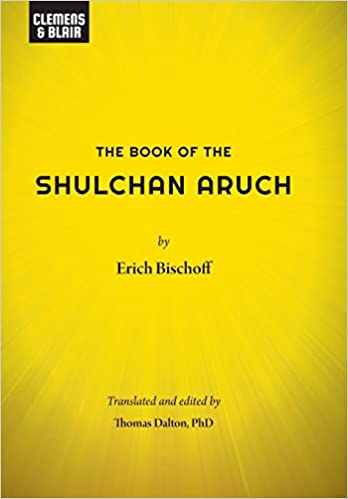
Who Is My Neighbor? A Review of Erich Bischoff’s The Book of the Shulchan Aruch

April 28, 2023/45 Comments/in Featured Articles, Jewish Ethics, Jewish Ethnocentrism/by Bernard M. Smith

The Book of the Shulchan Aruch
Erich Bischoff
Translated and Edited by Thomas Dalton, Ph.D.
Clemens & Blair, 2023*  *           *           *

It is a general rabbinic axiom that the non-Jew is not the “brother” of the Jew.
The Book of the Shulchan Aruch by Erich Bischoff

In the May 2023 issue of The Atlantic, a magazine to which I still find myself subscribing, Dara Horn asks in a feature length article, Is Holocaust Education Making Anti-Semitism Worse? Dr. Horn is a Jewess from Short Hills, New Jersey. To get a sense of what interests her, consider the following: she has a doctorate from Harvard University in comparative literature in Hebrew and Yiddish and a master’s degree in Hebrew literature from Cambridge University. Her first non-fiction book, People Love Dead Jews, was released in 2021. Without belaboring the article, which chronicles all that is wrong with Holocaust education in the United States, she claims that it is failing living Jews. In Dr. Horn’s opinion, Holocaust education focuses wrongly on dead Jews as universal victims to educate on the dangers of generic extremism. She takes issue with that on a couple of points; namely, it instrumentalizes exclusive Jewish harm and suffering and genericizes it. It also fails to explain why Jews were targets. She also complains that it fails to humanize Jews by ignoring their vibrant particularism today. Stated perhaps more simply, she critiques the Holocaust remembrance industry, and you can’t make this stuff up, because it is not Jewish-centric enough. Needless to say, nothing in the article was particularly interesting although the last paragraph lays out what she wants for every student in America as it relates to Holocaust education. It is worth quoting in full:

Back at home, I thought again about the Holocaust holograms and the Auschwitz VR [virtual reality] and realized what I wanted. I want a VR experience of the Strashun library in Vilna, the now-destroyed Research Center full of Yiddish writers and historians documenting centuries of Jewish life. I wanted VR of a night at the Yiddish theater in Warsaw — and VR of a Yiddish theater in New York. I want holograms of the modern writers and scholars who revived the Hebrew language from the dead — and I definitely want an AI component so I can ask them how they did it. I want a VR of the writing of a Torah scroll in 2023, and then the people chanting it aloud through the year, until the year is out, and it’s read all over again — because the book never changes but its readers do. I want to VR about Jewish literacy: the letters, the languages, the paradoxical stories, the methods of education, the encouragement of questions. I want a VR tour of Jerusalem, and another of Tel Aviv. I want holograms of Hebrew poets and Ladino singers and Israeli artists and American Jewish chefs. I want a VR for the conclusion of Daf Yomi, the massive worldwide celebration for those who study a page a day of the Talmud and finally finish it after seven and a half years. I want a VR of Sabbath dinners. I want a VR of bar mitzvah kids in synagogues being showered with candy, and a VR of weddings with flying circles of dancers, and VR of mourning rituals for Jews who died natural deaths — the washing and guarding of the dead, the requisite comforting of the living. I want a hologram of the late Rabbi Jonathan Sachs telling people about what he called the “dignity of difference.” I want to mandate this for every student in this fractured and silo America even if it makes them much, much more uncomfortable than seeing piles of dead Jews …

Setting aside the question of why my children — or anyone else’s — should be mandated to endure compulsory conditioning to see how wonderful Jews are in all that they do. I mean seriously, would Dr. Horn wish for her children — and all Jewish children — to be compelled to attend a series of holograms and VR experiences of the wonders, enchantments, cultural milestones, and living traditions and customs of ethnic European Christians? Somehow, I don’t think Dr. Horn would be as enthusiastic. Indeed, I am fairly certain that American Jews would be the first to complain — and complain vociferously — if American school children were mandated to learn about European folk customs and traditions. Irony has, it always seems, been lost on even the most educated Jews.

But more to the point, why only this encomium for Jewish life? To be fair, she should have added the Jewish involvement in the legalization and continuing availability of contraception, abortion, pornography, and sodomy. She could have added the Jewish proclivity for usury or the overwhelming Jewish management of the cultural rot that is contemporary American entertainment. She also could have noted the leadership and underwriting that Jews have provided for seemingly every revolutionary ideology — feminism, socialism, environmentalism, and every other misanthropic “-ism” that we have had to contend with in the West. She could have noted the pivotal role that Jews have played in destroying the common stock and homogeneity of ancestral European-peopled countries by advocating for unrestrained third-world immigration — all while maintaining the most closed ethnocentric country on the planet in Israel.

And as for Israel, she could have observed the ethnic cleansing and abuse of Arabs in their ancestral homeland — all to satiate harms that were allegedly meted out by Europeans. Historically, she could have cited the prominent Jewish hand in various slave trading and oppressive tax harvesting, among other things. And if all Germans are forced to bear the burden of National Socialism in perpetuity, why aren’t the Jews subjected to the same burden as it relates to the untold number of victims of international communism, which was, after all, a Jewish project? But no, Dr. Horn wants to indoctrinate America’s youth, as if they aren’t indoctrinated enough already, with a living panegyric to the magnitude and wonder of the Jews. If this were not so disturbing, it would make an excellent parody. But the reality is that years of Jewish victimhood propaganda and nonsense like tikkun olam have been so successful that I suspect Dr. Horn actually believes what she writes. She actually believes that Jews are universal victims and have always been there to help the downtrodden and disadvantaged. Her frustration with Holocaust education is that it does not do enough to make us love Jews as the civilizational lights that she actually believes that they are.

That said, none of this would be germane to my purpose here except for one particular comment that Dr. Horn wrote at the end of her article that left me gob smacked. She wrote, in a rhetorical flourish to justify her suggested mandate of Jewish praise and acclaim, that, “[t]here is no empathy without curiosity, no respect without knowledge, no other way to learn what Jews first taught the world: love your neighbor.” Talk about chutzpah — the Jews first taught the world to “love your neighbor”? Really? Is she that deluded?

“Who is my neighbor” is the most important initial question that can be asked other than the question of God — it determines the scope of “us” versus the “other”; it defines who we identify as the people that we treat with respect, dignity, honesty, and solicitude. Indeed, “who is my neighbor” has to be answered before we can even talk about what actions constitutes “loving our neighbor.” Definitionally, “who is our neighbor” takes precedence over “loving” our neighbor because it establishes who is entitled to the duties we owe towards our neighbor.

Of course, as I have written elsewhere, I have known many individual Jews who have treated as me as a “neighbor,” inasmuch as they have been solicitous and gracious towards me. I recognize that fact and it testifies that the Jewish trait of ingrained hostility towards the gentile (or goy) is not something congenital with Jews but rather systemic within Judaism, culturally or religiously. Jews as human beings can, it certainly seems to me, transcend their Jewishness in this regard but it comes at the cost of eschewing that very ugly side of their religion. In other words, individual Jews can be — and often are — decent human beings, but it is always despite their Jewishness and never because of it. I am the last person on the planet who wants to see any harm come to Jews because they are Jews but the reality here is that Dr. Horn’s cure for anti-Semitism, that is, compelling captive goyish students to endure a hagiographic depiction of Jewish life — as if everything with the Jews is strawberries and cream and unicorns and rainbows — is demonstrative of someone who has not ever thought deeply why it is that Jews have been disliked wherever and whenever they have been.

And she is no outlier there: she is endemic of a stunning lack of curiosity among Jews everywhere. It is because the Jewish religion, whether strictly observed or invisibly absorbed in the ether, teaches a disdain and disrespect for non-Jews against which non-Jews predictably react — and the striking lack of interest by Jews to ask — even once — what it is about them that causes such a universal response is almost as universal as the response of which the Jews complain.

It may be now fashionable for modern liberalism to cannibalize the Christian ethic of the universal dignity of human beings (sans every other religious obligation of Christianity), but however liberalism replicates it, the Jew is no position to take credit for it. Indeed, the galling thing about Dr. Horn’s flight of fancy is that the Jews, from time immemorial, are virtually without peer in treating non-Jews (i.e., the “other”) as not their neighbor or brother in an ironclad categorical way. Stated more succinctly, every non-Jew is definitionally the “other” and the Jews have never considered the non-Jew to be consequently a neighbor in any way. This Jewish reality, more than any other, is the reason why the Jews have been disliked everywhere that they have lived — that is, they have objectified and disdained all the non-Jews with whom they shared geographic and social space in what is an immutable law of inter-Jewish society. We non-Jews occupy a space that is somewhere between a man and animal — the quintessence of sub-human if we define “human” as meaning a man made in the image and likeness of God. For a Jew to lecture anyone — and this is rich — on the universality of loving one’s “neighbor” as if they taught anyone how to do it is both preposterous and obscene.

And I just read something that demonstrates that integral fact of Jewish life.

*           *           *           *

From the period that covered the formation of the Second German Reich in 1871 to effectively the beginning of the Third German Reich in 1933, German criminal law proscribed “hate” laws based on religion. While we tend to think of “hate” laws as something current, and perhaps they are, we neglect to understand that they date, at least in Europe, from the nineteenth century. Section 166 of the Reich Criminal Code prohibited, among other things, blaspheming God or insulting a recognized religious community deemed to exist within the Reich. The Jews were such a recognized religious community. As least for a period of fifty years then under German federal law, “public insult” of the Jews carried with it the possibility of prosecution for a hate crime. During this period, there were multiple trials in which members of the public were tried for “public insulting” of Judaism. Obviously, and without knowing the details of any particular case, the courts who assessed such claims must have had to delineate between legitimate scholarship and public expression and expression designed to be gratuitously insulting based upon naked stereotypes and bare prejudice.

Without knowing the intricacies of German law and procedure, I assume that the defendants in such cases always possessed the ability to interpose the defense of “truth” as a mitigant; that is, like defamation (which mirrors these types of hate crimes in a corporate sense), the truth of the controverted expression is always an absolute defense. Thus, in the cottage industry that grew up around such Section 166 litigation, an expert witness industry also grew up. Erich Bischoff, the author of The Book of the Shulchan Aruch reviewed here, was one of those experts. Bischoff was born in 1867 and was academically trained in Hebrew and Jewish history. Through the course of his lifetime, he published several works on various aspects of Judaism and became recognized as an expert. What is important to note is that Bischoff was not a polemicist or Jew-baiter like, for example, Julius Streicher but an academic researcher and paid expert. To use The Book of the Shulchan Aruch as an example of his literary temperament, it is worthwhile to note that it is by no means a screed — it is a relatively dispassionate look at what the Shulchan Aruch is, and what it teaches, at least in certain parts. Now, the purpose of publishing it was, at least in part, to shine a bright and public light on the Shulchan Aruch for the purposes of educating the broader public of its contents, which, given its contents, was wholly unappreciated by German Jewry. But it reads nothing like a salacious expose on the more decontextualized and revolting aspects of the Talmud. No, Bischoff is balanced even if he has an agenda to expose the underlying Jewish ethos for what it is. “What it is” is the operative term — here, Bischoff implicitly relies upon the truth of the documents — contextualized and in an academic manner — to demonstrate an ethos in Judaism within that is both ugly and anti-social. This is a matter in which the document speaks for itself, and I mean that literally. For this, he must have been lumped in with gutter anti-Semites, but the charge, so it seems to me, is patently unfair. In any event, it is not Bischoff’s gloss that so offends Jewish sensibilities, it is that he accurately presented foundational Jewish texts for a broader public consumption.

*           *           *           *

I confess that I had never heard of the Shulchan Aruch before reading this book. That said, the importance of this work cannot be overstated. This from The Jerusalem Post:

[2015] marks the 450th anniversary of the publication of one of the most important Jewish works of the modern era, a scholarly code so influential that it continues to serve as one of the pillars of our people’s faith, norms and values. Nonetheless, despite its vast impact on Jewish life and law, the Shulchan Aruch (Hebrew for “the set table”) remains largely unknown to most contemporary Jews. Indeed, an entire generation of secular Israelis is being raised without ever glancing at its text, let alone grasping its significance, and this is something that desperately needs to change. The Shulchan Aruch was written by Rabbi Yosef Karo, whose family was exiled from Spain while he was just a child in 1492, during the expulsion of the country’s Jews. He eventually settled in Safed in northern [Palestine], and was one of the preeminent scholars of his generation. Divided into four sections, the Shulchan Aruch covers everything from the laws of prayer to marriage to financial damages. It was first printed in 1565 in Venice by the publishing house of Giovani di Gara, a non-Jewish Hebraist, and was essentially a distillation of Jewish law based on a previous work by Rabbi Karo known as the Beit Yosef …. [T]he Shulchan Aruch symbolizes the Jewish people’s ability to find unity within diversity, and to respect differing customs and approaches so long as they are rooted in authentic tradition and scholarship. Indeed, the simple act of coalescing Sephardi and Ashkenazi practice into one work bound us together forever, thus ensuring that we would remain one people, all of whom share the same canonical legal foundation. … Sadly, however, outside of Orthodox circles, this monumental work and all that it represents are foreign to most Jews, many of whom go through life without ever being exposed to its erudition and wisdom.

Essentially, the Shulchan Aruch is the closest thing that exists to a comprehensive Code of Jewish law that draws from the available sources of Jewish law, scripture, tradition, and custom — and one that became the condensed and comprehensive guide to what Judaism requires, forbids, and permits. It captures the ethos of Jewish life — the soul of it and Jews everywhere. The Jerusalem Post is right — it is not simply that contemporary Jews don’t know about the Shulchan Aruch, not enough gentiles know about it either.

Written almost one-hundred years ago in 1929, Erich Bischoff, a non-Jewish expert in Judaism, described it this way in his work, The Book of the Shulchan Aruch:

The Shulchan Aruch is not a new, independent code of laws; rather, it forms in fact a certain keystone and the determination of the authorized, practical religious law that touches all areas of Jewish life, in a short form. It presupposes the Talmud, along with its attachments, as a pocket Atlas assumes the entirety of the corresponding cartographic survey sheets. The Talmud, on the other hand, presupposes the Old Testament together with the associated religious and legal tradition, just as a map series requires the physical and political configuration of the Earth’s surface. In doing so, the maps, ordinance survey maps, and pocket atlases often distort nature just as much as the Talmud and the Shulchan Aruch distort the Old Testament — especially a pocket Atlas from 1564!

His purpose in writing this book was stated expressly — to educate the public and especially the cottage industry of Section 166 criminal trials of where the Shulchan Aruch fit within the constellation of “public insult” crimes. So, hypothetically, if someone in Germany during this time published that Judaism sanctioned that Jews may cheat their fellow German non-Jewish citizen, Bischoff, through his expertise, would have been able to testify regarding the truth of the claim. This did not endear him to the Jews of the period.

Bischoff provides a primer on Jewish law — its sources and wellsprings. Here, Bischoff discusses the Old Testament, the oral tradition which soon became encapsulated by the Talmud, the codices before the Shulchan Aruch, and the status of the Shulchan Aruch as the preeminent expression of the Jewish law. Bischoff’s overview is worth dwelling on because it concisely encapsulates the sources — Rabbinic Judaism teaches that Moses received the written law (the Torah) and oral law (the Talmud), which was passed down. Some key definitions worth knowing: (i) Midrash: halachic (i.e., religious-legal) interpretations; (ii) Mishnah: the basis of the Talmud; an authoritative collection of the validated halachoth written during the second century AD; (iii) the Gemara is the Talmud in the narrower sense and containing the disputations of the Palestinian and Babylonian rabbis about the Mishnah and the religious legal halachic materials handed down in the Palestinian schools; (iv) the Palestinian Talmud equals the Mishnah and the Palestinian Gemara; (v) the Babylonian Talmud equals the Mishnah and the Babylonian Gemara; this is what people today describe as the Talmud; (vi) the Decisors (or Goanen) were heads of the Babylonian schools who sought to determine the Talmudic religious legal norms — halacha — from case to case in legal opinions; and (vii) the Responses of the Decisors were published and form an important religious legal source for the later halachic codices.

Rabbi Karo, the author of Shulchan Aruch sought to reduce all of this material into a usable codex that would encapsulate the whole of the Jewish law in a practical and concise way. Because Karo was a Sephardic Jew from Spain (who later lived in Palestine), his work was later supplemented by an Ashkenazi, Rabbi Isserles, who offered the take of Ashkenazim custom and practice in response, which was eventually cobbled together for posterity. It is unlike the Talmud in that it is not a running debate, opinion, or conjecture — instead, it is something akin to the best statement available as to what the settled, or at least, the best views of what Judaism required, prohibited, and permitted. In that sense, it is more like a series of bullet points with limited explanation or debate. This is important because the Talmud contains statements that are gratuitously offensive to the “other” but often they are the recorded opinions of one Rabbi. Moreover, as I understand it, the recorded debates in the Talmud are often mediated between two contrived extremes so if someone is looking for an extreme statement in the Talmud, it can be found.

But the Shulchan Aruch is different. Rabbi Karo wanted to distill the most authoritative and acknowledged view of Jewish law into digestible bytes. His work is not an invitation to debate or ponder, rather it is an instructional manual on how to live as a Jew. It’s an assemblage of the best and most persuasive consensus of what being a Jew requires, permits, or prohibits. If the Shulchan Aruch says it, one can be fairly certain that it is a strong reflection of Jewish law — and it is probably the closest thing in Judaism to the Catholic Code of Canon Law.

Orthodox Jewry considers the Shulchan Aruch as the authoritative statement of Jewish law. Bischoff concedes, however, that liberal Judaism, even in his day, appears to have let go of the Shulchan Aruch as a source of law — or at least its spirit, but Bischoff maintains that liberal Judaism has no equivalent codex to base whatever its opinions are. To that end, Bischoff maintains that the long shadow of the Shulchan Aruch still casts light on even the most liberal Judaism because everything from lighting shabbat candles to circumcising babies is determined by reference to the Shulchan Aruch. In other words, liberal Judaism would dissolve into nothingness without its invisible reliance on the glue of the Jewish law, of which the Shulchan Aruch is its most preeminent statement.

*           *           *           *

But why is this old Jewish law relevant today?

Why is it relevant to non-Jews? In other words, who cares? The purpose of a non-Jew taking interest in something like the Shulchan Aruch is two-fold: For the person interested in religion generally, this type of work sheds light on the inner workings and soul of Rabbinic Judaism. If understanding cults in the non-pejorative sense fascinates a certain mind, the Shulchan Aruch is clearly something within that ambit. Moreover, as Rabbinic Judaism is an offspring of Temple Judaism, there is an interesting aspect to understanding where the former veered from the latter (especially for a Catholic who believes that the Church is the legitimate inheritor of Temple). I confess that it is curiosity — for good or bad — about the idiosyncrasies of all cults that interests me.

But the more compelling reason to study this type of work is to gain insight on what conduct Rabbinic Judaism encourages, prohibits, and permits as it pertains to non-Jews. Stated more succinctly, intra-religious obligations of lighting shabbat candles or what shoe goes on what foot first hold no social importance beyond the curiosity of the non-Jew, but how Jewish law instructs the Jew to relate to his non-Jewish fellow citizen is far more important. The Jewish experience, lived in the reality of history, has always involved living among non-Jews. To be a Jew, ironically enough, is to never escape close quarters with the non-Jew to a degree that is unmatched by any other nation. Even in Israel, which is a fabricated and intentional sovereign state exclusively created for Jews, the Jews there are forced to live with millions of non-Jewish people. Jews therefore have given much thought on how to live among non-Jews, and this latter point goes to the heart of the question of Jews’ love for their neighbors. To distill this to its essence, I do not care, one way or another, about how Rabbinic Jews practice their religion, but I do care if their religion sanctions immoral or anti-social conduct towards non-Jews such that it impacts the overall tenor of a given society.

And this point is magnified because the question of sanctioning immorality of anti-social conduct is proportionate to the influence and power that the Jews have in a given society — if they have anti-social and immoral ideas and they have power, those ideas will be more readily projected into that society with corresponding ill effects on the morality of the society — e.g., if Jews with cultural power encourage degenerate behavior in the society. Perhaps most important, the idea of Rabbinic Jewish panegyric, as a “light unto the nations” — that is, as a model of conduct — rings more than hollow if this anti-social animus contained within the heart of Rabbinic Judaism is laid bare. To put it bluntly, understanding this type of codex helps us understand whether the assumption, from the perspective of the non-Jew, that the Jews are our friends is warranted or whether it is a dangerous fallacy.

*           *           *           *

The Shulchan Aruch, as editorialized in brief by Bischoff, quotes a number of seemingly innocuous and internal laws governing Jewish religious observance. Literally, how a Jew should rise in the morning, how a Jew should shake the urine off of his penis, or how a Jew should wet his hands before a meal. Bischoff notes the permission of the Kapparot, which is the customary atonement ritual sacrifice practiced by Orthodox Jews on the eve of Yom Kippur.  The chicken is sacrificed for the sins of the Jew making the sacrifice. For a short book, it doesn’t make sense why any pages were devoted to these mundane topics other than, perhaps, to demonstrate the mind-numbing ritualism of Judaism in its own words. One interesting sidebar in the Shulchan Aruch is the express remit to consume human blood, which is assumed to be something religious Judaism forbids. In commentary, Bischoff writes:

The consumption of blood is allowed in the Shulchan Aruch! Karo seems to think nothing of it, and his commentator Isserles does not apply a “Hagah” [objection] to this striking rule! Only the author of commentary, Magen Abraham, who died in 1682, says that blood as a diet is only permitted for dangerously ill for whom his doctor has prescribed the consumption of blood.

The editor of the book, Thomas Dalton, notes the significance of this point in a footnote; namely, the question of the so-called “Blood Libel” and the ritual slaughter of Christian children for, among other things, their desiccated blood, as discussed in detail by Ariel Toaff’s Passovers of Blood, squares with this permitted consumption of human blood.

The Shulchan Aruch is replete with examples of the impurity of non-Jews for Jews themselves and the aspersions of idolatry towards Christianity. Accordingly, the rules against assisting non-Jews — or harming them, even gratuitously — are typical. One way to think about it is that the Shulchan Aruch is not primarily interested in inter-Jewish relations with non-Jews but to the extent that non-Jews become its subject, the passages are always negative and offensive. A general principle that runs throughout is that non-Jews should not be assisted by Jews in any meaningful way unless there is something to be gained by the Jews from the assistance. There is a permission as well for devious behavior to avoid giving offense to non-Jews if a greater harm from the offense may follow. There are passages that condone perjury if done to help a Jew against a non-Jew. There are passages that commend harming or even killing non-Jews if the Jews have the upper hand. There are passages that commend usury for non-Jews, not simply to enrich the Jews, but to actively harm the non-Jews.

According to Jewish law, Jews are obliged to obey the civil law insofar as it consistent with Jewish law; if the two conflict, Jewish law is primary. There are passages that forbid litigating before non-Jewish judges and from assisting a non-Jew in litigation (even if the non-Jew is in the right) against a Jew or limiting assistance to the non-Jew if it is, in fact, illusory assistance. There is language that permits the keeping of lost property of non-Jews and not correcting the mistakes of non-Jews in commercial dealings. The law goes so far as to say that returning lost property to a non-Jew for the sake of honesty is contemptable under Jewish law but to return in order to build up the reputation of the Jews for honesty is acceptable. Fleecing non-Jews is then a permitted practice and there are even rules for how Jews should divide up the profits from such fleecing, which amounts to, I suppose, honor among thieves.  Interestingly enough, Jews are forbidden from outright stealing from non-Jews but not when it comes to the mistakes or forgetfulness of non-Jews. In other words, non-Jews ought to be quite careful with dealing with Jews because the Jew is virtually duty-bound to not correct an error in the Jews’ favor. Similarly, the Jews may not defraud a Jewish tax collector, but they are permitted to defraud a non-Jewish tax collector. A Jewish informer is liable to death for his threat to turn over a Jew or the Jew’s money to the non-Jews if the threat has not been realized (i.e., he has not yet informed but only threatened to inform). If he has informed, the non-Jew may not be killed because by doing so, the Jews would be brought into disrepute.

As it relates to inter-Jewish relations, the Shulchan Aruch contains the view throughout, which is not perhaps surprising to those who have studied the issue, that non-Jews, as a collective, are inferior people with inferior rights. Whatever gloss is applied, non-Jews are not — and should never be considered — a “neighbor” of the Jews in the sense of filial affection, honesty, or decency. The ethics of Judaism as it relates to the concept of “neighbor” is interesting inasmuch as it is remarkably exacting for the Jews vis-à-vis other Jews; because non-Jews fall outside of the concept of “neighbor” within Jewish law, however, it is virtually open season on them with the full weight of Jewish law sanctioning what anyone would consider anti-social or immoral behavior. This is the reality of Judaism for those of us who are not Jews.

With the Shulchan Aruch and its commentaries, there is an acknowledgement that the rules for mistreatment of non-Jews comes at a potential cost. To treat non-Jews poorly then is to run the risk that God’s name or the reputation of the Jewish people is profaned. There is the much more dire risk that such behavior may cause violence or economic harm to the Jews as well if non-Jews become agitated against the Jews for such behavior. Again, the ethics of the Jews care little about the act itself as committed against a non-Jew but only the potential and probable consequences or blowback for the Jews. Thus, there is an implied caveat to these anti-social behaviors directed at non-Jews: Jews should not engage in them “for the sake of the peace” or if they bring about the profanation of God’s name or harm the Jewish people. In other words, such acts are to be avoided if they will bring harm to the greater Jewish community or cause the opinion of the Jews or God to fall into disrepute because of their odium. In still other words, none of these acts are intrinsically condemned as they discretely relate to non-Jews; they are only conditionally forbidden if they produce more collective harm to the Jews than the individual good of fleecing the non-Jew.

And this analysis was not theoretical, the continuous expulsion of the Jews from country after country is an example where the Jews in a given area improperly calculated the risk of harming the non-Jews versus the risk to the Jews from the inevitable blowback from the non-Jews harming (or expelling) the Jews as a result. Again, the threadbare ethic really is “what is good for the Jews” with an emphasis on the collective nature of the Jews.

*           *           *           *

The Shulchan Aruch, as it relates to non-Jews, is a monumental indictment of Judaism. True enough, the Shulchan Aruch does not appear to be salacious or gratuitous, as, for example, selected passages of the Talmud can be, but its straightforward presentation is thus even worse. There is not any sense of it as an opinion run amok as if it were imbibed with the heat of emotion; rather, it is a cold legal treatise that permits, in the most matter of fact manner, anti-social and immoral behavior towards the non-Jew. Moreover, it is not the scandal, per se, of the behavior that is commended or prohibited that is the most offensive; no, it is the obvious spirit that runs throughout the Shulchan Aruch — which is a mere compendium of Jewish law itself — that non-Jews are virtually sub-humans. It is one thing for me to call someone sub-human in the passion of an argument (i.e., the Talmud), it is worse to measure dispassionately and make the same point (i.e., the Shulchan Aruch).

As a Catholic, Jewish ethics and law described in the Shuchan Aruch are very foreign to me. We do not have a set of dual ethics — one for Catholics and one for non-Catholics. According to our universalist ethics, we have no remit to treat any of God’s children as having less moral worth than us. Christ came to save all — Jew and Greek, free and slave. So not only is everybody the Catholic’s neighbor, but the missionary zeal of the Christian church was also animated by that neighborliness to an extreme sense. We traversed the globe to bring baptism and faith — in the face of mortal dangers — because what we brought was good and we believed everyone, no matter where or when, deserved that good on account of their dignity as human beings made in the image and likeness of God.

Candidly, long before I became a Christian in my heart, the ethic of the universal dignity of man in Christianity corresponded to what I knew, deep in my soul, was right. In other words, I believed Christianity was right long before I ever became a Christian. Judaism, by contrast, is nauseating on this point. As a religion and cult, it creates a spiritual caste system in which non-Jews are objectified and disdained — a cult that causes both Jewish supremacism and is the corresponding root of non-Jewish animosity towards the Jews.

To be clear, Jews are not disgusting and lest anyone read my language as dehumanizing Jews themselves, let me say this again as pointedly as possible: Jews can be as righteous as anyone else if they relinquish Rabbinic Judaism with all of its anti-social and immoral aspects. The problem is not the Jews per se — it isn’t racial. The problem is that Rabbinic Judaism is a socially destructive religion that feeds the worst ethnocentric and prejudiced impulses of man. Indeed, it spiritualizes those impulses — and that has been the case since its inception after the destruction of the Temple and its rejection of the Messiah.

So, what is the point of this? Why should we dwell on a medieval-era Jewish law book and its harsh statements towards non-Jews? What is the utility other than feeding the fire of enmity towards the Jews?

I think most non-Jews — with the exception of the pure sycophantic philo-Semite — sense that something is not altogether right within Judaism. Even if we set aside the worst stereotypes of Jews, like their gross materialism, there is something dark about the inner soul of Judaism as it relates to the “other.” It seems unreasonable to think that even if Jews have been emancipated from the shtetel (which, in any event, is only recently), and even if further that many Jews have seemingly washed their hands of religious Judaism, that the virus of virulent negativity towards non-Jews has magically abated with the abandonment of religious Judaism. It is obvious that it has not. If that invisible force of Jewish law still binds even at an unconscious level — and I think it clearly does, then we can see why Jews act the way that they do. And we can see that accepting anything that they do or say at face value — as if there is an implied sense of good faith that animates them — is more than foolish. It is naïve and dangerous.

Simply stated, the Jews are not our friends because the Jews have categorically removed us from the status of potential neighbors. Still another reason to consider this type of material is that secular Judaism is on the wane — so whatever we think of liberal Judaism and its staying power, latter-day events are demonstrating that it has no staying power. It is rapidly being replaced by a resurgent Orthodox Judaism and its cousin, an illiberal form of fascistic ethnonationalism apparent in militant Zionism, because these types of Jews have higher fertility than liberal Judaism, both in Israel and in the Jewish diaspora in the West. Either way, both forms, Orthodoxy and Zionism, take their cues for relating to the “other” from the ancient Jewish laws of inter-Jewish relations. Jewish liberalism may have aped something universal, but it is on the precipice of disappearance, and it clearly never took hold of the collective Jewish soul.

It is endemic of the human condition to “project,” which, in the psychological definition, means that we superimpose upon others the values and perspectives that we ourselves hold. But non-Jews, and especially well-meaning Christians, do themselves a significant disservice by projecting our values and perspectives upon the Jews. They aren’t, in the main, like us because they have been taught something very different for a very long time. It is true that there are many Jews who are similar to us in values and perspective but, if so, this similarity is driven by their effective abandonment of the ethos and soul of Judaism. If Jews are decent to us non-Jews, it is despite their religion and never because of it. In that sense, there is something not believable about Jews as liberals — i.e., they are not authentic as liberals because if liberalism is, at least in part, a heresy and distortion of the Christian idea of the universal dignity of man, Jews are not authentic liberals, or they would have long ago disowned Judaism completely.

Finally, to build on this idea of Jews-as-not-our-friend, Judaism teaches, in its laws, that deceiving the non-Jew is a legitimate form of behavior. In other words, along with the implied animosity, Jews cannot be trusted in whatever they say because everything could be — and often is — not what it appears to be. If we remember that the law of Judaism, at least as it relates to us, is that we are inferior people with inferior rights, their protests otherwise ring patently false.

To sum this up, trust, which is the building block of society, is predicated upon mutual good will and honesty, neither of which can we expect from Jews, and thus trust with them is a non-starter. None of this changes the reality that we, at least those of us who live in the United States, must live and work with them. But we should never have any false ideas that they can be our friends, at least as a collective, or they mean us well in the sense that we too are a collective people. When it comes to the Jews and us, there is no “we.” They view their relationship with us as zero-sum; we should view it similarly. And once you see that, you cannot “unsee” it. I wish no harm towards the Jews. I feel a distinct sense of pity for anyone born into that type of degenerate form of ethics. I sincerely wish all of them would eschew their rotten Jewish ethics and help us build up the kingdom of God.

*           *           *           *

Post-script: To return to the thoughts beginning this review, there is an irony in Dr. Horn’s point that the Jews first taught the world how to “love one’s neighbor.” In one sense, based upon Jewish law, she is of course completely and laughably wrong — Jewish law, as it relates to the “other”, is filled with an almost unbroken string of offensive behavior towards non-Jews that is the very opposite of “love” but something that vacillates between hate and indifference.

That said, she is right that the Jews did teach the world how to love their neighbor in the sense that: (i) Jews, in fact, do have a commendable and intense intra-Jewish standard of conduct for loving their neighbor (i.e., their fellow Jew), which was introduced to the world over by those Jews who accepted Jesus Christ as the Messiah (i.e., the Christians). Christianity was — and remains — the vehicle by which the rules of appropriate and universal neighborliness were first brought to the world.  So, the irony here, of course, is that Christianity delivered to the world the exacting standard of Jewish neighborliness with the caveat that every man should be every man’s neighbor.

For a Jewess still holding onto her Jewishness to make a similar claim is outrageous.

Saint John the Baptist, Pray for us.


https://www.theoccidentalobserver.net/wp-content/uploads/2018/06/TOO-Full-Logo-660x156-1.png 0 0 Bernard M. Smith https://www.theoccidentalobserver.net/wp-content/uploads/2018/06/TOO-Full-Logo-660x156-1.png Bernard M. Smith2023-04-28 09:04:202023-05-01 09:53:58Who Is My Neighbor? A Review of Erich Bischoff’s The Book of the Shulchan Aruch

Jules Cambon, the Sykes-Picot Agreement, and the Balfour Declaration: Exposing Jewish Machinations in World War I

April 27, 2023/35 Comments/in Featured Articles/by Francis Goumain

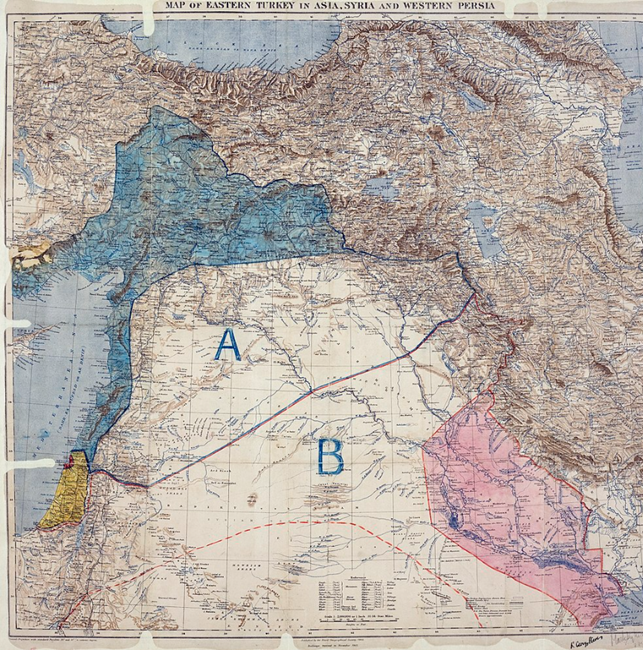
The Sykes-Picot agreement map, signed in May 1916, with the proposed dividing line, once the Ottoman empire is defeated, between A = French zone, B = British zone (yellow, the «Jewish reservation in Palestine)

The Balfour declaration consists of 129 words, including the date and the polite formula, so why has it not fallen into oblivion, being little more than similar agreements between General Custer and Sitting Bull to define a reservation limit?

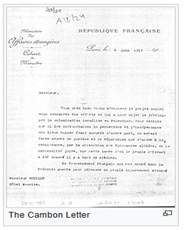
Take it easy, this short article is not meant to set the records straight for the sake of fairness, nor is it a matter of French willing to take credit for a Balfour-like declaration. There is nothing to be proud of there. But, the thing is, should the declaration of the unfortunate Jules Cambon have not fallen into oblivion — that is, if people were aware that a very similar declaration was made in two different countries in the same year within a five-month time period, perhaps the international wheeling and dealing of the Jews would become obvious to everyone.

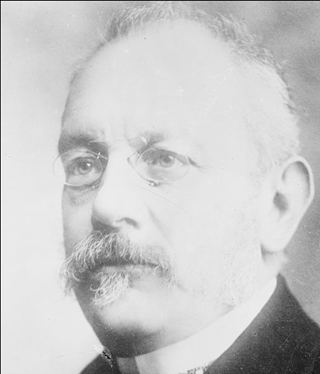
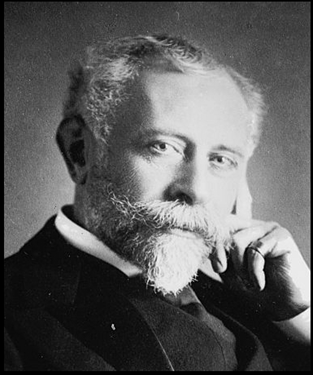
Besides, the two declarations may have a common origin. The secret Sykes-Picot agreement signed on May 16, 1916 — in the same context of the First World war as the Balfour Declaration. From a French point of view, the link is crystal clear: while it was Jules Cambon who made a declaration similar to the Balfour Declaraion, it was his younger brother, Paul Cambon, who assisted Picot during the negotiations with Sykes, and their project was colonial in nature, not Zionist.

I. We know the English version of the Balfour declaration:

It was meant to thank the chemist Chaim Weizmann  – who would later be the first president of Israel for a crucial discovery he made for the Royal Navy;  according to Wikipedia:

While serving as a lecturer in Manchester Weizmann became known for discovering how to use bacterial fermentation to produce large quantities of acetone.  Acetone was used in the manufacture of cordite explosive propellants critical to the Allied war effort. Winston Churchill became aware of the possible use of Weizmann’s discovery in early 1915, and David Lloyd George, as Minister of Munitions, joined Churchill in encouraging Weizmann’s development of the process. The importance of Weizmann’s work gave him favour in the eyes of the British Government; this allowed Weizmann to have access to senior Cabinet members and utilise this time to represent Zionist aspirations.

One of these senior members was none other than Sir Arthur Balfour, who took over Churchill as First Lord (i.e. The head of the Royal Navy), and as such, equally aware of the importance of the Weizmann contribution to the fleet.

Dr. Chaim Weizmann invented a fermentation process that converted starch — a poly-sugar readily available from corn and potatoes — into acetone and butyl alcohol, facilitated by a bacteria, Clostridium acetobutylicum, that Dr. Weizmann had previously isolated.

But why should the United Kingdom care about the fate of Palestine whilst engaged in a struggle with its survival at stake?

II. We also know the Benjamin Freedman theory:

The Balfour declaration was the result of bargaining between Great Britain and American Jews, the latter pledging to make use of their influence on the US government and public to push them into war in exchange for Palestine, we refer to the speech by Freedman to the Marine cadets in 1974:

…when Germany was winning the war, the Jews were very happy, because they didn’t want Russia to come out the winner, with France and England, because they thought it would be tougher for the Jews in Russia. So, they were all pro-German. What happened? When the Germans trotted out the submarines, … General Haig, in London, warned the English, “We have less than two week’s food supply for the whole nation of 55,000,000 people.”… So, England was offered a Peace Treaty by Germany. … It was on the desk of the British War Cabinet, ready to be signed. … What happened? The Khazar Jews in New York, Washington, led by Brandeis, made this promise through Fleischman & Sockloff in London. They went to the British War Cabinet and they said, “You don’t have to make peace—which is tantamount to surrender. We can show you how you can win the war, if, when you defeat Germany, and carve up the Ottoman Empire (or Turkey) you will give us Palestine.

This version is not flawless since it doesn’t fit the chronology of events; the Balfour declaration is dated November 2, 1917. However, by this date, the transfer of American troops to Europe was already well underway, the declaration of war by the United States on Germany itself dating back to April 6, 1917.

Of course, we could just say that we shouldn’t worry about getting an exact chronology. It is enough to say that by the end of 1917, England had other fish to fry and that this Balfour declaration doesn’t make sense except for the bargain Freedman was hinting at.

III – But we have better than that now: the French Jewish version:

On June 4, 1917, Jules Cambon, General Secretary at the Quai d’Orsay, published an open letter to Nahum Sokolov, representative of the World Zionist Organization in France:

You were good enough to present the project to which you are devoting your efforts, which has for its object the development of Jewish colonization in Palestine.You consider that, circumstances permitting, and the independence of the Holy Places being safeguarded on the other hand, it would be a deed of justice and of reparation to assist, by the protection of the Allied Powers, in the renaissance of the Jewish nationality in that Land from which the people of Israel were exiled so many centuries ago.

The French Government, which entered this present war to defend a people wrongfully attacked, and which continues the struggle to assure the victory of right over might, can but feel sympathy for your cause, the triumph of which is bound up with that of the Allies.

I am happy to give you herewith such assurance

Cambon letter — Wikipedia


Two top French diplomat: left, Paul Cambon who took part in the Sykes-Picot negotiations signed on May 16, 1916, and right, his elder brother, Jules Cambon, who made a declaration favouring the creation of Israel on June 4, 1917.

With this letter, the timing and the rationale are perfect. Here are two entries from the Raymond Poincaré diary, the French President during the war:

June 13, 1917 Pershing arrival in Paris:

American General Pershing arrived in Paris at the end of the afternoon. Colonel Renoult, my military attache, went to meet him at the station. He tells me that the welcome was very warm.

July 4 1917, review of a first American battalion on the American national holiday:

In the morning, courtyard of the Invalides, review of an American battalion, which has just arrived in Paris. Painlevé picks me up at the Élysée and we both leave in a «Victoria». General Duparge, Colonel de Rieux and Commander Helbronner follow us in a landau. On the Alexandre III bridge and on the esplanade, a very dense and unanimously enthusiastic crowd.

We arrive in front of the Hôtel des Invalides and we dismount. We are received by General Pershing and General Dubail. We enter the courtyard, around which are ranged the American soldiers and a French company.

Under the arcades and on the first floor, in the galleries, many spectators applauding. We pass the troops who look very good in their khaki uniforms.

In other words, Pershing and the first American detachment arrive after Jules Cambon’s declaration of June 4, 1917. Note how Combon points out in his statement that “your cause, the triumph of which is bound up with that of the Allies” — and how one wants to add “and vice versa”.

Strangely enough since Poincaré also served as a noted minister of Foreign Affairs before the war, a critical period, we found nothing in his memoirs about the Cambon letter, whether it be because, as many politicians of that time (including former president William Howard Taft in America) believed, he didn’t realise the importance of the rise of the Jewish power, or whether it be, on the contrary, as with President Wilson, that he didn’t dare speak about it openly. The fact is that the immediate situation was very bad for France on the frontline with the ongoing mutiny and the arrival of German reinforcements from the East. From Poincaré’s diary:

June 3, 1917:

[…] In a secret committee, Augagneur, so firm and so optimistic at the start of the war, gave a speech of discouragement and immediate peace, repeating that there was no longer anything to count on with Russia and that America would arrive too late, that all was lost. However, he was applauded by a good fifth of the House.

[…] New painful incidents on the front. Colonel Fournier informs me that a division of the 21st Corps has deliberated on the point whether it would consent to go up to the trenches and resume the offensive. She decided to go to the trenches, but to stand on the defensive; another division, that of the 7th Corps, refused to go to the trenches. General Pétain is looking for the ringleaders, whom he believes to be connected with the General Confederation of Labour, and he will not regain his command unless action is taken against pacifist propaganda.

It was therefore about time for the Americans to arrive, fortunately, the negotiations had started even earlier, here is again the chronology found in Poincaré’s memoirs:

May 15, 1916:

Victor Basch, whom I asked to come to my office, gives me his impressions of America. He found the Israelites there very hostile to Russia but favorable to France; he succeeded in penetrating among them; he lectured to them; he acquired the assurance that the house of Jacob Schiff would agree to place a loan of 250 million dollars for the Allies, if Russia granted some advantages to the Israelites.

1. Poincaré does not specify it, but Victor Basch is himself a Jew, on June 4, 1898. In the wake of the Dreyfus affair, he was one of the founders of the League of Human Rights and he would become its fourth president. Take note: League of Human Rights, not League of French Rights, there is a nuance.

2. What are these advantages that Russia should grant to the Israelites? The right to emigrate to Palestine, maybe?

3. It is plausible, since on May 15, we are precisely on the eve of the signing of the Sykes/Picot agreement. Poincaré, with his relative frankness, especially when it comes to the Israelites, does not breathe a word about it, yet this secret agreement is undoubtedly at the origin of the two declarations, that of Cambon and that of Balfour.

On the map that draws the dividing line between the French zone of influence and the English one, we notice a small but ominous yellow spot on the bottom left where before there was nothing special, nothing else that a small part of the Ottoman Empire had not even identified; it seems almost obvious that the two subjects — Sykes-Picot and Cambon-Balfour – one year apart, between the same two countries, in the same context of the First World War, are not entirely disconnected. Besides here is a very interesting entry in this regard, again from Poincaré ,three weeks after these Sykes-Picot agreements:

June 8, 1916

Edmond de Rothschild talks to me about the Jews of Russia. He tells me that before taking an interest in them, he wants to safeguard the alliance, but he noticed that Mr. Protopopoff was quite ready to improve their lot and he would like the French government, with all the necessary prudence, to intervene in their favor.I insist on the delicate nature of this intervention. I tell him, however, that I will bring the conversation to this subject when I see Mr. Protopopoff again, but he is not a minister yet; he can only become one.

1 . Note how the Jews have easy access to the President of the Republic. Moreover, they are ablve to intervene directly in foreign policy in wartime, while at the same time, a finicky secularism prevents him from meeting so easily the Catholic hierarchy; see 1917 : le Rond-point Poincaré.

2. The question remains, was “the Jews of Russia” the sole purpose of Edmond de Rothschild? Was it not rather “the Jews of Russia being transferred to Palestine”? As if by chance, Balfour handed out his declaration to a Rothschild in London.

Let’s end with these few entries during the rushing hours, still from Poincaré’s diaries:

February 4, 1917:

Jules Cambon telephones the Élysée that Mr. Sevastopoulo has received from the Russian ambassador in Washington notice that President Wilson has assembled a commission made up of a few friends and that he has examined three points there:

1 – negotiations between the United States and Germany

2 – waiting for a new torpedo before any decision

3 – immediate severance of diplomatic relations.

Wilson would have chosen the latter course. Press cables say that he sent a new message to the Senate and declared that he was going to hand over his papers to the German ambassador and make an appeal to the neutrals.If this news is correct, the assistance of the United States will be an invaluable moral support for us.

What a pity, Poincaré does not give us the names of the “friends” in question, but we are starting to get a little idea for ourself …

March 31, 1917, meeting with the Prince Sixtus who, with a view to possible peace negotiations, delivered a message from the Emperor Charles of Austria to Poincaré and Cambon (general secretary of the Quai d’Orsay), Sixtus of Bourbon-Parma leaves them also a personal note alluding to regime change in Petrograd:

Until the change of regime which has just taken place in Petrograd, Russian opinion seemed, in fact, unanimous in demanding the possession of Constantinople as an essential condition for the development of the Muscovite Empire. But the feelings of the current Russian government already show differences in this regard. If the Foreign Minister, Mr. Milioukov, maintains the previous point of view, which was that of an annexation of Constantinople to Russia, his colleague, Mr. Kerensky, reflects the new opinion that Russia must renounce any enlargement: in this case, Turkey could keep its capital, the regime of which would simply have to be combined with a European international status.

April 5, 1917, exchange of telegrams between Poincaré and Wilson:

The Chamber of Deputies adopted a resolution similar to that of the Senate. To protect the Americans against the attacks with which they remain threatened, Wilson had torpedo boats armed which were directed towards American waters. One of them has just been sunk in the English Channel by a German submarine.

Ribot delivers a highly acclaimed speech in the Chamber on American determination.

I telegraph, for my part, to President Wilson. Mr. William Martin communicates the telegram that I wrote to Ribot, who gives his full support:

At the moment, when under the generous inspiration of your Excellency, the great American Republic, faithful to its ideal and its traditions, is preparing to defend by arms the cause of justice and freedom, the French people quivered with brotherly emotion. Allow me to renew to you, Mr. President, at this grave and solemn hour, the assurance of the feelings of which I recently addressed the testimony to you and which finds in the present circumstances an increase in strength and ardor. I am sure to express the thoughts of all of France by telling you, to you and to the American nation, the joy and the pride that we feel to feel our hearts beating, once again, in unison with yours. This war would not have had its full meaning if the United States had not been induced by the enemy himself to take part in it. From now on, it appears more than ever to any impartial mind that German imperialism, which wanted, prepared and declared war, had conceived the insane dream of establishing its hegemony over the world. He succeeded only in revolting the conscience of humanity. You have made yourself before the universe, in an unforgettable language, the eloquent interpreter of outraged law and threatened civilization. Honor to you, Mr. President, and to your noble country.

Please believe in my devoted friendship.

Raymond Poincaré
Wilson’s response:

«His Excellence Raymond Poincaré, President of the Republic, Paris.

In this trying hour when the destinies of civilized mankind are in the balance, it has been a source of gratification and joy to me to receive your congratulations upon the step which my country has been constrained to take, in opposition to the relentless policy and course of imperialistic Germany. It is very delightful to us that France who stood shoulder to shoulder with us of the western world in our struggle for independence, should now give us such a welcome into the lists of battle as upholders of the freedom ant the rights of humanity. We stand  as partners of the noble democraties whose aims and acts make for the perpetuation of the rights and freedom of man  and for the saveguarding of the true principales of human liberties in the name of the american people. I salute you and your illustrious countrymen.

Woodrow Wilson»

Conclusion

The common point of the three versions of the Balfour declaration, the English, the American and the French, is, of course, the international Jew, the three versions already push aside the Sykes – Picot agreement and its colonial prospect, and anyway, only one version will prevail before history. On February 10, 1918, through its own Foreign Minister, Stephen Pichon, France associated itself with the declaration before Parliament by Lord Arthur Balfour, British Foreign Minister, which is officially consecrated by the Treaty of Sèvres , in August 10, 1920.

On that day, Raymond Poincaré still thought that the Jews were only pawns in his war against Germany and, with the extension of the French colonial empire in the Middle East, he could not imagine that it would turn out to be the other round: France, Germany, UK and the USA as being pawns in the history of Israel.

And so it was, after two world wars, that the state of Israel came to light. Think of the consequences:

1 – No First World war, no Balfour declaration and no fall of the Ottoman empire (a prerequisite for the setting of a Jewish state in Palestine).

2 – No Second World war, no Israel.

*   *   *

Appendix, the Balfour Declaration

November 2nd, 1917

Dear Lord Rothschild,

I have much pleasure in conveying to you, on behalf of His Majesty’s Government, the following declaration of sympathy with Jewish Zionist aspirations which has been submitted to, and approved by, the Cabinet.

“His Majesty’s Government view with favour the establishment in Palestine of a national home for the Jewish people, and will use their best endeavours to facilitate the achievement of this object, it being clearly understood that nothing shall be done which may prejudice the civil and religious rights of existing non-Jewish communities in Palestine, or the rights and political status enjoyed by Jews in any other country.”

I should be grateful if you would bring this declaration to the knowledge of the Zionist Federation.

Yours sincerely,

Arthur James Balfour

https://www.theoccidentalobserver.net/wp-content/uploads/2018/06/TOO-Full-Logo-660x156-1.png 0 0 Francis Goumain https://www.theoccidentalobserver.net/wp-content/uploads/2018/06/TOO-Full-Logo-660x156-1.png Francis Goumain2023-04-27 11:13:262023-04-27 18:55:11Jules Cambon, the Sykes-Picot Agreement, and the Balfour Declaration: Exposing Jewish Machinations in World War I

I’ve Gone to Twitter Heaven

April 26, 2023/40 Comments/in Featured Articles/by James Edwards

On Monday morning, I ascended to Twitter heaven.

I had been on Twitter since 2016 and never once received a prior warning or reprimand. This wasn’t my second or third strike. This was an online assassination that went straight to a permanent ban. No reason was given. I conduct myself professionally and have always been sure to responsibly present our arguments. I don’t quarrel with individuals on social media and have never even used profanity or crude rhetoric. Simply put, by no reasonable standard of measurement could it be argued that I violated even the most ambiguous Terms of Service. This was just another case of naked censorship.

It also wasn’t my first rodeo. I was banned by Facebook and PayPal in the mid-2000s, long before it became altogether commonplace for dissidents to be banned from everything. At this point, I very nearly have been banned from everything, including YouTube, Amazon, and every known credit card payment processor in the universe. Frankly, I have never known any other reality.

Because of this, I was relatively late to join the Twitter party, not arriving until the fall of 2016. Within weeks, Hillary Clinton was featuring my Twitter account in a campaign ad against Donald Trump. Though my work had been covered/targeted by countless print and broadcast media outlets long before my tenure on Twitter, there was no doubt that Twitter boosted my audience and led to greater exposure. By the time the end came this week, my Tweets were routinely gathering tens of thousands of views, sometimes hundreds of thousands. One recent Tweet generated in excess of one million views, which, in truth, is probably the reason I have been taken out.

I suppose the only real surprise was that I was able to last there for as many years as I did. When it comes to arbitrary censorship, the interesting thing is that you just never know when or why you’ll be taken out. As I said, I certainly didn’t do anything to bring this upon myself; the timing of these things is always random. You just wake up one day and you’re gone. In the meantime, there are a limitless number of minority racists whose accounts are littered with profane, hate-filled rants that call for the actual murder of White people. Of course, those accounts are safe.

I was hardly the only one to be shipped off to the Twitter Gulag this week. At the exact same time that I was banned, Dr. Kevin MacDonald and Dr. Tomislav Sunic, among others, were also shuttered. MacDonald and Sunic, especially, are gentlemen and legitimate scholars whose voices deserve any and all platforms. Still, if the party has to end, it’s always better to leave with friends. It was not lost upon us that we all survived the previous regime only to be banned by Elon Musk’s operation.

One commenter wrote that we could take our bans as a high compliment, as well as “an independent verification that you all stand on the moral high ground of truth and courage.” Sure, at least there’s that, but MacDonald alone had a following numbering five Roman legions that have now been dispatched into the ether.

It would be disingenuous for me to tell you that it isn’t somewhat maddening to build up a large, organic following only to have it evaporated on a whim. Like most people, I don’t like being violated. But what I like even less is to hear men whine about things not being fair. I have long possessed an admiration for the Machiavellian nature of our enemies. They have done to me exactly what I would do to them. I respect that. They have set the rules and we should remember them.

I do not now, nor have I ever believed in the equality of individuals or ideas. We are right and they are wrong. If I were in control, I would be eager to do everything within my power to extract the anti-White, “woke” agenda from our society. Root and stem. I give my enemy credit for being more ruthless than our people, who are still too noble for their own good. While we ought not to lose the moral compass that separates us from our adversaries, we must see things clearly.

Still, the one message above all others that I want people to remember during this teachable moment is that we cannot apologize for our positions or behave during times of difficulty in a way that brings dishonor to our cause. It is an animating thing to engage in the struggle of one’s time. In the best of us, it will stir the Faustian spirit that exists within our hearts and minds. Without trials of principle, you will never know whether or not you are honest. Making the hard decision during times of challenge brings honor to our ancestors and solidifies our standing as a man.

As a friend of mine recently put it, great men are never made except through great trials. Adversities aren’t obstacles, but rather our greatest opportunities — to get better, forge our character, work harder, become smarter, and prove our worth. You won’t know what you’re made of until your time comes and you face a decision. We should welcome these opportunities, whether it be something as trivial as a social media ban or during other situations when the stakes are much higher.

At the end of the day, I remain thankful for the opportunity to serve and hope that whatever example I set can be done for the greater good of our collective. In the meantime, the show must go on and it’s time to get back to work.

James Edwards hosts The Political Cesspool Radio Program. When not interviewing newsmakers, Edwards is no stranger to making news himself, having appeared as a commentator many times on national television. Over the course of the past two decades, his ground-breaking work has also been the subject of articles in hundreds of print publications and media broadcasts around the world.

https://www.theoccidentalobserver.net/wp-content/uploads/2018/06/TOO-Full-Logo-660x156-1.png 0 0 James Edwards https://www.theoccidentalobserver.net/wp-content/uploads/2018/06/TOO-Full-Logo-660x156-1.png James Edwards2023-04-26 07:13:072023-04-26 07:13:07I’ve Gone to Twitter Heaven

Tom Sunic banned by Twitter

April 25, 2023/23 Comments/in General/by Tom Sunic, Ph.D.

I was purged from the twitter the same day, yesterday, as Kevin MacDonald and James Edwards – I suspect along countless other “deplorables” in the USA who were shut down probably the same day. No explanation was given, no nothing. I must confess I did not write laudatory tweets about antifa multiracial diversity; nor did I comment favorably about Papal ecumenical interracial foot-kissing homilies about non-European migrants, but never ever did I post hostile remarks about any particular individual, or any group of non-European people.

The Twitter decision doesn’t surprise me at all; I’ve been writing over the last 30 years  — also in TOO —that the censorship in the USA is continuing where the Soviet Union left off. I know what I am talking about. My family and I were all proscribed in communist ex-Yugoslavia for several decades. My father, an ex-lawyer, even served prison time for “hostile anti-communist literature.” Now we are witnessing the same intellectual purges, albeit adorned with fancy/demonic euphemisms such “hate speech” and “ethnic sensitivity training” in the  USA/EU — akin to the ex-Soviet People’s Commissariat for Internal Affairs, i.e., the NKVD.

Historically, this is the case when the System is bound to implode. Check out the civil wars of Marius vs Sulla in the first century BC, and, later on, the “damnatio memoriae”  in which the memories of many Roman emperors were erased. Many of these emperors lasted no more than a few months each. Chaos on the doorstep.

https://www.theoccidentalobserver.net/wp-content/uploads/2018/06/TOO-Full-Logo-660x156-1.png 0 0 Tom Sunic, Ph.D. https://www.theoccidentalobserver.net/wp-content/uploads/2018/06/TOO-Full-Logo-660x156-1.png Tom Sunic, Ph.D.2023-04-25 14:48:022023-04-25 14:55:52Tom Sunic banned by Twitter
Page 1 of 6123›»
Subscribeto RSS Feed

Kevin MacDonald on Mark Collett’s show reviewing Culture of Critique

James Edwards at the Counter-Currents Conference, Atlanta, 2022

Watch TOO Video Picks

video archives

DONATE

DONATE TO TOO

Follow us on Facebook

Keep Up To Date By Email

Subscribe to get our latest posts in your inbox twice a week.

Name

Email


Topics

Authors

Monthly Archives

RECENT TRANSLATIONS

All | Czech | Finnish | French | German | Greek | Italian | Polish | Portuguese | Russian | Spanish | Swedish

Blogroll

  • A2Z Publications
  • American Freedom Party
  • American Mercury
  • American Renaissance
  • Arktos Publishing
  • Candour Magazine
  • Center for Immigration Studies
  • Chronicles
  • Council of European Canadians
  • Counter-Currents
  • Curiales—Dutch nationalist-conservative website
  • Denmark's Freedom Council
  • Diversity Chronicle
  • Folktrove: Digital Library of the Third Way
  • Human Biodiversity Bibliography
  • Instauration Online
  • Institute for Historical Review
  • Mondoweiss
  • National Justice Party
  • Occidental Dissent
  • Pat Buchanan
  • Paul Craig Roberts
  • PRIVACY POLICY
  • Project Nova Europea
  • Radix Journal
  • RAMZPAUL
  • Red Ice
  • Richard Lynn
  • Rivers of Blood
  • Sobran's
  • The European Union Times
  • The Occidental Quarterly Online
  • The Political Cesspool
  • The Right Stuff
  • The Unz Review
  • Third Position Directory
  • VDare
  • Washington Summit Publishers
  • William McKinley Institute
  • XYZ: Australian Nationalist Site
NEW: Individualism and the Western Liberal Tradition

Also available at Barnes & Noble

Culture of Critique

Also available at Barnes & Noble

Separation and Its Discontents
A People That Shall Dwell Alone
© 2025 The Occidental Observer - powered by Enfold WordPress Theme
  • X
  • Dribbble
Scroll to top

By continuing to browse the site, you are legally agreeing to our use of cookies and general site statistics plugins.

CloseLearn more

Cookie and Privacy Settings


How we use cookies

We may request cookies to be set on your device. We use cookies to let us know when you visit our websites, how you interact with us, to enrich your user experience, and to customize your relationship with our website.

Click on the different category headings to find out more. You can also change some of your preferences. Note that blocking some types of cookies may impact your experience on our websites and the services we are able to offer.

Essential Website Cookies

These cookies are strictly necessary to provide you with services available through our website and to use some of its features.

Because these cookies are strictly necessary to deliver the website, refusing them will have impact how our site functions. You always can block or delete cookies by changing your browser settings and force blocking all cookies on this website. But this will always prompt you to accept/refuse cookies when revisiting our site.

We fully respect if you want to refuse cookies but to avoid asking you again and again kindly allow us to store a cookie for that. You are free to opt out any time or opt in for other cookies to get a better experience. If you refuse cookies we will remove all set cookies in our domain.

We provide you with a list of stored cookies on your computer in our domain so you can check what we stored. Due to security reasons we are not able to show or modify cookies from other domains. You can check these in your browser security settings.

Other external services

We also use different external services like Google Webfonts, Google Maps, and external Video providers. Since these providers may collect personal data like your IP address we allow you to block them here. Please be aware that this might heavily reduce the functionality and appearance of our site. Changes will take effect once you reload the page.

Google Webfont Settings:

Google Map Settings:

Google reCaptcha Settings:

Vimeo and Youtube video embeds:

Privacy Policy

You can read about our cookies and privacy settings in detail on our Privacy Policy Page.

Privacy Policy
Accept settingsHide notification only