I take it that the reader is familiar with the basics of the so-called Holocaust: the alleged deaths of some six million Jews, many in gas chambers, at the hands of the Nazis in World War II. This was, we are told, a deliberate policy of Hitler and his top men, something of highest priority—even above the war effort itself—and a policy of the utmost secrecy. It was so secret, in fact, that hard documentation and forensic evidence on this catastrophic, world-changing event are almost nonexistent: no ‘Hitler order’ to kill the Jews, no plans for homicidal gas chambers, no physical remains of gas chambers,[1] no photos of gas chambers or gassed Jews, no autopsies confirming death by gas, no consistent or coherent records of mass shootings that must have totaled over 1.5 million, no evidence of any of the 1 million or so ghetto deaths. Those ingenious devils, the Nazis, managed to destroy all the evidence—including the physical remains of virtually all six million Jewish corpses—in order to conceal their heinous deed. They were truly evil geniuses. Or so we are told.
But this is not my topic for today. For the full story of the incredible World War II Holocaust, I must refer interested readers to my books The Holocaust: An Introduction (for the concise version), or, for a more detailed discussion, Debating the Holocaust: A New Look at Both Sides (4th ed, 2020). Also recommended is the book by Germar Rudolf, Lectures on the Holocaust (2017). Suffice to say that there are many facts about this notorious event that our friendly ‘Holocaust experts’ would rather have us not know.
Today, though, I want to focus on a related but perhaps more surprising event: the Jewish “holocaust” of World War I. (I will use the lower-case ‘holocaust’ for pre-WWII, reserving the upper-case ‘Holocaust’ for WWII itself.)
Wait, you say; World War I? But didn’t that occur decades before WWII? Yes. Wasn’t that years before the Nazi party even existed? True enough. Wasn’t Hitler a mere foot soldier in that initial war? Indeed he was. Then who committed the crime? And why? And how many Jews suffered in that holocaust?
It is truly a remarkable story, one that is too little known. It has often been said that “history repeats itself.” But who would have guessed that a monumentally tragic event like a holocaust could repeat itself, inflicted on the same people, in the same region of the world, and in the same numbers, in just three decades? This amazing occurrence is worth a bit of exploration; the holocaust of WW1 has huge implications for the Holocaust of WWII, and by extension, for Jewish-Gentile relations in the world today.
Context for War
The precursors and causes of WW1 are vast and complicated, and I cannot delve into those here. But a key factor, and likely decisive, was the action of the global Jewish Lobby of the day, which pushed for war at every possible juncture; I have detailed this aspect in my book The Jewish Hand in the World Wars (2019), and I refer interested readers to it. The same Jewish Lobby, it turns out, also had a decisive hand in the holocaust narratives.
For the moment, I will have to restrict myself to the basic facts. World War I, as we recall, began in July 1914 and ran for a bit more than four years, ending on 11 November 1918. The Triple Entente of the UK, France, and Russia faced off against the Triple Alliance of Germany, Austria-Hungary, and Italy, although Italy dropped out of the Alliance in 1915. The US eventually entered the war (on the side of the Entente) in April 1917. Russia, torn apart by the Judeo-Bolshevik Revolution, withdrew in March 1918. Germany held out for another seven months, but eventually, in November 1918, it too succumbed, in part as a result of internal Jewish agitation,. In the end, the Alliance suffered some 8 million total casualties (military plus civilian), and the Entente around 10 million. Despite the many complicating factors, a defeated Germany was ultimately assigned full blame for the war—completely overlooking the fact that that nation “did not plot a European war, did not want one, and made genuine…efforts to avert one,” in the words of historian Sidney Fay.[2] The onerous postwar reparations inflicted on Germany set the stage, in large part, for the later emergence of Hitler and his NSDAP party.
As in all wars, many civilians were caught in the crosshairs; here, the Jews were no exception. Their suffering, however, had already been ongoing for many years prior to the war. Or perhaps we should say, self–inflicted suffering. Jewish behavior, attitudes, actions, and beliefs have been a constant source of conflict throughout the centuries—even through millennia.[3] Jewish abrasiveness became particularly pressing by the late 18th century, as was noted by many prominent critics, including Kant, Voltaire, Hegel, Fichte, and Herder. By the mid-19th century, the likes of Schopenhauer and Bruno Bauer were issuing scathing critiques.
A particularly disturbing situation, though, was developing in Russia. By the late 1800s, Russia had some 5 million Jews within its borders, nearly all of whom lived in the so-called Pale of Settlement in the far west of the country; this represented about half of the global total of around 10 million Jews. This large Jewish population was a disruptive and agitating force within Russia and hence earned the dislike of Czars Nicholas I (reigned 1825 to 1855) and Alexander II (reigned 1855 to 1881). By 1871, Russian activist Mikhail Bakunin could make this observation about the Jews:
This whole Jewish world which constitutes a single exploiting sect, a sort of bloodsucker people (ein Blutegelvolk), a collective parasite (einzigen fressenden Parasiten), voracious, organized in itself, not only across the frontiers of states but even across all the differences of political opinion—this world is presently, at least in great part, at the disposal of Marx on the one hand and of the Rothschilds on the other. … Jewish solidarity, that powerful solidarity that has maintained itself through all history, united them [both].[4]
In 1881, a gang of anarchists known as Narodnaya Volya, which included a few Jews, succeeded in assassinating Alexander; this unleashed a series of anti-Jewish pogroms that persisted for decades.
By the late 1880s, American media was beginning to take notice of the Jewish situation in Russia—especially the New York Times. A brief item from 1889 began with the question “How many Jews are there?” meaning, globally. At a minimum, “the number of the ubiquitous race [is] 6,000,000.” It then continues with a reference to Jewish suffering: “With the exception of half a million, they are all in a state of political bondage.” Furthermore, “in Russia alone there were 4,000,000 of their race whose every step was dogged by that curse, religious hatred and persecution.”[5] Here we find an early reference to (almost) six million suffering Jews.
Another short piece appeared in 1891 entitled “Russia’s Christianity: Rabbi Gottheil says a word on the persecution of the Jews.” In a public lecture, Gottheil examined a number of facts “in relation to the treatment of Russia’s 5,000,000 to 6,000,000 Jews by the Christian population.” Notably, the population of Russian Jews, which was just 4 million two years earlier, was now as high as 6 million. Gottheil then proceeds to quote a recent article by one E. B. Lanin, who said, “about six millions [sic] persecuted and miserable wretches remain steadfastly faithful to a religion that causes their life to be changed into a fiery furnace.”[6] Prophetic, indeed.
Nearly a decade later, in June 1900, Rabbis Gottheil and Stephen Wise were the keynote speakers at a “Zionist mass meeting” in New York. They were anxious to highlight Jewish suffering around the world to help make their case for a Jewish homeland in Palestine. Gottheil spoke generically of the “oppressed in Russia,” but Wise made the point explicit: “There are 6,000,000 living, bleeding, suffering arguments in favor of Zionism.”[7] Within a few years, the pogroms became increasingly intense, eventually leading to small-scale killings. The so-called “Kishineff (or Kishinev) massacre” of 1903, in which all of 49 Jews were killed, became, for the first time, a “holocaust.” The NYT quotes from an editorial of the Jewish Chronicle:
We charge the Russian Government with responsibility for the Kishineff massacre. We say it is steeped to the eyes in the guilt of this holocaust. (16 May, p. 1)
The editorial goes on to speak of how the Russian Jews are being “slowly annihilated” and subject to “the process of extermination.” Such words obviously anticipate similar charges that would be leveled against the National Socialists some four decades later.
Two years later, we read that the “holocaust” is still ongoing. A short item of 1905 is headlined “Simon Wolf asks how long the Russian holocaust is to continue.”[8] Also that year, the NYT reported, once again, on “our 6,000,000 cringing brothers in Russia.”[9] The following year, in 1906, we read of “startling reports of the condition and future of Russia’s 6,000,000 Jews”; it is a “horrifying picture” of “renewed massacres” and “systematic and murderous extermination.”[10] At this point, one is tempted to ask: What is it about the Jews, such that they are subject to such continual and horrific abuse? And furthermore, why isn’t the figure of six million, first reported back in 1890, growing any larger? Is it now, somehow, fixed at six million? If so, why?
In 1910, we find “Russian Jews in sad plight,” and we are saddened over “the systematic, relentless, quiet grinding down of a people of more than 6,000,000 souls.”[11] In 1911, the New York Times reported that “the 6,000,000 Jews of Russia are singled out for systematic oppression and for persecution by due process of law.”[12] And yet things got worse still:
That Russia is pursuing a definite anti-Jewish policy, that the condition of the Jews in Russia is worse now than it ever was before, will be gathered from the following extracts… [T]he restrictive laws now in existence…intensif[y] the oppression of the Jews, and by which it is making the 6,000,000 Jews a people economically exhausted—a people without any rights at all. (10 December, p. SM8)
We need to remind ourselves that the leading Russians had a very low opinion of the Jews, and felt themselves fully justified in any recrimination. Sometimes their words were shocking. Russian prime minister Pyotr Stolypin wrote the following in 1911:
It is important that racial characteristics have so drastically set the Jewish people apart from the rest of humanity as to make them totally different creatures, who cannot enter into our concept of human nature. We can observe them the way we observe and study animals, we can feel disgust for them or hostility, the way we do for the hyena, the jackal, or the spider, but to speak of hatred for them would raise them to our level. … Only by disseminating in the popular consciousness the concept that the creature of the Jewish race is not the same as other people, but an imitation of a human, with whom there can be no dealings—only that can gradually heal the national organism and weaken the Jewish nation so it will no longer be able to do harm, or will completely die out. History knows of many extinct tribes. Science must put, not the Jewish race, but the character of Jewry into such condition as will make it perish.[13]
Just a few months later, Stolypin was assassinated by a Jewish radical, Dmitri Bogrov.
I emphasize that it was not only the New York Times that was reporting on the six million suffering Hebrews. Zionist Jews were repeating the same lines to their own people. Speaking at the 1911 Zionist Congress, Max Nordau said the following:
Virtuous governments…lay the groundwork with their own hands for the destruction of six million persons, and no one except the victims themselves raises his voice against this—even though this, of course, is an infinitely greater crime than any war which as yet has never destroyed six million human lives.[14]
Thus we find repeated linkage, over a period of many years, of “six million,” “extermination,” and “holocaust” with respect to the Jews. History indeed repeats itself.
Into the Great War
It seems, then, that our holocaust journey is even more intriguing than I indicated above. The first Jewish holocaust occurred in Russia, running, at a minimum, from the years 1903 through 1911. We don’t know how many Jews were killed in that period, but it was unquestionably small, given the over-emphasis on relatively minor events in which, for example, 49 were killed (see Andrew Joyce’s “Revisiting the Nineteenth-Century Russian Pogroms”). Based on scattered reports, the total would have been on the order of a few thousand, at most. And yet, the figure of 6 million recurred repeatedly, as a kind of token of mass Jewish suffering. This set the stage for the second holocaust, of World War One, as I am about to explain. And this, of course, leaves “the” Holocaust of World War II as holocaust number three. A rather remarkable turn of events, and one not likely to be covered in your local history class.
As I stated above, World War I began in July 1914. Already in December of that year we were reading accounts of mass suffering of Jews—and we can guess the number. The New York Times reported as follows:
Appeal for aid for Jews: American Committee tells of Suffering Due to War. The American Jewish Relief Committee called a conference…to consider the plight of more than 6,000,000 Jews who live within the war zone. (2 December, p. 12)
The “war zone” in question was the Eastern Front, which ran through parts of present-day Poland, Ukraine, Austria, and Hungary, as well as portions of western Russia. Just a month later, the Times reported,
In the world today there are about 13,000,000 Jews, of whom more than 6,000,000 are in the very heart of the war zone; Jews whose lives are at stake and who today are subjected to every manner of sorrow and suffering. (14 January, p. 3)
A year later, we read that the head of a Jewish aid society has declared that “even the wrongs of the Belgians could not be compared to the outrages heaped upon the Polish Jews. ‘Nearly six million Jews are ruined, in the greatest moral and material misery. … And the world is silent’.”[15] And in case we had forgotten, the Times would soon remind us that, indeed, this horrific situation constituted…a holocaust. In October, a Jewish organization—The Joint Distribution Committee of Funds for Jewish War Sufferers—launched a $10 million appeal with these words:
The new campaign is the largest ever undertaken by Jews of the United States. … Dr. Judah Magnes has been enabled [to ascertain] the present needs of the Jewish people in Europe, who have fallen under the blight of the world holocaust. (29 October, p. E9)
Into 1917, the war evolved into a sort of stalemate, with the infamous trenches defining much of the front. Despite growing fatalities on all sides, the number of suffering Jews stayed remarkably constant: “Six millions [sic] of Jews are living in lands where they are oppressed, exploited, crushed, and robbed of every inalienable human right.”[16] By September of that year, the Times was reporting on an appeal for an aid fund,
to alleviate the suffering of Jews in the European war zones…[whose] suffering is unparalleled [!] in history. … [W]omen, children, and babies must be saved if the Jewish race is to survive the terrible holocaust… (24 September, p. 20)
Once again, we see the repeated connection between ‘holocaust’ and ‘six million’ suffering Jews.
By mid-October of 1918, it was becoming clear—at least to the crew at the New York Times—that the war was about to end. Hence they excitedly reported on an astonishing “$1 billion fund to rebuild Jewry” (18 October, p. 12).[17] As it turns out, of those “six millions” of Jews who were suffering, starving, and dying in the “holocaust”—well, miraculously, all of them survived. And they needed cash. “Six million souls will need help to resume normal life when war is ended,” we read. Send your checks now.
Interwar Holocaust?
No sooner had World War I ended than our ever-industrious Jewish Lobby went to work again, conjuring up yet more Jewish suffering. In September 1919—less than one year after the war—the New York Times was reporting on renewed mass Jewish suffering, now in Poland and Ukraine. In a story headlined “Ukrainian Jews Aim to Stop Pogroms,” we read, with by now little surprise, that “6,000,000 are in peril.” Apparently half of these are in Poland, half in Ukraine, but “all of whom are in need of assistance from America.” According to the story, President Wilson had recently issued a statement of concern in which he said:
This fact that the population of 6,000,000 souls in Ukrainia and Poland have received notice through action and by word that they are going to be completely exterminated—this fact stands before the whole world as the paramount issue of the day. (8 September, p. 6)
Assuredly so.
Lest we might forget, this situation was quickly described as, yes, a “holocaust.” In one of the most craven and pandering articles ever to be penned by a non-Jewish politician, former New York governor Martin Glynn published an essay for American Hebrew in October 1919, titled “The Crucifixion of Jews Must Stop!” It reads, in part:
From across the sea, six million men and women call to us for help, and eight hundred thousand little children cry for bread. … With them reside the illimitable possibilities for the advancement of the human race as naturally would reside in six million human beings. … In this catastrophe, when six million human beings are being whirled toward the grave by a cruel and relentless fate. … Six million men and women are dying from lack of the necessaries of life; eight hundred thousand children cry for bread. … In this threatened holocaust of human life, forgotten are the niceties of philosophical distinction. … And so in the spirit that turned the poor widow’s votive offering of copper into silver … the people of this country are called upon to sanctify their money by giving $35 million in the name of the humanity of Moses to six million famished men and women. Six million men and women are dying… [italics added]
A truly appalling bit of servility, if there ever was one. Clearly Glynn owed much to his Hebrew supporters.
The very next month, the NYT reported on prominent Jewish banker Felix Warburg, who had recently traveled to Europe to witness the suffering firsthand:
The successive blows of contending armies have all but broken the back of European Jewry, and have reduced to tragically unbelievable poverty, starvation, and disease about 6,000,000 souls, or half the Jewish population on the earth. (12 November, p. 7)
The storyline persisted in subsequent years:
* April 1920: “Mr. Louis Marshall declared that typhus menaced 6,000,000 Jews of Europe.”[18]
* May 1920: “Hunger, cold rags, desolation, disease, death—six million human beings without food, shelter, clothing…”
* July 1921: “Russia’s 6,000,000 Jews are facing extermination by massacre” (again!).
* September 1924: “1,235 Pogroms” in the Soviet Union; “The Jewish population, which number in Russia over 6,000,000, live scattered. … [Events] have subjected the Jews to greater suffering than any other section of the Russian population.”
And so on. But the point is proven. Through a long series of incredible, unbelievable circumstances, six million Jews were perpetually suffering through various incarnations of a “holocaust” for decades prior to World War II. Such references tapered off through the 1930s, but accelerated again with the approach of the second great war. Several mentions of the “six million” appeared between 1936 and 1939. With the onset of war in September 1939, the predictions became explicit. In June of 1940, leading Zionist Nahum Goldmann was quoted as saying “Six million Jews in Europe are doomed to destruction, if the victory of the Nazis should be final.”[19] What an astonishing prediction! How could Goldmann have known, at that early date, of the final death toll? Jewish foresight never fails to amaze.
Conclusions
The facts here are clear and indisputable. The reader is strongly encouraged to look up a few of the old New York Times citations that I mentioned, to confirm that the words are really there. Most any online search engine or a local library research database can find them. They are highly damning. Our friends in the Jewish Lobby have no plausible reply, no reasonable defense, no good explanation; they can only stifle the whole discussion. And this is precisely what they do.
There are clear lessons here for history. If six million Jews suffered, but very few died, in the first holocaust (Russia), and if another six million suffered, but very few died, in the second holocaust (World War I), then we might reasonably infer, by inductive logic, that perhaps the alleged toll in the third Holocaust (World War II) was—let us say—not quite right. Especially so, given the facts that I mentioned at the very start of this essay. We can also plausibly infer that the claimed ‘six million’ figure of World War II did not come from a body count—it didn’t—but rather is a symbolic number, a token, used over many years, to represent mass Jewish suffering. As an actual death toll, it could be far removed from reality.
And if all this is true, then there are profound consequences. First, we must significantly rewrite our history of the mid-twentieth-century; second, we have to hold accountable all those historians and politicians, Jewish or otherwise, who foisted upon us a distorted picture of human suffering; and third, we need to recompensate Germany, Switzerland, Belgium, and all those who were extorted into paying billions in “reparations” to Israel and global Jewry. It is not hard to find the money; American Jews alone own or control perhaps $50 trillion in assets, and this would go a long way toward a restorative justice.[20] We have the means. We need only muster the will to act.
===================================
Thomas Dalton, PhD, has authored or edited several books and articles on politics, history, and religion, with a special focus on National Socialism in Germany. His works include a new translation series of Mein Kampf, and the books Eternal Strangers (2020), The Jewish Hand in the World Wars (2019), and Debating the Holocaust (4th ed, 2020). Most recently he has edited a new edition of Rosenberg’s classic work Myth of the 20th Century and a new book of political cartoons, Pan-Judah!. All these works are available at www.clemensandblair.com. See also his personal website www.thomasdaltonphd.com.
[1] Those alleged gas chambers that they show to tourists in Auschwitz Main Camp, Majdanek, and Dachau are postwar reconstructions, and could never have functioned as mass killing sites using poison gas. See my books for details.
[2] As quoted in Fay’s “classic study” of the war, The Origins of the World War (1928), p. 552.
[3] For this story, see my book Eternal Strangers (2020).
[4] Cited in Wheen, Karl Marx (1999), p. 340.
[5] 10 February, p. 14.
[6] 26 January, p. 8.
[7] 11 June, p. 7. Incidentally, the New York Times was, by this time, formally a Jewish newspaper; Adolph Ochs purchased the firm in 1896. It has retained Jewish ownership and management ever since.
[8] 10 November, p. 2.
[9] 23 March, p. 7.
[10] 25 March, p. SM6.
[11] 11 April, p. 18.
[12] 31 October, p. 5.
[13] Cited in Vaksberg, Stalin Against the Jews (1994), p. 6.
[14] Cited in Herzl Year Book, vol. 2 (1959), p. 156. The chapter author explicitly comments on Nordau’s “astonishing accuracy.”
[15] 28 February, p. 8.
[16] 22 January, p. 6.
[17] In present-day dollars, this would come to almost $20 billion.
[18] Notably, it was typhus that likely produced most Jewish fatalities during WW2.
[19] 25 June, p. 4.
[20] See my essay, “A brief look at Jewish wealth” (2019). But the situation has become even more extreme due to the Covid pandemic, during which Jewish tech billionaires prospered immensely. Just the five wealthiest American Jews—Larry Ellison, Larry Page, Sergey Brin, Mark Zuckerberg, and Michael Bloomberg—now own over half a trillion dollars. We need to contemplate this for a moment: five individual men, five Jews, collectively own more than $500 billion. When we then consider the total wealth of the six million or so American Jews, it is quite easy to reach $50 trillion, or more.

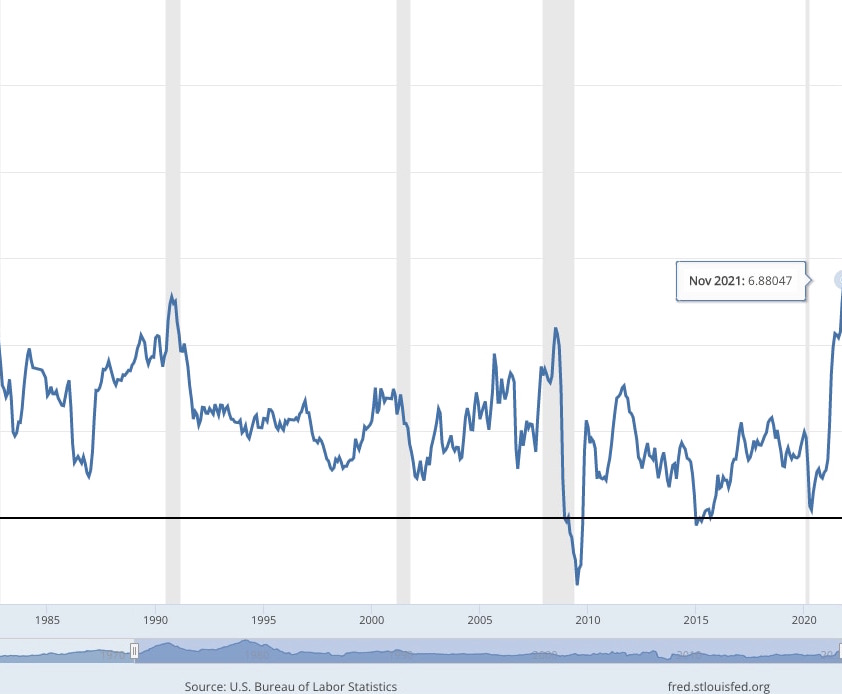
 As crime rates soared across the country once again in 2020, a Fox Business survey found that almost 8 in 10 registered voters (77 percent) are “extremely” or “very” concerned about the surge. And for good reason. At least 16 major cities broke homicide records in 2021,