
A Suggestion to American White Advocates: Root Your Arguments in This Country’s Core Political and Cultural Ideals
The cause of white people has historically been linked to the far-right end of the social/political spectrum, which I find problematic both philosophically and practically. For my taste, the far right is too authoritarian and statist. By authoritarian, I refer to somebody calling the shots at the cost of someone’s else’s personal freedom and self-determination, and that person going along with it. Statism gets at government overreach in its control of social and economic affairs. Apart from any of that, I see taking on a right-wing identity as the wrong card to play if you are trying to, as Dale Carnegie put it, win friends and influence people, or aiming to get things accomplished rather than just talk a good game.
Something that informs me and gives me direction these days (I write this in mid-June, 2020) has been right under my nose all along—my American nose, that is—the constitutional republic set up by the Founders of this country in the late 1700s and its basic ideals. At its core, this political arrangement is the antithesis of authoritarianism and statism. It is an experiment in personal freedom and responsibility: let’s see what free people can make out of their lives if the state isn’t dictating to them. It should be noted that whites did very well under this arrangement until the post-World II period, when individuals and organizations effectively shot holes in it.
The Constitution of the United States: Limited and prescribed governmental prerogatives, all written down. Oops, we forgot to spell out our commitment to individual rights and freedoms. We can get that done in the first ten amendments. Let’s call them the Bill of Rights—catchy. We can make the first one about the free exercise of religion (during the COVID-19 hysteria: “Didn’t I just tell you not to hold church services? What part of that don’t you understand?); and freedom of speech (“You went up against the Surgeon General; you have to zip it”); and the right of people to peaceably assemble and petition the government for a redress of grievances (“Anybody that protests my orders as governor is a racist,” along with no reference to this foundational American right, and responsibility, in response to the savagery of the recent George Floyd riots). And we can get in that the enumeration of certain rights should not be construed as denying or disparaging others retained by the people.
Here’s a homework assignment for you. Read these three things and think about what they imply for the stated focus of this magazine: white identity, interests, and culture.
- The Constitution of the United States. With all the amendments. It’s surprisingly brief and straightforward.1
- The Federalist Papers.2 A collection of 85 articles and essays written by Alexander Hamilton, James Madison, and John Jay under the pseudonym “Publius” and published in New York newspapers to promote the ratification of The United States Constitution, which took place in 1788. Until the twentieth century, this collection was known as The Federalist. Essentially, it says, “Here’s what’s up with this constitution, and it’s solid.”
- A biography of Thomas Jefferson (1743–1826), American Sphinx: The Character of Thomas Jefferson.3 Jefferson was the third president of the United States (1801–1809) and the principal author of the Declaration of Independence in 1776. He was many things: a statesman, diplomat, architect, and, the focus here, philosopher.
If you ground yourself in those three sources—rather than, say, Mein Kampf—where does it take you? Here is where it takes me:
To middle-of-the-road politics. Not left, not right—in the middle. My take on it is that white advocacy shouldn’t label itself politically. Rather, come on as tacitly centrist, or apolitical, and offer its truths and criticize both the left and right when they deserve it. Don’t assume an identity that will turn people away and detract from your message and disempower you and get you and yours hurt, as presenting yourself as far right will do.
It may not seem glamorous, but the action in society is in the middle, and advocates and activists who have been successful in this country have realized that. Whatever he really believed and wanted, Martin Luther King avoided a leftist label, as have the women’s movement and gays and Jews. They were, so they pitched their arguments, on the side of fundamental American ideals—freedom, equality, fairness. White racial advocates can learn from that.
To a focus on the individual human being—this one, that one, and that one over there. This in contrast to abstractions—the West, the white race, and so on. It is the recognition that the white race is what we call this white person, that white person, and that other white person, and that other one, and so on and so on and so on and so on. The white race is a word, or concept, an abstraction, and indeed an important abstraction to be used as the basis for analysis and theorizing, as well as for organization and collective action. But let’s not lose sight of the concrete reality behind that abstraction—a particular white person making his way toward his inevitable rendezvous with eternity.
When you look at human beings one at a time, what becomes salient?
Race is but one of his identities. This person is white, let’s say. But this person is also male or female, middle or lower class, rich or poor, of English or Polish descent, a son or daughter, a brother or sister, a friend and neighbor, a conservative or liberal, old or young, a Protestant or Catholic or agnostic or atheist, a student or carpenter or stock analyst, single or married, a father or mother, and from Maine or Mississippi.
If this individual is to live well, he (or she) has to integrate multiple identities and perspectives and responsibilities into a harmonious whole.
He has to attend to his personal welfare, his health and happiness, his career. He needs to be selfish, self-ish.
He needs to look out for his own—mother, father, siblings, wife, children. He has a private identity and responsibility.
He also needs to look out for his neighborhood, community, state, and nation, his profession, and his ethnicity, and yes, his race. He has a public and collective identity and responsibility.
Is he individualistic? Yes. Is he collectivistic? Yes. Is he particularistic? Yes. Is he universalistic? Yes. Life as it is lived productively and honorably isn’t this or that, it’s this and that. The concept of republican citizenship in this country’s early writings is consistent with this idea: a good citizen is one who effectively attends to both his private and public responsibilities, and does it in a way that all the pieces fit together in a complementary and mutually enhancing way.
When you look at this unique, one-of-a-kind human being it becomes clear that he is more or less capable of getting his life done well. He is just so smart and insightful and wise, just so mentally and physically fit, just so efficacious, and just so socially, occupationally, and geographically well-placed (or misplaced).
And he is just so free to determine the direction to take in his life. If you read through the U.S. Constitution and The Federalist Papers and the Jefferson biography, freedom—liberty—becomes a major, if not the, central concern. Jefferson declared that “everyone comes into the world with a right to his own person and using it at his own will.” Of course, Jefferson was the primary author (at just 33 years of age) of the Declaration of Independence in 1776. Joseph Ellis in his American Sphinx biography of Jefferson wrote:
The explicit claim [in the Declaration of Independence] is that the individual is the sovereign unit in society; his natural state is freedom from and equality with all other individuals; this is the natural order of things. The implicit claim is that all restrictions on this natural order are immoral transgressions, violations of what God intended; individuals liberated from such restrictions will interact with their fellows in a harmonious scheme requiring no external discipline and producing maximum human happiness.
Biographer Ellis notes that Jefferson was taken by the way of life in Saxony during the Middle Ages, where, as he saw it, small communities of people managed their own affairs free from dictates from on high. In a letter written late in his life, Jefferson wrote, “God send that our country may never have a government which it can feel.” If government is anything in our time, it is felt, and bent on being more felt, and still more, and more, and more, and more. James Madison and the other framers of the Constitution, within practical limitations, created a governing apparatus consistent with Jefferson’s hope.
Much more to be said, but space is running out here, so I’ll get to some ways this perspective has affected my writing:
A concern for individual people. My second book, after one about the white advocate William Pierce,4 One Sheaf, One Vine, was not about “how it all is” with whites as a whole, but instead a collection of interviews with average white people about how it all is for each of them individually around race.5 From the back cover:
The men and women you will meet in this book aren’t public figures or leaders of organizations. They are everyday people, a postal worker from Philadelphia, a college student from Texas, an attorney from New York City, a bookstore owner from Washington State, an appliance repairman from Connecticut, a teacher from Chicago, and so on.
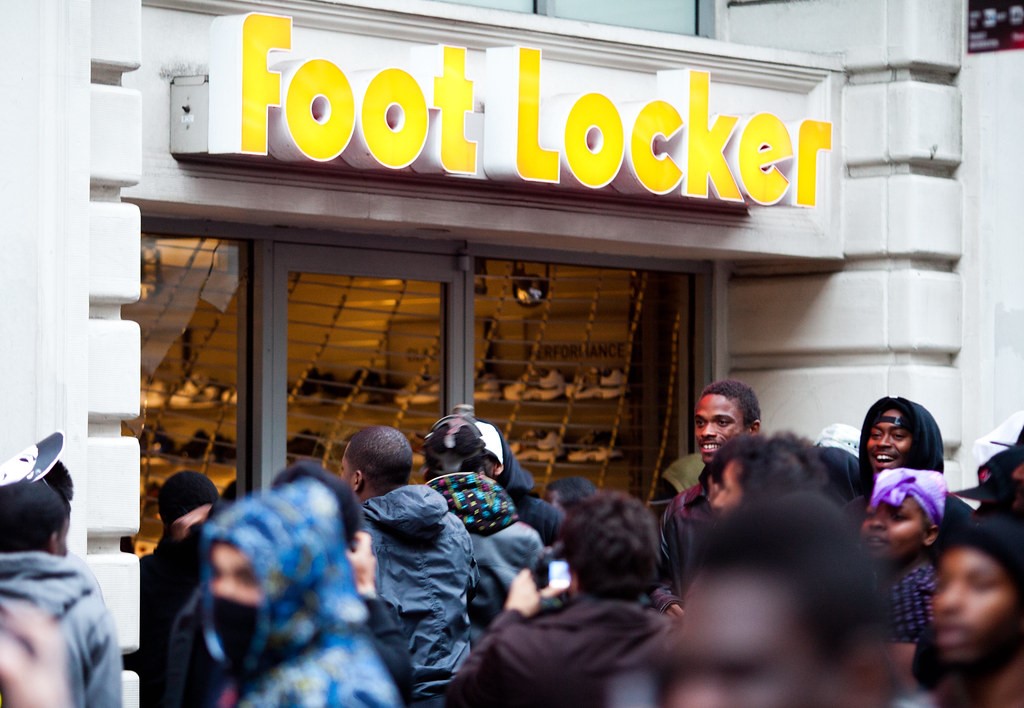
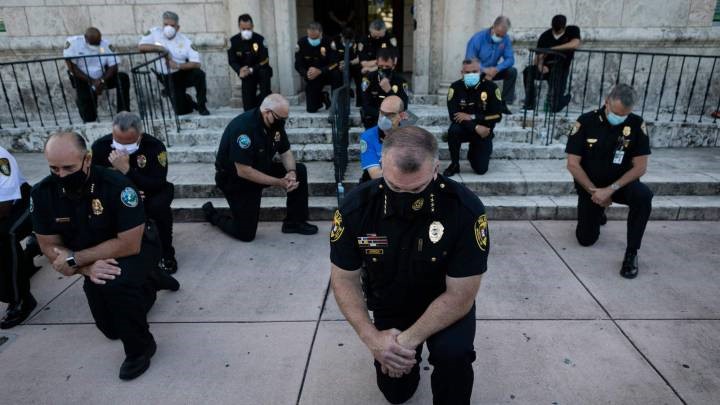
At this writing, the death in Minneapolis of a black man after a white police officer knelt on his neck to hold him down when he allegedly resisted arrest has resulted in massive rioting and looting in multiple cities across America. I grew up in the Twin Cities, Minneapolis and Saint Paul. I lived in Minneapolis—this was the late 1960s and early ‘70s—when I was a graduate student and taught at the University of Minnesota. I remember what a truly great city virtually-all-white Minneapolis was then. I left for a university job in Vermont in 1974. It has saddened me that demographic changes since that time have transformed Minneapolis from a beautiful, culturally cohesive, and safe city to a cluttered, shattered, and dangerous place known as “Murderapolis.”
This most recent nation-wide destruction and thievery has reminded me of Jefferson’s assertion that blacks and whites “cannot live in the same government . . . nature, habit, opinion has drawn indelible lines of distinction between them.” Whether or not that is the case, a concern for individual people does highlight one way for whites to deal with the race problem: pack up the wife and kids and move to North Dakota.
If they stay, individually they could do what I wrote about here back in 2016: “The answer to the current state of black-white relations for white people? Exit.”6 Individuals could secede in place, as it were. Right here, right now, they could shut it down with regard to blacks. No animosity, no explanations, no dialogue, no do-gooding (or “do-badding”), nothing; not a word, here but not here, gone. Enough of this, enough of you, I’ve had it.
Another individual solution, if the government won’t protect them and their property, they could—perhaps with the help of a few compatriots—protect themselves in whatever way is necessary. I remember when I was in the army what a guy who committed “b&e’s”—breaking and enterings, going into people’s houses and businesses to rob and vandalize—told me. “You know what really scares me about doing that?” “No, what?” I replied. “Somebody coming around the corner with a gun and shooting my ass.” In fact, he said, that got to be such a problem for him, he stopped his b&e activity.
Something else individuals can do is hold on to their power of judgment, let no one take that away from them. What is called racism toward blacks is, very often, disrespect for them. It’s not irrational animus or a desire to hurt or exploit or dominate blacks. Rather, it is a considered judgment. Whites observe black behavior—including blaming others for their lot in life and arson and looting—and disrespect them for it, and, if they can manage it, get themselves and their families away from them. The truth is, you can’t, in the long run anyway, demand respect, or shame people into respecting you, or threaten and attack people into respecting you; you have to earn respect by the way you conduct your life. Individual whites should never cede their power of discernment to anyone.
“I-you” writing. I am aware that, right now, I am writing these words, as the person that I am and in the context of all that is going on in my life. And I am aware that you—you—are reading this. I’m not simply expressing myself, or addressing the TOO readership; I’m talking to one person. Of course, I don’t know who you are or what you are like, but nevertheless, I’m addressing you.
The view that while race is vitally important, it isn’t everything. I ended a recent article with this depiction of a type of white racial advocate I’d like to see more of:
Race would be vitally important [to this white advocate], but so too would be honorable and productive work and honest self-expression, and place and love and family and friendship and service to others, and leisure and fun, and the fact that we are going to die.7
Wishing all human beings well. I realize that every human being is their parents’ child and, with rare exceptions, means well, and with no exceptions, this person’s life will end, just as mine will. I’m not taking any crap from anybody, and I will do all I can to protect my people, white people, and I will encourage white people to stand up for their interests. But I don’t want to see anybody hurt or unhappy. No human being is my enemy.
A focus on small groups. A recent article of mine, “Who Shall Remain Nameless: Al Hanzel and Democracy in Action,” dealt with the efforts of one Al Hanzel—who is what his name sounds like, a real nice white guy—to organize a group of his fellow whites to oppose minority efforts to change the name of his and my old high school in Saint Paul, Minnesota.8 While Al wasn’t paying attention, there had been big demographic changes occurring right around him. In 1970, when Al was young, whites were 95% of the population of Saint Paul; now they are less than half. (The Great Replacement isn’t real?) The name of Monroe High School had to go—James Monroe, this country’s president from 1817 to 1825, owned slaves—and it did go, and Al was written off as “an old white racist.”
A lot of other names went too.
These days, name changes are getting to be common practice in the Twin Cities, Minneapolis and Saint Paul. The old (Daniel) Webster Elementary is now Barack and Michelle Obama Elementary. Patrick Henry High School’s Principal Yusuf Abdullah is heading up a group looking into changing that school’s name. [In the old days, principals were named Johnson.] I went swimming in Lake Calhoun (John C.). Now it’s Lake Bde Maka Ska, a Dakota Indian name. Alexander Ramsey Elementary is no more. Ramsey was Minnesota’s second governor from 1860 to 1863. In response to attacks by the Sioux Indian tribe in 1862 resulting in the deaths of 800 white settlers, Ramsey declared, “The Sioux Indians of Minnesota must be exterminated or driven forever beyond the borders of the state!” The school is now named Justice Alan Page Middle School after Minnesota’s first black state supreme court justice. Page first gained renown as one of the “Purple People Eaters,” a supremely talented defensive line of the Minnesota Vikings team in the National Football League.
I have a hope that in the future small groups of racially conscious and committed white people will look out for themselves and their race from day one. This rather than what happened with Al, who was slowly cooked like a frog in a pot of water unaware of what was happening to him—and actually going along with it (“I like this diverse water!”)—and then, when the pot started to boil, went, “Hey, what’s going on?” Too late.
A concern for personal health. I wrote an article posted here called “Addictions: An Example of the Interplay of the Public and Private” 9:
Almost exclusively, white racial discourse has focused on public concerns: white identity and culture, historical and current realities, philosophical and ideological concepts, and proposals and strategies for collective action. And that’s all well and good, keep it going. But the argument here is that at the same time we’re doing that, let’s give attention to the opposite of a public focus: let’s look at things from a private, or personal or individual, frame of reference; and take note of the interplay of the public and private, how each affects the other.
The private concern I shine a light on here is addiction. Not addiction as a problem for the society and culture as a whole — though it is good to look at it from that angle — but rather as a problem for individual people: for him and her and you and me.
When I was writing the William Pierce book, a man named Bob DeMarais, who lived on Pierce’s compound in West Virginia, told me, “If you are going to be one of us, you are going to have to get in top mental and physical shape so you are good at fighting up close.” Back to the idea of Republican citizenship, a good citizen has it personally together enough to be able can get things done in both the personal and public dimensions of his life.
Donald Trump isn’t my guy. Trump is—or was anyway, his luster is fading—the guy to a lot of white advocates when he was running for president in 2016. Not me. Article II, Section I, of the Constitution says “The executive Power shall be vested in a President of the United States of America.” Executive, as in execute, as in implement laws passed by Congress (Article I, Section I, “All legislative Powers herein granted shall be vested in a Congress of the United States, which shall consist of a Senate and House of Representatives”). The president’s job under our system is to serve the people and their elected representatives, not to call attention to himself and—something Trump has said about himself numerous times—run the country. More, in my book, there is an implied dignity and decorum requirement for the presidency. Neither George Washington nor John Adams made pronouncements about the size of his penis or got caught talking about grabbing women by the pussy.
Who can I get behind? I’d prefer a president, as well as more leaders of the white racial movement, to be like the soft-spoken, unassuming, morally upright, white racially conscious U.S. president (1924-1929), Calvin Coolidge. In a 2019 article, I offered that the white racial movement would benefit from more Coolidge-type advocates. Modern-day Coolidges would bring a slant to things that deserves a place in white racial discourse (you’ll see this article in this list of attributes):
- Such a person would stay clear of labeling himself as a rightist, and the overall movement as an enterprise of the right. No alt-right, no dissident right. He’d present white advocacy as mainstream, centrist.
- He’d be rooted in this constitutional republic, and he would think of himself as connecting with and continuing the American story.
- He’d be grounded in Thomas Jefferson more than Guillaume Faye. He’d refer often and favorably to liberty. The words “individual” and “individualism” wouldn’t have negative connotations. He would assert that personal freedom and individualism contribute to, complement—not contradict—white racial consciousness and commitment. He would advocate the creation of small, intimate, supportive, white communities and networks.
- He would exemplify and promote civility, tolerance, generosity, kindness, and self-sacrifice (he wouldn’t equate altruism with foolishness). He wouldn’t set white loyalties off against a love for all people. At the same time, he would recognize threats to our race and culture and country and the need to vigorously resist them.10
Do I think everybody ought to approach things as I favor? I’m not so presumptuous as to believe that, absolutely, I know how you should take up the cause of white people. Indeed, for you, white advocacy may best be a right-wing endeavor; but it doesn’t automatically have to be, that’s my point. We are free to be anything. Sitting here typing this up in old age, the disgust and rage I experience at this moment in response to all the haranguing and rioting and destroying that’s going on in my country–including the parasitic take-over of the wonderful Capitol Hill section of Seattle where I have spent a lot of time—has prompted the thought that if I were young now, I would think seriously about being a raging bad-ass racial warrior rather than the wordy nice guy I chose to become. Each of us has to think it through and decide the best way forward for us as an individual, with reference to race and everything else. If you look hard for it, you’ll find your unique path in life, and it will be “walkable,” and at the end of your time on this earth you will feel gratification and peace. One thing I have learned in a very long life is that it is indeed a benevolent universe. Seek and you will find.
Endnotes
- The Constitution is online. https://constitutionus.com
- The Federalist Papers is online,
https://files.libertyfund.org/files/788/0084_LFeBk.pdf
- Joseph Ellis, American Sphinx: The Character of Thomas Jefferson (Knopf, 1997).
- Robert S. Griffin, The Fame of a Dead Man’s Deeds: An Up-Close Portrait of White Nationalist William Pierce (1stBooks Library, 2001).
5. Robert S. Griffin, One Sheaf, One Vine: Racially Conscious White Americans Talk About Race (1stBooks Library, 2004.
- “Blacks as Emotional Abusers of Whites,” The Occidental Observer, Author Archives, posted August 4, 2016.
- “Where is Calvin Coolidge When We Need Him?” The Occidental Observer, Author Archives, posted March 30, 2019.
- “Who Shall Remain Nameless: Al Hanzel and Democracy in Action,” The Occidental Observer, Author Archives, posted June 25, 2019.
- “Addictions: An Example of the Interplay of the Public and Private,” The Occidental Observer, Author Archives, posted November 8, 2017.
- “Where is Calvin Coolidge When We Need Him?” op. cit.





 James Mason wrote about the first stages of open war over thirty years ago with the Vibrants as Richard Houck calls them in his excellent


