Featured Articles

Reply to Jordan Peterson on the Jewish Question — From His Heroes Part One: Solzhenitsyn

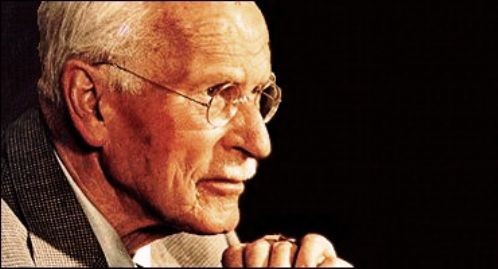
“The Aryan subconscious has a higher potential than the Jewish.”
G. Jung

Overture

I recently took some time to devote serious attention to the work of Jordan Peterson. Until a few months ago, my familiarity with Peterson had been limited to his very weak and ill-advised intervention in the Nathan Cofnas affair. At that time, I toyed with the idea of providing a series of historical examples (there are many) that would contradict every one of Peterson’s assertions regarding the Jewish Question, but, in the end, his intervention was dealt with so conclusively by Kevin MacDonald (see here), that I saw no reason to discuss it further and abandoned that essay at the “skeleton” stage.  Peterson is, however, hard to ignore. As MacDonald put it, Peterson is indeed a “celebrity intellectual,” and one who, despite an occasionally overt philo-Semitism, has engaged in spirited defenses against some manifestations of cultural Marxism. This is admirable, and he is generally pleasing and interesting to watch his TV appearances. Watching and listening to these appearances with any frequency, it’s hard to escape Peterson’s key influences. The Canadian academic is both vocal and (remarkably) repetitive in naming them: summaries, quotes, and interpretations of Nietzsche, Dostoevsky, Solzhenitsyn, and Jung all feature very prominently in Peterson’s content.[1] It’s clear that all four men act as his foremost intellectual and personal heroes. But they share something else in common – they have all confronted the Jewish Question in a manner that quite clearly contradicts the view put forth by Peterson. This is not to say that everyone must follow all the ideas of their heroes, but it does call into question how carefully Peterson has both understood these writers and considered his own position on the Jews. The following essay is intended to tease out some problems and contradictions.

I’ve spent the last couple of months listening to Peterson’s lecture series on the Biblical stories, reading his 12 Rules for Life, and examining (and re-examining) his essay “On the So-Called Jewish Question.” I have to confess to finding his lecture series extremely strange. Listening to the audience question and answer sessions at the end of each lecture, it’s clear that Peterson has a sizeable Jewish following and that his lectures are, if not geared toward Jews, certainly holding great appeal for them. Part of this may be the fact that, for an ostensibly Christian apologist, thus far only one of Peterson’s sixteen lectures have concerned the New Testament. What I find particularly interesting about Peterson’s interpretation of these stories is that he extracts, in abstract psychoanalytic fashion, a series of self-help non-sequiturs without looking at how and why the stories were formulated in the first place, and how they have been understood by Jews during the many centuries since they were written. This is an especially ironic development because Peterson’s approach to these particular texts is rather like that of Jacques Derrida, the Jewish Marxist postmodernist he rebukes in 12 Rules for Life, who argued “there is nothing outside the text.” And it is quite unlike the suggestion of his hero Carl Jung, who, as Peterson notes in 12 Rules for Life, suggested that “if you cannot understand why someone did something, look at the consequences — and infer the motivation.”

Peterson doesn’t seem remotely interested in the psychological needs and motivations of the Jewish authors and readers of the stories, and, by his own admission (in the question and answer session following his discussion of the tale of Jacob and Esau) Peterson has never examined the Talmud to see how Jews have interacted with them. Read more

A Math Paper Is Sent Down the Memory Hole

It should be no surprise to anyone that Political Correctness has managed to conquer subjects such as English Literature or Sociology. The more subjective and speculative the subject is, the easier it is for ideology to exert its Death Grip. So you’d think that Mathematics – the most objective subject in existence – would be uniquely preserved as a bastion of traditional academic values. Well . . . you’d be wrong. In fact, Math is particularly dangerous to academia’s occupiers, because it can be used to objectively prove the ideologically unacceptable.

American Mathematician Ted Hill recently discovered this to his cost when his paper [An Evolutionary Theory of the Variability Hypothesis, August, 2017] applying mathematics to make sense of the “Genetic Male Variability Hypothesis” (“GMVH”), was subject to nakedly Orwellian treatment, partly caused by a Jewish Mathematician.

Hill was fascinated by the hypothesis, commented on even by Darwin, that in all species there is more genetic variability in males than in females. As Hill has pointed out in a recent article on his adventures in the online magazine Quillette, this is why men are over-represented at the extremes of distributions such as birth weight or Math scores. More males have outlier high IQ – meaning more male science Nobel laureates. However, more males also possess outlier low IQ, resulting in greater numbers of male prisoners and vagrants [Academic Activists Send a Published Paper Down the Memory Hole, By Theodore P. Hill, Quillette, September 7, 2018].

The Emeritus Professor at Georgia Institute of Technology, was intrigued to discover that nobody was clear why this sex difference existed. So, Hill and Russian Sergei Tabachnikov, of Pennsylvania State University, worked out a model and posted a preprint in an open access Math archive in May 2017.

The pair submitted their paper to The Mathematical Intelligencer, specifically to its “Viewpoint”, the purpose of which is to present “controversial” studies. The editor-in-chief, Prof Marjorie Wikler Senechal, was enthusiastic about publishing it: ‘Discussing this issue dispassionately and with a mathematical model will be an important contribution towards rationality’ she wrote [Hill has put all the correspondenceonline]. She even suggested mentioning the trouble that Harvard President Larry Summers had got into in 2005 — he was fired — for wondering out loud if GMVH helped to explain the lack of females studying Math and Physics. [Why Feminist Careerists Neutered Larry Summers, By Stuart Taylor, The Atlantic, February 2005]. Hill’s paper was revised various times and then scheduled for publication in the first 2018 issue. Read more

Treble Tribal Trouble: A Review of Ben Cobley’s The Tribe

The Tribe: The Liberal-Left and the System of Diversity


Ben Cobley
Imprint Academic 2018

I’m sure that Ben Cobley will be displeased to see a positive review of his book The Tribe at a fully certified hate-site like the Occidental Observer. But I think that it’s an important book and that its themes chime perfectly (if incompletely) with those of the Occidental Observer.

Like many other Western nations, Britain has what might be called Treble Tribal Trouble. The first part of our Tribal Trouble is that we’re ruled by a hostile Jewish elite who form a real, genetically interrelated tribe with a quite different set of interests than the native Brits. The second part of our Trouble is that this hostile elite have imported millions of non-Whites and strongly encouraged them to pursue their own advantage with other, home-based identity-groups. The third part of our Trouble is that Whites are discouraged just as strongly from defending themselves. Ben Cobley’s book discusses only the second and third parts of our Tribal Trouble. But it does that very well and I can heartily recommend it to hate-thinkers right across the Anglosphere.

One sinner that repenteth

Cobley is among the first to join what will soon become a flood, when more and more Whites, and White heterosexual men in particular, realize that the “Liberal-Left” hates them, wishes them nothing but ill, and should be treated by them as exactly what it is: an enemy of reason, truth, beauty and freedom. Cobley has seen the Light — and the Blight. He’s described on the back cover as “a former Labour party activist,” and “former” is the mot juste. The Tribe is a series of unspeakable blasphemies against “liberal-left” orthodoxy. Or rather, it’s not, because Cobley speaks his blasphemies very clearly and forcefully. Here’s a prime example, something that all we haters at the Occidental Observer will be delighted to endorse:

The subject of mass immigration probably brings out liberal-left identity and its ideology of diversity in the clearest form. It is unthinkable that the system of diversity could have arisen and developed to anywhere near the degree it has without mass immigration. This defining phenomenon of our times has not just brought in large numbers of people who can be funnelled into the race-based identity groups within the system. It has also offered possibilities to various different groups in British government and political circles, which have gathered around immigration and immigrants as a cause; for them, mass immigration has offered a role and an ongoing project to oversee and enforce. … The radical left [has] found a new class of people to support with its ideologies of oppression [and the] economistic tendency, a dominant force in government circles and public life, [has] found in immigrants a new source of competitiveness and economic activity. (ch. 2, “The Tribe,” p. 50) 

Cobley gets it — or a great part of it, at least. But there are two very big omissions in his analysis. First of all, he doesn’t recognize the central importance of biology and genetics in explaining differences in the behaviour and achievements of different human groups, such as Whites and non-Whites or men and women. Second, he committed a huge unconscious irony in naming his book The Tribe, because he doesn’t identify the small but highly determined group that has earnt precisely that title for its supremacist and predatory behaviour down several millennia. Read more

The White Nationalist Manifesto by Dr. Greg Johnson

The White Nationalist Manifesto
Greg Johnson
San Francisco: Counter-Currents, 2018
150 pages

I first met Greg Johnson in 2001 as part of a group of fifteen conference attendees having a late dinner at the Grove Park Inn in Asheville, NC. Dr. Johnson was among those seated at my end of the table. To drop two familiar names, Sam Francis and Jared Taylor were among those seated at the other end. From his introduction I got the impression that Dr. Johnson was an academic doing research on our movement, accompanied by two grad students and a London journalist who was writing a book on political fringe groups. As I recall, he asked a lot of questions and did a lot of listening. Since that introduction he has risen to a position of  prominence and I would name him among the top ten living figures in our movement in terms of output, activity, influence and recognition, although I admit my rating system is biased in favor of intellectual output, which in Dr. Johnson’s case is considerable.

For those familiar with Dr. Johnson’s work there is much in this book that they have seen before, even some topics that have been covered by many different authors, such as Robert Putnam’s findings on the connection between diversity and alienation and John Jay’s celebration of America’s original lack of diversity in the Federalist No. 2. But this book is intended both as an introductory primer and comprehensive summation for potential converts and those new to the movement as well as a much more thorough and fully developed discussion of its topics for movement veterans.

What is new is the focus on the two ultimate topics of our movement. The first topic is the ultimate problem: the fact that our race is undergoing a process of destruction or genocide by multiracialism. The second topic is the ultimate and only sufficient solution to the problem: a grand separation of the races either by the removal of non-Whites (the only solution for Europe) or partition of the country’s territory into independent nations for the different racial groups, now commonly called “ethnostates,” a term derived from Wilmot Robertson’s 1992 book of that title which has gained increasing currency over the last decade. Read more

Family Reunification Is Former French President Valéry Giscard d’Estaing’s “Great Regret”

French President Valéry Giscard d’Estaing

Valéry Giscard d’Estaing was the center-right president of France between 1974 and 1981, a bit more of a liberal than a conservative. Giscard presided over the consolidation of continuous postwar Afro-Islamic immigration. His biographer, Éric Roussel, has recently revealed that the institution of family reunification is the “great regret” of his presidency:

Family reunification is his great regret, which was decided by a simple decree by [his prime minister] Jacques Chirac in 1976. . . . The idea of letting immigrants’ families come seemed, at the time, to be natural. The massive increase of immigration from Muslim countries however proved deeply divisive. Raymond Barre incidentally suspended [the decree] three years later [as prime minister], before the Council of State [France’s highest court] annulled this decision arguing that family reunification was now one of the general principles of law.

We note here the revolutionary redefinition of the law by the courts, in effect declaring restrictive immigration policies illegal. This is scandalous in light of public opinion’s hostility to immigration and the fact that there is no evidence that immigration restriction, especially to preserve national identity, is in any way incompatible with France’s founding Republican principles. In June of this year, France’s highest court similarly declared a “principle of fraternity” whereby it was declared unconstitutional to prosecute someone for housing illegal immigrants. The courts are betraying the very constitution and law they have sworn to uphold.

Giscard, now aged 92, has said that he regrets enabling chain migration into France: 

The idea [of family reunification] was right and generous in itself. . . . But it was applied badly and I was wrong to not have monitored its implementation more closely; I am therefore responsible. . . . We aimed for the core family as we understood it and we saw the arrival of completely different family cores.

In short, by applying the assumptions of the Western nuclear family to Muslims, family reunification allowed enormous Muslim clans to settle France.

Giscard had also considered repatriating 500,000 Algerians during his term but backed down. Giscard has been vocal since 2002 in opposing Turkey’s joining of the European Union, saying that “Turkey . . . is not a European country.” Turkish membership would be in his view “the end of the European Union!”

In other news, the former president’s son, the 61-year-old Henri Giscard d’Estaing, was recently violently mugged and robbed by two Gypsies in Paris as he was withdrawing money from a cash machine. Just one more unpleasant example of daily life which the French must accustom themselves to since President Giscard and his fellow politicians and jurists decided that it was just fine to completely transform the demographics of France without popular approval.

In all this, Giscard is typical of an entire generation of postwar European politicians who felt that the Afro-Islamization of Europe was a mistake and yet did nothing to prevent it. German conservative chancellor Helmut Kohl, for instance, had also considered repatriating half of Germany’s Turkish population in the 1980s. German social-democratic chancellor Helmut Schmidt similarly said in retirement that Turkish immigration had been a mistake.

Enoch Powell’s famous phrase comes to mind: “All I know is that to see, and not to speak, would be the great betrayal.”

William Gayley Simpson on Christianity and the West

William Gayley Simpson in the early 1940s

The following is adapted from a book I wrote based on interviews with the late white activist William Pierce, The Fame of a Dead Man’s Deeds.

“Someone else you might want to include in this [book] project,” Pierce called out to me as I was leaving his office at the end of one of our evening talks, “is William Gayley Simpson.  Do you know about him?”

Very little.  All I knew about Simpson was that he had written a book called Which Way Western Man? (free pdf) and that Pierce had published it under his own imprint, National Vanguard Books.  I hadn’t read the book.

“Simpson was born in 1892, the same year as my father,” Pierce continued, “so he was a generation ahead of me.  In the ’30s he was interacting with the public in a big way, speaking at a lot of universities, mostly about peace issues, how we must never get into another world war and that sort of thing, and at one time he taught Latin, mathematics, and history at a boarding school around where he lived in New York state.  Somehow, he had gotten hold of something I had written—this must have been around 1975—and he wrote me about it.  At that time, he was over 80-years-old [he died in 1991 at 99].

“We started corresponding.  I found Simpson to be a deep, sensitive, and serious man.  He invited me to visit him up at his farm.   He had built a farmhouse with his own hands, a really nice house, and he had a shop and outbuildings.  He did some planting, but mostly he just lived there and thought and wrote and maintained contact [letters in those days] with people from all over the world.  I stayed with him a few days and visited him a couple more times after that.

“Simpson told me about a book he was finishing up, which turned out to be Which Way Western Man?  I read it and was very impressed and published it.  We sold that printing, and then we did two more printings, about seven thousand copies, and sold out on those.   Let me get you a copy of Which Way Western Man?

Pierce stood up from his desk, turned to his left, took a couple of steps, and turned left again through an open door into his library.  I followed.   It was dark in there—I could barely make out the titles of the books.  It was a good-sized room, about fifteen-by-twenty feet.  It reminded me of the stacks in a university library, the same kind of metal shelving.   Rows of shelves tightly packed from floor to ceiling with books spanned the room’s interior.  Pierce had labels taped onto the shelves categorizing his collection, so he knew right where to find the Simpson book.  I stood behind him and took in this tall grey-haired man standing in this gloomy library as he turned a few pages of the Simpson book, his eyes just a few inches from the print as he had very poor sight.  

Pierce handed me the bulky, dark blue paperback.  My hand gave way a bit from the weight of what I later learned was a 758-page volume.

I thanked Pierce for the book and told him I would spend the rest of that evening and the next day looking it over, and that if I could get my thoughts organized I’d talk to him the next evening about what Simpson had written.   Read more

Kombatting Kavanaugh: Rape-Hysteria and the Void of Vagynocracy

Is “feminist intellect” an oxymoron? Is Vagynocracy — the vagina-worshipping, gynaecocratic cult of feminism — an intellectual and ethical void? Countless feminists certainly seem determined to prove so. I’m not a fan of the American judge Brett Kavanaugh and I’m suspending judgment about whether his appointment to the Supreme Court will be a Good Thing. But I’m already sure that those who oppose his appointment are hysterical hypocrites. Watching their antics, I was reminded of a passage in Orwell’s Nineteen Eighty-Four (1949). The ideologue and torturer O’Brien tells the thought-criminal Winston Smith about a fundamental principle of IngSoc:

“I tell you, Winston, that reality is not external. Reality exists in the human mind, and nowhere else. Not in the individual mind, which can make mistakes, and in any case soon perishes: only in the mind of the Party, which is collective and immortal. Whatever the Party holds to be the truth, is truth. It is impossible to see reality except by looking through the eyes of the Party.” (Op. cit., Part 3, ch. 2)

The requirements of feminism

It’s easy to adapt that passage from Orwell to the requirements of modern feminism and the Vagynocracy:

We tell you, evil white males, that reality is not external. Reality exists in the female mind, and nowhere else. Not in the white male mind, which is evil, and in all cases must be demonized: only in the minds of women, who are rendered infallible by their victimhood. Whatever women hold to be the truth, is truth. It is impossible to see reality except by looking through the eyes of women.

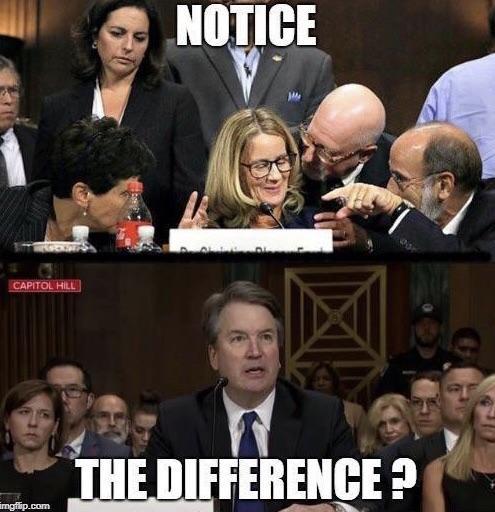
A lone White male vs a feminist and her Jewish lawyers

Thus speaks the Vagynocracy on behalf of those who oppose the appointment of Brett Kavanaugh. Of course, there are obvious problems with that kind of feminist epistemology. Women don’t all think alike and some women are dishonest, delusional or psychopathic. And the epistemology doesn’t take account of non-White males, who are higher on the left’s victim-hierarchy than White women. But those are only problems if you believe in an objective external reality and in logical consistency. Feminists are part of the left and they don’t believe in objective reality or logical consistency.

Feminist icon Ruth Bader Ginsburg, one of three Jews on the Supreme Court

Read more