Featured Articles

Noxious Propaganda from Sander Gilman and Newsweek

As propaganda goes, one would be hard pressed to find a nastier, more noxious piece than Sander Gilman’s Newsweek op-ed on the horrifying fact that Paul Nehlen tweeted that he was reading my book, The Culture of Critique. Here’s Nehlen’s tweet:

Nehlen committed the horrible sin of simply saying that he was reading the book, not endorsing it. But for this he has been pilloried in the media and disowned by the likes of Steve Bannon (just as well;  I have lost all respect assuming his remarks in Michael Wolff’s book were quoted accurately). After the over-the-top title, “The Alt-Right’s Jew-Hating Pseudoscience Is Not New,” we are greeted with photo of a KKK rally, the implication being that Nehlen and I endorse such things, or perhaps that the KKK spends their spare time reading my book.

This is ridiculous. Nehlen is a sincere Christian who is deeply concerned about the transformations to the U.S. brought about by immigration and multiculturalism; he is fighting the good fight against Ayn Rand groupie, open borders Speaker of the House Paul Ryan. And for my part I won’t dignify the juxtaposition of the KKK with my work as worthy of a response. My writing speaks for itself.

Read more

From Christian humanitarian and Royal Naval officer to venomous anti-White Terrorist: The Transformation of the Social Justice Warrior

It goes without saying, the odiously ignoble troupe of societal misfits turned Marxist activists, commonly referred to as Social Justice Warriors (SJW), care naught about redressing the balance of an unfair world.

If SJWs genuinely empathized with the impoverished working and impecunious lower classes, whose wages have been catastrophically depressed by decades of unfettered and unskilled mass immigration into Western Europe and the United States, they’d rush to defend the British electorate’s  decision to vacate the European Union as well as support America’s departure from the North American Free Trade Agreement.

If feminists were sincerely interested in defending women’s rights, they’d take to the streets of Rotherham and Malmö to pledge solidarity with the thousands of pre-teen and teenaged girls victimized by Islamic grooming gangs currently wreaking havoc on Northern Europe, instead of aligning themselves with the cultures that have been become synonymous with the sexual abuse of young women.

If Progressives genuinely cared about children and families, they’d fight to reunite embattled fathers with their estranged children, unfairly separated by a grievously unjust family court system that is hell-bent on eliminating the father figure from the home. Instead they no-platform brave filmmakers like Cassie Jaye for daring to suggest that men too have rights that need protecting, children need their fathers and challenging the hateful ethos of modern feminism.

But the Left have never been about doing right by their fellow man, fighting against genuine injustice or for a better world. The Left by nature are about destroying all that is righteous and decent through subversion and revolution. They thrive by sowing the seeds of societal discord, in the hope the disaffected they reach with their toxic message will eventually take up arms in their name in order to facilitate the transfer of power and lust for blood and societal carnage they crave.

Instead of helping those in genuine need the Neo-Marxist Left, and its instrument of terror — the Social Justice Warrior — exploit the misery and tragedy their policies result in to suck more lost souls into their demonic movement. In fact it’s often the people they’ve harmed most with their maddening activism that become their base and eventually their most fervid proponents.

Muslims and leftists make strange bedfellows

In Western Europe this has been achieved by attacking the indigenous majority through the empowerment of the unassimilable economic migrant and black and Hispanic minorities, whom they then recruit to block highways and attack statues.


But things weren’t always so….

Read more

An Un-Civil War, Part 2

Part 1 of “An Un-Civil War” focused on the MSM’s sins of commission. The Left-leaning MSM (but I repeat myself) has been obsessed with destroying Trump by any means possible. The MSM is quite happy with any tactic at all, whether it’s wiretapping, leaking, indicting, slander, it doesn’t matter what. They would be happy to use his comments on race to impeach him, or maybe the Mueller investigation will pan out, or, if these don’t work we can try sexual harassment charges or some old business deals— it doesn’t matter as long as we get him.

Now I turn to the other side of the story, the MSM’s sins of omission — the Anti-Trump bias represented by what the MSM avoids reporting. For the September-November 2017 period, 91% of the Trump coverage was overtly negative, unchanged from the previous quarter. With the overwhelmingly negative coverage of Trump in the national press one must ask, “What would an authentic report on Trump’s presidency after year one look like”? Nobody knows.

One way to assess the Trump presidency thus far is to look back at his campaign promises and see how he’s doing. Although Obamacare is still stands and the Great Wall does not, Trump has engineered a number of important shifts in policy. A short list includes Gorsuch’s appointment to the Supreme Court (an unvarnished success), as well as several things high on the establishment GOP wish list: rolling back Obama-era regulation (e.g., Scott Pruitt’s work at the EPA), Mick Mulvaney’s appointment to head the Consumer Financial Protection Bureau, and the passage of the tax reform bill.

Other campaign promises that Trump has begun to successfully tackle include lifting restrictions on the production of $50 trillion dollars’ worth of job-producing American energy reserves, lifting the Obama roadblocks to allow vital energy infrastructure projects, like the Keystone Pipeline, to move forward, and cancelling billions in payments to U.N. climate change programs to use the money to upgrade America’s infrastructure. Trump also promised his supporters that he would “restore security and the constitutional rule of law by cancelling every unconstitutional executive action, memorandum and order issued by President Obama” and suspend immigration from terror-prone regions where vetting cannot safely occur.

But exhibit A in Trump’s successes in his first year is “it’s the economy, stupid.”

The US Economy under Trump

At the one-year anniversary of the election of Donald Trump, the Dow Jones Industrial Average was up by an astounding 30 percent, hitting 87 new highs for since the president was elected. That’s the best post-election, one-year performance for a first-term president since Franklin Roosevelt’s in 1932. The Trump stock market easily beats the first years of his recent predecessors. The election of Barack Obama in 2008 was followed by rise of less than 2 percent. Read more

Towards a Global Biopolitics?: A review of Yuval Harari’s Sapiens, Part 2

Go to Part 1.

European Restlessness and Dynamism

Harari has much good to say about empire in general and about the European colonial empires in particular: “Modern science flourished in and thanks to European empires” (316). This is a point Harari repeatedly drives home: only Europe had the values and institutions necessary to kick-start the positive feedback loop of science, empire, and capital which could create the modern world as we know it.

Harari’s analysis of Western dynamism is entirely congruent with Prof. Ricardo Duchesne’s The Uniqueness of Western Civilization, particularly in his emphasis on the psychological factors behind European dynamism. Harari:

Both scientist and conqueror began by admitting ignorance — they both said, “I don’t know what’s out there.” They both felt compelled to go out and make new discoveries. And they both hoped the new knowledge thus acquired would make them masters of the world. (317)

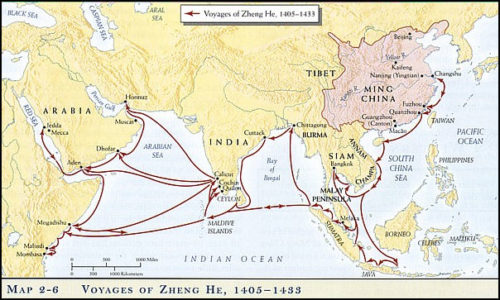
Harari also reflects Duchesne’s perspective in his observation that non-Europeans, such as the Turks, Persians, Indians, and Chinese, showed little interest in exploration or in creatively exploiting technological breakthroughs. The Chinese for instance for centuries used gunpowder only for fire-crackers (293, 377). Harari says of the massive treasure ships of the Chinese admiral Zheng He, which explored the Indian Ocean during the fifteenth century:

The Zheng He expeditions proved that Europe did not enjoy an outstanding technological edge. What made Europeans exceptional was their unparalleled and insatiable ambition to explore and conquer. (324)

Compare Duchesne who links the expansionist ethos of the West to Indo-European warrior culture:
The expansionist aggression of the West is an inescapable expression of its roots in aristocratic men who are free and therefore headstrong and ambitious, sure of themselves, easily offended, and unwilling to accept quiet subservience. (The Uniqueness of Western Civilization, 481)

Harari notes, as does Duchesne, that non-Europeans were typically ignorant of their own history and culture, and that it was European imperialists who pioneered historical scholarship in India, Persia, and elsewhere. Harari recognizes the atrocities committed by European empires, while noting that such violence is the norm across the world and that there is no such thing as a sinless, non-violent human civilization (228). Harari repeatedly equates the imperial and scientific drives to conquer: “For the modern European conqueror, like the modern European scientist, plunging into the unknown was exhilarating” (328). Read more

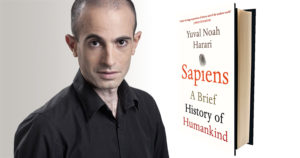
Towards a Global Biopolitics?: A review of Yuval Harari’s Sapiens, Part 1

Yuval Noah Harari, Sapiens (London: Vintage Books, 2014)

Yuval Noah Harari is an Israeli professor of world history and a best-selling author. He lives in the moshav (agricultural cooperative) of Mesilat Zion (founded on Bayt Mahsir, a “depopulated” Palestinian village). He is remarkable not only because of the breadth of his view of history but for his attempt to ground his history in biological science.

Harari published Sapiens in Hebrew in 2011 and it has since been translated into English, making for a perfect airport paperback. The opening flap breathlessly proclaims: “I encourage all of us, whatever our beliefs, to question the basic narratives of our world, to connect past developments with present concerns, and not to be afraid of controversial issues.” The book is adorned with the most prestigious of blurbs: Barack Obama, Bill Gates, Daniel Kahneman, Chris Evans (an establishment historian specializing in the Third Reich), Jared Diamond (a Jewish author who in his famous Guns, Germs, and Steel simultaneously claimed that race played no role in civilizational differences and that Stone Age Papua-New-Guineans are more intelligent than Europeans). Sapiens has over 4,000 customer reviews on Amazon and has been promoted by influential billionaires such as Facebook founder Mark Zuckerberg.

All that is enough to make one suspicious, but Sapiens is in fact a very interesting book. And were it not for a catastrophic chapter denying regional human evolution and attributing all racial inequalities to discrimination, I would say this is a good book. Harari provides a stimulating overview of the biological and social changes in human life over the last 200,000 years, a withering critique of egalitarian liberalism as fundamentally in denial about human biological nature, a positive account of the European empires’ massive contribution to science and human development, and even a rather fair and nuanced account of German National Socialism.

This book has a dark side however. Harari is an advocate not just of empire, but of world-empire, and his work is ultimately an apology for a technologically-advanced world dominated by a small, rootless international elite. Read more

Review: The Jesuit Order as a Synagogue of Jews — Part Two

Everard Mercurian (1514-1580)

Being children of this world, pompous, cunning, fake, self-seeking, etc., it is certain that they fit religious life very badly and that it is impossible to maintain union with them. If those of this blood are made superiors, they employ almost all their government in external things: they promote genuine mortification and solid virtues very little, and seem to be merchants, seeking first seats and being called rabbis; they are hardly eager to seek perfection that is described in the parts 5 and 6 of the Constitutions; and readily admit others of the same blood who are very unworthy.”
Manuel Rodrigues, Jesuit curia in Rome.

Go to Part 1.

The Racial Struggle for the Jesuit Order

The complaints of native Spanish members of the Society of Jesus, regarding the crypto-Jewish Jesuit elite, are remarkably uniform. Predominant among their concerns was the Jewish tendency towards monopoly, nepotism, arrogance, aggressive ambition, and an air of insincerity in the practice of Christianity. Of particular concern was the fact that the Spanish Jesuit Order was becoming an exclusive enclave of influential Jews that stretched out even into the heart of Rome.

The epigraph above, from Manuel Rodrigues, highlights all of these themes, some of which have been empirically demonstrated. For example, the body of research compiled by Maryks and other scholars, and discussed in Part 1, more than provides sufficient evidence in support of the accusation that crypto-Jews were “readily admitting others of the same blood.” Moreover, Benedetto Palmio, an Italian assistant to two native European Jesuit Superior Generals (Francisco de Borja and Everard Mercurian), complained of the “multitude and insolence of Spanish neophytes,” whom he described as a “pestilence (133).” Stressing that “where a New Christian was found, it was impossible to live in peace,” he added that “those who governed in Rome were almost all neophytes. … This sort of people and almost no other were being admitted in Spain (133).” King Phillip II of Spain had by the 1570s taken to describing the Jesuits as a “Synagogue of Hebrews.” (133)

The method of leadership employed by this crypto-Jewish elite was further described by Palmio as despotic. The crypto-Jewish elite in Rome was behaving “not as fathers but as masters (135).” Reflecting age-old Jewish ethnic networking, there were gross ethnic disparities in promotions to high office, with Palmio stressing that “the neophytes want to dominate everywhere and this is why the Society is agitated by the tempest of discords and acrimonies (138).” Conversos were “overly ambitious, insolent, Janus-faced, pretentious, despotic, astute, terrible, greedy for power, and infamous.” (142) Lorenzo Maggio, an Italian Jesuit curia in Rome, complained that “those from the circumcision subverted the entire house of the Society.” (117) Read more


Review: The Jesuit Order as a Synagogue of Jews – Part One

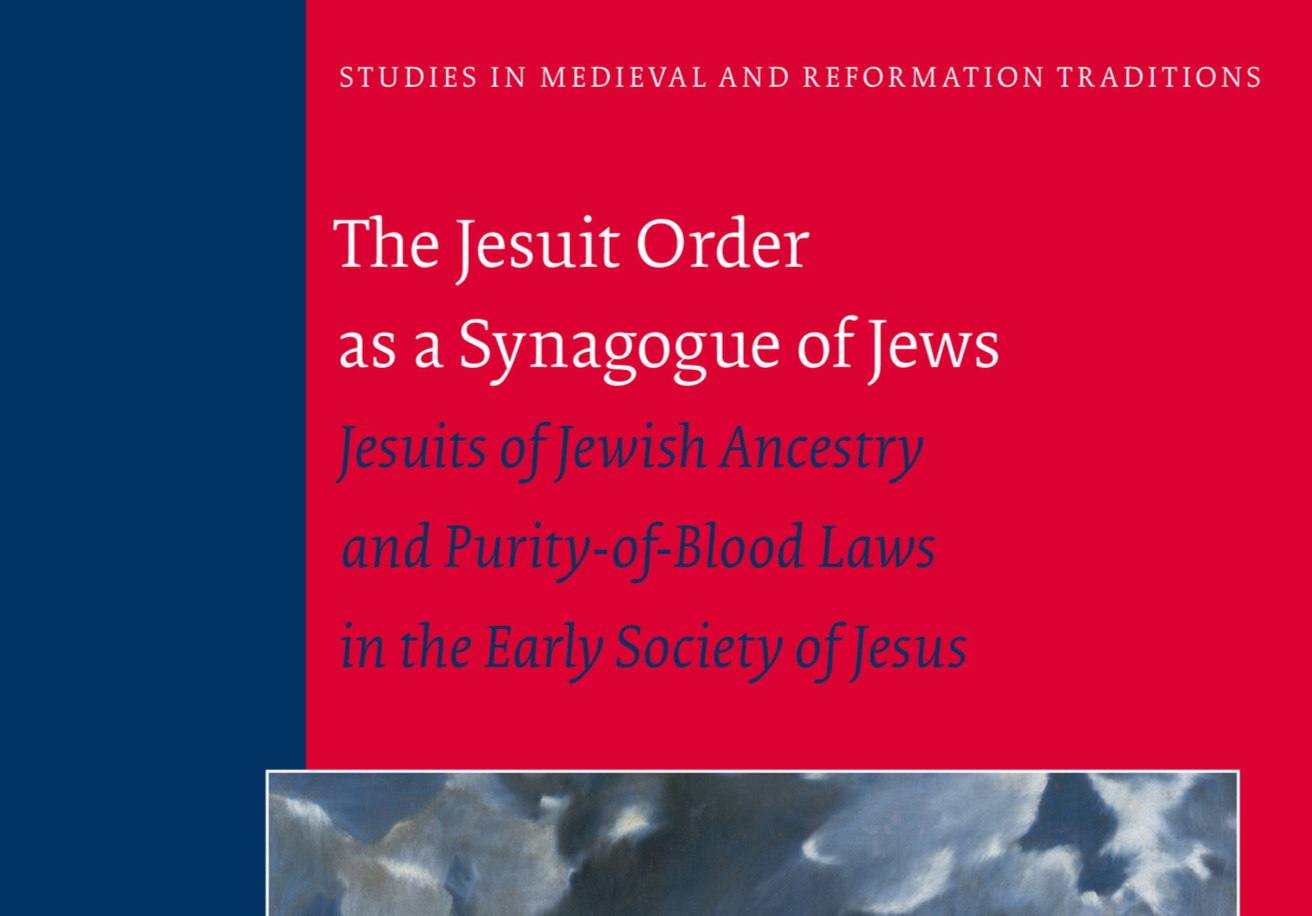
The Jesuit Order as a Synagogue of Jews: Jesuits of Jewish Ancestry and Purity-of-Blood Laws in the Early Society of Jesus
Robert Aleksander Maryks
Brill, 2010.
Free Download

“Those from the circumcision subverted the entire house of the Society. As sons of this world who are shrewd in dealing with their own, and avid of new things, they easily excite disorders and destroy the unity of souls and their bond with the government.”
          Lorenzo Maggio, Jesuit Curia in Rome, 1586.

One of the more interesting aspects of Jewish group behavior is the presence of subversive strategies employing crypsis, often facilitated by a combination of deception and self-deception. To date, the most forthright and convincing theoretical framework for understanding cryptic forms of Judaism is found in Kevin MacDonald’s groundbreaking Separation and Its Discontents: Toward and Evolutionary Theory of Anti-Semitism. A substantial portion of the fourth chapter of the text (1998/2004: 121–132) is devoted to ‘Reactive Racism in the Period of the Iberian Inquisitions.’ Here MacDonald puts forth the view (147) that the blood purity struggles of the Spanish Inquisition during the 15th and 16th centuries should be seen as “an authoritarian, collectivist, and exclusionary movement that resulted from resource and reproductive competition with Jews, and particularly crypto-Jews posing as Christians.” The historical context lies predominantly in the forced conversion of Jews in Spain in 1391, after which these ‘New Christians’ or conversos assumed (or indeed retained) a dominance in the areas of law, finance, diplomacy, public administration, and a wide range of economic activities. MacDonald argues (148) that despite superficial religious conversions, the New Christians “must be considered a historical Jewish group” that acted in such a way as to continue the advance of its ethnic interests. An integral aspect of this was that Wealthy New Christians purchased and endowed ecclesiastical benefices for their children, with the result that many prelates were of Jewish descent.

Indirectly, and almost certainly unintentionally, MacDonald’s arguments find much in the way of corroboration in The Jesuit Order as a Synagogue of Jews (2010) by Boston College’s Robert Aleksander Maryks. Examining the same geographical area during the same period, Maryks presents an account of the early years of the Society of Jesus, during which a fierce struggle took place for the soul, fate, and control of the Order; a struggle involving a highly influential crypto-Jewish bloc and a competing network of European Christians. In this unpolished but interesting book, Maryks illuminates this struggle with reference to previously undiscovered material, in the process shedding light on some of the most important recurring themes of reactive anti-Semitism: Jewish ethnocentrism, nepotism, the tendency to monopoly, and the strategic use of alliances with European elites. Perhaps most fascinating of all, Maryks makes significant reference to Jewish responses to European efforts to stifle their influence, some of which are remarkable in the close manner in which they parallel modern examples of Jewish apologetic propaganda. As such, The Jesuit Order as a Synagogue of Jews is highly recommended for anyone seeking to understand, via an easily-digested historical case study, the dynamics of the ethnic conflict between Jews and Europeans. Read more