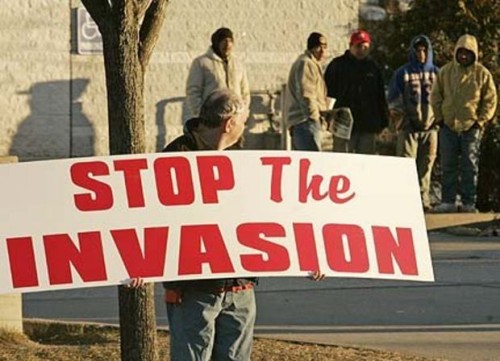
“Fascists” and “Antifascists”: The Standard Memes Ignore the Real Costs of Immigration and Multiculturalism
(Below is my response to “A New Chapter in the Fascist Internationale” by Alexander Reid Ross, in Counterpunch, September 16, 2015.
Mr. Alexander Reid Ross
Counterpunch
Dear Mr. Ross:
I read with great interest your article, “A New Chapter in the Fascist Internationale,” published in Counterpunch and must commend you on your polished syntax and a good, albeit somewhat hasty summary of what is awkwardly termed the “World National-Conservative Movement.” As a long time reader and admirer of some Counterpunch authors who dispel the myth of progress and who tackle the liberal mystique of permanent economic growth, it’s quite possible that we have more in common than what may appear in my critical remarks. Having ties with many so-called “White nationalists” in all parts of the world, and being also a Director of the American Freedom Party, let me try to put things into a short conceptual and linguistic perspective first.
The words ‘Fascism’ and ‘Nazism’ are constantly used as weapons to vilify people who identify as White and have a sense of White interests, to the point that these words have now become meaningless. Both have been so much subject to semantic distortions over the last 70 years, to the point that there is no longer any meaningful relationship between current movements labeled with those terms and the cultural-political movements in the Europe of the early twentieth century. (I am sure Noam Chomsky would partly agree with that). Instead, the term ‘Fascism’ is tossed around today as a generic locution in order to criminalize and pathologize any non-conformist White person or any group of White people by implying that they are nothing more than xenophobic haters.