
Richard Dawkins and the Beltway Celebrity Culture
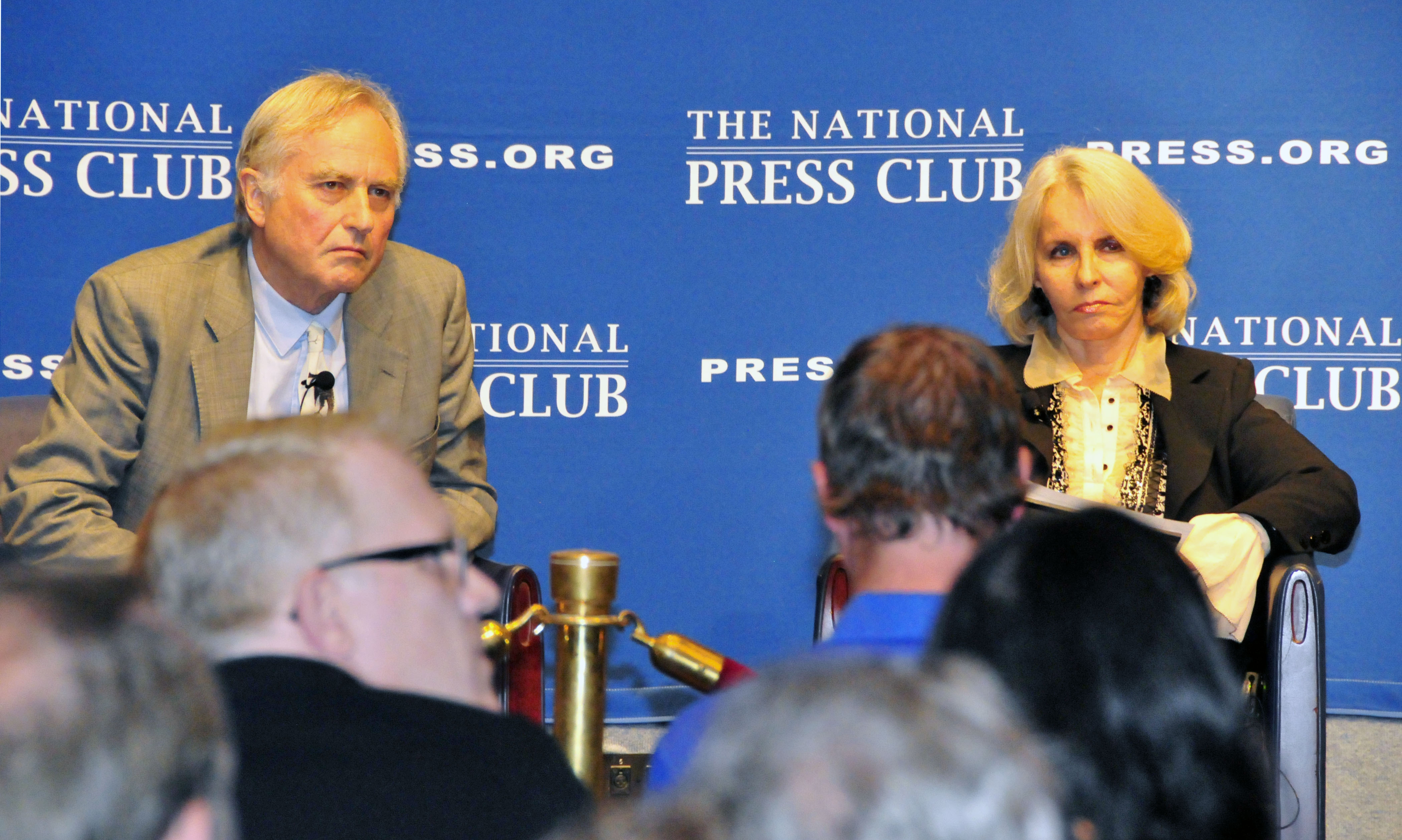
Book signing at the National Press Club hosted by Sally Quinn, the quintessential gossip columnist and D.C. socialite
Richard Dawkins has been making the rounds on the celebrity-author circuit with the release of his newly published memoir, An Appetite for Wonder, the first of a projected two-volume autobiography.
Dawkins addressed a standing-room only audience at the National Press Club in Washington, D.C., on September 30. The event’s host was Sally Quinn, who was once described as “the reigning queen of Washington dinner party culture.” Quinn has carved out a niche as the supreme hostess of the Georgetown salon, the keeper of the keys to the beltway’s celebrity circuit.
The 72-year-old socialite has attained celebrity status for who she is, not what she has accomplished. Quinn is the third wife of former Washington Post editor Ben Bradlee, who rocketed to fame during the Watergate scandal. Were it not for Nixon’s ill-fated cover-up, Bradlee and Quinn would have remained relatively obscure beltway figures as editor and spouse.
Her resume is quite thin. Quinn’s accomplishments include: graduating Smith College, getting hired at the Washington Post without any writing experience (Here is her reported job interview with Bradlee: “Can you show me something you’ve written?” asked Managing Editor Benjamin Bradlee. “I’ve never written anything,” admitted Quinn. Pause. “Well,” said Bradlee, “nobody’s perfect.”), failing to make it as a television news anchor on the CBS Morning News (leaving the program in six months), writing two books and various profiles for The Washington Post, and at 41 giving birth to a son. Read more

 Em meados da manhã do segundo domingo de novembro, os clarins soarão no Último Posto, no Cenotáfio Memorial de Guerra em Londres, e por dois minutos a Inglaterra ficará em silêncio. A simples dignidade do

 There is no more heartfelt symbol of traditional feeling in Britain than the poppy. and this is why two recent government funding decisions revealed such an astonishing shift in cultural priorities. The first was a refusal to fund a
 Indeed, cultural Marxism is now all-pervasive. Most people believe cultural Marxism is synonymous with political correctness. But it is more than that. Cultural Marxism, after the ‘work’ of Antonio Gramsci, is about getting Marxist and neo-Marxist ideas ingrained in the public consciousness and even subconsciousness via subversion of the national culture. One way is to imprint Marxist ideology on cultural texts for public reception. Thus, the more texts are received and absorbed by the public, the more sympathetic to Marxist ideas they become.


