Featured Articles

The United States of Syria: Domestic Lessons in a Distant War

Description and Prediction. It’s a richly vibrant police-state. It’s ruled by a paranoid, self-pitying minority. The minority is trying to crush a rebellion by the dispossessed majority. That is a description of Syria. It’s also a prediction for the United States, the United Kingdom, France and other Western nations. The mainstream media are talking a lot about Syria nowadays. But one thing you won’t hear from the mainstream is this: the civil war in Syria demolishes the Three Great Lies on which the modern West is founded.
Lie #1: Diversity Is Our Strength. Syria is a very diverse country, full of different ethnic and religious groups who have a long history of conflict and mutual hatred. That’s why it has to be a police-state: only harsh repression keeps the different groups from each other’s throats. At present, Bashar al-Assad is fighting to maintain his tyranny. His enemies are fighting to replace it with their own tyranny. And some would be happy to keep the pot boiling:

“Our ‘best-case scenario’ is that they continue to busy themselves fighting each other and don’t turn their attention to us,” an Israeli intelligence officer told BuzzFeed’s Sheera Frenkel. “Better the devil we know than the devils we can only imagine if Syria falls into chaos and the extremists from across the Arab world gain a foothold there,” the officer said. (The Horrifying Secret Of Syria Policy, Buzzfeed, 9th September, 2013)

Lie #2: Minorities Are Saintly Victims. Liberal organizations like Amnesty International have been protesting for decades against the repression and torture used by the Syrian dictators Hafiz al-Assad and his son Bashar. But they don’t mention that the repression and torture are natural consequences of minority control. Since the 1960s, Syria has been ruled by members of a small and impoverished Shiah sect called the Alawi, who have a long history of persecution by the Sunni majority. When they came to power, the Alawi did not forgive, forget and govern for the benefit of everyone. Instead, they took the opportunity to enrich themselves and to persecute in their turn. The cycle of repression and resentment has inevitably ended in civil war. And if the rebels win, the prospect is for expulsion and genocide:  “Christians to Beirut, Alawites to the grave.Read more

Prof. Ralph Scott on the costs of not mentioning race differences

I recently had a conversation with an academic woman who was strongly against any discussion of racial differences in academic ability even though she seemed to believe they exist. I countered that in the absence of such a discussion, the conversation usually reverts to charges that the reason for the racial achievement gap (RAG) is because of White racism, either directly or indirectly (e.g., by causing Black poverty).

Now Prof. Ralph Scott of the University of Northern Iowa has written an article in Mankind Quarterly describing the victims of this rigorously enforced silence (“The Late Arthur Jensen: A latter-Day ‘Enemy of the People’?“). Dr. Scott was prominently involved in the public discussion of the effects of desegregation, including a stint as the Iowa chair of the US Commission on Civil Rights. His article presents Arthur Jensen as the consummate scientist. For example, Jensen only included heritability in his groundbreaking 1969  Harvard Educational Review article on boosting IQ because the editor requested him to do so. His finding that there was no evidence for lasting gains in IQ and that IQ differences are substantially heritable resulted in a firestorm, not only for Jensen but for others, such as Prof. Scott, who accepted these findings.

Scott emphasizes findings by Mark Snyderman and Stanley Rothman (The IQ Controversy [1988]) that there is a gap between (covertly held) professional opinion on IQ and the views disseminated by the elite media. “They found that, despite the common understanding to the contrary, most experts continue to believe that intelligence can be measured, and that genetic endowment plays an important role in IQ.” The following is from an abstract for the book:

The central question addressed in this book is why expert opinion and public views toward intelligence and its measurement are so widely divergent. The authors conclude that the public’s view of the IQ controversy has been shaped by inaccurate media coverage; and more importantly, by changes in the nature of American liberalism as well as the key role of civil rights issues in American life. The increasing influence of new strategic elites in the United States, and the changing role of the mass media, have profoundly affected the character of scientific information communicated to the general public and how it is communicated. (See here)

(Parenthetically, The Culture of Critique references 8 works co-authored by Stanley Rothman, including the groundbreaking Roots of Radicalism: Christians, Jews and the Left [which documents the predominant Jewish role in the 1960s countercultural revolution]. Rothman’s writings on the attitudes of the new elite and on the Jewish representation in the new elite are of seminal importance.)

Scott emphasizes Jensen’s finding that the one standard deviation difference between Black and White students persisted through the school years, implying that the problem was not the schools. As a result, Jensen emphasized that remediation should be aimed at the preschool years:

Colorblind emphasis therefore should be placed on prenatal and perinatal events taking place within families in the course of daily living, such as poor nutrition and intrafamily stress, as well as biophysical considerations, including maternal ingestion of illegal drugs during pregnancy, single parenting, crimes, and sickle cell anemia.

Needless to say, this remains an unpopular message in an age where it seems the blame is now directed mainly at teachers.  Jensen advocated placing children into ability groups based on their scores on standardized tests—a proposal that clearly conflicts with egalitarian dogma. Instead, the education establishment pinned their hopes of reducing the racial achievement gap (RAG) on desegregation—not merely de jure desegregation (in which Blacks had the right to attend neighborhood schools), but de facto segregation (which actively changed the racial balance of schools by forced busing). Read more

Is Tom Wolfe a Race Realist? Part 3 of 3

mauve

Part 1; Part 2.

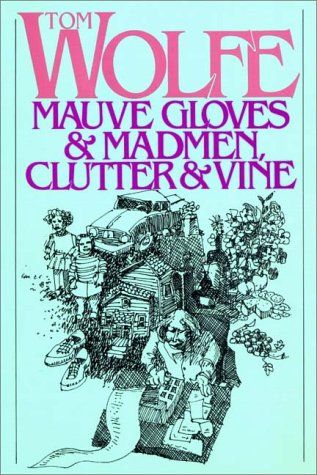
Mauve Gloves & Madmen, Clutter & Vine, a collection of short fiction and non-fiction, includes a very sympathetic portrait of US pilots operating over North Vietnam during the years 1965 to 1967. But by far the most notable essay in the book is, “The Me Decade and the Third Great Awakening,” Wolfe’s critique of the Baby Boom generation, the Me Generation. The Baby Boomers have been rightly criticized for being self-absorbed to the point of narcissism; though subsequent cohorts have not been more virtuous. It is worth quoting at length from this essay, for Wolfe exhibits his conservative bona fides as he faults Baby Boomers for discarding what he describes as the “age-old belief in serial immortality.”

The husband and wife who sacrifice their own ambitions and their material assets in order to provide a ‘better future’ for their children … the soldier who risks his life or perhaps consciously sacrifices it, in battle … the man who devotes his life to some struggle for ‘his people’ that cannot possibly be won in his lifetime … people (or most of them) who buy life insurance or leave wills … are people who conceive of themselves, however unconsciously, as part of a great biological stream. Just as something of their ancestors lives on in them, so will something of them live on in their children … or in their people, their race, their community – for childless people, too, conduct their lives and try to arrange their postmortem affairs with concern for how the great stream is going to flow on. Most people, historically, have not lived their lives as if thinking, ‘I have only one life to live.’ Instead, they have lived as if they are living their ancestors’ lives and their offsprings’ lives and perhaps their neighbors’ lives as well. They have seen themselves as inseparable from the great tide of chromosomes of which they are created and which they pass on. The mere fact that you were only going to be here a short time and would be dead soon enough did not give you the license to try to climb out of the stream and change the natural order of things. The Chinese, in ancestor worship, have literally worshipped the great tide itself, and not any god or gods. For anyone to renounce the notion of serial immortality, in the West or the East, has been to defy what seems like a law of nature.[1] (Ellipses in original)

Read more

Is Tom Wolfe a Race Realist? Part 2 of 3

Go to Part 1.

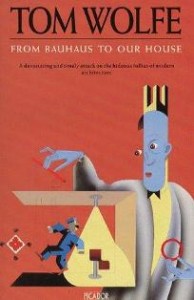
bauhausFrom Bauhaus to Our House, a critique of modern architecture, can be considered a companion volume to Painted Word. Wolfe charges modern architecture with causing “sensory deprivation” due to “the whiteness & lightness & leanness & cleanness & bareness & spareness of it all.”[1] Beyond aesthetic criticism, Bauhaus again makes explicit the link between modernism in the arts and left-wing politics. And once again a turning point in the U.S. was the Second World War. After the war the American elites were “willing to accept that glass of ice water in the face, that bracing slap across the mouth, that reprimand for the fat on one’s bourgeois soul, known as modern architecture.”[2]

The Bauhaus in the title refers to the Bauhaus School founded in 1919 in Weimar, Germany by Walter Gropius. This school, according to Wolfe, was the genesis of modern architecture. Ludwig Mies (van der Rohe, “less is more”) taught at Bauhaus. With the ascension of National Socialism, both Gropius and Mies left Germany for the U.S.

Is there a racial angle to Bauhaus? Author and racial theorist Wilmot Robertson used to say, “There’s a racial angle to every story in twentieth-century America.”

The heirs of the Bauhaus were very concerned with post-war worker housing in America. There was a housing shortage after the war so it was a legitimate issue, but the Left completely misread their clientele. Wolfe points out that public housing became known as “the projects,” and workers avoided them as if they “had a smell. The workers — if by workers we mean people who have jobs — headed out instead to the suburbs.”[3]A dramatic example of this phenomenon was seen in St. Louis where post-war working and middle-class Whites left the city as “a vast worker housing project called Pruitt-Igoe” was being built. There is no explicit mention of race (perhaps none was needed), but Wolfe notes that Pruitt-Igoe “filled up mainly with recent migrants from the rural South … where the population density was fifteen to twenty folks per square mile; [and] one rarely got more than ten feet off the ground except by climbing a tree.”[4] It took just seventeen years for the tenants to destroy P-I. The city demolished the dilapidated buildings in July, 1972. Wolfe calls Pruitt-Igoe and other similar projects “American monuments to 1920s Middle European worker housing.”[5] It turns out that people are not interchangeable cogs after all. Read more

Judeus Imperiais e Judeus Internacionais — por Matt Parrot

adl-300x266Matt Parrot: Imperial Jews and International Jews, The Occidental Observer, 1 de fevereiro de 2011
Tradução, links comentário ao fim do textoO Ocidental Lusófono
Nota do Tradutor: este texto de Parrot é de 2011, mas o insightsubjacente a ele e expresso no título lhe confere um interesse permanente
O recente artigo de Michael Colhaze Wikileaks Leaks [A vez do Wikileaks vazar] chamou atenção para uma fissura crescente dentro da comunidade judaica global, com os “assumidos” e os “assimilados” [“Hibbies” and “Izzies”] cada vez mais divergindo sobre estratégias, táticas e até objetivos. Pouco tempo depois que este post foi publicado, os protestos egípcios escancararam esta fissura, tornando-a mais visível do que nunca. A dicotomia entre os judeus da Diáspora e os judeus israelenses é a maior falha geológica individual no mundo judaico. Dada a desproporcional influência e alavancagem deles, ela é talvez a mais relevante falha geológica política no mundo contemporâneo.
Esta fissura dentro da Judiaria é tão velha quanto a própria Estratégia Evolutiva Grupal. Na tradicional Europa Oriental, havia um núcleo insular de judeus ultra-ortodoxos nos shtetls, que passava a maior parte de seu tempo estudando a Torá, bem como um subgrupo que fazia uma interface com a população não-judaica. Dos agiotas de outrora aos Madofffs de hoje, este pequeno núcleo de judeus ricos e seculares desempenharam um papel central no apoio ao núcleo reprodutivo dos judeus introspectivos, resultando em uma estratégia reprodutiva bifurcada, onde um componente é altamente fértil e o outro têm baixa fertilidade e um alto investimento.

http://retrogradolusofono.blogspot.com.br/2013/09/judeus-imperiais-e-judeus.html

Helmuth Nyborg sobre o declínio da Civilização Ocidental

Kevin MacDonald: Occidental Observer, 5 de maio de 2011
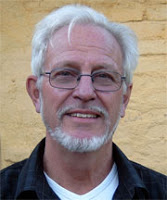
Helmuth-Nyborg-180O psicólogo dinamarquês Helmuth Nyborg publicará um artigo em breve naPersonality and Individual Differences (“The decay of Western Civilization: Double Relaxed Natural Selection“ [ A decadência da civilização ocidental: seleção natural duplamente relaxada] ). Nyborg é bem conhecido por seu trabalho que mostra uma diferença de QI que favorece os homens, um artigo que resultou em uma investigação de seu trabalho e em uma reprimenda de sua universidade. (Nyborg descreve a “caça às bruxas” por que passou  aqui.)
O último artigo de Nyborg aborda tendências passadas e projeta mudanças de QI na Dinamarca como um resultado de duas tendências: o relaxamento da seleção natural entre os dinamarqueses tradicionais e um influxo de imigrantes com baixo QI. Estas duas tendências juntas resultam no que ele define como um “duplo relaxamento da seleção natural” (DRNS).
Com base na obra Dysgenics: Genetic Deterioration in Modern Populations, de Richard Lynn, acredita-se que o relaxamento da seleção interna tenha começado por volta de 1850, quando a taxa de fertilidade das classes baixas ultrapassou a das classes superiores por causa de melhorias na higiene e da redução nas doenças. Ele cita a estimativa de Lynn de que a Inglaterra perdeu 6.9 pontos de QI nos últimos 90 anos (1920-2010) e estima que o QI médio da Dinamarca caiu cerca de 10 pontos dede 1850, devido ao relaxamento interno da seleção natural.

Is Tom Wolfe a Race Realist? Part 1 of 3

Tom Wolfe

Tom Wolfe

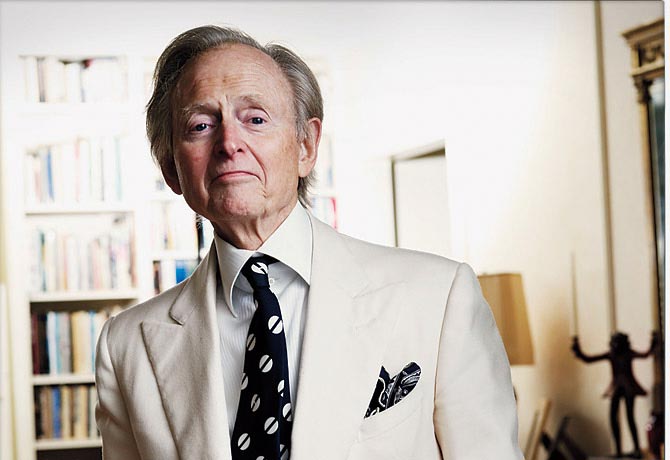
Perhaps it is a product of his Southern heritage — born in Richmond in 1931, B.A. Washington and Lee, 1951. Perhaps it is due to his academic training, Ph.D. in American studies from Yale, 1957, completed before the neo-Marxist hegemony over the humanities and social sciences. Perhaps it is a result of his years as a reporter developing the New Journalism that seeks to tell the larger story. But most likely it is a consequence of his dedication to social realism that has led Tom Wolfe to become the closest thing we have to a mainstream race-realist author.

What is race realism? Ideological labels are often difficult to delineate precisely, but generally a race realist is one who acknowledges the physical reality of race and the significance of human biodiversity in the development of past and present human societies.

This is in contrast to the establishment’s position that insists upon the primacy of the individual while minimizing the importance of race. Races are not naturally occurring phenomena, but merely social constructs grouped around, perhaps, a few superficial physical characteristics. Yet, the inclusion of and advocacy for multiple “social constructs” within White homelands has become a social/political obsession and the basis for the civic religion of the West.

Race realists can also be distinguished from their more radical cousins, racial nationalists, by their embrace of conservatism grounded in patriotism (e.g., American exceptionalism), Christianity, and/or libertarianism. The nationalists are less enamored of Christianity and capitalism, and paradoxically, tend toward internationalism (“our race is our nation”) while advocating for homogeneous ethno-states. Race realists are not separatists, believing instead that a vigorous pursuit of identity politics within a multiracial state is enough to safeguard their people’s interests.

At 82 Wolfe has been writing for over half a century so he has a very lengthy bibliography. By looking at some representative writings we can see if Wolfe fits the race realist mold. Here I will discuss six nonfictions books: Radical Chic and Mau-Mauing the Flak Catchers (1970), The Painted Word (1975), The Right Stuff (1979), Mauve Gloves & Madmen, Clutter & Vine (1976), From Bauhaus to Our House (1981), and Hooking Up (2000); plus three novels: Bonfire of the Vanities (1987), A Man in Full (1998), and Back to Blood (2012).[1] Because Wolfe spent the first 30 years of his career as a journalist and social commentator, we will first consider his nonfiction works in thematic rather than chronological order. Read more