Elysium: An all too real dystopian vision of the future
Reviewing Neill Blomkamp’s Elysium, Steve Sailer emphasizes the dystopian future resulting from non-White immigration. That’s certainly there. The bleak, run-down buildings (filmed, appropriately, in Mexico City), the garbage-strewn streets teeming with poor non-Whites. There’s the everyday violence and the brutal robot police.
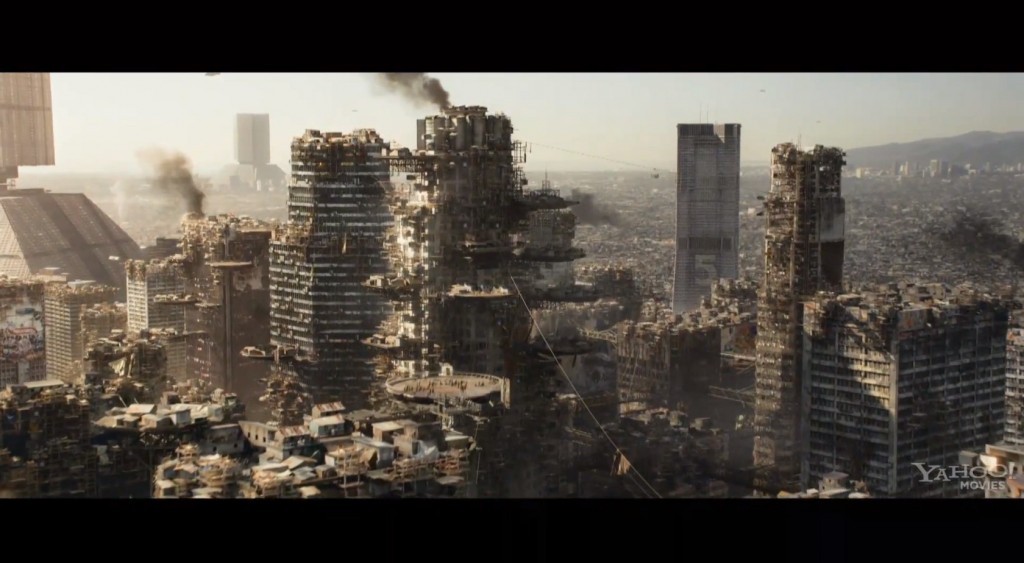
Los Angeles in 2154 as depicted in Elysium
Along with the hordes of Brown people there are a few conspicuous Whites, including Max, the hero, played by Matt Damon. (In an interview, Blomkamp says there would have been more Blacks but they were hard to find in Mexico City. The camera work clearly emphasizes the few Blacks, and at the end of the movie when everyone receives citizenship in Elysium, Blomkamp throws in a scene filmed in Africa where Blacks are seen storming the spaceships that will take them to the promised land. One might say that Blacks were in Blomkamp’s future LA, at least in spirit.)

Matt Damon as Max, being prepared for his journey to Elysium by a Black technician
Unfortunately, the emotional core of the movie is that the teeming non-White masses have moral claims on the overwhelmingly White folks living in Elysium, the space station that slowly orbits above the future Los Angeles. Elysium is everything that the future LA is not: uncrowded, populated by well-dressed, well-mannered, civilized (overwhelmingly White) people with refined tastes, excellent health care, and large mansions with robots waiting on women reclining next to gorgeous swimming pools. And no tattoos in Elysium, unlike pretty much everyone back in LA.
 The
The