https://www.theoccidentalobserver.net/wp-content/uploads/2018/06/TOO-Full-Logo-660x156-1.png00Kevin MacDonaldhttps://www.theoccidentalobserver.net/wp-content/uploads/2018/06/TOO-Full-Logo-660x156-1.pngKevin MacDonald2022-06-11 07:40:242022-06-11 07:40:24Interview with Blonde in the Belly of the Beast
To shame NATO and the U.S. more fully and openly into his war, Zelenskyy is accusing reluctant Western nations of being appeasers cut from the same bolt of cloth as Neville Chamberlain at Munich.
Among the nations aiding Ukraine in its resistance to the Russian invasion, America has been foremost. Yet the war interests of our two nations are not identical.
To the U.S., the imperative is that the war be contained, not expanded, and that we not be drawn into a wider war with Russia.
For the independence, territorial integrity and democratic rule of Ukraine, while championed by the U.S., are not vital U.S. interests. None of them justifies a war with Russia that could imperil the security and, if it escalated to nuclear weapons, the very survival of our country.
That America is not “all in” in Ukraine is obvious. Before Feb. 24, the U.S. never brought Ukraine into NATO, never gave it an “Article 5” war guarantee, never agreed to fight alongside it if attacked.
From the first February days of this war, we ruled out U.S. “boots on the ground” or U.S. participation in a “no-fly zone,” which would require U.S. pilots to shoot down Russian planes.
These decisions and declarations about what we would not do testified to the limits of the U.S. commitment to Ukraine, as well as to our reluctance to take serious risks to ourselves on Kyiv’s behalf.
President Volodymyr Zelenskyy’s goal, however, the defeat of the Russian invaders and their expulsion from Ukraine, would require greater support from the U.S. and NATO than he is receiving or is likely to receive.
The U.S. and NATO are willing to supply Ukraine with the weapons to defend themselves and defeat the Russians in battle, but neither NATO nor the U.S. is prepared to fight the Ukrainians’ war for them.
When it comes to the fighting and dying, this is their war, not ours.
To shame NATO and the U.S. more fully and openly into his war, Zelenskyy is accusing reluctant Western nations of being appeasers cut from the same bolt of cloth as Neville Chamberlain at Munich.
What is Zelenskyy saying?
Our cause is Europe’s cause. Our cause is NATO’s cause. Our cause is democracy’s cause. Our cause is the world’s cause. If we go down, we will be only the first to fall to Vladimir Putin’s empire. Others will follow.
Henry Kissinger has said that, in any negotiated settlement, Ukraine will likely have to cede some territory to Russia. Ideally, said Kissinger, “the dividing line should be a return to the status quo” before the 2022 invasion. Russia has held Crimea and parts of Luhansk and Donetsk since 2014.
“Pursuing the war beyond that point would not be about the freedom of Ukraine,” said Kissinger, “but a new war against Russia itself.”
A livid Zelenskyy replied: “It seems that Mr. Kissinger’s calendar is not 2022, but 1938 … Nobody heard from him then that it was necessary to adapt to the Nazis instead of fleeing them or fighting them.”
These cracks in the coalition backing Ukraine are certain to become more pronounced, as Russia appears to be consolidating control of the Donbas, which Putin has set as his principal goal.
Italy, France and Germany are all in contact with Putin. All are pressing for negotiations. None has insisted on what Zelenskyy has at times demanded: Russia’s surrender of Ukrainian territory it has held since 2014.
East European nations, familiar with Russian rule, echo Zelenskyy in calling for the defeat, humiliation and expulsion of Russia from Ukraine.
When and if a ceasefire comes and negotiations begin, there seems certain to be a fracturing of the coalition backing Ukraine.
For while Russia was defeated in its offensives to capture Kyiv, Kharkiv and Odessa, Moscow has succeeded in capturing Mariupol, the Sea of Azov and the “land bridge” it sought from Russia to Crimea — and appears to be moving toward dominance of the entire Donbas.
Ukraine is also blockaded by Russian warships from exporting its wheat and corn, upon which a number of developing nations depend to feed their populations and avert malnutrition and even famine.
And with Russia making slow but steady gains in the Donbas, Putin does not appear to be holding a weak hand in any negotiations.
With the Ukrainians and Russians exchanging artillery fire in the Donbas, Zelenskyy asked the U.S. for its High Mobility Artillery Rocket Systems, known as HIMARS.
With strike capabilities of almost 50 miles, this could put Russia itself in range. But U.S. officials say they have assurances from Ukrainian leaders that HIMARS will not be used against Russian territory.
The Kremlin has warned that any nation sending advanced weapons to Ukraine will face harsh repercussions. Russian Foreign Minister Sergei Lavrov has charged the West with declaring “total war” on Russia.
What this suggests is that the war is now generating greater risks and dangers for the U.S. than any additional rewards we might realize from “weakening” Russia with further fighting.
It may be time to tell Zelenskyy not only what we will and will not provide but what we believe are the acceptable terms for a truce.
https://www.theoccidentalobserver.net/wp-content/uploads/2018/06/TOO-Full-Logo-660x156-1.png00Pat Buchananhttps://www.theoccidentalobserver.net/wp-content/uploads/2018/06/TOO-Full-Logo-660x156-1.pngPat Buchanan2022-06-05 06:36:142022-06-05 06:36:14US and Ukraine, Goals in Conflict
Whether true or not, the left has decided that black people are as easy to play as Donald Trump. While frantically replacing African Americans with immigrants, they announce: “Replacement” is a white supremacy theory! Pay no attention to the Latino immigrants doing construction and Indian immigrants getting all the “diversity” jobs.
Employers in need of cheap labor lost slavery, Jim Crow and, finally, with the 1964 Civil Rights Act, the ability to legally discriminate against African Americans. So they turned around and, one year later — just as black Americans were poised to move into the middle class en masse — began dumping low-skilled workers on the country with Teddy Kennedy’s 1965 immigration act. [This is incorrect; Kennedy, a first-term senator, was a figurehead. For an alternative perspective see here.]
For the past quarter-century, Black academics, intellectuals and activists have been screaming from the rooftops about the devastating impact of mass third world immigration on African Americans.
Civil rights hero Barbara Jordan, appointed by President Bill Clinton to head the U.S. Commission on Immigration Reform, thunderously concluded that there is “no national interest in continuing to import lesser-skilled and unskilled workers to compete in the most vulnerable parts of our labor force. Many American workers do not have adequate job prospects. We should make their task easier to find employment, not harder.”
Former Vanderbilt University professor Carol Swain and U.S. Civil Rights Commissioner Peter Kirsanow have also produced studies showing that African Americans are bearing the brunt of our immigration policies.
Black workers didn’t need to wait for the reports. In 2006, Black day laborer John Henry Ford was interviewed by The Washington Post while he was standing on a street corner in Washington, D.C., looking for work amid a crowd of Hispanics. His verdict: “They came over here, in a sense, to replace us.”
You bet they did! If you doubt me, bring up immigration with any doyenne of the upper crust, sit back and wait for the heartfelt speech about her landscaper — so cheerful, so hardworking, so willing to “do the jobs Americans just won’t do!”
Who do you imagine she’s talking about?
This is why my idea for a dystopian movie would be about rich liberals using the BLM-induced murder spike (mostly Black men getting killed) in combination with mass immigration (lots of hardworking Latinos coming in) as a long-term plan to replace Blacks with Mexicans.
Jordan Peele? It’s yours, free. It’s a guaranteed hit.
African Americans aren’t just being replaced at the construction site and meat-packing plant. Oh, no. Their political power has been replaced by immigrants, too.
Say, whatever happened to that Barbara Jordan report? At Clinton’s request, this civil rights icon led a commission that studied immigration’s impact. She issued the group’s conclusion in a cri de coeur about how immigration was crushing black people — who, again, vote nearly monolithically for the Democrats.
Tough luck, Black folk! Latinos are a more powerful voting bloc now. (Also, African Americans will vote Democrat no matter what, so who cares?)
Clinton ignored Jordan’s report.
Indeed, the entire story of Black people in America from slavery to civil rights has been replaced in toto by the “diversity” regime. Don’t look now, but Hispanics, Asians and Muslims are filling all the “diversity” slots in corporations, universities and the media. You know, to make up for the legacy of — WHAT ON EARTH? WE DID NOTHING TO YOU!
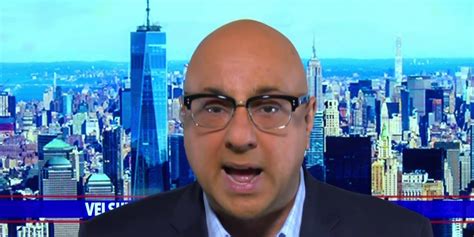
Here, for example, are MSNBC’s diverse hosts: Joy Ann Reid (second-generation immigrant of Congolese and Guyanese descent), Ali Velshi (first-generation immigrant of Indian descent), Jose Diaz-Balart (second-generation immigrant of Cuban descent), Yasmin Vossoughian (second-generation immigrant of Iranian descent), Ayman Mohyeldin (first-generation immigrant from Egypt), Katie Phang (second-generation immigrant of Korean descent), Mehdi Hasan (first-generation immigrant of Indian descent).
None descendants of American slaves. (And to really make up for slavery, there’s MSNBC host Alicia Menendez, a third-generation Cuban, whose father is a U.S. senator.)
Wow, have you guys been replaced! So has the white working class and increasingly, the white middle class. But nothing like the industrial-scale replacement of black Americans.
I say this without the tiniest sliver of hope that historic Black America will ever notice that the Democratic Party is screwing them six ways from Sunday. In fact, the next mass shooting could be me at a fancy Republican dinner party when the moneybags start talking about the millions of dollars they’re giving to Sen. Tim Scott. He’s got a plan to win the Black vote!
Oh, give it up, Republicans. It’s not going to happen. I know it, the Democrats know it, and every single breathing mammal knows it — except GOP donors and their moron consultants. No matter what you say or do, no matter what I say or do, the Anti-Defamation League just needs to call us “white supremacists,” and 90% of Black people will line up to vote for the Democrats.
(Hey, anybody else remember all the GOP donors and television commentators boasting in 2020 that Trump was going to win 30% of the Black vote? Final tally: 92% for Biden; 8% for Trump. I won a thousand-dollar bet with one of those wealthy Republican donors, which I’ve been too polite to mention. Maybe she’ll read this.)
I say all this not to join the chorus of White Republicans futilely sucking up to black people, but for only one reason: It’s true. To the extent that anyone’s being replaced, it’s you, Black Americans.
COPYRIGHT 2022 ANN COULTER
https://www.theoccidentalobserver.net/wp-content/uploads/2018/06/TOO-Full-Logo-660x156-1.png00Ann Coulterhttps://www.theoccidentalobserver.net/wp-content/uploads/2018/06/TOO-Full-Logo-660x156-1.pngAnn Coulter2022-06-02 10:32:152022-06-02 10:32:15The Great Replacement Switcheroo
I readily admit that “Stability Generation” isn’t a moniker that will ever stick in the public consciousness. But, I chose the term to highlight the stark difference in society that the younger generations grew up in. Those who spent their conscious, formative years in the Putin period of relative stability are quite different from the generations that preceded them. Basically, people who were children in the 90s or 00s and who have entered young adulthood now, grew up in a Russia that was on the upswing. Once the Chechen problem was solved, stability returned to the country and the real economy began to recover in ways that improved the quality of life for the average Russian.
In Ukraine, in contrast, the stability period never really materialized. Yes, the economy generally recovered some from the shocks of the 90s, but the organized looting never ended and political turmoil only intensified as time went on. This had notable ripple effects on average Ukrainians, who became far more demoralized as the years went by and fled the country in droves. It is hard to imagine it, but Ukraine used to have a population of 50+ million souls. Some analysts put the number at 27 million now, but estimates vary. This is a shocking statistic to even consider.
What happened to all those people? Well, they either emigrated or died, I suppose. Not many new Ukrainians were born in the post-USSR period, either.
In Belarus, in contrast, the period of instability was less intense and stabilized quicker because of Lukashenko, who, for all his flaws and habit of playing footsie with the West from time to time, refused to let national assets and industries be dismembered and sold to foreigners for pennies. Having a strong leader during a time of crisis pays dividends, does it not?
Generally speaking, the youth who grew up in the stability period in Russia and Belarus are more or less normal people. They don’t have ideological “cockroaches in their head” as the expression goes i.e., they don’t have a set of bizarre political complexes at war with reality running around their heads. That means that they’re not really participants in the never-ending pro-USSR vs anti-USSR ideological debate that dominates Russian political discourse and for the most part largely eschew regular politics. Putin isn’t going anywhere and besides, the only serious opposition party in Russia has always been the Communists, and the youth weren’t going to go out into the streets waving red flags. They got enough of that at home from their grandparents. That being said, many of them are possessed with an inferiority complex vis-à-vis the West like the generation that preceded them. But if the Bariga generation is militant in its aggressive pro-Western posturing, the younger people have less of a knee-jerk anti everything related to the USSR and Russia mentality.
Yes, things were going well for awhile with the youth, and I had high hopes for the future of Russia based on my interactions with this generation. They had few of the bad characteristics of either the Sovoks or Barigas and were generally optimistic about the world and their place in it.
But then it all began to change.
Eastern Europe has benefitted, unbeknownst to itself, from a “cultural lag” and from the unintended positive effects of the Iron Curtain, which cut off ties between East and West. Trends started in the West by Hollywood or the CIA or MI6 used to take decades to make their way over to the USSR. My parents only saw Star Wars in 1991, for example. But that cultural lag has started to wear off and what may have taken decades to permeate Slav society is now flooding in at an alarming, transformative rate.
Eastern Europe was blissfully insulated from the SJW craze for a time — they were still watching the old Terminator films and talking about cowboys and gangsters when I made my way over in 2014. America was seen as a cool and macho place overflowing with fun and guns and easy sex and not much else. When I started sounding the alarm about SJWism to my friends all the way back in 2015, I received only scoffs of unbelief that such a thing could even exist.
“No-no-no, you don’t understand. It’s like Marxism, really. Instead of Proles and Bougies though, it’s Blacks and Whites, Gays and Normals, and so on.”
Nowadays, SJWism has already made its inroads into youth culture. You see rainbow flags and pins on the backpacks of young girls sitting at trendy cafes. Metrosexuality is quite popular as a fashion trend among big-city young men and there has been a veritable explosion of interest in elective sexual identities among both boys and girls. Being pro-Ukraine has become trendy as well, with the Ukrainian flag coming to symbolize Human Rights Freedom Democracy™ and opposition to Russia’s oppressive and backwards conservative culture. Coffee shops routinely play Ukrainian rock music like Okean Elzy (not bad, actually) to signal their support for Kiev and their hatred for their own country.
These trends used to be confined to places like Kiev and Minsk and Moscow and St. Petersburg. However, because of smartphones and apps like Tinder and Instagram, this culture has become accessible in even far-flung places like Barnaul (Siberia), which I visited half-expecting to find Hyperboreans walking around in furs and animal pelts, but instead ended up spending my time talking about K-Pop stars with trendy Vans-wearing local students at the anti-cafe (a coffee-shop where you pay for time instead of drinks). University towns are where these alarming trends are most visible. There is an almost one-to-one correlation between English-language penetration and progressive views. Young Russians who know English well almost all display the warning signs of latent SJWism, which they no doubt acquired through their Netflix subscription or reading the various fashion/trend magazines in English.
This is made worse by English-language cultural content being translated into Russia by media outfits geared to the youth like Medusa and The Village. Both have been shut down, thankfully, within Russia since the special operation began.
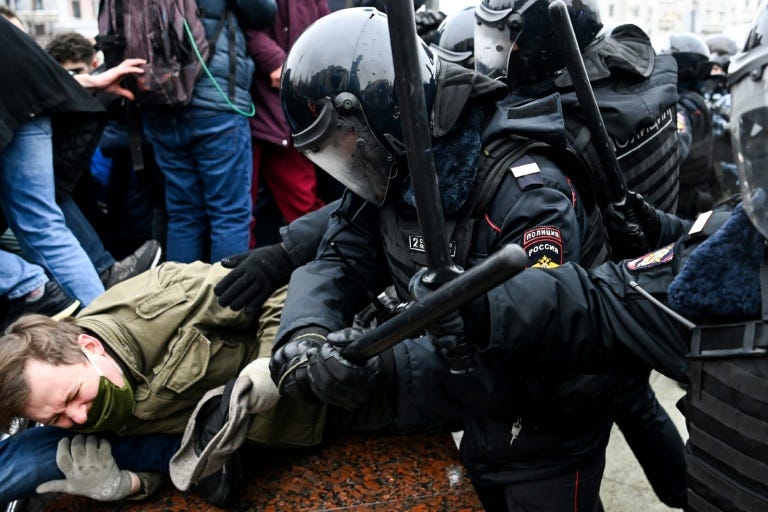
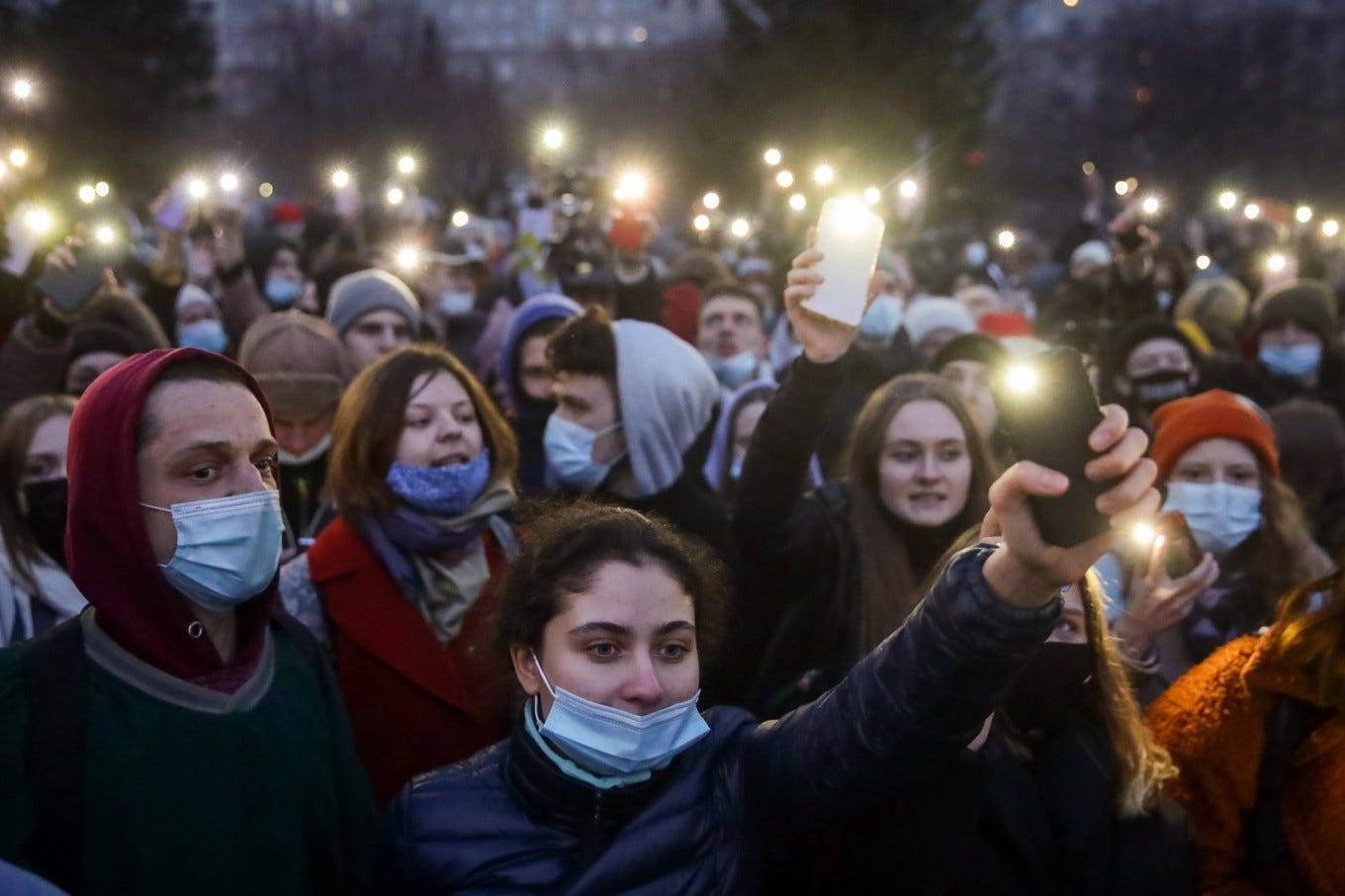
Of course, the situation is nowhere near as bad as it is in America, for example, but the general trend isn’t good. Central Moscow and St. Petersburg are hotspots of rabid anti-Russian hatred and opposition politics. As soon as the special operation was announced, throngs of students went out to protest and get man-handled by the police. Because of the swift, illiberal response from the OMON, these protests were quickly quashed. But these are very bad optics on the part of the Russian government — young people getting beaten up by riot cops isn’t exactly a PR victory.
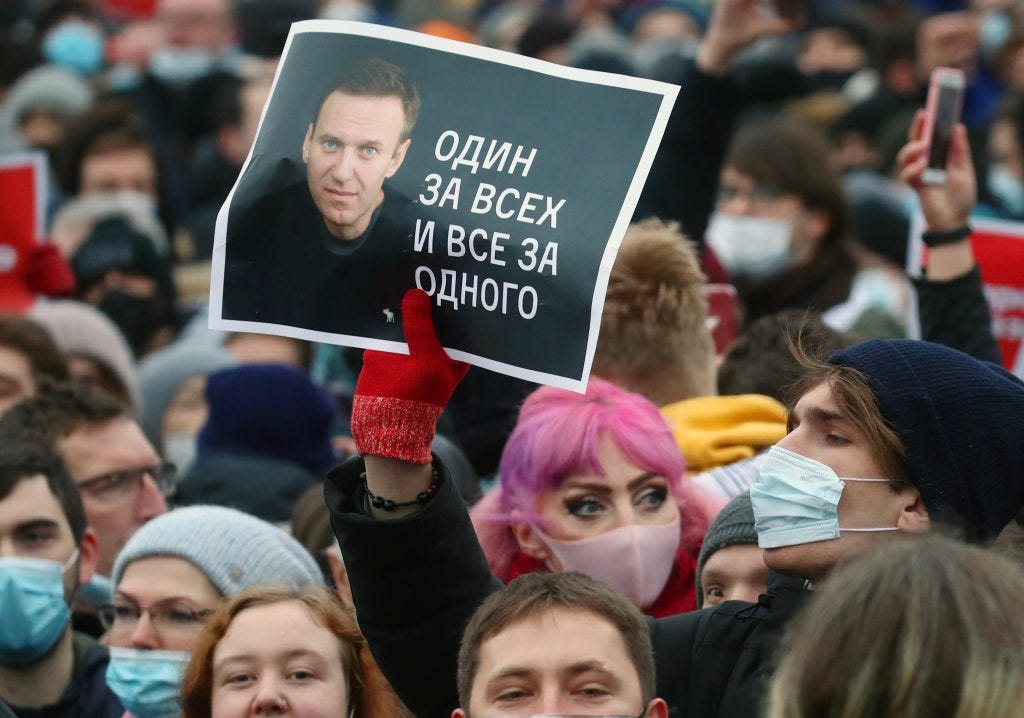
Naturally, instead of investing in a patriotic youth movement, the Kremlins in their infinite wisdom, decided to do literally nothing over the years to work with the youth and so ceded the future of the country to the malign influence of Western media. This means that spending an afternoon wandering around Moscow’s trendy youth hotspots is akin to spending time in Brooklyn, albeit with far less diversity, thankfully. Luckily for the Russian government, the youth doesn’t really vote with any consistency and hasn’t rallied behind an opposition candidate to date, although Alexey Navalny came close to capturing that youth energy with his antics.
Why was Navalny successful with the youth? Well, unlike the standard run-of-the-mill Russian politicians, he had Western-educated advisors with deep pockets and experience running color revolution ops advising him to utilize the internet and to tailor his message to appeal to the youth. In other words, unlike other political figures, he actually tried. The youth, eternally gullible and naive, rallied behind an actual bariga from the older Bariga generation who had gotten caught embezzling money on two separate occasions (the perfume and the forest scandals) and then had the gall to run on an anti-corruption platform. Ah, to be young…
But what problems do the youth face? What issues do they want addressed?
Well, the problems that the youth face in Eastern Europe are pretty much identical to the problems that the youth in the West face, even if we factor in the grotesque ethnic grievance agenda aimed at Western Whites by Jews and brown people. Anti-Russianness, however, is largely confined to the universities and isn’t actively promoted by the major media like in the West. On the economic front, the Russian youth can’t afford housing and unlike in America, credit is quite tight. A loan for a starter apartment usually comes with 12–16% interest. There are few jobs and even fewer jobs that pay well. Gone are the days of Soviet macroeconomic stability and gone are the days when one could steal enough for a personal nest egg. Programming is the only real field for a smart Russian without connections to make some money and set himself up for middle-class stability later on in his life. The youth go to universities where they get useless degrees and a good dose of Liberal propaganda much like their Western counterparts (albeit without the crushing debt) and then realize that a lifetime of service economy drudgery awaits them. Some of them decide to take to the streets, I suppose.
Also, many young people come from broken homes and are the product of single-mommery and divorce drama. Relationships between the sexes are strained, but not quite as bad as in the West. Toxic feminism has been growing at an exponential rate in Russia with negative effects for both women and men. It has become fashionable to go to a psychologist and start taking anti-depressants SSRIs — an alarming trend, and one that the parents remain largely ignorant of. Designer drugs are readily available and cheap and popular (“metadron,” in particular). Tattoo culture is also widespread and ubiquitous, especially among the women, as is Western gangster rap, although there’s plenty of “Russian” degenerate music from rappers like Oxxxymiron (Jewish) to choose from as well.
Again, if we were to compare this with the West, it’s simply a difference of cultural lag and scale.
If you want to know what trendy big-city Russians will look and act like in 5 years time, simply look at how they act in the West now and wait. There is no meaningful local counter-culture pushing back against these trends as of yet. Political pundits on TV will occasionally whine about the youth, but seem genuinely baffled that WWIIism and old Soviet movies are not enough to reverse the trend. Parents don’t know what to do or generally don’t care enough to intervene.
The trend is bleak, but that doesn’t mean that the youth is lost entirely — far from it. In the West, there are many young men who have begun rebelling against the culture of hedonism and self-destruction promulgated by the Jewish culture-creators. So too, in Russia, there are many young men who are disgusted by what they see occurring in their country. Only, we have yet to see an analogous youth cultural movement like the meme-right appearing anywhere in Eastern Europe.
However, I believe that the war will have a positive effect on youth culture in Russia.
Not only are many Liberal media projects being shut down, but many Russians are waking up to the fact that the people running the West hate them and want them dead. Young veterans from the war will start trickling back into civil society and will contribute to the overall level of “basedness” as well. Because this war is popular, unlike the war in Afghanistan, for example, the prestige of the military in society will only grow as a result. Hopefully this translates into increased political power as well. I’d like to see popular military figures running for office and demanding to be put in charge of key industries and civil institutions once the conflict dies down. Russia used to be run by military men, not by the merchant class and its time to RVTVRN to tradition as far as I’m concerned.
Other than that, what else can I say?
Things could be better, I suppose. But they could be worse, to be fair, as well. There aren’t really that many young people to make much of a dent in the cultural landscape of Russia, really. Also, current reproductive rates indicate that there will be even fewer young people in a generation’s time and I see little to indicate that this generation will start having large families any time soon. In 2021, there was were either 1.5 or 1.82 births per woman, depending on what statistics are to be believed.
Luckily, neither Russia or Ukraine or Belarus have begun a society-wide program of population replacement like the governments of the West have. In fact, the number of non-White migrants seems to have precipitously fallen in all these countries as a result of recent events, but the official statistics (for what they’re worth) have been delayed this year and we don’t know for sure yet.
In other words, the situation is grim, but it’s far from hopeless.
I want to conclude this series by pointing out that both Western and Eastern Whites are in a civilizational death spiral. There is, however, the faintest glimmer of hope for Eastern Europe because there are still organized forces in society that are capable of standing up to the power of the Global Oligarchy. Both Putin and Lukashenko seem hell-bent on surviving and not meeting the same fate as Hussein and Ghadaffi. The military by and large remains a bastion of Spartan conservatism and martial stoicism. A vast hinterland of rednecks and hicks still retains the capacity to turn up their noses in disgust at the behavior of the big-city people.
If Russia can prevent the youth from falling for the cultural brainwashing coming from the West, and if the country survives the NATO onslaught, the situation may very well still be salvaged.
https://www.theoccidentalobserver.net/wp-content/uploads/2018/06/TOO-Full-Logo-660x156-1.png00Rolo Slavskihttps://www.theoccidentalobserver.net/wp-content/uploads/2018/06/TOO-Full-Logo-660x156-1.pngRolo Slavski2022-05-31 08:49:322022-05-31 08:49:32The Generational Divide in Eastern Europe: the Stability Generation (The Youth)
Liberals are screwing over African Americans again, sublimely confident that whatever they do, Democrats will never get less than 90% of the black vote.
In the Buffalo, New York, mass shooting 10 days ago, 18-year-old Payton S. Gendron drove 200 miles to a grocery store jam-packed with the descendants of American slaves and gunned down as many people as he could. But instead of this being an anti-black thing, the media have decided, no, it’s an anti-immigrant thing, based on the shooter’s belief in the “great replacement theory,” which holds that elites are deliberately replacing historic Americans with immigrants.
Trust us, it’s all in his “manifesto” — and no, you can’t see it. What? You don’t trust the media to tell you the truth about the shooter’s motive?
Still, I can’t help but notice that the shooter seemed really intent on killing black people. He drove 3 1/2 hours from Conklin, New York, to get to a city with remarkably few immigrants. Only 10% of Buffalo is foreign-born. But it’s 35% black.
Much closer to Conklin than Buffalo is, for example, Middletown, New York, which is 39% Hispanic and 16% foreign-born. In about half the time it took to get to Buffalo, he also could have driven to Utica, New York, which is 22% foreign-born. And he would have cut his driving time by more than an hour if he’d gone to Schenectady, New York, 17% foreign born.
So why are the media insisting that the killer hated immigrants, when it kinda looks like he mainly hated blacks?
For one thing, midterm elections are coming, and voters are poised to have a say on the fabulous things Biden’s done to our border.
Oh, you think we should have a border? What — do you believe in REPLACEMENT?
Moreover, Hispanics have begun to show a slight — very slight — willingness to vote for Republicans, coinciding with the Democratic Party’s enthusiastic embrace of Black Lives Matter, and thus, black criminality. (It turns out Latinos are generally opposed to getting beaten up and having their money stolen.)
Finally, of course, there’s the fact that Democrats know there’s nothing, absolutely nothing, that will stop black people from voting for them.
Now they’re just showing off. Yeah, Buffalo was a racist shooting — but watch this: We’re going to make it about immigrants, and we’ll STILL get the black vote!
After years of the media trying to turn every single event into proof that white people hate African Americans, at last there’s a monstrous crime where even skeptics say, Yeah, this one was totally about a white guy who hates black people. But the media decided that this week, they needed to juice the immigrant vote.
The madness, the wild upside-down insanity of the media pushing the “great replacement theory” as the motive for the Buffalo shooting, is this: If anyone’s being replaced by immigrants, it’s black people.
Black people have always been here! Heard of the 1619 Project? The thesis and details may be comically false, but it is a plain fact that blacks have been here since 1619. Historic America is not a monolithically white country; it is a biracial country — black and white — and remained so for two centuries, until Teddy Kennedy decided to change it with his 1965 immigration act.
Of the two racial groups that formed 99% of America from the 1600s to the mid-1970s, which one do you think is getting the short end of the stick? The white working class isn’t popping champagne corks over mass immigration, but black people get absolutely nothing out of it.
Rich people, mostly whites, are making out like bandits. Endless low-skilled immigration has finally solved “the servant problem.” By now, so many hardworking Latinos have come in that virtually every upper-middle-class white person has a maid, a nanny and a gardener.
It’s low-wage workers — mostly black men — whose wages have been annihilated by competition from the cheap labor being dumped on the country. Not only have working-class wages gone into the toilet, but a lot of jobs are totally off-limits to black people — because they don’t speak Spanish or Chinese or Tagalog.
For decades now, black professors, the U.S. Civil Rights Commission and ordinary African Americans have been pointing out how immigration hurts them. Democrats don’t care.
And that’s the story of how an unequivocally anti-black mass murder became a crime against immigrants.
More on the real “replacement” next week.
COPYRIGHT 2022 ANN COULTER
DISTRIBUTED BY ANDREWS MCMEEL SYNDICATION
1130 Walnut St., Kansas City, MO 64106; 816-581-7500
https://www.theoccidentalobserver.net/wp-content/uploads/2018/06/TOO-Full-Logo-660x156-1.png00Ann Coulterhttps://www.theoccidentalobserver.net/wp-content/uploads/2018/06/TOO-Full-Logo-660x156-1.pngAnn Coulter2022-05-27 11:38:162022-05-27 11:38:16They’re Replacing YOU, Black America
Where does Mother Russia go from here? Bitter at their losses in the Cold War and post-Cold War years, many Russian nationalists are urging the regime to align with today’s great power antagonist of the United States, Xi Jinping’s China.
“The demise of the Soviet Union was the greatest geopolitical catastrophe of the century,” said Russia’s new ruler Vladimir Putin in his 2005 state of the nation address.
“As for the Russian people,” Putin went on, “it became a genuine tragedy. Tens of millions of our fellow citizens and countrymen found themselves beyond the fringes of Russian territory.”
From Putin’s standpoint, the statement was then and remains today understandable.
Consider. When Putin entered his country’s secret service, Berlin was 110 miles deep inside a Soviet-occupied East Germany. Poland, Czechoslovakia, Hungary, Romania and Bulgaria were member states of the Warsaw Pact.
Lithuania, Latvia and Estonia were republics of the USSR. Ukraine was the most populous and ethnically closest of the Soviet republics to Russia itself.
And today? Berlin is the capital of a united, free and democratic Germany, a member of NATO, that is beginning a rearmament campaign triggered by Putin’s invasion of Ukraine.
Poland, the Czech Republic, Slovakia, Hungary, Romania and Bulgaria are members of the U.S.-led North Atlantic Treaty Organization.
Former Soviet republics Lithuania, Latvia and Estonia are also members of that Western alliance established to contain Russia.
Sweden and Finland, neutral through the Cold War, are applying for membership in NATO.
Ukraine, backed by the U.S. and NATO, is fighting a war to push the Russian army out of its territory, a war that has the support of almost every country on the continent of Europe.
Even the falls of the British and French empires at the end of World War II do not match as geo-strategic disasters the collapse of the Soviet Empire and breakup of the Soviet Union since the end of the Cold War.
How goes the Russian war in Ukraine launched on Feb. 24?
Russia has enlarged the territory it controls in Crimea and its Luhansk and Donetsk enclaves in the Donbas. And now, with the fall of Mariupol, Moscow controls the entire Sea of Azov and has completed its land bridge from Russia to Crimea.
But Russia has failed to capture and been forced by the Ukrainian army to retreat from Kyiv and Kharkiv, the largest cities in Ukraine, and Putin has seen his forces humiliated again and again.
Yet, withal, Russia today remains a great power.
The largest nation on earth with twice the territory of the U.S., Russia has the world’s largest nuclear arsenal and exceeds the U.S. and China in tactical nuclear weapons. It has vast tracks of land and sits on huge deposits of minerals, coal, oil and gas.
But Russia also has glaring weaknesses and growing vulnerabilities.
While Putin has built up impressive forces in the Arctic, the Baltic Sea, with Finland and Sweden joining the Western alliance, is becoming a NATO lake. Russian warships sailing out of St. Petersburg to the Atlantic have to traverse the coastal defenses of 11 present or future NATO nations: Finland, Estonia, Latvia, Lithuania, Sweden, Poland, Germany, Denmark, Norway, Britain and France.
Among the questions that Russia, shrunken in so many ways from the great U.S. rival of the Cold War it once was, must answer is, “Quo Vadis?”
Where does Mother Russia go from here?
Bitter at their losses in the Cold War and post-Cold War years, many Russian nationalists are urging the regime to align with today’s great power antagonist of the United States, Xi Jinping’s China.
This is a recipe for a Second Cold War, but how would that war avail the Russian nation and its people?
In any Russia-China alliance, there is no doubt who will be senior partner. And it is not the U.S. that covets and wishes one day to control the resources of Russia from Novosibirsk to the Bering Sea.
China’s population of 1.4 billion people is 10 times Russia’s. East of the Urals, China’s population is 50 to 100 times the size of Russia’s in Siberia and the Far East.
What of a U.S.-Russia detente as Moscow’s future rather than Cold War II?
During some of the coldest days of the Cold War, U.S. presidents like Dwight Eisenhower, Richard Nixon and Ronald Reagan sought to find common ground on which to stand with Russia to avoid conflict.
Ike invited the “Butcher of Budapest,” Nikita Khrushchev, for a 12-day U.S. visit in 1959. Nixon initiated a “detente” with Leonid Brezhnev, who had ordered the Warsaw Pact to crush the “Prague Spring” in 1968. Reagan and Mikhail Gorbachev negotiated the dismantling of an entire class of nuclear weapons in the 1987 Intermediate-Range Nuclear Forces treaty.
Given the hostility Putin has generated by his invasion of Ukraine, Western leaders may be unable to bring Russia in from the cold. But if we isolate Russia, push it out of the West, Moscow has only one direction in which to go — east, to China.
In 230 years, the United States has never gone to war with Russia. Not with the Romanovs nor with the Stalinists, not with the Cold War Communists nor with the Putinists.
U.S. vital interests dictate that we maintain that tradition.
A basic question needs answering: Why, 30 years after the Cold War ended, are we still expanding NATO? Russia does not threaten the United States. As for any threat that it poses to its European neighbors, let them deal with it.
Seeing Russia invade Ukraine, historically neutral Finland has undergone a late conversion and decided to join NATO immediately.
Why? Because NATO membership means the world’s strongest power, the United States, under Article 5 of NATO, would go to war against Russia, should it cross Finland’s border.
Nervous about Russian President Vladimir Putin’s intentions, Finland wants America legally and morally bound to fight Russia on its behalf, should Putin invade Finland as he invaded Ukraine.
From the Finnish point of view, this is perfectly understandable.
But why would the United States consent to go to war with Russia, the largest nuclear power on earth, for violating Finland’s frontiers?
Finland is not Alaska; it is not Canada; it is 5,000 miles away. And no one ever asserted during the Cold War, or for the decades since, that Finland was a U.S. vital interest.
Why, then, would we consent, in advance, to go to war with Russia over Finland?
President Joe Biden said last week that NATO has an “open door” policy and Finland and Sweden are welcome, and he looks forward to their joining.
Consider what Biden is actually saying and doing here.
He is ceding to Finland, a country of 5.5 million people with an 830-mile border with Putin’s Russia, the right to obligate the United States of America to go to war with Russia, if Russia attacks Finland.
What patriot would commit his own country, in perpetuity, to go to war on behalf of another country not his own?
Why would America surrender to the Finns our freedom of action in deciding whether or not to fight a nuclear-armed Russia?
NATO is not a country club; it is a military alliance Putin regards as an enemy. Every member of that alliance is obliged to treat an attack on any one of its 30 members as an attack on all, and all are obligated to come to the defense of the nation attacked.
By welcoming Finland into NATO, Biden is offering Helsinki the kind of war guarantee Prime Minister Neville Chamberlain gave to Poland in the spring of 1939, which led to Britain’s having to declare war on Sept. 3, 1939, two days after Germany invaded Poland.
How did that work out for Britain and the empire?
In his farewell address, President George Washington warned his countrymen against “permanent alliances.” In conscious echo of our first president, Thomas Jefferson warned against “entangling alliances.”
NATO is a military alliance that has been in existence since 1949. While it began with the U.S., Canada and 10 European nations, it ended the Cold War with 16. We have since added 14 more.
Six of the nations NATO added since the Cold War — Poland, Czech Republic, Hungary, Slovakia, Bulgaria, Romania — were members of the USSR’s Warsaw Pact. Three of the newest NATO members — Estonia, Latvia, Lithuania — are former republics of the Soviet Union.
The last quarter-century of NATO’s encroachment into Russia’s space and onto Russia’s front porch has been a leading cause of the worsening relationship between the world’s two great nuclear powers.
The repeated refusal of Biden and Ukrainian President Volodymyr Zelenskyy to rule out NATO membership for Ukraine was a primary cause of Russia’s invasion of Ukraine.
This does not absolve Putin of culpability in launching the war on Ukraine, but it should tell us that any new members of NATO, in Russia’s “near abroad,” especially a new NATO member with an 830-mile border with Russia from the Baltic to the Arctic, is running a real risk and raising the possibility of war.
Indeed, with Russia’s war in Ukraine in stalemate, having failed to achieve its objectives in Kyiv, Kharkov and Odessa, Russian officials have repeatedly raised the prospect of a desperate resort to tactical nuclear weapons to stop the bleeding. “Escalate to de-escalate” is the slogan.
Bringing Sweden and Finland into NATO, which has already elicited rage from Moscow and ominous threats, is unlikely to reduce whatever pressure currently exists to escalate to nuclear war.
A basic question needs answering: Why, 30 years after the Cold War ended, are we still expanding NATO?
Russia does not threaten the United States. As for any threat that it poses to its European neighbors, let them deal with it. Together, NATO Europe is far more populous and economically powerful than Russia, and militarily capable of providing for their own defense.
Why should this be our obligation more than 30 years after the Cold War — and counting?
With small but modernized military forces, Finland, if attacked, can resist Russia. Why, then, let ourselves be obligated to go to war on Finland’s behalf, a war that could result in an escalation to nuclear war, the avoidance of which was a goal of every president, from Harry Truman to Ronald Reagan?
Turkey is now warning that it may exercise its rights as a NATO member to veto membership by Sweden and Finland. Anyone think Turkish President Recep Erdogan would declare war on Russia, if it invaded Finland?
https://www.theoccidentalobserver.net/wp-content/uploads/2018/06/TOO-Full-Logo-660x156-1.png00Pat Buchananhttps://www.theoccidentalobserver.net/wp-content/uploads/2018/06/TOO-Full-Logo-660x156-1.pngPat Buchanan2022-05-18 07:58:582022-05-18 07:58:58Why Would the U.S. Give a War Guarantee — to Finland?
We may request cookies to be set on your device. We use cookies to let us know when you visit our websites, how you interact with us, to enrich your user experience, and to customize your relationship with our website.
Click on the different category headings to find out more. You can also change some of your preferences. Note that blocking some types of cookies may impact your experience on our websites and the services we are able to offer.
Essential Website Cookies
These cookies are strictly necessary to provide you with services available through our website and to use some of its features.
Because these cookies are strictly necessary to deliver the website, refusing them will have impact how our site functions. You always can block or delete cookies by changing your browser settings and force blocking all cookies on this website. But this will always prompt you to accept/refuse cookies when revisiting our site.
We fully respect if you want to refuse cookies but to avoid asking you again and again kindly allow us to store a cookie for that. You are free to opt out any time or opt in for other cookies to get a better experience. If you refuse cookies we will remove all set cookies in our domain.
We provide you with a list of stored cookies on your computer in our domain so you can check what we stored. Due to security reasons we are not able to show or modify cookies from other domains. You can check these in your browser security settings.
Other external services
We also use different external services like Google Webfonts, Google Maps, and external Video providers. Since these providers may collect personal data like your IP address we allow you to block them here. Please be aware that this might heavily reduce the functionality and appearance of our site. Changes will take effect once you reload the page.
Google Webfont Settings:
Google Map Settings:
Google reCaptcha Settings:
Vimeo and Youtube video embeds:
Privacy Policy
You can read about our cookies and privacy settings in detail on our Privacy Policy Page.