Anatomy of the Hate Hoax
“Professor Abramovsky asserts that ‘no-one seriously questions the severity of the problem [of bias crime]. We do. The uncritical acceptance of a hate crime epidemic is unfortunate.”
Barrett Jacobs and J. Henry “The Social Construction of a Hate Crime Epidemic,” 1996.[1]
“Obviously the hate label is a blunt one. It’s one of the things that gives it power.”
Richard Cohen, SPLC, November 2018.
“Utterly fake.” This was my opinion when a colleague mentioned the recent assault on two Jews in London by a Black teenager. “What do you mean, fake? It was caught on camera,” he shot back. My colleague was correct, but had missed the finer point. The video footage shows two bearded Orthodox Jews locking up their shop for the night before a tall Black male walks towards them. The Black male then utters something, which seems to panic the Jews, before a fumbling and awkward physical encounter ensues. The violence, which is over in about four seconds, is minimal, even comical. Its ultimate cause or provocation, beyond the chaotic and impulsive qualities common to Black criminality, remains unknown. This random and primitive quality, however, hasn’t prevented the incident from being portrayed as systematic, or as involving a complexity not seen outside Asian books of war. It quickly became headline news, drawing condemnations of the scourge of “anti-Semitic” violence from both the British Prime Minister and the Home Secretary.
The fake framing of this banal and predictable instance of Black youth violence as “anti-Semitism” has fallen very swiftly into a pattern we are now familiar with: the state of “permanent hate emergency.” Back in August, the FBI reported that hate crimes in the US has reached their highest levels in 12 years. San Francisco police have just today announced that there has been a 567% increase in hate crimes against Asians and Pacific Islanders. Joe Biden has called on Congress to “urgently” pass harsher hate crime legislation. The UK reported “soaring” homophobic hate crimes during 2021. Canada announced last year that hate crimes against Asians rose 717%, while hate crimes of all kinds rose “sharply.” Ireland reports that hate crimes have risen 80%. France has alleged a 53% increase in Islamophobic hate crime, a 36% rise in homophobic hate crime, and a 75% increase in anti-Semitic hate crime. I could go on. The White world, it seems, is suddenly consumed with hate; a boiling cauldron of reactionary aggression. Or is it?
The real state of the hate crime epidemic? Utterly fake.
There are countless people in our culture today who would resent this hate denialism as Far Right propaganda or, in the terminology ushered in during the Trump presidency, as a “war on Truth.” And yet the state of “permanent hate emergency” that we are being subjected to by politicians and the media has been debunked for more than 25 years, in no less a journal than Northwestern University’s Journal of Criminal Law and Criminology. In “The Social Construction of a Hate Crime Epidemic,” published in 1996 by James Barrett Jacobs and Jessica Henry,[2] we see all the hallmarks of the present panic as well as a very clear analysis of how the panic is manufactured by organizations like the ADL, justified by (very often Jewish) academics, and maintained through media lies and political corruption.
Jacobs and Henry begin their article by pointing out that
Politicians, journalists, interest groups, and some criminologists insist that the United States is experiencing an across-the-board hate crime “epidemic.” The use of the epidemic metaphor is meant to dramatize a sharply accelerating hate crime rate. Assertions that a hate crime epidemic exists are almost always accompanied by recommendations for new “hate crime laws” that increase minimum and/or maximum punishment for offenders.
The fundamental nature of the “hate crime epidemic” is therefore that it is a politically motivated social construct intended to provoke freedom-reducing legal changes. Jacobs and Henry write that they intend
to deconstruct the claim that the United States is experiencing a hate crime epidemic. Drawing on the “social construction of reality” perspective, we attempt to show how the “reality” of a hate crime epidemic has come to prevail. First, we examine the hate crime epidemic hypothesis and identify its proponents, including advocacy groups, the media, academics, and politicians. Second, we examine the hate crime data collection efforts of the Anti-Defamation League (ADL), the Southern Poverty Law Center’s Klanwatch Project (Klanwatch) and the FBI; figures from these groups are widely used to confirm the existence of the hate crime epidemic. Third, we demonstrate the political and subjective nature of counting hate crimes. Fourth, we offer some contrarian observations on the status of hate crimes.
The Language of Disease
By the mid-1990s it had become common for commentators to “assert that the rates of all types of hate crimes taken individually and together have reached epidemic levels.” Then, as now, prominent politicians and public figures employed metaphors designed to imply that “hate crimes” had suddenly exploded and were spiraling out of control. In many cases, the language was closely related to the growing fashion of referring to anti-Semitism as a contagious disease, and the most prominent of the “hate crime epidemic” propagandists were themselves Jewish. In 1994, for example, Steven Spielberg, still riding the crest of the Schindler’s List wave, told the U.S. Senate Judiciary Committee that “hate crimes are an epidemic.”[3] Describing “hate crimes” in such a way not only induces a sense of panic and crisis conducive to legal change, but also dehumanizes both the phenomenon of ethnic conflict, in whatever honest form it may take, and the “hater.” No-one questions the context or motives of a virus, and in the same way describing any form of ethnic conflict in terms of disease or virology is intended to inhibit any discussion of prior causality. People become so agitated by the thought of something negative spreading in a viral fashion that the emphasis is placed on eradication (criminalization and punishment) rather than analysis or understanding.
The entire concept of “hate” and “hate crime” can be seen as little more than a self-interested and dishonest attempt by minority groups to obtain resources from the majority group. Jacobs and Henry write that
The leading proponents of a hate crime epidemic thesis are advocacy groups representing gays and lesbians, Jews, and blacks; advocates for women, Asian-Americans, and the disabled also have demanded explicit inclusion in hate crime legislation. By calling attention to the criminal victimization of their members, these advocates may hope to mobilize law enforcement resources on behalf of their members, and, more broadly, to make out a moral and political claim in furtherance of their groups’ agenda of social and political goals.
Strategic Victimhood
Rather than being rooted in reality, “hate epidemic” allegations are predominately tactical or, in the words of Jacobs and Henry, “functional.” They point in particular to the example of the ADL and the SPLC, and stress that the basic function of these groups is not to “fight hate” or any other nebulous goal, but rather to “eradicate all bias against those whom they represent.” In other words, when the ADL speaks about “fighting hate” or “building hope” or any other such nonsense, it is merely a cover for the basic goal of shaping the culture, the law, and politics in such a fashion that will ultimately benefit the constituents of that group: in the case of the ADL, Jews. Jacobs and Henry comment that “whatever the actual number of hate crimes, these groups’ assertion of a hate crime epidemic effectively gains them political support.” Hate epidemic propaganda does this by focusing public attention and resources on the manipulating minority group in question, and helps create social and behavioral changes that will ultimately benefit that minority group at the expense of the majority.
Gays, Jews, and Blacks are noted by Jacobs and Henry as employing a fundamentally identical strategy — that of irrationally pursuing a zero-sum scenario in which they accrue no negativity. Any instance of violence or murder affecting their group, regardless of context or motivation, is liable to be integrated into a narrative of mass persecution and rampant hate crime. I was baffled recently, for example, to read an article in The Guardian alleging that the homosexual British serial killer Dennis Nilsen had committed “homophobic” crimes because his victims were gays — this despite the fact Nilsen was himself a lifelong homosexual and that homosexuals are so radically overrepresented in necrophilic homicide[4] of the kind that Nilsen engaged in (see also the high-profile examples of Jeffrey Dahmer, John Wayne Gacy, and Stephen Port) that it could be described as a gay problem or an aspect of the homosexual mind. The narrative of a hate crime epidemic is dependent on total omission of context and the privileging of “victim” perspectives beyond all rational measure. Jacobs and Henry cite a case where a report by the National Gay and Lesbian Task Force includes frequent claims that, in terms of anti-gay violence, “we have an epidemic on our hands, one that is in need of a remedy.” But in the same report the actual statistics revealed that violence against gays had decreased 12% in the six cities surveyed.
Media Hype
Because the “hate crime epidemic” strategy is so successful, it has been mimicked by almost every minority group. Jacobs and Henry point out that, although pioneered by Jews, other groups̶—Blacks, and gays, feminists and East Asian advocacy organizations—soon started complaining about a violent war on women and an explosion in anti-Asian hate. Jacobs and Henry point out that the success of such strategies is dependent on media hype that saturates the public conversation and prompts panicked calls for action from minorities as well as muted acquiescence from a morally sham–ed majority. Headlines cited by Jacobs and Henry include “A Cancer of Hatred Afflicts America,” and “Rise in Hate Crimes Signals Alarming Resurgence of Bigotry.” Often these are shameless misrepresentations of data contained within the body of the article in question, with Jacobs and Henry pointing out that one headline, “Bias Crimes Flare Up in City’s Heat,” was followed several paragraphs later by the sentence “the number of bias-related incidents in the city dropped in the first half of this year from the same period last year.”
As noted by Jacobs and Henry, the media salivates at the slightest hint of bias-related crime in which the majority (White, heterosexual) culture can be implicated:
The media seem almost enthusiastic in presuming the worst about the state of inter-group relationships in American society. For example, a Florida newspaper presented a horrifying attack on an African-American tourist as “a dramatic example of the growing problem of hate crime,” but the writer provided no basis for the assertion that there is a “growing problem of hate.” Sometimes the media may even be responsible for triggering hate crimes. When two African-American children in New York City reported that several whites had sprayed them with white shoe polish, the media gave the incident endless publicity. The week after the alleged attack, sixty-one bias incidents [attacks on Whites] were reported. When, weeks later, the New York Police Department effectively abandoned the investigation amid speculation that the original accusation was fabricated, the media hardly covered the story.
Academic Fraud
Particularly interesting is the exploration by Jacob and Henry of academic involvement in creating and perpetuating the state of “permanent hate emergency.” They single out figures like Jack Levin, Joan Weiss (Executive Director for the National Institute Against Prejudice and Violence), and Abraham Abramovsky, for selectively applying “data that do not support ‘the facts’ they claim to establish.” That these figures are Jewish should not be surprising, and their academic activity should be regarded as extensions of the ethnically self-interested activism of the ADL and similar organizations in perpetuating the hate crime hoax. Even today, Jews remain at the forefront of the production of pseudo-scholarly works claiming to explain “hate” and offering methods of countering it. These inevitably involve a reduction in the freedoms of the White heterosexual majority. One need only consider Robert Sternberg’s 2020 Perspectives on Hate, Deborah Levine’s 2019 When Hate Groups March Down Main Street, Keith Kahn-Harris’s 2019 Strange Hate, Jonathan Greenblatt’s 2022 It Could Happen Here: Why America Is Tipping from Hate to the Unthinkable, Melissa Abramowitz’s 2016 Hate Crimes in America, Sally Kohn’s 2018 The Opposite of Hate, and Jeffrey Israel’s 2019 Living with Hate in American Politics and Religion. It’s true we are facing an epidemic, not of hate but of Jewish hogwash.
Jacobs and Henry point out that academia overwhelmingly lends its support “to the social construction of hate crime as an epidemic.” Academics engage in a semi-industrial level of production of texts involving the reproduction of statistics and reports gathered from organizations like the ADL that have a vested interest in perpetuating the hate hoax. These texts also tend heavily towards propagandistic tactics such as an emphasis on particularly emotive or salacious cases of violence, no matter how rare. Jacobs and Henry remark on the proportion of discussion often “devoted to detailed descriptions of particular horrific hate crimes.” There is little to no attempt at obtaining a genuine and nuanced understanding of inter-ethnic conflict, with most academics in the field resorting to psychoanalysis, pop psychology, or accusations of “resentment” in the majority population. Jacobs and Henry comment that such explanations are
not based on any empirical studies but on the authors’ social speculation. The most significant problem with the authors’ speculation is the absence of any data on the hate crime rate. In short, the authors may have created a theory in search of a problem.
Often there is a blatant dismissal in these texts of even the need for statistics. It seems to be enough that the academics themselves merely intuitively “know” that a hate crime epidemic is ongoing. Joan Weiss, for example, once remarked “the problem is so pervasive that, even without accurate data, we know that thousands upon thousands of incidents occur throughout the country every year.” Weiss doesn’t possess any data, but she’s sure that many thousands of attacks have occurred. This, apparently, is bona fide social science. Abramovsky, in a 1992 peer-reviewed law journal article, wrote that “the most alarming statistic is that in 1990 the number of bias-related attacks on Asians almost doubled from the number reported in 1989.” Jacobs and Henry point out that the 1990 total was 11 incidents, and ask “Is a total of eleven bias incidents against Asian-Americans truly ‘alarming’ in a city with a 1990 Asian-American population of 512,719, and with a total of 710,222 FBI index crimes?” Either Abramovsky is an especially sensitive fellow, or he’s a bullshit artist of a particularly acute, and alarmingly common, kind.
Political Implications
Once public opinion has been sufficiently manipulated by ethnic interest groups, the media, and their allies in academia, the pathway is cleared for activism by political actors. This activism takes two forms. In the first instance, minority actors in politics (gays, Jews, Blacks etc.) pursue their own vested interests. In the second instance, those from the White heterosexual majority may support or even initiate measures that reduce the freedoms of their co-ethnic constituents due to social fashion (“fighting bigotry”), guilt (genuine belief in the hate epidemic), or material incentive (financial or electoral support from influential minorities). Jacobs and Henry write:
Politicians have enthusiastically climbed aboard the hate crime epidemic bandwagon. Denouncing hate crime and passing sentencing enhancement laws provides elected officials with an opportunity to decry bigotry. Politicians can propose anti-hate legislation as a cheap, quick-fix solution that sends powerful symbolic messages to important groups of constituents. Recognizing the political and symbolic importance of legislation, politicians embrace anti-bias laws, routinely citing advocacy groups’ statements and statistics.
Of these various motivations and approaches, it must be made clear that Jewish activism in the politics of “hate crime” is sufficiently prominent to merit special attention. Jewish politicians were involved in almost every attempt since 1945 to introduce hate speech legislation in the UK. Canadian hate legislation has its origins in the 1965 Special Committee on Hate Propaganda in Canada, known more popularly as the Cohen Committee because it was created and steered by the Jewish lawyer Maxwell Cohen. In America, specific hate crime legislation was first attempted in the 1980s by the Jewish New York Attorney General Robert Abrams, who developed and attempted to pass the Bias Related Violence and Intimidation Act, which would heighten the punishment scale by one degree for every crime if a “hate” component was found to be involved. Abrams’s legislation was in part prompted by media-fuelled outrage over the 1987 case of Tawana Brawley, a 16-year-old Black teenager who alleged she had been raped, defecated on, and wrapped in a plastic bag by four White men. As with the “white shoe polish” incident, a jury later found that Brawley’s story was a work of pure fiction. Jews, including the American Jewish Committee and lawyers attached to the SPLC, were prominent at every stage of the 1988 Hate Crimes Statistics Act. One of the most vocal proponents of hate crime legislation in America since the 1968 Civil Rights Act is Tennessee’s Steve Cohen. In his own words:
I support the hate crimes bill and I was a sponsor of the bill that has gone through Congress. I also was a sponsor of the hate crimes legislation in Tennessee that was passed as well, when I was a Senator. In addition, as a Senator in Tennessee, I passed a bill in 1989 which dealt specifically with symbols of hate, religious and racial intimidation. Right now, I am looking into a federal law that would be stronger than what we have.
Statistics
Jacobs and Henry have an excellent section describing how the ADL produces statistics that are, from an objective scholarly perspective, totally worthless. They remark that although the ADL annually announces its data on “hate” with much fanfare “one cannot rely on the ADL audit as an indicator of hate crime.” The ADL’s methodology is heavily criticized, and a number of examples are provided. It was found, for example, that any damage caused by another person to a Jewish building would be regarded as an anti-Semitic attack, even if the context was something like a child throwing a rock at another child and missing, striking a synagogue window. One ADL-recorded “hate crime” involved a business owner in Georgia accusing a Jewish woman who questioned the price increase of a service of “trying to Jew me down.”
Jacobs and Henry point out that even though the ADL system of data collection is deeply flawed and agenda-driven, it has been emulated by other minority groups, especially homosexual lobby groups. After the passing of the 1988 Hate Crimes Statistics Act, the FBI was tasked with gathering hate crimes data. It’s noteworthy that the FBI was put under early pressure after its original methodology resulted in 73% of its reporting departments stating that there had been no hate crime incidences. The same groups who had been demanding FBI involvement (ADL, SPLC, gay groups) suddenly started denouncing the FBI. Jacobs and Henry comment:
The FBI statistics did not square with the much more alarmist reports put forward by advocacy groups for the same time period. For example, the FBI reported that 425 hate crimes nationwide were motivated by sexual-orientation bias. For the same period, the Gay and Lesbian Anti-Violence Project reported 592 bias incidents based on sexual orientation in New York City alone. Similarly, while the FBI for 1991 reported twelve “hate” murders based upon all federally-recognized prejudices,’ Klanwatch reported twenty-seven murders motivated by bias. Ironically, this statistical divergence led some of the groups which campaigned most vigorously for the passage of the Hate Crime Statistics Act to denounce the whole federal data collection project. Klanwatch, among the most ardent campaigners for the passage of the federal law, dismissed the first FBI statistics as “inadequate and nearly worthless.”
Jacobs and Henry, after finding that “hate” crimes average a representation of approximately 0.039% of all reported crimes, counter that it is in fact the ADL, SPLC, Klanwatch, and associated groups who are producing worthless statistics.
Conclusion
Jacobs and Henry conclude by stressing that while it is “possible to understand how and why the picture of a “hate crime epidemic” has come to dominate the American imagination, it is
doubtful that this picture depicts reality.” It is an indictment of our culture that over a quarter of a century later, we are still in the midst of the “permanent state of hate emergency.” Self-interested minority groups are still producing worthless statistics that are taken up and amplified by the media. Manipulated public opinion is fodder for activist politicians who use a handful of cases to gag us, shame us, reduce our freedoms and, ultimately, rule over us.
To return to the introduction of this essay, yes, the footage my colleague alluded to does show a Black teenager scuffling with a couple of Jews for a few seconds. But everything else? The cries of anti-Semitism? The calls for political action? The headlines and media panic? The whispers of new laws? A massive fraud. The gullible will eat it up, and find themselves backed ever further into a corner. The astute and the informed will look on, incredulous at the stupidity of their peers. I could have throttled my colleague, but for the fact that somewhere, in some godforsaken stain upon this earth, a lying cretin would have chalked it up as a hate crime.
[1] Jacobs, James B., and Jessica S. Henry. “The Social Construction of a Hate Crime Epidemic.” The Journal of Criminal Law and Criminology (1973-) 86, no. 2 (1996): 366–91.
[2] Both academics might be Jewish. Jacobs is a Jewish name, but is also English. I can find no information suggesting that James B. Jacobs had Jewish ancestry. He married a non-Jewish English woman, and does not appear to have involved himself in any Jewish causes. He did, however, mingle in a heavily Jewish academic milieu, though this may have been due to the general Jewish prevalence in law and sociology. Jessica Henry has spoken at a very small number of Jewish events, and has delivered a presentation on Jewish Americans.
[3] J. Batsell, “Spielberg Speaks Out Against Hate” FBI Data Show Report on Rise in Arizona; Arizona Republic, 29, 1994.
[4] Rosman JP, Resnick PJ. Sexual attraction to corpses: a psychiatric review of necrophilia. Bull Am Acad Psychiatry Law. 1989;17(2):153-63.


 Maureen Lipman plays an oppressed minority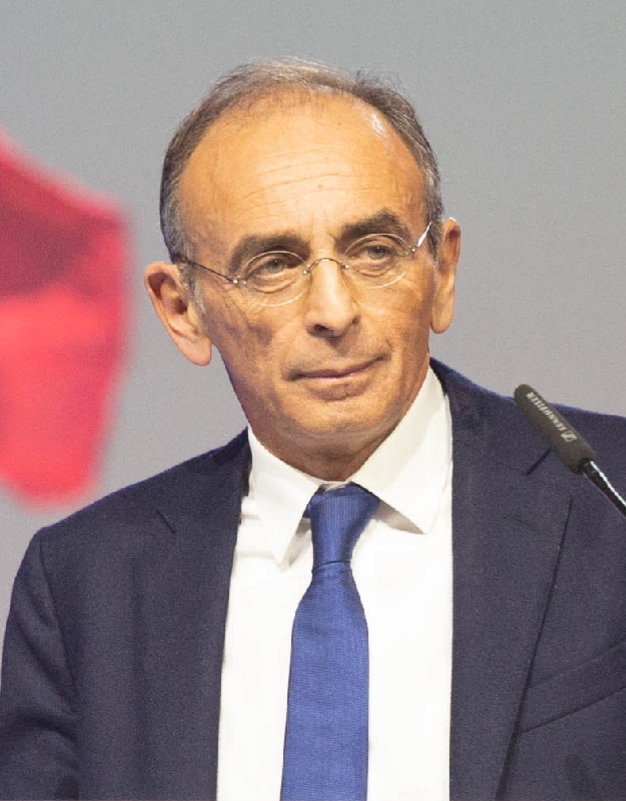


 A fascinating example of this process in action is Brian Reynolds Myers’s 2010 The Cleanest Race: How North Koreans See Themselves and Why It Matters. I bought the book some months ago because I was led to believe it was a sober exploration of morality-based racial ethnocentrism and, in the context of Kevin MacDonald’s work on the formation of moral in-groups among Whites, I was keen to compare and contrast his findings with another ethnic group. Myers’s