The January 6 Capitol Protester Prosecutions: Punishing Thought Crimes and Eroding Freedom of Assembly

Freedom-loving Americans have myriad reasons to be alarmed by the Department of Justice’s ongoing dragnet prosecutions of the Jan 6 Capitol protestors. Foremost among them, perhaps, is why many of these defendants are being prosecuted at all.  Copious first-hand testimony and abundant videos available to the public — and the government has many more videos never publicly disclosed — show the Capitol police allowing many polite and unarmed so-called “rioters” into the Capitol, where they caused no harm.  Are some of these now defendants? Moreover, a robust interpretation of the First Amendment’s “right of the people peaceably to assemble and to petition the Government for a redress of grievances” arguably protects some of the defendants’ actions.

Other troubling issues raised by the DOJ’s prosecutions include why the government has dedicated such immense resources to the prosecutions; why it has made such aggressive use of informants and secret FBI agents; why it has used shock and awe methods to effect arrests; and its inhumane treatment of the Jan 6 defendants while in pretrial detention. These are traits of a police state.

A further disturbing issue is the government’s — and unfortunately the courts’ — rationale for denying bail to many of the Jan 6 defendants, a rationale that glosses over Constitutionally critical distinctions between punishing conduct and punishing thought.  The District of Columbia Court of Appeals’ recent decision in United States v. Timothy Hale-Cusanelli  is a case in point.

Before discussing Hale-Cusanelli, a little background is appropriate on the Supreme Court’s cases addressing the Constitutionality under the First Amendment of punishing persons for “hate.”  In its 1992 R. A. V.  v.  St. Paul decision, the Supreme Court struck down on First Amendment grounds a Bias-Motivated Crime Ordinance enacted by the City of St. Paul, Minnesota, that prohibited display of a symbol that “arouses anger, alarm or resentment in others on the basis of race, color, creed, religion or gender.”  The Court held the ordinance impermissibly punished disfavored viewpoints, i.e., imposed prohibitions on those who expressed disfavored views on “race, color, creed, religion or gender” while permitting displays containing abusive invective that did not address those topics. By contrast, a year later in Wisconsin v. Mitchell the Court upheld a penalty enhancement law that increased the penalties for certain specified crimes of violence if the defendant selected the victim because of the victim’s “race, religion, color, disability, sexual orientation, national origin, or ancestry.” The Court reasoned that judges have traditionally and properly considered a wide variety of factors in sentencing, including the defendant’s motive. The Court distinguished the R. A. V. case, holding that the ordinance in R. A. V. was explicitly directed at protected expression while the statute in Wisconsin was aimed at unprotected conduct. While acknowledging “a defendant’s abstract beliefs, however obnoxious to most people, may not be taken into consideration by a sentencing judge,” it held the First Amendment does not prohibit evidentiary use of speech to prove motive or intent.

Against this background, consider the following facts about Timothy Hale-Cusanelli:

  • On January 6, 2021, he traveled to Washington to attend the “Stop the Steal” rally.
  • He had worked as a private security guard with a security clearance and was a sergeant in the army reserves with no incidents of violence or dereliction of duty.
  • He wore a suit and tie and did not bring any weapon.
  • He eventually made his way to the Capitol, where he entered through doors that had already been kicked open.
  • He later admitted to a Confidential Human Source (”CHS”), who secretly recorded their conversations, that he had participated in the events on January 6, specifically that he had used voice and hand signals to urge others to “advance.”
  • In a recorded conversation with the CHS, Hale-Cusanelli stated that it was “only a matter of time” before a civil war broke out “along partisan lines” and that he “really wishes” there would be a civil war. When the CHS interrupted and said “but a lot of people would die,” Hale- Cusanelli replied “Thomas Jefferson said the tree of liberty should be refreshed with the blood of patriots and tyrants.”
  • On January 29, 2021, he was indicted on seven counts involving trespass and disorderly conduct in connection with the events of January 6.
  • After his arrest, the government interviewed 44 of his coworkers, and 34 of them described him “as having extremist or radical views pertaining to the Jewish people, minorities, and women.”
  • Prior to January 6, he used a YouTube channel to upload a series of videos under the name “Based Hermes Show.” In the videos, he expressed views that the government characterized as racist and anti-Semitic.
  • The government found on Hale-Cusanelli’s cell phone a photo of him with a Hitler mustache and haircut.
  • The only arrest on his record occurred in 2010 when he was arrested with three other codefendants after one of them used a homemade PVC launcher (i.e., a potato gun) to fire frozen corn cobs at a home, in a dispute over a stolen bicycle, causing minor damage. Everyone in the house was white. The potato gun, however, had written on it “white is right” and a drawing of the confederate flag.
  • On March 23, 2021, the District Court denied bail to Hale-Cusanelli, thus keeping him in pretrial detention, after ruling he was “dangerous” within the meaning of the Bail Reform Act, i.e., “no condition or combination of conditions will reasonably assure . . . the safety of any other person and the community.”
  • The District Court acknowledged that were it ”just looking at what [Hale-Cusanelli] did on January 6, he would be a free man right now.” Nonetheless it ruled him dangerous and denied bail based, essentially, on three factors:  the potato gun incident; Hale-Cusanelli’s “history of racist and violent language” including his statements about a civil war and his quotation from Jefferson;  and concern that he might seek retribution in some way against the CHS.
  • After an appeal, on July 7, 2021, the District of Columbia Court of Appeals affirmed the District Court’s denial of bail based on Hale-Cusanelli’s “dangerousness.”

What is wrong with the District Court’s decision and the appellate court’s affirmance?  Plenty.

First, the government’s and courts’ use of the potato gun incident would be laughable if it were not appalling. Not much cynicism is required to see it as an ignominious instance of the extreme lengths to which the government will go to prosecute persons whose views it finds unacceptable.

Second, none of the District Court’s three grounds for denying bail had any direct relationship to the trespass and disorderly conduct charges for which Hale-Cusanelli was arrested.  His case, accordingly, differs markedly from the Wisconsin case in which the Supreme Court upheld penalty enhancement for violent crimes committed with racist motives. Hale-Cusanelli’s case is much more like the R. A. V. case, in which the Supreme Court disapproved punishing persons for their abstract beliefs. The rationale of the Hale-Cusanelli decision improperly allows the government to arrest a person on innocuous charges involving no violence, e.g., trespassing, employ its massive resources to ferret out the person’s disfavored views, then hold him in pretrial detention indefinitely based not on his conduct but on the “dangerousness” of those views — in other words, to punish him for his abstract beliefs.

Third, just what is so “dangerous” about Hale-Cusanelli’s views, which the government with great effort uncovered after employing a CHS, interviewing 44 of Hale-Cusanelli’s coworkers, and going through his computer and cell phone? That civil war is inevitable and may be desirable? There are probably millions across the political spectrum who agree with that sentiment. Suppressing such views does not abate, at least not for long,  the divisive forces at work in the country.  One may grant that posing in a photograph with a Hitler mustache and haircut is eccentric and unsavory, but is he to be imprisoned indefinitely for being an unsavory eccentric?  And is quoting Jefferson now “dangerous”?

Finally, it bears emphasis that Hale-Cusanelli has suffered greatly for his expression of views that are protected under the First Amendment. Do not be misled by the euphemistic “pre-trial detention.”  He is behind bars just as though he had been convicted and sentenced to prison.  In fact, his punishment is more severe: in many federal prisons there is at least a semblance of humane conditions — libraries, gymnasiums — rarely found in pretrial detention. And if Hale-Cusanelli is acquitted — which he may be — he has no realistic hope of compensation for the de facto prison time imposed on him.

This kind of governmental overreach should not be happening in America or any country that respects basic civil liberties, and FEF strongly condemns it.

By Glen K. Allen, Esq., attorney for The Free Expression Foundation, Inc. (“FEF”), a 501c3 nonprofit.  Support for FEF’s efforts to protect free expression and freedom of assembly are greatly appreciated and much needed.  Contact:  Freeexpressionfoundation.org; 800-979-8891.

Blacks, Books and Bedlam: What Jews Did to South Africa They’re Now Doing to America

Steven Pinker (born 1954) is the Jewish academic whose scientific acumen enabled him to dismiss Kevin MacDonald’s books without taking the trouble to read them. Well, he got that wrong, and he got something else wrong, as I saw when I read an anodyne discussion between him and Richard Dawkins from 2008. According to Pinker, reading “just appeared too recently in human evolutionary history for it to have left its mark on the genome.”

Genes for literacy

Contra Pinker, five-and-a-half millennia are more than enough time for such a radical innovation to leave its mark on the genome. That’s how long, at minimum, reading and writing have been part of human culture. But some groups of human have been literate far longer than others. In parts of sub-Saharan Africa, literacy arrived only in colonial times, but in the Middle East and China selective pressure for literacy may have been at work for millennia. As Ron Unz has described, the sophisticated, literate but sink-or-swim culture of ancient China had obvious evolutionary implications. Those who did well had more children; those who didn’t often starved. But doing well meant mastering the complex and finely detailed Chinese writing-system — those who could master it were able to move into lucrative positions in the civil service, complete with wives, concubines, and many children. So the Chinese may well have acquired genes that improve their ability to read Chinese.

Complex and finely detailed: the Chinese writing-system

Elsewhere in the world, different writing systems may have had different selective effects and favoured different genes—see Peter Frost’s fascinating discussion of the Visual Word Form Area (VWFA), for example. Steven Pinker may not simply be wrong about the invisibility of “reading” in the human genome, but multiply wrong: it may be visible in different ways in different regions. However, reading could well be invisible in the genomes of groups like Blacks, Amerindians, and Aborigines, who have not been literate long enough to experience its selective effects. Accordingly, the failure of Blacks in European societies may be due not only to their lower average intelligence and higher average criminality, but also to their lower average literability (as we might call the ability to master reading and writing and the complex argumentation that they enable).

Rapaciousness and rape

It’s easy to see the unimportance of books in Black culture. Rap music celebrates rapaciousness and rape, not reading. And the recent riots by Blacks in South Africa have provided a tragicomic echo of the riots by Blacks in England in 2011. Back then, Blacks expressed their deep pain at injustice by committing murder, setting fire to buildings, and looting shoes, clothes, and shiny technology. But they left bookshops mostly untouched. Ten years on, their co-ethnics in South Africa have expressed their pain at injustice in the same way:

More than 300 people have been killed and more than 50 schools in KZN [KwaZulu-Natal] have been ransacked; thousands of shops, including big, insured, white-owned supermarkets and small, uninsured, black-owned stores, have been destroyed; pharmacies and clinics have been attacked and trucks and buses have been set on fire. The main motorway from Johannesburg to Durban is often simply closed. The damage now amounts to billions of rand. Only bookshops seem to have escaped the looters, which might tell us something. (The real reasons for South Africa’s riots, The Spectator, 31st July 2021)

It does tell us something: that books don’t matter to Blacks. But books matter hugely to the group whose intellectual and ideological magic transformed the gold of White-run South Africa into the dross of Black-run South Africa. Ashkenazi Jews like Joe Slovo, Denis Goldberg and Helen Suzman were central to the heroic struggle against racism and Apartheid. They supplied the intellect and ideology for the unintelligent but charismatic Nelson Mandela and his Black comrades.

Success as a scholar

Blacks are not bookish, but Jews are famous for their devotion to books and their success as academics, journalists, and publishers. As Kevin MacDonald has noted of medieval Jewish culture in Europe: “success as a scholar was valuable because it allowed the scholar to contract a desirable marriage, often to a woman from a wealthy family. At the very center of Judaism, therefore, was a set of institutions that would reliably result in eugenic processes related to intelligence and resource acquisition ability.” Even as the Jew Steven Pinker was denying that reading had left a “mark on the genome,” his own genome may have borne marks of selection for literacy.

Joe Slovo with Nelson Mandela

The same is true of the Ashkenazi Jews who fought with Blacks to end White rule in South Africa. And so very bookish Jews put very unbookish Blacks in charge of an advanced industrial society. The results were entirely predictable:

In 1994 the ANC [African National Congress] inherited the strongest economy in Africa, with excellent infrastructure, including cheap, reliable electricity. [In 2021] the ANC has wrecked it all. We have continual blackouts; the passenger railways are crumbling into ruin; most of the municipalities are dysfunctional, with appalling water supply and sewage running in the streets; South African Airways is bankrupt; the economy is crippled; deep poverty is widespread, and unemployment is at 43 per cent (including many who have given up looking for work). This tragedy has been caused by systematic corruption, a bloated government, ruinous racial laws and a relentless assault on private enterprise. Violent crime alarms the rich and terrifies the poor. (The real reasons for South Africa’s riots, The Spectator, 31st July 2021)

The Greek scientist, mathematician, and engineer Archimedes was one of the greatest geniuses in history and understood the huge power of levers and of limited force applied in the right way. He is reputed to have said: “Give me a place to stand and I will move the world.” But levers exist in a sociological sense too. Jews were a tiny minority in South Africa, but they used levers of ideology, rhetoric and finance to move the vast and hugely successful society of White South Africa—and drop it over a cliff.

Straight from the Hebrew’s mouth

Jews are now using the same levers to move the even vaster and more successful society of White America. And with the same intent: to drop it over a cliff. You don’t have to take just my word for that. I’m a rabid and irrational anti-Semite, after all. But you can have a similar assessment of Jewish nation-wrecking in America straight from the Hebrew’s mouth, as it were. The bookish Jew David Cole has published an article called “The Dysgenic Duo” at TakiMag. The duo are the same as they were in South Africa, namely, Jews and Blacks:

There’s a core of the Jewish American community that will never stop being “revolutionary.” They may do it from a street corner with a bullhorn, or from the safety of a tenured professorship, or from a Hollywood studio, or from the comfort of their own home writing checks to the DNC or a Soros PAC, but it’s a trait that’s continually passed down, generation to generation. They may not even know what they’re “revolting” against or why; but consciously understood or not, the target’s always going to be stability, “the system,” as best represented by white Western civilization. …

Just as there’s a core of Jews who’ll never stop being revolutionaries, there’s a core of blacks who’ll never stop being criminals and underachievers. I’m not talking about all blacks. But at the core of the community exists an unsalvageable rot — low IQ, low impulse control, high criminality.

That core of blacks will always give that core of Jews the conduit for their revolutionary compulsions. The worst of the worst of the present-day anti-West Jews, like Soros, don’t give a damn if a Chinaman is imprisoned in a U.S. jail. Or an Indian. Or even, frankly, a [beaner]. Because those groups, even with all the immigration pushed for by leftist Jews, would fundamentally change America but not sink it as an entity. Don’t get me wrong — they’d change it in a bad way. An Asianized America (an America with a British Columbia-level Asian percentage) would no longer be America. But it would function. A Hispanicized America would no longer be America. But it would function (poorly). But a black America would fail on its own because that particular group always needs someone else to do the math and grow the food and create the jobs and treat the sick. …

It’s a symbiotic relationship; blacks who could never achieve that level of dominance, of importance, on their own, and Jews who channel their revolutionary desires through a hopeless people who give them permanent surrogates. The two groups don’t have to like each other (and they don’t), but they both profit from the relationship. (The Dysgenic Duo, TakiMag, 20th July 2021)

Susan Rosenberg, Jewish brains behind BLM

Cole calls the Black-Jewish alliance “symbiotic,” from the Greek syn-, “together,” and bios, “life.” But the symbiosis is causing thousands of unnecessary deaths among Blacks, as police step back from doing their jobs in Black districts and Black criminals grow ever more violent and impulsive. Black Lives Matter (BLM) is a death-cult for Blacks driven, like the ANC, by bookish Jewish brains. Working at the heart of BLM is a Jewish woman called Susan Rosenberg.

How have unintelligent Blacks done it?

Millions of Whites oppose BLM, recognize the inadequacies of Blacks, and are dismayed by the increasingly shrill and malevolent anti-Whiteness of the equity-industrial complex. But how many of those Whites have heard of Susan Rosenberg and know about the central Jewish role in anti-White ideologies like Critical Race Theory (CRT)? Not enough of them. Our role, therefore, is to educate those unaware Whites and point out an anomaly that is staring them in the face. If Blacks are so inadequate and intellectually undistinguished, how have they managed to create so much turmoil and angst in advanced Western societies? Why are the media and other institutions worshipping Blacks so fervently and making such absurd excuses for their misbehaviour?

The Black-Jewish alliance: Jerry Nadler with Maxine Waters

The answer is simple, as David Cole has pointed out at TakiMag. It wasn’t Blacks on their own who did all that. It was much more intelligent and Machiavellian Jews. In fact, Jews have been allying with Blacks since early in the last century and  were instrumental in the Civil Rights movement (CofC, 255–56). The same applies to non-Black Muslims in countries like Britain and France. They too are of low average intelligence and accomplishment, but they too benefit from minority worship and commit horrific crimes against Whites with the complicity—and even the collaboration—of the authorities. Muslims didn’t achieve this cultural elevation and criminal privilege on their own. Once again Jews have been their allies. Indeed, you can find many examples of Jews explicitly proclaiming that “Jews and Muslims are natural allies.”

“Natural allies” against whom? Against Whites, of course. Jews also see themselves as the natural allies of Blacks against Whites. That is what too many Whites presently fail to see. They might see the smaller truth about the low intelligence and high criminality of Blacks and Muslims, but they don’t see the larger truth of how Jews are using Blacks and Muslims as weapons against White Western civilization. However, the more Blacks and Muslims misbehave, the more obvious the larger truth will become. And then Jews will be brought to book for the bedlam they’ve created.

Jewish “Anti-Semitism”

Some of the worst atrocities committed against Jews were by other Jews. In particular the Jewish power elite have inflicted heinous violence and death on the Jewish masses, though other infighting and control dramas amounting to pogroms and terrorism are part of Jewish history as well. By no means exhaustive, we will review just some of the “anti-semitism” Jews have committed against their own kind.

The Levite Priests

When the ancient Hebrew patriarch Moses descended from Mt. Sinai, having received the Ten Commandments from the Hebrew tribal god Yahweh, he found his people straying from their faith and worshipping a golden calf under the leadership of Aaron. Such idolatry was not permitted by Yahweh, and Moses was commanded to enact vengeance on the idolators.

Those who were faithful among the Hebrews gathered with Moses and received their instructions. They took up swords and spears and went among the wayward people, slaughtering men, women and children. They even murdered some of their own immediate family members and close clan kin.  3,000 blasphemous Hebrews were slaughtered. These were the Levis, Moses’ own clan, especially zealous vengeful slaughterers.

Afterward, Yahweh through Moses rewarded the Levis for their faith and devotion in carrying out Yahweh’s vengeance, and bestowed on them a spiritual leadership over all the Hebrews. These became the Levite Priests. Their cruelty, deceit, blood-lust and terrorism over the Hebrews and others they encountered went on to become legend. Whether this story is itself legend or contains historical fact, it is undeniably a case of Jewish “anti-semitism”. 

Radicals vs. Moderates. Kevin MacDonald writes: 

Zionism is an example of an important principle in Jewish history: At all the turning points, it is the more ethnocentric elements—one might term them the radicals—who have determined the direction of the Jewish community and eventually won the day.3 As recounted in the Books of Ezra and Nehemiah, the Jews who returned to Israel after the Babylonian captivity energetically rid the community of those who had intermarried with the racially impure remnant left behind. Later, during the period of Greek dominance, there was a struggle between the pro-Greek assimilationists and the more committed Jews, who came to be known as Maccabeans.

At that time there appeared in Israel a group of renegade Jews, who incited the people. “Let us enter into a covenant with the Gentiles round about,” they said, “because disaster upon disaster has overtaken us since we segregated ourselves from them.”

The people thought this a good argument, and some of them in their enthusiasm went to the king and received authority to introduce non-Jewish laws and customs. They built a sports stadium in the gentile style in Jerusalem. They removed their marks of circumcision and repudiated the holy covenant. They intermarried with Gentiles, and abandoned themselves to evil ways.4 The victory of the Maccabeans reestablished Jewish law and put an end to assimilation.

 The Pharisees and Jesus

It’s hard to know whether this example is mythology or history, though devout Christians would insist it happened literally as described. Either way, Jewish “anti-Semitism” is deeply codified in the Christian religion.

If Jesus truly existed as an historical person, he was most likely a Jew, or more properly a Hebrew or Israelite, descended from King David. Jesus began his ministry at age 30, and it included deposing the ‘money changers’ from the temple, and challenging the authority of the Sanhderin council, a body of Hebrew or Israelite leaders that today we would call Jews. The ‘money changers‘ were certainly what we would call Jews as well.

The Sanhedrin council arranged for Jesus to be apprehended by the Romans. When the Romans gave the crowd—mostly Jews—the option to crucify Barabas or Jesus, Sanhedrin agents in the crowd incited it to condemn Jesus, and so he was crucified and apparently killed by the Romans. This is one of the more flagrant cases of Jewish “anti-semitism”, since certain Jews—the powerful Sanhedrin—oversaw the brutal torture and execution of another Jew, Jesus the Nazarene. Whether this is mythological, historical or some combination is irrelevant to our theme: Jew-on-Jew hate.

Jacob Frank

This son of a Rabbi was one of the most depraved madmen of all time. He declared himself the reincarnation of the Jewish Messiah, and many other Jews were willing to recognize this and follow him. Frank interpreted a verse from the Talmud to mean that if all Jews were to become sinners, the prophecy of the Jewish paradise on Earth would ensue.  Talmud Sanhedrin 98a states “The Son of David (Jewish Messiah) will come only in a generation that is entirely innocent… or in a generation that is entirely guilty…”So Jacob Frank set about enacting evil in the most grotesque ways, engaging in incest, sodomy, polygamy, orgiastic rituals, providing his own wife (or both of them) to his followers for sexual sport, and other depravities in order to create the entirely guilty generation.


We have two different accounts of the story from there. One says his perversion and depravity became known to other local Jews, and they excommunicated him and his followers, banishing them from the Polish town. One reason they did this was because the Frankists were burning Talmuds and accusing the other Jews of blood libel, conducting occult rituals by torturing children to death and drinking the blood and anointing their bodies with it.  Another account says that after their excommunication, the Frankists sought refuge with the Catholic Church. In exchange, the Church required the Frankists to denounce their fellow Jews by burning their Talmuds and accusing them of blood libel. Either way, this was a case of vicious Jewish in-fighting. Jewish “anti-semitism” was inflicted in both directions. 

The SS Patria

On November 25, 1940, the SS Patria, a passenger ship operated by the British was prepared to leave Haifa harbor in Palestine enroute to Mauritius. Too many Jewish “refugees” from the beginning of World War II in Europe were coming to Palestine illegally, and the British were trying to prevent Arab unrest due to excessive Jewish illegal immigration into Palestine. The Rothschild bankers and other Jewish Zionist zealots at the time were eager to place more Jewish residents in Palestine in preparation for declaring their new state of Israel. Zionists had even arranged a deportation plan with the National Socialist government of Germany called the Haavara or Transfer Agreement, where Germany could rid itself of troublesome Jews in an orderly fashion, and Zionists could increase their stocking of Palestine with Jews.

However, the British refused to allow the up to 1800 Jewish “refugees” on the Patria to stay in Palestine. but before it could depart for Mauritius, a bomb exploded at the water line, blowing a six-meter hole in the hull and sinking the Patria in the shallow port. About 270 passengers were killed, mostly Jews though including around 50 British crew members.

At first authorities and media blamed Arabs for the bombing, then later declared that the passengers themselves detonated the bomb, so committed were they as Jews to remain in Palestine that they would risk their own lives rather than let the British deport them. Much later, in 1957, the man who actually placed the bomb, Munya Mardor, wrote a confession of his crime, claiming that there was no intention to sink the ship, only to disable it. But obviously, the project entailed severe risks to other Jews that he, as a member of the Zionist terrorist organization Haganah, was willing to take. It also emerged that another Jewish terror group, the Irgun, had tried to place a bomb a few days prior, but failed. Irgun became today’s Likud party in Israel. Mardor eventually became the director general of the Israel Weapons Research and Development Authority. Jewish terrorists and mass murderers are promoted for their service.

Mardor’s Haganah officer in charge was Yitzak Sadeh, who was in turn under the command of the Jewish Agency’s Political Department head Moshe Sharett. Sharett went on to become Israel’s second Prime Minister after David Ben Gurion, who was the official head of the Jewish Agency at the time, but was away in the US on other terrorist business.[1]

This act left hundreds of Jews dead at the hands of other Jews. The death of innocent British crew members doesn’t factor into the analysis. The placement of European Jews into Palestine was a fundamentalist goal of Zionist Jews, and the deaths of hundreds of other Jews was an acceptable sacrifice to ensure it.

Rabinnical “Anti-Semitism”

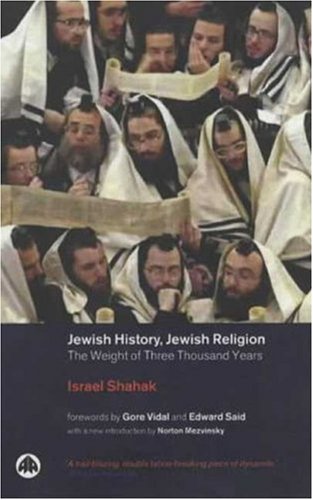
A great deal can be written on the brutality and cruelty Jewish Rabbis have inflicted on their own Jewish populations, mainly in order to control them, including strict isolation from other liberating influences. Here we will take only a few examples from the iconic insider analysis by Israel Shahak, Jewish History, Jewish Religion, the Weight of 3000 Years:

In the period 1500-1795, one of the most superstition-ridden in the history of Judaism, Polish Jewry was the most superstitious and fanatic of all Jewish communities. The considerable power of the Jewish autonomy was used increasingly to stifle all original or innovative thought, (and) to promote the most shameless exploitation of the Jewish poor by the Jewish rich in alliance with the rabbis…[2]

The Jewish religion Judaism established from the beginning a totalitarian mind control over its adherents/victims resulting in subjection to Rabinnical authority:

According to (Rabbi) Hadas, a crucial feature of the Platonic political system, adopted by Judaism as early as the Maccabean period (142–63 BC), was ‘that every phase of human conduct be subject to religious sanctions which are in fact to be manipulated by the ruler’. Judaism adopted what ‘Plato himself summarized [as] the objectives of his program’, in the following well-known passage:”
‘The principle thing is that no one, man or woman, should ever be without an officer set over him, and that none should get the mental habit of taking any step, whether in earnest or in jest, on his individual responsibility. In peace as in war he must live always with his eyes on his superior officer. … In a word, we must train the mind not to even consider acting as an invidual or know how to do it. (Laws, 942 ab)’
If the word ‘rabbi’ is substituted for ‘an officer’ we will have a perfect image of classical Judaism. The latter is still deeply influencing Israeli-Jewish society and determining to a large extent the Israeli policies.[3]

Rabbis had been in the habit of killing Jews who departed from strict Talmudic doctrine. One wayward Jew was boiled alive in the public baths.

In the late 1830s a ‘Holy Rabbi’ (Tzadik ) in a small Jewish town in the Ukraine ordered the murder of a (Jewish) heretic by throwing him into the boiling water of the town baths.

Other Jews were poisoned to death by their Rabbis. Kevin MacDonald notes:

During 1848, when the (Austrian) regime’s power was temporarily weakened, the first thing the leaders of the Jewish community in the Galician city of Lemberg (now Lvov) did with their newly regained freedom was to poison the liberal rabbi of the city, whom the tiny non-Orthodox Jewish group in the city had imported from Germany.[4]

These groups were highly authoritarian—another fundamental feature of Jewish social organization.32 Rabbis and other elite members of the community had extraordinary power over other Jews in traditional societies—literally the power of life and death. Jews who informed the authorities about the illegal activities of other Jews were liquidated on orders of secret rabbinical courts, with no opportunity to defend themselves. Jews accused of heretical religious views were beaten or murdered. Their books were burned or buried in cemeteries. When a heretic died, his body was beaten by a special burial committee, placed in a cart filled with dung, and deposited outside the Jewish cemetery. In places where the authorities were lax, there were often pitched battles between different Jewish sects, often over trivial religious points such as what kind of shoes a person should wear. In 1838 the governor of southwestern Russia issued a directive that the police keep tabs on synagogues because “Very often something happens that leaves dead Jews in its wake.”33 Synagogues had jails near the entrance, and prisoners were physically abused by the congregation as they filed in for services.

Conclusion

Kevin MacDonald describes the basic dynamic of division within the Jewish community:

  • Zionism began among the more ethnocentric, committed segments of the Jewish community (1880s).
  • Then it spread and became mainstream within the Jewish community despite its riskiness (1940s). Supporting Zionism comes to define what being Jewish is.
  • Then the most extreme among the Zionists continued to push the envelop (e.g., the settlement movement on the West Bank; constant pressure on border areas in Israel).
  • Jewish radicalism tends to result in conflicts with non-Jews (e.g., the settlement movement); violence (e.g., Intifadas) and other expressions of anti-Jewish sentiment increase.
  • Jews in general feel threatened and close ranks against what they see as yet another violent, incomprehensible manifestation of the eternally violent hatred of Jews. This reaction is the result of psychological mechanisms of ethnocentrism: Moral particularism, self-deception, and social identity.
  • In the U.S., this effect is accentuated because committed, more intensely ethnocentric Jews dominate Jewish activist groups.
  • Jews who fail to go along with what is now a mainstream position are pushed out of the community, labeled “self-hating Jews” or worse, and relegated to impotence.

We have reviewed only some of the many acts of Jewish “anti-Semitism” in history. Certain Jews, mostly the ruling elite, have inflicted heinous death and torment on other Jews—a testament to their fanaticism, authoritarianism, and powerful sense of collectivism. The Jewish community has often been divided, with the more deeply committed, ethnocentric, and fanatical Jews forcing others to conform to their way of seeing things or separating themselves from the rest. And at all the major turning points in history, the radicals have won the day in conflict with their less ethnocentric brethren, quite likely leading to genetic selection for ethnocentrism within the Jewish community.

In general, in the last few centuries at least, the more ethnocentric White people in Western countries have not been victorious. The West is far more prone to individualism than any other culture area, but there is certainly variation among us for ethnocentrism, although we have not been under centuries of selection for ethnocentrism, as have the Jews. Quite the opposite. But the bottom line is that the Zionists were successful, and we have to think about what that means for us. Israel would not have become a state without a great many deeply ethnocentric Jews willing to engage in any means necessary to bring about their dream: a state that would be a vehicle for their ethnic interests. It would not have come about without the most radical among them—people like Vladimir Jabotinsky, Menachem Begin, Yitzhak Shamir, Ariel Sharon, and groups like Haganah and Irgun. And although there have been American Jews, especially in the early decades of the twentieth century, who vigorously rejected Zionism, the vast majority of the organized American Jewish community is now intensely Zionist and doing all they can to support Israel, even as it’s become obvious that Israel is an apartheid state energetically engaged in ethnic cleansing–while at the same time working to accuse the White majority of racism if they resist their dispossession.

The impending dispossession of Europeans will only be avoided if people with the same level of dedication and ethnocentrism as found over the centuries among Jews can be found among the political and activist class of Europeans. Just as the radical Jews have been willing to push their less radical brethren out of the Jewish community, we must be willing to do the same.

_____

[1]     Ryan Dawson, “This day in History Jewish terrorists sank ship full of Jewish refugees”, November 26 2017, Anti NeoCon Report,   https://www.ancreport.com/day-history-jewish-terrorist-sank-ship-full-jewish-refugees/

[2]     Ibid, p. 54

[3]     Ibid, p. 14

[4]     Ibid, p. 18

A teoria crítica da raça: uma arma do arsenal intelectual judeu

Não se enganem sobre isto: nós continuaremos a atacar os homens brancos, os vivos e os mortos, e também as mulheres brancas, até que o constructo social chamado de “raça branca” seja destruído não “desconstruído”, mas destruído.
(NOEL IGNATIEV. In: Race Traitor)

A promoção dos “Estudos da Branquidade” deve ser percebida como nada menos do que ato de extrema agressão, violento até, contra a raça branca.
(ANDREW JOYCE. In: Whiteness Studies)

Para ser efetiva, a engenharia social deve passar despercebida.
(MICHAEL JONES. In: Logos Rising)

No começo deste ano, meu irmão propôs-me, subitamente, uma questão: “O que é a teoria crítica da raça?”. A pergunta me deixou entusiasmado, porque provava que essa perniciosa teoria genocida e antibranca estava começando, finalmente, a entrar no radar da consciência dos brancos. Desde o dia da interrogação que fez o meu irmão, pulularam como cogumelos as histórias sobre a Teoria Crítica da Raça (TCR), com muita crítica a essa tendência intelectual antes tão misteriosa.

Entretanto, a hora do espanto foi quando observei que ninguém ou quase ninguém dos tais críticos havia associado a TCR ao ativismo étnico judeu.

Embora a teoria já tivesse aceitação desde longa data nos círculos universitários, ela agora penetra ambientes corporativos e governamentais, insinuando-se também no meio militar, onde passou a ser promovida desde que Joe Biden tomou posse como presidente. Quanto a mim, não de hoje sei desse fato que é a ligação da TCR com a “elite hostil”, para quem a teoria é ferramenta de engenharia social. Na nomenclatura sociológica de The Occidental Observer, a expressão “elite hostil” designa os poderosos judeus e organizações judias que controlam os Estados Unidos e a maior parte do Ocidente. De modo geral, entretanto, os nossos escritores tratam o tema da TCR de perspectiva diversa, fazendo-o sob a influência dos chamados “Estudos da Branquitude”. Ao contrário deles, eu relaciono a “Teoria Crítica da Raça” com a atual discussão sobre a guerra étnica que os judeus movem contra os brancos.

A TCR, na verdade, enquadra-se perfeitamente no que Kevin MacDonald chama de “Cultura da Crítica”, uma categoria na qual figuram os “gurus” judeus que verbalizam o ataque talmúdico com o objetivo principal de completar a destruição dos gentios ― literalmente! Eu sei disso porque estive muito próximo do palco onde se representava a farsa que foi a introdução da TCR nas escolas de pós-graduação nos anos noventas, quando vivi a infelicidade de ter um farsante desse tipo de dramaturgia como meu “professor”. O espetáculo brutal de que participei teve o lado positivo de me permitir sondar e conhecer mais profundamente os seus produtores judeus. Com efeito, terminada a triste representação, senti que tudo fora para mim duro processo de aprendizagem, mas valeu a pena: agora eu posso compartir com os meus leitores as lições que aprendi.

Eu vou começar a contar essa história falando de um escritor australiano, agora obscuro, chamado  Robert Hughes (1938–2012), que já foi descrito como “o mais famoso crítico de arte do mundo”. Em 1993, saturado de tanta política identitária, ele publicou o livro Culture of Complaint: The Fraying of America [Cultura da denúncia: a desintegração dos Estados Unidos], pela Editora da Universidade de Oxford. Nesse livro, ele atacou frontalmente a Indústria das Queixas, então em vertiginosa ascensão, dando exemplos e mais exemplos de como grupos militantes minoristas, sobretudo de mulheres e negros, atribuíam todo tipo de pecado à minoria branca, contra quem falavam mais do que o homem da cobra, hostilizando-a por meio de espúrias denúncias judiciais e manifestações de rua. Eu me lembro de que o livro dele atraiu bastante a atenção da imprensa da época, com muitos jornais tomando o partido do autor australiano, tal era a insatisfação com a “cultura da denúncia”.

O que me deixou frustrado, entretanto, foi o fato de o estudo de Hughes não haver ido além da própria denúncia, o fato de ele não ter conseguido aprofundar sua análise para chegar ao nível do que se pode chamar de “metadenúncia”, substrato de onde partem todas as denúncias como simples consequências. Por exemplo, Hughes não percebeu que a narrativa do Holocausto obteve tanto sucesso como meio de favorecer os interesses judeus que outros grupos ficaram ansiosos para também gozar do mesmo artifício tão interessante.

Em 1993, a indústria da denúncia começava a gostar do jogo e crescia para logo depois acabar dominando tudo, tanto que já na minha “pós-graduação” tive de suportar a experiência horrível que referi acima. Então se passou que a simples denúncia foi ganhando vulto, foi se tornando coisa muito mais perniciosa, muito mais ameaçadora. Desde sempre, porém, o sentido das denúncias era um só: combater a raça branca.

Depois de muito sofrimento, finalmente terminei a pós-graduação, muito abalado emocionalmente, muito judiado, mas com o diploma na mão. Almas mais robustas dirão que, se não morri, então devo engordar, mas já apanhei demais e não vou bancar o fanfarrão. Ao contrário, tento ser discreto e trabalho aturadamente, fazendo o que posso para manter a resistência. O jogo do judeu é bruto, e eles não aceitam perder.

Alguns anos depois, eu me empenhava com afinco na elaboração de alentado trabalho versando acerca do poder judaico nos Estados Unidos. Nessa ocasião, um professor de história, formado em Harvard, com título de Ph.D., me aconselhou a “dar a devida atenção ao trabalho de Kevin MacDonald”. Eu fiz isso — e a experiência de ler Kevin MacDonald mudou a minha vida. A trilogia deste autor, culminando com The Culture of Critique: An Evolutionary Analysis of Jewish Involvement in Twentieth-Century Intellectual and Political Movements, caiu do céu para mim, quando mais eu precisava; a partir daí, eu estava pronto para dar a devida atenção ao que o Mestre tinha a dizer.

Logo de cara, eu percebi a semelhança entre o título do livro de Hughes (Culture of Complaint) e aquele do livro de MacDonald (Culture of Critique), mas o livro de MacDonald tem muito mais importância do que o de Hughes, porque MacDonald foi mais feliz ao centrar o foco do seu estudo, precisamente, no judeu. Na verdade, se os brancos sobreviverem à guerra étnica descrita por MacDonald, The Culture of Critique fará o seu autor figurar no panteão da civilização ocidental. Então as futuras gerações de brancos conhecerão o nome de Kevin MacDonald como o de um semideus, herói de sua raça, e ele a todos parecerá alguém da própria família, assim apresentado desde as lições escolares de História. Amém.

Aqui eu suponho que o nosso leitorado conheça o básico do Culture of Critique e do livro posterior, Cultural Insurrections, assim eu já salto à frente para referir outras realizações e enfrentamentos subsequentes de nosso herói. A ciberteca The Occidental Observer é criação dele. O TOO teve origem como rebento da publicação anterior denominada The Occidental Quarterly, uma revista digital acadêmica. Anteriormente, em 2008, MacDonald tinha publicado um artigo intitulado “Promoting genocide of Whites? Noel Ignatiev and the Culture of Western Suicide”, no qual ele analisa os artifícios vocabulares desse professor judeu de Harvard, já falecido, usados para tornar mais sutil a expressão de sua vontade de exterminar brancos. Ignatiev foi o fundador da revista Race Traitor, que tem por divisa a caridosa frase “Trair o branco é ser leal à humanidade”. Este eslógão lembra, imediatamente, as palavras infames da judia Susan Sontag, ao escrever que

A verdade é que Mozart, Pascal, a álgebra booleana, Shakespeare, o governo parlamentar, as igrejas barrocas, Newton, a emancipação feminina, Kant, Marx, o balé de Balanchine e tutti quanti não redimem a civilização branca da desgraceira em que transformou a história do mundo. A raça branca é o câncer da humanidade […].

Situando a inteligente manipulação das palavras por parte de Ignatiev na categoria das ideologias judias desconstruídas no seu Culture of Critique, MacDonald escreveu:

Nossa interpretação é que as visões de Ignatiev resultam de competição étnica. Sendo um judeu esquerdista, ele é parte de uma longa tradição de oposição ao interesse e à identidade dos brancos — a  cultura da crítica, que se tornou a cultura do suicídio do Ocidente. E como sói acontecer com tantos judeus fortemente assumidos, seu ódio dos povos e da cultura do Ocidente aflora inflamado.

Recorrendo ainda às categorias constantes em Culture of Critique, MacDonald conclui que

Ignatiev é mais um intelectual judeu de longa série remontando a Franz Boas, à Escola de Francforte e a uma miríade de outros que agora mestreiam na  cultura suicida do Ocidente. Ele pode se chamar de traidor da raça, mas não faltam razões para acreditar na sua forte atitude de lealdade para com o seu próprio povo e de hostilidade para com o povo e a cultura do Ocidente, posturas de longa história típicas dos judeus altamente comprometidos consigo mesmos. Para ele, a traição da raça consiste em algo de fácil e natural ocorrência; trata-se do leite materno na formação de um judeu.

Como que por maldosa ironia do destino, o professor judeu que me atormentou durante a minha pós-graduação, como também fez com outros colegas brancos, tinha muitas semelhanças com Ignatiev, a começar pelo biótipo, mostrado na foto abaixo:

O judeu Noel Ignatiev (1940 – 2019) “ensinava” na Universidade da Pensilvânia que a solução final para os problemas sociais consistia no “extermínio da raça branca”.     (Créditos: Pat Greenhouse /Globe Staff.)

E quando MacDonald escreveu que “Gente como Ignatiev, sem dúvida de aguçada consciência de identidade e interesse étnicos, nunca mediu esforços para alcançar o objetivo de patologizar qualquer sentido de identidade e interesse étnicos dos povos europeus e euro-descendentes — e de nenhum outro”, ele indicava atributos que eu notaria em grau superlativo no professor-opressor da minha pós. Isso a que estávamos sujeitos nos anos noventas é o mesmo que se passa agora por imposição da TCR: os novos autos de fé — agora sutilizados, as leituras obrigatórias sobre o “privilégio branco”, a completa falta de contraditório ou debate ou questionamento. Nosso querido professor sujeitava à humilhação os meus colegas brancos, e eu tinha de assistir a esse triste espetáculo durante as “aulas”. Certa vez uma moça chegou a chorar, depois de repreendida de modo acabrunhante. Mulher chora mesmo — pode pensar o leitor malicioso, mas o doutrinador judeu conseguiu também marejar os olhos de estudante do sexo masculino, no maximante da minha indignação. O “curso” foi um horror.

Embora MacDonald não tenha empregado a expressão “teoria crítica da raça”, por referência ao assédio de Ignatiev, ele estava, de fato, tratando disso mesmo. Melhor ainda, MacDonald penetrou a falaciloquência de Ignatiev, devassando o seu real intento, coisa que outros fariam no TOO, desde então, seguindo o exemplo de MacDonald. Logo voltaremos a este ponto, mas antes eu gostaria de fazer uma rápida digressão para não perder a boa oportunidade.

O caso é o seguinte: quando eu trabalhava na redação da minha dissertação, depois de haver cumprido todos os créditos e sido aprovado nos exames, um outro professor judeu me deu um livro, o qual ele tinha recebido de alguém que dele esperava alguma eventual contribuição crítica. O professor não quis comentar nada e cedeu para mim o exemplar novinho, cuja capa era como mostramos abaixo:

Escrito em 1997 pelo professor de Direito Stephen M. Feldman, o livro, como visto, intitulava-se  Please Don’t Wish Me a Merry Christmas: A Critical History of the Separation of Church and State [Por favor, não me deseje feliz Natal: história crítica da separação entre a Igreja e o Estado]. A expressão “história crítica” no subtítulo já indicava que se tratava de mais um lançamento do projeto the Critical America Series, da NYU Press, que já publicou miríadas de títulos, dos quais os leitores podem desfrutar em seus momentos de lazer. Ah, eu devo mencionar detalhe dos mais significativos logo no começo da Introdução. O autor abre o texto dizendo “Eu sou judeu”. Com essa cabalística proclamação começava mais um ataque da “cultura da crítica” contra o homem ocidental e a sua mais celebrada efeméride.

“Estudos da Branquitude”: o olhar crítico de Andrew Joyce

The Occidental Observer foi extremamente feliz ao somar à plêiade de seus articulistas o talentoso  Andrew Joyce, de cujo engenho redacional deu prova o seu artigo inicial no TOO, publicado em 2012, no dia de São Patrício [17 de março], intitulado Limerick “pogrom”: Creating Jewish victimhood. Em 2015, entretanto, ele publicou o que pode ser considerado uma extensão do livro de MacDonald de 2008, no qual este devassa a brutal campanha intelectual de Ignatiev. Em “Jews, Communists and Genocidal Hate in ‘Whiteness Studies’”, abeberando-se na fonte de MacDonald, Joyce mostra que “Ignatiev não se preocupou tanto em disfarçar o desbragado ódio que a sua ‘disciplina’ incita contra os brancos e sua cultura”. Em citação indireta de MacDonald, Joyce notou que

Ignatiev et caterva inventaram uma história que eles contam da seguinte forma: era uma vez certa corja de malvados que se reuniu na calada da noite e criou a categoria chamada “branco”, que consideraram exclusiva deles, não podendo gente de outra cor fazer parte dela. Aí esses bandidos estabeleceram leis para favorecer toda a canalha da bitola deles, aí dominaram a economia e a política de maranha com outros brancos, aí inventaram teorias científicas sem pé nem cabeça para justificar a boa vida deles, dizendo que eram mais inteligentes e operosos por causa de condições naturais de caráter biológico que desigualaram a humanidade. Aí eles fizeram de tudo contra todos para continuarem no bem-bom, ainda com mais animação. E continuam fazendo isso até hoje, como as bestas humanas superiores.

Tudo o que Ignatiev escreveu contém mensagem inusitada, formulada em linguagem extremamente agressiva… Nos seus textos, sombrios e dramáticos, Ignatiev prega a “supressão da raça branca”, o “genocídio dos brancos” e quejandas “providências”. Quando pressionado, ele diz que houve um mal-entendido, que a coisa não é bem assim, que não quis dizer que as pessoas que se dizem brancas devam ser mortas. Segundo sua explicação, ele apenas deseja destruir o conceito de branquidade. Com isso ele mostra não ter pela raça branca nenhum desapreço, certo?

O próprio Joyce responde a essa pergunta:

Nem por isso. Na verdade, Ignatiev morde e assopra. Quando pode, só morde. Estando completamente afinado com sua identidade racial judaica, ele segue, ao mesmo tempo e de forma ostensiva, a linha politicamente correta de que raças são apenas “constructos sociais”. Quando pressionado, ele alega ser pouco mais do que um igualitarista radical, batendo-se contra todas as hierarquias sociais, mas especialmente contra aquelas nas quais ele imagina que os brancos estejam na posição superior.

A exemplo de MacDonald, Joyce também percebe facilmente o ardiloso jogo de Ignatiev. Joyce escreve: “A linha do partido de Ignatiev é toda ela dirigida contra o branco, o objetivo é fazer com que os brancos acabem pensando que não são brancos — para o bem e a elevação espiritual deles, é claro. Assim, enquanto os estudos do negro, da mulher, do chicano etc. colimam desenvolver e sustentar suas identidades relativas e agendas sociais, os chamados ‘estudos da branquidade’ objetivam extinguir totalmente qualquer senso de identidade e de consciência quanto a interesses grupais”. Essa diferença é muito importante.

Por volta de 2015, muito do que Joyce escrevera era familiar para mim. Eu tinha assimilado as lições desse meu mestre e me lembro muito bem delas.

Por exemplo, Joyce informava que a mulher de Herbert Marcuse, o membro da Escola de Francforte, “estivera quase sempre ocupada com a promoção de sua ideologia nas oficinas chamadas de ‘Desaprendendo o Racismo’ e com a inculcação de adolescentes brancos, que ela aliciava para que apoiassem o multiculturalismo, aderindo ao seu grupo ‘New Bridges’, com sede em Oakland”.

Mais um exemplo: Joyce referiu também outra mulher judia, Ruth Frankenberg, que em 1993 “explicava” o dogma de sua disciplina sobre a branquidade. Joyce explica essa “explicação” nos seguintes termos:

[O dogma] gira em torno do princípio segundo o qual a raça nada mais é do que fluxível constructo social, político e histórico. Ela argumentou que os brancos podem dizer que não são racistas, mas não podem dizer que não são brancos. Ruth Frankenberg postula que os brancos são todos implicitamente racistas em virtude da posição “dominante” que ocupam na sociedade ocidental e encarece a necessidade de reflexão crítica para subverter a ordem das coisas que fazem possível a condição da superioridade branca. Os “estudos da branquidade”, para Frankenberg, assim como para seus predecessores,  não eram senão método para convencer os brancos de que eram opressores, tivessem eles, ou não, consciência e desejo disso, tivessem eles, ou não, tomado parte, pessoalmente, em qualquer ato de opressão.

Eu estava lá, eu ouvia essas coisas nos anos noventas. E hoje toda essa narrativa está de volta, ainda com mais força, com mais apoio institucional. Agora, na era de [John] Biden, o grande público sofre a pressão ideológica que sofri naquele tempo. Isso me deixa angustiado.

Joyce tinha, já então, outras boas coisas a dizer. Por exemplo, a citação de Savitri Devi extraída de The Lightning and the Sun [O raio e o Sol]. Nessa passagem ela elucida muito bem a forma embelecada com que os judeus disfarçam a sua agressão para engabelar as vítimas:

Inconspícua, gradual, mas implacável: a perseguição é econômica e cultural, ao mesmo tempo. Os subjugados sofrem sistemático cancelamento de quaisquer possibilidades, sempre discretamente; o impiedoso condicionamento das crianças, tanto mais horrível quanto mais impessoal, indireto, mais aparentemente “suave”; a inteligente difusão de mentiras mortificantes da alma; a violência sob a capa da não violência.

“A violência sob a capa da não violência” — sim, mas também pode prevalecer a violência propriamente dita, no caso de os brancos se tornarem impotentes ante a maré montante da cor. Esta situação, com efeito, já se configura na disparada da brutalidade antibranca, conforme mostram as estatísticas da criminalidade inter-racial. Daí a ocorrência de incidentes como aqueles compilados na AmRen.

Foram dinâmicas de manipulação constrangedoras como aquelas que me fizeram sentir tanto desconforto, anos atrás, quando eu era um isolado e impotente estudante de pós-graduação. Naquela altura, eu não conhecia nenhum Kevin MacDonald ou Andrew Joyce que me desse a conhecer o contexto da situação, que fortalecesse minha autoconfiança para a reação ante os manipuladores. Eu era mortificado, mas como diz E. Michael Jones na epígrafe deste ensaio, “Para ser efetiva, a engenharia social deve passar despercebida”, e eu não a percebia mais ampla e criticamente, por falta de referências, de contravoz à voz da alteridade articulada pelo professor como ciência de aceitação universal obrigatória. O programa de doutrinação multiculturalista devia passar despercebido. Aparentemente tratava-se de um “curso”, a inculcação passava por ser “aula”. Quem contestaria abertamente os “ensinamentos” de um professor?

A advertência de Jones não me era completamente compreensível, mas eu sofria com o duro efeito do que ele referia: a sutileza da socioengenharia como condição de sua efetividade. Atualmente, tanto quanto naquele tempo, o processo mental de dissolução étnica continua muito efetivo. E isso me dá medo.

Desde a pós-graduação, o meu objetivo tem sido o de compreender a engenharia social e compartir com outros do meu entendimento, o que venho tentando incansavelmente, nas salas de aula e nos meus artigos. Agora estou me sentindo muito bem na companhia de homens como Andrew Joyce. Este sintetizou o seu conceito dos “Estudos Brancos” de forma emblemática nesta declaração:

Os programas “educacionais”  da ADL, a extinção de nossos limes nacionais, o desrespeito à nossa identidade racial confirmam o lento processo de genocídio de nosso povo, aparentemente pacífico, porque prescinde de ferro e fogo. Suas implicações, porém, são e serão de aterradora violência. Os “estudos da branquidade” não constituem parte de nenhuma disciplina acadêmica, no verdadeiro sentido dessa expressão. Trata-se, na realidade, de um ato de agressão interétnica.

Joyce voltou a examinar o envolvimento judeu nos estudos brancos (bastante aparentados à teoria crítica da raça, vale lembrar) em 2020, ao escrever “Review of Robin DiAngelo’s White Fragility” [Crítica de Fragilidade Branca, de Robin DiAngelo]. Diz Joyce que esse livro “é pesada e explicitamente influenciado pelo pensamento judeu e pelos pioneiros judeus num campo por onde passa o caminho de DiAngelo para a fama e a fortuna”.

Joyce encontrou evidência concreta do patrocínio judeu a DiAngelo na bibliografia do livro dela. Na relação, ele diz,

estão muitos nomes deparados na minha pesquisa dos “estudos brancos” (ou seja, antibrancos, não custa lembrar). Quase todas as figurinhas carimbadas do racismo judeu antibranco constavam lá, protuberantes da página para molestar os olhos, assim como a visão de parentes desagradáveis numa reunião de família. No inventário, radiavam sua luz negra tipos como Noel Ignatiev, George Lipsitz, Ruth Frankenberg, Michelle Fine, Lois Weis. Outros de seus patrícios davam-lhes apoio, a exemplo de Thomas Shapiro, David Wellman, Sander Gilman, Larry Adelman e Jay Kaufman. Tais são os prógonos e tutores intelectuais de DiAngelo …

Assim é como a coisa costuma ser. Temos aí um padrão que se repete muito frequentemente. E isso não ocorre por acaso. Tudo é feito de caso pensado pela manutenção da mentalidade antibranca na cabecinha emoldurada do próprio branco. O nome desse fenômeno: literatura etnomasoquista.

A teoria crítica da raça nas notícias da atualidade

Um caso muito interessante a propósito da nossa discussão é o do tenente-coronel Matthew Lohmeier. Este oficial foi expulso da Aeronáutica pelo “crime” de escrever, de manifestar suas opiniões sobre a introdução da TCR nas Forças Armadas. Cá entre nós, no presente clima político, o homem estava procurando sarna pra coçar, quando quis publicar livro com o título antissocial de Irresistible Revolution: Marxism’s Goal of Conquest & the Unmaking of the American Military [Revolução irresistível: os conquistadores marxistas & a dissolução das Forças Armadas americanas], mas isso mesmo é o que o cara fez. Em artigo saído no ciberjornal Revolver News, tratando dessa questão, nós lemos o seguinte: “Lohmeier foi a programas de rádio para promover seu livro e, como resposta, foi demitido do Pentágono. De acordo com o DoD [Departamento de Defesa], suas declarações causaram ‘perda de crédito e confiança em sua capacidade de comando’”.

O artigo continua: “Vistas da perspectiva de dezenas de milhões de patriotas americanos e da nossa própria, as ações do Cel. Lohmeier elevam-no ao pináculo da coragem e da guiança”. Eu subscrevo. Entretanto, o coronel tem lições a aprender comigo e com MacDonald. Pensemos na seguinte questão: quando uma expressão como “teoria marxista da raça” é usada por um autor, ele o faz consciente de que tal expressão, na verdade, significa “teoria judaica da raça”? A resposta parece ser negativa. E aí está o problema. Consideremos as seguintes palavras de Lohmeier:

Sempre me perguntam “Como foi que isso aconteceu?” ou “Quando foi que isso aconteceu?”. As pessoas querem saber, por exemplo, como o povo americano, suas instituições — principalmente o sistema educacional e, agora, as agências federais, as Forças Armadas, inclusive — se transformaram em câmaras de ressonância da narrativa marxista, em corpos aliados do movimento comunista. Com efeito, como os americanos pudemos tão levianamente questionar ou desconsiderar a grandeza do ideal americano, fazendo-nos vítimas das táticas da subversão? Por que não fomos capazes de perceber a nossa deriva para o marxismo? Duas foram as formas como isso se passou: gradualmente e, depois, subitamente.

Obviamente, quem leu The Culture of Critique sabe “como isso aconteceu”. Quem ouviu os arquivos de aúdio de The Daily Shoah sabe “como isso aconteceu”. Quem leu as histórias de Andrew Anglin em The Daily Stormer sabe “como isso aconteceu”. Mas, sinceramente, eu acho que o Cel. Lohmeier não faça nem ideia de “como isso aconteceu”. Alguém pode fazer o favor de mandar este meu texto para ele?

Quem haja acompanhado a “evolução” das universidades americanas, nas últimas três décadas, terá notado que seu viés esquerdista acentua-se a cada ano. Sobretudo os estudantes de Política, Direito e Administração confirmarão esse processo. Não é de estranhar que o avanço esquerdista tenha demorado mais para alcançar as Forças Armadas, e que nestas tenha havido alguma resistência, alguma consciência do que se passa. Essa forma de reação foi indicada por Lohmeier: “Há crescente percepção de que o partidarismo político que grassa nas Forças Armadas é da esquerda radical”. Sim, meu caro, é da esquerda radical.

Outro aspecto da questão: será que Lohmeier vê a introdução da TCR nas Forças Armadas como alguma coisa danosa em termos gerais ou ele a vê como arma intelectual judaica especificamente antibranca? Provavelmente ele saiba do conteúdo antibranco dos programas oficiais nas FF.AA., provavelmente saiba que a TCR é um cavalo de Troia. Afinal, o homem já criticou as tentativas de “descentralizar a branquidade”, uma expressão bem típica da novilíngua dos “Estudos Brancos”.

Mas isso é pouco, é preciso ir além. Na presente altura, ainda se discute se a TCR é apenas antidemocrática, até mesmo racista — mas de uma forma geral, ou se é especificamente antibranca. Ora, essa discussão já devia estar superada. A teoria crítica da raça (TCR) é racismo antibranco. Bem o percebeu o autor codinominado “Washington Watcher II”, que escreve para VDARE. Um de seus textos intitula-se “Fight Against Critical Race Theory — But They Still Flinch From Calling It Anti-White Racism” [Luta contra a teoria crítica da raça; eles ainda não a chamam de racismo antibranco]. Interessa notar o subtítulo: “eles ainda não a chamam de racismo antibranco”. Parece inverossímil: eles têm medo de dar o nome de teoria racista antibranca a uma teoria racista antibranca! O nosso analista Washington Watcher II sabe que os bambambãs do conservadorismo são contrários à TCR porque, conforme a crença esquisita deles, “as raças não existem”. Ele afirma que “os bestalhões conservadores, que poderiam ser chamados de cocoservadores, promovem a constrangedora ideia de que a TCR seria perversa por prejudicar os não brancos”. Sim, é mesmo difícil de acreditar, mas ele tem razão. Nossos agradecimentos a Washington Watcher II pelo esclarecimento dessa distinção, bem enfaticamente. Com efeito, na sua conclusão, ele faz um apelo aos leitores: “Repitam comigo: a TCR não é só racismo; A TCR é racismo antibranco”.

Conclusão

Chegamos, assim, ao ponto de onde avistamos a TCR como isso que ela é, de fato — ou seja: arma intelectual do racismo antibranco. O antirracismo consiste, pois, em racismo antibranco. Ocorre, entretanto, fato curioso, ainda mais elucidativo: a TCR, mesmo enquanto arma para a guerra cultural antibranca, ou melhor, por causa disso mesmo, tem sido distribuída por longa série de mentores judeus por mais de meio século, e disso pouco se fala. Tal situação explica-se por ser essa mais uma operação da campanha de judeus para exterminar os brancos. Não o fazem pela primeira vez. Precedentes históricos de atentados genocidas antibrancos perpetrados por judeus não faltam: a era bolchevique na Rússia, o Holodomor na Ucrânia, as várias estratégias “frias” documentadas por MacDonald no seu The Culture of Critique. Uma “estratégia fria” é, por exemplo, o favorecimento da imigração ou o abatimento da formação de famílias brancas. Este é o ponto que me esforço por enfatizar.

As consequências disso tudo são imensas. Vale lembrar a advertência que nos fez MacDonald em artigo de 2008 no TOO. Dizia ele, então, que a demonização dos brancos (ou da “branquidade”) era só o primeiro passo e que o segundo passo seria o genocídio dos brancos. Concordo em gênero, número, grau e caso. Aqui no TOO, tenho chamado atenção para esse risco há mais de doze anos.

Para terminar, eu vou sintetizar a discussão acima em linguagem bem simples, apenas referindo rapidamente as análises, às vezes longas, sem mais detença. Em 10 de junho de 2021, Andrew Anglin publicou artigo sob o título “Psychoanalytic Journal Publishes Paper Calling “Whiteness” a “Malignant, Parasitic-Like Condition” [Revista de psicanálise publica trabalho chamando a “branquidade” de condição maligna e parasitária]. Este texto sobre a “malignidade dos brancos” era a versão escrita das imprecações antibrancas de Aruna Khilanani, a psiquiatra de Nova Iorque de origem paquistanesa que, durante atividade “pedagógica” para a Universidade de Yale, em 6 de abril de 2021, dissera sonhar o sonho de “descarregar uma pistola na cabeça de todo branco”. A resposta de MacDonald: “Expressions of Anti-White Hatred in High Places: Aruna Khilanani at Yale” [Manifestações do ódio antibranco nas altas esferas: Aruna Khilanani em Yale]. MacDonald afirma aí que “a judiaria foi condição necessária para a criação dos Estados Unidos enquanto país multicultural” e que “não chega a surpreender a condição de Khilanani como exemplário da influência da teoria crítica da Escola de Francforte, a fonte da teoria crítica da raça”.

Evidentemente, Anglin conhece o trabalho de Noel Ignatiev e suas teorias da “disciplina” dos Estudos da Branquidade, podendo reconhecer, num piscar de olhos, sua importância para as confissões da psiquiatra não branca:

Toda essa coisarada teórica dizendo que a “branquidade” não é o mesmo que “ser pessoa branca” é só tapeação. Ninguém acha que isso faça sentido, até quem diz que faz sentido sabe que não faz sentido. Na verdade esses teóricos falam de gente branca, simples assim.

Eles querem aniquilar a raça branca.

Recentemente, nós vimos a psicóloga paquistanesa — os psicólogos, novamente! —  Aruna Khilanani dizendo que deseja matar gente branca, aleatoriamente. Ela não disse que queria matar os brancos “contaminados de branquidade”, mas sim os brancos, ou seja, qualquer branco.

Com essa conversinha deles sobre a tal abstração da “branquidade” eles procuram se proteger sob fino véu semântico para mais segura e discretamente seguirem com a pregação do genocídio dos brancos.

Isso me faz lembrar das predições de Tomislav Sunic em seu livro de 2007, Homo Americanus: Child of the Postmodern Age [Homo americanus: uma criança da Era Pós-moderna]. Ele diz aí que “a eliminação de milhões de cidadãos tidos por supérfluos será uma necessidade social e, talvez, até mesmo ecológica para o melhor ordenamento da futura sociedade americanizada”. MacDonald, nos anos em que escrevia Stalin’s Willing Executioners [Os agentes testamentários de Stalin], isto é, os judeus, identificou os setores sociais que poderão ser o alvo, ou seja, “que reunirão os atributos para a sua condenação ao extermínio, segundo a sentença dos homólogos americanos da elite judaica que tiranizou os brancos na União Soviética”. Mais sobre esse particular:

É fácil imaginar quais setores da sociedade americana teriam sido considerados demasiado retrógrados e supersticiosos e por isso condenados ao extermínio por aqueles que, nos Estados Unidos, cumprem o papel que foi o da elite judia na União Soviética — aqueles que aportaram na Ellis Island em vez de seguirem caminho para Moscou. Os descendentes daquele povo muito antiquado e devoto, agora mais conscientes das ameaças contra si, crescem em influência nos “Estados vermelhos” [Estados de maioria republicana], onde eles têm tido muita importância nas recentes eleições nacionais. A animosidade judia para com a cultura cristã, sendo esta profundamente enraizada na maior parte dos Estados Unidos, chega a ser proverbial.  Como Joel Kotkin indicou, “ao longo das gerações, a atitude dos judeus americanos em relação aos conservadores religiosos vem combinando sentimentos de medo e desprezo”. E como Elliott Abrams observou, a comunidade judia americana “aferra-se ao que no fundo é uma visão negativa dos Estados Unidos, vistos com terra eivada de antissemitismo, sempre a pique de explodir de raiva contra os judeus”. Essas posturas judaicas de antagonismo podem ser notadas, por exemplo, na acusação que faz Steven Steinlight aos americanos — a vasta maioria da população — que aprovaram as restrições à imigração na legislação dos anos vintes. Diz Steinlight que esses nacionais eram uma “multidão de insensatos”. Quanto às leis de imigração seletiva, afirma que eram “malignas, xenofóbicas, antissemíticas, abjetamente discriminatórias, um vasto fracasso moral, uma política monstruosa”. No final das contas, a visão negativa que os judeus de suas antigas vilas na Europa Oriental tinham em relação aos eslavos e sua cultura, visão que levou tantos judeus a se tornarem agentes testamentários do socialismo internacional, não é muito diferente da visão atual que os judeus dos Estados Unidos têm da maioria dos americanos.

Em 10 de junho de 2021, Anglin fez advertência similar, e suas palavras são a chave de ouro com que eu fecho este ensaio:

Estamos a ponto de assistir a um processo de seleção social em larga escala que se pode comparar a um abate sanitário. Nós temos falado do “genocídio branco” em termos de imigração massiva, feminismo antirreprodutivo etc., mas essa forma de genocídio “frio” está ficando “quente”.

A nossa gente deve estar alerta. Os sinais do perigo estão em toda parte.

Um banho de sangue é iminente.


Fonte: The Occidental Observer. Autor: Edmund Connelly. Título original: Critical Race Theory as a Jewish Intellectual Weapon. Data de publicação: 21 de junho de 2021. Versão brasilesa: Chauke Stephan Filho.


The Jewish Origins of American Legal Pluralism


“Cohen realised that it was not enough to describe the state as being made up of many political groups. Such a statement did not justify opening American borders to strangers or protecting strangers’ interests. Only a normative argument about the importance of diversity in individual and social life could give the outsider a place in American society.”
Dalia Mitchell, Architect of Justice: Felix S. Cohen and the Founding of American Legal Pluralism[1]

“Cohen’s life work revolved around what currently travels under the trendy buzzword diversity.”
Steve Russell, “Felix Cohen, Anti-Semitism, and American Indian Law.”[2]

Introduction

Contrary to Nathan Cofnas’s claim that modern multiculturalism can be attributed to the idea that “the West was on a liberal trajectory with or without Jews,” Jews have demonstrably been critical in the majority of significant legal developments in the advance of multiculturalism and cultural pluralism, both in Europe and in the United States. Brenton Sanderson has made an exceptionally strong case for the same to be said in relation to Australia. Absent detail of any kind, explaining the current ideological climate on race and immigration as the result of any kind of “trajectory” is really nothing more than a just-so story. It’s an untestable narrative explanation: “Things are the way they are, because that’s the way things were going.” To mention nothing from any period earlier than the twentieth century, this “liberal trajectory” has certainly been a highly anomalous one, featuring among other anti-liberal trends, the advent of radical conservatism, the rise of Fascism, the development of notions of a racial state, and the introduction of racially exclusionary immigration laws. That these laws were quite radically overturned in the United States, and in a very short span of time (1924–1965), would seem to represent a dramatic break from trajectory, rather than a natural flowing from one. What prompted this turn? Laws promoting multicultural understandings of citizenship were introduced from the 1960s, in the United States and elsewhere, which led to the gradual displacement of Whites in their own lands. One can prevaricate on how these destructive laws can be traced to the ideas of Rousseau, or any other Enlightenment philosophe, but it pays a greater scholarly dividend to focus instead on who exactly introduced these laws and what their immediate motivations may have been. These facts can be tested, often with reference to the unambiguous statements and explanations of the actors themselves. And these actors are often Jews.

One of the preoccupations in my writing for this website has been to issue warnings about changes in the law, particularly in relation to speech and censorship. I warned of the imminence of internet censorship, and the gross expansion of hate laws and the concept of terrorism, years before these things came finally to fruition. While I agree with most people that law is often downstream from culture, I find it undeniable that sometimes the two operate simultaneously and in tandem, with law driving and reinforcing cultural change, and sometimes preceding it entirely. Thus, whoever holds legal power influences culture, just as much as they who influence culture can manipulate the law. The group that holds both centers of power is powerful indeed.

The historical relationship of Jews with the legal apparatus of European and Western nations deserves close and special attention. There have been many successive legal as well as philosophical changes across the West over a number of centuries which have cumulatively resulted in the widening of the concept of citizenship, the end point of which has been the dominance of pluralistic understandings of citizenship in the bureaucratic state and the eventual permission of mass migration. The historical record is clear that in terms of these legal changes, Jews have been the dominant cause or instigators of modifications designed to introduce “tolerance” into the law, from the medieval charters establishing the tolerance of Jewish trading settlements in European cities[3] to Moshe Kantor’s contemporary “Secure Tolerance” project. This is to say nothing of overwhelming Jewish influence in the design and implementation of “hate laws” (see here and here) designed to uphold and strengthen the multicultural state.

Kevin MacDonald has explored Jewish activism in the period of White ethnic defense from around 1890 through the 1924 and 1952 immigration laws, and the intense Jewish opposition to those laws. The role of Jewish activism was critical in enacting the 1965 law which revolutionized American immigration legislation and permanently changed America’s demographic destiny. In the following essay I want to build upon MacDonald’s specific illustration of Jewish legal influence in the expansion of pluralistic concepts of citizenship and culture in America by using the example of the Jewish philosopher and lawyer Felix Solomon Cohen (1907–1953). The career of Cohen offers something of a prequel to the 1965 activism, with Cohen emerging as a subtle but important forerunner of many of the ideas and approaches used to create present-day multicultural America.

Networks and Nepotism

For most readers, Felix Cohen will be an unfamiliar personality. This is hardly surprising when even the scholar behind his most substantial biography argues that “for the most part his work was behind the scenes.”[4] And yet Cohen was as stubbornly influential as he was elusive, with the same author stressing that his activism “had a profound influence on the transformation of law in the first half of the twentieth century,”[5] and that his story “is the story of the origins of multiculturalism.”[6] Cohen was born in Manhattan in 1907 and grew up in Yonkers. His father, Morris Raphael Cohen, was a philosopher at the City College of New York and a member of the New School for Social Research. Morris Cohen was extremely keen to promote “a new ideal, a cosmopolitan Jewish identity,”[7] and with it to expand Jewish involvement in American life.

Felix Cohen absorbed many of his father’s ideas, as well as grievances. Morris often complained that he had found it difficult to get a job teaching philosophy because of anti-Semitism[8], an explanation for personal failure that Felix would also eventually employ. Felix Cohen possessed a keen intelligence. He attended the City College of New York, where he rose in 1925 to become editor of The Campus. His early activism provoked such a storm of complaint, including one reader’s letter suggesting that “ungrateful kikes should get the hell out of here and go back to Trotsky’s paradise,” that he was dismissed by the magazine’s board. He left CCNY and later received an M.A. and Ph.D. in philosophy from Harvard University in 1927 and 1929, respectively. Cohen then entered Columbia Law School in 1928 and graduated in 1931. From his earliest days studying law, Cohen was destined to become a dedicated ethnic activist. Biographer Dalia Mitchell points out that Cohen’s generation of young Jewish lawyers “viewed the study of law as providing tool with which they could challenge the authority of the Anglo-Saxon elite in American life.”[9] For Cohen, this involved the “personal hope that American law could remedy wrongs against Jews, specifically forced exclusion.”[10] The primary weapon in this fight would be the promotion of pluralism within American law, both by expanding the concept of citizenship and weakening America’s borders.

Although beginning his career with a short stint at an average law firm, Cohen’s big break came thanks to FDR’s momentous decision to nominate Felix Frankfurter to the Supreme Court. Previously reluctant to hire Jews, the legal establishment in Washington was thereafter inundated thanks to a wave of ethnic nepotism ushered in by Frankfurter. Cohen biographer Alice Kehoe remarks that “Frankfurter unabashedly recommended young Jewish lawyers for federal positions to the point that newspapers wrote of the unprecedented number of Jews hired and of fears that a “Jewish cabal” was taking over America.”[11] Frankfurter was a close personal friend of Morris Cohen (the pair were also close friends with Horace Kallen), and when Frankfurter hired the family’s neighbour Nathan Margold to oversee the legal team at Department of the Interior, it was a foregone conclusion that Margold would in turn hire Felix Cohen to join the team. Like the Cohens, Nathan Margold, whose son would later become one of the first major porn barons in America, was an early activist for multiculturalism and author of the 1933 “Margold Report” which called for increased “civil rights” for Blacks.

Legal and Ethnic Warfare

Together at the Interior, Margold and Cohen initially decided to promote pluralism by focusing on the position of Indians/Native Americans in American law. The approach was thought particularly suitable because Cohen’s wife, Lucy Kramer, was an anthropologist working alongside Franz Boas (also a friend of Morris Cohen) at Columbia, where she focussed on promoting culturally relativistic understandings of Native American life. At one point, for example, Kramer wrote a manuscript titled Red Man’s Gifts to Modern America, which was so overblown and unrealistic that it was rejected by her editor with the comment: “Sounds too much as though ballyhooing. Something which she wants to believe.”[12]

Margold’s intention was to bring Cohen, whose ideology was shaped by his Jewish origins and “Franz Boas’s teaching of historical particularism and cultural relativism,”[13] into a leading position in Indian Affairs within the Interior, but the initial move to get Cohen appointed Associate Solicitor for Indian Affairs was complicated. Margold’s boss and Secretary of the Interior was the Anglo-Saxon Harold Ickes, who recorded in his private diary “I had decided not to appoint a Jew if I could avoid it.”[14] Ickes initially refused to hire Cohen, but made the mistake of explaining his reasons (suspicion of Jews) to someone else in the department. Legal historian Kevin Washburn comments “Ickes claims he was blackmailed into [hiring Cohen] when word got out that [anti-Semitism] was his reason.”[15] Cohen was thus appointed Associate Solicitor for Indian Affairs, and was set to work by Margold on a project that would transform the position of Indians/Native Americans in American law. One scholar has commented that, “though Cohen was still a young lawyer, he had highly sophisticated views of the law’s purpose and was working toward the development of a broader philosophy of cultural and legal pluralism. Indeed, his dissertation had addressed this theme, albeit in a broad theoretical manner.”[16] In one of the most prominent of Cohen’s legal changes in his new role, Indians/Native Americans automatically became United States citizens, whereas previously they could only become citizens via treaty.[17]

It’s interesting that Cohen’s Jewish biographers have been at pains to present Cohen as involving himself in the promotion of “Indian rights” for purely altruistic ends, whereas non-Jewish authors have been much more forthcoming in seeing Cohen as engaging in a kind of proxy legal war against White America and its racially exclusive approach to citizenship and immigration. University of Iowa’s Kevin Washburn has been particularly scathing of Jewish scholar Dalia Tsuk Mitchell’s glowing panegyric to Cohen, Architect of Justice: Felix S. Cohen and the Founding of American Legal Pluralism, and has asked:

Was Cohen’s interest in Indian law and Indian people purely platonic, intellectual, and ideological, as Mitchell implicitly suggests, or was it driven in part or wholly by a sense of shared experience with other oppressed peoples? … Did Cohen’s Jewish identity — and his feelings of being an outsider to the then-ruling elite in the United States — affect his views about Indian tribes?[18]

Washburn is skeptical about Cohen’s selfless altruism to say the least. He points out that Cohen once wrote “The Indian plays much the same role in our American society that the Jews played in Germany.”[19] And while Cohen was, in Mitchell’s phrasing merely “impatient” with Anglo-Saxon America’s “particularism,” he was strident in his insistence that Jews should be able to continue their separate existence within the ‘Melting Pot,” viewing Jewish assimilation as “cultural death,”[20] and telling one colleague that he would “punch … in the nose” anyone who suggested Jews “ought to be beneficially assimilated into the Anglo-Saxon Protestant mainstream of American life.”[21] In Washburn’s view, there was a clear ethnic struggle, and Mitchell’s biography “fails to cast light on the darker aspects of Cohen’s personal experiences as a Jewish-American civil servant in mid-twentieth century America.”[22]

Immigration and Open Borders

The activities of Cohen, Margold, and other Jews within the Department of the Interior, both in relation to the expansion of Indian “rights,” and issues of immigration and citizenship more generally, eventually escalated to the stage where they prompted a reaction from the Anglo-Saxon establishment. In early 1939 Cohen began agitating for immigration reform within Interior, eventually latching onto the idea of “developing Alaska” by settling large numbers of European Jews in the state (the Alaska Development Bill—Kehoe states that the entire bill was written by Cohen[23]). In his Harvard-published FDR and the Jews (2013), Richard Breitman writes that in 1939 “Interior Department official Felix Cohen presented a report indicating that industrious immigrants would boost the Alaskan economy and an expanded population would bolster the nation’s defense.”[24] In a move of crypsis eerily prefiguring attempts to use John F. Kennedy as the face of propaganda intended to pave the way for the 1965 immigration act, Margold and Cohen chose a non-Jewish department figure to act as figurehead for the bill. Breitman writes:

Undersecretary of the Interior Henry Slattery became its official sponsor, rather than Nathan Margold or Cohen, its senior proponents in Interior: for domestic consumption, the “Slattery Plan” sounded better politically than the “Cohen Plan.”[25]

While working on the bill, Cohen also published a lengthy article in the National Lawyer’s Guild Quarterly that essentially made the case for opening America’s borders to immigrants of all backgrounds. Titled “Exclusionary Immigration Laws: Their Social and Economic Consequences,” the essay was a full-frontal attack on Anglo-Saxon nativism. The article, which I have read in full, opens with a list of America’s exclusionary immigration laws, beginning with the 1882 act targeting Chinese migrants. Cohen remarks:

Each of the foregoing statutes was based in part on economic or materialistic grounds, and in part upon theories of racial or cultural superiority. … Tolerance develops as a way of life when people realize that strange faces, strange accents, and strange ideas do not necessarily portend disaster. … The greatest danger to American institutions comes from those who could cut off the living stream [immigration] that has been the source of our national life. … The effect of such a cutting off of immigration as is proposed by various bills now pending in Congress would be to make the entire country more and more like those regions which have been untouched by immigration in the past century. Our standard of living would be lower, our illiteracy rates higher, our prejudice against minority races, minority creeds, and foreigners generally would be more intense. … The human rights of the citizen are safe only when the rights of the foreigner are protected.[26]

Cohen’s article was later published as a pamphlet by the American Jewish Committee, and was essentially the “skeleton” text upon which most of the propaganda for the 1965 Act was based, including “John F. Kennedy’s” (really, an ADL/AJC project) Nation of Immigrants. Cohen was also behind the AJC’s most prominent pro-immigration material. In his Princeton-published Jews and Liberalism, for example, Marc Dollinger points out that the American Jewish Committee’s March 1949 landmark statement on “Americanizing our Immigration Laws” had been written in full by Cohen.[27]

Despite the obvious self-interest of Jews like Cohen and Margold in advocating for such radical changes in American law, the pair maintained the charade even under intense questioning in Congress. David Wyman, in Paper Walls: America and the Refugee Crisis, 1938–1941, writes that during the hearings “witnesses for the bill repeatedly maintained its major objective was development of Alaska and that its refugee features were only incidental.”[28] The two primary objectors to the bill were Robert R. Reynolds (Dem.) of North Carolina and Homer T. Bone (Dem.) of Washington. The pair questioned the given rationale behind the bill and “pressed these witnesses to agree that the legislation was really aimed mainly at helping [Jewish] refugees.” Reynolds was notable for denouncing the bill as “just a smoke screen” for Jews “to get in the back door.”

Cohen was, however, reluctant to give ground and maintained the charade, with Wyman reporting that Cohen “denied that the primary aim of the measure was to help refugees and stated that the immigration features were simply an essential means for carrying out the fundamental purpose of the bill, settlement of Alaska.” He fooled no-one, and the bill was crushed.

The activities of Cohen, Margold, and other Jews within Interior had by the 1940s raised considerable consternation among the Anglo-Saxon establishment. Both Cohen and Margold had developed an “Indian New Deal” that “emphasized the state’s obligation to protect the rights of minority groups” and “advocated constitutional protection for group rights.”[29] The response was rapid, taking Cohen and his clique entirely by surprise. In early 1940, Cohen was removed from the Indian project in front of his own staff by Assistant Attorney General Norman Littell, who explained that Cohen’s ongoing work on Indian affairs was found to have been of “inferior quality.”[30] A few months later, Cohen, now more or less aimless within the department, wrote to a friend that he had in fact fallen victim to an anti-Semitic “purge,” pointing out that all other individuals who had been fired alongside him were also Jewish (Abraham Glasser, Bernard Levinson, Theodore Spector, and Jacob Wasserman).[31] Cohen wrote that the firing was designed “to humiliate me personally before my staff and later to attack my scholarship and my character.”[32] Kevin Washburn suggests that Cohen may not have been wrong in assuming that he was targeted as a Jew, but adds that Cohen’s own activism played a role. In Washburn’s words, “Cohen may have been too pro-Indian” and as a cosmopolitan Jew attempting to chip away at Anglo-Saxon “particularism.” “Cohen was simply ill-matched to the task” of being a cooperative cog in the Interior’s machine.[33] Most interesting of all is the fact that Littell had earlier expressed the opinion that anti-Semitism had some basis in genuine conflicts of interest, and had once highlighted Jews as stronger economic competitors than Anglo-Saxons.[34] In other words, the purge may well have been the retribution of WASPs suddenly aware of what Frankfurter’s “Jewish cabal” was doing. In 1948, the increasingly sidelined Cohen left the department and never returned to government.

All of Cohen’s subsequent work is described by Mitchell as involving attempts “to make the American legal system more inclusive,” and until his death he retained “a personal sense of failure at his inability to build a pluralist [multicultural] state.”[35] Despite his individual failure, however, Mitchell insists that Cohen was extremely influential, and that his legacy was taken up by later activists. In Mitchell’s words, “even failed attempts to devise formalistic legal structures to accomplish pluralistic goals create peripheries where pluralism might flourish.”[36] In Cohen’s case, these peripheries were his introduction of Indian legislation and citizenship clauses that undermined the increasingly strong notion of the United States as a state designed to fulfil the destiny of Whites in a new continent. In this sense, Cohen’s activism and “peripheries” reached fulfilment in the 1965 Immigration Act, and in the multicultural America we see today.

Conclusion

Many of the events and tactics from Cohen’s career clearly anticipate later Jewish activism around the 1965 Immigration Act, as well as contemporary Jewish activism promoting immigration and multiculturalism. Of particular interest is the fact Jews like Cohen and Margold appear to have obtained their positions primarily through nepotism, and even blackmail, rather than merit. Interestingly, the possibility that threatening to expose one as an “anti-Semite” for not hiring a Jew could result in severe repercussions even during the 1930s shows that Jews had already made substantial progress in their ascent to elite status. MacDonald discusses this shift in his review of Joseph Bendersky’s The Jewish Threat: ‘Anti-Semitic Politics of the U.S. Army:

It is remarkable that people like Lothrop Stoddard and Charles Lindbergh wrote numerous articles for the popular media, including Collier’s, the Saturday Evening Post and Reader’s Digest between World War I and World War II (p. 23).  In 1920–1921, the Saturday Evening Post ran a series of 19 articles on Eastern European immigration emphasizing Jewish unassimilability and the Jewish association with Bolshevism.  At the time, the Post was the most widely read magazine in the U.S., with a weekly readership of 2,000,000.

The tide against the world view of the officers turned with the election of Roosevelt. ” Jews served prominently in his administration,” (p. 244) including Felix Frankfurter who had long been under scrutiny by MID [Military Intelligence Division] as a “dangerous Jewish radical” (p. 244).  Jews had also won the intellectual debate: “Nazi racial ideology was under attack in the press as pseudo‑science and fanatical bigotry.” (p. 244) Jews also had a powerful position in the media, including ownership of several large, influential newspapers (New York TimesNew York PostWashington PostPhiladelphia InquirerPhiladelphia Record and Pittsburgh Post‑Gazette), radio networks (CBS, the dominant radio network, and NBC, headed by David Sarnoff), and all of the major Hollywood movie studios (see MacDonald 1998/2001).

It is remarkable that the word ‘Nordic’ disappeared by the 1930s although the restrictionists still had racialist views of Jews and themselves (p. 245).  By 1938 eugenics was “shunned in public discourse of the day.” (p. 250) Whereas such ideas were commonplace in the mainstream media in the 1920s, General George van Horn Moseley’s 1938 talk on eugenics and its implications for immigration policy caused a furor when it was reported in the newspapers.  Moseley was charged with anti‑Semitism although he denied referring to Jews in his talk.  The incident blew over, but “henceforth, the military determined to protect itself against charges of anti‑Semitism that might sully its reputation or cause it political problems. …  The army projected itself as an institution that would tolerate neither racism nor anti-Semitism” (p. 252‑253).

Moseley himself continued to attack the New Deal, saying it was manipulated by “the alien element in our midst” (p. 253) — obviously a coded reference to Jews.  This time he was severely reprimanded and the press wouldn’t let it die.  By early 1939, Moseley, who had retired from the army, became explicitly anti-Jewish, asserting that Jews wanted the U.S. to enter the proposed war in Europe and that the war would be waged for Jewish hegemony.  He accused Jews of controlling the media and having a deep influence on the government. In 1939, he testified before the House Un-American Activities Committee on Jewish complicity in Communism and praised the Germans for dealing with the Jews properly (p. 256).  But his testimony was beyond the pale by this time.  As Bendersky notes, Moseley had only articulated the common Darwinian world view of the earlier generation, and he had asserted the common belief of an association of Jews with Communism.  These views remained common in the army and elsewhere on the political right, but they were simply not stated publicly.  And if they were, heads rolled and careers were ended.

The new climate can also be seen in the fact that Lothrop Stoddard stopped referring to Jews completely in his lectures to the Army War College in the late 1930s, but continued to advocate eugenics and was sympathetic to Nazism in the late 1930s because it took the race notion seriously.  By 1940, the tables had turned.  Anti-Jewish attitudes came to be seen as subversive by the government, and the FBI alerted military intelligence that Lothrop Stoddard should be investigated as a security risk in the event of war (p. 280).

Finally, it is also noteworthy that Cohen, Margold and their co-ethnics in government harbored a clear sense of ethnic grievance against Whites which was accompanied by entirely unconvincing denials of self-interest and flamboyant displays of superficial altruism in relation to other minority groups (Blacks for Margold; Indians for Cohen). Of primary importance to these activists was the need to boost the position of non-Whites within the American legal structure, either by manipulating what it meant to be a citizen (and what ‘rights’ and ‘obligations’ that entailed), or by expanding who could become a citizen. These legal manipulations and reversals, and their occurrence in the context of what amounts to a very clear and often explicit clash of ethnic interests between dedicated Jewish activist lawyers and the WASP establishment, raise serious questions about whether America was really on a “liberal trajectory” in which the current multicultural status quo was an inevitability.


[1] D. Mitchell, Architect of Justice: Felix S. Cohen and the Founding of American Legal Pluralism (Itchaca: Cornell University Press, 2007), 5.

[2] S. Russell, “Review Essay: Architect of Justice: Felix S. Cohen and the Founding of American Legal Pluralism,” Wacazo Sa Review, 23:2 (Fall 2008), 112-114 (113).

[3] J. Ray, “The Jew in the Text: What Christian Charters Tell Us About Medieval Jewish Society,” Medieval Encounters 16, 2-4 (2010): 243-267.

[4] Mitchell, 7.

[5] Ibid, 1.

[6] Ibid, 3.

[7] Ibid, 16.

[8] Ibid, 15.

[9] Ibid, 32.

[10] Ibid, 7.

[11] A. B. Kehoe, A Passion for the True and Just: Felix and Lucy Kramer Cohen and the Indian New Deal (Tuscon: University of Arizona Press, 2014), 46.

[12] Kehoe, 86-7.

[13] Ibid, 5.

[14] K. K. Washburn, “Felix Cohen, anti-Semitism, and American Indian Law,” American Indian Law Review, 33:2, 583-605 (603).

[15] Ibid.

[16] Ibid, 586.

[17] N. Pickus, Immigration and Citizenship in the 21st Century (New York: Rowman & Littlefield, 1998), 55.

[18] Washburn, 600 & 603.

[19] Ibid, 604.

[20] Ibid, 587.

[21] Ibid, 604.

[22] Ibid.

[23] Kehoe, 5.

[24] R. Breitman, FDR and the Jews (Harvard: Harvard University Press, 2013), 159.

[25] Ibid.

[26] Quotes taken from the reprint of the 1939 article which appeared in the Contemporary Jewish Record, 3:2, (March 1 1940), 141.

[27] M. Dollinger, Jews and Liberalism (Princeton: Princeton University Press, 2000), 268.

[28] D. Wyman, Paper Walls: America and the Refugee Crisis, 1938-1941 (Plunkett Lake Press, 2019).

[29] Mitchell, 5.

[30] Washburn, 601.

[31] Ibid, 599 & 601.

[32] Ibid, 601.

[33] Ibid.

[34] Ibid, 602.

[35] Mitchell, 5 & 6.

[36] Ibid, 8.

The Cult of Stupid: Libertarianism, Leftism, and the Murder of Free Speech

It’s one of the great truths of human existence: Mit der Dummheit kämpfen Götter selbst vergebens – “With stupidity the Gods themselves battle in vain.” So said the great German writer Schiller (1759–1805) more than two hundred years ago. A lot has changed since then, but not the power of stupidity in human affairs. You can see stupidity at work 24/7 in Western politics and culture, for example. But occasionally it flares up in what you could call a stupernova — a glorious explosion of jaw-dropping dumb.

Migration to the max!

Stupernovas regularly dazzle the eyes of readers at the libertarian website Spiked Online, which is passionately in favour of both open mouths and open borders. That is, it wants both the maximum possible free speech and the maximum possible migration. “Let them in!” Spiked cries in favour of unlimited immigration from the most anti-libertarian cultures on earth. It then adds: “But don’t let them bring their culture with them!”

German genius Friedrich von Schiller

In other words, Spiked thinks that the West can have Third-World people without Third-World pathologies. All we need do is talk loudly enough and long enough about Enlightenment values, and bingo! The Third-World folk in our midst will suddenly leap forward centuries or even millennia in cultural development. Back in Pakistan, for example, Muslims rape children on an industrial scale, commit massive electoral fraud, and machine-gun politicians for dissing the Prophet Muhammad. In Britain, they’ll embrace the Enlightenment instead. They’ll stop raping children and committing electoral fraud. And in no time at all they’ll be erecting statues to Voltaire and forming reading-clubs to probe the collected works of John Stuart Mill.

Chop till they drop

But only if we wise Whites guide them out of their backward brown-skinned ways! That’s the implicit (and racist) message behind Spiked’s incessant wailings about how, against all the odds, Third-World people continue to exhibit Third-World pathologies in First-World settings. The latest wail at Spiked – and the latest stupernova – is about a Christian woman called Hatun Tash who was stabbed at Speakers’ Corner in Hyde Park in London. What had she done? Well, she’s a member of a group that tries to convert Muslims to Christianity, she was wearing a T-shirt in support of Charlie Hebdo, and she was criticizing Islam. Can you guess who might have attacked her? Indeed, her attacker may even have been trying to enact that fine old Islamic tradition of head-chopping for Muhammad.

Face-slashing for Muhammad: Islam-critic Hatun Tash is stabbed at the home of free speech (note Charlie Hebdo T-shirt)

As you’d expect, Spiked were disturbed and dismayed to see a Third-World pathology once again marring Britain’s march towards multi-racial libertarian Utopia. Their headline came in the form of an incredulous question: “You can be stabbed for criticising Islam?” Yes, fancy that! Britain imports millions of Muslims who believe strongly in Islam, and suddenly people are being stabbed for criticizing Islam. Who could have seen that one coming?

Competing traditions

Not the high-powered intellects at Spiked, it seems. But Brendan O’Neill’s article about the “bloody events in Hyde Park” did get one thing right. It said that Speakers’ Corner in Hyde Park is “traditionally the one place in the UK where you can express pretty much any belief you like.” Indeed. But whose tradition is that, Brendan? It’s a fragile and recently created tradition of the White British. But what about head-chopping for Muhammad? Whose tradition is that? It’s a sturdy and deep-rooted tradition of Third-World Muslims whom you and your comrades at Spiked want to see entering the country in unlimited numbers.

Brendan goes on to blame the “woke” White left for “emboldening … Islamic extremists.” He’s once again plugging the highly racist line that Muslims and other non-Whites have no true agency and must rely on Whites to rescue them from their backward ways. In fact, Muslims are perfectly capable of deciding for themselves to love the Prophet and hate free speech. It isn’t the woke left that emboldens Muslims in Pakistan to machine-gun Muhammad-dissers or sentence innocent people to death on ludicrously vague and unjust charges of blasphemy.

The liberty-loathing left

But it is the woke left that campaigns passionately for maximum migration by Pakistanis and other Third-Worlders. And that should give Spiked a clue about how bad Third-World migration is for all the libertarian causes they claim to care about so deeply. The biggest enemies of free speech, from the Labour party in Britain to the Democratic party in America, have also been the biggest facilitators of mass migration from the Third World. Is that a coincidence? No, of course not. It’s been a coherent and perfectly rational strategy to strengthen the power of the liberty-loathing left.

Third-World people vote overwhelmingly for leftist parties, so more Third-World people means more power for authoritarian leftists. And Third-World pathologies like terrorism justify an ever-stronger security and surveillance state. That’s simple enough to understand, but some people resolutely refuse to understand it.

Here’s another stupernova at Spiked, written in support of the White teacher in Yorkshire who was driven into hiding by Muslim death-threats:

At the heart of our political culture is a commitment to free speech, free expression, freedom of thought, and tolerance of difference. People come here from every corner of the globe to enjoy our liberties and to fit into our peaceful and respectful democratic life. If this is to endure, it is essential that those in authority push back against any effort to undermine these vital norms. If we are to keep the freedoms we’ve enjoyed, we must show solidarity with the teacher and his family. (Freedom is on the line in the Batley by-election, Spiked, 30th June 2021)

No, Third-World people come to the West to exploit the high trust and wealth of societies that they could never have created for themselves. And at the heart of “our political culture” is a commitment not to freedom, but to the service of Jewish interests. Tony Blair was funded by Jewish money and obeyed Jewish orders, appointing a Jewish activist called Barbara Roche to massively (and malignly) increase already high levels of Third-World immigration.

Whites create free speech, Jews destroy it

Now the so-called Conservatives are in power and are doing nothing to slow, let alone end or reverse, the Third-Worlding of Britain. Are you surprised to learn that the current Conservative treasurer is a little-known Israeli Jew called Ehud Sheleg? You shouldn’t be. And you shouldn’t be surprised to see who is behind yet another attack on the free speech bequeathed to America by the White Founding Fathers:

PayPal Holdings Inc is partnering with non-profit organisation the Anti-Defamation League (ADL) [the most powerful and well-funded Jewish organization in America] to investigate how extremist and hate movements in the United States take advantage of financial platforms to fund their criminal activities.

The initiative will be led through ADL’s Center on Extremism, and will focus on uncovering and disrupting the financial flows supporting white supremacist and anti-government organizations. It will also look at networks spreading and profiting from antisemitism, Islamophobia, racism, anti-immigrant, anti-Black, anti-Hispanic and anti-Asian bigotry.

The information collected through the initiatives will be shared with other firms in the financial industry, law enforcement and policymakers, PayPal said. (PayPal to Research Transactions That Fund Hate Groups, Extremists, American Renaissance, 26th July 2021)

If you’ve got Jews, you’ve got implacable enemies of free speech and Western civilization. That’s why Jews have always worked so hard to close mouths and open borders. With Third-World people come Third-World pathologies that justify ever more authoritarianism and ever less freedom for the Whites who built the West. Libertarianism, which supposedly fights for freedom, is in fact another front in the Jewish war on Western civilization. For example, the libertarian fanatics at Spiked are devout disciples of the Jewish sociologist Frank Furedi, who is himself a devout disciple of the tyrants Vladimir Lenin and Leon Trotsky.

Lenin was part-Jewish, Trotsky was fully Jewish. That was a very bad sign for the White Christians over whom they began to rule. And so is the Jewishness of Joe Biden’s government in America and Boris Johnson’s government in Britain. Bad times are ahead, goyim. So brace yourselves. But one thing will surely survive the wreck ahead: stupidity. It can’t be eliminated from human affairs, but we can try our best to minimize it. The stupernovas at Spiked are, by contrast, written by people who want to maximize it.

The Free Expression Foundation Denounces UCLA’s Decision to Bar Michael Miselis from Completing his Ph. D. in Aerospace Engineering

“TO REACH OUT TO VICTIMS OF THE THOUGHT POLICE AND TO LISTEN TO THEM AND THEIR STORIES WITH CARE AND RESPECT.”

Editor’s note: The Free Expression Foundation is an important asset in the battle for free speech for people on the dissident right. We are now inundated daily with examples showing a double standard for justice—Antifa and BLM rioters routinely go free even after attacking and injuring police and causing billions of dollars in property damage, while prosecutors throw the book at defendants associated with the right, even mainstream conservatives and Trump supporters. As described below, Michael Miselis is a paradigmatic example of this double standard.

Atty. Glen Allen has done legal work for FEF. He has a sharp legal mind and, along with a network of sympathetic attorneys, is carrying on the fight with well-reasoned legal briefs in support of deserving defendants. The Free Expression Foundation, a  501C3 nonprofit, is definitely worthy of our support.

Michael Miselis, one of the defendants in the Charlottesville Rise Above Movement prosecution, could make a strong case that he has been the victim of a flagrant miscarriage of justice, and one whose pernicious consequences roll on and on.

Much of Miselis’s ordeal has arisen because of the plea agreement he signed. No fair-minded person, however, who is familiar with the Heaphy Report about the Charlottesville Unite the Right Rally and knew the nature of the charges and ambiguous evidence against Miselis, his harsh conditions while incarcerated, and his dismal prospects for a fair trial would give much weight or credence to that plea agreement. In the agreement, Miselis admitted to participating in violence during the Rally.  But the reality is that, amid a general melee he was involved in, a few minor scuffles with counterprotestors who were at least as aggressive as he was but were never charged with any crimes. These scuffles easily could have been avoided if the Charlottesville police had done their job, as the Heaphy Report makes clear. Miselis did not seriously injure anyone, but nonetheless was sentenced to 26 months in prison, which he has now served.

As an essential condition of his plea agreement, Miselis reserved the right to challenge the  First Amendment constitutionality of the Anti-Riot Act statute under which he was convicted.  That statute, hastily enacted in the context of the civil unrest of the 1960s, had rarely been used before the government dusted it off and invoked it against the Charlottesville pro-monument demonstrators. Its constitutional flaws are many and serious;  it was in fact struck down on First Amendment grounds by Judge Cormac Carney in the California RAM prosecutions. Accordingly, Miselis’s hope to overturn his conviction by the condition in the plea agreement allowing him to  challenge the statute was well-founded.

That hope proved a mirage. The Fourth Circuit Court of Appeals in Miselis’s case severed some of the statute’s manifestly unconstitutional language, judicially construed other language in defiance of its apparent meaning, applied the thus judicially truncated and revised statute to Miselis’s  plea agreement, and by this convoluted path upheld his conviction. In essence, Miselis was induced to enter into the plea agreement by the promise he could challenge the constitutionality of the Anti-Riot Act, but the plea agreement itself was then used to defeat his constitutional challenge.

Unfortunately, the Fourth Circuit’s logical wizardry was not the last instance in which Miselis’s  plea agreement has been  unfairly used against him. Before the Charlottesville events, Miselis had been a graduate student in aerospace engineering at UCLA, about a year from completing his Ph. D.  After he had completed his prison sentence, he was initially – for about three months – allowed to resume his studies. But in late May 2021 he was brought before the UCLA Student Conduct Committee to face charges he was a safety threat to persons on the UCLA campus and should therefore be dismissed from the university. About a month later, the committee issued its report recommending dismissal.

The committee’s rationale is as illogical as the Fourth Circuit’s had been.  The committee, relying on Miselis’s admissions in his plea agreement, concluded he is a safety threat even though:  there had been no problems whatever during the three months he had been allowed to resume his doctoral studies;  his remaining months of study could easily be conducted remotely, a practice the university has perfected during the Covid lockdown;  he  lives 300 miles from the UCLA campus and agreed he would never return to it;  and his probation requirements, with which he has scrupulously complied, barred him from leaving the federal Eastern District of California, whose closest boundary lies 100 miles from the UCLA campus. The committee’s conclusion that Miselis is a safety threat is bizarrely irrational.

There is also the question of whether the university singled out Miselis for such draconian treatment. A basic internet search supports an affirmative answer, for it reveals that UCLA:

  • has welcomed into the university many persons with criminal records, including persons with violent convictions such as murder and attempted murder and gang affiliations;
  • has welcomed many other students who had been arrested for activities relating to protests, including violence;
  • has proclaimed in various mission statements the desire to remain accessible to those formerly convicted;
  • has accepted state funding earmarked for promoting formerly incarcerated students;
  • has approved student political organizations presently engaged in criminal behavior, including “The Revolutionary Club,” whose parent group had been involved in violence at several events including the Charlottesville rally;  and
  • has staff and students  signatory to criminal and /or terrorist groups such as Antifa.

The Fourth Circuit’s labyrinthine opinion and the Student Conduct Committee’s surreal report raise a strong suspicion that these decisions were motivated by hostility to Miselis’s protected First Amendment activities.  All Americans deserve more principled and transparent decisions than these.

FEF has offered its resources to Mr. Miselis for possible redress in federal court.

Glen K. Allen, Esq. is attorney for The Free Expression Foundation, Inc., a 501c3 nonprofit.  Contact:  Freeexpressionfoundation.org; 800-979-8891.