Who are the Jews?
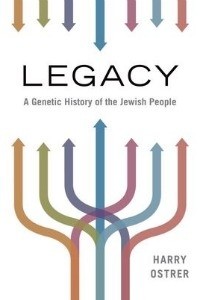 Legacy: A Genetic History of the Jewish People
Harry Ostrer
Oxford University Press: 2012
288pp., $24.95
Are Jews a religion or race?
This is the age-old question that medical geneticist Harry Ostrer tackles in his concise but informative book, Legacy: A Genetic History of the Jewish People.
As Professor of Pathology and Genetics at Albert Einstein College of Medicine of Yeshiva University and Director of Genetic and Genomic Testing at Montefiore Medical Center, as well as former Director of the Human Genetics Program at New York University’s School of Medicine, Ostrer has devoted much of his career to unraveling the DNA sequencing of recessive genetic disorders common among Jews, such as Tay-Sachs and Gaucher disease. After two decades of medical research, he explains that Jews share more than religious and cultural traditions — a common biological bond links Jews throughout the Diaspora.
This body of work has led Ostrer to conclude that Jews are genetically related worldwide. Three millennia of selective breeding have created a distinct population with unique racial characteristics. Within this broad isolated population, diverse ethnic tribes formed and branched out. Mutual genes serve as the ancestral linkage between major Jewish tribes: Ashkenazi (who are related to one another on average as fifth cousins), Sephardic, Eurasian Khazars, Middle Eastern, and Mizrahi or African Jews.
Legacy is a slim book that incorporates history, natural selection, population genetics, evolutionary psychology, and contemporary medical findings. The author’s quest for the basis of Jewish origins and identity forms the basic storyline of Legacy. Each chapter highlights various aspects of Jewish ancestry: physical measurements and characteristics, DNA studies, blood groupings, genealogical evidence, tribal lineage, physical and psychological traits, and, finally, the crux of Jewish identity. The result is an informative overview of 25 years of detective work unraveling the genetic kinship of Jews. Read more