Social Psychologists: Becoming Self-Conscious of Their Liberalism

Social psychologists are the ones doing all the research on ethnocentrism, xenophobia, and discrimination, and they are notoriously liberal. An address to their main professional society by Jonathan Haidt may at least make them a bit more self-conscious about it (NYTimes, “Social Psychologists Detect Bias Within“). Like pretty much all the faculty in the social sciences and humanities, they identify as liberal—around 80% of them liberals. And out of 1000 psychologists attending the lecture, only three had the temerity to publicly identify themselves as conservative. This .3% compares to 40% of Americans who self-identify as conservative.

It goes with saying that some in the audience may have decided that raising their hand in public would be an act of professional suicide. The intellectual left loves blacklists and social ostracism. Indeed, a student is quoted as saying that “Given what I’ve read of the literature, I am certain any research I conducted in political psychology would provide contrary findings and, therefore, go unpublished. Although I think I could make a substantial contribution to the knowledge base, and would be excited to do so, I will not.” Read more

Brendon O’Connell’s Ordeal


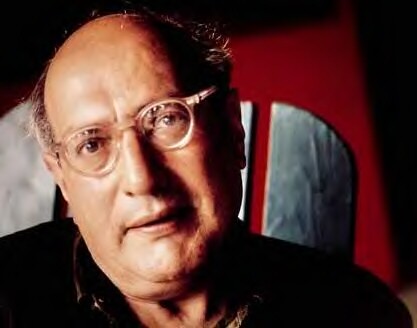
Brendon O'Connell

Brendon O’Connell (here’s his blog)  is a 40-year-old pro-Palestinian activist who is now serving a three-year prison sentence for violating Australian laws intended to suppress White concerns about the utopian multicultural future by restricting speech. His troubles began when he went to a protest at a store selling fruit from the occupied West Bank and got into a confrontation with a pro-Israel Chabadnik. O’ Connell videotaped the confrontation (see here and here). The only physical contact comes at 3:41 of the second link, but it’s difficult to see what’s happening and, in any case, that incident was not part of the criminal proceedings. It’s great video and definitely gives on a snapshot of Brendon’s very outgoing, colorful personality.

As I write at the end of my brief, we need more people like him — people willing to be assertive and in-your-face about the outrages surrounding us. Most White Americans would rather munch on snack food while watching TV and then move away when the neighborhood gets overrun by non-Whites. They cower in fear at the thought of offending the powers that be. Of course, Brendon is living proof that those fears are well founded.

Brendon sought out my support for his case and I agreed to participate. The idea was to have me testify live via a video hookup. However, in the end, he decided not to use the brief I had written on his behalf and he dismissed his lawyer as well. Things did not go well at the trial (here’s a newspaper account). The “victim” states that the three-year term “is not enough.” Presumably nothing short of a death sentence would satisfy him. Read more

The Muslim Political Culture of Fear

In reading up for an AltRight article on Geert Wilders, I ran across this comment by Wilders on Muslim political culture, based on his observations of Egypt as an 18-year-old in 1982:

While we were in Sharm el-Sheikh, President Mubarak happened to visit the place.

I remember the fear which suddenly engulfed the town when it was announced that Mubarak was coming on an unexpected visit; I can still see the cavalcade of black cars on the day of his visit and feel the almost physical awareness of fear, like a cold chill on that very hot day in Summer.

It was a weird experience; Mubarak is not considered the worst of the Islamic tyrants and yet, the fear of the ordinary Egyptians for their leader could be felt even by me. I wonder how Saudis feel when their King is in town, how Libyans feel when Gaddafi announces his coming, how Iraqis must have felt when Saddam Hussein was near. A few years later, I read in the Koran how the 7th century Arabs felt in the presence of Muhammad, who, as several verses describe, “cast terror into their hearts” (suras 8:12, 8:60, 33:26, 59:12). [See here.] Read more

Imperial Jews and International Jews

Michael Colhaze’s recent Wikileaks Leaks article highlighted a growing rift within the global Jewish community, with the “Heebies” and “Izzies” increasingly at odds over strategies, tactics, and even goals. Shortly after that post was published, the Egyptian protests have blown that rift wide open, making it more apparent than ever. This dichotomy between Diaspora Jews and Israeli Jews is the single greatest fault line in the Jewish world. Given their out-sized leverage and influence, it’s perhaps the most consequential political fault line in the contemporary world.

This rift within Jewry is as old as the Group Evolutionary Strategy itself. In traditional Eastern Europe, there was an insular core of ultra-religious Jews in shtetls who spent most of their time studying the Torah, as well as a subset that interfaced with the non-Jewish population. From the moneylenders of yesteryear through the Madoffs of today, this small core of wealthy and worldly Jews have played a pivotal role in supporting the reproductive core of inward-looking Jews, resulting in a two-pronged reproductive strategy where one component is highly fertile and the other has low fertility and high-investment.

The same basic pattern has replicated itself on a global scale — with Israel emerging as a sort of sovereign globo-ghetto. and the Jewish communities of Western Europe and America becoming vast reservoirs of wealthy and worldly Jews who are a substantial component of the financial, academic and media elite throughout the West. Both sub-communities have been more successful than ever in the wake of WWII, but they’ve been growing increasingly alienated from one another.

Read more

Navigating Hollywood: Conservatives and Christians Need Not Apply

From time to time I get letters from students who say they are on page with ideas like mine and want to pursue  a career in the academic world. I always tell them they have to be a secret agent, not only as a grad student but at least until they get tenure. And if you come out of the closet after you get tenure, don’t expect to get any grants or be invited to any of those cool faculty parties.

It’s pretty much the same in the movie industry, and for much the same reasons: A powerful and pervasive bias toward the left. In both areas and particularly in Hollywood, there is a strong Jewish influence that means that overt displays of Christianity are a ticket to oblivion.

This came out recently in an article in the Hollywood Reporter (Conservative Actors Reveal Life of Secrecy, Lost Jobs Amidst ‘Intolerant Left’“).

Morgan Brittany, an actress perhaps best known for her work in Dallas, the prime time soap opera of the 1980s, says that “I’d go out on location with the Dallas crew. .. Everybody in the van was bashing (President Reagan). I never said anything because I thought I’d lose my job. And I probably would have lost my job.” Read more

Steve Sailer Interviewed by Craig Bodeker

The Fourth Dimension

Alfred Kubin ( War), 1902

(Translated from the French by Tom Sunic.)

Modernity successfully gave birth to three major competing political doctrines; liberalism in the eighteenth century, socialism in the nineteenth century and fascism in the twentieth century. Being the last in line, fascism was also the one that disappeared most rapidly. However, the breakdown of the Soviet system has not brought to a halt socialist aspirations and even less so the ideas of communism. Liberalism, for its part, seems to be the biggest winner in this competition. In any case the principles of liberalism, spearheaded by the ideology of human rights, and thriving now within the New Class all over the globe, are today the most widespread within the framework of the process of globalization.

None of these doctrines are totally wrong. Each one of them contains some elements of truth. Let us have a rapid look at this panorama. What needs to be retained from liberalism is the following; the idea of freedom accompanied by the sense of responsibility; the rejection of rigid determinism; the importance of the notion of autonomy; the critique of statism; a certain tendency towards republicanism, anti-Jacobinism and anti-centralism. What needs to be rejected is: possessive individualism; the focus on the anthropological concept of the producer vs. consumer in which everybody searches for his best interest; the principles based on what Adam Smith called “the gift for peddling,” that is, the inclination for tradeoffs; the ideology of progress, the bourgeois spirit, the primacy of utilitarian and mercantile values; the paradigm of the market — in short, capitalism. Read more