“Coming Apart” Revisited: Life History Theory and the Crisis of the White Working Class

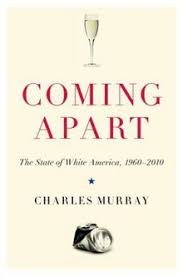
One of the best-selling nonfiction books of 2012 was Charles Murray’s Coming Apart: The State of White America, 1960–2010.[1] It was widely reviewed, including an informative essay by Roger Devlin in this publication.[2] As stated in the subtitle, Murray focused on White Americans, and he saw a growing class divide among this demographic. Paradoxically, by making his study explicitly racial he tried to eliminate race as a factor in his analysis. He wanted to explore “the ways in which America is coming apart at the seams — not seams of race or ethnicity, but class.”[3] He sought to describe this phenomenon but not its causes. “I focus on what happened, not why.”[4]

According to Murray, America has a new upper class (NUC) consisting of the top 5 percent, although in some of his analysis he includes the top 20 percent. He says he is not writing about the super-rich one percent, or one tenth of one percent. The NUC has benefited economically and socially from technological advances and globalism. It differs from the old upper class which had more in common culturally with the middle and working classes. Murray believes that “the old rich had a different cultural style, but not different cultural content” than the working class,[5] providing this example: “Theodore Roosevelt, scion of an elite New York family, schooled by private tutors, had been raised on the same textbooks [such as the McGuffey Readers] as the children of Ohio famers, Chicago tradesmen, and New England fishermen.”[6] This common culture was made possible, in part, by a common European-American ethnic identity.

On the other end of the spectrum, Murray sees a new lower class (NLC) consists of a segment of the White working class, perhaps 20–25 percent of the total, that has declined socially and economically since the 1960s. This decline is characterized by a large increase in non-marital births, crime, and drug use, and decreasing industriousness, honesty, and religiosity. The weakening of the family structure has been a huge factor because marriage is needed to socialize the next generation.

No one can read Murray’s book without being struck by the profound cultural revolution that began in America in the 1960s, a revolution that is continuing today. This revolution has affected all classes, but its negative impact has been disproportionately on the White working class. Murray believes that starting in the 60s higher education acted as a great sorting machine, selecting and separating high-IQ individuals from the general population. The high-tech economy rewards these individuals with affluence, and they tend to live in the same neighborhoods, work at the same types of jobs, socialize and marry, and usually produce high-IQ children.

This all may seem meritocratic, and beneficial to society, but it is neither wholly meritocratic nor beneficial.  SAT scores are often used as a rough measure of intelligence, and students with certain family backgrounds (Murray uses Asians as an example, but Jews would be included also), and students living in the Northeast, are more likely to attend elite institutions than White students living in flyover country with the same SAT scores. This also does not take into account affirmative action admissions of non-Whites or elite foreign youths attending American universities. While Murray implies that the NUC is a product of merit, he admits in an aside that it is not entirely the case.

As a conventional conservative Murray is more comfortable discussing issues of class and culture than race.  He reiterates the above quote later in the book. “Our nation is coming apart at the seams — not ethnic seams, but the seams of class.”[7] And again, “We are one nation, indivisible, in terms of whites and people of color. Differences in the fortunes of different ethnic groups persist, but white America is not headed in one direction and nonwhite America in another. We are divisible in terms of class.”[8]  Yet Murray agrees with Edward O. Wilson that “the social sciences are increasingly going to be shaped by the findings of biology — specifically, the findings of neuroscientists and geneticists.”[9] And he acknowledges that there will be group differences in outcomes because “they differ genetically in their cognitive, psychological, and physiological profiles.”[10] Unfortunately, Murray’s useful study on an important topic does not put the fate of America’s White working class into a wider racial context, and by his own admission does not deal much with causation.  Read more

A Brief Look at Jewish Wealth

Throughout history, the power and influence of the Jewish Lobby has been legendary.  This power in turn derives not from political might, nor from popular support, nor from moral rectitude, nor from God.  It is, simply, the power of money.  The wealthy have always held disproportionate influence in their societies, typically to the benefit of individuals or their families.  But when a distinct ethnic minority works more or less collectively, with great wealth behind them then that minority can exercise massively disproportionate power.  This power is amplified by Jewish power deriving from ownership of media in the media age, their position as creators of media content (here, p. lvi), and their influence on elite culture, particularly in the academic world.

Too often, though, one reads fulminations on the “rich Jews” without knowing the history and without any facts or details behind it.  My intent in this short essay is to provide some factual data, and to draw some plausible conclusions.  The situation is, I think, more extreme than many have assumed. Read more

Holy Minority Day: Holocaustianity, Hysteria and the Hotel of Hate

It’s Holocaust Memorial Day (HMD) as I write, so here’s an interesting question: Did you hear about the hate-criminal who was caught urinating on a monument at Auschwitz? Probably you didn’t, because the story wasn’t suitable for anti-White, anti-European, anti-Christian propaganda. Quite the opposite. The hate-criminal in question was Jewish, a “19-year-old Israeli” called “Zeev K” (Ze’ev is a common Ashkenazi name in Israel). According to the Jewish Telegraph Agency (JTA), he was “detained” and “questioned for several hours” in March 2018 after he was “caught urinating on … a monument located near the ruins of the crematoria” at the infamous “Nazi death camp.”

Why did he do it?

The JTA subsequently reported that the teenager was found guilty of “desecrating a monument” and fined “5,000 zloty ($1,350)” by “a regional court in the town of Oswiecim, where Auschwitz is located.” He wasn’t present for the hearing, so maybe he was back in Israel, the nation founded after the Holocaust to protect Jews from the irrational hate of gentiles. But I wonder whether he would be safe there after committing a horrible crime like that. After all, the Polish court found him guilty of desecration, which suggests that there was no excuse for what he’d done. So why did he do it? Why on earth would an Israeli Jew do something so foul and degraded to a “monument” at a “Nazi death camp” where millions of his fellows Jews had been slaughtered in the most brutal and inhumane fashion?

Auschwitz, desecrated in March 2018

If I could read Hebrew, I might be able to find the answer on Israeli websites and blogs. But I can’t read Hebrew. As I pointed out in “Words as Weapons,” it’s very useful for Jews to have a language of their own, almost unknown by gentiles whose own languages are very well known by Jews. That linguistic asymmetry was also present in Yiddish, the Jewish dialect of German that was walled off from gentile scrutiny by being written in the Hebrew alphabet. Down history, it has been much easier for Jews to keep secrets from gentiles than for gentiles to keep secrets from Jews.

Thick goyish skulls

And in the modern West it’s also much easier for Jews to criticize gentiles than it is for gentiles to criticize Jews. Indeed, gentiles simply can’t criticize Jews if they know what’s good for them. The Holocaust is used as an enormous stick to beat an appropriate sense of guilt, humility and obedience into thick goyish skulls. “Look what you evil goyim did to innocent Jews. Now shut up and do as you’re told.” But that only increases the interest of the story about the Jewrinator at Auschwitz, as he might be called. Why did he do it? I can think of several possible motives, none of which cast a good light on Jewish psychology and Israeli culture. Perhaps it was an act of arrogance and bravado, carried out with swaggering entitlement by an obnoxious youth from Israel’s Ashkenazi elite: “The goyim might have to grovel before the Holocaust, but I don’t!” Or perhaps the teenager was being bullied by obnoxious Ashkenazim like that and committed the desecration out of defiance and despair. Perhaps he was drunk or on drugs. Perhaps he’s a rebellious teenager who had simply got sick of Israel’s Holocaust cult and decided to express his contempt for it.

Whatever his motives, the Jurinator at Auschwitz committed a repulsive and self-willed act that raises a disturbing question. If a Jew will do something like that to a Jewish sacred site and concept, what on earth might Jews do to other people’s sacred sites and concepts? And it’s precisely because it raises such questions that the story is Not Good for Jews. That’s why it didn’t receive much publicity. But what would have happened if the desecrator had been a White Christian teenager? I think his life would have been destroyed to set an example to other goyim. It would have been both a Teaching Moment and a Screeching Moment, a chance for Jews to emphasize their power and express their hatred of Whites. Read more

TOQLive, Feb. 4, 2019: Prof. Ricardo Duchesne, James Edwards, and Kevin MacDonald

TOQLive tonight, with Prof. Ricardo Duchesne, 8:00PM Eastern

Studying the Gentile: Fanciful Pseudoscience in the Service of Pathologizing the Covington Boys

“One person questioning the truth of the Holocaust is one too many.”
     Karen Pollock, Holocaust Educational Trust, January 2019

In Studying the Jew (2006), Alan Steinweis’s slim, Harvard-published text on the scholarly study of Jews under the Third Reich, the author laments “the perversion of scholarship by politics and ideology” and its service in the goals of “exclusion and domination.” While some of the anecdotal material presented in the book is fascinating, especially its prosopographies of what one reviewer called the “clearly brilliant” German scholars who undertook such work, the overarching message of Studying the Jew is that one should, under no circumstances whatsoever, study the Jew. That Steinweis felt such a message was in any way necessary in 2006 is a testament to the same paranoia in which the fevered Jewish inability to let go of the past becomes the frantic injunction unto the Gentile to “Never Forget.” Steinweis’s limp appeals to contemporary relevancy aside, by 2006 the kind of patient and methodical Judenforschung produced by Édouard Drumont, Henry Ford, Hillaire Belloc, and the scholars of the 1930s, had indeed become a thing very much of the distant past — Kevin MacDonald’s remarkable 1990s trilogy being the exception that proves an otherwise solid rule. By the 1960s, Jews had effectively monopolized the study of their own history and sociology in the post-war, modern incarnation of “Jewish Studies,” and quickly followed a self-congratulating, navel-gazing, agenda-driven, victim-orientated trajectory in the same fashion as their later counterparts in Women’s Studies, Chicano Studies, and Black Studies. Serious critical study of the Jews vanished from academia and mainstream culture.

Curiously, however, around the same time that serious critical study of Jews vanished from campuses and newspapers, a new trend emerged: studying the Gentile. I was strongly reminded of this recently during the debacle surrounding the Covington Catholic High School trip to Washington D.C. The facts of this incident are now so well known that they need no further regurgitation here. It should suffice to mention that large sections of the media were incensed that the school’s students had enough self-respect to hold their ground against a group of ludicrous but abusive Black Israelites, as well as a Native American who apparently thought the best way to mediate the situation and reduce tension would be to bang his war drum and chant loudly mere inches from the palefaces. The aftermath was a true exercise in the media manipulation of anti-White hatred, something that seemed to reach a zenith when America’s most prominent African-American Zionist, and AIPAC house Negro, Bakari Sellers, heroically broke from stereotypes of ignorant Black thuggery to call for one of the White children to be punched in the face. Stunning and brave.

At the Guardian meanwhile, attention momentarily turned away from the beating of White children to the more sedate subject of brainwashing them. In an article titled “How should parents teach their kids about racism?,” the author, panicked by the children of Covington High, turns for advice to two academics working in the field of ethnicity perception among White children. Of course, both of these academics just happen to be Jewish. The first is Evan Apfelbaum, Boston University’s Jewish expert in the study of the psychology of the little goyim. The article states:

Evan Apfelbaum, an associate professor at Boston University’s Questrom School of Business focused on social psychology and diversity, agreed that it’s good to start teaching children about race when they’re young. “Having these tough, uncomfortable conversation at home in advance, in a structured setting, is one way to help prepare kids for facing these types of complex things in the real world,” he said. Parents can use such viral videos that demonstrate inappropriate behavior as an opportunity to have a conversation with their children about racism, Apfelbaum added. “When things go viral, there’s an opportunity for learning,” he said.

Unfortunately for Apfelbaum, the emergence of further footage from this particular event revealed that the opportunity for learning involved the knowledge that adult Black men are quite willing to scream “faggots” at White children, presumably because those children have the mysterious ability to speak in complete sentences. A further lesson was that elderly Native Americans are not full of profound wisdom uttered in the staccato prosody of so many film depictions, but are instead profoundly anti-social and fully prepared to shamelessly lie about school children in order to solicit media attention.

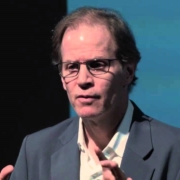
The second of the Guardian’s consulted experts was Dan Siegel, a truly ominous Jewish UCLA psychiatrist with a not-sinister-at-all interest in how the “remodeling” of the teenage brain can be interfered with in order to prevent in-group attachments:

The “remodeling” of the teenage brain into an adult brain entails four core changes: emotional sparks, social engagement, novelty-seeking and creative exploration — what Siegel calls “Essence”. The four changes represent an uptick in passion, drive to be a part of a group and a desire for new experiences that is normal for teenagers. These changes can be positive or negative, depending on how they’re fostered, Siegel said. The development also heightens what psychologists call “in-group, out-group distinction”, or the tendency to lump oneself in social groups, he added. When a person feels like their “in-group” is threatened by an “out-group” — people part of a group they don’t identify with — there’s a chance they will dehumanize the out-group. “Adolescents are equally prone to having this in-group-out-group distinction” as adults are, Siegel said. “Essence” exacerbates the distinction, and that’s what can be seen in the viral videos, he added. In these videos, there’s evidence of “emotion they don’t know how to control, collaboration where they give up morality to gain membership, novelty-seeking which drives them to do things that are really dangerous … and following ideals as they push against things that have them not think logically”, Siegel said.

This is probably one of the most fanciful pieces of Jewish psychological quackery I’ve ever read, and I’ve read a lot of it. Now that we have footage covering the entirety of the episode in D.C., it’s clear that the young men from Covington Catholic High School showed great restraint and emotional control in the face of provocation and abuse, and the “smirking” student can be seen on camera urging his (compliant) fellow students to maintain order and not engage with the Black Israelites or other provocateurs. Siegel, meanwhile, claims he sees evidence of “emotion they don’t know how to control, collaboration where they give up morality to gain membership.” This is just a Jewish intellectual activist refusing to look at the footage objectively, and thus presenting an entirely false picture in order to pathologize those he feels a pre-existing antagonism towards.

Siegel’s nonsense, like a lot of Jewish pseudo-science, would be laughable if it wasn’t so obviously malicious. Aside from his ‘Essence’ scam, Siegel operates a pro-diversity “mindfulness wheel of awareness” methodology designed to brainwash clients into abandoning any sense of ethnic identity. In an interview with Forbes, Siegel explains:

You want to expand your “circle of identity” so that within the phrase “like me” you include a lot of diversity. What I would say is the plane of possibility is accessed more when people integrate consciousness. People are too confined, so they are excessively differentiated and not accepting the value of other life forms including other humans that do not fit into that initial high plateau of identity. What has been fascinating about doing the wheel of awareness practice — and I think this is consistent with some of the research about reducing some of the implicit racial bias [editor’s note: a field rife with failure to replicate] with mindfulness practices— is when people access the hub, they’re gaining more access. They are more readily accessing the plane of possibility and in the plane, there is no racism. In the plane, there is this experience of reality that embraces the fluidity of identity. That is, “you” are made up of people who are not your racial background. You are people who don’t speak your same language. You are people who of different religions. It’s not just that they’re different and that is okay. It’s that you are both part of the same sea of potential or the plane of possibility. What has been beautiful about explaining this is that people get a feeling of relief that they can now basically be in a state of — and not to get too gooey — love and acceptance.

Dan Siegel: “You want to expand your “circle of identity” so that within the phrase “like me” you include a lot of diversity.”

Read more

A Conversation with Ricardo Duchesne, Part 3 of 3

Go to Part 1.
Go to Part 2.

Grégoire Canlorbe: It is not uncommon to claim the self-assertive longing for “prestige,” “respect,” and “fame” is fully intelligible within the framework of the selfish-gene theory, according to which the individual is biologically designed to propagate his genes—and therefore, to pursue personal survival, reproduction, and kin solidarity. Despite the Indo-European warlord’s disdain for his own biological survival, and despite his heroism being recognized and praised by people who are not necessarily related to him genetically, do you still subscribe to the universal relevance of the selfish-gene framework?

Ricardo Duchesne: In Uniqueness I contrasted the aristocratic obsession with honor and respect to the universal instinct for survival, giving the impression that Indo-Europeans were somehow standing above the evolutionary pressures that all groups face in maximizing their chances for reproduction and survival. Kevin MacDonald correctly clarified, in his long review, that “prestige and honor among one’s fellows is in fact typically linked with material possessions and reproductive success. Like other psychological traits related to aggression and risk-taking, the pursuit of social prestige by heroic acts is a high risk/high reward behavior, where evidently the rewards sufficiently outweighed the risks over a prolonged period of evolutionary time.”[1]

Darwinian selective pressures are always at work. But this should not be taken to mean that human culture does not have its own internal dynamics, and that all our beliefs and behaviors are explainable in Darwinian terms. Evolutionary psychologists (not MacDonald) can be quite presumptuous in their fundamentalist belief that they can instruct sociologists, philosophers, and members of the humanities, about human nature and the ultimate origins and biological foundations of our cultural practices. They like to emphasize the cultural patterns, institutions, customs, and beliefs that occur universally across many cultures, as a demonstration that humans will only engage in cultural practices that are good candidates for evolutionary adaptations.

It is worth noticing, however, that the examples of cultural universals they offer — such as the universal presence of athletic sports, dancing, music, housing, funeral rites, language, greetings, courtship, calendars, division of labor, status differentiation, tool-making — are examples of basic cultural practices performed by everyday humans. They represent the lowest cultural denominator. They can’t account for the superlative achievements of Europeans in music, the fact that classical music is singularly European, in evolutionary terms. They can’t account for the fact that almost all the greatest thinkers are European, the architectural styles, the invention of sports, etc. Their inclination, rather, is to trivialize high culture and high achievements that are not easily fitted into an evolutionary scheme.

Why did Europe produce almost all the great scientists in history? Steven Pinker is not interested in these questions but concentrates on the universal traits of the human mind as “a neural computer, fitted by natural selection with combinatorial algorithms for causal and probabilistic reasoning about plants, animals, objects and people.”[2] How do we explain Europe’s superlative achievements in the arts? Pinker’s angle is that “the value of art is largely unrelated to aesthetics: a priceless masterpiece becomes worthless if found to be a forgery; soup cans and comic strips become high art when the art world says they are, and then command conspicuously wasteful prices.”[3]

They know that natural selection can only play a foundational role in understanding human culture and that “human culture itself,” in the words of another Darwinian hardliner, Daniel Dennett, “is a more fecund generator of brilliant innovations” than genetic endowment. This is why they came up with the concept of memes, which they think “can do justice to the humanities and sciences at the same time” by providing an explanation of cultural changes in terms of “new selective pressures” created by culture itself. They acknowledge that culture has evolved through cultural selection transmitted “perceptually, not genetically”[4]

Richard Dawkins defines the term meme “to refer to the ways of doing and making things that spread through cultures.” Dennett realizes that many selected memes have not enhanced human fitness, and that in fact “many of our most cherished memes are demonstrably fitness-reducing in the biological sense,” such as postponing procreation to get a very expensive college education. Once we meet our survival needs, humans “think there are more important things in life than out-reproducing their conspecifics.”  “We are the only species that has discovered other things to die for (and to kill for): freedom, democracy, truth, communism, Roman Catholicism, Islam, and many other meme complexes (memes made up of memes).”[5] We are the only species that articulates reasons to account for why we do things and the only species that attempts to persuade others why those reasons are good, often in the name of goals that cannot be accounted for in straightforward evolutionary terms. They have also argued that human cultural activity has changed the environments they respond to, creating “cognitive niches” or “cultural niches” with very different selective pressures. Pinker believes that humans evolved sufficient genetic capacities to be able to select the best memes and discard culturally inefficient or dysfunctional memes. Read more