Featured Articles

The Parasites’ Paradox

In this vale of tears, there is an almost Newtonian nature to life and events not only in their physical aspects but in their moral ones as well: that is, any action by individuals or groups that pushes their society down a particular path in any direction—whether one leading to freedom, stability, wealth, thrift, and power, or tyranny, chaos, poverty, and degeneracy—tends to contain within it reactive elements that make future pushes in the opposite direction easier in some way.

For example, take the interrelated elements of intelligence, thrift, wealth, and power. And furthermore, take the example of Victorian England. As Edward Dutton has argued, from at least the early modern period into the late nineteenth century, average intelligence was increasing and that, combined with the generally English and particularly Victorian ideals of thrift, honor, hard work, etc., made the English elites masters of technology and wealth such as the world had never seen and allowed them to project their power to all corners of the globe.  But the path beyond that was by no means a straight line in the same direction, and as H. G. Wells showed in The Time Machine, it could easily take the elites that travelled it in an opposite or at least ironic direction.  As Wells showed in rather extreme fashion, the wealth and power that intelligence and thrift built bred led to complacency, decadence, and (through dysgenic laziness and sensualism) stupidity, to the point that by the end (at least in terms of the story) the brilliant elites who once conquered the world ultimately ended up as frivolous dunces, preyed upon by the descendants of their workers.

And quite some time after the Victorian age, a very similar dynamic is playing out in the US in particular and in the West in general, thanks in large part to another peculiar trait that makes nations within the Occident powerful and weak: individualism and high trust individualism.

As Dr. Kevin MacDonald showed in Individualism and the Western Liberal Tradition: Evolutionary Origins, History, and Prospects for the Future, white Europeans, especially northern Europeans, lack tribalism and nepotism due to their evolution in a climate too harshly cold and in an area without a major resource (such as a fertile river basin) that was controllable on a year-around basis by an extended kinship group. They instead developed a high-trust society based on oaths and honor and reputation rather than unquestioned bonds of blood. That in turn led to an extremely flexible social structure in which talent could rise and individuals were freer to pursue scientific truth for its own sake.

But every strength is usually linked to a weakness of some sort, so this high-trust individualism becomes a liability to the nations it helped raise when those nations come under assault by a parasitic elite determined to destroy them or at least enrich themselves at the expense of all others.

The standard composition of this elite appears to be led in almost every case by a mix of international, globalist bankers and financiers—with a large representation of Ashkenazi Jews (high enough to punish people and institutions with views they don’t like), with some non-Jewish Whites and non-Whites, and including a political  class of Whites (with an ever-increasing percentage of non-Whites), often with ties to elite financial corporations: France’s Emmanual Macron is a former Rothschild employee; England’s Rishi Sunak had been a prominent Goldman Sachs employee; and in the US both parties swear fealty to Israel and to George Soros or his GOP counterparts.

As the elites of the European Middle Ages (a far better crowd than our own, in my opinion) gained their wealth and power through control of the land, the court systems, and the military, so our elites ensure their wealth and domination through control of central banking and opinion-making institutions (the media, academia), the buying or rigging of elections (think especially Soros’ criminal-coddling DAs), and the vicious and deadly, if in many ways inefficient, killing machine that is the military-industrial complex—though few of those involved ever get near a battlefield and none is killed on it (I told you the medieval ones were better).

While all this is a sweet deal to our elites who are increasingly disconnected from the people they rule, the corruption and inefficiency they produce amount to a raw deal for everyone else, especially Whites. But it’s a deal that threatens to awaken their wrath against the parasites who then face the paradox: unless they find within themselves the restraint to parasitize their host society only to a non-lethal degree (as almost no parasite can), their activities will soon degrade the wealth, social capital, and order built up prior to the parasitism, which had kept the host population content and fairly indifferent to the parasitism in its early stages. If, on the other hand, they continue to increase their parasitic machinations, their only chance of doing so lies in increasing their power by complete authoritarian control guaranteed to increasingly enrage the host population against them and thereby render the retribution against them all the more ferocious when it comes.

The particular means of maintaining repressive control can vary through time and geography, and in our time and in the West, it has taken the form of ever-increasing censorship, accelerating demographic replacement, and an increasingly incestuous relationship between big business and big government: in other words, muzzle, fire, or outright replace those who object to what’s being done to them and their nation. The last tactic is by far the deadliest, as it ultimately prevents the cohesion that would allow heritage Americans to throw off the parasites’ yoke and take back their nation—and the same goes for the nations of Europe. Ultimately, even with miscegenation and replacement, the parasites cannot escape their own paradox, as even very disparate people do not need perfect union to rebel against and destroy their masters; but it does guarantee that what will emerge from the rubble will be a polyglot patchwork of feuding tribes and regions rather than a nation in the true sense that has regained its freedom. The dissident’s challenge, then, is a race against time to take back or salvage part of his true nation, using the parasites’ paradox against them.

His first task in that is to take measure of the nature and composition of the TWASH (those whom the American system hurts): while most people who aren’t benefitting from our elites’ crooked endeavors are hurt by it to some extent, there are those who are especially, massively affected by it, with the owners of small businesses destroyed by the lock-downs and Whites stuck in the increasingly dark and always dysfunctional public school systems coming readily to mind; these are the people so blatantly punched in the face by the current order that the current platitudes and social taboos on race and gender, etc., are nothing but outrages to them. One of the things making it difficult for dissidents to correctly see and act on the parasites’ paradox is the love those dissidents feel toward their particular group and their desire to appeal to that group as a whole, be it Whites in general, Southerners, etc.— asking them to focus on subgroups makes them feel vaguely disloyal or dishonest. The problem with this ‘everyone in the group’ focus is that only a limited percentage of each group is TWASH (and some TWASH is outside of the group) and the rest still have a comfortable enough existence, at least materially, that the elites can usually threaten them by holding over their heads the prospects of getting them fired, making them unemployable, etc. They make an example of small numbers of them to keep the rest in line.

Thus it is critical to begin with the TWASH, giving unique focus and appeal to each subgroup of them and uniting them to leverage their power to influence, one after the other, the critical groups above them. For immediately above the TWASH lies a larger group of those who still have their jobs and reputations but are hurt enough by the parasitism (in the form of inflation, insults against them with antiwhite propaganda, etc.) that they’d be glad to oppose the regime—nonviolently, I mean, as with everything I say here—if only the effort were not futile. Above them lies an even larger group that would oppose the regime if opposition is either easy or likely to be successful. Together these three groups constitute a critical mass capable of imparting to our ideas legitimacy and respectability in the eyes of the gray men of the world: that is, those who hold no strong beliefs but will swing one way or another based on what everyone else, or at least the respectable majority of them, seems to favor. And once you get the gray men—who at this late stage of the infection are feeling pain from the parasites’ activities as well—on the side of your ideas and plans, you have the means to overwhelm those who yet support the regime either for profit or ideology, allowing you to expel the parasites from the halls of power and take back your old nation or create a new one for your people within your part of the ruins of America’s former imperium.

How the media spread transgender ideology

Introduction

The idea that the media exist to impart information might hold good when the news is something that no one is in a position to deny. In such cases they can state their message plainly, as in: “Reckless driver arrested” or “Body of fourth victim pulled from lake”. The more questionable their message is, however, the more subtly they must convey it, until when it is patently false they must convey it so subtly that they can deny that they ever conveyed it. In short, when the media are intent on outright deception, their modus operandum is covert. With this in mind, let us look at some of the techniques they use to spread transgender ideology.

Exposure

Their most obvious technique is to give the ideology exposure. In Britain the high-point in this seems to have been around 2018, when segments such as “Does Gender Self-Identification Put Women at Risk?”, “Piers Morgan Weighs in on Girl Guides Transgender Row” and “Munroe Bergdorf Clashes With Piers in Heated Debate on Gender Fluidity” continually appeared on breakfast television. It didn’t matter whether Piers Morgan was questioning the ideology or standing up for “transgender rights, freedom and equality”, to quote one of his favourite phrases. Either way, viewers of Good Morning Britain received another ten minutes of the ideology each time.

A discussion programme

A segment from a 2017 television discussion programme began with the presenter Nicky Campbell saying to a strange-looking girl called Emma: “You’re neither male or female, right?”[1] She replied: “That’s true. I identify as non-binary, which means I’m neither male nor female, and corresponding to that I use the ‘they’/‘them’ pronouns”. Nicky Campbell made no comment, failing to point out that calling yourself something doesn’t mean that you are that thing and that she was wrong to say that she used “they”/”them” pronouns, presumably meaning to refer to herself. The pronouns she used to refer to herself were presumably the same ones everyone else uses, namely “I”, “me” and so on. What she meant was that she sought to get others to refer to her using the plural pronouns, which is a fairly tyrannical thing to do. By letting these things pass, Nicky Campbell conveyed the idea that transgenders were a special case. Their statements were exempt from rational appraisal.

Crysta, Feb. 20th 2019, “Smart Woman Leaves Gender Fluid Person SPEECHLESS In Heated Argument.” You Tube comments available here

Emma went on to say that because there was a “huge variance of gender presentation and gender identity within humankind”, there weren’t simply men and women. Again, instead of ridiculing her Nicky Campbell treated the comment as though it might be worth listening to, when clearly a person’s “gender presentation” implies nothing about their sex. He went on to give Emma several more turns to speak, signalling that she was the most important person in the studio.

At some point he jocularly asked a journalist whether his newspaper would be using “gender-neutral language”. Peter Foster said that it pretty much already did, citing its use of the word “firefighter”. He had two daughters and would be delighted if they wanted to join the fire service when they grew up, he said, suggesting that they wouldn’t have been able to join it when its employees were called firemen. If that theory was true, no woman could have joined the political party called Brothers of Italy, still less risen to become its leader and then the country’s prime minister, yet there Georgia Meloni is.

As for referring to individuals as “they”, Peter Foster said that it was a question of whether such usages caught on, suggesting that the media follow the public preference. Was he a fool or being disingenuous? The only reason most people adopt a new usage, such as calling male transgenders “her”, is that the media model it. But Peter Foster said he doubted that “they” would stick as a pronoun for one person “because actually that’s not how most people see the world”. Language is organic, he maintained, and reflects the society it comes out of. Perish the thought that it might be influenced by the media!

On the old-fashioned side, a woman named Bethany Brown said: “We mustn’t lose sight of the fact that language does refer to a reality. As a writer I’m very aware of this. It’s very important.” The pronouns “he” and “she” referred to male and female reality, she said. She thought that there was something very serious at stake if we started eroding these concepts.

To judge from comments made by viewers of the video, many agreed with her. One wrote: “Thank you to the lady who spoke out against this insanity”. Another said: “This pronoun stuff is just crap. They need to start worrying about something that deserves to be worried about.” A third observed: “The fact that this is even a discussion shows how far we’ve fallen”. An American compared Bethany Brown to “the no-nonsense teachers we had growing up”, who had “had no problem tongue-lashing idiotic kids who said stupid shit. Good for you, lady!”, he concluded.

But Nicky Campbell asked her: “What about people who are non-binary? What about people who are gender-fluid?”, presupposing the existence of such people and teaching his audience these terms. “We’re all male or female”, replied Bethany Brown, “and the attempt to suggest that there is a third gender, as far as I’m concerned it’s an ideological and a political project. It doesn’t exist.”

Shock, horror!

Another media technique for conveying a falsehood, apart from throwing a spotlight on someone expressing it, is to present the truth as scandalous. Thus a BBC breakfast television segment was entitled “Feminist Blogger Believes Trans-Women Aren’t Real Women”.[2] Not real women? What an extraordinary person this must be!

While presenting the obvious as shocking, the media present the impossible as commonplace, as in their references to people “transitioning”, intended to suggest that they have changed their sex. In the same segment, Eamonn Holmes asked Kelly Jay Keen, the “feminist blogger”: “Why does she threaten you?”, referring to one of the media’s go-to transgenders, who was also in the studio. Kelly Jay Keen said: “I think when you decide that men can come into a women’s space, it’s no longer a woman’s space”. Holmes: “But she sees herself as a woman”. According to him, the other guest saw himself as a woman, therefore he was a woman, therefore what was Kelly Jay Keen worried about?

The need for “respect”

Going back to Emma, she said that using the “wrong language” to refer to transgender people was a mark of disrespect, perhaps “one of the greatest acts of disrespect” it was possible to perform. The media use the same tactic, describing anyone who says something that will not please transgender activists as lacking respect or sensitivity.

When Susie Green as CEO of the charity Mermaids took her sixteen-year-old son to Thailand to be castrated, the Catholic journalist Caroline Farrow put out a series of tweets, only to find herself being interviewed under caution by the police six months later in connection with the Malicious Communications Act, which makes it illegal to send or deliver letters or the like for the purpose of causing distress or anxiety. Susie Green had reported her for “misgendering” her “daughter”.[3]

Caroline Farrow had tweeted that Susie Green had “mutilated” her son and rendered him sterile while he was still a child. She had written: “I think it’s time everyone called out Susie Green and Mermaids for what it is: child abuse”. This was not purely personal, she maintained, because Susie Green was a public figure who ran a lobby group that had access to Westminster and influence over education policy and the police. Susie Green had herself given out highly personal details about her son, as when describing on television how his penis had been so shrivelled by drugs as to make the surgery particularly difficult. The Thai authorities were so outraged when they found out what had happened, Caroline Farrow said, that they had outlawed child castration. The police eventually dropped the case against her.

Susanna Reid, a presenter of Good Morning Britain, deemed the language of Caroline Farrow’s tweets “inflammatory”. We should treat even public figures with respect, she said. Piers Morgan thought that if the trans lobby’s opponents acted as aggressively as the trans lobby, they wouldn’t help themselves. But Caroline Farrow said that she was trying to strip away the lobby’s euphemisms, such as “gender affirmation surgery” and “bottom surgery”, which left many people with only a hazy idea of what such surgery involved. How could she do this if she had to use the euphemisms herself?

The presenters would not be moved. Susanna Reid thought that her guest’s comments were “incredibly personal” and couched in language that was “frankly insensitive”. Piers Morgan thought that there was a “more respectful way”. “But this is the truth”, Caroline Farrow said, “and on this issue we need to tell the truth”. In her opinion we needed a clear and honest discussion. Not according to the media, we didn’t.

The removal of the stigma

Another strategy the media use to spread destructive ideologies is to erode our defences against them, which take the form of stigmas. Thirty or forty years ago there were few transsexuals, as they were then called, because they were shunned and derided as freaks. The media have since taught us that this was wrong. Instead of shunning and deriding transgenders we should embrace them as perfectly normal. Indeed, we should see them as super-normal: so normal that we who are merely normal must defer to them at every turn.

Similar is the war on science and medicine waged by transgender activists and by the media on their behalf. Just as the anti-psychiatrist R.D. Laing taught in the 1960s that schizophrenics were reacting in a sane fashion to an insane world, only to be locked up for it, so today’s transgender ideologues teach that psychiatrists are at fault if they say that transgenders are disordered. Far from it: transgenders have discovered their true, authentic selves. They are luminaries, who have completed a spiritual journey on which the rest of us might just be taking the first few stumbling steps.

Conducive language

In 2018 Susanna Reid, having pointed out that Girl Guides were aged 10–14, referred to a “transgender girl” in the Guides who “still obviously has a male body”. This wasn’t a boy, according to Susanna Reid, but a girl who happened to inhabit a boy’s body.[4] Her guest, Susie Green again, was well prepared to deflect any criticism of the idea of letting boys of this age share tents with girls. It wasn’t surprising, she said, that people thought of “transgender girls” as a safeguarding issue since this was the impression created by the media. In reality it was “trans girls” who were at risk, as we knew from the statistics “around self-harm and suicide”. And so we see that the media are quite willing to broadcast the idea that they themselves have been unjust if it will help to cast transgenders as in need of pity.

Susie Green went on to use the expression “trans girls” innumerable times, stressing that they were children, and insisted that there was “absolutely no evidence whatsoever to say that trans girls are a threat and that any issue around abuse has ever happened”. She went on: “It just seems that every time there’s an opportunity to have a go at trans girls — I mean, these are children!” When asked why parents should not be told that boys might be put in tents with their daughters, which was the main point at issue, she replied that the question was “picking on a marginalized group of children who have already been subjected often to abuse within their environment”. If parents were told, the children would be “othered”.

When Piers Morgan mentioned the recent case of a rapist in a women’s prison who had committed more sexual offences there, Susie Green pleaded for a change of subject. “Can we move away? This is about children, children being allowed to be children, and children — girls, trans girls, who are girls — being allowed take part”. We were conflating sexual predators with innocent children. No we weren’t, said Caroline Farrow, the other guest. We had already seen the case of a Scout leader being asked to advise the Green Party on its transgender policy, who had subsequently been sent to prison for 22 years for raping and torturing girls. “But he’s a man”, said Susie Green, looking puzzled. “He’s not trans.” When Piers Morgan asked Susie Green about a man celebrated as a woman, who only dressed as a woman once a week, she again looked puzzled and asked what this had to do with Girl Guides. The media make a point of giving a platform to such experts in misdirection and evasion.

Conclusion

In short, the media spread transgender ideology by exposing us to it night and day, or at least over breakfast. They obscure the falsity of is doctrines, such as that one can change one’s sex or partake of both sexes, largely by suggesting that words govern reality or by excusing preposterous statements. They show us people who can’t think or who pretend they can’t so as to stop us thinking, and obscure the grisly reality of sex surgery in the name of “respecting” those who undergo it. They do allow common sense to be heard from time to time. They do not present it as common sense, however, but rather as the outlandish voice of yesteryear. They present transgenders as our victims while dismantling our defences against their ideology.

This ideology makes a direct assault on reality and truth. A man is a woman; to classify someone as a member of their sex is to “misgender” them; to deny a person’s sex is to “affirm” it, and so on. It thereby makes an indirect assault on all that is good, for it is always the most reasonable and principled people, often Christians, whom the media oppose and who in the real world are visited by the police or lose their jobs. Correspondingly, it is always the most vicious and moronic who get rid of them. Unfortunate transgenders march behind their ideologues and their ideologues’ advocates in the media with the Father of Lies in the lead.


[1] Crysta, Feb. 20th 2019, “Smart Woman Leaves Gender Fluid Person SPEECHLESS In Heated Argument”, https://www.youtube.com/watch?v=tM5vzvfxJ_M. The programme was The Big Questions. The full segment, without viewers’ comments, is at Simpson Training, Aug. 23rd 2017, “Would Gender Neutral Language be Better for Humankind?”, https://www.youtube.com/watch?v=IX21PukO39g.

[2] BBC, Sept. 28th 2018, “Feminist Blogger Believes Trans-Women Aren’t Real Women | This Morning”, https://www.youtube.com/watch?v=fDSOP_j7HZE.

[3] Good Morning Britain, March 25th 2019, “Caroline Farrow on ‘Misgendering’ Tweets Row: ‘I’m Absolutely Not Regretful’ | Good Morning Britain”, https://www.youtube.com/watch?v=rpo4rsZUNPM.

[4] Good Morning Britain, Sept. 25th 2018, “Piers Morgan Weighs in on Girl Guides Transgender Row | Good Morning Britain”, https://www.youtube.com/watch?v=SrQM8VQQ-P8.

A Collision at the Intersection

The American term “intersection”, what the British call a “crossroads”, is both a practical solution and a hazard. Aided by traffic lights and signage, it allows the flow of traffic travelling in different, non-parallel directions, but the fact that these differing streams have to traverse common space is what gives it a greater element of risk than driving on a regular road. There are often auto accidents at intersections.

“Intersectionality” is also part of the lexicon used by those under the spell of identity politics. For a definition, who better to turn to than the Center for Intersectional Justice (CIJ)?

The concept of intersectionality describes the ways in which systems of inequality based on gender, race, ethnicity, sexual orientation, gender identity, disability, class and other forms of discrimination ‘intersect’ to create unique dynamics and effects.

Unique dynamics and effects. Keep that in mind, as this Venn-like model is currently producing both, although not in the way the CIJ passionately strive for. Intersectionality is designed to produce a united front of the oppressed and, presumably, each of the separate identities so put upon will find the others right behind them. However, at one particular intersection, a pile-up has been coming for some time. A recent and apparently insignificant example from England perfectly illustrates a culture clash that was built into the system from the outset.

Until recently, the Mayor of Keighley in Yorkshire was a Muslim, Councillor Mohammed Nazam. He attended a pride festival, and later apologized for his attendance on a Facebook page called “Keighley Pakistanis”, calling his decision to attend “a lapse in judgment”. This did not sit well with his political party, the Conservatives (we will return to Muslim conservatism), and he was forced to resign. One point of interest, from his own defense on Facebook, is that he claimed the ceremony contradicted his “personal religious beliefs”.

This is only partly true. There is a sense in which Muslims have personal religious beliefs in that they are technically individuals. But the Muslim faith is collective, that of the ummah. It is sectarian, certainly, but the Five Pillars of Islam, along with the Koran, are a common center of gravity for Muslims, an amalgam of faith and politics which features certain immutable characteristics. One of these is an explicit rejection of homosexuality.

While homosexuality is illegal in around 70 countries, there are 11 which explicitly impose or can impose a death sentence. They are all Muslim countries, and perhaps Gay Times — or at least its tourism advice department — can be relied to know where they are. This thorough-going inventory includes the relevant clause from the various nations’ penal code. The exception is Saudi Arabia, which has no penal code and instead cuts out the middle-man by applying shariah direct from the Koran.

Muslim parents have also protested against LGBTQ in the classroom in Canada and America, stamping on pride flags and not confining their protests to placards at the school gate. Three sets of Muslim parents in Maryland are taking the Montgomery School board to court on the principle that their inability to opt-out from books they find offensive contravenes their First Amendment rights. Muslims are very effective in the law courts, because what individuals don’t know, their imam does.

Protests in Ottawa caused severe cognitive dissonance among counter-protestors, says the National Post, as the opposing marchers “…appeared to be discomfited by the fact that their protestors weren’t their supposed bogeyman [conservative Whites] but included many people of color, including socially conservative Muslims.”

Socially conservative. Watch that phrase, because it has a big future in the Left’s explanation as to why intersectionality has become, to use their language, “problematic”.

Those on the political right are often accused of “not understanding” Islam. We certainly understand it better than did the White liberal residents of Hamtrack, Michigan. From the UK’s Left-wing Guardian;

In 2015, many liberal residents in Hamtrack, Michigan, celebrated as their city attracted international attention for becoming the first in the United States to elect a Muslim-majority city council … This week [published June 17] many of those same residents watched in dismay as a now fully Muslim and socially conservative city council passed legislation banning Pride flags from being flown on city property. [Italics added]

What exactly did they expect? The dominant far-Left in the West, while they are obsessed with hated conservatism, have overlooked the fact that Muslims are the most hyper-conservative creed on the planet. While an old-school British Tory might want to ease the UK back to the 1950s, many Muslims would prefer to route-march us all back to the eighth century. They make the Amish look like progressives.

And so Muslims can be reasonably said not to devote too much time to doing what the rest of us are mandated to do, which is “celebrate” pride month, or season, or year. By all accounts it is not possible to travel far in any British city without seeing the dystopian bunting of the pride flag, an ensign as ugly as the ideology that forces it on schoolchildren and, by proxy, their parents. But you won’t see the pride flag flown in Tower Hamlets, Newham, Luton or any other “social conservative” majority area of London. You will, on the other hand, see so-called “Shariah zone” posters in those areas.

Early versions of such posters had two men hand-in-hand with a cross struck through, but this was removed as Islamic activists doubtless did not want to be seen as homophobic. It would be inadvisable, however, for two men to walk holding hands in the areas mentioned, and many others in the UK. Muslims are the only British group actively promoting hardline conservative values.

But Muslims are not some ideological cavalry riding to save the timid kufr, who dare not otherwise criticize the forced LGBTQ curriculum. Elsewhere in Yorkshire, a teacher and his family, under new identities, are still in hiding after the teacher showed a cartoon of the prophet Mohammed from French satirical magazine Charlie Hebdo to the class he was teaching. No one from the “intersectionality” lobby has ever spoken up to help him.

The gay community are also having problems with the trans lobby, and the latter’s embrace of diversity at every level is making it problematic to be homosexual in an increasingly Islamized society. The French gay community, although staunchly against Marine Le Pen and her Rassemblement National due to its opposition to same-sex marriage, still saw one third of them voting for her in the run-off stage of the last French Presidential election.

Unlike Western politicians, representatives of the extensive Muslim community are quite clear on their tolerance level. In the USA, a document precisely outlining the Islamic position on the LGBTQ community was released in May of this year, and it achieves what no Western politician has been able to in that it makes absolutely clear Islam’s attitude to shifting cultural norms. Navigating Differences: Clarifying Sexual and Gender Ethics in Islam has hundreds of signatories from the Western Islamic infrastructure. And these signatories cannot be dismissed as crank lobbyists unsupported by the heads of their religion. Islam has no head, it has no Pope. Imams and Islamic scholars (the ulama) make a consensus by weight of numbers, not by Papal decree.

In the section Our Constitutional Right to Hold Our Views, an interesting legal juxtaposition is made:

We recognize that our moral code conflicts with the goals of LGBTQ proponents. We also acknowledge their constitutional right to live in peace and free from abuse. Nevertheless, we emphasize our God-given and constitutional rights to hold, live by, and promote our religious beliefs in the best manner (Quran, al-Nahl: 125) without fear of legal reprisal or systematic marginalization.

Despite the document claiming “constitutional” rights, the American Constitution is not referenced, despite the famous First Amendment being explicit about religious freedoms. “Constitutional rights” here refer to the Koran.

The Democrat-media complex took a little while to spin this, but eventually wheeled out Jen Psaki to explain that the GOP are “recruiting” Muslims to oppose transgender policies. They surely know that no recruitment is needed. Muslims are already conscripted, just not to the GOP but what they see as a higher authority.

So-called “woke” ideology is becoming a victim of its own pathological obsession with diversity, its intersectional mainframe rupturing as Muslims — and Blacks — will not tolerate homosexuality and all its works. And there are other stress fractures within “intersectionality”. “Trans Exclusionary Radical Feminists”, or TERFs, have been ostracized by the LGBTQ community for their biologically realist approach. And left-wing feminists are leaving areas controlled by  Muslims for fear of harassment.

The default left-wing riposte to the Islamic injunction on homosexuality is that the Bible says the same thing as the Koran. Quite so, but if you arrange a drag show in Birmingham, Britain’s second city — 34% Christian, 30% Muslim — it won’t be the Seventh-Day Adventists who pay you a visit. The Koran, incidentally, although it condemns homosexuality, does not endorse the death penalty. That occurs in the Hadith, the supposed sayings of Mohammed: “Whoever you find doing the action of the people of Lut (Lot), execute the one who does it and the one to whom it is done”.

The dar al Islam does not recognize the separation of state and religion it sees in the dar al harb and will not tolerate LGBTQ propaganda in its children’s schools — or anywhere else as their presence increases. The British state — an extension of globalist concerns — will not countenance opposition to its LGBTQ agenda. Either an unstoppable force is about to be stopped, or an immovable object is about to move. Stay clear of the intersection.

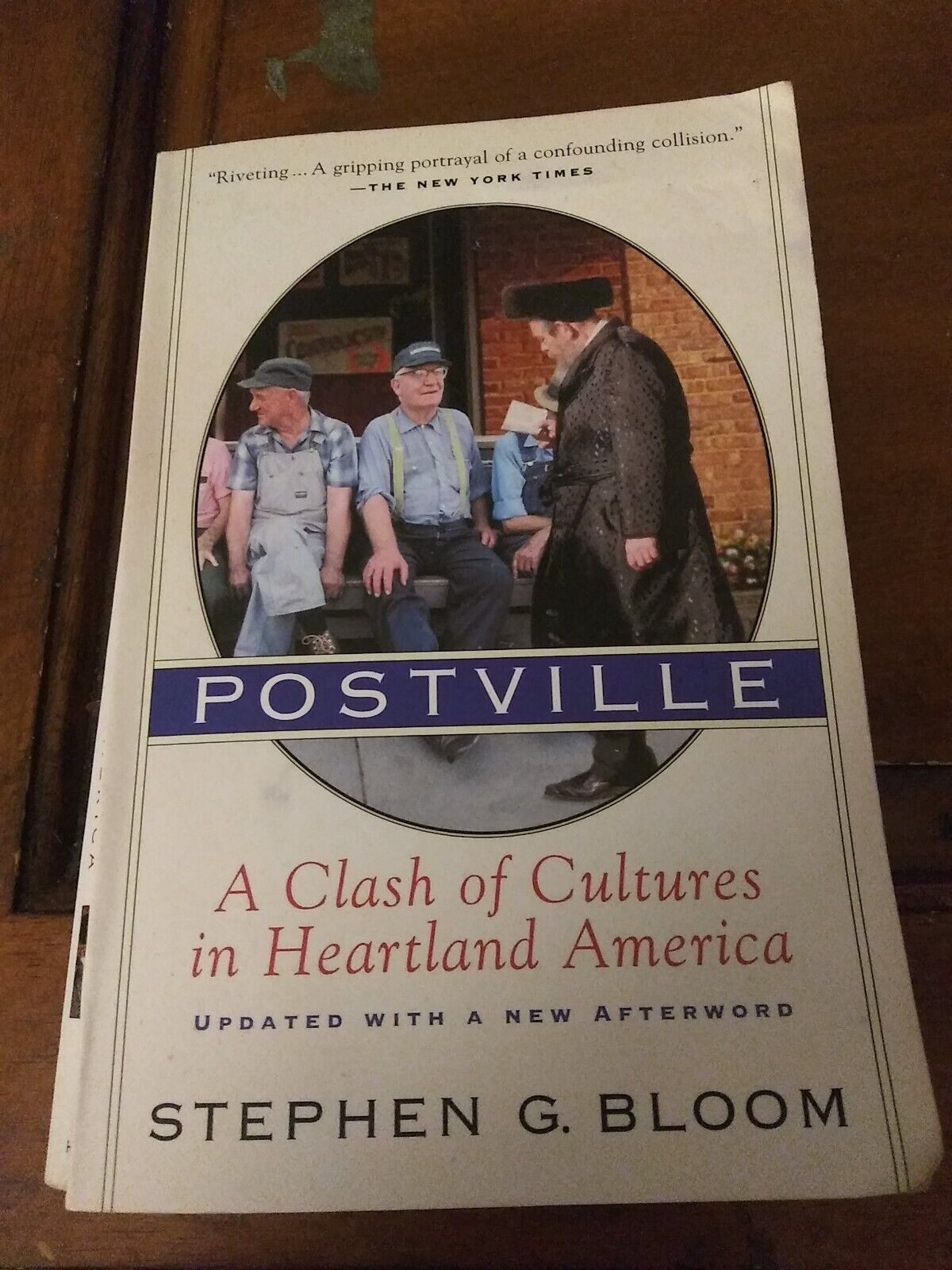
Traditional Jewish Separatism and De-humanization of Gentiles: A Review of Stephen Bloom’s Postville

[W]hat the Postville Hasidim ultimately offered me was a glimpse at the dark side of my own faith, a look at Jewish extremists whose behavior not only made the Postville locals wince, but made me wince.
Stephen Bloom

Postville: A Clash of Cultures in Heartland America
Stephen G. Bloom
Mariner Books, 2001 (originally published by Harcourt in 2000)

7367 words

*        *        *

Did Stephen Bloom write a book that savaged the Jews?

More than twenty years ago, a journalism professor from the University of Iowa, Stephen Bloom, published a highly readable and fascinating book on an incredible culture clash that played out in the Northeastern Iowa town of Postville; a description of the difficulty that the transplantation of a Hasidic Jewish community into a withering, rural Iowa farm town in the 1980s and 1990s posed from both the Jewish and native Iowan perspective alike. The author’s Jewishness, fairly or unfairly, allowed him access to the Hasidic community that no gentile would have been afforded; the author’s secularism and “local” status allowed him access to the native Iowan community as well. What follows then is a sketch of two antagonistic communities from the inside out.

Bloom is a talented writer — he weaves scenes and characters that are compelling. In many ways, Postville reads like a novel in the sense that the characters he introduces and develops become fixtures in the mind of the reader — we know them and are interested in them. While I am not sure that Postville teaches us something we did not already know — it is an intriguing look at the Hasidic movement and the death of rural America, all at the same time. And while Bloom showed an implied hostility against a strongly manifested faith — and that bias is palpable throughout the book — his irreligiosity was not so overwhelming to distract from the overall evenhandedness of the book.

If anything, the years that have passed have made the book more relevant than even when it was published. It is the intersection, and future, of religion in America and America itself — as it was, as it is, and as it is becoming. Not only is the story of Postville one of rural and urban, immigrant and native, and Christian and Jewish, but it is also the account of Jewish versus Jewish — the Jewishness of intense insularity versus the Jewishness of liberal cosmopolitanism, the Jewishness of tribalism versus the Jewishness of universalism. Bloom’s book about the culture clash between Hasidic Jews and rural Iowans is riveting on many levels but one that figures most prominently is the theme of Jewish inward-looking supremacism, and how this theme correlates with Jewish religiosity. Simply stated, the more religious a Jew is, the more he believes that he must turn within the Jewish community and shun the gentile (lest he, the religious Jew, is contaminated by the filth and impurity of the gentile). Not only does he not love the gentile in any conceivable way, but the religious Jew is categorically indifferent to the gentile’s existence as if the gentile does not matter in any essential way—that the gentile has no moral worth. There is then a powerful and undeniable correlation between Jewish religious intensity and observance and insularity from, and indifference to, the “other.” Of course, as I have known from experience, not every religious Jew is hostile and indifferent to gentiles per se. But the gravity exerted within religious Judaism is one that pulls towards itself — fundamentally, religious Judaism is not interested in the world outside of its narrow parameters. By contrast, the more religious a Christian becomes, the more he loves (or should love) all men as his neighbor — Christianity as a creed cannot produce anything approaching Jewish supremacism and insularity because Christianity is uniquely universal. For the Christian, Jew and gentile are essentially equal in dignity before God — for the religious Jew, such a concept would be totally unacceptable. And, as an “ultra” orthodox outpost, Postville recounts appalling episodes of indifference and hostility towards the gentiles by the Postville Jews.

All of it plays out — this brutal culture clash — through the filter and musings of a Jewish author who embodies and personifies the insecurity of the “emancipated” Jew who is home in no place. Because secular Jews have become synonymous, to one extent or another, with modern liberalism and at least the appeal of universal values, the idea of Jewish supremacism that undergirds the Hasidic Jewish religiosity is something that is, to say the very least, an uncomfortable reality. But unlike the secular Jew’s visceral reaction and discomfort with displays of religious fervor by Christians, secular Jews have a more muted and compromised response to intensely religious Judaism. There is something much more forgiving in the secular Jew’s consideration of their religious cousins — a lack of harshness — that distinguishes intra-Jewish relationships. By contrast, apostate or secular Christians are almost universally nasty and unforgiving towards their religious cousins. And, to some extent, that distinction makes sense; Judaism is primarily an ethnicity that has credal aspects while Christianity is primarily a creed with ethnic aspects — as such, disputes about beliefs are often forgiven by “family” members but not by people who are defined by faith and adherence. Bloom, as a secular American liberal and Jew, turns out to be an exception to the rule — a Jew who nonetheless takes his “Americanism” and “liberalism” seriously enough to turn his caustic pen on religious Jews. And he learned this hostility in real time while writing Postville. His book then is more than the account of a kulturkampf that played out in rural Iowa; it was a conscious discovery of the ugliness of Jewish chauvinism in its most religious form.

*        *        *

Working professionally as I do with many Jews who keep Kosher means that I have dined in many Kosher restaurants. Kosher food can be good, and some of the restaurants are excellent. They are also expensive: Kosher food is significantly costlier than non-Kosher food. Kosher food is more than merely Jewishly blessed food — it is a particular method of slaughter, storage, and preparation — and blessing. Kosher meat cannot be sourced from a gentile butcher because the animal must be slaughtered and drained of blood in a precise manner. Obviously then, religious Jews require ready access to meat that is slaughtered and prepared in accordance with religious law. As religious Jews have flourished in the United States — gaining numbers from fecundity and converts from mainstream Judaism, while Reform and Conservative Judaism have floundered — the need to Kosher food has only increased. Thus an underlying theme to Postville is the sizable business opportunity to feed the growing need for Kosher meat throughout the United States and abroad. Postville is eponymously centered in Postville, Iowa — where a group of investors from the Orthodox Lubavitch Jewish community in Crown Heights, New York purchased an abandoned slaughterhouse and turned it into a large Kosher butchery in 1987. In a sense then, Postville is first a story of the seizure of an economic opportunity that is, as such, uniquely an American story. The investors were led by a Russian-born Lubavitcher named Aaron Rubashkin, and Rubashkin led a migration of families to Postville to manage the Kosher slaughterhouse.

Initially, the Postville residents and civic leaders welcomed the investment in their community and the economic impact it would bring. Postville was reeling in the mid-1980s. The United States experienced a major agricultural crisis during the 1980s. Record production during this time led to a plunge in the price of commodities. Exports fell, due in part to the 1980 United States grain embargo against the Soviet Union. Farm debt for land and equipment purchases soared during the 1970s and early 1980s, doubling between 1978 and 1984. Other negative economic factors included high interest rates, high oil prices and a strong dollar. By the mid-1980s, the crisis had reached its peak. Land prices fell dramatically, leading to record foreclosures. Some forty years later, it is hard to imagine a collapse in value of quality farmland, especially in a place as fertile as Iowa, but in the mid-1980s, rural America was decimated in a way that not merely destroyed countless family farms but scarred the American rural way of life forever.

The refurbishing of the abandoned slaughterhouse and the addition of several hundred people to the local economy indeed provided Postville a modest economic bump, but problems between the Hasidic Jews and Iowans began immediately afterwards and persisted for decades. And more than that, the meat-processing plant brought in hundreds of illegal immigrants as workers — thus operating to apply a double pressure of change to what had been a longstanding homogeneous community. The Iowans were expecting new neighbors who would acclimate to the Iowa way of hospitality and cooperation — who would add more than economic value to their community — but instead were matched with religious Jews who viewed those goyim as virtually sub-human and treated them accordingly with vacillations of indifference or hostility.

Bloom was a professor of journalism at the nearby University of Iowa when he came across a reference in the local news of a nearby Hasidic outpost — and accompanying tension — in Postville in the mid-1990s. Bloom was admittedly dealing with a culture clash of his own after relocating from San Francisco after a career as a journalist. While Bloom’s initial interest was the desire to connect with his Jewishness amid Iowa’s overwhelming Christian homogeneity, the deteriorating situation between the Jews and the locals was a news story in its own right — in addition to the sheer peculiarity of Hasidic Jews living in rural Iowa. By the time he arrived in the mid-1990s, tensions were at a breaking point. The Iowans had made their stand against the Jews by deciding to hold a referendum to allow the town of Postville to annex the land on which the kosher meat-processing plant stood. If Postville annexed the land, the Iowans would then be able to raise taxes and better control the Lubavitchers. The annexation issue was thus a vote essentially to shame the Jews in Postville by the native Iowans of the town.

Bloom, like any investigative reporter, interviewed countless locals and tried, initially in vain, to do the same with the Postville Hasidic Jews. On some level, at least by implication, Bloom wanted to believe that the locals were anti-Semitic and, indeed, he found some comments by them to be exactly that. Indeed, there is an arrogance in how Bloom related to the native Postville people — as if he reduced to mere country bumpkins all the gentileswho simply did not know how to relate to outsiders. Thus, Bloom begins his account by frankly describing his suppressed, but deep-seated, dislike of the Iowans. At the same time, he also wanted to connect with the Hasidic Jews for their side of the story, but also because he was, at least in a sense, lost himself. As a coastal and secular Jew, he felt more than out-of-place in Iowa — he resented their version of middle America, and, to the extent that he was attracted to it, he resented that too. But he interviewed a variety of Iowa locals that he grew to like — he identified with them in terms of their values. At the very least, he understood them.

Northeastern Iowa is — or was — German-Lutheran country. And the imprints of neatness, cleanliness and mannerliness were seemingly everywhere in these communities. As Bloom described it in the mid-1990s, it sounded like America in the 1920s or earlier. White, religious, neighborly, civic, and orderly. It was the kind of place with Memorial Day and July 4th parades with the 4H Club, Future Farmers of America, and Chamber of Commerce — where chain stores, and Walmart in particular, were resisted, and people did not lock their doors. It is exactly the type of place that would later become ground zero for two independent phenomena — the opioid crisis and MAGA. But in the mid-1990s, this was still a place where World War II and Korean War veterans congregated in coffee shops in John Deere hats and overalls, where the high school football game was an event that the whole town eagerly waited on, where homes and yards were manicured, where people prided themselves on their sense of belonging and where “city-slicker” was a term that meant something. Understated, honest, lawful and thrifty, the local Iowans were simply not prepared (but, then again, who is) for a group to descend upon them who were shrewd, discourteous, and disorderly.

One way to look at the differences, at the most basic level, is that Jews (and this is not merely the ultra-orthodox) look at rules as pliable, and, in any event, not always applicable to any individual Jew. In this same way that Jews look at bargaining (“to hondle” in Yiddish) as a sign of intelligence, they also take a flexible view with respect to following rules for the sake of rules. German ethnics could not be more different — not only are they rules-oriented, but they are also rules-worshipping. Simple things like observing traffic and zoning laws become flashpoints that are hard for outsiders to understand. In many ways, Bloom was won over by the Iowans in their culture war with the Jews — slowly and surely — because their complaints that the Jews should just follow the rules everyone has to follow resonated with him. He may have been a secular, coastal Jew, but he did not accept a job in Iowa for no reason — he wanted to escape from wherever he was even if he did not realize it or know why. In a sense, he wanted “Ozzie and Harriet” even if it came without pastrami or a good bagel. That he chose to live in Iowa says something more about him than he himself was able to articulate. He was more receptive to the locals’ complaints that the Jews were rude and unneighborly than he wanted to admit.

But that was later — he was still, midstream in the book, searching for something in his own religion. After considerable difficulty, he finally managed to interview Aaron Rubashkin’s son, Sholom, who managed the operation in Postville to discuss the relations with the locals. The Lubavitchers are unique among Jews in that they are religious and proselytizers, at least towards wayward Jews. In many ways, they are like first-century Christians who missioned, at least initially, to other Jews. They are aggressive in their ministry and believe heartily that they can convince any such Jew to join them. Rubashkin began immediately to work on Bloom accordingly — to save his Jewish soul. Part of that outreach involves matching the wayward Jew with a model Lubavitcher family for a Shabbat weekend. Bloom was receptive to this for several reasons — first, he wanted to see the Lubavitchers from the inside out, and second, he was genuinely curious about whether they had something to say to fix, as it were, his longing for something more meaningful in his Jewish life.

Bloom’s weekend with the Lubavitcher was gracious enough. He, along with his young son, took part in every aspect of the worship and dining. He observed a Jewish life that was so far removed from his own that he felt a great divide between himself and the patriarch of that family, Lazar. The model Lubavitcher made any number of comments that chafed at him excessively — from the casual dismissal of every other type of Jewishness as something obviously inferior, to the gross characterizations of gentiles, from the outright racism to the nasty prejudice. He was embarrassed by the willingness to treat the goyim with such disrespect — to view them as worthless. In what would be a theme that runs throughout the book, the Lubavitchers thought about the locals as people to be avoided, to navigate among them, or take advantage of them — but, in any event, never people with whom they would fraternize. If there was friction, and there was, it was universally and categorically chalked up to anti-Semitism.

There was a palpable groupthink among the Jews that refused to see the perspective of the locals, let alone empathize with them. The Jews were strictly transactional with the locals — we live here, you live here, leave us alone. But it was more than mere avoidance for the sake of toleration — it was an almost glee in deceiving the goyim that irked Bloom. The locals were essentially non-entities to the Jews — lacking any inherent value as human beings. To the Jews, however, their theology towards the gentiles made perfect sense — the Jew alone possessed a special relationship with God that required an insularity to protect it. The outside world — the non-observant world — was marked by one overriding theme: contamination and filth. The idea of fraternizing with the locals — of making nice with them — was then, at least to the ultra-orthodox mind, something incomprehensible. By analogy, it would be like asking them to put themselves in the “near-occasion” of sin. The Lubavitchers could never understand why Bloom cared what the locals thought — one way or the other — when he, Bloom, stood at the precipice of entering the fullness of Jewish life which he was gifted with entering by virtue of his birth as a Jew.

Bloom’s foray into religious Jewish life is something, however, that began to grate on him — a lot. Whether he was ever open-minded about it or not, he could not shake off his internal compass of liberalism in assessing the Lubavitcher way of life. In what was an interesting twist in the book, Bloom’s sympathy for the religious Jews did not merely stop as he came face-to-face with Jewish indifference and rudeness to the locals — but when he came to see the exclusionary nature of the religion from the inside out. In a sense, he became like an apostate (even though he was never a believer in that sense) in terms of his disgust with the Lubavitchers. They saw themselves as the best of Jews — he saw them as bigots and pious frauds. During his investigation, Bloom in fact confirmed that the Jews were very offensive to Postville’s civic leaders and the local populace. They often swindled contractors, retailers, and handymen by spreading out their payments over many months — when they did not simply toss the bill, that is. They drove too fast on the roads or simply ignored the parking rules. They drove jalopies with missing mufflers, and they parked them on their front laws. He recounts that one Jewish woman tried to bribe a policeman, and one Rabbi stole some handmade leather sheaths from a retailer, insisting that he had already paid for them. And they made the yards surrounding their homes into shambles — something which may seem insignificant on the surface, but which is nevertheless a sign of disrespect for the Germanic Iowans who took an inordinate pride in well-kept yards and homes as signs of civilization and breeding.

Another issue involved Postville’s municipal swimming pool. The Iowans were alarmed, legitimately at it turned out, that the Hasidic Jews would demand “Jews only” hours. Iowans would thus be displaced from a facility which they had built. As it turned out, the Lubavitchers eventually got their gentile-free time. There were also a great many zoning and building use violations. The Jews simply ignored the zoning rules as if they did not apply to them and built whatever they wanted wherever they wanted. About this, Bloom writes:

If the city of Postville tried to enforce any ordinance the Jews disagreed with, the immediate cry was anti-Semitism. If a local complained about the noise from the shul, if anyone disagreed about annexation, he or she was quickly branded an anti-Semite. Ultimately, I discovered, carrying on a conversation with any of the Postville Hasidim was virtually impossible. If you didn’t agree, you were at fault, part of the problem. You were paving the way for the ultimate destruction of the Jews, the world’s Chosen People. There was no room for compromise, no room for negotiation, no room for anything but total and complete submission.

Bloom’s attitudes grew more hostile to the Lubavitchers — so much so that he inserted himself into the story as someone actively rooted for the annexation vote to win and stick it to the Jews. Beyond the insolence and the refusal to treat the local goyim with even a modicum of respect, Bloom was vexed by the Jewish supremacism that he found among them during their attempts to proselytize him. The Lubavitchers also sensed that Bloom was a lost cause — an irredeemable Jew who did not — and would not — “get” it. Slowly but surely, Bloom became simply one of the non-Jews to the Lubavitchers.

Bloom was probably pushed to his limit when he researched a crime that involved a few dubious Lubavitchers that had happened years earlier. What he found disgusted him on several levels. He describes the September 27, 1991, crime spree of Lubavitchers Pinchas Lew and Phillip Stillman. The pair got drunk, removed the license plate from their car, and robbed two townspeople at gunpoint. They shot one woman — she recovered but the bullet was permanently lodged in her spine, causing her continual pain for the rest of her life. Bloom found out  that in Brooklyn Stillman had been part of the Orthodox underworld, and he left for Iowa after one of his gang’s members was murdered, execution-style. Stillman was a fascinating case — an adopted Colombian street kid and consistent problem and ne’er-do-well who was all but abandoned by the Lubavitcher community when he was arrested. By contrast, the arrest and imprisonment of a “real” Jew with a proud Chabad lineage, Pinchas Lew, caused a tumult in Postville’s Jewish community. The Lubavitchers saw Lew’s imprisonment an unjust kidnapping, and they mustered assistance from their community back in Crown Heights, raising vast sums for Lew’s bail and defense. Bloom describes illegal activities undertaken by the community on Lew’s behalf, like the spoliation and destruction of evidence that clearly implicated Lew in the crime spree. In the end, Lew received little punishment for his crime because Stillman was essentially bribed by the community to take the fall for the whole incident. Stillman and Lew vanished from the memory of the Iowa Lubavitchers — to merely mention them, as Bloom found out, was tantamount to anti-Semitism and insulting the Lubavitchers. Bloom was astounded by the collective indifference of the Lubavitchers to the crimes; they never checked up on the victims, expressed remorse, or even so much as offered them some kosher beef. Instead, the Jews militantly supported their criminals (at least Lew), and, as always, ignored those whom they had harmed. Aaron Rubashkin would only declaim to Bloom, “no matter what we do, the goyim always find fault with us.” Indeed, it is precisely when Bloom began researching and putting the story of the Stillman-Lew case together that the Lubavitchers cut him off altogether.

But in the end, what really pushed Bloom over the edge was how the Lubavitchers, in his view, sought to take advantage of a locally respected Jewish doctor’s death as a publicity stunt. “Doc” Wolf had served northeastern Iowa for fifty years and was a thoroughly assimilated Jew and widower. In his last dying days, Doc Wolf had asked the Lubavitchers to provide him some homemade Jewish food. He got the food — and then some. The Lubavitchers sent dozens of men to minister to him and sought to make him one of their own. They turned his hospice room into a turnstile of Rabbis praying with — and over — Doc Wolf. Not able to push them out — and perhaps lacking the mental acuity to do so — Doc Wolf tolerated their presence for his last few days. Bloom argues that the motivation to minister to Doc Wolf was the Lubavitchers’ view that if they could claim the well-regarded local doctor as their own, it would help in the upcoming annexation vote that was basically seen as a referendum of the locals on the Jews. I think Bloom discounts the sincerity of the Lubavitchers, however, because they probably believed that they were doing right by a wayward Jew in his last hours. Only after he died did Doc Wolf’s secular children forcibly remove the Lubavitchers from Doc Wolf’s room and still-warm body.

The annexation measure eventually passed but it did not make that much of a difference between the Jews and the locals. As a post-script (written a few years later in 2001), Bloom describes the tensions as persisting. The problems associated with the plant had continued, and the changes to the community from the influx of illegal immigrants (Russian, Ukrainian, Mexican, and then Somali) changed the once-sleepy White town of Postville forever. What happened afterwards is even more interesting — in 2008, the federal government ordered a massive immigration raid on the plant and hundreds of people were arrested, including Aaron Rubashkin’s son. Eventually, Sholom Rubashkin was sentenced to prison only to have President Trump pardon him in 2017.  Today, the plant is still Kosher although run by a different Jewish group — and Postville continues to have a large Hasidic community.

*        *        *

Postville is compelling read — I finished it over two days because I could not put it down.

Several themes stand out that warrant further consideration — the first among them is the personal turmoil of the author. Postville, when it came out, generated a lot of interest — reviews in The New York Times and other publications showed that the book touched a nerve about diversity and inclusion in the United States. What I found interesting about some of those reviews as I read them is that the author’s personal story was deemed by some to an intrusion in the overall story of Postville. Some reviewers felt that the book dwelt on Bloom’s inner conflict too much. I find myself in vigorous disagreement with that view. Bloom’s inner conflict — his biographical relationship to the Postville drama — was as much the story as was the conflict between the Hasidic Jews and native Iowans. In many ways, Bloom was the most interesting character in Postville — a sort of tortured and conflicted soul who related the broader conflict through the prism of his turmoil. In a sense, he was the most honest of brokers in telling this tale because the conclusion he reached was not the one he necessarily wanted to reach. In that, Bloom was acutely conscious of his own seemingly traitorous conduct in airing, as it were, the “dirty laundry” of the Jews in publishing Postville. And in the Jewish community, the role of traitor is especially odious, and I give Bloom credit for being willing to withstand that role even if it will stay with him for the rest of his life among most Jews.

But Bloom’s story is more than the turmoil — it is the source of that turmoil, which, at least in a sense, transcends Judaism. Bloom was navigating the threadbare meaning within the secular life and searching for some cure to it. All secular people face, whether they know it or not, the implications of their “faith” — that is, they face the realization that they have embraced a “faith” that posits that life has no essential meaning, that truth has no stable source, that morality is little more than opinion and convention, and that all we are is what we see. For an honest and sensitive secularist, there is a heartbreak within that worldview. No one wants to admit that their life — or the lives of their loved ones — is meaningless, but the materialist ethos of our secular age necessarily implies it. Parenthetically, while some may argue that secularism and irreligion are not overlapping circles, I have yet to meet a committed secularist who was not, at the same time, an irreligious materialist. To some secularists, we should just grow up and face it — life has no meaning, so let us enjoy it and not be overwrought by its the portents of its dismal reality. To others, meaning punctuates too much to be ignored and there exists a palpable tension between that feeling and the implications of meaninglessness. Bloom strikes me as the latter — he wanted meaning, he wanted purpose, he wanted to believe but he found in the Hasidic Jews meaning and purpose that were deeply offensive. In a sense, years of secularism have taken hold of his life and heart — he was essentially egalitarian. Thus, even if meaning and purpose were lacking, he could never find it in a religion that was essentially exclusionary.

His attempt, however, to give Hasidic Judaism a “chance” — at least I thought — was very telling. While I object to the ugliness at the heart of Talmudic Judaism, I feel much in common with it as a Traditional Catholic. My belief, and theirs, in the stark and abiding reality of God is a commonality. My belief, and theirs, in the bankruptcy of the secular world is another. My belief, and theirs, that we must follow the whole of God’s commandments no matter the cost is yet another. My belief, and theirs, that we should not count the cost of children but see each one as a supreme blessing from God is another. Finally, the belief in a rigorous morality, a hierarchal and teaching religion, and a life steeped in prayer for the glory and worship of God are more still. Serious Talmudic Jews, such as the Postville Jews, would dismiss me a non-entity and polytheist, and, in turn, I dismiss them as the blind and stubborn descendants of those who denied the messianic and divine reality of Jesus Christ. All the same, I have, at least on a practical level, more in common with them than I do with Stephen Bloom. And, in that sense, I am for more forgiving towards them than Bloom is — he did not merely reject them, he ratted on them and conveyed to the world the things that Jews say comfortably and discretely to only one another. In a sense then, he really did write a book that savaged them — perhaps not unfairly, but certainly uncharitably.

*        *        *

Another theme that fascinated me about Postville was its depiction of the death of a type of America — a homogeneous America that was marked by the yeoman farmer and local businessman. Small town and rural America before the opioid crisis, before the brain drain, before the sexual revolution, and before Walmart and the shopping mall. There was an element of Postville, Iowa as the last outpost of De Tocqueville’s America — a place where the farm-to-market road was not merely an historical signpost or road name. That America is all but gone — it is a place of changing demographics, addiction, disability, and Trump country. MAGA is a cheap substitute for the time when Americans were genuinely free and independent — and the rearguard action that is MAGA is a political and cultural death rattle for places like Postville. Indeed, the Whites of Postville are aging and contracepting — the high school undoubtedly is filled with Somalis, Mexicans, and other non-Whites. Not that I lament the American dream extending to others; I do not.; But the loss of Postville and the countless other rural places like it is a definitive sign of the demise of at least one version of America. If this is progress, it does not feel like it. I liked the world with Postville, as it was; and I think they should exist somewhere.

If Postville is a death, it is also a birth — a new America is being born there and elsewhere. Setting aside whether it is a better America, it is a different America to say the very least. Homogeneity and heterogeneity are dirty words unless we apply them panegyrically to the cult of diversity. We have no choice, praise diversity or else. So that Postville is now home to many languages, many cultures, many “others” is axiomatically good. And what Postville once was — an enclave of White Christian America — is axiomatically worse.

I happen to live in one of the most diverse places in America. I do not resent it — or the “other” — but I do not celebrate it either. The reality is that people tend to stick with other people most like them in terms of race, religion and, to a lesser extent, socio-economic station. In my town, we are “diverse” inasmuch as we have virtually the entire world’s population represented in microcosm in a small city but, at the same time, there is little overlap in the meaningful social interactions between these groups. It remains to be seen whether a land of many cultures can persist where one culture was once the norm. Certainly, at a minimum, the death of White America as epitomized by Postville’s collapse and the birth of the new multi-racial and multi-cultural America portends new and dramatic ways of living — less trust, less communication, less interaction, and less confidence. And all of that takes place in what is becoming a racial spoils system in which the various groups compete with each other for competitive advantage.

No, I am not bullish on the future of the multi-cultural paradise that liberalism is constructing on the ashes of the old America. Indeed, I am convinced that it portends an impossible situation that will not end well.

But homogeneity, in its racial or religious form, is far from dead. There is something to be said for the Hasidic Jews — and all fervent believers of virtually any type — in this new America. While the multi-racial and multi-cultural America is far more liberal and hostile to religion, and while secularism touches more and more Americans, a distinct and pugnacious religious minority (or minorities) is being born. Hasidic Jews are different from all of the Jews that came before them in the United States — they are militantly Jewish and refuse to make any compromises in the ways that past Jews undoubtedly did. Traditional Catholics are similarly militant. Other offshoots, for the lack of a better word, are taking root all over the country. While the morass of people is slowly and imperceptibly saying “no” to organized religion, a small minority within each tradition is reacting combatively, and they are persevering and growing.

Because of secularism’s hedonism and sterility, the growth of these micro-groups will soon begin to mushroom for two reasons. First, they have children (lots of them). When the average American family is well below the replacement rate of fertility of 2.1 children (because, after all, children exact a sacrifice which is inconsistent with a narcissistic culture), Hasidic Jews, the Amish, Traditional Catholics, and some White nationalists are having seven, eight or more children. And they are also happily rejecting feminism, homosexuality, modern culture, and divorce. The demographic exponential effect of large families birthing many children who, in turn, have large families will be felt much sooner than people realize. Second, an assertive, confident, and happy minority will attract more and more from the doldrums that is the secular hell of hedonism, meaninglessness, and nihilism. The Hasidic Jews will continue to make inroads among secular Jews; Traditional Catholics will do the same among the mass of lapsed and semi-religious Catholics; and racially conscious Whites will attract adherents as they see the burgeoning anti-White hate all around them. The new America will be confusing and hostile, but it will not be able to match the militancy of these groups who know who they are and resist contemporary liberal culture in every conceivable way. In a strange sense, I am comforted by the Hasidic rise in Postville and places like it — not because, of course, I want to live near them or condone their attitudes and behavior, but because they are a brand of Judaism that is growing wildly and rejecting secularism forcefully. In that, Hasidism represents just a type of rejection that transcends Judaism — one in which I myself am participating.

Postville and the takeover of the town by militantly religious Jews is interesting — but the themes it explores could have been written about the community of Traditional Catholics who similarly took over a Kansas town only a few years earlier. Indeed, in a feature article of the January/February 2020 Atlantic magazine Emma Green explored how an outside and militant Catholic group overwhelmed a small Midwestern farming town. The overlapping themes are there — exclusion, self-righteousness and assertiveness, fecundity in the extreme and the accusation of a cult-like atmosphere. As times goes by, I suspect that we will see more intentional communities like Saint Marys, Kansas and Postville, Iowa as militantly religious seek to live their lives in common with like-minded co-religionists.

*        *        *

Another theme that is uniquely Jewish is that of food. Of course, the premise of the Hasidic relocation was based upon the preparation and slaughter of Kosher food for religious Jews, but food is seemingly lurking on every page. Bloom himself reduces his attachment to Judaism to the food of his youth — to the traditional foods of the Jews. The Shabbat dinner, which is the central meal of the Jews each week, stands prominently in the description of the lives of the Hasidic Jews. I must not be the first person to make the connection that the Jewish ritual of Shabbat dinner — its meaning and importance — must provide some antecedents for the Catholic ritual of the eucharistic meal and sacrifice. In a shadowy sense, the Shabbat dinner, and the Catholic Mass share important connections.

Bloom finally cuts himself off from the Lubavitchers, psychologically anyway, during the long discourse that takes place over Shabbat dinner. For the native Iowans, their food — and ironically enough, the pig — are central to their lives as well. Everything that moves the story seems to involve food, or dinners, or coffee shops. The Doc Wolf incident itself was motivated by the old and dying Jew’s desire for some traditional and authentic Jewish food. While I like to eat, like any human being, I cannot relate to the significance of food for Jews. It is not a judgment on my part, but rather an observation. Food is frequently on the mind of the author.

*        *        *

The Hasidic contempt for the gentile is palpable throughout Postville. And in this, the ultra-orthodox stand in a long tradition drawing similar conclusions. According the one source, which appears to be consistent with the Hasidic view outlined in Postville, gentile and Jewish souls are very different — ontologically different. For example, “the people of Israel, the Zohar states, possess a living, holy, and elevated soul (“nefesh ayah kadisha ila’ah”), as opposed to the other nations, who are described as akin to animals and crawling creatures, which lack this “Divine” soul and possess only an “animal” soul.” See The Soul of a Jew and the Soul of a Non-Jew by Rabbi Hanan Balk, Ḥakirah, the Flatbush Journal of Jewish Law and Thought. For a variety of reasons, I have seen any number of Jewish sources that have indicated that the souls of Jews and gentiles are different, and, as such, Jews and gentiles are creatures of a different kind. The Jew is, accordingly, a spiritualized creature whose very essence is touched by God; the gentile by contrast is not and, as such, is likened to having an existence that is more animal-like.

These sources state a principle that is, on its face, not biologically grounded per se — who is a Jew is, more or less, assumed. One thing that has always interested me is whether the concept of a Jewish soul is the same as the definition of Jewishness. Would, for example, a man born of a Jewish father and a gentile mother have half a Jewish soul? Would the fact that Jewishness is typically deemed passed matrilineally mean that such a “half-breed” would have the “animal” soul of the gentile or something else? Does only a Jewish woman have the power to pass a Jewish soul down to her child — leaving Jewish men bereft of that power? To be fair, there are sources, and even the article cited above, that make clear that there is no consensus on this point, but the fact that this is something deeply embedded with Hasidic Judaism and the Jewish psyche is deeply disturbing. If it is axiomatic to condemn the Nazis for their dehumanization of Jews as “sub-humans,” what can we say of Jews and their brand of Judaism that say that non-Jews are essentially animals? Is that as objectionable? And, if not, why?

For those who pay any attention, the idea of a Jewish superiority complex should not be surprising. “Chosen-ness” evidently carries with it the implication of “un-chosen-ness,” which means necessarily that gentiles were not chosen. Interestingly enough to me, I have always puzzled over why Jews seem to think that their “chosen-ness” carries with it a superiority — as if God chose them because they were special or different. If the Christian charge is that Jews misunderstand seemingly everything about God, it certainly seems to this Christian that they misunderstand that God did not elevate them because they were different or more special; they became different and more special because God elevated them. But that elevation was never meant to be invitation to glory in themselves as if they were better than other men; it was a responsibility to bring the light of God’s glory to the nations, which, of course, they did in Jesus Christ. What seems lacking — profoundly — among Jews is humility. Their insufferable pride, which was on display in Postville, is there for anyone with eyes to see. And it is profoundly unholy.

*        *        *

Another theme that stood out to me was the obtuseness of Jewishness versus the liberalism of Jewishness. It goes without saying that the Hasidic Jews are not the majority of Jews in the United States or the world — if current demographic trends continue, they might be — but we are probably some time off from that now. Bloom became central to this conflict of Jewish liberalism and Jewish insularity — and, to his credit, he “walked the walk” when it came to what side he chose. I think Bloom is relatively unusual, even as a secular, liberal Jew, because he became the Frank Serpico of the Jews — a complete turncoat. Anyone who reads Postville — religious, non-religious, anti-religious — cannot help but be disgusted with the Hasidic Jews and everything about them. And Bloom is so unusual because my sense is that most liberal Jews like him would never do what he has done because there is a deep hypocrisy that runs through liberal Judaism that condemns every form of tribalism (in the most vicious way) except their own. Bloom took the Hasidic tribalism to task and that makes him someone very different. For example, most liberal Jews see no contradiction in supporting the transparently discriminatory practices of the ethnocentric state of Israel — the tiny and sovereign enclave of Jews increasingly dominated by Orthodox and ethnonationalist Jews much like the Hasidim — while excoriating any political aspirations for other groups to attain a similar place of homogeneous existence and perpetuation.

In the end, Bloom paints a horrible picture of Hasidic life and values. And, for the non-Jew anyway, reading and internalizing the reality of the Postville Jews cannot help but force people to question what they think they know about the Jews generally. True enough, Bloom critiqued his “own,” but the Hasidic Jews are not a different species of Jews — they are just a more extreme version of already existing attitudes among Jews (with the clear implication that even non-Hasidic Jews maintain some of these attitudes, even if more muted and closeted — as indicated by the broad support enjoyed by Orthodox, ethnonationalist Israel within the Jewish diaspora in the West).

It remains to be seen whether Jewish liberalism has a future — clearly, Hasidic Judaism does. My experience of Judaism has taught me that it exerts a gravity unto itself over those born into it — even among liberal Jews. But liberal Jews and Hasidic Jews are literally worlds apart in spirit and practice. Whether liberal Judaism can survive the varied impacts of assimilation, intermarriage, and socio-political distances from Talmudic Judaism is an open question. So is how long the cognitive dissonance between the putative liberal values of most secular Jews and the tribalist predicates for continued support for Israel and Jewish separation can last.


Bow Before Blackness: Non-Stop Black in Brave New Britain

Chuck the Cuck is at it again. Our so-called king Charles III, who lives in luxurious palaces built by Whites and enjoys a millionaire’s life funded by Whites, has once again spurned Whites and sanctified Blacks. The staunchly republican and anti-monarchist Guardian approvingly reported how Chuck has “hailed the pioneers of the Windrush generation.” Seventy-five years ago a ship called the Empire Windrush brought one of the first batches of Caribbean Blacks to Britain. They were unwanted, unneeded, and would prove disastrous for Britain, but what does that matter to Chuck the Cuck? Those Blacks were “indomitable,” he has said, and it was vital for Britain to recognize their “remarkable legacy” and to “celebrate the immeasurable difference that they, their children and their grandchildren have made to this country.”

Indomitable Windrush pioneers: the gerontophile mass-rapist Delroy Grant and rapist-murderer Leroy Campbell

Chuck’s sycophancy was so extreme and his rhetoric so far removed from reality that you could almost suspect him of satire or sarcasm. But no, he was being absolutely sincere about the “Windrush generation,” which is the smarmy name recently devised by leftists for the low-IQ Caribbean Blacks who began enriching Britain with murder, rape, robbery, educational failure, incompetence, welfare-dependency, and anti-social behavior from the late 1940s. Chuck’s son and heir Prince William was also being sincere when he said that “we are forever grateful” to the Windrush generation for making the British “a better people.”

Well, I don’t know whether Chuck will live long enough to be put on trial for treason, but I think William will. One of the questions I’d like to see William asked when he is put in the dock is this: “Who is Delroy Grant, what were his remarkable achievements, and where did he come from?” If William doesn’t have an answer — and he very probably won’t — the prosecuting counsel can tell him that Delroy Grant is a prolific Black sex-criminal who specialized in raping and robbing elderly White women and that he came to Britain from Jamaica in the early 1970s.

Horrible crimes committed by Caribbean Blacks

In other words, Grant is a member of the saintly Windrush generation. After he learns about Grant’s contributions to Britain, William can be asked how he would have felt if his own elderly White grandmother, Queen Elizabeth the Evil, had been one of Grant’s scores or even hundreds of victims and whether he would still have felt “forever grateful” that the Windrush generation had changed Britain for the “better.”

But that won’t be the end of the questions for William and other traitors about the “remarkable legacy” of the Windrush generation. There is an embarras de choix when it comes to horrible crimes committed by Caribbean Blacks against British Whites who would otherwise have lived long and peaceful lives. For example, I’d also like to see William asked to imagine how he would have felt if his mother or wife had taken the place of the White nurse Lisa Skidmore, who was raped and murdered by another member of the Windrush generation, Leroy Campbell, in 2017. And how would William have felt if his daughter had taken the place of Mary-Ann Leneghan, the 15-year-old White schoolgirl who was tortured and raped by a Black gang for hours in 2005, before having her throat cut as she pleaded desperately for her life.

The leader of that Black gang was the son of a probable Windrush “pioneer” called Tony Thomas, who later pretended to the BBC that he was sorry about being a “fringe father” and abandoning his son and other illegitimate children. All of them were brought up at the expense of British Whites, like the many thousands of other illegitimate children fathered and abandoned by Blacks in Britain. How does Prince William feel about that huge expense and about the vastly disproportionate number of violent and acquisitive crimes committed by Blacks here? I suspect he won’t have good answers for any of those questions. Like his father, he is as unremarkable for his intellect as he is remarkable for his treachery. But who needs intellect when it comes to understanding the true nature of Blacks? It is very easy to prove that the Windrush generation and its descendants have been a curse on Britain, not a blessing.

Kings of the curse

It’s also easy to prove that Jews have been central to the imposition of that curse on Britain. After mass migration from the Caribbean began, a predatory Jewish landlord Peter Rachman (1919-62) made big profits in London by renting bad housing at high prices to Blacks who were unpopular as tenants because of their criminality, noise, and anti-social behavior. Indeed, Rachman used violent and noisy Blacks to drive White tenants out of houses he wanted to buy or convert into flats. Decades after Rachman’s heyday, another money-hungry Jew, Alex Langsam, is making more big profits from more non-White invaders. Langsam, who has been nicknamed the “Asylum King,” owns the sardonically named Britannia Hotels, which was “the worst hotel chain for ten years running, according to a survey conducted by consumer group Which” and which rakes in millions from government contracts for housing so-called “asylum seekers” from the corrupt, diseased, and violent Third World.

Two Jews who used Blacks against Whites: Cyril Salmon and Peter Rachman

Langsam’s father was a refugee from the Nazis and Langsam has said: “My father was the most nationalistic person I have ever come across. Britain saved his life and gave him a living and he instilled that in me. I am grateful for what this country has given me.” I bet he is: according to the Daily Mail, he is being given £100,000 a day for housing the next generation of Third-World criminals and tax-eaters. That’s Jewish “nationalism” in Britain; in Israel, Jewish nationalism takes the entirely opposite form of building high-tech fences to keep Third-World enrichers out. As Jews are well aware, Blacks are a curse on any Western nation that accepts them as residents. But that’s precisely why Jews are so determined to keep Blacks out of Israel and keep them flooding into America and Europe. Blacks are the most harmful, unintelligent, and unproductive of all groups. That is, they are the group that least resembles Whites and is most suitable for destroying White civilization.

Better for Blacks, worse for Whites

As a first step towards that tantalizing goal, the hostile Jewish elite worked to transform Blacks into the archetypal saintly victims of White oppression. Kevin MacDonald has documented how the National Association for the Advancement of Colored People (NAACP) in America was organized and funded not by Blacks, but by Jews. In Britain, the Jewish lawyer Anthony Lester (1936-2020) boasted of how he used the tactics of his fellow Jews in America to begin taking freedom of speech and association away from Whites in Britain too:

In Search of Something Better: Anthony Lester recalls the creation of the Commission for Racial Equality

In 1964, on my return from witnessing the “Long Hot Summer” of civil rights action in the American South, I helped found CARD (the Campaign Against Racial Discrimination). We campaigned for effective legislation to combat racism in Britain. The first measure — the Race Relations Act 1965 — was hopelessly narrow and lacked teeth, so we fought for something better. When CARD was taken over by militant extremists, in December 1967, Jim Rose [another Jewish lawyer] and I founded the Runnymede Trust to combat racial prejudice and promote policies for overcoming racial discrimination and disadvantage. Labour’s second measure, the Race Relations Act 1968, was broader in scope but still lacked teeth. So again we campaigned for something better. (Catalyst magazine, 20th November 2006)

Anthony Lester, Baron of Bullshit, resigned from the House of Lords because of a sex scandal.

By “something better,” Lester meant “better for Blacks, worse for Whites.” He was praised in his Guardian obituary as “the author of the ground-breaking legislation on racial and gender equality introduced in Britain by Harold Wilson’s Labour government in the 1970s.” The “ground” he was “breaking” was British identity and nationhood. Jews are highly adept at using the mechanisms of White civilization — law, politics, academia, publishing, electronic media — to undermine White civilization. Another Jewish lawyer helped the “Windrush generation” by imposing harsh sentences on Whites who fought back after their unwanted arrival. It’s no coincidence that Whites arrested during the so-called Notting Hill race-riots in 1958 found themselves up before a Jewish judge called Cyril Salmon (1903-99), who sent them off to years in jail for resisting the invasion of their homeland by low-IQ Black criminals and tax-eaters. Salmon was later made into a Baron, rising even higher in the hostile elite that imposed non-White migration on unwilling British Whites.

Stone Cold Cultist

Dr Richard Stone (born 1937) hasn’t risen that high, but he was awarded an OBE (Order of the British Empire) in 2010 for his tireless anti-White agitation and propaganda on behalf of non-Whites. And who is Richard Stone? He’s another Jew who has exploited the Windrush generation to demonize and dispossess British Whites. Stone is a high priest in the martyr-cult of Stephen Lawrence, the Black who was one of hundreds of young Black men to have been stabbed to death in London. Unlike all the others, Stephen Lawrence has been elevated to sainthood and endlessly commemorated because his killers were highly unusual. As in America, the vast majority of Black murder-victims in Britain are killed by other Blacks. But not the killers of Stephen Lawrence: against all the odds, they were White. So their crime has been used to promote the leftist lie that Blacks are the virtuous victims of White villainy.

More Blacks, more crime against Whites: a gang of violent Black robbers in 2023
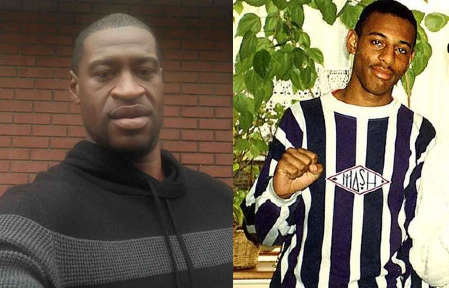
Richard Stone has been central to the martyr-cult of Stephen Lawrence and to the promotion of that lie. He hasn’t been raised to the peerage yet, but his good friend Doreen Lawrence has. She is the martyr’s mother, a member of the Windrush generation who was sent to the House of Lords by the part-Jewish, so-called “Conservative” prime minister David Cameron in 2013. She has endlessly lectured the White British on the failings of their police and legal system. In one way, her lectures are very funny, because Dame Lawrence comes from the extremely violent, corrupt, and badly run Black nation of Jamaica, which has a far smaller population than Britain but more officially recognized murders every year. Many other murders are not officially recognized in Jamaica because they are committed by the Jamaican police in extra-judicial executions of suspected criminals.

Black saints in anti-White martyr-cults

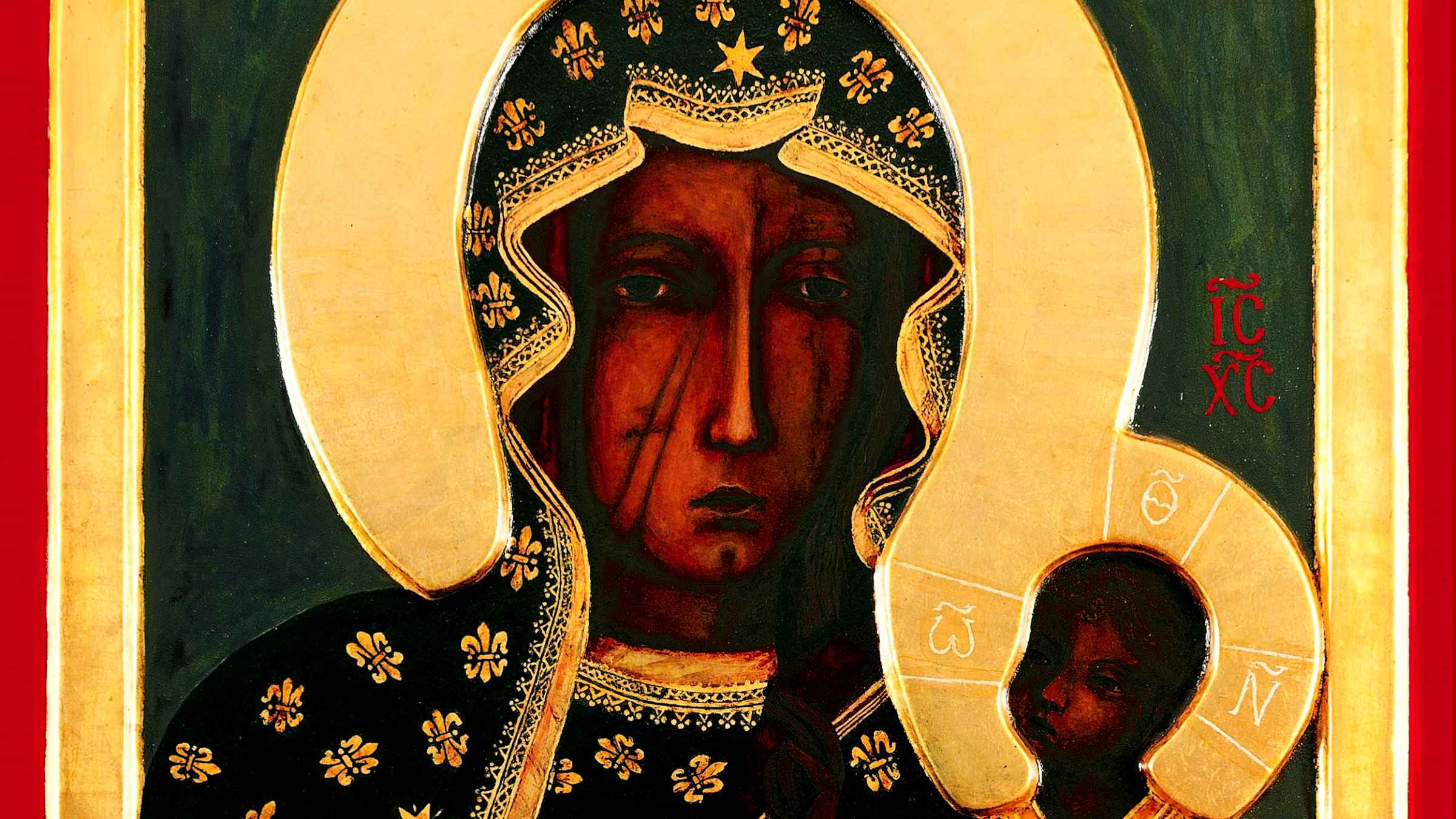
In another way, Dame Lawrence’s lectures are not funny at all. They’re Satanic, because they represent an inversion  of the truth and a deliberate, malicious attempt to replace White civilization with Black barbarism. I don’t think the stupid and self-righteous Doreen Lawrence fully understands what she is doing, but clever and cunning Jews like Richard Stone certainly do. You can find other clever and cunning Jews in America working in the even more pernicious martyr-cult of St George Floyd. He is America’s Stephen Lawrence and is even more appealing to leftists because, unlike Stephen Lawrence, he wasn’t an innocent victim. Instead, he was a thug and drug-addict whose criminality was directly responsible for his own death. His martyr-cult is therefore an even more outrageous inversion of truth than the martyr-cult of Stephen Lawrence. What’s not to like for leftists?

George Floyd and Stephen Lawrence, Black saints in anti-White martyr-cults

“Bow before Blackness, Britain!”: A log-in page at the Black Bullshit Corporation (BBC)

The acronym BBC is supposed to stand for “British Broadcasting Corporation,” but people suggested decades ago that “Bolshevik Broadcasting Corporation” was much closer to the truth. They were right, but nowadays you can also say that BBC stands for “Black Bullshit Corporation.” Like Britain’s advertising industry, the BBC operates a policy of what I call Non-Stop Negro, constantly broadcasting Black faces and Black voices to the nation and the world. It also worships tirelessly in the martyr-cult of Stephen Lawrence, proclaiming the virtue of Blacks and the villainy of Whites, inciting Blacks to feel resentment and urging Whites to feel guilt.

They don’t love Blacks: they hate Whites

That has deadly consequences both for the Whites against whom Blacks take daily revenge and for Blacks themselves, because the martyr-cult of Stephen Lawrence, just like the martyr-cult of George Floyd, has discouraged the police from enforcing the law against Blacks. As the rule of law retreats, Black barbarism advances and more Blacks are murdered by other Blacks. In other words, the loudly expressed concern of leftists for Black welfare is bogus. Leftists are not motivated by love of Blacks, but by hatred of Whites. They don’t care that, thanks to their anti-police activism, thousands more young Black men are being killed and wounded by other Blacks in Britain and America. Their aim is not to help Blacks, but to end the rule of law, destroy the West, and rule the ruins. The so-called Windrush generation was a curse on Britain, which is precisely why Jews like Richard Stone and traitors like Chuck the Cuck pretend that it was a blessing.

By their inversions shall ye know them: Richard Stone and Chuck the Cuck are on the side of evil and lies. The stock of both has been vastly increased by the Windrush generation, which has supplied Britain with an endless stream of Black criminals preying on Whites and Black activists preaching against Whites. Like all other Blacks, the gerontophile rapist Delroy Grant and the rapist-murderer Leroy Campbell should never have been allowed to become residents of Britain. You won’t hear those names mentioned by the BBC, but one day I hope to see the traitors who work there stand in the dock next to Prince William, answering for their bullshit about Blacks and their crimes against Whites and the West.

The Truth About Legacies

After an initial burst of indignation at the Supreme Court for taking on the unpleasant task of informing college admissions offices that race discrimination is unconstitutional, the media’s main focus quickly shifted to their favorite topic: blaming White men.

True, it was going to be difficult to turn a case finally ending 50 years of discrimination against Whites into a story about how Whites are oppressing Blacks, but you don’t know our media. The fact that the plaintiffs in this case were Asian didn’t even slow them down.

Within hours, everybody was talking about “legacies.” The children of alumni are apparently the ne plus ultra of Whiteness. The New York Times called them “White, wealthy and well-connected.” And that’s how “legacy” entered the vocabulary as an epithet for White men, joining “frat boys,” “rich,” “privileged,” “Chads” and “lacrosse players.”

Unfortunately, much like #BlackLivesMatter, this latest orgy of hatred for Whites is going to end up hurting Black people the most.

We have been assured that preferences for the children of alumni are exactly like racial preferences for Blacks and Hispanics — except given to Whites. Thus, Kenny Xu, one of the plaintiffs in the affirmative action case, sneered that preferences for legacies “disproportionately privilege White applicants.” (These aren’t your allies, White people.)

Then, days after the decision was announced, race activists filed a complaint against Harvard for giving preference to the children of alumni, saying that legacy admissions have “nothing to do with an applicant’s merit” and were “an unfair and unearned benefit.”

Let’s look at how big a “benefit” being a legacy actually is.

Comparing three preferences given to college applicants — legacies, athletes and Blacks/Hispanics — the children of alumni got the smallest boost, according to a 2007 Princeton study of 4,000 students entering 28 selective colleges in 1999. A majority of legacy admissions had SATs above their college’s average. Even those below the average were only slightly below it, 47 points out of a possible 1,600.

By contrast, 77% of Blacks and Hispanics had scores below their college’s average, and 70% of athletes did. Combined, their average gap was 108 points.

A 2009 Harvard study found that legacy applicants to the top 30 most selective colleges had a mean score 10 points higher on the reading SAT than non-legacy applicants and six points higher on the math SAT.

About a decade later, Naviance, a college software provider, examined 15,402 legacy applications from 2014-17 and found that 82% of legacy applicants have SAT or ACT scores at or above their colleges’ average for accepted students.

Apparently, the dumb kids of alumni don’t bother applying to their parents’ schools, and the smart kids are pressured into applying, even if their academic qualifications are good enough to get them into a better school.

The Harvard study also found that the legacy preference is strongest for applicants with perfect SAT scores. (In 2007, Harvard rejected more than a thousand applicants with perfect math SAT scores; Princeton rejected thousands of students with perfect GPAs.)

For the past week, the media have bombarded us with data claiming exactly the opposite — that being a legacy confers a huge advantage, comparable to that given to Blacks and Hispanics simply for being Black or Hispanic. You will notice that these claims never refer to the “children of alumni” in isolation. Legacies are invariably thrown in with other, completely different categories, like “whose parents donated money,” “athletes” or “children of university employees.”

E.g.:

“Most colleges have long resisted eliminating a much-criticized admission practice: giving a boost to the children of alumni, donors and faculty.” — The New York Times, June 30, 2023

“[One] analysis found that 43% of Harvard’s white admits in 2019 were legacy students, recruited athletes, children of faculty and staff or were applicants affiliated with donors.” — USA Today Online, July 3, 2023

“The records revealed that 70% of Harvard’s donor-related and legacy applicants are white.” — The Associated Press, July 3, 2023

Grouping dissimilar things together can give you any statistic you want. Dozens of humans are killed every year by grizzly bears and Dachshunds.

The grizzly bear in these lists is “donor-related.”

I hold no brief for legacies, but I do know that I.Q. is heritable, and the kids of alumni are in a wholly different category from the kids of big donors. One is Aage Bohr, who won the Nobel Prize for Physics 53 years after his father, Niels, did. (They are among seven parent/child Nobel winners in the sciences.)

The other is Jared Kushner, whose father bought his kid’s way into Harvard, despite his not being remotely qualified, as a “track 3” high school student. (By the way, Republicans, your outrage at Hunter Biden’s criminality would be more credible if you ever mentioned the $2 billion Jared got from the Saudis.)

If Harvard didn’t discriminate on the basis of race, instead of a student body that is about 43% White, 19% Asian, 11% Black and 10% Hispanic, it would be 43% Asian, 38% White, 0.7% Black, and 2.4% Hispanic, a 2013 study by the university found.

If Harvard didn’t discriminate in favor of legacies, the average SAT score of its undergrads would be lower, as some perfect-scoring alum kids go elsewhere.

As much fun as you’re having bashing Whites, media, the boost given to legacies is not in the same universe as the preferences given to Black and Hispanic students. On the other hand, judging by Jared Kushner, the preference given to the kids of big donors is every bit as humongous as the affirmative action “plus factor,” but it would take the U.S. Marines to get colleges to cough up that information.

Ironically, getting rid of preferences for legacies will hurt Black applicants the most. Recall that colleges have been giving gigantic racial preferences to Black applicants since the 1960s, which means we have more than half a century of Black graduates whose children and grandchildren are … guess what? Legacies!

Children of alums who got in to college on the basis of anything other than merit, as a group, will tend to be less qualified than the children of alums who got in on merit.

Get rid of the legacy preference, and it’s the kids of affirmative action alums who won’t get in.

     COPYRIGHT 2023 ANN COULTER


Poland: The nation and its faith

“O Holy Maid, who Częstochowa’s shrine
Dost guard and on the Pointed Gateway shine!”

Though it is an obvious remark that not each and every Pole is Catholic, it nonetheless holds true that the equation Polish equals Catholic is as valid as the mental association that Russian means Orthodox Christian (with the same reservations that some Russians are not Orthodox Christians, some are atheists). Even non-Catholic Poles remain mentally Catholic just as atheist Russians remain mentally Christian Orthodox, which fact many of them admit. Russian sociologists, by the way, hold the opinion that though in the Soviet Union Christianity was officially banned, still society at large (including devoted and ardent members of the communist party) lived by the Christian moral code; the same could be observed among Polish communists in the post-war period, among members of the communist party (with many of them having their children covertly christened and religiously raised). Among other things: divorce among party members, be it in Poland, be it in Russia or in any Soviet-dominated country of central Europe was either unthinkable or frowned upon.

Poland emerged from prehistory into history through its christening. The year was 966, which has always been recognized by all political persuasions, beyond any doubt, as the beginning of the Polish state, as the beginning of Polish statehood; more: as the beginning of the Polish nation. In 1966, during the time of the existence of the People’s Republic of Poland, both the officially atheistic or at least a-religious state and the Catholic Church celebrated with pomp, even if separately, the Millennium of Polish statehood. Most citizens would participate both in the festive events held by the government or the party (which for all practical purposes was one and the same thing at that time) and by the Catholic Church.

Though religious matters were constantly suppressed by the authorities, by the party, and though numerous ideological assaults were mounted against the Church and priesthood as such, in films, literature, on the radio, on television and in the press, it was precisely at that time that Polish cinematography produced its greatest motion pictures where patriotism, nationalism and the Catholic faith were given pride of place: you need only to think about the 1960 “The Teutonic Knights/Krzyżacy”[1] (to this day the greatest box office success!) or the 1973 “Deluge/Potop”[2] (taking third place at the box office). They impress the viewer with the solemn performance of “Mother of God/Bogurodzica” — the very first battle hymn of the Polish chivalry (the former) — and the breath-taking kneeling homage of the nation, paid to the icon of the Black Madonna in Częstochowa,[3] the national shrine (the latter). The equally popular 1973 movie “Desert and Wilderness/W pustyni i w puszczy” shows a Polish teenager, adamantly refusing to give up on his Catholic faith under threat of having his head cut off by belligerent Muslims in Africa, while the 1974 “The Promised Land/Ziemia obiecana”[4] contains a dramatic scene in which a sinful Catholic perjures himself, laying his hand on the picture of the Mother of God: the Jewish character who manoeuvres the Pole into swearing the oath takes this act as an honest statement because it would have boggled his mind to think that a Pole could lie face to face with the greatest holiness of his nation.

All these motion pictures were shot during the time of state-sponsored atheism. Remarkably, Aleksander Ford, the director of “The Teutonic Knights” and Jerzy[5] Hoffman, the director of “The Deluge” were non-Catholic, not even Christian: they were Jewish.

The 966 Christianization of Poland predated that of Rus’ (988), but occurred after that of present-day Czechia (known in the Middle Ages as Bohemia). It is of some interest to see how the three related Slavic nations responded to Christianity and how roughly the same creed shaped their history. Poles adopted the new faith via Czechia/Bohemia, i.e., from Rome, while Rus’ (present-day Ukraine, Belarus and Russia — at that time indistinguishable), from Byzantium. That fact marked the first great split between Poles and latter-day Russians/Ukrainians. Till this day Russians consider Poles traitors to the Slavic world, and it was no less a person than Austrian Chancellor Metternich (one of the architects of European continental peace settlement forged at the 1815 Vienna Congress), who famously said: Poland is a wedge that the Western world has driven into the Slavic world. The statement is warranted to a great degree: because of Catholicism Poles have always felt to be a part of the Western world and have always felt opposed to eastern Orthodox Rus’.

Catholicism has not always gone hand in hand with the nation or its rulers. Barely a hundred years had passed from the Christianization of Poland, when a severe conflict between a Polish monarch, King Boleslaus the Bold, and Bishop Stanislaus of Cracow (the then-capital of Poland) erupted: the bishop was killed, in a church (!) by the king’s henchmen, as a result of which the monarch was banished from the country and died in exile. This event (1089) is reminiscent of the conflict between Pope Gregory VII and Emperor Henry IV (1077) or of Thomas Beckett’s death at the hands of King Henry II (1170).

The causes of the enmity between the king and bishop are open to a variety of interpretations. During the time of the People’s Republic of Poland, this historical event was a bone of contention as far as its interpretation was concerned: the Polish Catholic Church kept venerating the murdered bishop as a symbol of opposition to the secular (immoral) authorities, while the communist party tried to foist the interpretation of the conflict as an example of a church high-ranking cleric betraying the interests of the state, nay, of the nation.

It was at that post-war time that the communists sought to strip the Church of the influence that it exercised over the nation, so they restricted the clergy as much as they could, prompting the Primate of Poland, Cardinal Stefan Wyszyński,[6] to stand up to the authorities with the by now famous vociferous protest addressed to the government, ending with the words:  “We [the Church] must not sacrifice the divine sacrum on the profane altar of Caesar [the state]. Non possumus [we cannot]”

Rather than being killed like his spiritual predecessor Bishop Stanislaus, Cardinal Wyszyński was imprisoned for a few years. It was at that time that the Polish Catholic Church, absent the Polish nobility and gentry who had disappeared as a class and whose members had either fled the country in fear of communists or who been deprived of their economic and political leverage, assumed the role of the Polish nobility, the Polish aristocracy, the Polish gentry. And what an irony of history it was! The priests were for the most part recruited from the peasantry, i.e., the social class that according to Marxist tenets was to be liberated from the influence of the “opium of the people” and at the same time the social class that for centuries had been thought of by the nobility of not being capable of sustaining nationhood!

At that post-war time, irrespective of whether you were a believer or not, so long as you were anti-communist (and most were), you naturally supported the Church, identified with the Church, and used the Church in your resistance against Marxism-Leninism, against atheists in the positions of power, against the party comrades imposed by Moscow, many of whom were Jewish. Religious instruction was banned from schools but was carried out by parishes. The voluntary attendance was nearly 100%; not because all parents were ardent believers: it was a form of protest, a form of expressing national identity, a sign of resistance — a pronounced, if silent, statement of non possumus. (By comparison, in today’s Poland, attendance at religious instruction, which meanwhile has been reintroduced in schools, has significantly dropped and continues to drop.)

Imprisoned — or rather held under house arrest in various monasteries — Cardinal Wyszyński read (not for the first time in his life) Henryk Sienkiewicz’s[7] trilogy (historical novels about 17th-century Poland, whose cultural importance is comparable to those by Walter Scott in the English-speaking world), and while perusing The Deluge (a few years later made into the aforementioned successful film), he came upon the idea of preparing the nation for the millennium of Polish statehood. “The Deluge”, which heavily draws on historical fact, informs or reminds (as the case may be) the reader of the difficult times from Polish history when the country was inundated by a number of invaders while the nation was on the brink of extinction. It was at that time that Polish King John Casimir made a solemn and religious pledge to restore the greatness of Poland, including through a moral rebirth of the nation; it was in this novel that the reader was reminded of the role that the Częstochowa Monastery and especially of the role that the icon of the Black Madonna played at those difficult times (recall the kneeling homage paid to the icon as depicted in The Deluge. So, too, Cardinal Wyszyński came up with an idea of a moral crusade for the whole nation and the idea of making a moral pledge in the Częstochowa Monastery, which was duly performed with the attendance of a few hundred thousand people after Cardinal Wyszyński had been released from confinement due the post-Stalinist political thaw.

“The confessional and the altar of the nation” — that’s how the Częstochowa Monastery was once defined by him, which corresponds to fact. It occupies the same place in the collective psyche of the nation as Santiago de Compostela for the Spanish or Lourdes for the French. Go to the monastery and you will see a bit larger than real-life size monument of Cardinal Wyszyński, kneeling in front of the shrine where the image of the Holy Virgin has been venerated by generations of Poles since 1382. If you get a closer look at the image, you will spot two scars on her right cheek, scars that the image is commonly known for and commonly recognized by. No, they are not part of an artistic design (no less a person than St Luke the Evangelist is said to be the painter): those scars were inflicted during a Hussite raid on the monastery. The Hussites were Czech — let us say — heretics, but the swords that made the scars were wielded by Polish hands! That shows us the many-faceted relationship between the nation and its Catholic faith.

Black Madonna of Częstochowa

Cardinal Wyszyński initiated a programme of moral renewal which he read from the defensive walls of the monastery to a few hundred thousand people gathered there. He repeated what King John Casimir had done in 1657, which in turn was described by Henryk Sienkiewicz in the above-mentioned historical novel, The Deluge. The moral crusade began in 1956 and was designed to end in 1966, the year of the millennium of Polish statehood. As part of that moral renewal, a copy of the Black Madonna was to be moved from parish to parish, nationwide, gathering local communities for prayer, which exasperated the authorities. Helpless, feeling that they were losing the battle for the nation’s collective soul, the communists seized the image. They arrested the icon! How did Cardinal Wyszyński respond? He had the empty frame carried from parish to parish, nationwide. The presence of the Black Madonna was never perceived as more palpable. Do you remember why King Henry VIII wanted to have Thomas More executed even though his erstwhile chancellor kept silent about the king’s antics? Because his silence spoke louder than words. The same here: the empty frame enhanced the presence of the Mother of God and consolidated the nation, while making the communists look ridiculous.

The empty frame, with no image or rather icon inside, for the Black Madonna is an icon. It was brought to Poland from Rus’ (the part that is present-day Ukraine), which was Orthodox Christian. The northern territory between Poland and Rus’ was occupied by the Grand Duchy of Lithuania, a pagan political entity, that ruled over vast lands of otherwise Christian Rus’ after the latter had been partly destroyed, partly subjugated by many Tartar invasions. Lithuanian pagan dukes — mainly through dynastic marriages — managed to bring under their control what we know today as Belarus, almost all of Ukraine and huge chunks of today’s Russia. Lithuanian rulers were heathen almost till the end of the 14th century. As such, they were the target of religious-cum-ideological military raids carried out by the Teutonic Knights (a German military order), who had settled on a northern piece of Polish territory at the invitation of a Polish prince and had subjugated Old Baltic Prussians in the land that is today part of north-eastern Poland and makes up the whole of Russia’s Kaliningrad Region.

The Lithuanian rulers also got caught in the ideological-cum-religious cross-hairs of the Polish Kingdom. Since the Teutonic Knights threatened both Poland and Lithuania, it was a good idea to combine the forces of the two states (along with all those vast Rus’ territories under Lithuanian rule!) to fend off the German assaults. By mutual consent, the grand duke of Lithuania became king of Poland (1386) on condition, of course, that he and his heathen subjects let themselves be baptized. A new body politic emerged, powerful enough to defeat the Teutonic Knights in a series of wars, of which the Battle of Grunwald (1410) described by Henryk Sienkiewicz in the novel The Teutonic Knights/Krzyżacy and skilfully shown in the movie under the same title became part of the nation’s collective psyche as iconic.

The union between Poland and Lithuania (i.e., Lithuania and huge parts of Rus’ as mentioned above), which later consolidated in the form of the Polish-Lithuanian Commonwealth, meant that Catholicism made a further dent in the east and encroached somewhat on the Orthodox Christianity. With time, Lithuania developed a similar, typically Catholic devotion to the Mother of God, which materialized in the cult of a Marian icon in Vilnius, in the Chapel of Pointed Gateway/Ostra Brama. The cult was almost a one-to-one spiritual copy of the cult surrounding the Black Madonna in Częstochowa. Though the Polish rulers and the nobility were generally tolerant of other Christian denominations, the drive to bring Orthodox Christians to the common Roman fold was strong. A union of the churches (1596) was designed and implemented, by virtue of which Orthodox Christians, while preserving their rites, were to sever their relationship with Eastern churches and recognize the authority of the Pope in Rome. The so called Unite Orthodox Church came to life, which was yet another religious split in the russkiy mir — the Russian world: most of present-day Ukrainian nationalism and national identity derive from that church union or from that split: the Orthodox Church of eastern Rus’ with Moscow as the nascent organising principle of the russkiy mir (Kiev was then a provincial city within the Polish-Lithuanian Commonwealth) was confronted by the orthodox spin-off church, by Orthodox Russian Catholics. To compound the religious and ethnic tensions, constant Jesuit missions operating in eastern territories of the huge Polish-Lithuanian Commonwealth along with the numerous Jews operating on behalf of the magnates in their capacity of tax farmers, owners of mills and inns, land-lease holders, etc. brought about many uprisings of the Russian-speaking, Orthodox Ukrainians (though they were not known by that name then) and resulted in bloodbaths, slaughters, massacres and many acts of ethnic cleansing of the Polish colonizers and their Jewish fellow-travellers.

The greatest “Ukrainian” rebellion broke out in 1648; soon, in 1655 Sweden invaded Poland from the north; that same year Russia attacked from the east; while Ukrainians came close to the town of Lublin, the Swedes occupied Cracow and Russians took Vilnius (capital of the Lithuanian part of the Commonwealth). As a result, the Polish state ceased to exist for all practical purposes (which was precisely the period described by Henryk Sienkiewicz and filmed by Jerzy Hofmann in The Deluge, as mentioned above). It was the Częstochowa Monastery that successfully militarily defied the Swedish siege and marked the beginning of, at first, the guerrilla and then regular war against the aggressors. This period strengthened Polish Catholicism enormously. Why?

– Swedes as Lutherans found support among Lutheran, Calvinistic and other Protestant minorities in the Polish-Lithuanian Commonwealth. To put it bluntly: the religious minorities committed high treason. Some of them were expelled after the war.

– Orthodox Christian “Ukrainians” became to be hated for their massacres;

– Orthodox Christian Russians were disliked for their treacherous cooperation with the Swedes and support that they lent to “Ukrainians”; eventually huge chunks of eastern Polish territories (with Kiev) were surrendered by “Ukrainians” to Moscow;

– Jews showed little to no loyalty to the Polish monarch: they enjoyed huge autonomy anyway, having their own parliament, and at any one time usually remained loyal to the current occupier.

Thus Polishness came to mean Catholicism; Catholicism served Polishness best while external enemies and internal traitors were predominantly non-Catholic.

In the following century, the Polish-Lithuanian Commonwealth could barely recover from the “deluge,” which gradually made it possible for its neighbours, especially Orthodox Russia and Lutheran/Calvinist Prussia to use the religious minorities inside the Commonwealth against the Commonwealth itself. Religious freedom was yesterday’s political trump card comparable to today’s interventions in the name of democracy or human rights. Those interventions from the neighbours carried out in the name of defending the rights of religious dissenters, too, consolidated the Catholic majority which began to perceive Orthodox Christians, Lutherans, Calvinists and Jews as alien and hostile bodies, always ready to cooperate with the external enemy.

In a historically unprecedented chain of three consecutive events occurring between 1772 and 1795 (roughly concurrently with the time of the wars for American independence, and the French Revolution), the Polish-Lithuanian Commonwealth was methodically annihilated by Protestant Prussia, Orthodox Russia and the Catholic Hapsburg Empire, something reminiscent of the three hits that eventually liquidated Carthage, with this exception, however, that Carthage was conquered basically by one foreign entity. National uprisings filled the whole of the 19th century, directed now against Russia, now against Prussia, now against the Hapsburg Empire: all unsuccessful. Yet, they all consolidated the nation around Catholicism. Catholic priests were among the insurrectionists, often without the blessing of the official church; Catholic priests frequently acted as commanders of guerrilla units, and they often got killed at battle or were executed in public, as the case might be. The re-emergence of Polish statehood on a smaller territory as a result of the defeat of the three powers that had held a tight grip on Poland at the end of the First World War saw a reborn Polish state with a very large Jewish and Ukrainian minorities. The majority of the former did not even speak good Polish or did not speak Polish at all; the majority of the latter were intensely hostile towards the Polish state. Many — too many — of the former were members of subversive political organizations, especially of the “Polish” Communist Party (‘Polish’ in scare quotes since in reality it was more Jewish); many — too many —  of the latter participated in terrorist organizations that carried out terrorist attacks, of which the assassination of a minister of internal affairs in Warsaw in broad daylight (1935) was the most notorious. When the Second World War erupted, Ukrainians would shoot at the back of Polish soldiers; during the years of German occupation, Ukrainians revelled in annihilating whole towns and villages inhabited by Poles — especially in Volhynia — with their cruelty shocking the battle-hardened, death-inflicting German SS-troopers.

The end of the Second World War meant redrawing of state borders and ethnic resettlements, which rendered Poland to be almost a 100% Polish and 100% Catholic, ruled by a tiny minority of communists, partly Polish, partly Jewish, both groups atheistic, foisted on the nation by Stalinist Soviet Russia. With almost no religious minorities to speak of, with the lack of a national nobility, in the face of the Russian-cum-Jewish hostile takeover of the state, with no real legal political opposition, Catholicism found itself at its strongest. Let us say it again: it acted as the nation’s nobility, it acted as political opposition, it acted as a store of national values, it acted as a moral guide, it acted as a haven of spiritual comfort, it acted as a reminder of Poland’s glorious past. The election of the Polish pope and his first visit to Poland made people raise their heads; it also sparked a spiritual positive ferment. As it is said today, hundreds of thousands turned up at open-air holy masses in the few cities that the pope visited: people saw that they were the majority; individuals saw that they were not isolated; individuals saw that there were millions of like-minded people, that there were millions who were fed up with Marxism-Leninism. Naturally, the Solidarity Movement that broke out only a year later (1980, and eventually brought about the fall of communism) acted hand in hand with the Polish Catholic Church, with the clergy brokering many deals between the opposition and the government or the communist party. The top echelons of the Solidarity Movement contained many former communist Jewish activists and they, too, sought protection within the Church.

In the four decades after the Second World War Poland may have been communist, and despite that fact it did not lose its collective Catholic soul. Christmas and Easter were solemnly celebrated while the radio and television dared not broadcast frivolous programmes or music during the Easter Triduum (which is not to say that there was anything remotely religious on offer). “Pan Tadeusz”, the national epic poem by the premier national bard, Adam Mickiewicz, was always mandatory reading. Children in state-run schools were required to learn by heart the several introductory lines to this poem, two of which read like this:

“O Holy Maid, who Częstochowa’s shrine
Dost guard and on the Pointed Gateway shine!”
(translated by Kenneth Mackenzie)

One might say, in today’s Poland Catholicism is dwindling. Yes, it is. The most shocking events occurred quite recently when, following the U.S. Supreme Court decision leaving abortion legislation to the states, thousands of young rabidly angry women in an act of protest stormed into churches, disrupting Holy Mass, because they held the church responsible for the very restrictive anti-abortion legislation. Yet, it is not without a reason that I mentioned the killing of Bishop Stanislaus at the behest of the Polish monarch or the scarring of the face of the Black Madonna by Polish hands. Such things have happened, happen and will continue to happen. Polish Catholics have been big sinners, adulterers, fornicators, murderers, blasphemers, you name it. If you take a close look, you might run away with wild conclusions. The moment you take a broad picture, you see the trend. Growing up, I remember thinking that atheism in the Soviet Union was as eternal as eternal the Soviet Union seemed to be. All of a sudden the Soviet Union was gone while the Russian Orthodox Christianity is seeing its revival. So, the broad picture remains: just as Russia’s spirit is Orthodox Christian (even if at times religion is suppressed or rejected) so Poland’s spirit is Catholic (with the same reservations).

And Catholicism is not simply a Jewish plot to destroy the White race.


[1] DVD with English subtitles.

[2] DVD with English subtitles.

[3] Częstochowa /chen-staw-KHAW-vah/

[4] DVD with English subtitles.

[5] Jerzy /YEH-zhy/

[6] Wyszyński /vysh-IN-skee/

[7] Sienkiewicz /shyenk-YEH-veech/