Featured Articles

Mark Leibler: Powerbroker for Australia’s Jewish Plutocracy — PART 5

Former Australian Foreign Minister Bob Carr

Go to Part 1.
Go to Part 2.
Go to Part 3.
Go to Part 4.

Bob Carr — Friend then Exasperated Foe of the Israel Lobby

In his memoir, Run for Your Life, published in 2018, former foreign minister Bob Carr outlined his journey of disillusionment with Israel and with its supporters in Australia. Carr’s first clash with Rubinstein and Leibler’s AIJAC was in 2003 when Sydney University’s Peace Foundation awarded its annual Sydney Peace Prize to veteran Palestinian activist and politician Hanan Ashwari, citing her commitment to human rights and the peace process in the Middle East. Rubinstein, outraged at the decision, claimed Ashwari was “an apologist for violence and terrorism,” and called on Carr (then Premier of New South Wales) to refuse to present the prize to Ashwari. Carr refused.

The City of Sydney, one of the sponsors of the prize, which came under fire from AIJAC, suddenly announced it would boycott the ceremony. Professor Stuart Rees, head of the Sydney Peace Foundation, was subjected to “severe pressure” including abusive phone calls over the Ashwari decision. Rees noted that threats were made to “our supporters to the effect that their interests might be affected if they pursue their association with the peace prize.”[1] Based on his experience as editor of The Age, Gawenda has “no doubt Rees and Carr were subjected to abusive phone calls from individuals who see anti-Semitism and hatred of Israel everywhere.”

Looking back on the Ashwari episode, Leibler regards the AIJAC’s militant approach that resulted in alienating the likes of Carr (hitherto a strong supporter of Jews and Israel) as a strategic mistake. He claims that, if AIJAC had its time again, it would not have been so concerned about Ashwari’s Peace Prize. “It was not that important. Sometimes, we have to know when silence is best. I think I have certainly learnt not to react to everything. And I think I have learnt to say things in a more measured way.”[2] When asked whether AIJAC’s actions turned friends (like Carr) into enemies, Leibler claimed “Making us responsible for our enemies is to blame Jews for anti-Semitism. I utterly reject that.”[3]

Recalling the hysterical reaction of organized Jewry to his presenting the Sydney Peace Prize to Ashwari in 2003, Carr writes:

The storm of criticism that then occurred was a shock … and an insight. Soon after my participation was announced, Jewish leaders launched an international campaign to force me to withdraw from the award. There were threats of funding being withdrawn from the University. … Letters of protest were dispatched about the awards going to a Palestinian, switchboards were set aflame with indignation.[4]

This incident underscored for Carr the power of the Israel Lobby in Australia to distort and control Australian foreign policy. Particularly egregious, in Carr’s view, was the influence exerted by the people who ran AIJAC — Leibler and Rubinstein in particular. Of the Lobby, Carr wrote:

The hold of the Israel Lobby over Australian politicians is based on two facts. First, the donations to political parties from the Jewish community leadership; second, paid trips to Israel extended to every Member of Parliament and journalists [i.e, Rambam Fellowships]. From the Australia/Israel and Jewish Affairs Council (AIJAC) over 700 trips alone. … No other community, treats politicians as their poodles.[5]

One of those treated as a poodle, Carr implies, was Prime Minister Gillard, in whose Cabinet he served as Foreign Minister. Eight months after his appointment to this position, in November 2012, his relationship with Gillard became strained over a looming United Nations vote on a resolution to grant non-member status to Palestine. Carr supported voting in favor of the resolution, while Gillard was “adamant that Australia should vote against it.”[6] Carr lobbied colleagues in favor of the resolution and in the end, with a significant bloc of Labor MPs sympathetic to Carr’s stance, Gillard decided Australia would abstain from voting on the resolution.

Carr was convinced that Bruce Wolpe, Gillard’s Court Jew and “liaison with the Jewish community,” was Leibler’s spy in the Prime Minister’s Office. Carr shared this view with Leibler at a meeting at the ABL offices in Melbourne. According Leibler, Carr spent an hour “ranting and raving and yelling to the point that it could be heard all over the office.” Wolpe’s name got several mentions. Afterwards, “the two men hardly spoke to each other again and avoided each other as much as possible, such was the level of distrust between them.”[7]
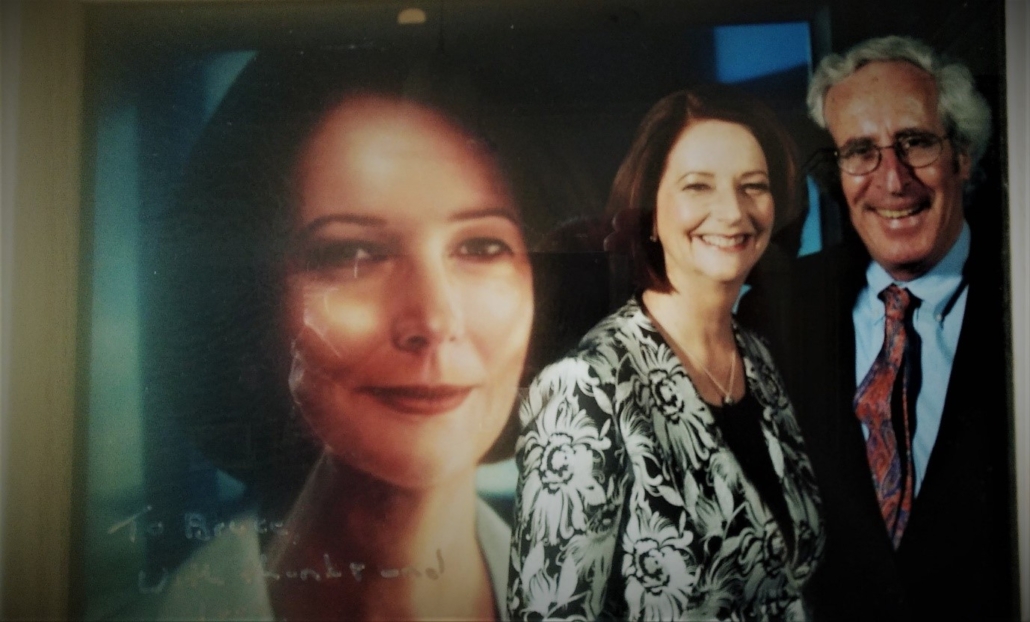
Julia Gillard with Bruce Wolpe, “Leibler’s spy in the Prime Minister’s office”

In Diary of a Foreign Minister, published in 2014, Carr describes how the Israel Lobby made his life hell whenever he wanted to issue a statement on any issue involving Israel. He found it exasperating that he couldn’t even issue a “routine expression of concern about the spread of settlements” without aggressive push back from the Lobby. As she had done to Rudd when he was Foreign Minister, Gillard vetted — and sometimes vetoed — his statements on Israel and the Palestinians. Carr notes that some of his proposed statements “merely repeated government policy, for instance that the settlements were obstacles to peace.”[8] Gillard expressed surprise at Carr’s exasperation on these issues when surely Carr “must have known of the issues she had with Rudd about Middle East policy and that she was on good terms with Leibler.”[9]

Indeed, Carr knew at the time of his appointment that Gillard had been captured by organized Jewry. Critical to this capture was when, in 2001, while Shadow Health Minister, Gillard “first went to Israel in a group of Labor and Liberal politicians chosen for AIJAC’s Rambam Israel Fellowship.” The effect of this trip on Gillard was far from unique, with Carr noting how “the program has produced scores of politicians and journalists who are poodles of AIJAC.”[10] Due to such influence, both Rudd and Carr came to believe that the Israel Lobby was a malign force that “distorted Australia’s policies on the conflict between Israel and the Palestinians, and turned many politicians and journalists into the Lobby’s puppets, or, to use Carr’s word, ‘poodles.’”[11]

To gauge the propagandistic effectiveness of Rambam Fellowships, “participants are asked to provide feedback of their experience. Some are invited to a function to talk about what they saw, whom they spoke to, and the impact the visit had on them.”[12] Gillard first met Leibler at one of these debriefing sessions. Over subsequent years, “Leibler’s relationship with Gillard continued to grow. After Australia’s abstention in the vote in the United Nations, the two met. Gillard had come to appreciate Leibler’s keen sense of what was happening in politics and she appreciated his encouragement and concern for her.”[13] When asked whether she thought AIJAC, and Leibler in particular, were powerful, Gillard was unequivocal:

Look, yes in the sense that the Jewish community in Australia — the Melbourne community in particular, because I know it best — is well connected. Put it another way, the community has done a good job over many years of developing deep connections across both side of Australian politics. They therefore have the networks and the access to put a particular point of view.[14] 

In 2010, Gillard appointed Leibler to co-chair her Expert Panel on Constitutional Recognition of Indigenous Australians. In 2017 a proposal from the Expert Panel recommended that an Aboriginal advisory body be included in the Australian Constitution. Aboriginal activist Marcia Langton claimed that Leibler told her “that his own history, being Jewish, gave him a great understanding of the genocide of the indigenous people and you know, there’s no question that it did.”[15]

Leibler and the Abbott, Turnbull and Morrison Governments

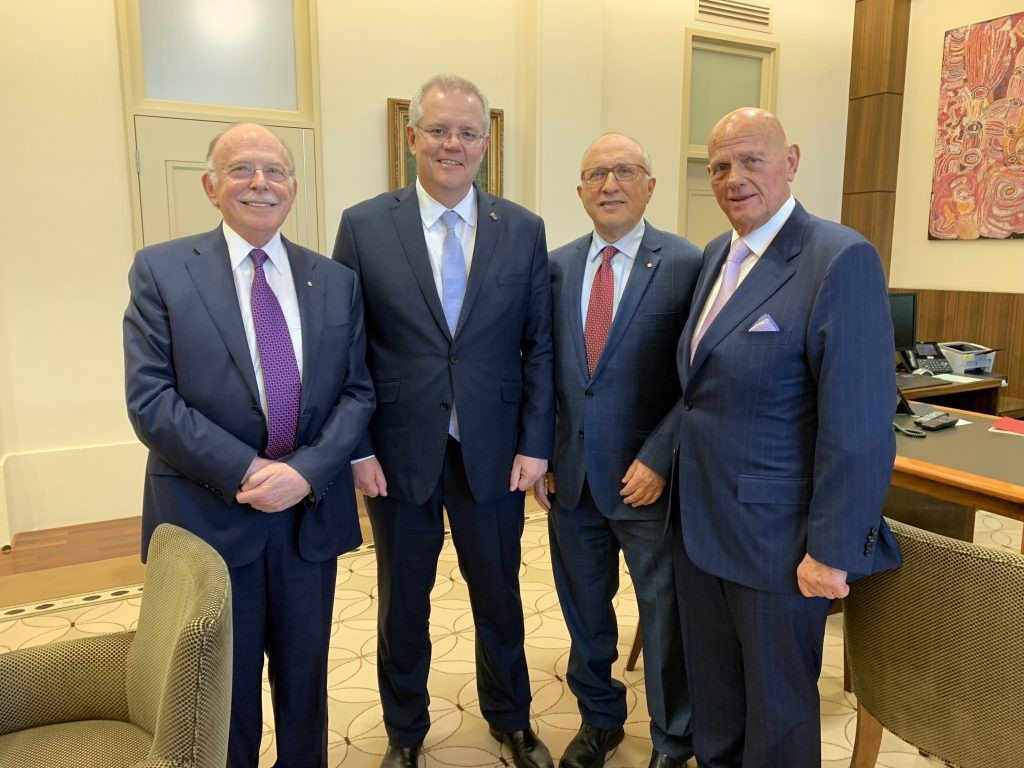
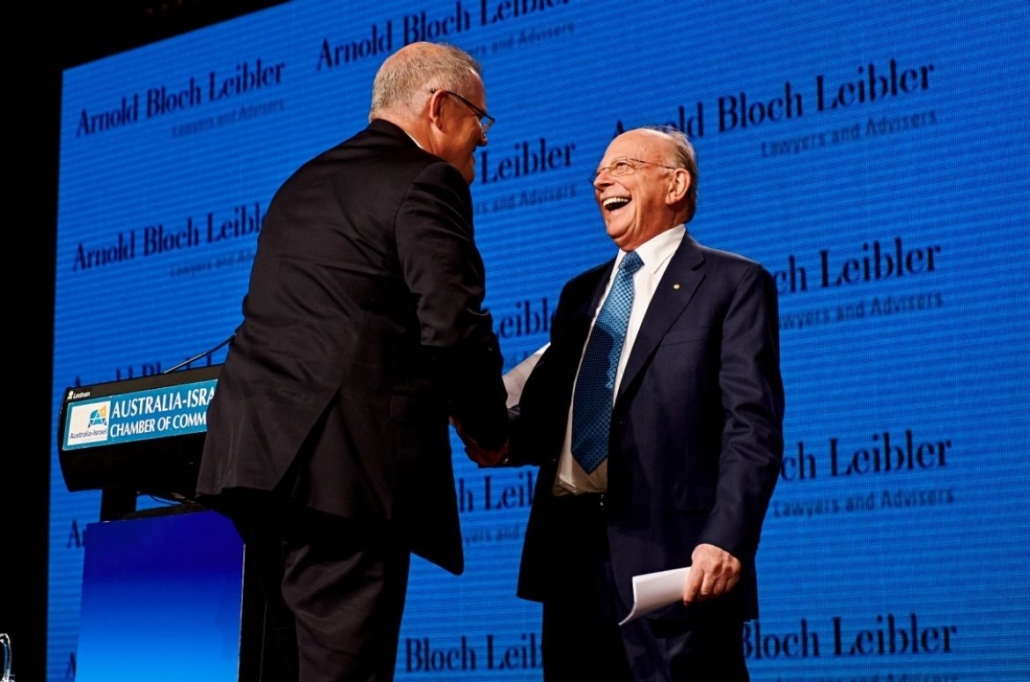
The power of AIJAC has not waned since Gillard’s tenure as Prime Minister. This reality is clear to Gawenda who notes the fact that “a meeting  between Prime Minister Scott Morrison and AIJAC’s three most senior leaders could be arranged not long after Morrison replaced Malcolm Turnbull as leader of the Australian government [in 2018] is evidence of an organization at the height of its influence.”[16] These leaders were Leibler, Rubinstein and Solomon Lew, the billionaire retailer and long-time funder of AIJAC. Rubinstein had proposed the meeting and was surprised how quickly Morrison responded. For Gawenda, Morrison’s swift response was “not really surprising.”

Although Leibler did not know Morrison well, he had met him several times when Morrison was Treasurer, and Leibler was close to Josh Frydenberg, the Liberal Party’s Deputy Leader and newly elected federal Treasurer, whom he had known for 20 years or more, since Frydenberg had worked as an advisor to John Howard. By the time Leibler and the delegation met with Morrison, Frydenberg had become the most senior Jewish politician in Australian history. There is little doubt that Frydenberg had briefed Morrison about a possible meeting with the AIJAC people. What’s more, Morrison would have been aware of Leibler’s connections in Canberra, probably remembering that his predecessor as Prime Minister [Malcolm Turnbull] had chosen Leibler to MC at the official lunch for Benjamin Netanyahu in Sydney in February 2017.[17]

The AIJAC leaders took a list of demands to the meeting with Morrison. Their top priority was for Australia to officially abandon its previous support for the Iran nuclear deal (a purely symbolic gesture given Australia was not a party to that agreement). The second priority was for Australia to move its embassy from Tel Aviv to Jerusalem. Three days after the meeting, Morrison announced that the government was examining the possibility of moving the Australian embassy from Tel Aviv to Jerusalem. At the media conference Morrison refused to say whether he had been briefed by Foreign Affairs or by his own department on the consequences of the embassy move. Clearly, the Morrison acted purely at the urging of the AIJAC triumvirate and his deputy leader Frydenberg “who made it clear that he favored its move from Tel Aviv to Jerusalem.” Frydenberg said he “would not comment on any meeting he might have had with the Prime Minister” in relation to this issue.[18] Before the 2019 federal election, Morrison announced his government was committed to moving the Australian embassy to West Jerusalem when the time was right.
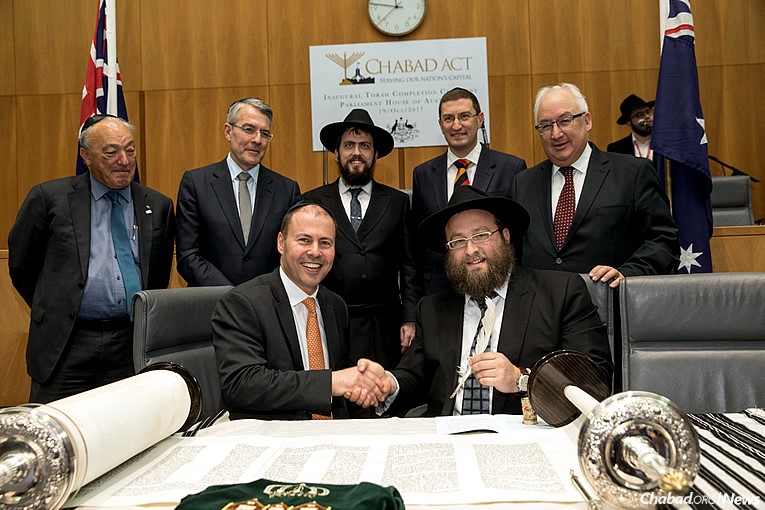
Australia’s current Treasurer Josh Frydenberg (front left)

Gawenda observes there “is little doubt that Leibler and AIJAC push on open doors when it comes to having access to the Prime Minister and senior ministers in his government.” This has been the case for many years now: at an AIJAC function held at the offices of ABL in 2013, then Prime Minister Tony Abbott was asked what his position was on some aspect of the conflict between Israel and the Palestinians. “Oh, my position is whatever Mark and Colin’s position is,” he answered.[19]

Chair of the United Jewish Appeal

By the early 1990s, Isi and Mark Leibler had become senior leaders not only of Australian Jewry, but also in the organizations of world Jewry. Isi had served numerous terms as President of the Executive Council of Australian Jewry and was co-chairman of the World Jewish Congress. Mark had been president of Zionist Federation of Australia for a decade, and was a Jewish leader with “unmatched political contacts in Canberra and a record of getting things done.” By the late 1990s, in addition to his chairmanship of AIJAC, he was president of the United Jewish Appeal.

The United Jewish Appeal determines how money raised in diaspora communities will be spent on projects in Israel and, increasingly, in diaspora Jewish communities, especially the six-million-strong community in the United States. For more than 25 years, Leibler has flown to Israel for meetings of Keren Hayesod, the Israel-based institution that governs United Israel Appeal (UIA) organizations that operate worldwide except in the United States, and of the Jewish Agency for Israel. The Jewish Agency, with an annual budget of around $US400 million (mainly raised by American Jewish organizations) is the most financially powerful Jewish organization in the world.

Increasingly, it funds “projects in the diaspora that are designed to bolster Jewish identity and connection to Israel in communities where assimilation looms large and where there is evidence of weakening ties to Israel. It funds the Birthright programs that send young Jews on organized tours to Israel and around 1,800 shlichim, the young Israeli emissaries sent to diaspora communities to work in schools, universities and Zionist youth groups in order to promote the migration of young Jews to Israel. The Jewish Agency also funds diaspora Zionist organizations such as ZFA.[20]

In Leibler’s six years as President of the United Jewish Appeal from 1995 to 2001, its Australian affiliates raised around $200 million. In some years they sent more money to Karen Hayesod than equivalents in Canada (which has a Jewish population three times larger than Australia) and more than any Jewish community in Europe (including France). These fundraising results gave Leibler significant influence and power in international Zionist organizations.

Under Australian law, donations to charities that run programs in developing nations were tax-deductible. Despite the fact Israel is a wealthy country, Leibler “with his expertise in tax law, managed to win an exemption for the UIA.” UIA’s tax-deductible status was threaten in 1998 when Israel was officially classified as a First World country. In response:

Leibler went to see [then] Foreign Minister Alexander Downer and told him that despite Israel’s First-World status, the funds raised by the UIA were going to refugee resettlement in Israel and to Jews living in difficult circumstances in Eastern Europe, Ethiopia and the Balkans. Downer was convinced and shepherded through amendments to the Income Tax Assessment Act that allowed UIA to retain its tax deductibility and, therefore, its position as the world’s biggest fundraiser for Israel outside the United States. This achievement helped ensure Leibler’s standing as one of the world’s outstanding Zionist leaders.[21] 

Leibler’s networking and connections with senior Australian and Israeli politicians, together with the very large donations of wealthy Australian Jews to the UIA, gave him great clout in world Jewry. It has long been clear to Leibler that “there would never be a mass Aliyah from the prosperous and increasingly assimilated Jewish communities of the West,” and that “donating to Israel was a way to express support and even love for the country.”[22]

Leibler’s successor as chairman of the Jewish Agency, Natan Sharanksy, who held the position from 2009 to 2018, changed Leibler’s strategic focus, shifting away from projects in Israel to “projects that strengthened Jewish identity, particularly in the United States,” which become a “first-order priority” for the Agency.[23]  Sharansky’s successor, former Israeli politician, Isaac Herzog, reaffirmed this focus on the “American Jewish community, so large and powerful, but so vulnerable, at least in terms of Jewish continuity.”[24] Regarding Australian Jewry, by contrast, Herzog noted there was “no other community like it in the world. So united, so strongly Zionist.”[25]

Contemporary Demographics of Australian Jewry

Australian Jews are overwhelming middle to upper class, with surveys finding 78 per cent of Australian Jews were “comfortable or better.” Around one-in-five Australian Jews had an annual personal income of $104,000 or more, compared to 7 per cent of the general population. Australian Jews mostly live in the middle-class or upper-middle-class suburbs of Melbourne and Sydney. The socioeconomic profile of Australian Jews is reflected in voting patterns. Around half vote for the Liberal Party, as opposed to the Labor and other minor parties. The Liberal Party gives them the neo-liberal economic policies (including tax cuts) that benefit them financially, while also being more enthusiastically pro-Zionist than the Labor Party. The Liberal Party is also fully on board with the mass immigration and multiculturalism that comprise the central pillars of the Jewish ethno-political strategy for the West. Disputes within Australian Jewry over the last several decades (many involving Isi Leibler) have not been about this agenda, according to Gawenda, “but about tactics and personal status, about who speaks for the community and, above all, about who has access to prime ministers and senior government ministers.”[26]

While equally wealthy, American Jewry, a community three or four generations older than Australian Jewry, is more assimilated with higher rates of intermarriage — a trend which, according to Gawenda, threatens the world’s largest Jewish community. The intermarriage rate in Australia is less than half that of the United States, with rates among Orthodox Jews close to zero.

This trend has been bolstered over the last few decades by the arrival, since the end of apartheid, of over 15,000 South African Jews in Australia. These Jews “are the world’s most educated émigrés, 70.8 per cent at tertiary level, the most well-heeled, the most cosmopolitan in the way they travel, the only migrant group capable of spending time and money coming on visits before selecting their relocation spots.”[27] They are also among the most ethnocentric Jews in the world, with Tatz noting how their mentality is encapsulated in “daily pontification about the Jewish-goyishe divide” and in his grandfather’s refrain that “The worst of ours are better than the best of theirs.”[28] Even other Australian Jews have been taken aback by the insularity of these newcomers, how “socially, spatially, culturally, religiously, they huddle in enclaves of their own creation.” “Marrying out” for these intensely parochial Jews means marrying a non-South African Jewish spouse.

Tatz ascribes this hyper-ethnocentric mentality to the fact “the shtetl remains engraved in their immigrant souls.” From the time of the mass Jewish exodus from Lithuania to South Africa in the early twentieth century, these Jews were, he notes, “saturated” with the notion of separateness. He also attributes their extreme ingroup preference to “the specter of anti-Semitism, the dark shadow of rejection by an anti-Semitic and intolerant world.” It is only among themselves, he maintains, that they can “relax at least for a while — laugh, cry, be brash, busy, creative, funny and not worry about what the goyim think.”[29] The reputation of South African Jews in Australia took a significant hit in 2009 when the Sydney Morning Herald reported that Barry Tannenbaum, a South African Jewish immigrant, had scammed investors out of $1.5 billion in a Ponzi scheme that was likened to Bernie Madoff’s crime in the United States.[30]

Given this infusion of South African Jews, and the high fertility rates of existing groups of Orthodox Jews, Markus predicts the proportion of Australian Jews “who are ultra-Orthodox or Modern Orthodox will increase, and the community might become even more conservative.”[31] Unlike in America, Reform Jews, even today, represent only a small minority of Australia’s Jewish population.

Preventing his own children and grandchildren from marrying non-Jews was a first order priority for Mark Leibler, and Gawenda notes “how important it was for him that his children, and now his grandchildren, married Jews. He can be pretty sure that his family, his children and grandchildren will be committed Jews, committed to their Judaism and to the sort of religious Zionism in which three generations of the Leibler family have played such as prominent role.”[32] Each of his children “have followed in their parents’ footsteps: each married a Jew; none has weakened his commitment to Zionism and to the continuity of the Jewish people; none has ever doubted that they would.”[33] Leibler’s son Yehuda has Australian, American and Israeli citizenship — but sees himself unequivocally as an Israeli. “When he thought about Australia,” notes Gawenda, “he thought about his family and the Jewish community. The fact that he was a citizen of Australia, or of America, did not mean much to him.”[34]

The Leibler Dynasty Continues

In 2018, Mark Leibler’s son Jeremy, a partner at ABL, was elected president of the Zionist Federation of Australia. Meanwhile Colin Rubinstein’s son, Paul, ABL’s managing partner in Sydney, is the New South Wales chairman of AIJAC and is touted as a likely successor to Mark Leibler as AIJAC’s national chairman. Gawenda claims the next generation of Jewish leaders will face daunting challenges which include “the rise of anti-Semitism around the world, including in Australia.”[35]

Prime Minister Scott Morrison being presented with the Jerusalem Prize by Jeremy Leibler (current president of the Zionist Federation of Australia)

Mark Leibler is more sanguine than his brother Isi about the future of Jews in the diaspora. Nevertheless, he thinks Jews are far less safe in some diaspora communities, including the United States, than he thought possible a decade or two ago:

Anti-Semitism has been on the increase for three decades and has accelerated in the past few years. Who could imagine even a few years ago that a major party in Britain would be led by an anti-Semite or, at least, by someone who has made numerous anti-Semitic remarks and has tolerated the growing number of anti-Semites in his party? I still can’t believe it, that Jeremy Corbyn was the leader of the British Labor Party and could well have been Prime Minister. … But as far as grassroots anti-Semitism is concerned, it’s probably worse in France than in England. In America, there has undoubtedly been an alarming increase in violent extreme anti-Semitism from the left and right. What is happening there was unimaginable a few years ago.[36]

As a rabid Zionist, Leibler is particularly concerned about growing anti-Zionism on university campuses in the United States. He insists this “so-called anti-Zionism invariably traffics in anti-Semitic canards about the money power of Jews for instance.” The irony of his making these remarks as the leader of Australia’s wealthiest, most politically well-connected and powerful ethnic group seems to have escaped Leibler. Leibler believes Islamist anti-Semitism, encouraged and supported by the far left, poses a bigger threat to Australian Jews than right-wing anti-Semites.

Mark Leibler’s brother Isi had also expressed concern at the growing threat of Islamist anti-Semitism. In an article for the Jerusalem Post entitled “European Meltdown Threatens Jews,” he lamented the negative impact of large-scale Muslim immigration to Europe on Jewish communities there. He notes that: “With the indigenous population shrinking and the Muslim birthrate alarmingly high, unless the flow of migrants is stemmed, there is every possibility that by the end of the century the foundations of European civilization will be destroyed.” Through “dramatically destabilizing the social cohesion and security of countries harboring them,” Muslim migrants have led to Diaspora Jewish communities “suffering severe trauma as they experience the erosion of the acceptance and security they have enjoyed over the past half-century.” What makes this all the more concerning for the elder Leibler is the fact this influx of Muslims is, to a great extent, the direct result of Jewish ethnic activism.

Yet ironically, many liberal Jews are at the forefront of campaigns to open the door to widespread immigration of Muslim “refugees” and even make ridiculous bleeding-heart analogies to the plight of Jews during the Holocaust. In so doing, they are facilitating the entry of hordes of embittered anti-Semites who have been brought up to consider Jews as the “offspring of apes and pigs.”

For Leibler, flooding Europe with these “hordes” is regrettable, not primarily because, if the trend continues, “by the end of the century the foundations of European civilization will be destroyed,” but because the end result will be that Jews in Europe are increasingly forced to “live in societies where horrific terrorist attacks against their schools, synagogues, museums and supermarkets have necessitated military or armed guards to provide security.”
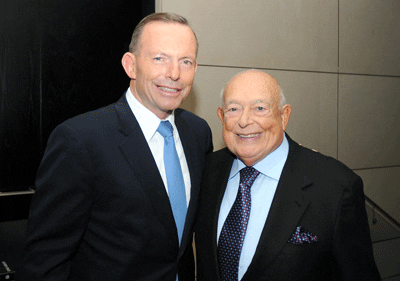
Former Prime Minister Tony Abbott with Isi Leibler

The mass importation of Muslims into Europe also presents a danger to Jews, according to Isi Leibler, in fueling the rise of the far-right. He notes that activist Jews, in advocating and facilitating the influx of Muslims into Europe, inevitably “enrage many of their neighbors who loathe these ‘refugees’ and fear that this flood of immigration will destroy their way of life.” The result has been “the meteoric rise of radical right-wing movements in all European countries — Jobbik in Hungary and the Golden Dawn in Greece [which] are outright anti-Semitic and neo-Nazi movements.” Despite nationalist leaders like Marine Le Pen having “vigorously condemned and disassociated her party from its former anti-Semitism,” Leibler insists the rank and file members of parties like the National Front that notionally “support Israel” remain “unreconstructed traditional anti-Semites.”

Leibler is part of the distinct (though growing) minority of activist Jews who regard the Jewish strategy of transforming Europe through mass Muslim immigration as “bad for the Jews.” In 2010 he voiced his strong support for non-White immigration and multiculturalism for Australia while rejecting these policies for Israel.  He thus accepts it to be in the interests of Jews to dilute and weaken the identity of the majority European-derived nations in which many live. For Leibler, however, this non-White diversification strategy for is only good for Jews providing “hordes of embittered anti-Semites” from Muslim nations aren’t the primary means of achieving it.

A silver lining of the rapidly-accelerating destruction of Europe for Isi Leibler is that, unlike vulnerable Europeans, Jews can always flee to an ethnically-homogeneous “Jewish state” that provides “a haven for all Jews.” As an ultra-Zionist he naturally hopes that, as European societies become increasingly violence-plagued, dysfunctional and inhospitable to Jews, “many will leave and join us in Israel and participate in the historic renaissance of our people.”[37] As a result of Jewish activism, millions of White people are also increasingly fearful of their or their children’s future. Unlike Jews, however, they don’t have the option of fleeing to the relative safety of an ethnostate.

Brenton Sanderson is the author of Battle Lines: Essays on Western Culture, Jewish Influence and Anti-Semitism, available here and here.


[1] Michael Gawenda, The Powerbroker: Mark Leibler, An Australian Jewish Life (Melbourne: Monash University Publishing, 2020), 259.

[2] Ibid., 260.

[3] Ibid., 260.

[4] Bob Carr, Run For Your Life (Melbourne: MUP, 2018), 177.

[5] Ibid., 178.

[6] Gawenda, The Powerbroker, 279.

[7] Ibid., 280.

[8] Bob Carr, Diary of a Foreign Minister (Sydney: NewSouth, 2014), 388.

[9] Gawenda, The Powerbroker, 283-84.

[10] Ibid., 285.

[11] Ibid., 3.

[12] Ibid., 285.

[13] Ibid., 286.

[14] Ibid., 286.

[15] Ibid., 208.

[16] Ibid., 335.

[17] Ibid., 336-37.

[18] Ibid., 338.

[19] Ibid., 341.

[20] Ibid., 310-11.

[21] Ibid., 313.

[22] Ibid., 316; 315.

[23] Ibid., 317.

[24] Ibid., 320.

[25] Ibid., 319.

[26] Ibid., 75-76.

[27] Colin Tatz, Human Rights and Human Wrongs: A Life Confronting Racism (Clayton, Victoria; Monash University Publishing, 2015), 350.

[28] Ibid., 16.

[29] Ibid.

[30] Nick O’Malley & Thomas Graham, “Exposed: the Sydney man accused of $1.5 billion scam, The Sydney Morning Herald, June 13, 2009. https://www.smh.com.au/national/exposed-the-sydney-man-accused-of-15-billion-scam-20090612-c640.html

[31] Gawenda, The Powerbroker, 329.

[32] Ibid., 334.

[33] Ibid., 360.

[34] Ibid., 352.

[35] Ibid., 335.

[36] Ibid., 356-57.

[37] Isi Leibler, “European meltdown threatens Jews,” The Jerusalem Post, December 20, 2026. https://www.jpost.com/Opinion/European-meltdown-threatens-Jews-476004
Mark Leibler: Powerbroker for Australia’s Jewish Plutocracy — PART 4: Australian Foreign Policy: Hijacked by AIJAC

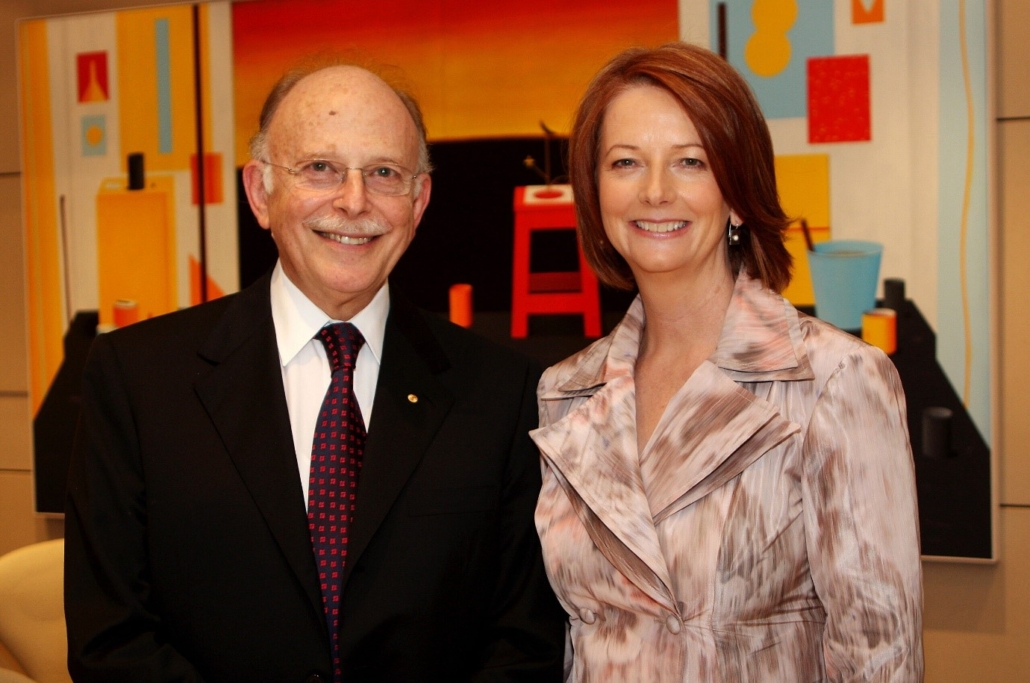
Mark Leibler with former Prime Minister Julia Gillard: “A wholly-owned subsidiary of the Israel Lobby”
Go to Part 1.
Go to Part 2.
Go to Part 3.

Australian Foreign Policy: Hijacked by AIJAC

The Australia Israel & Jewish Affairs Council (AIJAC), chaired by Leibler, is undoubtedly the most aggressive Jewish lobbying organization in Australia. Gawenda describes it as “the most formidable lobbying outfit for Israel and for what AIJAC perceives to be Jewish community interests in Australia.”[1] AIJAC emerged out of Australia/Israel Publications (AIP) which published Zionist literature and organized venues for Israeli politicians and commentators to speak in Australia. By the early 1990s, the Jewish academic and activist Colin Rubinstein (later Prime Minister John Howard’s Court Jew), who had been involved with AIP since 1977, was “telling people, Leibler included, that AIP was not viable and needed to be professionalized along the lines of the American Israel Public Affairs Committee (AIPAC), one of the most powerful lobbying bodies in Washington.”

An indefatigable networker, Rubinstein went to see a number of wealthy Jews in Melbourne and Sydney who “quickly agreed to support his vision of a professionally run and well-resourced replacement for the AIP.”[2] Among the wealthy Jews who responded enthusiastically to Rubinstein’s appeal was the retail mogul Solomon Lew, who had once been Rubinstein’s schoolmate. Lew contributed significant funding and persuaded some of his fellow Jewish billionaires to help bankroll AIJAC. Mark Leibler joined the organization as chairman at the urging of Solomon Lew — who was a client of ABL. Asked who AIJAC is supposed to represent, Lew replied “It represents Australian Jewry and it represents Israel. We are recognized by more politicians in Australia from all sides. They never make a speech without checking with us.”[3]

Mark Leibler, Colin Rubinstein and Solomon Lew with Prime Minister Scott Morrison

With an impressive suite of offices in Melbourne, and with a staff of 17, eight of them full-time policy analysts and journalists, Gawenda notes that “No Jewish representative body in Australia has such resources, contacts and clout.” AIJAC’s Sydney office is run by Jewish activist Jeremy Jones whose current focus is on “developing relationships with Australia’s Muslim community, a process still very much in its infancy.”[4] Leibler and Colin Rubinstein, a Monash University lecturer in Middle East Studies (and rabid Zionist) built the body into “one of Australia’s most formidable lobbying outfits.” When there’s lobbying to do in Canberra, Leibler is invariably part of the AIJAC delegation.

Leibler has visited Israel continuously for 25 years, and has close relationships with Israeli politicians, including prime ministers, and senior Israeli public servants, among them Yuval Rotem, head of the Israeli Foreign Ministry and close advisor to Prime Minister Netanyahu. While AIJAC officially claims to support a two-state solution to the conflict between the Israelis and Palestinians, it “has consistently argued that the peace process is stalled indefinitely” for which it blames the Palestinian leadership.[5] In reality, AIJAC has “publicly disowned any prospect of a two-state solution to the conflict between Israel and the Palestinians.”[6] While vehemently rejecting the feasibility of Israel as an ethnically-diverse, multicultural state, AIJAC is, however, deeply committed to multiculturalism in Australia, and relentlessly “lobbies on issues that affect Australian Jews, such as anti-Semitism and the health of multiculturalism.” Rubinstein insists that “multiculturalism has served the Jewish community well” and responds vociferously to any critiques of a policy that is deliberately designed to harm the group genetic interests of the White Australian majority.[7]

AIJAC is also committed to silencing those who don’t share its views, including fellow Jews, and “their criticism of people who held views they didn’t like was almost always extreme and sometimes personal.”[8] Gawenda personally attests to the accuracy of such claims, and notes that during his tenure as editor of The Age in the 1990s:

I would receive, at times almost daily, AIJACs criticism of the work of its Middle East correspondent, either by email, phone or in meetings at newspaper offices. The AIJAC spokespeople were smart, relentless, knew their stuff, and were blunt, sometimes to the point of rudeness, in their criticism of the paper and some of its journalists and commentators. I also received emails and phone calls, some of them abusive and hostile, from people whose views on Israel were to the far right of AIJAC, about some aspect of our coverage of the Middle East. Invariably, I was accused of being an anti-Semite or a self-hating Jew.[9] 

The effectiveness of Leibler and Rubinstein’s activism can be gauged by the fact that “over 70 per cent of Australian Jews in all age groups, no matter their religious affiliations — even secular Jews — describe themselves as Zionists.”[10]  More than 90 per cent of Australian Jews over the age of 18 have visited Israel (often through programs like Birthright), many more than once. Two in three have close family living there. These figures are higher than in any other diaspora Jewish community. Around 10,000 Australian Jews have made Aliyah (while retaining their Australian citizenship), proportionately more than any other Western country.[11] Australia’s Zionist youth movements “are thriving and membership is growing,” an achievement that is “unparalleled anywhere in the world.”

Capturing Elite Opinion through Rambam Fellowships

AIJAC funds and coordinates trips to Israel for journalists, editors, academics, public servants and politicians. These trips are part of the organization’s Rambam Israel Fellowship program which is named after the twelfth-century Jewish philosopher Moses Maimonides — Rambam being an acronym of his full name and title. Participants travel to Israel to be propagandized by senior Israeli politicians, journalists, commentators and military and security officials. Gawenda notes how:

AIJAC has funded Rambam fellowships for scores of Australian politicians, including [current Prime Minister] Scott Morrison and [former Opposition Leader] Bill Shorten when they were backbenchers, and [former Prime Minister] Julia Gillard when she was Shadow Minister for Health. About 500 journalists, commentators, senior public servants and academics have also participated in the program, which is funded by donations, mostly from some of Australia’s wealthiest Jewish families.[12]

The journalists involved in this “cultural exchange” program (including prominent News Limited journalists Greg Sheridan, Andrew Bolt, Rita Panahi, and Janet Albrechtsen) are lavished with hospitality in Israel and intensively propagandized by the Zionist establishment there. The goal is to foster a sense of obligation and loyalty to Israel which is, in turn, reflected in these journalists’ strict adherence to a pro-Jewish and pro-Zionist line. The only real “exchange” involved with this program is journalists trading their intellectual and journalistic integrity for the strategically-bestowed hospitality of organized Jewry. Lawyer and journalist Greg Barns noted the obvious parallels between the old Soviet Union and the Israel Lobby in their courting of Western journalists:

Back in the days when the hammer and sickle flew proudly, the Soviet Union would spend big dollars on paying for journalists, academics and diplomats to see for themselves the “workers’ paradise.” It was part of a long term and relentless strategy by the Communists to win the propaganda war against the West. Today the heirs and successors of those Soviet-sympathising journalists head to Israel. … The Israelis have clearly learnt a thing or two from the Soviets. They understand how important it is to roll out the red carpet for the media, by offering them carefully choreographed trips to Israel and in return ensure that their spin on events is planted in the minds of the Western media.

The Israelis also know that they have the upper hand in this game, because the impoverished Palestinians will not be able to outdo them when it comes to lavishing hospitality on a willing media. That the Israeli propaganda strategy of handpicking journalists and others to come to Israel works was made abundantly clear when The Australian’s Janet Albrechtsen visited Israel last November as a guest of the Israeli government and the New South Wales Jewish Board of Deputies. …

Albrechtsen is not alone in being feted by the Israeli propaganda machine. The Sydney Morning Herald’s Paul Sheehan is another. Just as the Soviets carefully selected the journalists they wanted to show around the country, so is the case with the Israelis. The Soviets would go for leftist sympathizers in papers such as The New York Times, The Guardian and other influential mastheads. The Israelis also favour sympathetic writers. Greg Sheridan as recently as May 6 was comforting poor Israel because “second to the US, Israel is the most acute object of the hostility to the West that flourishes in Western intellectual life.” One is tempted to evoke the immortal phrase “useful idiots,” attributed to Lenin, and used against Western journalists who fell for Soviet propaganda in the 1930s, to describe Western journalists who accept paid trips from the Israeli authorities.[13]          

It’s not only journalists who are targeted with these elaborate bribery schemes. During the 2013–2016 Australian Parliamentary term, Leibler’s organization sponsored more foreign trips for members of the House of Representatives than any other country. AIJAC also brings high profile guest speakers to Australia, mainly from Israel but also from the United States. For example, Alan Dershowitz (of Jeffrey Epstein fame) spoke at an AIJAC function held at the offices of Arnold Bloch Leibler in 2018. Australia’s premier Zionist lobby group also brings politicians and officials from India, China and Southeast Asia to Australia (as a proxy for Israel) because some are unable to take up Rambam Fellowships because their Muslim-majority countries forbid travel to Israel. AIJAC also funds and organizes propaganda programs for these people in their home countries.[14]

Clashing With and Then Removing Prime Minister Rudd

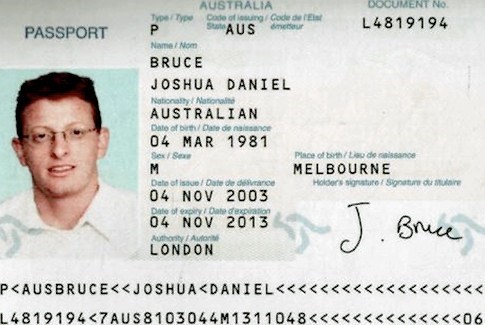
Those in public life who have had disagreements with AIJAC report that the “experience can be bracing to say the least.”[15] Among those who have felt the wrath of AIJAC is former Prime Minister Kevin Rudd. The strong relationship Leibler forged with Prime Minister’s Paul Keating and John Howard did not extend to the latter’s successor Kevin Rudd. The catalyst for the breakout of actual hostility between Leibler and Rudd was their respective attitudes to a major crisis between Israel and Australia. In May of 2010, Rudd ordered the expulsion of an Israeli diplomat, who was also a senior Mossad agent, after the Israeli spy agency used fake Australian passports to enter Dubai and assassinate Mahmoud al-Mabhouh, an arms dealer with a close relationship with Hamas.

Rudd declared Israel’s use of fake Australian passports to be “outrageous” and particularly egregious given that Mossad had used Australian passports for another operation in 2003 — the details of which neither Israeli nor Australian security officials have ever disclosed. After the 2003 incident, the Israelis gave the Australian Security and Intelligence Organisation (ASIO) an undertaking never to use Australian passports for any Israeli security operation again.

One of the faked Australian passports Israel used to assassinate Mahmoud Al Mabhouh in 2010

The passports affair came just before an operation from the Israeli military where they boarded one of the six ships of the Gaza Freedom Flotilla, launched by a coalition of pro-Palestinian human rights groups to break the Israeli-Egyptian blockade of the Gaza Strip. Nine people were killed when Israeli soldiers landed on the ship from helicopters. All six ships were escorted to an Israeli port and everyone on board was detained for several days before being expelled from Israel. The incident sparked international outrage, and then Prime Minister Rudd condemned “any use of violence under the circumstances that we have seen.” He called for the blockade of Gaza to be lifted, and for the setting up of an independent inquiry into the incident.

Leibler was apoplectic over Rudd’s comments and his expulsion of the Israeli diplomat. Nevertheless, Gawenda notes how the passports incident was “especially difficult, time-consuming and troubling for him, because it was specifically about the relationship between Australia and Israel, and because it was hard to defend what the Israelis had done.”[16] He wanted to settle the passports issue and for things to “move on.” In this endeavor, Leibler worked closely with the Israeli Ambassador in Canberra, Yuval Rotem, to repair the diplomatic relationship. He reached out to cabinet ministers and senior public servants, including the head of ASIO, “who invariably took his calls or agreed to see him,” while Rotem “lobbied members of the Rudd and Gillard governments.”[17]

Reflecting back on the passports incident in the second volume of his memoirs, The PM Years, published in 2018, Rudd observes that the Israel Lobby tried to “menace him” for his strong response to the passports affair. Rudd describes a meeting of the National Security Committee of Cabinet after the second passports incident. Dennis Richardson, head of ASIO at the time of the first incident and now head of the Department of Foreign Affairs, had urged them to “act firmly and decisively.” All agreed with this recommendation, except for Julia Gillard regarding whom Rudd “knew for a fact that Julia had been cultivating the Israeli Lobby in Australia.”[18] Leibler had first met Gillard after she visited Israel on a Rambam Fellowship in 2001, and had cultivated a close relationship with her.

In June of 2010, Jewish Labor MP Mark Dreyfus (later Gillard’s Attorney-General) called Leibler, whom he had known for many years, to organize, at Rudd’s request, a dinner with Leibler and other Jewish community leaders to discuss the passports issues and the Gaza flotilla. Rudd was keen to repair his strained relationship with organized Jewry. Rudd writes in his memoir that he agreed to put on the dinner out of respect for Labor’s Jewish MP’s Michael Danby and Mark Dreyfus, who had lobbied him to put on the dinner for the Jewish leaders. According to Rudd, he sat politely at the table while Leibler berated him for committing the “hostile act” of expelling the Israeli diplomat. When Rudd offered Leibler a briefing with Richardson, Leibler turned angry and made a “menacing threat.” Rudd records Leibler as saying, “Julia is looking very good in the public eye these days, Prime Minister. She’s performing very strongly. She’s a great friend of Israel. But you shouldn’t be anxious about her, should you, Prime Minister.”[19]

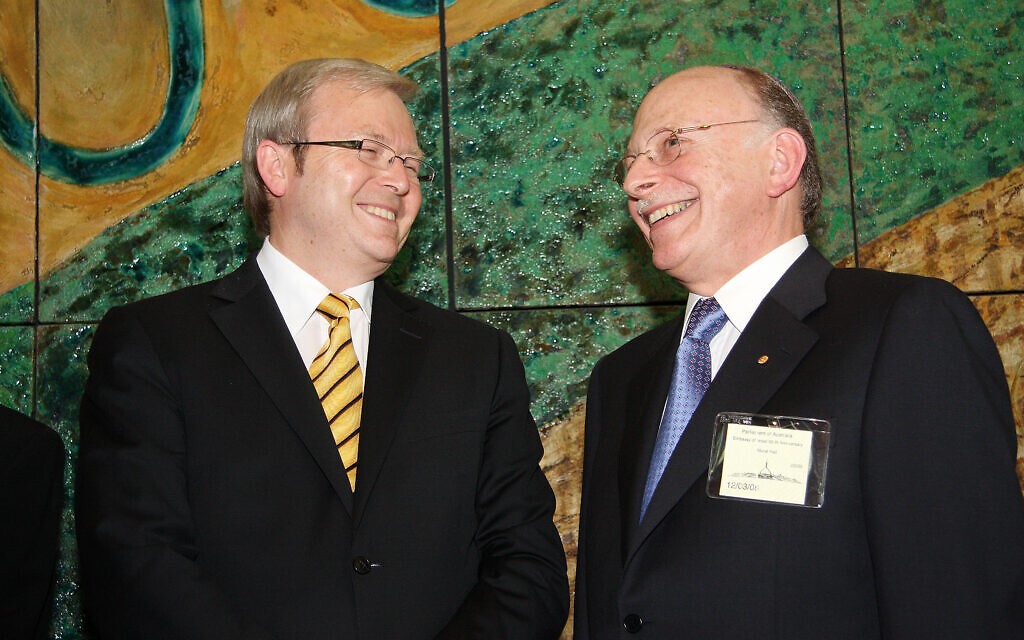
Kevin Rudd with Mark Leibler

In his contemporaneous notes of the meeting, Leibler acknowledges he was blunt with Rudd, telling him the Jewish community was “pissed off” by the expulsion of the Israeli diplomat, which he characterized as an “overreaction.” In his notes, Leibler only mentions Gillard once, praising her for comments she made saying Israel was justified in responding militarily to missile attacks by Hamas in 2009. According to Leibler’s notes: “Rudd responded by saying that he discussed and approved the statement by Julia Gillard. I said, ‘Don’t be so sensitive — this is something we assumed.’ For about 30 seconds there was dead silence and I thought Rudd’s eyes were going to pop out of his head, and then we reverted back to normal conversation.”[20]

Three weeks after Leibler’s threat to Rudd, Julia Gillard defeated Rudd in a leadership ballot and became Australia’s first female prime minister. Leibler and the Israel Lobby supported Gillard’s challenge to him, and were, to a significant extent, responsible for his defeat—reportedly plotting Rudd’s removal for at least a year prior to Gillard’s successful challenge. In his book, Rudd notes that “the meticulous work of moving Gillard from left to right on [Middle Eastern] foreign policy had already begun in earnest a year before the coup.”[21] Gawenda claims to be bemused at Rudd’s belief that “Jews were so powerful they could play a role in deciding the fate of an Australian prime minister.” For Gawenda, “the idea that a Jewish leader, even a tough one like Leibler, could intimidate or seriously threaten politicians like Rudd or Carr seems far-fetched.”

Julia Gillard — A Wholly-Owned Subsidiary of the Israel Lobby

The validity of Rudd’s view was confirmed by the close relationship Leibler forged with Gillard during her tenure as Prime Minister. In The PM Years, Rudd describes how Gillard became a “wholly-owned subsidiary of the far-right Australian Israel Lobby.”[22] Gawenda is troubled by Rudd’s language regarding the actions of Australia’s Israel Lobby, seeing it as “verging on a conspiratorial darkness.” Echoing this view, Leibler responded with fury to Rudd’s version of events, labelling his accusations as “far-fetched conspiracy theories.”[23] Other Jewish leaders (inevitably) came to Leibler’s aid and disputed Rudd’s version of events at the Canberra dinner. In 2018, Michael Danby and Australian Jewish businessman Albert Dadon said the incidents Rudd described “had not happened, at least not in our presence.”[24]

Dadon’s comments are significant for Gawenda because of Dadon’s former role as Rudd’s Court Jew, and as someone Rudd found “far more congenial than some other Jewish community leaders, especially those at AIJAC, including Leibler.”[25] Journalist Jason Koutsoukis observed in 2009, regarding Dadon, that: “In the small but competitive world of Australian Jewish politics, the ultimate test of esteem is whether or not you have the ear of the Prime Minister of the day.” Dadon took on the role of that AIJAC bigwig Colin Rubinstein had assumed during John Howard’s tenure as Prime Minister. He spotted Rudd’s potential soon after he entered parliament in 1998 and “courted the future Prime Minister assiduously.”[26] It was under Dadon’s direction that Rudd inaugurated the annual Australia-Israel Leadership Forum in Jerusalem — a two-day talkfest for Australian and Israeli politicians, academics and businesspeople designed to further consolidate the Australia-Israel alliance.

Gillard claimed her close relationship “to some people in the Jewish community, including Dadon and Leibler, was never an issue between her and Rudd before the leadership challenge.”[27] Those who, like Rudd, believed Gillard had been captured by Jewish interests noted, in support of this contention, that her partner, Tim Mathieson, had been employed since 2009 as a property sales consultant by Ubertas Group, a fund management and property development company owned by Albert Dadon. Mathieson was given the position after he and Gillard attended the first Australia-Israel Leadership Forum in Jerusalem — an initiative of Albert Dadon.

Gillard with her partner Tim Mathieson and Albert Dadon

It was in this context that Gillard flatly refused to criticize Israel for its Operation Cast Lead in 2009. Gillard’s Jewish alliances even extended beyond Australian Jewish leaders and businessmen. In The PM Years, Rudd points out that Gillard’s “ever-loyal American factotum, Bruce Wolpe, her lifeline to the Australian and American Jewish communities,” exercised a Svengali-like influence on her, even before she had taken over from Rudd as Prime Minister.[28] Wolpe, a Jewish-American political operative married to an Australian, had settled in Australia and played an important role in moving Gillard to a position of uncritical support for the Israel Lobby’s views.

Wolpe had been senior advisor to Democratic congressman Henry Waxman, with “seriously impressive contacts in the United States Congress and in the Democratic Party.” He was appointed as Gillard’s senior advisor (i.e., Court Jew) in 2010, soon after she became Prime Minister. His role was twofold: “to develop contacts and interaction with the Australian business community, and to be the contact person between the Prime Minister and the Jewish community.”[29] Gillard justified giving Wolpe the liaison role with the Jewish community on the basis that “there was increasing dissatisfaction with that community about the way Rudd was behaving.”[30]

Gillard’s Court Jew Bruce Wolpe

Three months after she became Prime Minister, Gillard reluctantly appointed the defeated Rudd as her Foreign Minister due to his previous experience in the role. Several times, she vetoed press releases from Rudd on Israel and Palestine that she claimed did not reflect her government’s position. By this time, Leibler “had come to seriously distrust Rudd,” finding him “frustrating to deal with.” In his contemporaneous notes, Leibler claims Rudd was “courting the Arab bloc” at the UN by signaling that Australia might vote for a resolution in the General Assembly declaring Palestine a state, though with non-voting status. Gillard had privately rebuffed Rudd and instructed Australia’s Ambassador to the United Nations to vote against any resolution on statehood for Palestine.

In February 2012, Kevin Rudd resigned as Foreign Minister to challenge Gillard for the Labor leadership, and therefore for prime minister. His first challenge failed, and with Rudd now out of the Gillard Cabinet, former New South Wales Premier Bob Carr was enlisted by Gillard to fill the vacant position of Foreign Minister. In making this appointment, Gillard was unaware that Carr’s position on Israel and the Palestinians had changed over the years. Leibler, on the other hand, was aware of Carr’s shift in perspective, and was apprehensive about the appointment. Despite this, he was reassured by the fact “his relationship with Gillard was strong” and that “she would have the final say on her government’s policy on Israel and the Palestinians.”[31]

Brenton Sanderson is the author of Battle Lines: Essays on Western Culture, Jewish Influence and Anti-Semitism, available here and here.

Go to Part 5.


[1] Michael Gawenda, The Powerbroker: Mark Leibler, An Australian Jewish Life (Melbourne: Monash University Publishing, 2020), 249.

[2] Ibid., 253.

[3] Ibid., 254.

[4] Ibid., 251.

[5] Ibid., 254.

[6] Ibid., 254-55.

[7] Ibid., 255.

[8] Ibid., 256.

[9] Ibid., 258.

[10] Ibid., 312.

[11] Ibid., 323.

[12] Ibid., 250.

[13] Greg Barns, “Israel’s ‘useful idiots’ in the Australian media,” Crikey, May 27, 2009. https://www.crikey.com.au/2009/05/27/israels-useful-idiots-in-the-australian-media/

[14] Gawenda, The Powerbroker, 251.

[15] Ibid., 248.

[16] Ibid., 262.

[17] Ibid., 262; 263.

[18] Kevin Rudd, The PM Years (Sydney: MacMillian Australia, 2018), 400.

[19] Ibid., 266.

[20] Ibid., 267.

[21] Rudd, The PM Years, 430.

[22] Ibid., 431.

[23] Gawenda, The Powerbroker, 271.

[24] Ibid., 270.

[25] Ibid., 270.

[26] Jason Koutsoukis, “New figure steals into the limelight of Jewish affairs,” The Sydney Morning Herald, June 25, 2009. https://www.smh.com.au/national/new-figure-steals-into-the-limelight-of-jewish-affairs-20090624-cwyp.html

[27] Gawenda, The Powerbroker, 271.

[28] Rudd, The PM Years, 442.

[29] Ibid., 273.

[30] Ibid., 274.

[31] Ibid., 276.

Mark Leibler: Powerbroker for Australia’s Jewish Plutocracy – PART 3

Mark Leibler in the early 1990s

Go to Part 1.
Go to Part 2.

Having Their Cake and Eating It Too – The Dual Citizenship Campaign

By the mid-1980s Mark Leibler had established the Zionist Federation of Australia as “a political lobbying powerhouse.” The organization was centrally involving in ensuring 7,000 Australian Jews who had made Aliyah to Israel retained their Australian citizenship. Under the Citizenship Act, Australians could not become citizens of another country without giving up their Australian citizenship, as Rupert Murdoch had done to become an American citizen. Under Israel’s Law of Return, Jews who settled in Israel automatically became Israeli citizens – meaning they had implicitly renounced their Australian citizenship. This was not enforced by Australian authorities prior to 1986. That year, however, the Labor government introduced legislation to amend the Citizenship Act to clarify the prohibition on dual citizenship. The bill prompted Immigration Department officials to rule that those who had settled In Israel before 1981 and become Israeli citizens would have their Australian citizenship revoked and passports cancelled. So too would Australian Jews who had arrived after 1981 and been granted permanent residency by Israel.

Among Australian Jews there was outrage and panic, and the “ZFA was inundated with demands for help. Contrary to what Australian immigration officials had always told them, not only would adult Australians in Israel lose their citizenship, but so too would their children who had been born in Israel.”[1] These Jews, noted Gawenda, who Leibler and the ZFA regarded as a Zionist success story, wanted to have their cake and eat it too. This situation might have “raised the old charge of dual loyalties, a long-standing anti-Semitic trope in which Jews are a sort of fifth column, with greater loyalty to their fellow Jews than to the country in which they live and are citizens. Here were Jews committed to Israel, living and raising children there, even serving in the Israeli army, and yet determined to hang on to their Australian citizenship.”[2]

Leibler coordinated an intensive lobbying campaign to have Jews granted a special exemption to the dual citizenship laws. A “sense of urgency” gripped Leibler during this campaign; he “was a man possessed, furiously working on this issue, and sometimes furious when he didn’t get his way, as, for instance, when an Immigration Department official refused to see the logic and force of the case Leibler was putting to him.”[3] In his notes, Leibler recalled that “The conversation was very heated and I was quite abusive.” Leibler was adamant “this problem would have to be resolved even if it meant I had to go and see the Prime Minister for the second time that day.” Leibler had met with Bob Hawke earlier that day as part of a delegation organized by the Executive Council of Australian Jewry.

Leibler insisted on seeing [then immigration minister] Chris Hurford who “interrupted a lengthy meeting with a rather important lobby to see me.”[4] Hurford caved in to Leibler’s demands/threats and, in April 1986, with Opposition support, announced amendments to the government’s proposed citizenship legislation that restored the citizenship of all the Australian Jews living in Israel. Leibler’s victory was complete.[5] In 2002, the Howard government made dual citizenship legal, “in recognition of Australia’s diversity and multiculturalism.”[6]

Courting Paul Keating and John Howard

When Paul Keating successfully challenged Prime Minister Hawke for the leadership of the Labor Party in 1991, there was consternation among the ranks of Jewish activist organizations. At the time “there was a wave of grief through some sections of the Jewish community at Hawke’s departure,” and Jewish leaders “effusively praised the former prime minister.” Bob Hawke was “particularly close to the Jewish community” and, in particular, to influential Jews like Isi Leibler, multicultural activist Walter Lippmann, and wealthy businessmen like Eddie Kornhauser and Peter Abeles. All “had direct access to the prime minister.”[7] Bronwyn Hinz noted the far-reaching social policy implications of Walter Lippmann’s close association with Hawke:

In the 1980s, the ECCV [Ethnic Communities Council of Victoria] worked closely with Prime Minister Bob Hawke, a personal friend of ECCV founding Chairperson Walter Lippmann. As the representative of Melbourne’s most ethnically diverse electorate, Hawke was especially cognizant of the value of close connections with the peak council, its activists and member groups, accepting most invitations to their functions, and providing Lippmann and other ECCV activists with direct access to his office. In the first year of the Hawke government, the ECCV’s lobbying culminated in the reduction of citizenship waiting period to two years, the replacement of the term alien with “non‐citizen” in the 1983 Migration Act, and an increase of the refugee intake.[8] 

Leslie Caplan, president of the Executive Council of Australian Jewry, lamented Hawke’s political demise, describing him as a man of “extraordinary ability, intellect, compassion and charm who had a special relationship with the Jewish community.” Mark Leibler, then president of the ZFA, likewise extolled Hawke as “a giant among men, a great prime minister, a close friend of the Jewish people and a constant supporter of the security and integrity of Israel.”[9]  While making this public statement, he had been busy behind the scenes courting Hawke’s successor. After Paul Keating’s first unsuccessful challenge to Hawke, Leibler had sent him the following handwritten letter:

Dear Paul,

Strange isn’t it that the loser on the votes emerges looking very much the winner in all other respects, But then perhaps not surprising at all!

Congratulations on the performance. I look forward in anticipation to the Second Act – its final and successful completion.

Wish you much luck

With best wishes

One of your many admirers

Mark

Keating wrote back, thanking Leibler for his note, and for his “words of encouragement and support.”[10] Sniffing the changing political winds, Leibler carefully positioned himself as Keating’s Court Jew. Keating’s defeat of Hawke left the field open for Mark Leibler to assume a position hitherto occupied by other Jewish leaders like his brother Isi, “Almost all of whom had developed a relationship with Hawke, whom they considered the community’s and Israel’s greatest friend in the Labor government.” Given Isi’s particularly close relationship to Hawke, and the latter’s defeat “was particularly hard for Isi to handle” and “with Hawke gone his contacts in and access to the government were severely diminished. He had no real relationship with Keating, and developing one would be difficult, given his well-known closeness to Hawke. His brother Mark was really the only Jewish leader with a significant relationship with the new prime minister.”[11]

Former Prime Minister Paul Keating in the United States in 1993
In an article in the Australian Jewish News from the time of Keating’s successful challenge to Hawke, Leibler declared that he was confident that “In light of my contacts with Paul Keating over many years … there is no reason to believe that there will be any shifts in government policy which would be adverse to the interests and concerns of the Australian Jewish community.”[12] This signaled to other Jewish leaders, including his brother, that he was uniquely placed “to make the case to Keating on any issue that concerned the Jewish community.”[13]

One such issue emerged early in Keating’s tenure as Prime Minister. There was widespread concern, even alarm, among organized Jewry regarding Keating’s foreign minister Gareth Evans’ stance towards the conflict between Israel and the Palestinians. Gawenda notes that “Many Jews had been alarmed by the Scud missiles that Saddam Hussein had rained down on Israel during the Gulf War [in 1991] and by the sight of Israelis wearing gas masks out of fear that the missiles would be armed with poison gas.” The PLO had organized demonstrations in support of Saddam Hussein, and many Western nations had, as a result, cut contact with the PLO.

A year after the end of war, Australian foreign minister Gareth Evans decided the Australian government should restore contact with the PLO. Keating, who had little personal interest in the conflict between the Israel and the Palestinians, publicly supported this decision. A month after the announcement, Evans visited a Palestinian refugee camp in the West Bank and criticized the expansion of illegal settlements by the Israelis. Evans even expressed support for United Nations Resolution 194, passed at the end of the 1948 war, which called for the right of return of Palestinians who had fled or been forced out of their homes (i.e., ethnically cleansed) by the war. Mark Leibler was “enraged” at Evans’ stance, which, interpreted one way, could result in the return of all Palestinians and their descendants which “would have meant the end of Israel as a Jewish state.”[14] Hitherto, both major political parties in Australia had followed the United States position on the resolution: that it only allowed for a token number of Palestinians to return in the event of a peace settlements, thus preserving the Jewish demographic supermajority in Israel.

Leibler met Evans on his return to Australia and “according to people with knowledge of the meeting, Leibler and Evans exchanged views in a very robust fashion. Insults were exchanged.”[15] Jewish Labor MPs joined Leibler in attacking Evans, with former Whitlam and Hawke government minister Barry Cohen telling The Australian the foreign minister’s stance risked the loss of political donations from wealthy Jews, and that Australian Jewry had always been a source of ideological and financial support for the ALP, noting, “That [support] will be weakened whenever a government appears to be antagonistic towards the state of Israel.”[16] The bad optics of Cohen’s open threats troubled some Jews at the time, including Leibler. While fiercely critical of Evans, Leibler was adamant “Jewish leaders should not make any [public] threats about donations to political parties or threaten to urge the Jewish community to vote against the government because of its policies in the Middle East.”[17]

Leibler’s next gambit was to invite Keating to speak at the ZFA’s biennial conference in 1992. In his speech, while not repudiating Evans’ views, Keating focused on “the ALP’s historic commitment to Israel and emphasized his government’s unwavering commitment to Israel’s security.”[18] Shortly after Keating’s speech, Evans’ stance on Israel and the Palestinians suddenly became irrelevant. Yitzhak Rabin led the Israeli Labor Party to victory in the 1992 general election. Many senior Keating government figures had ties to the Israel’s Labor Party and personally knew Rabin and members of his government like Shimon Peres. The result was that “criticism of Israel’s settlement policies was significantly toned down.”  This was particularly so after the Oslo Accords between Rabin and Yasser Arafat were signed on the White House lawn on September 13, 1993.

Rabin was assassinated in November 1995 by Yigal Amir, a radical Zionist opposed to the Oslo process. Keating attended Rabin’s funeral and, three months later, was defeated in a landslide by John Howard at the 1996 election. Despite Keating’s defeat, Leibler continued to cultivate a close relationship with Keating. Meanwhile, Zionist activists in the United States and Australia were secretly happy to see Rabin disappear from the scene. As Gawenda notes:

Shortly after he was elected, Rabin told American Jewish leaders, including AIPAC officials, that they needed to modify their lobbying for Israel. That was code for his view that their lobbying was counter-productive and that Israel was perfectly capable of developing its own relations with Congress and the President without their interventions. Rabin’s message was a stunning repudiation of the work of AIPAC. An Israeli prime minister was telling the most influential Jewish lobby group – perhaps the most influential lobby group in Washington – to back off, that he did not need their help.[19] 

Following a meeting with Rabin in Israel, Isi Leibler had reported back to the Australian Jewish media that Rabin had asked him to inform Jewish organizations in Australia (including the ZFA) that they should “drop the quasi-diplomatic role they have adopted in Australian-Jewish affairs of state.”[20] Instead, government-to-government relations should be left to the Israeli embassy in Canberra, and Jewish organizations should focus on trade with Israel and fighting anti-Semitism. For Mark Leibler, Rabin’s remarks (as reported by his brother) “were a repudiation of his life’s work, of the years he had spent building up his political contacts in Canberra so that he could put the best case for Israel to whatever government was in power.”[21]

Paul Keating was ideologically predisposed to embrace the agendas of organized Jewry in Australia. A Cultural Marxist and economic neoliberal, Keating harbored with a deep-seated animus toward the traditional Australian nation, and was a strong proponent of Australia’s economic and demographic integration into Asia. In an interview for The Powerbroker, Keating explained that he “believed in a cosmopolitan Australia” and was bemused why some “Jewish people ever vote for someone like [former Prime Minister John] Howard.” This was especially so given Howard’s putative support for some of the positions of Pauline Hanson in the mid-1990s – part of his successful attempt to steal votes from her then politically-ascendant party.[22]

Howard’s faux White Nationalism was utterly cynical and strategic, and he later oversaw the biggest expansion in non-White immigration in Australian history. His government created the Section 457 Visa for temporary workers – a visa program designed to be uncapped and totally driven by the putative needs of the Australian labor market. The 457 Visa led to a massive increase in cheap non-White labor brought into the country. It was also the Howard government that, from the early 2000s, encouraged overseas students to apply for permanent residence after completing their courses in Australia. The inevitable result was an explosion in overseas student enrolments, and by 2017–18 overseas students had become the largest contributor to Australia’s very high level of Net Overseas Migration (NOM) which numbered 271,700 people in 2019.

Howard also presided over Australia’s shameful involvement in the wars in Iraq and Afghanistan, and probably even exceeded Bob Hawke in his fawning philo-Semitism and subservience to Israel. Dan Goldberg, the editor of the National Jewish News, observed in 2006 that:

From his first encounter with Jews, as a nineteen-year-old at the Sydney law firm of Myer Rosenblum, Howard has, especially over the last decade, cemented his alliance with the Jews, and has arguably eclipsed even the great Bob Hawke as the most pro-Israel prime minister in Australian history. Most of his empathy is a function of his foreign policy, pivoted on the US alliance, which translates in the Middle East arena to unequivocal support for Israel, regardless of which prime minister is in power in Jerusalem. Of course, Australia’s role in the war in Iraq was no doubt seen by most Australian Jews as yet another significant milestone in the long history of relations between Canberra and Jerusalem. 

It is no coincidence therefore that Howard has received major awards from three Jewish community organisations in the last couple of years. It is also no coincidence that he speaks regularly to Jewish audiences, and that he is closely allied with a clutch of Jewish powerbrokers. … Understandably, most Jews were in favour of eliminating Saddam Hussein and his regime if only because he bankrolled families of Palestinian suicide bombers to the tune of US$25,000 each, not to mention the fact that it would neutralise the threat to Israel’s eastern flank. The fact that Australian SAS forces took out Saddam’s stockpile of Scuds aimed at Tel Aviv in the early hours of the war only augmented the bond between Canberra and Jerusalem.[23]

 Despite Howard’s cynical willingness to appeal (like Donald Trump) to implicit White interests to win elections, Leibler retains “a huge amount of respect and affection for Howard, who was unshakeable in his support for the Jewish community and Israel.”[27] For Gawenda, Howard’s government was “probably the most pro-Israel government in a long time.”[28] Howard himself spoke of his “long association with the Jewish community of Australia of which I am unapologetically proud.”[29]

In 2000, Prime Minister John Howard asked Mark Leibler to become a director of the newly established body called Reconciliation Australia to promote the welfare of Australia’s Aborigines. Leibler accepted, and speaking on behalf of Australian Jews, claimed: “We’ve suffered 2,000 years of persecution and we understand what it is to be the underdog and to suffer from disadvantage.”

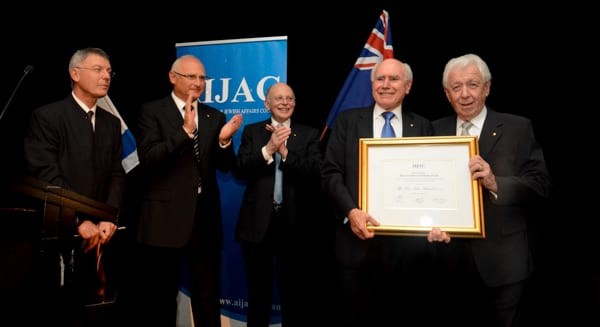
Former Prime Minister John Howard (second from right): leader of “probably the most pro-Israel government in a long time.” 
Seemingly oblivious of all this, Keating claims to be bewildered why “the Jewish community here could ever vote for the Coalition whilst Howard-type views abounded. … So I got a bit short with [the Jewish community], still am I suppose. I tell them that ‘the one party that would actually stick with you through thick and thin on the question of identity, your identity, is the Labor Party.” Moreover, it was Labor governments, he insisted, “who helped you make all the money.”[30]

It has been a longstanding strategy of wealthy Jewish businessmen and activists to cultivate relationships with prime ministers on both sides of politics: in the words of Mark Leibler: “John Howard certainly, and Bob Hawke of course, and yes, Paul Keating, and so too Malcolm Turnbull.”[31] Wealthy Jewish businessmen and Jewish activists often coordinate their lobbying efforts. Leibler notes how he could reliably “call one of these business people who I knew had a close relationship with politicians on both sides of politics. I would ring up and explain that there was a problem and that they needed to sit down with the PM and explain the problem. They would always be very helpful doing that.” While these Jewish tycoons often weren’t comfortable issuing public statements, they “had the sort of relationships with prime ministers and foreign ministers too, that allowed them to intervene.”[32] When asked whether this level of access was a unique situation for a Jewish community of such a small size (Australia’s 120,000 Jews make up less than half of one percent of the Australian population), Leibler’s response was unambiguous: “The answer is, yes.”[33]

Leibler’s Campaign against Pauline Hanson’s One Nation Party and the Extension of the Racial Vilification Act

Mark Leibler played a key role in the Jewish attack on Pauline Hanson and her “exclusionary form of nationalism” in the 1990s. Andrew Markus notes how Hanson’s “campaign evoked widespread condemnation within the Jewish community and calls for mobilisation to challenge the growing influence of her movement. Concern was at its peak following the success of One Nation in the 1998 Queensland election, which opened the prospect of a One Nation dominated Senate.”[34] In response to Hanson, more than thirty Jewish organizations signed a statement denouncing “racism,” and supporting the formation of a new Jewish activist front group called “People for Racial Equality.” Jewish organizations that vehemently opposed Hanson included the Executive Council of Australian Jewry and the Australia/Israel and Jewish Affairs Council led by its chairman Mark Leibler. The “People for Racial Equality” campaign aggressively targeted political parties and politicians, demanding they put One Nation last on their “how to vote cards,” as well as individual voters, urging them all to put One Nation last under Australia’s system of preferential voting.

In an effort to shame and intimidate Hanson’s supporters, the B’nai B’rith Anti-Defamation Commission doxed 2000 people associated with the One Nation Party. The list was published with Mark Leibler’s consent in AIJAC’s Australia/Israel Review under the headline “Gotcha! One Nation’s Secret Membership List.”[35] In keeping with the tactics of organized Jewry throughout the Western world, the attempt by Hanson and her supporters to ensure that White Australians retained demographic, political and cultural control of Australia was represented as racist, immoral, and indicative of psychiatric disorder. Central to the Jewish response to One Nation, notes Markus, “was repugnance at public expressions of bigotry and a sense that while the focus of the Hanson movement was not on Australian Jews, it would not be long before they were targeted.”[36]

The rivalry between the Leibler brothers over who had the right to speak on behalf of Australian Jewry was often fierce. One catalyst for a rift between the two brothers was when Mark Leibler and a delegation of ZFA officials met with the Keating government’s immigration minister Nick Bolkus when the government was considering the introduction of “racial vilification legislation” into the federal parliament. Mark Leibler’s Zionist Federation of Australia made a virtually identical submission to the government as Isi Leibler’s Executive Council of Australian Jewry. Gawenda notes that “Both organizations had long advocated for such legislation; both urged the government to include criminal sanctions for extreme forms of racial vilification.”[37]

The Racial Hatred Act was passed in 1995, adding to the Racial Discrimination Act of 1975 (itself a direct result of Jewish activism) the totalitarian Section 18C, which made it unlawful to offend, insult and humiliate or intimidate a person or group on the basis of color, race or ethnic origin. The 1995 legislation was a victory for Leibler and his communications director Helene Teichmann who had organized the meetings of leaders of ethnic communities that had “led to a unified position on the need for racial vilification legislation.”[38] It was clear to immigration minister Bolkus that “Leibler had been more active than any other Jewish leader in the campaign for the proposed extension of the Racial Discrimination Act.”[39]

Conservative commentator Andrew Bolt later fell afoul of Section 18C for some columns he had written questioning the ethnicity of light-skinned “Aboriginal” activists. Bolt, hitherto a Zionist shill and sycophant of organized Jewry, was stunned when his appeal to Mark Leibler to support the elimination of Section 18C was flatly declined. Gawenda observes that “Bolt seemed unaware that Leibler had played an important role in getting the 1995 legislation passed and would never support the repeal of Section 18C, not even to support Bolt, who had always seen himself as a strong supporter of Israel, unlike the left-wingers who opposed any change to 18C.”

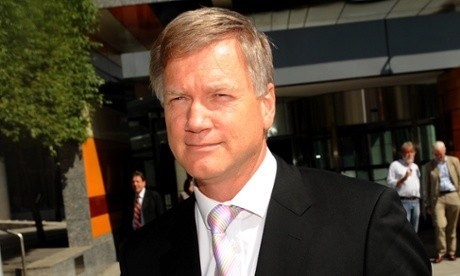
Journalist Andrew Bolt: jilted paramour of organized Jewry
A frustrated Andrew Bolt predicted that Jewish leaders would ultimately regret opposing changes to the Act, noting that: “The Jewish leaders now should look very, very deeply into their souls at what they have helped wrought and ask themselves, are you seriously safer now as a result?” Bolt’s reasoning is that under Section 18C Australian Jews will in future be precluded from criticizing the beliefs and actions of a growing and increasingly militant Australian Islamic community which will be increasingly hostile to Israel and the interests of Australian Jews.

Bolt fails to mention the only reason there are any Muslims in Australia at all (with all their myriad problems and social dysfunctions) is because Jewish activism succeeded in ending the White Australia policy and establishing multiculturalism as the basis for social policy. As the Jewish academic Dan Goldberg proudly acknowledges: “In addition to their activism on Aboriginal issues, Jews were instrumental in leading the crusade against the White Australia policy, a series of laws from 1901 to 1973 that restricted non-White immigration to Australia.”[40] As throughout the West, it is clear that the Jewish fear and loathing of White Australia trumps any concern about the anti-Semitic tendencies of the non-White immigrants that are being imported into the nation.

In 2014, the then Australian Prime Minister Tony Abbott abandoned an election pledge to repeal Section 18C after coming under sustained attack from Jewish activist organizations. Gawenda observed at the time how “the repeal of section 18C was vigorously opposed by the leadership of virtually every ethnic community in the country. But it would be fair to say – without wishing to give succor to those who reckon the Jews are too powerful – that Jewish community leaders have played a crucial role in organizing the opposition to any potential change to the RDA. It is the opposition of the Jewish communal leaders that had been of major concern to [then Attorney General] Brandis and, to a significant extent, Tony Abbott.”[41]

Thanks to Australia’s Jewish-led demographic revolution and legislation like Section 18C, the Jewish lawyer and activist Ruth Barson is now confident that “the chances of the Holocaust occurring in Australia today are remote,” but cautions that history shows Jews are never truly safe, and consequently, “we should have no tolerance for even the shadows of racism and xenophobia. These are dangerous in any guise.”[42] Dvir Abramovich, chairman of the Anti-Defamation Commission (Australia’s version of the ADL), contends that “The horrors of the Holocaust did not begin in the gas chambers – but with hateful words of incitement and contempt, and with the demonizing of anyone who was deemed unworthy by the Nazis.” Accordingly, in addition to supporting the prosecution of “hate speech” through Section 18C of the Racial Discrimination Act, he insists “it’s time that compulsory teaching about the Holocaust is introduced in all Australian schools, to not only develop an understanding of the dangerous ramifications of racism and prejudice, but to heighten awareness of the value of diversity, religious freedom, acceptance and pluralism.”

In early 2020, the Victorian government acceded to Abramovich’s demands and study of the Holocaust became mandatory in Victorian schools. Leibler’s friend and ABL client John Gandel will fund the development of new teaching resources which will be based on existing resources from Israel’s Yad Vashem memorial and lesson plans produced by the World Holocaust Memorial Centre in Jerusalem. Holocaust “education” has been compulsory in New South Wales schools since 2012.

In the 1990s, Mark Leibler successfully lobbied the Keating government immigration minister Nick Bolkus to have British historian David Irving banned from entering Australia. He reiterated the views of his brother Isi, then Executive Council of Australian Jewry President, who had described Irving as “a beer hall rabble-rouser and hero to the German neo-Nazis.” Both urged the government to follow the example of Canada and deny Irving entry into Australia. These overtures were successful and Irving was banned for being “likely to become involved in activities disruptive to the Australian community or a group within the Australian community” and for not being “of good character.” The entry ban was imposed despite Irving’s daughter residing in Australia.

Brenton Sanderson is the author of Battle Lines: Essays on Western Culture, Jewish Influence and Anti-Semitism, available here and here.

Go to Part 4.


[1] Michael Gawenda, The Powerbroker: Mark Leibler, An Australian Jewish Life (Melbourne: Monash University Publishing, 2020), 127-28.

[2] Ibid., 128.

[3] Ibid., 129

[4] Ibid., 130

[5] Ibid., 131

[6] Ibid., 128

[7] James Jupp, From White Australia to Woomera – The Story of Australian Immigration (Melbourne: Cambridge University Press, 2002), 46-47.

[8] Bronwyn Hinz, “Ethnic associations, networks and the construction of Australian multiculturalism,” Paper presented at the Canadian Political Science Association Annual Conference, Corcordia University, Montreal, 1‐3 June, 2010, 9-10. http://www.bronwynhinz.com/wp-content/uploads/2009/06/Hinz-2010-Australian-multiculturalism-paper-for-CPSA-v4.pdf

[9] Gawenda, The Powerbroker, 149.

[10] Ibid., 147.

[11] Ibid., 150.

[12] Ibid.

[13] Ibid.

[14] Ibid., 152.

[15] Ibid., 153.

[16] Ibid.

[17] Ibid., 154.

[18] Ibid., 155.

[19] Ibid., 174.

[20] Ibid.

[21] Ibid., 175.

[22] Ibid., 143.

[23] Dan Goldberg “After 9/11: The Psyche of Australian Jews,” In: New Under the Sun – Jewish Australians on Religion, Politics & Culture, Ed. Michael Fagenblat, Melanie Landau & Nathan Wolski (Melbourne: Black Inc., 2006) 146-47 & 149.

[27] Gawenda, The Powerbroker, 146.

[28] Ibid., 199.

[29] Ibid., 200.

[30] Ibid., 144.

[31] Ibid., 145.

[32] Ibid.

[33] Ibid., 146.

[34] Andrew Markus, “Multiculturalism and the Jews,” In: New Under the Sun – Jewish Australians on Religion, Politics & Culture, Ed. Michael Fagenblat, Melanie Landau & Nathan Wolski (Melbourne: Black Inc., 2006), 99.

[35] Kevin MacDonald, The Culture of Critique: An Evolutionary Analysis of Jewish Involvement in Twentieth‑Century Intellectual and Political Movements (Westport, CT: Praeger, Revised Paperback edition, 2001), 303.

[36] Markus, “Multiculturalism and the Jews,” 99-100.

[37] Ibid., 178.

[38] Ibid., 179.

[39] Ibid., 180.

[40] Dan Goldberg, “Jews key to Aboriginal reconciliation,” Jewish Telegraphic Agency, February 2, 2008.

[41] Michael Gawenda, “The real reason Abbott broke his promise on Section 18C,” The Australian, August 6, 2014. https://www.theaustralian.com.au/business/business-spectator/the-real-reason-abbott-broke-his-promise-on-section-18c/news-story/bc977f7be04dc1dab8eb1db52a5707ed

[42] Ruth Barson, “Holocaust remembrance teaches lessons for humanity,” The Sydney Morning Herald, January 26, 2016. https://www.smh.com.au/opinion/holocaust-remembrance-teaches-lessons-on-human-rights-20160126-gmdy21.html

Mark Leibler: Powerbroker for Australia’s Jewish Plutocracy — PART 2

Mark Leibler with Australian Prime Minister Scott Morrison
Go to Part 1.

Lawyer to Australia’s Ethno-Plutocratic Elite

Leibler has been a partner at the law firm Arnold Bloch Leibler (ABL) for almost fifty years. Of the 200 richest people and families in Australia, around one-in-five are clients of ABL. In 2018, thirty-five of Australia’s wealthiest individuals and families were clients of ABL and 19 of these were Jewish. The man topping the rich list, Anthony Pratt, with an estimated fortune of $12.9 billion, is one of them. These clients help make the firm one of Australia’s most profitable. ABL has close connections with several major New York firms — especially those established and run by Jews like Wachtell, Lipton, Rosen & Katz and Skaddan Arps. The lawyers of these New York law firms, which refer many cases to ABL, are said to “feel comfortable dealing with ABL, a firm with origins in the Jewish community that still retains a significant Jewish client base.”[1]

Most of ABL’s wealthy Jewish clientele reside in the wealthy inner suburbs of Melbourne. Sydney has fewer Jewish billionaires than Melbourne, although businessman Sir Frank Lowy and apartment mogul Harry Triguboff ranked in the top 10 of the of the 2018 rich list, and Jewish wealth in Sydney is growing rapidly due to “the business success of South African Jewish migrants, most of whom settled in Sydney and Perth from the 1970s to the 1990s.”[2] A long-time pillar of Melbourne’s Jewish establishment and client of Leibler is Jewish shopping center magnate John Gandel who is Australia’s seventh richest person with a fortune estimated at $6.45 billion in 2018. Gandel has made large donations to Jewish organizations closely linked to Leibler, such as Australia Israel & Jewish Affairs Council (AIJAC) and the United Israel Appeal. Gandel also finances the Anti-Defamation Commission’s propaganda program for schools “Click Against Hate” — an “early intervention” program for schoolchildren from Years 5 to 10. The program is offered free of charge to schools due to this funding.

John Gandel (center right) and ADC chairman Dvir Abramovich (far right)
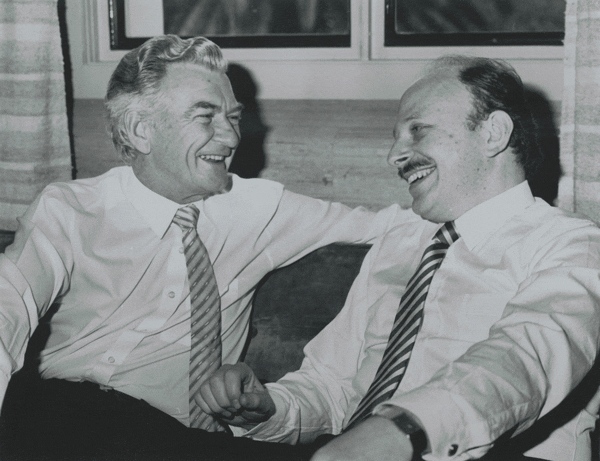
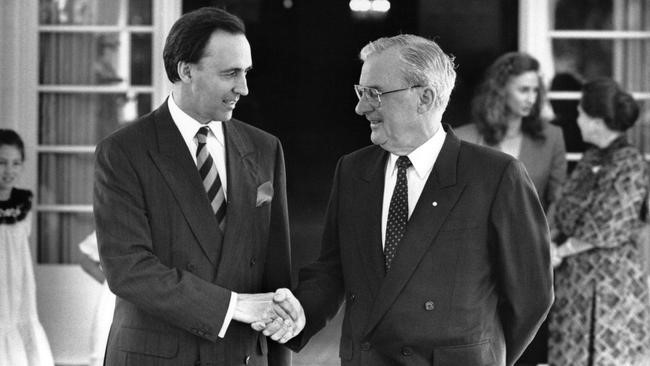
Gandel also funds Taglit-Birthright Israel, a program that provides free ten-day tours of Israel for young Jews who are “currently unaffiliated with the Jewish community and have never visited Israel.” Announcing his financial support, Gandel declared that “My family strongly believes in supporting a range of programs that can foster and enhance Jewish continuity and identity, and help develop the future leaders in our community.” The Zionist Federation of Australia (led by Leibler’s son Jeremy) thanked Gandel and extoled Birthright Israel as “a critically important Israel program” that serves to “engage many young Jewish adults with the powerful connection to Israel, Judaism and other young Jews they meet during and after the program.”[3] Thus, while seeking to increase Jewish ethnocentrism and ethno-nationalism through his funding of Birthright Israel, Gandel simultaneously funds “Click Against Hate,” a program specifically designed to reduce White ethnocentrism and promote the virtues of “diversity” and “multiculturalism” among Australian schoolchildren.

Leibler, Australia’s most prominent tax lawyer, fiercely defends their interests of his Jewish clients like Gandel, and has had the ear of every Australian Treasurer since John Howard had the job in the 1970s. Former Australian Tax Office (ATO) officials who have dealt with Leibler attest to his “reputation as a bully who intimidates junior staffers conducting audits of his clients.” He has a reputation for being “arrogant and a formidable and difficult opponent.”[4] The ATO’s Chief Tax Council, Kevin Fitzpatrick, confirmed Leibler’s reputation as “a person who had influence and as someone who used this perception to bully more junior auditors by threatening to go over their heads to the Commissioner or some other senior official in order to get his way.”[5]

Leibler certainly exemplifies the qualities Kevin MacDonald identified as typical background traits for Jewish activism: hyper-ethnocentrism, intelligence, wealth and psychological aggression.[6] Those who have dealt with Leibler attest that he was “often arrogant, often angry, and that he would regularly swear during arguments with opponents.” Interviewing Leibler for his book, Gawenda could readily see “why some of the politicians he had dealt with, and some in the Jewish community who had opposed him politically, might have felt that Leibler was brash, arrogant, a bully.”[7]

In 1984, when he became president of the Zionist Federation of Australia, the Australian Jewish News described Leibler as “an angry young man.”[8] One anonymous Jewish source noted “a massive vicious streak running through the genes of both [Leibler] brothers.”[9] Isi Leibler’s attacks on opponents, or people he considered opponents, “were legendary for their bluntness and vitriol.”[10] Gawenda notes that while Isi would sometimes be open to reconciliation after he attacked someone (if it was politically expedient), Mark “is a much more uncompromising and dangerous foe.”[11] The Leiblers invariably referred to those Jews who questioned their right to speak for all Australian Jews as “enemies of the Jewish people, or even self-hating Jews.”[12]

In the 1980s, ABL became a locus for Jewish ethnic networking when young Jewish lawyers of the firm were targeted by wealthy Jewish businessmen for lucrative jobs. One was Joe Gersh who was offered a highly-paid job at packaging company run by the late Jewish billionaire Richard Pratt. Pratt had ‘’heard that Gersh was a bright Jewish boy and, according to Gersh, Pratt was then trying to hire every bright young Jewish boy in Australia.” In the end, Gersh opted to stay at the law firm after Leibler told him “things were happening at ABL.”[13]  Gersh was quickly made a senior associate, and, at the end of that year, aged 26, a partner. These days Gersh is executive chairman of his investment banking firm Gersh Investment Partners. He is also a director of the Liberal Party think-tank The Sydney Institute, and a long-time friend of former Australian Treasurer Peter Costello. In 2018, Gersh was appointed to the board of the Australian Broadcasting Corporation.

The Powerbroker recounts how Arnold Bloch, the founder of ABL, left the firm in 1981 to go into business with his wealthy Jewish clients Marc Besen and Abe Goldberg. The latter, at one time Australia’s fourth richest man, was a notorious fraudster whose business continued to operate for three years while insolvent. Gawenda recounts how:

In early 1990, Goldberg’s bankers appointed KPMG to look over Goldberg’s books. The auditor discovered that Goldberg’s companies had liabilities of $1.7 billion with assets of $425 million. In other words, Goldberg had been technically bankrupt since the [1987] stock market crash. But before he could be held accountable for the hundreds of millions of dollars he owed the banks and other creditors, he fled to Poland where he renewed his Polish citizenship. At the time Australia did not have an extradition treaty with Poland. Goldberg went back into business in Poland, amassing a significant fortune as a property tycoon before he died there in July 2016, having not paid back a cent of what he owed his creditors in Australia.[14] 

In her 1987 book, The New Boy Network, Jewish journalist Ruth Ostrow chronicled the rise to wealth of the post-war Jewish migrants to Australia. Less than thirty years after arriving in the country, some were among the nation’s wealthiest people. Included in her book were Marc Besen, John Gandel, Eddie Kornhauser, Maurice Alter, George Herscu, Abe Goldberg, and the Smorgon, Liberman, Rockman and Werdiger families.[15] All were clients of Arnold Bloch Leibler. Herscu and Goldberg were later exposed as criminals and Herscu ended up in jail. The majority, however, survived the 1987 stock market crash and “went on to accumulate wealth beyond their own imaginings.”[16]

Bottom-of-the-Harbor Tax Avoidance Schemes

These clients expected ABL to provide not just legal services, but to advise them on how to maximize their chances of building successful businesses. A key priority was to structure their business to avoid paying tax. A 1980 Royal Commission uncovered a vast tax avoidance industry among these businessmen. These so-called “bottom-of-the-harbor” schemes “were blatant in their intent — to avoid paying what should have been a legitimate tax bill on company profits.” At its simplest, it involved a series of paper transactions in which a company was stripped of its assets and accumulated profits, leaving no tax payable. These assets were then transferred to a new company that carried on business as before. The original company was then metaphorically dispatched to the bottom of the harbor through a transfer to someone with no assets and no idea of what was actually happening. Often the old company’s records were simply “lost.”[17]

Leibler’s clients used a variety of schemes designed to avoid tax, and an Australian Taxation Office official attested to Leibler’s reputation as a lawyer “deeply involved in the blatant, artificial and contrived schemes.”[18] As mentioned, Leibler also had a reputation for going over the heads of ATO auditors to more senior officials (or threatening to do so) if the result of a tax audit looked unfavorable for one of his clients. Leibler refused to tell Gawenda how many of his clients had been involved in bottom-of-the-harbor schemes, “but there can be little doubt that the number was significant.” These clients needed Leibler’s help, especially when, in the wake of the Royal Commission, the federal government signaled a willingness to pass retrospective legislation to recoup tax that had been avoided by his clients. New laws made it a criminal offence to create a company or trust unable to pay taxes or to assist a company or person to do so. The new law meant those who took up the tax avoidance schemes or promoted them would be criminally liable.

As Treasurer in the Hawke government (1983–91), Paul Keating (Hawke’s successor as Prime Minister in 1991) initially supported a further crackdown on such tax avoidance. In early 1983, the government introduced legislation that gave the Commissioner of Taxation the power to treat a company’s income and capital reserves (i.e., retained undistributed profits) as dividends and, therefore, to tax those reserves. This was an attempt to recoup tax revenue that had been lost through bottom-of-the-harbor schemes. Mark Leibler was incensed by the legislation. He knew that if the legislation passed, some of his wealthiest clients would be liable for many millions of dollars in tax. This would, in turn, seriously reduce a major source of funding for Jewish and Zionist causes.

Leibler initially tried to set up meetings with the then Finance Minister John Dawkins who was spearheading the legislation, but to “Leibler’s frustration and anger” Dawkins refused to see him. The bill passed the House of Representatives in June 1983. As the Opposition opposed the legislation, only one vote — that of the independent Senator Brian Harradine — would determine whether the legislation would pass or fail. While the legislation was being debated in the House of Representatives, Leibler launched an aggressive lobbying campaign to convince Harradine to vote against the legislation when it came to the Senate. Gawenda notes how:

He flew to Canberra to see him. He sent Harradine notes that explained why the legislation was very bad, and might lead to an economic downturn and a significant increase in unemployment. Leibler knew that Harradine was inclined to support the legislation. He was in many ways an old-style Labor man who was not naturally inclined to support wealthy businessmen. … Politically, there was nothing in it for Harradine to vote against the legislation; in fact he was likely to be accused of being on the side of business and the wealthy. He wavered, torn between following his political interest and his understanding, shaped by Leibler’s lobbying, that it was bad legislation.[19]

In the end, Harradine caved in to Leibler’s demands and blocked the legislation. While this was “a major victory for Leibler,” a few years later the High Court of Australia ruled that this legislation was actually unnecessary and that the Commissioner of Taxation already had the power to tax the capital reserves of companies involved in the bottom-of-the-harbor schemes and other forms of tax avoidance. After the ruling, Leibler called the then Commissioner of Taxation, insisting that “urgent remedial action was required” and that it was open to the Commissioner to make a ruling that would, in essence, ignore the High Court decision. The Commissioner of Taxation indicated to Leibler that he wouldn’t act without the support of Treasurer Paul Keating.[20]

Leibler immediately started lobbying Keating. Gawenda notes that it “was relatively easy for a tax lawyer of Leibler’s reputation, who represented so many wealthy clients, to organize meetings with senior politicians on both sides of politics.” The political risks for Keating were substantial if it became known he had met with Leibler to discuss the particular tax assessments of Leibler’s wealthy clients because most Labor MPs supported the High Court ruling. Despite this, as Leibler recorded in his notes from the time, “Keating did respond and very positively. He said quite specifically that he was in agreement with the line I was putting and that he would take the matter up with [tax commissioner] Boucher.”[21] In the end, the Commissioner of Taxation agreed to issue an administrative order whereby “the financial threat” to Leibler’s clients “was significantly diminished.”[22] Leibler was triumphant. To this day, he “nourishes his contacts at the ATO’s senior levels, including with the Commissioner, and his contacts with senior politicians on both sides of politics. The networking and schmoozing never stops; it’s part of his DNA and he has helped to instill it in many lawyers at ABL.”[23]

Cultivating Australia’s Senior Politicians

Mark Leibler has cultivated and sustained close relationships with senior Australian politicians over several decades: from Bill Hayden, when he was foreign minister in the Hawke government in the 1980s, to Prime Ministers John Howard, Paul Keating and Julia Gillard. The walls of his office and study are adorned with “photographs of Leibler with Australian and Israeli prime ministers and foreign ministers and senior cabinet ministers: John Howard, Paul Keating and Malcolm Turnbull, and Israeli Prime Ministers Itzak Shamir, Shimon Peres and Benjamin Netanyahu.”[24]

The perceived imperative of cultivating close relationships with Australia’s senior politicians can be traced back to events that occurred when Mark Leibler first took on leadership roles in Zionist organizations. From the time of Israel’s founding in 1948 through to the election of the Whitlam Labor government in 1972, both major Australian political parties proclaimed bipartisan support for Israel. In 1973, Whitlam declared his government would be more even-handed, which, for Australian Jewry, “meant that Australian government support for Israel could no longer be taken for granted.”[25] Leibler and other Jewish activists were incensed at Whitlam’s stance.

In the lead up to the 1974 election, the Australian Labor Party was concerned wealthy Jewish donors would abandon the party because of Whitlam’s Middle East policies. A meeting was organized between Whitlam and prominent Jewish leaders, including Mark Leibler. Whitlam angered them by refusing to apologize for his public stance. After the event, Whitlam told ALP supporters he felt “ambushed” and accused the Jewish leadership of “trying to blackmail him into supporting Israel.”  For Leibler, Whitlam’s intransigence signaled the necessity of establishing “better, more professional connections with leaders of both parties.” Gawenda notes that:

It is now a commonplace accusation that the so-called Jewish Lobby — or Israel Lobby as it is sometimes described — has undue influence on Australian government policies toward the Israel-Palestinian conflict. It has also become common practice to accuse it of being powerful and bullying. Bob Carr, former Labor premier of New South Wales and Foreign Minister in Julia Gillard’s last years as prime minister, is perhaps the most prominent politician to engage in such accusations. Their genesis inside the ALP goes back to that breakfast in Melbourne in 1974.[26] 

Leibler led by example and assiduously cultivated relationships with senior Labor Party figures — in particular with Bill Hayden when he was federal leader of the opposition in the early 1980s. Leibler was at the time president of the Victorian State Zionist Council. It was a difficult time to be a Zionist leader. The Israeli invasion of Lebanon had provoked protests around the world. An incursion into southern Lebanon to push the PLO out of the region had turned, under the direction of Ariel Sharon, into a full-scale invasion of the entire country. Hundreds of Palestinian men, women and children had been massacred in the Sabra neighborhood of Beirut and in the nearby Shatila Palestinian refugee camp by the Phalangist militia allied with Israel. A United Nations commission concluded that Israel bore ultimate responsibility for the massacre.

Despite such events, Leibler was (and remains) adamant that no Australian Jewish leader should ever “indulge in any public criticism of Israeli Government policy.” Gawenda notes that “In those days Mark and Isi Leibler saw themselves as policemen of the extent to which members of the Jewish community could be critical of Israel. If anyone crossed the Leibler line, the brothers reacted with the sort of trenchant, even personal, criticism that made enemies of the Jews and non-Jews who found themselves on the receiving end of their often vitriolic attacks.”[27] Leibler has continued to aggressively police “the boundaries of what his fellow Jews could legitimately say about Israel.”[28]

Mark Leibler cultivated Hayden at a time when his brother Isi had already forged close ties with Bob Hawke, then stalking Hayden for the Labor leadership. Given Isi’s close personal relationship with Bob Hawke, his younger brother thought it most expedient to focus his attention on Hayden and, subsequently, Hawke’s logical successor as Prime Minister, Paul Keating. Hayden personally disliked Isi, thinking him “difficult to deal with, prone to angry outbursts, and quick to make threats” and was initially reluctant to speak to his younger brother who had trenchantly criticized him after he had gone to Israel in 1980 and, “despite intense lobbying by Jewish community leaders,” had gone to Ramallah in the West Bank to visit Yasser Arafat.

Mark Leibler schmoozing with Bob Hawke in the 1980s

Leibler thought Hayden’s attitude to Israel and Australian Jewry was amenable to change and was, to some degree, a product of his rivalry with Bob Hawke, who, according to former Jewish leaders and Labor politicians, told “whoever would listen that he was a hero to the Jewish community, that the Jews were on his side and wanted him [as opposed to Hayden] to lead the ALP in parliament.”[29] According to Leibler, “Hayden’s difficulties with the Jewish community were due in part to Hayden’s ‘paranoia’ over the relationship between Hawke and the Jews.”

After his initial meeting with Hayden, Leibler assessed that Hayden was “amenable to building a closer relationship between himself and the Jewish community.” In his notes, Leibler stressed the importance of “frequent informal contacts between the Jewish community and Zionist leaders and the top leadership of the ALP.” Leibler’s overtures to Hayden were “the beginning of his successful cultivation of senior government figures of both political persuasions.” His efforts bore tangible fruit when the Hayden was appointed Foreign Minister by Hawke in 1983. Leibler now “had access to the cabinet minister who was in a position to determine Australia’s stance on the conflict between Israel and the Palestinians.”[30]

Overturning the UN Resolution Equating Zionism with Racism

This access became an important strategic asset in Leibler’s campaign to promote the rescinding of the United Nations resolution, passed by the General Assembly in 1975, stating that Zionism was a form of racism. Leibler as ZFA president fervently backed Israeli President Chaim Herzog’s international campaign to annul the UN resolution. The campaign would be led the World Zionist Organization and the Israeli Foreign Ministry, and Leibler would run the Australian campaign through the ZFA. He wrote to politicians, public figures and leading journalists insisting that “the Zionism-equals-racism resolution had contributed to both anti-Zionism and anti-Semitism worldwide,” and asked them to support the resolution’s annulment. Bill Hayden, formerly a critic of the Israeli government, now backed Leibler’s campaign.

In August 1985, the U.S. Congress passed a motion denouncing the UN Resolution stating Zionism was racism. Leibler noted: “It immediately occurred to me that perhaps the principle objective of the Australian campaign should be to bring about a similar result, a resolution of both houses of parliament denouncing resolution 3379 but more than that, calling for its rescission.”[31]

Key Leibler lobbying targets Paul Keating and Bill Hayden
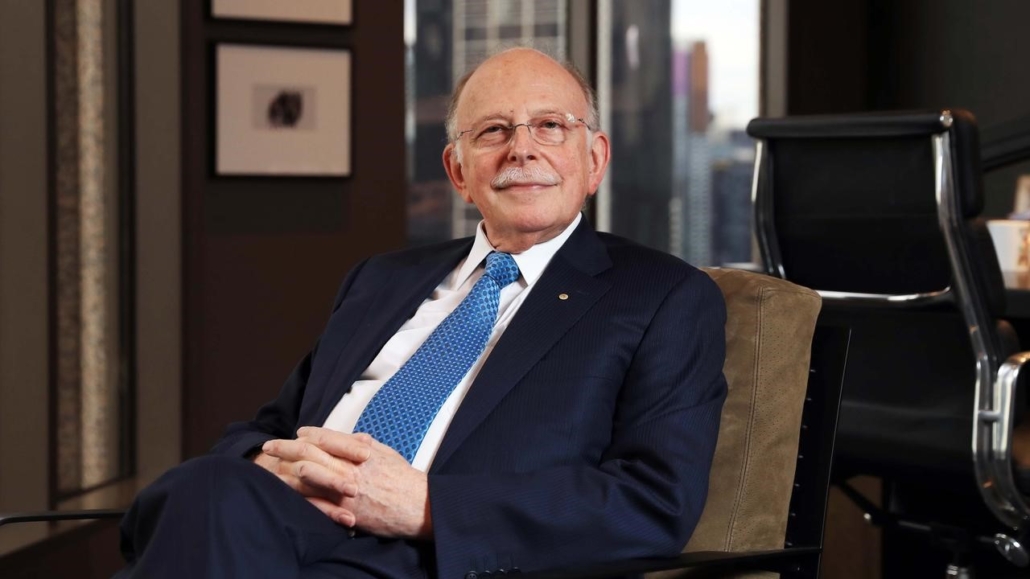

He went to Hayden, not Hawke, with the proposal. Such resolutions were rare in the Australian parliament, and a resolution on a foreign affairs issue had never been passed. Leibler invited Hayden to be keynote speaker at the ZFA’s Biennial Conference in April 1986. Hayden accepted, and told Leibler that he would announce his support for a joint parliamentary resolution in his speech. Having lobbied aggressively to secure cross-party support for the resolution, Leibler then wrote to Hayden “enclosing a draft resolution for him to consider and asked whether he could meet relevant members of Hayden’s staff to discuss the final form of the resolution.”

The resolution (which was basically Leibler’s) that was put to parliament — which went further than the motion passed by the U.S. Congress and called for the UN resolution to be rescinded — was, according to Leibler, “more than satisfactory.”[32] Leibler was present in the House of Representatives when the resolution, carried unanimously in the House and the Senate at the same time, was passed. The Australian resolution was used by the Israel’s president, Chaim Herzog, and Jewish leaders and activists around the world as a model for other jurisdictions. The U.S. Congress subsequently passed a resolution sponsored by Senator Patrick Moynihan identical to the Australian one. The French and European Parliaments later did the same. For Leibler, this showed Australian Jewry “could have influence in international Jewish affairs way beyond its small size.”[33] In December 1991 the United Nations General Assembly revoked the 1975 resolution equating Zionism with racism.

Brenton Sanderson is the author of Battle Lines: Essays on Western Culture, Jewish Influence and Anti-Semitism, available here and here.

Go to Part 3.


[1] Michael Gawenda, The Powerbroker: Mark Leibler, An Australian Jewish Life (Melbourne: Monash University Publishing, 2020), 291.

[2] Ibid., 296.

[3] Unsigned, “Zionist Federation of Australia Welcomes Gandel Philanthropy’s ongoing commitment to Jewish continuity,” Zionist Federation of Australia Official Statement, September 30, 2014. http://www.zfa.com.au/zionist-federation-of-australia-welcomes-gandel-philanthropys-ongoing-commitment-to-jewish-continuity/

[4] Gawenda, The Powerbroker, 4.

[5] Ibid., 239.

[6] Kevin MacDonald, “Background traits for Jewish Activism,” The Occidental Quarterly, Vol. 3 No. 2, 2003, 5-37. https://www.toqonline.com/archives/v3n2/TOQv3n2MacDonald.pdf

[7] Gawenda, The Powerbroker, 168.

[8] Ibid., 345.

[9] Ibid., 169.

[10] Ibid., 170.

[11] Ibid., 169.

[12] Ibid., 173.

[13] Ibid., 88.

[14] Ibid., 70.

[15] Ruth Ostrow, The New Boy Network: Taking Over Corporate Australia (Sydney: William Heinemann, 1987).

[16] Gawenda, The Powerbroker, 93.

[17] Ibid., 94-5.

[18] Ibid., 235.

[19] Ibid., 136.

[20] Ibid., 138.

[21] Ibid., 139.

[22] Ibid., 140.

[23] Ibid., 307.

[24] Ibid., 6-7.

[25] Ibid., 103.

[26] Ibid., 104.

[27] Ibid., 107.

[28] Ibid., 11.

[29] Ibid., 108.

[30] Ibid., 113.

[31] Ibid., 118.

[32] Ibid., 119.

[33] Ibid., 122.

Mark Leibler: Powerbroker for Australia’s Jewish Plutocracy – PART 1


Mark Leibler

In writing about the pivotal Jewish role in Australia’s demographic revolution (triggered by the liberalization of immigration laws and institutionalization of multiculturalism), I have had regular occasion to mention the name “Leibler.” Among Jewish leaders in Australia in recent decades, none have enjoyed greater prominence than brothers Isi and Mark Leibler. I had long intended to devote an entire essay to the Leiblers and their impact on Australian politics and society, and was recently prompted to do so by the publication of the book The Powerbroker: Mark Leibler, An Australian Jewish Life by the Jewish journalist Michael Gawenda. After sampling some excerpts, I ordered the book and powered through it in a couple of days. While already familiar with the most of its contents, the biography contains some fascinating (and surprisingly revealing) material.

Gawenda’s stated reason for writing The Powerbroker is strangely paradoxical. He claims to have been impelled to write about Australia’s most powerful and politically well-connected Jewish leader by the rise of anti-Semitism in Australia and elsewhere. “The time was right,” he claims. “Anti-Semitism of the right and the left was on the rise. … For the first time, I had a growing sense of foreboding about the future of the Jews. I wondered whether that time after the Holocaust – the time in which Leibler and I grew up and lived most our lives, when anti-Semitism was totally unacceptable and anti-Semites were given no oxygen, no legitimacy – was over.”[1] Gawenda’s bizarre response to this alleged phenomenon was to pen a work confirming the veracity of various anti-Semitic “tropes” and “canards.” The Powerbroker unashamedly affirms the extraordinary power, wealth and political influence of organized Jewry in Australia – and its most prominent leader. For Gawenda:

Leibler’s life is a story about Jews and power. Making that connection is fraught with risks, for it is one that has been made throughout history by anti-Semites and by those who think Jews somehow have an almost magical ability to influence and change – always for self-interest and for the worst – the course of history. Questions about Jewish power have consumed Jew-haters, and their answers have led to discrimination and hatred and, sometimes, to unspeakable, historically unprecedented violence. But just because anti-Semites believe the Jews have power does not mean it is untrue. Leibler’s story cannot be told without an examination of the way he has developed and used power and influence.[2]

Gawenda’s willingness to openly discuss the extraordinary power and influence of Jews in Australia, despite this endeavor being “fraught with risks,” troubled one reviewer of The Powerbroker, the Jewish academic Phillip Mendes, who warned that “This narrative may excite some conspiracy theorists on the far left and right who believe that Jews per se control finance.”[3] Mendes falsely claimed in his review that 30 percent of Australian Jews live in poverty.

Gawenda’s first interactions with his biographical subject were when, as editor of The Age newspaper in Melbourne in the 1990s, the Australia/Israel & Jewish Affairs Council (AIJAC), the lobby group then (and still) chaired by Leibler, contacted him “regularly to complain rather robustly about the newspaper’s coverage of the Middle East.”[4] Gawenda did not always need AIJAC’s “robust” advice to sway the newspaper’s coverage of the Middle East in his own ethnic interests. As editor he censored political cartoons critical of Israel, a practice that prompted one observer to demand he openly declare his Jewish ethnicity. Gawenda found this deeply offensive, with its suggestion that “a Jew writing about another Jew was somehow problematic. And it could only be considered problematic if you thought that Jews stuck together, that their first loyalty was always to each other, that Jews, in other words, had dual and even conflicting loyalties. For Jews, this is an association with a long and bloody history, and it has, no doubt, been leveled at Mark Leibler.”[5]

Michael Gawenda

Gawenda identifies as a child of “Holocaust survivors” despite the fact his parents sat out World War Two in the far-east of Russia. They were, he claims, part of “the influx of more than 20,000 Holocaust survivors [to Australia] after the war, more of whom settled in Australia proportionately than in any other country other than Israel.”[6] The father of his biographical subject arrived in Australia just prior to World War Two. An Orthodox religious Zionist and diamond dealer from Antwerp who arrived in 1938 on a business trip, Abraham Leibler was prompted to stay by the situation in Europe, and was joined by his wife Rachel and firstborn son Isi in Melbourne later that year. At that time, there were then no obstacles for Jews leaving Belgium to sell their property and take their wealth with them. Isi Leibler’s younger brother, Mark, was later born in Melbourne in 1943.

Abraham set up his diamond business in Melbourne at the time when, under the influence of the White Australia policy, Australia was one of the Whitest countries in the world with the non-European population, other than Aborigines, being measured at around 0.25 per cent of the total. The population was predominantly of Anglo-Celtic origin and Australians of the other European ethnicities were thoroughly assimilated into the Anglo-Australian mainstream. Apart from the Protestant-Catholic sectarian divide, Australia was a culturally-cohesive nation devoid of significant social tensions. Reflecting on this, Gawenda sourly observes that “In those days the word ‘diversity’ pertained only to plant and animal species, not to human beings, and the word ‘multicultural’ was still many decades away from being a description of Australian society.”[7] Gawenda’s own ethnic group would play a pivotal role in that social transformation.

Abraham Leibler arrived in an Australia that was “was monocultural and before the arrival of hundreds of thousands of migrants from Europe in the 1950s, ethnically homogeneous.”[8] Even this post-War influx of some 200,000 European migrants to Australia did not, however, greatly change things. Northern European migrants were prioritized and expected to assimilate into the general Australia community as quickly as possible (which they did). Moreover, throughout the 1950s more migrants continued to arrive in Australia from Britain than from any other place.

At the time of Abraham Leibler’s arrival in 1938, the Australian Jewish population were predominantly “Anglo Jews” – the descendants of German Jews who arrived in Australia during the gold rushes of the mid to late-nineteenth century. These Jews were well integrated into the political and administrative structure of the colonies and gained social acceptance through adoption of British customs and displays of loyalty to the British Empire. Sir John Monash (1865–1931), for example, became a general in the Australian army and was, according to Goldberg, “the only Jew in the modern era outside Israel (with the exception of Trotsky) to lead an army.”[9] Sir Isaac Isaacs (1855–1948) became Australia’s first native-born Governor-General. In Australia under the Immigration Restriction Act of 1901, these highly-assimilated Anglo-Jews were regarded as “White,” while Jews of Middle-Eastern origin were regarded as Asian and therefore barred from entry.

Alongside these culturally-assimilated Anglo Jews was a smaller group of Eastern European Jews noted for their ferocious ethnocentrism and political radicalism. These Jews arrived as refugees from Tsarist Russia from 1880 to 1914, and from Poland after 1918. The numbers arriving with each of these waves were, however, comparatively small and Australian Jewry remained a tiny isolated outpost of world Jewry until the 1930s.[10] In this decade, Australia accepted an influx of 7,000 Jews as refugees under the Australian government’s quota for Jews fleeing National Socialist Germany. Gawenda notes how these new Jews, and the post-war Jewish influx of “Holocaust survivors” from Eastern Europe, “were radically different to the Anglo Jews. They spoke mainly Yiddish and were steeped in Yiddish culture and traditions. Critically, they did not define their Jewishness narrowly, as a matter of religious adherence. Many were Zionists who believed in Jewish nationhood.”[11]

Many were also avowed communists who created and supported a communist front group called the Jewish Council to Combat Fascism and Anti-Semitism. Formed during the war, this organization became a major force in Australian Jewish community politics, with its leaders and members being overwhelmingly “either communists or fellow travelers.”[12] From these politically radical Eastern European Jewish migrants emerged one of the Soviet Union’s most successful spy rings. In his book Traitors and Spies: Espionage and Corruption in Hugh Places in Australia, 1901–-50, former intelligence officer John Fahey describes how “respected Jewish businessmen” Jack Skolnik, Hirsch Munz and Solomon Kosky “established themselves as what I believe is probably the most successful spy ring that’s ever operated in Australia. I have no doubt they stole vast amounts of information.”[13] This trio passed on valuable military and political secrets to Moscow, undetected, from government offices in Melbourne from the late 1920s right through to the 1950s.

The Anglo Jews feared the intense ethnocentrism and political radicalism of these new Jewish arrivals would provoke an increase in anti-Semitism — and their fears were not without foundation. The new migrants had the effect of making the Anglo-Jews more visible as a group through their association with the new European Jews. They also provoked hostility from significant sections of the Australian community, who (correctly) sensed that these psychologically-intense and politically-radical newcomers posed an existential threat. The Anglo-Jewish leadership feared these new Jews, who were “Zionists of the most visceral kind,” would provoke the charge of dual loyalty recurrently made regularly against Jews in Europe: that Jews were only loyal to each other and not to the countries in which they lived. Gawenda observes that:

Sometimes the dual loyalties charge was expressed as an accusation that Jews were a fifth column of traitors hidden in the population. Hitler famously ranted about the Jewish stab-in-the-back of the German people during World War I. It was, however, a relatively new concept in Australia, where, until the arrival of the refugee Jews in the 1930s, Australia’s Anglo Jews had, in the main, done everything they could to avoid being accused of such a terrible thing. After the establishment of Israel, the dual loyalties’ charge morphed into a charge that Jews were more loyal to Israel than to countries where they lived and often had lived for generations.[14]

The battle between the established Anglo-Jewish community and the newcomers from Central and Eastern Europe was essentially a battle between proponents of cultural assimilation and proponents of Jewish separatism. The new Jewish migrants were “not about to ‘complete Hitler’s work,’ as many of them put it, by assimilating.”[15] Even when in Europe they had considered themselves Jews first and foremost. “They were well-versed in Jewish scholarship, often deeply religious and in many cases, passionately Zionist,” notes the Australian-Jewish historian Suzanne Rutland.[16] The new Jews, through the activism of community leaders like Walter Lippmann (who arrived in Australia in 1938), were to be pivotal to entrenching cultural pluralism and “multiculturalism” as official Australian government policy from the 1970s.

Lippmann resented the expectation to assimilate into the Anglo-Australian mainstream. In his advocacy of the multiculturalism in Australia, he tore a page out of the writings of the pioneering Jewish-American multiculturalist Horace Kallen. Lippmann believed Jewish immigrants had left one type of oppression behind only to be subjected to another – the Australian expectation to assimilate. Kallen described the corresponding expectation in the early twentieth-century United States as “the Americanization hysteria” or the “Americanization psychosis.”[17] The multiculturalism espoused by Lippmann, which ultimately became the basis for social policy in Australia, implied “a rejection not only of the attempts to promote an amalgam of cultures but also of any assumptions of Anglo-Saxon superiority and the necessary conformity to English-oriented cultural patterns.”[18]

The Leiblers, as Orthodox Jews and Zionists, openly flouted the expectation to assimilate and lived in a completely Jewish milieu sealed off from the surrounding Australian society. This stance was intensified by their involvement with Mizrachi, a religious Zionist organization that functioned like a self-contained community, with its own synagogues, day schools and youth movement, Bnei Akiva – named after Rabbi Akiva, a rabbinical authority on Judaism’s major texts, who was executed by the Romans after the failed Jewish revolt against Roman rule in AD 66.

The Leiblers were far from alone in their determination to resist assimilation and promote Jewish genetic and cultural separation from the general Australian community. A group of businessmen and activists raised money to establish a Jewish day school in 1949, Mount Scopus College, in Melbourne – which eventually grew into the largest Jewish day school in Australia and one of the biggest in the world. Mark Leibler attended the college, which catered to “a wide range of parents, from the Orthodox to those who wanted their children to go to a Jewish school in order to minimize the chances of their ‘marrying out.’” These parents were most concerned about “maximizing the chances of their children getting good Year 12 exam scores and marrying other Jews.”[19] Such was the insularity of the Mark Leibler’s upbringing and early life in Melbourne that he observed: “I don’t think I had any non-Jewish friends. I was basically mixing with Jews all the time.”[20]

Despite this, reflecting back on his time as a student at Mount Scopus, Leibler thought the school had not done enough to foster a “deep sense of their Jewish identity, a knowledge of and love for Judaism as bulwarks against assimilation and intermarriage.” He believed Australian Jewish children needed “schools with clear ideologies that fostered their particular kind of Jewish identity.” He later supported and sent all of his children to Yavneh College – a Zionist and Modern Orthodox school absolutely committed to producing “Jews secure in their Jewishness, knowledgeable about and able to practice Judaism with an unshakable commitment to Israel.”[21]

Mount Scopus College: not doing enough to foster a “deep sense of their Jewish identity, a knowledge of and love for Judaism as bulwarks against assimilation and intermarriage”

Mark Leibler first interacted with non-Jews when he studied law at the University of Melbourne. Even there, he was, however, taught and mentored by several Jewish academics including Zelman Cowen, the Dean of Law who helped get him into the Masters program at Yale. Jewish ethnic networking also played an inevitable role in determining where Leibler launched his legal career: he did his articles at the law firm of Arnold Bloch in 1966, whose eponymous owner was “a family friend and Jewish community leader who had known Mark since he was a boy.”[22] Leibler subsequently joined the firm and was quickly made an associate. Within a decade and a half, many of the firm’s mostly Jewish clients were among Australia’s richest people. One of Bloch’s first clients in the 1950s was John Gandel, the now billionaire property developer and leading funder of Jewish causes.

In the decade to 1957, the Australian Jewish community had almost doubled in size, from about 32,000 to more than 55,000 with the vast majority living in Sydney and Melbourne. By 1957, the new Jewish migrants from Central and Eastern Europe outnumbered the Anglo Jews and had taken over the leadership of all Jewish organizations. It was out of this group that Isi and Mark Leibler emerged as leaders in the 1960s and 1970s. Mark focused his leadership ambitions on the Australian Zionist organizations – the State Zionist Council of Victoria and the national Zionist Federation of Australia, which was affiliated to the World Zionist Organization. His brother Isi had already risen to become president of Victorian Jewish Board of Deputies and an internationally recognized leader of the campaign to allow Soviet Jews to migrate to Israel. His activism is said to have been strongly shaped by “the Holocaust” which was always “uppermost in Isi Leibler’s mind.”[23]

Since the late 1990s, when Isi settled in Israel, Mark Leibler has been recognized as “Australia’s most influential and powerful Jewish leader, and has become increasingly influential in international Jewry.”[24] The Jerusalem Post accorded him the status of one of the world’s 50 most influential Jews – a leader of Jews both in Australia and around the world. Gawenda notes that while Leibler “is not well known to most Australians,” his influence “far exceeds his public profile” and he is “regularly sought out by powerful people in all walks of life.”[25] Ultimately, this power and influence is “built on the strength of the 120,000 in Australia’s Jewish community.”[26] In the subsequent parts of this essay, I explore Mark Leibler’s impact on Australian politics and society.

Brenton Sanderson is the author of Battle Lines: Essays on Western Culture, Jewish Influence and Anti-Semitism, available here and here.

Go to Part 2 of 5.


[1] Michael Gawenda, The Powerbroker: Mark Leibler, An Australian Jewish Life (Melbourne: Monash University Publishing, 2020), 6.

[2] Ibid., 11-12.

[3] Philip Mendes, “The many sides of Mark Leibler,” The Sydney Morning Herald, September 11. https://www.smh.com.au/culture/books/the-many-sides-of-mark-leibler-20200903-p55s5a.html

[4] Gawenda, The Powerbroker, 9.

[5] Ibid., 10.

[6] Ibid., 7.

[7] Ibid., 16.

[8] Ibid., 20.

[9] Dan Goldberg “After 9/11: The Psyche of Australian Jews,” In: New Under the Sun – Jewish Australians on Religion, Politics & Culture, Ed. Michael Fagenblat, Melanie Landau & Nathan Wolski (Melbourne: Black Inc., 2006) 140-152, 151.

[10] Suzanne Rutland, The Jews in Australia (Melbourne: Cambridge University Press, 2005), 22.

[11] Gawenda, The Powerbroker, 18.

[12] Ibid., 24.

[13] Jen Kelly, “How three Melbourne businessmen became one of the Soviets’ most successful spy rings, Herald-Sun, October 9.

[14] Gawenda, The Powerbroker, 21.

[15] Ibid., 36.

[16] Rutland, The Jews in Australia, 77

[17] Horace Kallen, Culture and Democracy in the United States (New York: Arno Press, 1924; reprint 1970), 165; 167.

[18] http://www.immi.gov.au/media/publications/multicultural/confer/06/speech29a.htm

[19] Gawenda, The Powerbroker, 81.

[20] Ibid., 33.

[21] Ibid., 81.

[22] Ibid., 48.

[23] Ibid., 23.

[24] Ibid., 4.

[25] Ibid., 2.

[26] Ibid., 4.

Hate-Filled Hindu: Priti Patel is Sycophantic to Jews, Psychopathic to Whites

Shakespeare got it wrong. “There’s no art to find the mind’s construction in the face,” says King Duncan in Macbeth (c. 1606), meaning that psychology can’t be read from physiognomy. But Shakespeare never saw Priti Patel, the British-born Indian Hindu who currently serves as Home Secretary. When you look at Patel’, do you see gentleness, humility and good-nature? I doubt it:

The pernicious punim of Priti Patel, high-T fem-pol

No, Priti Patel looks like what she is: a nasty piece of work. As I said in “A Shameless Shabbos-Shiksa,” she’s a high-T fem-pol, that is, a female politician with typically elevated levels of testosterone. She’s aggressive, ambitious and entirely without principle or loyalty to the country of her birth. That makes her an ideal shabbos-shiksa, or gentile servant, for Conservative Friends of Israel (CFI), which the Jewish Chronicle described as “the biggest lobbying group in Westminster” (i.e., British politics). Lord Polak, CFI’s very powerful but little-known chief, steered Patel to a long series of secret meetings with important Israeli politicians. That definite conspiracy was finally exposed in 2017 and Patel lost her job as International Development Secretary in Theresa May’s government of grovelling goys.

Working for Jewish interests

What happened at the meetings? Only Patel and her Jewish puppet-masters know, but she certainly wasn’t conspiring with Jews to benefit British Whites. After the scandal broke, she should have been prosecuted as an agent of a foreign power and permanently excluded from politics. But that isn’t how things work in Brave New Britain. Instead, Patel bounced back to a much bigger and better job in Boris Johnson’s government of grovelling goys, in which the very powerful but little-known treasurer is the Israeli plutocrat Ehud Sheleg. Patel is now Home Secretary, supposedly overseeing law, immigration and border security for Britain, in reality working for Jewish interests as she has always done. And now she’s back at the centre of another scandal, this time about her obnoxious behaviour towards White civil servants. An official report found that she had broken the ministerial code of conduct by bullying staff and should therefore resign for the second time from the cabinet.

However, Boris Johnson decided that the rules needn’t apply to his fellow Friend of Israel, and Patel is still there. There are rumours that she’ll lose her post soon for incompetence, but obnoxiousness was not a problem. After all, she’s not been obnoxious to the only people who matter in Brave New Britain: the tiny Jewish minority that funds and controls the Conservative Party and that wields hugely disproportionate influence in the media and academia. Patel has risen to high office by being sycophantic to Jews and psychopathic to Whites.

Death-goddess Kali with White men’s heads

And she may well be a full psychopath, like a disproportionate number of politicians and of the lawyers who are massively over-represented in Western politics. For example, Patel has a psychopathic indifference to truth. She knows from the inside that Jews have controlled the Conservative government under Johnson, May, and Cameron just as they previously controlled the Labour government under Blair and Brown. That’s why she had so many secret meetings with Israeli politicians. But she would instantly condemn anyone who named and opposed the very Jewish control that she has so carefully allied herself with and worked to strengthen. Indeed, she would be happy to imprison anyone telling the truth about Jewish control. Psychopaths don’t care about truth or morality: they care about power. And some psychopaths like to exercise power in sadistic ways, as Patel did when she shouted and swore at her White staff. Which brings me to another image from Brave New Britain:

Death-goddess Kali with White men’s heads

That painting, called Housewives With Steak Knives (1985), is a “self-portrait … as the multi-armed Hindu Goddess Kali” by Sutapa Biswas, another Indian Hindu currently enriching Brave New Britain. Do you think the painting shows hostility towards White men? I do and I would link the psychology of Sutapa Biswas, as revealed in her painting, to the psychology of Priti Patel, as revealed in her behaviour towards White civil servants. Of course, no mainstream commentator in Britain would dare suggest that Patel’s Hinduism and Indian genetics have played any role in her obnoxious behaviour. But here at the Occidental Observer, the Home of Hate, I’m suggesting exactly that.

Pernicious parallels

After all, a very similar scandal has happened before. In 1998, a female Hindu lawyer called Kamlesh Bahl was appointed Deputy Vice President of the Law Society and was expected to rise swiftly to become its President. But Bahl was dismissed in 1999 after accusations that she was a power-crazed bully who terrorized and humiliated her White staff in just the way that Priti Patel is accused of doing.

And just as Patel got her big job despite being known to have bullied staff in her previous ministries, Bahl got her big job despite being known to have bullied staff when she was head of the Equal Opportunities Commission. Like Patel, Bahl had non-White privilege. And to round off the parallels, Bahl denied that she had done anything wrong just as Patel has done. I don’t think these parallels are coincidental. Like Kamlesh Bahl, Priti Patel is a hate-filled alien invader whose genetics and psychology are rooted in India, not in Britain.

Don’t accept immigrants from India

India is a fascinating and complex region in all manner of ways, from religion to genetics (as I acknowledged in my discussion of the Parsi Indian Freddie Mercury). But one thing is certain amid all that complexity: India is a very bad place for any Western nation to accept immigrants from. Its culture is both hugely corrupt and horrendously cruel, as one of England’s greatest writers saw long ago. Rudyard Kipling (1865–1936) was born in India and recorded life there with sharp insight and understanding. Leftists call him a racist; I call him a realist. You can see some of his realism about India in the short-story collection Plain Tales from the Hills (1888). One of the stories, with the ironic title “Beyond the Pale,” begins with these lines: “A man should, whatever happens, keep to his own caste, race and breed. Let the White go to the White and the Black to the Black. Then, whatever trouble falls is in the ordinary course of things — neither sudden, alien, nor unexpected.”

Leftists would call that racist; I call it realist. And I think it applies to the trouble caused by Priti Patel and Kamlesh Bahl. Kipling would have been horrified to see mass immigration from India into the West. And rightly so. His story “Beyond the Pale” is about a love-affair between a White British man called Trejago and a Brown Indian widow called Bisesa. At first Trejago sees some of the beauty and charm of India. Then, following a quarrel with his brown-skinned lover, he sees a little of the horror:

A week, and then three weeks, passed without a sign from Bisesa. Trejago, thinking that the rupture had lasted quite long enough, went down to Amir Nath’s Gully for the fifth time in the three weeks, hoping that his rap at the sill of the shifting grating would be answered. He was not disappointed.

There was a young moon, and one stream of light fell down into Amir Nath’s Gully, and struck the grating, which was drawn away as he knocked. From the black dark, Bisesa held out her arms into the moonlight. Both hands had been cut off at the wrists, and the stumps were nearly healed.

Then, as Bisesa bowed her head between her arms and sobbed, some one in the room grunted like a wild beast, and something sharp — knife, sword or spear — thrust at Trejago in his boorka. The stroke missed his body, but cut into one of the muscles of the groin, and he limped slightly from the wound for the rest of his days. (“Beyond the Pale”)

“Genius” is an over-used word, but I’m happy to apply it to Rudyard Kipling. His ability to understand the multitudinous realities of India was matched by his ability to describe those realities. He didn’t portray Whites as inexcusable sinners or non-Whites as immaculate saints. Instead, he was a realist, which is why he’s now called a racist. But I can see no hate or malice in his stories about brown-skinned Indians. Indeed, “The Story of Muhammad Din,” about the life and death of a tiny Muslim boy, must be one of the most moving and compassionate stories ever written – and without the insincerity and sentimentality that accompany leftist minority-worship.

Leftism mandates blindness to reality

But although Kipling could sympathize with brown-skinned Indians and recognize their full humanity, that did not make him think that Indians and Whites are the same under the skin (or that White Germans and White Brits are the same). Like Charles Dickens, another literary genius, Kipling did not allow his enormous powers of sympathy to blind him to reality. But modern leftism mandates blindness to reality. That’s why the leftist Guardian can report that “India remains the most unsafe country for women in the world, with a woman raped every 20 minutes,” while simultaneously supporting unlimited immigration from India. This would ensure that India’s vibrant rape-culture found new settings, just as Pakistan’s rape-culture has been successfully transplanted to Britain.

In short, the Guardian claims to oppose rape while supporting the non-White immigration that massively increases rape. Its readers and journalists don’t recognize the contradiction. Thanks to minority-worship, leftists apply the Orwellian principle of crimestop, which “means the faculty of stopping short, as though by instinct, at the threshold of any dangerous thought. It includes the power of not grasping analogies, of failing to perceive logical errors, of misunderstanding the simplest arguments if they are inimical to [minority-worship], and of being bored or repelled by any train of thought which is capable of leading in a heretical direction.”

Racism is realism

And although British leftists have condemned Priti Patel and her bullying, none of them would acknowledge that she is yet another example of the harm done by mass immigration. As an Indian Hindu and shabbos-shiksa, Priti Patel supports the highly ethnocentric governments of Israel and India while working against the legitimate ethnic interests of Britain’s fast-shrinking White majority. Patel is bad for Britain, like the part-Jewish, part-Turkish prime minister Boris Johnson and like her fellow Indian Hindu Rishi Sunak, who came to the post of Chancellor from Goldman Sachs and the highly Jewish and globalist world of banking.

It is not racist to say that these aliens are bad for Britain: it is realist. Or rather, racism is realism. It is both rational and realistic to understand that race is a valid scientific concept and has huge consequences for politics, culture and criminality. Rudyard Kipling understand those obvious truths and Rudyard Kipling would have been entirely unsurprised by Muslim rape-gangs and the malign behaviour of the Indian Hindus Priti Patel and Kamlesh Bahl. But the West is no longer governed by the thinking of far-sighted White geniuses like Kipling and Dickens. Instead, the West is governed by the thinking of subversive Jewish charlatans like Karl Marx and Franz Boas.

Priti Patel pleads for power at Conservative Friends of Israel

And that’s why Britain has a hate-filled Hindu called Priti Patel at the top of government. Her sadistic behaviour towards her White staff is a portent of what will happen right across the West as Whites lose control to their non-White enrichers. Patel is bad for Britain and doesn’t belong here, which is precisely why, in true psychopathic fashion, she sniffed out and bowed before the hidden centre of power in her party: Conservative Friends of Israel. And Jews were delighted to recruit her as a shabbos-shiksa. They know that outsiders like Patel have no loyalty to or concern for British Whites.

But you won’t see anyone in the mainstream media speak these obvious truths. After all, this is Brave New Britain, where it’s against the law to speak the truth about Jewish control and minority malice. And who oversees the law in Brave New Britain? You’ve seen her pernicious punim already in this article: it’s Priti Patel, Home Secretary, Friend of Israel and Foe of Whites.

Portland Memories

“Miserable distorted block-heads, the generality; ape-faces, imp-faces, angry dog-faces, heavy sullen ox-faces; degraded underfoot perverse creatures, sons of indocility, greedy mutinous darkness, and in one word, of STUPIDITY, which is the general mother of such. Stupidity intellectual and stupidity moral had born this progeny: base-natured beings on whom the Genius of Darkness (called Satan, Devil and other names) had now visibly impressed his seal, and had marked them out as soldiers of Chaos and of him … Him, you could perceive, they would serve; but not easily other than him.
Thomas Carlyle, Latter-Day Pamplets, No.2.

It’s a little over seven years since I last set foot in Portland, Oregon, and I must say that none of the events in the city during the last 12 months have surprised me. Having spent most of my formative years growing up in some of the coldest, wettest, and cloudiest corners of Northwestern Europe, my first introduction to the United States came just as I turned 21. I was an extremely pale young lad with a soft spot for icy landscapes, and my travel history to that point hadn’t taken me any further south in the hemisphere than Paris. It probably wasn’t the best idea, then, for me to choose the South in Summer for my first landing on American soil. Today, I struggle to remember precisely what I did in the first weeks of my arrival in the Carolinas, other than wrestle with periodic bouts of heat exhaustion, puzzling over whether grits were something marvelous or truly monstrous, and wondering if you required special training to be able to reel off the side effects so quickly in these many strange American pharmaceutical ads. After these initial weeks of acclimatisation, however, I must say that I grew to love the South quite deeply, and still do. I travelled the length of both Carolinas, Georgia, some of Tennessee, and into the parts of Florida normally left peacefully undisturbed by tourists. I now regard it, second only to Europe, as my home. I think it was about 10 months into my first spell in the States that it was suggested that I fly “out West” to help the mother of a friend pack furniture and finish the sale of a house so she could relocate permanently back to the South, where she’d been born and raised. There was a small amount of cash to be earned in the process, and some free room and board, as well as the opportunity to see another side of America. “Where out West?”, I asked. “Washington,” my friend replied, “right down by the Columbia River, but we’ll be staying in Portland.”

I’d been living and studying just outside a very genteel Southern college town, where clean, pressed khakis and short-sleeved button down shirts were the almost compulsory attire. Race wasn’t something that was impressed upon me physically where I’d grown up, because non-Whites were rare to non-existent, but I do remember being very aware that the place I now lived was, for all intents and purposes, racially segregated. In this little satellite village orbiting the main college town, I don’t think a single Black person owned or rented a home. In fact, the only non-White I ever saw in my own neighbourhood was the Oriental, and impossibly young, wife of the extremely seedy-looking elderly man who lived next door. In the college town, Blacks clustered in a few blocks thick with poorly maintained homes and trash-strewn streets. My daily commute was through this area, and although it seemed almost deserted during the day, occasional news reports of rape, robbery, and shootings would always bring a sober reminder of the nocturnal danger it posed. Outside such occurrences, Blacks could be expected to staff most of the town’s fast food restaurants, and a few could be spotted as security officers in the local mall, at least before it went bust around 2009. I can’t honestly report any bad experiences with any of them, and, observing and noting all of this, I remember thinking, as a more or less neutral arrival from Europe, that segregation of this nature largely “worked.”

I’m not suggesting that the lives of the Blacks were in some way marvelous, or even implying that they somehow should have been. But I do remember coming to the conclusion that a sense of peace was abroad in my part of the state simply because people were “keeping to their own,” and that things were existing in large part as they were meant to. True, there was occasional violence in the bad part of town, but outside of that, in daylight, there was a unspoken code of lingering tradition, manners, respect, and expectation. Men held doors for women in stores and restaurants, and even when I spent some weekends touring yard sales in remote rural areas in the hopes of finding something interesting in someone’s else’s junk, there was unfailingly a tremendous sense of safety, good-humor, and adventure with everyone I met. From the woman who simply “had” to introduce me to her daughter because the child’s name was Ireland (yes, I know), to the old veteran who gave me binoculars he’d carried through Burma just because I mentioned I came from a military family, the people of the South charmed me just as much as the landscape.

All of this was, in some small sense, surprising. It’s probably a given that Americans are raised with visions of the South as a highly racialized place, rife with injustice and violence. What is probably less understood by Americans is the fact that Europeans (and presumably all Westerners) are indoctrinated by their education systems to see the South in the same way. My childhood and early college education on American history, not to mention what had been absorbed via TV documentaries and movies like Mississippi Burning, had been more or less limited to the Ku Klux Klan, Emmett Till, and the sainthood and martyrdom of a heavily sanitized version of Martin Luther King. The people of the South could also be relied upon to be caricatured or worse by Jewish Hollywood in such shows as The Beverley Hillbillies, or in horror/thrillers like Deliverance or Wrong Turn, which invariably portrayed White rural Southerners to the world as stupid, childish, inbred, dysgenic, animalistic, and murderous. Added to this propaganda is a kind of “tourism block” that only serves to heighten ignorance. When most Europeans travel to America for vacations, especially family vacations, these trips are inevitably to the more global cities of New York, Orlando, Los Angeles, or San Francisco. I don’t have a single European friend who’s spent more than a layover in the South, and all of this only reinforces the general ignorance and propagandized vision. Contrarian by nature, I never expected the South to fit the Hollywood smears, but I do recall feeling a kind of refreshing shock that it was so radically different from the propaganda.

I’ve found it very interesting that, despite the many hundreds of thousands of words in mainstream coverage on America’s recent racial unrest, and despite the relevant and obvious historical contexts, hardly anything has been said on how relatively quiet the South has been. This is not to say that some protests and vandalism haven’t been witnessed, but that they pale in comparison to events seen in Wisconsin, and especially to those seen in Portland and other (often predominantly White) northern cities. Why this disparity exists is surely of some importance, and the silence around it is surely evidence of some mainstream discomfort regarding the conclusions one might reach. For my own part, I’ve engaged in a mixture of objective thought and personal recollection, certainly as regards the woeful Portland.

Objectively, it seems to me that the disruption of the Civil Rights movement between the 1950s and 1980s in the South led to a solidified state of unspoken, uneasy, but for the most part peaceful racial compromise. Segregation is certainly publicly and officially prohibited, but in my experience the Southerners more than any other people in America have perfected, if not White flight, then a kind of White entrenchment. For those Whites unfortunate enough to be poor, the Southern public schools have undoubtedly been catastrophically ruined by integration. A little over a decade ago, I got to know a North Carolina family with three sons. The older two had been through the public school system and emerged as rap-loving delinquents who spoke in an Africanized dialect quite distinct from that of their Carolina-born father and New Jersey-born mother. Both boys had been subjected to violence and theft from their predominantly Black fellow students, their subsequent changes in personality and behaviour being an obvious example of conscious or unconscious adaptation in order to survive. The experience of these unfortunate boys was sufficiently heartbreaking for the parents to make it their over-arching goal that, no matter the financial sacrifices, the youngest lad would get a private, and of course overwhelmingly White, education. Their frankness in regards to matters of race, especially to a complete stranger like myself, was refreshing and rather emblematic of the Southern experience as a whole. In my view, at least, there is a realism to Southern approaches to race that persists, although it dare not speak its name. Whites in the South seemed to me to be instinctively informed by race in a very natural and subtle manner, while Southern Blacks for the most part seemed to carry a healthy imprint of history and an awareness that while Jim Crow has been rendered toothless it’s best not to poke him too hard.

Contrast this deft sense of cultural equilibrium with the chaos of Portland, something that’s hardly surprising to anyone who’s been to the city. My own introduction to Portland was rather abrupt. My friend and I, being cheap college students, had flown out of Raleigh, NC, and landed at Portland’s PDX after two lengthy layovers in Houston and San Francisco. I’d already been told to “dress down” (and warmer!) for my time in Portland, and decided to travel in comfort with some jeans and a hooded Led Zeppelin sweatshirt I’d bought about a week before. I didn’t think anything more about my clothing until I was going to collect my suitcase in PDX, when a fat middle-aged woman wearing sweatpants barged towards me shouting “Name me two fucking Zeppelin songs!” In retrospect she was probably some kind of old groupie who resented the historicized commercialism that bands like Zeppelin and Black Sabbath had fallen into — not to mention the youngsters who wore merchandise without having “lived” 70s hedonism in the way she had. Stunned into silence by her utter boorishness, however, I couldn’t even verbalise the song titles that popped into my head. I just stared at her and in an instant she was gone. “Welcome to Portland!,” laughed my friend.

It wasn’t long before I realized I’d stumbled down a social and cultural rabbit hole. My friend’s mother, it emerged that first evening, was a (modest) donor to the SPLC, something I learned when looking for something to read, only to be handed, in what is surely now an irony of ironies, a copy of Intelligence Report. One of three daughters born into a conservative Republican Carolina family, this woman had rebelled in the early 70s, moving out West to become what her father would later describe as “a damn Oregon hippy.” It struck me very quickly that if anyone wanted to be a damn hippy, Portland was probably the right place to be. She’d arrived in Portland to fulfil her ambition of being a counsellor or therapist, falling in love with one of her clients, a recovering heroin addict who would go on to establish a very successful Portland business before dying of Hepatitis C, contracted during his former needle use, in his early 50s. Now, with her parents ailing, this ageing, “anti-racist” Portland hippy and widow was returning to the South and I — a young European with a hardening Far Right worldview — was helping with the big move.

Also helping with the move, I’d been briefly told, were a couple from central Portland, long-time friends of the widow. From their names nothing seemed amiss, but as we met for breakfast I was rather stunned to see that the individual with the male name was in fact an overweight lesbian in her 50s, wearing on her hands what appeared to be pink gloves for washing dishes. In fact, the peculiar couple were almost identical, both in their physical make-up and in the wearing of the incongruous gloves, which remained, much to my perplexed fascination, on their hands for the duration of the breakfast and for the rest of the three days it took to pack most belongings and sell the rest via a yard sale (where I was told to “eat shit and die” by an anorexic goth for refusing to haggle lower than a few dollars for an item that now escapes my memory). Things got progressively stranger as I took time to explore Portland. As the days passed by, it seemed to me that all of Hollywood’s characterizations of the Southern people as stupid, childish, and dysgenic would have been more appropriately applied to many of the denizens of Portland, whose physiognomy was as startling to me then as it now is to anyone following Andy Ngo’s Twitter account (or who clicks on #portlandmugshots), and whose lives resembled something from a Bukowski poem but without the latter’s redeeming pathos.

One thing I noted early in my stay in the city was the quite radical attachment of the city’s young to a need for some sense of superficial or aesthetic differentiation. In contrast to my experience in the South, in Portland a motley of exotic hair dyes, piercings, tattoos, clothing, and make-up were widely employed by goths, transvestites, and numerous unheard of, and possibly un-named, subcultures. On Day Two or Three of my stay, my friend and I heard that a young female relative of his was about to undergo scarification, a process where shapes or designs are carved into the skin with a surgical knife in such a way that the resulting scar will resemble a kind of morbid tattoo. We arranged to meet with the girl in question, who proceeded to show me a tattoo of a “nebula” on her calf that made the otherwise attractive young woman look like she’d survived some tragic accident. Even aside from my new pink-gloved associates, the city appeared replete with all manner of sexual identities. Scar Girl was, she proudly announced, a bisexual, and had also attached herself to the city’s underground burlesque scene, where the morbidly obese and the handicapped would parade their abundant or mortified flesh in the name of “body positivity.” My friend and I politely declined an offer to attend one of these events, but were happy to take up her offer to take us on a brief tour of the city, which consisted, at its lowest point, of a tour of the various stores selling drug-taking paraphernalia, and yet also of such highlights as the magnificent Japanese garden.

I asked myself — had the city ruined the people, or had people ruined the city? A long-time resident would be better placed to answer that than me. In either case, there’s an argument to be made that once a city establishes a certain reputation, that reputation can be hard to escape from. Decent people can be deterred from moving to the area, while untold numbers of misfits come in their floods in expectation of human acceptance and cultural chaos. Judging from Andy Ngo’s revelations about the city’s Antifa arrestees, the city is now a kind of Satanic black hole, drawing in via demonic gravity every pedophile, sodomite, transvestite, meth-head, and revolutionary Jew in its vicinity (incidentally, the city’s Jewish population doubled between 2001 and 2011).

Portland, for whatever reason, and for however long, had gradually come to see itself, and be seen, as a city proud of progressivism and difference for the sake of progressivism and difference. Almost 80% White, with a Black population of less than 6% and falling, Portland is the “Whitest big city in America.” In fact, the only significant number of Blacks I ever saw in Portland were inside the Lloyd Center movie theater, where, with only a handful of Whites at one particular showing, they chattered and hooted with stereotypical animation all the way through the film I was unsuccessfully attempting to watch. In the absence of significant numbers of Blacks and other exemplars of diversity, the city’s unaccountable and unhinged drive for “difference” has thus long been internalized into myriad pathologies — predominantly sexual, psychological, and political. I vividly remember one day going to Goodwill to look for old blankets that could be used for covering furniture and packing goods. As I neared the appropriate section of the store, I saw a young White, very Nordic, but hippyish-looking couple with the arms filled with almost every blanket the store had. I thought they might have a similar use in mind until a passerby asked them “Sweat lodge?” They nodded and smiled. It was only later, when recounting the story to my friend’s mother, that I was told that the city and its surroundings had a not insignificant subculture that involved Whites engaging with Native American spiritualities, participating in sweat lodges, Sun Dances, and even adopting new, and in my view hilariously pretentious, names like Ghost Horse and Running Wind. Just another symptom, I thought, of the inability of Portland to be content with itself and its authentic past.

An excellent test case for theories of “White pathology,” Portland now distinguishes itself in its role as America’s most politically violent city. About seven years ago I wrote an article for The Occidental Quarterly on Jamaica’s 1865 Morant Bay Rebellion. In the aftermath of the rebellion, which saw Whites massacred wholesale in the most brutal fashion imaginable, London’s Exeter Hall-based anti-slavery society issued numerous proclamations blaming the White inhabitants for the fact they were now having their eyes gouged out. Charles Dickens would later condemn Exeter Hall for their ill-informed and delusional “platform sympathy with the Black—or the Native, or the Devil—afar off, and that platform indifference to our own countrymen at enormous odds in the midst of bloodshed and savagery.” I wrote the essay shortly after an unrelated later trip to Portland, and the city was certainly in my mind when I wrote it. Like many Portlanders, the members of Exeter Hall had little to no meaningful experience with Black or non-White populations, and were thus free to entertain all manner of fantasies about human universalism and human rights, as well as self-aggrandising notions of moral superiority. These fantasies, stewing the minds of the deranged, are now driving chronic violence.

At last some of this can be interpreted as a backfiring of the ambition of the Oregon founders to create a White utopia. When the state entered the union in 1859, it became the only state to prohibit Blacks from living in its borders, and by the 1920s Portland, and Oregon as a whole, was an important northwestern hub for the Ku Klux Klan. It worked extremely well for a considerable time, but, unlike the South where racial realities remained ever present, as generations passed in the predominantly White northwest, memory of the founders’ rationale slowly dissolved, and the same fantasies that occupied Exeter Hall were able to incubate and metastasise. Combined with the insidious intellectual movements of the 1960s counter-culture, Portland gradually produced a witches’ brew of mental pathology, sexual deviance, cultural amnesia, nihilistic anarchism, and acute social decay. In short, my foremost recollection of Portland is of a city that forgot itself.

Ashland, Oregon, 1920s

If there is a moral to Portland’s story, it’s the importance of retaining and reviving the history of one’s people. We live in an age where cultural amnesia is encouraged, and where we are told that it is a moral necessity to forget a shameful past and race headlong into the “progressive” future. Portland shows where this amnesia and “progressive” future actually leads — degeneration, degradation, and swift collapse. The city is a kaleidoscope of the macabre; an asylum run by the inmates. It attracts the demonic and repels the decent, who must shake sinister dust from their feet on leaving. The South, meanwhile, “remembers,” which is why, infused with vast numbers of Blacks, it continues to produce White populations worthy of the name. The South may well rise again — certainly before Portland does.