Featured Articles

Jewish Intellectual Activism for Internet Control

Back in March, the sixth biennial meeting of the Global Forum for Combating Anti-Semitism convened in Israel. Run by the Israeli government, hosted by Benjamin Netanyahu, addressed by former French Prime Minister Manuel Valls, and staffed by a large cast of Jewish academics from around the world, the Global Forum makes a priority of “fighting cyber hate.” A modern day “Grand Sanhedrin,” the number of representatives from various Jewish organizations totaled just over one thousand, including leaders from the Anti-Defamation League; Simon Wiesenthal Center; American Jewish Committee; Conference of Presidents of Major American Jewish Organizations; Conseil Représentatif des Institutions Juives de France; the International Holocaust Remembrance Alliance; B’nai B’rith; World Jewish Congress; and the Institute for the Study of Global Anti-Semitism and Policy.

The Global Forum is essentially a central think tank for the campaign to introduce internet censorship throughout the West. It is also an internationally operational anti-White hate group that devises intellectual and political strategies styled as “recommendations” for Western governments to restrict the freedoms of their respective populations. The ‘recommendations’ of the Forum include a demand to adopt “a clear industry standard for defining hate speech and anti-Semitism.” This, of course, would be a definition of ‘hate speech’ and ‘anti-Semitism’ that would serve Jewish interests most effectively. It goes without saying that such a definition would be sufficiently wide-ranging that it would preclude, under threat of severe punishment, any criticism of Jews or Israel. Read more

The Cause of the Second Civil War in America

In 1991 the USSR, beset with problems of debt, glasnost/perestroika, failure of national leadership, democratization, and out-of-control military spending, broke apart into 16 separate countries—some autonomous, others partially so.  Notably, for the most part, this process occurred peacefully, that is, without the central ruling elite unleashing the might of its army against those regions, and without the terror/suicide bombing of the institutions of the then Soviet Union that we see today as a pretextual political statement in other parts of the world.

It was a significant transition made even more so by the fact that the citizens of the 16 regions achieved separation of their geographic areas, then formed governments, when they had never before participated in a fully operational democratic process at the national level.  In other words, the citizens avoided what could have been, in an earlier time in history, a casus belli, by participating in an unprecedented civic event.

It was also unusual that the central state did not resort to force of arms to compel the 16 regions to remain within the united government.  Why it did not do so is, as they say, “complicated.”  But the simple overarching reason is that the citizens of the USSR who also composed the entire geography of the country’s 16 regions spoke clearly that they did not want to live and work together as part of, and be governed by, the same political entity.

They, the citizens, desired to be part and parcel of an area where they exercised their right of governance as they defined it to control their own land mass according to their own geopolitical expectations, be those based on culture, religion, race, ethnicity, language, or a combination of any of these.1  In order to utilize “might” to maintain a functioning central authority, the USSR would have found it necessary to make war against a sizeable population living within the boundaries of the entire country.

When comparing the dissolution of the USSR with that of the United States one hundred and fifty-seven years ago, one must ask why the North and the South could not have split apart, gone their separate ways, and become two distinct governing regions of one contiguous geographic mass? It would have been mutually beneficial—the South providing cotton and tobacco to the North, and the North maintaining its manufacturing infrastructure to weave cloth from the South’s cotton and to sell farming implements and other goods to the South. Read more

The Art of Raising Children to Revere Their Race and Culture

People interested in the revival of Western Culture usually focus on the various political and cultural aspects of the problem, which are certainly vital and worthy. A different focus, one that White activists almost always overlook, consists of the actual material, the sine qua non, of the future: children. There are two basic problems connected with the biological perpetuation of the race and culture. The first is, how to motivate and enable men and women to form stable marriages and have children, and the second is, how to raise the children to become mature adults who will perpetuate the White race and Western Culture. In our circles (not to mention the wider culture) not much effort is devoted to either of these problems, especially the second. I have found, to my disgust and horror, that very few parents give much thought to the proper raising of children. To my way of thinking—the Germanic tendency that places everything under periodic reevaluation—that deficiency is appalling. Every badly trained child is a tragedy, a tragedy that ripples through the wider society and down the generations. Therefore, I would like to address the art of raising children.

I offer this advice because I was fortunate enough to snare a bride in my early middle age (finally!), and become father to six children. From the first, I have approached fatherhood with the utmost seriousness, knowing that I am responsible for six souls, and also from a sense of pride, desiring to show the world the mettle of my lineage. Mostly, however, I trained my children the best I could because I loved them and wanted them to have the best chance of success. I must say that all the principles I outline below are just that, principles; my wife and I strove to abide by them, but we were far from perfect in their observance. Stuff happens with six kids, believe me. However, we followed them well enough that adults who interact with our children literally rave about their maturity and competence. (I am not bragging about “my” great work as a parent; I know very well that the good reputation of my children comes partly from a low prevailing standard, and that my children are themselves partly responsible for the formation of their character. I also believe that the grace of God was a crucial element. The only credit I claim is being aware of the issues and doing my best.)

I will discuss the raising of children under three headings (interspersed with my own experiences). Children need moral, social, and political formation. The last of these really falls under the second, but the times call for me to develop it at greater length. I will not offer a comprehensive treatment under all headings, but only certain issues I think are most important. Read more

Vibrancy and Vinegar: Heretical Hatethink on the World Cup

Imagine that a new restaurant opens in your town. It’s called Le Cochon Volant and you hear very good things about the food. You finally manage to book a table for four there and turn up with high expectations. At first, you are all delighted. Everything seems perfect — the food, the wine, the service, even the plates and cutlery are the best of quality. The ambience too is perfect: quiet, civilized, conducive to complete relaxation and thorough enjoyment.

A nasty shock

As the delicious meal proceeds, you order a second and even more expensive bottle of wine. Beaming, you and your three companions chink glasses and take your first sips under the approving gaze of the wine-waiter. After a moment of disbelief, you all choke with disgust. It’s not wine but cheap vinegar, with after-notes of rotten fish, burning tyre and wrestler’s jock-strap. The wine-waiter looks astonished and asks what’s wrong. You tell him that vinegar has somehow got into the bottle. He tells you that this is impossible.

You call for the manager, but when he arrives he too dismisses your complaint. How can the wine be bad when it came in the right bottle and has been served in the right glasses? You ask him to sample it for himself and he pours himself a glass with an exasperated sigh. He takes one confident sip, then another. “Delicious!” he pronounces. You and your companions exchange baffled glances. “It’s vinegar,” you insist. “Nonsense!” replies the manager, starting to look angry. “Mon Dieu, you are fluidists. I’m calling the police!”

Read more

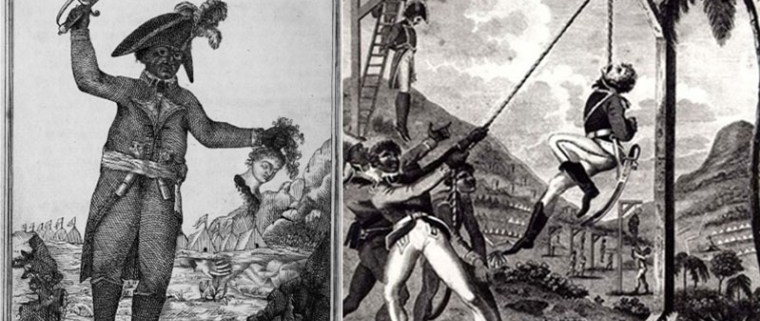
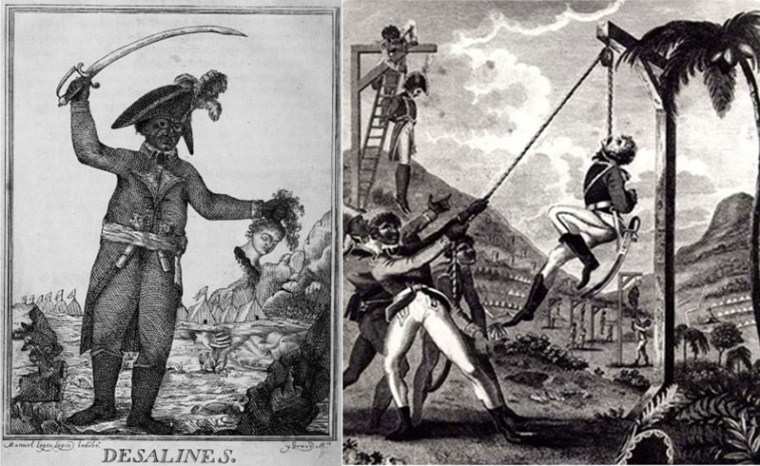
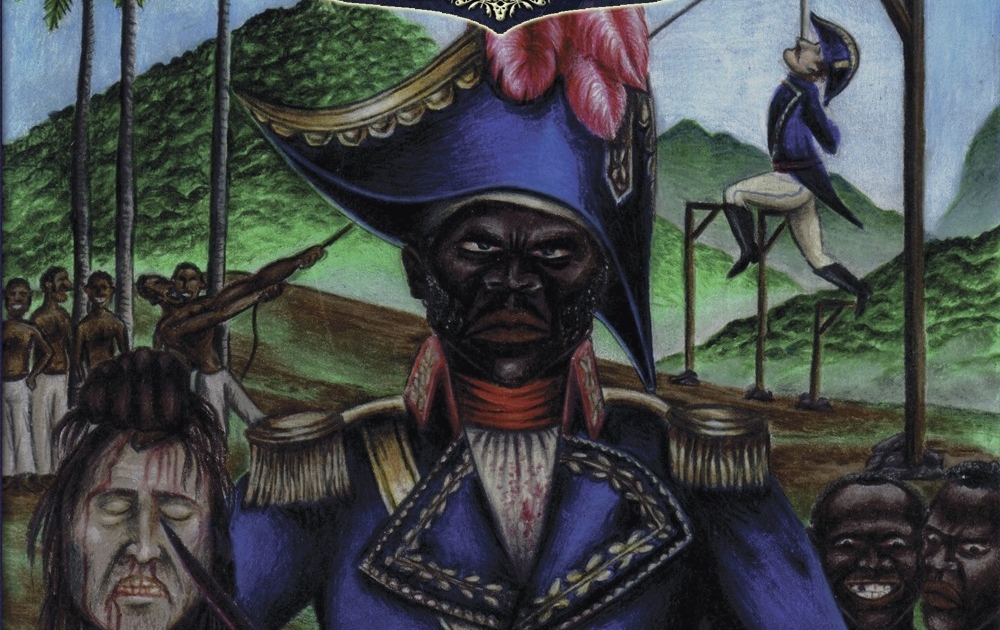
Lothrop Stoddard’s “The French Revolution in San Domingo,” Part 2

Go to Part 1.

There were complex combinations of oppositions according to race and class. On one hand, poor Whites and wealthy Whites saw a common interest in opposing the mulattos, some of whom were wealthy. From the standpoint of the poor Whites, the wealth of his perceived racial inferiors was particularly galling. In 1789, when the French Revolution had compromised the power of the Royal government, the wealthy Whites “anxious for poor white support, were not likely to embroil themselves to protect their race opponents [i.e., the mulattos]. By this time the local offices were becoming filled with poor whites, and to the will and pleasure of these new functionaries, the mulattoes were now delivered almost without reserve.”

On the other hand, the lower-class Whites (described by Stoddard as “mostly … ignorant men of narrow intelligence”) engaged in class war against wealthy Whites: They were “too short-sighted to realize the results of white disunion or too reckless to care about consequences.” They excluded upper-class Whites from voting by “violence and intimidation.”

Some observers have argued that the revolutionary ideals of moral universalism were an ingredient in the revolt of the non-Whites. Stoddard quotes approvingly an observer who attributes the fervor for revolt among slaves and mulattos to their being exposed to revolutionary rhetoric.  “To discuss the ‘Rights of Man’ before such people—what is it but to teach them that power dwells with strength, and strength with numbers!”  Stoddard expresses his own view that “there seems to be no doubt that the writings and speeches of the French radicals did have a considerable effect on the negroes.” And he provides the conclusion of contemporary investigations: “Both the existing evidence and the trend of events combine to show that the great negro uprising of August 1791 was but the natural action of the Revolution on highly flammable material.” Read more

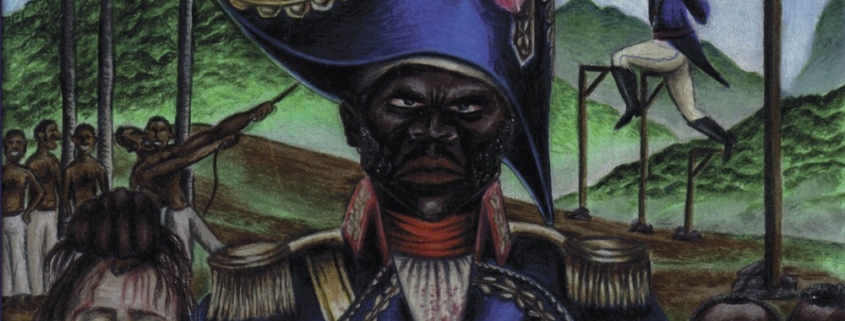
Lothrop Stoddard’s “The French Revolution in San Domingo,” Part 1

This is a foreword that I wrote for Lothrop Stoddard’s The French Revolution in San Domingo, published in 2011.

*  *  *

Lothrop Stoddard on the French Colonists in San Domingo

Historian Frank Moya Pons, writing in The Cambridge History of Latin America, describes Lothrop Stoddard’s The French Revolution in San Domingo as “a book now out of fashion because of its racism, although retaining some interest.” [1]

Interesting indeed, because it reflects the racial views of an important set of American intellectuals in the early twentieth century. There was a time when evolutionary thinking was widely considered to be the key to racial self-defense.[2]  Although it didn’t play a role in the Congressional debates (itself an indication of the rapidly changing intellectual context), evolutionary thinking was prominent among some of the elite intellectual proponents of immigration restriction in the 1920s. This was the heyday of eugenics—motivated by concern about deterioration of the gene pool because modern civilization had increased the moral and intellectual burdens of life at the same time that natural selection had been relaxed because of advances in medicine, hygiene, and nutrition. Lothrop Stoddard’s The Revolt against Civilization: The Menace of the Under-Man exemplifies these trends.[3]

Race is indeed central to Stoddard’s volume. Written at a time when the science of race, race differences, and eugenics were at their height, Stoddard sees the conflict as fundamentally about race. But his view is that of a race realist. Unlike the vast majority of contemporary intellectuals, he sees race for what it is: a gargantuan fault line that separates humans.

However, Stoddard never comes across as a cheerleader for the Whites in their conflicts with Blacks and mulattos. Indeed, the Whites are described in highly unflattering terms—an important corrective to the view one might glean from previous chapters emphasizing the high-mindedness of Whites in the anti-slavery movements. Many are “shady characters”—opportunists out to make money and without any moral scruples. Heavy drinking and gambling are pervasive. The Whites are the consummate individualists. They are not a people but “only a mass of individuals.”  Poor Whites were adventurers, unable to compete with slave labor and therefore forced to make a living by any means necessary. However, we also see strains of moralistic idealism noted in previous chapters as a characteristic of northern Europeans.

It’s difficult to have sympathy for the White planters. They live in a world of “material crudity … intellectual poverty and mental isolation.” They are surrounded by outrageous retinues of slaves, living like an Oriental potentate. Stoddard quotes a contemporary observer, Moreau de Saint-Mery: “That crowd of slaves which hangs upon the master’s lightest word or sign, lends him an air of grandeur. It is beneath the dignity of a rich man to have less than four times as many servants as he needs. The women have an especial gift for surrounding themselves with a useless retinue.”

The rich Whites are unsocial and quarrelsome with their neighbors. Another observer, DeWimpffen describes the “pretensions, either ill-founded or ridiculous; jealousies of each other’s fortune, more ridiculous still; disputes about boundaries . . . and finally trespasses committed by the negroes or the cattle — occasion such a misunderstanding, or such a coolness, that all reciprocal communication is out of the question. Consequently, as nothing is so savage as the recluse who is not so by choice, you must not be surprised that each owl rests in his hole, and that so little sociability reigns among men who have few or no sociable qualities.” Read more

Decline and Empire in Ancient Rome and the Modern West: A Review of David Engels’ Le Déclin, Part 2

Go to Part 1.

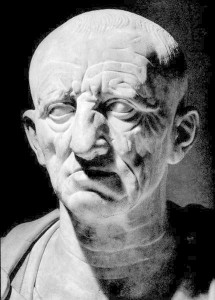
Cato the Elder

Roman Conservative & Imperial Responses

The Roman authorities, whether republican or imperial, did not passively accept these developments. Engels observes that “[f]rom the second century B.C., a large number of conservative politicians opposed with a marked traditionalism the Hellenization of the Roman elite and the Orientalization of the population” (142). This was embodied above all by Cato the Elder, who argued that Greek culture, which had become so rational, skeptical, and cosmopolitan, would mean the end of Rome:

Concerning those Greeks, son Marcus, I will speak to you more at length on the befitting occasion. I will show you the results of my own experience at Athens, and that, while it is a good plan to dip into their literature, it is not worth while to make a thorough acquaintance with it. They are a most iniquitous and intractable race, and you may take my word as the word of a prophet, when I tell you, that whenever that nation shall bestow its literature upon Rome it will mar everything. (Pliny, Natural History, 29.7)

In terms of immigration, as previously mentioned, Gaius Papius had on behalf of the people apparently sought to expel non-Italic foreigners from the city altogether. Augustus later limited the emancipation of slaves, “lest they should fill the city with a promiscuous rabble; also that they should not enroll large numbers as citizens, in order that there should be a marked difference between themselves and the subject nations” (Cassius Dio, 56.33).

The Roman leadership also sought to counter native demographic decline. As early as 131 B.C., the censor Quintus Metellus Macedonicus urged making marriage mandatory. Later, “in order to ensure the biological survival of the Roman elite, Augustus . . . decreed very unpopular laws” (83), including making marriage mandatory for men between 25 and 60 and making divorce more difficult. The emperor is supposed to have justified the measures as follows:

For surely it is not your delight in a solitary existence that leads you to live without wives, nor is there one of you who either eats alone or sleeps alone; no, what you want is to have full liberty for wantonness and licentiousness. … For you see for yourselves how much more numerous you are than the married men, when you ought by this time to have provided us with as many children besides, or rather with several times your number. How otherwise can families continue? How can the State be preserved, if we neither marry nor have children? . . . And yet it is neither right nor creditable that our race should cease, and the name of Romans be blotted out with us, and the city be given over to foreigners — Greeks or even barbarians. Do we not free our slaves chiefly for the express purpose of making out of them as many citizens as possible? And do we not give our allies a share in the government in order that our numbers may increase? And do you, then, who are Romans from the beginning and claim as your ancestors the famous Marcii, the Fabii, the Quintii, the Valerii, and the Julii, do you desire that your families and names alike shall perish with you? (Cassius Dio, 56.7–8)

Tellingly, Augustus himself however was married twice and had a reputation for licentiousness. His only biological child, Julia, was notorious for her licentiousness. Read more