Featured Articles

Justin Murphy’s “The psychology of prohibiting outside thinkers”

Here is Justin Murphy describing his background, research, and activism:

Why is there not more rebellion against status quo institutions? How have economic and political processes pacified our capacity for radical collective action? As a political scientist, I am interested in the roles played by information, communication, and ideology in the pacification of political resistance and conflict. Before joining the faculty of Politics and IR at the University of Southampton in the UK, I did my PhD at Temple University in the US. There I was active in Occupy Wall Street, some civil disobedience and shutting down of things, some longer-term campaigns against the big U.S. banks, and sundry other works and deeds, including a radical warehouse project where I lived for nearly three years.

So Murphy is an academic on the left. He is therefore part of the establishment, a card-carrying member of the institutional structure that dominates intellectual discourse in the West. But, unlike the vast majority of his academic brethren, he is quite aware that the left is now the status quo and that it is doing everything it can to preserve its elite status — and that its self-preserving tactics are at base nothing more than irrational assertions of power and privilege. Murphy makes these claims in a blogpost: “The psychology of prohibiting outside thinkers.” Part of the subtitle says it all: “The real motivation of respectable progressivism is managing guilty conscience and conserving bourgeois privileges.”

What’s so refreshing about this is that instead of “exclud[ing] independent right-wing intellectual work on moral grounds,” he would actually “enjoy thinking” with intellectuals on the right. Indeed, moral indictments have become the stock in trade of establishment intellectuals — as noted in my three-part “Moralism and Moral Arguments in the War for Western Survival.” Moral condemnations are easy. No intellectual heavy lifting required. All one need do is appeal to conventional moral intuitions as shaped by the the same institutions that are now the status quo — the media and academic culture. As I note, those who dissent from the status quo are “not only misguided, [they are] malevolent … consumed by hatred, anger and fear towards non-Whites, gays, women and the entire victim class pantheon, or so goes the stereotype And that’s the problem. Being cast as evil means you are outside the moral community. There’s no need to talk with you, no need to be fair, or even worry about your safety. You are like an outlaw in Old Norse society  — ‘a person [who] lost all of his or her civil rights and could be killed on sight without any legal repercussions.’” Read more


The KosChertified? App is Here!

Go to Koschertified.com to upload the app.

Many in our movement are often heard complaining on podcasts and in the comments sections of too much talk, but no action.  Sure, it would be both practical and effective if our politicians represented our interests and took action on our behalf,  but that’s a pipe dream!  Also, it is certainly unreasonable to expect most patriots and White nationalists to find their way to UC-Berkeley every time an Alt-Right or conservative speaker gets silenced.  And do we all possess the same courage as that recently displayed by “Stickman” wading into a seething throng of antifa?

Actually, some of the most common demonstrations of power by our adversaries has been in their dominating critical industries, creating monopolies, and doing it all with the host majority blinded to its very existence or protecting themselves constitutionally through our freedom of religion.  Some of their power plays have been accomplished by means of boycotting (e.g. in their methods of acquiring newspapers or sending others to bankruptcy with diminished advertising revenue; or in their political and economic opposition to Germany in 1933).  In fact, just look how aggressively the BDS movement is being counter-attacked.  They understand the power of the boycott, and in their world only they are permitted access to use it.

So why am I bringing this up, you may ask?  Just the other day my girlfriend discovered a new app to help her in her grocery shopping: KosChertified?  It was less than $2, strikingly different than most, and as she knows well the direction my politics leans, she decided to share it with me.  I searched through its contents and couldn’t believe my eyes!  You would have thought it was written by an investigative reporter from Red Ice!  But it wasn’t.  Here in my palm laid the 21st-century tool that delivers both an expose’ of the little-known kosher-certification industry, its controversial conflicts of interests (especially with our interests), and a database of food products that haven’t been certified kosher!  Now here was something we could use ourselves, I thought.  Looking at the app’s website, www.koschertified.com, one finds that “over one million food products have been certified kosher!” (Note: This app is only for the United States.) Clearly this kosher sector of the food industry falls into that discussion on power above — where most ordinary people are simply oblivious to their total domination.  In fact, glancing through the app’s convenient grocery list application one finds numerous food categories that have a real scarcity of non-certified products — and some are empty, like sports drinks and horseradish!  So what does this portend for our grocery shopping future?  Perhaps the possibility of having absolutely no choice — fifteen aisles of products all having been blessed by one of the many rabbinical agencies that oversee every detail of the food we buy!  And I’m sure this will be a free service, so that they can “be the light unto our nations.” Read more

Opiates: “Death on the Prescription Plan”

Like Harold Covington, I have a soft spot for Jewish writer James Howard Kunstler. For starters, his style amuses me, especially in his weekly (now twice weekly) blog Clusterfuck Nation. This blog plays a useful role beyond that, however, in that he consistently zeroes in on the damage his own tribe is doing to the United States (and the world). He can sum this up cleverly, bitingly, and accurately, yet of course he never names the Jew, even after he’s gone through half a dozen uninterrupted Jewish names.

His April 28th column is no exception. Consider the opening three paragraphs:

While the news waves groan with stories about “America’s Opioid Epidemic” you may discern that there is little effort to actually understand what’s behind it, namely, the fact that life in the United States has become unspeakably depressing, empty, and purposeless for a large class of citizens. I mean unspeakably literally. If you want evidence of our inability to construct a coherent story about what’s happening in this country, there it is.

I live in a corner of Flyover Red America where you can easily read these conditions on the landscape — the vacant Main Streets, especially after dark, the houses uncared for and decrepitating year by year, the derelict farms with barns falling down, harvesters rusting in the rain, and pastures overgrown with sumacs, the parasitical national chain stores like tumors at the edge of every town.

You can read it in the bodies of the people in the new town square, i.e. the supermarket: people prematurely old, fattened and sickened by bad food made to look and taste irresistible to con those sunk in despair, a deadly consolation for lives otherwise filled by empty hours, trash television, addictive computer games, and their own family melodramas concocted to give some narrative meaning to lives otherwise bereft of event or effort.

Kunstler lives in Greenwich, New York, a tiny village northeast of Saratoga Springs. He uses this setting for his surprisingly sympathetic World Made By Hand novels (four of them), where narrator Robert Earle is a carpenter in a post-oil world in which inhabitants of the United States are reduced to living like their ancestors did in the middle of the 1800s. I say sympathetic in that Kunstler creates a Gentile world, one which rings true to me, peopled by generally decent and caring folk. I salute Kunstler both for his ability to imagine a world so unlike the one in which he grew up (New York City) but more so for his willingness to actually like these White Christians. We all know many Jews have completely opposite views and feelings. Read more

Fake Jews: Deceit and Double-Think in Britain’s Hostile Elite

Here’s a quiz about Israeli politics. Are there any strongly identified Muslim or Christian Arabs high in Israel’s ruling conservative party? Do those Arabs write for Arab newspapers setting out the central principle of their lives: “Arabs must come first”? Finally, do those Arabs lavish praise on an opposition leader who opened Israel’s borders to the Third World and duped Israel into a hugely expensive and disastrous foreign war?

You have no guesses. You won’t need any. The answer to every question is the same. No, there are no Arabs like that in Israel. Not one. Furthermore, Israel has never opened its borders to the Third World or poured trillions of shekels into a disastrous foreign war. Israel is a Jewish nation where Jews are firmly in control and intend to remain so. That’s why they don’t allow Arabs to have genuine power or influence in politics, culture and academia. Arabs would have their own agenda and would not make Jewish interests their only concern, even if they weren’t hostile to Jews or determined to undermine Jewish power.

Tremendous respect for Tony Blair

In short, Israel is a sane country that keeps its large Arab minority where it belongs: out of power. Now compare the United Kingdom, a White and historically Christian nation. By comparison with Israel, the UK is insane, because it allows outsiders to exercise enormous power and influence. Worse still, those outsiders are both hostile to the White majority and determined to undermine it by promoting mass immigration and minority worship. Here is an article written for the Jewish Chronicle by Daniel Finkelstein, a strongly identified Jew high in the ruling Conservative party:

Corbyn must lose — for our sake  [i.e., for the readers of the Jewish Chronicle]

Tony Blair — a man for whom I have tremendous respect — has been arguing that, as Theresa May is going to win, what we really need is a strong opposition. … I have a lot of friends who vote Labour and I understand their dilemma. They have supported Labour all their lives and they don’t want to abandon their party to Jeremy Corbyn. Unfortunately, not abandoning the party to Mr Corbyn means supporting the party while he leads it. Despite the acuteness of the dilemma, this is unconscionable.

I realise that I am a Conservative peer and this point concerns party politics. But, still. Forgive me for this is a point I feel I must make as a Jew. If Jeremy Corbyn and his followers do not suffer a gigantic defeat in this election, it will be an utter, complete, ghastly disaster for Jews. It will mean that despite all that has happened in the past two years, all his supporters have said about Jews, people — even Jews, for goodness sake — can still support him. … Jeremy Corbyn mustn’t just lose. He must be crushed electorally. It must be impossible for his supporters to say that it wasn’t too bad and they should have another go. …

So it needs bravery now to secure the long term future of Jews on the centre left. Maybe I’m not the right person to give this advice. I can see that. But forget it’s me, I am right[,] aren’t I? (Corbyn must lose — for our sake, The Jewish Chronicle, 4th May 2017 / 10th Iyar 5777)

Daniel Finkelstein
Daniel Finkelstein: “Corbyn Delendus Est!

Read more

My “Ask Me Anything” on VOAT

I did an “Ask me anything” at VOAT on May 5th. It’s a bit like speed dating because it’s all done quickly and without a lot of deliberation. This is a somewhat edited version, including some comments on some of my replies and my comments. Sorry I didn’t get around to all the questions. People can continue the discussion here. Lots of good points from the questioners.

[–] brigbother: Hello Dr. MacDonald: How can we foster honest conversations about Jewish behavior without causing people to immediately be turned off?

[–] DrKevinMacDonald: It’s very difficult. People’s eyes tend to glaze over when the subject is broached. And the problem is that it takes a real commitment to get into it. You can’t give a decent argument on this very complicated subject with sound bites. It takes some serious reading. Dealing with Jewish issues is often the last hurdle for many in the Alt Right. In a way, it’s not necessary to talk about Jews to get at the core issue of White identity, but I do think that without talking about Jews you really can’t understand how we got to where we are now.

[–] brigbother: Thank you. I have definitely been subjected to the glazed eyes treatment when I’ve brought it up with people. You are right, it takes serious study to understand the JQ. My problem is that people are eager to change the subject and forget about it. Any tips on inspiring people’s curiosity so that they do seek out serious reading?

[–] smokratez: Tell people that you like what the Jews are doing. How you admire their closed borders. How they build a wall. That they are serious about trying to abolish miscegenation. That they oppose diversity and multiculturalism. I say that all I want for my country is what Jews have in Israel, and I mean it.

[–] DrKevinMacDonald: Good point by smokratez: I would also suggest getting on social media and following people who post intelligently about Jews. I follow a lot of people on Twitter who make good points about Jews.

Read more

The Jewish Question: Suggested Readings with Commentary Part Three of Three : The Twentieth Century and Beyond

Go to Part 1
Go to Part 2

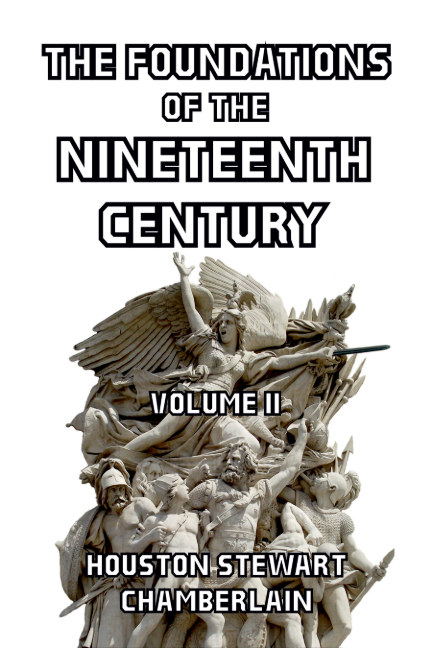
One of the first great texts on the Jewish Question to appear in the 20th century was The Foundations of the Nineteenth Century (1st English Edition, 1911) by the Germanophile Englishman Houston Stewart Chamberlain (1855–1927). Having married one of Richard Wagner’s daughters and taken up residence in Germany, Chamberlain, a philosopher, involved himself heavily in the German völkisch scene and the promotion of its ideas. In Foundations, Chamberlain refined the racial theories of the French diplomat and essayist Joseph Arthur Gobineau, in which the Frenchman had argued that there was demonstrable inequality in talent, worth, and culture among the various races of man. While Gobineau placed Aryan man at the pinnacle of his racial categorizations, Chamberlain was among the first to refine this categorization to include Northern Europeans in particular at the pinnacle. This is perhaps a more controversial position today, owing to the more modern emphasis on total White unity, as well as significant disillusionment with the way the Nordic and Germanic nations have succumbed so intensively to the multicultural onslaught.

Foundations is a complex work, and nowhere is this more apparent than in Chamberlain’s attitudes towards Jews and the Jewish Question. For a start, the author admires some aspects of Judaism, namely, that it holds purity of blood as a religious principle: “Judaism made this law of nature sacred. And this is the reason why it triumphantly prevailed at that critical moment in the history of the world.” A veiled admiration is also evident in his assertion that Jewish financial strength is not the sum total of the Jewish Question. In fact, Chamberlain describes it as “of least account” because “our governments, our law, our science, our commerce, our literature, our art…practically all branches of our life have become more or less willing slaves of the Jews. … The Indo-European, moved by ideal motives, opened the gates in friendship: the Jew rushed in like an enemy, stormed all positions and planted the flag of his, to us, alien nature — I will not say on the ruins, but on the breaches of our genuine individuality.” The end result of this process will be apocalyptic: “If that were to go on for a few centuries, there would be in Europe only one single people of pure race, that of the Jews, all the rest would be a herd of pseudo-Hebraic mestizos, a people beyond all doubt degenerate physically, mentally and morally.”

While Chamberlain’s text is epic in tone and scope, the influence of German Romanticism on its writing is clear. There are elements of mysticism, and at times its style is obscure. In the 1920s two significantly more straightforward assessments of the Jewish Question were published in the Anglosphere: Henry Ford’s The International Jew (1920), and Hillaire Belloc’s The Jews (1922). Since Kevin MacDonald has written an excellent review of Ford’s work, and since I have published a lengthy assessment of Belloc’s contribution, I see no reason here to go into detail about the content of either. It should suffice to state that both are essential reading for anyone hoping to get to grips with this subject matter, and also that they are almost without parallel in terms of the clarity of their language and argument. They are simply indispensable. Read more

The Jewish Question: Suggested Readings with Commentary Part Two of Three: The Nineteenth Century


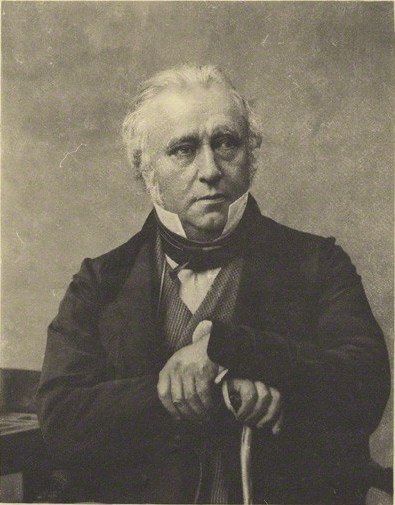
Thomas Macaulay

Go to Part 1.

Mirroring developments in Germany, by 1831 the Jewish Question, in the form of the desirability of granting Jews admission to Parliament, had also become a topic of fevered discussion in Britain. One of the most fascinating published opinions produced during this period was Civil Disabilities of the Jews, an essay produced by the historian, essayist and politician Thomas Macaulay (1800—1859). Ostensibly the argument of a classic Liberal in favor of extending political power to Jews, the text is in fact complex and thus more significant. Macaulay’s argument in favor of admitting Jews to Parliament reveals much about the extent and nature of Jewish power and influence in Britain at that time. He viewed emancipation as a means of ‘keeping the Jews in check.’ For example, he insisted that “Jews are not now excluded from political power. They possess it; and as long as they are allowed to accumulate property, they must possess it. The distinction which is sometimes made between civil privileges and political power, is a distinction without a difference. Privileges are power.” Jews were thus already incredibly powerful in the form of civil privileges, and since political power was accompanied by a set of checks and balances, Macaulay’s theory was that admitting Jews into such a system could be a way of better controlling their power and influence.

Macaulay was aware of the role of finance as the primary force of Jewish power in Britain. He asked: “What power in civilized society is so great as that of creditor over the debtor? If we take this away from the Jew, we take away from him the security of his property. If we leave it to him, we leave to him a power more despotic by far, than that of the King and all his cabinet.” Macaulay responds to Christian claims that “it would be impious to let a Jew sit in Parliament” by stating bluntly that “a Jew may make money, and money may make members of Parliament. … The Jew may govern the money market, and the money market may govern the world. … The scrawl of the Jew on the back of a piece of paper may be worth more than the word of three kings, or the national faith of three new American republics.” Macaulay’s insights into the nature of Jewish power at that time, and his assertions that Jews had already accumulated political power without the aid of the statute books, are quite profound. Yet his reasoning — that permitting Jews into the legislature would somehow offset this power, or make it accountable — seems pitifully naive and poorly thought out. Nevertheless, the context and content of his famous essay should be regarded as essential reading. Read more