Featured Articles

Big Mother and the Therapeutic State

Gustave_Doré-L'Enfance_de_Gargantua

Pantagruel  with his father Gargantua and mother Gargamelle” (watercolor); by Gustave Doré (1832–1883)

Translated from the French by Tom Sunic.

Below is the interview Alain de Benoist gave recently to Boulevard Voltaire.

******

Q: “Eat your five servings of fruit and vegetables every day!”; “Do some sport!”; “Quit Smoking!”; “Drink one glass, but not two!”; “Buckle up when driving!”;  “Do not eat too much fat!”; “Do the proper garbage recycling!” After Big Brother, have we now arrived at Big Mother?

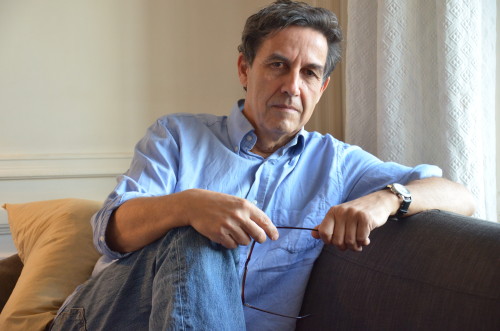
A: Starting with the nineteenth century the welfare state has been progressively put in place in order to compensate for the disappearance of organic and community solidarities which, with the rise of individualist ideology, have become dissolved.  Today the welfare state it is morphing into a sort of “therapeutic state”— if we were to borrow an expression by Christopher Lasch. This therapeutic state can be defined as an unholy alliance of the medication process and the state, setting up all sorts of unjustified obstructions to our freedom. The authority is becoming more and more maternal, albeit maternal in a way of a possessive mother eager to maintain its subjects in total dependency. The unilateral relationship with the state replaces the ancient social bonds. This hygienic control augurs social control. Medicine itself, when taking part in the control of populations, becomes totalitarian.

Alain de Benoist

Alain de Benoist

The dominant human type of today is the immature narcissist, ignoring all realties other than his own, and who, above all, wishes to satisfy all his cravings. This infantile type of a human being, predictably of liberal-libertarian orientation, is perfectly in line with a system which, as Marx wrote, drowns everything “in the icy waters of egoistic calculation.” What follows is a therapeutic civilization centered on the “Me” only. Pierre Manent  rightly stresses that liberalism means primarily renouncing to apprehend human life in terms of its own good and its own finality. In a society ruled by the entertainment industry in which nobody asks himself about the meaning and significance of his presence in the world, body-care of the Self becomes the alpha and omega of human life.  Not only does it signify being of good health, but also “feeling good about oneself,” and thus forgetting one’s own finitude. While expecting immortality in this world, the dream of eternal youth grips all those who have never become adults, and who conceive now of their life as a maternal fusion defying any symbolic order, while thriving  in a culture of the present tense that has expelled any meaning of historical continuity. Henceforth society functions according to the principles of mimetic rivalry, as a form of “ego rivalry” (in Freudian terms), i.e., with  the Self  being stripped off of its “id” and its  “superego,”  convinced now it is the center of the universe. This only facilitates the war of all against all. Read more

Greville Janner update

Janner bklt front+back outside cover

The Lord Greville Janner affair shows no signs of winding down despite the best efforts by the authorities to kick it into the long grass. Each week brings new revelations about the former President of the British Board of Jewish Deputies, who is suspected of at least 22 cases of child sexual abuse.

Up until now the scrutiny has mainly focused on how, although said to be too ill with dementia to be tried, the 86-year-old founder of the Holocaust Education Trust was able to take part in parliamentary debates, collect a hundred thousand pounds in expenses, and was compos mentis enough to sign over his property deeds to his children thereby putting them out of range of any damages litigation.

The Director of Public Prosecutions decision not to prosecute was equally baffling given that there are well-established and regularly used court procedures for dealing with suspects who have lost their faculties. The DPP’s decision is now to be reviewed. Read more

The History of the League of Empire Loyalists and Candour

candourThe History of the League of Empire Loyalists and Candour
by Hugh McNeile and Rob Black
Published by the A.K. Chesterton Trust; 150 pages

One of the most remarkable aspects of the collapse of the British Empire was the relative lack of people who seemed to care about it. Resistance to the process was extremely muted, both from the Empire’s elites and the mass of its people. This was baffling considering its two-hundred-year stretch of global dominance, its enormous impact, and the millions of people around the world whose interests were directly tied to its existence.

The sheer inexplicableness of the event tends to throw up either glib and dismissive explanations, or dark and dastardly ones that seem more like paranoid conspiracy theories. In short, either the Empire was done to death by secret cabals and nefarious networks or it was simply on the wrong side of history — and accepted that fact with an all-too-easy grace and sense of resignation.

Today it is difficult to get a sense of what really happened. Mainstream history, of course, has its narratives worked out — Britain was exhausted after its war with Germany and Japan, attitudes to race had been transformed, and the “Winds of Change” blew in shortly afterwards followed by the “Winds of Multiculturalism.” Thanks to the alternative history now possible due to the internet, this narrative now faces some opposition, but because the period is rather remote, such opposition usually comes from those with a particular axe of their own to grind.

A better way to get at the truth is to focus on those few who were most concerned about the demise of the British Empire, and to consider their experiences. In this respect one of the best books is Hugh McNeile and Rob Black’s The History of the League of Empire Loyalists and Candour, published last year. Read more

The Culture of Critique in France: A review of Anne Kling’s books on Jewish influence, Part 5

Part 1
Part 2
Part 3
Part 4

“The Right to Difference”: Balkanizing France

Just as Jews in the U.S. have a leading role — in Hollywood and pop culture generally — in defining what is “American,” so have French Jews pushed to redefine Frenchness away from an ethnic or even an assimilationist definition, towards a Balkanized France in which Jews may live and operate as a separate group with no unified majority against them. They market this under the slogan “the right to difference,” which the LICRA has called its “philosophy.” As the LICRA’s DDV publication argued in 1978: “Any society which requires or pushes for assimilation is a racist society. Democratic secularism [laïcité] is the coexistence of all minorities in equality and fraternity. It is not the abolition of ethnic differences and specificities.”[1]

The LICRA claims that requiring immigrants to conform to French norms is to impose self-hatred upon them. Effectively, the LICRA is arguing that not only must the French allow themselves to be colonized by others but that the new arrivals should impose their non-European cultures. In 1981, the LICRA’s DDV magazine claimed:

To block the fascist demand of assimilation and national homogeneity, we must practice difference and pluralism. … These are the only effective barriers against a return of Nazism and of its French avatar: Vichy.[2]

And in the same publication in 1985: “To be anti-racist is not to demand the other to become oneself, it is to accept him as he is, to enrich oneself at his contact, to go towards him.”[3] One buzzword used to glorify the resulting Balkanization is that of “interculturality.” Read more

The Culture of Critique in France: A review of Anne Kling’s books on Jewish influence, Part 4

Part 1
Part 2
Part 3

“At the Heart of Debates” on Censorship

The CRIF and the LICRA have assumed a leading role in undermining free speech in France. As then-CRIF President Richard Prasquier said in February 2010:

The Jews are at the heart of debates where limits on free expression are asked … . Internet is a multiplier of racism and anti-Semitism. … We want penal policy to be extended to ordinary racism on the Internet by making convictions known, improving surveillance, by helping the sentinels which are antiracist associations.[1]

During a meeting with the Justice Minister, Prasquier called for state surveillance to extend to “discussion boards, chat messages, emails, web sites and blogs,” an open assault on the right to privacy.[2] And he has argued that “free speech must be subordinated to the respect of the truth.”[3] (Whose truth? Certainly not the truth about how ethnically motivated organizations like his own have become very powerful in France and how they have used their power against the interests of the great mass of native French.)

The CRIF has also demanded more censorship at European-level censorship, calling on the EU to create “a European CSA” (in France, the CSA is the High Council for the Audiovisual, the highly censorious radio and television regulator) and for similar organizations to be created in all EU countries.[4] The French regulator has banned various Arab TV stations for allegedly supporting “terrorism” (e.g. Hezbollah, whereas support for the Israeli armed forces’ killing of civilians is fine).

All this is of course deeply shocking, indeed completely alien, to anyone attached to the Greek, Anglo-Saxon or French civic and philosophical traditions. Prasquier’s ancestors have lived for a millennium in the West, but he and his organization still simply do not understand the Western concepts of free speech, rational debate, scientific inquiry and privacy, and indeed they are agitating to impose decidedly Levantine notions of ethnically-motivated obscurantism and censorship. So much for our “Judeo-Christian values.”

Despite the guarantees in Articles 10 and 11 of the 1789 Declaration of the Rights of Man and of the Citizen, which forms part of the Fifth Republic’s Constitution, free speech is poorly protected in France. The 1972 Pleven Act criminalizes speech which “provokes discrimination, hatred or violence” on a racial, ethnic or religious basis. The LICRA had pushed for this law, called for its extension as a global norm, and invited “victims of racial discrimination” to report to the police (not unlike informants in totalitarian regimes). Read more

The Culture of Critique in France: A review of Anne Kling’s books on Jewish influence, Part 3

Part 1
Part 2

Communists and Collaborators: The Dark Origins of Franco-Jewish Ethnic Lobbies

The LICRA and the CRIF, and their ancestor organizations, have been influencing French political life since before the Second World War. The LICRA, originally called the League Against Pogroms, was founded in 1927 by the Communist Jew Bernard Lecache, an early apologist of Soviet totalitarianism. He founded the League to organize the legal defense of Sholom-Shmuel Schwartzbard, a Russian Jew who had murdered Ukrainian nationalist leader Symon Petliura in broad daylight in the streets of Paris. Schwartzbard blamed Petliura for the pogroms in Ukraine and was subsequently, bizarrely, acquitted.

The LICRA then, far from being a body dedicated to universal brotherhood, was founded to justify an act of tribal vengeance. Lecache himself would, in the typical manner, enormously exaggerate the sufferings of his co-ethnics, claiming that 300,000 were killed in the Ukrainian pogroms (the Red Cross estimated the figure at between 60,000 and 120,000).[1]

Lecache would lead the LICRA until 1968. He remained a communist despite being formally expelled from the French Communist Party in 1923 because he also chose to remain a Freemason (the Party did not allow dual-membership). His successor Jean-Pierre Bloch, who led the group from 1968 to 1992, was also a Freemason.

Already in the interwar period, the League’s influence rapidly grew in the French Third Republic’s parliamentary regime, with members across political parties, including prime ministers Léon Blum (Jewish, who led a Socialist-Communist coalition government) and Édouard Herriot (whose 1898 essay on the Jewish philosopher Philo of Alexandria brought him national attention). In 1933, Herriot would as an MP return from a fact-finding to the Ukraine and deny any famine there, stating that it was “a garden producing to the full.”[2] (Between 2.5 and 7.5 million people are estimated to have been killed in this engineered famine, known as the Holodomor). Read more

The Culture of Critique in France: A review of Anne Kling’s books on Jewish influence, Part 2

Part 1.

What are the LICRA and the CRIF?

The CRIF is an explicit Jewish ethnic lobby made up of organizations officially representing 100,000 Jews (one in six French Jews or 0.1% of the French population). Esther Benbass, a Franco-Turko-Israeli historian and member of the pro-Palestinian Greens, has said of the CRIF:

What is the CRIF other than an endogamous micro-group [groupuscule] which puts on airs of a little independent State, acting as it wishes, making people bend the knee, as much through self-censorship, sensitive for many journalists who rightly fear being suspected of anti-Semitism as soon as they dare criticize Israeli policy, as by the exploitation of the guilt of the Shoah internalized by the political class?[1]

The CRIF’s influence is acknowledged by all. In 2010, President Nicolas Sarkozy and Justice Minister Michèle Alliot-Marie both said on separate occasions: “The CRIF is an essential interlocutor of the State.”[2] Also that year, CRIF President Richard Prasquier declared: “We can be proud to be in a country where the demands we present and the worries we express are genuinely listened to.”[3]

The CRIF has gotten more shameless in its activism over the years. In 1983, the then-president, Théo Klein said “the CRIF is not a subsidiary of the Israeli embassy,” while in 2010 Prasquier said: “I want to make the CRIF the master asset of Israel in France.”[4] Various Jewish observers, both of the “liberal” center-left and the “neoreactionary” right, have expressed concern that the CRIF’s activism, essentially openly professing loyalty to Israel, would stoke anti-Semitism.

The LICRA in contrast is officially an anti-racist organization rather than an explicitly Jewish one. However, its leadership is largely Jewish and features no people of color. The LICRA quite obviously is motivated by Jewish ethnic interests, with senior managers seamlessly circulating between it and the CRIF. The novelist Marc-Édouard Nabe memorably and infamously said on national television in February 1985: “The people of the LICRA use Auschwitz’s heaps of corpses to fructify their fortune upon the manure.” Read more