• MISSION STATEMENT
  • TERMS
  • PRIVACY
The Occidental Observer
  • HOME
  • BLOG
  • SUBSCRIBE TOQ
  • CONTACT USPlease send all letters to the editor, manuscripts, promotional materials, and subscription questions to Editors@TheOccidentalObserver.net.
  • DONATE
  • Search
  • Menu Menu

Featured Articles

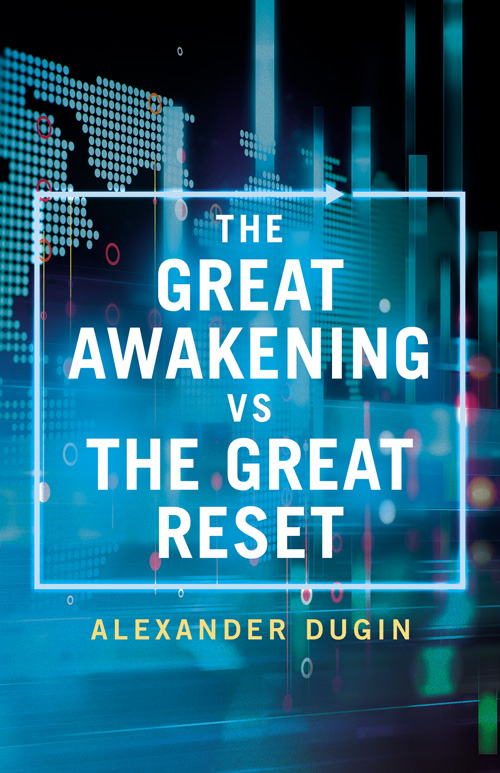
The Condensed Dugin: A Review of Alexander Dugin’s The Great Awakening vs The Great Reset,
September 4, 2023/6 Comments/in Featured Articles/by Nelson Rosit

The Great Awakening vs The Great Reset
Alexander Dugin
London, Arktos Media, 2021

The Book

If you are curious about the analysis of the Russian geopolitical philosopher Alexander Dugin, but do not want to tackle his Foundations of Geopolitics[1] or The Fourth Political Theory[2] you might consider this slim volume. The Great Awakening vs The Great Reset is the condensed Dugin. It is also the topical Dugin in that he discusses developments in America 2020–21. In fact, this book seems to be aimed at an American audience. I certainly do not want to discourage anyone from reading the above-mentioned longer works because even when he is vague and contradictory Dugin is interesting. Even when you disagree with his thinking, his writing is engaging.

A segment of the Western Right has long been intrigued by Dugin. The war in Ukraine, along with the outrageous assassination attempt on his life that killed his daughter Darya Dugina in August 2022, has made his writing even more relevant.

Alexander Dugin, born in Moscow in 1962, was a dissident from an early age. His politics and ideology have evolved over time. He was a youth member of Pamyat, dabbled in national socialism, was a cofounder of the National Bolshevik Party, and is now a leading advocate of Neo-Eurasianism. Along the way he obtained a largely autodidactic education becoming an accomplished linguist. He was sanctioned by the U.S. in 2015 for alleged involvement in the Donbas conflict.

Dugin begins The Great Awaking vs The Great Reset by explaining the book’s title. The term Great Reset comes out of the 2020 World Economic Forum in Davos, Switzerland and is the plan for the completion of the globalist project. Globalism is not a new idea or phenomenon, but now “globalism is entering a totalitarian phase” (4). The Great Awakening represents the forces opposing the Great Reset.

Next the author gives a brief ideological history explaining how we arrived at our present situation. He goes all the way back to Willian Occam. The fourteenth-century English philosopher and theologian is often credited with laying down the foundations of nominalism. According to Dugin, nominalists view humans only as individuals without any collective identities. Collectives are mere abstractions. Later, Protestantism helped destroy the collective religious identity of the West, while bourgeois capitalism destroyed the guilds and estates. In the twentieth century, nominalism/liberalism was challenged by communism and fascism. But fascism was militarily defeated in 1945, and Euro-communism collapsed in 1989–91 leaving the field open for liberalism to enter its third (final?) phase in which it deconstructs ethnic, sexual, and even human identity. “After all, the human is also a collective identity” (13).

The globalist ideology requires a world government to replace nation states. But Russia, China, the Islamic states, as well as populist movements in Europe and North America, stand in the way of this plan. Turning his attention to the populist movements in the U.S., Dugin believes that “Trump’s removal as president of the United States was a matter of life or death” for the globalists (15).

While supportive of Trump, Dugin sees major deficiencies in Western right-wing populism. Principle among these shortcomings is that they draw on “the same liberal ideology—capitalism and liberal democracy” as their opponents (19). In addition, Trump did not have a coherent agenda nor a strategy to achieve one. As the author puts it: “it is clear that he was not and is not an ideological figure” (21).

Dugin is interested in the Q Anon movement “which couched its criticism of liberalism, Democrats and the globalists in the form of conspiracy theories.” The Qs intuitively understood the sinister nature of post-modern liberalism and were able to articulate that “at the level of the average American and mass consciousness, which are hardly inclined towards in-depth philosophical and ideological analysis” (22). Conversely, this was also their weakness. By distorting reality, the Qs made it easy for liberals to refute their allegations. The author believes liberals are as wicked as the Q people portray them, just not in the way the Qs believe.

In the next section Dugin continues his critique of populism which offers “resistance,” but without “strictly defined worldviews” (28). At present “the Great Awaking is spontaneous, largely unconscious, intuitive and blind.” Its reliance on conspiracy theories “is an infantile disease,” yet “it is the beginning of a fundamental historical process” (28). For now, the response by the Right appears completely inadequate. The global elites control world finance, the US military machine, intelligence services, academe, mass culture, mass media, medicine and social services. But, “the Great Awakening is just the beginning. It has not even begun yet” (30). It “does not yet have an ideological basis” (31). One could say that the raison d’être for the Occidental Observer website and the Occidental Quarterly journal is to formulate an ideology for this awakening. Dugin believes such ideology must overcome “the boundary between the Left and the Right.” That would involve “combining the demand for social justice and the preservation of traditional cultural identity” (35).

Not surprisingly the author sees Russia’s mission as being “at the forefront of the Great Awakening” (39), But, “even today’s Russia does not have a complete and coherent ideology that could pose a serious challenge to the Great Reset” (40). Though not solidified, an essential component of the Russian ideology is imperialism, and here is the rub! Russia’s “revival is inconceivable without returning to the imperial mission laid down in our historical destiny” (41). Despite having by far the largest land mass of any state on earth Russia cannot be great until it assumes the limits of the Soviet empire, or the czarist empire? In 1914 the Russian Empire stretched from Helsinki and Warsaw in the west, to Baku in the south, all the way to Vladivostok and the Sea of Japan in the east. Now is not the time to digress into a discussion of the Ukrainian conflict, but I will point out that Finland and the Baltic Republics, formerly part of the Russian Empire, do not share the cultural, linguistic, ethnic, and historical connections that Ukraine has with Russia.

The second half of the book is in the form of appendices starting with a 2021 interview by the German magazine Deutsche Stimme. Here Dugin reiterates his opinion that Trump and his supporters are only trying “to stay with yesterday’s version of modernity, of liberalism, of democracy” (47). This strategy is inadequate to oppose the Great Reset. Yet the establishment sees Trump as a threat that must be defeated at all costs including “election fraud—the stolen election” of 2020, (51) and, of course, continuing lawfare.

A bit later in the interview Dugin drops a bombshell. “I hate analytical philosophy, positivism, and the natural sciences of Newton or Galileo, which were pure catastrophe and a lie about nature and humanity” (56). One wonders how Dugin’s beloved motherland could produce precision munitions without reference to those hated natural sciences. It appears that the author is rejecting all of modernity. At times in The Fourth Political Theory Dugin makes a distinction between modernity and post modernity. I prefer to see modernity as largely positive, especially science and technology on a human scale, products of Western genius. Current social policies which attack all authentic collective identities are products of late-modern degeneracy which, hopefully, will clear the path for a Western instauration.

Next, in an essay entitled “The Great Awakening: The Future Starts Now,” Dugin makes a series of observations: The 2020 US election was “a coup d’état accomplished by a conspiracy of illegitimate elites. . . . A color revolution . . . at home” (61). Concerning political unrest in America: “If you start to use violence, you should expect the same in return. Antifa and BLM started the riots. Capitol Hill [i.e., Jan. 6] was the logical response” (62). In fighting for his cause, Dugin sees the “[t]he main struggle is now clearly international.” Do Russian imperial ambitions make this international cooperation more difficult?

In the last essay the author explicitly addresses his ideology—the Fourth Political Theory (4PT), the other three ideologies being communism, fascism, and liberalism. Dugin believes that “communism and fascism have a common basis with liberalism: Materialism—Atheism—Progressivism—a purely materialistic approach to the human being” (66). I would disagree that the revolutionary Right is “purely materialistic,” but in any case, the 4PT is an invitation to critique and fight liberalism, and “to search for the alternative.” (67).

Dugin is variable in his support of national identities. The “globalists are using some Muslims in order to destroy European identities. . . . [T]hey use some ethnic identities (for example Uyghurs, Ukrainians) in order to destablise the alternative poles” (69). True, the globalists who back Ukrainian nationalists are “cynical hypocrites” who care nothing about the Ukrainian people. But Dugin is selective in his advocacy of nationalism depending upon its compatibility with his Eurasian project. Tragically the Ukrainians find themselves pawns in a global power struggle.

At one point the author almost seems to echo the Jewish social critic Susan Sontag who infamously wrote: “The white race is the cancer of human history.”[3] For Dugin, “the West is the name of the disease on the body of humanity” (74). But wait, “we shouldn’t blame the West—we should blame the modern West” (75). I wish he had written “the post-modern West” or perhaps “the late-modern West.” But what is this Western disease? It is “a new barbarism” called cancel culture. “This cancel culture (which includes LGBT+, Black Lives Matter, and feminist tendencies) is like a call to cancel all other kinds of culture. It is genocide of the Western culture” (77).

As noted above, Dugin can be ambiguous and opaque. He explains all at the end of this short book. He claims that “The Fourth Political Theory is not dogmatic—it is totally open. It is just theorising. It is a process” (86). But those who have read his longer works know that these statements are not entirely accurate either. And assessing Dugin’s ideology must be done within context of his other writings.

Evaluating 4PT and Neo-Eurasianism

It is understandable why there is a Russophile component within the American Right. Russia is a majority White, Christian country that has eschewed the worst manifestations of sexual perversion prevalent in the West. In contrast to the feminized West, many perceive Russian culture to be masculine, its people physically tough, and stoic in the face of deprivation. Americans with these sentiments usually support Russia’s war in Ukraine. But a reality check is in order: Despite government support for traditional social values, the country has a very low birth rate, high rates of crime and substance abuse, and widespread corruption within business and government. Of course, these problems are not unique to Russia, but neither do their presence recommend this society as a model to emulate.

There is disagreement on the extent of Dugin’s influence on Kremlin policy. But he is a strong supporter of Vladimir Putin, and there appears to be considerable overlap between the goals and policies of the two men. So it is not unreasonable to assume that Putinism is the real world application of Dugin’s ideology. To simplify, we can conflate Putinism, 4PT, and Neo-Eurasianism. Two questions for the American Right: Are any of these ideologies applicable to the West? And can Russia and America be future allies?

The fundamental problem with 4PT/Neo-Eurasianism is that it is organized around multi-ethnic empires or civilizational poles with a particular emphasis on the interests of the Russian Federation, while the Western Dissident Right seeks to organize around ethno-national states. So while 4PT and the authentic Western Right have similar opponents—the economic, political, and cultural global elites, they have incompatible goals.

It appears that Neo-Eurasianism differs significantly from pan-Slavism or the ideology of Czarist Russia. During the Russian Empire, in order to be a subject in good standing one embraced autocracy, Orthodoxy, and mother Russia. Now all that is required is political loyalty to the Russian Federation. One can be a Christian, Jew, or Muslim, a Chechen, Ugrian, or Tatar it does not matter. In The Fourth Political Theory Dugin writes, “we must definitively reject all forms of racism . . . including biological and cultural.”[4] When Putin states he is fighting Nazis in Ukraine, he is fighting ethno-nationalists who oppose his imperium. The fact that much of the Ukrainian leadership is Jewish and the Zelensky regime is supported by the globalists muddy the waters considerably. Kadyrovite fighters go into battle against Orthodox Christian Ukrainians shouting “Allahu Akbar.” Of course, Muslims have always been part of Russia since the days of Muscovy, but under the Eurasian doctrine it seems their numbers and influence have increased.

The Dugin/Putin Eurasianism can be seen as the equivalent of American civic nationalism to the extent that both ideologies seek to assimilate multi-ethnic populations into a political entities—empires each in their own style.

The ideal situation from an ethno-nationalist view perspective would be for the eastern Slavic population of Russian to concentrate on solving their demographic crisis and developing their vast natural resources while serving as a bulwark against the Muslim and Mongol peoples to the south and east. Thanks in large part to Washington, the possibility of a Russian-Western alliance seems a pipe dream.

Following the Neo-Eurasian path means that Russia will go its own way, but there remain congruent interests between Russian and the West. As Henry John Temple, the nineteenth-century British Prime Minister remarked, “Nations do not have permanent friends or enemies, only interests.” Charles de Gaulle put it, “No nation has friends, only interests.” It should be possible for some sort of compromise partnership with Russia to emerge that preserves the political and cultural integrity of eastern European nations while addressing Russia’s political and security concerns.[5] The result would be short of an East-West alliance, but rather a peaceful coexistence with selective collaboration.

As for Alexander Dugin’s 4PT, his message is a bit seductive, for he is an articulate critic of globalism and cultural degradation. But his vision for the future is not ours and his ideology will not be the foundation for a Western renaissance.


[1] Alexander Dugin, Foundations of Geopolitics: The Geopolitical Future of Russia (1997) English Edition Independently Published, 2017. Available online www.maieutiek.ne/Foundations-of-Geopolitics.pdf

[2] Alexander Dugin, The Fourth Political Theory (2009) English Edition, Arktos Media, 2012.

[3] Susan Sontag, “What is Happening to America?” Partisan Review, v.34, #1 (1967) 57-58.

[4] Dugin, Fourth Political Theory, 43-44.

[5] A case for small nation nationalism has been made in such diverse sources as: Raymond Cattell, Beyondism: Religion for Science, Praeger, 1987.Wilmot Robertson The Ethnostate, Howard Allen, 1992.
https://www.theoccidentalobserver.net/wp-content/uploads/2018/06/TOO-Full-Logo-660x156-1.png 0 0 Nelson Rosit https://www.theoccidentalobserver.net/wp-content/uploads/2018/06/TOO-Full-Logo-660x156-1.png Nelson Rosit2023-09-04 07:13:582023-09-04 07:13:58The Condensed Dugin: A Review of Alexander Dugin’s The Great Awakening vs The Great Reset,

The Race for the Atomic Bomb in World War II

September 2, 2023/8 Comments/in Featured Articles/by Francis Goumain

We generally think that major wars are accelerators of technical progress, and the Second World War is often cited in this respect. But what happens if a major technological breakthrough that everyone knows, hopes or fears is imminent, a breakthrough that would lead to an absolute weapon capable of completely overturning the geopolitical balances in place?

What if, to put it bluntly, it was the atomic bomb that had started the Second World War, rather than simply bringing it to a close?

A reading of Rainer Karlsch’s book Hitler’s Bombe, the French translation of which was published in 2007 by Calmann-Lévy, highlights the following important points.

I – Discovering the principles of nuclear energy

1931 – Discovery of heavy water (D2O) by the American Harold C. Urey. p.59

1932 – First nuclear fusion experiment in Cambridge, led by Ernest Rutherford, assisted by Paul Harteck (Austrian) and Mark Oliphant (Australian). P.39

1938 – Shortly before Christmas, Otto Hahn and Frtitz Strassmann achieved the first fission of the uranium atom. They had wanted to create radium by bombarding uranium with neutrons, but instead of detaching a few particles of uranium, they had split the atoms into two parts. Otto Hahn was considered the best radiochemist of his time, and was awarded the Nobel Prize for Chemistry in 1944 for his discovery of fission. p.38

1939 – On 6 January, Hahn and Strassmann published the results of their series of tests. Their sensational findings spread throughout the world community of physicists. The most fascinating aspect of this new kind of nuclear reaction was the large amount of energy it released, 200 million electron volts – a gigantic figure, that is to say part of the mass of the nucleus that was released as heat and light. P.32.

1939 – 22 April, Jean-Frédéric Joliot Curie confirmed the chain reaction in the journal Nature: several fast neutrons are emitted when the nucleus of the uranium atom is fissioned by a slow neutron. p.32

II – Political and military awareness

1939 – Wilhelm Hanle held a lecture on “the creation of energy from a uranium fission machine“. He explained that it had to be built from a combination of uranium and heavy water or graphite. [heavy water or graphite must slow down the fast neutrons released by the fission of the uranium nucleus to increase the probability that they will in turn encounter a uranium nucleus for further fission]. Hanle and his mentor Georg Joos wrote a letter to the Reich Minister for Education, Bernhard Rust, in which they outlined the possible consequences of atomic energy. This included the idea of a nuclear explosive. p.33

1939 – On 24 April, just two days after Joliot-Curie’s publication, Professor Paul Harteck of Hamburg University and his assistant Wilhelm Groth reported to the War Ministry that the development of nuclear explosives was possible: “The first country to make use of fission of the nucleus will possess an irrecoverable superiority over the others“. p.33

1939 – 2 August, USA, Albert Einstein, Enrico Fermi, Leo Szilard and Eugene Wigner write to President Roosevelt, pointing out that uranium bombs could destroy entire cities. p.69

1940 – March, in Great Britain, Otto Frisch and Rudolf Peierls draft two brief memoranda to the government authorities on the construction of a superbomb.p.69

1940 – In the USSR, Georgi Flerov and Konstantin Petrzak, two students of Igor Kourtchatov, established that spontaneous fission of uranium exists in nature. Curious to see how his colleagues in the West would react to this discovery, Flerov published an article on the subject in Physical Review. To his astonishment, there was no response. Having a good sense of the imminent danger, he correctly interpreted the silence of his colleagues: uranium research had become a top-secret military affair. p.69

It is also worth noting that Frédéric Joliot-Curie was a Communist, a member of the PCF whose links with Moscow are well known.

III – A new look at the logic behind the Reich’s first territorial conquests

1938 – 12 March, Anschluss, the scientific community in Vienna arrived as reinforcements, for the German effort, leading in 1942 to the foundation of the Neutron Institute under the direction of Georg Stetter. It was one of the best-staffed and best-equipped nuclear physics centres in the entire German zone of influence. p.42

1938 – 29 September, Munich Agreement and annexation of the Sudetenland. The Joachimstahl mines, Europe’s oldest and largest uranium mines, came under German control. From then on, they supplied only German producers. p.59

1940 – 9 April, invasion of Norway. Since 1934, heavy water had been produced by the Norwegian company Norsk Hydro; it was a by-product of the manufacture of hydrogen by electrolysis. To obtain one gram of heavy water, 1000 kWh of energy had to be used. Such an expensive method could only be used as a secondary process, but in Norway, water power was cheap. No other country in the world had a comparable facility before the war. p.60

1940 – 10 May Invasion of Belgium.  The Brussels Mining Union, one of the largest uranium producers in the world, was integrated into the German uranium project. p.59

1940 – 22 June, armistice in France. The Paris cyclotron came under German control. It remained in Paris, but was used every other week by the Germans and every other week by the French. The cyclotron is an extremely important particle accelerator for fundamental research in nuclear physics. In the United States there were already around thirty before the war, but none in Germany. The Paris cyclotron was by far the most powerful source of neutrons available to the Reich. p.62

Erich Schumann and Kurt Diebner, at the head of the German atomic project, had visited the installation and studied the research documents confiscated from the French army and secret services. The war had forced the French to halt their reactor experiments, without which they would probably have been the first to build a self-igniting reactor. Their patent contained the idea of using uranium in a reactor in the shape of a sphere or cob. Diebner took up this idea only good two years later. p.63.

Diebner also took up Joliot-Curie’s idea of uranium in dice-shaped structures rather than in plates, so that the uranium in the reactor was surrounded by heavy water in all three dimensions. p.107

Of course, Germany didn’t conquer France because of a cyclotron, but if that cyclotron had been installed in Lyon or Marseille, it would no doubt have changed the demarcation line.

IV – Germany’s path to the bomb

Germany had three options: the uranium fission bomb, the plutonium fission bomb and the fusion (hydrogen) bomb. As early as 1940, there was also the concept of a reactor bomb—or dirty bomb, but there was no question of the army detonating a reactor, and the idea was immediately rejected. p.272

The uranium fission bomb was totally out of Germany’s reach, but enriching uranium to a military level requires Pharaonic industrial facilities and phenomenal energy consumption.

The advantage of the plutonium fission bomb is that the plutonium is produced in a reactor using low-enriched uranium. During the chain reaction, natural uranium 238U (non-fissile) can capture a neutron released by the fission of a 235U. The new uranium isotope decays into neptunium, which in turn can capture a neutron and decay into plutonium.

On 17 July 1940, Carl Friedrich von Weizsäcker wrote a report that stopped short at neptunium. p.74.

In August 1941, Fritz Houtermans wrote a second report that went as far as plutonium. p.78

In addition, Houtermans understood the role of fast neutrons in an uncontrolled chain reaction (in other words, in an atomic explosion).

In February 1945, at Gottow, Werner Heisenberg and his group came within a few metres of the goal. Their instruments showed a multiplication of neutrons that was almost tenfold, but this was not enough to fuel a chain reaction.  The experiment would have had to be carried out in a shape that was not cylindrical but spherical, or additional material would have had to be used, but this was available at Stadtilm. p.150.

The fusion bomb: this is the one that went as far as the test, which was successful, but not transformed to military use.

At the beginning of March 1945, the SS organised the world’s first explosion of a nuclear weapon at Ohrdruf in Thuringia, and it was a fusion bomb rather than a fission bomb. Using the shaped charge principle, the Germans had succeeded in creating a tactical H-bomb that did not require atomic ignition. A sphere containing hydrogen was placed in a cylinder, with a conventional (chemical) explosive charge at each end of the cylinder. The two charges were activated simultaneously and, according to the principle of the shaped charge, the energy of the explosions was spontaneously directed in the direction of least resistance, towards the hydrogen sphere, the shock wave creating sufficient pressure and temperature at the centre for fusion. p. 253.

The author undertook on-site measurements to trace the explosion:

Having taken note of all the clues and results of the measurements—the increased activity of caesium 137 and cobalt 60, the presence of 238U and 235U, particles resulting from a high-temperature fusion process—the scientists we consulted concluded that there were traces of a nuclear event at Ohrdruf. p. 270.

There is also the report from the GRU, the Red Army’s intelligence service, which duly reported these results to Stalin: the GRU of course had a double agent on the spot. p. 261

In fact, this test was probably not the first. We also have the testimony of Luigi Romersa, a journalist from the Corriere della Serra, who was Mussolini’s emissary and reported an experiment that took place on 10 October 1944 at Peenmünde, von Braun’s rocket island. p. 209.

Germany was well and truly on the way to a miracle weapon, and a nuclear warhead fitted to a V2 could have constituted this Wunderwaffe. Wernher von Braun denied having thought of it, but it was in the order of things: when intercontinental rockets are designed, it is not to send grenades. Moreover, as early as 1946, von Braun presented his American hosts, having just arrived at Fort Bliss, with the project for a very long-range rocket equipped with a nuclear warhead, the “Comet” p. 349.

V – Lessons learned for international technical cooperation

Without war, the world’s various powers were all likely to break through in the field of nuclear weapons, even in Japan there was talk of these miracle weapons, the danger of an irreversible upset in the balance was serious, hence perhaps the escalation towards war.

Perhaps we’ve learned our lesson nowadays, and it’s probably not for nothing that the ITER project is international.

In our opinion, this is not so much for reasons of funding or the need for a wide range of skills, but because a project like ITER can also lead to a technological breakthrough that will upset the balance of power: with international cooperation, we know that this breakthrough will be shared by everyone.

https://www.theoccidentalobserver.net/wp-content/uploads/2018/06/TOO-Full-Logo-660x156-1.png 0 0 Francis Goumain https://www.theoccidentalobserver.net/wp-content/uploads/2018/06/TOO-Full-Logo-660x156-1.png Francis Goumain2023-09-02 06:44:072023-09-02 06:44:07The Race for the Atomic Bomb in World War II

Black people and begging

August 31, 2023/11 Comments/in Featured Articles/by Richard Knight

In 1843 an explorer named Sir William Harris wrote that all classes of Africans were most pertinacious beggars.[1] How true was this and how true is it of Black people today?

Sir William Harris’s statement was well corroborated in the 19th century. Reporting on his time in north-east Africa, a German missionary described Africans as wanting everything for nothing.[2] He was approached by fifteen or twenty Africans every day, “all begging, and often after a very cunning fashion”. In 1850 a Scotsman familiar with southern Africa wrote that Africans would ask for something claiming it was for a sick wife or daughter and, if given it, would ask for more: your hat, your neckcloth and then your coat.[3] The traveller Sir Richard Burton wrote that an African’s first question on meeting a White man was: “What will you give me?”[4]

Sir William Harris went on to say that whatever Africans saw, they demanded, be it guns, knives, beads or dollars. “The love of acquiring property stifles every sense of shame; and no compunction is felt in asking for the cloak from off the back.” According to the naturalist Samuel Baker, it was not beneath an African king to beg. One once demanded his highland costume, then his watch, his compass and his rifle.[5] Baker refused to hand them over, but to pacify the annoyed monarch, gave him a pound of gunpowder and some bullets. When the king asked what use these would be without a gun, Baker reminded him that he had already given him a gun.

Not all primitive people resembled Africans. Christopher Columbus described the Arawaks of the West Indies as noble and kind, which he would not have done had they been pertinacious beggars.[6] Nor perhaps are all Africans like the Bantus, who account for most of those we call Black today. Perhaps the Pygmies and Kalahari Bushmen do not beg.[7]

But Bantus still beg habitually today, as they sometimes admit. In 2022 the president of Ghana urged his peers to stop begging from the West.[8] In 2023 the Rwandan president asked a Rwandan audience: “Can somebody tell me why we have become beggars?”[9] In 2014 an African wrote an article entitled “Africa, the Begging Continent”,[10] which quoted an eminent African describing Africa as composed of beggar nations. That was in 1967, when Obafemi Awolowo said that the only way for Africa to become self-reliant was to shake off the begging habit and find some initiative, courage and drive. Paradoxically, though, he added that the continent must not cease to use every feasible tactic and manoeuvre to extract ever more alms from its benefactors.[11]

Africa begs on the basis that it is needy, which gains it countless billions of dollars, which disappear and so it begs again. It is an accepted cycle. Nor does it beg alone. The United Nations begs on its behalf through schemes such as Agenda 2030, which requires Western (“developed”) countries to pass a portion of their wealth to “developing” countries on a regular basis — less to relieve suffering, these days, than to reduce international inequality.[12] Yet almost as soon as a wealth transfer has taken place, the UN finds that it was insufficient. In 2019, just three years after Agenda 2030 came into effect, the UN Secretary General wrote that in some areas a “much deeper, faster and more ambitious response” was needed.[13] Another UN official also acted like a beggar-turned-tyrant, stating that in some places more rapid progress was required.[14] Poverty continued to be concentrated in the world’s poorest countries, he stated tautologically, suggesting that their problem was that richer countries were not more generous. Nor have the vast amounts of “development aid” received by Africa over the decades resulted in much development. According to the UN’s list of the world’s least developed countries, 35 of the 48 are in Africa.[15]

The African masses beg. Set foot on the continent and open palms will be stretched towards you, I am told. In East and West Africa alike, parents send their children out to beg.[16] And so it seems that begging is as much a way of life in Africa today as it always was.

Black people beg in the West as well, where they have found their perfect counterparts in White donors. A few years ago it was hard to know who was working harder, the leaders of Black Lives Matter to ask for money or White people to give it to them. The “reparations for slavery” movement is another begging operation, so successful that California is already intent on giving a great deal of money to each qualifying Black person in the state.[17]

Racial politics is largely a matter of begging. This is what is going on when Black people complain that not enough of them are admitted to Oxford or Cambridge universities or when they seek higher-paying jobs or exemption from being stopped by the police. The method is always the same: call your intended benefactors racists, or threaten to do so or imply that they are, until they give you what you want. The rationale is equally simple: “I am Black”. Nothing more is needed.

But often Black people have no need to beg. Whites are already there, seeing to their every wish before it is expressed. True, it was a Black woman who in 2021 described the efforts of Black children as “kind of wasted” if they did not get into the top one per cent of universities,[18] but this was thirty years after Whites first lamented the small numbers of Black students at Oxford and Cambridge. The universities duly lowered the bar for Black applicants, only to find that the favoured students could not keep up and were therefore prone to drop out or get poor degrees. This gave anti-racists another disparity to come down on: the universities were “failing their Black students”.[19] Pro-Black discrimination was now needed not just to get Black students in but also to retain them during their courses and improve their results at the end. In 2018 a headline stated: “Universities must give more top degrees to Black students, under new proposals by regulator”.[20]

Whites are there first when it comes to employment too. It is not Black people who say that an employer has too few Black staff these days but the employer, who announces an intention to take on specifically Black people in the name of “diversity”. In 2021 Lloyds Bank gave itself four years to increase Black representation in senior roles to at least three per cent, using the word “diversity” as its justification.[21] The following year His Majesty’s Treasury stated that it aimed to boost the number of its Black staff to six per cent of the total, almost twice the percentage of Black people in the population.[22] Little did Lloyds or H. M. Treasury care about the non-Blacks who would be passed over in favour of less competent Blacks. Little did they care about the damage these under-qualified people would do to their operations. As anti-racist organisations, what they cared about was anticipating the hopes of the favoured race so as to save it the trouble of begging.[23]

It is the same with crime. Young Black men do not bemoan the fact that the police stop and search them out of all proportion to their numbers as they used to; the police do it, obsessed as they are with reducing the amount of contact they have with Black criminals. One of the main points the police aim to get across to the public is that they, the police, are racist. In 2020, the National Police Chiefs’ Council intended to “address racial inequalities in policing”, meaning to reduce inequalities of outcome by increasing inequalities of treatment.[24] In 2023 a chief constable proposed to do something about the “disproportionality” whereby Black people appear in court at a higher rate than others,[25] presenting the fact as evidence of the police’s “institutional racism”. Presumably the necessary corrective action was to stop arresting Blacks. Do the police care about the effect their anti-racist initiatives will have on the crime figures? Of course not! Already in 2000 one of London’s most senior police officers was boasting that he had reduced the number of young Black men stopped and searched by almost forty per cent in the previous year,[26] during which the number of muggings rose by at least two thirds.[27]

If these institutions expect gratitude from those they favour, they will be disappointed, as the old explorers could have told them. In 1891 Herbert Ward noted the ingratitude of the natives of the Congo, as when the mother of a baby whose life he had saved called him a witch for doing it, although she did creep up to his tent in the night and leave an egg there, which unfortunately turned out to be bad.[28] Samuel Baker found Africans “utterly obtuse to all feelings of gratitude”, noting especially their failure to express any trace of the sentiment when freed upon the abolition of slavery.[29] Sir Richard Burton explained that the African sees a benefit as “the weakness of his benefactor and his own strength; consequently he will not recognize even the hand that feeds him”.[30]

We see this today in the view taken by many Black people of the state benefits they receive. Instead of expressing gratitude, they complain that the benefits are too small. A commenter on a YouTube video wrote of his astonishment at seeing an African single mother on television, “living on welfare in a lovely spacious council-provided home with her five children”, moaning about her money worries.[31] Other commenters had found that whatever Africans wanted, they seemed to feel entitled to, nor did they show any gratitude when they received it. In 2022 the historian Simon Webb posted a video entitled “The ingratitude of Africa for all that Britain did for them in the 19th and 20th centuries”.[32] We gave our colonies roads, railways, schools and hospitals, judicial systems and written language, he pointed out, and now they were demanding “reparations”. At least, some in Nigeria were. This ingratitude is seen in non-African Blacks as well. Back in the 1970s a British-born Black activist, outlining his plan for Black people to take charge of Britain’s race policy, which would be one of universal pro-Black discrimination, specifically warned the White people who would assist in the project to expect no gratitude.[33]

If the old explorers found that Black people showed no gratitude when they received a gift, they found that they would not make one, either, unless they expected to do well out of it. The Scottish adventurer Hugh Murray reported that when Africans made a gift, they considered it “a deadly offence not to receive at least double the value in return”.[34] A Portuguese explorer named Francisco Valdez wrote that Africans never gave anything without expecting back something worth three times as much.[35] When an African gave a chicken to Anna Scott, an American missionary, she found that she “had to make him a return present of four or five times the value of his fowl”.[36] The Black reluctance to make a free gift continues. Black people rarely do voluntary work or donate blood.[37]

Robbery and theft are like begging without the request. One doesn’t ask; one just takes. Robbery is notoriously popular with Black people, who according to various statements made in the last forty years comprise eighty per cent of London’s muggers, which means that a Black person is around fifty times as likely to carry out a mugging as anyone else.[38] An early case was recorded by the Scottish explorer Mungo Park more than 200 years ago. He was accosted by a group of Africans, one of whom had a knife while another had a gun.[39] The first cut a button off his waistcoat and put it in his pocket; the second threatened to shoot him if he touched his compass, which was lying on the ground. Others went away with his horse. But it seems that Africans were rarely so bold. What they specialised in was theft.

The German explorer Johann Barth, writing in 1857, found the thievish propensities of the people of Logon “very remarkable”.[40] In 1670 the Scottish cartographer John Ogilby wrote that the urge of Africans to steal whatever they could lay their hands on, especially from foreigners, was innate, noting that if they pulled off a particularly ingenious theft they would boast about it.[41] John Duncan, although he found, as he put it, an extraordinary amount of depravity of every kind in Africa, was convinced that the African’s predominant passion was theft.[42]

In 1864 William Reade put it bluntly: “The Africans are all of them thieves. They have no sense of honor in that respect.”[43] Thomas Hutchinson wrote in 1858: “Show me a Black man, and I will show you a thief”.[44] Mungo Park wrote in 1815 that the most prominent defect in the character of Africans was their insurmountable propensity to steal anything he possessed.[45] “We found the people thieves to a man.” According to Charles Andersson, a Swedish explorer, theft was a prevailing vice with the Bechuanas. From what he had seen of them, he was certain that from the king to the slave, none would hesitate to steal the shirt off his back if he thought he could get away with it.[46]

Black thieves are not unknown in modern times. In the 1960s an anti-apartheid priest urged White South Africans to love their servants as children of God even if they stole from them, seeming to take it for granted that they would. Every riot sees Black people looting with abandon. My own first contact with the idea that not every Black person was necessarily well behaved came in the 1980s when I left a shop in an English city having propped my bicycle up outside to see it being ridden down the hill by a young Black man. It had only been there about thirty seconds.

None of this is intended to spread ill feeling about Black people, who have many virtues. For example, they tend to be cheerful. It is merely intended to throw light on what they are like with regard to begging and related topics, which a surprisingly large number of White people seem to be unaware of.


[1] This note and others below refer to Hinton Rowan Helper (“HH”), compiler of The Negroes in Negroland, 1868, New York: G W Carleton. Helper’s notes give abbreviated references such as, here, to “Harris’s Adventures in Africa, page 299”. Where possible these have been expanded to give the author’s full name and the title and date of the book presumably referred to. In this case, on p. 84 HH quotes Sir William Cornwallis Harris, Major Harris’s Sports and Adventures in Africa, 1843, p. 299.

[2] On p.87 HH quotes “Krapf’s Africa”, p. 175. This could be John Ludwig Krapf: the Explorer-Missionary of Northeastern Africa by Paul E Kretzmann, 1909.

[3] On p. 84 HH quotes Roualeyn Gordon-Cumming, 1850, Five Years of a Hunter’s Life in the Far Interior of South Africa Vol. I, p. 128.

[4] On pp. 82-83 HH quotes “Burton’s Africa”, p. 496, which could be any of Sir Richard Burton’s books about Africa, most of which were published in the 1860s.

[5] On p. 34 HH quotes Samuel Baker, 1870, Great Basin of the Nile, p. 386: “True to his natural instincts, the king commenced begging, and being much struck with my Highland costume, he demanded it as a proof of friendship, saying, that if I refused I could not be his friend. My watch, compass, and double Fletcher rifle were asked for in their turn; all of which I refused to give him.”.

[6] See B:M2022, Feb. 12th 2021, “Taíno: Indigenous Caribbeans”, https://www.Blackhistorymonth.org.uk/article/section/pre-colonial-history/taino-indigenous-caribbeans/.

[7] The Pygmies and Bushmen (the few who remain after almost being wiped out by Bantus) are together known as the Khoi-San today.

[8] africanews, Dec. 14th 2022, “Ghana’s president Akufo Addo urges Africa to stop ‘begging’”, https://www.africanews.com/2022/12/14/ghanas-president-akufo-addo-urges-africa-to-stop-begging/.

[9] Africa Web TV, April 3rd 2023, “Can We As Africans Stop Preparing Ourselves To Becoming Someone’s Breakfast? | President Paul Kagame”, https://www.youtube.com/watch?v=bRy69WPRJ-A.

[10] Premium Times, Feb. 6th 2014, “Africa, the Begging Continent, By Olúfémi Táíwò”, https://www.premiumtimesng.com/opinion/154708-africa-begging-continent-olufemi-taiwo.html?tztc=1.

[11] Olúfémi Táíwò in Premium Times, ibid., quotes Obafemi Awolowo, 1981, Voice of Courage: Selected Speeches of Chief Obafemi Awolowo, vol. 1, Akure: Fagbamigbe, pp. 29-30.

[12] United Nations, 2015, Transforming our world: the 2030 Agenda for Sustainable Development , https://documents-dds-ny.un.org/doc/UNDOC/GEN/N15/291/89/pdf/N1529189.pdf. Goal 10 of 17 is to “reduce inequality within and among countries”.

[13] United Nations, 2019, António Guterres’s Foreword to “The Sustainable Development Goals Report 2019”, https://unstats.un.org/sdgs/report/2019/#sdg-goals.

[14] United Nations, 2019, Liu Zhenmin’s Introduction to “The Sustainable Development Goals Report 2019”, https://unstats.un.org/sdgs/report/2019/#sdg-goals.

[15] United Nations, 2014, “Country classification”, https://www.un.org/en/development/desa/policy/wesp/wesp_current/2014wesp_country_classification.pdf.

[16] tearfund, June 16th 2023, “Prayers for International Day of the African Child”, https://www.tearfund.org/stories/2023/06/prayers-for-international-day-of-the-african-child.

[17] Los Angeles Times, June 29th 2023, “California’s slavery reparations plan: Eligibility, payments and other details”, https://www.latimes.com/california/story/2023-06-29/la-me-california-slavery-reparations-plan.

[18] This was Afua Adom on Good Morning Britain, March 31st 2021, “Is It Time to Scrap the Term BAME? | Good Morning Britain”, https://www.youtube.com/watch?v=D1K9B1OmN28.

[19] Telegraph, Oct. 30th 2018, “Oxbridge failing disadvantaged students, critics claim”, https://www.telegraph.co.uk/education/2017/04/05/oxbridge-failing-disadvantaged-students-critics-claim/.

[20] Telegraph, Sept. 7th 2018, “Universities must give more top degrees to Black students, under new proposals by regulator”, https://www.telegraph.co.uk/education/2018/09/06 /universities-must-give-top-degrees-Black-students-new-proposals/.

[21] Lloyds Banking Group, no date given (June 2021), “Ethnicity”, https://www.lloydsbankinggroup.com/who-we-are/responsible-business/inclusion-and-diversity/ethnicity.html.

[22] Telegraph, Nov. 15th 2022, “Treasury aims to have six per cent of staff from Black backgrounds in race target”, https://www.telegraph.co.uk/politics/2022/11/15/treasury-aims-have-six-per-cent-staff-Black-backgrounds-race/.

[23] A fuller treatment of this subject would point out that it is our elites and those with power that lead the way in conferring special benefits on Blacks. The main donors to Black Lives Matter were corporations rather than individuals. It is California’s politicians rather than its population who are intent on paying “reparations”. It is big employers, including government departments, that pioneer the extension of racial preferences. A fuller treatment might also ask why these parties became possessed by anti-racism, where the ideology came from and what its end-game is. But these questions are outside the scope of the present article.

[24] BBC, July 30th 2020, “Ethnic minorities feel UK police are biased, report says”, https://www.bbc.co.uk/news/uk-53843240.

[25] Avon and Somerset Police, June 16th 2023, “Chief Constable Sarah Crew on Institutional Racism”, https://www.avonandsomerset.police.uk/news/2023/06/chief-constable-sarah-crew-on-institutional-racism/.

[26] This was John Grieve, Deputy Assistant Commissioner of the Metropolitan Police. See Metropolitan Police, Feb. 22nd 2000, “Press Conference Held Re the Anniversary of the Lawrence Inquiry Report”, http://tap.ccta.gov.uk/[…]/b3cb2697adf8d9e1802…OpenDocument.

[27] Muggings in London went up by more than 75 per cent in the fifteen months to May 2000 according to calculations based on figures in the Telegraph, April 24th 1999, “Muggings soar as police tread softly”, and the Sunday Times, June 25th 2000, “Straw on rack as muggings soar”.

[28] Herbert Ward, 2019 (1891), Five Years with the Congo Cannibals, Ostara, p. 31.

[29] On p. 134 HH quotes Baker 1870, op cit, p. 53.

[30] On p. 82 HH quotes Burton’s Africa, op cit, p. 496.

[31] History Debunked, March 25th 2022, “The thing with Nigerians”, https://www.youtube.com/watch?v=4elhOK34tk4.

[32] History Debunked, Dec. 21st 2022, “The ingratitude of Africa for all that Britain did for them in the 19th and 20th centuries”, https://www.youtube.com/watch?v=MYqtC_kR-Ns&t=1s.

[33] Whites should be prepared to do “any job however menial … without expecting gratitude”. Chris Mullard, 1973, Black Britain, London: George Allen and Unwin, p. 169.

[34] On p. 86 HH quotes Hugh Murray, 1853, The African Continent: A Narrative of Discovery and Adventure, p. 69.

[35] On p. 84 HH quotes Francisco Valdez, 1861, Six Years of a Traveller’s Life in Western Africa, Vol 2, p. 208.

[36] On p. 87 HH quotes Anna Scott, 1858, Day Dawn in Africa, p. 108.

[37] History Debunked, June 13th 2022, “The puzzling lack of Black blood donors”, https://www.youtube.com/watch?v=ZiK4I_t-W04.

[38] In 1975 a march was held under the slogan “Stop The Muggers. 80% of muggers are Black. 85% of victims are White” (Paul Gilroy, 1987, There Ain’t No Black in the Union Jack, London: Routledge, p. 120). Twenty years later, Paul Condon as Metropolitan Police Commissioner stated in a letter to Black leaders that eighty per cent of London’s muggers were Black (Independent, Aug. 4th 1995, “Mugging: criminal or political offence?”, https://www.independent.co.uk/news/uk/mugging-criminal-or-political-offence-1594666.html).

[39] On p. 88 HH quotes Mungo Park, 1799, Travels in the Interior Districts of Africa, p. 113.

[40] On p. 95 HH quotes Johann Heinrich Barth, 1857, Travels and Discoveries in North and Central Africa, Vol. II, p. 444.

[41] On p. 96 HH quotes John Ogilby, 1670, A Description of the Whole World, Vol I, p. 452.

[42] On p. 96, HH quotes John Duncan, 1847, Travels in Western Africa, p. 141.

[43] On p. 95 HH quotes William Winwood Reade, 1864, Savage Africa, p. 447.

[44] On p. 94 HH quotes Thomas Hutchinson, 1858, Impressions of Western Africa, p. 280.

[45] On pp. 94-95, HH quotes Mungo Park, 1815, The Journal of a Mission to the Interior of Africa, in the Year 1805, p. 193.

[46] On p. 95 HH quotes “Andersson’s Africa”, p. 372.

https://www.theoccidentalobserver.net/wp-content/uploads/2018/06/TOO-Full-Logo-660x156-1.png 0 0 Richard Knight https://www.theoccidentalobserver.net/wp-content/uploads/2018/06/TOO-Full-Logo-660x156-1.png Richard Knight2023-08-31 06:48:572023-08-31 06:48:57Black people and begging

 Thoughts Prompted by “Rich Men North of Richmond”: Including One About Celebration

August 29, 2023/7 Comments/in Featured Articles, General/by Robert S. Griffin, Ph.D.

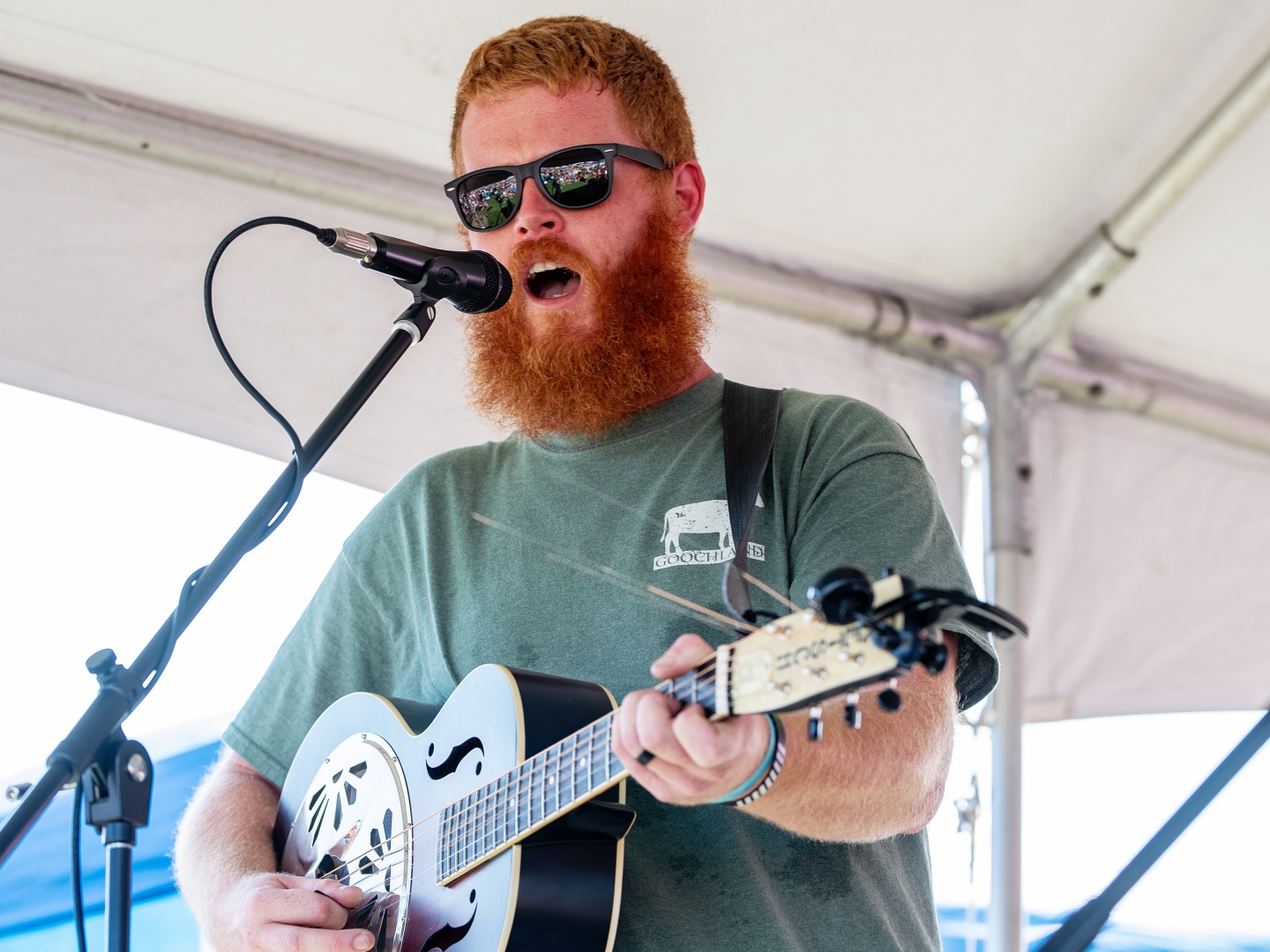
I’ve been especially taken by the “Rich Men North of Richmond” phenomenon that’s so big in the news these days (it’s late August of ‘23).  As you know—no need for a lot of exposition here—it’s a song by a heretofore unknown singer/songwriter who goes by the name of Oliver Anthony.  As The New York Times I read every morning online put it:

The unadorned video suddenly appeared on social media earlier this month: a young man with a bushy red beard and a guitar in a backwoods locale, dogs at his feet and bugs buzzing in the background. In an impassioned drawl, he sings a country-folk anthem about selling his soul “working all day,” and being kept in his place by inflation, high taxes and the elites he holds responsible: “Rich Men North of Richmond.”  On Monday, hardly a week after the song’s release, the previously unknown songwriter and one-time factory worker who performs as Oliver Anthony made an unprecedented leap straight to No. 1 on the Billboard singles chart topping pop superstars like Taylor Swift and Olivia Rodrigo as well as established country crossover acts including Morgan Wallen and Luke Combs.

I checked out the “unadorned video” and looked up the song’s lyrics:

I’ve been sellin’ my soul, workin’ all day
Overtime hours for bullshit pay
So I can sit out here and waste my life away
Drag back home and drown my troubles away

It’s a damn shame what the world’s gotten to
For people like me and people like you
Wish I could just wake up and it not be true
But it is, oh, it is

Livin’ in the new world
With an old soul
These rich men north of Richmond
Lord knows they all just wanna have total control

Wanna  know what you think, wanna know what you do
And they don’t think you know, but I know that you do
‘Cause your dollar ain’t shit and it’s taxed to no end
‘Cause of rich men north of Richmond

I wish politicians would look out for miners
And not just minors on an island somewhere
Lord, we got folks in the street ain’t got nothin’ to eat
And the obese milkin’ welfare

Well, God, if you’re 5-foot-3 and you’re 300 pounds
Taxes ought not to pay for your bags of fudge rounds
Young men are puttin’ themselves six feet in the ground
‘Cause all this damn country does is keep on kickin’ them down

Lord, it’s a damn shame what the world’s gotten to
For people like me and people like you
Wish I could just wake up and it not be true
But it is, oh, it is

Then I watched a YouTube of the audience watching Anthony’s performance of the song and read analyses and commentaries online (for example, here and here).

This writing sketches out what came up for me as I took all of this in and what I think it implies for white advocacy discourse, the sort that appears in webzines like this one.

Something about me that will help make sense of what I’m going to be putting out here: I’ve been scrubbed up and papered over by my advanced schooling and middle-class persona and an academic career, but beneath the veneer—I’m seeing this more and more—I’m still the product of my working class/low-income beginnings.   (I’m not going to distinguish here between working class and low income; especially these years, they mix up for me and I’m just going to leave it like that.)

My dad was a barber with very little schooling growing up in the rural South who barely got by in any case and his gambling problem made things worse.   Dad and Mother (Mother, not Mom, never thought about it) and I lived at 354 Duke Street in Saint Paul, Minnesota between Schmidt’s beer brewery on one side and the city hospital on the other.  We rented the upstairs rooms of the home of “Mr. Jensen,” as Dad called him, who occupied the first floor with his wife and teenage children Bob and Mary Jean.  I grew up to a chorus of the sirens of ambulances rushing to the hospital and Bob and Mary Jean practicing their accordions.  Do you by any chance know the song “Lady of Spain,” where you shimmy the accordion for effect?   I sure do.

The only thing I can remember about Mr. Jensen is he had one brown eye and one blue eye.  Or is that possible?  I swear I remember Mother mentioning it and looking at them, one blue one, one brown one.  We almost had to move that time when Mr. Jensen told Dad we’d have to find someplace else to live because Mary Jean was getting married and wanted to live where we were until she could find a better place and that was scary, but then it was OK because Mary Jean changed her mind and we could stay.

Watching the video of “Rich Men North of Richmond,” I picked up the basic idea of the song, but even after reading the lyrics, the particulars pretty much got by me.  The big thing I related to was the intensity of Anthony’s voice, bordering on a shout.  And “people like me and people like you,” that came through and I connected with it in a visceral way.

An even stronger reaction was to the video of people listening to a live performance of his song.  They were the kind of white people you see at stock car races and minor league baseball games like I went to with Mother and Dad.  They were pumping their arms and singing along with the song and recording it with their cell phones and celebrating the occasion, their occasion, and themselves and their lives and, so I felt, me and my life.   There I was, late in life, all alone on this couch I spend my days on, tears welling up, celebrating right along with them.  I was joyous and I’m never joyous.

All this was a special enough experience for me to want to write about what came out of it and I thought I was done writing about anything.

*   *   *

To the degree I’m known at all, it’s for my white racial advocacy writing, books and articles.1   Sitting here the last couple days after taking in all that about “Rich Men North of Richmond,” it’s hit me how much my writings over the years have dealt with social class along with race.  I’ll list illustrations of that from the vast number of possibilities that are coming to me in waves sitting here typing this up.

Back in the early ‘90s, I wrote a book on kids and sports that included this.

Last week I was watching a comic do his routine on a late-night television talk show [Letterman]. The comic had performed in a small town in Alabama and was relating his experience there as part of his act, which included mocking the “backward” white speech and going on about how dumb and out of touch they all were. In one of his jokes, he said we should send dentists and doctors down to those people: dentists to fix their teeth and doctors to castrate them. This brought torrents of laughter from the audience.2

This was as much about class as race.  Letterman’s comic wasn’t talking about white attorneys in Birmingham or Atlanta, he was talking about the white people in places like Deepstep, Georgia where my dad was from.  And this was a white guy saying this.

Another illustration, from a book of interviews I put together called One Sheaf, One Vine: Racially Conscious White Americans Talk About Race.  The class resentment of this interviewee comes through loud and clear:

People who think of themselves as enlightened and on the moral high ground in matters of race write off people like me as ignorant racists.  Unlike them, so it goes, we pre-judge people.  If only we were exposed to racial and ethnic diversity, we would learn to value different kinds of people—etcetera, etcetera, you’ve heard the line. You’ll notice that most of these people doing the pontificating and finger pointing about racial equality and harmony and the virtues of integration and multi-racialism do it from the far distance of the leafy suburbs or a university campus somewhere. The fact of the matter is that, unlike practically all of them, I have lived close up with the reality of race in America. And regardless of what they might like to think, I am not stupid or unenlightened or their moral inferior. The people who look down their noses at people like me should come live for a year or two or three where my family and millions of other white families live.  Let their children grow up and go to school in this pigsty and be threatened and attacked and robbed and raped. Then they can talk.3

My concern for lower social status white people prompted me to write about the tragedy of opioid addiction, not your usual topic in white racial dialogue and debate.

Big news currently is that opioid use among white people has risen dramatically in recent years.  It particularly breaks my heart to see this happen with kids, so new to the world, so suggestible, so precious.4

This same concern led me to stress the necessity of self-help in a world where the powerful are disdainful of working class and low-income whites and indifferent to their fate.  In an article about ‘20s president Calvin Coolidge, I wrote:

I’ll venture a guess that Calvin Coolidge would approach the current opioid crisis with this message (I’m far more verbose here than he would be, but this is what he would get across): “If you are destroying your life with opioids and in the process hurting those close to you, I care deeply about what’s going on with you.  But I’m going to level with you.  All the government programs in the world aren’t going to save you from opioids.  If it’s going to happen, you are going to have to save yourself.  The way to get clear of your opioid self-abuse is to stop taking opioids.  It comes down to that.  And you can do it.  It might be difficult at first, but you are going to see that you are able to center your life around building yourself up rather than tearing yourself down.  And when you do that, you’ll be proud of yourself and the people in your life will be proud of you.”5

From a review I wrote of the movie “Moneyball.”  This quote is about race, but it is also about class:

None of [heroes] Beane/Brand’s maneuvers go over with the [villains] crusty A’s scouts and their beer-bellied field manager, Art Howe.  It’s important to note in this context that these are white guys; there is something really white about the antagonists in “Moneyball,” it jumps out.  In fact, they are archetypal white guys: from small town or rural backgrounds or the South and of the sort likely to be fundamentalist Christians. 6

And there’s this from three movie reviews (of “Sorry We Missed You,” “Measure of a Man”—2015, there’s a 2018 film with this same title—and “I, Daniel Blake”) I included in an article called “Three Fine Films”:

What tied these three films together for me is that they were all compelling dramas about the lives of the white working poor, people rarely the protagonists in contemporary cinema.7

From a recent article called “The American Political System and White Racial Discourse” which argued for the American constitutional republican form of government in contrast to a democracy:

Ironically given how it is pitched as putting the masses in charge of their fate, democracy paves the way for minority control. Among the possibilities: resentful, revengeful, and exploitive anti-white ethnic and racial elements; self-anointed media elites: kowtow-to-me grievants and scolds; I’ll-handle-it managers and bureaucrats; paid-off and intimidated politicians; and bullshitters.8

This year, in a reply to a newspaper reporter writing an article about the scary activities of the Nationalist Social Club, a white activist group with a predominantly working-class membership:

Groups like the Nationalist Social Club differ from most white nationalists, who tend to be talkers, headier, and not in-your-face, street-oriented confronters.  Personally, I wouldn’t be threatened around these people [the reporter had asked me if I would feel threatened around them]—perhaps you can point out examples of actual violence they’ve perpetrated I don’t know about.   And the truth, it’s gratifying for me to see white people standing up for themselves.9

I picked up on the last sentence of this quote, about it being gratifying for me to see white people—lower social status white people in particular–standing up for themselves.  I’m realizing as I go along here that I’m standing up for myself right now with this writing, and for Mother and Dad, who took crap all their lives from the supposed finer folk.

Seven years ago, I wrote this about the Vermonters I have lived and worked with for a half century:

As far as I can tell, Vermonters these years possess no particular cultural or geographic identity, no allegiance to a tradition or way of life, no feeling of obligation to their ancestors to keep anything going or build on anything.  It seems that there’s been a cultural as well as political transformation in this state in the time I’ve been here [prime examples, New York transplants Ben and Jerry with their ice cream and Bernie Sanders].10

The reflections prompted by Oliver Anthony’s song, and before that, Jason Aldean’s “Try That in a Small Town,” have led me to conclude that back then I may well have missed a deeper, positive, reality.

*   *   *

So what am I left with?   Three thoughts/feelings:

The first is hope.  Those of us expressing ourselves in the public arena about white racial matters can get mired in ain’t-it-awful fatalism and pessimism.  Without realizing it, we buy the message from our adversaries, “It’s all over for you, we’re in charge now and that will never change, so put up with it, over on the side.”  We need to be vigilant not to fall into that hole.

The second is to keep class and income in mind as we think about and express ourselves around race.  Whites aren’t a uniform whole; we’re not all alike.   We get through our lives one at a time, as the people we uniquely are and in our particular circumstance.  The challenges and ways forward for one white person are not necessarily the same as those of another white person.  We all know that, but sometimes we don’t take it into account enough or at all.

The third is the need to do something I referred to early on in this piece: celebrate our lives and ourselves.  As I was putting together the quotes that comprise this writing, I came across a letter to the editor by a former student of mine he sent to a newspaper that had published a “racist professor menace” article about me that generated a barrage of “Yeah, get him!” comments.  Here’s an excerpt from that letter.

In a private conversation, Professor Griffin encouraged me to never allow anyone to make me feel ashamed of where I came from.  I was a rural farm boy in the enlightened university.  I think Professor Griffin only asks that everybody play by the same rules.  If we can encourage black youths in urban areas not to be ashamed of their heritage, we ought to tell rural farm boys like me the same thing.  This was the exact opposite message that I received in the university’s mandatory race and culture class, where I was made to be more ashamed on my skin color than I ever thought possible.

In the grand scheme of things, this letter to a newspaper doesn’t matter for much of anything beyond making me feel better about my life and myself this Friday morning.  I hope what I did matters to my former student and to some people who read his comment, but even if it only matters to me, that matters, because I matter (coming from where I’ve come from, it has taken me a long, long time to realize that).

To end this writing, how about right now you think of some good thing you have done in your life—in any area, big or small, whenever it was–and its positive consequences.   Celebrate that.

Endnotes

      1. My best-known writing is the book about the white advocate William Pierce published over two decades ago, The Fame of a Dead Man’s Deeds, 1stBooks Library, 2001.  And here’s an archive of short writings on the Occidental Observer webzine site. https://www.theoccidentalobserver.net/author/robert-s-griffin/
      2. As quoted in Robert S. Griffin, Living White: Writings on Race 2000-2005, AuthorHouse, 2006, p. 8.
      3. Robert S. Griffin, One Sheaf, One Vine: Racially Conscious Americans Talk About Race, 1stBooks Library, 2004, 154-155.
      4. “Addictions: An Example of the Interplay of the Public and Private,” Robert S. Griffin, The Occidental Observer, November 8, 2017.
      5. “Where is Calvin Coolidge When We Need Him?” Robert S. Griffin, The Occidental Observer, posted March 30, 2019.

6 “‘Moneybull’: An Inquiry into Media Manipulation,” Robert S. Griffin, The Occidental Observer, posted December 1, 2017.

      1. “Three Fine Films,” Robert S. Griffin, The Occidental Observer, posted January 2, 2021.
      2. “The American Political System and White Racial Discourse,” Robert S. Griffin, The Occidental Observer, posted December 13, 2022.

9.“An Exchange with a Newspaper Reporter,” Robert S. Griffin, The Occidental Observer, posted July 28, 2023.

      1. “From a Chat to Metapolitics,” Robert S. Griffin, The Occidental Observer, posted September 7, 2016.
https://www.theoccidentalobserver.net/wp-content/uploads/2018/06/TOO-Full-Logo-660x156-1.png 0 0 Robert S. Griffin, Ph.D. https://www.theoccidentalobserver.net/wp-content/uploads/2018/06/TOO-Full-Logo-660x156-1.png Robert S. Griffin, Ph.D.2023-08-29 06:58:582023-09-03 07:04:53 Thoughts Prompted by “Rich Men North of Richmond”: Including One About Celebration

Preach Equality, Practise Hierarchy: How Leftism Elevates Translunatics above Women and Trans-Westerners above Whites

August 27, 2023/7 Comments/in Featured Articles/by Tobias Langdon

The political parties that most loudly proclaim their love of Celtic languages and cultures are crystal-clear about their vision for a better future. They believe that those languages and cultures need to be marginalized much more and driven much faster into oblivion. They also believe that the people who speak the languages and practise the cultures need to be murdered, raped, and robbed much more often. And be impoverished, demonized, and stripped of political power much faster.

The iron law of leftism

Does that sound like a paradox? It does, but it isn’t. It’s just the iron law of leftism in action. The law states that leftists always most harm what they claim to be most concerned about. For example, leftists in America claim to be deeply concerned about Blacks and their welfare. Sure enough, Steve Sailer has proved that leftist policies have been responsible for the rise in the number of Blacks murdered and maimed by other Blacks. And also in Blacks killed by dangerous Black driving. Similarly, leftist parties like Plaid Cymru in Wales, Sinn Féin in Ireland, and the Scottish National Party (SNP) claim to be deeply concerned about preserving and reviving Celtic languages and cultures. At the same time, they want to open the borders of Celtic nations to unlimited non-White migration. This is absolutely guaranteed to harm Welsh, Irish Gaelic, and Scottish Gaelic. How much do Somalis and Pakistanis care about those languages? About as much as the Jews Robert Maxwell and Bernie Maddoff cared about ethical business practices. In other words: not at all.

Migration from the Third World is also guaranteed to increase rates of murder, rape, and robbery, and to transfer ever more money from White tax-payers to non-White tax-eaters. By supporting Third-World invasion, Plaid Cymru, Sinn Féin, and the SNP have become dedicated traitors to the nations they claim to love. Fortunately, some supporters of these parties are starting to realize that they’ve been betrayed. In Ireland, working-class protestors against Third-World invasion are drawn from “the same demographic as Sinn Féin’s reliable voter base.” And when those working-class protestors marched in the Dublin constituency of Sinn Féin’s leader Mary Lou McDonald, some of them carried placards bearing “a photo of McDonald with the word ‘Traitor’ written across it.”

The cult of transgenderism

That’s a very healthy development. McDonald is indeed a traitor to the working-class Whites of Ireland. Like all mainstream leftists, she preaches racial equality while practising racial hierarchy. Leftists place Blacks and other non-Whites far above ordinary Whites in the leftist hierarchy of racial privilege and patronage. But McDonald is a traitor in another very important sense. She’s a traitor to her own sex. Just like Plaid Cymru and the SNP, Sinn Féin are fanatical worshippers in the cult of transgenderism, which states that sexually perverted men become full and authentic women simply by proclaiming themselves to be so. Nothing more than words is needed: a verbal formula grants a man still in full possession of penis, testicles, and testosterone the right to invade all female spaces, from dressing-rooms and toilets to sporting contests and prisons.

The child-abducting male pedophile Andrew Miller is 100% female, according to leftists

Once again, leftists are preaching equality and practising hierarchy. They claim to believe in sexual equality, but place the rights of sexually perverted men far above those of real women who don’t want those male perverts in their private spaces. Take the male pedophile Andrew Miller, who abducted and sexually assaulted a pre-teen schoolgirl in Scotland earlier this year. In between sexual assaults, he recharged his libido by watching porn and fetish videos on TV. He rejected the girl’s repeated pleas for freedom and told her that she was now his “new family.”

But I’ve actually committed a hate-crime by deferring to reality and describing Miller with male pronouns, because he claims to be a woman called Amy George. In other words, he’s a “transwoman” and leftism insists that he must therefore be 100% female. He isn’t, of course: he was born male and remains male, whatever his perversions might lead him to pretend.

The most loathsome creatures on earth

But leftists call anyone who rejects trans-clowns like Andrew Miller a hate-filled bigot. Indeed, leftist supporters of translunacy often compare their opponents to the most loathsome creatures that crawl on the face of God’s fair earth: they say that “transphobes” are like racists. The leftist organization Stonewall, which supposedly campaigns for homosexual men and lesbian women, has a simple message for lesbians who don’t want to have sex with penis-packing male perverts who claim to be women. According to Stonewall, real lesbians who don’t want fake lesbians in their beds are “sexual racists.” Yes, transphobic lesbians really are as loathsome as that in leftist eyes.

Petulant poison-dwarf: the troubled transphile Nicola Sturgeon

The poison-dwarf Nicola Sturgeon, former leader of the SNP, has gone even further. She said that when you begin lifting the stones under which transphobes dwell, “you’ll also find they are deeply misogynist, often homophobic, possibly some of them racist as well.” To self-righteous leftists like Sturgeon, racism is the worst of all possible sins, which is why leftists are always trying to attach the label of “RACIST!” to anyone who disagrees with them on any topic. In this case, Sturgeon was talking about opponents of an SNP “gender bill” that was intended to give male perverts even bigger privileges at the expense of real women. But the bill blew up in her face when it was revealed that a double rapist called Adam Graham had proclaimed himself a woman and been sent to a female prison under the name of Isla Bryson. Sturgeon resigned as SNP leader after the scandal, although it soon became apparent that her resignation wasn’t prompted just by the failure of her campaign on behalf of translunatic rapists. No, the SNP is being investigated for serious financial wrongdoing and both Sturgeon and her husband have been arrested and questioned by the Scottish police. Charges against them may be imminent.

Inadvertently touching on truth

This is another example of the iron law of leftism in action. The SNP and all other mainstream leftist parties loudly proclaim their concern for morality, justice, and equality. Meanwhile, they doggedly pursue one all-important thing. Not morality or justice or equality, but power — the power to privilege and to punish. The privilege is for themselves and their favorites at the top of the leftist hierarchy; the punishment is for their enemies at the bottom of the leftist hierarchy. But even though Nicola Sturgeon is interested only in power, not in truth or reality, she inadvertently touched on the truth in her abusive comments about opponents of translunacy.

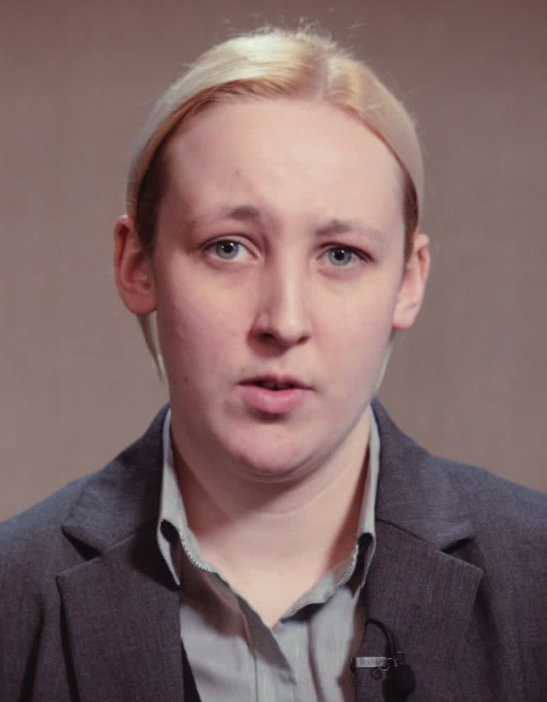
Mhairi Black

So did another poisonous fem-pol in the SNP, the self-righteous lesbian Mhairi Black, who has assailed opponents of translunacy with the worst terms in her vocabulary:

Gender-critical campaigners are comparable to white supremacists, the SNP’s deputy Westminster leader has claimed. Mhairi Black said that “bad actors” and “50-year-old Karens” were responsible for the debate over transgender rights and suggested those who vocally disagreed with her views on such issues could not be “decent” people.

In comments likely to deepen an already bitter divide in Scotland, she said those who made “intellectual” arguments against extending trans rights were akin to past generations who claimed non-white ethnic groups were inferior. … Speaking at the Edinburgh Fringe Festival, Ms Black said: “Once upon a time, you had intellectuals who made these big prolific statements about how race was a key factor.

“[They argued] ‘I think you’ll find statistics show that if you have more Bame [black, Asian and minority ethnic] people; crime goes up’ or whatever it is. We now rightly look back on that and go, ‘You were a racist. You might be an intellectual, but what you were saying was racist.’

“If you’re not educating yourself on things, then you can’t complain when people from a minority say, ‘You’re not treating us right’, and that’s exactly what’s happening with the trans community right now.” … Later in the talk, at The Stand Comedy Club, Ms Black was asked whether she believed that someone with a different philosophical view to her on gender issues could still be “a thoroughly decent person”.

She responded: “If you keep it to yourself, aye,” to applause from the audience. “To me, a decent person is someone who tries to make others comfortable and accept them, particularly when it’s a marginalised, oppressed group. “That’s just human progress. And to me being decent is being part of that progress, not hindering it.” (Gender critics akin to white supremacists, claims SNP’s Mhairi Black, The Daily Telegraph, 8th August 2023)

The self-proclaimed Scottish nationalist Mhairi Black bears a proudly Scottish name and has a passionate commitment to destroying Scotland. That’s why she’s a dedicated opponent of “racism” and staunch supporter of non-White migration into Scotland. Look again at her comments about those who use statistics to prove that non-Whites like Blacks are much more inclined to commit crime. She didn’t say that they’re factually wrong: she said that they’re “racist.” For Mhairi Black and other leftists, truth and logic don’t matter when it comes to race. Instead, we must close our eyes to reality, clear our minds of hate-facts, and repeat the sacred mantra: “There is only one race — the human race.” That isn’t true, of course, but truth doesn’t matter to leftists. What matters is power.

Transgenderism and trans-Westernism

Leftists know that censorship and silencing their enemies are vital steps towards the power they crave. Mhairi Black’s audience applauded when she said that opponents of translunacy should keep quiet about the truth: that biological sex is real and that men can never become women, no matter how loudly they claim to be. But the audience didn’t realize that, like Nicola Sturgeon, Mhairi Black was inadvertently touching on the truth in what she said about “transphobes.” There is indeed a strong parallel between opponents of translunacy and “racists” or “white supremacists.”

The parallel is that “racists” and “white supremacists” believe in biological reality just as opponents of translunacy do. Men cannot become real women and non-Whites cannot become real Westerners. Transgenderism is as false and harmful as what I call trans-Westernism, which is the belief that non-White people from corrupt, violent, and intellectually backward Third-World nations can become full and authentic citizens of Western nations. The ideologies of transgenderism and trans-Westernism are both based on the elevation of feelings over facts. How do we know that a bearded transwoman with a penis and no ability to menstruate or give birth is a full and authentic woman? Well, it’s because the transwoman feels that he is so. And he gets very upset when anyone disagrees with him, which is further proof, in leftist eyes, that he must be right. Feelings trump facts.

Bangladeshi, not British: the deluded trans-Westerner Rakib Ehsan

Similarly, how do we know, for example, that the goy-groveling Bangladeshi neo-con Rakib Ehsan is a full and authentic Briton? Again, it’s because he feels that he is so. After all, his Bangladeshi mother was the most patriotic person you could ever hope to meet. Rakib and his family love living in wealthy and uncorrupt Britain, despite their roots in poor and highly corrupt Bangladesh. That’s why Rakib is eager for lots more non-Whites like himself to migrate to Britain. They too will become true Britons and love living in wealthy and uncorrupt Britain, despite their roots in the poor and highly corrupt Third World.

Imagine that — non-Whites prefer living in countries built by Whites and will say whatever helps them stay there. But that doesn’t mean they belong in those countries. Even less does it mean that their presence is good for Whites. Rakib Ehsan’s subjective and self-serving feelings do not trump biological reality and turn him or any other non-White into a true Briton. Third-World people like him migrate to Britain and other Western nations for their own advantage, not to benefit the Whites who built and sustain those nations. Third-Worlders want to exploit the prosperity and good governance that they can’t create themselves in their own homelands. And once Third-World folk settle in the West, they set about re-creating Third-World pathologies, like the rape-gangs of Rotherham and the voting-fraud and corruption of ethnically enriched Tower Hamlets in London. These non-White settlers are trans-Westerners and their supposed new identity is as fake and infertile as the identity of trans-women. Men who claim to be women can never give birth to children and non-Whites who claim to be Western could never have created Western civilization. On the contrary, they’re capable only of aborting Western civilization.

But that’s precisely why equality-preaching leftists are so eager to import and privilege folk from the Third World. Non-Whites are very bad for the West and leftists hate the West and its achievements. That’s why they preach equality and practise hierarchy. Any group that is higher in the leftist hierarchy has the right to invade the territory of any group that is lower. Perverted men who claim to be women belong to the sacred category of transwomen and are higher in the leftist hierarchy than real women. That’s why leftists want those male perverts to invade all female spaces, just as they want Blacks and other non-Whites to invade all White spaces. Non-White migration must continue without limit and non-White actors must be able to take on any White role, from David Copperfield to Achilles to Doctor Who.

The abominations of Olivier

At the same time, Black roles are forbidden to lowly Whites. When the White Laurence Olivier, one of the world’s greatest actors, played the Black protagonist of Shakespeare’s Othello (c. 1603), his performance was acclaimed at the time as masterly. It’s now condemned as an abomination. But leftists applaud as Black women take on all White and male roles in Shakespeare. Once again, leftists are preaching equality and practising hierarchy, with Blacks at the top and Whites at the bottom.

Leftism is, after all, based on lies and interested only in power. That’s why it elevates sexually perverted men over sane and sensible women in the lying ideology of transgenderism. And why it elevates unproductive and unintelligent non-Whites over productive and intelligent Whites in the lying ideology of trans-Westernism. But the truth remains: men cannot become real women and non-Whites cannot become real Westerners. The consequences of ignoring truth and promoting lies are becoming clearer by the day throughout the West. That’s why more and more Whites are waking up to the Great Replacement and the lies of leftism. As Gregory Hood points out at AmRen, transphobe Matt Walsh once espoused race-blind civic nationalism and argued for it “with lazy, left-wing bilge.” Now he’s seen the blight and stopped the bilge:

BREAKING: New leaked audio of Matt Walsh arguing with his co-host about how you can’t “separate race and culture” and how Mexicans can never be Americans or “white”. He goes on to mock Indigenous genocide and boast about the superiority of white culture and society. pic.twitter.com/PjbFrBDziq

– The Serfs (@theserfstv) August 14, 2023

Walsh first saw the blight of transgenderism, then saw the blight of trans-Westernism. They’re both based on lies and fantasies. It’s just that trans-Westernism is much worse for the West. Matt Walsh is not unique. Once you’ve seen Clown World lying about men becoming women, it’s much easier to see that Clown World is lying about non-Whites blessing the West. And once you’ve seen the truth, your duty becomes clear: you have to fight in its defense.

https://www.theoccidentalobserver.net/wp-content/uploads/2018/06/TOO-Full-Logo-660x156-1.png 0 0 Tobias Langdon https://www.theoccidentalobserver.net/wp-content/uploads/2018/06/TOO-Full-Logo-660x156-1.png Tobias Langdon2023-08-27 06:16:212023-09-02 02:23:54Preach Equality, Practise Hierarchy: How Leftism Elevates Translunatics above Women and Trans-Westerners above Whites

The British police’s anti-racism today

August 25, 2023/10 Comments/in Africans and African Americans, Featured Articles/by Richard Knight

Are young Black men victimised by society or is society victimised by young Black men? Specifically, do the police have it in for young Black men or do young Black men have it in for the police? For more than twenty years it has been the settled opinion of the British police that it is society and especially they, the police, who are at fault. This was illustrated by a press release produced by the Chief Constable of Avon and Somerset in June 2023.[1]

Before we come to the press release, consider the following points from Britain’s racial history. The first crime to be reported as a mugging occurred in 1972 when an elderly widower was stabbed to death near Waterloo Station by three young Black men as he walked home from the theatre.[2] They had tried to rob him; he had resisted.

It has been consistently stated over the decades that eighty per cent of London’s muggings are carried out by Black people, which makes a Black person about fifty times as likely to carry out a mugging as anybody else.[3] In 1973, 1,500 such crimes were reported in London;[4] by 1995 the number was 33,000. But reported muggings are a fraction of the total. It seems that in 1981 a certain Black twelve-year-old might have carried out a mugging every day.[5] If so and if London contained 500 boys like him, this would mean more than 175,000 muggings for the city in the year.

Not just that first one but many other muggings have been fatal. For example, in 1993 Constance Brown, 72, was knocked to the ground in South London by a young Black man who smashed her head against the pavement before running off with her handbag. Elizabeth Pinhom, 96, died in hospital in 1997 after being pulled down the front steps of her house when she opened the door to a young Black man, who went off with her bag.[6]

It was in 1970 that young Black men started attacking the police, according to an activist from Trinidad, who wrote that skirmishes and violent confrontations continued throughout the decade.[7] Young Black men first used knives against the police at the Notting Hill carnival in 1976.[8]

The activist, Darcus Howe, was a great admirer of the Brixton riots, where in 1981 young Black men threw petrol bombs at the police and set fire to buildings and vehicles. Howe described the riots as different “in range and depth from previous revolts waged by blacks against the police. This general uprising”, he continued, “stands head and shoulders above all that had gone before”.[9] In another riot, in Tottenham, North London in 1985, a policeman was hacked to death by young Black men with machetes.[10]

Black people had no legitimate grievance against the police on either occasion. The Brixton riots followed a crackdown on street crime. The Tottenham riot started after a woman died of a heart attack when the police came to see her about her son, who had given a false name when found in a car with a fake road licence.

During the 1990s the war on the police was conducted mainly through the media, who aired activists’ portrayal of them as, of course, “racist”. The activist-media alliance met with nothing but success, winning a decisive triumph in 1999 when a retired High-Court judge, Sir William Macpherson, described the police as institutionally racist, a conclusion he reached via a definition that allowed any institution to be described as institutionally racist. Although the police presumably saw the trick, they were prevailed upon to submit, after which they came effectively under the control of anti-racists and rapidly became anti-racist themselves. For example, in 2000 a Deputy Assistant Commissioner boasted that he had reduced the number of young Black men stopped and searched by almost forty per cent in the previous year,[11] during which muggings went up by two thirds.[12]

But it would be more accurate to say that the police became more anti-racist after 1999, for they had started on the road of anti-racism long before. In 1981, a report on the Brixton riots by Lord Scarman, a Law Lord, insistently called on the police to go easy on Black crime.[13] As a result, within ten years they were allowing open drug dealing on the street.[14] Scarman also called on the police to recruit more non-White officers, which led them to lower their admission standards for non-Whites, who enjoyed special treatment once they were in.[15] In 1996 they offered sub-standard young Black men a free ten-week course to help them pass the recruitment tests.[16] In 1998 they launched a scheme to “attract, develop and retain minority ethnic recruits, particularly at a senior level”.[17] As early as 1970, when a workman told the police that children were stealing from his lorry and throwing bricks through people’s windows, he was told that there was nothing they could do because the children were Black.[18]

Confirmed anti-racists by 1999, the police have been upending their traditional values ever since, a process of inversion seen also in every other British institution. This has been accomplished by means of political correctness, of which, if one sees it as a collection of ideologies, anti-racism is the leading one.

So there is nothing new or unusual about the self-hating press release we are about to look at. It is just the sort of thing one expects from the British police, who, after spending twenty years being attacked and accused by Black criminals and anti-racists, have spent twenty more trying to be their friends.

Entitled “Chief Constable Sarah Crew on Institutional Racism”, the document is typical of political correctness in being vague, evasive and inclined to presume what is far from obvious. It fails to define its terms and uses jargon not just to create an impression of expertise but also to defy comprehension. It treats Black people as members of a semi-royal class, not calling them Black people, an expression with only three syllables, but showing its extreme respect by calling them “those who are from Black heritage communities”.

According to Sarah Crew, she intends to make her force anti-racist. What does this mean? Pro-Black.

She mentions a report about disproportionality in her county’s criminal justice system. What is disproportionality? This refers to the fact that the criminal justice system deals with Black people out of all proportion to their numbers in the population, which, according to anti-racism, means that there is something wrong with it. According to anti-racism, the races are the same, therefore no system should deal with one at a higher rate than with another.

Sarah Crew describes a review of the Metropolitan Police as a “stark reminder for policing … that the need for real and profound change is essential if we’re to retain the public’s trust and confidence”. This combines illiteracy with presumption, vagueness and anti-racist code. Presumably it is change rather than the need for it that she deems essential, but why is it needed if the police have the public’s trust and confidence? She means “gain” rather than “retain”. Why does she describe the review as a reminder? Did the police know that real and profound change was needed? Nor does she say what this real and profound change must be. Had she wished to make herself clear, she might have said that the police must look the other way when Black people commit crimes, thereby reducing the disproportionality.

As for “the public’s trust and confidence”, this is a stock phrase that requires translation. “The public” doesn’t mean the public here but the Black public, whose trust and confidence the police are supposed to have forfeited by their “racism”. This is an anti-racist pretence, for the police didn’t have Black people’s trust or confidence to start with. The police adopt the pretence so as to appear to admit to their imaginary guilt. Nor does “trust and confidence” mean trust and confidence; it means approval. The police seek the approval of Black people, specifically criminals, who want them to keep away from their crimes. This the police will never be able to do entirely, for there are times, such as when a murder is committed, when they are expected to get involved. Thus they must perpetually try to please their masters, knowing that they will never quite succeed.

Sarah Crew reports that she has had “encouraging conversations … around institutional racism”. That’s nice, but what is institutional racism? You might think that it would be pervasive racial discrimination in an institution, but Sir William Macpherson defined it as in effect any lack of pro-Black discrimination. Sarah Crew, however, has no doubt that it exists at Avon and Somerset, going by four criteria given by Baroness Casey, which she lists. But Baroness Casey’s criteria are meaningless for she does not define racism, in terms of which she defines institutional racism. Is racism a sentiment, such as aversion to immigration, or an empirical belief, such as that Black people are prone to crime? Is it an act performed by an agent of an institution, such as treating people differently by race, or indeed failing to treat them differently by race? Baroness Casey gives no clue even as to which ballpark her concept might be in.

But “I must accept that the definition fits”, says Sarah Crew, referring to Baroness Casey’s definition of institutional racism. In what way does she think it fits? Even if we imagine that she knows what Baroness Casey means by racism and hence by institutional racism, what took her to her conclusion? For example, if she thinks that Baroness Casey’s third criterion fits, which is that “Racism and racial bias are reinforced within systems”, where does she see racism and racial bias being reinforced at Avon and Somerset? Could she give us some examples? Apparently not.

Baroness Casey’s fourth criterion is that a police force “under-protects and over-polices Black heritage people”. This was a popular slogan with anti-racists in the 1980s, but, again, what does it mean? What are the police failing to protect Black people from that they are protecting others from, and if over-policing Black people means paying too much attention to their crimes, how much attention should be paid to them?

“This”, writes Sarah Crew, “is about recognising the structural and institutional barriers that exist and which put people at a disadvantage”. What structural and institutional barriers? She doesn’t say.

She states that “Not being racist is no longer good enough” but doesn’t explain why not. Surely if all her officers refrained from being racist, whatever that might mean, there would be no racism in her force and all would be well. But she thinks that not doing something means standing by while others do it, who should be pounced on: “It is no longer okay to be a bystander and do nothing, to be part of a system that disadvantages one group of people over another”. What she means is that one must be not merely non-racist but anti-racist. One must identify an enemy class, putting oneself on the side of good, and have an ideology that requires non-Whites to be given special treatment.

What does she mean by one group being disadvantaged over another? It’s the disproportionality again. Black people commit crimes at a higher rate than others, therefore they get convicted at a higher rate, therefore they go to prison at a higher rate, therefore they are disadvantaged.

Why must Sarah Crew always speak of the “system” rather than the level at which things actually happen, the level of the individual? It’s because there is no “racism” at the level of the individual. It can only be found in the statistics, which can tell us about “the system”. Or, it is the system that must be transformed, therefore it is in the system that racism must be found.

Apparently she isn’t interested in criminals and their wrongdoing; she is interested in the police and their wrongdoing. This is what attracted her to the job, she says: “the fight against injustice and unfairness”. It’s about “a recognition that the system is unfair, and our job is to make it fair”. She doesn’t say how it is “unfair”, but we can guess. It’s the disproportionality.

She wants to apologise. “Accept it and say sorry” is her policy, and again: “What we can do is say … we’re sorry”. She doesn’t say what she wants to say sorry for or to whom. Presumably it’s to Black people, for the disproportionality again. She wants to apologise to all those who have been convicted of crimes that a better system would have overlooked to make itself more proportional.

She repeats her reference to the “trust and confidence of our communities”, seeming to think that it is because this is lacking that more Black people don’t report crimes committed against them. She has had enough of Black people as offenders; she wants Black victims. We read the heading: “Supporting Black heritage victims of crime”. She’s not bothered about protecting anyone else from crime.

She doesn’t want the police to transform themselves alone. She wants Black people to take part so that “communities [will be] involved in changing our systems”. It’s not enough for her that Black people, through their activists, largely control the police already. She wants them to have more control.

It’s the same with complaints made against the police. Presumably she gets plenty already, but she wants more, so she is “working on a programme … to support young people in understanding … what to do if they feel a police power is not being used legitimately”. This recalls the case of Sarah Everard, a young woman who was killed by an off-duty policeman in 2021. United behind the idea that all men are mortally dangerous, especially policemen, feminists were obliged when the police encouraged women to question the legitimacy of a policeman who might question them.[19] He might be a murderer like Wayne Couzens. The guilt-addicted police welcome anyone who might accuse or suspect them of wrongdoing.

She mentions a scheme that allows people to “avoid a criminal justice outcome for low-level or first-time offences”. The trouble is, she says, that disposing of a matter out of court requires an admission of guilt, “which research has shown can be a barrier to young men of Black heritage”. In other words, young Black men rarely admit they have offended, which leads to “harsher and disproportionate criminal justice outcomes”. So it is hard to see how the scheme is going to work unless the police avoid all contact with these offenders.

She mentions “cultural trauma”, a concept that is just catching on. When Edward Kemp, director of the Royal Academy of Dramatic Art, confessed to the academy’s “institutional racism” in 2020, he wrote: “We are profoundly sorry for the role we have played in the traumatic and oppressive experiences of our current and past Black students”.[20] The following year, Goldsmith’s, part of the University of London, proposed to narrow the “achievement gap” between Black students and others by allowing Black students extra time to finish their assignments. They would also be able to defer their exams if they had suffered “racial trauma”, it being up to them to say whether they had or not.[21] Neither Kemp nor Goldsmith’s said what racial trauma was, and nor does Sarah Crew, which is not surprising since the term’s only purpose is to give White people something new to accuse themselves of inflicting on Black people, who can use it as yet another excuse for their failures or offences. But Sarah Crew’s force is “committed to becoming a ‘Trauma Informed’ organisation”.

And so in nothing but repulsive English Sarah Crew bows and scrapes to Black people, conceals her meaning, assumes that we already accept what she wants us to accept, talks vaguely about “the system” but never about what is actually done, and uses meaningless slogans and undefined terms left and right. As she goes, she not only puts on a display of institutional self-abasement that would make a statue cringe, but presents herself as noble. Her aim in all this is to persuade us that the police and the rest of the criminal justice system mistreat Black people but might redeem themselves by turning a blind eye to their crimes.

It is to this level of sycophancy, dishonesty and desertion of principle that the police were reduced by anti-racism more than twenty years ago, when the last memory of their original job of preventing and detecting crime without regard to race began to fade. Since then, race has been all-important. “Was this crime committed by someone White? Then let’s get him! Someone Black? Ignore it!” This is the thinking that was pressed on the police throughout the 1980s and ‘90s by anti-racists, aided by the occasional Law Lord or retired High-Court judge, which in this century became the police’s second nature. It is second nature to Sarah Crew, it was second nature to whoever made her a Chief Constable, and it is presumably second nature to all our other Chief Constables. These are the sort of people who like to think, even as they bestow one favour after another on young Black men, that our society and especially they in the police have it in for young Black men.


[1] Avon and Somerset Police, June 16th 2023, “Chief Constable Sarah Crew on Institutional Racism”, https://www.avonandsomerset.police.uk/news/2023/06/chief-constable-sarah-crew-on-institutional-racism/.

[2] Stuart Hall et al., 1978, Policing the Crisis: Mugging, the State, and Law and Order, Basingstoke: Macmillan, p. 3.

[3] In 1975 a march was held under the slogan “Stop The Muggers. 80% of muggers are Black. 85% of victims are White” (Paul Gilroy, 1987, There Ain’t No Black in the Union Jack, London: Routledge, p. 120). Twenty years later, Paul Condon as Metropolitan Police Commissioner stated in a letter to prominent Black figures such as Diane Abbott MP that eighty per cent of London’s muggers were Black. He invited them to a meeting where their support would be requested for a planned drive against the crime. Several recipients, including Diane Abbott, declined to attend the meeting. One passed the letter to the media, who quoted activists condemning Condon for saying that Black people committed so much crime. The police were out to get them; the statement was a licence for racists, and so forth. What all this did, as intended, was encouraged the idea that mugging was not the problem; the problem was that someone had said that it was mostly the work of young Black men. See Independent, Aug. 4th 1995, “Mugging: criminal or political offence?”, https://www.independent.co.uk/news/uk/mugging-criminal-or-political-offence-1594666.html.

[4] In 1973 the headline appeared: “Muggings reach four a day in London” (Hall et al 1978, op. cit., p. 8).

[5] In his memoir of his days at a comprehensive school in London in the 1980s, John-Paul Flintoff writes that a Black classmate came in one day and gave him an empty wallet to look after. The next day he did the same. Flintoff does not tell us whether the pattern continued. See John-Paul Flintoff, 1998, Comp: A Survivor’s Tale, London: Indigo Orion, pp. 103-04.

[6] J.F.Cronin, no date (possibly 2000), “The forgotten victims”, Right Now magazine.

[7] Darcus Howe, 1988, From Bobby to Babylon: Blacks and the British Police, London: Race Today, p. 52.

[8] Paul Gilroy 1987, op. cit., p. 96 quotes the Telegraph.

[9] Howe 1988 op. cit., p. 52.

[10] Metropolitan Police, no date, “MPS Historical Timeline: Broadwater Farm Riot 1985”, http://www.met.police.uk/history/broadwater_farm.htm.

[11] This was John Grieve. See Metropolitan Police, Feb. 22nd 2000, “Press Conference Held Re the Anniversary of the Lawrence Inquiry Report”, http://tap.ccta.gov.uk/[…]/b3cb2697adf8d9e1802…OpenDocument.

[12] Muggings went up nineteen per cent in March 1999 alone (Telegraph, April 24th 1999, “Muggings soar as police tread softly”). Towards the end of June 2000 they were reported to have risen 38 per cent in the previous twelve months (Sunday Times, June 25th 2000, “Straw on rack as muggings soar”). This means, on reasonable assumptions about figures month by month, that for every 100 muggings in London at the end of February 1999 there were 178 fifteen months later.

[13] Lord Scarman deemed that the police’s duty to maintain public tranquillity trumped their duty to enforce the law (Lord Scarman, 1982 [1981], The Scarman Report: The Brixton Disorders, 10-12 April 1981, Harmondsworth: Pelican-Penguin, Paragraphs 4.57-4.58). Therefore if an attempt to enforce the law might not be received in a tranquil manner, they should not make the attempt. Secondly he advocated policing with the active consent of the public, which in a place like Brixton the police would never have (Scarman, Paragraph 5.46). Thirdly, he said that the police must exercise discretion, quoting a senior policeman saying that to believe in enforcing the law without concessions to any section of the community was too simplistic. Some groups had different cultural backgrounds (Scarman, Paragraph 5.76).

[14] The anonymous author of “The street where I live” (Independent, Nov. 2nd 1993) thought that in the previous three years someone must have decided to turn his road into a no-go area for the police, where crack dealers could trade openly. Since a policeman had been killed nearby, the police had kept their heads down. Until the shooting the author had been blanking the dealers out, but then a bullet had been fired through the window of a betting shop over the road, which acted as a crack and dope market. Angry at drugs being sold outside his son’s bedroom, he had called the police and told them that the problem was getting worse. “Yes”, they said, “it will get worse. There’s a lot of money involved.” He never saw a police car arrive.

[15] Lord Scarman had required the police to acquire more Black officers, the aim being “that the composition of the police fully reflects that of the society the police serve” (Scarman 1982, op. cit., Paragraph 5.13). In 1989 a superintendent attributed discipline problems with West Indian officers to the fact that non-White recruits were below par. A White officer couldn’t see “why some other bugger shouldn’t have to [study every night] just because he happens to have a different colour skin”. See Roger Graef, 1989, Talking Blues: The Police in Their Own Words, London: Collins Harvill, pp. 134-38.

[16] Telegraph, Feb. 26th 1996.

[17] Metropolitan Police, March 15th 1999, A Police Service for All the People: Report of the MPS Ethnic Minority (Recruitment and Advancement) Working Group. http://www.met.police.uk/police/mps/mps/press/1099.htm.

[18] ThamesTv, Nov. 27th 2020, “1970s London | Poverty in the 70s | North Islington | Community Tension | This week | 1970”, https://www.youtube.com/watch?v=cYhYdsHh2p0.

[19] BBC, Oct. 1st 2021, “Sarah Everard: Challenge plain-clothes officers, Met Police says”, https://www.bbc.co.uk/news/uk-58757375.

[20] Ikon London Magazine, June 30th 2020, email from the Director of the Royal Academy of Dramatic Art, https://www.ikonlondonmagazine.com/rada-goes-woke/.

[21] History Debunked, June 18th 2021, “How British universities plan to boost the achievement of Black students”, https://www.youtube.com/watch?v=DOb9CO8qLGI.

https://www.theoccidentalobserver.net/wp-content/uploads/2018/06/TOO-Full-Logo-660x156-1.png 0 0 Richard Knight https://www.theoccidentalobserver.net/wp-content/uploads/2018/06/TOO-Full-Logo-660x156-1.png Richard Knight2023-08-25 06:15:192023-08-25 10:44:24The British police’s anti-racism today

We need immigration, not Trump, at the debate

August 24, 2023/10 Comments/in Featured Articles/by Ann Coulter

WE NEED IMMIGRATION, NOT TRUMP, AT THE DEBATE

Donald Trump, the least self-aware person in the country, at least seems to know that he’s a terrible debater. He has the vocabulary of a kindergartener, strings words together in combinations that aren’t recognizable as English and has absolutely no idea what he’s talking about most of the time. His sole objective when he begins a sentence is to get to the end of the sentence.

      So why did he crush all the debate insta-polls in 2016?

First of all, Jeb! needed a billion more exclamation points. But more important, Trump had something no other candidate had: He took the popular position on immigration.

You forget this now because — post Trump — nearly all Republicans pretend to take America’s side on immigration. Even Trump pretends to take America’s side! (Luckily, he didn’t keep any of his immigration promises, so he’s free to reissue them.)

Even Mr. Open Borders, Gov. Chris Christie, who gave in-state tuition to illegals and directed his Senate appointee, Jeff Chiesa, to vote for amnesty, now resignedly says of Trump’s nonexistent wall: “Look, at this point, I think we’ve started to build it; let’s finish it.”

Gee, thanks.

Until Trump’s 2016 campaign, the standard Republican mantra on immigration required these four points and no others:

1. Cite your immigrant relatives.

TED CRUZ: “I am the son of an Irish-Italian mom and a Cuban immigrant dad.” (And a feral badger.)

MARCO RUBIO: “My family’s immigrants. My neighbors are all immigrants. My in-laws are all immigrants.”

2. Claim you will “secure the border.”

SCOTT WALKER: “I believe we need to secure the border. I’ve been to the border!”

CHRIS CHRISTIE: “What we need to do is to secure our border.”

3. Say walls don’t work.

JEB BUSH: “To build a wall, and to deport people … it would destroy community life, it would tear families apart.”

RUBIO: “I also believe we need a fence. The problem is if El Chapo builds a tunnel under the fence …”

4. Propose a bunch of B.S. solutions that definitely won’t work.

CARLY FIORINA: “Look, we know what it takes to secure a border. We’ve heard a lot of great ideas here: money, manpower, technology …”

CHRISTIE: “We need to use electronics, we need to use drones, we need to use FBI, DEA and ATF …”

What would any of those accomplish, exactly? These politicians say a wall is cruel, but they’re going to direct troops to shoot illegals? Have the drones drop bombs them? Will we use “electronics” to amuse ourselves with videos of illegals as they pour across our border?

The media try to dismiss Gov. Ron DeSantis as another Scott Walker, but I distinctly recall breaking things during Walker’s presidential announcement because he didn’t say one word about immigration. (On the other hand, he did propose a slew of new military interventions!)

Jeb!’s presidential announcement also had nothing about immigration (unless you include a boring digression about his wife being Mexican). A year earlier, he’d said on Fox News that illegal immigrants had not committed a felony, but “an act of love.” (The roar of applause from The Wall Street Journal could be heard for miles.)

Rubio only glancingly mentioned immigration in his announcement, buried in a list of other needed reforms. His main point was that “Cuban exiles … former slaves and refugees … together built the freest and most prosperous nation ever!” (What British and Dutch settlers? Never heard of ’em.)

This was a striking omission inasmuch as Rubio had won his Senate race vowing never to support amnesty, then spent his first two years in office pushing amnesty, which won him a pat on the head from Fox magnate Rupert Murdoch. Fox News rewarded him at the first GOP debate in 2015 by not asking him a single question about immigration, despite this massive betrayal.

After the debate, Murdoch tweeted: “Bush [and] others did well, perhaps Rubio best of all,” while Trump spoke “nonsense” on immigration.

As you will recall, Jeb! dropped out after the second primary, having won only four more delegates than I did; Rubio lost his own state, and Trump went on to win more primary votes than any Republican in history. (Totally upsetting my worldview. If an Australian billionaire doesn’t have his finger on the pulse of the American voter, nothing makes sense anymore — up is down, cold is hot, liquid is solid, black is white …)

The crucial point is Trump wasn’t a dazzling debater — the man can barely talk. His ace in the hole was to take America’s side on immigration — something voters had been politely requesting for 50 years. He said he’d build a wall, end anchor babies, deport all illegals and on and on.

His immigration positions were steroids in a race where all his competitors had vowed to be steroid-free. And then, like every other politician who’s ever promised to “secure the border,” Trump betrayed us. Now, he’s just another lying politician.

I guess we’re about to find out which of the current candidates are smart enough to take the steroids this time.

     COPYRIGHT 2023 ANN COULTE

https://www.theoccidentalobserver.net/wp-content/uploads/2018/06/TOO-Full-Logo-660x156-1.png 0 0 Ann Coulter https://www.theoccidentalobserver.net/wp-content/uploads/2018/06/TOO-Full-Logo-660x156-1.png Ann Coulter2023-08-24 08:30:082023-08-24 08:30:33We need immigration, not Trump, at the debate
Page 107 of 492«‹105106107108109›»
Subscribeto RSS Feed

Kevin MacDonald on Mark Collett’s show reviewing Culture of Critique

James Edwards at the Counter-Currents Conference, Atlanta, 2022

Watch TOO Video Picks

video archives

DONATE

DONATE TO TOO

Follow us on Facebook

Keep Up To Date By Email

Subscribe to get our latest posts in your inbox twice a week.

Name

Email


Topics

Authors

Monthly Archives

RECENT TRANSLATIONS

All | Czech | Finnish | French | German | Greek | Italian | Polish | Portuguese | Russian | Spanish | Swedish

Blogroll

  • A2Z Publications
  • American Freedom Party
  • American Mercury
  • American Renaissance
  • Arktos Publishing
  • Candour Magazine
  • Center for Immigration Studies
  • Chronicles
  • Council of European Canadians
  • Counter-Currents
  • Curiales—Dutch nationalist-conservative website
  • Denmark's Freedom Council
  • Diversity Chronicle
  • Folktrove: Digital Library of the Third Way
  • Human Biodiversity Bibliography
  • Instauration Online
  • Institute for Historical Review
  • Mondoweiss
  • National Justice Party
  • Occidental Dissent
  • Pat Buchanan
  • Paul Craig Roberts
  • PRIVACY POLICY
  • Project Nova Europea
  • Radix Journal
  • RAMZPAUL
  • Red Ice
  • Richard Lynn
  • Rivers of Blood
  • Sobran's
  • The European Union Times
  • The Occidental Quarterly Online
  • The Political Cesspool
  • The Raven's Call: A Reactionary Perspective
  • The Right Stuff
  • The Unz Review
  • Third Position Directory
  • VDare
  • Washington Summit Publishers
  • William McKinley Institute
  • XYZ: Australian Nationalist Site
NEW: Individualism and the Western Liberal Tradition

Also available at Barnes & Noble

Culture of Critique

Also available at Barnes & Noble

Separation and Its Discontents
A People That Shall Dwell Alone
© 2025 The Occidental Observer - powered by Enfold WordPress Theme
  • X
  • Dribbble
Scroll to top

By continuing to browse the site, you are legally agreeing to our use of cookies and general site statistics plugins.

CloseLearn more

Cookie and Privacy Settings


How we use cookies

We may request cookies to be set on your device. We use cookies to let us know when you visit our websites, how you interact with us, to enrich your user experience, and to customize your relationship with our website.

Click on the different category headings to find out more. You can also change some of your preferences. Note that blocking some types of cookies may impact your experience on our websites and the services we are able to offer.

Essential Website Cookies

These cookies are strictly necessary to provide you with services available through our website and to use some of its features.

Because these cookies are strictly necessary to deliver the website, refusing them will have impact how our site functions. You always can block or delete cookies by changing your browser settings and force blocking all cookies on this website. But this will always prompt you to accept/refuse cookies when revisiting our site.

We fully respect if you want to refuse cookies but to avoid asking you again and again kindly allow us to store a cookie for that. You are free to opt out any time or opt in for other cookies to get a better experience. If you refuse cookies we will remove all set cookies in our domain.

We provide you with a list of stored cookies on your computer in our domain so you can check what we stored. Due to security reasons we are not able to show or modify cookies from other domains. You can check these in your browser security settings.

Other external services

We also use different external services like Google Webfonts, Google Maps, and external Video providers. Since these providers may collect personal data like your IP address we allow you to block them here. Please be aware that this might heavily reduce the functionality and appearance of our site. Changes will take effect once you reload the page.

Google Webfont Settings:

Google Map Settings:

Google reCaptcha Settings:

Vimeo and Youtube video embeds:

Privacy Policy

You can read about our cookies and privacy settings in detail on our Privacy Policy Page.

Privacy Policy
Accept settingsHide notification only