Featured Articles

Warrior-Hero of the West: Erich Hartmann, the Blond Knight of Germany
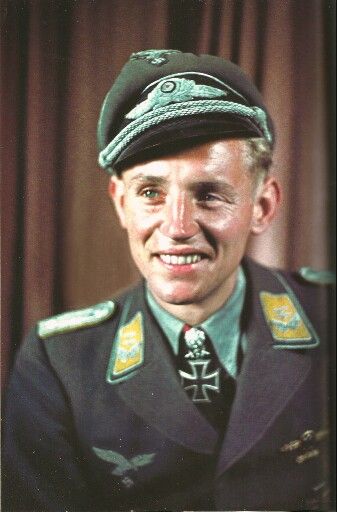
Erich Hartmann was not a figure of world-historical importance, striding across the earth like a colossus. He was not a statesman or conqueror, nor a paradigm-destroying scientist, nor a virtuoso writer moving the masses. He was a simple airman of the Second World War. Yet, the way he performed his duty, with courage and honor—and deadly efficiency—made him the highest scoring ace in history and one of the genuine heroes of Western history. Erich Hartmann is a splendid example of the qualities peculiar to Western Faustian man, such as an acute sense of individuality, iron willpower, and utmost daring. For a few moments let us leave this modern world with its depressing role models, and look back in time to feast our hearts on the story of a great man, full of character and intelligence, a man whose greatest triumph ironically came after the fighting had ended.

Early Life

Hartmann was born April 19, 1922, in Wűrttemberg, Germany, in the heart of Swabia, a region renowned for its hardheaded, frugal, inventive, and proud people, whose number also includes Hegel and Erwin Rommel. Erich’s father Alfred was a doctor with a broad outlook on life, and his mother Elisabeth was capable, adventurous and beautiful. She apparently gave Erich his very blonde hair—and a daring spirit.

Young Erich was an excellent and fearless athlete. He commented humorously much later that his father thought he was “a kind of dare-devil, or an idiot” (Heaton and Lewis 9). His father wanted his boys to become doctors, and Erich assumed he would eventually follow that line, but really he just wanted to fly. From an early age he dreamed of emulating the aces of the Great War. His mother also wanted to fly, so she earned a pilot’s license and took her two sons flying with her. Later the family started a glider club and Erich was in his element: the air.

Erich went through school without enthusiasm, but passed his courses without difficulty. When he was seventeen he spied the future love of his life: Ursula Paetsch. He pursued her single-mindedly, going so far as to pummel a rival, and won her over with his customary directness, sparking a lifelong love affair.

Erich was blessed with an admirable character. (Actually, since people build their characters from the choices of their free wills, Hartmann was responsible for his own character, which is more virtuous. Temperament or natural disposition is what people get naturally; character is formed.) His biographer Raymond Toliver describes Erich as highly intelligent, with a will “almost fierce in its drive to prevail and conquer” and says he was “an incorrigible individualist in an age of mass . . . conformity.” Hartmann, he continues, had a blunt style of honesty that often mounted to a “devastating” lack of tact. Finally, Hartmann possessed “consummate coolness under stress” (Toliver and Constable 5, 12). All this corresponds very well with the characteristics possessed by Western Faustian man as described by, among others, Ricardo Duchesne. Read more
Richard Dreyfuss and “Once Around”

Recently I wrote about the thoughtful comedy Keeping the Faith, which, in my view, does a remarkable job of exploring the conflicts involved in Gentile-Jewish relations. Stiller’s other Gentile-Jewish comedy from the same year, Meet the Parents (2000) in that Meet the Parents showed more open hostility between Gentiles and Jews. 

This theme of conflict between the two camps has been dealt with by many authors, including John Murray Cuddihy, whose Ordeal of Civility admits in the title that Jews living among Gentiles is not always a picnic for those involved. (By the way, though the full title of the book suggests it is Jews who endure an ordeal, the body of the book shows that it is more Jews who visit various ordeals upon the goyim, a fact which many Jewish reviewers at the time noticed, while Gentiles were either silent about it or missed it.) 

In the academic sphere, one modern book which courageously addresses modern relations between the two groups comes from the Harvard Ph.D. Albert Lindemann. His book Esau’s Tears: Modern Anti-Semitism and the Rise of the Jews (Cambridge, 1997) came at an important time for me and informed much of my understanding of The Jewish question. (Read Kevin MacDonald’s TOQ review here.) 

Until discovering that book, I don’t believe I was aware of the biblical character Esau, let alone Jacob. Over the last two decades, however, the archetypes of Esau and Jacob have become important for me because in so many ways their interactions accurately represent the strained relations between Europeans (portrayed as the brawny, hairy Esau) and Jews (portrayed as the trickster Jacob). When we meet them in Genesis 25, we learn that the Lord said unto Rebecca, “Two nations are in thy womb, and two manner of people shall be separated from thy bowels . . .”  In that biblical story, Jacob, the younger brother, had sown seeds of discord by betraying his brother and father, setting the stage for thousads of years of discord. I find it fascinating that Jews created this foundational myth.  Read more

Where’s Nordic-Boy?  A Game for Our Time

A couple of weeks ago, I went to a performance of a touring New York-based modern dance company.  I had been looking forward to going.  I was in a dance company decades ago, but I’ve lost touch with dance over the years, and the prospect of this reconnection with something that at one time was a big part of my life had great appeal.

As it turned out, overall it was a superb performance.   One problem for me, though, was that while the woman were as I remember them when I danced, the men seemed feminized, the best word I can think of to describe it.  It was a unisex presentation that evening, tilted distinctly toward the feminine.   Women were women, and men were women.  In truth, it made me uncomfortable.

I asked myself, is what I’m seeing an artistic reflection of a larger social/cultural pattern, men becoming women-like?    Is this artistic expression, this example, to any extent contributing to changes in male gender identity and behavior in other, non-artistic, realms—that is to say, to the idea that the way to be a man involves, in good part, in great part, emulating women?  What will young boys in the audience who are interested in becoming dancers conclude about what it means to be a male dancer?

During intermission, I looked through the program handed out to everyone in attendance that evening.  It was about fifteen pages, slick paper, well-done, put together by the performing arts center that had sponsored the dance company’s performance.  It included pitches for the center’s education and arts activities. “Our education programs strive to engage learners of all ages in the creative process, nurture artistic skill development, cultivate lifelong appreciation of the performing arts, and make the performing arts an integral part of school and community life.” “Here at [the name of the center], we remain deeply committed to nurturing the artists and audiences of today and tomorrow!”

That sounded good to me.   I wish as a youngster I had been exposed to the arts.   Baseball, yes; dance, no.  I came to dance as an adult, which is possible with modern dance.  It isn’t with ballet.

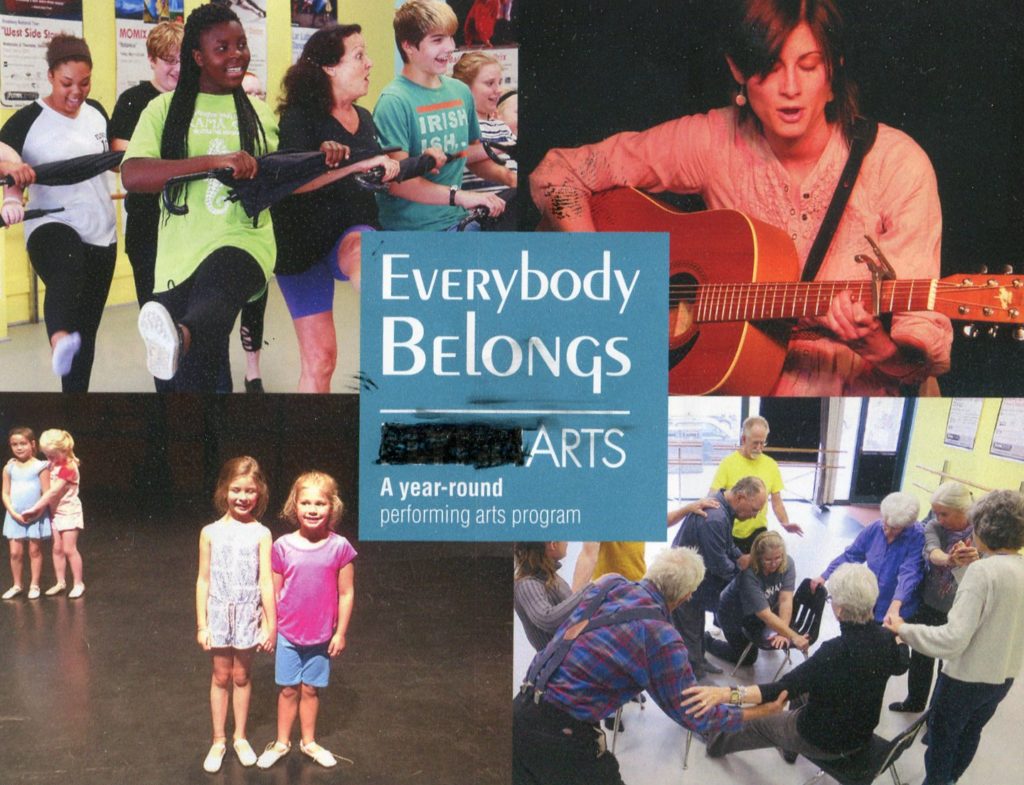
A couple of pictures that accompanied the written material in the program–one having to do with the center’s education programs, the other with its arts programs—caught my eye.  Speaking of boys, their virtual absence in the pictures jumped out at me.


What’s this about? I asked myself.   What would a boy looking at this think?   That art isn’t for him?   Would the parent of a son conclude that art isn’t appropriate for a boy?–or a real boy anyway; the boy in the second picture with the lightened hair combed forward looked a bit soft to me.  Why were these particular pictures chosen?   How conscious was this selection?   I flashed on Christina Hoff Sommer’s book, The War Against Boys.  “War” is too strong a word for what’s seems to be going on here, but I do suspect that how boys are getting along wasn’t at the top of the care-about list of the people choosing these pictures, and that these pictures wouldn’t have been the reverse, almost exclusively boys. Read more

Another reply to Nathan Cofnas

I have made another reply to Nathan Cofnas, this time on the Genetic Literacy Project website (“Kevin MacDonald responds to criticism of his theory of Jewish ethnocentrism and influence.”) This is an excerpt:

Cofnas claims that “Almost all the Jews MacDonald says advocated multiculturalism in order to subvert gentiles advocated multiculturalism for Jews and Israel, too—there was no evidence that they were anything more than consistent leftists.” In CofC I show that not only were the Jewish intellectual movements I discuss (particularly Boasian anthropology and the Frankfurt School) promoting multiculturalism, the organized Jewish community across the entire spectrum of Jewish organizations from the far left to the neoconservative right (with no exceptions to this day) was avidly involved in promoting multiracial immigration to the U.S. (CofC recounts Jewish activism beginning in the late nineteenth century up to passage of the 1965 immigration law.)  None of these groups advocated multiculturalism and non-Jewish migration to Israel or campaigned against the idea that Israel is a Jewish state, whereas they opposed the idea that the US ought to remain dominated by people of Western European descent. Against this very broad-based and powerful array, Cofnas comes up with two interesting names: Alan Dershowitz and George Soros, each of whom may have different, rationally based perceptions of Jewish interests regarding immigration. In neither case is there any evidence that their activism on immigration can properly be labeled as advocating a multicultural, multi-religious Israel open to immigration of all the peoples of the world, and neither of them have been influential in altering Israeli immigration policy.

macdonald 4 27 18 2
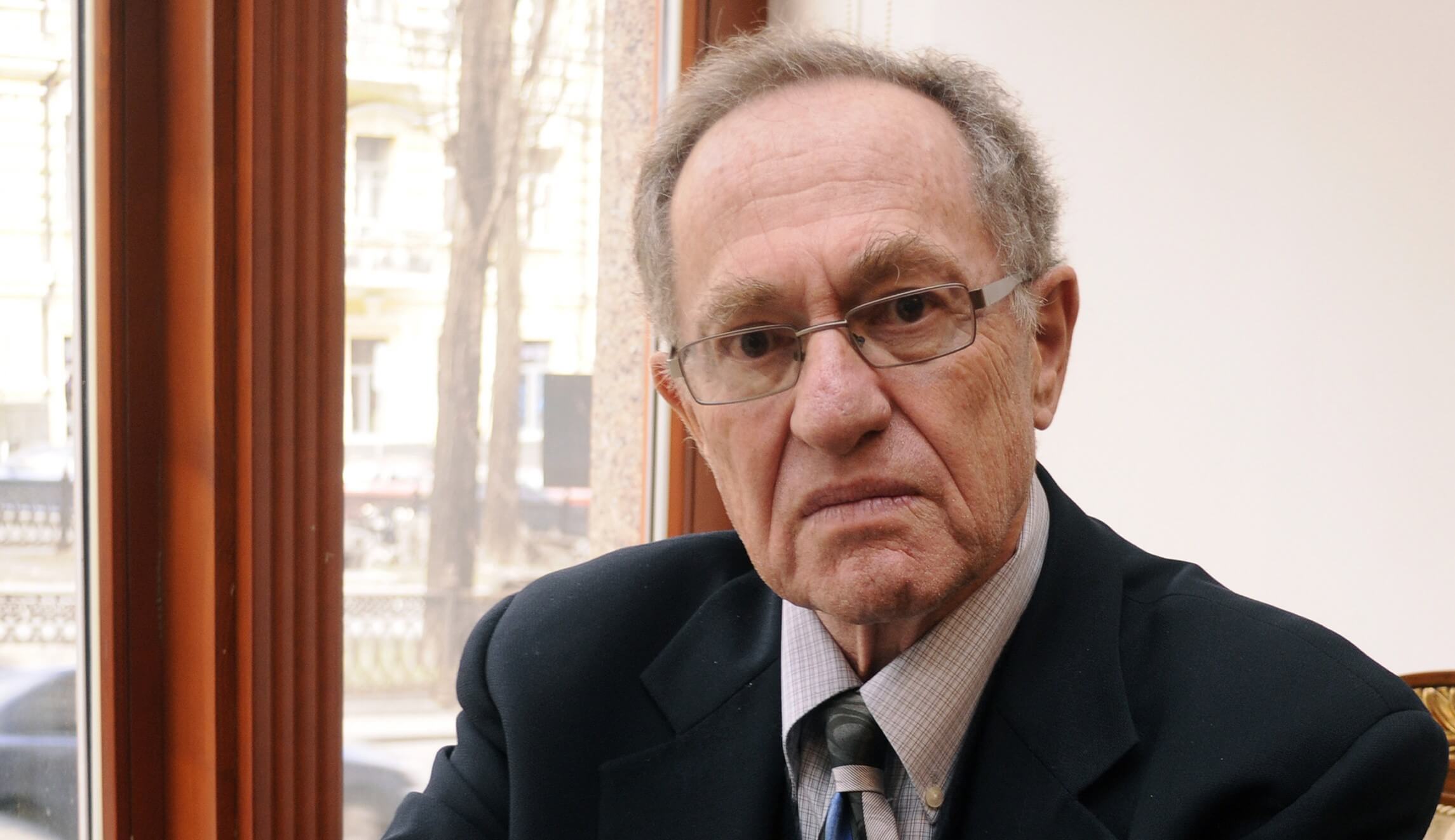
Alan Dershowitz

As I discuss in both replies, Dershowitz, who is a strong advocate for Israel, favors the immigration of Ethiopian Jews to Israel where they would constitute around 2 percent of the Israeli Jewish population. This would not alter the idea of Israel as a Jewish state, and allowing this immigration would have public relations benefits in the West where Israel is increasingly seen as an oppressive, apartheid state. This seems like an eminently rational strategy.

Soros is a complex, fairly inscrutable figure when it comes to Jewish identity and interests. He opposes deporting Africans back to Africa where they might be endangered, a position that is compatible with the ADL’s agreement with a UN plan that would stop deportation and resettle about half of these migrants in the West. (The UN plan was eventually scrapped because of opposition from the Israeli right which wants all the migrants removed immediately; because of a border wall, Africans are now unable to come to Israel as illegal immigrants. American Jewish groups have adamantly opposed a border wall in the U.S. but have not criticized Israel’s anti-migrant wall with Egypt [here].)

soros 4 27 18

George Soros. Image credit: Eric Piermont/AFP/Getty Images

Soros clearly identifies as a Jew. A biographer notes, “If he [Soros] derived any lesson from the Holocaust, it was that minorities—as the Jews were in Europe—had to be protected in the future and the best way to assure that was by building pluralistic societies where minorities were given their rights” (p. 216)—a view that is entirely mainstream among Diaspora Jews and a theme of the treatment of this issue in CofC. On the other hand, the picture that emerges is of someone with a very weak Jewish identification or even a negative Jewish identification in his early years to an increasing interest in Judaism and Jewish culture in his later years, while still remaining a lukewarm Zionist at best and with a strong desire to see an end to the conflict between Israelis and Palestinians. Of course, promoting peace between Israelis and Palestinians is not the same as wanting Israel to cease being a Jewish state, nor is it the same as promoting the idea that people of all races and religions should be allowed to immigrate Israel. And again, whatever Soros’s views, they haven’t made an impact on Israeli policy, either on immigration or on the conflict with the Palestinians

Even strongly identified Jews may have different perceptions of Jewish interests. I suspect that many Jewish critics of Israel are similarly motivated to want an end to the 50-plus-year occupation, the ethnic cleansing, and the apartheid but would still want Israel to be a Jewish state and limit immigration to Jews.

Other recent replies

Black Saints, White Demons: The Martyr-Cult of Stephen Lawrence

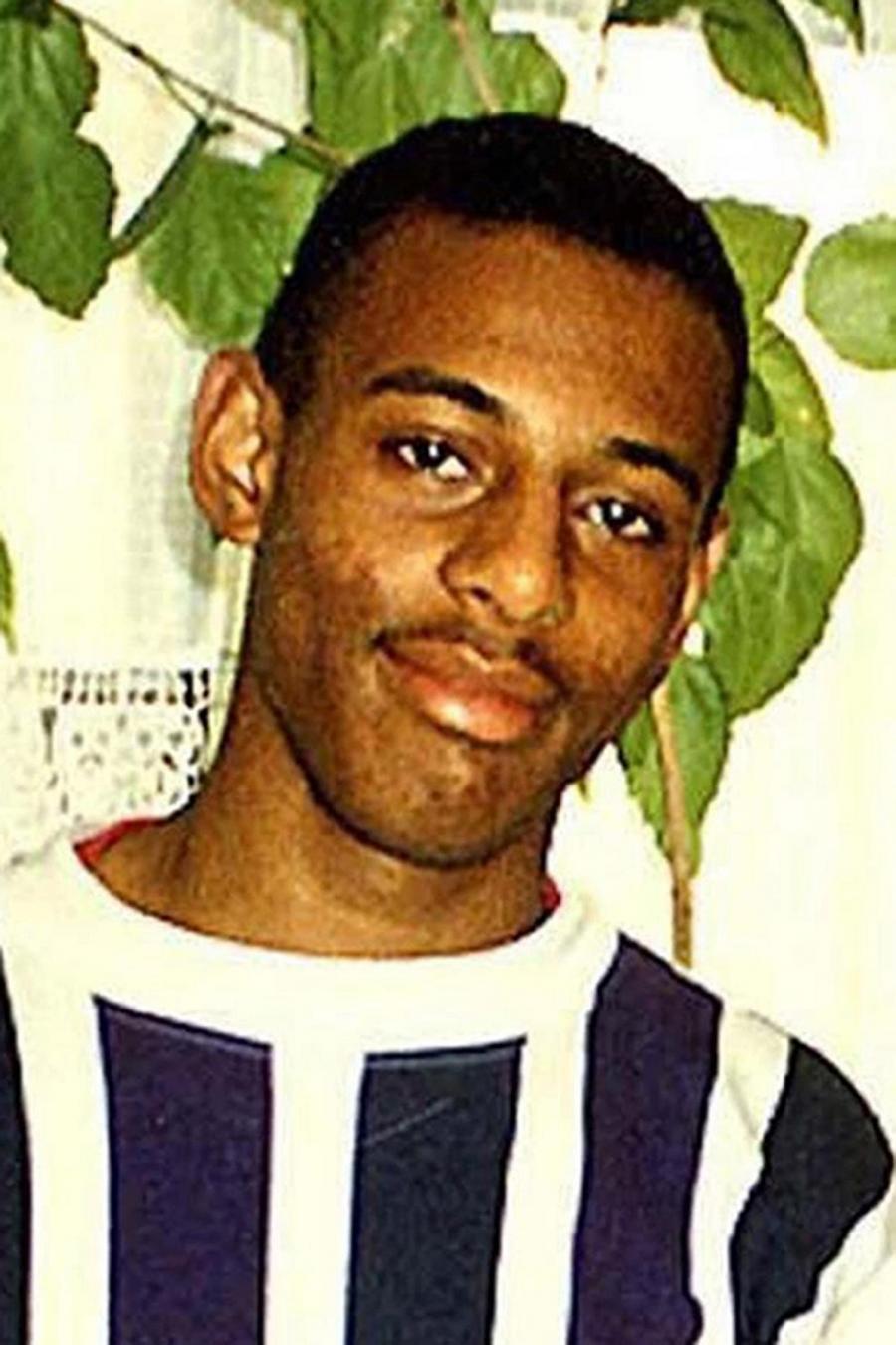
You read it here first. In 2013, my article “The Ruling Stones” pointed out that England had a new patron saint: Stephen Lawrence, the Black teenager murdered by a White gang in 1993. What I said five years ago has now become an official reality. The British prime minister Theresa May has announced an annual “Stephen Lawrence Day” on 22nd April, just before St George’s Day on 23rd April. The shabbos shiksa May was indulging in conspicuous minority worship, trying to overcome the damage done to her cuckservative government by the so-called “Windrush scandal.”

What’s up with the Brits?

However, it’s plain that Stephen Lawrence Day has been deliberately placed in the calendar as an attack on White Englishness. St George was England’s old patron saint and 23rd April is also the traditional birthday of William Shakespeare, the archetypal English genius. John Derbyshire put it like this at VDare: “No more of that white supremacist nonsense! The 23rd now dwells in the shadow of the 22nd, Stephen Lawrence Day.”

Mainspring of the martyr-cult: Dr Richard Stone

Derbyshire went on to express his usual bemusement at the state of his motherland: “What on earth is the matter with the Brits, that they have elevated this one regrettable but insignificant killing into a great holy martyrdom?” As I explained in “The Ruling Stones,” it wasn’t the Brits. Rather, it was a small but highly energetic minority that is hostile to the Brits. The guiding intellect behind the martyr-cult of St Stephen Lawrence has been an SJW called Dr Richard Stone, whose own website describes him as “a leading expert in social cohesion, anti-racism, and Islamophopia” and “a regular speaker around Europe at conferences on these topics.” Dr Stone is a part of an anti-White, pro-minority network that wields power at the highest levels of government not just in Britain but right across Europe. Read more

In the Land of Lies: Seeing, Saying, and Pseudotopia, Part 2

 “Yo blud, wot you mean?”

All of this is a direct result of mass immigration, as the journalist Mary Wakefield has admitted in the cuckservative Spectator:

In the [London] Evening Standard, Wayne, an ex-gangster from Plumstead, gave an interview in which he explained that the resettled kids from war zones had upped the ante in gangland. ‘In the last ten years, since the Somalis and the Congolese came to London, they taught us a whole new level of violence. These people had seen family members mutilated, so when they said, “I’m gonna smash you up”, us guys would be shouting, “Yo blud [i.e., blood-brother], wot you mean?” and they would just pull out a blade and juk [stab] you in the chest. It upped the speed and level for us British-born guys. We had to arm up to protect ourselves. It created an upward spiral.’

Not Amber Rudd, not Sadiq Khan nor Theresa May would ever speak publicly about this, for fear of seeming racist. But isn’t that in itself racist? It implies that the problem is somehow to do with skin colour, when any poor kid forced into a civil war might well be brutalised by it. We absolutely have a duty to offer asylum to children fleeing horrific circumstances, but we also have a duty to acknowledge the increased dangers the police face as a result. If we don’t, these multiply. (An odd new feeling has crept up on me — sympathy for the police, The Spectator, 21st April 2018)

Why do we “absolutely have a duty to offer asylum to children fleeing horrific circumstances”? In fact, we don’t have any such duty at all. To suggest otherwise is mawkish virtue-signalling that would have been dismissed with contempt not only by that great conservative hero Winston Churchill, but by all mainstream politicians well into the twentieth century. Somalia and the Congo are a very long way from Britain and the “children fleeing horrific circumstances” passed many safe places en route to this country. Now that they are here, they are reproducing the savage and barbarous culture of their homelands.

Virtue-signalling and vibrancy

Is that a surprise? Not to anyone with eyes in their head and brains between their ears. But in the Land of Lies, the wilfully blind are King. And I’m sure that the virtue-signalling Mary Wakefield and her family rarely, if ever, encounter that Somali and Congolese culture at first hand. They will live at a safe distance from the enriched areas of London, allowing the “absolute duty” of welcoming enrichers to fall on other people.

But let’s give the Spectator some credit: it also publishes the Islamophobe Douglas Murray, who has criticized Muslim immigration and even gone so far as to mention the Jewish role therein. He has recently asked a very important question: “Why do politicians refuse to tell it how it is on immigration?” Sadly, his answer was wholly inadequate. The subheading to his article ran: “It is the one issue where our leaders deny the wishes of their citizens.”

That’s like saying that food is the “one issue” where a dog-owner denies the wishes of his dog. If the dog wants food and doesn’t get it, then the owner proves that he is unfit to own a dog. He is failing to meet the dog’s most basic and important need. Similarly, if politicians “deny the wishes of their citizens” on immigration, they prove not only that they are unfit for office but that they are acting with conscious treachery. Immigration is not just “one issue” among many: it is, as Enoch Powell pointed out half-a-century ago, of vital, existential importance, altering a nation and its future in the most direct and intimate way. Read more

In the Land of Lies: Seeing, Saying and Pseudotopia, Part 1

It seems such an obvious truth: In regione caecorum rex est luscus — “In the land of the blind the one-eyed man is king.” But the English writer H.G. Wells turned the proverb on its head in his short-story “The Country of the Blind” (1904), one of the cleverest and most profound ever written. Wells’ story describes a sighted mountaineer who, while climbing in the Andes, discovers a hidden valley where the inhabitants have been blind for generations.

Seeing is Sinful

Does the sighted mountaineer become king of the valley? Far from it. Socially speaking, his faculty of sight isn’t merely a disadvantage but a dangerous curse. The blind tribesfolk are not impressed by his claims to possess an additional and superior sense:

He spoke of the beauties of sight, of watching the mountains, of the sky and the sunrise, and they heard him with amused incredulity that presently became condemnatory. They told him there were indeed no mountains at all, but that the end of the rocks where the llamas grazed was indeed the end of the world; thence sprang a cavernous roof of the universe, from which the dew and the avalanches fell; and when he maintained stoutly the world had neither end nor roof such as they supposed, they said his thoughts were wicked. (“The Country of the Blind”)

It turns out that, in the land of the blind, the two-eyed man is a heretic. It would be even worse in a land where, for religious reasons, people merely pretended to be blind. Or rather: it is indeed worse in a land of pretended blindness. Britain is like that. So is the rest of the ethnically enriched West. It is heretical to comment on certain highly visible aspects of the world. Instead, we have to pretend that they’re not there and either remain silent or state the opposite of the truth.

“There is only one race — the human race!”

Britain is not a Utopia but a Pseudotopia — a Land of Lies. The biggest and foulest lies swirl in the vast sewer of what the left would call “racial discourse.” Here are a few of those lies:

  • There is only one race — the human race.
  • All races are equal in intellectual, moral and civilizational potential.
  • Mass immigration from the Third World enriches the stale pale nations of the First World.
  • Any White resistance to ethnic enrichment must be crushed before it leads to a Second Holocaust.
  • When non-Whites fail, it can only be because of White racism.

Stephen Lawrence, Black martyr

These lies are reinforced constantly by every medium of official propaganda and public education, but sometimes the storm of mendacity rises to a hurricane. Britain has experienced one of those hurricanes in 2018. First, this year is the twenty-fifth anniversary of the martyrdom of our new patron saint, St Stephen Lawrence, the Black teenager who was murdered by a White gang in London in 1993. Second, the government is accused of mistreating members of the so-called Windrush Generation, that is, the saintly non-White immigrants who began arriving in Britain after the Second World War. Read more