
Featured Articles

Who Owns Bishop Pepe?
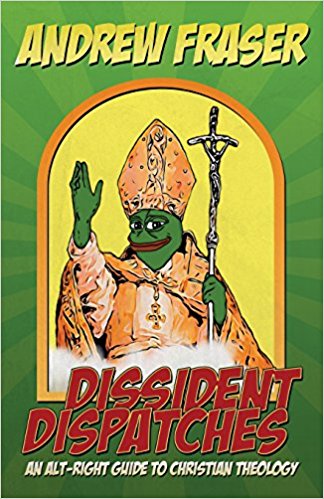
Matt Furie is an American artist based in Los Angeles.  He is generally identified as the creator of the popular internet meme known as Pepe the Frog (a claim disputed by Andrew Anglin).  His Pepe character was unveiled on Myspace in 2005.  In 2006, Pepe appeared in print in a comic called Boy’s Club.  There, Pepe was a black-and-white line drawing, described by Furie himself as “almost coloring book style, very minimal.”  That crude comic book, now marketed on Amazon.com as a “stoner classic,” portrays Pepe and his three slacker roomies as “teenage weirdos” given over to “laconic psychedelia, childlike enchantment, drug-fueled hedonism, and impish mischief.”  Furie’s Pepe likes to urinate with his pants pulled down around his ankles.  When asked why, Pepe famously answers, “feels good man.”

By 2008, the Pepe meme had been “widely adopted by users of 4chan and remixed ad infinitum from there.”  His character and image, if not his name, were transformed.  Anonymous online fans coloured his face green with brown lips and the laidback hedonism of the comic book Pepe was adapted “to fit different scenarios and emotions, such as melancholy, anger, and surprise”.  In short, Furie lost control over the Pepe meme.

For quite a while Furie remained faithful to Pepe’s hippy lifestyle.  Accordingly, up until September 2016, he repeatedly professed indifference to bourgeois legal issues such as copyright and intellectual property.  For example, when asked in an interview with The Atlantic whether he was upset by the ubiquitous use of the Pepe meme or the fact that people were “using him in different contexts,” Furie replied, “It’s never bothered me, in fact, “it’s been kind of inspiring to me.”  But, the interviewer interjects, what “about the way it’s been adopted by the so-called alt-right”?  Furie remains unruffled: “My feelings are pretty neutral, this isn’t the first time that Pepe has been used in a negative, weird context. … It’s just out of my control, what people are doing with it, and my thoughts on it, are more of amusement”. Read more
World War II and the Walters (Lippmann and Winchell):  Their Implications for Our Time

Around the turn of the century, I wrote a book about white advocate William Pierce (1933–2002)—The Fame of a Dead Man’s Deeds (1stBooks Library, 2001).  One of the things that stuck with me about that experience is Pierce’s consuming interest in World War II.   I put it this way in the book:

Pierce is engrossed in the World War II period. The most powerful stimulus behind Pierce’s consuming interest in this era is his conviction that it was a monumentally important turning point in the course of Western history [i.e., white history].   The direction cultural and political events of Europe and America have taken over the past half-century were set in motion by that war, Pierce believes.   If white people are to understand their time, he contends, they are going to have to get beyond the official version of what World War II was about and take a hard look at what really happened back then.  He sees himself in a tough battle in getting them to do it, however, because there are powerful forces that make questioning the prevailing interpretation of those years, and any suggestion of an alternative account, a highly unwelcome, and even condemned and punished, undertaking.

A primary focus in Pierce’s work was the effect Jews have on the wellbeing of white people.   Basically, he saw World War II as bad news for whites and, despite the Holocaust (which Pierce was skeptical about), good news for Jews, as it contributed to the formation of Israel, the ascendency and sacred cow status of Jews, and to this country’s obsession with Middle East politics (that is, with the fate of Israel), and to what Pierce saw as the Jewish agenda of egalitarianism, racial integration, and feminism, and the demonization, emasculation, and displacement of whites. It can be argued that indeed these are the policies that have been favored by the mainstream Jewish community and its activist organizations in America.

Pierce went so far as to say that if we thought we had to fight in World War II, which we didn’t, we should have been on the other side, with the Germans taking on the Russians, and to have put our efforts into working out peace terms between Germany and Britain.  Pierce’s claim was that Hitler was an Anglophile and never wanted war with Britain (or the U.S.) in the first place.   If Churchill would have backed off he would have.  Churchill and Roosevelt were the ones that wanted war, not him.  That brought me up short—I’d never thought of that. Read more

Fifteen Years for Reading This: Authoritarianism, Immigration and Obeying the Tribe

Amber Rudd

Amber Rudd. It sounds like the name of a fish, a variety of apple or a herbal medicine. In fact, it’s the name of a shabbosshiksa, that is, a non-Jewish female who, like Hillary Clinton and Theresa May, is dedicated to serving Jewish interests. Here is the shabbos-shiksa in action:

Amber Rudd: viewers of online terrorist material face 15 years in jail

People who repeatedly view terrorist content online could face up to 15 years behind bars in a move designed to tighten the laws tackling radicalisation the home secretary, Amber Rudd, is to announce on Tuesday. A new maximum penalty of 15 years’ imprisonment will also apply to terrorists who publish information about members of the armed forces, police and intelligence services for the purposes of preparing acts of terrorism.

The tightening of the law around viewing terrorist material is part of a review of the government’s counter-terrorism strategy following the increasing frequency of terrorist attacks in Britain this year “I want to make sure those who view despicable terrorist content online, including jihadi websites, far-right propaganda and bomb-making instructions, face the full force of the law,” said Rudd. (Amber Rudd: viewers of online terrorist material face 15 years in jail, The Guardian, 3rd October 2017)

Amber Rudd promises crackdown on antisemitism and online extremism

Amber Rudd has outlined her intention to clamp down on violent and non-violent extremism, including antisemitism and neo-Nazism. The Home Secretary also told the Conservative Party conference in Manchester that social media companies must “act now, honour your moral obligations” to use new technology to stop radical material appearing on their platforms.

Ms Rudd said: “Violent and non-violent extremism in all its forms — antisemitism, neo-Nazism, Islamophobia, intolerance of women’s rights — these, and others, cannot be permitted to fester. Our values are far, far better than this. And we owe it to ourselves to root this hatred out wherever it emerges. The safer Britain I want to help build as Home Secretary is a united one.” (Amber Rudd promises crackdown on antisemitism and online extremism, The Jewish Chronicle, 3rd October 2017 / 13th Tishri 5778)

If Amber Rudd is so concerned about building a “safer Britain,” why does she permit mass immigration from the Third World? For the past fifty years and more, Britain’s liberal elite has imported non-Whites with high tendencies to crime and low tendencies to civilization. The results have included suicide bombing, rape-gangs, honour killings, female genital mutilation, inbreeding and exotic diseases. In truth, Amber Rudd doesn’t want a safer Britain: she wants a more authoritarian Britain. She’s a shabbos-shiksa, after all. She follows a Jewish strategy of importing non-White pathologies in order to justify laws against “extremism.” Read more

Bitter Harvest: A Brilliant Film on the Ukrainian Holodomor

“This particular film was extremely important to me, and it felt almost like a mission. I wanted to bring knowledge about the famine genocide, the Holodomor, to the Western world, and that’s why I did it.”
        Ian Ihnatowycz, Bitter Harvest Producer

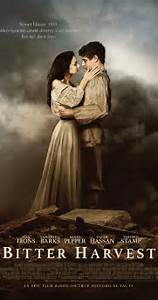
Bitter Harvest (2017) is a film inspired by the love and rediscovery of the writer Richard Bachynsky Hoover’s ethnic heritage. On a trip to the homeland of his Slavic ancestors he began to ruminate on how to capture the story of the Holodomor on film. With small acting parts in a variety of television series Bachynsky Hoover was learning the ropes of the film and entertainment industry. He went again to Kiev, investigating his family history. It was 2004 and the Orange Revolution was in full swing — he saw firsthand a Ukraine in the midst of upheaval. He learned that Western audiences had never seen the Holodomor dramatized on film — a dramatically different situation compared to that other genocide that has become a touchstone of Western Civilization and both a sword and a shield for Jewish and Israeli interests through endless promotion in the media.  In 2008 he would return with a script, seeking financing for an English language period piece set during the Holodomor. He met with officials from the Ukrainian Government as well as various oligarchs. All of them turned him down. It was not until 2011 that the dream to make his movie finally caught a glimmer of hope when fellow Ukrainian Canadian investor Ian Ihnatowycz committed $21 million to the film.


British actors Max Irons and Samantha Barks star as Yuri and Natalka, two childhood sweethearts from the same village. They marry young and soon their lives are thrown into the whirlwind of revolution and resistance that comes with annexation of the Ukraine by the Soviet Union and eventual famine by way of grain confiscation. Barry Pepper and Terence Stamp are crucial to the supporting cast as Yuri’s family. Pepper sports the classic Cossack khokol (also called oseledets in the Ukraine) haircut — a long lock of hair on the top or front of an otherwise completely shaven head. Tamer Hassan, an English actor of Turkish Cypriot descent, takes the role of the real life villain Sergei, a Soviet officer who enforced Stalin’s will with relentless brutality. Hassan is the only non-White cast member, and may in fact be the only non-White member of the film crew. With the exception of a few stunts the entirety of the film was shot in Ukraine with Ukrainian extras and crew — some of whom took part in the Euromaidan protests during their off hours while shooting from late 2013 to early 2014. In several interviews and promotional appearances for the film much of the cast — but most significantly Max Irons — expressed a slight sense of shame over their prior ignorance of the Holodomor and the need to raise awareness of this historical tragedy. Read more

Lessons from Trump’s Condolence Call: It’s All About Race Now

The acrimony surrounding Trump’s call to the Black widow of soldier Sgt. La David T. Johnson killed in Niger demonstrates many truisms about race relations in a society dedicated to multiculturalism and leftist identity politics.  Trump, along with regular Americans, would be well advised to take note.

I’ll take it for granted that readers will share my assumption that Trump did not call the widow Myeshia Johnson in order to somehow provoke her.  What he didn’t realize is just how easily such unintended provocations may occur in multicultural contexts, in particular when the White-Black dynamic is at play.

President Trump was quoted in the press, as reported by (Black activist) Rep. Frederica Wilson who was listening in on the call, as telling the widow heartlessly, “You know, he must’ve known what he signed up for.”  This has been taken out of context as to be a kind of taunt to the widow rather than simply reflecting on the natural role of a soldier.  Left out was the second clause of the sentence: “but it still hurts”

What can we learn from this whole affair? Read more

Harvey Weinstein: Revenge and Domination as Jewish Motives

Edmund Connelly’s article on Harvey Weinstein and the shiksa phenomenon discusses revenge as a motive. From this perspective, what Jews like Weinstein are doing is the result of hatred toward the goyim because of their perceptions of the long history of anti-Semitism. Of course much of this narrative is false and exaggerated, but the point is that this “lachrymose” version of Jewish history is entirely mainstream among Jews and a cornerstone of Jewish education and Jewish self-conception.

Revenge is important — even critical — in understanding the main currents of Jewish behavior. However, several of the passages from Portnoy‘s Complaint seem to be much more about dominance and sexual competition than revenge. This suggests that another way to look at shiksa lust is from the perspective of evolutionary psychology which suggests that a central motive is domination over the women of the outgroup. In the competition for dominance among males, females are the ultimate prize. Recall that a constant theme of human history is that women are the spoils of war. Conquering males seize the women of their defeated foes — the Mongol harems throughout Asia come to mind, as well as the behavior of our Indo-European forebears. Read more

Harvey Weinstein: On Jews and the Shiksa

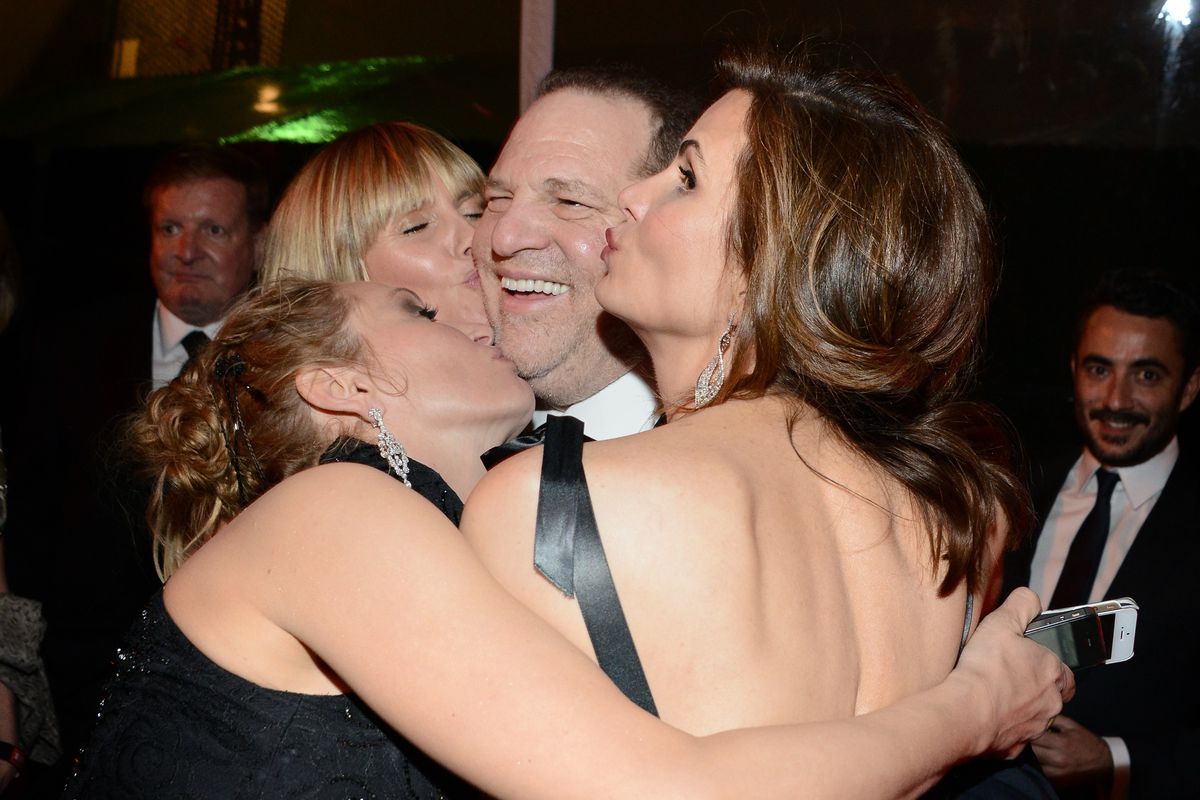
Harvey Weinstein with Hollywood prostitutes

Let me cut right to the chase: The title for this essay should really be “The Specifically Jewy Perviness of Harvey Weinstein,” which, as luck would have it, is in fact the title of a short entry by Jewish writer Max Oppenheimer in the very Jewish magazine Tablet. This Jewish writer opines that “Harvey, sadly, is a deeply Jewish kind of pervert.”

Okay, I’m good with that. It fits the facts.

What is this “perversion”?  Well, Herr Oppenheimer kindly explains how it is common for Jewish men to lust after women with a “non-Jewish origin,” or, to be more specific, White non-Jewish women. As Oppenheimer writes about the targets of Weinstein’s lust, “It goes without saying that nearly every one of these women — Rose McGowan, Ambra Batillana, Laura Madden, Ashley Judd, etc. — was a Gentile, all the better to feed Weinstein’s revenge-tinged fantasy . . .”

Now what’s all this talk about revenge?  And what does that have to do with non-Jewish women? To unpack all of this, I’m going to have to go back in literary history to a Jewish American writer few of my readers under age forty (or fifty?) will even know: Philip Roth.

Needless to say, Oppenheimer knows this history, which is why he employs the following subtitle to his piece:  “The disgraced film producer is a character straight out of Philip Roth, playing out his revenge fantasies on the Goyim.” Before visiting what Roth has written, however, I must offer a brief description of the word “shiksa” and its manifestation in American film. Read more

