Funny how it goes with the Holocaust story: time and again, an ugly bit of truth slips out. When that happens, yet one more piece of the charade comes to light, for all to see. For a brief moment, one more embarrassing truth catches the public eye, only to quickly be cast into the depths of the memory hole. Only through diligence, hard work, and a bit of luck do such things come to assume a greater significance.
This time, sharp eyes caught the slip-up. The issue in question is an obscure World War II concentration camp in present-day Croatia, by the name of Jasenovac. The camp—which operated for around three and a half years, from mid-1941 until war’s end—is, by any reasonable accounting, all but irrelevant to the Holocaust story. Even according to the US Holocaust Memorial Museum, only some “12,000 to 20,000 Jews” died there, which means that the camp accounts for, at best, 0.33% of the presumed Jewish death toll of 6 million. Were it not for a recent blunder by the Jerusalem Post, I would likely never have spent a moment on the topic. In the grand Holocaust narrative, there are much larger fish to fry. But the latest gaff gives us a chance to shine a light on the on-going fraud that is the Holocaust. When the Jews themselves put a foot in their collective mouths, we should make the most of it.
The subject at hand is an article that briefly appeared on the Post website, titled “This disgraceful mocking of the Holocaust needs to stop now” (now available here; the original URL has been deleted). Written by an Australian journalist named David Goldman, the short essay obsesses over a three-year-old Croatian television interview in which historian and Croatian Jew Ivo Goldstein expounds on the “increasingly problematic” camp at Jasenovac. The interview, from 2018, included this question of Goldstein: “Many have commented on the lack of forensic evidence from this particular camp. Can you explain why this is the case?” (meaning, why there is an absence of evidence). Goldstein then dropped his “bombshell” reply: “Because in April 1945, Hitler flew in special machines to Jasenovac. These machines were used to dissolve the bones that were left.”
Several points here: One, in all of Holocaust historiography, there is no actual or even rumored documentation of any such “bone dissolving machines.” There were alleged bone crushers, driven by diesel engines; here is one alleged photo. But these have been shown to be fraudulent.[1] The Nazis also allegedly used chlorinated lime (quicklime) to try to decompose corpses at Treblinka and Belzec, but this chemical, when used, only reduces the odor; it does nothing to hasten decomposition. “Dissolving,” especially for bones, implies the use of acid or some other strong chemical process, but again, such claims are completely unknown in the literature. Hence Goldman rightly refers to these as “hitherto unheard-of machines.” Perhaps there was some confusion on Goldstein’s part, and he actually meant ‘crushing,’ not ‘dissolving.’ But again, we have no reliable evidence that such crushing machines were ever used by the Germans.
Two, this idea seems to be a pure invention by Goldstein to explain away a troublesome fact, namely, lack of forensic evidence at Jasenovac—meaning any corpses, ash, or other human remains. And by “pure invention,” I mean an outright lie. By all accounts, Goldstein lied to cover up a critical and damning fact. Anyone who has studied the Holocaust story knows that such lies are legion.[2]
Three, the whole premise that the Germans, in the final throes of defeat, would take the trouble to send anything like “bone dissolving machines” to an obscure camp in Croatia is patently absurd, as Goldman points out. The whole idea is nonsense.
Perhaps most significantly, this little episode brings to mind similar claims about the more important camps like Auschwitz, Treblinka, and Belzec. Lacking physical evidence, how can we justify claims of thousands, or hundreds of thousands, or a million Holocaust victims at these camps? For the journalist Goldman, however, the lies about Jasenovac only “contaminate” the larger Holocaust story, which he accepts unquestioningly. As he says, “Why allow the contamination of Holocaust history with a place [Jasenovac] that cannot provide any independent forensic evidence past a few thousand victims, and that has an ever-increasing—including in 2021—victim list that has been repeatedly proven to have been doctored?” Indeed; and we can ask the same question about virtually all of the conventional Holocaust sites. The implications are dire for Jews everywhere.
A Short Course on Jasenovac
It is worthwhile taking a moment to review the conventional history of this camp, given the many lessons it offers here. It is undisputed that Jasenovac was established under the auspices of the Nazi-aligned government of occupied Croatia known as the Ustasa (or Ustase, or Ustashi). The camp was constructed in August 1941, not long after Hitler began his invasion of the Soviet Union. It consisted of five separate facilities, two of which were short-lived, but the other three—Ciglana, Kozara, and Stara Gradiska—operated right until the virtual end of the war in April 1945. The purpose of the camp is disputed; some claim it was strictly a detention and work camp, whereas others declare it to be an extermination center on par with the worst camps of Poland. By all accounts, several thousand people died there—mostly Serbs, but also Jews, Roma, and scattered numbers of Muslims and Croatian political enemies.
The numbers of victims, and especially the numbers of Jews, are the main points of contention. Like most Holocaust camps and death sites, the range of estimates is vast. Individuals sympathetic to the Ustasa regime, like former president Franjo Tudjman, regularly gave figures of just 3,000 to 4,000 total. Such numbers date back to the first forensic examinations of the camp in 1947. But by the 1970s and 1980s, the numbers were rising; the 1990 Encyclopedia of the Holocaust (p. 189) claimed, without evidence, that around 300,000 bodies were discovered and exhumed there.
Yet even this number was insufficient for our Holocaust propagandists. One recent article notes that, over past decades, “historians have estimated that between 700,000 and 1,000,000 people were killed at Jasenovac.” Serbian publications of the 1990s cited figures as high as 1.2 million.[3] Of these, around 15% are claimed to have been Jews—meaning, potentially 100,000 to 150,000. At that upper estimate, this would put Jasenovac well ahead of Majdanek in terms of Jewish death toll, and approaching the status of a Sobibor. If, on the other hand, Jews were 15% of, say, 3,000 fatalities, it would mean an utterly inconsequential 400 or 500 deaths. Much is at stake.
Today, though, the more commonly accepted estimates are much closer to the low end than the high. The current Croatian government seems to accept a figure of 83,000 total deaths. The US Holocaust Memorial Museum claims that “the Ustasa regime murdered between 77,000 and 99,000 people in Jasenovac between 1941 and 1945.” Of these, some 12,000 to 20,000 are claimed to have been Jews. Still, the USHMM is not very sanguine about their own estimates:
Determining the number of victims for…Jasenovac is highly problematic, due to the destruction of many relevant documents, the long-term inaccessibility to independent scholars of those documents that survived, and the ideological agendas of postwar partisan scholarship and journalism, which has been and remains influenced by ethnic tension, religious prejudice, and ideological conflict. The estimates offered here are based on the work of several historians who have used census records as well as whatever documentation was available in German, Croat, and other archives in the former Yugoslavia and elsewhere.
As I noted above, even 20,000 Jewish deaths are largely irrelevant to the broader Holocaust narrative.
A Rebuttal
Goldman’s short essay drew a quick and furious response from Dejan Ristic, the acting director of the Serbian Museum of Genocide Victims. It was published in the Jerusalem Post just two days after Goldman’s original piece. Serbia, of course, has an incentive to promote high numbers of victims, and especially high numbers of Serbs, because it enhances their victimhood status and promotes their nationalist agenda. But more important than high numbers is the overall integrity of the camp as a legitimate Holocaust site and not as a whimsical political ragdoll that has victim numbers ranging over nearly three orders of magnitude, and that is entirely lacking in relevant evidence.
Ristic’s rebuttal—“Shame on those who seek to revise history of the Holocaust”—is as poorly argued as it is poorly written. (Though, oddly, the Post website still displays this rebuttal, whereas the original essay is long gone.) Ristic expresses “astonishment” at the “pseudo-scientific and revisionist text” by Goldman, which contains, he says, little more than “a series of inaccurate statements and semi-information.” Ristic is incensed that Goldman dares to cite the ragged history of victim numbers; the Museum clearly accepts a figure in the mainstream range (80,000 to 90,000), though with the opportunity for higher figures in the future. Ristic writes, “As the research of the experts of the Museum…continues, it is to be expected that the number of Jasenovac victims will be corrected. … The estimated total number of victims is, unfortunately, far higher than the one that historical science will ever be able to identify with the precise data.” He is anxious to quell all thoughts of a mere few thousand deaths, and he equally seeks to avoid any suggestion that the figure approaches a million or more; as he well knows, both extremes threaten to undermine all credibility about the camp.
Most amusingly, in his entire lengthy rebuttal, Ristic never once mentions the “bombshell” about the bone-dissolving machines—not once. This is a tacit admission that the point holds, that no evidence was sought or found, and that the whole basis for Jasenovac as a top-tier death camp rests on little more than rumor and innuendo, if not outright falsehood.
The central problem for both Ristic and Goldman, however, is that their back-and-forth arguments promise to expose the far more consequential problems of the main Holocaust camps. In fact, Ristic does the nasty work for us. He writes, “we could ask a question as to whether it is possible to deny, in the same way, the number of 1,200,000 to 1,500,000 killed in Auschwitz since there is no forensic evidence for that claim either?” Touché, Mr. Ristic! The irony is that he is entirely correct, of course. No evidence (or scarcely any) for Auschwitz; none for Treblinka; none for Belzec—the same old story.
Grave Implications
Goldman’s main beef is with the ad hoc lie of the bone-dissolving machines, but this echoes the many, far more grievous lies about Auschwitz, Belzec, Treblinka, and indeed all six of the so-called death camps.[4] Of these, Goldman of course is silent. But he does decry the ongoing process of myth-formation surrounding a camp like Jasenovac, “where myths of Serbian and Jewish suffering were interwoven, providing a new series of national myths” (to cite the author David McDonald). Goldman, though, naturally avoids the similar but far greater myth-formation process about Auschwitz, the other camps, and the broader Holocaust. It is this very myth-formation process that has led to numbers like 1 million Jews gassed at Auschwitz, when, on the far more plausible revisionist thesis, perhaps 150,000 Jews died there—and none in gas chambers.
Likewise, Goldman ridicules the notion of human remains “yet to be discovered” at Jasenovac, and he rightly jabs a finger at the Yugoslav government, which, “during its 47-year rule of the site, never bothered once to try and locate these mysterious ‘missing’ remains.” The same, of course, can be said for the current Croatian government and its on-going 30-year rule. (One strongly suspects that there are simply no remains to be found there.) But this again raises the same question for the other camps: Where are the remains of anything approaching 1 million Jewish bodies at Auschwitz? Or 900,000 Jewish bodies at Treblinka? Or 600,000 Jewish bodies at Belzec? Do we have anything? Bodies, bones, ash—anything? Do we even have the holes in the ground where the Germans were said to bury the hundreds of thousands of victims, only to later dig them up and burn them “to ash” on open-air fires over wooden logs? Based on my years of research, the answer to all these questions is ‘no.’
What about the alleged 1 million Jews killed in the various ghettos? Where are their remains? What about the alleged 1.6 million Jews killed by shootings, mostly along the Eastern front; where are their remains? (Such figures are stated or implied by all of our experts, and are absolutely required to get us to the mandatory “6 million” total.) Not all of their remains, mind you, or even most of them. We would be satisfied with, say, half, or even a quarter, as long as we had a good explanation for the remainder. But instead we get stories of “600 bodies found here” and “250 bodies found there” and ashes consistent with perhaps “a few thousand bodies” at most. These are so far short of the “6 million” that they constitute an effective refutation of that very figure. Just as the “700,000 to 1 million” at Jasenovac is a farce, so too is the “6 million Jews” for the broader Holocaust.[5]
And yet, our intrepid reporter David Goldman has the gall to write, “Those who have conflated the only [!] wartime concentration camp without any verifiable data, with scientifically proven [!] Holocaust facts, have done immeasurable harm to Jewish history.” He is either ignorant of the truth or deliberately covering up the reality. The true “immeasurable harm” has been done by his fellow Jews and their intellectual lackeys who, for decades, have promoted an unsustainable myth of Jewish suffering.
The days of the “6 million” are numbered, and I suspect that Goldman, Goldstein, and friends know it. When that crumbles, so too collapses what little remains of Jewish credibility. When the orthodox Holocaust story goes down, the dominoes may well begin to fall. And when that happens, all bets are off.
Thomas Dalton, PhD, has authored or edited several books and articles on politics, history, and religion, with a special focus on National Socialism. His works include a new translation series of Mein Kampf, and the books Eternal Strangers (2020), The Jewish Hand in the World Wars (2019), and Debating the Holocaust (4th ed, 2020). Most recently he has edited a new edition of Rosenberg’s classic Myth of the 20th Century and a new book of political cartoons, Pan-Judah!. All these works are available at www.clemensandblair.com. For all his writings, see his personal website www.thomasdaltonphd.com.
[1] All alleged use of Nazi ’bone crushers’ to eliminate bodily evidence has been refuted in recent years. The machines in the few extant photos are likely conventional gravel ball mills used in road construction in the early 20th century. See the discussion in The Einsatzgruppen in the Occupied Eastern Territories (2018, C. Mattogno, Castle Hill Publishers), pp. 481-484. See also the online article “The bone mill of Lemberg” (2013).
[2] My all-time favorite Holocaust liar is Herman Rosenblat, who fabricated the whole “angel at the fence” story in the 1990s. His television interview in 2009, in which he openly confesses to the lie, is so audacious, so brazen, and so deluded that it stands as a monument to Jewish mendacity. The video is so instructive that it can’t be circulated enough.
[3] Benčić, A. (2018). “Koncentracijski logor Jasenovac: konfliktno ratno nasljeđe i osporavani muzejski postav.” Polemos XXI (41): 37–63.
[4] Such lies are vast, both in content and type. They cover all aspects of the Holocaust, and include overt lies, lies of omission, half-truths, dissembling, gross exaggeration, hyperbole, and many more. They were promoted by survivors, “eyewitnesses,” coerced and captive Germans, and present-day “experts.” I can’t begin to elaborate these here; they are the subject of several dedicated books. For starters, one might refer to Auschwitz Lies (G. Rudolf and C. Mattogno, 2017, Castle Hill), Treblinka (C. Mattogno and J. Graf, 2020, Castle Hill), or Belzec (C. Mattogno, 2016, Castle Hill). Or for a good overview of these issues, see my own work Debating the Holocaust (2020, Castle Hill).
[5] This is not to deny that many thousands of Jews did die during the National Socialist era. By most revisionist accounts, perhaps 500,000 in total died, from all causes. But this is more than a 90% reduction from the claimed 6 million. And it reduces Jewish deaths to a mere footnote in the larger catastrophe that was World War II.
Nobody cares for double standards, unless they benefit from such improprieties and have allowed their principles to degrade, turning a blind eye. When these double standards are prominent, they infringe on good faith, the law, our Constitutional freedoms, and break down the bonds of trust that hold together our society. When an organization or even an industry is the culprit that enforces double standards, correcting the wrongdoing can be challenging. Furthermore, when you find a powerful religion backing a sordid state of affairs, invidious moral relativism and guilt-free self-deception may be the only way to maintain the status quo.[1]
Such is the case in the food and supermarket industry. For nearly a century now, only a few have noticed the double standards in kosher certification and tried to make it an issue. KosChertified has forged a path to research, articulate, and amplify the practices underlying the industry—practices that are largely hidden from consumers. Our aim is to seek redress that will restore justice for the average American citizen.
In 2019, KosChertified took a deep dive researching the physical dimensions of kosher seals (Hebrew: “hechshers”) and compared them against other typical food certifications, symbols, and labeling typically found on food packaging.[2] The products chosen were randomly selected from a major supermarket chain, and our results were astonishing! While even the recycle seals averaged three times larger than kosher seals, other popular certifications dealing with everything from non-GMO, vegan, gluten-free and many more, were averaging nearly ten times the kosher seal size! There were many visibility aspects we examined, but as seen in the graphical analysis shown below, there was one standard for kosher seals, and another for everything else. Clearly this separate standard places doubt on the true marketing rationale of kosher certification.
From our 2019 research, “A Quantitative Study on Kosher Certification: Seal Visibility and Public Awareness”
So the next step for KosChertified probing would be the exclusive kosher market. And even though we didn’t have access to a brick & mortar kosher market, we still found many online stores featuring all the kosher-certified products any observer of Kashrus could want or need. With easy access for us to observe the package labels of any product, we set out to compare the kosher seals and other related attributes found in a kosher market to those from the major supermarket chain of our 2019 study. Would you believe we found more double standards?
One solid framework for comparing the two sets of kosher seals and related labeling is what we named “impact”, where impact = kosher seal area ÷ total label area. Since this was, in effect, a ratio that may have a marketing factor drawing in the consumer’s eye, we could proceed with the imagery found on a kosher market website which displayed the products as they would appear if we bought them. The ratio measured on a computer screen would preclude our need to have the actual product in front of us for examination; the visual impact of the seal was one of the carefully measured findings already in our 2019 study.
Interestingly, for the exclusive kosher market analysis, we found that most of the products displayed multiple kosher seals, a phenomenon we hadn’t seen before in ordinary supermarkets. Usually there were two kosher agencies and certifications involved, but sometimes three. This discovery required that we assign these two different types of kosher seals unique names to make qualified comparisons with the 2019 study. For these additional kosher seals were radically different—much larger, often possessing some intricate design, and always including Hebraic text of some sort. We’ll call these heimishe kosher seals, as one of the rabbis described it to us. Why this? Well, after inquiring about these larger kosher seals in emails to major kosher agencies, we were told “multiple hechsherim (plural of hechsher) is a marketing decision targeting specific [Jewish] communities, especially Charedi (or Haredi) Jews.” One rabbi amplified: “Kosher certification is a business. Brokers/dealers look for a symbol that consumers will recognize and feel comfortable [with]. There are large populations of folks in Brooklyn who are familiar with certain names and/or symbols that will pay for the privilege of seeing those symbols on foods that they want. Likewise, the sellers realize that some specific symbols are ‘eye candy’ to the consumers and will pay a licensing fee for use of that symbol.” Heimishe conveys that cozy feeling of home, tradition, and familiarity, and it also is found defined as “Haredi Orthodox.” So we shall call those heimishe kosher seals in the following, the kind that the general consumer will rarely, if ever, see.
Examples of “heimishe kosher seals,” of which there can be hundreds
We’ll call the smaller hechshers mainstream kosher seals, as in those you typically will find on your Coca Cola can, Palmolive dish soap, butter, milk, or food wrap at the supermarket.
Examples of common “mainstream kosher seals”
Allow us, now, to return to the marketing impact of these labeling objects. Greater impact confers better visibility, and perhaps, marketing intent. One can imagine that a seal found on a package measuring one quarter, or 25% the size of the total label area would certainly catch the attention of the consumer. But this is not normal for certifications, and is typically reserved for company names, logos and marketing slogans. Note the Cascade Platinum logo with white dish plate background and detergent pod shown below, as it measures roughly 23% impact. As for what is common for certification seals, we shall refer to the results of our 2019 study: Our pictures below will give you a good idea of varying impact, from the low end of 0.014% on the Cascade detergent (barely recognizable to the naked eye) to 0.18%, the average for kosher seals in the major supermarket, to higher values of 1.76% and 6.73% for the Good Housekeeping and USDA Certified Biobased Product.
Example of 0.014% impact with the mainstream kosher seal (displayed below left of the first “C” in Cascade)
OU Kosher Seal shows 0.18% impact, average for mainstream kosher seals at supermarkets
The Good Housekeeping Seal = 1.76% impact
USDA Certified Biobased Product = 6.73% impact because its total side area is smaller than the front face of this Honey Oat Crunch cereal box
Proceeding to our comparison with the kosher market: While mainstream kosher seals from a major supermarket chain averaged 0.18%, the same type of seals averaged 0.26% at the kosher market, making them 1.44 times greater or 44% more impact!
Chocolate bar from kosher market has 0.26% impact mainstream kosher seal
Although 0.26% impact was still on the small side, the 44% increase over those products examined from the supermarket gave these mainstream kosher seals just enough edge to begin standing out, justifying its seal as a noticeable marketing device. So here again we find different standards within the kosher industry itself, and the agencies will say it’s because “they have no control over the size of the seal.” Yes, with all the confidentiality agreements, restrictive stipulations, and contracting authority of the kosher agencies, the food and kitchen product companies are free to make their kosher seals as big or small as they want, and it turns out that the true kosher food companies make them stand out 44% more. But there’s more…
The total impact of kosher seals at the kosher market actually equals the cumulative impact of its mainstream plus its heimishe kosher seals, and 38 out of the 50 samples we studied had multiple seals. Hence, we summed the total area of all kosher seals and divided this by the total label area to give us the total kosher impact (TKI). Our results once again indicated different marketing standards for the kosher market, which had 14 out of 50 products yielding TKI values over 1.0%, and an average impact equal to 0.80%. If we compared this impact to product label area, we could say that the marketing of kosher seals goes up 4.44 times when it is produced for the exclusively kosher market; alternatively, one could say that it represents a 344% marketing increase over product labels found at your neighborhood Krogers, Safeway, Vons, Shop Right, Trader Joes, Costco, or Piggly Wiggly!
Some of our samples having multiple kosher seals, including the heimishe kosher seals
See upper right corner: multiple kosher seals can add up and build Total Kosher Impact
We have arrived at quite another double standard now: one for the over 325 million mostly non-Jewish consumers—ubiquitous but inconspicuous because of its systemic lack of transparency; and a statistically significant difference in standards for the Orthodox kosher keeper and his exclusively kosher store—prominent, intensely ethnic, dazzling to the eye, and always displaying in text “KOSHER,” whether in English, Yiddish, or Hebrew, a rare act of transparency for general supermarket products. For those interested, you may find the Yiddish spelling of “kosher” found embedded in the heimishe seals of many of our samples: כּשר. On the example below, the certification seal on the right displays both English and Yiddish “kosher” together:
Heimishe kosher seal on right reads “kosher” in English and Yiddish
More differences in labeling protocol were found: Most of the kosher market products contained large text blocks like “KOSHER FOR PASSOVER AND ALL YEAR ROUND” or explicit “NOT FOR PASSOVER USE.” Also, our 2019 study indicated that the mainstream kosher seals appeared on the front packaging just 70% of the time, whereas at the kosher market it was all the time, 100%. Our Critical Kosher Study further discovered that it was rare to find kosher seals included in a “seal cluster,” even when other genuine food certifications were clustered. This was not the case at the kosher market, and we found one product with two kosher seals imbedded in a cluster of ten. Similarly, attribute clusters are often found on labels, displaying a list of textual descriptions that may help sell the product. In our earlier study we never found “KOSHER” or “KOSHER CERTIFIED” listed along with such features as “NON-GMO,” “GLUTEN FREE,” “PRESERVATIVE FREE,” “DAIRY FREE,” “NO ARTIFICIAL FLAVORS,” and “DELICIOUS,” as one of our 2019 samples displayed. However, it didn’t take us long to find “KOSHER” listed along with “NO DAIRY”, “NO GLUTEN”, “NO NUTS’, “VEGAN”, “PARVE” and “NO REGRETS” on a package of chocolate chunks found in our kosher market. Ah, the double standards.
Example of a “seal cluster” on sample product from kosher market
Kosher market sample with seal cluster at bottom, including two kosher seals
Example of an “attribute cluster” on sample product from kosher market
One may rationally inquire why there would be the need for higher impact with kosher seals at a kosher market since everyone shopping there already has been assured that every product on the shelves is kosher certified? Conversely, if, as the kosher agencies claim, non-Jewish consumers are seeking out “kosher” for (1) the perception that it is healthier; or for (2) having a second set of authoritative eyes on production and ingredients, wouldn’t it make sense to have these certification seals standing out to better inform unwitting consumers that their cost for product will include a paid religious intermediary? It’s truly baffling, especially since in pitching the benefits of going “kosher” to the food companies, we read from OU Kosher[3]…
The logo has become an increasingly important marketing device
Certification gives a product a competitive edge that makes it sell faster, thus causing supermarkets to favor brands with [kosher] certification
A kosher symbol boosts market share
A kosher product can win more favorable shelf space
When competing next to a non-kosher brand, a kosher product will do better by 20%
Then why don’t more food, food wrap, soap and detergent companies match the marketing impact and transparency found at the kosher market? According to the promotional allegations above, the larger kosher transparency would increase every measure of business success. Instead, double standards have become the norm to keep most general consumers in the dark about kosher, and deceitful actions of this nature might be characterized as fraud by the most awakened supermarket patrons. We believe that schemes like this should be regulated by the Federal Trade Commission under its Fair Packing and Labeling Act, especially when religious freedom and tax-exempt revenue are in play.[4]
Finally, there is the matter of how many, or few, kosher-keeping patrons this food industry is bending backwards over to kosher certify their entire line of production. Time and time again we have come across an approximate number of one million strict American observers of Kashrus (the kosher dietary laws of Judaism) who need this as part of their religious faith. This would be like kosherizing most of the entire food supply of a small village for just one orthodox Jew of 350 total residents. While this might seem outrageous, now that we have investigated the differences in the abundant kosher markets available online and in ethnically Jewish communities, it seems that the kosher keepers who are most observant—like the Orthodox and Haredi Jews—frown upon products lacking a heimishe kosher seal! And if so, they likely avoid the major supermarket chains altogether, further diminishing any honest assessment of the numbers of kosher seekers. While authentic Jewish demographic numbers have always been dubious (just consult Aleksandr Sohltzenitsyn’s Two Hundred Years Together for affirming this point), we read from The Jerusalem Center for Public Affairs that “Eleven percent of American Jews defined themselves as Orthodox in the 1970 study, or approximately 600,000 people. That figure has remained relatively consistent.”[5] (emphasis ours) Therefore, can we reasonably presume that 600,000 out of 1,000,000, or 60% of the strict kosher keepers are not regular shoppers of the typical goyish supermarket brands? Now, this would be like kosherizing most of the entire food supply for just one person of 875 residents in the village. Amazing, but true! This village is your American nation today!
If the observant kosher community views heimishe hechshers as “eye candy,” then the small and obscure mainstream kosher seals of our major supermarkets must be serving a different role in our food industry, one of an insidious nature that only Suzanne Bousquet could comprehend (author of From Kosher to Halal: When greed, politics and the sneaky destruction of Western Civilization intertwine). The supporters and apologists will exclaim “It’s economy of scale” that permits the large corporations to proceed in such a pro-kosher manner for such a small and questionable market share. But maybe it’s something more worrisome that ensures corporate complicity…something not for outsiders to know.
We all see how the food industry easily accommodates “fat-free,” “sugar-free,” “low-sodium,” et al. We similarly do not expect any effort to capture the 38% of shoppers desiring no religious intervention with their food production. We will not find a NKC, or NOT Kosher Certified product side-by-side with its OU Kosher equivalent any time soon, because it’s all about double standards and the veil of secrecy that upholds them.
We hope we’ve lifted that veil up a bit further with our brief analysis presented herein. For further insight, please visit http://www.MyNKCProducts.com.
Total Kosher Impact taking up label real estate on a butter found in the kosher market
“Kosher Certified” displayed in text; extremely rare on products found at major supermarkets
[4] Consider why religious organizations are IRS tax-exempt, and why there is no requirement for public disclosure of their financial accounting (a generous privilege). Is one factor that these organizations normally have financial transactions or perform services within their own congregation or synagogues, whose members can hold them accountable? Not so with kosher certification. Now see https://www.ftc.gov/enforcement/rules/rulemaking-regulatory-reform-proceedings/fair-packaging-labeling-act-regulations-0
“If liberty means anything at all, it means the rightto tell people what they do not want to hear.” George Orwell, Preface to Animal Farm (1946)
“By understanding the world, I mean being equal to the world. It is the hard reality of living that is the essential, not the concept of life, that the philosophy of idealism propounds. Those who refuse to be bluffed by enunciations will not regard this as pessimism.” Oswald Spengler, The Decline of the West
I liked President Trump. He has many admirable qualities, perhaps most especially in his impatience for “Beltway” politics, and his private sector experience in contracts and general business orientation that he brought to bear on trade deals. His patriotism seemed genuine, and his energy was extraordinary. He had a generally smart, if self-serving team around him, and the majority of the electorate backed him. His ratings were competitive, and his policies were pro-business and pro-family. His posture on constitutional rights including free speech, was aggressive. He made the American public more aware of government waste, and rightly attacked the bias if not active treachery of the major media in its fabrication of narratives, and its extreme ideological prejudice for what amounts to a cult of Marxist-socialist agendas across numerous public policies including education, health care provisioning, wealth redistribution, and class division.
But there is also something not quite right with his overall presidency: if the Left wanted a perfect antagonist; if you wanted someone to be the red flag that is waved in front of the Liberal bull, Donald Trump fit that role perfectly. I want to be wrong, and maybe I am. But something doesn’t look right after all the dust has settled. With his tough language on immigration, his sprayed blond hair, facial make-up and signature long red tie, he was almost custom-designed to produce antagonism combined with invidious caricature, even among his traditional allies in Conservatism, Inc., while serving as a convenient poster boy of “White Supremacy”—along with the laughably contrived horned and helmeted bare-chested “Viking” who has been continuously broadcast as the symbol of “White Insurrection” at the Capital. If the Left needed an exaggerated enemy in order to create a rallying symbol (and swing the swing voters and RINOs), then Trump was perfectly designed, almost out of a PSYOPS manual.
White terrorist at the Capital; White Supremacist at the White House: Hollywood Picture-Perfect?
More than this, however, is the constellation of special interest actions that were sponsored under his administration, or carried out directly by it. For example, pro-Israel interests were always front and center in his bombast and priorities. Indeed, his Jewish son-in-law, Jared Kushner and his Secretary of the Treasury, Steven Mnuchin (son of Goldman Sachs partner, Robert Mnuchin) appeared to spend more time in Israel on the re-location of the U.S. Embassy to Jerusalem and on military aid and investments, than on strictly American domestic financial priorities. Israeli PM Netanyahu was nearly a regular guest at the White House while the notorious Anthony Fauci somehow avoided Trump’s wrath of “you’re fired,” a fate that he surely otherwise deserved.
Trump and Sheldon Adelson
And then there’s Trump’s eager digestion of the entire Covid program, hook, line, and sinker, including his “emergency” evacuation from the White House on board Marine One with the First Lady, and his encampment at Walter Reed Hospital. This was followed by his intensified commitment to his “Operation Warp Speed” vaccine production and distribution program carried out by his pharmaceutical executive friends, surrounded by military Generals on the White House lawn in an unprecedented act of medical authoritarianism. All this points to a president completely under the influence and direction of the same actors currently running Biden in the Covid program.
Trump and Netanyahu: One and the same?
Since when do military generals run pharma programs?
Moreover, it was under Donald Trump, in the last period of his presidency, that, like all administrations before him, executed a “raid” on the U.S. Treasury: this one of a magnitude that would even make the Bush II “mortgage crisis” raid look like small potatoes and his team blush with envy: $4 Trillion dollars suddenly gone, with no financial accounting, no formal distribution records made public, and the Treasury Secretary, Mnuchin, quietly disappearing back into the life of the rich and famous.
Was Trump merely in it like another casino project, with this one at the White House, with near sure odds of a windfall? Was the American public played by a dealer with weighted dice? I think that conclusion may look increasingly unavoidable.
Miller and Kushner
The 2020 election looked almost too easy a win for the DNC. The Trump White House, with the full intelligence apparatus at its disposal, including a systematic network of influential organizations, was fully aware of, extensively briefed on, and regularly warned from numerous quarters about what the DNC was doing at the state level with election law fraud, managed by the “Political Law” department of the Perkins Coie law firm. And how many of his team were Never Trumpers at heart or of the other party? Perhaps more obvious was the immediate post-election roll-out of a very “B-Team,” ad-hoc assemblage of lawyers, such as Rudy Giuliani, surrounded by fresh-faced young lawyers, declaring on the streets of New York, in front of a makeshift banner and post-election TV set, that voting “irregularities” occurred. Where was the “A-Team” of senior, suit-and-tie, Yale, Harvard and Chicago lawyers such as Jay Sekulow who represented the President at the “impeachment” trial? Suddenly, the Big Guns and Establishment law firms were nowhere to be found; completely silent and “missing-in-action.”
There are a number of possibilities as to why this was so. In my estimation they range from the routine, such as possible conflicts of interest with other clients (state government, or private entities, or even the courts themselves). However, it seems more likely that it stemmed from a reluctance to advocate for voter fraud when evidence standards would have to be fully met by extensive investigation; this, combined with the risk of criminal allegations against themselves, may not have been their “cup of tea.” Such advocacy takes a particular kind of aggressive lawyering and a willingness to accept reputational risk and even threats of sanction against their professional licensing. Of course, lawyers are notorious for risk aversion (that is largely how they are taught in law schools, and how they are controlled under the ABA. For example, new ABA rules under Section 8.1 that address admission and sanction, now include language that guides purported racial discrimination language. The election voter fraud was framed not only by the covid pretext, but also as a “protection” for minorities under the 14th Amendment—minorities were deemed less capable of participating under conventional vote rules (such as going to a voting booth). The corporate law firms otherwise representing Trump in an impeachment hearing may have perceived risk of triggering sanction under that rule. Ultimately however I believe it was a combination of self-protection, influence, intimidation, and protecting their law firm practice in the larger Beltway. There certainly was pressure on these firms to pull out, including public protests against law firms and a campaign by the well-funded Lincoln Project (composed of anti-Trump Republicans) to pressure the law firms), but their pulling out could have been partly because they felt there wasn’t enough evidence.
Combined with what many feel was also a betrayal at the January 6th rally in Washington, D.C. (“go home”) and the obvious pre-planned riot and Capital raid that could have easily been prevented by National Guard orders from the White House, the final weeks of the Trump administration look like a “pre-packaged” bankruptcy; that is, it had the appearance of a real estate deal where the project is put into a ready-made exit package. The Trump White House looked like it was following a pre-planned exit script, a get-out-of-town routine that was arranged far in advance, with just the right amount of feigned regret and anger.
Trump at his Casino; Secretary Mnuchin and wife at the U.S. Casino?
Either that, or his entire team was so disorganized and undisciplined that it was all due to managerial incompetence. That I find hard to accept because he was surrounded by “street-smart” advisors and backers who knew how to play the game, and surely were aware of DNC operations to adulterate voting procedures in swing states. He put up no real fight; he never used his extensive executive authority including his authority as Commander-in-Chief, and instead used his B- and C-team of random lawyers to throw law suits around to entertain the public with false hopes and his enemies with gloating victory. He held random TV interviews, inserted terms like “kraken” into the public consciousness, and even invited the “pillow king” Mike Lindell, to the White House for a very public meeting complete with flashing cameras and “private notes” that were scribbled with “election theft” and other assurances signaled to the Trump base.
Giuliani at election “press conference”; Sekulow at Senate impeachment trial
But was this all real, or surreal? Incredible stupidity, or a card trick? A show was put on; the act played out; the audience entertained and distracted, and then the curtain closed, the actors leaving via the backstage doors to awaiting helicopters and jets, suitcases of cash in hand, the military dutifully protecting its own turf and paychecks, and the new heist team from the Left quickly and quietly sworn in, merely trading places with Trump and his crew, for their turn at the roulette wheel, fully fleecing the American public all over again. Perhaps this is overly cynical, but the patterns of behavior, means and motivations, suggest that the entire game was rigged.
Competition or Continuity?
Was Trump too trusting, or just following instructions?
In January, 1776, Thomas Paine wrote the first direct “insurrection” pamphlet in America, “Common Sense,” calling on the public itself, and bypassing the political elites who tried to have it both ways with change and tradition, to instead rally and organize for their liberties and independence against England, and the King: to finally call England’s bluff and show the King with no clothes. In many ways we face the same juncture in 2021, with a presumptuous if sociopathic political elite that fancies themselves capable of directing and controlling the entire U.S. economy from Washington, as if by Monarchical decree (what are “Executive Orders,” really?). The new domestic war on terror has been declared: how much more of an obvious assault will be tolerated before the King is overthrown (who the actual King is, is a topic for further discussion)?
All on the same plantation? The Washington Two-Step
All in the family
On the anniversary of 9-11, it is also noteworthy that, despite numerous threats to declassify government intelligence, not one word of doubt or one official investigative probe was ever directed at what remains one of America’s greatest “unsolved mysteries.”
Larry Silverstein received nearly $5 Billion from the WTC insurance claim: still no official answers
The U.S. presidency is an office that has long been captured by special interests: the prize is too big, the power too unlimited, the wealth too alluring, and the ability to steer American assets, including its prized military, too irresistible. In his often-overlooked publication, Considerations on Representative Government, John Stuart Mill outlined a theory of government that at its most fundamental and effective level consists of two primary factors: participation and competence—and stemming from this, how the successful, functional combination of these two pillars of a democratic republic, represent its constitutional ideal. Mill argued that a theory of government requires constant observation, assessment, and evaluation of successive attempts toward this goal. How would one evaluate recent U.S. political history in this regard? On one hand, Trump would seem to embody at least some form of both; on the other hand, many signs indicate a larger implosion of the U.S. government that is perhaps beyond any one man to correct or resist. In 2021 the government appears to be what the Founders clearly feared, and were at best cautiously optimistic about avoiding: a central, unified, authoritarian federal government that subsumes all genuine individuality, and with it, the disappearance of Jefferson’s vision of state, local, and especially, individual sovereignty. Part of a solution may reside in a “corporate break-up” of Washington, D.C. into more regional, and more homogenous groupings of interests, culture and capabilities, tied to a much smaller federal government. This is not a new idea, but it may be one that has become more urgent, as the ability to maintain a divided government with functional checks and balances is corrupted by the same factors that felled Rome: internal disarray and external invasion.
In closing, it is important to point out that what I am advancing in this essay is a scenario. But it is also a scenario that in my judgment, represents still, only a portion of the totality of the Trump presidency. It should be apparent that Trump’s team, many of whom were not especially qualified or were “holdovers” from the prior administration, created a difficult environment for the President to function in. And there were the GOP swamp creatures of Conservatism Inc. who were reportedly using certain individuals, including Pence, to “keep an eye” on Trump’s behavior and actions, and were quite possibly acting against his authority. Indeed, the GOP as an institution appeared to be at best neutral toward Trump’s case of voter fraud; some members even appeared to side directly with the other party (e.g., Lindsey Graham). Some of that may be blamed on a “deep state” ideological consolidation that works against outsiders who challenge the status quo: Washington is inherently defined by consensus, hierarchy, careerism, and institutional loyalty.
The fight has taken on a new, unprecedented dimension, however, as the DNC and its allies (including “RINOs”) have reversed many if not all Trump policies (except “vaccines”): the open border is not merely a “reversal” of Trump immigration policy, but a direct act of aggression against the security of the United States, and one that clearly is motivated in large part by racial ideology and fanaticism, especially if not exclusively, against White Americans, and to such a degree that their personal safety, security and liberties are being directly threatened under a systematic political strategy.
V.S. Solovyev previously worked in the aerospace and defense sector in McLean, Virginia
https://www.theoccidentalobserver.net/wp-content/uploads/2018/06/TOO-Full-Logo-660x156-1.png00V.S. Solovyevhttps://www.theoccidentalobserver.net/wp-content/uploads/2018/06/TOO-Full-Logo-660x156-1.pngV.S. Solovyev2021-09-20 07:41:452021-09-20 07:45:35What Was the Trump Presidency Actually All About?
Emma Raducanu, the female winner of the 2021 US Tennis Open, is half-Romanian and half-Chinese. She was born in Canada and raised in London. She’s definitely a fine athlete, a skilful tennis-player, and an attractive and charming young woman. But here’s something she definitely isn’t: British. And it’s precisely because she isn’t British that lots of other people who aren’t British either have been eager to pretend that she is British and to celebrate her victory.
A strongly ethnocentric Jew
By celebrating Raducanu, they were really celebrating themselves. After all, narcissism is an essential part of leftism. Sathnam Sanghera, an Indian journalist at the London Times, peddled an obvious falsehood: “Half Romanian, half Chinese. Born in Canada, brought up in the UK. Immigration enriches us, and always has ….” Tell that to the White working-class girls of Rotherham and many other places. But who cares about them? Certainly not Sathnam Sanghera. Another Indian, the actor Adil Ray, tweeted: “Emma Raducanu the immigrant from a Romanian, Chinese, Canadian family grand slams the haters. This is the Britain we love.” No, it’s the Britain you love to destroy. And the Jewish comedian David Schneider showed off his comic skill with: “Bloody immigrants! Coming over here, making it from qualifying to win the US Open without dropping a set.”
The anti-White and anti-British Jewish comedian David Schneider
Like Sanghera and Ray, Schneider is not interested in Raducanu as an individual or as a fine sportswoman. No, he sees her merely as a tool for the dilution — and ultimate destruction — of Britishness. He’s a perfect example of the central Jewish role in the war on White identity. Jews hate and feel envy for Whites, Christianity and Western civilization. They feel unsafe in strong White nations with clear identities, because they stand out. That’s why they invented lying propaganda like “nation of immigrants” and “Diversity is Our Strength.” David Schneider seeks to deny ethnic and national identity to Whites while himself being a strongly ethnocentric Jew. According to the Jewish Chronicle, he “studied for a PhD in Yiddish drama at Oxford” and “even performed a Yiddish comedy routine for Jewish Book Week.” He’s written a play about the Moscow State Yiddish Theatre and how its performers fell victim to Stalin’s “absolutely random and brutal” purges. Many millions of people suffered and died under Stalin, but Schneider is concerned about the small minority of them who were Jews.
Which is fine. He’s Jewish and naturally enough he puts Jews first. I don’t object to that. But I do object to strongly ethnocentric Jews like Schneider having any power or influence in White nations. He should be in Israel, not Britain. He isn’t British and his hostility towards White British goyim was apparent long before his unfunny comments on Emma Raducanu’s victory. Like Nick Cohen, another ugly and anti-White non-British Jew, he has never stopped condemning and campaigning against Brexit. He doesn’t want Britain to be independent and in control of its own destiny.
Brexit didn’t go far enough
And in fact I half-agree with him. I don’t want Britain to be like that either. But that doesn’t mean I want Britain back in the European Union. No, for me Brexit didn’t go far enough. I want Scexit and Wexit too. That is, I want Scotland and Wales to become independent nations, free of both European and English domination. But I want an independent Scotland and Wales only if leftist nation-wreckers like the Scottish National Party (SNP) and Plaid Cymru aren’t in charge. They pretend to be nationalist parties, but they would, in typical leftist fashion, destroy what they claim to care about most. The SNP and Plaid Cymru would open the borders of Scotland and Wales to the Third World, flooding the true White Scottish and Welsh with hostile and violent outsiders.
But I can heartily agree with one of their central arguments for independence: that Britishness isn’t a genuine identity and the United Kingdom isn’t a genuine nation. No, it’s an unnatural and unhealthy union of nations. Scotland, Wales and Ireland were “united” with England by conquest and force. And if Scotland and Wales became independent, I think relations between the Scots, Welsh and English would improve. It’s partly because the United Kingdom is indeed an “artificial construct” that leftists have been able to argue successfully for the Britishness of outsiders like Emma Raducanu.
Lying propaganda from Germany: Blacks and other non-Germans are described as “typical Germans”
But she isn’t British in any true sense, as her own Twitter biography openly attests: “london|toronto|shenyang|bucharest.” London is merely where she happened to end up with her Romanian father and Chinese mother after she was born in Toronto. If she’d stayed in Canada and won the US Open, Canadian leftists would undoubtedly have been celebrating her as wholly and authentically Canadian. But Canada is like Britain: it’s another unnatural union, another artificial construct. And so leftists there find it easy to dilute national identity as they move towards their ultimate aim of abolishing White nations. To counter that leftist subversion, I would like Francophone Quebec to become independent of the Anglophone provinces. But that isn’t going to happen soon. Scottish and Welsh independence aren’t going to happen soon either. After all, Britain has a Conservative government and the Conservative party is firmly opposed to what it calls the “break-up” of the Union.
Tory party? No, Torah party!
But “Conservative party” is an Orwellian name, proclaiming one thing while really standing for its opposite. Just as the modern Labour party hates the working-class, the modern Conservative party hates deep-rooted tradition and loves nation-wrecking globalism. That isn’t surprising, because it’s a thoroughly kosher party, funded and controlled by Jews to serve Jewish interests rather than those of British Whites. The former Conservative prime minister David Cameron once joked that “There are so many Jews at the top of Britain’s Conservative party, that it should be known as the Torah party rather than the Tory party.” He also said that “My values are Jewish values.” Cameron is part-Jewish. So is Boris Johnson, the current Tory prime minister. He’s also part-Turkish. Meanwhile, the other three most important posts in government are held by the Indian Hindu Rishi Sunak, who is Chancellor, the Indian Hindu Priti Patel, who is Home Secretary, and the Jew Dominic Raab, who is Foreign Secretary (or he was when I began writing this article).
None of those four is British and only Johnson has any genuine White ancestry. None of them should have power and influence in a White nation, but that’s precisely why they’re at the top of government. They were put there by Jews to serve Jewish interests, because Jews and their money control the Tory party. Here’s a very interesting fact. Since the year 2000, at least six very rich Jews have served as Treasurer of the Conservative Party: Ehud Sheleg (the current Treasurer), Sir Mick Davis (the previous one), Stanley Fink, Sir Stanley Kalms, Richard Harrington and Howard Leigh. I find that a very interesting fact. You probably do too. But the mainstream media in Britain don’t seem to find it interesting. After all, any mainstream journalist who dared mention it — let alone draw any conclusions from it — would first be deafened by shrieks of outrage, then driven into obscurity and poverty.
Typical English Rosenfeld
In other words, Jews enjoy what I’ve previously called “Booty Without Scrutiny.” They obviously control the not-at-all Conservative government, just as they controlled the previous Labour government. But nobody is allowed to say so or ask whether Jewish control is a good thing. The only acceptable response to Jews in modern Britain is the goy grovel. And all Tory goyim know this: Michael Farmer, who was Tory Treasurer from 2011 to 2015, became “Christian deputy chair of The Council for Christians and Jews in 2016.” In other words, he grovels before Jews (and may be part-Jewish or crypto-Jewish, like many apparent goyim in public life). But Jewish control of the Conservative party extends far beyond the post of Treasurer. A disproportionate number of Tory chairmen have been Jewish, like Andrew Feldman and Grant Shapps. And when the race-realist Dominic Cummings was forced out of BoJo’s government, he was replaced as Chief of Staff by a Jew called Dan Rosenfeld. The leftist New Statesmanhas called Rosenfeld the “anti-Cummings,” because where Cummings despised and tried to reform the incompetent and heavily leftist Civil Service, Rosenfeld was once part of it, working for both Labour and Conservative ministers. He will never seek to end either the incompetence of the Civil Service or its leftism.
Dan Rosenfeld, Jewish swamp-creature
Rosenfeld is, in fact, what Americans would call a “swamp-creature,” thoroughly at home in the anti-White, anti-Christian and anti-Western swamp of the Deep State, which combines government bureaucracy, the intelligence services, and globalist banking and capitalism. The swamp bubbles, squelches and stinks on both sides of the Atlantic. After leaving the Civil Service, Rosenfeld spent five years at the Bank of America, then worked as “global head of corporate clients” for a little-known organization called Hakluyt, a “private intelligence agency founded by former MI6 officers.” MI6 is the overseas arm of Britain’s intelligence services and, like the CIA in America, is best described as a government-run crime-syndicate. After working with bankers and spooks, Jewish Dan Rosenfeld became Chief of Staff for Boris Johnson, just as Jewish Ron Klain became Chief of Staff for Joe Biden.
Feminists ignore a horrific femicide
Rosenfeld is no more British than Ron Klain is American. He has always been a strongly ethnocentric Jew, proudly stating that Judaism is “central to his life.” In his youth he belonged to RSY-Netzer, a Jewish youth movement, and he recently served as chair of World Jewish Relief, a charity that works hard to transfer money from goyim to Jews. Now that he’s BoJo’s Chief of Staff, will Rosenfeld work impartially and honestly to serve all the people of Britain? Unlike David Schneider’s comedy, that question should definitely raise a laugh. Rosenfeld will work to serve Jewish interests, which entails that he will work against White and Christian interests.
But there’s an interesting media connection in Rosenfeld’s life. His Jewish wife Jessica is the daughter of Alex Brummer, a senior journalist at the Daily Mail. That newspaper is far from being White nationalist, but it’s one of the dwindling number of mainstream sources that declines to censor or ignore inconvenient facts in the way leftists want them to be censored or ignored. For example, there’s recently been a disturbing news story in Britain about a “controlling and jealous” husband, one Damien Simmons, who murdered his estranged wife, Denise Keane-Simmons, by dousing her with gasoline and setting her on fire. Before that, he’d stalked her and subjected her to revenge porn. You’d expect Britain’s feminists to be all over this horrific murder and the “toxic masculinity” that inspired it, particularly because Denise Keane-Simmons was Black and an immigrant from Trinidad and Tobago. That should make her particularly worthy of solidarity and mourning from the Sisterhood.
But it didn’t. Alas, Damien Simmons is also Black and from Trinidad and Tobago, so his toxic masculinity has not been “interrogated” by the fierce and fearless feminists at the Guardian. But the Daily Mailcovered the story in detail. The Guardian doesn’t seem to have mentioned it at all. And on the same day that the Mail celebrated Emma Raducanu’s remarkable achievement in the US Open, it covered another remarkable story of immigrant achievement that will never appear in the Guardian or be hailed by narcissistic leftists on Twitter. On September 12, 2021, the Mailserialized part of a book by Colin Sutton, the senior policeman who caught perhaps the most prolific rapist in British history.
Another remarkable immigrant
But the rapist wasn’t remarkable only for the extent of his crimes: he was remarkable also for the age of his victims. The Black Jamaican Delroy Easton Grant was a gerontophile who sexually assaulted “hundreds of elderly [White] victims in their own homes over two decades.” Many of those Whites — Grant attacked both women and men — will have died prematurely from their physical and psychological injuries. All of them paid a horrible and unnecessary price for the non-White immigration so beloved of the left and the hostile elite.
Another remarkable immigrant whom leftists aren’t interested in: the mass gerontophile rapist Delroy Easton Grant
Unlike St Stephen Lawrence, the victim of an extremely rare White-on-Black murder, the prolific gerontophile rapist Delroy Easton Grant is almost unknown among the British public. The Guardian and other leftist outlets would be happy for him to be completely unknown. After all, his horrific crimes destroy the leftist lie about how “immigration enriches us, and always has done.” So does the horrific murder committed by the wife-incinerator Damien Simmons, because Blacks and other non-Whites commit crimes of violence at much higher rates than Whites. That’s why leftists do their best to turn non-Whites like Grant and Simmons into meteor-malefactors, who flash through the headlines and then disappear forever from public consciousness.
First dissolve nationality, then biology
In other words, what begins as a leftist lie about “enrichment by immigration” ends in horrific suffering for women, whose welfare the left claim to care about passionately. The leftist lie states that immigrants can be “just as British” as Whites whose ancestry on these islands stretches back millennia. No, they can’t. The Romanian-Chinese Emma Raducanu isn’t British and nor are the Jew Dan Rosenfeld and the Black Delroy Easton Grant.
Leftist lies about nationality lead directly and inevitably to leftist lies about biological sex. But no, sexually perverted men like the Israeli Jew Jonathan Yaniv are not women and are not lesbians. Borders between races, religions and sexes are good things. They protect the weak and prevent the strong being weakened. That’s why leftists want to destroy those borders. Leftists don’t serve the Good, the Beautiful and the True: they serve the Evil, the Ugly and the Lie. They want chaos and crime in Western nations, because they want to rule the ruins.
https://www.theoccidentalobserver.net/wp-content/uploads/2018/06/TOO-Full-Logo-660x156-1.png00Tobias Langdonhttps://www.theoccidentalobserver.net/wp-content/uploads/2018/06/TOO-Full-Logo-660x156-1.pngTobias Langdon2021-09-18 07:27:152021-09-20 01:23:52Dissolving Identity to Destroy the West: The Leftist War on Identity, Nationality and Biology
For years, I’ve wanted to go to southern West Virginia and do original reporting on what’s alternatively called “the white death” and “the opioid crisis.” It is the greatest social malady of our time, and people who read this publication should care about its resolution more than anyone else. After more than a year of false starts, I secured private funding to go there, specifically, to McDowell County, the nation’s poorest and least healthy county, just east of Kentucky and abutting Virginia to the south in what used to be “coal country.” By way of disclaimer, I told everyone the truth: That this project was taken on as a freelance project and I wasn’t sure where it would be published. I did not advertise my more controversial views. For the sake of everyone’s privacy, each person I spoke to is described and quoted anonymously.
Finally, this essay is not the end result of a research project. I leave the task of documenting the sociological and economic origins of this crisis to historians and authors capable of obtaining grants and book deals. What I set out to do here was speak to actual residents of the area. I wanted to know what they had to say about it all and what they had seen over the course of their lives.
Photo of downtown Welch in 2004 when its population was around 2500
My drive into Welch (pop. 2406 in the 2010 census, estimated to be 1904 in 2019), McDowell County’s seat, is a long one, and what’s most striking is that the last two hours of it are nothing but turns on windy country roads surrounded by mountains covered in the lushest forests I’ve ever seen. I’d read a lot about this place, but nobody ever mentioned its natural beauty— or what a hassle it is to get to.
I arrive late on a Saturday and figure my best starting point is the bar I can walk to from where I’m staying. It’s small and largely unadorned. There’s a separate room full of slot machines, and everyone’s in there except me and the bartender.
I do my best to chat her up, but she isn’t much of a talker. It’s clear that she isn’t suspicious of me or anything, she’s just shy. After disappointing me for the sixth time with a one-word answer, her face brightens and she says, “I know someone you can talk to!” She walks into the gambling room and comes back with another woman.
She’s a school teacher, and has been her whole adult life. She’s happy to speak with me and says she’s used to it: journalists always seem to be streaming in and out of McDowell County. What really strikes me about her is something I’d get used to over the next few days: She’s perfectly open about the area’s decline and its many problems, but takes it all in stride, and is genuinely proud to be from here. Most of all, she’s authentically optimistic.
“It pays to be poor,” she jokes about the money McDowell has started getting from government and charity alike. That line, more than anything else she said, captures the duality of frankness and hope that I’d soon find in nearly everyone in southern West Virginia. She grew up in Welch and says that when she was a kid, nobody ever had to leave the city— it had everything: supermarkets, department stores, car dealerships, etc. You don’t have to spend more than five minutes downtown to know that hasn’t been the case in a long time. There’s plenty of bad, and that is what outside journalists love to focus on, but there’s plenty of good, too. This teacher tells me all about both in one big cascade of information: More than the drugs and coal mine closures, what really sent Welch spiraling were the two devastating floods in the early 2000s. But now, there’s a growing tourism industry, especially ATVers making the most out of the rough terrain. There will be more and more of that in the coming years, and that means jobs and money. The Walmart in McDowell County closed five years ago and it was devastating. Now the nearest one is at least an hour away. But now retirees are moving to the area for the low cost of living, which is more good than bad.
The small-town vibes are strong. She tells me people were really excited when a McDonald’s opened up in the area, and they feel the same about a Taco Bell expected to arrive soon. School activities here are a big deal both because there isn’t much else and because everyone wants to make sure the kids are alright, that their future won’t be defined by the area’s current problems. There’s nostalgia mixed with bitterness, too. Generations ago, this county was an industrial hub with ~100,000 residents. (Welch even used to be nicknamed “Little New York” and had a population of around 6000 in the 1940s.) Today the county has around 20,000 residents and is best known as the epicenter of the opioid crisis. “We built West Virginia. Now the state ends at Beckley (over an hour northeast of Welch),” she laments. “I miss seeing people I know,” she concedes. Later on, she says that people (like her sister) who left the area and came back don’t recognize it, and joke that those who never left “stayed too long.” But at the same time, she never insults this place or its people. She gives me a long list of people to speak to and sings the praises of each of them. It’s clear she doesn’t think the decline will last forever. She brings up that there’s a plan to connect a four-lane highway to Welch, and that this could bring all the uplift they need.
Downtown Welch in 1946, population ~6000
As a city-slicker, I find her optimism really striking. It isn’t forced and she’s got a list of reasons to back it up. I’m used to urban ghettoes where nobody thinks anything will get better and where apathy is so pronounced the question of whether the area will improve doesn’t even really make sense to ask, much less answer. All my life, liberals have told me that poor Whites are just as pathological as poor blacks, and that the dispossessed residents of Appalachia are just as violent and dysfunctional as the citizens of Chicago’s Southside. Walking back from the bar, I chuckle thinking about how I could go into 100 bars in Black ghettoes and never have one conversation with a local about the area as pleasant as the one I just had.
On Sunday morning I walk to a Catholic church. The service isn’t very noteworthy. Like just about anywhere else, it’s sparsely attended and the folks in the pews are almost all senior citizens. What did surprise me was the priest: A man from India with an accent. I wonder how he ended up all the way out here. After the service, one of the parishioners comes up to me with a big smile and asks where I’m from. “It’s that obvious?” I joke, because it is, of course, very much that obvious. We both laugh and I explain that I’m a journalist interested in southern West Virginia. We exchange phone numbers and agree to meet and talk later in the week.
I’m a sucker for diners, so after church I open up Google Maps to find the nearest one. In what I became resentfully accustomed to over the course of the week, I discovered that the nearest place was about an hour away. I drive to Dolly’s Diner in the city of Princeton, which is in neighboring Mercer County. Again, the drive feels like a series of switchbacks and blind curves surrounded by tree-covered mountains. When I get there, the restaurant is in the midst of its “post-Church rush” and I’m seated immediately only because there’s a lone stool left at the very end of the bar. Everyone (staff and clients) is White and about half the men are wearing baseball caps. There’s a real “grandparents and grandkids” energy to the place. Though there are certainly exceptions, you can immediately tell that there are plenty of absent parents in these families. Last night, the school teacher had told me that not only are there lots of people raising their grandchildren around here, there are even some people raising their great-grandchildren. The décor is what you’d imagine: Americana, cars, “In God We Trust,” etc. They sell Christian keychains from the Child Evangelism Fellowship. At the cash register there’s a notice for the “20th Anniversary 9/11 Stair Climb.”
As I write all of this in my notepad two waitresses take notice and ask me (without a hint of suspicion) what I’m doing. I tell them I’m visiting the area from a long way away and taking notes. They like that answer and I take the opportunity to ask them what they like best about the place. They both say the natural beauty and the kindness of the people here. They say that people everywhere else are mean, even hateful. One mentions having gone to South Carolina only to discover that everybody there was rude. On cue, a man paying out at the register near my seat welcomes me to the area and wishes me the best with a big smile before he leaves.
When I get going, I think about the prospect of a major highway making its way to McDowell County. I’m near Highway 77, and it seems to have done well by the area: There’s Starbucks, Lowe’s, Outback Steakhouse, Radisson, Applebee’s, etc. It’s easy to shrug off those chains as shallow or uncultured, but they’re sure better than boarded-up storefronts—and they’re probably the same chains you find where you live. The American monoculture.
Back in Welch, I wander around town for a bit. I’ve lived all over the United States, but always in cities. The texture of life here is different. The internet is bad and cellphone reception is weak. There are plenty of pharmacies and churches, but not much else— though importantly, there’s not nothing else. What I notice most is that unlike in ghettoes, here, nobody is milling about looking for trouble. There aren’t layabouts loitering in front of any place that sells liquor. The parks aren’t filled with rowdy teens hoping to find a fight. And despite the area’s notorious drug problem, I don’t run into any toughs sitting on a bench or pacing around an intersection waiting for their customers. In every ghetto I’ve ever been to, it’s been easy to spot who’s hustling. Here, most everybody seems to be inside. I wonder if it’s all done behind closed doors.
Welch government building
Later I get a bite to eat at a KFC. There’s a couple in their sixties having dinner and I ask if they might give me an interview. They agree, completely nonplussed. Their answers are almost exactly what any liberal journalist might have made up. Both love Donald Trump, but have never voted. Both thought about registering to vote just because they thought Mr. Trump was so great, but failed to do so in both 2016 and 2020. They think they will when he runs again in 2024. Both say the drug problem in the area got bad about twenty years ago and that they know many people who have overdosed. It’s clear they don’t want to go into details about that last part, and I don’t push it. He’s a retired coal miner, and not only were both his father and his grandfather coal miners, but two of his sons are as well. I tell them that, as I drove around today, it seemed like every two miles I saw a sign that said “ATVs Welcome” or some kind of ATV-related business. He told me that it’s all the rage now because that’s where the money is, but that it’s a relatively recent development. The three of us chat politely for a while. Before they leave, he gives me directions to their home and tells me that this way, if I have any car trouble near him, I’ll know how to walk to his place so he can help me. His generosity and trust really floor me. I immediately think two thoughts at once: What those waitresses said about the people around here, and that in any ghetto, a car breakdown can cost you your life.
ATV Stop Sign
That night, I decide to go to another bar and see what more locals will tell me about the area. Once again, I find that there are slim pickings out here, and I end up driving the hour back to Princeton. Just like in McDowell, you can still smoke cigarettes inside bars in Mercer County. While I certainly enjoy it, it’s yet another thing that can give this part of the country a “land that time forgot” feel. In Minnesota, where I grew up, smoking in bars was banned some 15 years ago.
I meet a nice young couple who are clearly bright, progressive, and rather hip. He studied political science at the University of West Virginia in Morgantown, several hours north, and he’s very happy to talk policy with an outsider. My notebook gets filled in no time at all as I chain-smoke and he gives me his opinion on absolutely everything pertaining to West Virginia.
Perhaps I’m a jaded right-winger, but despite his obvious intelligence, some of what he says strikes me as naïve. He thinks all drugs should be legalized, and that removing the “stigma” of drug addiction would go a long way in solving the opioid crisis. I have a great deal of empathy for addicts, but there’s never going to be any way of removing the “stigma” around a class of people who will lie, steal, and take advantage of those closest to them in order to get a fix.
The point he hammers home most, however, is infrastructure. He brings up that in southern West Virginia, there are a lot of jobs in prisons (and the teacher I met on my first night said that education and healthcare provide the most employment for the area), and while those jobs aren’t great, they aren’t terrible, either. Perhaps best of all, they don’t despoil the environment the way the extraction industries do. He brings up how building a highway into McDowell would be a tide that lifted all boats. First there would be a wave of construction jobs, those men would then spend more money locally, and then the highway would make accessing the area easier, so more businesses would inevitably arrive. It’s not just big projects that are necessary, though. He tells me that plumbing is so bad in some of the more rural areas that people catch water runoff from mountain streams. He also brings up what many people are talking about now—that COVID changed everything: Since working from home is becoming the norm, people are going to move to cheap areas. West Virginia can reap the benefits of that enormously—but only if highspeed internet becomes more widely available.
Stevens Correctional Center
I tell him that I’ve been surprised at how everybody I’ve met around here seems proud of their state and their region, and that I haven’t found that to be the case in other poor areas. He and his girlfriend are especially interesting examples of this. It seems like almost every young progressive I’ve ever known hates where they’re from, can’t wait to leave, and loves to talk trash about wherever it is that they grew up. He laughs a little and says that since everyone else insults West Virginia, West Virginians refuse to do so. His girlfriend agrees, and he talks about how in the southern part of the state there’s a real sense of community and solidarity. In the public schools I attended in St. Paul, students were lectured constantly about “community.” The school was a community, gays were a community, the disabled were a community, the planet was a community of nations, we should all go to college and get jobs helping our “communities,” etc. It always felt so forced, so manufactured, that by the end of high school I thought I’d developed an allergy to the word. In college I knew a liberal who once told me he had an ex-girlfriend who was “active in the rave community.” But here, in West Virginia, the word actually seems to carry some freight, have some tangible implications.
It’s Hard to Be Humble
Like everyone else I’d met, he wasn’t shy about the area’s problems. He has known people who died from overdoses, and said I wouldn’t find anyone who could say otherwise. But he was confident that the worst was behind the state, putting the grimmest year at 2017 or 2018. In my notes, I wrote, “Hope and Empathy in Southern WV” (vis-à-vis) “Fear and Loathing in Las Vegas.”
On Monday morning I went to an ATV shop in Welch and spoke with one of its owners. Incredibly, in the middle of the day he spoke with me for over an hour, pausing only a handful of times to attend to customers. He grew up in the area, and like everyone else who did, remembers its former glory, saying that when he was a kid, going to Welch on a Friday evening beat going to the beach on Saturday. He left the state in 1994 and says that at that point, the decline was apparent but still not bleak. He came back in 2013 and things had gotten much worse. His comments mostly fit the pattern I started noticing early on: Things are bad, but things are getting better— especially since the people who live in the area are the best folks you’ll find anywhere. “I know what was once here and I know it can come back,” he says. He’s a bit biased on the subject, but like everyone else, the growing ATV/tourism industry gives him a lot of hope.
ATV Rules
Like the young man from the bar the night before, this guy explains how in southern West Virginia, the tourism industry and the extraction industries are locked in combat. Nature preserves and hiking trails create “no-go” zones for mining and lumber companies, so the latter fight hard against the creation of the former. Extraction brings in more money than tourism, but the resources they’re pulling out of the ground can’t last forever— tourism can last forever . . . so long as nobody destroys the area’s natural beauty. With no disrespect intended to the area, I can’t help but note that this same economic tension can be found throughout Latin America.
Warrior Trail System. On this trail map, my informant used a black sharpie to show me how much had recently been closed at the behest of one extraction industry or another.
At one point his wife comes in and asks me pointblank if I’m an honest journalist. I say that I am, but admit that if I wasn’t, I wouldn’t say as much. She gives me a look and I assure her that I intend to quote everyone anonymously, which seems to mollify her. He then shares some horror stories with me about liberal journalists coming into town and making the area sound like a hellhole of poverty and stupid rednecks. I tell him the truth: That to my surprise, everybody here has a real dignity to them, and that their optimism seems based in reality.
Later on, a customer comes in without a shirt on and his chest sports a tattoo of Psalm 23— the one most famous for its line about the “valley of the shadow of death.” In the next few days, I bump into Psalm 23 again as a poster in a government office and another in a private dwelling.
I ask him about the drug crisis and he says, “We have a long way to go.” He shares a heartbreaking story about a woman in her late twenties who’d been clean for years until relapsing eight days ago. She died. “You just wait on that phone call,” he states flatly.
There’s a food bank across the street and I pop in to see if I can speak to one of the volunteers. Again, despite it being in the middle of a work day, I find someone who’s happy to set aside some time to talk to me. She’s a woman in her thirties from neighboring Wyoming County. She tells me upfront that she wants to talk only about the positive. We talk for a while about the logistics of her food bank and her high opinion of the mayor (the man at the ATV store said the same thing). Her recommendations for improving the area are fairly standard: better public transportation, a rehab center in Welch itself (not just relatively nearby), bringing down the high-level drug dealers, etc. By now I already feel like I’ve heard this a million times, but she tells me that it was the devastating floods of the early 2000s that really brought down Welch, much more so than the drugs the national media prefer to talk about.
Welch, WV, May 9, 2002 — The Dollar General in Welch, West Virginia lost its complete inventory the second time in two years due to the May 2, 2002 flash. Bob McMillan/ FEMA Photo
She tells me that, “I wanna see us be something,” and believes the drug problem is getting better, placing the worst of it at around 2018 or 2019. By now I had already heard several tragic stories about fatal overdoses, but when she tells me her husband died in March (without specifying the cause), it hits me harder than any other death I’ve heard about. She’s now a single mother of three, and still volunteers at a food bank. She admits to having thought about suicide, but that “God keeps me going.” She says she cries at night, not during the day. The last thing she tells me is that “McDowell County is a good place; it’s a whole lot more than we get credit for. We’re trying to get somewheres.”
I doubt if I’ll ever be able to convey this without sounding condescending, but there’s a noble durability to the people here that I’ve never encountered before. We’ve all faced hardship. I’ve known people who committed suicide and people who died from overdoses. The 2008 economic crash hit my family hard, too. But like with most things, hardship is a question of scale. The scale of grief so many of these people have endured is like nothing I’m familiar with. And yet they all seem happier, friendlier, and more optimistic than I am. Some might say I’m making “noble savages” out of the residents of southern West Virginia, but that’s not it. There’s nothing savage about them. Savages shoot at helicopters trying to evacuate hospitals because of a natural disaster. There’s nothing savage about volunteering at a food bank or running an ATV shop. I’ve lived in ghettoes before and seen plenty of savagery. Savagery is a gang of teenagers beating a pregnant woman to the ground. I’m still new in town, but it’s hard to imagine that happening in McDowell County.
I have a late lunch at a restaurant in Kimball, just a few miles from Welch. More than one person recommended that I speak to the woman who runs the place, another lifelong resident. She’s as friendly as everyone else and confirms a lot of what I’ve been hearing: It was the floods that really marked the beginning of the decline, there’s hope in the tourism and the incoming retirees, she remembers the good old days, etc. The mix of hope and frankness is as present in her as in anyone I’ve spoken to: “If ATVs are our lemons, let’s make lemonade. Will it be our salvation? Probably not.” If anything, she’s somewhat more frank than hopeful. I tell her I really appreciate her honesty when she concedes that bringing backs jobs isn’t as simple as building new businesses, because plenty of people in the area no longer want to work. She has more insight about the economics of the area than anyone else I’ve met, noting that Walmart came to town, ran everyone out of business, and then closed down. These are the kinds of stories that one day might just make a liberal out of me. She also tells me that a joke I’d heard earlier is actually a known saying: Out here, after high school, you’ve got four options: college, military, mines, or fast food.
McDonalds hiring: $10 Per Hour
She’s a first responder as well as a restauranteur, and it’s clear she’s seen a lot— and she wishes young people could see her dealing with the overdoses, the car wrecks, and the misery of it all. Her first year in the field was 1985, and she says this past year was the worst one she’s seen, likely because the COVID-related increase in welfare handouts gave a lot of unhealthy and unhappy people more money to spend (a few days later, a local journalist confirms this). As I write that, I realize that everyone I’ve spoken to has put the worst year at one or two years more recently than the person before. The millennial at the bar said 2017 or 2018, the woman at the food bank said 2018 or 2019, and this woman is saying 2020.
“Our people have some of the biggest hearts. If you have a problem, it’ll be a problem for everyone,” she tells me. She follows that up with a story from her time as a college student in New York City. Once, she was on the subway with some peers and saw a man have a seizure. She was the only person who ran over to try to help him. Not only did her fellow students do nothing, they told her she should stop trying to help because it could be some type of scam or setup. Perhaps the man was faking it so that he could pickpocket whoever came to his aid, or something like that. She told me that she still wonders about that day, if she should have done more because it was a real medical emergency, or if she should have done nothing at all. Apparently, people have told this woman to her face that she likes McDowell County only because she has no point of comparison. This is the story she always shares by way of reply. That kind of conundrum is unimaginable here.
At the risk of belaboring a point, this woman has seen more devastation and heartache than I probably ever will. But her story about New York City is very meaningful. The Big Apple has plenty of drugs and suicide, too. But the coldness of its people (which I’ve encountered firsthand) is a type of alien cruelty that’s inconceivable here. This wasn’t something I’d thought about at all when I made plans to come here.
The next person I speak to is an elected law enforcement official gracious enough to give me an interview. Police are normally leery of journalists, but this guy makes it clear he has nothing to hide. We talk about crime, of course, but more specifically, why it is that McDowell County has relatively little crime. “Experts” love to explain how poverty causes crime, but if that’s true, southern West Virginia is quite an outlier. He tells me that McDowell County averages one murder a year, although there were three in 2020, and that basically all crime is drug-related: possession of drugs, distribution of drugs, and theft/burglary to buy drugs. Despite that, people here don’t feel the need to always lock up their homes and their cars, and he notes that there’s nowhere in the whole county where someone would fear for their safety if their car broke down.
I ask him what he thinks could be done to fight the drug crisis and he doesn’t hesitate to tell me that tougher sentencing is need, “Holding jail terms over people’s heads is good,” he says. He talks a bit about how demoralizing it is to bust dealers and see them back in the streets only a few years later. Moreover, lighter sentencing has made it harder to get low-level arrestees to become informants or just squeal on the people above them in the food chain.
When I bring up tougher border security as a way to cut back on the flow of drugs, he agrees that it would help, but stresses that focusing on the southern border would not be enough. He wants to see better screening in the ports on the East Coast. Some have suggested that federal agencies, like the DEA or ATF, should come into the area to help stamp out the opioid scourge and I ask him if he thinks that would help. He says it could, but circles back to the issue of light sentencing. He points out that even if the FBI came in, all their expertise and resources wouldn’t make a difference if the people they bust still had to serve only a year or two in prison.
He’s the first person I speak to who is unwilling to say that things are definitely looking up: “I would never say the worst of the worst is behind us.” But like everyone else, he says the region’s citizens give him hope: “They’re not gonna give up.”
That night I get dinner at local restaurant in Roderfield, about ten minutes from Welch. Like the diner in Mercer County, its decor is solidly Christian Americana. The waitress is nice and clearly surprised that I want to speak to her about her own life, and life in general in this part of the country. She’s the first person I meet who isn’t from here. She grew up in a Buchanan County, one of the poorest parts of Virginia. With the help of the Department of Housing and Urban Development, she got an apartment nearby, believing there were more jobs in this area than in her home town. She concedes that she didn’t know how bad things were in McDowell when she came here. All the same, she’s done well for herself. She has a serious boyfriend and they want to move to Tennessee. She tells me she’s never been tempted to use drugs and doesn’t have anyone in her social circle who uses. She is very surprised when I tell her I think I would be tempted if I lived here. (To be perfectly honest, throughout my teens and early twenties, I partied a lot— with all the drug use that that implies. It’s grim to admit, but I’m not sure I would have made it past 25 if I’d grown up here.) She has more than a few horror stories of the kind you can easily find from other reporters who focus on the area’s dispossession, but she doesn’t want me sharing them. However, she is the first person to tell me that the drug crisis is getting worse, not better. When I ask her what she wishes outsiders knew about McDowell County she says, “I don’t know, I honestly don’t.”
God’s Corner
The next morning, I interview the mayor of a town in McDowell County. Both he and the employee who makes our conversation happen are very clear that they don’t want to talk to me if I’m just going to write yet another sob story about how awful the area is. They’ve had plenty of journalists come through and pen bleak writeups about how miserable everyone in McDowell County is, and they hate being portrayed that way. I tell them that so far, just about everyone I’ve interviewed has been optimistic, and the area isn’t nearly as rough as I’d imagined. With that, the government employee gives me a useful list of people to speak with, and even makes an introduction or two.
The mayor is by far the most optimistic citizen I’ve spoken to. He says he has “no clue” why the area has a bad reputation and that “crisis” is too strong a word for the drug problem, the worst of which has long gone by. “Every place in the whole world has that issue,” he insists. While that’s true, it’s also not that simple. He talks a very big game about tourism, saying that the area can become another Dollywood, but he’s not building castles in the sky. He’s smart enough to note that although visiting dads will be happy to ride ATVs all week, the area needs to build things for mom and the kids to do: fishing ponds, ziplines, amusement parks, etc. Over and over as we talk, he says his boundless optimism is rooted in the goodness of the citizenry: “People are our greatest advantage,” “We’re a frontier that can make anything happen,” “We’re on the move and we’re gonna keep moving,” “We have the mentality there’s nothing we can’t do,” etc.
ATV Resort
If I had met him on my first day, I’d have taken him for a total Pollyanna. But after speaking with so many locals, I can’t see why anyone shouldn’t have faith in this place and its people. His optimism is maybe a bit much, but he is, after all, a politician talking to an outsider (though, for the record, he did tell me unequivocally, “I don’t consider myself a politician”)— and he’s not wrong when he says a positive attitude at the top is necessary because it will filter down to everyone. When I push him on how strange it’s going to be for a region to transition from an industrial juggernaut to a tourist hamlet over the course of living memory, he admits that I’m right. But he won’t let that weirdness get to him. If that’s the change that needs to happen to keep the place afloat economically, then that’s what needs to be done. Like the restauranteur, he says something about making lemonade out of lemons.
On my way out, a government employee, presumably familiar with the mayor’s can-do attitude, reaffirms that this place really isn’t so bad, it’s not all drug addicts and desolation the way the mainstream portrays it. I tell him he’s right (because he is) and note that I have yet to hear gunfire— and I’ve lived in places where you hear it pretty often. “Oh, you will in hunting season,” he replies, grinning from ear to ear.
My next stop is another food bank. The woman who runs it was hesitant to speak with me, but by this point had already heard from other locals that I seemed alright. When we meet, she is absolutely insistent that I better not spin a tale of doom and gloom. She says that if I’m going to do that, I should leave, and that she has kicked journalists out of her food bank once it became clear they were just looking for sob stories. I swear up and down that I’m going to write honestly about what I find, and that so far, I’ve found more hope than anything else.
Playground mural
Perhaps I’m repeating myself to the point of tedium, but this woman, like so many other people out here, is a fascinating mix of brutal honestly about the area and indefatigable pride in its people and hope for its future. My notes from our conversation are a Jackson Pollack painting of this dialectic. She tells me that, “People let their hurts take them to the grave,” but, “I want to speak life into people.” She gives me a stern look and says, “Don’t think I don’t cry,” but that “every day is a new day.” More than anything else, she talks about choice. Eve had a choice in the Garden of Eden, and people here have a choice, too. She can’t stress the matter of choice enough, and it’s clear that for her, that’s the big source of hope. Addiction and despair are choices, not destinies. With choice, the future remains unwritten. I’m not convinced it’s as simple as that. But this woman is a force of nature. Her food bank is massive and it’s entirely privately funded. She shows me around and it’s well-stocked, to put it mildly, not only is there food but there’s school supplies, toiletries, just about everything, really. I’ve lived a life of privilege compared to this woman, but she’s the one doing God’s work. It doesn’t really feel like she’s given me any choice about feeling impressed and humbled.
I spend the afternoon driving around, trying to get a better feel for the area and hoping to find more people to interview. McDowell County isn’t especially populous, but it’s still huge: 535 square miles. Atlanta, one of the most spread-out cities in the country is just 134 square miles. Every store here (restaurants, gas stations, pharmacies, etc.) has a sign advertising that they sell passes for the Hatfield-McCoy Trail, the main tourist attraction.
I make it to Bradshaw, which many people in Welch seem to consider the more rural, more redneck part of the county. I didn’t get that sense, but it’s certainly poorer than just about every other town I’ve visited. I try to go to a town called War next, but my phone loses all reception and internet connectivity. I get hopelessly lost, and honestly, War might be so small that I drove through it and didn’t notice. When I finally figure out how to get back to Welch it starts pouring rain, and with the roads being as curvy and narrow as they are, with no shoulder to pull off onto, for a few minutes I wonder if I’m going to make it back in one piece.
Bradshaw Economy Drug
Empty Bradshaw Building
When I get back to where I’m staying, I’m so exhausted that I take a nap. I’m probably just an ugly outsider for saying this, but I really have no idea how people here deal with these roads, especially since you need to drive to get anything. A few hours later, I drive to Pineville in neighboring Wyoming County and step into the Ole’ Jose Grill and Cantina. It’s the first complete tourist trap I’ve been to out here. Everyone inside is an ATVer, and the restaurant has a generic, antiseptic atmosphere that I can’t stand.
Map of McDowell County
Back in Welch, I walk down into a valley of sorts behind a row of apartment buildings. There’s a big park with a pool, basketball courts, etc. Southern West Virginia has a reputation for being solidly White, but McDowell County is actually almost 10 percent Black. At the pool, it suddenly feels like I’m in a big city again. Everyone there is Black except the White lifeguards. Unruly kids are running around everywhere, it’s loud, and not just because someone is blaring rap from a set of speakers. One guy is driving his ATV back and forth on a little pathway, making all kinds of racket. The smell of marijuana is unmistakable. I wasn’t born yesterday, so I leave. The Whites I’ve met here aren’t much like Whites I’ve met elsewhere, but the texture of Black behavior is always the same. See, for example, this music video made by some of the area’s aspiring rappers. I believe it was filmed in one of the apartment buildings near this pool.
That night I go to interesting local business in Welch. By day, it’s something of a family restaurant with pizza and burgers. But it’s also got a bar you can smoke at, and an adjacent enclosed room filled with slot machines. I get a sandwich and some coffee and start chatting with the White girl working the register who’s just a few years younger than me.
She’s impeccably sweet and all too happy to pass the time with someone new. She volunteers her life story with little coaxing. It’s intense, to be sure. There’s drug use, illegitimate children, legal trouble, etc. And yet, her positivity shines through it all. She plans on staying in the area because it’s where all her family is. Moreover, the people here are great. Earlier that day, she’d gotten a flat tire and found help in no more than 15 minutes. “It’s boring [here], but help is always just 15 minutes away,” she observes.
Doors of a Welch Pharmacy
Much of what she says I’ve heard before at this point: The floods were the beginning of the end, the tourism industry is a sign of hope, that the loss of the local Walmart was devastating, that not only is there a need for more grocery stores but for social spaces as well (arcades, bowling alleys, etc.). I ask her if working where she does has made her think gambling should be banned. While she admits that she sees plenty of people spend way too much time and money at the slots, she notes that the thrill people get from gambling is still much better than the ever-present alternative for thrills: drugs. She follows that up by pointing out that if addicts lose all their money gambling, that’s just less money they can spend on poison. That perspective is cynical, but she might be on to something.
She can’t say for sure when the worst year of the drug crisis was, and isn’t willing to say that the worst of it is over. I wonder if that’s informed by her own past drug use. At the end of the night, her own version of the area’s signature blend of pride and pessimism gets especially intense. She says she wishes outsiders knew that people in McDowell County are normal, not shoeless hillbillies. When I ask her for her best prediction for what the area will be like in 40 years, her answer startles me: She says by then, there might not be anything left, that everyone will have died or left. Even still, she says, “if the apocalypse comes, I’d still rather be here than in a big city.”
I’ve never been religious, but that night I talk with some devout New Englanders who live near where I’m staying. They came to the area on an uplift mission and ended up staying and starting a family. The husband tells me with no hesitation that if he were an atheist, he’d be cynical about the area and have left long ago. But he isn’t. Moreover, he says it’s the people here who teach him about God, not vice versa. On top of that, he tells me that the misery these people have endured is spiritually redemptive, and that God will reward them for it in the next life. I can’t help but find a certain logic to this. These people have every reason to be angry, and could come up with a long list of excuses for self-destruction and nihilism, but none of that is in play here, at least not in an endemic way. It’s hard to know exactly what to make of it.
Old Country Church
The next day I drive, sharp turns all the way, to a rehab center in neighboring Mingo County. It’s a live-in place for women only, and the staff is kind enough to let me anonymously interview any resident willing to talk to me. I speak to three women back-to-back over the course of about an hour and a half. It’s a gut-punch that leaves me reeling and desperately wondering if I just crashed up against a brutal reality-check. I’m not unfamiliar with people who have messed up families, broken marriages, and checkered pasts, but these three women’s stories are on another level. I don’t want to indulge in “pity porn” or make them feel like their privacy has been violated, so I’m going to skip the gory details.
But more than the hell they’ve all been through, what gets to me is how they answer my questions at the end of each interview. Not one of them said there was any reason to think things will get better. Not one was willing to say the worst of the drug crisis was in the rearview mirror. In short, they all said things will only disintegrate further, and that everyone who’d told me otherwise was out-and-out lying to me, lying to themselves, or both. Here are some quotes from the three of them:
“It’s more than a crisis.”
“It’s only gotten worse so far.”
“The [types of] drugs will change but I don’t think the scenario ever will.”
“These other people are feeding you some bullshit.”
“It’s only going to get worse.”
“I know if I were on drugs, I’d feed you a bunch of bullshit. Just being honest.”
I drive back to Welch wondering what on Earth to believe. I return to the bar I went to my first night in town and can’t help but tell the first person who will listen about what I just heard. She tells me the women at the rehab center may well be right. She grew up here, left, and came back. She’s struggled with addiction and still hates the doctors who got her started. “I’m not supposed to be here,” she says, and tells me she’ll be leaving again when she gets the chance.
Staying at this bar and knocking back more beer is not a good idea, so I leave to meet up with the religious New Englanders I’d met a few days ago. Almost as if the whole day has been scripted, the wife tells me she can’t imagine enduring all this chaos without trusting fully in God’s plan. That’s not just the opinion of an outsider, either. Most of the locals here seem to feel the same way. Not all of them, of course, but a lot of them. The Russian novelist Fyodor Dostoyevsky once said, “If someone succeeded in proving to me that Christ was outside the truth, and if, indeed, the truth was outside Christ, then I would sooner remain with Christ than with the truth.” Everyone in this part of the country is a thousand times more resilient than me. That sounds corny, but it’s true. And their faith is a cornerstone of that reality. It occurs to me that my atheism has nothing to offer people here, but that their God, with his courage, forgiveness, and long view, has a lot to offer me— regardless of whether he exists. What’s more is that my lack of faith isn’t slowing anybody down out here, but their spiritual confidence really does give me a sense of hope. It was just the other day that the male half of this couple told me the locals teach him about God, not the other way around. The faithful have crises of faith, but what’s discussed less often is that atheists have crises of disbelief. In that moment, I started to feel like a character in a Flannery O’Connor story who sees the grace of God just before some gothic horror strikes them.
Over the course of my last two days there I do a lot more driving. I visit all the cities closest to Welch that people have named as the best places nearby: Tazewell, Virginia; Bluefield, West Virginia; and Beckley, West Virginia. Tazewell is cute; an interesting mix of God’s country (unvandalized Confederate monuments, MAGA signs, and motorcycles) and the kind of bucolic small town our liberal elites love to vacation in (local brewery, pricey coffee shops, and a fancy brunch spot). Bluefield is a bigger, less poor Welch. There are boarded up shops right alongside nice office buildings. Beckley is like one of those mid-sized cities you stop to get gas in on a road trip. It’s perfectly pleasant and middle-class, but doesn’t have much character. I go to a few museums about mining and feel much more like a tourist than a journalist.
Tazewell Confederate Monument
Bluefield Office
Empty Bluefield Building
When not meandering, I spend much of my last 48 hours with two fascinating Welch locals, a woman in her fifties and a man a few years older than me. They’re the smartest people I’ve met out here, and over the course of hours of conversation with them, they humble me over and over again. At her age, and having lived almost her whole life in McDowell, there’s nothing she hasn’t seen, but she’s still here, still surviving, still hopeful, and still working for a better tomorrow. He’s basically my age, but his life has been tougher than anything I can comprehend. I don’t know how he manages to share so many stories about overdoses and suicides without crying, but he does.
At the end of the week, I drive home and there’s everything to think about alone in my car for hours and hours. It’s as if I can’t even remember what I was expecting to find now that I’ve seen so much. Southern West Virginia is poor, and the stories of its heartbreak could fill the Library of Congress a hundred times over. But I knew all that before I got there— you probably did, too. However, it’s not some kind of “big White ghetto” in the midst of a Hobbesian war of all against all. I’ve really never met kinder people. I’ve also never met a people more determined to withstand it all and persevere. The place enlightened me— but only after it humbled me. All of us really do have a lot to learn from these people. Marcus Aurelius wrote that, “Nothing can happen to any man that nature has not fitted him to endure. Your neighbor’s experiences are no different from your own; yet he, being either less aware of what has happened or more eager to show his mettle, stands steady and undaunted. For shame, that ignorance and vanity should prove stronger than wisdom!” My Christian friends assure me that Christ agrees. I couldn’t tell you if God is real, but after a week in Welch, I do know for certain that God smiles upon southern West Virginia— and on the rest of us as well.
https://www.theoccidentalobserver.net/wp-content/uploads/2018/06/TOO-Full-Logo-660x156-1.png00Christopher Martinhttps://www.theoccidentalobserver.net/wp-content/uploads/2018/06/TOO-Full-Logo-660x156-1.pngChristopher Martin2021-09-15 08:41:482021-09-15 11:15:21Grace and Grit in Southern West Virginia
This article explores the deep interconnections of the Covid establishment with governments, elite universities, well-funded NGOs, and private corporations, including entities that are enabling governments dedicated to surveillance of citizens and enforced conformity in attitudes and behavior. These trends are increasingly apparent throughout the West and are particularly welcomed by the political left. As will be seen, there is a prominent role for Jews and Israeli-based entities in all this—not surprising given the emergence of Jews as a global (and globalist) elite. Jews, given their status as an elite and their insecurity based on their perceptions of historical anti-Semitism, tend to oppose populism and to favor top-down elite control—examples are twentieth-century communist governments with Jewish elites enforcing authoritarian, top-down control over the citizenry.
The following is a summary of how this agenda is playing out now within the framework of Western cultures traditionally based on individual freedoms and rights. Quite clearly, the Covid crisis is seen by such elites as a golden opportunity to ratchet up control and conformity in Western societies.
* * *
New documents obtained by The Intercept show unequivocally the connection between not just the United States government and the Wuhan Institute of Virology in China, but that of non-governmental organization (NGO) EcoHealth Alliance, which also “used federal money to fund bat coronavirus research at the Chinese laboratory”:
The trove of documents includes two previously unpublished grant proposals that were funded by the National Institute of Allergy and Infectious Diseases [NIAID], as well as project updates relating to the EcoHealth Alliance’s research. … One of the grants, titled “Understanding the Risk of Bat Coronavirus Emergence,” outlines an ambitious effort led by EcoHealth Alliance president Peter Daszak to screen thousands of bat samples for novel coronaviruses. … The bat coronavirus grant provided the EcoHealth Alliance with a total of $3.1 million, including $599,000 that the Wuhan Institute of Virology used in part to identify and alter bat coronaviruses likely to infect humans.[1]
In other words, COVID-19 was designed in a lab specifically to infect humans.
Readers are likely well-familiar with the NIAID by now—helmed by Anthony Fauci—but Daszak and the EcoHealth Alliance are probably less familiar.
Daszak, as per the EcoHealth Alliance website, “is a regular advisor to WHO on pathogen prioritization for R&D” among a number of prestigious positions, and “his work has been the focus of extensive media coverage, ranging from press articles in The New York Times, the Wall Street Journal, The Economist, The Washington Post, US News & World Report, and broadcast appearances on 60 Minutes, CNN, ABC, NPR’s Talk of the Nation, Science Friday, and Fresh Air with Terry Gross.” In other words, he’s a big shot in the area of infectious diseases.
Given the police state Australia has now become (and the rest of the globe is fast becoming) under the guise of coronavirus prevention, the fact that the World Health Organization (WHO) has been instrumental in all of this and is also connected to the color-revolution-sponsoring USAID, and with the intersection of big tech and biosurveillance tracking and tracing every little thing, none of this is incidental. The further institutional connections and staff of the EcoHealth Alliance bear this out, which we will see shortly. Further, Daszak was named by the WHO as the sole US representative on a team sent to investigate the origins of the COVID-19 pandemic—which, the propaganda reminds us, did not emerge from a laboratory funded in large part by Daszak’s organization.
Among the EcoHealth Alliance’s partners and those particularly germane to the topic at hand include Johnson & Johnson (which produced one of the leading vaccines for COVID-19 in conjunction with the Biomedical Advanced Research and Development Authority of the US Department of Health and Human Services), the John Hopkins Bloomberg School of Public Health (“As we look ahead to making COVID-19 vaccines available to children 12 and younger…”), the CDC, the NIH, the New York City Department of Health, and the United Nations’ Food and Agriculture Organization (FAO). Johns Hopkins is where COVID-19 infection numbers and the death toll are more often than not sourced by mainstream media; its Center for Health Security was a partner with the World Economic Forum and the Gates Foundation for Event 201, “a high-level pandemic exercise on October 18, 2019, in New York city. The exercise illustrated areas where public/private partnerships will be necessary during the response to a severe pandemic in order to diminish large-scale economic and societal consequences.” Note the date and the subsequent response, both in terms of the Great Reset and Operation Warp Speed with these vaccines being pushed into as many arms as possible in the face of a litany of alternatives, not least of which is natural immunity for a disease with an extremely low mortality rate for those without co-morbidities. In short, they create the problem and then provide the ready-made solution.
It will not surprise you, then, to learn that Scott Dowell, the Gates Foundation’s Deputy Director for Surveillance and Epidemiology, is an advisor for the EcoHealth Alliance. Another advisor is David Heymann, Head of the Centre on Global Health Security at Chatham House, the British equivalent of USAID. Other advisors include the Biosurveillance Coordinator of the CDC and a pair of representatives of the WHO. The Vice Chair of EcoHealth Alliance’s Board of Directors is Carlota Vollhardt, who per the EcoHealth Alliance website, “held positions of increasing responsibility at Pfizer Inc. in global talent, organizational development, and knowledge management as part of the R&D, commercial and corporate divisions.” Pfizer with BioNTech produces yet another of the leading COVID-19 vaccines in the United States, this one of the mRNA variety. NIAID and Moderna co-developed another mRNA vaccine, mRNA-1273, authorized by the FDA and recommended by the CDC.
Pfizer, whose CEO is the Jewish Albert Bourla, reached an agreement in July 2020 with the US Department of Health and Human Services (HHS) and the Department of Defense (DoD) for large-scale production and nationwide delivery of 100 million doses of a COVID-19 vaccine in the United States. The agreement also allows the government to acquire an additional 500 million doses. This is the same Pfizer that is alleged to have paid off Nigerian officials in order to accelerate the release of a meningitis drug that ended up killing eleven children. Pfizer had failed to obtain informed consent from the parents, gave fake ethics documents backing the test to the FDA, and, when the FDA opened an investigation into the matter, suddenly called it off shortly thereafter. A former employee alleges that some FDA officials had inside knowledge of what was going on. According to the employee, Dr. Juan Walterspiel, corners were cut because “speed was of the essence and stock options and bonuses at stake.”
Pfizer with partner BioNTech and Moderna, whose Chief Medical Officer Tal Zaks is Israeli, were the two lead horses in rushing a COVID-19 vaccine to market as part of Operation Warp Speed. According to Michael Janofsky:
Zaks received his medical degree and doctorate from Ben Gurion University and served in the Israel Defense Forces as a medic. … Zaks was drawn to Moderna in 2015 by its mission to build a new class of medicine, infusing RNA with a set of instructions that directs cells in the body to make antibodies that prevent or fight disease. … Moderna is part of the Trump administration’s Operation Warp Speed, using nearly $1 billion from the U.S. government’s Biomedical Advanced Research and Development Authority and working with the National Institute of Allergy and Infectious Diseases, led by Anthony Fauci. In September, as Moderna’s vaccine success appeared more certain, Zaks and two other researchers — Alexander Gintsburg, director of the Gamaleya Research Institute of Epidemiology and Microbiology in Moscow, and Shmuel Shapira, Director General of the Israel Institute for Biological Research outside Tel Aviv — were named No. 2 on the Jerusalem Post’s list of 50 Most Influential Jews of 2020.[2]
HEMED BEIT, a precursor to the Israel Institute for Biological Research (IIBR), had its genesis as a biological warfare unit. The federal government’s Operation Warp Speed project to hasten development of COVID-19 vaccines awarded Moderna a $1.5 billion contract in August 2020 to deliver 100 million vaccine doses, with a government option to buy up to 400 million more. For 2021, Moderna said it expects to be able to make 500 million to 1 billion doses worldwide. The R&D of the Moderna vaccine was aided by nearly $1 billion in federal funding from the Biomedical Advanced Research and Development Authority (BARDA).
Moderna claims in its White Paper, “The vaccine mimics natural viral infections in a way that the immune system recognizes. It’s delivered to the muscle and immune cells, which process the nucleotide sequence just as they would do during an infection using viral DNA/mRNA inside the body’s own cells (but safely).” We now know that it does not mimic a natural response. And is it safe? And what if the ruling class decides to inject you with nanotechnology that responds to signals from the suddenly-everywhere 5G towers while they’re at it? What if they are consciously trying to re-program and reengineer you?
It’s not much of a stretch, as World Economic Forum founder Klaus Schwab fantasizes in his book The Fourth Industrial Revolution (its foreword was written by Marc Benioff, the Jewish transgender bankroller, Salesforce founder, Chairman, and CEO, and World Economic Forum Board of Trustee member) about this transhumanist future with a “fusion of technologies across the physical, digital and biological worlds,” with devices becoming “an increasing part of our personal ecosystem, listening to us, anticipating our needs, and helping us when required—even if not asked.” These personal nano networks range from “a smart pill, developed by Proteus Biomedical and Novartis, [that] has a biodegradable digital device attached to it, which transmits data,” to “the first human with fully artificial memory implanted in the brain” and “designer beings.” For Schwab, the increasing velocity of the globalized world is a defining feature of the Fourth Industrial Revolution, a revolution taking place at exponential speed.
You know what else happened at exponential speed? Operation Warp Speed. The concerns over the long-term effects of COVID-19 are warranted, but is there a need to create a global Panopticon for this disease—or any other for that matter? Humanity has always grappled with disease and mortality, and it always will—no amount of transhumanist biotechnological manipulations will ever change that. But that’s not going to stop the people who are committed to pushing the limits of what’s possible and creating “man-made horrors beyond your comprehension.”
Ryan Cross reported in April 2020 for Chemical and Engineering News that, “a virtual meeting in March helmed by the US FDA and the European Medicines Agency concluded that during the pandemic, companies will not have to prove that their vaccines work in animals before beginning human studies.” With this already-questionable (at best) step skipped, the ruling class is preparing for the inevitable adverse reactions as well; the UK’s Medicines and Healthcare Products Regulatory Agency (MHRA) was “urgently seek[ing] an Artificial Intelligence (AI) software tool to process the expected high volume of Covid-19 vaccine Adverse Drug Reaction (ADRs) and ensure that no details from the ADRs’ reaction test are missed.” The contracted agency, Genpact, is a global professional services firm that, according to its website, runs “thousands of processes primarily for Global Fortune 500 companies. … Combining our expertise in end-to-end operations and our AI-based platform, Genpact Cora, we focus on the details. … Whatever it is, we’ll be there with you – accelerating digital transformation.” Genpact’s industries include private equity, media and entertainment, chemical, aerospace and defense, life sciences, and energy.
Genpact’s clients have included Bayer, McKesson, and the Israeli company SodaStream, whose former CEO Daniel Birnbaum was investigated for insider trading; Birnbaum is at this writing still on the Board of Directors along with Board Chairman Stanley Stern, also on the Board at Foamix Pharmaceuticals (an Israeli-based pharmaceuticals company) and Ekso Bionics Holdings Inc. (“a company that develops and manufactures powered exoskeleton bionic devices that can be strapped on as wearable robots to enhance the strength, mobility, and endurance of soldiers and paraplegics. … At Ekso Bionics, we develop disruptive clinical robotics to tackle loss of mobility and cognition”). Stern was also head of Oppenheimer’s technology investment banking group. Stern and Birnbaum both hold MBAs from Harvard Business School. Joining Stern (who like Michael Bloomberg also spent time with Salomon Brothers) on the Ekso Board is Ted Wang, whose Ekso Bionics website biography reads:
Dr. Wang is the Chief Investment Officer of Puissance Capital Management, a global asset manager founded in 2015 with offices in the U.S. and China. Puissance was the lead investor in Ekso’s recently completed rights offering. Prior to founding Puissance, Dr. Wang was a Partner of Goldman Sachs & Co. in New York. During his 18-year tenure at Goldman Sachs he held many leadership positions including as a member of the Goldman Sachs Risk Committee. Prior to joining Goldman Sachs, he co-founded Xeotron Corp., a company specializing in DNA biochips in Texas.
Nothing to see here, right? For Kelly Servick, regarding Moderna:
Serial entrepreneur Robert Langer of the Massachusetts Institute of Technology (MIT) and Noubar Afeyan, CEO of the venture capital firm Flagship Pioneering, both in Cambridge, saw the makings of a whole new class of drugs—and the idea of Moderna was born. … If you can hack the rules of mRNA, “essentially the entire kingdom of life is available for you to play with,” says Hoge, a physician by training who left a position as a health care analyst to become Moderna’s president in 2012.[3]
Of course the BBC claims that there are no side effects whatsoever associated with mRNA vaccines, and that the microchip-inserting fears of the population are baseless. Unlikely, perhaps, but microchips are already on the market for pets; one company, HomeAgain, states that the “permanent ID can never be removed or become impossible to read”: “Because they use RFID technology, microchips do not require a power source like a GPS. When a microchip scanner is passed over the pet, the microchip gets enough power from the scanner to transmit the microchip’s ID number.” Moderna has collaborated on work with not just the federal government, but Merck and the Gates Foundation[4] along similar lines (from a Moderna website press release):
In January 2016, we entered a global health project framework agreement with the Bill & Melinda Gates Foundation to advance mRNA-based development projects for various infectious diseases. The Bill & Melinda Gates Foundation has committed up to $20.0 million in grant funding to support our initial project related to the evaluation of antibody combinations in a preclinical setting as well as the conduct of a first-in-human Phase 1 clinical trial of a potential mRNA medicine to help prevent human immunodeficiency virus, or HIV, infections. Follow-on projects which could bring total potential funding under the framework agreement up to $100.0 million (including the HIV antibody project) to support the development of additional mRNA-based projects for various infectious diseases can be proposed and approved until the sixth anniversary of the framework agreement, subject to the terms of the framework agreement, including our obligation to grant to the Bill &Melinda Gates Foundation certain non-exclusive licenses.
Additionally, from the June 2017 White Paper from Moderna entitled “Building the Digital Biotech Company: Why and How Digitization is Mission-Critical for Moderna” (note the use of military language):
The inherent software-like, digital nature of mRNA technology presents the opportunity to build a completely novel type of biopharmaceutical company specifically tailored to explore and exploit the potential of mRNA science. … Our mRNA medicines aren’t small molecules, like traditional pharmaceuticals. And they aren’t biologics (recombinant proteins and monoclonal antibodies), which were the genesis of the biotech industry. Instead, they are sets of instructions – a software-like code – that we deliver to cells in the body.
And what code, what instructions, could this code deliver? Dan Barouch, Director of the Center for Virology and Vaccine Research at Beth Israel Deaconess Medical Center, says, “The COVID crisis is a great opportunity for those technologies to be pushed.” Pushed. Indeed. In addition to working on DNA and mRNA vaccines, Barouch collaborated with Johnson & Johnson and BARDA to develop their adenoviral vector vaccine.
Inovio and its research partner, the Wistar Institute, are major proponents of DNA vaccines; the US Department of Defense provided funding of $11.9 million worth of manufacturing for Inovio’s 2020 trials. The Wistar Institute’s scientists feature ties to the University of California-San Francisco, Harvard Medical School, Boston Children’s Hospital (all of which readers of The Transgender-Industrial Complex will understand its full, grisly significance), East China University of Science and Technology, and the WHO. UCSF, in addition to being a central tumor of transgenderism, is also among the ranks of grantees of the NIH for, as Derrick Broze writes, work focusing “on using artificial intelligence (AI), machine learning, and other methods, combined with smartphone apps, wearable devices, and software ‘that can identify and trace contacts of infected individuals, keep track of verified COVID-19 test results, and monitor the health status of infected and potentially infected individuals.’” The specter of AI and the potential ramifications loom large. For Johnny Vedmore:
A company named Cybereason is here to provide us with a short glimpse of our pending fearful futures. … Cybereason’s CEO and co-founder is an enigmatic former Israeli Intelligence agent Lior Div-Cohen, often simply referred to as Lior Div. Div, an IDF Medal of Honor recipient and former Israeli Unit 8200 member, co-founded Cybereason in 2012 alongside Yossi Naar and Yonatan Striem-Amit, who are also fellow veterans of Israel’s military cybersecurity corps. A scholar from the Academic College of Tel-Aviv, Lior Div afterwards worked as a software engineer for Xacct a network service provider followed by the notorious firm Amdocs, which was accused of eavesdropping on American government officials on behalf of Israel. In between Amdocs and Cybereason, Lior Div was the CEO and co-founder of Israeli cybersecurity firm AlfaTech which is described in its national media as “a cybersecurity services company for Israeli government agencies.” … Through their partnership with Lockheed Martin, Cybereason now has its A.I.-driven cybersecurity software running on some of the U.S. government’s most classified networks, including numerous, critical U.S. military systems. Yet, it’s not only major weapons developers like Lockheed Martin who have invested in this hi-tech cybersecurity platform. Reuters reported in August 2019 that Japanese firm Softbank has invested previously in the company, along with venture capital firms CRV and Spark Capital. Spark Capital’s investment portfolio includes Twitter, Oculus, Wayfair, Coinbase, Plaid, among many other big players. CRV’s investments include Dropbox, Patreon, but also A.I. and machine learning-related enterprises such as Standard Cognition and Dyno Therapeutics. As with Darktrace, Cybereason offers what is described as a next generation antivirus technology which, instead of responding to attacks when detected, will use A.I. and machine learning to see abnormalities to a network’s usual processes in real time. … Cybereason also has links to one of the usual suspects, Brigadier Pinchas Buchris. The former Deputy Commander of an elite IDF operations unit and former Commander of the IDF 8200 Cyber Intelligence Unit, he was also Director General of the Israeli Ministry of Defense, CEO of Oil Refineries Ltd and also serves as an AIPAC board member. This highflying Israeli intelligence operative joined the board of Cybereason shortly after his time spent at Carbyne911. Carbyne, an Israeli 911 call platform which saw initial investment from Jeffrey Epstein, Nicole Junkermann, and Peter Thiel, was founded by Ehud Barak and other ex Israeli intelligence giants. … Carbyne911 have been pushing to be involved in the Covid-19 track and trace apps as well as continuing to try and take over the American emergency services communication infrastructure. … All of these technologies must be thought about, not only in relation to just an election day cyber-attack or a terrorist event, but instead think of this in its original and larger context. The Cambridge mathematicians behind the creation of Darktrace weren’t originally looking to prevent a cyberattack on election day 2020. These highflying math geniuses were trying to create the singularity, the creation of self-learning A.I.[5]
Unsurprisingly, given its role in everything COVID and many other horrors besides, Johns Hopkins offers a master’s degree in Artificial Intelligence, and its Machine Learning program “brings together dozens of faculty from across the university to share research problems and techniques.” The Center for Health Security is housed in the Bloomberg School of Public Health.
Operation Warp Speed awarded contracts to vaccine companies through the defense contractor Advanced Technology International (ATI). Whitney Webb has explored its web of connections.[6]
The Biden administration’s Coronavirus Task Force further institutionalized this agenda. As Derrick Broze writes:
Biden announced that his Coronavirus Task Force would be chaired by former Surgeon General Vivek Murthy, former Food and Drug Administration commissioner David Kessler and Yale University’s Dr. Marcella Nunez-Smith. … At least six members of the 13-member Task Force have worked directly with Gates or the Gates Foundation, while at least 3 others have tangential connections to Gates. Several members also have connections to the Rockefeller Foundation, which is also infamous for shaping international health policy. … [One example is] Dr. Eric Goosby … an infectious disease expert and professor of medicine at the University of California, San Francisco, School of Medicine. During the Clinton administration Goosby was the founding director of the largest federally funded HIV/AIDS program. Goosby was also part of a 25-member commission convened by the Rockefeller Foundation and Boston University which focused on “how global decision-makers can better use burgeoning data on the wide range of factors influencing people’s health.” In 2012, he participated in a panel with Bill Gates as part of the International AIDS Conference. … The presence of counter-terrorism experts, a Council on Foreign Relations fellow, an In-Q-Tel executive, connections to the Gates Foundation and the Rockefeller Foundation are all signs that Joe Biden’s Coronavirus Task Force will carry on the trends started under the Trump administration’s Operation Warp Speed.[7]
The Board of Trustees of In-Q-Tel includes individuals such as former CIA Director George Tenet. In-Q-Tel, according to its website:
The CIA and government agencies, once innovation leaders, recognized they were missing out on the cutting-edge, innovative, and impactful technologies coming out of Silicon Valley and beyond. Combining the security savvy of government with the can-do curiosity of Silicon Valley, In-Q-Tel is born. As technology evolves and government needs transform, IQT established new initiatives that build on its national security mission. IQT Labs explore technology opportunities and solutions to problems that remain unsolved across government, industry, and society yet are critically important for technology adoption and national security. B.Next was founded – and was prescient – in its application of biotechnology to address the national security threat of infectious disease epidemics and pandemics.
Also on In-Q-Tel’s Board is A. B. Krongard (“Israel’s Agent at the CIA”), who may well have been the connection between Erik Prince of Blackwater Security Consulting and the CIA. In 2007 there was controversy over whether Krongard had joined Blackwater as a member of its Advisory Board; he was also mentioned in the 9/11 Commission Report in connection to possible insider trading through trades made by Alex. Brown & Sons, where he was at one time Chief Executive Officer and Chairman of the Board: “A single U.S.-based institutional investor with no conceivable ties to al Qaeda purchased 95 percent of the UAL puts on September 6 (2001) as part of a strategy that also included buying 115,000 shares of American on September 10. Similarly, much of the seemingly suspicious trading on September 10 was traced to a specific U.S.-based options trading newsletter…which recommended these trades.” Krongard was named Executive Director of the CIA in March 2001, having joined the agency in 1998. Why would he buy shares of American Airlines on September 10? What happened the very next day involving American Airlines that killed thousands of Americans, ushered in a massive erosion of civil liberties, and a string of Vietnams-in-the-desert with nations ruined and hundreds of thousands dead?
Krongard is on Apollo Global Management’s Board of Directors with wealthy and powerful Jews Leon Black (co-founder, Chairman, and CEO of Apollo) and New England Patriots football franchise owner Robert Kraft. Black, The New York Times reported, paid Jeffrey Epstein at least $50 million between 2012 and 2017. Krongard’s wife was a senior partner of Apollo Global Management from January 2002 to December 2004. From 1994 to 2000, she served as the Chief Executive Officer of Rothschild Asset Management and as Senior Managing Director for Rothschild North America. Additionally, she served as a director of Rothschild North America, Rothschild Asset Management, Rothschild Asset Management BV, and Rothschild Realty Inc. and as Managing Member of Rothschild Recovery Fund. She served as a director of US Airways Group Inc. from 2003 until its merger with American Airlines. France’s president is former Rothschild banker Emmanuel Macron; it should be noted that above the fierce objections of many, France has introduced a “vaccine passport.”
A.B. Krongard is also an Emeritus Trustee of Johns Hopkins Medicine, as is Sharon Percy Rockefeller. Johns Hopkins Medicine Deputy Director Anita Cicero’s expertise areas according to Johns Hopkins Medicine’s website are: Public health law; epidemic and pandemic preparedness policy; global catastrophic biological risk issues; biosecurity; bio surveillance; and international disease surveillance. Her professional profile informs that “Cicero has also launched a number of initiatives to improve mutual understanding and collaboration with countries including the People’s Republic of China,” and that Cicero’s work as an attorney “required constructive engagement with members of Congress; the World Health Organization; the European Commission; the US Food and Drug Administration; the US Departments of State, Defense, and Health and Human Services; and the Environmental Protection Agency.”
The CEO of Johns Hopkins Medicine, Paul Rothman, attended MIT, accepted a postdoctoral fellowship at Columbia University prior to joining its medical school faculty, and is on the Board of Merck. In a July 2020 interview with The Jerusalem Post, Rothman stated that big data sets assisted by artificial intelligence technologies could help doctors personalize treatments for coronavirus. That same month, the Johns Hopkins Center for Health Security published a report entitled “Resetting Our Response: Changes Needed in the US Approach to COVID-19”: “Unlike many countries in the world, the United States is not currently on course to get control of this epidemic. It’s time to reset.” Reset you say? That sounds awfully familiar…
The Rockefeller Foundation, in addition to its role in consolidating control over the global food supply and its other extensive activities contributing to the creation of the One World government—like Johns Hopkins with Event 201 and the like—has been gaming these scenarios out ahead of time; they have been poised to leap for some time. (Also of note: the new head of the CDC, the Jewish Rochelle Walensky, is a Johns Hopkins alumna; readers of The Transgender-Industrial Complex will remember her central role, as transgenderism is a central component and tributary of sorts to transhumanism.) In their May 2010 report with the Global Business Network entitled “Scenarios for the Future of Technology and International Development,” we see favorable citations of the work of the RAND Corporation, the UN Millennium Project, and the World Bank. Running through potential future scenarios, we see lockstep:
In 2012, the pandemic that the world had been anticipating for years finally hit. Unlike 2009’s H1N1, this new influenza strain originat[ed] from wild geese. … The pandemic…had a deadly effect on economies: international mobility of both people and goods screeched to a halt, debilitating industries like tourism and breaking global supply chains. Even locally, normally bustling shops and office buildings sat empty for months, devoid of both employees and customers.
The pandemic is eerily similar to the work done by the Director of the Center for Emerging Infectious Diseases at the Wuhan Institute of Virology Shi Zhengli in identifying dozens of SARS-like viruses in bat caves,[8] as is the subsequent global response to what has happened with COVID-19. Just a reminder, this is from May 2010. The lockstep scenario continues:
Technology trends and applications we might see: Scanners using advanced functional magnetic resonance imaging (fMRI) technology become the norm at airports and other public areas to detect abnormal behavior that may indicate “antisocial intent.” … Nations create their own independent, regionally defined IT networks, mimicking China’s firewalls. … During the pandemic, national leaders around the world flexed their authority and imposed airtight rules and restrictions, from the mandatory wearing of face masks to body-temperature checks at the entries to communal spaces like train stations and supermarkets. Even after the pandemic faded, this more authoritarian control and oversight of citizens and their activities stuck and even intensified. In order to protect themselves from the spread of increasingly global problems—from pandemics and transnational terrorism to environmental crises and rising poverty—leaders around the world took a firmer grip on power. At first, the notion of a more controlled world gained wide acceptance and approval. Citizens willingly gave up some of their sovereignty—and their privacy—to more paternalistic states in exchange for greater safety and stability…National leaders had more latitude to impose order in the ways they saw fit. In developed countries, this heightened oversight took many forms: biometric IDs for all citizens, for example…China’s investment in Africa expanded as the bargain of new jobs and infrastructure in exchange for access to key minerals or food exports proved agreeable to many governments. Cross-border ties proliferated in the form of official security aid. While the deployment of foreign security teams was welcomed in some of the most dire failed states, one-size-fits-all solutions yielded few positive results.
When we also consider the fact that individuals like Schwab have fantasized about the ability for digital implants to enable the visual cortex to register and thus have access to whatever the database might turn up, including social credit ratings, and that the Chinese company Alibaba has been at the forefront of creating a new digital currency, and that the Chinese government has a social credit score already in place, and that Jack Ma of Alibaba is on Schwab’s World Economic Forum’s (which is spearheading the Great Reset) Board of Trustees—well, can we see where this is going?
[1] Lerner, Sharon and Maria Hvistendahl, “New Details Emerge about Coronavirus Research at Chinese Lab,” The Intercept. September 6, 2021.
[2] Janofsky, Michael, “Who is Tal Zaks, developer of Moderna’s COVID-19 vaccine?” November 17, 2020. Forward.
[3] Servick, Kelly, “This mysterious $2 billion biotech is revealing the secrets behind its new drugs and vaccines,” February 1, 2017. Science.
[4] For the record, Bill Gates is now the single-largest private agricultural land holder in the United States of America.
[5] Vedmore, Johnny, “Darktrace and Cybereason: The Intelligence Front Companies Seeking to Subjugate the World with the A.I. Singularity,” November 3, 2020. Unlimited Hangout.
[6] “ATI mostly manages R&D consortia for the Department of Defense. … They also manage the Border Security Technology Consortium (BSTC) for the Department of Homeland Security, primarily surveillance technology companies. … The MTEC [Medical Technology Enterprise Consortium] operating on behalf of the US Army Medical Research and Development Command, aims to “accelerate the development of revolutionary medical solutions,” which include gene editing, nanotechnology, “telehealth solutions,” artificial limbs, and brain implants. They are also currently developing a wearable device that would diagnose individuals with Covid-19 before symptoms appear. The other ATI-managed “health-care” consortium, the MCDC [Medical CBRN Defense Consortium], is focused on “advanced development efforts to support the Department of Defense’s (DoD) medical pharmaceutical and diagnostic requirements to counter Chemical, Biological, Radiological and Nuclear (CBRN) threat agents.” They are specifically involved in “enabling prototype technologies for therapeutic medical countermeasures targeting viral, bacterial and biological toxin targets of interest to the DoD,” including the development of vaccines…MCDC members include Emergent Biosolutions as well as DoD/CIA contractor Battelle Memorial Institute, with both of those companies having unsettling ties to the 2001 anthrax attacks. Another member of the MCDC is CIA/NSA contractor Booz Allen Hamilton and weapons manufacturer General Dynamics. MCDC’s membership has expanded significantly following ATI’s acquisition by Analytic Services Inc. (ANSER), the principal sponsor of the Dark Winter bioterror simulation, with eighteen new members added just three months after the acquisition had concluded.” (Webb, Whitney, “Operation Warp Speed Is Using A CIA-Linked Contractor To Keep Covid-19 Vaccine Contracts Secret,” October 6, 2020. The Last American Vagabond.)
[7] Broze, Derrick, “Joe Biden’s Coronavirus Task Force Is A Rockefeller, Council On Foreign Relations, Gates Foundation Swamp, November 10, 2020. The Last American Vagabond.
https://www.theoccidentalobserver.net/wp-content/uploads/2018/06/TOO-Full-Logo-660x156-1.png00Scott Howardhttps://www.theoccidentalobserver.net/wp-content/uploads/2018/06/TOO-Full-Logo-660x156-1.pngScott Howard2021-09-13 08:27:592021-09-13 08:27:59A Look Behind the COVID-19 Vaccine Curtain: Integration with Global Elites
If you are a political dissident and have experienced employment-based adverse treatment (including threats) because of your beliefs, the Free Expression Foundation may be able to provide you with important legal information to help you fight back.
One source of your legal rights may be your employment contract, if you have one. This includes collective bargaining employment contracts such as those negotiated by unions. Because union members frequently engage in political activity, union contracts commonly contain express prohibitions against political discrimination.
If you do not have an employment contract, you are almost certainly an “at-will” employee. The general legal rule is that an employer may fire an at-will employee for any reason or no reason at all, unless the employee falls into a protected class such as those based on race or gender, and persons holding dissident political views are not a protected class.
There are, however, 18 state or local laws (according to FEF’s latest research) that, to a greater or lesser extent, provide potential redress for an employer’s adverse action against an at-will employee based on the employee’s political beliefs or activities. It bears emphasis that these laws differ greatly from each other. Some have been around for many years; some are quite new. Some are broad in scope and expressly protect the employee’s First Amendment rights; others are drawn narrowly, and arguably apply only to specific contexts relating to specific events, such as elections. Some provide only for criminal penalties; some also provide a civil cause of action for damages. Some have been interpreted by their state courts many times; some have never been interpreted.
If you have been the victim of adverse treatment by your employer based on your political beliefs or activities, FEF will try to help to the degree it is able. The help FEF can offer will depend on the particular facts of your case, the jurisdiction whose laws apply, and the resources FEF has available. At a minimum, however, FEF will consult with you for free, a consultation that may include speaking with an attorney acting on FEF’s behalf.
If you found this information useful, please consider making a small tax-deductible donation to the FEF by clicking here. Every dollar counts in our fight to keep Free Expression free.
*** IMPORTANT DISCLAIMER***
Information herein and throughout this website is for educational purposes only and does not constitute legal advice directed towards individuals, groups, or organizations.
FEF does maintain relationships with lawyers, law firms, and other experts throughout the United States and can help direct people towards such resources and, to an extent, serve in an advisory capacity. But the FEF is not, in any way, a law firm or legal partnership.
The FEF recommends that legal advice should always be obtained by a qualified attorney licensed to practice law in the relevant jurisdiction.
https://www.theoccidentalobserver.net/wp-content/uploads/2018/06/TOO-Full-Logo-660x156-1.png00Free Expression Foundationhttps://www.theoccidentalobserver.net/wp-content/uploads/2018/06/TOO-Full-Logo-660x156-1.pngFree Expression Foundation2021-09-11 07:37:102021-09-11 07:37:10Summary of State Laws Protecting Political Dissidents against Discrimination
We may request cookies to be set on your device. We use cookies to let us know when you visit our websites, how you interact with us, to enrich your user experience, and to customize your relationship with our website.
Click on the different category headings to find out more. You can also change some of your preferences. Note that blocking some types of cookies may impact your experience on our websites and the services we are able to offer.
Essential Website Cookies
These cookies are strictly necessary to provide you with services available through our website and to use some of its features.
Because these cookies are strictly necessary to deliver the website, refusing them will have impact how our site functions. You always can block or delete cookies by changing your browser settings and force blocking all cookies on this website. But this will always prompt you to accept/refuse cookies when revisiting our site.
We fully respect if you want to refuse cookies but to avoid asking you again and again kindly allow us to store a cookie for that. You are free to opt out any time or opt in for other cookies to get a better experience. If you refuse cookies we will remove all set cookies in our domain.
We provide you with a list of stored cookies on your computer in our domain so you can check what we stored. Due to security reasons we are not able to show or modify cookies from other domains. You can check these in your browser security settings.
Other external services
We also use different external services like Google Webfonts, Google Maps, and external Video providers. Since these providers may collect personal data like your IP address we allow you to block them here. Please be aware that this might heavily reduce the functionality and appearance of our site. Changes will take effect once you reload the page.
Google Webfont Settings:
Google Map Settings:
Google reCaptcha Settings:
Vimeo and Youtube video embeds:
Privacy Policy
You can read about our cookies and privacy settings in detail on our Privacy Policy Page.



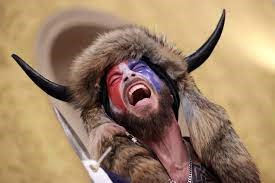



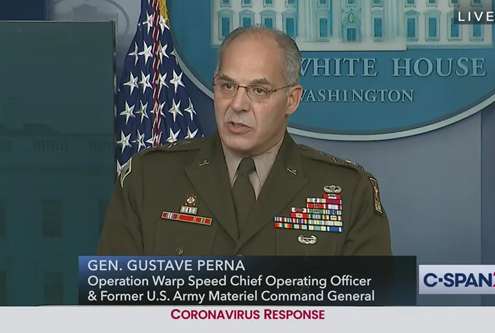 Since when do military generals run pharma programs?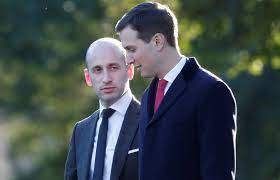

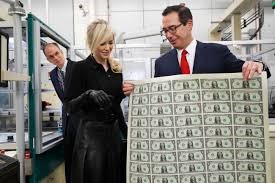
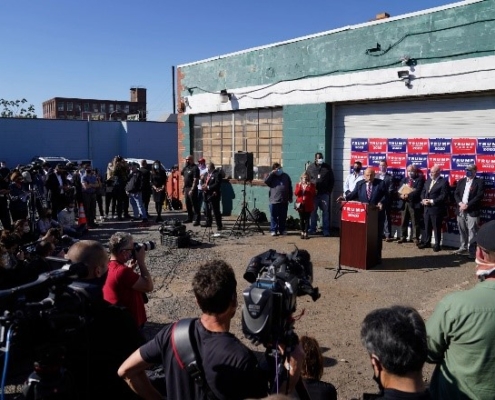
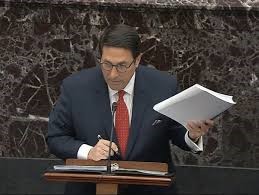
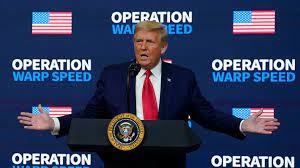
 All on the same plantation? The Washington Two-Step
 The anti-White and anti-British Jewish comedian David Schneider
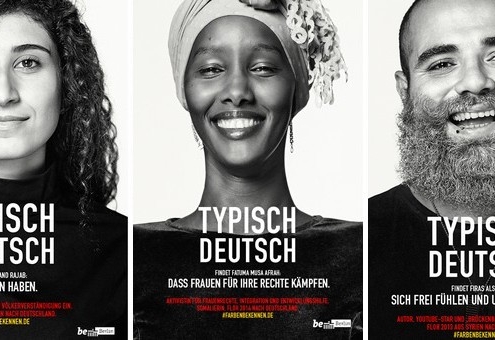 Lying propaganda from Germany: Blacks and other non-Germans are described as “typical Germans”
 Dan Rosenfeld, Jewish swamp-creature
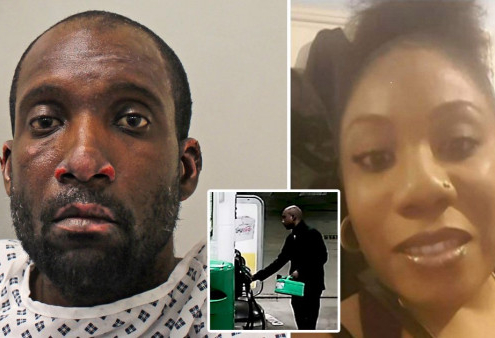 A remarkable immigrant whom leftists aren’t interested in: the
 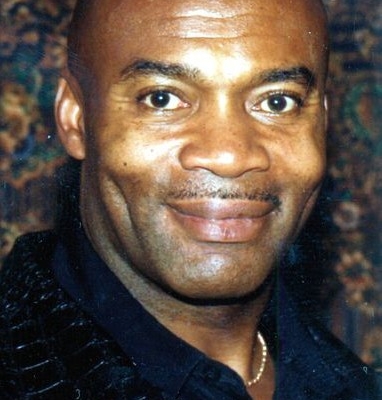 Another remarkable immigrant whom leftists aren’t interested in: the mass gerontophile rapist Delroy Easton Grant
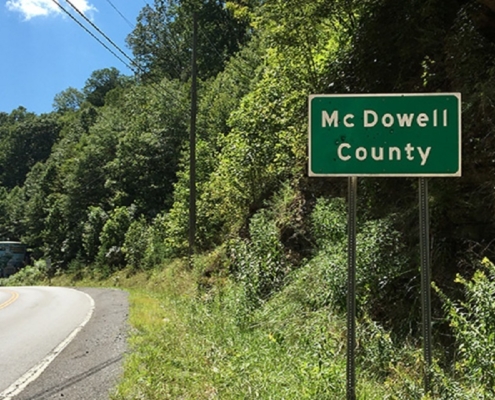
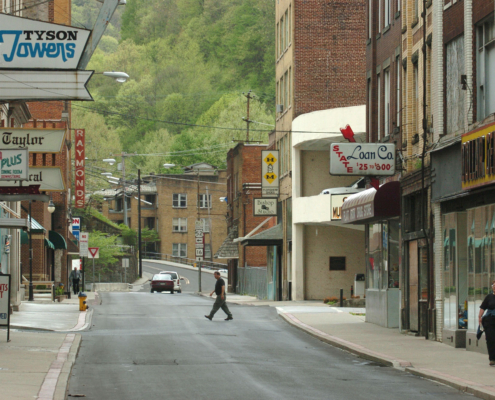
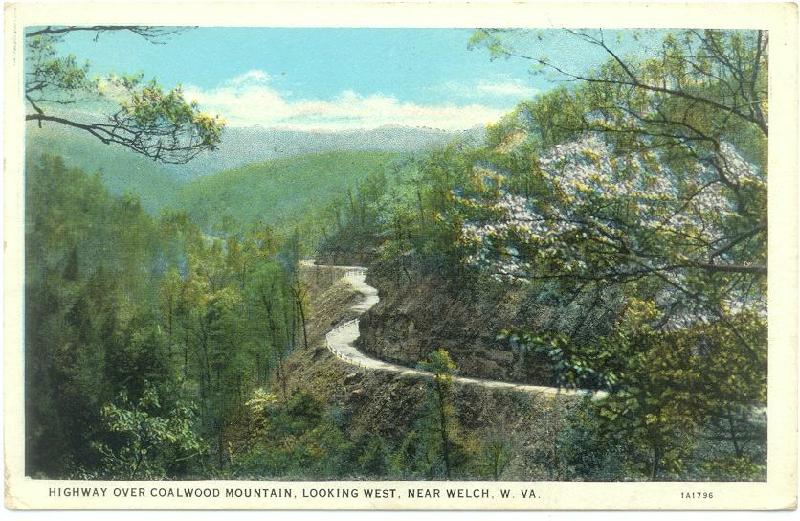
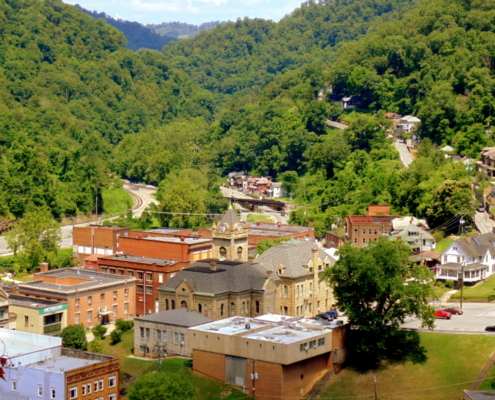
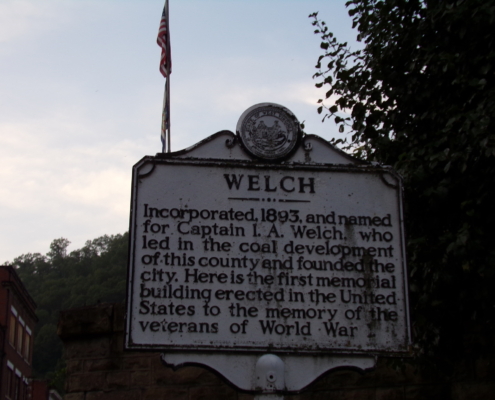

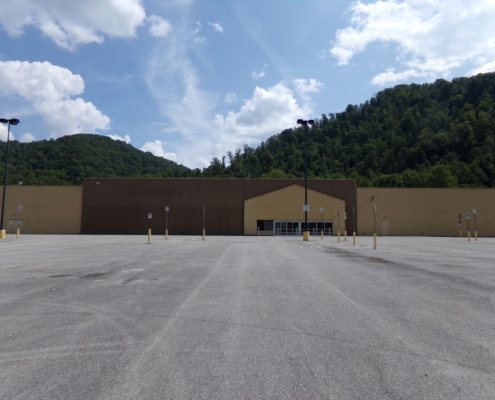
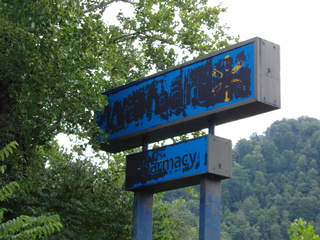
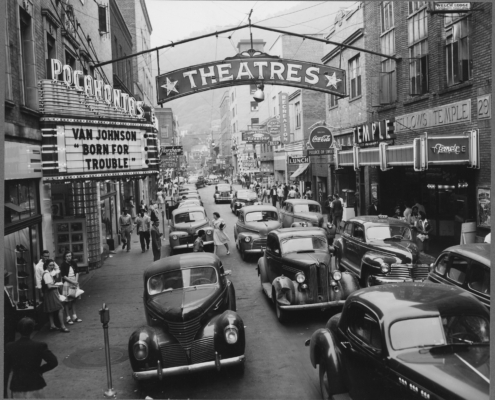
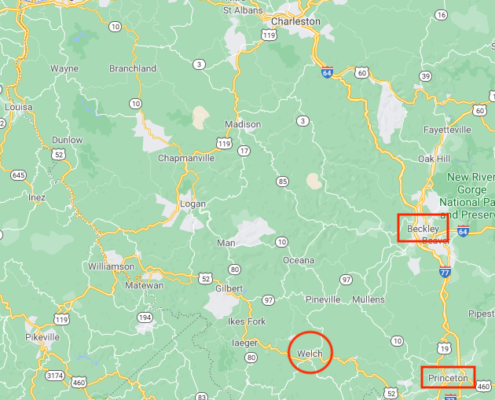
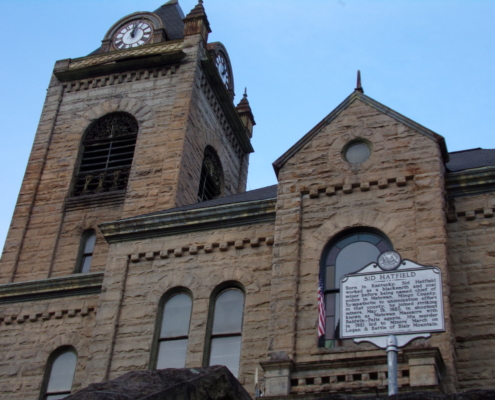
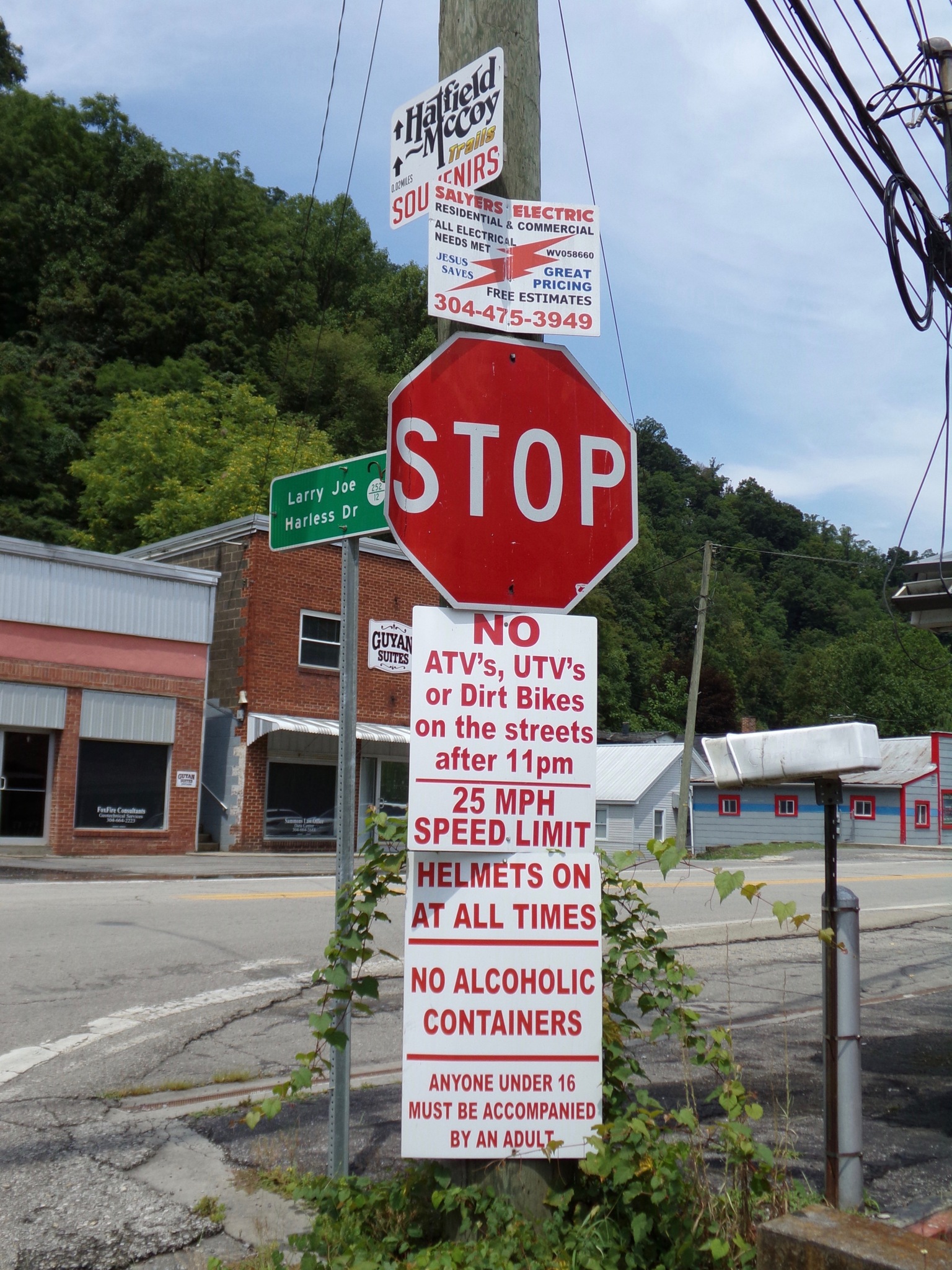
 Stevens Correctional Center
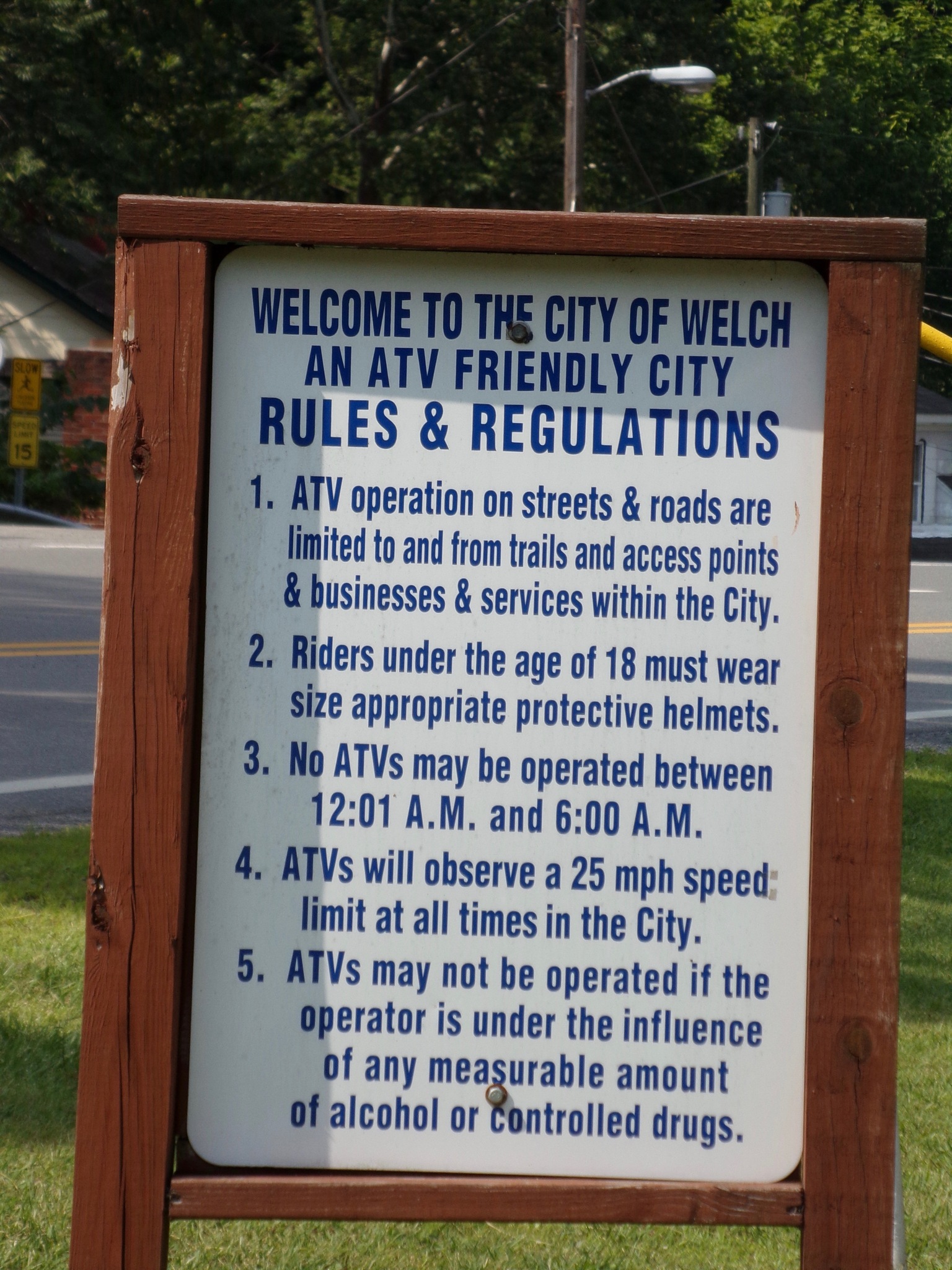 ATV Rules
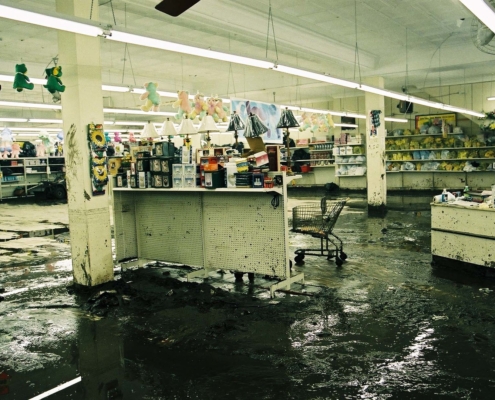

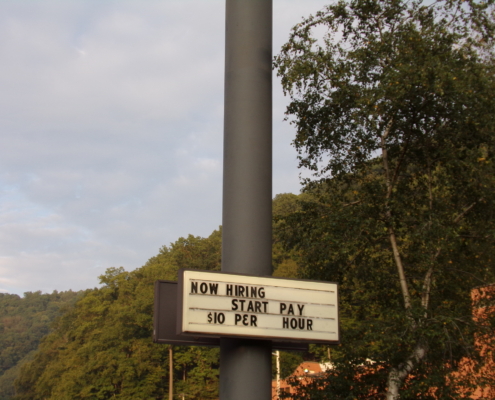 McDonalds hiring: $10 Per Hour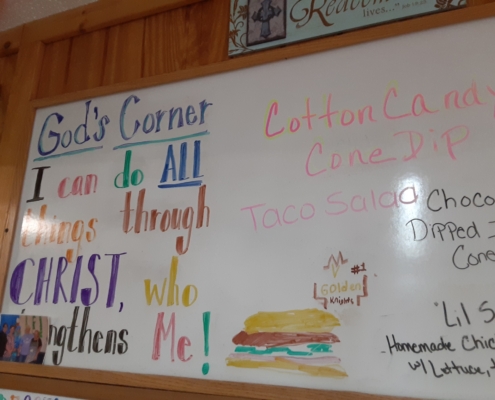
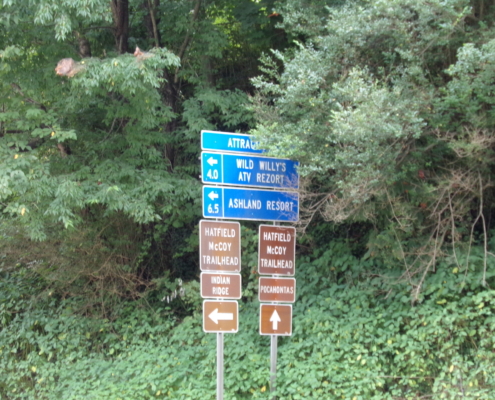
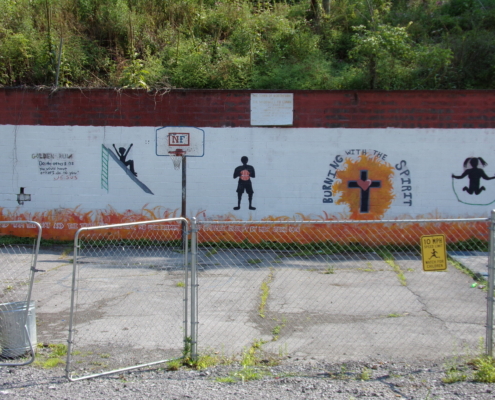
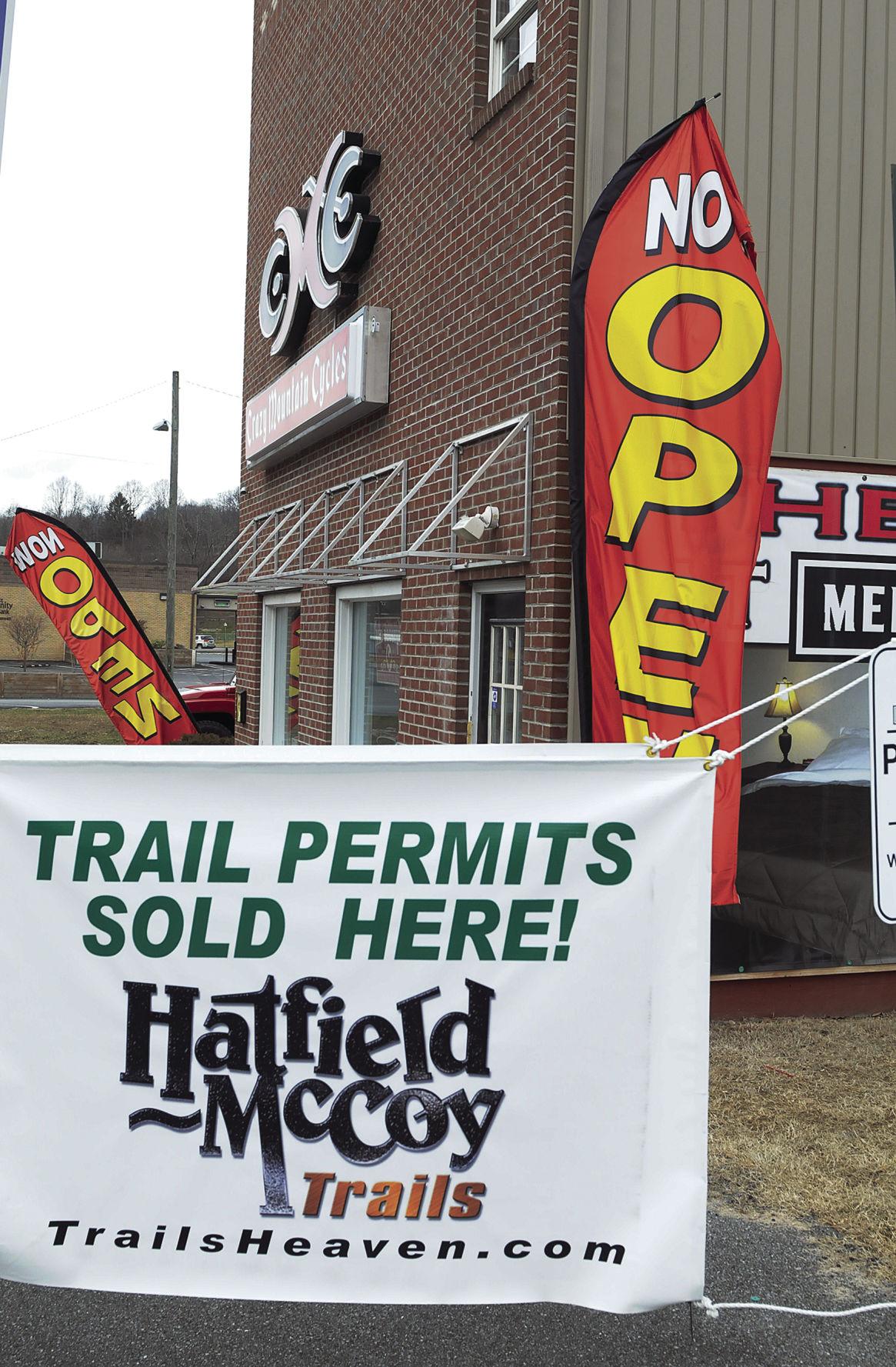 I make it to Bradshaw, which many people in Welch seem to consider the more rural, more redneck part of the county. I didn’t get that sense, but it’s certainly poorer than just about every other town I’ve visited. I try to go to a town called War next, but my phone loses all reception and internet connectivity. I get hopelessly lost, and honestly, War might be so small that I drove through it and didn’t notice. When I finally figure out how to get back to Welch it starts pouring rain, and with the roads being as curvy and narrow as they are, with no shoulder to pull off onto, for a few minutes I wonder if I’m going to make it back in one piece.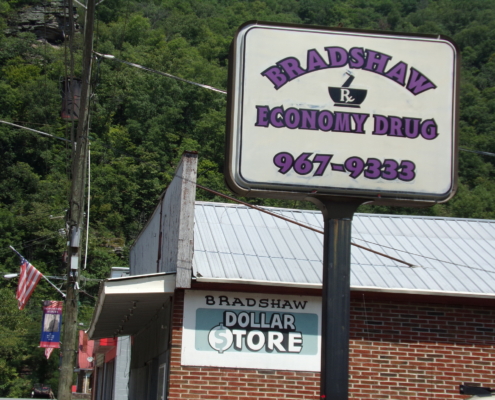
 Empty Bradshaw Building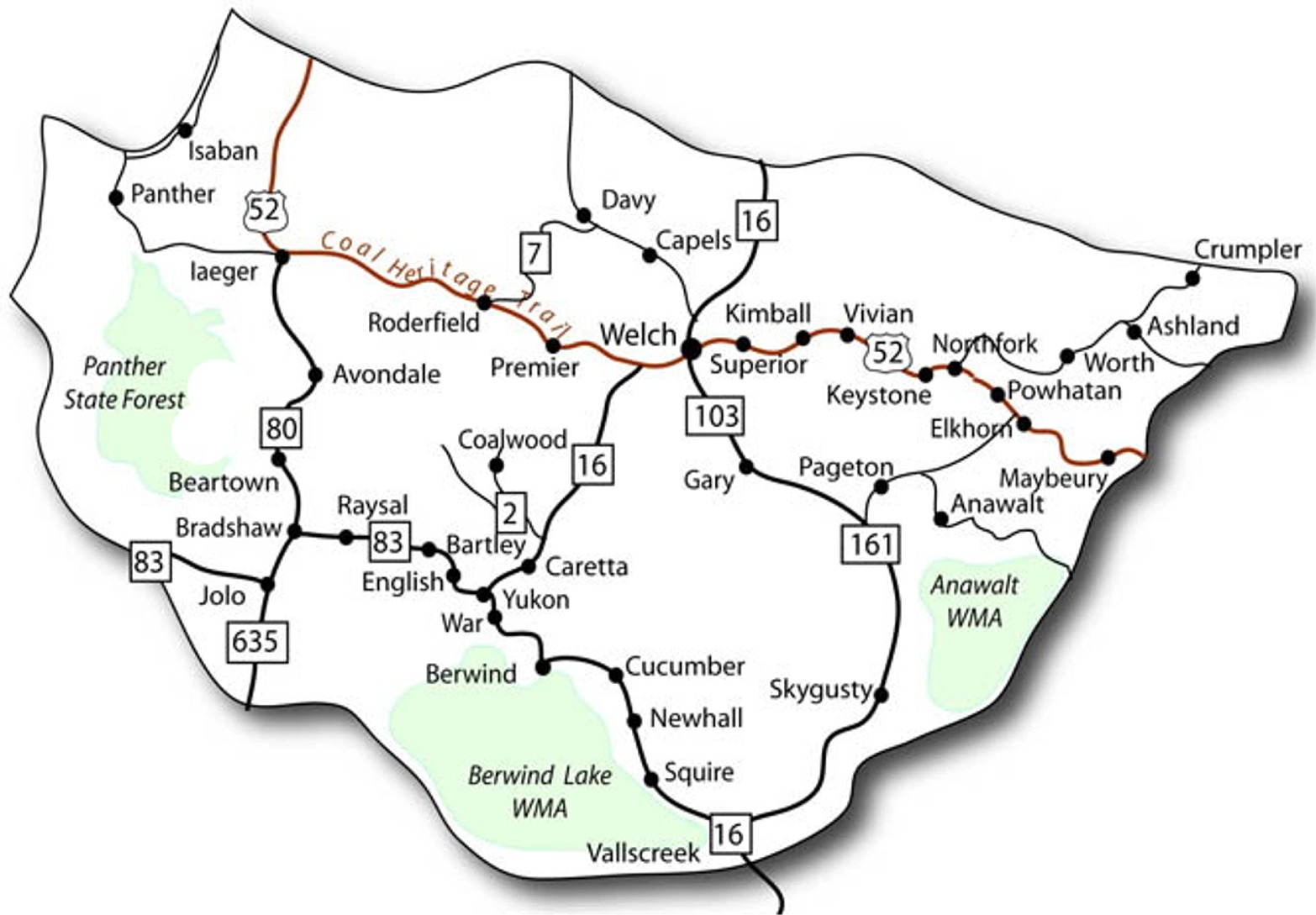
 Doors of a Welch Pharmacy
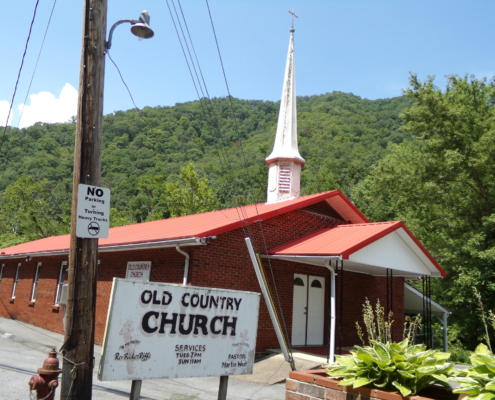 Old Country Church
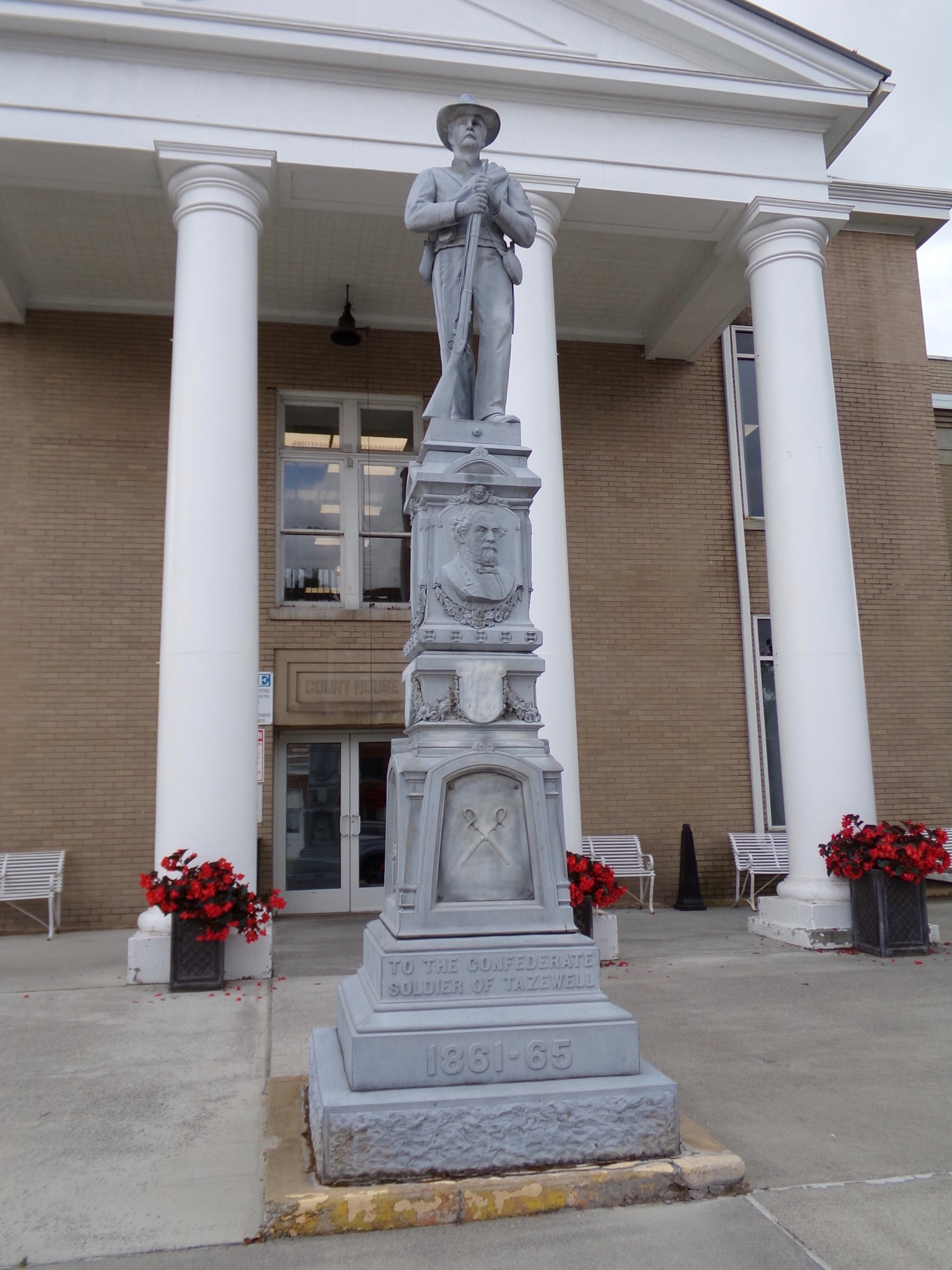 Tazewell Confederate Monument
 Bluefield Office
 Empty Bluefield Building