Imigração: o Chile na encruzilhada das raças (Parte 1)
Vários chilenos me aconselharam a ficar longe de Antofagasta, dizendo que lá era agora um antro de criminosos e que para Antofagasta se igualar à África só faltavam os elefantes.
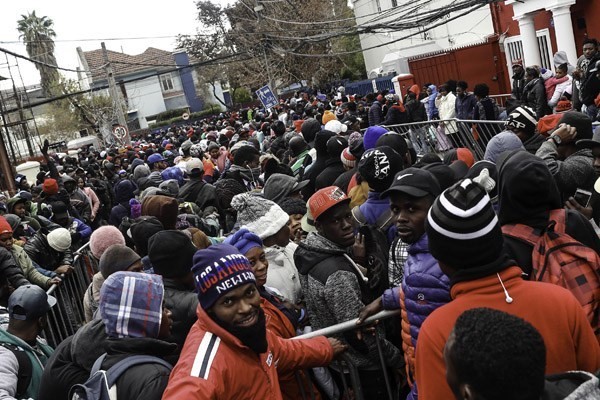
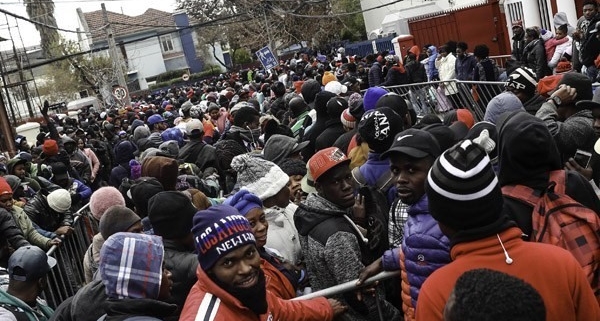
A tendência mais marcante do nosso tempo é o deslocamento de não brancos para as sociedades prósperas e estáveis, as quais eles invejam, porque não são capazes de criá-las e, então, inundam e acabam transformando radicalmente as sociedades brancas — este é o século d’O campo dos santos. A pequena nação latino-americana que é o Chile, um país muito branco para os padrões latino-americanos, não se encontra de forma nenhuma a salvo dessa tendência. Nas últimas duas décadas, especialmente nos últimos 5 anos, a imigração não branca no Chile aumentou dramaticamente. Na verdade, “dramaticamente” talvez seja um eufemismo. No final de 2017, 1.119.267 pessoas nascidas no estrangeiro viviam no Chile. O Chile não é uma grande nação, e esse número representa 6,1% da população total. Os países de onde mais partem emigrantes para o Chile são o Peru (23,8%), a Colômbia (13%), a Venezuela (12%), a Bolívia (11%), o Haiti (10%), a Argentina (7,9%) e o Equador (3,5%). Assim como sucedeu nos Estados Unidos, só nos anos setentas a imigração de não europeus superou a imigração de europeus no Chile:
| Ano |
População total |
População imigrante | ||||
| Total | Percentagem da População total | Percentagem da Europa | Percentagem do hemisfério ocidental | Percentagem do resto do mundo | ||
| 1865 | 1.819.223 | 21.982 | 1,21 | 53,7 | 41,4 | 4,9 |
| 1875 | 2.075.971 | 25.199 | 1,21 | 62,3 | 33,0 | 4,7 |
| 1885 | 2.057.005 | 87.077 | 4,23 | 30,1 | 67,2 | 2,7 |
| 1907 | 3.249.279 | 134.524 | 4,50 | 53,3 | 42,7 | 4,0 |
| 1920 | 3.731.593 | 114.114 | 3,06 | 60,0 | 31,2 | 8,9 |
| 1930 | 4.287.445 | 105.463 | 2,46 | 60,0 | 24,6 | 15,4 |
| 1940 | 5.023.539 | 107.273 | 2,14 | 67,2 | 21,7 | 11,1 |
| 1952 | 5.932.995 | 103.878 | 1,75 | 55,9 | 23,4 | 20,7 |
| 1960 | 7.374.115 | 104.853 | 1,42 | 60,9 | 26,1 | 13,0 |
| 1970 | 8.884.768 | 90.441 | 1,02 | 53,3 | 34,4 | 12,3 |
| 1982 | 11.275.440 | 84.345 | 0,75 | 31,8 | 54,5 | 13,7 |
| 1992 | 13.348.401 | 114.597 | 0,86 | 20,1 | 65,1 | 14,8 |
| 2002 | 15.116.435 | 184.464 | 1,22 | 17,2 | 71,8 | 11,0 |
| 2012 | 16.634.603 | 339.536 | 2,04 | 10,5 | 85,6 | 3,8 |
| 2017 | 17.574.003 | 1.119.267 | 6,1 | 12,4 | 83,8 | 3,8 |
Como mostra a tabela acima, além de os migrantes terem ficado menos brancos nas últimas décadas, o número deles aumentou enormemente. Em 2012, a população imigrante havia sido multiplicada por 1,84 em relação à de 2002. Em 2017, a população imigrante já se multiplicara por 3,29 em relação à de 2012 — ou seja, na metade do tempo. A situação que esses números oficiais revelam mostra-se ainda mais grave com a estimativa de que 300 mil imigrantes “irregulares” (isto é, ilegais) estejam no Chile hoje — na maioria peruanos e bolivianos que conseguiram entrar ilegalmente no país, além de haitianos com os visas vencidos. No Chile, as estatísticas do governo não são tão precisas quanto nos Estados Unidos, assim tudo deve ser considerado cum grano salis. Não obstante, a tendência geral é óbvia.
Com os dados de numerosas fontes, eu organizei a tabela abaixo, que mostra o número de chilenos nascidos no estrangeiro ao longo dos anos.
| 1960 | 1982 | 1990 | 1992 | 2002 | 2012 | 2013 | 2015 | 2016 | 2017 | |
| Peruanos | 3.583 | 4.308 | ~ | 7.649 | 37.860 | 103.624 | 117.925 | 130.361 | 266.244 | |
| Bolivianos | ~ | ~ | 7.277 | ~ | 10.919 | 25.121 | 33.623 | 37.554 | 122.773 | |
| Colombianos | 645 | 1.069 | ~ | 1.666 | 4.095 | 27.411 | 48.894 | 63.481 | 145.139 | |
| Haitianos | ~ | ~ | ~ | ~ | 50 | 2.428 | ~ | 48.783 | 112.414 | |
| Argentinos | 11.876 | 19.733 | 34.415 | 48.176 | 57.019 | 53.192 | 55.185 | 87.926 | ||
| Equatorianos | 9.393 | 16.357 | 39.556 |
Outros contingentes forâneos menores, mas não insignificantes, em 2017, incluíam espanhóis (26.177), brasilianos (20.707), americanos (19.900), chineses (17.021) e dominicanos (9.270). O vertiginoso total de estrangeiros em 2017 não listados neste parágrafo ou na tabela acima chega a 117.750.
A maior lacuna nos dados para o que seria mais rigorosa determinação da composição racial do Chile está na falta de identificação por raça da população estrangeira e/ou imigrante, desagregada apenas por nacionalidade, tirante os ameríndios. A variada e imprecisa natureza da branquidade no Chile levou o governo, nos levantamentos estatísticos da população, a não distinguir entre o historicamente típico “castizo” [filho de mestiço de índio com espanhola ou vice-versa] chileno e o tipo bem mais escuro do “mestizo” de seus vizinhos do norte. Até recentemente, essa não era uma questão de maior importância, porque a imigração de mestiços era mínima. Entretanto, com a intensificação do fluxo migratório de peruanos, bolivianos e outros para o país, chegou a hora de o Chile adotar categorias raciais mais específicas. Sem isso, os dados demográficos continuarão incompletos. Nós sabemos quantas pessoas nascidas no Peru estão agora no Chile, mas não temos números confiáveis sobre sua taxa de natalidade, nem sobre seu casamento com os “castizos” chilenos, e assim por diante.
Mas uma coisa é certa: o Chile está escurecendo. Dado o enorme incremento da imigração de não brancos, conforme mostram as tabelas acima, não poderia ser diferente. Como desgraça pouca é bobagem, a taxa de natalidade nacional do Chile é quase tão baixa quanto as do notoriamente infértil Ocidente: 13 por mil habitantes. Compare-se com as taxas de outros países: Bélgica, Dinamarca, e Noruega: 11; Alemanha, Espanha e Grécia: 9; Peru e Bangladexe: 19; Bolívia and Cambodja: 23; Nigéria e Moçambique: 39. Tem rolado muita discussão na American Renaissance e em outras ciber-revistas dissidentes sobre o “mais importante gráfico do mundo”, mostrando as projeções demográficas das Nações Unidas para o mundo até o fim deste século.
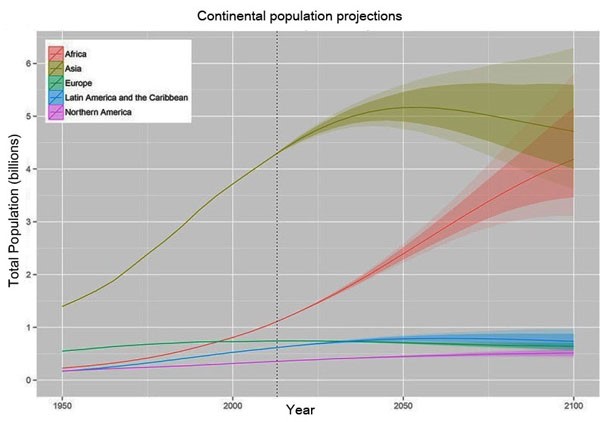
O que não se tem considerado, entretanto, é que essas projeções vão ser tão devastadoras para as partes “beges” do mundo quanto para as partes brancas. As nações árabes e turcas do Norte da África e da Ásia poderão ser inundadas de negros subsaarianos. Paralelamente, a América Latina brancacenta do Cone Sul, compreendendo o Chile, a Argentina e o Uruguai, será submergida em mar de mestiços, ameríndios, negros e asiáticos, se nada for feito. Os limitados dados disponíveis sobre as taxas de natalidade sugerem, como em quase todo país do Ocidente, que os imigrantes são muito mais prolíficos do que os nativos, especialmente os colombianos, os chineses e os venezuelanos; a coisa poderia ser melhor se esse fosse o caso de espanhóis e argentinos, mas também poderia ser pior, se esse fosse o caso de haitianos e bolivianos.
Tendências problemáticas
Até agora, o pior resultado dessa tendência é que, pela primeira vez em sua história, o Chile terá uma grande minoria negra, formada principalmente por haitianos, mas também por negros da Colômbia e, em menor número, por negros do Peru e da Bolívia. De acordo com Richard Lynn e Tatu Vanhanen em seu livro IQ and the Wealth of Nations [O QI e a riqueza das nações], o Chile tem QI médio de 90. Na topificação abaixo, pode-se comparar esse dado com os de outros povos:
- duas outras nações alvacentas da América Latina (as quais são tidas como mais brancas do que o Chile), o Uruguai e a Argentina: 96 e 93, respectivamente;
- Espanha e Portugal: 98 e 95, respectivamente;
- dois outros países com QI médio de 90 que podem ser considerados “branquicentos”, embora de tipo diferente, são a Turquia e o Quirguistão;
- deve ser lembrado que a classe superior do Chile é muito branca, compondo-se de descendentes de nações europeia com alto QI. Entre essas nações, aquelas de onde mais emigrantes partiram para o Chile são as seguintes: o Reino Unido, o País Basco, a Alemanha e a Itália, com QI de 99, 99, 100, e 102, respectivamente.
O Haiti, por sua vez, tem QI médio de 67. Essa é uma diferença ainda maior do que aquela entre os americanos brancos (QI 100) e os negros americanos (QI 85). (A desigualdade de inteligência entre negros haitianos e negros americanos explica-se, em considerável medida, pela notável miscigenação com o branco, como também pela melhor nutrição dos americanos em relação aos haitianos.) A propósito, alguém com QI de 85 é capaz de cumprir tarefas básicas, como operar uma caixa registradora. Mas alguém com QI de 67 não pode fazer muita coisa além de empurrar uma vassoura ou vibrar um machado. Isso não é de bom agouro para os haitianos, que falam um crioulo do francês e teriam de aprender o espanhol.
Assim como o Uruguai e Costa Rica, o Chile tem sido frequentemente reconhecido como o país mais pacífico de toda a América Latina — estando sempre entre os cinco mais pacíficos. O Haiti, ao contrário, é uma pocilga que nem sabe contar o número de seus crimes. A Bolívia é a mesma porcaria. A Colômbia tem taxa de homicídios de 27 por 100 mil habitantes por ano — a oitava maior do mundo. A taxa de homicídios do Chile, bem ao contrário, é de 3 por 100 mil habitantes por ano. A dos Estados Unidos é de 5, tecnicamente mais alta, mas se “certas áreas” nas maiores cidades fossem excluídos do cômputo, sua taxa seria menor do que a do Chile.
Os pretos do Haiti e da Colômbia agora no Chile comportam-se como todo preto em todo lugar, ou seja, criminosamente. Pelas razões já expostas, não há números específicos que explicitem a correlação entre raça e crime no Chile. Podemos inferir, entretanto, o impacto das novas levas de chegantes, comparando os números absolutos da criminalidade antes e depois da explosão da população imigrante. A Divisão de Segurança Diplomática do Departamento de Estado Americano publica regularmente “relatórios sobre criminalidade e segurança” para que nações estrangeiras possam informar ludâmbulos e expatriados americanos. Em 2014, a publicação sobre o Chile começava assim:
A situação é de forma geral segura, havendo menos violência no Chile do que em outros países da América Latina. Furto de bolsas e carteiras, estelionato por telefone, roubo de veículos e furtos residenciais são muito mais comuns do que crimes violentos, como sequestros-relâmpagos, sequestros por resgate e homicídios ou tentativas de homicídio à mão armada sem premeditação, os quais raramente ocorrem. Ludâmbulos e residentes em Santiago são vítimas frequentes de furtos de bolsas e carteiras. Isso ocorre principalmente em pontos de ludambulismo, áreas comerciais de grande movimento de pedestres em Santiago, como também em estações subvianas, em terminais de ônibus e nos próprios ônibus e metrôs mais lotados.
A mesma publicação em 2016 começava assim:
A situação é moderadamente segura, com menos crimes violentos do que em outros países da América Latina. Furto de bolsas e carteiras, estelionato por telefone, furto de veículo e furto em residência são os crimes mais comuns contra ludâmbulos e residentes americanos. Crimes violentos também ocorrem, mais frequentemente na forma de roubo de veículos, invasão de domicílio e assalto; sequestros-relâmpagos, sequestros por resgate e homicídios ou tentativas de homicídio à mão armada sem premeditação são quase inexistentes.
Crimes de menor importância e roubos em residência aumentaram dramaticamente na região metropolitana de Santiago em 2015. A maior parte das ocorrências teve lugar na parte leste da cidade. De acordo com estatísticas dos “carabineros” (a polícia local), publicadas em janeiro de 2016, na rica comunidade de Lo Barnechea, onde muitos expatriados vivem devido à proximidade de escolas internacionais, os assaltos aumentaram 52%. Invasões de domicílio subiram 10,5%. Duas outras comunidades de muitos expatriados e ludâmbulos são Vitacura e Las Condes. Essas duas comunidades tiveram aumento nos roubos de 38% e 32,5%, respectivamente. O emprego de violência nas invasões a residência também aumentou em 2015. Quando os moradores estão em casa, os assaltantes usam cacetes, facas e ainda, cada vez mais, armas de fogo como forma de intimidação. Eles amarram pés e mãos dos moradores, prendem-nos nalgum cômodo da casa e então levam os objetos de mais valor.
A diferença entre 2014 e 2016 resulta de algumas centenas de milhares de mestiços e negros a mais no Chile — não houve nenhuma mudança política, nenhum desastre econômico para explicar isso.
No Chile, à semelhança dos Estados Unidos, os mestiços são bem mais preferíveis aos negros, embora não se equiparem ao tronco racial histórico. A Bolívia e o Peru têm QI médio equivalente ao dos negros americanos: 87 e 85, respectivamente. Entretanto, há ainda ressentimento em relação aos chilenos por causa da Guerra do Pacífico (1879-1884), pela qual o Chile anexou o que é hoje a terça parte norte do seu território, tomada àqueles dois países. Assim como muitos ibero-americanos nos Estados Unidos sonham em retomar o território que perderam na Guerra dos americanos contra o México, também os peruanos e bolivianos cobiçam o litoral há muito tempo perdido. Os problemas sociais e políticos que daí decorrem são exatamente esses mesmos que se pode imaginar.
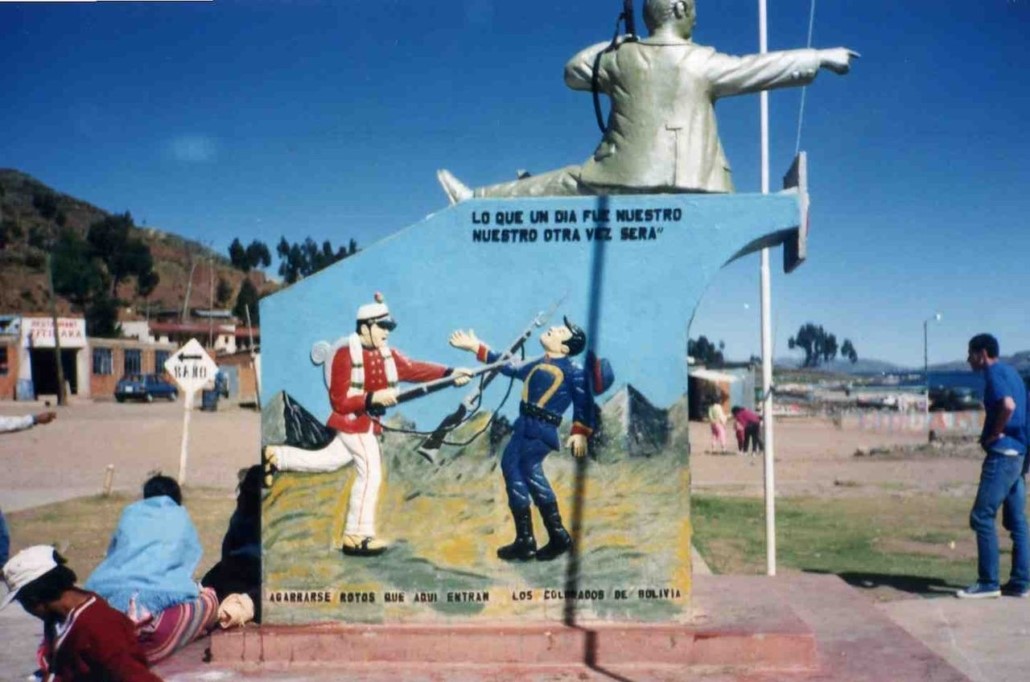
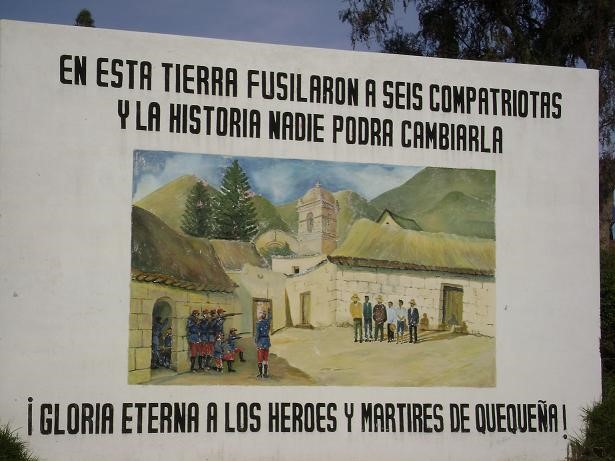
Memorial da Guerra do Pacífico no Peru. O texto diz: “Neste lugar seis compatriotas foram fuzilados e sua história ninguém poderá mudar.
Glória eterna aos heróis e mártires de Quequeña!”.
Acompanhando essas novas levas de imigrantes, chegam as doenças também. Em termos gerais, o Chile conseguiu evitar a crise da sida nos anos oitentas e sempre teve baixa morbidade. Isso já começou a mudar agora: a incidência de sida dobrou na última década. Mais cautelosas estimativas indicam aumento de 79% desde 2010. A gonorreia também foi turbinada. De 2010 a 2015, os casos confirmados aumentaram 208%. A incidência de sífilis, estável durante anos, agora se eleva, assim como a da hepatite.
A explicação mais bonitinha da moda politicamente correta atribui esse súbito aumento da insalubridade ao conservadorismo da sociedade chilena, cujos cidadãos não seriam orientados a usar preservativos e, quando acometidos de alguma DST, sentir-se-iam constrangidos de buscar tratamento. Entretanto, se essa é a razão, por que a morbidade não foi sempre alta? Como no caso da criminalidade, o pico das ocorrências coincidiu com a súbita chegada de grande número de pretos e mestiços. E também como no caso da criminalidade, a disseminação das doenças é maior onde a presença dos imigrantes é maior: Santiago, a periferia de Santiago e a terça parte mais ao norte do país, especialmente a cidade de Antofagasta.
A América Latina não escapa à tendência mundial que faz a incidência de doenças sexuais de todo tipo vitimar muitíssimo mais negros do que outros de qualquer outra raça. As nações ao sul dos Estados Unidos com as mais altas taxas de sida são o Haiti e as Bahamas, ambas com mais de 90% de negros na população. Cerca de 2% dos adultos no Haiti são soropositivos — ou seja, um em cada grupo de cinquenta haitianos tem o vírus da sida. Sem nunca ter haitianos durante dois séculos, o Chile conta agora 100 mil deles na sua população. Em termos estatísticos, isso representa 2 mil novos soropositivos. Eu suspeito, entretanto, que muito das novas infecções vem dos negros da Colômbia. Os imigrantes haitianos são majoritariamente homens, numa proporção de 68%. Embora eu não conheça a proporção entre os colombianos, creio que a situação deles é mais equilibrada. E os homens colombianos são especializados no tráfico de drogas, enquanto as mulheres dedicam-se à prostituição. Eu não conheço os números exatos disso também, mas uma caminhada pelas ruas de Santiago revela que as mulheres colombianas — principalmente as negras — estão super-representadas nas zonas de baixo meretrício. Na cidade mineira do setentrião, Antofagasta, a segunda com mais imigrantes, depois de Santiago, um político local mereceu as manchetes em 2014, ao comentar que a recente disparada nos casos de gonorreia, sífilis e sida era causada pelas prostitutas colombianas (sem especificação de raça), “que, aliás, são senhoritas muito bonitas”, completou. (Vídeo em espanhol aqui.)
Consciência Racial no Chile
Com certeza essa é uma situação sombria. Mas há também pontos de luz no Chile. Os chilenos têm forte sentido racial à espreita logo abaixo da superfície. A conexão entre raça e classe, com os brancos predominando nas classes superiores, e os mestiços, nas classes inferiores, é compreendida e largamente aceita por quase todo chileno. O exemplo mais frisante disso está nas próprias ladainhas igualitárias sobre a situação. Certo bloguista publicou elucidativa síntese de uma típica conversação entre chilenos e americanos quando o assunto é raça:
O chileno: Há problemas raciais sérios nos Estados Unidos.
Eu: Sim, há gravíssimos problemas. Mas eu acho que a raça é um problema aqui [no Chile] também.
O chileno: Não, nós não temos problemas de raça aqui. Os problemas que temos são de classe.
Eu: Como assim?
O chileno: Bem, as pessoas de classe baixa são realmente desprezadas.
Eu: Como você pode identificar essas pessoas?O chileno: Nós podemos, só isso.
Eu: (apontando para uma pessoa de pele escura na multidão) E aquela pessoa lá… de que classe ela é?
O chileno: Aquela é da classe baixa.
Quanto mais branco o chileno, mais orgulhoso e mais zeloso de sua branquidão ele é. Casamentos entre gente de classes diferentes são bastante incomuns, e isso protege da diluição o sangue europeu das classes superiores. A demonstração empírica disso com fatos e estatísticas é difícil, mas os indícios estão à vista para quem quiser olhar. Outro bloguista de esquerda escrevia em 2015 que
No Chile, poucos anos atrás, uma pesquisa consistia em apresentar imagens de pessoas de diferentes cores de pele, as quais deveriam ser identificadas como sendo ou não sendo chilenas. O resultado foi que as pessoas mais escuras foram identificadas como mapuches, peruanos ou “estrangeiros”.
Histórias e estudos que correm na mídia chilena de quando em vez dão conta de terríveis discriminações contra peruanos no Chile. O indefectível enfoque liberal desse tipo de jornalismo de “interesse humano” tira o fôlego de tão irritante, mas seu conteúdo geralmente corresponde aos fatos. Os chilenos são conscientes de sua raça e sempre o foram, mesmo quando não explicitamente. A recente chegada de haitianos fez ainda mais forte essa consciência. Jornalistas e acadêmicos usam os imigrantes para condenar o racismo, mas a maioria não muito silenciosa não chega a se comover. Como em todo lugar no Ocidente, os comentários a artigos na rede revelam muito da opinião geral dos leitores. Eu deparei um artigo de 2016, intitulado “A chegada dos imigrantes haitianos acendeu o estopim do racismo”, que mostra perfeitamente isso. Um comentarista escreveu que “Primeiro os haitianos invadem e depois querem ser aceitos. Deportem todos eles! O mundo não os quer.” Outro comentário dizia que “Eles são rejeitados porque são culturalmente diferentes; como todos nós sabemos, nem toda rejeição de negros deve-se ao racismo. Se eles fossem brancos mas tivessem os mesmos costumes, a mesma cultura, a mesma religião, a mesma forma de invadir e devastar lugares, eles seriam rejeitados também. É só uma questão de tempo para que eles comam todo animal e pássaro e desmatem a terra.” Outro leitor concluía que “A ideia natural para a formação de um país ou sociedade é usar a imigração para corroborar os seus valores, mas não para subverter a identidade nacional de uma vez só […] A concessão de visas não é por si só discriminatória? Alguns conseguem, outros não conseguem. Será que ninguém tem o direito de escolher quem pode ou quem não pode entrar em sua própria casa?”.
Os chilenos são também muito orgulhosos dos toques europeus de sua cultura e de suas figuras históricas. Os dois maiores patriarcas chilenos foram bem brancos: Bernardo O’Higgins (irlandês) e José Miguel Carrera (Basco). As mais importantes personagens políticas chilenas do século XX, seja de esquerda, seja de direita, também eram brancos: políticos da família Alessandri (italianos), Carlos Ibáñez del Campo (irlandês e espanhol), Pedro Aguirre Cerda (Basco), Salvador Allende (belga e basco), Patricio Aylwin (irlandês e basco), e Augusto Pinochet (francês e basco). Depois da Independência, o grupo de imigrantes de mais impacto no Chile foi, de longe, o alemão. Por todo o Chile (e especialmente no meio-sul), pode-se observar as evidentes comunidades germânicas e sua arquitetura característica. A fotografia abaixo dá exemplo disso, mostrando um teatro e uma igreja luterana de estilo germânico na cidade de Frutillar.
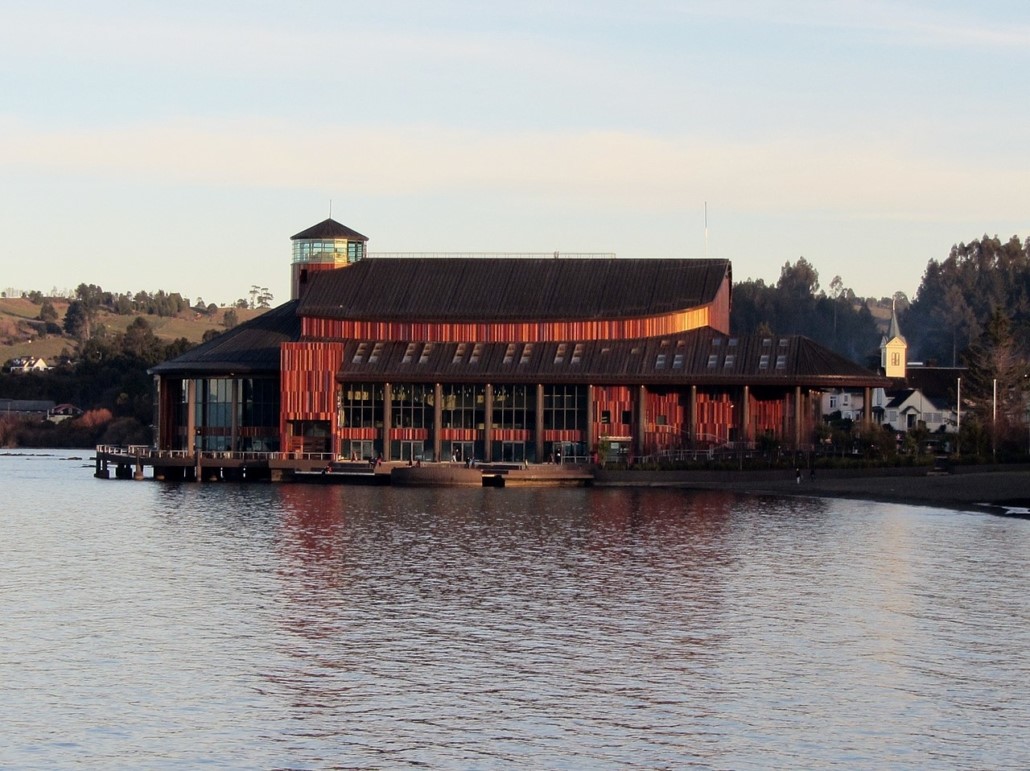
Arquitetura germânica em Frutillar, Chile: em primeiro plano, o teatro; ao fundo, igreja luterana.
O Chile é também a nação da América Latina com mais cidadãos de origem britânica. Estima-se que sejam cerca de 420 mil hoje, ou seja, aproximadamente 2,25% da população. Por isso os sobrenomes saxônicos são mais comuns do que se pensa. Alguns exemplos: Andrés Chadwick, político de direita; Jorge Edwards, o prestigiado romancista; e Juan Williams Rebolledo, comandante da Marinha chilena na Guerra do Pacífico.
As pesquisas de opinião revelam que um terço dos chilenos, pelo menos, têm visão explicitamente realista da raça, mas todas as pesquisas sobre a questão racial subquantificam a parte da população com opiniões “racistas”, porque muitos não se declaram racistas nem para pesquisadores — o que nos EUA chama-se “efeito Bradley”. Em 2003, uma investigação da opinião dos chilenos sobre os peruanos, os mais numerosos não brancos que mais continuamente na história migram para o Chile, apresentou os seguintes resultados:
- O Chile é mais desenvolvido do que os países vizinhos por ter menor população indígena. (34,1% concordam, 65,9% discordam.)
- O problema da abertura para a imigração latino-americana é que muitos latino-americanos são indígenas. (35,8% concordam, 64,2% discordam.)
- Algumas raças são melhores do que outras. (32,9% concordam, 67,1% discordam.
- Os peruanos necessitam realmente de empregos, mas os empresários do Chile devem sempre preferir empregar chilenos. (69,4% concordam, 30,6% discordam.)
- Se houver muita miscigenação entre chilenos e peruanos, a qualidade de nosso povo cairá. (33,4% concordam, 66,6% discordam.
- Os imigrantes peruanos que vêm para o nosso país são mais propensos ao crime. (43,8% concordam, 56,2% discordam.)
O Chile tem agora um movimento identitário chamado Ação Identitária Chilena, moldado segundo movimentos congêneres da Europa Ocidental e dos Estados Unidos. O seu símbolo é o El Torreón, um forte do século XVIII construído para defender a cidade de Valdívia (do herói epônimo Pedro de Valdívia, o conquistador) contra os araucanos. Embora ainda pequeno, o grupo parece crescer e realiza ações diversas, como passeatas e campanhas de panfletagem, ora combatendo a imigração, ora exigindo uma economia do tipo “primeiro-o-Chile”. De forma análoga ao Identity Evropa [redenominado American Identity Movement], nos Estados Unidos, que faz por advertir dos assassinatos de mulheres, tais quais Kate Steinle and Justine Damond, a Ação Identitária Chilena alerta contra os assassinatos perpetrados por imigrantes no próprio chile, como o de Margarita Ancacoy, que foi espancada até a morte por uma gangue de equatorianos.
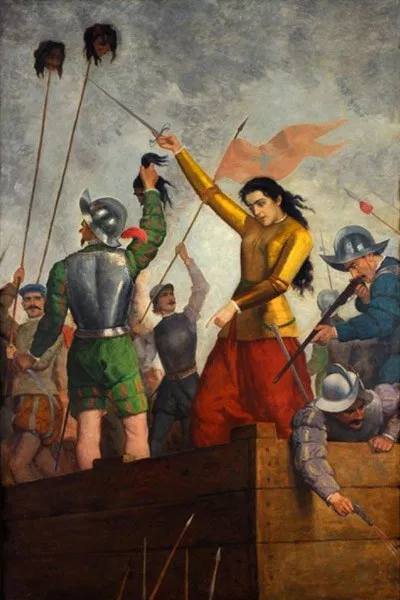
Conquistadores espanhóis defendem a recém-fundada cidade de Santiago contra os araucanos em meado do século XVI.
A mulher é Inés de Suárez, belatriz destemida e companha de Pedro de Valdivia, chefe dos primeiros e vitoriosos conquistadores do Chile.
Também em Antofagasta ganha corpo, rapidamente, uma política de reação nativista. No final de 2013, quando a Colômbia derrotou o Chile numa partida de futebol pela classificação para a Copa do Mundo, os colombianos da cidade comemoraram nas ruas. Não foi preciso mais do que isso para que começasse o quebra-pau com os chilenos nativos. Aí, então, foi criado o grupo Antofagasta Segura, que exige políticas para conter a crescente criminalidade, o tráfico de drogas e a superlotação nas escolas causada pelos imigrantes. Como o “Remembrance Project” nos Estados Unidos, eles promovem manifestações públicas de denúncia das mortes provocadas por imigrantes. Antofagasta foi um bastião da esquerda chilena por muito tempo, mas isso começa a mudar por causa da imigração. Com efeito, em 2012, a esquerdista Karen Rojo venceu a eleição para a prefeitura com 47,9% dos votos. Marcela Hernando ficou em segundo lugar, com distantes 29,1% dos votos, e ela tinha sido a prefeita anterior da cidade. Em 2016, a prefeita Karen Rojo conseguiu se reeleger com margem estreita de 28,1% dos votos. Em segundo lugar, com 22,2% dos votos, ficou Manuel Rojas, crítico da imigração ilimitada e membro da União Democrática Independente, partido da direita pinochetista. A mudança toda foi provocada pela divisiva questão da imigração, cuja seriedade a prefeita Karen Rojo não reconhece. Ela apenas repete platitudes como “A cidade de Antofagasta foi fundada por imigrantes, e ninguém pode negar isso. Há certos tipos de trabalho que os chilenos não aceitam mais fazer.”
Entre os trabalhos que os chilenos não fazem em Antofagasta e que os imigrantes executam com alegria está a construção de assentamentos irregulares do tipo das favelas brasileiras, o tráfico de drogas, a prostituição e a hostilização da população histórica da cidade. O registro fotográfico desses labores está disponível aqui.
Vários chilenos me aconselharam a ficar longe de Antofagasta, dizendo que lá era agora um antro de criminosos e que para Antofagasta se igualar à África só faltavam os elefantes. Nos últimos anos, a cidade converteu-se na principal paragem para contrabandistas que levam cocaína e maconha dos países vizinhos do norte para o Chile. Porção dessa droga destina-se a outras regiões do Chile, mas grande parte é carreada para os portos chilenos e daí transportada para a costa americana do Pacífico. Sempre que o México e os Estados endurecem a repressão ao tráfico, essa rota alternativa salva do estrangulamento o negócio ilícito. Grandes operações policiais são frequentes nessa região do país.
* Benjamin Villaroel apresenta-se como “hispânico branco em tempo integral e escritor de vez em quando”. Título em inglês: Chile’s Immigration Crossroads, Part 1. Fonte: <https://www.theoccidentalobserver.net/2019/06/04/chiles-immigration-crossroads/>. Data de publicação: 4 de junho de 2019. Tradução e divulgação: Chauke Stephan Filho.