Global Jesus versus National Jesus, Part Two: The Political Hermeneutics of Resurrection Part Two
N.T. Wright on Paul’s Resurrection Theology: Global or National?
N.T. Wright, the former Anglican bishop of Durham, is an influential scholar-theologian-priest and the author of many gargantuan studies of the historical Jesus and the apostle Paul. He, too, maintains that the meaning of the cross and resurrection is not to be found in theological abstractions but in “certain very specific and concrete aspects of the history of Israel”. Such a forthright challenge to the conventional wisdom has provoked much interest and some consternation. In Alister McGrath’s summary of Wright’s argument, the “pattern of cross and resurrection, reflecting that of exile and restoration, has determinative significance for Israel rather than a universal significance for all humanity”.[1]

Professor N.T. Wright
In other words, Wright agrees that, linked as it was with the idea of the covenant, the death of Jesus had a “corporate significance” for Israel, rather than an “individual significance” for either sinners or victims in other times and places. The crucified-and-resurrected Jesus should be understood, therefore, “as a redemptive representative of Israel, bearing her specific curse and making it possible for her as a people to achieve her intended national destiny”.[2] In Jesus and the Victory of God, Wright thus aligns himself with historical critics who have found a “national Jesus” hidden beneath deeply-encrusted ecclesiastical creeds and Tradition.[3] In his more recent, studies on Paul, however, the “global Jesus” literally rises from the grave of “national Jesus”.
Wright presents the apostle Paul as a proto-Augustinian, Judaeo-Christian “theologian”. On Wright’s reading, Paul’s “freshly-inaugurated eschatology,” projects the second, general resurrection of the dead far beyond the fall of Jerusalem and into our own twenty-first century future.[4] In doing so, Wright credits Paul with the invention of a Christian theology in which “global Jesus” reigns over the whole of humanity. According to Wright, “Paul’s expectation of ‘the day of the Lord’ included the expectation that on the last day, that which was already true would at last be revealed: Jesus is lord, and Caesar is not”. On Wright’s interpretation of Paul’s vision of final eschatology, then, “the creator and covenant God will, at the last, put the whole world to rights”.[5]
Wright presents Paul’s allegedly rock-solid faith in the bodily resurrection of Jesus Christ as the foundation for his eschatological vision of the resurrected bodies of all those who have fallen asleep in Christ. Wright’s emphasis upon the physical resurrection of Jesus presupposes that “national Jesus” was a genuinely historical, human person, deeply rooted in the covenantal history of national Israel according to the flesh. The death of “national Jesus,” the man, entailed his descent into nothingness. Jesus’ resurrection, thanks to his reading of Paul, brings Bishop Wright back within the bounds of credal orthodoxy. As Robinette puts it, the post-Easter narrative shows the creativity of God “in a significantly new light. Creation from nothing is logically coherent with (and in Christian theology historically dependent upon) a view of God who raises to life what has succumbed to the nihil of death”.[6] Wright and Robinette continue to espouse the Augustinian doctrine that creatio ex nihilo underwrites the credal promise of the physical resurrection of the body. Just as the earthly city was created out of nothing, so, too, Augustine expected that at the end of the world Christian believers would rise from the dead, in a newly embodied form, to enter the heavenly city of God.
The resurrection was an unprecedented physical event that set aside the laws of nature. Wright’s historical investigation of the crucifixion-and-resurrection aims to explain how Christians came to believe in the reality of such an event. He concludes that early Christians themselves offer the most convincing historical explanation for an empty tomb “previously housing a thoroughly dead Jesus” and subsequent reports “that his followers saw and met someone they were convinced was this same Jesus, bodily alive though in a new transformed fashion”. He says simply “that something happened, two or three days after Jesus’ death, for which the accounts in the four gospels are the least inadequate expression we have”. Beyond that point, “the historian alone cannot help”.[7]
It was the apostle Paul who went beyond history to provide a theological account of a resurrection-event so unexpected that not even the teachings of “national Jesus” had prepared his followers to understand, the world-historical, indeed cosmic, significance of the empty tomb. Wright finds in 1 Corinthians 15 one compelling example of just how Paul transfigures “national Jesus” into “global Jesus”. For Wright, “there can be no doubt that Paul intends this entire chapter to be an exposition of the renewal of creation, and the renewal of humankind as its focal point”. Paul’s resurrection theology presupposes both a God not only capable of creating the world out of nothing, but a just God determined to defeat the power of death. But if death is to be defeated, then “[a]nything other than some kind of bodily resurrection, therefore, is simply unthinkable”.[8]
Wright flatly rejects the suggestion that Paul was concerned with any sort of “non-bodily survival of death”. Paul had no need, Wright argues, to argue for the immortality of the soul: many people in Corinth “believed in that anyway”. After all, even two thousand years later, no such resurrection has occurred; history has not witnessed millions of Christian believers rising from their graves. Naturally enough, therefore, many in Corinth found it hard to swallow the idea of a physical resurrection of the dead: “everybody knew dead people didn’t and couldn’t come back to bodily life”. Chapter 15, Wright argues, was intended to answer that challenge. According to Wright, Paul’s argument ran “as follows: what the creator god did for Jesus is both the model and the means of what he will do for all Jesus’ people”. Throughout the chapter, Jesus’ resurrection serves as “the prototype and model for the future resurrection”.[9] When Paul describes the body into which Christians hope to be resurrected, “the unique, prototypical image-bearing body of Jesus” is identified as “the model for the new bodies that Jesus’ people will have”.[10] Even those presently alive on the last day, when the kingdom finally arrives, Paul promised, “will not lose their bodies, but have them changed from their present state to the one required for God’s future”.[11]
Paul, according to Wright, portrays the parousia of “global Jesus” as the moment when “all those who belong to him are themselves raised bodily from the dead”. Wright describes the result as “the establishment of a final, stable ‘order’ in which the creator and covenant God is over the Messiah, and the Messiah is over the world”. In the new creation, humans are destined to play “an intermediate role between creator and creation”. The “human task and the messianic task thus dovetail together: the Messiah, the true Human One, will rule the world in obedience to God”.[12]
The following questions suggest themselves: If Paul’s resurrection theology did indeed take this universalist form, could he have expected the parousia to arrive anytime soon? Would he have been likely to identify it with the fall of Jerusalem in the lifetime of his followers? Wright’s response is clear. He long ago dismissed the idea of an imment parousia as an “old scholarly warhorse” that “can be put out to grass once and for all”.[13] So too, Wright rejects “the suggestion that Paul was hoping to bring about…some kind of large-scale last-minute conversion of Jews, and perhaps even the parousia itself…Paul did not think the parousia would necessarily happen at once, and he certainly was not trying to provoke or hasten it by his missionary work”.[14] In Wright’s interpretation, Paul’s cosmopolitan theology and over-the-horizon perspective were firmly fixed on the transfiguration of the entire cosmos; Paul was definitely not a present-minded apostle of “national Jesus” warning of the apocalyptic judgement soon to fall upon Old Covenant Israel according to the flesh.
Nonetheless, the vision of “global Jesus” attributed to Paul by Wright is a far cry from the mindset of “national Jesus” as he hung upon the cross in Jesus and the Victory of God. Jesus and Paul do not seem to be on the same page. Wright is annoyed by those for whom such divergence is cause for concern. He regards it “as illegitimate in principle, and very difficult in practice, to conduct historical Jesus research” as if Paul and Jesus both saw the world in the same light. He asserts that “[p]recisely because the resurrection made such a huge difference to everything” Paul simply must have viewed the world differently from the way that “national Jesus” had viewed it prior to the Easter event.[15] This is a plausible position: but is Wright’s interpretation of 1 Corinthian 15 really about history at all?
Arguably, Wright’s forty-page exegesis of chapter 15 is more a defence of credal orthodoxy than an analysis of the historical context of a biblical text written in first-century Corinth (about which we learn next to nothing). In Wright’s interpretation, Paul is portrayed as a Hellenized, Judaeo-Christian preacher-theologian laying the doctrinal foundations for medieval high Christology. Wright describes Paul’s message as simplicity itself: Jesus is lord. The point of Paul’s theology, therefore, “was to name the Messiah, to announce him as lord, in the culture-forming places, the cities to and from which all local or international roads ran”.[16]
Anyone looking more deeply into the situation facing Paul in Corinth as he wrote chapter 15 may well doubt whether Paul had enlisted in the service of Wright’s “Human One”. Just as plausibly, Paul was working to vindicate the Old Testament saints of national Israel. It is just possible that the resurrected Messiah, “the firstfruits of those who have fallen asleep” (1 Cor. 15:20), remained a “national Jesus,” still determined to rescue his people from the death-like grip of sin. Perhaps, a more truthful and useful understanding of Paul’s account of the resurrection of the dead can be achieved by treating him as a deeply patriotic historical actor actively engaged in the political art of scriptural hermeneutics.
The Resurrection of the Dead in Covenantal Eschatology
The covenantal eschatology of national Israel offers a much more persuasive hermeneutical framework within which to interpret Paul’s understanding of the resurrection body. Samuel G. Dawson, an American preterist scholar, has written at even greater length than Bishop Wright (no mean feat!) on 1 Corinthians 15. In doing so, he portrays a “national Paul” very different from the “global Paul” one meets in Wright’s work (or in mainstream theology generally). This should not come as a surprise. Paul publicly declared that he “was saying none other things than those which the prophets and Moses did say should come” (Acts 26:22). Dawson points out that “Paul’s concept of the resurrection wasn’t that fleshly (or even transfigured) bodies would come out of holes in the ground at all, because that’s not what Moses and the prophets taught”. He taught, instead, “the resurrection of Old Covenant Israel from the death of its fellowship with God”.[17]
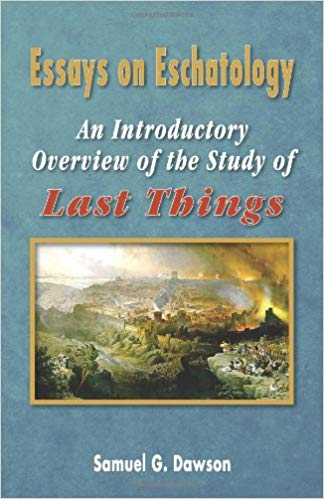
The problem Paul faced with his “brethren” in Corinth was not that some doubted the resurrection of Christ or that others denied the resurrection of anyone. Rather, some doubted the resurrection of the Old Covenant saints. Paul’s concept of the resurrection “depicted the ongoing translation of the body of death headed by Adam (which would, of course, contain Old Covenant Israel) to the body of life headed by Christ”. It follows that “[i]f Israel, the rest of the firstfruits, was not being raised when Paul wrote these words, then Christ wasn’t raised, for his own resurrection was the first of the firstfruits”. As Paul was writing to the Corinthians, those who denied that the Old Testament saints were being raised were, in effect, denying the resurrection of Christ. In other words, Paul taught that “the faithful Old Covenant Jews were going to be the rest of the firstfruits, and the dead in Christ were going to be the rest of the fruit at the harvest”. Gentile Christians in Corinth were generating dissension by saying that “Israel’s last days had come and gone, because God was through with them since the cross”. Paul replied, according to Dawson, that “God’s promises to Israel were irrevocable, so that the salvation of Gentile Christians was linked to theirs at the coming of the Lord (which the Corinthians were eagerly awaiting, 1:7)”.[18]
Dawson contends that when Paul turns to the nature of the resurrection body, he raises the question as to how the dead ones are being raised (n.b., not how are the dead raised) and with what manner of body are they coming (n.b., not do they come). Now, if some Corinthian Christians expected “a resurrection of biological bodies to certain dead persons,” such questions would not arise. Dawson attributes a spiritual concept of the resurrection to Paul breaking sharply with Wright’s insistence on the transfigured but still bodily nature of the resurrection. Dawson breaks even more dramatically with Wright when he points out that Paul never speaks of resurrected “bodies”. Instead, Paul refers only to “the resurrection of one body, the Old Covenant faithful who were being transformed into the body of Christ”. Dawson observes that the “prophets [e.g. Ezekiel, Daniel, Hosea, and Isaiah] from which Paul preached had foretold the resurrection of a single body”. The hermeneutic problem here, Dawson concludes, “comes down to whether the resurrection Paul spoke of was of one body in his present time or of billions of bodies more than two thousand years in the future.[19]
A fair-minded person who compares Wright’s exegesis of 1 Corinthians 15 with that offered by Dawson could conclude, at the very least, that the strength of the case for “global Paul” has been seriously compromised. Dawson reinforces the strength of that proposition by his discussion of how the politics of hermeneutics manifests itself in the translation of 1 Corinthians 15. His seemingly arcane argument as to the importance of the present passive verb tense in chapter 15 gives rise to the suspicion that translators committed to “global Paul” have (perhaps unconsciously) put a thumb on the hermeneutic scale.[20] It is beyond my linguistic competence to adjudicate on this matter but, if Dawson is correct, generations of English-speaking bible readers have been nudged ever so subtly to believe in a “global Jesus” as well as a “global Paul” presiding benignly over the church universal until the time of the end. Translation bias is a form of hermeneutical—and thus political and cultural—warfare.
Dawson points out that:
The present active tense shows how the subject of the sentence is acting. An entirely different concept, the present passive tense shows how the subject of the sentence is being acted upon. Yet [in most translations of 1 Corinthians 15] this present passive tense is often ignored, or completely changed to a future![21]
Although the present passive is used “relatively rarely, it’s a precise verb form. Paul meant to use it instead of a future, yet in many cases, Paul’s intention has not been honoured. He spoke of the subject (the dead ones) receiving the action (rising) at his present time, not at some future time at least two thousand years later”. For example, the New King James Version of the bible renders 1 Corinthians 15:16 as” “For if the dead do not rise, then Christ is not risen”. Dawson would translate this passage as: “For if the dead are not [lit., being] raised, neither hath Christ been raised”.[22]
Translation bias is but one hurdle that a hermeneutic grounded in covenantal eschatology faces. A stubborn adherence to the ecclesiastical traditions that underwrite the futurist eschatology to which mainstream Christianity adheres is another. Such powerful commitments to tradition pose a threat to ecclesiastical integrity in many other ways as well. Preterist scholars have been driven to the fringes of the ecclesiastical and academic world. Don K. Preston, to name but one prominent preterist, has been attacked as a heretic and shunned by the mainline Protestant churches in his home town.[23] Theological colleges and seminaries simply ignore covenant eschatology in their bible studies classes despite the obvious sincerity and skill with which the massive contributions made by preterist scholars to biblical exegesis have been undertaken.

Dr. Don K. Preston
Indeed, the poisoned relationship between preterism and mainstream theological scholarship represents a case study in the erosion of theological integrity plaguing contemporary Christianity. Even Rowan Williams, the Archbishop of Canterbury (as he then was), acknowledges that when theology “resists debate and transmutation, claiming that it may prescribe exactly what the learning of its skills lead to, it is open to the suspicion that its workings are no longer answerable to what they what they claim to answer to…and thus integrity disappears”.[24] This is a political problem eating away at the heart of theological hermeneutics. Unfortunately, those who have done so much to re-discover “national Jesus” and “national Paul” have failed to mount an effective political challenge to the institutional defenders of “global Jesus” and “global Paul”.
Such a challenge would have to consider the possibility that the incarnation, crucifixion, and resurrection of Jesus Christ were inextricably bound up with the national history of Old Covenant Israel. Israel became a holy nation precisely because it served as the corporate womb giving birth in history to a divinely inspired Messiah. If Jesus really died as the representative of national Israel, it perhaps follows that some nations are more open than others to what Orthodox Christians call the process of theosis or deification.[25] According to Athanasius (296-373 A.D.), global Jesus became Man so that we might be made God.[26] Or, in light of covenant eschatology, Jesus Christ became incarnate in-and-through the nation of Israel, so that at least some other nation(s) might be made in the image of God. And so, our salvation, too, could become corporate, national and spiritual rather than personal, individual, and biological—much like the resurrection of “the whole house of Israel” envisioned for the valley of the dry bones in Ezekiel 37:1-14.
Conclusion
One might imagine that, having restored “national Jesus” to historical memory, scholars such as Scot McKnight could help contemporary Christians reconceive the political hermeneutics of resurrection. As it happens, however, few historical revisionists display much faith in the spiritual vitality of mainstream Christianity. McKnight, for example, denies that his own findings are of any use to the church—even if they are true.[27] The traditional ecclesiology of global Christianity rests upon the eschatological hopes and ecumenical dreams of a long-dead civilization. Awaiting their long-delayed Day of the Lord, Christian churches have no interest in a philosophy of religious history grounded in the rise and fall of nations in a world without end. This observation holds true even among Christian biblical scholars who reject futurist eschatology. Samuel Dawson, for example, rests content in the hope that when he dies his reward “will be blessedness or happiness, and rest, in the presence of Christ!” Even preterists, it seems, cannot do without the vision of a “global Jesus” as our universal, heavenly overlord.[28] Sadly, those whose only hope lies in death rather than in the historical opportunity to prepare the way for our own “national Jesus” have resigned themselves to national suicide.
Perhaps it is time to take the advice of the nineteenth century English historian, J.R. Seeley, who urged the Church of England to give its parishioners a break from endless sermons on the remote and obscure history of ancient Israel. Suggesting “that every nation’s true Bible is its history,” Seeley urged the church to draw moral lessons and spiritual insight from England’s own storied past.[29] Already, one hundred and fifty years ago, he recognized that the imperial Augustinian vision of the church universal had reached its use-by date. Nowadays, the notion that Christendom ever did or could in times yet to come unite the whole of humanity under the reign of “global Jesus” has lost all credibility. Another great reformation may be necessary if the post-Christian West is to reverse the nation-destroying forces of secular, increasingly satanic, globalism. Traditionalist Catholic E. Michael Jones justly observes that “ethnos needs logos”.[30] But it is no less true that “logos needs ethnos”.
Is it already too late to reconstitute churches throughout the Anglosphere and the wider Western world as the religious foundation for a federation of autonomous, European-descended ethno-nations? This need not mean a complete break with the “global Jesus” historically associated with the rise of European Christendom. Building upon their Christian past, the peoples of the Anglosphere should continue to venerate the Bible and national Israel’s historical Messiah. Both can serve as sources of spiritual and political wisdom, providing a warrant for the distinct, ethno-religious identity of every European people, as well as a warning of the dreadful fate awaiting nations that stray from the path of righteousness. Should the Anglican church, at home and in the old white dominions, ever heed Seeley’s call “to draw largely upon English [and Australian, Canadian, and New Zealand] history and biography for illustrations of their moral teaching,” God might well be prepared to gift us our own Patriot King![31] Under such a dispensation, a restored Angelcynn church could begin to hope and pray for the resurrection of our own
[1] Alister E. McGrath, “Reality, Symbol, and History: Theological Reflections on N.T. Wright’s Portrayal of Jesus,” in Carey C. Newman, ed., Jesus and the Restoration of Israel: A Critical Assessment of N.T. Wright’s Jesus and the Victory of God (Downers Grove, IL: InterVarsity Press, 1999), 176.
[2] Ibid., 176-177.
[3] N.T.Wright, Jesus and the Victory of God: Christian Origins and the Question of God, vol. 2 (Minneapolis: Fortress Press, 1996).
[4] N.T. Wright, Paul and the Faithfulness of God (Minneapolis: Fortress Press, 2013), 408.
[5] Ibid., xvi, 26-31, 1085.
[6] Brian D. Robinette, “The Difference Nothing Makes: Creatio Ex Nihilo, Resurrection, and Divine Gratuity,” (2011) 72 Theological Studies 525, at 527.
[7] N.T. Wright, “Jesus’ Resurrection & Christian Origins,” (2008) 16(1) Stimulus 41, at 49.
[8] N.T.Wright, The Resurrection of the Son of God: Christian Origins and the Question of God vol. 3 (Minneapolis: Fortress Press, 2003), 313-314.
[9] Ibid., 316.
[10] Ibid., 54 (emphasis added), 348.
[11] Ibid., 357.
[12] Ibid., 336.
[13] N.T. Wright, The New Testament and the People of God: Christian Origins and the Question of God (Minneapolis: Fortress Press, 1992), 462.
[14] Wright, Paul, 1497.
[15] N.T. Wright, “In Grateful Dialogue: A Response,” in Newman, Jesus & the Restoration of Israel, 267.
[16] Wright, Paul, 1503.
[17] Samuel G. Dawson, Essays on Eschatology: An Introductory Overview of the Study of Last Things (Amarillo, TX: SGD Press, 2009), 105, 109.
[18] Ibid., 144-146.
[19] Ibid., 177-178, 184.
[20] Ibid., 136.
[21] Ibid., 135.
[22] Ibid., 136, 145.
[23] See, e.g., Sam Frost, “Taking on Don K. Preston’s Jesus,”: https://vigil.blog/2017/02/22/taking-on-don-k-prestons-jesus/
[24] Rowan Williams, On Christian Theology (Oxford: Blackwell, 2000), 5.
[25] See, e.g., Veli-Matti Kärkkäinen, One with God: Salvation as Deification and Justification (Collegeville, MI: Liturgical Press, 2004).
[26] Saint Athanasius, On the Incarnation (Yonkers, N.Y.: St. Vladimir’s Seminary Press, 2011), 167.
[27] Scot McKnight, “Why the Authentic Jesus is of No Use for the Church,” in Chris Keith, et. al., Jesus, Criteria, and the Demise of Authenticity (London: T&T Clark, 2012), 173-185.
[28] Dawson, Essays, 455.
[29] J.R. Seeley, “The Church as a Teacher of Morality,” in Rev. W.L. Clay, ed. Essays in Church Policy (London: Macmillan, 1868), 278, 267. Available online at: https://babel.hathitrust.org/cgi/pt?id=hvd.ah4gyv&view=1up&seq=263
[30] E. Michael Jones, “Ethnos Needs Logos,” (2015) 34(7) Culture Wars 12.
[31] Seeley, “Church,” 278. See, Henry St. John, Viscount Bolingbroke (1678-1751), “The Idea of a Patriot King,” in David Armitage (ed.) Bolingbroke: Political Writings (Cambridge: Cambridge University Press, 1997). For my own take on the contemporary significance of Bolingbroke’s “Idea of a Patriot King,” see my own piece: “Monarchs and Miracles: Australia’s Need for a Patriot King,” (2005) 5(1) The Occidental Quarterly 35. Available online here: https://www.toqonline.com/archives/v5n1/TOQv5n1Fraser.pdf