“What’s Up, Dr. Mack?” Martians Go Home and the Ordeal of Civility

Martians, Go Home
by Fredric Brown
Dutton, 1955; Bantam, 1956
Ballantine Del Rey, 1976
Gateway Essentials, 2011

“But wherever they arrived and however they were received, to say that they caused trouble and confusion is to make the understatement of the century.”
Many a science fiction book or film has a theme, or a debate therein, dealing with the question of whether “aliens” who are advanced enough to master space travel would, ipso facto, “come in peace.”[1] Are they like E.T., or Klaatu, or more like the Martians of the Wars of the Worlds of Wells and Welles?[2]

But what if they were smart, and indeed not warlike, but instead, just really, really annoying?

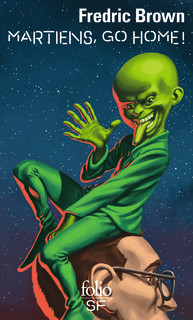
Such is the premise of this pulpy little novel by Fredric Brown,[3] whose alien visitors are described by Wikipedia thus:

The story begins on 26 March 1964. Luke Deveraux, the protagonist, is a 37-year-old sci-fi writer who is being divorced by his wife. Deveraux holes himself up in a desert cabin with the intention of writing a new novel (and forgetting the painful failure of his marriage). Drunk, he considers writing a story about Martians, when, all of a sudden, someone knocks on the door. Deveraux opens it to find a little green man, a Martian. The Martian turns out to be very discourteous; he insists on calling Luke ‘Mack,’ and has little in mind other than the desire to insult and humiliate Luke. The Martian, who is intangible, proves to be able to disappear at will and to see through opaque materials. Luke leaves his cabin by car, thinking to himself that the alien was but a drunken hallucination. He realizes that he is wrong when he sees that a billion Martians have come to Earth.

And here’s some more very suggestive details about these alien visitors:

They consider the human race inferior and are both interested and amused by human behaviour. Unlike most fictional Martian invaders, the Martians that Brown writes of don’t intend to invade Earth by violence; instead, they spend their wakeful hours calling everyone ‘Mack’ or ‘Toots’ (or some regional variation thereof), revealing embarrassing secrets, heckling theatre productions, lampooning political speeches, even providing cynical colour commentary to honeymooners’ frustrated attempts at consummating their marriage. This nonstop acerbic criticism stops most human activity and renders many people insane, including Luke, whose stress-induced inability to see the little green maligners divides opinion on whether he should be considered mad or blessed.

If this seems somewhat familiar, you may have had the misfortune of seeing the 1990 film, directed by David Odell and “starring” Randy Quaid and Margaret Colin — a movie so bad it hasn’t seen a Region One DVD release.[4]

But let’s stay with the book. Again, it may seem somewhat familiar, but for another reason: read with a Certain Eye, there are plenty of clues that these Martians are rather Semitic. Read more
Wagner Reclaimed: A Review of “The Ring of Truth” by Roger Scruton, Part 2

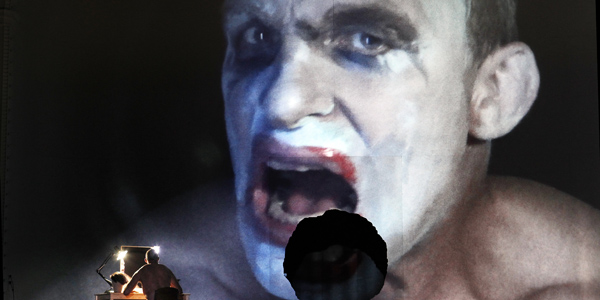
A scene from Neil Armfield’s 2016 Melbourne production of The Ring

Go to Part 1.

“Sarcasm and satire run riot on the stage”

Productions of The Ring in the modern era have invariably sought to satirize the drama to subvert the message Wagner attempts to convey. Scruton observes that, notwithstanding the increasingly tiresome preoccupation with dissecting the tetralogy for anti-Jewish and proto-fascistic themes and images (and counteracting them), The Ring is also, on a more basic level, problematic for opera producers because its “world of sacred passions and heroic actions offends against the sceptical and cynical temper of our times. The fault, however, lies not in Wagner’s tetralogy, but in the closed imagination of those who are so often invited to produce it.”[1]

The template for modern productions was set with the Bayreuth production of 1976, when Pierre Boulez sanitized the music, and Patrice Chereau satirized the text. Scruton notes that:

Since that ground-breaking venture, The Ring has been regarded as an opportunity to deconstruct not only Wagner but the whole conception of the human condition that glows so warmly in his music. The Ring is deliberately stripped of its legendary atmosphere and primordial setting, and everything is brought down to the quotidian level, jettisoning the mythical aspect of the story, so as to give us only half of what it means. The symbols of cosmic agency — spear, sword, ring — when wielded by scruffy humans on abandoned city lots, appear like toys in the hands of lunatics. The opera-goer will therefore very seldom be granted the full experience of Wagner’s masterpiece.[2]

This certainly describes the Ring I attended in Melbourne in 2016. While the soloists and the orchestra were excellent, Neil Armfield’s postmodernist, Eurotrash-inspired production detracted from the power of the music and drama. Following established precedent, Armfield set much of the action in a space akin to an industrial wasteland. He lampooned the heroic forging scene by setting it in a tawdry apartment replete with fluorescent lighting, microwave, bar fridge and bunk beds. Fafner (meant to have transformed himself into a dragon) was depicted as a transvestite-like figure smearing make-up on his face and later appearing naked on the stage (see the lead photograph).

Productions like these deliberately sabotage Wagner’s attempt to engage his audiences at the emotional level of religion. They let “sarcasm and satire run riot on the stage, not because they have anything to prove or say in the shadow of this unsurpassably noble music, but because nobility has become intolerable. The producer strives to distract the audience from Wagner’s message, and to mock every heroic gesture, lest the point of the drama should finally come home.”[3] Read more

Wagner Reclaimed: A Review of “The Ring of Truth” by Roger Scruton, Part 1

Roger Scruton is Britain’s (many would say the world’s) leading conservative philosopher and intellectual. His prolific output includes books on philosophy, politics, art, architecture, music and aesthetics. Scruton, who was knighted in 2016, writes with unusual clarity and fluency and is a model for how to combine analytical rigor with lucidity and accessibility. His critiques of leftist thought are, however, ultimately hamstrung by his unwillingness to stray outside the bounds of acceptable thought. Scruton has assiduously avoided straying into the forbidden fields of race realism or an honest discussion of the Jewish Question.

Despite his timid and ultimately ineffectual brand of intellectual conservatism, Scruton has much to offer readers on the Alt-Right. He has a profound knowledge of European high culture and particularly the Western musical tradition. His analyses of the German composer Richard Wagner are always insightful, and his 2016 book The Ring of Truth: The Wisdom of Wagner’s Ring of the Nibelung is no exception. It offers readers a rich account of Wagner’s masterpiece though an examination of its drama, music, symbolism and philosophy. Scruton’s goal is to interpret one of the supreme works of the European imagination to “show its relevance to the world in which we live.”

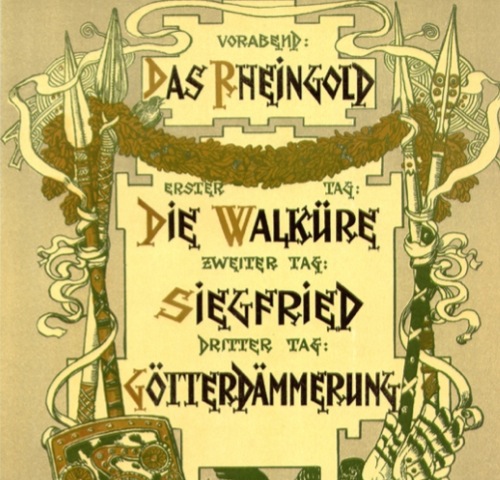
Wagner’s Ring cycle is enormous in every way. Performed over four evenings, and made up of Das Rheingold, Die Walküre, Siegfried and Götterdämmerung, it lasts some fifteen hours. Its composition began in 1848, a year when Europe was torn by nationalist and democratic revolutions, but not finished until 26 years later. The final product is widely considered the finest piece of musical theatre ever written, and even critics of Wagner grudgingly acknowledge the magnitude and importance  of his achievement, agreeing with Tchaikovsky’s assessment that: “Whatever one might think of Wagner’s titanic work, no one can deny the monumental nature of the task he set himself, and which he has fulfilled; nor the heroic inner strength needed to complete the task. It was truly one of the greatest artistic endeavors which the human mind has ever conceived.”[1] The German critic Wilhelm Mohr, who had originally dismissed Bayreuth as “cloud-cuckoo land,” left the 1876 premiere of The Ring comparing Wagner to the “two masters of all masters, Shakespeare and Beethoven.”[2]

The Ring began life as a single drama, devoted to the story of Siegfried’s death as Wagner had extracted and embellished it from his reading of the old German Nibelungenlied and the Icelandic Völsunga saga. The original is a far cry from the masterpiece that Wagner eventually composed from its useable fragments. He looked for a subject that would provide a suitably large-scale vehicle for his vision of contemporary German society and destiny. The result, notes Scruton, while “far from authentic as an account of Viking theology,” is nevertheless “a remarkable attempt to give coherence and meaning to the pagan narratives.”[3] The final product, which Wagner intended to “involve all life” encompasses an emotional spectrum wider than any other opera, from superhuman rage and self-annihilating heroism to the meanest of base emotions. Read more

Non-White Migrants and the Catholic Church: The Politics of Penitence

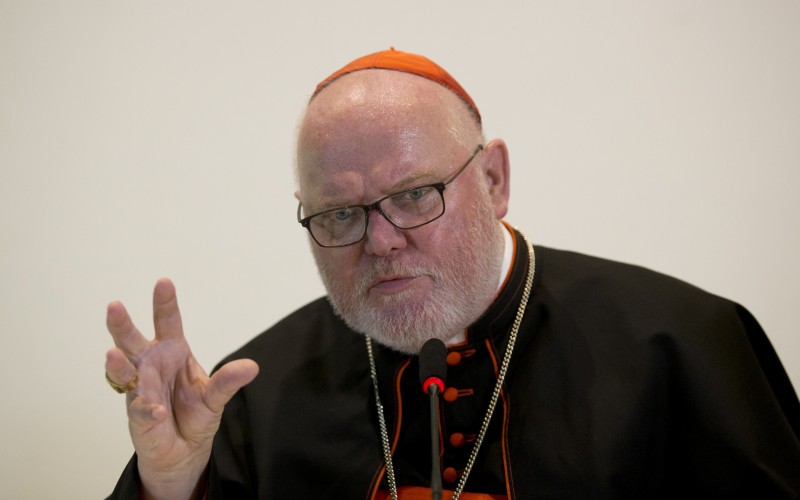
German Cardinal Reinhard Marx aka “multikulti Marx”

The word ‘Islam’ seems to have become by now, especially on the rightwing social spectrum, an all-encompassing code word for non-White residents and migrants.  Predictably, the so-called asymmetric or hybrid wars waged by the US and EU against the ISIS are creating a widespread, albeit still muted hatred against Arabs and Muslims among the majority of US and EU White Christians. Scenes of ISIS terror attacks in Europe and the US are additionally provoking feelings of hostility toward non-Whites, with more and more Whites calling privately for the expulsion of Muslims from Europe and the US.

The continuing mass arrival of non-European migrants into Europe and the US, accompanied by almost daily scenes of ISIS terror attacks — real or foiled — cannot be examined from the perspective of the religion only. Understanding the waves of non-White, largely Muslim migrants, as well as ISIS terror attacks, requires different angles of analysis, with each leading to a different and often mutually exclusive conclusion.

Undoubtedly, the easiest method to explain away the mass inflow of Arabs and African migrants in the West is by laying the blame on catastrophic conditions in their war-torn countries ruled by clannish and despotic rulers and plagued in addition by ISIS and Taliban bombers. However, blaming lower-IQ Arab and African migrants, or Muslim radicals as the only cause of political instability in Europe and the USA is a form of self-delusion.

The root causes of African and Arab mass migrations to Europe and the USA can be traced back to the grand scheme on how to reshape the Middle East and North Africa, doctored up in the 90s of the previous century by US neoconservatives. Later, in the early 2000s, as the first “pro-democracy” domestic upheavals started boiling in North Africa the upheavals were rebranded by the EU/US media into a cozy name  of “the Arab spring” as if young North Africans and Middle Easterners were all too eager to be cloned into a copy of happy go lucky White liberal Europeans. No to be forgotten is the earlier  PNAC scheme devised in the late 1990s by the prominent American Jewish neocons, including Irving Kristol, Norman Podhoretz, Paul Wolfowitz, and David Frum, whose goal was less the desire to raise the level of political tolerance in Arab states but rather the compulsive wish to double down on Israeli predominance in the  Middle East.  Fifteen years later the chaotic aftermath of the Arab spring is resulting in the surge of incessant local wars, dysfunctional and lawless states, mass migrations, and the global threat of terrorism.

An early example of “fake news” can be traced back to Western propaganda stories about the existence of “Weapons of Mass Destruction” ( WMD) in Iraq, a story which on the eve of 2003 Read more

The French Election: Adieu, la France

Mainstream media: Macron saving France (depicted as a White woman) by leading her to the glorious future of “openness and diverse modernity”

As anticipated by most observers, liberal globalist Emmanuel Macron and populist nationalist Marine Le Pen were selected by French voters to move on to round two in France’s presidential election, scheduled for May 7th.  For the first time in the 59-year history of the French Fifth Republic neither of the country’s two main parties, the Socialists and the Republicans, made the second round of presidential balloting. Either the socialists or the center right have run France since the 1950s, but with this election the old model has been shattered.

When the two-round system was created, it was expected that the main candidates of right and left would get around 30% in round one, and then rally satellite parties to their side for the run-off. But this time there were four candidates — with four very different versions of what to do next — all split nearly evenly at around 20%, so whoever is elected will be a minority candidate. The latest figures from the French Interior Ministry have Macron at 24%, Le Pen at 21.3%, while conservative François Fillon missed the runoff at 20%, Left-wing Jean-Luc Melenchon at 19.6% and Socialist Benoît Hamon at a paltry 6.4%.

By all accounts Macron, is likely to pick up the most votes in the runoff and will almost certainly become the next president. Marine Le Pen will fight a hard campaign, and her totals will rise, but it is almost inconceivable that she will win, according to the French and International press. Apart from this speculation, what conclusions can be drawn thus far? Read more

Differences between the Eastern European immigrant community in the US and the older German-Jewish establishment — and their commonalities

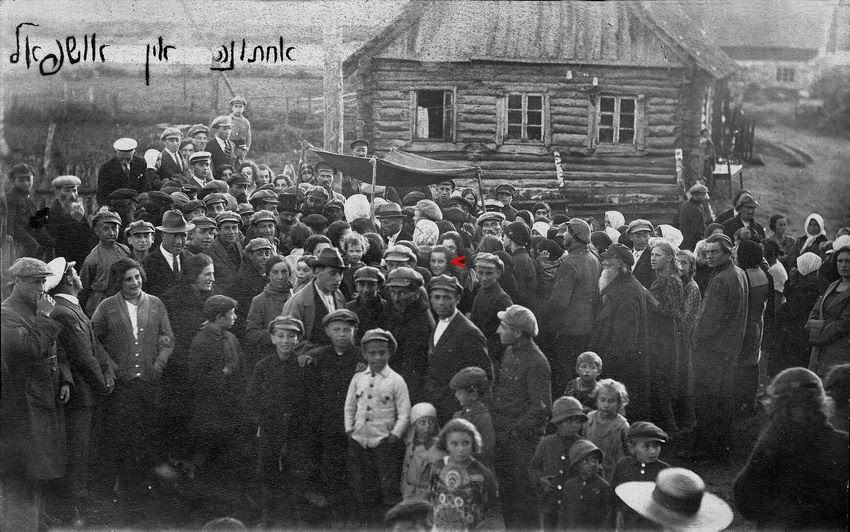
Eastern European Shtetl Jews; photos from “Rare Photographs and Images of Shtetl Life

In his VDARE article of April 22, “Eastern European Jews And The Case Of the Marginalized Elite,” Paul Gottfried claims that I fail to make important distinctions among Jewish groups:

Though Kevin MacDonald argues his theory about Jewish group behavior ably, I believe it is unwarranted to generalize about the social behavior of all Jews simply because of the behavior of Eastern European Jews. …We are clearly dealing with a group that embraces all kinds of Leftist causes, most of which have a destabilizing effect on what remains of a traditional Christian society. Let me repeat: I don’t find anything about this behavior that has characterized all Jews at all times (unlike MacDonald).

This article summarizes some of my comments on different groups of Jews, some of which may have gotten a bit lost in the shuffle. In fact, beginning with my first two books on Judaism, I have repeatedly discussed differences among Jewish groups (e.g., IQ differences between Ashkenazi and Sephardic groups in chapter 7 of A People That Shall Dwell Alone). This includes the important distinction between Eastern European Jews and Western European Jews, beginning with Chapter 6 of Separation and Its Discontents (1994) on Jewish strategies to minimize anti-Semitism.

It has often been critically important for Jews to be able to present a divided front to the gentile society, especially in situations where one segment of the Jewish community has adopted policies or attitudes that provoke anti-Semitism. This has happened repeatedly in the modern world. A particularly common pattern during the period from 1880 to 1940 was for Jewish organizations representing older, more established communities in Western Europe and the United States to oppose the activities and attitudes of more recent immigrants from Eastern Europe (see note 20). The Eastern European immigrants tended to be religiously orthodox, politically radical, and sympathetic to Zionism, and they tended to conceptualize themselves in racial and national terms—all qualities that provoked anti-Semitism. In the United States and England, Jewish organizations (such as the American Jewish Committee [AJCommittee]) attempted to minimize Jewish radicalism and gentile perceptions of the radicalism and Zionism of these immigrants (e.g., Cohen 1972; Alderman 1992, 237ff). Highly publicized opposition to these activities dilutes gentile perceptions of Jewish behavior, even in situations where, as occurred in both England and America, the recent immigrants far outnumbered the established Jewish community.

This difference between the Eastern European immigrant community and the German-Jewish establishment in the US is a central theme of “Jews, Blacks, and Race” (in Samuel Francis (Ed.), Race and the American Prospect: Essays on the Racial Realities of Our Nation and Our Time [The Occidental Press, 2006]):

Anti-Jewish attitudes that had been common before [World War II) declined precipitously, and Jewish organizations assumed a much higher profile in influencing ethnic relations in the U.S., not only in the area of civil rights but also in immigration policy. Significantly this high Jewish profile was spearheaded by the American Jewish Congress and the ADL, both dominated by Jews who had immigrated from Eastern Europe between 1880 and 1920 and their descendants. As indicated below, an understanding of the special character of this Jewish population is critical to understanding Jewish influence in the United States from 1945 to the present. The German-Jewish elite that had dominated Jewish community affairs via the American Jewish Committee earlier in the century, gave way to a new leadership made up of Eastern European immigrants and their descendants. Even the AJCommittee, the bastion of the German-Jewish elite, came to be headed by John Slawson [in 1943], who had immigrated at the age of 7 from the Ukraine.

The AJCongress, a creation of the Jewish immigrant community, was headed by Will Maslow, a socialist and a Zionist. Zionism and political radicalism typified the Jewish immigrants from Eastern Europe. As an indication of the radicalism of the immigrant Jewish community, the 50,000- member Jewish Peoples Fraternal Order was an affiliate of the AJCongress and was listed as a subversive organization by the U.S. Attorney General. The JPFO was the financial and organizational “bulwark” of the Communist Party USA after World War II and also funded the Daily Worker, an organ of the [Communist Party USA], and the Morning Freiheit, a Yiddish communist newspaper. Although the AJCongress severed its ties with the JPFO and stated that communism was a threat, it was “at best a reluctant and unenthusiastic participant” in the Jewish effort to develop a public image of anti-communism—a position reflecting the sympathies of many among its predominantly second- and third-generation Eastern European immigrant membership. Concern that Jewish communists were involved in the civil rights movement centered around the activities of Stanley Levison, a key advisor to Martin Luther King, who had very close ties to the Communist Party (as well as the AJCongress) and may have been acting under communist discipline in his activities with King.

Read more

The Laws: Plato’s Sacred Ethnostate, Part 4: Greek Unity and the Federation against Barbarians

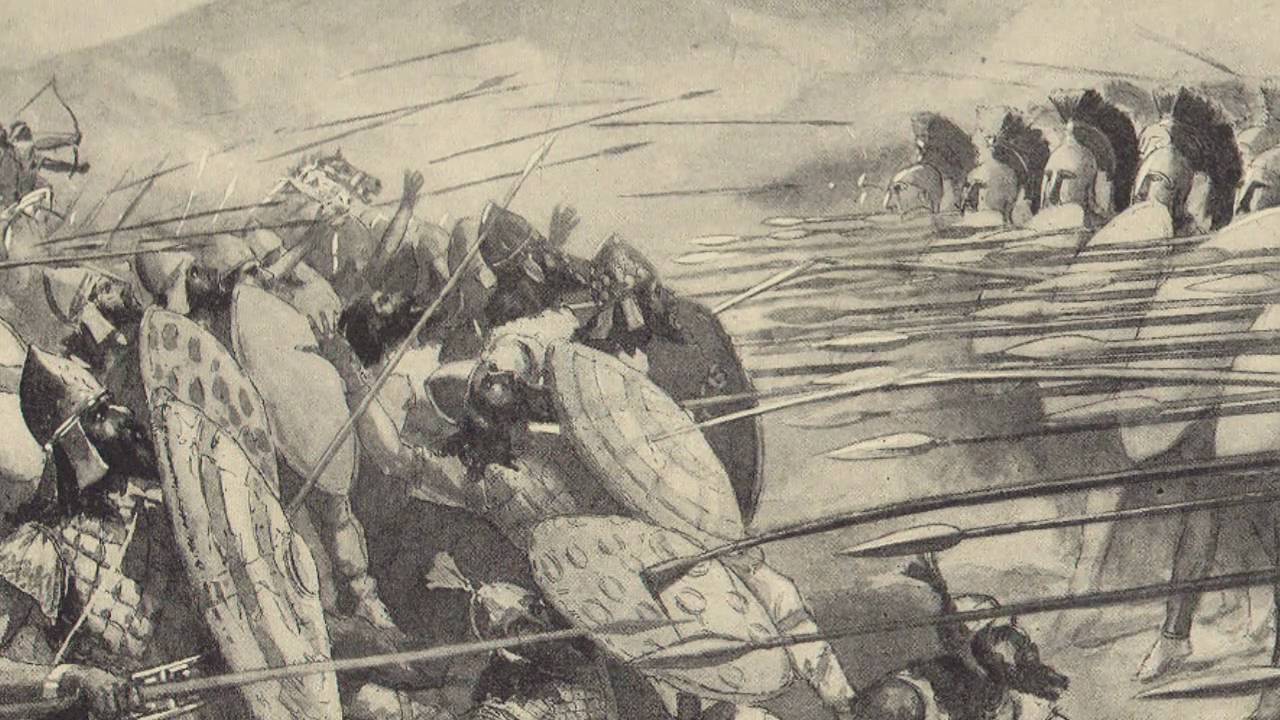
Greeks vs. Persians

Go to Part 1
Go to Part 2
Go to Part 3

Greek Unity: Federation against Barbarians

Beyond the family and city-state, the third concentric circle of kinship and loyalty is that of the league of cities or indeed the Greek nation itself. In the Republic, Plato had argued that Greeks should be gentle with one another on account of their shared blood, limiting their engagement in all-out warfare and enslavement to conflicts with barbarians. In the Laws, Plato returns to this theme, praising the federation of Greek city-states against foreign invasion.

After the family, the collection of families, and the city-state “being founded in succession over a vast period,” finally “we discover this fourth state” (683a), the generally loose and fractious leagues or confederations of Greek city-states as a potentially even higher form of social organization.

Plato discusses the mythical history of three city-states founded by the descendants of Hercules — Sparta, Argos, and Messene — which had together formed the Dorian League. The confederation was meant to protect not just themselves but the Greek nation itself:

Well then, it’s pretty obvious that they intended the arrangements they made to protect adequately not only the Peloponnese but the Greeks in general against any possible attack by non-Greeks — as for example occurred when those who then lived in the territory of Ilium trusted to the power of the Assyrian empire, which Ninos had founded, and provoked the war against Troy by their arrogance. You see, a good deal of the splendor of the Assyrian empire still remained, and the dread of its united organization was the counterpart in that age of our fear of the Great King of Persia today. Troy, which was part of the Assyrian empire, had been captured a second time [as recounted in the Iliad]. To meet such dangers the Dorian army formed a single unified body, although at that period it was distributed among the three states under the command of the kings (who were brothers, being sons of Hercules). (685b–d)

Plato laments however that the Dorian League was short-lived, despite the fact that all three cities were ruled by brothers: “if they had done as they intended and had agreed a common policy, their power would have been irresistible, militarily speaking” (686b). Read more