European New Right

Exploring the Nouvelle Droite

European Apostasy: The Role of Religion in the European New Right
Pawel Bielawski
Arktos, 2025

In 1990 Tom Sunic published Against Democracy and Equality.[1] It was the first book-length study of the European New Right in English, and it generated considerable interest among those on the American Right who had nothing but disdain for the Reagan-Bush conservatism of the time. Since then a wealth of Anglophone literature on the subject has become available. A worthy addition to this bibliography is Europe’s Heretics by Polish academic Pawel Bielawski. The book focuses on the intellectual leader of the New Right Alain de Benoist (b. 1943), with an emphasis on the sociology of religion, though Bielawski prefers phrasing it as the political science of religion. In any case there is not much theology in this study of religion.

Bielawski begins by stating that the Nouvelle Droite (ND) New Right is a metapolitical, not a political movement, and neo-paganism is at its heart. There were predecessor organizations, but the ND’s birth can be dated to January 1968 with the founding of the Research and Study Group of European Civilization (GRECE). De Benoist does not like the term Nouvelle Droite coined by the French media, but common usage has made the label stick, and like it or not, the ND is on the Right. What was new in the European New Right was its focus on cultural and philosophical ideas rather than political activism. When Andrew Breitbart informed the mainstream American Right that politics was downstream from culture, he was relaying what the ND had proposed 35 years earlier. Yet the ND readily concedes that it was adopting “Gramscianism from the right.” Antonio Gramsci (1891–1937) was an Italian Marxist theoretician who stressed changing cultural norms and values as the route to political power.

As Prof. Sunic noted in the work cited above, the Right has not “successfully infiltrated the cultural level of society in order to introduce another ‘counter ideology’ to the masses.” The Right has had disappointing results trying to turn electoral gains into cultural change. History seems to show a reciprocal relationship between culture and politics, they move side by side, but not in lockstep. One cannot proceed too much ahead of the other. Though they tout deeply flawed doctrines, the Left has proven over the last century to be more agile and innovative than the Right in the cultural sphere.

So de Benoist seeks to change society through ideas, ideology, and culture because “there is no effective action without a well-structured theory.” Yet the ND itself “has undergone fundamental changes over the course of its existence” leading to criticism that it lacks clarity and consistency. One example is de Benoist’s conversion to anti- racism. While he supports the ethnic and cultural integrity of European peoples and opposes further mass migration, he also opposes remigration and accepts the right of Afro-Asian migrants already settled in Europe to preserve their own ethnicities and cultures, and to have a “presence in the public space.”  How can any nationalist acquiesce to the colonization of his homeland by aliens? Well, de Benoist is not a nationalist, he is a regionalist, a federalist, Europe of 100 flags.

As its title and subtitle make clear, the book largely deals with religious issues. The ND has engaged in a harsh and comprehensive critique of Christianity which it believes has “alienated European peoples from their authentic, indigenous spirituality.” Christianity is individualistic, it seeks salvation for the individual soul. It is egalitarian—all are equal before God, and all are made in His image. And it is universal, there is neither Jew nor Greek, so go forth to all nations. In contrast, pre-Christian European religions were communal, hierarchical, and particular to a specific people. According to the ND, the Left, especially the liberal Left, is secularized Christianity.

The Nouvelle Droite would like to see a neo-paganism emerge to replace Christianity, but what would this twenty-first-century version look like? De Benoist is clear about what it would not be. It would not be an attempt to resurrect the old faiths, no worship of Zeus or Odin. It would not be New Age spiritualism with magic runes, etc. It would not even be a revival of existing folk customs and beliefs, even though some of these are authentic remnants of an old faith. Such cultural tenets survive in places like the Baltic States, once the last refuge of pagan Europe. Monsieur de Benoist sees these expressions as embodying peasant culture, part of the Third Order rather than the sacred First Order. More about that below. More telling is de Benoist’s rejection of naturalistic science-based belief systems advocated over the past 150 years by some of our best minds: Monism, German PhD zoologist Ernst Haeckel (1834–1919); Beyondism, British-born PhD psychologist Raymond Cattell (1905–1998); Cosmotheism, American PhD physicist William Pierce (1933–2002).[2]

A hint of an outline for the New Right’s neo-paganism comes from Georges Dumézil (1898–1986). Dumézil and his tripartite ideology are mentioned at least nine times in European Apostasy including in the conclusion which states: “Dumézil’s trifunctional structure occupies a symbolic and central place in the Nouvelle Droite system.”  Yet nowhere in the book is Dumézil’s trifunctional model explained.[3] Perhaps Bielawski thought his readers were already familiar with the three functions. Or perhaps he felt he could not do justice to this nuanced topic with a brief digression, but a brief digression is in order.

In the 1930s Dumézil, a renowned French philologist and anthropologist, hypothesized that from Asia to Éire all ancient Indo-European societies organized themselves into three orders or functions: the sacred, the martial, and the material.  The first order was characterized by divinity and sovereignty, and included priests, sages, wise men, and lawgivers. The second order were warriors, knights, sentinels, and guardians of the people. The third order, which included most of society, were the people, the folk, and the community. There is a question as to how open these orders were: rigid castes or fluid classes? There might also have been an element of the “ages of man.” In this arrangement all men were born into the third order, the sphere of the economy and domesticity, of production and reproduction. Men of the third order were husbands and fathers. The third order was also at times associated with happiness and material wellbeing—jovial burghers and prosperous peasants. The second order is associated with youth, often seen as comprising young, unmarried men, bands of brothers, and is also linked to tumult, violence, berserkers, etc. The first order can be seen as the elders, associated with order, stability, and maturity.  A reoccurring theme within the first and second orders was the resurrection of heroes, palingenesis, and heroic rebirth. Leaders such as King Arthur and Emperor Barbarossa are not dead, but only dormant or sleeping and will awake in a time of crisis to save their people. There were also tales of ghost armies, fallen warriors who rise to fight again. The Reconstruction Klan was imaged as Confederate war dead summoned to save the South.

Dumézil research created some controversy. In 1939 he published Mythes et dieux des Germains in which he noted some continuity between ancient Germanic myths and aspects of National Socialism Germany. Most scholars saw the book as an objective study. But decades later, Jewish Italian historian Carlo Ginzburg, writing in the journal Annales, accused Dumézil of “Nazi sympathies” based in part on the 1939 book. There might also have been an element of guilt by association. Dumézil was a personal friend and intellectual collaborator with Otto Höfler a member of the research organization SS Ahnenrbe. The Austrian Höfler was a respected academic not to be confused with fellow Austrian Karl Wiligut, SS RuSHA. Wiligut, a retired army officer and purported authority on ancient Germanic culture, turned out to be a fraud and an embarrassment to Himmler. The salient point is that although Dumézil was interested in the new Germany of the 1930s he was no national socialist. He was a French conservative nationalist with monarchist leanings.

All of the above is of some interest, but how Dumézil’s tripartite model would translate to twenty-first-century societies is open to different interpretations. It is definitely hierarchical and it values wisdom and courage over happiness and material comfort. Such an ideology is a tough sell to today’s Western populations. Yet the ND asserts: “The only way for Europe to regain its spiritual strength and overcome the present civilisational-spiritual crisis is to rediscover the pagan Indo-European roots of European culture.”

As mentioned there are seeming contradictions in the Nouvelle Droite. It laments the lack of collective identity in the West, yet rules out racialism and nationalism as sources for that identity. At present these are the only two ideologies with the potential strength to displace the globalist neo-liberal order. The ND sets up straw-men arguments to dismiss racial realities while claiming “that the very idea of internally homogeneous nation-states is an anachronism from the 19th century.” But the heterogeneous US is not to be emulated either.

Second only to his animosity towards Christianity is de Benoist’s antipathy towards American culture—political, social, and economic. For the ND, the U.S. is “an anti-Europe.” From the beginning “America took shape in opposition to Europe.” While there is much to criticize about contemporary America, these characterizations of our origins are not entirely accurate. The very name America comes from the European the explorer and chronicler Amerigo Vespucci. The seventeenth-century English colonists did not “go native,” but called their region New England, and strove to establish the old country’s social and economic system in a new land.[4] History and geography determined that America was never going to be a replica of Europe, but DNA determined that it would be Europe’s offspring. It appears that de Benoist’s negative assessment of America has clouded his judgment. He would rather see a mosque built in his town than a McDonalds. A fast-food joint is easily replaced, while a mosque once established might require violence to remove. To counter the pernicious American hegemony, the ND proposes Europe ally with Russia and the Third World. Russia’s neighbors, including Bielawski’s Poland, know that it is best to keep Russia at arm’s length rather than receive a bear hug. And are closer ties to the Third World a good idea?

Regarding Islam, de Benoist has relatively little to say. Doesn’t Islam possess many of the same characteristics—foreign origin, monotheistic, universal, and potentially totalitarian faith—that he finds objectionable about Christianity? But Islam opposes US hegemony, so it gets a partial pass. Bielawski turns to Guillaume Faye (1949–2019) for commentary on Islam. Next to de Benoist, Faye is the most widely known figure in the French New Right. He had an off again on again relationship with GRECE. He was a race realist. Though cognizant of America’s negative influence on Europe, he didn’t share de Benoist’s anti-Americanism. And he saw Islam as an existential threat to the West.   Faye characterized Third World migration as an “anthropological disfiguring” and “a demographic and ethno-cultural tragedy.”

The book does not deal with the Jewish question other than to point to Judaism as the source of the much maligned Christianity. The term “Judeo-Christianity” is often used to highlight the latter’s foreignness.

Bielawski identifies some sources that provided ideas and inspiration to the ND. Many of them are German: philosophers Nietzsche and Heidegger; conservative revolutionaries Oswald Spengler, Ernst Jünger, and Carl Schmitt, along with the Italian Julius Evola. For more recent influence,s Bielawski states: “Third Positionism and Nouvelle Droite come very close to each other in terms of doctrine.” But the Third Position has taken several iterations so it is difficult to precisely define it. Alexander Dugin’s The Fourth Political Theory is also mentioned, however Dugin’s support for the fratricidal Russo-Ukrainian War may have lessened his prestige and influence.  In perhaps another inconsistency, some see the ND embracing sociobiology and human ethology, yet the movement also appears to reject the role of human biodiversity on cultural development.

European Apostasy can serve as either as an excellent primer to the Nouvelle Droite, or as an interesting synthesis for those with more background. The useful bibliography even references a few Americans such as James C. Russell (The Germanization of Early Medieval Christianity, 1994) and Michael O’Meara (New Culture, New Right, 2013).

It is easy to criticize the Nouvelle Droite for its ambiguities and contradictions, and to question how culturally influential they have actually been. But they are correct on the very broad issues. The West is in a spiritual crisis. Revolutionary change, a culture revolution, is required. The extreme alienation felt by many can be, in large measure, attributed to a lack of firm collective identities—family, community, church, and nation. As usual it is easier to identify problems than to solve them.

How applicable is the French New Right ideology to the American situation? Should we be informed about the ND, rather than informed by it? Christianity is so embedded within the American Right that it is likely to remain a strong influence for the foreseeable future. Considering the religious conflicts our people have had in the past, true religious toleration is needed, with the caveat that no religion should be permitted to further a socially destructive creed. The ND’s anti-Americanism, while understandable, is not helpful. It would be better to accentuate our similarities rather than our differences. Looking to the future, it is likely that Europeans and European Americans will stand or fall together.


[1] Tomislav Sunic, Against Democracy and Equality: The European New Right: (Peter Lang, 1990).

[2] For more on this topic see: Nelson Rosit, “Ernst Haeckel Reconsidered” The Occidental Quarterly 15, no. 2(Summer 2015): 81–96.

[3] See: C. Scott Littleton, The New Comparative Mythology: An Anthropological Assessment of the Theories of Georges Dumézil (University of California Press, 1982).

For a beautifully written description of the three orders in medieval France see: Georges Duby, The Three Orders: Feudal Society Imagined, tr. Arthur Goldhammer (University of Chicago Press, 1980). Duby was a member of the Annales School whose interest in mentalities complements Dumézil’s research.

[4] Herbert Baxter Adams, probably the foremost American historian of the late nineteenth century and founding member of the American Historical Association, noted the cultural continuities between the English colonies and ancient Germanic communities in The Germanic Origins of the New England Town (Johns Hopkins University, 1882).

In Clown They Trust: The Farce and Foulness of Clown World

The Jewish genius Hannah Arendt was wrong about “the banality of evil.” Evil is often entertaining and interesting, combining both farce and foulness. That’s why the term “Clown World” was invented. It’s used by thought-criminals like Vox Day to describe governments, corporations, and churches in the modern West. We’re ruled by Jew-designed ideologies – black supremacism, transgenderism, feminism – whose elite enforcers are as evil and arrogant as they are incompetent and inept. In other words, they’re evil clowns. Among much else, the evil elite clowns are determined to tear down the borders that maintain society and civilization. For example, transgenderism is about elite clowns tearing down the border between male and female so that perverted men can indulge their fetishes by pretending to be women.

Elite clowns in America: Joe Biden is a puppet of Jewish power

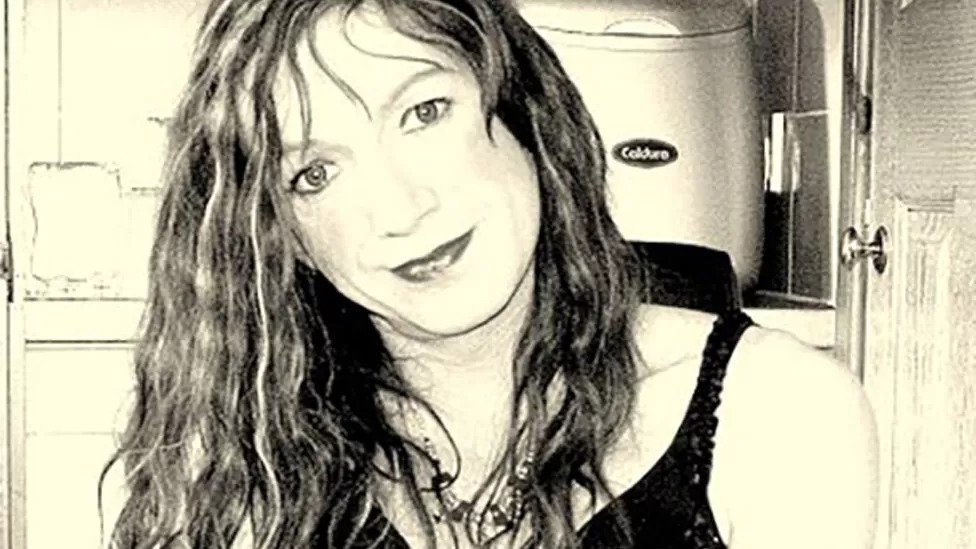
For an excellent example of that broken border and a trans-clown in action, take a Scottish criminal who has just hit the headlines in Britain. Dressed as a woman, a “transitioning” pedophile called Andrew Miller, also known as Amy George, went cruising for prey and tricked a pre-teen schoolgirl into his car. He then drove her to his home, confined her to his bedroom, and sexually assaulted her over 27 hours. In between sexual assaults, he refreshed his libido by watching porn and fetish videos on TV. He rejected the girl’s repeated pleas for freedom and told her that she was now his “new family.”

Silicone villainy

Then, understandably tired out by his transgender activism, he fell asleep. The girl was able to escape the bedroom, find a phone, and ring the police. When the police arrived, they found Miller still asleep and wearing “a bra, silicone breasts, female pants and tights.” In a subsequent interview, Miller told the police that he had been trying to “help” the girl. She looked “freezing,” he said, and tricking her into his car had been the “motherly thing” to do. And he had “put her in bed with me to warm up.” The transphobic police didn’t believe him. He was charged with abduction, sexual assault, and “intentionally causing a child under the age of 13 to look at a sexual image.” And with possession of “242 indecent images of children.” He later pleaded guilty to all charges.

Trans-clown Amy George, a.k.a Andrew Miller

That’s Clown World at its funniest and foulest. But it’s possible that stories like that help the transgender cause rather than harm it. I’ve argued in the article “Dykes Are Dull!” that leftists’ adolescent desire for novelty and entertainment is a big part of their support for translunacy. Unlike boring lesbians, “transwomen” are very entertaining. Like Jonathan Yaniv in Canada, Andrew Miller in Scotland is one of the many trans-clowns who have invaded female territory to indulge their sexual perversions. However, the left view such trans-clowns not with disgust, but as a misunderstood and marginalized minority. And because the evil of transgenderism is entertaining, it’s even more attractive to the left. Applying their core principle of “Preach Equality, Practice Hierarchy,” leftists have placed trans-clowns far above lesbians, let alone the straight women who don’t want trans-clowns in female toilets and dressing-rooms, or competing in female sports.

Importing non-White psychopaths

So don’t assume Miller’s farcical crimes will harm the transgender cause. They may do the exact opposite. Leftists are drawn to evil and want to be entertained. Trans-clowns like Miller satisfy both leftist needs. But I’m not a leftist and when I read about his crimes, I was reminded of another Scottish schoolchild who suffered even worse things because of Clown World’s war on borders. The schoolgirl abducted by Andrew Miller pleaded with him for freedom. He must have seen her fear and distress, but he rejected her pleas. Luckily for her, she got out alive. The Scottish schoolboy Kriss Donald wasn’t so lucky after he was abducted by a gang of vicious Pakistani criminals in 2004. The Pakistanis were in Scotland because elite clowns had opened Britain’s borders to violent and corrupt non-Whites. Kriss Donald too pleaded for freedom, but his abductors were unmoved by his fear and distress. They had abducted him at random because he was White and they murdered him in horrific fashion because he was White. Kriss Donald was doused in gasoline, set alight, then stabbed repeatedly and left to die in agony.

Kriss Donald and Mary-Ann Leneghan, two young white victims of Clown World

The following year, in 2005, a White schoolgirl called Mary-Ann Leneghan was abducted by a Black gang in England, raped and tortured over hours, then stabbed to death as she too pleaded for mercy. Again, the Blacks were here because elite clowns had opened Britain’s borders to non-Whites. But while White schoolchildren are victims of the war being waged on the West by elite clowns, non-White schoolchildren are trainee footsoldiers in that war. Take the great English county of Yorkshire. It’s still famous for the toughness and enterprise of its White natives, the grandeur of its landscapes, and the strength of its devotion to cricket. Now it’s also infamous for its Pakistani rape-gangs. But not as infamous as it should be. Clown World tried but failed to hide the horrors being inflicted on working-class White girls in the small Yorkshire town of Rotherham. Even worse has gone on in bigger places. We got a glimpse of that when more Pakistani rape-gangs preying on White girls were exposed in the Yorkshire town of Huddersfield in 2018, as I described in “Huddersfield Horrorshow.” In April 2023 Huddersfield is back in the news for its vibrancy:

Two stupid, violent and impulsive Blacks who have enriched Yorkshire courtesy of Clown World

Two teenage cousins who stabbed a 15-year-old boy to death as he walked home from school in West Yorkshire have been jailed for life. Jovani Harriott, 17, and Jakele Pusey, 15, murdered Khayri McLean after ambushing him outside North Huddersfield Trust School last year.

The judge, Mrs Justice Farbey, said the cousins had seen Khayri as their “enemy” and may have killed him in “revenge” for sharing a video online about a broken window at Harriott’s mother’s house. Det Supt Marc Bowes, of West Yorkshire Police, said it “will be hard for many of us to comprehend” how a “low-level dispute” ended with two boys “stabbing a fellow student to death at the end of an otherwise ordinary school day”.

Prosecutor Jonathan Sandiford KC said Khayri was killed in a “well-planned” attack on 21 September. Dressed in black and wearing balaclavas, the defendants waited in an alleyway before ambushing him as he walked along Woodhouse Hill with friends after school. Pusey shouted Khayri’s name while “jumping into the air” and stabbing him in the heart with a 30cm blade, the court heard. His cousin, who was 16 at the time of the attack, then knifed Khayri in the leg.

Khayri was pulled to his feet by his friends and tried to run away but collapsed. He died later in hospital. Harriott, who was 16 at the time of the attack, was convicted of murder in March while Pusey pleaded guilty to murder at an earlier hearing.

Mr Sandiford told the court Pusey had admitted murdering Khayri in a recording covertly obtained while he was in detention. During the conversation, the boy said he felt “no remorse” and claimed to have “slept better” since the killing, the prosecutor said. His lawyer Richard Wright KC, in mitigation, said Pusey – who was in a gang called the Fartown Boys – had been exploited and “drawn into a life” in which “he felt he belonged, was protected and accepted”.

The court heard the boy had told probation officers he was shot by masked men in a “gang incident” when he was 12 and had dealt drugs since he was 13. Det Supt Bowes, who led the police investigation into Khayri’s murder, said the “appalling attack” had “rightly shocked people across the country” and “highlighted the dreadful consequences of knife crime and the culture of carrying such weapons”. (Khayri Mclean: Huddersfield teens jailed for life over schoolboy stabbing, BBC News, 18th April 2023)

Note that Detective Superintendant Marc Bowes was playing a role often assigned to police officers in Clown World. They express incredulity about the way stupid, violent, and impulsive non-Whites can’t and won’t conform to White standards of behavior. But they don’t put it like that, of course. Bowes said that it “will be hard for many of us to comprehend” the savagery of the two Black boys in question. He was wrong. It isn’t hard to understand at all. Blacks evolved in the distinct environments of sub-Saharan Africa, where natural selection favored aggression and impulsivity over intelligence and self-control. Clown World favors the same anti-civic behavior in its Black footsoldiers. In America, the Black minority are the chief practitioners and victims of gun-crime. In Britain, the Black minority are the chief practitioners and victims of knife-crime.

Jew-puppet Joe Biden

The weapons differ, but the genetically mediated Black behavior is the same. So is the way that Clown World blames Black pathologies on White racism in both countries. For example, the evil and stupid movement known as Black Lives Matter (BLM) was invented by clowns in America and taken up eagerly by clowns in Britain. As Steve Sailer has tirelessly and irrefutably demonstrated, BLM has been responsible for a big increase in the number of Blacks murdered and maimed by other Blacks. And also in Blacks killed by dangerous Black driving. The evil elite clowns don’t care, because those elite clowns don’t genuinely care about the welfare of Blacks and other non-Whites. No, they genuinely care about only one thing: destroying the White West.

That’s why they wage war on borders, allowing trans-perverts to invade female territory and non-White savages to invade White territory. When the Jew-puppet Joe Biden said that “white supremacy” is “the most dangerous terrorist threat” to America, he meant that Whites are the biggest obstacle to the triumph of Clown World. But only if Whites wake up to how the elite clowns hate them and want to destroy their lives, their future, and their civilization. Fortunately, the arrogance and incompetence of Clown World will ensure that Whites wake up by the million. As the trillion-dollar farce of Afghanistan proved, clowns can easily start wars but they can’t ever win them.

Review: View from The Right: A Critical Anthology of Contemporary Ideas, Volume I

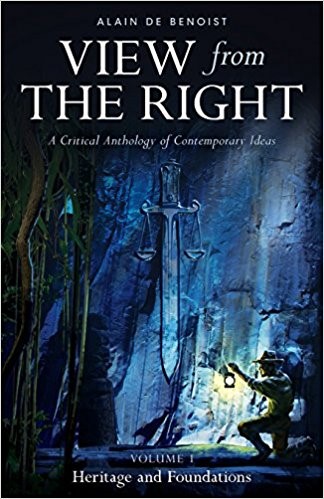
View from The Right: A Critical Anthology of Contemporary Ideas, Volume I: Heritage and Foundations
Alain de Benoist (Ed.), trans. Robert Lindgren
Arktos, 2017; orig. published, 1977, with an updated preface (2001) by de Benoist

After 40 years, and following translations into Italian and Portuguese (1981), German (1984), and Romanian (1998), we finally have an English translation of Alain de Benoist’s 650-page magnum opus. Vu de Droite: Anthologie critique des idées contemporaines was first published in 1977 when de Benoist’s GRECE (Research and Study Group for European Civilisation) think-tank was at the height of its influence. It took the French political and intellectual worlds by storm, receiving widespread attention in the mainstream press and winning the Grand Essay Prize from l’Académie française in June 1978.

It is little short of remarkable that we should have to wait four decades for an English translation of a text with such critical acclaim and intellectual pedigree. Credit for bringing about the English translation (published in three handsomely designed volumes and with an updated 2001 Preface) is due to Arktos Media, founded in part in 2010 with the goal of bringing the works of de Benoist to an anglophone readership. A final push to ensure translation of Vu de Droite was initiated in 2016, when seventy-three backers contributed a combined total of around $10,000 via kickstarter.com to bring the project to completion. The dedication and generosity of all involved was not in vain. Although we eagerly await the imminent publication of Volumes Two and Three, the first volume (published in late 2017) is an invaluable work in its own right. Intellectually thorough yet written with admirable economy and agility, View from The Right Volume I: Heritage and Foundations is a useful tool, an invaluable point of reference, and a resounding call to action which has lost none of its relevance or vitality in the decades since its first printing.

The central purpose of View from The Right is to break the taboo on the assertion of right-wing ideas and to present clearly defined intellectual positions (or pathways to positions) on a wide range of subjects as they pertain to right-wing thought. In Volume I, these positions pertain to matters of European racial and cultural heritage, and the broader foundations of contemporary right-wing ideologies. The author describes (ix) his intention to “prepare a portrait of the intellectual and cultural landscape of the moment, to establish the state of affairs, to signal the tendencies, to open the pathways and provide benchmarks to aid (and incite) the task of thinking in a world that is already in the process of considerable change.” For the most part, this effort takes the structural form of powerful and succinct essay summaries of the state of current mainstream scholarship on a number of crucial and fascinating topics. These summaries are then supplemented with commentary from de Benoist and developed still further in his very generous footnotes. Translator Robert Lindgren also deftly assists the reader by occasionally including his own useful commentary on the text, along with a number of very helpful translations and updates of de Benoist’s scholarly citations. Read more

Migrants: “humanitarian” interventions generally make things worse

The interview that follows was first published in Boulevard Voltaire; translated from the French by Tom Sunic

Q: The photo of that Syrian child stranded on the beach is now in the process of turning a new page in European opinion. In our epoch of “storytelling” it evidently suggests that the migrant issue is a “human drama.”

Of course it is a “human drama.” One must have dry heart or be blinded by hatred if not recognizing it. Muslims threatened by jihadist Islamism, entire families fleeing the Middle East destabilized by Western policies — of course this is a “human drama.” But this is also a political issue and even an issue of geopolitics. Hence the need to figure out the relationship between the political sphere and the humanitarian sphere. Well, experience has shown that “humanitarian” interventions generally only aggravate matters further. The dominance of the legal categories over the political categories is one of the major causes of the impotence of the states.

The migratory tsunami which we are witnessing is adding up to a disaster. First, there was a calculation based on thousands of refugees, then tens of thousands, then hundreds of thousands. As of now more than 350,000 migrants have crossed the Mediterranean over the recent months. Germany has agreed to accept 800,000 of them, far more than the entire registry of its own birth rates each year. We are way ahead of the interstitial immigration of thirty years ago! Faced with such an onslaught the European countries are asking themselves: “How are we going to welcome them?” Never do they ask themselves:  “How are we going to prevent them from coming in?” Even the French Foreign Minister Laurent Fabius considers “scandalous” the attitude of the countries wishing to close their borders. Will it be the same way when the number of migrants’ entries is counted by the millions? Will the politicians be then more concerned about countless “human dramas” happening in the world right now than about the common good of their fellow citizens? This is the heart of the matter. Read more

The Curse of Victimhood and Negative Identity

Originally posted at Arutz Sheva: Israel National News, January 30, 2015. Posted here with permission of the author.

Days and months of atonement keep accumulating on the European wall calendar. The days of atonement however, other than commemorating the dead, often function as a tool in boosting political legitimacy of a nation – often at the expense of another nearby nation struggling for its identity.

While the media keep reassuring us that history is crawling to an end, what we are witnessing instead is a sudden surge of new historical victimhoods, particularly among the peoples of Eastern Europe. As a rule, each individual victimhood requires a forever expanding number of its own dead within the context of unavoidable lurking fascist demons.

Expressed in the postmodern lingo of today, the modern media-made image trivializes the real death and dying into an image of a hyperreal and surreal non-event. For instance, the historical consciousness of Serbs vs. Croats, Poles vs. Germans, not to mention the victimological memories of the mutually embattled Ukrainian and Russian nationalists today, are becoming more “historical” than their previously recorded respective histories.

It seems that European nationalists do not fight any longer for their living co-ethnics, but primarily for their dead. As a result, as Efraim Zuroff correctly stated, “in post-Communist eastern Europe, [they’re] trying to play down the crimes of the Nazi cooperators and claim that the crimes of the Communists were just as bad.” (AS,” Top Nazi Hunter: Eastern Europe Rewrote the Holocaust,” by Benny Toker, Ari Yashar, January 27, 2015).

Yet Zuroff’s s remarks, however sharp, miss the wider historical context. Any day of atonement or, for that matter, any day of repentance on behalf of a victimized group, is highly conflictual, if not warmongering by its nature. Read more

Identity and Difference, Part 2: Identity

Part 1, Difference

Identity

The question of identity (national, cultural, etc.) also plays a central role in the debate about immigration. To begin, two observations must be made. The first is that there is much talk of the identity of the host population, but, in general, there is much less talk of the identity of the immigrants themselves, who nevertheless seem, by far, the most threatened by the fact of immigration itself. Indeed, the immigrants, insofar as they are the minority, directly suffer the pressure of the modes of behavior of the majority. Pulled to disappearance or, inversely, exacerbated in a provocative way, their identity only survives, frequently, in a negative (or reactive) manner by the hostility of the host environment, by capitalist over-exploitation exerted on certain workers uprooted from their natural structures of defense and protection.

The second observation is the following: It is striking to see how, in certain ways, the problem of identity is situated exclusively in relation with immigration. The immigrants would be the principal “threat,” if not the only one, that weighs on French identity. But that is tantamount to overlooking the numerous factors that in the whole world, both in the countries with a strong foreign labor as in those without it, are inducing a rapid disintegration of collective identities: the primacy of consumption, the Westernization of customs, the media homogenization, the generalization of the axiomatic of self-interest, etc.

With such a perception of things, it is too easy to fall into the temptation of scapegoating. But, certainly, it is not the fault of the immigrants that the French are apparently no longer capable of producing a way of life that is their own nor to offer to the world the spectacle of an original form of thought and of being. And nor is it the fault of the immigrants that the social bond is broken wherever liberal individualism is extended, that the dictatorship of the private has extinguished the public spaces that could constitute the crucible in which to renew an active citizenry, nor that individuals, submerged in the ideology of merchandise, turn away more and more from their own nature. It is not the fault of the immigrants that the French form a people increasingly less, that the nation has become a phantasm, that the economy has been globalized nor that individuals renounce being actors of their own existence to accept that there are others who decide in their place from norms and values that they no longer contribute to forming. It is not the immigrants, finally, who colonize the collective imagination and impose on the radio and on the television sounds, images, concerns, and models “which come from outside.” If there is “globalism,” we say too with clarity that, until proven otherwise, where it comes from is the other side of the Atlantic, and not the other side of the Mediterranean. And let us add that the small Arab shopkeeper contributes more to maintain, in a convivial way, the French identity than the Americanomorphic park of attractions or the “shopping center” of a very French capital. Read more

Identity and Difference, Part 1: Difference

Alain_de_Benoist

Alain de Benoist

Translated from the Spanish by Lucian Tudor 

* This was translated into English from the Spanish version titled “Identidad y Diferencia,” published in the digital journal Elementos: Revista de Metapolítica para una Civilización Europea, No. 47 (May 2013): 3-10. The Spanish text was the translation and combination of the original French articles titled “Le droit à la différence” and “Qu’est-ce que l’identité? Réflexions sur un concept-clef,” published in Eléments, No. 77 (April 1993): 24-25 & 44-47. The translator wishes to thank Daniel Macek for reviewing the translation and Alain de Benoist for approving of the translation.

Difference

The debate about immigration has raised in a sharp manner the questions of the right to difference, the future of the mode of community life, of the diversity of human cultures and of social and political pluralism. Questions of such importance cannot be treated with brief slogans or prefabricated responses. “Let us, therefore, oppose exclusion and integration,” writes Alain Touraine. “The first is as absurd as it is scandalous, but the second has taken two forms that need to be distinguished and between them there must be searched for, at least, a complementarity. Speaking of integration only to tell the new arrivals that they have to take their position in society as such and what it was before their arrival, that is much closer to exclusion than of a true integration.”[1]

The communitarian tendency began to affirm itself in the early eighties, in liaison with certainly confusing ideological propositions about the notion of “multicultural society.” Later it seemed to be remitted due to critiques directed against it on behalf of liberal individualism and “republican” universalism: the relative abandonment of the theme of difference, considered as “dangerous,” the denunciation of communities, invariably presented as “ghettos” or “prisons,” the over-valuation of individual problems to the detriment of the groups, the return of a form of purely egalitarian anti-racism, etc. The logic of capitalism, which, to extend itself, needs to make organic social structures and traditional mentalities disappear, has also had weight in that sense. The leader of immigrant minorities, Harlem Désir, sometimes accused of having inclined towards “differentialism,”[2] has been able to boast of having “promoted the sharing of common values and not the identitarian tribalism, the republican integration around universal principles and not the construction of community lobbies.”[3] Read more