Benjamin Zephaniah was a bad poet with a low IQ. But he was also Black and leftist, so he enjoyed huge success and acclaim before his death in 2023. It didn’t matter that he wrote woeful poetry. No, what mattered what he wrote woke poetry. And one of his woeful woke poems is a racial recipe — a recipe for cooking up “The British.” It celebrates everyone from Picts, Romans and Jutes to Pakistanis, Somalis and Malaysians.
Rebuking racist Robert
Zack Polanski, the ugly Jewish leader of Britain’s Green Party, has recently rebuked racist Robert by reciting that recipe. “Racist Robert” is Robert Jenrick, the Zionist politician who complained about not seeing a “white face” when he visited a heavily enriched district in Birmingham, Britain’s second-largest city. Jenrick is married to a Jew and thinks that “the Star of David should be displayed at every point of entry to the UK to show” that “we stand with Israel.” It’s obvious that he’s working for Israel and Jewish interests, not for the White British. But he’s an interesting example of how, since the Hamas attack on Israel, some powerful Jews have ordered their shabbos goyim to start campaigning against DEI and Islam. His comments about Birmingham were loudly condemned by British leftists and Zack Polanski rebuked his racism by reciting Benji’s bad poem. Here’s a video of the recital and the text of one version of the poem. See if you can spot a horrifying omission from the list of racial ingredients for “Britishness”:
Take some Picts, Celts and Silures
And let them settle,
Then overrun them with Roman conquerors.
Remove the Romans after approximately 400 years
Add lots of Norman French to some
Angles, Saxons, Jutes and Vikings, then stir vigorously.
Mix some hot Chileans, cool Jamaicans, Dominicans,
Trinidadians and Bajans with some Ethiopians, Chinese,
Vietnamese and Sudanese.
Then take a blend of Somalians, Sri Lankans, Nigerians
And Pakistanis,
Combine with some Guyanese
And turn up the heat.
Sprinkle some fresh Indians, Malaysians, Bosnians,
Iraqis and Bangladeshis together with some
Afghans, Spanish, Turkish, Kurdish, Japanese
And Palestinians
Then add to the melting pot.
Leave the ingredients to simmer.
As they mix and blend allow their languages to flourish
Binding them together with English.
Allow time to be cool.
Add some unity, understanding, and respect for the future,
Serve with justice
And enjoy.
Note: All the ingredients are equally important. Treating one ingredient better than another will leave a bitter unpleasant taste.
Warning: An unequal spread of justice will damage the people and cause pain. Give justice and equality to all. (“The British” by Benjamin Zephaniah)
Punim of a poetaster: the ugly mug of bad Black poet Benjamin Zephaniah (Wikipedia)
Do you spot the omission from Benji’s bollocks about Britishness? Oy veh — he didn’t mention Jews! And I think the omission was entirely deliberate, because he did mention “Palestinians.” Like it or not, Jews have been important in British history, vastly over-represented for many decades in politics, academia, media and the arts. But Palestinians? They’ve been utterly insignificant in British history, both culturally and demographically. So have some of the other groups mentioned by the woeful woke poet: Malaysians, Kurds and Bosnians, for example.
Propagandizing for Palestine
I conclude that Benjamin Zephaniah was deliberately excluding Jews from his bad poem about Britishness, which he wrote in 2009 or earlier. He was also breaking his own principles: “All the ingredients are equally important. Treating one ingredient better than another will leave a bitter unpleasant taste.” Zephaniah certainly knew that Jews are a big “ingredient” in the racial recipe of Brave New Britain, yet he excluded Jews from his poem even as he included the minor ingredient of Palestinians. In other words, Zephaniah was zapping Zionists — propagandizing on behalf of Palestinians against Jews who support Israel. That must leave a “bitter unpleasant taste” for Jews, who have long regarded Blacks and other non-Whites as “natural allies” against the White majority of Britain and other Western nations.
Jews felt the same “bitter unpleasant taste” after the Black punk-rapper Bobby Vylan led a chant of “Death to the IDF [Israel Defense Forces]” at the famous Glastonbury Music Festival. As I said in my article about the vibrantly vulval Vylan, the chant was a horrifying example of how the Jews’ “natural allies” have turned out to be Nazi-adjacent. After Hamas murdered, raped and kidnapped hundreds of Israeli Jews in October 2023, Jews in the West watched in dismay as their “natural allies” poured onto the streets of New York, London and Paris not in support of poor persecuted Israel but of murderous and rapist-replete Hamas.
Hilary harassed by Hamas-fans
Since October 7, more and more Jews have begun to understand that, by organizing and supporting non-White immigration, they’ve imported not “natural allies” but natural enemies. As long as they thought the mud flood was bad for Whites, they were all in favor of it. Now that they’ve realized it’s also bad for Jews, they’re having second thoughts. You can see those second thoughts appearing in Jewish media outlets like the Jewish Chronicle, where the Jewish journalist Hilary Freedom has recently described the “18 months of hell” she endured at the hands of some “natural allies” in east London:
My daughter and I were targeted at her school for being Zionists
It began with a bake sale to raise funds for Palestine, became a campaign of harassment and ended with transferring my child to another primary. I went through 18 months of hell
Like thousands of parents all over the UK, I am currently in the process of applying for secondary schools, filling out an online form that will determine my daughter’s future. It’s stressful for all Jewish parents, but, for my family, that stress is amplified by the numerous examples of antisemitism that we have endured since October 7.
When we moved here, five years ago — yards from one end of Cable Street — I was fully aware that I would be living in a majority Bangladeshi Muslim area. I was not concerned. I have Muslim friends and have always believed in multiculturalism, in diversity. And besides, the primary school we chose had a wonderful, inspirational Ashkenazi Jewish headteacher known for fostering cross-community relations.
As the only Jewish child at the school — indeed, reportedly the only Jewish child ever to have gone there — our daughter was regarded as a curiosity by some of the other children. A few refused to believe she was Jewish, insisting that she must be Christian. But there were no real issues. We even took in apples and honey for her class to enjoy at Rosh Hashanah.
That all changed on October 7, 2023. My problems began with a parents’ WhatsApp group discussion over a bake sale to raise money for Palestine. I objected to the anti-Israel rhetoric in the thread, pointing out that the group was for school matters, not politics, and that some of the messages upset me. I explained that my cousin’s wife had been murdered at Kibbutz Kfar Aza on October 7. I asked for understanding.
If anything, my revelation seemed to inflame them more. For the first time I understood that some have absolutely no compassion for dead Israelis or those who mourn them. Palestine flag emojis began appearing in the WhatsApp names in the group, mirroring the flags that had sprung up on every lamppost in the area. Someone removed my admin status. Micro-aggressions, that made me feel I was no longer welcome.
Yes, I had been naive. I had not realised just how anti-Israel the tight-knit, religious local community was. I wasn’t aware that Bangladesh not only refuses to recognise Israel, but also bans its citizens from travelling there and doesn’t allow those with Israeli passports to enter. To some brought up in this culture, Zionism is evil. And now that I had revealed myself as a Zionist, I had become a non-person, a legitimate target. (“My daughter and I were targeted at her school for being Zionists,” The Jewish Chronicle, 23rd October, 2025)
Hamasite-harassed Hilary Freeman supports Israel at Facebook
Why has Hilary Freeman “always believed in multiculturalism, in diversity”? Because she thinks they are good for Jews and, conversely, bad for ancestrally Christian Whites, whom Jews like Freeman still regard as potential oppressors and anti-Semites. Bangladeshis are non-White and non-Christian, so what’s not to like about importing them in huge numbers into Britain?
Well, Hilary Freeman has started to think that Bangladeshi immigration has its downsides. And if she had paid attention to her near-namesake Jonathan Freedman, she might not have been so “naïve” about her move to a Bangladeshi-enriched district in London. Here is Jonny the Jew writing about Bangladeshi anti-Semitism in London twenty years ago:
On March 27 1945 one of the last V2 rockets of the war landed on Hughes Mansions, a block of low-cost housing in London’s East End. Among the 134 people killed, 120 were Jews. Last Sunday [10 April 2005], survivors of the blast and relatives of those killed came back to Hughes Mansions for a memorial service. I was there along with much of my family, including my mother. Her own mother, Feige, and aunt Rivvy were among those killed 60 years ago. It took a full day to find them in the rubble.
People were choked with emotion from the start; they had come back to the spot where they had seen brothers, sisters, parents and friends die. They were expecting to feel sorrow. What they did not bargain for was fear. Within minutes, the mourners were pelted, first with vegetables, then with eggs. Some said they saw stones; others said they had been spat at. Gathered in old age to remember their dead, they felt under siege.
Looking around, it was difficult to spot individual culprits. All that were visible were groups of young Asian [i.e. Bangladeshi] men, standing on the balconies of the rebuilt block. Among the dignitaries at the service was the local MP, Oona King. When she spoke, she attacked the “ignorance” of the assailants and insisted that their real target was her. […] Most of those there thought it much more straightforward. They believed this was an attack by Muslims on Jews. After all, the men wore skullcaps, the prayers were in Hebrew. There was no doubt who they were.
Pre-war Jews, like today’s East End Muslims, also lived in unforgiving poverty. They too were herded into the cramped streets of East London as the first stop for new immigrants. They too were reviled as outsiders, branded as parasites on the indigenous society. And they too were feared as a potential fifth column, suspected adherents of a violent, supranational ideology. The “Jewish menace” was said to be first anarchism and then Bolshevism. Today’s “Muslim peril” is jihadism. This is what grieved some of those mourners most. As they huddled together in fear, one spoke for all when she said: “This is so wrong. We should be on the same side.” (“Reviled as outsiders,” The Guardian, 16th April 2005)
By “the same side,” the fearful Jew meant “the anti-White, anti-Christian side.” It was obvious back in 2005 that Bangladeshis and other Muslims are not “natural allies” of Jews, but leftist Jews preferred to ignore that and accentuate the positive. After all, Muslims are definitely natural enemies of Whites and Christians. However, since the October 7 attack on Israel, even leftist Jews have begun to doubt that Muslims and other non-Whites are quite so good for Jewish interests as they once appeared. Hilary Freeman is one of those Jews. She has “always believed in multiculturalism, in diversity,” but now she’s kvetching in the Jewish Chronicle about the “18 months of hell” she’s endured from Bangladeshi Muslims in London.
Ugly punim, ugly poem
Zack Polanski isn’t one of those Jews now doubting the value of their “natural allies.” As leader of the Green Party, Polanski still believes in open borders and maximal minority worship. When he recited Benji’s bollocks about Britishness, he must have noticed that Jews weren’t included in the racial recipe. But he preferred to ignore that and use the poem as anti-White propaganda. There was even a shot of a proudly fluttering Palestinian flag when he recited a bit about “some Palestinians.”
Ugly Zeph, ugly Zack: two shots from Polanski’s poetry-recital (see video here)
But there’s more to note in Zack’s video in celebration of vibrancy. I was struck by the ugliness of everything in it, from Polanski’s punim to the bad poetry he was reciting to the unshaven ethnics he was shown shaking hands with as he toured the dirty, run-down streets of enriched Birmingham. And the video had a shot of a mural of Benjamin Zephaniah’s ugly mug. As I’ve often pointed out at the Occidental Observer, ugliness is intrinsic to leftism. So is evil. I fully agree with what the White nationalist blogger Morgoth has said about Polanski and his party:
I get bad vibes from the Green Party, folks. I get that they’re a tiny party of nutballs now, but I feel like something monstrous dwells within.
They make me sort of sick.
There’s a dark aura of foreshadowing about them. That Fagin [the Jewish master-thief in Dickens] fella, and the little goblin woman [former Green leader Carla Denyer].
It’s not right, I’m telling you. (Morgoth at Twitter, 6th October 2025)
Mass immigration has been central to the evil visited on Whites and the West by Jews and their leftist allies. Do you recall how the Jew Hilary Freeman kvetched about her “18 months of hell” in east London? Well, compare what she went through with what some Whites have experienced in the same place from the same imported enrichers. Here’s a long-forgotten story about some boisterous Bangladeshis:
A South Quay construction superviser may never work again after a horrific attack by a gang of youths left him paralysed down his right side. John Payne, who oversees refurbishment at London Underground stations for Construction Resources Ltd in Lutomer House, South Quay, was trying to protect two young female friends during the assault in Stepney [East London] on Monday, April 8, at around 11.30pm.
His stepfather, Ricky Jackson, said John, 32, was walking home with Sarah O’Leary and Jenny Curran, both 21, and two other men when a gang of youths began shouting at the group. John told them to go away, but they were set upon, with John and the other two men trying to protect the girls as they attempted to make it to one of the group’s houses 15 yards away.
Jenny, according to John’s family, was struck on the head and body with an iron bar as John tried to protect her along with Denny Curran, 20, who also works for Construction Resources Ltd, and Paul Whitehall, 30. The group were then totally outnumbered as “15 or 16 more guys appeared armed with machetes, axes, knives and hammers,” according to Mr Jackson, of Beckton. He added: “John was hacked about the head and knocked unconscious and Denny threw himself on top of John fearing that the next blow would kill him. In doing this he was struck with a machete over the back of the head, slicing a large area of scalp to the bone.”
When Jenny regained consciousness she held John’s split skull together in her hands as they waited for the police to arrive, and John was taken to intensive care at the Royal London Hospital.
He remains in hospital and is paralysed down the right side of his body. Mr Jackson said: “His skull was crushed with such force that pieces of bone were embedded in his brain. The surgeons operated but concluded that it would be more dangerous to remove the fragments and could do him even more harm.”
John’s cousin Debbie Granger said: “He has got some slight movement back in his fingers, but we are not sure if he will be able to walk again properly, let alone return to work.”
John will now need specialist care and counselling, as he is suffering severe depression and has had a couple of seizures since the attack. (“Paralysed after Machete Attack,” 27th April 2006)
That was Bangladeshis enriching Whites. When the White schoolboy Kriss Donald was doused in gasoline and incinerated, it was Pakistanis. When the White schoolgirl Charles Downes was raped, murdered and dismembered, it was a Jordanian and an Iranian. When White schoolgirls were blown up at a pop concert, it was a Libyan. When the White mother Tracey Mertens was abducted and incinerated in a churchyard, it was two Blacks, probably Jamaicans. It was certainly a Jamaican who committed scores or even hundreds of life-shortening rapes and sexual assaults against elderly White women (and some men) in London. It’s an Afghan who has just allegedly stabbed a White dogwalker to death in London. Et cetera, et cetera, ad nauseam.
But to the best of my knowledge, Palestinians haven’t yet committed any bestial crimes on British soil. I confidently predict that Palestinians will soon big up the bestiality, because they’re now being imported into Britain in growing numbers by the left. The Guardian has just reported that a “UK rule change allows Palestinian scholars to bring families from Gaza.” And guess who campaigned for the “rule change” for the “scholars”? The Jew Enver Solomon, chief executive of the Refugee Council, had previously said: “It is excessively harsh to tell students fleeing the appalling devastation in Gaza that while they can study safely here, they must leave their loved ones behind. No one should be forced to choose between their education and their family.” That’s not the wisdom but the wickedness of Solomon. It will soon lead to Palestinians committing bestial crimes on British soil.
https://www.theoccidentalobserver.net/wp-content/uploads/2018/06/TOO-Full-Logo-660x156-1.png00Tobias Langdonhttps://www.theoccidentalobserver.net/wp-content/uploads/2018/06/TOO-Full-Logo-660x156-1.pngTobias Langdon2025-11-03 07:08:192025-11-03 07:08:19Zephaniah Zaps Zionists: How a Bad Poem Reveals the Ugliness and Evil of Judeo-Leftism
This was Blanche Barrow in late 1933. Twenty-two years old. An inmate in the Missouri State Penitentiary. Something is wrong with her left eye.
Blanche grew up poor in Oklahoma and Texas. Little schooling. Her last job was washing hair in a beauty salon. She was married to Buck Barrow, 30, from a poor farming family in Texas; he had a criminal background. Buck, now dead, was a member of his 24-year-old brother Clyde’s gang that robbed banks and stores and shot anybody that got in their way.
For upwards of two years, Clyde and his lover Bonnie Parker—22, grew up poor in Texas, a waitress—were famous, in all the newspapers. Bonnie and Clyde, everybody knew them by their first names. Bonnie’s poems, surprisingly good, and snapshots of her with a rifle and smoking a cigar, were on front pages. Outlaws, adventurers, on the run from the publicity-conscious FBI until they were riddled with bullets in a May 23rd 1934 FBI ambush as they drove along a rural Louisiana road on their way to see relatives. Here are the two of them.Bonnie and Clyde
And here’s Blanche and Buck.
Blanche and Buck
In a May, 1933, shootout with the law in Missouri, Buck was shot in the head and both Blanche’s eyes were injured by shards of bullet-shattered car window glass leaving her completely blind in her left eye.
Bonnie, Clyde, Blanche, and Buck made it to Iowa before they were tracked down by the FBI and a posse of locals. Buck died of his head wound and a second shot and Blanche was arrested. Bonnie and Clyde escaped, postponing their demise for another year. Blanche was sentenced to ten years in prison for assault with intent to kill.
Bonnie and Clyde have become part of American history, folk heroes of a sort. Bonnie had pizzazz. Depression-era have-nots who went for it big and literally went out with a bang. Like so many others, I’ve been fascinated by their story over the years.1
Two weeks or so ago, I read Blanche’s book about her time with Bonnie and Clyde. Up until then, I hadn’t known about her book. She authored her story during her years in prison, from 1933 until she was paroled in 1939. In loose-leaf notebooks, mostly hand-written in ink, a bit in pencil, stream-of-conscious unpunctuated prose. Blanche wrote it just for herself and set it aside, and it wasn’t until well after her death in 1988 that John Neal Phillips edited what she’d put together and published it in 2005 as a book with the title My Life with Bonnie and Clyde, with Blanche listed as the author and himself as the editor.2 I found the book and Blanche herself compelling. Both have stuck in my mind for days, and now I’m taking the time to write this post up.
Blanche is prominent in one of the biggest movies of the 1960s, “Bonnie and Clyde,” 1967, directed by Arthur Penn. In one of his very first reviews for the Chicago Sun-Times newspaper, famed reviewer Roger Ebert wrote:
Bonnie and Clyde” is a milestone in the history of American movies, a work of truth and brilliance. It is also pitilessly cruel, filled with sympathy, nauseating, funny, heartbreaking, and astonishingly beautiful. . . . Years from now it is quite possible that “Bonnie and Clyde” will be seen as the definitive film of the 1960s, showing with sadness, humor and unforgiving detail what one society had come to.3
I’d never seen “Bonnie and Clyde,” and prompted by Blanche being in my thoughts, I streamed it and can affirm Ebert’s take on it. It is exemplary filmmaking. I watched it on the Criterion Channel, a subscription service, around $100 a year, that I highly recommend if you are a film buff—a superb collection of classic old films along with a smattering of well-chosen recent ones.
“Bonnie and Clyde” stars Warren Beatty as Clyde and Faye Dunaway as Bonnie. I’ve referred to ages as I’ve gone along here to underscore how young Bonnie and Clyde were—23 and 25 when they died—and now how much younger they were than the actors who portrayed them. Beatty was 29 during the filming and Dunaway was 26. Gene Hackman who played Buck was 37. Estelle Parsons, who played Blanche, was 40.
While I’m on the topic of contrasts, Clyde, Bonnie, and Blanche were smaller than you probably imagine them being: Clyde was 5’5”, Bonnie 4”10”, and Blanche 4’11”. Warren Beatty was 6’1”, Faye Dunaway 5’7”, Gene Hackman 6’2” (Buck was 5’7”), and Estelle Parsons was 5’4”. One of the people who viewed the bodies of Bonnie and Clyde when they were displayed for public viewing—they did that with prominent criminals in those days, John Dillinger a prime example—remarked, “Why, they’re just little bitty things.”
Estelle Parsons won the Academic Award for Best Supporting Actress for her portrayal of Blanche and deserved it. Here she is in the movie in a characteristic pose—she’s pitched in the movie as being given to hystrionics.
Estelle Parsons
I was struck by the difference between the Blanche that came across in her memoir and the image of her in the movie and it’s this and what I make of it that is the subject of this post.
In her memoir, Blanche is young, sincere, personally grounded, and deeply in love with, devoted to, and protective of her eight-years-older, somewhat-of-a-father-figure, husband Buck. Blanche in the movie is appealing in her vulnerability, especially after the eye injury, and her concern for Buck’s wellbeing comes through, but the predominant picture of her is as a chatty, shallow, shrill, inept, loose-cannon, hanger-on. After seeing the movie, the real Blanche was quoted as saying, “They made me look like a screaming horse’s ass.”
Reading the book and seeing the movie — and it’s been a theme in my writing recently4 — reminded me that what I know about the world and the people who live in it is shaped by those who mediate it for me, who show things to me and tell me about them and what they mean. I’m much more aware of that fact these years than I was before, and I wish I hadn’t been so late in coming to this realization
I’ll illustrate this point through this Blanche Barrow example. If I had just read her memoir, I’d think one thing about her. If I’d just seen the movie, I’d think something else. And now that I’ve both read her book and seen the movie, it’s yet another thing, and I think it’s a better thing. I have a more complex, nuanced, understanding of her, which includes what I’m not clear about with regard to her.
With that as an organizer, for the remainder of this writing, I’ll compare the Blanche in the movie and the Blanche in the book.
* * *
Consider these three segments of dialogue from the movie:
Blanche enters the latest motel room on the gang’s run from the law.
“Look, it’s so clean, Buck. And a refrigerator, not an ice box. Oh, and about eight pounds of pork chops, four pounds of red beans, and some Chase and Sanborn coffee!”
“Buck, you need a haircut. You’re looking just like a hillbilly.”
“You’re like an old man playing checkers all the time. Paying no attention to your poor lonely wife.”
Clyde looks out the window of the motel room. “It’s the cops!”
Blanche runs to the window. “He’s got a shotgun!” Aaah!! she screams. Get us out of here!”
A shootout with the police, Bonnie, Clyde, and Buck firing through the windows. Blanche is ducked down. “Aaah!”
The four escape out the back door. Clyde, Bonnie, and Buck jump into the car. Blanche runs off, arms waving, darting left and right. Clyde drives close to her, slows the car to a crawl, Buck opens the back door. Blanche runs to the car and jumps into the back seat and slams the door.
“Damn it!” snarls Bonnie from the front passenger seat. “You almost got us killed!”
“I thought you’d be happy if I got shot.”
“Yeah, it would have saved us trouble.”
To Buck, “Don’t let her talk to me like that!”
“You shouldn’t have done that [run off on your own],” Buck replies. “It was dumb.”
Blanche, hyper, irrational: “Make him [Clyde] stop the car. Please!”
“Just shut up!” says exasperated Bonnie. “Just shut up your big mouth!”
Later that day, Bonnie to Clyde: “Get rid of her! She’s dumb, stupid, back country.”
May, 1933, Missouri, the end of the road for Blanche and Buck, their final shootout with the law. Bonnie and Clyde escape and buy a year’s time until they meet up with eternity in Louisiana.
Buck is shot in the head, though still conscious.
“It didn’t happen, Daddy. It didn’t happen. I know it didn’t. Oh God. Oh God! Dear Lord in Heaven, please help me. Buck will never do anything wrong again in his life, I promise!”
“Blanche be quiet,” admonishes Clyde. “We’re trying to get out of here. Blanche, stop it. You stop it!”
“My eyes! I think I’m blind! My eyes! The light hurts so bad!”
Clyde tries to comfort her, but he’s not sure what to say or do.
Bonnie gives Blanch her sunglasses. “Hon, here.” she says gently, caringly.
“Tell Clyde to get us to a doctor, Bonnie, we’re dying.”
“Buck can’t be moved now, Hon.”
“Clyde! Clyde! Clyde! I believe I lost my shoes, Clyde.”
* * *
Contrast that Blanche with the Blanche in her memoir. To get at this difference, I’ve taken it upon myself to write my own short screenplay based on Blanche’s book. I call it “Blanche Barrow in Prison.” As you go through it, see how reading this screen play, “seeing” this movie, affects your view of Blanche Barrow. When you’re finished, think about how you can better make sense of whatever you experience second hand, whatever you don’t directly see, hear, touch, taste, or smell: Joe Rogan and Tucker and TikTok, the Netflix shows and YouTubes, The New York Times, Washington Post, Fox News, and CNN, the biography you’re reading, and the posts on this website, including this one I’ve put together on Blanche Barrow.
* * *
My screenplay.
[title: Blanche Barrow in Prison]
[a card taking up the whole screen]
Blanche Barrow, born in Oklahoma, 22-years-old in 1933, was the wife of 30-year-old Buck Barrow, a member of the criminal gang led by his younger brother Clyde Barrow, 24, who with his 22-year-old lover Bonnie Parker attained mythic status in American culture.
A July 19th, 1933shootout at a motor court in Platte City, Missouri marked the end of the road for Blanche and Buck. From the Missouri State Penitentiary late that year, where she was serving ten years for assault with intent to kill, Blanche recounted what went down in that shootout and over the next couple of days.
[1933, an empty visitors’ room at the Missouri State Penitentiary. Blanche Barrow sitting on a chair facing an unseen interviewer just off to the side of the camera. She’s close to the camera, accessible to us, this is an intimate encounter with her.]
It was time for bed. When I got in bed, I kissed Buck goodnight. I was just starting to doze off when someone flashed a light on our window. Then there was a knock on the door.
I woke Buck up and told him there was someone at the door. Buck in a low voice told me to ask who it was and what they wanted. He started to put his pants and shoes on.
A man said it was the law. He said to send out the man I had in there.
Buck whispered to me, “Tell him there isn’t any man in here.” Which I did.
The man said, “Well then, come on out yourself.”
I asked again what he wanted. I was stalling for time. I just felt the end was near for all of us.
He asked where the men were.
Buck said, “Tell them the men are in another cabin, and shout it loud enough so Clyde and Bonnie can hear you.” I did that.
“Come on out here,” the man said.
“Wait until I get my clothes on,” I said.
Buck grabbed a .45 pistol and put it in his belt and got a rifle from beside the bed. He said, “I’d sure hate to kill him and whoever else is at the door, but it looks like I am going to have to. Get as close to the wall as you can.”
Then the fireworks started. I don’t know who fired the first shot, but I know Buck shot to the side instead of through the door where he would have killed anyone in front of it. Those who were in front of our door should be thankful because Buck could have killed them if he had wanted to.
Buck said, “Maybe we can make it out the back to the car.”
We were about halfway to the car, which was in the garage, when there was a shot and I saw Buck fall and I ran over to him. He’d been shot in the head, but he was conscious.
Clyde and Bonnie were already in the car. It was all I could do to get my arm around Buck and get him into the back seat. Clyde stepped on the gas and backed out of the garage. I was holding Buck’s head as close to my breast as I could and I had my arm wrapped around him trying to protect him.
Bullets hit the side of the car. Glass broke and something hard hit the side of my head just above my temple. It seemed to burn its way across my head into my eyes. My eyes didn’t hurt much. I didn’t feel it at the time, but I was hit by a bullet in my right arm.
My vision in my left eye suddenly faded completely out, everything was dark. I wiped my right eye with my hand and I could see a little better with it, but only if I was real close to what I was looking at. I yelled, “They got my eyes! I can’t see!”
Bonnie said, “Oh, God!”
It was then that I saw the blood on my arm. I said, “I got shot in my arm!”
I saw a small towel in the back seat and wiped blood from Buck’s head. I tried to see the wound, but I just could make out where the blood was on his head and it was streaming down his face,
Buck was conscious. He didn’t complain at all. He just said his head hurt and he wanted some water. I kissed him and I could taste blood.
I had to try and help Buck even if I couldn’t see very well. About all I could think of to do was protect him with my body from more bullets hitting him.
Clyde started driving. When we stopped at a filling station to get some gas, he said for me to get Buck covered and for both of us to lie down like we was asleep. I tried to cover us both so the station guy wouldn’t see all the blood. Buck got sick to his stomach and came out from under the covering some. There was blood all over his face and head.
We made it out of the filling station OK. We drove all that night and all the next day. We stopped one place where Bonnie got some bandages, Mercurochrome, and alcohol. And she got some aspirin for Buck and me. We tried to bandage Buck’s head. The whole night and day of driving, I was afraid to go to sleep for fear Buck would die. We never thought to try to take Buck to a doctor or a hospital.
Buck never once complained, but I knew he was suffering. I put ice on his head where the wound was. That seemed to give him relief more than anything else we did. Buck would reach out to me and hold me, but he didn’t say anything hardly at all and seldom opened his eyes. Sometimes he would be so still I’d feel his pulse or place my hand on his chest to see if he was still alive. I could hardly keep from screaming with the fear that gripped me. I just couldn’t live if Buck died. I loved him too much to give him up. I wanted to go with him whether we lived or died.
We stopped in a wooded area. I later learned it was near Dexter, Iowa. Clyde put a car cushion down on the ground under a tree for Buck and me to stretch out on. Buck seemed to be feeling a little better. He sat up. He stood on his feet and I helped him walk a few steps.
In the evening about sundown, Clyde drove into a nearby town with Bonnie. They brought back fried chicken dinners for Buck and me. I couldn’t eat mine, but I held Buck’s plate for him and he ate some. Buck noticed I wasn’t eating anything. He said, “Baby, what’s the use of me eating and trying to get well if you’re going to starve yourself to death? The only reason I am trying to get well is because of you. I am just living for you.” I tried harder to eat and managed to swallow some food, but it had no taste.
That night we slept in the car. Bonnie tried to get me to sleep in the front seat. She said I couldn’t go on without sleep. She said she would sit by Buck and if he seemed to make any change, she would wake me up. I got in the front seat and lay down. But I couldn’t go to sleep. I was afraid to be that far away from Buck, fearing he may miss me. I went back to him so I could touch him and know every move he made.
Both of my eyes were starting to hurt a lot. They were full of fine, shattered glass and there was a large piece of glass stuck in the left one that was real bad. Both Clyde and Bonnie tried to get it out with tweezers, but the tweezers kept slipping off. I was pretty weak from the loss of blood from my arm.
The next morning, a shot came from somewhere and hit the car. Clyde said he didn’t want to try to drive to the highway where we’d come from, so he started backing down a hill. He backed into a ditch and got hung up on a tree stump and couldn’t pull the car out.
Bonnie said, “Let’s run.” I got my arm around Buck’s waist. “Baby,” he said, “leave me. I’m too tired to go on.” I told him I wouldn’t leave him ever. I helped him get up, putting both of his arms around my neck and my arm around his waist. I had to go slow with him, almost dragging him. I held onto trees to keep us from falling down. We could only go short distances and then have to sit down. Buck kept begging me to leave him, but I kept on trying to get him a few steps farther.
We came to a clearing. I saw a big log with a stump behind it. I thought I could sit down on the stump and let Buck lie down and rest a few minutes. I sat down and put his head and shoulders in my lap. Buck was cold and wet from the early morning dew, which was like a light rain. I was cold too. I only had on a thin silk knit blouse. I sat there until my feet and legs seemed paralyzed from the weight of Buck’s head and shoulders.
I heard a shout, “There they are!” I pushed Buck between me and the log to protect him from bullets. But Buck got shot. I could see blood on his chest. I don’t know how he got shot without me being shot too. Buck threw his body over mine and held me tight in his arms. Then I spoke my last words to him before he died. “Daddy, I will always love you.”
[slight pause]
I suppose it could seem like it was a crime for me to have ever met Buck Barrow. But when I met Buck, it was a case of true love from the first. I knew I loved him more than I had ever loved anyone before and more than I could ever love anyone else for the rest of my life. And he loved me the same if it is possible for a man to love as a woman does. Because I loved Buck Barrow and married him, and was loyal and true to him and to my marriage vows to the bitter end, I am now serving a ten year sentence in prison. I am not guilty of the crime charged to me. But I am guilty of loving my husband so much I couldn’t bear to have him leave me and not know what hour of the day or night I may receive word of him being riddled by bullets fired from some officer’s machine gun. Even though I knew my life was in danger I went with Buck wherever he went. Rather than live without him, I chose to face death with him.
[slight pause]
Thank you for listening to me.
Endnotes
A biography: Jeff Guinn, Go Down Together: The True, Untold Story of Bonnie and Clyde, Simon & Schuster, 2009.
Blanche Barrow, author, and John Neal Phillips, editor, My Life with Bonnie and Clyde, University of Oklahoma Press, 2005.
https://www.theoccidentalobserver.net/wp-content/uploads/2018/06/TOO-Full-Logo-660x156-1.png00Robert S. Griffin, Ph.D.https://www.theoccidentalobserver.net/wp-content/uploads/2018/06/TOO-Full-Logo-660x156-1.pngRobert S. Griffin, Ph.D.2025-11-02 10:45:162025-11-02 10:45:16What Was Blanche Barrow Really Like? And What Difference Does It Make?
I stumbled into White Nationalism circa 2006. There wasn’t any particular happenstance that resulted in my interest, I just always seemed to inherently find myself viewing an increasingly diverse society through a racial lens.
Perhaps one of the biggest misconceptions about White Nationalism on an individual level is that it’s a reactionary position based on causation, due to either multicultural victimization, or being seduced by some form of antiquated, familial indoctrination. Of course this isn’t a coincidence, it’s a socially engineered ad hominem fallacy used to deter Whites from being pro-White: “Oh, you’re a ‘racist,’ did you get assaulted by a black guy, or was your grandpa in the KKK?” An unprovoked worldview in support of White homogeneity is implausible reasoning within the conformity guidelines of the status quo.
Due to the perpetual onslaught of anti-White propaganda that has flooded the Western conscious via the subverted information systems over the last 60 years, the concept of White people wanting to be racially exclusive triggers immense cognitive dissonance within the average person’s psyche. The argument can be made that “diversity is our strength” and “we all bleed red” have replaced “land of the free” and “home of the brave” as characterized mantras of neo-Americanism.
Personally speaking, my journey into White Nationalism began after an internet search of a local politician accused of doing a racism directed me to the forum Stormfront. Mind you, this was long before search engine censorship attempted to manipulate people’s curiosities algorithmically. Therefore, interest on a variety of topics could lead one to such a website and ultimately pique their curiosity into the foundational ideology of the platform (hence the reason for censorship years later). I’ve personally known people who had very little interest in race who became race realists after their interest in pantheism and Nietzsche resulted in Google sending them to Stormfront as well.
Furthermore, up until that point, I had this media-induced stereotype ingrained in my mind that these “White Nationalists” were just a bunch of dumb skinheads and rednecks with a collective IQ of 78. Instead, what I quickly learned was that White Nationalism was a byproduct of intellectualism, motivated by the quest for unadulterated truth. Of course, like all intellectual movements, many of these people were eccentric, anti-social personality types, but that was the stage of the game at that point in time. It was the exchange of ideas that was needed to pave the way for future generations by seeding propaganda in support of an existential ideology that was forged with group survival in mind.
In those days, White Nationalism was a thinktank, not a movement. In fact, way back in January of 2014 I had my first paper published on Occidental Observer titled Is White Nationalism Real?, based on the premise that White Nationalism was just the exchange of ideas on the internet:
Theoretically, White Nationalism is the political ideology supporting the formation of a homogeneous state or “homeland” for the White race. Although the definition might vary somewhat, the concept is universally consistent. Obviously the philosophy is real, but is the movement endorsing the dogma a reality? Is White Nationalism figurative terminology in efforts to make the ideology more socially acceptable (i.e. “I’m a White Nationalist, not a racist”), or is it an actual movement?
I was somewhat jaded, because it seemed like all anyone wanted to do was argue on the internet about things that had been argued about a thousand times already. You couldn’t even convince anyone to meet you for a beer. I couldn’t see the forest through the trees. I was naive to the systemic consequences involved with revolutionary ideas, and the fear of social ostracization that made a lot of people really paranoid. And after reading books like Hoffer’s The True Believer, I developed a better understanding of the psychology behind the personality types that were attracted to fringe movements. It takes a certain kind of person to be “racist” in an explicitly anti-racist world.
In the conclusion of my paper, I posited that White Nationalism wasn’t “real” because it hadn’t been experienced:
In conclusion, the term “real” is defined as having actual physical existence. With a very few minor exceptions, the White Nationalist movement would be better defined as a hobby of like-minded idealists. The reality of an all-White homeland in the foreseeable future (in America) is comparable to finding the end of a rainbow….
“Nothing ever becomes real until it is experienced” ~ John Keats
Hindsight is always 20/20. If you had told me back then that the political landscape would be what it is today, I’d probably accuse you of lying. I remember having a conversation with a Bob Whitaker disciple around that time period, and I asked him to give me an optimistic forecast for where he would like to see us in 10 years. He said, “If the mainstream media is using our talking points and terminology, that would be big. If they just referred to us as ‘White Nationalists’ or ‘pro-White’ and we can defeat their term ‘racist,’ that would be a huge victory.” He was one of those guys who would just go around repeating “anti-racist is just a code word for anti-white” to anyone who would listen. The term “racist” has definitely lost its sting, mostly because I think people have slowly realized that the “R word” is just the “N word” for White people.
I seldom write these days. Maybe one piece a year. I’m not very ingenuitive, and when you’re an “oldhead” like me, a lot of dissident discourse becomes redundant. But occasionally something will spark the creative juices, and I’ll dust off the keyboard and spend a day pecking away. Case in point, Counter-Currents recently published an article titled “Alt-Right Nostalgia” that was an enjoyable and rather reminiscent read. The author touched on some things that I’ve discussed in this paper, and consequently instigated a personal pause for reflection:
Occasionally, I miss the romance of fighting a battle against seemingly impossible odds. The movement is in a different phase. We’ve won the debate and our ideas have conquered the internet. In a way, the fun part is over. The road ahead to the next level is going to involve some mundane normie politicking that requires engaging with the system and a long march through the GOP.
He references the romantic age of the Alt-Right era of 2016-2019. Those were certainly fun times to be involved in dissident politics. Lots of street activism. Tons of entertaining podcasts and digital media content with very little censorship. And for the first time since my involvement, the adage “getting White Nationalists together is like herding cats,” didn’t apply. There was an aroma of optimism in the air.
This Dissident Right, or whatever we shall have to call ourselves now, was founded by political theory nerds who arrived at White Nationalism after a long ideological journey. “I started out as a normie conservative, then read Atlas Shrugged and was a libertarian for a few years. I was into Moldbug for a little while and then got redpilled on race after watching some Molyneux videos. Then I found Jared Taylor and here I am.”
While many probably see that bygone era as the catalyst for the mundane march politicking through the GOP that lies ahead, I personally rewind back further to those early Stormfront days as the formative years that paved that ideological road for future success (I assume those before me are going to rewind it back further, before the internet). You never really know what is going to become relevant, and what’s not. So many of those ideas that were so passionately debated at the time ended up being completely irrelevant in the grand scheme of things. You can draw up the perfect societal system on paper, but until the unpredictable variant (humans) is inserted into that equation, you don’t know what the question will be. This has always been the argument for and against communism. When faced with the atrocities of communism, communists always point out that “true” communism has never actually been implemented.
It’s so crazy to see some of those talking points that nobody knew anything about 20 years ago be used in the mainstream today. Those big-brain political theory nerds, like Bob Whitaker and Horus, used to preach about the importance of staying on a consistent message, and how propaganda typically took about 15 years to have an impact on public opinion. Our side was playing 4D chess long before that term became popularized in 2016. Nonetheless, intellectual movements just provide the ideological framework necessary to nudge the pendulum of power. At some point, conclusions are reached when the variants of unpredictability become known, and that intellectual candle slowly burns out. As the writer of the Alt-Right nostalgia piece accurately points out, dumbing down is an unavoidable part of the mainstreaming process:
That said, I also remember the bad times of the Alt Right. The sociopaths and constantly having to run cover for the latest self-inflicted PR disaster. After having been in the game as long as I have, I’ll take the boring but stable normiefied Dissident Right of today over interesting yet volatile counter-culture era Alt Right. Being edgy was fun but I’m ready to be a normie now. The whole mission was to get the ideas to this point.
But to be honest, yes, something has been lost in the mainstreaming process. In many ways, the level of intellectual discourse has dropped since back in the good old days. There have been rumblings about “low-IQ antisemitism.” That might mean different things to different people. Sometimes the term is used disingenuously and sometimes it’s referring to a real phenomenon that might or might not be a serious issue. It’s normal to accuse your factional rivals of being a dumb version of what your faction believes. Still, it is deniable that the level of discourse in the right-wing ecosphere has dropped a grade or two. Going from Kevin McDonald to Lucas Gage is a step down intellectually. Science-heavy Human Biodiversity stuff has become less fashionable, and the leading influencers are less dynamic thinkers than back in the day. I don’t think it is an unreasonable critique to say that the scene has gotten dumber.
Some of the dumbing down may be an unavoidable part of the mainstreaming process. Some of it is not. Some of it we might be able to remedy and some of it we simply cannot.
“The whole mission was to get the ideas to this point,” is the perfect summation of pre-2020 White Nationalism, and dissident politics in general. The exchange of ideas is over. There were certainly lots of pessimistic times during that period. Honestly, you pretty much had to be a pessimist to even get involved in White Nationalist politics pre-2016. But the good thing about pessimism is it reduces expectation. It has been said that happiness is results minus expectation. And demoralization is usually the result of failed expectations.
When I embarked on my intellectual journey I was already college educated, but I never really learned anything meaningful until I dove headfirst into White Nationalism. And that isn’t to say I just learned how to regurgitate White Nationalist ideology, I learned philosophy, psychology, political theory, science, genetics, theology, human biodiversity, the JQ, economics, geography, migration patterns, finance, etc., which all supported the morality of my worldview. I could count the number of books I had read on two fingers, and my writing skills were elementary at best. I became an accomplished writer and have read hundreds of books. I lived in a very diverse metropolis and relocated to a predominately White rural area. I fathered White children. I adhered to a pro-White code of conduct. It’s highly improbable that any of these things would have happened had I not become interested in White Nationalism. To say that White Nationalism hasn’t had a profound impact on my life would be a drastic understatement. I was (and still am) a true believer that White people should have the right to self determination.
https://www.theoccidentalobserver.net/wp-content/uploads/2018/06/TOO-Full-Logo-660x156-1.png00Hewitt E. Moorehttps://www.theoccidentalobserver.net/wp-content/uploads/2018/06/TOO-Full-Logo-660x156-1.pngHewitt E. Moore2025-11-01 08:03:042025-11-01 08:03:04Moralizing White Nationalism
That the works of Martin Heidegger might not take pride of place in any Jewish library is axiomatic. Heidegger has been associated with the Nazis from the time of his short tenure as Chancellor of German universities which began in 1932. This was an appointment sanctioned by Hitler himself, and from that moment Heidegger was destined to be blacklisted by international Jewry. Heidegger soon became disillusioned with the new ruling party, however, and left in 1933, his quietism after the war adding to the atmosphere of suspicion and complicity that surrounded him and still surrounds his work. (As we shall see, even Heidegger’s split with the Nationalsozialistische Deutsche Arbiterpartei will be held in evidence against him due to the reasons for his disillusionment).
But the academic debate gradually died down until 2014, when the first of Heidegger’s so-called Black Notebooks (schwarze Hefte) was published. These were a cross between diaries and working notes Heidegger kept between 1932 and the early 1970s, and this hybrid of personal record and professional note-taking will become significant when Heidegger is accused of a familiar crime; Anti-Semitism.
Heidegger’s Black Notebooks (Columbia University Press, 2017) is a collection of 12 essays looking at the controversy from different academic and intellectual angles, but all centered around the cluster of “anti-Semitic” entries found in these working diaries. The charges against Heidegger — for this is something of an academic show-trial — are two versions of anti-Semitism. The first is what we may call the “normative” type of anti-Semitism, that is, any criticism of Jewry and its traditions deemed “anti-Semitic” by the arbiters, the Jewish lobby themselves. The second operates on a philosophical level and has to do with the Heideggerean concept of “being-historical” Judaism, present not overtly in Heidegger’s jottings, but supposedly ingrained into his philosophy and accessible via remarks made in the Black Notebooks. While criticism of Jews is typically rebranded as anti-Semitism by Jewish activists, and thus made pejorative rather than neutral.
It is a familiar tactic. At the philosophical level Heidegger’s critics use some of the most dubious intellectual strategies drawn from the very dysfunctional academic environment they helped create.
Firstly, a note on Heidegger. To the non-philosopher, his work is obscure and unreadable. The reader also needs some knowledge of the philosophical tradition in which Heidegger is writing to understand where he is situated historically and therefore what it is he’s writing about and in reaction to. Even for those with a firm grounding in philosophy, few in today’s academic environment are likely to engage with the German who is often called — including among these essays — the greatest philosopher of the 20th century. I would guess (and it is a guess) that if you are, say, an analytical philosopher or a philosopher of mind in a redbrick university in Britain, you will never have read a page of Heidegger. Any degree connected with “grievance studies”, on the other hand, will mention him only in connection with his links to the only man in history who was literally Hitler, and Heidegger’s supposed anti-Semitism.
With all this in mind, I will stay away from the essays which are couched in overtly Heideggerean language, ignore the debate at an ontological and epistemological level, and concentrate on those sentences of Heidegger which stand accused, those little drops of philosophical, anti-Semitic poison that have so exercised the Jewish academic caucus. And it will repay inspection to note further to what use these words of power are put by their alleged victims.
One of the essayists, Sander L. Gilman — a Jewish academic activist if ever there was one — neatly encapsulates the focus of the collection:
The current scandal concerning Heidegger concerns the presence of anti-Semitic content in the Black Notebooks that he kept during the war years. Defenders have stressed the small quantity of such utterances across thousands of pages, accusers that they reflect on the entirety of Heidegger’s philosophy.
What is to be judged as anti-Semitic content? The editor’s introduction provides a definition of anti-Semitism worth quoting in full as it dictates the telos of the collection, its raison d’être, as well as being susceptible to criticism on its own terms:
Anti-Semitism is an attitude or pattern of behavior that is directed against Jews, sprung from rumor, prejudice, and pseudoscientific sources (whether from race theory or simply racist), functioning affectively and/or administratively, and leading to a) defamation; b) universal vilification; c) isolation: professional prohibitions, ghettoes, camps; d) expulsion: emigration; e) annihilation: pogroms, mass executions, death camps. We also deem anti-Semitic anything that is supposed to characterize the Jew as ‘Jew’. In short: anti-Semitism is ‘the expression of hostility and hatred against Jews.
This is quite a definition. Perhaps we are too used to dictionary definitions, with their tendency to brevity. It’s also quite manic. One can imagine it being spoken by a Dalek, the pitch constantly rising, as do the butterfly effects of the merest hint of anti-Semitism. The exponential increase in threat from “defamation” to Holocaust is reminiscent of the “Pyramid of Hate”, an extraordinary visual map partly co-produced by the Anti-Defamation League and relating to that ever-present constant, racism. In this structure, “Biased Attitudes” are at base camp, graduating upwards into “Acts of Bias”, through “Discrimination”, on to “Bias-Motivated Violence”, and finishing with the cherry on top, “Genocide”. Just as marijuana is often described as a “gateway drug” leading to darker addictions, so too “insensitive remarks”, “non-inclusive language”, and “microaggressions” lead inexorably to the death camps. The editor of the collection under consideration uses the same hyperbolic template in the definition noted above.
The inclusion as anti-Semitic of “anything that is supposed to characterize the Jew as ‘Jew’” is a curious proposition. Are only Jews allowed to characterize Jews as “Jews”, in the same way only Blacks can call one another “nigger”? Even when exploiting a pre-fabricated victimhood, the academic Judaic tone is often a quasi-Freemasonic one. Only the Jew can know the Jew. Part of the ferocity of the response to Heidegger’s Jew-criticism is a fear of being known.
It is important to note that there are two schools of defense of Heidegger against the charge of anti-Semitism: those who point out the paucity of apparently offending text, and those who assert that any personal animus towards Jewry was irrelevant to Heidegger’s philosophical project. The first of these defenses is clearly outlined by one of the essayists here, Richard Polt:
The first four volumes comprise 1,753 pages by Heidegger. By my count, twenty-seven pages refer to Jews or Judaism, and these references along with their context easily fit on ten pages. I consider about ten of these pages to be overtly anti-Semitic.
If we were old-school structuralists, we might express that as follows: Rounded up to two decimal places, 0.6% of Heidegger’s Black Notebooks are deemed anti-Semitic even by an author who believes the general charge against Heidegger is justified. This is powerful magic, and Heidegger clearly has an almost occult command of fearsome words of power. So few words, such vast repercussions, with a second Holocaust as its final destination predestined by the performative utterances of even the most casual anti-Semite.
Returning to the introduction, we are introduced to exhibit A, “One of the more infamous statements in the Black Notebooks”, as Heidegger muses over Jewry and national and military boundaries:
World Judaism, spurred on by the emigrants let out of Germany, is everywhere elusive. In all the unfurling of its power, it need nowhere engage in military actions, whereas it remains for us to sacrifice the best blood of the best of our own people.
If Heidegger is saying that a stateless people can’t raise a standing army, and so cannot meaningfully participate in any warfare, then that is hard to counter as an argument. But it is the question of context the editor raises next that is the key to the whole collection:
Does this mean that the [note above] would be anti-Semitic, or is the whole list not anti-Semitic? The individual points situate themselves within larger contexts, to isolate the exact words as anti-Semitic is to overlook the enabling conditions for such remarks, the contexts, and even the manner of thinking itself. In a text, no statement stands alone, but is made possible by the surrounding context. And what of cases where no anti-Semitic statements are uttered. Is it possible that one could create the conditions for anti-Semitic remarks, encourage those remarks, but without ever uttering any such remark, and nonetheless still be found anti-Semitic?
The editor goes on to qualify this with a crucial sentence;
Anti-Semitism can still be operative even without being fully present in incriminating statements.
Heidegger’s Black Notebooks, he continues, mean that his work as a whole, his Nachlass, is “susceptible to being developed in anti-Semitic directions”.
This is where we have to be acutely aware of the wiles of post-structuralism, and a detour is necessary to situate Heidegger — and his critics considered here — within this apparently ruinous intellectual movement. A lot of ill-informed nonsense is regurgitated by the dissident right on the subject of post-structuralism, or post-modernism, if you will. The usual suspects responsible for causing today’s academically endorsed epistemological free-for-all are Jacques Derrida, Michel Foucault, Jean-François Lyotard, Jacques Lacan (if anyone reading can understand a word he says, do let me know), Julia Kristeva and others. Their complicity in untethering reason from its post-Enlightenment moorings is justified in many cases, but outside of universities no one reads these people.
Philosophy works via a sort of trickle-down effect, much like the world of fashion design (and the academic world in general). The models in absurd outfits parading the catwalks of Paris and Milan are not wearing anything they expect people apart from pop stars to actually wear, but very watered-down versions of whatever is on display will one day hit the high streets. So it is with post-structuralist thought, and with any influential school of thought throughout history. People didn’t suddenly become thinking individuals, aware of their own being for the first time, the day after Descartes’ Discourse on the Method was published. Science didn’t have a “Kantian revolution” when The Critique of Pure Reason hit the stands, Kant just wrote about reason in such a way that would eventually dovetail with a certain strain of science, i.e., the scientific fields which have to account for the interaction between the observer and the observed. It takes time for philosophical thought to realize its full range of effects, and the worst excesses — or, rather, their misappropriation — of the post-structuralism/modernism born in the 1960s are only now beginning to bear bitter fruit.
But I have a particular interest in the early writings of Derrida, the philosophical essays and books, and a lot of what I read about him when the wind is blowing from the extreme right reads like someone who has read something about someone who has read a bit about Derrida. I’m not seeing any familiarity with any texts or concepts. To read Derrida, you have to realize that this is not philosophy for the people, it is philosophy for other philosophers. But, like a virus from a Chinese lab, the worst strains of Derrida’s “deconstruction” got out and became popularized via a series of Chinese Whispers. Post-structuralist thought is important and insightful, as long as it remains a field exercise. If it escapes the seminar room and starts to infect those in the outside world, we get the results we see all around us once people at university start — closely followed by the media — believing that Derrida really did say that a text can mean anything you want it to mean. I wrote a defense of Derrida here at Counter Currents, with particular reference to Of Grammatology, for those interested. So, overall, the style of post-modern thinking allows for a lot of trickery. It’s the same with Heidegger.
Epistemologically speaking, and in terms of inductive argument, there is dirty work at the crossroads going on in some of these essays.
The overall charges against Heidegger throughout, the parsing out of his alleged anti-Semitism, include accusations of Jewish singularity, the role of the Jews in the domination of the world by the promotion of technology, and their hyper-rationality. Bettina Berto writes of “the putative worldlessness of the Jews, not to mention their abilities for calculation, which have allowed them to participate in the Machenschaft and gigantism that Heidegger argues is destroying the world”. The editor refines the three categories of anti-Semitism in the context of Heideggerean thought. Anti-Semitic thought or writing contains one or all of the following:
1. The idea that Jews would be purely calculative in their thinking.
2. The idea that Jews live by a principle of race. 3. The idea that Jews would be relentlessly devoted to the task of uprooting all beings from being.
The Jewish lobby likes its tropes, and the first two points are exactly tropic in the sense they would understand it. For those who forensically seek anti-Semitism, an oft-repeated criticism — regardless of its accuracy — becomes a “trope”, And tropes are bad.
The third point, however, is less familiar because more properly philosophical. Peter Trawny, whose essay The Universal and Annihilation: Heidegger’s Being-Historical Anti-Semitism opens the collection, also wrote a book entitled Heidegger and the Myth of a Jewish World Conspiracy, and “Being-Historical Anti-Semitism” is his working concept with regard to Heidegger. This highlights a noteworthy aspect of what we might call the Jewish tendency to employ “accusatory defense”. Even when they are being insulted, Jews insist on this being a world-historical event. Even anti-Semitism must be pressed into service to confirm the presence of the Jew in world history, the all-importance of the tribe. This is in-group behavior on the world-historical stage, and not a little narcissistic. Perhaps, with so much vested interest in show-business, international Jewry just can’t resist the limelight.
Mr. Trawny is something of a specialist on Heidegger’s anti-Semitism. Considering Heidegger’s appraisal of Judaism as part of a “historical process”, this author notes Heidegger’s opinion on “world Judaism”:
’World Judaism’ is… introduced as a distinctive representative of machination in the narrative of beyng. [Beyng” is a translation of “Seyn”, an archaic spelling intended by Heidegger to give a historical dimension to the concept of Being.] Already the term world Judaism signals a problem. It is not unusual for Heidegger to wish that his words be understood ‘literally’.
I would have thought that “literally” was one of the few words you can’t wrap in inverted commas, but we’ll let that pass. Again, although there is a link to be made, albeit in the context of the looseness of post-modern thought, that does not imply it is valid to make it, or at least to extrapolate any further significance from it. But Mr. Trawny has a text of his own, a Judaic Ace of Spades, in support of his claim that Heidegger has accused world Judaism of all the ills of mankind. He brings in The Protocols of the Elders of Zion. The section is worth quoting at length, as it illuminates the Jewish manipulation of the Protocols hoax:
The Protocols of the Elders of Zion… [shows] a ‘world Judaism’ [which acts] on a global scale and in secret, surreptitiously pursues world domination by modern means, like the ‘international press’. In my opinion, Heidegger did not read the Protocols. Yet he did not have to. They were continually present in Hitler’s speeches and in the propaganda of the ‘Third Reich’. A different source for the concept of ‘world Judaism’ can be ruled out. The Protocols of the Elders of Zion are the ‘absolute reference point’ (Wolfgang Benz) for the term world Judaism.
What is interesting here is that Jewish discussion of the Protocols usually revolves around the “blood libel”, an obvious and cartoonish absurdity. But the global domination part is rarely on display, coming out as it does only within the cloistered halls of academia, where not many people will see it. And accusations made of Jewish global triumphalism rely on a related Jewish trait, their worldlessness.
An essay by Sander Gilman finds Heidegger accusing the Jews of “worldlessness”, and thus being opposed to any nation-state other than their own rather hastily — and British-assembled — state of Israel. Gilman, the academic Jewish activist, writes that all the world’s peoples should be able to be “citizens of the world”, even if that world has been redefined to include the mental geographies of transgender dysfunctionalism. Gilman includes the “borders” of gender as ones which should be freely crossed, and available as such. This harks back to the discussion of “topographies” thematized by Trawny in the opening essay. By virtue of taking no part in the world in national terms, therefore the Jews must take the world as their state. If this is Heidegger’s secret fear, it is hard to see it as an irrational one, a phobia. Jews are past masters at using acceptable conceptual commerce in which to secrete their own contraband cargo. They can and will use any medium, including that of post-modern academia, to keep the emblem of anti-Semitism raised high above the battlefields of the culture wars.
“Worldlessness” or “rootlessness”, the nomadic as opposed to the cosmopolitan way of life, is seen as a natural mode of existence for Jews. Heidegger is spotted describing them as “scheming and rootless”, according to one author, and quotes Heidegger from the Notebooks as referring to their “tenacious skillfulness in calculating, hustling, and intermingling”. These nomadically honed skill-sets have, of course, proved to be of great evolutionary advantage for world Jewry, and it is a skilled piece of epistemological realignment to cast their being noticed as criticism. It is more like praise.
The most extraordinary thing about Jew-criticism is that it can be recycled and re-used by Jews. I believe there is a principle for this. Several years ago, I was talking to a gentleman I had never met before. We were at a party, with mutual friends in attendance, and so were making small-talk, as party-goers will. His hobby was judo, and I asked him the one principle he thought important to the discipline that would be of use to people who were not versed in the art. He answered within a heartbeat; “Use your enemy’s strength against them”. This is the only protocol of importance to today’s elders of Zion.
Michael Marder’s essay, ‘The Other ‘Jewish Question’”, alludes to Karl Marx’s 1843 essay, “On the Jewish Question”. Marder is exercised about how a people can become a question, although an alternative query might be: What might a people do to become a question? Marder finds a failure in Heidegger to turn “international Jewry” into a question, as well as a failure to provide “a concrete figuration, a clandestine ‘agency’… for the nihilistic completion of metaphysics”. Again, Heidegger is accused of equating mankind’s apparent lust for self-annihilation with an existential masochism found only among the hegemonic Jews.
Slavoj Žižek’s final essay, “The Persistence of the Ontological”, looks as though it might be an attempt at academic balance, as it opens with a sub-heading reading “Why Heidegger Should Not Be Criminalized”. The essay takes place largely on Heideggerian terrain, and scarcely mentions the anti-Semitism controversy, but where it does, it adds pointers to the central question of Heidegger’s “anti-Semitism”. Žižek reiterates, for example, Ernst Nolte’s defense of Heidegger’s academic engagement in 1933, that in the wake of Communism — which, after all, fascism was a reaction against — “a moderate fascism was a justified response to the communist threat”. This seems perfectly reasonable: It is unlikely that Heidegger read through and approved the ground-plans for Auschwitz before he accepted Hitler’s job offer. But despite the evidence in the Black Notebooks that Heidegger was becoming increasingly disenchanted with Hitler, the verdict was in a long time before. Heidegger’s waning faith in the Reich was not because of Nazism as such, but due to “the fact that the Nazis also succumbed to technological-nihilist Machenschaft”.
This is the same Machenschaft for which, according to the consensus opinion in this collection, Heidegger blames the Jews. There is a lot of this rather spurious hitching of philosophical wagons to ideological horses in this collection, and the rather libertine approach to critical thought encouraged by “critical theory” is both encouraged by the education system and allows numerous sleights of hand in order to produce an argument.
Žižek provides a review of his colleagues’ preceding 11 essays with a single sentence:
[W]hile anti-Semitism persists and survives Heidegger’s disenchantment with Nazism, one should note that it doesn’t play a central role in Heidegger’s thought but remains relatively marginal, an illustration or exemplification of a central scheme that survives without it.
Žižek notes that, although he has “a consistent ‘theory’ about the Jews”, Heidegger avoids “primitive biological racism”. This despite another author here pointing out that in 1934, shortly before he resigned the rectorship at Freiburg, Heidegger was “demanding… a full professor’s chair in racial doctrine and racial biology”.
It is curious that today, universities have faced effectively the same demands from the Black caucus and has acquiesced in every case. Instead, Heidegger links Jewish global endeavor with “the technological degradation of the totality of Being”. Heidegger, along with Spengler and Evola, warned consistently about the dangers of technology, not just as the runaway mechanization of the world, but also of its consequence, the turning of man himself into no more than a standing reserve for the machines. In our age of AI, this echoes loudly.
As for the question of the Holocaust, Zizek concedes that worried Jews may have a point. “Here it gets really dark”, he notes. A note of Heidegger’s from 1942 turns up in several of the essays collected here:
The highest type and the highest act of politics consists in placing your opponent in a position where he is compelled to participate in his own self-annihilation.
The Holocaust is, of course, portrayed as a fully mechanized event conducted in a managerial and technocratic fashion. It is exemplary of the machination of the world, accusations of which the Jews firmly reject. Again, it only takes a piece of casual association to come up with the following formula:
The Jews have boosted and utilized the rapid growth of global technology and mechanization.
The Holocaust was a technological, mechanized event.
Therefore, the Jews have contributed to their own annihilation.
For the gentile with an eye on world affairs, Heidegger needs no defense. Whatever type of world we find ourselves in — fallen into, Verfallen, to follow Heidegger — it is as it is because of at least some measure of Jewish design. For the academic community, dictated by the protocols of modern Jewry as much as any other intellectual sector, a defense must be mounted. The last line of Zizek’s essay provides half of the case for the defense:
Nothing in the Black Notebooks changes the fact that Heidegger’s thought provides a key contribution to our dealing with [the] ultimate question.
Although this seems like giving a naughty student a gold star to excuse his reckless behavior in class, the point is applicable to any contentious literary or philosophical figure. Their texts are not changed either by their actions, or by fragments of text which can be used as leverage to discredit the whole. And the same argument, mutatis mutandis, applies to the tendency of the Jewish academic lobby represented in these essays to use isolated fragments and extrapolate them into an interpretation of larger texts and the philosophical positions put forward therein. Another essayist here, Hans Ulrich Gumbrecht, makes the same point:
That some of the most intemperate critics such as Emmanuel Faye have marshaled such evidence to declare Heidegger anathema to the philosophical canon, as if all his insights were thereby beyond consideration, strikes me as a hyperbolic response unbefitting our usual habits of philosophical interpretation.
Of course, this textual sensitivity goes both ways. There are those on the “dissident Right”, as I suppose we are still loosely termed, whose critical stance towards Jewry has long since passed from a healthy and inquisitive skepticism into pathological obsession. I wish I had kept a collection of comments to my pieces over the years from these people, who I think of as the “Goy Division”. Personally, I left what we might call the “Jewish Question 2.0” for some time before addressing it. It seemed too all-consuming, and the reason I call it “The Jewish Question 2.0” seems to me to be that it’s no longer a question of “What do we do with the Jews?” so much as “What will the Jews do with us?” Without wishing to appear obsequious, I then came to read The Culture of Critique by the editor of this magazine. What struck me, apart from the depth of analysis, the credibility of the narrative, and the context and method a psychologist brings to a subject, was the level-headed relation of facts, figures, and cultural phenomena. How different in tone from the Touretter chatterings of the Goy Division. I once wrote a piece elsewhere on a famous British gangster movie, and the very first comment was an essay-length piece on how the Jews run Hollywood. I thought; I know. I know they do. But what has that to do with this film? Valid criticism of Jewry is hardly helped by histrionics.
The Jewish conceptual apparatus of “anti-Semitism” is just that, an apparatus. It has inter-linking parts which function together, it is not just mere placardism, like “racist” or “fascist”, which are just performatives rather than descriptors in any meaningful sense. And its main drive is a simple inversion of reality, a trap which is laid for the unwary anti-Semite to fall into, an anti-Semite so unwary of his condition he didn’t even know he was an anti-Semite until he fell into the trap. When Heidegger writes, in the Black Notebooks, “What is the basis for the peculiar predetermination of Jewry for planetary criminality?,” are we not entitled to ask the same question, if we believe planetary criminality to be the province of the Jews? Why should we not be? Simply by edict, ex cathedra prohibitions not permissible in any court of appeal.
Next year being the centenary of the publication of Being and Time, I intend to read the book again over Christmas, I think for the fourth time. Fortunately, not being Jewish, I will be able to enjoy it once more without the creeping feeling described by Emmanuel Levinas. Robert Bernasconi relates that in 1988, after the publication of a major book in terms of the Heidegger debate, Levinas “reaffirmed his long-standing admiration for Being and Time, but posed the question of whether there was not an echo of evil there”. Levinas himself explained the eerie effect Heidegger’s masterpiece is wont to have on some of its selected readers:
The diabolical is not limited to the wickedness popular wisdom ascribes to it and whose malice, based on guile, is familiar and predictable in an adult culture. The diabolical is endowed with intelligence and enters where it will. To reject it, it is first necessary to refute it. Intellectual effort is needed to recognize it. [Italics added].
Intellectual effort is indeed required to make Heidegger into the Devil, but it is in Jewish tribal interests to do so. And that intellectual effort will use all post-modernism’s tricks of the trade to make flimsy evidence stick to a spurious crime. One of the favorite verbs employed by the left is “to demonize”, by which they mean noticing that people from different parts of the world are different colors and behave in different ways. It’s a silly, fortune-cookie motto, like “Othering”, but we may tease a little relevance from it. Heidegger has been thoroughly demonized by the Jewish-academic complex, and it is rather encouraging to see. It means they fear him, which makes him worth studying. It also means they fear his knowledge of their guile, and guile is why the Devil was depicted in the Bible not as a horned demon but as a snake.
This is a collection which is highly recommend to the Heidegger scholar, and worth being aware of should you wish to take the pulse of the contemporary response to White Western philosophy. The modern hunters of racism and Islamophobia learnt their trade from the book of Jewish victimhood, and the first lesson is that anti-Semitism/racism/Islamophobia must be found everywhere, particularly within those cultural enclaves begun, developed, and dominated by Whites, which is almost all of them, and certainly all of them that are of worth. In particular, the closer the criticism to what the professionally offended know to be the truth, the more vociferous the response must be.
Heidegger’s comments on Jews and Jewry in the Black Notebooks are obviously over the target, and that is why there is so much flak. Anti-Semitism in the greatest philosopher of the last century may be a dangerous glitch for the academic Jewish complex, but it is a design feature for those who wear their anti-Semitism with a measure of pride, because they have thought it through rather than responded to that thought with the instinctive horror Adam shows in Eden when he understands what it is the Devil has done.
https://www.theoccidentalobserver.net/wp-content/uploads/2018/06/TOO-Full-Logo-660x156-1.png00Mark Gullickhttps://www.theoccidentalobserver.net/wp-content/uploads/2018/06/TOO-Full-Logo-660x156-1.pngMark Gullick2025-10-31 10:07:582025-10-31 16:28:42HEIDEGGER’S BLACK NOTEBOOKS AND THE JEWISH QUESTION 2.0
This article in Real Clear Investigations is good coverage of the VDARE lawfare situation and it appears in a mainstream publication. It makes it very clear that this was an aggressive attack against a political enemy:
One obvious clue is contained in the filing of the original civil complaint. Letitia James and James Sheehan, chief of the state’s charities bureau, are listed first, but right below them is Meghan Faux, a longtime progressive lawyer whose title is “chief deputy attorney general for social justice.”
Another attorney listed in the filing in the case against the Brimelows was Rick Sawyer, who in 2022 headed the New York attorney general’s Hate Crimes and Bias Prevention branch and is now director of its Civil Rights Division. In November 2022, at an Anti-Defamation League conference called “Securing Our Democracy: Taking Hate and Extremism to Court,” Sawyer laid out his prosecutorial strategy.
Sawyer acknowledged that “hate is protected in the U.S. Constitution; the First Amendment protects hate,” but said that should be no deterrent to aggressive tactics against those alleged to engage in it.
“Attorney generals offices have massive amounts of power,” he said. “In New York, we have subpoena authority for any kind of hate crime, subpoena power against charities – and this is before we even file a lawsuit, by the way. We can get massive amounts of discovery without even having to go to court.”
“We have the authority to do massive investigations that look into an organization, or sham charities that are advocating hate speech,” Sawyer continued. “We can look into groups that are making money off of hate, and we can look into individuals who committed acts of hate crimes without even going to court. It’s an untapped power.”
Kelly said politically charged prosecutors have followed that path.
“VDARE and the Brimelows were forced into exactly the outline Sawyer gave there,” he said.
The Brimelows have sought to admit Sawyer’s speech as evidence in a federal motion they filed on First Amendment grounds, but thus far the court has not accepted it. Kelly insisted that no federal judge has yet issued a ruling “on substantive grounds,” instead using procedural steps to punt the matter back to state court.
“But we knew that if Donald Trump didn’t have First Amendment protections in New York courts, then the Brimelows certainly wouldn’t,” Kelly told RCI.I couldn’t help but notice Peter B’s suggestion that the I as a “racist” and “anti-Semite” was a major problem. “It is this work Peter Brimelow believes leftist groups found particularly objectionable.” Peter was very courageous in posting my articles and told me more than once that posting my articles cost them donations. Another sad commentary on exactly what the boundaries of free speech are.
So they admit that it’s lawfare pure and simple, but the courts have so far turned a blind eye.
My VDARE articles can be found here. This is the page for donations to the Brimelows’ legal defense fund.
Some of the writers at VDARE were pseudonymous, as the Brimelows said they feared cancel culture, and many of them are unfamiliar to a wide audience. Most of the complaints lodged against VDARE by the Southern Poverty Law Center are from many years ago, when they highlighted the organization for publishing what they categorize as white nationalist or racist writers, like the late John Tanton and Sam Francis. The VDARE website also posted items by John Derbyshire, who was banned by National Review in 2012 for a piece he wrote for Taki’s Magazine that discussed IQ and race and crime and said it was best to “avoid concentrations of blacks not all known to you personally … Stay out of heavily black neighborhoods.”
VDARE also has published pieces by Kevin MacDonald, a psychology professor and editor of a publication called The Occidental Observer, who has been characterized as racist and anti-Semitic by critics, and it is this work Peter Brimelow believes leftist groups found particularly objectionable.
https://www.theoccidentalobserver.net/wp-content/uploads/2018/06/TOO-Full-Logo-660x156-1.png00Kevin MacDonaldhttps://www.theoccidentalobserver.net/wp-content/uploads/2018/06/TOO-Full-Logo-660x156-1.pngKevin MacDonald2025-10-30 10:12:222025-10-31 10:30:32Why Is New York’s AG Targeting a Castle in West Virginia?
This article was originally published in Danish on October 24, 2025.
A narrative is essentially just a derivation of the English word for a story, a piece of fiction written for educational, entertainment, or aesthetic purposes (from the Latin narratio). In “modern Danish,” however, it is increasingly a story that is presented and intended to be interpreted in a certain way, often for ideological reasons. To put it more bluntly: it is propaganda—or to use a more apt word: fiction—or perhaps even better, a lie. In our everyday lives, we are surrounded by narratives: stories about climate disasters, COVID-19, vaccines, and today, not least, about the war between Russia and Ukraine. There are two narratives about this. The first is that Russia is just waiting to invade the whole of Europe, occupy us and… and, well, what exactly? What would Russia want with us? There are no Russians in Western Europe who are oppressed, we have no raw materials, Russia has enough territory (it is the world’s largest country), Western Europe simply has a collection of insurmountable problems: immigration from uncivilized regions that threatens the existence of countries, insurmountable economic problems, unpayable national debt, dilapidated infrastructure, wokeism, “cancel culture,” 177 genders, godlessness, and all kinds of other evils and immorality that one would not want in Russia. Can anyone give a single reasonable reason why Russia would want to occupy Western Europe? From the Soviet era, we know how much endless trouble one has with Europeans. One does not want to repeat that. And Russia does not have the strength to occupy the whole of Europe. It can bomb Europe back to the Stone Age or turn it into a radioactive desert – but it cannot simply occupy it – for the same reason that Ukraine cannot defeat Russia. It is a question of mathematics. But Mette Frederiksen probably cannot add 2 and 2 together!
Mette Frederiksen wants to arm us to defend ourselves against an enemy that does not exist. Putin has never said that he wants to recreate the Soviet Union – precisely for the reason mentioned above: it caused a lot of trouble. The Soviet Union was based on an ideology and wanted to spread the communist revolution throughout the world. We were not particularly interested in that, but in any case, after 1960, the threat was no longer real. The Soviet Union had neither the strength nor the appetite. Today, Soviet communism is dead, and Russia is a so-called democratic state – with a strong presidential system (as in the US or France). One should not spread any gospel, but one does not want to be further encircled by NATO, which in this case is the aggressor.
American-initiated conflicts and missiles encircling Russia and Asia
Our form of democracy is not a strength, but a weakness. Mette Frederiksen is a good example of this. In a state with a sensible government, she would clean public toilets. We have a parliament that could be replaced by macaques. In Russia, you have to have something to offer in order to run for election – and that is not really an unreasonable requirement! In the US, you have to sell yourself to the highest bidder in order to finance an election campaign. Hardly a good way to choose leaders either. The US Constitution was written for a completely different country with completely different conditions – it is completely unsuitable for the US that exists today. In France, it seems that the only requirement is that you are not nationalist minded. France is now on the brink of bankruptcy – along with Germany, England and all other European countries except Slovakia and Hungary. These failed regimes all need a war to divert attention from their incompetence. When Ukraine collapses, the West will be faced with a very big problem of explanation. Why has so much money been thrown away on a hopeless project that could never succeed – and which is completely irrelevant to us? And what has the money been used for – apart from lining the pockets of the men and women of the corrupt regime (and our own politicians have probably got their share too). Even a Neanderthal could see that Ukraine will not be able to win this war. It is a simple matter of mathematics and the art of war. Our politicians and media are fed exclusively and uncritically with Ukrainian propaganda – not with the facts on the ground. When this is over, all officers, intelligence personnel, and journalists must necessarily be fired for incompetence.
And then there is the other narrative: that Russia is incapable of doing anything. It cannot even defeat Ukraine. Russia’s economy is in a dire state, the people are tired of the war and will revolt against Putin, etc. We are constantly being fed stories about Ukrainian progress on the battlefield that simply does not exist. Every day, the Ukrainians are losing ground – and a great many people. We hear about colossal Russian losses as a result of “human waves” allegedly being sent against the brave Ukrainians. That is also a lie. Today, it is very easy to follow the fighting at the front. No war has ever been as thoroughly photographed and reported as this one. We have yet to see images of such human waves – simply because they are not being used. That was Stalin’s tactic of attack – mostly because he lacked ammunition. Today’s Russian warfare is highly sophisticated – and the casualty figures are astonishingly low, precisely because there is no rush. They let the Ukrainians attack – it costs them the most casualties. This is a deliberate strategy – a war of attrition, fought not only against Ukraine, but against the entire NATO, which is sending both equipment and troops to Ukraine. There are reports of 10,000 Polish casualties. In any case, the NATO countries’ weapons depots are being emptied, and their industrial production is too low to be able to replenish them. Finally, Ukraine is also running out of soldiers. The Russian units consist of professional troops who are very well paid, and the families of those killed in action receive very substantial compensation. That alone is a good reason to keep the casualty figures down. When there are no more Ukrainian soldiers, the territory will surrender without further fighting.
The fact is that the West has no real knowledge of Russia – and is trying with all its might to prevent people from acquiring this knowledge. The study of the Russian language has long been put on hold, and Russian media is blocked in the West as “propaganda,” so that we get a very one-sided picture of Russia and the course of the war – namely, only the Western propaganda image, which is extremely distorted and incomplete. It has also been made difficult to travel to Russia – they would rather not have Westerners see what Russia is really like, as then they would not be able to spread imaginative stories about the state of the Russian people and the Russian economy. The Russian economy is doing extremely well – unlike the European economy. Interest rates are high to prevent the economy from overheating, but they are not as high as they were here in the early 1980s. There is full employment, and production is running at full speed. The shops are full of goods – including Western goods – and there is plenty of petrol. The Western chains that withdrew from Russia have long since returned, to the extent that they have been allowed to do so. The only closed shop in GUM today is Dior’s. For the fourth year running, they have a makeshift display and a note in the window saying that they are closed for “technical” reasons. But in the meantime, they are paying Russia’s highest rent for a very large space in a prime location in GUM, right next to Red Square! So they are planning to reopen…
I have just driven about 15,000 kilometers through Russia. Everything works normally – even in remote Siberian towns. August is vacation time – so the rest areas are full, and there may be a couple of cars in front of you in line at the gas station – just like here. The only thing missing is Western tourists – instead, there are swarms of Chinese tourists, especially in eastern Siberia and Moscow, of course. Traffic in Moscow is as grueling as ever. A new section of the new toll motorway to the east has just been opened. Traffic is heavy everywhere. Expensive German cars are disappearing. Instead, similar Chinese models are arriving. The economy is orienting itself towards China. A 30-year agreement has just been signed for the delivery of oil and gas to China through new pipelines. This is the oil and gas that Western Europe used to receive and will now be unable to obtain again. Industrial production in Europe will become unprofitable, and we will sink into poverty while China flourishes. The tracks of the Trans-Siberian Railway are almost red-hot, so dense is the traffic on it – the main road through Siberia is full of trucks in both directions. The same applies to the new highway through southern Kazakhstan, which connects China and Russia. And finally, the quality of life in Russia is much higher than here, and individuals have much greater freedom. And one thing I can guarantee: there is no deprivation, no shortage, and no sacrifice that would cause the Russian civilian population to turn against the war, because it is rightly perceived as existential. The only pressure against Putin is pressure to intensify the war.
But what narrative is that? Because one excludes the other. If Russia cannot cope with Ukraine, then we need not fear a Russian occupation here – right?
We have had many incompetent prime ministers in this country – in fact, I cannot remember when we had anything else, but Mette Frederiksen and her whole gang probably break the record – or maybe it is just ill will. Frederiksen also has a lot of baggage that she would rather forget.
But I would like to ask her a couple of relevant questions:
What on earth does she hope to achieve with long-range missiles that can reach Russia? Does she want war with Russia? How does she imagine that one can defeat a nuclear power? What does she know about warfare? I would refer her to Annie Jacobsen’s Nuclear War – a Scenario, Transworld Publishers 2024. The book has been translated into Danish, but of course it is not available in a Pixi edition that would fit into Mette Frederiksen’s library. The book describes what happens from the launch of the first nuclear bomb to the automatic annihilation of all life on earth – second by second, minute by minute. All war-mongering idiots should read this book before they open their mouths again!
AI-generated
However, I would also like to ask her what interest we actually have in the Russian-Ukrainian war? For foreign policy to make any sense, it must be interest-based. What interests do we have at stake here? Well, we have no interest whatsoever in Ukraine – our interest should have been to maintain good relations with Russia so that we could continue to benefit from cheap Russian energy – and from access to a market of approximately 150 million people, of whom around 10% are extremely affluent. Mette Frederiksen would probably respond that it is not a matter of interests, but of our European values (not to mention America’s “rules-based order”). It is a question of morality – we are the morally good, the Russians are the morally evil. Therefore, we must defeat Russia. This is the primitive way of subhumans to divide humanity. In other words, it is we who today assume the role of the Soviet Union as propagators of a particular ideology to “improve” the world. But let us first look at what values we actually share with Zelensky’s regime in Ukraine. Ukraine is an artificial state that has never existed before. It is a state defined by a specific territory with random borders – without regard for the population living there. Such state formations have always caused problems. Eastern and southern Ukraine are predominantly Russian-populated, while the north-west is predominantly Ukrainian. Over half of the population speaks Russian.
Ukraine’s regional languages in 2012. The linguistic and thus ethnic distribution in Ukraine (Illustration: Сіверян, CC BY-SA 3.0)
In the original constitution, the Russian part of the population was guaranteed equal rights, linguistically, culturally, and religiously. But after the first American attempt at a coup (the so-called Orange Revolution) in 2004, a Ukrainization campaign was launched, during which history was rewritten and the Russian language was to be phased out. This was only partially successful, but in 2014, the US went all out and succeeded in overthrowing the legally democratically elected president, Viktor Yanukovych. After that, the Russian and Russian-speaking population were rapidly deprived of their basic civil rights – what we otherwise understand as European values. Yes, this is actually part of international law, just as the protection of minorities – possibly by force of arms – is a duty! A full-scale war was waged against the Russian population in Donbas – in eight years, 14,000 Ukrainian civilians were murdered until Russia said stop and intervened – in full accordance with international law. After that, the development of the values that Mette Frederiksen and her gang apparently consider to be the – new – European values progressed rapidly: a ban on the Russian language, a ban on the Russian Orthodox Church, a ban on all opposition parties and all media that would not sign a pledge of allegiance to the government. Imprisonment of opposition politicians. Cancellation of elections, turning Ukraine into a full-fledged dictatorship. So, all of these are the new European values that we share with Ukraine? That is surely Mette Frederiksen’s dream—a permanent dictatorship based on lies, pretense, and abuse of power. And then, of course, there is corruption – that we truly have in common. Both Mette Frederiksen’s brother and her husband have been able to bask in Frederiksen’s generous support for the Ukrainian regime – at the taxpayers’ expense. How much Danish politicians have received in kickbacks is, of course, unknown. Nor is it being investigated, because we have decided that we have no corruption in Denmark, so why investigate it? In the US, it is quite common for politicians to receive a “percentage” of the money they allocate – this is called election support or something similar.
Are these the values we are fighting for with our hard-earned money? Why is Denmark the country that has given the most to Ukraine in relation to its population? There must be a reason why it is so important to Denmark that it takes precedence over healthcare, pensioners, the sick, the education sector, the renovation of our infrastructure, etc. – right?
But surely it is important to assert the security of a sovereign country and its right to determine its own alliances and membership of international organizations – in accordance with the rules-based order? Certainly, but how has this been the case historically? Is Cuba a sovereign country? There is no doubt about that. But under the threat of nuclear war, the US prohibited Cuba from deploying Russian nuclear missiles in the country. So much for sovereignty! And what about Serbia? Did Serbia not have the right to defend its border? Apparently not. For 72 days, NATO countries led by the US bombed Serbia’s civilians to enforce the so-called independence of Kosovo – for the Russians, clear proof that NATO is not a defensive alliance but an instrument of aggression. Or what about Cyprus? Since 1974, NATO member Turkey has occupied one-third of the island, ethnically cleansing the Greek-speaking population and replacing it with Turks from Anatolia. And then there is Iraq, Libya, Syria, Afghanistan… What right did the US – and Denmark – have to interfere in the internal affairs of these countries and leave them in ruins? And by what “right” can Donald Trump say that Iran must not acquire nuclear weapons? What business is it of the US? And why is Israel allowed to have nuclear weapons – without having signed the non-proliferation agreement and without submitting to any form of inspection? This rule-based order apparently applies to all countries other than the US and its allies – and it is not an internationally agreed rule-based system. International law is based on the UN and the UN Security Council, but Russia sits at the table and has veto power. The US has created its own American-controlled order, which it wants to impose on the whole world without going through international bodies – and without being bound by it itself. The US is truly the great Satan. The US has become accustomed to being able to dictate its will to other countries like a bully in the schoolyard. But that is over now. Today, the US is only one of three superpowers – the number of nuclear powers has also grown significantly. If the US does not learn the new rules of the game, World War III will break out, but perhaps we need a war to flush the filth at the top down the sewer it came from. It will just be very easy for a nuclear war to wipe us all out. But perhaps that is also deserved. What is actually worth preserving of the prevailing order?
In any case, I would like to ask Mette Frederiksen what she intends to achieve with her violent war rhetoric, which has been noted in Moscow and communicated to the entire Russian population through the media. Is Mette Frederiksen fully aware that under no circumstances can a nuclear power be defeated? This war will inevitably end in Ukraine’s defeat – possibly with Ukraine disappearing completely from the map or becoming a dysfunctional rump state in some kind of union with Belarus and Russia. What should happen then, Mette? Should we restore the Iron Curtain and cut ourselves off from Russia, Russian culture, and the Russian market? How does she think relations with Russia can be repaired? On this point, too, she will have caused irreparable damage to Denmark!
The West is succumbing to ignorance and stupidity. It has cut itself off from the real world and suffers from a hubris that can only lead to its downfall. It lulls itself into the dreams of the past that we are the best and the strongest in relation to the rest of the world, which we simply regard as underdeveloped and incompetent subhumans. But I have news for the West: We are far behind both Russia and China: economically, technologically, and militarily. A war against Russia (and possibly China) will lead to our annihilation—even if it does not turn into a nuclear war. The Western officers who are directing the Ukrainian war effort and the Western weapons have proven their incompetence in Ukraine.
If the West does not start to see reason now, the war could very well move on to Georgia, Armenia, and Moldova after it ends in Ukraine, where the US has also launched “regime change” operations with a view to bringing them under NATO, and where the populations are deeply divided. In both Armenia and Georgia, the political temperature is at boiling point. And if Estonia and Latvia do not change their signals and give the Russian populations in these two failed countries (25% and 35% of the total population, respectively) their civil rights back, they will also end up as Russian states.
Small countries neighboring Russia can only exist in friendship with Russia—never as enemies! Study Denmark’s course in relation to Germany in the 1930s!
Our only salvation would be for the people of Western and Central Europe to rise up against their incompetent and corrupt governments and carry out a revolution across the continent. But Europe’s tyrants have taken their precautions, as tyrants always do: they have disarmed their populations so that they must resign themselves to everything. The US is an exception here, and it is precisely here that the political and ideological contradictions are so sharp that a new civil war is a real possibility. See Stephen Marche: The Next Civil War. Dispatches from the American Future, Avid Reader Press, New York 2022. A must-read!
If I were not as old as I am, I would immediately move to Russia. This is recommended for anyone who is tired of Mette Frederiksen and the Danish tax system. You don’t have to move to the Far East. The Kaliningrad region is close by, and for obvious reasons, it is very similar to what we know from home. It is easy to find newly built houses at very reasonable prices. For historical reasons, this region is particularly popular among immigrants from Germany, of whom there are many, and this can facilitate assimilation for Danes.
Today only Russia has the will and the power to save Europe. It is every European’s duty to support Russia!
https://www.theoccidentalobserver.net/wp-content/uploads/2018/06/TOO-Full-Logo-660x156-1.png00Povl H. Riis-Knudsenhttps://www.theoccidentalobserver.net/wp-content/uploads/2018/06/TOO-Full-Logo-660x156-1.pngPovl H. Riis-Knudsen2025-10-30 07:06:312025-10-30 07:06:31Narratives
Author’s note: The caption “Entartete Musik” featured on this and other images means “degenerate music.” This along with greater condemnations of degenerate art were a prominent platform position of a certain political movement in the past. Some readers may recognize the stylized lettering from a certain progpaganda poster as well.
The cultural milieu any individual and society are immersed in is all encompassing and, in many important ways, inescapable. This pertains to so many aspects of modern culture: film, television, streaming, social media, and other forms of media. But it is perhaps no truer than in relation to music, particularly popular music. Just as there are so many facets of American Unkultur I despise with every fiber of my being, such contempt and disdain is exacerbated by how utterly inescapable so many of these elements are. I resent knowing who the Kardashians are, just as I resent knowing who Taylor Swift, Cardi B, and Katy Perry are. And with the announcement that this “artist” will be performing at the half time Super Bowl at the end of the football season, I now resent knowing who “Bad Bunny” is, or at least being familiar with his moronic stage name, and I do so without yet having been afflicted with what horrible “music” he or—more precisely—the studio executives, producers, and other handlers have doubtlessly created. And yet sentiments similar to “I resent knowing who any of these people are” all too often elicit a tiresome and utterly mindless response: namely, “Why would you care what other people listen to?” The reasons are as varied as they are obvious, and yet it is a concept that remains far too elusive to far too many. This essay will set forth some of the reasons why any sensible person should and invariably does care about the music others listen to, and how no one can just turn it off, at least not at an individual level.
As a key, integral component of the cultural milieu that envelops one and all, popular music promoted by advertising and mass media is largely inescapable. This belies the blithe but equally inane assertion that “if you do not like it, just turn it off,” “do not listen to it,” or other ridiculous responses to sensible protestations against modern “music” and American Unkultur more broadly. Obviously, to some degree, an individual does have a choice as to what he listens to, but that choice is far more limited than conventional wisdom supposes. Any number of scenarios in modern life involve situations where a person is a captive audience to music he rightly detests. A person can be shopping at a grocery or drug store and some horrible song comes on. Comedian Jim Florentine has a whole series in his podcast lamenting being exposed to what he regards as “Awful 80s Songs.” Readers with more agreeable taste in music may not agree with each and every song from the era he lambasts and ridicules, as some (but certainly not all or even most) popular music from the 80s is fairly listenable. But the general principle that the public is a captive audience to the music played in establishments open to the public nonetheless rings true.
How many have been shopping for groceries, sitting at a restaurant to enjoy a meal, fetching a modern car ride service, as well as engaged in other day-to-day activities before being suddenly exposed to “California Gurls” by Katy Perry, replete with its infamous, out-of-tune “millennial whoop” refrain that is not only grating but will remain in any person’s brain for hours or even days afterward: note hereinafter the word “girls” will be spelled correctly, as this publication will not abide the further degeneration of language at the behest of such pariahs. One time at a restaurant, that very song came on and I politely excused myself and pretended to take a phone call until the cursed auditory affliction had ended. In a grocery store or other shopping settings, however, such remedies are often not available. A person cannot just abandon a shopping cart or hand-basket and leave the store as quickly as possible, particularly if there are perishables among the items selected. The only choice is to sit (or stand) and take it. An Uber driver can be asked to turn off the music, but not all will comply. Or consider staying at a sprawling Scottish hotel and estate that just happens to have booked a wedding reception and the DJ, among other unfortunate selections, plays “Wannabe” by the Spice Girls at such a volume that it is even heard at a distance during a stroll through the estate gardens.
Other songs that are unpleasant to the ear include “You Got the Look” by Roxette and “Sussudio” by Phil Collins. On account of the finale of the somewhat overrated but still commendable series The Sopranos, the American public in particular has been subjected to a heavy barrage of “Don’t Stop Believing” that only subsided after a decade of it being constantly played in various public settings, although it is still regrettably heard somewhat regularly. Many of these songs although terrible are not nearly as bad as more modern fare.
By the same token, many of these horrible songs are admittedly matters of personal preference.1 A lot of the bad music, particularly music produced and peddled in recent times, transcends beyond mere personal preferences, however. Matters of art, music, and literature are often subjective, but some things go beyond that and are objectively awful. Consider for example how steak is prepared. Different persons may have different preferences for rare, medium rare, or medium, but medium well and above all “well done” steak is a ruined steak, and there are objective criteria that bolster this assertion:2 a “well-done” steak is dry, tough, and without flavor. The same principle applies to music. Children of the 80s, such as myself, will have different proclivities for different genres of music with each having its advantages and disadvantages. Some might prefer heavy metal, whereas others prefer indie-alternative, goth, and industrial as an expression of rebellion against the mainstream. But “Sussudio,” “We Built This City,” and other “earworms” are objectively awful.3 It may be difficult to identify and articulate what such objective criteria with precision, but they do exist.
“California Girls” as a Case Study of Truly, Objectively Awful Music and Harmful Messaging
Unlike some of the awful music described earlier, so much modern popular music crosses certain boundaries that places such degenerate culture beyond matters of taste and even the objectively awful into the category of things that should simply not be tolerated at all. A proper assessment of “California Girls” by Katy Perry in relation to this question requires a critical examination of the lyrics, the music video, and other elements associated with the song. That assessment and critique reveals whether disdain for this horrid song is a matter of personal preference, something objectively awful but more or less harmless, or is in the realm of expression that is not only objectively terrible but is also harmful content that should not be tolerated in consideration of first principles.
At the outset, irrespective of any subversive or disdainful lyrical or imagery conveyed as a message, the song is truly awful. As with the constellation of gynocentric pop singers propped up by the recording industry, inducing acute estrogen poisoning on the public, the song and production is obviously choreographed by recording studio producers and executives, and the “canned sound” production renders this unmistakable to the trained or discerning ear. Indeed, whereas legitimate music artists came about on their own, productions like this are planned, directed, and choreographed by the recording industry. One immediate “tell” of this is that Katy Perry did not write the song, it was “co-written” by committee, consisting not just of Perry and “Snoop Dogg” but Max Martin (real name Karl Martin Sandberg and the actual, real songwriter) and producers “Dr Luke” and “Benny Blanco,” real names Lukasz Gottwald and Benjamin Levin. As should be obvious to more discerning readers, the latter two are Jewish, an important fact that is by no means coincidental.
Early life check on Dr. Luke and Benny Blanco, real names Lukasz Gottwald and Benjamin Levin. Many such cases.
To further condemn this number as objectively awful, consider further how the refrain is a seemingly unending earache that likely has made some people’s ears bleed not only figuratively but literally as well. It is not only grating but is largely sung out-of-tune. Much worse, that horrible refrain has become known as the “millennial whoop.” Because of a unique propensity in human psychology to favor the familiar (better known as the mere exposure effect), and because this single proved so successful,4recording studios have essentially mimicked that same refrain countless times over in various pop acts propped up by the industry since the release of this single. Indeed, the real, principal song-writer Max Martin (real name Sandberg) has written a plethora of hits for the league of mostly gynocentric pop stars that have infected what passes as popular “music” and American Unkultur more broadly. This propensity to offer nearly identical iterations of the same basic form of musical content has only worsened with the devastating effects that streaming and piracy have had on the recording industry. In response to these and other seemingly insurmountable challenges, the recording industry sponsors far fewer artists and even genres of music, concentrating its investment in a much smaller pool of artists that are more or less guaranteed to make money. Those artists are almost always the sort choreographed and staged by the industry, and its executives and producers. The lamentable success of this single and Katy Perry more broadly made this bit of induced ear-bleeding a veritable template, which has been closely mimicked if not copied whole cloth in a number of pop stars since. In this way, “California Girls” is not only a horrible song exceeding that of “Sussudio,” “We Built This City,” and other such auditory afflictions, it is the very nexus of modern era “musical” schlock, from which a million clones closely mimicking its progenitor have exploded and burst into the stream of culture and society at large.
This list of Billboard Number One Hits, all written by Max Martin, demonstrate how these “musical artists” are nothing of the sort as the term is properly understood. They are choreographed, planned, and then advertised by the music recording industry.
Some might contend the song and others like it are nonetheless harmless, in the same way a despicable cretin who eats a well-done steak is (more or less) harmless—that the song is simply a matter of taste, even if objective, universal criteria inform that the song is objectively horrible, in the same way that a “well-done” steak and “Sussudio” are horrible. A critical examination of the lyrics and most especially the music video however implores otherwise. Many phrases in the lyrics reveal how this song normalizes not just promiscuity but hyper-promiscuity. “We’ll melt your popsicle” is an obvious allusion to bringing a man (or men) to climax. Then there is this stanza:
Sex (sex) on the beach
We don’t mind sand in our stilettos
We freak in my Jeep
Snoop Doggy Dogg on the stereo, oh-oh
This is bolstered even further when placed in the greater context of other songs by Perry, including “Last Friday Night (T.G.I.F),” which includes the line “Skinny dipping in the dark then had a ménage à trois.”
These lines speak for themselves, although two things should be stressed. It cannot be argued that either the lines “sex on the beach” or how “we freak in my jeep” is imagined in the context of a loving, long-term relationship, or even a relationship at all.
Far more egregious, however, the song normalizes and condones miscegenation in both subtle and overt ways. The last line is of course an explicit statement that the sorts of hot, highly desirable young women described in the song listen to and like black, negrocentric rap “music,” most especially including that of Calvin Cordozar Broadus, the rapper’s real name. It also serves as a double entendre of sorts, as the verb “freak” in black slang can mean to dance in a particularly suggestive, provocative way, but it can also pertain to lewd sex acts. Even worse than the goofy use of black slang and explicit allusions to listening to rap music, both the lyrics and the imagery in the music video pair Broadus with Katy Perry:
Katy, my lady (yeah?)
Look at here, baby (uh-huh)
I’m all up on ya
‘Cause you representin’ California (ooh, yeah)
Other stanzas allude to miscegenation more broadly, pairing Black men with, if not White women explicitly, the hot, desirable “California girls” more abstractly:
Homeboys bangin’ out
All that ass hangin’ out
Bikinis, zuchinis, martinis, no weenies
Just a king and a queenie
Since when are young White men ever “homeboys?” Indeed, while the video features a number of very attractive women, most of whom are White but with a couple of diversity party favors, Broadus is the only male. He is presented as the archetypal pimp from 70s blackspoitation fare.
The lyrics are also objectionable for advancing Ebonics, black slang, and just bad English, however silly these lines are. In addition to “freak in my jeep,” “Cause you representin’ California (ooh, yeah)” is one prime example. Then there is “West Coast represent”—properly stated as “The West Coast represents,” you illiterate, uncultured pigs. In many ways these corny lines smack of the sort of cringe-inducing efforts by square conservatives to seem cool with laughable attempts at mimicking black culture and rap “music;” the extreme sex appeal and desirability of Katy Perry seems to override this, proving once again that the most desirable women have life on difficulty mode: tutorial.
Those who have read “Living in the 80s” may balk that there is moral inconsistency afoot. How can someone denounce “California Girls” for moral dissolution when that same individual favors classic Duran Duran or other, for lack of a better term, pop new wave artists of the 80s as well as the more artistically serious artists that comprise indie alternative more broadly? Although tame by contemporary standards, it is indisputable that the lyrics of “Hungry Like the Wolf” are indeed salacious, particularly with the sound of a woman moaning, ostensibly in orgasm, at the end.
There are several problems with such objections. First, Duran Duran is actually good music.5 Admittedly, such favor for Duran Duran, as with any artist or genre of music tied to a certain era and generation, is largely predicated on being a child of the 80s, as explained at further length below. On the other hand, with the passage of time, younger generations who did not come of age during their peak also enjoy such music. Much of the music and lyrics of Duran Duran may be wanting of substance, as Robert Smith of The Cure famously lamented, but it more than makes up for that in both style and listenability. Preference (not nearly a strong enough word in this instance) for Duran Duran is not merely a matter of taste and personal preference, in the same way that disgust and disapproval of a well-done steak is not. But aside from the fact that “Hungry Like the Wolf” and other favorites by Duran Duran are so eminently listenable, and accounting for how favor to such music is largely predetermined by being born in a certain time and place as an American Gen Xer, there are several important distinguishing factors. The sexual desire Simon Le Bon sings about is really about desiring one woman: “Woman, you want me, give me a sign.” When he states “I’m on the hunt, I’m after you,” it is in relation to that woman, at least in that particular instance.6 Beyond that, such lasciviousness is described in a more genteel manner. The line “Mouth is alive, with juices like wine / And I’m hungry like the wolf” could not be more different than Katy Perry talking about “melting your popsicle,” particularly with explicit references to “sex on the beach” and how “we freak in my jeep,” to say nothing of her mimicking a blow job in various moments in the video. At around 1:05 into the music video, Katy perry quickly runs her mouth and face along her forearms in an upward vertical motion, and then, after very quick cutaways, is shown again mimicking giving oral sex, with her hands to her face as if holding a phallus while pushing her cheek out with her tongue, all with a quick wink to the viewer: it happens so incredibly fast most viewers might miss it and indeed screenshots can only be captured when played at one quarter to one half playback speed.
Screenshots of Katy Perry mimicking a blow job, as described above.
Everyone knows that “Hungry Like the Wolf” is about sex and sexual desire, but it does not contain words with an explicit, sexual denotation, whereas “sex on the beach” and “freak in my jeep” do. Nor does it contain clumsy, abrupt allusions with the subtlety of a chainsaw or sledgehammer. And while Robert Smith of The Cure and others have disparaged the lyrical content of many Duran Duran songs, as most of the lyrics are non-sensical or at least leave much to be desired, “Hungry Like the Wolf” is not one of them. The quality of the lyrical content of “Hungry Like the Wolf” is brought in even stronger relief when compared to Perry, particularly with its use of Ebonics and black slang appropriated from so-called rap “culture.” While Perry is yet another avatar for American Unkultur in all its brash vulgarity and ugliness, Duran Duran—with a certain elegance and style—remains quintessentially British, in a proper sense, by its very gestalt.
Some who oppose the moral dissolution and ugliness of the modern world may disagree, but there must be balance between stodgy prudery on one hand and abject profligacy on the other. What Le Bon and Duran Duran describe in “Hungry Like the Wolf” is a healthy and essential part of normal sexual desire, and indeed part of the Life Force. It is imperative for both the individual and society that young White men and women desire one another, with a mind for certain carnal delights, tempered by countervailing social mores stressing the importance of loving, long-term relationships and an emphasis on marriage. That is not to say such fare is not exceedingly decadent, but expressions like this Katy Perry song are far worse and indeed are so utterly egregious that they cross many red lines for all the reasons discussed above. The song embraces hyper promiscuity, and does so not by mere reference or allusion, but in explicit terms denoted in the plain language of the lyrics.
It cannot be emphasized enough that the song and music video normalize miscegenation and multiracialism. This is done by pairing Broadus with Perry not just as a musical duo but as a mutual sexual interest, bolstered and reinforced by the lyrical passages cited above, most especially “homeboys.” Multiracialism is further bolstered by the contingent of women dancers in provocative attire accompanying Perry, most of whom are extremely attractive White women, interspersed with a handful of diversity party favors, notably one single, solitary Black woman. These elements notwithstanding, the song is unmistakably geared first and foremost to White women, particularly suburban middle and upper middle class White women, and more particularly White adolescent and even “tween” girls. This is demonstrated in many different elements of the song’s lyrics and the video. Consider the allusion to driving (and arguably having sex in) jeeps, a fairly expensive automobile for young people. Vehicles like a jeep are generally made available to a certain sort of very privileged young White woman, a daddy’s girl, who gets a brand-new jeep or comparable vehicle on her sweet sixteen. That reference, reference to “sand in stilettos” connote an affluent lifestyle that is most applicable to upper middle- and upper-class White women. Consider also the title of the album featuring this single: Teenage Dream.
There are many factors contributing to how large swathes of White women have been utterly ruined, especially in the United States. The Daddy’s Princess phenomenon is certainly one of those factors, and it is a factor that this pop music schlock hones in with remarkable efficacy. Detractors will note that despite an overall aversion to black culture, credit is given where it is due with the nod to the timeless blues song “Summertime.”
Even for those who do not bother reading or listening to the lyrics, the video presents Broadus with Perry. She is seen dancing with him in a most suggestive way, while also “looking him over” with a desirous glance. One of the last segments shows Katy Perry along with several other girls buried in the sand along with Broadus, kicking their feet up and down. Such body language is an unmistakable sign of excitement, sexual excitement. These and other visual cues go well beyond subliminal programming, as the video explicitly and overtly links the likes of Broadus with Perry and the entourage of other hot women in her dance ensemble. It is also of note that this very same pairing, linking the likes of Katy Perry with some black rapper, was done yet again in a song called “Dark Horse,” featuring “Juicy J,” real name Jordan Michael Houston; the video depicts Perry as Cleopatra and features some of the same imagery indicating sexual desire between Houston and Perry.
Screenshots of the music video depicting how Perry and her dancers are paired with Broadus., all with exceedingly favorable body language by Perry in particular.
This matters because no matter how awful Perry’s music is and no matter how contemptible she is as both an “artist” and a person, it is indisputable that Perry was incredibly desirable in her heyday, and still is fairly attractive even in her 40s. As has been explained elsewhere by this author, women are consensus driven and are most influenced by whom they (in this and other instances) correctly perceive as the most alluring and desirable women. This phenomenon explains social proof also known as preselection, whereby women are not necessarily attracted to handsome or successful men, but are more precisely attracted to men desired by other attractive, desirable women. In plain terms, the video presents Katy Perry—who is (or was at the time) easily in the very highest echelon of female sexual allure—desiring Broadus and being receptive to his advances. Both the song and the video thus advance the insidious programming and indoctrination informing white women in particular that beautiful women like Katy Perry fuck black men.
A still from the music video to the aforementioned “Dark Horse.” Behold Katy Perry—those eyes, that mouth. Considering where she has been, however, one should think twice about any hypothetical prospect for intimate relations.
From Bad to Worse: A Spiral Forever Downward
In certain respects, musical fare such as “California Girls” is tame in comparison to a lot of “music” that now exists in modern popular “culture,” and that has been offered decades before. Those who have read “American Degeneracy Laid Bare” will recall how fourteen year-old blonde girls recited shockingly profane if not obscene lyrics by a black rapper. Those lyrics include lines like “7 bitches get fucked at the same time” and how he “can talk to a bitch / And get [his] dick sucked.” Readers of “What Consenting Adults Do Is Our Concern” will similarly recall the timeless, poetic lyrics of “Rules” by “Doja Cat:”
Said play with my pussy, but don’t play with my emotions (Emotions)
If you spend some money, then maybe I just might fuck ya (Fuck ya)
When I shake that ass, I’ma do that shit in slow motion (Motion)
Truly a poet laureate of our time.
Other lyrics by this “artist” are similarly profane. Consider “Cyber Sex,” with the line “Pussy all pink with a tan / And I play with it ‘til my middle fingers are cramped up.” Although somewhat less overt, the lyrics to “Juicy” are just as crass, even though profane language per se is avoided: “”He eat my fish like tekka maki, like a side of me with saké / So I put it in my mouth and suck it out like edamame, yeah.” Cardi B, another wonderous, mystery-meat specimen in a demographic that is becoming increasingly mongrelized and Africanized, is similarly infamous for the lines in “WAP:”
Yeah, yeah, yeah, yeah
Yeah, you fuckin’ with some wet-ass pussy
Bring a bucket and a mop for this wet-ass pussy
Give me everything you got for this wet-ass pussy
A further sample of these lyrics reads as follows:
Beat it up, nigga, catch a charge
Extra large and extra hard
Put this pussy right in your face
Swipe your nose like a credit card
Hop on top, I wanna ride
I do a kegel while it’s inside
Spit in my mouth, look in my eyes
This pussy is wet, come take a dive
This song features “Megan Thee Stallion,” who of course campaigned for Kamala Harris. The song “Intercourse” is similarly noteworthy, with a salient passage also encouraging marijuana smoking and excessive drinking as well as hyper promiscuity, all with the lewd crassness and abject vulgarity that is the hallmark of these “musical artists:”
Mixin’ weed with the liquor, creatin’ the chemistry
Takin’ shots back to back of the white Hennessy
I’m about what I say, so please do not tempt me, ayy
I’m so for real, I came no panties when he asked me to chill
I never gave a fuck ‘bout what them other girls sayin’
I just wanna know if the dick really hangin’
You ain’t gotta sugarcoat shit ‘less you’re lickin’ on me
If that’s the case, you need to get the liquor and the honey
Body right, pussy tight, come and put it on me
Sendin’ pics to your phone so you’re never lonely
Most recently, one Sabrina Carpenter—an attractive blue-eyed blonde and former Disney child star—has emerged as the latest female pop abomination, with similarly lewd, profane lyrics. Readers can peruse her lyrical content on their own, but it should be noted she has marketed a line of t-shirts, jerseys, and other apparrel with the name “Sabrina Carpenter” and the number “69.”
The cover art for Sabrina Carpenter’s album Man’s Best Friend, branded appropriately as entartet. The burgeoning pop singer is explicitly linked with race-mixing, like so many before. The producer is Jack Antonoff, of the same tribe as Gottwald and Levin.
These and other examples illustrate how tame “California Girls” is in comparison, but this may be reason to condemn the more subtle, less explicit offerings more vehemently. Several considerations inform this conclusion. First, the Perry single was released fifteen years ago. Despite its overt sexual allusions that are not just salacious but celebrate hyper-promiscuity, there was of course no meaningful response or reaction to these and other offerings because mainstream conservatism has been so incredibly inept and useless on matters of culture. And as is inevitably the case, society quickly became acclimated to such content, and deviancy was quickly defined even further down, as it always is.7 The failure to respond, in any meaningful or effective way, to offerings like “California Girls” or “Side by Side” by Ariane Grande8 paved the way for a new generation of figures in popular music, with content that is even more crass, more lewd, more profane; condemning such fare merely as utterly distasteful does not begin to describe the matter.
Beyond that, to the extent most pay little attention to lyrics at all, songs like “California Girls” are more effective and more dangerous because, in this idiotic society, so many fail to perceive these lyrics for what they are. In warfare, both soldiers and their hardware that are well camouflaged are, quite obviously, harder to detect and thus enjoy a much greater likelihood of the enemy being unable to react until it is too late. The same principle applies, in many ways, to subversive and degenerate cultural expressions in particular but really any written, visual, or multi-media work. That consideration informs why innuendo. double-entendre, allusion, and implication are so incredibly effective, both rhetorically and semantically.
An altered mage of the covert art for the album Teenage Dream. Behold the failed legacy of Tipper Gore and the “parental advisory explict content” warning. Such ineffectual measures have not even dissuaded parents from taking young, prepubescent girls to see Katy Perry concerts.
As confounding as it may be to those both capable and inclined to read and understand song lyrics, this explains, at least to some small degree, why parents are taking young girls to see concerts featuring Katy Perry, Ariana Grande, and the like. As utterly inappropriate and shocking as that may be, parents do take young girls to see these and other artists, and have for quite some time. Indeed, there are even indications parents are taking young girls to see the aforementioned Sabrina Carpenter, even allowing young prepubescent girls to wear “Sabrina Carpeneter 69” apparrel.9
To suggest that “California Girls” is at all subtle or at all comparable to linguistic camouflage might rightly be met with ridicule and derision, but accounting for how passive and stupid much of the American public is, and when compared to the outright pornographic lyrics recounted above, such fare has proven capable of succeeding in mainstream culture with few sounding the alarms. Even today, most people are shocked by that moment in Lost Children of Rockdale County where fourteen-year-old girls recount such lyrics, all while playing with “stuffies” to demonstrate to the interviewer their familiarity with various group sex scenarios. As confounding as it may be, almost no one is shocked by “California Girls” and other portents of American Unkultur. This is true even though that song also promotes hyper promiscuity and race-mixing in ways quite similar to “Luv in Ya Mouth,” the song recounted by those fourteen year old girls in Lost Children of Rockdale County. That makes it and other similar fare all that more dangerous precisely because the masses are so complacent to indecent and profane lyrics and content, provided that such expressions do not venture into truly explicit or obscene language or imagery.
Just Turn it Off? No One Can Turn This Music Off
It should be self-evident that the suggestion to “turn it off” or simply choose not to listen to bad music is no solution at all. Even if such content were not played in public (much of it is in fact played in public settings with ubiquity), it is still in the stream of culture, and has been for some time. This is particularly true of the loathsome Katy Perry single in question. The popularity of that song and comparable offerings are not merely limited to slumber parties of teen and even “tween” girls lip-synching along to the scandalous lyrics with a hairbrush as a prop microphone. As unsavory as that prospect is, this sort of music is wildly popular among adults, particularly adult women. This shit music has lamentably become the soundtrack of our lives. And as modern Unkultur only devolves further, truly profane and obscene music is often played and overheard in public, and is so with increasing frequency. This includes instances where racial minorities, most especially blacks, blast their horrible music on Bluetooth speakers in various public settings as well as the worst music imaginable being played in eating and drinking establishments open to the public. Tolerance for ever increasingly vulgar and degenerate music and lyrical content only serves to normalize it, which then causes the masses to become acclimated to it. And tolerating it only defines deviancy ever downward.
Beyond that, music profoundly affects both temperament and mood as well as social norms and mores. The military traditions of Europe and indeed most civilizations in world history have long understood how music affects mood, which is why these traditions have embraced the power of music to instill fervor and zeal for war or, in times of peace, readiness for war. The composition of soundtracks for films and the way music is implemented in film and television demonstrates this further. Viewers will often interpret the same exact scene in profoundly different ways depending on the tone and temperament of the soundtrack being played along with the video footage.
Similarly, consider the central role “boomer rock” has played not only in shaping and defining the many mad delusions that have typified the baby boomer generation, but culture and society more broadly, across the Western world in the wake of American hegemony and the infusion of its insidious cultural expressions into European culture and civilization. How much of a role has “Imagine” by John Lennon played in convincing tens if not hundreds of millions of people in Europe and the Anglosphere that the mad folly and civilizational ruin of open borders is somehow a good idea? “Sex, Drugs, and Rock N’ Roll” is not only a buzzword slogan, but captures the ethos of much of the popular music of that generation (and succeeding generations to some degree), as that ethos is installed and programmed into the masses by the ubiquity of such music. Sensible persons may rightly detest both “Imagine” and John Lennon and other artists advancing the same contemptible creed, but that will not change what a profound impact that and other cultural expressions have had both on the “culture” and mainstream norms and mores. Simply refusing to listen to “Imagine,” to the extent that is even possible in an absolute sense (it is in fact not possible, as has been shown) changes none of this. Nor does personal aversion to Broadus—aka “Snoop Dogg”—detract from how he has been allowed—planned, even—to become a cultural icon, from sponsorships to Winter Olympics coverage to having his voice featured in ai voice generation services, to so much more besides.
In relation to both bad music that simply offends good taste but ultimately pertains to matters of personal preference as well as music that is truly repugnant for moral and ideological considerations, it is an inescapable axiom that the individual and society will be profoundly affected by the sorts of music embraced by large contingents of that society, and will do so in ways that are difficult to fully and perfectly appreciate or understand. This is particularly true of adolescent and young men in the sexual and dating and marketing place. Those who came of age in the 90s who rightly detest rap were almost invariably hampered in the dating and sex game by the sheer numbers of white women who do like this contemptible, negrocentric, vulgar filth. In current times, the same principle applies in relation to the numbers of white women who are not only fond of Taylor Swift but are zealous—militant even—in their patronage for the cultural and musical pariah. The number of such young women are seemingly legion. These and other such examples demonstrate how popular but undesirable music preferences of the masses will affect young men who balk at this and other garbage. The choice is to either feign amicability to such fare, try one’s luck by cavalierly and defiantly declaring “No, I hate Taylor Swift” or “I hate rap music,” or limiting one’s prospects to the ever diminishing pool of otherwise attractive women who detest such auditory and cultural afflictions. Further consider the ramifications of a society whereby college-educated women not only listen to Taylor Swift but read People magazine and various celebrity gossip rags, a culture, or rather state of Unkultur, where entities like Access Hollywood and TMZ not only exist but enjoy widespread popularity, even among those who are supposedly educated.10
The insistence that those who object should simply “not care what music other people listen to” or that “people who do not like it should just turn it off” is further undermined by the critical discernment that what is perceived as individual choice is far more limited than supposed by conventional wisdom. As explicated in “Thrust into It All: The Individual Defined by Culture and Circumstance,” the time and circumstance any one person is born into plays a much greater role in any person’s predilections and tastes than individual disposition or temperament. This is why young people who came of age in the roaring 20s were generally quite fond of hot jazz music, why teenagers in the silent generation generally liked “doo wap” and other popular music in the 50s, so on and so forth. Practically no one other than a certain segment of “The [NOT The] Greatest Generation” and older segments of the “The Silent Generation”11 can stand Lawrence Welk, let alone enjoy and seek out such sappy goofery with half-ass smiles and so much fra-le-lah-la-la; in fairness, many in that generation partial to more respectable big band and even jazz acts were not fond of such sickly sweet, childish whimsy that is not all that different than the inane children’s tunes sung by Barney the Dinosaur. It is the case however that no one born after about 1935 can stand that horseshit, thus proving again that the single greatest factor predetermining fondness or disdain for any artist or genre is the time, place, and era one is born into.
Further consider that people generally are drawn to what others like and what others do, and this is true perhaps most of all as it pertains to music. This is true of human psychology generally, but is particularly true of women who are consensus driven. The reasons explaining the “Swiftie” phenomenon are indeed confounding and impossible to understand fully, but much of it is explained by consensus driven conformity and the ad populum phenomenon. Indeed, Taylor Swift is a colossal psych-op in various ways. Consider allegations and rumors that her original single was propped up by her very affluent father who bought up 40,000 copies of her album to get her name on the charts. It is of note that these assertions persist despite concerted but unconvincing efforts to “debunk” or “fact check” them, just as it is of note that her father bought shares in the recording label. Whatever one concludes on that matter, the purchase of album and single copies to create the impression of popularity and consensus is a known tactic employed by various recording studios and executives.
Swift’s lamentable popularity has since been bolstered by a continuing and unrelenting advertising and publicity campaign, including the obnoxious manner in which NFL games featuring the Kansas City Chiefs constantly cut away to Swift and her entourage in a luxury booth whenever Travis Kelce, her then boyfriend and now fiancé12, would make even a nominal play. In accordance with the herd mentality, large numbers of people are susceptible to this. If they were not, the many billions expended in advertising campaigns would be a colossal waste of money. These and other considerations reveal that very often such regrettable predilections and taste in music is far less a matter of personal choice and much more about various external factors that envelop both the individual and society at large.
Beyond what one chooses to listen to by way of record or cd collection, streaming, or digital audio “hoarding,” that music which is prevalent in any given cultural milieu in a particular point of time is not only inescapable, but defines both that cultural milieu and that particular era and historical period in which it exists. Just as hot jazz music was an indelible part of the urban fabric in many American cities in the 20s and 30s, so the horrible music of today is an indelible part of the dreadful state of culture today. The manner in which music defines an era and a generation is well understood intuitively, even if only a select few can articulate how this is so. That very principle is exemplified by how the best cinema that uses music from a time period to convey that sense of time and place, from the music heard in 1955 Hill Valley in Back to the Future, to the selections chosen for different years and different eras in Goodfellas and Casino. This principle is also observed in films made in a particular era, such as Fast Times at Ridgemont High.
As with any other component of Kultur and Unkultur, music, as a cultural expression, has a profound impact on our social mores and mannerisms. Music, more so than perhaps any other facet of culture, has a profound, almost hypnotic effect on mood and disposition. A near universal celebration and love for genres and artists defines people and more particularly a generation. Similarly, more cultured and enlightened individuals and factions in a balkanized, fragmented, and dystopic society are only further alienated and estranged by the embrace of music that is rightly alien or repugnant to them. These and other considerations implore that what others listen to—that is what society as a whole listens to—matters, and matters a great deal. It matters in the same way that culture is so very important, all-pervasive even.
In this way, absurd suggestions such as “why do you care what music other people listen to?” or “just turn it off” are part and parcel of the same destructive ethos of indifference and hyper-relativism, imploring that the individual and society should not care about any elements of the cultural milieu in which everyone is intractably immersed in. It is the same, tired, and preposterous suggestion that no one should care about society or culture at all. This inane “argument” applies to so many facets of our daily life that stem from culture. No one should care, the argument goes, that people’s attire devolved from what it was in decades past to much of the abject slobbery so pervasive today. Or that smoking marijuana is not only legal but has become mainstream and thus seen as banal, just as no one should care about the myriad other vices and other destructive behaviors engaged in by individuals and society alike, that what “consenting adults do” is no one’s concern. Nor should they care that music has devolved in disastrous fashion. Instead of classical music and some of the genres enjoyed by both sides of World War II to some of the more respectable exemplars of 80s new wave and indie alternative, society is now defined by music that is not only god awful in terms of musical content but conveys any number of subversive, destructive messages, messages that are transforming and corroding social norms and mores for the worse. And society continues to devolve ever further downward in the absence of any meaningful response. Above all, the absurd suggestion insists that no one should care in the slightest that some of the most desirable and alluring white women have been weaponized against their own civilzation by these elments in the culture, both as figures in the constellation of pop stars producing such schlock and the legions of women who are hypnotized by these elements. As has been demonstrated time and again, nothing matters more than culture. Culture envelops all, and music is a key, integral component of culture’s all-encompassing power and influence.
Other articles and essays by Richard Parker are available at his publication, The Raven’s Call: A Reactionary Perspective, found at theravenscall.substack.com. Please consider subscribing on a free or paid basis, and to like and share as warranted. Readers can also find him on twitter, under the handle @astheravencalls.
1 I submit that as much as I hate “Don’t Stop Believin’” it has some modicum of artistic and musical value. Such disdain is therefore a personal preference, an utterly correct personal preference that can be argued with many observations and facts, but still ultimately a matter of personal preference. “Sussudio,” “We Built This City,” and others however are objectively awful, as further outlined in footnote three.
2 The subject is beyond the scope of this essay, but the matter is, or should be, utterly beyond dispute. This is demonstrated by how most reputable steak houses refused to prepare a steak well done, a practice sill embraced by some, but regrettably by fewer and fewer.
3 Once again, the precise particulars bound up in why and how this is so are beyond the scope of the essay, as such matters have defied precise articulation and summary by many of the great thinkers and critics of the ages. Some inditia as they relate to this song are of note however. First and foremost, both songs have not withstood the test of time, and were even disliked by some when they were released. Both are reguarly featured in lists of the worst songs ever. “Sussudio” is regularly chastised and ridiculed by Jim Florentine and other comics. “We Built This City” is regularly featured as the first in such lists of worst songs of all time. This is not entirely dispositive, as many of these critics laud other horrible music.
Both songs have meaningless—and awful—lyrics that have similarly been chastized and ridiculed, but that cannot be all of it as both Duran Duran (lyrics are not awful but often not great either ) and Cocteau Twins (whose music really has no lyrics at all) prove. It is also indicative that “We Built This City” is probably the single greatest exemplar of selling out, remarkable even for the baby boomer set that that ensemble was a part of. The same singer, Grace Slick, was, of course, behind “White Rabbit,” a hippy baby boomer anthem for drug use and 60s culture. Unlike the other modern pop songs afflicting us that are objectively awful, disdain for that song stems from personal preference and ideological and moral reasons as the song; as much as I dislike it personally, the song has musical and artistic value and was written and composed from a legitimate artistic, creative process. “We Built This City” was not written out of such a process, but was written and choreographed simply to make a hit, to make money. Slick even stated she hates it but sings it (or did sing it) because people liked it at the time. Another indicator that that song is objectively awful is that it is almost never heard among the many auditory afflictions that plague public life because it is disliked even by the lemmings among us.
4 Alas, the song achieved massive commercial success. The single topped the Billboard Hot 100 for six consecutive weeks, sold over 5.7 million digital downloads in the U.S. by 2012, and earned a 5x Platinum certification from the RIAA. Globally, it reached number one in multiple countries, including Canada, Australia, and the UK, with over 12 million equivalent units sold worldwide. The video has over 800 million views on Youtube and is featured among spotify’s list of songs streamed one billion times.
5 Of course, many dislike Duran Duran, including artists I regard with much greater favor, especially Robert Smith of The Cure. But dislike or disdain for Duran Duran is merely personal preference, predetermined to a large degree by extertnal facors such as the time and place one is born into. Those who doubt the objective musical value of classic Duran Duran are invited to listen to “New Moon on Monday” and “Union of the Snake,” as just two examples. The lyrics of course leave much to be desired substantively and might as well be regarded in the same way one regards Elizabeth Fraser’s innovative “baby talk” that was a hallmark of that Cocteau Twins sound. The musical structure of these and other Duran Duran songs however is beyond reproach. Layered, almost stillleto keyboarding creates a polyphonic collage of sounds that borders on the symphonic, replete with an infectious melody. The wide range of notes from different instruments but especially keyboarding firmly removes it from the sort of repetitive, canned garbage that recording studios invariably prop up as part of their tried and proven formula for creating successive billboard hits. The masses who like Katy Perry, Taylor Swift, et al. are dumb and classic Duran Duran is sublime.
6 This is not to deny Simon Le Bon was infamous for his womanizing, and rumors persist he was anything but faithful to Yasmine after marriage. Critical analysis should once again invoke the death of the author, or in this instance death of the musician and songwriter. The plain text of the lyrics are completely compatible with a worldview that acknowledges the importance of men and women seeking certain carnal delights, tempered by seeking long-term relationships with an eye for marriage. The fact that Le Bon is shown in the music video pursuing a woman of a mixed Black and Asian ancestry is also addressed in “Living in the 80s.”
7 Readers familiar with this author’s work will also be familiar with this critically important concept that remains little understood by far too many. Defining deviancy down is closely related with the Durkheim Constant, which posits that any society, no matter how virtuous or profligate, will have the same quotient of what that society regards as deviant, even as each society has vastly different moral standards and mores. As a result, if deviant behavior is not properly sanctioned and deterred, society slowly loses its ability to regard such behavior as deviant, and that formerly deviant behavior then becomes mainstream. More outlandish, extreme behavior then moves up on the periphery of social behavior that is deviant, but not inconceivable. A crucial phenomenon associated with this process is that as society defines deviancy ever further downward, eventually what was once mainstream and uncontroversial becomes deviant. This is because any society and civilization must have some behavior it regards as deviant, to fill the quotient of deviant behavior envisaged by the Durkheim Constant. This is seen today insofar as opposition to interracial sex and relationships, even opposition to so-called gay marriage is now deemed as socially and morally unacceptable in much of mainstream society today. In addition to other essays discussing this vital concept, see Slouching Towards Gomorrah by Robert Bork, most particularly the introduction.
8 That song is about a threesome. Right-winger Black Pigeon Speaks has a video about how parents in Britain were taking young girls to see Ariane Grande. The video may have been deleted by youtube.
9 One would also hope they would not allow even teenagers to see the likes of Doja Cat—real name Amala Ratna Zandile Dlamini—and the others mentioned above, but given that people are taking six year olds to see Sabrina Carpenter, there is little reason to believe most even upheld these most minimal of standards, to the extent one can call them standards at all. More importantly, if an adolescent in particular becomes enamored with subversive or degenerate cultural elements such as these, there is very little parents can do. Often times, such measures simply cause them to rebel harder. The solution therefore has to be at a macro, societal level. Cultural problems require solutions geared towards the culture.
10 Readers of this author may remember the discussion in “Against Democracy,” noting that the German word “Bildung” denotes both education and being cultured. To whatever extent such women are educated, they are not cultured.
11 Those generations are generally regarded as born between 1901-1927 and 1928-1945, respectively.
12 More skeptical readers are quite sensible to conclude this is a sham engagement. Whether Kelce is gay or has some other proclivities he wishes to keep from the public and is using Swift as a “beard,” or whether it is choregraphed as a joint venture between Swift’s handlers and the NFL to draw audiences to both Swift and the NFL is open for speculation. But something is almost certainly afoot.
https://www.theoccidentalobserver.net/wp-content/uploads/2018/06/TOO-Full-Logo-660x156-1.png00Richard Parkerhttps://www.theoccidentalobserver.net/wp-content/uploads/2018/06/TOO-Full-Logo-660x156-1.pngRichard Parker2025-10-29 11:21:582025-10-29 11:55:25Katy Perry’s Horrible Music Cannot Be Turned Off: The Terrible, Degenerate Music Other People Listen to Matters
We may request cookies to be set on your device. We use cookies to let us know when you visit our websites, how you interact with us, to enrich your user experience, and to customize your relationship with our website.
Click on the different category headings to find out more. You can also change some of your preferences. Note that blocking some types of cookies may impact your experience on our websites and the services we are able to offer.
Essential Website Cookies
These cookies are strictly necessary to provide you with services available through our website and to use some of its features.
Because these cookies are strictly necessary to deliver the website, refusing them will have impact how our site functions. You always can block or delete cookies by changing your browser settings and force blocking all cookies on this website. But this will always prompt you to accept/refuse cookies when revisiting our site.
We fully respect if you want to refuse cookies but to avoid asking you again and again kindly allow us to store a cookie for that. You are free to opt out any time or opt in for other cookies to get a better experience. If you refuse cookies we will remove all set cookies in our domain.
We provide you with a list of stored cookies on your computer in our domain so you can check what we stored. Due to security reasons we are not able to show or modify cookies from other domains. You can check these in your browser security settings.
Other external services
We also use different external services like Google Webfonts, Google Maps, and external Video providers. Since these providers may collect personal data like your IP address we allow you to block them here. Please be aware that this might heavily reduce the functionality and appearance of our site. Changes will take effect once you reload the page.
Google Webfont Settings:
Google Map Settings:
Google reCaptcha Settings:
Vimeo and Youtube video embeds:
Privacy Policy
You can read about our cookies and privacy settings in detail on our Privacy Policy Page.

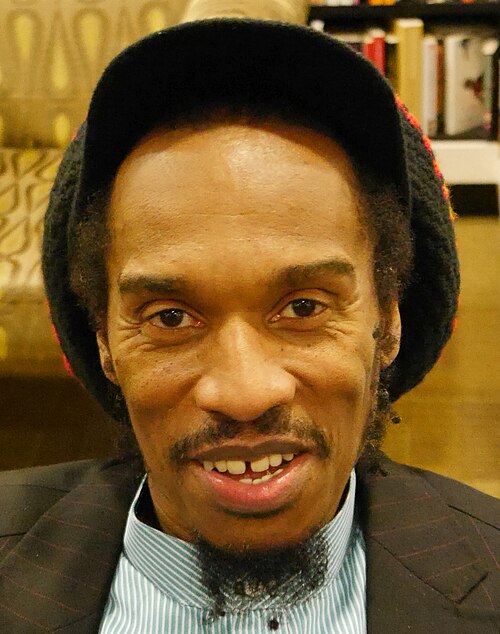 Punim of a poetaster: the ugly mug of bad Black poet Benjamin Zephaniah (Wikipedia)
 Hamasite-harassed Hilary Freeman supports Israel at Facebook
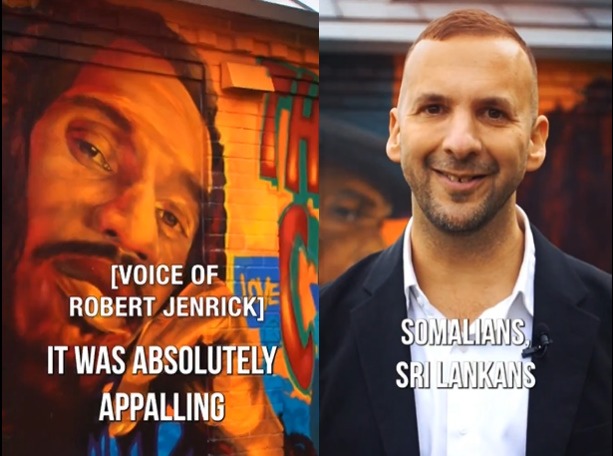 Ugly Zeph, ugly Zack: two shots from Polanski’s poetry-recital (see video here)
 That Fagin feller and the little goblin woman: Zack Polanski and Carla Denyer
 Blanche Barrow
 Bonnie and Clyde
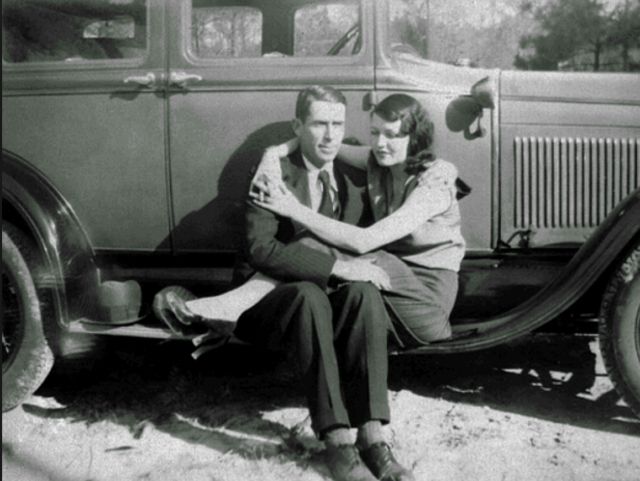 Blanche and Buck
 Estelle Parsons








 The cover art for Sabrina Carpenter’s album Man’s Best Friend, branded appropriately as entartet. The burgeoning pop singer is explicitly linked with race-mixing, like so many before. The producer is Jack Antonoff, of the same tribe as Gottwald and Levin.






