Featured Articles

Anti-White Hate and White Ethnomasochism at the Opera
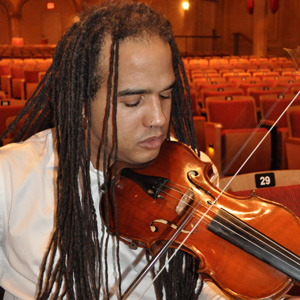
Daniel Bernard Roumain

Given the obsession with “systemic White racism,” it’s not at all surprising that enterprising non-Whites can make a career out of their supposed oppression. A very lucrative career in many cases.

A big problem for those intent on displacing White culture is the world of classical music. Brenton Sanderson described the assault on classical music in his aptly titled “Triggered by Beethoven: The Cultural Politics of Racial Resentment“:

Laudatory references to White male geniuses like Beethoven inevitably trigger rage from anti-White commentators who huff that it has “long been an argument of white supremacists, Nazis, Neo-Nazis, and racial separatists that ‘classical music,’ the music of ‘white people,’ is inherently more sophisticated, complicated, and valuable than the musical traditions of Africa, Asia, South America, or the Middle East, thus proving the innate superiority of the ‘white race.’” Seen through the Cultural Marxist lens of critical race and gender theory, Beethoven’s music dominates the concert repertoire not because of its exceptional quality, but because White-male privilege and assumptions about White-male genius keep it there. Linda Shaver-Gleason insisted Beethoven’s dominant place in the canon was the result of a White supremacist conspiracy which “intentionally suppressed” the music of non-White composers “in the service of a narrative of white — specifically German — cultural supremacy (because, alas, that too is part of Western culture).”

The main problem for the haters is simply the complexity and sophistication of the Western musical tradition.

While purporting to offer additional insight into music, the New Musicology systematically imposes an anti-White male ideology on its subject, and, in this endeavor, happily discards all standards of proof and evidence. [Before the new musicology,] there was a belief in purely musical elements and in the value of studying them. The problem with such “objective” technical analysis, for the [cultural Marxists], is that it invariably leads to “White supremacist” conclusions about the relative quality of different musical traditions.

Daniel Bernard Roumain, a Black of Haitian descent, is a classically trained violinist and composer. He likely agrees that any and all aspects of Western culture reflect White male supremacy and are hence evil to the core. But the main thrust of his assault on the classical music world takes a different course: interjecting his hatred of Whites into his compositions. Surprisingly, there has been some push-back to his explicitly expressed hatred, but in our woke cultural moment, that’s a big plus for his career.

Heather MacDonald has a nice analysis (“Resisting Racial Demagoguery“).

Composer Daniel Bernard Roumain has made a good career leveraging his skin color. He writes pieces with titles like “i am a white person who ____ Black people.” He argues that orchestras should “focus on BLACK artists exclusively” [punctuation in the original]. He has solicited funding for a work written “EXCLUSIVELY for BIPOC [black, indigenous, and people of color] members of ANY orchestra.” …

Roumain argues, white musicians’ contracts should be term-limited as reparations for “decades of benefitting from orchestral racism.”

Just your basic White-hating activist. So he was invited to write an aria for an event commemorating the Tulsa race riot of 1921, to be sung by a Black (of course) mezzo-soprano, Denyse Graves. And since his whole thing is anti-White activism, the emphasis in his writing is on the words, not the music—thus avoiding any serious analysis of the technical aspects of his compositions. (I would not venture an opinion on its technical aspects, but Heather M describes the piano accompaniment as consisting of “insipid, New Age-y broken triads and cliché-ridden chord progressions. The melodic line is negligible.” A composer who preferred to remain anonymous (for good reason!) stated, “Although I do believe that [Graves] was not in sympathy with the tone and thrust of the text, she also knows well what good music is. This ain’t it.”)

Roumain thinks there is a “bloodlust sown deep within the American psyche,” but he’s definitely not referring to the vastly higher rate of Black homicide per capita. He’s referring to George Floyd and Breanna Taylor—exactly the sort of nuanced analysis we have come to expect from BIPOC activists. He thinks that Blacks live every day in fear of being killed by a cop, stating to a very sympathetic interviewer: “The inspiration to compose They Still Want To Kill Us was my wanting to convey how it feels to live in America as a Black man and know that on any given day, you could be murdered and die in America. That feeling never goes away. It’s always there.” I wonder if he’s afraid of being around Blacks given that Blacks are much more likely to be killed by Blacks than Whites.

But it could be that he actually believes he is in permanent danger because of his race given the media- and activist-created hysteria that happens every time a cop kills a Black, no matter what the circumstances. As with the covid panic where we see people wearing masks even outdoors and even alone in their cars, the public is quite susceptible to messages that create fear.

Roumain seems more interested in spewing out sound bites expressing his hatred toward Whites than in writing serious music. Heather M.:

Roumain’s titles are his calling card, into which he puts his greatest effort, he says—arguably an unusual emphasis for a composer; once he comes up with the name of a piece, the musical writing comes easily.

Roumain also wrote the aria’s lyrics, which begin with brief phrases about the rampage and end with:

They still want to kill us.
God Bless America
God Damn America.

But Graves balked at singing that last line, “God Damn America,” and Roumain refused to budge, so there was an impasse. But the aria was eventually performed by another Black soprano, J’Nai Bridges and funded by a variety of establishment arts organizations, including:  Opera Philadelphia, the Fine Arts Center at the University of Massachusetts Amherst, Stanford Live, and the University Musical Society at the University of Michigan. And besides that:

Roumain’s racial-justice profile has earned him a seat on the boards of the League of American Orchestras and the Association of Performing Arts Presenters, as well as a faculty position at Arizona State University. He has been commissioned by Carnegie Hall and is working on film, TV, and opera scores.

Such oppression!

As is so often the case among social justice warriors, on one hand he wants discrimination against White musicians, but then he dresses it all up with the loftiest of moral platitudes:

The truth is: as much as I would love to feel safe in America and a part of its moral fabric, I don’t feel safe and I would like this country to embrace a new shared radical morality based on empathy, safety for us, and justice for us all.

So at least he’s not explicitly hoping for White genocide. But he’s certainly willing to bend over backwards to blame a White person for the impasse in Tusla.

Roumain was particularly exercised that [Tulsa Opera’s artistic director Tobias] Picker was involved in trying to reach a compromise. Picker is white. No matter that Graves was the one who rejected the piece and that [Black Assistant Conductor] Howard Watkins was just as instrumental as Picker in the abortive negotiations. The entire incident, in Roumain’s view, reflected what happens when a white male runs a classical music organization. Roumain told Tulsa Public Radio that it “hurt” to have Picker suggest possible revisions. Picker’s whiteness is emblematic of the racism of an institution with “far too many white males in charge,” Roumain said. And Picker’s suggested revisions didn’t speak to “what happened on Jan. 6, what happened in Ferguson, what happened in Charlottesville . . . what happened in Atlanta.”

Picker is a White transgender activist and, at least from Roumain’s point of view, exactly the sort of progressive White person described by Robin DiAngelo, who has another book out, this time focusing exclusively on progressive White people, “the most bigoted, the most harmful, the greatest threat to racial equality.” By not giving Roumain the artistic freedom to express his hatred toward White America, Picker has shown himself to be an oppressor of Black people. And I guess Graves and Watkins are Uncle Toms.

Picker … is a far cry from the white reactionary of Roumain’s nightmares. Tulsa Opera hosted the American debut of a transgender Heldenbaritone—formerly male, now “female”—who in 2019 sang the title role in Tulsa’s Don Giovanni, creating a sexual hall of mirrors that would delight the most cutting-edge gender studies professor. Picker’s own opera about one of the first recipients of sex-reassignment surgery will be premiered in 2023.

Even though Graves, Picker, and Watkins stood up to Roumain, it’s likely that most of the classical music world and their audience are engaging in the usual ethnomasochism so common among progressive White people.

photo on the New Jersey Orchestra’s website publicizing “i am a white person” shows smiling, elderly white people clustered around the composer, hanging on his every word. One imagines him explaining his status as a victim of their white privilege, an accusation they humbly accept.

Roumain is likely aware that his entire career depends on White guilt and he is more than ready to take it to the bank. He’s just appealing to his audience in the confidence that his messages of anti-White hate will trump serious analysis of his music because the audience really wants to be brow-beaten by messages of how evil White people are.

The enthusiastic audience for Greenwood Overcomes was predominantly white and middle-aged, judging by the concert video, just like Roumain’s audience at the New Jersey Symphony Orchestra. This demographic, scorned by the Black Lives Matter movement, is more likely to turn out for black-themed programs than blacks themselves. Roumain seeks color-coded boundaries around artistic expression and historical commemoration. This neo-segregationism is not just a blow against imaginative possibility and human understanding; it is also commercially suicidal.

Given the guilt-ridden tendencies of White progressives and Roumain’s excellent career trajectory, I rather doubt that Roumain’s messages are “commercially suicidal.” Is his “neo-segregationism” good for White advocates — Whites who reject White guilt and are looking to advance the prospects of White Americans? It’s quite clear that quite a few Whites, like Roumain’s audiences, are willing to wallow in self-abnegation and pay for the privilege of doing so. They are intelligent, well-educated, and economically secure — and often they have benefited career-wise by going along with our new culture of White denigration. But they are caught up in the moral community created by our hostile elites in the media and academic world, and they just want to be seen as good people. And many of them are good people — at least the ones who aren’t cynically exploiting the situation for personal gain. They are just hopelessly naïve about how the world works and what this cultural revolution means for the future of Whites in America. One hopes that they will wake up when they find their grandchildren are passed over for non-Whites when applying for positions in universities or in the job market.

But maybe not. This tendency toward wanting to be seen as a good person runs very deep in White people. It’s fundamental to the unique individualism that defines the West.

In any case, there are substantial numbers of White people — it’s not clear how many — who react to anti-White hate by identifying more strongly as White and understanding that the future of Whites in America is precarious at best. This neo-segregationism has become a talking point among mainstream conservatives like Heather M., and twenty states have banned or restricted Critical Race Theory from being taught in public schools. A lot of this is conservative virtue-signaling (“Dems are the real racists”) but mainstream conservatives do seem much more willing these days to dwell on examples from the media or academic world and note explicitly that they are anti-White. For example, Tucker Carlson and Fox News noted an outrageous “academic” paper in The Journal of the American Psychoanalytic Association by the presumably Jewish Donald Moss. The abstract:

Whiteness is a condition one first acquires and then one has—a malignant, parasitic-like condition to which “white” people have a particular susceptibility. The condition is foundational, generating characteristic ways of being in one’s body, in one’s mind, and in one’s world. Parasitic Whiteness renders its hosts’ appetites voracious, insatiable, and perverse. These deformed appetites particularly target nonwhite peoples. Once established, these appetites are nearly impossible to eliminate. Effective treatment consists of a combination of psychic and social-historical interventions. Such interventions can reasonably aim only to reshape Whiteness’s infiltrated appetites—to reduce their intensity, redistribute their aims, and occasionally turn those aims toward the work of reparation. When remembered and represented, the ravages wreaked by the chronic condition can function either as warning (“never again”) or as temptation (“great again”). Memorialization alone, therefore, is no guarantee against regression. There is not yet a permanent cure.

This is nothing less than a recipe for the genocide of Whites as incurable racists. The hatred is obvious, and it’s no accident that the writer is a Jew (Fox News refers to him as a “white man” but Moss is a common Jewish name). Nor is it surprising that Moss’s article appears in a psychoanalytic journal. As noted in The Culture of Critique, psychoanalysis is an infinitely pliable tool that is able to create any result one wants and give it a veneer of science — with psychoanalytic theories of anti-Semitism and the Frankfurt School’s theory of White ethnocentrism being the most relevant here. So even though conservatives tiptoe around the deeper issues, it’s not difficult to see that the message of mainstream hatred toward Whites is definitely getting out there. A necessary development.

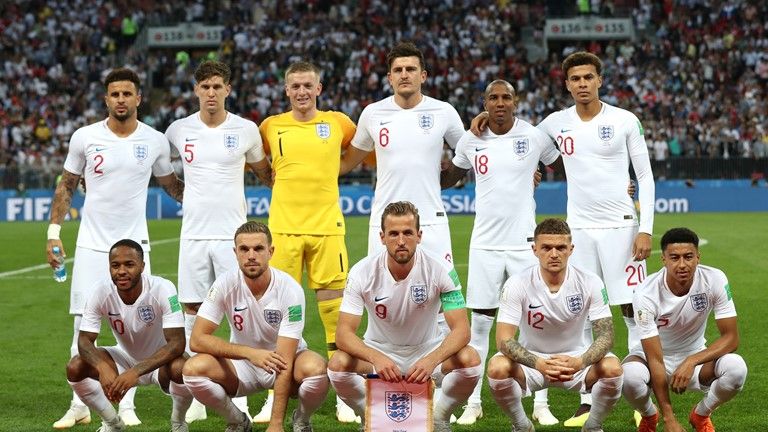
One half of the England Team Kneeling to the Other Half

White English players in training
The Ying and Yang of politics is division (or polarisation) and unity. The problems arise when you have division at a time when you should have unity and unity at a time when you should have division.
In the early 20th century we got things the wrong way round with division when we should have had unity, and now we are going the other way, having fake unity when we should have healthy division.

This may sound counter-intuitive because the petty divisions in present day society have been amplified beyond all sense of reality. The fact is that — and I mainly referring to the UK here — there has never been more political unity than there is now.

Really!

Try slipping a piece of paper between the positions of the Labour and Conservative Parties or — Scottish ‘independence’ aside — these two parties and the SNP.

The problem, however, and the one that we are all aware of, is that we live in a time that should be extremely polarised and divided because so much is toxically wrong with our societies and civilisation.
The latest emblem of this at the moment is the forthcoming European soccer championships, in which the England team is all set to take a knee for “Black Lives Matters” in Every. Single. Game. 
Here is Brendan O’Neill at Sp!ked, an online magazine that likes to pretend it is the friend of working class Whites:

…taking the knee is now little more than an elitist provocation. It has become a way of goading working-class football fans. This is the footballing elites – cheered on by the media class, the political establishment and the Twitterati – reprimanding the masses in the stands for their presumed prejudices and idiocies. The bent knee is yet another weapon in the never-ending culture war on the oiks.

Yes, it’s the big, nasty elites shitting on the little guy.

Yes and no.

O’Neill is a former Marxist, or more correctly a former open Marxist. I suspect he is probably a closet one now, having realised that being an open Marxist is just as big a turn off as being a fan of the Austrian Painter.

Sp!ked, by the way, used to be called Living Marxism. On the surface of it, O’Neill is channeling the dominant idea in modern Britain — namely the idea that race and identitarianism are non-starters and that we already live in a post-racial society. For him it’s more about class, but he only seems to mention this to de-emphasise race because “…really, you shouldn’t be hung up on that.”
But race is the fundamental reality in this case. The fact that constant efforts are being made to deny this is proof positive that it is.
But back to the England football team, the real reason that the team takes the knee is a very simple one.

It is not due to “all those turbo-smug NuFootball scribes on the broadsheets,” as O’Neill claims. No, it is instead due to the fact that the England team is two-tone team.

I would not even call it multi-racial. It is simpler than that. It is Black and White, and the Blacks in the team are convinced that there is such a thing as White racism, racist cops, and that the only way to make “Black Lives Matter” in America, England, and the World is to constantly bang on about it.

Only constant kneeling to a Black criminal and Marxists can keep this together
Anybody saying, “Wasn’t Floyd just some drugged-up thug?”, “Dude, all lives matter!”, or “Can we leave off the constant kneeling in front of empty stadiums? It’s pissing off the fans,” threatens to split the England team right down the middle.
Yes, thanks to race, and especially the “racial asymmetry” of Blacks and Whites in British society — despite all efforts to “level up” the races — England, both the country and the football team, lacks unity. Both are tenuously held together by the fraying threads of constant “woke” propaganda.
Those wishing to know more about the concept of “racial asymmetry” could do worse than check out Colin Liddell’s excellent “The Asymmetry of America.”

In my time the “woke” messaging pumped out in the UK has taken on North Korean proportions of propaganda, rendering almost any TV commercial or program on the BBC unwatchable.

White England players simply want to be in a successful footballing unit. Through their conditioning in two-tone Premier League teams, they know that this involves taking the knee not with their Black colleagues but to them.

This is a sacrifice in their human dignity that they are fully prepared to make. The fans not quite so much.
Daniel Barge writes for Affirmative Right. This article, slightly edited, is reposted here by permission.

Expressions of Anti-White Hatred in High Places: Aruna Khilanani at Yale

As I noted in Individualism and the Western Liberal Tradition, explicit expressions of anti-White hate are one of the most important of the psychological mechanisms that will wake White people up to identify as White and have a sense of White interests (section titled “Expressions of Anti-White Hatred Promote White Ethnocentrism, here). Recently it has come out that a psychiatrist of Pakistani background expressed visceral hatred toward White people in a lecture titled, appropriately enough, “The Psychopathic Problem of the White Mind.” You’ve probably read about it, but it’s important to emphasize these things. Get used to it. They are part of the culture now, and emanating from very high places.

The lecture was not held at a local BLM event, but at Yale University and attendees could use it for course credit—it would “fulfill the licensure requirement set forth by the State of Connecticut.” Some of her statements:

This is the cost of talking to white people at all. The cost of your own life, as they suck you dry. There are no good apples out there. White people make my blood boil. …

I had fantasies of unloading a revolver into the head of any white person that got in my way, burying their body and wiping my bloody hands as I walked away relatively guiltless with a bounce in my step. Like I did the world a f***ing favor. …

We are asking a demented, violent predator who thinks that they are a saint or a superhero to accept responsibility.

It ain’t gonna happen. They have five holes in their brain. It’s like banging your head against a brick wall. It’s just, like, sort of not a good idea.

Yale did absolutely nothing about her talk until mainstream conservatives started talking about it. Here’s Tucker Carlson from last night (~40′).

Whatever you think about Tucker, it’s good that he is publicizing this. Exactly the sort of thing that Whites need to hear repeatedly. And in the story on the border disaster, he made it clear once again that it’s all about Democrats getting a permanent majority.

Notice her statement: “We are asking a demented, violent predator who thinks that they are a saint or a superhero to accept responsibility.” Here she is doubtless thinking about virtue-signaling White liberals who think they are saviors to POC. Maybe some liberals will start to rethink their fantasy of a harmonious multicultural future and start thinking about how their children and grandchildren are going to be treated when they try to get into a good university or apply for a job.

In fact, in a later interview, Khilanani said she thinks conservatives are “psychologically healthier.” “They are more in touch with their anger and negative feelings. They can articulate it. They can say it, they’re not covering it up or like ‘Oh my god, I’m amazing, I love all people.’ There’s not all this liberal fluff of goodness.”

Obviously she is steeped in Critical Race Theory which is especially targeting White liberals for not being self-hating enough. Andrew Joyce’s review of Robin DiAngelo’s White Fragility:

By far the most entertaining chapter of the book comes within the last 50 pages. Titled “White Women’s Tears,” it’s an indictment of that infamous sight — bawling, wailing, and normally overweight White women clutching themselves in feverish grief over the death of some poor Black gangbanger who just happened to get shot while rushing a police officer. DiAngelo is probably correct in asserting that this is a self-indulgent demonstrative act designed to heighten status (“I’m moral, good, and empathetic”) and get attention from men of all races (“I’m vulnerable right now, and need attention and resources”). Some of the anecdotes in this regard, from DiAngelo’s “Whiteness” seminars are priceless, normally involving some weak-minded woman breaking down at the revelation she’s “racist,” and they went some way to compensating me for the purchase price and hideous ideology of the book. Above all, they confirmed to me that what we see unfold before us is both tragedy and farce, and that our situation is no less dangerous for that.

Liberals need to know that their expressions of moral superiority will not appease the White haters.

Yale did nothing to distance itself from her talk until conservatives started publicizing it. “When Herzog asked about Yale’s response when Khilanani submitted her talk and materials, she said there was none.” And in the immediate aftermath, there was nothing but praise: “Dr. Khilanani noted that her lecture had initially been well received. After she gave it, several attendees praised her comments on the online feed. One woman who identified herself as a Yale psychologist called it “absolutely brilliant.” A man said, “I feel very shook in a good way,” and a Black woman thanked Dr. Khilanani for giving “voice to us as people of color and what we go through all the time.”

Yale is now busy distancing itself from the talk, but it is still available to students and presumably still counts for the licensure requirement. Khilanani is now saying that she was speaking in metaphors: “My speaking metaphorically about my own anger was a method for people to reflect on negative feelings. To normalize negative feelings. Because if you don’t, it will turn into a violent action.”

Somehow I don’t think that’s quite enough to change the impact of these statements on White people. And I notice that she conceals her attitudes from White people in her daily life, so it clearly affects her behavior. “She does not talk to white people about these issues in private, which is really easy if you forcibly segregate yourself from your previous white ‘friends.’ This is how I talk with other people of color, this is how I talk with my black friends, this is how I talk with my Asian friends. This is how we talk about you” (speaking with a Jewish interviewer, Katie Herzog)—which is likely what set off Bari Weiss, the ultra-Zionist who first reported on the talk.

Jews have been a necessary condition for creating multicultural America, but being thought of as part of the oppressive White elite is definitely not what they had in mind.  But I doubt there is much concern about such events among most Jews given that the organized Jewish community is well connected to all the other non-White activist organizations.

It’s no surprise that Khilanani is a textbook example of the influence of the Frankfurt School’s Critical Theory, the forerunner of Critical Race Theory. From Herzog’s interview as posted by Bari Weiss:

My masters is in humanities and the focus is largely on critical theory. I don’t know if you’re familiar with the University of Chicago, but it was very critical theory-heavy when I went. I did pre-med stuff in undergrad and had always been thinking of these issues. I also majored in English Lit and wondered about other ways of thinking. And I was interested in the unconscious for a long time, so it wasn’t that big of a jump for me.

So she was very attracted to psychoanalysis, which was also very useful to the Frankfurt School because it didn’t bother with messy things like getting good data or being falsifiable.

Critical theory is about how you are positioned in the world. Ever since I was a little kid, since I’ve interacted with people who are white, and especially white women, I would notice that things were really off. So what I’ve done by going through psychoanalytic training, which is all about getting in touch with the unconscious, is literally work backwards. I’m like, “Ok, I’ve noticed that white people tend to put me in certain roles. White women will experience me this way, white men will experience me this way.” I’m going to use psychoanalysis to work backwards and treat all of this as a projection to see what I can learn about their mind.

Don’t get me wrong. I think Khilanani hated White people from a very early age, and she would find some way to express it. It’s just that these Jewish intellectual movements allowed her to frame it in an academically respectable way. So she could be invited to give a talk at Yale.

The Rarely Noticed Wire Running Through Our Nation’s Cities: The Eruv as a Symbol of Jewish Settler Psychology, Invasion, and Social Control

Many readers may not appreciate that there is literally a Jewish religious metal wire, running overhead in many of our nation’s cities.  It is strung up like a telephone line or electric wire and can run for miles in large cities like New York.  Seen from overhead by drone cameras, for example, it looks like a wire used in a livestock fencing system.  It is constantly overseen, inspected, serviced, protected, and maintained by a secret organized team in each city.  It is regulated by city ordinance and subsidized by taxpayers.  The wires are not only in New York, but in St. Louis, Atlanta, Baltimore, Chicago, Dallas, and dozens of other cities across the United States.

Business Insider described it thus: “Unbeknown to most, there are transparent wires that wrap around over 200 cities in North America — including Manhattan — to mark a religious boundary. And every week, there is a “secret operation” to check and repair the wire in time for the weekend.”

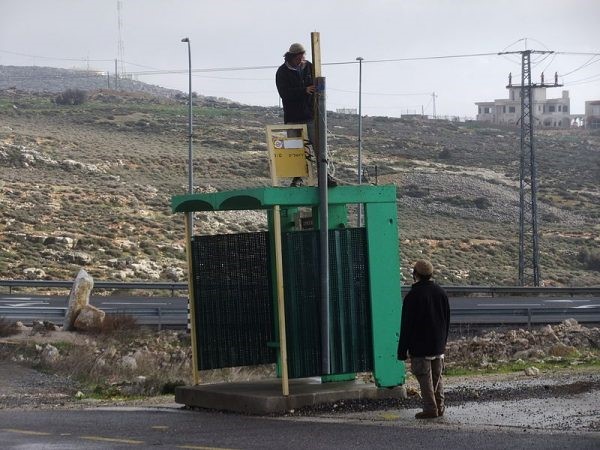
A part of the overhead Eruv wire, and a maintenance truck, extending across public streets in New York City.  “It’s like social engineering,” said Arnold Sheiffer, founder of the opposition group Jewish People for the Betterment of Westhampton Beach. “We [the Jewish people] fought like hell to get out of the ghetto and now they want to create that again.”

The Shabbat wire encasing Manhattan, turning it into a effective private Jewish home

Its general purpose and background is described in “The Wire That Transforms Much of Manhattan Into One Big, Symbolic Home”:

Every Thursday and Friday morning, Rabbi Moshe Tauber leaves his home in Rockland County, New York, at about 3:30 a.m. He arrives in Manhattan an hour later and drives the 20-mile length of a nearly invisible series of wires that surrounds most of the borough. He starts at 126th Street in Harlem and drives down, hugging the Hudson River most of the way, to Battery Park and back up along the East River, marking in a small notebook where he notices breaks in the line. Known as an eruv, the wire is a symbolic boundary that allows observant Jews to carry out a range of ordinary activities otherwise forbidden on the Shabbat.

Any necessary repairs must be finished before sundown on Friday, when Shabbat begins. The day of rest then lasts until the following day when there’s no more red in the western sky. Throughout that time, observant Jews are prohibited from performing many basic activities, and the observance of this law has been updated over time to reflect current technologies, such as cars, electricity, and keys. “Carrying from one domain to another,” or moving objects between public and private areas, for example, is forbidden. Eruvin (the plural of eruv) transcend this restrictive rule by serving as a symbolic border that links together many private spaces in the community, which in turn permits people to ferry around keys, children, and canes, or push wheelchairs and strollers.

But a single break in any part of the line voids that symbolic space. According to the 100 pages devoted to eruvin in the ancient Talmud, the boundary is only effective when the entire line is intact. And there are plenty of ways these breaks can happen. Sometimes it’s the elements, but more often construction is responsible. The wires, attached to telephone and light poles, can be severed or simply pushed down (the eruv must remain at the top of the pole) to make room for maintenance on other lines. And this is where Tauber comes in. “If they’re lousy, they’ll just cut the lines and let it go,” he says. He’s been doing this carefully orchestrated monitoring since 2000. The repairs are “a secret operation,” chairman of the Manhattan Eruv Committee Rabbi Adam Mintz told the New York Post in 2015. That’s by design.

A fence being used as an eruv boundary in Israel

A contractor attaches a Shabbat wire in mid-town Manhattan 

The wire surrounding New York City Manhattan Island, is 18 miles long and encircles the entire city from Harlem to the north, extending east-west, down both sides of Manhattan, all the way down to Battery Park, Wall Street and the former area of the World Trade Center:

It’s hard to imagine that anything literally hanging from utility poles across Manhattan could be considered “hidden,” but throughout the borough, about 18 miles of translucent wire stretches around the skyline, and most people have likely never noticed. It’s called an eruv (plural eruvin), and its existence is thanks to the Jewish Sabbath.

On the Sabbath, which is viewed as a day of rest, observant Jewish people aren’t allowed to carry anything—books, groceries, even children—in public places (doing so is considered “work”). The eruv encircles much of Manhattan, acting as a symbolic boundary that turns the very public streets of the city into a private space, much like one’s own home. This allows people to freely communicate and socialize on the Sabbath—and carry whatever they please—without having to worry about breaking Jewish law.

The nature of cultural aesthetics is obviously invoked when a special interest group feels that it is necessary to impose its religious belief system on the rest of a local, heterogenous society, with a secret worship totem that literally corrals everyone into a converted private home.  But it is much more than this: in what ways is the Eruvin system a larger symbol of Jewish oppression, invasion, usurpation, imposition and appropriation of public and private space? Can it be compared to the Kosher food industry?  Is the Eruvin a strong symbol of Jewish conceit that is also seen in the ways the country of Israel is managed?  Is it really Palestine, for example, that seeks to “wipe Israel off the map,” or is it perhaps Israel that seeks to imprison Palestine and Palestinians in its larger Pan-Israel geopolitical compound, of which the Eruvin apparatus is its psychological manifestation?

More wire  

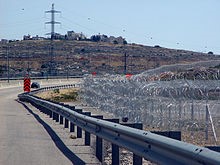
Israeli West Bank barrier – North of Meitar, near the southwest corner of the West Bank

Moreover, how do the ironic similarities of the Eruvin wire fencing apparatus with concentration camp fencing construction, perhaps reflect a deep cultural and group psychological disorder—a disturbance of rational thought, and a manifestation of mass psychosis?  How do the confines of Jewish ghettos, of Israel itself as an effective barbed wire and walled ghetto and prison, find some similarities in the primitive superstition and obsession of the Eruvin wire?  In what ways is this wire also manifest digitally in Israel’s “Green Pass” identity tracking system?  Or in American society surrounded with Jewish media broadcasting a kind of constant loudspeaker of their interests, ambitions, and quest for cultural dominance by corralling its local host society with an array of “wires?”  Is the Covid bio-security complex also not largely a Jewish construct that embodies the same sociopathy for control, herding, and domination accomplished deceptively through a mix of secrecies?

What is it about Jewish culture and social psychology that it would install a secret overhead wire around an entire U.S. city, and keep its presence generally out of public awareness through secrecy or deception?  Does this wire system tap into precisely the same cultural coding and motivation as its efforts to invade Gaza, de-populate Syria, destabilize the Sudan, Egypt, Lebanon, and to geopolitically encircle Iran through its bordered regions?

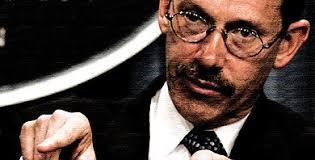
Indeed, as former Pentagon Controller Rabbi Dov Zakheim explained, surrounding Iran is precisely the goal of the US-Israel GWOT (Global War on Terror).  While the initial targets of U.S. military “retaliation” in the Middle East were Iraq, then Afghanistan, then Syria, “ISIS” and even the Sudan, as Zakheim somewhat cleverly explained in a January 2007 Financial Times article, “Why America Should Operate From Iraq’s Borders,” the joint forces strategy that he was at the time tasked with designing and operationalizing as a consultant to the Pentagon, was based on a careful and systematic encirclement of Iran, and the domination of the larger Middle East (with Israel as a continually reinforced military and strategic platform):

Rabbi Dov Zakheim, former Pentagon Controller during 9-11, and champion of  Greater Israel plan that encircles Iran with an effective military version of the Eruvin system

Thus the US objective should be framed in terms of the wider region: stopping Iraq from launching attacks against its neighbours, preventing any invasion by Turkey in the north and barring Iranian domination in the south.  Then the US must reposition its forces to foster regional stability and minimise casualties. Up to two brigades should be devoted to Kurdistan and a roughly equal number to the far west of Anbar province. The forces in Kurdistan would help forestall a Kurdish declaration of independence that would prompt a Turkish invasion. The troops in western Iraq would help prevent both terrorist infiltration into Jordan and serious incursions from Syria. They would also indicate to Damascus that it should not misinterpret a readiness to talk as a concession. The Pentagon should also move a division-sized force to the south, with a significant presence on the border with Iran. Tehran must understand that the US will not tolerate its domination of Iraq’s south. Nor, as with Syria, would Washington’s willingness to talk mean a readiness to appease. Finally, US allies must be pressed to take the lead in establishing a network of provincial reconstruction teams similar to those that have met with some success in Afghanistan. By operating from Iraq’s borders American forces would be well placed to prevent the establishment of terrorist training camps anywhere in the region. In addition, it ensures that US forces have a realisable mission. They may be unable to bring stability to all of Iraq, but they can certainly bring a degree of stability to the region. The US can thus reassert its leading role in [the] Middle East.


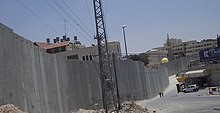
The barrier and wires between Abu Dis and East Jerusalem.  Bottom: Route 443 near Giv’at Ze’ev Junction, with pyramid-shaped stacks of barbed wire forming a section of the Israeli West Bank barrier

Zakheim’s rather coy if mendacious vision has been precisely that followed by the U.S. over the past three presidential administrations: the installation of a geopolitical Eruvin wire around the entire Middle East, and ultimately around Iran (known as the Middle East Transformation Plan, the Greater Israel, Pan-Israel or Oded Yinon plan). 

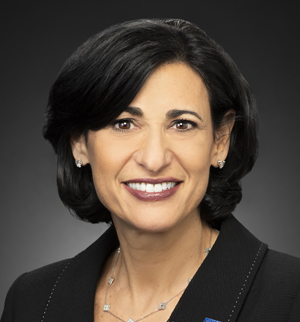
The Covid vaccine program, largely operationalized by the C.D.C., is run by Biden-appointed Harvard MD and progressive Left Jewess, Rochelle Wolensky.  It is noteworthy the extent of her alignment with Israel’s radical agenda in public biosecurity, vaccination passports, and mass tracing, tracking and surveillance: the medical “Eruvin” that is the equivalent of a biological and digital “wire” (wireless) around society. 

CDC head Wolensky: “I’m motivated by the Jewish teachings of tikkun olam.  We must vaccinate hundreds of millions of people. We must get the public to wear a mask, practice social distancing, and avoid crowds and poorly-ventilated areas. We must improve our public health system to detect threats.”

“She may be at the CDC now, but we like to say she got her start at Camp Yavneh.” said Bil Zarch, executive director of Camp Yavneh, a Jewish overnight camp in New Hampshire where for many summers Walensky and her physician husband spent a week volunteering as camp doctors.

She is someone who lives the essence of Judaism,” said Harvard Medical School’s Freedberg. “I’ve been watching her for 30 years,” he continued. “She views the mitzvah of Tikkun Olam as a guiding light in her career. This – her work at CDC – is that on a grand scale.”

Wolensky is also assisted by the Biden-appointed coordinator of COVID-19 Response, and Counselor to the President, Jeff Zients, an economist who owns a chain of Jewish delis in Washington, D.C., and by “Doctor Death, ” Covid advisor Dr. Ezekiel Emanuel.

It is hard not to see the secret Eruvin system of wires strung up and obsessively maintained across many of America’s key population centers, as a symbol of Jewish-Zionist interests that are fixed in the concepts of entrapment, encirclement, confinement, control, and most of all, the constant imposition of a highly organized, special-interest world philosophy that feeds off of the “domestication” and “farming” of other humans, their cultures, their wealth, and their independence.  In this regard especially, it is a central strategic Jewish imperative to circumscribe and suppress threats to their control, by systematically imposing a panoply of biological, digital, conceptual, mimetic, and economic “viruses” into their host societies, and then acting as an expert authority in the institutional intermediation between these risks, and a frightened public: hence the critical requirement for institutional saturation and control across key state and other organizations that act as conduits for the exercise of top-down control by “experts,” and ultimately as its organizing structure for its monetization: they include the CDC, much of the university complex, especially in administration, law and medicine, the World Bank, Federal Reserve governance, key Wall Street institutions including exchanges, the State Department, the White House chief of staff, several Silicon Valley firms (particularly those involved in social media and advertising), parts of the pharmaceutical and raw drug complex, and the media.  Together, these may be seen to represent the larger Jewish Eruvim that is simultaneously poisoning and strangling large parts of previously functional Western societies.

“Rape Their Daughters!”: How Leftists Don’t Really Care About Sexual Violence, Misogyny and Femicide

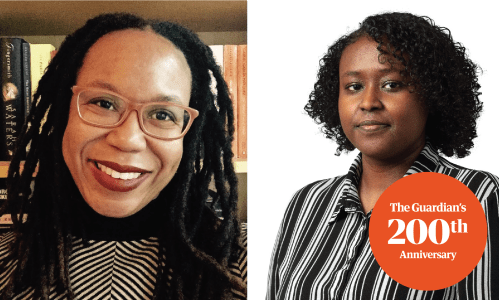
Like most human things, the Guardian is at its funniest when it doesn’t mean to be. For example, it’s currently celebrating its bicentenary under this slogan: “200 years of chasing the truth.” Which is a very good joke. Maybe the paper was honest in its early days, but it has spent most of the last hundred years fleeing the truth about key aspects of the world like racial and sexual difference.

The Guardian celebrates “200 years of chasing the truth”

That’s perfectly understandable. The truth about racial and sexual difference doesn’t fit leftism or feed the narcissism of leftists. And so the Guardian routinely suppresses essential but inconvenient facts. For example, who are the aggressors in what the Guardian calls a “disturbing surge in physical attacks and harassment” against Asians in the US? It’s Blacks, of course, but the Guardian flees this truth, makes no reference to Blacks, and falsely blames the violence on “racist rhetoric” by the now-departed Donald Trump. The Guardian knows perfectly well – and often approvingly reported – that Trump gets almost no support from Blacks. But it’s a leftist newspaper and refuses to let reality get in the way of ideology.

Busting taboos to protect the vulnerable

At the same time as it flees the truth, the newspaper likes to pose as rebellious and taboo-busting. Here it is sneering at the prudery of the Victorians:

Victorian attempts to veil the meanings of crude ancient Greek words are set to be brushed away by a new dictionary 23 years in the making. … The new dictionary’s editors “spare no blushes” … when it comes to the words that “brought a blush to Victorian cheeks”. The verb … βίνέω (bineo) is no longer “inire, coire, of illicit intercourse”, but “fuck”; λαικάζω (laikazo), in the 19th-century dictionary translated as “to wench”, is now defined as “perform fellatio” and translated as “suck cocks”. (First English dictionary of ancient Greek since Victorian era ‘spares no blushes,’ The Guardian, 27th May 2021)

The Guardian postures about its fearlessness

There you go: the Guardian will happily print the word “fuck” without any coy asterisks. Like all leftist institutions, it claims to reject old-fashioned taboos and believe in complete openness about sex. After all, if we don’t speak the truth about sex, how can we protect women and girls from the horrors of rape-culture? And according to the Guardian, “Rape culture is as American as apple pie.”

Brazen celebration of rape-culture

That’s why Guardianistas must have shaken their heads in sorrow when they saw right-wing newspapers like the Daily Mail prudishly using “f***” with asterisks in a recent story about misogynistic men brazenly celebrating rape-culture in London. Worse still, from the Guardian’s point of view, the misogynistic men were specifically targeting women and girls in a vulnerable ethnic minority. Those right-wing papers should have printed the full truth and exposed rape-culture to merciless scrutiny – just as the Guardian surely did.

So what happened in the brazen celebration of rape-culture? According to the right-wing press, a convoy of cars drove through a minority district of London in May 2021, using a megaphone to shout threats of sexual violence against the minority: “Rape their daughters!” and “F*** their mothers, f*** their daughters!” Fortunately, the police acted swiftly to close down these vile expressions of rape-culture. A police helicopter swooped to track the convoy, directing police vehicles in pursuit, and the four brazen misogynists in the megaphone-car were soon under arrest.

Down the memory-hole

And how did the Guardian report the story? Well, it’s currently celebrating “200 years of chasing the truth,” so it must have “chased the truth” and reported the full details, mustn’t it? There were surely no coy asterisks for the fearless Guardian. And there weren’t. But there wasn’t any full printing of “fuck” either. The Guardian’s report on the hate-convoy didn’t mention sexual violence or the f-word at all. It merely reported “slurs and threats” against the vulnerable minority, without giving any details of what the threats entailed. Alert readers of the article must have been puzzled by a comment from the Labour leader Sir Keir Starmer, which was also reported there. Starmer said “misogyny and hate have no place on our streets or in our society.”

The fierce feminist who shields misogynistic men: Nazia Parveen of the Guardian

Nazia Parveen, the non-White “Community affairs correspondent” who wrote the incomplete report about the hate-convoy, didn’t explain how misogyny was involved, because she fled the truth rather than chasing it. She didn’t report what the horrendously misogynistic men shouted, what they looked like or where they had come from. And there was no subsequent enraged commentary by her fellow feminists at the Guardian and elsewhere in response to the rape-supporting hate-convoy. As so often in the past, there was silence from the sisterhood.

Cherished leftist principles

So there you have it: a brazen celebration of rape-culture directed against a vulnerable ethnic minority took place on the streets of Britain’s capital city, within a few miles of the Guardian’s headquarters, and Britain’s foremost leftist newspaper, staunch in its feminism and tireless in its opposition to rape-culture, responded by first censoring the horrific truth, then falling silent. This is very strange. Feminists have been writing articles literally for years about Donald Trump’s alleged use in private of the phrase “Grab ’em by the pussy!” But there was no feminist and anti-racist response when an entire convoy of vehicles accompanied a megaphone-misogynist bawling “Rape their daughters!” and “Fuck their mothers, fuck their daughters!” into the horrified ears of a vulnerable ethnic minority.

What on earth explains the Guardian’s complete abdication of its most cherished principles? Well, it’s very easy: the story was about the wrong kind of misogynist and the wrong kind of rape-culture. The hate-convoy was full of brown-skinned Pakistani Muslims who had driven from the heavily enriched Yorkshire city of Bradford to shout amplified abuse at Jews in a Jewish district of London as part of “largely peaceful pro-Palestinian protests.”

Minority men behaving badly

Indeed, the cars were flying Palestinian flags as those high-spirited shouts of “Rape their daughters!” and “Fuck their mothers!” went up. And that’s why the Guardian refused to “chase the truth.” One of its pet minorities was behaving badly, so it fled the truth instead. Cuckservative commentators like Mark Steyn will claim that this was yet another example of how poor Jews are not valued or protected by the anti-Semitic left. But that isn’t true: the Guardian censored the story because the aggressors were non-White Muslims, not because the targets were Jewish. If White Christian men had done the same thing in a Jewish district of London, there would have been an explosion of outrage not just from the Guardian and other leftists in Britain, but right around the world. Sadly for the Guardian and other leftists, White Christian men aren’t encouraged by their religion to celebrate rape in public. Or indeed in private.

But brown-skinned Muslim men definitely are. There is a genuine and highly pernicious rape-culture in Islam stretching right back to the Prophet Muhammad, who permitted his followers to take sex-slaves and who committed statutory rape with his nine-year-old wife Aisha. The slogans “Rape their daughters!” and “Fuck their mothers!” are authentic Islam, which is why the Guardian refused to report them. If the newspaper were serious about fighting “rape-culture,” it would send its reporters to Bradford to investigate the misogyny and sexual violence that flourish there. After all, if Muslim men are brazenly shouting pro-rape slogans in public, what on earth are they doing in private? But the Guardian isn’t serious about fighting rape-culture and defending women: it’s only serious about posturing, feeding the narcissism of its readers, and seeking power for the senior acolytes of leftism.

Paralysed by political correctness

As I’ve described in articles like “Rape-Gangs Unlimited” and “The Riddle of Rotherham,” tens of thousands of pro-feminist, anti-rape Guardian-readers must have worked in Labour councils and social-work departments during the decades in which Muslim rape-gangs have sexually abused and prostituted White women and girls in cities and towns all over the country. But none of those Guardian-readers ever succeeded in alerting their beloved newspaper to the horrific crimes of those Muslim men and the deep-rooted rape-culture in which their crimes had been nurtured. And when the courageous Labour MP Ann Cryer sought the Guardian’s help on behalf of the female victims of this rape-culture, she learned just how eager the newspaper was to “chase the truth.” Here she is describing how she tried to expose Muslim pathologies in her constituency:

Once I had overcome my initial disbelief that large-scale paedophile abuse was the norm for a section of the community — in some parts of Britain, it went back to the Eighties [in fact, the 1960s] when it was first reported to police — and that it was an open secret, I took my concerns to West Yorkshire police and social services. I expected they would have a hard time believing the claims — but I didn’t think I’d be flatly ignored by everyone. It was as if this crime was so toxic, no one could acknowledge its existence. … And I couldn’t get The Guardian interested. Its reporters seemed paralysed by political correctness. (How I was branded a racist — for trying to save girls from their vile abusers, The Daily Mail, 11th August 2017)

The Guardian is still “paralysed by political correctness.” Except that “paralysed” isn’t the right word. The Guardian makes active choices when it flees the truth and censors key facts. Nazia Parveen, the “Community affairs correspondent” who wrote that incomplete report about the hate-convoy, must have known what those Pakistani Muslims had shouted. But she deliberately chose to suppress the words “Rape their daughters” and “Fuck their mothers, fuck their daughters.” She didn’t “chase the truth” because she isn’t interested in the truth.

Back at base in Bradford

After all, she’s not just a leftist but quite possibly a Pakistani Muslim herself. She too will feel much more solidarity with Palestinian Muslims than with Jews in Israel or Britain. Many Jews have claimed that “Jews and Muslims are natural allies” (against White Christians, of course). But the alliance has never been strong. It doesn’t matter, because Jewish organizations like the Board of Deputies in Britain and the Anti-Defamation League (ADL) in America know that unintelligent, incompetent and criminally inclined Muslims are no real threat to Jewish power. However, Muslims are an excellent way to further atomize formerly cohesive White nations. And Muslim misbehaviour further strengthens Jewish power by justifying an ever-stronger security and surveillance state.

Those noisy Muslims in London did not physically harm any Jews: they merely shouted about rape and were soon arrested by the police. But back at base in Bradford, the same Muslims have been genuinely raping White women and girls for decades. And prostituting White women and girls for decades. Jews don’t care about that and nor does the Guardian. But this shared indifference is no coincidence, because Jews have been central to the poisonous anti-White, pro-minority leftism that is now ascendant throughout the West. This leftism supports unlimited immigration by non-Whites from the most illiberal and misogynistic cultures on earth.

Black enrichers at work

But the Guardian is not interested in the inevitable consequences of non-White enrichment. If it truly opposed “rape-culture” and misogyny, it would oppose immigration by non-White men who commit rape at much higher rates and in much worse ways. But the Guardian doesn’t truly oppose rape-culture and misogyny. That’s why it so often refuses to “chase the truth” of stories like these in the Birmingham Mail:

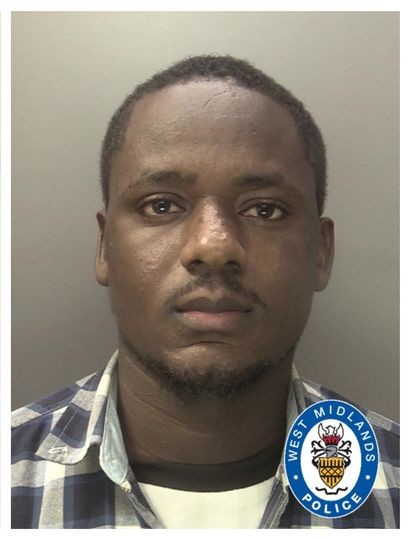
The “incredibly dangerous” African enricher Esa Juwara


A brutal rapist who targeted prostitutes in a nine-month reign of terror was “incredibly dangerous” – and was becoming bolder. Esa Juwara, just 21, had sex workers living in fear after he preyed on five women – attacking three of the women twice – in Ladywood in 2019. … Det Insp Dave Bates, from the West Midlands Police Public Protection Unit, headed the investigation. He said Juwara had been in the country for 18 months after arriving from Africa and little was known about his background. The officer told BirminghamLive: “Juwara is an incredibly dangerous man. He carried out violent attacks on women which were becoming more and more frequent. He had carried out four attacks in December 2019. If he hadn’t been caught, I am sure he would have gone on to commit many more attacks. The violence he showed, beating women with bike chains and choking one woman with one showed the levels of violence he was prepared to carry out.”   (“Cycling rapist” spread terror in city red light zone – and was becoming bolder, Birmingham Mail, 8th May 2021)

The life-wrecking Black enricher Khadim Drame

A woman was followed by a stranger after she got off a bus and raped near Aston Villa football ground. The victim had tried to run through some gardens but was caught by her attacker, Birmingham Crown Court heard. Khadim Drame, 20, of Norris Road, Aston, has denied a charge of rape. However, he changed his plea to guilty following the start of a trial at Birmingham Crown Court. … James Dunstan, prosecuting said: “The victim and the defendant were strangers. … He came out of nowhere and surprised her. He put one hand on her waist and the other over her mouth and he pushed her down to the ground. She screamed but no one came. … He then went on to rape her. He got what he wanted from her quickly. He left her leaving her thinking that she did not want to live.” (Man admits raping woman near Aston Villa football ground after following her off a bus, Birmingham Mail, 12th May 2021)

Those Black rapists should not have been in a White nation. Nor should the Black grandfather or father of Callum Wheeler, the mixed-race youth arrested for the brutal murder of Julia James, a White woman who thought she was safe to take her dog for a walk on 27th April this year. Like all the White victims who came before her and who will follow her, she wasn’t safe because mass immigration has brought the violence of the Third World into a formerly First-World nation.

When ideology meets reality

Callum Wheeler has not yet been prosecuted or convicted of what the Guardian calls “femicide,” or the murder of women by brutal, misogynistic men. But he managed to bring an extra-special touch of vibrancy into what would otherwise be a routine story of non-White brutality against a White victim. When he was being led away in handcuffs from court after being charged with murder, he was “seen sticking his tongue out at TV cameras.”

Callum Wheeler responds to being charged with brutal murder

Just dwell on that: Wheeler is a 21-year-old man accused of smashing a 53-year-old woman’s skull, quite possibly because she resisted his attempt to rape her. And that is how he behaves. But if you expect the Guardian or any other leftist outlet to explore the depths of misogyny and depravity revealed by his high-spirited little gesture, you’re going to be disappointed. When leftist ideology meets inconvenient reality, the Guardian always knows what to do. It flees the truth.

Namatianus and the Sullen Jew

For a sullen Jew was guardian of the spot,
An animal that spurns at sound human food.
He charges our bill for the bushes disturbed, the sea weed,
Struck with our sticks, and clamours that his loss
Is grievous in the water that we drink.
We fling fit answer to the filthy race,
That upholds shameless circumcision —
They are a height of stupidity; cold sabbaths charm their heart;
And yet their heart is even colder than their creed,
Each seventh day to shameful sloth’s condemned,
An effeminate picture of a wearied god!
Their other wild fancies from a bazaar of lies
Not even a child in their sleep would believe.
Would that Judea ne’er had been subdued,
By Pompey’s wars and under Titus’ sway!
The plague’s contagion all the wider spreads;
The conquered presses on the conquering race.

From On His Return, by Rutilius Claudius Namatianus, 416 A.D.

I recently devoted some time to reading the entirety of Saint John Chrysostom’s eight homilies on the Jews, an experience I’m not inclined to recommend to anyone seeking a clinical exploration of Jewish influence. The homilies are masterworks of rhetoric and invective, but, like many pre-Enlightenment texts tackling problematic Jewish behavior, they are overwhelmingly dominated by Christian theology, and empirical analysis of the socio-economic relationship between Jews and Europeans is only hinted at. It would be redundant for me to labor these points here since the best exploration of Chrysostom’s hints and allusions to Jewish socio-economic misbehavior can be found in Kevin MacDonald’s Separation and Its Discontents (pp.95-97, 116-118 in paperback), and in a 2015 TOO post by MacDonald that in turn reflects on an interesting article by Roger Pearse, a scholar of Christianity. I was, however, prompted by my reading of Chrysostom to search for ancient writers that did offer the kind of analysis or critique that met my expectations, and that hadn’t already been covered by MacDonald’s treatment of late Roman anti-Semitism in Separation and Its Discontents (pp. 109-139 in the paperback version)—at a time when anti-Jewish writing emphasized Jews enslaving Christians; and accusations of Jewish greed, wealth, love of luxury and of the pleasures of the table became common. I was also keen to move beyond some of the more familiar figures of the ancient world to whom anti-Jewish remarks have been attributed: Cicero, Seneca, Tacitus, Horace, Quintilian, Dio Cassius, Celsus, Plutarch, and Strabo. It was while reading “Cultivated Pagans and Ancient Antisemitism,”[1] a 1939 article from The Journal of Religion, that I finally encountered a substantial reference to the remarkable piece of poetry opening this essay. What follows is an effort to analyze the poem and place it in historical and cultural context.

Rutilius Claudius Namatianius was a high Roman functionary, aristocrat, and Imperial poet. He was a native of southern Gaul, having his origins somewhere near modern Toulouse. His long Imperial career saw him occupy influential roles at a time when Rome was in chaos, and Namatianus claimed to have personally witnessed the final sack of Rome in 410 and its aftermath. Around the year 415, Namatianus undertook a voyage home to Gaul, later penning a kind of travel memoir in epic poetic form titled On His Return. The poem, of which only the initial third has survived, offers unique insight into a period not normally associated with literary treasures (the early ‘Dark Ages’), as well as a singular example of late Pagan lament on civilizational decline and the characteristics and growing influence of the Jews.

The episode opening this essay occurs during Rutilius’s trip, after he passed the island of Elba and landed at the port of Falesia Portus. I have been unable to determine precisely where on a modern map this would be, but I assume it’s somewhere between modern Piombino and Livorno. At Falesia Portus, Rutilius and his travelling companions watched celebrations organized for the god Osiris, before exploring and enjoying their surroundings:

Landing, we seek the town and roam the wood;
The ponds delight us, sweet, with shoals begirt,
The waters, spread within the enclosed flood,
Allow the sportive fish amid the pools,
To dart and play.

This peaceful commune with nature offers some reprieve from the omnipresent signs of social and political collapse. Problems begin, however, when the group arrive at their lodgings, a villa and gardens whose conductor (the middleman who administrated the inn and its domain) is a Jew.

But he who leased the spot,
A harsher landlord than Antiphates,
Made this reposeful loveliness pay dear.

Antiphates, of course, was the king of the Laestrygonians, described in Homer’s Odyssey as a race of giants known for devouring foreigners. The comparison with Antiphates sets the stage for Namatianus’s poetic reflections on the misanthropic, anti-social, and exploitative nature of the Jews, both in the personal interaction with the Jewish innkeeper, and in the much broader clash between Jews and the late Roman Empire. It’s worth recalling that it was unusual for Jews to be found so far north in Italy during the 400s, because, in a preference that has remained almost constant to the present, Jews tended to cluster around seats of government and commerce. In the Italy of the 400s, this meant Jewish concentration around Rome, Milan, Ravenna, and Aquileia. More predictably, it’s notable that this Jew is not a rustic farmer, soldier, or craftsman, but a middleman.

The standard narrative of most apologetic histories of the Jews will earnestly feed readers the fairytale that Jews were sons of the soil, much like any other people, until Christians persecuted them, counter-productively it would seem, into powerful and exploitative financial positions. This is despite a clear record of evidence demonstrating that the special relationship between Jews and money preceded Christianity. Jews had settled among European host populations since ancient times, with the oldest communities located in the urban centers of the Mediterranean. A list of Jewish colonies in this area can be found in the First Book of Maccabees, and in the early Roman empire clusters of Jews could be found as far north as Lyon, Bonn and Cologne.[2] The economic nature of these communities was uniform, and similar to those in the East. Even prior to the Talmudic era, c.300–500 A.D., Jews had developed a strong interest and aptitude in commerce and banking and, from its beginning, Jewish involvement in these spheres was regarded by host populations as malevolent and exploitative. In one of the earliest examples, a papyrus from the first half of the first century B.C., a man named Heracles writes to a friend in Hellenistic Egypt about some associates who “detest the Jews.”[3] In another, dated to 41 A.D., an Alexandrian merchant warns a friend to “beware of the Jews.”[4] During the fourth century, Alexandria witnessed a number of anti-Jewish riots, almost all of them provoked by accusations of economic exploitation. Under Tiberius, several Jewish middlemen in Rome were discovered to have been misappropriating silver and gold, prompting the expulsion of 4000 Jews to Sardinia in 19 A.D.[5] In short, Namatianus’s Jewish innkeeper is not so much of an aberration as might first appear to those schooled only in mainstream apologetic scholarship.

It’s clear that Namatianus already has a pre-existing animus towards Jews, an aspect of his politics and worldview presumably shaped over decades as a Roman administrator. For Namatianus, this sullen innkeeper is primarily an anti-social “animal,” and a true example of his breed. Namatianus expresses no surprise at the character traits of the innkeeper, nor does he attempt to explain his complaints. He clearly expected his readers to understand and sympathize with what he has to say about Jews and Judaism. Namatianus rather nonchalantly sets the sullen Jew in the context of his tribe, pointing out before anything else that the innkeeper is part of an ethnically solipsistic race that sets itself apart even through diet by avoiding “sound human food” like seafood and pork (similar complaints were made by Juvenal in his Satires and Tacitus in his Histories). Roman hatred of Jewish separatism ran deep, with its origins at least as far back as Pompey’s siege of Jerusalem in 63 B.C. Jewish rebellion began almost immediately, and accelerated after the establishment of the province of Judea in 6 A.D. Roman officials were unanimous in attributing this rebellious behavior to Jewish ethnocentrism, the sense of Jewish uniqueness, and the Jewish belief that, as Tacitus expressed it, the East would be victorious and leaders from Judea would come to rule the world (Historiae, 5, 13: “ut valesceret Oriens profectique Iudeaea rerum potirentur”).

The sullen Jew encountered in Falesia Portus is money-driven. He “charges our bill for the bushes disturbed, the sea weed, Struck with our sticks, and clamours that his loss, Is grievous in the water that we drink.” Namatianus and his companions finish their enjoyment of the landscape only to find that their every move has been watched, and every broken branch accounted for. We might presume that this is a well-used process of exploitation for the innkeeper, regularly employed to milk ignorant travelers for more profits. Jews are thus not merely presented as a people apart, but unscrupulous, unreasonable, and untrustworthy in financial transactions of any type. In a scene almost comical, the Jewish innkeeper is so miserly and exploitative that he would even go so far as to demand money for water drunk from pools on his land, pleading that, by quenching their thirst, Namatianus and his men had caused him a “grievous” financial loss. Namatianus’s account of this stingy Jew, shamelessly hard in business, is a pointed rejoinder to those who claim that ‘tropes’ about Jewish financial misbehavior were a side-effect of the putatively accidental (!) entry of the Jews into highly lucrative moneylending niches during the Middle Ages.

Namatianus recounts that he responded to the innkeeper’s attempted exploitation with “fit answer to the filthy race,” by which we must assume that he responded with verbal abuse or aggression of some kind. The term “Jew” was itself a pejorative at the time, with even the Jewish Midrash containing a story about two Roman women who argue only to later reconcile apart from one outstanding issue — the insulted party could not forgive the other party for saying she “looked like a Jew” during the argument.[6] Roman aversion to Jewishness was such that both Vespasian and Titus refused to accept the honorific ‘Judaicus’ after having suppressed the great revolt and their victory in Judea (unlike the very willing traditional adoption of titles such as “Britannicus,” “Germanicus” and “Africanus”).

In popular Roman culture, two aspects of Jewish identity were singled out for particular scorn and derision — circumcision and the sabbath. As with diet, both were viewed as symbols of Jewish separatism, but both also included further strata of meaning. Namatianus’s use of the term gens obscena, “filthy race,” is directly connected with the remark on circumcision, and it’s likely that Namatianus responded to the innkeeper not only by referring to his Jewishness, but also with some kind of reference to circumcision and perversion. In the Roman mind, both were linked, and accusations of hyper-sexuality or perversion among Jews are common in the literature of the period. At the more comedic end of the scale, Juvenal chuckled at the strangeness of Jews who “worship the sky” and “by and by, shed their foreskins,” (Satires, 14.99), while at the more serious end there were accusations from figures like Tacitus that Jews were addicted to lust. Sexual slander of competing groups was of course extremely common on all sides during the period. The Jewish literature, for example, depicted Romans as addicted to pederasty, and gentiles in general as prone to bestiality. In this regard, Tractate Avodah Zarah 22b, an entire chapter of the Talmud dedicated to the subject, has some truly remarkable allegations, including the stunningly improbable account of a Rabbi who says he witnessed a gentile engage in bestiality with a goose before roasting and eating it, and the claim that “The animal of a Jew is more appealing to gentiles that their own wives.”

Namatianus’s comments on the sabbath are equally interesting. The allusion to the “chilly” nature of the sabbath, and coldness more generally in the first instance, is a likely reference to the then frequently mocked fact Jews could not light fires on that day. But Namatianus immediately reflects on something deeper in the Jewish personality, implying that this “cold” concept of a day of rest “charms their heart” because “their heart is even colder than their creed.” For Namatianus, there is something fundamentally cold, sterile, and inhuman about the Jews and their religion, something hinted at first in the exploitative approach of the Jewish innkeeper, but now expanded upon as a primary racial characteristic. The philosophical background influencing many Roman aristocratic groups, to which Namatianus belonged, included a respect for humanitas—the ability of men to be sociable. The coldness of Jews is found in their lack of humanitas, which was an essential structuring aspect of higher Roman society. Being incapable of humanitas, Jews were inevitably seen as being themselves disruptive and undesirable within a society they were not prepared to co-operate with but merely exploit. Such perspectives are remarkably similar to complaints made about the social behavior of Jews in the early twentieth century, as they entered and ascended the Western middle class, upsetting many social conventions in the process.

As well as “coldness,” the sabbath is also linked to the idea that Jews are given over to a “shameful sloth,” dictated by a god apparently lassatus or “wearied” and therefore, in a Roman culture where masculinity was linked to motion and action, irredeemably mollis or “effeminate.” When not engaged in active rebellion or sedition, one of the primary perceptions of Jews among the Romans was of a people prone to, as Tacitus put it (Historiae, 4, 3), “the charms of indolence.” That the brief interaction with the sullen innkeeper at Falesia Portus would prompt a reflection on the sabbath may indicate Namatianus’s opinion that the innkeeper was slothful. The complaint that Jews are unique in their apparent dedication to avoiding physical work has been common in anti-Jewish writing for almost 2000 years, and the linkage here is difficult to side-step. For Namatianus, the sullen Jew is cold and lazy, preferring, like a spider, the passive exploitation of those who fall into his web rather than the active earning of his own daily bread. In the Roman aristocratic worldview, such an approach to life is not only lacking in morality and human warmth, but is fundamentally effeminate.

It’s especially interesting that Namatianus implies that Jews are not merely superstitious in holding to these traditions, but also prone to advancing falsehood. He situates Jewish religious customs, “wild fancies,” as originating from “a bazaar of lies, Not even a child in their sleep would believe.” The reference to the bazaar or marketplace (catasta—literally, the stage on which auctions take place), is a further association with Jews and merchant activity, but it also suggests a proliferation or abundance of falsehood for profit, and the idea that the Jews themselves are a fountain of lies and exaggerations.

The section’s final four lines are perhaps the most thoughtful and poignant. Namatianus regrets that Judea had been conquered by Pompey and Titus because these conquests facilitated the ingestion of that which could not be digested. The annexation of Jewish territories and the free movement of Jews within the empire brought into the Roman body a “plague’s contagion” that “all the wider spreads.” The sullen Jewish innkeeper, who, in his rejection of humanitas, is not prepared to co-operate with his guests but merely to exploit them, is therefore merely symbolic of the broader gens obscena who reject humanitas and thus live within the Roman Empire not to co-operate and take part in it but merely to exploit and destroy it. Through such an approach, inconceivable though it may have been to his contemporaries, Namatianus argues that “The conquered presses on the conquering race.” The term has close resonance with Seneca’s complaint of the Jews that “the vanquished have given laws to their victors,”[7] as well as with some of the most famous and pessimistic anti-Jewish texts of the nineteenth century including Marr’s The Victory of Jewry over Germandom and Toussenel’s The Jews: Kings of the Epoch. Marie Roux comments, in her analysis of On His Return, that “The biological metaphor used by Rutilius forms part of his argumentation according to which Jews are and will remain pernicious enemies of Rome that had clearly taken advantage of Rome’s generosity. … Jews are presented as internal enemies that show the limits of Rome’s imperialist policy.”[8]

By making such clear references to Jewish misanthropy, financial exploitation, social disruptiveness, and status as an “internal enemy,” this remarkable poem by Rutilius Namatianus offers a shocking riposte from the early fifth century to those keen to portray such concepts as simply the warped byproduct of Christianity or as the recent invention of bigots. One of the most surprising aspects of the poem is how fresh it appears in its concerns and complaints. One might imagine it written today, referring perhaps to a sullen slumlord in Brooklyn, or to Jewish influence in the declining American empire. It is this last element that I find especially haunting. Namatianus was a man writing at the twilight of his age, in almost total disbelief that the all-conquering European force to which he belonged had succumbed to something so outwardly pathetic and yet so inwardly fanatical, cold, and unmoving. For me, the poem speaks volumes.


[1] N. W. Goldstein, “Cultivated Pagans and Ancient Antisemitism,” Journal of Religion, 19:4 (1939), pp.346-364.

[2] P. Johnson, A History of the Jews (London: Weidenfeld & Nicolson, 1987), p.171.

[3] S. Almog (ed), Antisemitism Through the Ages (Jerusalem: Pergamon, 1988), p.16.

[4] S. Baron (ed) Economic History of the Jews (New York: Schocken, 1976), p.22.

[5] Almog, p.18.

[6] Lamentations Rabbah, 1:11.

[7] See St. Augustine, City of God, VI. 11.

[8] Marie Roux: Rutilius Namatianus, On His Return I.377-398.

https://www.judaism-and-rome.org/rutilius-namatianus-his-return%C2%A0i377-398

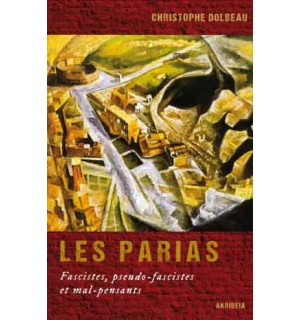
Damnatio memoriae; the Damned, the Cursed, the Outlawed: Christophe Dolbeau’s Les Parias; Fascistes, pseudo-Fascistes et mal-Pensants

Book Review: Christophe Dolbeau, Les Parias; Fascistes, pseudo-Fascistes et mal-Pensants, p.600, (Akribeia, 2021).

The portrayal of the Fascist legacy has been in a full demonizing swing ever since the end of World War II. Despite their claims of objectivity, modern professors of political ideas bear resemblance to ancient Hellenic bards with their surreal mythmaking orations. Irrespective of their awe-inspiring plots, few believe nowadays in the veracity of the ancient Greco-Roman myths. By contrast, modern doubts about the truthfulness of similar modern accounts regarding the Fascist intellectual legacy must not be publicly voiced. History professors continue to boast about their “unbiased historiographic” approach, although the word “hagiographic” would be more appropriate in the description of their teaching and research endeavors. Mandatory school programs in Europe and the US resemble a curriculum in comparative demonologies. Former Fascist and National-Socialist protagonists as well as numerous pre-World War II fascist writers and artists are presented as extra-terrestrial monsters, as ever emerging multi-headed Lernaean Hydras, or worse, as howling Hitlerite hounds of Hades, all of them sharing the company of hordes of illiterate, dim-witted and weaponized (mostly German) cutthroats. Such a would-be scholarly approach in modern higher education only confirms that the word “fascism” has entirely lost its original meaning.

One must therefore welcome the second edition of the book Les Parias (The Pariahs) authored by the French scholar Christophe Dolbeau; a book that provides a critical addition to the life and death of once-prominent fascist political and cultural actors. Dolbeau focuses on the fate of dozens of well-known and lesser-known American and European artists, novelists and politicians who played a significant role in the rise and fall of Fascism; yet who due to the adverse intellectual climate, following the end of World War II were either forcibly removed from the public eye and/or whose literary works came to be caricatured as academic quackery. Dolbeau’s book, however, is by no means an attempt at political rehabilitation of those fascist individuals, nor is his book a revisionist apology of Fascism. Dolbeau solely attempts in this thick book—600 pages, replete with the dense bibliographic notes garnered from his Spanish, Argentinian, American, English, German, French, ex-Yugoslav and Russian sources, as well as from his numerous personal acquaintances with the relatives of some of those former political lepers—to provide a more nuanced perspective on their days of preeminence and their subsequent descent into eternal damnation.

Dolbeau’s book reads as a meticulous police dossier on two dozen Fascist politicians and intellectuals, offering the reader new information on their statements and encounters that were suppressed in official documents following the war. The survey of each individual actor is supplemented with dozens of additional names—names of their friends or sympathizers, or names of their military and judicial detractors—forcing the reader to keep a close track of a massive number of references and translated quotes. Overall, Dolbeau’s French prose is highly readable given that his impressive writing record has a long history of supplying his readers with similar contextual and interdisciplinary framework, always triggering a new level of suspense and …surprise.

Out of dozens of Fascist figureheads described by Dolbeau, one can here only single out a few. These are: the English profascist activist John “Jack” Amery (1912–1945), the English author James Strachey Barnes (1890–1955), the Palestinian cleric Mohammed Amin al-Husseini (1895–1974), and the two founders of Russian fascism, Konstantin Vladimirovich Rodzaevsky (1907–1946) and the American-Russian activist Anastasy Andreyevich Vonsiatsky (1898–1965). Short of recommending reading this book in its entirety, it is impossible to review here the dozens of Polish, Flemish, Slovak, Norwegian, Canadian and Australian fascists and pseudo-fascists mentioned in the book, as well as in Dolbeau’s prior works.

The Outcasts

John Amery. Born into a prominent English family, his mother being of Hungarian-Jewish descent, John Amery, called “Jack”, developed very early a close insight to the wheeling and dealing of the English political class, which helped him later on in his own expatriate and propagandistic work on behalf of Franco’s Spain, Mussolini’s Italy and Hitler’s Germany. A good-looking young man and a womanizer, Amery was a man of high intelligence, albeit of moody behavior, always under the influence of hard liquor even when giving public speeches or having meetings with his high National-Socialist and Fascist sponsors. He spoke fluent French, which helped him set up a large network of like-minded colleagues all over pre-World War II Europe and foster close ties with fascist collaborationist authors in German-occupied Vichy France. During the war, at his speaking and public engagements, he advocated the formation of the English anticommunist military corps St. George designed to fight side-by-side with other European volunteers against the Red Army and local communist guerrillas.

Later on, the German propaganda services and German intelligence community, headed by the Berlin English section field officers, Dr. Fritz Hesse and Dr. Reinhard Haferkorn respectively, enabled him to make a series of anticommunist speeches on the Reichsrundfunk radio program during which he advocated the necessity of a peace agreement between the embattled UK and Germany. “I very frankly told Dr Hesse that I am not interested in the German victory; what is of interest to me is a just peace that can enable us to unite and counter a real threat to our civilization.” When captured along with his girlfriend by the communist guerrillas in northern Italy, in April 1945, he pleaded guilty at his later trial in England—but refused to recant his fascist beliefs. He, along with his colleague, the Irish-American radio host William Joyce, who had become a naturalized German citizen and with whom he had frequent personal squabbles, was hanged by the decision of the British court, on December 19, 1945.

Amin Al Husseini. The expression “Islamic Fascism” sounds like an oxymoron, except when used as derogatory name-calling, which seems to be quite trendy among many neocon and left-leaning journalists in America. Yet it is worth recalling that prior to World War II a large number of Muslim politicians and intellectuals all over the Middle East and central Asia showed a great deal of sympathy for the National-Socialist experiment in Germany. Even today, German businessmen and politicians when on a state visit to Arab and Muslim countries in the Middle East and Central Asia receive a much warmer official welcome than their colleagues from America, the UK and France, two former colonial powers that not long ago ruled over much of Africa and the Middle East.

The Palestinian politician under review in this book, Amin Al Husseini, was born into a respectable Palestinian family and soon became a household name in the Arabs’ anticolonial drive, adamantly opposing the arrival of European Jewish settlers in what was then the British mandate for Palestine and what was to become the state of Israel in 1948. Prior to World War I he was the main political spokesman for the pan-Arab cause, and later he advocated a military alliance with National-Socialist Germany. “He claim[ed] that the alliance of Muslims and the Reich is natural given that Islam and National-Socialism share the principle of discipline, solidarity and obedience in common.” In his numerous encounters during the WWII years with Hitler, Himmler, Mussolini and the Croatian profascist leader Ante Pavelić, he extoled “friendship, sympathy and adoration the Arab peoples have for the courageous German people and voiced support against the Anglo-Jewish coalition.”

In the last days of the war, Amin Al Husseini was residing in Germany, and unlike many local European fascist officials, or their sympathizers facing the Allied gallows, he was never arrested nor put on trial by the Anglo-American military authorities. After the war, he played a major role in endorsing the pan-Arab union and was the advisor to the future PLO leader Yasser Arafat, who attended his funeral in Beirut, in 1974.

James Strachey Barnes. James Strachey Barnes was a young English nobleman who converted to Catholicism, fully fluent in Italian and French. He started his career in the British intelligence service in 1919, yet became quickly disillusioned with British anti-German policies. Along with many English Catholic conservatives, he embraced fascist ideas and did not hesitate to put himself at the disposal of the Axis powers. Unlike his English Berlin-based rowdy compatriots William Joyce and Jack Amery, he was far more delicate in his public and radio appearances in Italy. As a personal friend of Mussolini and having close associates in the American expatriate poet Ezra Pound and the Italian-American pro-axis radio personality Rita Zucca, he became an important asset in Italy’s fascist propaganda targeting English and American troops. In his capacity as the Italian-based contributor to Father Charles Coughlin’s magazine Social Justice, which by 1939 had attained a circulation of over several hundred thousand copies, he wrote that “Italy is the hope of Europe, that is, of a civilized and Christian Europe.” And: “that one needs to expel all Jews from Europe.” By the end of the war, in April 1945, he was dismayed at the fate of his former mentor Mussolini, whose assassination and death he described as the “biggest crime since the crucifixion of Jesus.”

Konstantin Vladimirovich Rodzaevsky and Anastasy Andreyevich Vonsiatsky. Usually associated with Italy and Germany, it is hard to imagine that Fascism could also have its second birthplace in Russia. After the Bolshevik takeover in Russia by the early 1920s, there were millions of anticommunist Russian refugees who fled the country and settled all over Europe, China and North America. The neighboring province of Manchuria in China became a breeding ground for the early Russian fascist militants who, with the help of the Japanese authorities, attempted to topple the recently established communist government of the Soviet Union. Dolbeau describes a young writer exiled from Bolshevik Russia, a staunch antisemitic pamphleteer, Konstantin Vladimirovich Rodzaevsky, who founded the Russian Fascist Party and who collaborated with the war-time Japanese authorities in occupied Manchuria. However, his anticommunist projects went sour after the US had joined forces with the Soviet Union during the war. After the war he was captured and executed by the Soviet authorities.

His erstwhile Russian colleague Anastasy Andreyevich Vonsiatsky, who also fled Russia after the Bolshevik takeover, was more fortunate after the war, becoming a naturalized US citizen. Both worked briefly on the creation of a loose network of anticommunist organizations in Japan, Europe and the U.S. made up of Russian exiles, albeit with little success, weakened by internal disputes amidst Russian anticommunist expatriate circles. The U.S. and U.K. governments soon became close wartime allies of Stalin’s Soviet Union, and this had a negative impact on all fascist, anticommunist and conservative emigres the world over. As late as 1948, Edgar Hoover’s FBI kept under close surveillance thousands of German Americans and American anti-Communist sympathizers of East European origin. The Cold War against the Soviet Union reversed this policy, but for many American and European nationalists and cryptofascists of all sorts, redemption was still a long way off.

Dolbeau concludes: “These two chiefs, no doubt sincere and patriotic but also credulous, vain, delusional, and not always honest, were never up to the task. Nonetheless, despite its defaults and failures Russian fascism embodied in the 1930s a real desire for the renewal and a real effort to imagine Russia differently.”

Conclusion

After the fall of the Soviet Union in the early 1990s, and thanks to modern internet technology, the study of Fascism is increasingly becoming the subject of less condescending, hostile analyses. Political historiography after 1945 attempted to cement forever the founding myths of the liberal and communist order. It is now undergoing a revisionist process where the old verities are increasingly questioned.

At first glance Dolbeau’s book reads like a good archival source to the study of Fascism. With his encyclopedic knowledge of names and events surrounding the rise and fall of Fascism, Dolbeau did a good job of putting together a handy compendium for the study of anticommunism, and it is a great pity than none of his books have been translated into English. At the time of the publication of this book, he also published a well-annotated essay Des Américains au service de l’Axe, in the French periodical Tabou, where he deals in detail with the fate of numerous American and naturalized German-American and Italian-American professors, artists and journalists who harbored fascist sympathies, with many becoming later active participants in the Third Reich propaganda efforts. For example, he writes at length about, American profascist luminaries such as the above-mentioned Rita Zucca, as well as William Dudley Pelley, George Nelson Page, Jane Anderson, Douglas Chandler, Donald S. Day, Mildred Elizabeth Gillars, aka “Axis Sally,” Max Otto Koischwitz, including dozens of lesser-known Italian and German-American expatriates.

MoreoverDolbeau is the first French author to compose a comprehensive, encyclopedic work Face au bolchevisme: Petit dictionnaire des résistances nationales à l’Est de l’Europe (1917–1989) (Facing Bolshevism; A Small dictionary of national resistances in Eastern Europe; 1917–1988) in which he painstakingly traces every single anticommunist actor who took part in the world-wide anticommunist struggle during the course of the twentieth century, from Albania to Azerbaijan from Catalonia to Kazakhstan. Dolbeau’s earlier close ties with Croat post-WWII emigres in De Gaulle’s France, in Peron’s Argentina and in Franco’s Spain also prompted him to write several well-researched books on the rise and demise of the profascist state of Croatia. The state of Croatia remained the last ally of National-Socialist Germany, and after the communist takeover in 1945 it turned into the largest communist killing field in Europe, known later as Marshall Tito’s Federal Communist Yugoslavia.

In addition, Dolbeau’s book is also a good guideline for understanding our own present times. Contrary to widespread beliefs, we are not witnessing the end of history, nor the termination of the ideology of Communism. Quite to the contrary. The end of World War II in 1945 only came to a provisional close; it continues to rage on with communist ideas still holding ground, albeit under different signifiers and promoted by different actors. Worse than Weimar Germany, or for that matter worse than entire pre-war Europe, Europe and the USA today are sharply polarized along racial and gender lines, both waiting to implode with deadly consequences not yet seen in the history of the West. Dolbeau’s book will help us better understand the root causes of the coming catastrophes.  It is an important work on the recent intellectual and cultural history of the West, reminding us that there were many intelligent, morally upright people—now expunged from history—who advocated for a different outcome.