Featured Articles

TOQlive Announcement


The Occidental Quarterly is starting a new monthly video show featuring James Edwards of The Political Cesspool fame interviewing various figures associated with TOQ, beginning with editor Kevin MacDonald. Shows will air live the first Sunday of every month for 90 minutes, including 30 minutes for audience questions. Shows will begin at 8 PM Eastern, 5 PM Pacific, beginning this Sunday, November 4. The link for livestreaming is here. Shows will be permanently archived on the website.

The chat will be on, so at Q&A time ask some short questions. People who post in the chat feature must wait one minute after posting to post again.

Interviews will discuss and the ideas and background of the writers who contribute to TOQ. Viewers will get an up-close-and-personal look into these writers and their ideas, as well as their intellectual journeys and the obstacles they have had to overcome. There will also be commentary on the wider worlds of politics and culture on which they are conversant.

Mission Statement for TOQlive

An important goal of TOOlive is to promote new subscriptions and donations to TOQ. Information on subscriptions and donations can be found by clicking  here.

TOQlive aims to raise awareness of The Occidental Quarterly. As is well known, there is a wide-ranging attempt to de-platform people and media associated with the dissident right. Important voices have been bounced off Twitter and Facebook; or they have had the numbers of their followers capped or they have been shadow-banned. Financial service firms like PayPal and credit card processing companies have refused to service dissident-right media sites. This has had an oftentimes crippling effect on subscriptions and donations, including TOQ.

Given all the de-platforming and cutting off financial services by the powers that be, it’s more important than ever to raise awareness of TOQ and provide it with a firmer foundation. The editor, Kevin MacDonald, is an emeritus professor of psychology who is well aware of the pall of political correctness that has descended over the academic world. Entire academic fields are dominated by cultural Marxist ideas, and there is active policing of the boundaries of acceptable discourse. Professors either conform to these ideas or they suffer the consequences in terms of lost grants, lost publishing opportunities, and not being promoted or given tenure.

In this environment, there is a crying need for an academic journal that eschews political correctness and champions the free exchange of ideas. We can’t let them win by shutting out our ideas on race and on the ethnic interests of Whites.

Video allows for a much more personal way of communicating than the printed word. So even though the rigorous demands of written prose are essential for developing a rigorous intellectual foundation, it is also important for readers to get to know the human side of these writers. To see them as fellow humans. To understand where they came from and how they got to where they are intellectually. That is the mission of TOQlive.

Appendix to Huddersfield Horrorshow: The Observer Obfuscates

Go to Huddersfield Horrorshow.

The Observer is the Sunday edition of the Guardian. It published an editorial on the Huddersfield Horrorshow stating that the “victims of the horrific events in Huddersfield and other cities are not best served by a polarised debate on race.” It then proceeded to obfuscate in typical lying liberal fashion (“obfuscate” is from the Latin obfuscare, meaning “to make dark”). Here is some of what the Observer said, with my responses:

No words can do justice to the horrific abuse perpetrated by a gang of 20 men in Huddersfield, believed to be Britain’s single biggest grooming prosecution. The men plied vulnerable girls as young as 11, including those in care and with learning disabilities, with alcohol and drugs in order to sexually abuse them. The abuse included men raping intoxicated girls while others watched, sexual abuse with a drinks bottle and gang rape by men using plastic bags as condoms.

There is an understandable urge to react out of raw anger. Yet the most important question we can ask as a society — calmly, rationally — is how to prevent this sort of abuse from happening again. (The Observer view on dealing with child-grooming gangs, 21st October 2018)

In fact, the most important question for the Observer is how to conceal the truth and how to evade responsibility for its own role in these horrors. The Observer is still using the euphemistic term “child-grooming gangs” when the proper term is “child-rape gangs.” And it’s impossible to “prevent this sort of abuse from happening again,” because Britain contains millions of non-White men steeped in “the Patriarchy” that reigns supreme in Third-World bastions of “rape-culture” like Pakistan. The Observer has fully supported mass immigration and wants millions more non-Whites to enrich Britain with their rape-culture and misogyny. Read more

Huddersfield Horrorshow: Another Non-White Rape-Gang in Brave New Britain

Like Friedrich Nietzsche, George Orwell is often and unfairly thought to have no sense of humour. But there’s a lot of humour amid the horror of Nineteen Eighty-Four (1949). Take the scene in which a group of workers at the Ministry of Truth conduct a “Two Minutes Hate” against thought-crime and then worship Big Brother with “a deep, slow, rhythmical chant of ‘B-B!… B-B!’ — over and over again, very slowly, with a long pause between the first ‘B’ and the second.”

The Ministry of Mendacity

Does the juxtaposition of “B-B” with “Ministry of Truth” remind you of anything? It should, because Orwell was satirizing the B.B.C., where he worked on propaganda for part of the Second World War. In Orwell’s novel, the Ministry of Truth was dedicated to lying and to the suppression of inconvenient reality. That’s why it was full of memory holes, “large oblong slits protected by wire grating” that “existed in thousands or tens of thousands throughout the building, not only in every room but at short intervals in every corridor.” Memory holes exist to destroy memory, not preserve it, as the novel’s hero, Winston Smith, sees in a torture-chamber at the Ministry of Love. His torturer O’Brien shows him a photograph proving the evil and corruption of the governing ideology:

“It exists!” he cried.
“No,” said O’Brien.
He stepped across the room. There was a memory hole in the opposite wall. O’Brien lifted the grating. Unseen, the frail slip of paper was whirling away on the current of warm air; it was vanishing in a flash of flame. O’Brien turned away from the wall.
“Ashes,” he said. “Not even identifiable ashes. Dust. It does not exist. It never existed.”
“But it did exist! It does exist! It exists in memory. I remember it. You remember it.”
“I do not remember it,” said O’Brien. (Op. cit., Part 3, ch. 2)

That’s how the BBC really behaves in the twenty-first century. When reporting restrictions were lifted at the end of Britain’s latest vibrant rape-gang trial, the BBC held the story up briefly before the eyes of the British public, just as O’Brien held a truthful photograph up before the eyes of Winston Smith. Then the BBC imitated O’Brien and dropped the story down the memory hole: in a day, it had vanished from news-bulletins. As far as the BBC is now concerned: “It does not exist. It never existed.”

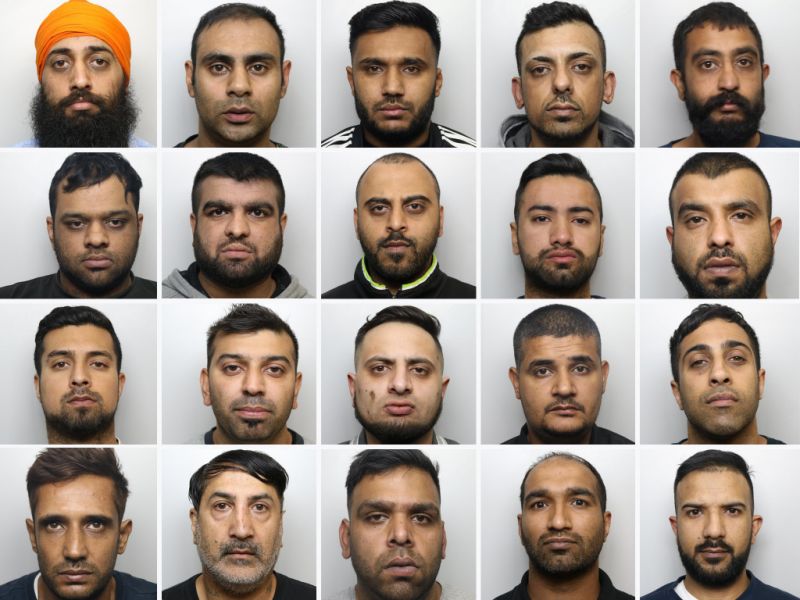
A few of the vibrant rapists behind the Huddersfield Horrorshow

Read more

Measuring the Islamization of France and Belgium: 20% of Newborns Given Muslim Names

Unlike in the English-speaking world, most countries in Continental Europe sadly do not collect official statistics documenting the ethnic situation. In France, the mainstream media goes so far as to desperately claim that the Grand Remplacement (Great Replacement) of the indigenous French population, which is visible in every city, is a mere “conspiracy theory.” The media hacks, who for the most part work for or are subsidized by the state, really take their fellow-citizens for fools.

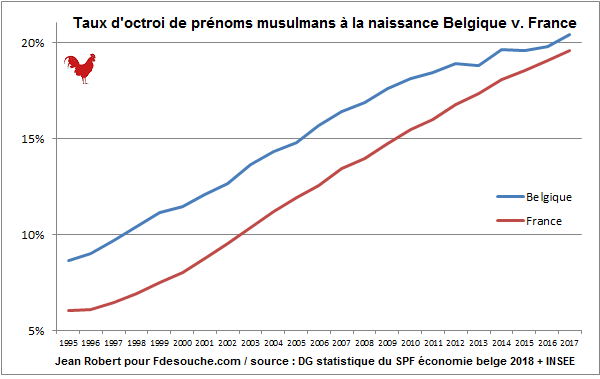
Meanwhile, intrepid, genuinely independent citizen-journalists are doing the work which the official media refuses to do by trying to measure this development. The nativist French website Fdesouche recently published the percentage of newborns given Muslim names in France and Belgium, according to official statistics.

As can be seen, France and Belgium have experienced similar developments, with the granting of Muslim names rapidly rising from 5-8% in 1995 to around 20% today:

Fdesouche had previously found that one third of newborns in France were tested for sickle-cell disease, a procedure usually performed if the infant was of African or Middle-Eastern origin. Given that Muslims by no means make up all of France’s non-White immigrants, the data is broadly congruent. Read more

Reply to Jordan Peterson on the Jewish Question — From His Heroes Part Four: Nietzsche

Friedrich Nietzsche

Go to Part 1: Solzhenitsyn
Go to Part 2: Dostoevsky
Go to Part 3: Jung

A Reply from Nietzsche.

Like these other figures, whose thought is sanitized and claimed by Peterson, Nietzsche possessed views of Jews quite at odds with Peterson’s own hasty conclusions. Robert Holub’s 2015 Nietzsche’s Jewish Problem: Between Anti-Semitism and Anti-Judaism (Princeton University Press) convincingly demonstrates that, at best, Nietzsche could be described as ambivalent towards the Jewish Question. Nietzsche was undeniably in tune with Wagner when it came to animosity towards those aspects of modernity most closely linked with the rise of the Jews in Germany: the hegemony of journalists, the press, newspapers, new ‘trends’ in art, and the stock market. He was a critic of both Berthold Auerbach and Felix Mendelssohn, whom he argued produced works typified by foreignness, jargon, mawkishness and internationalism. At Basel, one of Nietzsche’s closest colleagues was the historian Jacob Burckhardt, described in one dedication as “my honored friend.” Burckhardt was unequivocally opposed to Jewish emancipation and believed that everything of worth in European culture was due to its Greek and Roman heritage rather than the Jewish tradition. He would have balked at the idea of Europe as a ‘Judeo-Christian’ cultural entity—a favorite piece of Jordan Peterson’s nomenclature—and he was firmly convinced that Jews were responsible for the worst manifestations of modernity. Early in his career Burckhardt wrote to a friend that the presence of Jews in a theater would be sufficient to entirely destroy his enjoyment of the event.

Like the others reviewed here, Peterson references Friedrich Nietzsche in almost every interview, talk, or text he delivers. In 12 Rules for Life (p.59), Peterson describes Nietzsche as both “great” and “brilliant,” and calls him (p.85) “perhaps the most astute critic ever to confront Christianity.” In much the same way as he cites Solzhenitsyn, Dostoevsky, and Jung as his ideological forerunners, Peterson holds up Nietzsche as a prescient and thoughtful thinker whose work was characterized (p.37) by its “brilliance.” Read more

Reply to Jordan Peterson on the Jewish Question — From His Heroes: Part Three: Jung

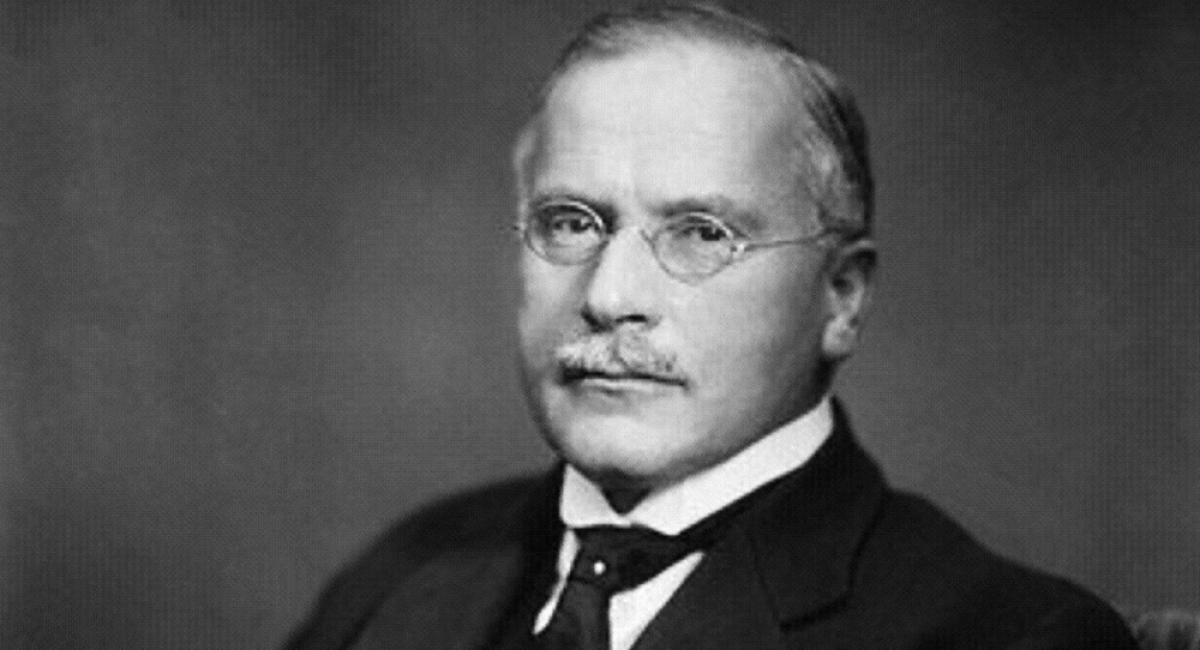
C. G. Jung

Go to Part 1: Solzhenitsyn.
Go to Part 2: Dostoevsky

A Reply to Jung.

Jordan Peterson references Carl Jung in almost every interview, talk, or text he delivers, and these references are especially frequent in his lecture series on the Biblical stories. In 12 Rules for Life (p.131), Peterson describes Jung as both a “great psychiatrist” and a “psychoanalyst extraordinaire.” Jung’s ideas about the subconscious and archetypes form the backbone of much of Peterson’s self-concept and public work. One therefore wonders what Jung would have made of Jordan Peterson’s “On the So-Called Jewish Question.”

To begin with, Jung would almost certainly object to Peterson’s implicit assumption that Jews are easily integrated parts in the machinery of Western civilization, equal or even superior in suitability to all others. Jung believed that Jews, like all peoples, have a characteristic personality, and he would have stressed the need to take this personality into account. Even in his own sphere of expertise, Jung warned that “Freud and Adler’s psychologies were specifically Jewish, and therefore not legitimate for Aryans.”[1] A formative factor in the Jewish personality was the rootlessness of the Jews and the persistence of the Diaspora. Jung argued that Jews lacked a “chthontic quality,” meaning “The Jew … is badly at a loss for that quality in man which roots him to the earth and draws new strength from below.”[2] Jung penned these words in 1918, but they retain significance even after the founding of the State of Israel. Even today, vastly more Jews live outside Israel than within it. Jews remain a Diaspora people, and many continue to see their Diaspora status as a strength. Because they are scattered and rootless, however, Jung argued that Jews developed methods of getting on in the world that are built on exploiting weakness in others rather than expressing explicit strength. In Jung’s phrasing, “The Jews have this particularity in common with women; being physically weaker, they have to aim at the chinks in the armour of their adversary.”[3] Read more

Reply to Jordan Peterson on the Jewish Question — From His Heroes Part Two: Dostoevsky

Go to Part 1: Solzhenitsyn.

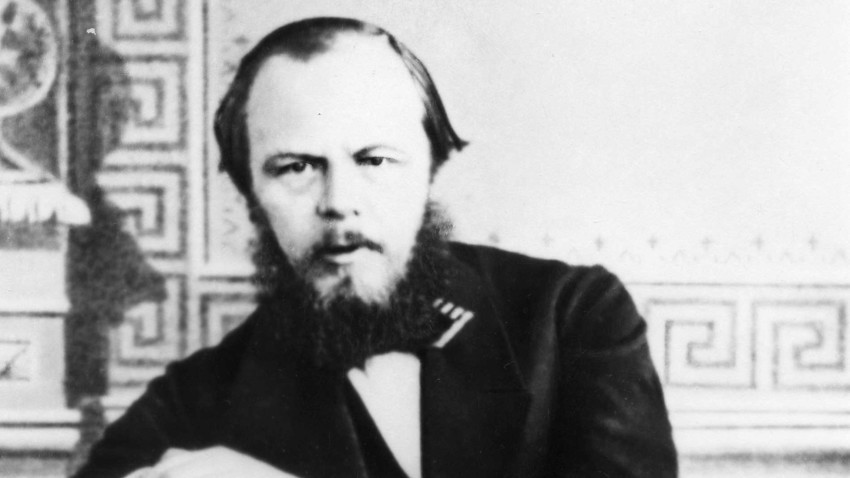
Jordan Peterson references Fyodor Dostoevsky in almost every interview, talk, or text he delivers —perhaps even more than he refers to Aleksandr Solzhenitsyn. His admiration for Dostoevsky is considerable and is made clear in 12 Rules for Life. In 12 Rules, Peterson refers to the Russian author as (p.68) “incomparable,” and (p.137) “a wise and profound soul” possessing “great generosity of spirit.” Peterson describes Crime and Punishment (p.83) as “perhaps the greatest novel ever written,” and Dostoevsky himself (p.136) as “one of the great literary geniuses of all time.” He adds to the latter praise that the author “confronted the most serious existential problems in all his great writings, and he did so courageously, headlong, and heedless of the consequences.”

Perhaps even more so that was the case with Solzhenitsyn, Fyodor Dostoevsky has been pilloried in recent decades as an ultra-nationalist anti-Semite who believed Jews “had harmed and continued to harm the foundations of Russian society and culture.

Peterson, it will be recalled, has described anti-Semites as individuals who “claim responsibility for the accomplishments of [the] group [they] feel racially/ethnically akin to without actually having to accomplish anything [themselves].” Clearly an important point needs to be reconciled by Peterson: namely the outstanding literary accomplishments and political stances of Dostoevsky (even in Peterson’s own gushing estimation), and Peterson’s assertion that anti-Jewish critique rooted in nationalist sensibilities is merely a form of psychological escapism for those keen to avoid accomplishing anything for themselves. Surely it is self-evident that Dostoevsky, like Solzhenitsyn, was a man not only of accomplishment, but of remarkable, extraordinary accomplishment. What were Dostoevsky’s attitudes to Jews and the Jewish Question, and how would he respond to Jordan Peterson? Read more