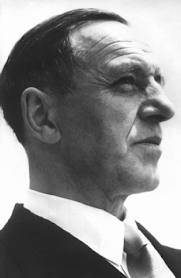
Alexander Dugin’s “The Fourth Political Theory”

The Fourth Political Theory
Alexander Dugin
Arktos Media, 2012. 211pp.

Alexander Dugin’s book is a very timely work; by which I mean it is almost exclusively a response to the twentieth century—“the century of ideology” (p. 15) — from the twenty-first. It is a right-wing critique of modernity that has learned its lessons from left-wing post-modernity. It joins a flurry of works in a similar genre of post-war “alternative politics,” spanning from Julius Evola’s Fascism Viewed from the Right of 1964 to Guillaume Faye’s Archeofuturism of 2010. Authors can be Christian, neo-pagan, or atheist; they can be reformed fascists, “paleo”-conservatives, or Traditionalists. They all, however, seem to send the same message and understand the same thing about the present state of the Western world: everything that is wrong with the way we act is rooted in something desperately wrong with the way we think. It is, in many ways, set apart from the radical right-wing not only in conclusions but the quality of the authors. While some are certainly pamphleteers in spirit, there is a distinctly intellectual strain running through it all—exemplified by the Nouvelle Droit phenomenon in France. It should come as no surprise, then, that Dugin is Professor of Sociology at Moscow State University (as well as Chair of that department’s Centre for Conservative Studies).

As might be expected from an academic, he has produced a dense work that may appear esoteric to the unlettered reader—indeed, even the learned man who has no experience with Heideggerian metaphysics may struggle through certain parts of the book. Nevertheless, it is also an exceptionally practical work, and though there are doubtlessly many critiques that any given conservative can level against it, it remains a monumental book merely because of its project. The Fourth Political Theory is not, as the title suggests, a coherent, well-defined theory: the book is not a manifesto, despite all appearances. Rather, the work is ambiguous; the closest one can get to a definition is that “the Fourth Political Theory is an unmodern theory” (p. 68).  The rest of what is said is either vague, dense, or apophatic (i.e., defined by what it is not). Read more

Sean Trende: A Rosy Future for the Republicans Without Immigration Reform — if they appeal to downscale Whites

It’s interesting that The Weekly Standard has published two articles opposed to the amnesty/immigration surge bill—interesting because we tend to assume that neocons are in favor of non-White immigration, their attitudes stemming from the Jewish identity of the core neocons. But we find none other than Bill Kristol in the opposition camp (‘Comprehensive’ Immigration Reform: Just Say No), along with Jay Cost (“The Wrong Fix for the Wrong Problem“).

I suspect that Kristol et al. realize that if the Republicans give in on immigration, it will speed the demise of the Republican Party—which is obviously true. (No wonder so many leftists, including the virulently anti-White Harold Meyerson, argue that the Republicans absolutely must vote for the bill to remain viable. Surely Meyerson has nothing but the best interests of Republicans at heart.)

And if the Republican Party ceases to be competitive at the national level, the neocons will lose their dominant position within its foreign policy establishment, to the detriment of their favorite country. (Although they have made a point to infect both parties, they are clearly much more powerful in the Republican Party, and war mongering on behalf of Israel is inherently more difficult to sell to the hard left that runs the Democrats these days.)

It goes to show that the fundamental commitment to Israel can trump a long history of the neocons moving the Republican Party to the left on diversity issues and immigration even as they lined up solidly behind the racialist, apartheid-promoting right in Israel. After all, Ben Wattenberg, who famously wrote in 1984 that “the non-Europeanization of America is heartening news of an almost transcendental quality” is rightly considered a neocon. Read more

A Tale of Two Trials: What the George Zimmerman and O.J. Simpson Verdicts Reveal About Racial Denial

One transparent outcome of the “not guilty” verdict in the George Zimmerman trial is the racial disconnect between the average American and the nation’s powerful elites (the mass media, politicians, and “civil rights” leaders). The ever-widening gulf between racial reality and racial fantasy—the daily repetition of Black violence in contrast with the media-driven narrative of nonstop injustices of an oppressed minority—seems more pronounced in the wake of the Zimmerman verdict.

We live in an era of extreme racial denial. The nation’s media and political elites—what Joseph Sobran termed the “hive”—live in a fantasy realm that dismisses latent racial differences, an existence defined by unrealistic egalitarianism and hyper-liberalism; racial disparities are merely symptomatic of the lingering impact of slavery, racism, and discrimination. The emphasis is always on some inanimate object—“mean” streets, “gun” violence, “epidemic of violence,” “crack” cocaine, “heat waves,” “underfunding” of Head Start, the lack of upward “middle class mobility”; or the fault of law enforcement—“police brutality,” “deficient” law enforcement strategies, “racial profiling,” or “Stand Your Ground” laws.

The crux of the Zimmerman case is fundamentally about holding Blacks accountable for their own actions. The jury of six females—five Whites and one Hispanic—reached a reasonable conclusion that the defendant acted in self-defense in the fatal shooting of 17-year-old Trayvon Martin. The evidence presented at trial countered the prosecution’s claims that Zimmerman was the aggressor, stalked Martin, initiated the altercation, and as a “wannabe” cop shot Martin—an innocent “unarmed” 17-year-old bystander. Most of the media coverage in the wake of the verdict reinforces the unfounded assumption that Trayvon Martin was innocently preyed upon—nothing more than a victim of “profiling,” who was just an “unarmed” teenager, a kid, trying to get home. This is the fantasy that our elites are hyping and one the jury simply rejected outright.

The Zimmerman jury, after a careful assessment of the evidence, concluded that Martin was the aggressor. After an initial encounter, Martin forced Zimmerman to the ground after sucker-punching him, pounded Zimmerman’s head against the concrete sidewalk, and after 45-seconds of screaming and fearing for his life, Zimmerman shot Martin to save his own life.

The verdict has produced a predictable tsunami of racial demagoguery from beltway pundits. Chris Matthews, Al Sharpton, Tavis Smiley, and Jesse Jackson have exploited the jury decision to project their own warped views about the endless suffering of Blacks from White oppression. Read more

The Trouble With Tommy

As a recruitment advert for the English Defence League the latest Tommy Robinson arrest video is hard to beat. It shows the leader of England’s foremost street protest movement attempting a two-man charity walk through the heavily Muslim London borough of Tower Hamlets then being assaulted and then arrested by police.

As the attacker is allowed to walk away unhindered through the police ranks Tommy and his colleague are handcuffed and bundled into the back of a police van shouting. “You are enforcing Sharia law”

Two things are obvious from this unedifying scene. One is that Britain’s slide into a multicultural police state has gone so far they do not even pretend to be attempting impartial policing. The second is that it is blatantly obvious that Tommy Robinson has come out on top yet again.

For this embarrassing video is only the latest in series of incidents which have establish him as not only a genuine voice of the marginalised, but helped win the grudging admiration of many beyond the public housing estates which provides his grassroots support.

As a result, no-one in the UK dissident anti-immigration sphere has come closer than Tommy Robinson to breaking out of the media stranglehold that our PC state has imposed on all media discussion of immigration and Sharia law, and articulating the voice of the majority on immigration. Read more

Hybrid Fabrications versus Greek Originality

The Guardian was beaming with confidence this July 11 announcing Tim Whitmarsh’s edited book, The Romance Between Greece and the East, as a major breakthrough in scholarship recasting the ancient Greek world “from an isolated entity to one of many hybrid cultures in Africa and in the East”. Whitmarsh’s book is framed along the same lines as Martin Bernal’s earlier attempt in Black Athena (1989) to place the origins of Greece in Africa and the Semitic Near East. Whitmarsh’s calls the argument that the Greeks owed their brilliance to themselves, their own ethnicity as Indo-Europeans, a “massive cultural deception”.

In our Western world of immigrant multiculturalism any idea which attributes to Greeks, Romans, medieval Christians or modern Europeans any achievement — without including as co-partners the Moslems, Africans and Orientals — is designated as a massive deception. The scholarship promoted by our current elites demands a view in which Europeans don’t exist except as hybrids, borrowers, and imitators.  But the historical and archeological evidence adduced by Whitmarsh and multiculturalists in general never goes beyond showing that there were connections between the Greeks (or Europeans generally) and their neighbours. They have an easy time showing what many have shown before, that the Greek mainland was connected to the Mediterranean world via trade, travelling, colonizing activities, and the residence of some Greeks outside Greece.

They also repeat as new discoveries what European scholars had already started showing in the eighteenth century, that ancient Greece was preceded by Mesopotamian and Egyptian civilizations and that the Indo-Europeans who arrived in the Greek mainland and established the Mycenaean civilization in the early second millennium borrowed some basic civilizational tools from these older civilizations, including some mythological motifs and the alphabet from the Phoenicians.  From these general borrowings, and without even caring to understand the unique world out of which the Mycenaeans came, a world which originated in the steppes and was characterized by horse riding, chariot fighting, aristocratic liberalism, and an ethos of heroism, which was vividly captured in the Homeric epics of the eighth century (an ethos utterly absent in the Epic of Gilgamesh), the multicultics rush to conclude that the achievements of the archaic and classical Greeks — such as Pindar, Sophocles, Thucydides, Aeschylus, Anaxagoras, Anaximander, Euripides, Thales, Heraclitus, Parmenides, Socrates, Plato, and Aristotle — were “hybrid” achievements.  Read more

Nationalist Parties in the European Union: Electoral Goals and Political Hopes

euccp

This is an abridged version of the talk to American Freedom Party members, given in Los Angeles, July 6, 2013.

At first sight it appears that launching a nationalist or a racialist, or a so-called right- wing party in Europe is a relatively easy task — easier than in the USA, where the two party system reigns supreme. But there are often legal and electoral tricks and traps in Europe, not to mention the powerful impact of the ideology of political correctness that hinders nationalist parties in Europe to advance in the political system. Unlike the United States, all 28 member states in the European Union have a fair number of nationalist parties, many of them with representatives at the national, local, or at the European level—although the number of their representatives is almost negligible and their voices hardly audible.

The advantage of the European electoral process is the proportional representation system, common to all states in the EU. It means in practice that a party, however large or small it may be, is assigned a number of seats in the parliament, or at the local council, or municipal level,  based on its proportional score in the election. Thus, if a party obtains 5 %, or 10 %, or 30% of votes it will be theoretically awarded with 5 %, 10%, or 30% of seats in a national parliament or at a local city council. Read more

Maurice Bardèche’s Vision of the Future: Excerpts from “Nuremberg or the Promised Land”

Excerpts from Maurice Bardèche’s Nuremberg or the Promised Land, translated by George F. Held

The appearances of justice [at the Nuremburg Trial] were maintained perfectly. The defense had few rights, but these rights were respected. … Several defendants were discharged. In the end the forms were perfectly well observed, and never was a more debatable justice rendered with more propriety.

For this modern machinery, as one knows, had the result of resurrecting a jurisprudence like that of Negro tribes. The victorious king is set on his throne and has his witchdoctors called in: then, in the presence of warriors sitting on their heels, someone cuts the throats of the vanquished chiefs. We start to suspect that all the rest is a bit of comedy, and the public, after eighteen months, is no longer taken in by this kind of play-acting. The chiefs have their throats cut because they were vanquished; the atrocities with which one reproaches them, well, no just man can avoid saying to himself that the commanders of the Allied armies could be reproached with atrocities just as serious: the phosphorus bombs well counterbalance the concentration camps. An American court which condemns Göring to death has no more authority, in the eyes of men, than would a German court which presumed to condemn Roosevelt. A court which creates the law after being seated on its bench brings us back to the beginning of history. One did not dare to judge so at the time of Chilperic.[1] The law of the strongest is a more honest way. When the Gaul shouts Vae victis,[2] at least he does not take himself for Solomon. But this court succeeded in being an assembly of Negroes in starched collars: this is the plan for our future civilization. It is a masquerade, a nightmare: they are dressed as judges, they are serious, they are capped with ear-phones, they have the heads of patriarchs, they read papers with a saccharine voice in four languages at the same time, but in reality they are Negro kings, it is a costume party for Negro kings, and in the icy and staid room one can almost hear in the background the war drums of the tribes. They are very clean Negroes and perfectly modernized. And they have obtained without knowing it, in their Negro naiveté and in their Negro unconsciousness, a result that none of them undoubtedly had envisaged: they have rehabilitated by their bad faith even those whose defense was almost impossible, and they have given to millions of destitute German refugees, ennobled by defeat and their condition as the vanquished, the right to scorn them. Göring mocked them, for he well knew that they were rendering him right in everything, since they, with their panoply of judges, were paying homage to the law of the strongest, on which he had based his own law. Göring laughed to see Göring disguised as a judge judge Göring disguised as a convict (p. 14). Read more