Christianity

Covenant Theology and God’s Chosen

Introduction

Within the alt-right community there is a continual call to advocate traditional, Northern European paganism. Inherent in both the published and online literature is the view that the fall of Europe can be traced to the abandonment of its roots in the Norse religion and that Christianity looted paganism of its intellectual treasures.[1] Though alt-right Christians like me can be found, there seems to be a rising consensus in the alt-right that is critical of Christianity. This is understandable since the New Testament is the prophetic fulfillment of Judaism, which has a history of plundering nations and, especially since the medieval era, has become a morally debased religion practiced by a generally evil people. In this brief article, I hope to reinvigorate interest in the Christian story among the alt-right by providing a theological consideration for why God chose the evillest race in history to be his people in the Old Testament. I’ll begin by proffering covenant theology as the historic alternative to dispensationalism (and its Zionism), as the interpretive lens through which we should understand the biblical meta-narrative. I’ll conclude by examining how the incarnation of Christ and God’s pattern of salvific election can better help us understand the character of God and his choice of the Jewish people in the Old Testament.

Abrahamic Blessing and Covenant Theology

The Jews have wreaked havoc on Western civilization. This is one of the first realizations one has when she starts to dive into alt-right literature. Their mode of operation has sometimes been described as parasitic, as they attach themselves to a host nation and destroy that nation from the inside. Yet, many Christians in America believe that the Jews are God’s special and chosen people. Guided by a theology called dispensationalism, they eagerly defend the Jewish people in all internal and foreign affairs: they defend their presence in any nation, they defend the state of Israel and their cause in any conflict, they defend U.S. foreign aid (both financial and military) to Israel, and they support any political policy that lifts up the Jewish people, even to the detriment of another people. Writes one Christian Zionist, “With the world rightly united against the use of nuclear weapons, let us empower Israel—and stand ready ourselves—so that Iran’s regime grasps a simple truth: We will not hesitate to defend ourselves or our allies. True peace hinges on strength, and we must exhibit both in earnest, today and always. And just as strength is not a precursor to war, neither does bombing Iran start a never-ending conflict; in fact, it stops the war that started the day the Islamic Republic was born.”[2]

What could drive a Christian to speak so casually about bombing another nation? It all starts with the covenant promise that God made to Israel. In Genesis 12, God says to Israel’s patriarch, Abraham, “I will make you into a great nation, and I will bless you; I will make your name great, and you will be a blessing. I will bless those who bless you, and whoever curses you I will curse; and all peoples on earth will be blessed through you” (2–3). Evangelicals receive this verse as a mandate to support God’s Abrahamic people in the form of modern Israel to whatever violent end and at whatever financial or human cost. However, if the reader of Scripture progresses, he’ll find that the nature of this covenant is framed in conditional terms. Leviticus 26:3-4 uses the if/then grammatical structure of a subjunctive conditional: “If you walk in my statutes and keep my commandments so as to carry them out, then I shall give you rains in their season, so that the land will yield its produce, and the trees of the field will bear their fruit.”

But Israel did not keep their end of the covenant, and God, in his loving patience, decided to give them chance after chance, renewing their covenant at various points in Scripture. In the book of Joshua, He reaffirms His covenant with Israel and reiterates His warning against disobedience. Joshua says on behalf of Yahweh, “If you abandon the Lord and worship foreign gods, He will turn against you, harm you, and completely destroy you, after He has been good to you” (24:20).

Within the Abrahamic covenant then, there is a two-fold promise: The unconditional promise that through Abraham all nations will be blessed. This is an allusion to the coming of the Messiah whose line will persist through the Jewish people no matter what. Yet there is the conditional promise of general blessings; the material blessings of rain for the harvest, protection from enemies, and God’s provision of Holy Spirit-led guidance and sense of fatherhood over the nation of Israel as his children.[3] In other words, God promised to keep his Messianic promise of blessing to the Jews and that promise was kept through Christ. When Christ the Messiah did finally come, he came through the Jewish people. The gospels of Matthew and Luke even provide a genealogy of Jesus with Matthew going back to Abraham and Luke going all the way back to Adam.

But the Jews have rejected the Messiah. Acts 4:11 says, “Jesus is ‘the stone you builders rejected, which has become the cornerstone.’” So, God sent his gospel to the Gentiles through the Apostle Paul and engrafted them into the salvific tree of Israel. The promises that were meant for Israel have now been transferred to the Church. Whoever trusts in Christ for salvation becomes a citizen in God’s chosen spiritual nation — the Church. Circumcision, which in the OT was the sign and seal of the covenant that God made with his people to make them his own has been replaced by baptism. It serves the same purpose as circumcision as it is understood as setting someone apart from the world and bringing them into the covenant family of God’s people which is now the Church, not Israel.

Theologians have long called this observation supersessionism, which is directly informed by covenant theology. Covenant theology is a helpful interpretive guide to the meta narrative of the Bible. The Bible’s story unfolds in “chapters” of covenants. God made a covenant with Noah not to destroy the natural world even though he knew sin would continue to spread among it. He gave Noah the sign of the covenant in the form of a rainbow. He made a covenant with Abraham to bless his offspring materially and spiritually if his people would not follow other gods. The sign and seal of this Abrahamic covenant is circumcision, which is seen as a ceremonial act of cleansing and purification; a way to set the Israelites apart from her neighboring nations. He made a covenant with David that his kingship would be eternal. The sign and seal of this covenant was the throne, on which Christ now sits at the right hand of God the Father. In the New Testament, God made a covenant to anyone through Jesus Christ to be their God, if they abandon their false gods and idols and trust in Him through Christ alone.

The sign and seal of this new covenant is baptism. This is why Christians baptize their babies — It replaces circumcision as the ceremonial rite of induction into God’s covenant community. In this way, covenant theology makes a common-sense observation of the chronology of biblical salvific history. Zionist disagree with this way of viewing the whole Bible, and instead insist the Bible’s narrative unfolds in ages called dispensations. They believe that there are several ages in the salvific story and that we are currently in the “church age.” According to dispensationalists, there is a final coming age of Zion, where Christ will rule from Jerusalem for a thousand years. This theology gives Israel a sort of sacred status as the future center of God’s kingdom. Zionists angrily denounce covenant theology and its subsequent supersessionsim as “replacement theology”[4], because it replaces the idea of the chosenness of Israel with the chosenness of the Church.

It is confusing that Christian Zionists, while believing along with covenant minded Christians that salvation is found only in Christ, could simultaneously believe that the people who have whole heartedly rejected Christ are his chosen people. If they believe on the one hand that people who reject Christ, including Jews, spend eternity in hell, how could they on the other hand believe that an entire race of people who have rejected the only means of salvific blessings could be God’s chosen? If anything, the very opposite is true. St Paul likens Israel to Pharaoh whose heart was hardened by God before the Exodus from Egypt. It’s quite possible that Israel is under a special spiritual curse, as they continue to reject their Messiah who came through their own faith.

A more comprehensive explication of covenant theology than provided here is needed to fully understand its interpretive implication. However, it should suffice to say for now that dispensationalism is rather new in the history of biblical interpretation. The historic tradition of the church is also an important epistemological factor in discerning the Word of God in Sacred Scripture. The doctrine of the Church is passed on from one generation to the next, preserving the sacra doctrina of the apostles. This is what the Church means in the Apostles Creed when we say, “I believe in the Holy Catholic Church.” As St Vincent of Lerins said, “All possible care must be taken, that we hold that faith which has always been believed, everywhere, always, by all.”[5] Dispensationalism is as new as the nineteenth century. It does not mean that we don’t see doctrinal developments based on already-evolving truths come in more recent times. But it does mean that the church cannot accept an entire paradigm shift in interpretation. Covenant theology is the historic (traditionally) and commonsense (biblically and logically) method for understanding the whole of God’s Word. So, who are God’s people? The Church. Those who commits themselves to Christ, whether Jew or Gentile, belong to God and are a part of his chosen covenant family called the church. There is no room in the biblical meta-narrative for viewing the modern state of Israel or any ethnic group of people for that matter as God’s chosen people. God made a new covenant in Christ. The old covenant has been fulfilled in him and comes with new terms and conditions. Simply being Jewish does not suffice. As St. Paul writes in Romans 9:8, “In other words, it is not the children by physical descent who are God’s children, but it is the children of the promise who are regarded as Abraham’s offspring.” That promise is fulfilled in Christ.

Why the Jews?

However, this still does not answer why God chose Israel from the many peoples of the world to covenant with in the Old Testament. Here is the answer: God’s loving character and desire to save all people, from the worst of all nations and peoples to the best. Would God be God if He only chose the best of humanity? If He chose for Himself a people whom He, in his divine foreknowledge, knew would be the most obedient of all peoples, what kind of hope would that give to the imprisoned, the poor, and all of us who have sinned egregiously against the Lord (and that’s everyone)? What hope would lesser races have, that they too may be forgiven and saved? God chose the Jews, the very worst of humanity, and became one of them through Jesus Christ, that all of humanity, from the worst of us to the best of us might be saved. By taking on Jewish flesh in the incarnation of Christ, he made possible the redemption of those races and peoples even in the very pits of humanity, reconciling anyone who trusts in him to the Father. Referring to the Jews, God tells Moses in Exodus 32:9, “I have seen this people, and behold, it is a stiff-necked people.” But in Christ, God became the lowest form of human, a Jew, so that any one of us may attain salvation in Him and through Him alone. God has made a habit of choosing the worst of us. It is why he chose Paul, a persecutor of Christians to carry the gospel to the gentiles. It is why God chose Peter who denied Christ when asked if he knew him. It is why God chose James though he doubted Christ even while seeing him arisen. God would not be God if only the best had a chance at salvation. He loves the worst of us. But he requires that we repent of our sins and trust in Christ alone.

Conclusion

            Covenant theology is, therefore, the appropriate hermeneutic with which we should approach the biblical narrative. Its merits are easily observed in Scripture. It is believed and practiced in Roman Catholicism, Classical Protestantism, and Eastern Orthodoxy, and has been the prevailing method of biblical interpretation for the history of the church. The American public peers into Christianity and observes the rather loud dispensational voices commenting on current events and therefore believes that the church catholic (the whole church) thinks this way. Christianity, therefore, to the alt-right might seem off putting, given its claims concerning Israel. But it’s important to know that most of the church affirms a more reasonable interpretive method, one that severs the destiny of Israel from the church. It is my hope that if the alt-right understands that dispensationalism/Zionism is actually a minority view in the grand scheme of church history, and isn’t a view taken seriously by most theologians, perhaps they’ll give Christianity another look.

Nick Craig has a B.Sc. Religion, Liberty University and an M.A. Theological Studies, Houston Christian University


Bibliography

Elwell, Walter A, ed. Evangelical Dictionary of Theology. Grand Rapids, MI: Baker Book House, 1984.

Hedrick, Gary. “Replacement Theology: Its Origins, Teachings and Errors .” Shema, October 5, 2012. https://shema.com/replacement-theology-its-origins-147/.

Parker, Sandra Hagee. “Peace Through Strength When It Comes To Supporting Israel and Confronting Iran.” Jewish News Syndicate, February 5, 2025. https://www.jns.org/peace-through-strength-when-it-comes-to-supporting-israel-and-confronting-iran/.

Rea, Robert F. Why Church History Matters: An Invitation to Live and Learn From the Past. Downers Grove, IL: IVP Academic, 2014.

Svarte, Askr. Polemos: The Dawn of Pagan Traditionalism. Moscow, Russian Federation: Prav, 2020.

[1] Askr Svarte, Polemos: The Dawn of Pagan Traditionalism (Moscow, Russian Federation: Prav, 2020), Kindle location 221.

[2] Sandra Hagee Parker, “Peace Through Strength When It Comes To Supporting Israel and Confronting Iran,” Jewish News Syndicate, February 5, 2025, https://www.jns.org/peace-through-strength-when-it-comes-to-supporting-israel-and-confronting-iran/.

[3] Walter A Elwell, ed., Evangelical Dictionary of Theology (Grand Rapids, MI: Baker Book House, 1984), 277.

[4] Gary Hedrick, “Replacement Theology: Its Origins, Teachings and Errors ,” Shema, October 5, 2012, https://shema.com/replacement-theology-its-origins-147/.

[5] Robert F Rea, Why Church History Matters: An Invitation to Live and Learn From the Past (Downers Grove, IL: IVP Academic, 2014), 36.

Strength in numbers, power or truth?

In his Christmas speech, recorded in the secular space of the former chapel of the Middlesex Hospital, King Charles lauded the ‘great religions’. Although he quoted Gospel, the monarch is not the ‘defender of the faith’ as claimed in the past, but ‘defender of faith’.

Charles III is a leading proponent of a one-world religion, although he is careful not to use such terminology. More work must be done in schools to prepare upcoming generations for such incongruence. And of course the status of the ‘chosen people’ will not be undermined.

The abominations following the alleged Hamas terrorist act of 7th October 2023, with the massacre of civilians in Gaza by Israeli forces, supported by the UK, USA and other Western governments, have stirred another awakening. Writers like me, previously immersed in the Left versus Right paradigm, had seen through the establishment defiance of the Brexit vote, the climate scam, and the contrived pandemic, to realise that all politicians (whatever their colours)  are following the same agenda. But whose agenda?

In my book Moralitis: a Cultural Virus (with Robert Oulds, 2020) I described how the psychosocial affliction known as Woke’ spreads like a contagious disease. I traced this back to the subversive ideology of the Frankfurt School. For using the term ‘Cultural Marxism’ the book was vilified by online news media such as Vice for peddling anti-Semitic tropes.

Of course I was aware that the Marxist professors were Jewish – that’s why they fled Germany in the 1930s. But I regarded this as coincidental; I was naïve to the International Jews’ role in the Bolshevik revolution in Russia, and to the targeting of Germany by an element that obsessed Adolf Hitler. Until a few years ago, I would not have doubted official history of the Second World War.

I have no animosity to individual people who are Jewish, any more than to people who are Muslim. But as a Christian I have found the last fifteen months revelatory about the relations between the Abrahamic religions. First, it became undeniable to me that Zionists are bent on destroying Christianity.

The 35% Christian population of Gaza has been ignored by Western media.  It is abhorrent for any nation or community to be subjected to genocide, but would you not expect the likes of the Daily Telegraph or the Church of England to be more concerned with the blitzing of Christians and their places of worship? An uninformed Westerner could be forgiven for thinking that Palestine is a ghetto of extreme Islamists. Israeli government ministers have overtly described the people of Gaza as subhuman and exhorted their annihilation.

It is objectively true that Jews run the world. They control the banking system, academe, the media and Hollywood. They have incredible power over US politics. The UK is no different: both major political parties have close links to Israel, and soon a Holocaust museum and memorial will be built next to the Houses of Parliament. Schoolchildren are taught that the Second World War was all about saving Jews from the Nazis (when I was at school, the Holocaust was hardly mentioned; I heard that one-and-a-half million Jews perished; this was later increased to four million, and now six million).

If Jews are so powerful, what is their goal? Is it just greed? Most Jewish citizens are not unfathomably rich. But undeniably the upper rungs of institutions and corporations are disproportionately occupied by members of a religion that comprises merely 0.2% of the global populace. Or is it a strategy of world domination? Ordinary Jews have no designs on a New World Order with them as masters and all gentiles as servants. But an emerging technocracy, as propounded by the World Economic Forum, will surely be led by people who are already rich and powerful — many of whom are nominally Jewish.

More sinister is the perceived onslaught on Christianity. Again, I doubt whether ordinary Jews harbour murderous hostility to their Christian neighbours.  But powerful Jewish interests are behind the various means of the fall of Western civilisation: mass immigration using Muslims as storm-troopers, imposition of transgender ideology, the audacious Black Lives Matter campaign and ‘decolonisation’ agenda, the contrived climate crisis and Net Zero puritanism, and exploitation of health and safety fears to build a surveillance society.

My understanding, until recently, was that the Jews are distinct from Zionists and the nasty government of Israel. And for most people who actually practise Jewish relgion, that certainly holds. But the Jewish faith, with its identity as God’s special people, has been manipulated by malign agents into something more akin to the Synagogue of Satan.

Last year I came across a highly controversial speculation on Islam. The Koran is known for its many verses hostile to the Jews. Yet globalist NGOs and oligarchs such as George Soros keenly promote migration of Muslims to the West, and seem as concerned by Islamophobia as anti-Semitism.  The state of Israel draws widespread support from right-wing Christians, because it is apparently surrounded by nations of Islamic hotheads who would like to wipe it off the map. Shouldn’t Jews be less supportive of sworn enemies?

The aforementioned conjecture is this: Islam was a Jewish invention. That would understandably be deeply offensive to Muslims, and it would also be too far-fetched to be taken seriously by any mainstream commentator (or indeed most of the independent media). I shall leave readers to look into this more (don’t rely on Google), with the historical indicators. However, while I cannot say that I believe it, it makes some sense to me. In my journey from having no interest in the Jews, to viewing this group as architects of multiculturalism, I can see that Christians are foolish to think of Israel or Zionists as their friends.

Having crucified Jesus Christ, Jewish leaders were troubled by the propagation of Christianity in the following centuries. In the seventh century the Arabian merchant Mohammed was divine conduit for a new religion that would be spread by the sword. Its blatant hostility to Judaism is perhaps a cover for the real source and purpose of Islam.

The three Abrahamic faiths co-exist, mostly in mundane harmony, but sometimes in conflict. While Muslims recognise Jesus as a prophet, to the Jews he was nothing but a criminal and impostor.  Christians, who are taught tolerance to the nonsensical extent that they are not allowed to fight for their survival, are the butt of Talmudic disgust. Is it too much to believe that the Jews would create a massive army of outsiders to destroy the faith that they thought was extinguished on Calvary?

No religion is more dangerous than Christianity for its followers. That has always been the plight, but in the secularised world of today, the defences are so weakened  that the Jews may finally claim victory. But while the Jewish religion has the privilege of power, and Islam strength in number and zeal, Christianity has the trump card of truth.

The Reason for the Season: Following the Followers But Failing the Faith

Secretary to an anti-Pope. I’m not among the very few people on earth who can claim to be one. But I am among the few who can claim to have corresponded with one. It was by email around the turn of the century, after I came across the website for a tiny schismatic Catholic sect in Montana. As I’ve said before at the Occidental Observer, I’m fascinated by islands, both real ones and metaphorical ones. An anti-Pope, or rival to the generally accepted Pope, is like an island of self-assertion in a sea of hostility, ridicule and indifference.

Core to Christianity

The anti-Pope for the sect in question was Lucian Pulvermacher (1918–2009), who was elected as Pope Pius XIII by the True Catholic Church in 1998. I can’t remember the name of his secretary, but I can remember that I was impressed by that secretary. He genuinely seemed to possess something that is supposedly central to Christianity but seems rarely practised by Christians. What is it? Humility. Christ urged it on His followers, but my experience is that they often turn a deaf ear to that and much else urged upon them by their Lord. The anti-Pope’s humble secretary gave me a good example of Christians ignoring Christ when he told me that he used to get mocking emails from staff at the Vatican. They found him and his master supremely ridiculous. After all, they were working for a continent-spanning colossus at Rome, where all roads lead, and he was working for a tiny schismatic sect in Kalispell, Mt. And yet he had the spirit of the Christ-child and they didn’t.

The Virgin of the Lilies (1899) by William-Adolphe Bouguereau (image from Wikipedia)

The Christ-child is, of course, the reason for the season of Christmas. He was born of a virgin after a miraculous conception by the Holy Ghost. According to true Christians, that is, but I’m not one of them. Like Hell, the Resurrection and Transubstantiation, the Virgin Birth of Christ is one of the scandals that prevent me from becoming a Christian. Skandalon, σκάνδαλον, is a New Testament word and literally means “stumbling-block.” I stumble and fall when I try to believe that Christ was born of a virgin and rose from the dead. And yet I once believed in something far more supernaturally extravagant than those two doctrines in Christianity. That is, I once believed in the Psychic Unity of Mankind, namely, that all races, from Swedes to Somalis, from Tibetans to Tongans, have the same fundamental psychology and cognitive potential. According to leftists, it’s nurture, not nature, that explains why, for centuries, tiny numbers of Jews have effortlessly outperformed vast numbers of Blacks in cognitively demanding fields like science, mathematics and chess.

A risible superstition

The same leftists will usually reject the Virgin Birth of Christ with scorn. And yet accepting the Virgin Birth of Christ demands belief only in the miraculous conception of a single child in Palestine two thousand years ago. Accepting the Psychic Unity of Mankind demands belief in the miraculous conception of billions of children for thousands of years in places as wildly different in climate and geography as the icy, oxygen-starved plateau of Tibet and the sea-clasped, sun-kissed island of Tonga. In other words, those who believe that all races are cognitively equal must believe that the human brain was miraculously exempt from the evolutionary forces that have shaped all other aspects of human physiology, from skin-color to blood-chemistry to lung-function to bone-structure.

The brain isn’t exempt from evolution, of course, and the Psychic Unity of Mankind is a risible superstition. But my brain was once one of the millions that housed that risible superstition, while rejecting the Virgin Birth of Christ and being thoroughly hostile to Christianity. Fortunately, my brain was also capable in time of recognizing the contradictions and absurdities of leftism. And of becoming much less hostile to true Christianity. I sometimes feel as though my small feet are treading in the giant prints of C.S. Lewis, who wrote this in his spiritual autobiography Surprised by Joy (1955):

Then I read Chesterton’s Everlasting Man and for the first time saw the whole Christian outline of history set out in a form that seemed to me to make sense. Somehow I contrived not to be too badly shaken. You will remember that I already thought Chesterton the most sensible man alive “apart from his Christianity”. Now, I veritably believe, I thought — I didn’t of course say; words would have revealed the nonsense — that Christianity itself was very sensible “apart from its Christianity”. (Surprised by Joy, chapter XIV)

I feel about Lewis what Lewis felt about Chesterton: that he is a very wise and insightful writer “apart from his Christianity.” But what if his wisdom and insight had brought him to Christianity and been nourished and strengthened by his Christianity? I ask the same question about the more forbidding figure of Hilaire Belloc (1870–1953), the great Catholic writer who published these powerful words in 1938:

[T]here is (as the greatest of the ancient Greeks discovered) a certain indissoluble Trinity of Truth, Beauty and Goodness. You cannot deny or attack one of these three without at the same time denying or attacking both the others. Therefore with the advance of this new and terrible enemy against the Faith and all that civilization which the Faith produces, there is coming not only a contempt for beauty but a hatred of it; and immediately upon the heels of this there appears a contempt and hatred for virtue. (The Great Heresies, chapter 6, “The Modern Phase”)

Belloc was right. Christianity in the true sense welcomes, nurtures and creates Truth, Beauty and Goodness. Leftism — and Christianity when corrupted by leftism — hates all of those things. Among the beauties nurtured by Christianity is the poetry of John Betjeman (1906–84). He didn’t create anything to rival the music of Bach or the architecture of the Gothic masters, but he did — and does — move the heart with verses like these:

And is it true? And is it true,
This most tremendous tale of all,
Seen in a stained-glass window’s hue,
A Baby in an ox’s stall?
The Maker of the stars and sea
Become a Child on earth for me?
And is it true? For if it is,
No loving fingers tying strings
Around those tissued fripperies,
The sweet and silly Christmas things,
Bath salts and inexpensive scent
And hideous tie so kindly meant,
No love that in a family dwells,
No carolling in frosty air,
Nor all the steeple-shaking bells
Can with this single Truth compare —
That God was man in Palestine
And lives today in Bread and Wine. (“Christmas,” 1954)

Betjeman believed but had doubts. I have doubts and can’t believe. The doctrines are too much for me. I can’t believe in the Virgin Birth and I can’t believe that the flesh and blood of Christ are literally, but undetectably, the bread and wine taken by Christians at Eucharist. But again I can see that the Christian belief in transubstantiation is much less irrational and superstitious than the leftist belief in transgenderism. Christians believe that Christ becomes bread and wine because God so wills it. Leftists believe that men become women because the men in question so will it. The men might have beards and balls and ten-inch todgers, but they’re fully female all the same. Only heretical haters deny this great and glorious truth.

“A slender elf-woman”

Okay, leftists don’t call the deniers “heretics” or “witches” or “blasphemers.” But it’s clear that religious psychology is at work in leftism, which is an ugly parody of Christianity rather as transgenderism is an ugly parody of transubstantiation. Tolkien put it like this: “The Shadow … can only mock, it cannot make: not real new things of its own.” Tolkien is another great Christian writer whom I revere but can’t follow into Christianity. The Virgin Mary appears in Tolkien’s masterpiece, The Lord of the Rings (1954–5), but under another name: Galadriel. She’s the awe-inspiring Elven lady who nevertheless has the humility to resist the golden temptation of supreme power:

She lifted up her hand and from the ring that she wore there issued a great light that illuminated her alone and left all else dark. She stood before Frodo seeming now tall beyond measurement, and beautiful beyond enduring, terrible and worshipful. Then she let her hand fall, and the light faded, and suddenly she laughed again, and lo! she was shrunken: a slender elf-woman, clad in simple white, whose gentle voice was soft and sad.

“I pass the test,” she said. “I will diminish, and go into the West and remain Galadriel.” (The Fellowship of the Ring, 1954, Book II, chapter 7)

That is Tolkien’s portrayal of the Virgin Mary, who bore God but did not aspire to godhead herself. The Star of Bethlehem appears in Lord of the Rings too. I think so anyway. I think it’s the hope-lifter and heart-raiser seen by the humble hobbit Sam from the ash-choked death-land of the Dark Lord Sauron:

Far above the Ephel Dúath in the West the night-sky was still dim and pale. There, peeping among the cloud-wrack above a dark tor high up in the mountains, Sam saw a white star twinkle for a while. The beauty of it smote his heart, as he looked up out of the forsaken land, and hope returned to him. For like a shaft, clear and cold, the thought pierced him that in the end the Shadow was only a small and passing thing: there was light and high beauty for ever beyond its reach. (The Return of the King, 1955, Book VI, chapter 3)

But where is the Christ-child in Tolkien’s masterpiece? Nowhere and everywhere, I would say. Tolkien could not have created the Truth, Beauty and Goodness of his trilogy without believing in the Christ-child and the Virgin Birth. But beliefs can do good, can inspire great art and literature, without being true. And I think one thing is more certain about Christianity than the Virgin Birth or the Resurrection. In its highest, best, and most inspiring forms, Christianity is a White religion, indissolubly bound to the pale-skinned folk of Europe and her diaspora. Whites created Christianity and Christianity created Whites by influencing their evolution. Belloc put it like this, perhaps with deeper meaning than he intended: “Europe is the Faith and the Faith is Europe.” That’s why the enemies of Whites, like Jews and leftists, are also the enemies of Christ. And why there’s a war on Christmas. In this war, we should side with Belloc, Tolkien, Lewis and Betjeman. And they all followed the Christ-child, Maker of the stars and sea.

True Christianity is beautifully White: Madonna of the Magnificat (c. 1483) by Sandro Botticelli (image from Wikipedia)

In response to: “The Way Forward: A New Christianity, Partition, and a General Operational Plan”

Amalric de Droevig’s “The Way Forward: A New Christianity, Partition, and a General Operational Plan” is not the first time that advocates of white interests launch attacks on Christianity. The writers for The Counter Currents and The National Vanguard — to name just two of them — are doing the same. Detractors of Christianity among the ranks of white activists seem not to notice that they are playing into the hands of those — yes, Marxist, leftist, and liberal circles — which hold Christianity in low regard and would like to see it gone or transformed into something Christian in all but name.

When Christianity was at its best and its strongest in Europe, it kept the Jews down, the Muslims out, and the Whites in, to paraphrase the familiar phrase about NATO. It is only when Christianity became weaker and weaker that it stopped performing its role. Until that time Christians — Christian knights and monarchs along with Christian priests and theologians — were never squeamish about waging wars and forcefully converting others or driving other faiths out. They did all those things with their motives rooted in the Scripture! Think of Charlemagne (mentioned in Amalric de Droevig’s text), think of the Crusaders, think of the Teutonic Knights, think of Jeanne d’Arc, think of the Gott mit uns legend on the belt buckles of the German soldiers during the two world wars, think of… — you name it.

Jeanne d’Arc incited the French Christians to fight the English Christians; the (German) Teutonic Knights waged wars against the Christian Polish state, and while the former resorted for spiritual help to Jesus Christ, the latter did the same invoking the Mother of God; the Czech Hussites reciprocated cruelty upon cruelty in their fight against the German Catholics; German Protestant Christians of the 16th and 17th century relished in butchering German Catholic Christians and vice versa; the list is long, and I am only recalling these facts to show that in none of the historical events did it ever occur to Christians to turn the other cheek and to show meekness. Rather, they readily burnt opponents at the stake or dispatched them in thousands with little or no remorse.

This turn-the-other-cheek attitude has been cleverly induced into the minds of theologically and psychologically feeble Christians by the Saul-Alinsky type of Christianity’s opponents. Remember one of his precepts from The Rules for Radicals? If an organization that is opposed to us states that it will answer each and every letter, heap it with thousands of letters! They will neither be capable of processing them, nor — if they try to do so — will they be able to continue their activity. The same has been done with Christianity, and theologically and psychologically feeble Christians. Christians constantly heard this, “Turn the other cheek! Turn the other cheek! Turn the other cheek!,” and you know what? Christians have swallowed it lock, stock, and barrel! The Saul-Alinsky type of opponent of Christianity acted just like the devil tempting Christ, and quoting Scripture. But wait! What did the Saviour do? He paid the devil back in the same coin: quotation against quotation. So easy, and yet … so hard for present-day Christians.

In a thousand-or-so-pages-thick Scripture you can find quotes for anything you please. The Teutonic Knights, mentioned above, would reference all their military actions to the Bible, justifying conquests and the use of specific kinds of weaponry. Try reading Peter von Dusburg’s Chronicon Terrae Prussiae: page after page after page there are long passages justifying war and the use of swords, spears, shields, bows etc., all rooted meticulously in the Bible. Again, did Jeanne d’Arc talk about turning the other cheek? By no means. Instead, she insisted she had been commanded by God — the Christian God! — to militarily drive out the English from France. Somehow — as far as I know — even though she was later tried, no one advanced the argument that she had violated the precepts of Christianity while advocating war, and — mind you! — there were theologians and priests among her accusers. Why didn’t even they roll out such a crushing argument? It somehow did not occur to them.

So once again, alluding to the paraphrase of the strong Christian creed keeping the Jews down, the Muslims out, and the Whites in: why did Muslims not relocate to Europe at the time when Christianity was Christian apart from the military invasion of Spain? Well, they would not have been accepted and certainly they would not have been able to mingle in Christian societies. They would not have been allowed to build mosques, and so on. Were marriages between Christians and Muslims thinkable at that time? God forbid! Not merely because they were formally forbidden, but because it would not have occurred to a deeply believing Christian to commit such a sacrilege. It gets even more interesting at this point. Christians who cared about their faith at that time could hardly imagine marriages across Christian sects. The readers will be familiar with the strongly anti-Catholic sentiment in the United Kingdom; they may not know, though, that Russian tsars and grand dukes of the 18th and 19th century very frequently married German princesses. The point is that none of these princesses was Catholic — though Germany and its the ruling houses were split in this respect among Catholics and Protestants — and before those women became imperial or ducal spouses, they needed to convert to Orthodoxy. Catholics, you see, would have refused to convert (which by the way exposes what a debilitating effect Protestantism had on the White man’s world). One of the Polish kings would have been accepted as the Russian tsar (at the beginning of the 17th century) if only he had converted to Orthodox Christianity. He didn’t. Zero tolerance. Zero understanding or acceptance of the other, even the other Christian. Creed can be a strong vaccine against aliens, a strong immunological system. A non-Christian Rishi Sunak as a head of a Christian state was unthinkable at that time!

Speaking of Russia, the readers will have known about the Pale of Settlement for Jews; perhaps they do not know that there were certain military decorations that could not be granted to Russian Muslim subjects of Russia’s central Asian provinces. Why am I mentioning all this? To show that the problem lies not in the Christian faith, but in the feebleness of the mind and general effeminacy on the part of Christians, and also in the clever doings of its enemies who exploit selected biblical passages and foist their interpretation on the churches that are foolish enough to accommodate them.

Turn the other cheek… Why not, Crescite et multiplicamini (Be fruitful and multiply)? Why not, “I have not brought peace but war?” Why not go and convert all the peoples? Why not, “Who has not believed is already condemned?” Why not the Old Testament’s (the part of Scripture that Protestants are so enamored of), “Stone him to death! Stone him to death!” for almost everything?

I hope you see the point. Feeble-minded, effeminate Christians have been presented with an anti-Christian interpretation of their own belief by anti-Christians and you know what? Christians swallowed it whole with gratitude!

Amalric de Droevig points to ancient Romans and Greeks having prosperous and flourishing societies that operated without Christianity, but they have disappeared. Where’s the advantage? They grew weak without Christianity (though some put the blame on Christians, which is by no means convincing). Why? Because they stopped believing in what they had believed earlier. Take another example: communism. It crashed in the USSR, but has not in China. Yes, I know, China is sort of capitalist, but still the communist party holds the reigns of power and Marxism-cum-Maosim is the national “creed.” The Soviets gradually stopped believing — BELIEVING — in their “religion,” so they ended up enslaved by their enemies who had been programming the Russian minds for decades that McDonald’s and blue jeans — to put it symbolically — are worth giving up Yuri Gagarin or the Motherland Calls (Родина-мать зовёт).

Consider that also the Soviet Union tried hard to eradicate Christianity in the hope of creating a powerful society and it all came to nothing. Rather, Christian revival is being promoted nowadays in Russia, with President Vladimir Putin calling on Russians to crescite et multiplicamini et replete terram (Russicam) or, to quote the original: “Large families must become the norm, a way of life for all Russia’s peoples,” and “Yes, the Church is separate from the state [but] I would like to note in this context that the Church cannot be separated from society or from people.”

Indeed, it cannot. The West is dying because it has given up on its faith. In an effort to do away with Christianity, which is allegedly guilty of the West’s decline, some try to replace it with Christianity under a new guise. I’m thinking for instance of the National Vanguard and its symbol, which is one of the runes that is just a warped Christian cross. I wonder why of all the runes they selected this one. Their website too is full of anti-Christian sentiment, as if Christianity were to blame for the collapse of the Western world. What they level their guns at are Christians in name only, readers of the Bible and followers of Christian gurus. To a cradle Catholic like myself, such Christianity is weird, to say the least. True, today the Roman Catholic Church increasingly resembles Protestant denominations, but that’s precisely what I am trying to draw the reader’s attention to: the Church has been infiltrated and taken over. The latest papal encyclicals are about ecology and immigration rather than morality and salvation. Is it still Christianity?

In Poland, generally thought of as a Catholic country (along with Italy, Spain, Austria and Ireland, maybe less so France) young people — also among intellectuals — have begun to follow the example of their Western counterparts to ceremoniously make an act of apostasy, and to brag about it on social media. Do you think these are the people who would like to preserve the White race? They had parted with Christianity long before they made the act of apostasy and they are all progressivist, leftist, and globalist. They want us to abandon our faith.

My diagnosis of the problem? It is not the religion of the White man that is to be blame, but the religion’s perception and re-interpretation that have been foisted on Christians incapable of true theological reflection. The churches (and all other White institutions, such as universities) have been taken over and turned into their opposites by clever mindsuckers. Rather than going along the wishes of the mindsuckers, i.e., destroying the remnants of what we, as Whites, still possess, we would do better to reclaim those institutions, and become (again) proud and defiant, and stand our ground. It is easy to roll out counterarguments. Turn the other cheek? Look, Christ did not turn the other cheek when he was slapped in the face during the trial. All people are good and deserving blessing? Quite the contrary is true: there are sons of perdition, individuals for whom it would be better not to have been born because — genetically? — they are incapable of doing good, and so on. You get the point. Do not let the Rules for Radicals operate against you.

Christianity has not become one hundred percent Christ and zero percent Charlemagne; rather, Charlemagne was one hundred percent Christian (“I have not come to bring peace, but a sword.”), while the White Man’s World is on its last legs because it is becoming zero percent Christian. That’s what the historical record says, does it not?

Jacek Szela
/yah-tsek shel-lah/

Religion, Race, and Ethnicity in Greco-Roman Antiquity New Perspectives on The Lordship of Jesus, Judaism, and the “Truthiness” of Christianity, Part 4

Go to Part 1
Go to Part 2
Go to Part 3

Conclusion: Relevance to Anglos

What lessons should crypto-Anglo White or Christian nationalists take away from the first-century Jesus movement?  First, notice that this movement emerged among a people in which the diaspora population outnumbered their co-ethnics in Judea.  In addition, both at home and in the dispersion, Jews were experiencing a spiritual identity crisis.  Perhaps Paul’s mission to resurrect the lost sheep of Israel has unexpected relevance to those of us who long for the restoration of the lost tribes of Greater Britain.[i]

Paul’s push for the resurrection of Israel presupposed a deep-seated, ancestral inseparability of ethnicity and religion.  That is to say that the family, the tribe, the nation can, jointly and severally, serve as the syngeneic medium through which the divine, God or the gods, expresses itself in the collective life of a people.  For his followers, the messianic myth of Jesus Christ incarnated the perfected telos of national Israel.  Today, it is impossible to imagine the renaissance of British race patriotism apart from the reunion of Anglo-Saxon ethnicity with an ancestral religion.  Such an ethnoreligious revival must develop both within the Anglo-Saxon diaspora and its ancestral homeland (where the native English and Celtic peoples are undergoing demographic replacement at the hands of a hostile plutocratic elite).

The sacred mythology of Jesus the Christ inspired Paul’s ethnoreligious movement.  The resurrection of British race patriotism, too, must draw on ancestral traditions of sacral kingship rooted in both history and Arthurian legend.  A counter-cultural ethnoreligious movement across the Anglosphere could summon into being our own long-awaited messiah, the Patriot King prophesied by Henry St. John, Viscount Bolingbroke during the Financial Revolution of the eighteenth century.[ii]

British race patriotism could find legitimate expression once again, not in the godless transnational corporate welfare states now mismanaging the Anglosphere, but through a patriot prince devoted to the spiritual welfare of the British peoples.  The modern counterpart of the first-century Jesus movement could emerge in the form of an Angelcynn Network of ekklesia.  Its members would work to secure the independence of the British monarchy in its constitutional role as defender of the faith.  The chief aim of the Angelcynn movement would be to re-consecrate the Crown as head of reformed Anglican churches throughout the Anglosphere, including the USA.  Clearly, King Charles III is unlikely to seek or accept such a role.  The goal must therefore be to shame some honourable man among his heirs and successors into defending the ethnoreligious identity and biocultural interests of the Anglo-Saxon peoples outside and apart from the governments of the historic White Commonwealth.

Such a movement would revise and reform, not reject, the Christian heritage of the Anglican church.  Rather, Jesus and Paul would recover their rightful place in the Angelcynn tradition.  As historical figures, Jesus and Paul would be honoured as Israelite ethnoreligious patriots.  They must also continue to be exalted for their divine agency in consummating the covenantal history of Israel.  Drawing inspiration from both, Anglo-Saxons world-wide could begin the process of exalting gods of our own.  It is long past time, for example, to “translate” Alfred the Great, recognizing him, at long last, as an English David, a Son of God in his own right, who modelled his English kingdom on Old Covenant Israel.

As a practical matter, such an ethnoreligious strategy means that “nationalists” such as Joel Davis and Stephen Wolfe (to name but two) must come out of the WASP closet.  In Australia, Joel Davis would no longer conceal his Anglo-Saxon identity under a White skin suit worn within a supposedly secular political space.  One might also hope that he would cease to profess a universalist Catholic faith altogether detached from his ethnic identity.  Stephen Wolfe, on the other hand, foreswears his ancestral WASP identity in favour of a civic-minded Americanism.  His inner faith, however, exalts the supernatural truths of a worn-out Augustinian metanarrative; his Lord Jesus is a cosmic Christ, sitting at the right hand of the Father in the heavenly City of God.  Like other members of the invisible race, Wolfe eschews both Whiteness and Anglo-Saxondom.  Here in the City of Man, he retains “Anglo-Protestantism” only because it is the “true religion” of creedal Christianity.  Every other earthly source of ethnoreligious identity is adiaphorous, a matter of indifference in the eyes of God.

As a spiritual diet, this is thin gruel indeed.  Looking instead to the original Jesus movement for inspiration, WASPs can and must rise from the dead.  We desperately need a messianic new covenant Angelcynnism.  Come, Patriot King.  Come!


[i] The idea of Greater Britain dates from the mid- to late nineteenth century at the peak of British imperialism.  Historians now look back upon the Greater Britain project as a failed utopian vision.  Could a Greater Britain really rise from the dead, like the first-century idea of Israel, within an Anglo-Saxon diaspora under the thumb of the transnational corporate welfare state?  As one might expect, recent scholarship provides ample grounds for pessimism.  See, Sir John Robert Seeley, The Expansion of England: Two Courses of Lectures (New York: Cosimo Classics, 2005) [Original Edition, 1891]; John Wolffe, God and Greater Britain: Religion and National Life in Britain and Ireland, 1843-1945 (London: Routledge, 1994); and two books by Duncan Bell, The Idea of Greater Britain: Empire and the Future of World Order (Princeton, NJ: Princeton University Press, 2007); and idem., Dreamworlds of Race: Empire and the Utopian Destiny of Anglo-America (Princeton, NJ: Princeton University Press, 2020).

[ii] See, “The Idea of a Patriot King,” in David Armitage, (ed.) Bolingbroke: Political Writings (Cambridge: Cambridge University Press, 1997), 217-294.

Religion, Race, and Ethnicity in Greco-Roman Antiquity New Perspectives on The Lordship of Jesus, Judaism, and the “Truthiness” of Christianity, Part Three

Go to Part 1.
Go to Part 2.

The “Truthiness” of Christianity 

In short, Miller “challenges the classic conception of what many regard as the most sacred narrative of Western civilization, namely, that the New Testament stories of Jesus’ resurrection provided alleged histories variously achieving credibility among their earliest readers.”  Instead, he provides “the first truly coherent case that the earliest Christians comprehended the resurrection narratives of the New Testament as instances within a larger conventional rubric commonly recognized as fictive in modality.”  Modern scholarship, by contrast, mistakenly assumes that these texts were intended to present “a credible, albeit extraordinary account of an historical miracle.”  On that assumption, one may then approach the question “from one of two polarized loci: (1) with a faith-based interest in honoring (defending) the most sacred tenet of Christianity; (2) with an atheistic interest to disprove the claims of orthodox Christian doctrine.”  Both positions are unsound.  The first thesis mistakenly supposes that gospel writers proposed the resurrection of Jesus as a historical reality; the second, antithetical, possibility is that the narrative was peddled as an early Christian hoax.  In dialectical terms, Miller advances an “authentic synthesis (tertium quid): the early Christians exalted the leader of their movement through the standard literary protocols of their day, namely, through the fictive, narrative embellishment of divine translation.”[i]

It should be obvious that a sincere, honest response to Miller’s investigation by Christian nationalists such as Stephen Wolfe will demand “a fearless, rational, unwavering commitment to the pursuit of truth.”[ii]  Unfortunately, Christians, generally, appear ill-equipped to meet this intellectual challenge.  Faith-driven presentations of the gospel resurrection tales seem historically plausible only so long as one’s audience knows nothing of their classical literary provenance.  The quarantine protecting the New Testament resurrection stories from exposure to their ancient cultural analogues is unlikely to be lifted anytime soon.

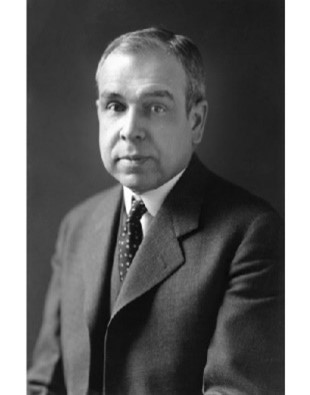
Given Wolfe’s personal preference for the work of older theologians, he has been isolated from critical currents in contemporary New Testament scholarship.  On social media, Wolfe has expressed admiration for the work of the early twentieth-century Orthodox Presbyterian scholar, J. Gresham Machen (1881–1937).  My guess is that Machen has influenced Wolfe’s understanding of the twin “supernatural truths” which upon which his case for Christian nationalism is grounded: “Jesus is Lord” and “Christianity is the true religion.”  In 1921 Machen published a study entitled The Origins of Paul’s Religion.  There, he argued that the truth of Christianity was to be found in a study of its origins.  Machen acknowledged Jesus as the Founder of Christianity but, because He Himself wrote nothing and “the record of his words and deeds is the work of others,” Machen turned to the testimony of Paul as “a fixed starting point in all controversy.”  As Paul was such a central figure in the early history of the Jesus movement, Machen was confident that if one could “explain the religion of Paul … you have solved the problem of the origin of Christianity.”[iii]

Gresham Machen

According to Machen, the religion of Paul “was something new.”  His mission to the Gentiles “was not merely one manifestation of the progress of oriental religion, and it was not merely a continuation of the pre-Christian mission of the Jews.”  Certainly, “the possession of an ancient and authoritative Book” was “one of the chief attractions of Judaism to the world of that day.”  Authority in religion was in short supply.  Paradoxically, however, “if the privileges of the Old Testament were to be secured … the authority of the Book had to be set aside.  The character of a national religion was … too indelibly stamped upon the religion of Israel.”  At best, Gentile converts could “only be admitted into the outer circle around the true household of God.”  For Paul, Machen declares, Gentile freedom (i.e., from the law) “was a matter of principle.”  This principle had, of course, been “anticipated by the Founder of Christianity, by Jesus Himself.”  But, if so, the doctrine of Gentile freedom was based “upon what Jesus had done, not upon what Jesus, at least during His earthly life, had said.”  It was unclear what He intended with respect to the universality of the gospel.  The “instances in which He extended His ministry to Gentiles are expressly designated in the Gospels as exceptional.”  Certainly, as far as his disciples were concerned, “Gentile freedom, and the abolition of special Jewish privileges, had not been clearly established by the words of the Master.”  This meant that there was “still need for the epoch-making work of Paul.”[iv]

Machen contends that Paul’s distinctive achievement was not the geographical expansion of the Church.  Seas or mountains were not “really standing in the way of the Gentile mission.”  Instead, it was “the great barrier of religious principle.”  Paul “overcame the principle of Jewish particularism in the only way in which it could be overcome; he overcame principle by principle.”  The real apostle to the Gentiles, Machen believed, was Paul the theologian, not Paul the practical missionary.  It was his achievement to exhibit “the temporary character of the Old Testament” by enriching the historical, logical, and intellectual understanding of the death and resurrection of Jesus.  Consequently, “Gentile freedom, and the freedom of the entire Christian Church for all time, was assured.”[v]

Machen declares that, by convincing others, Jews, and Gentiles alike, that Jesus is Lord, Paul compelled the religion of Israel to go forth “with a really good conscience to the spiritual conquest of the world.”  Henceforth, “when Christian missionaries used the word ‘Lord’ of Jesus, their hearers knew at once what they meant.  They knew at once that Jesus occupied a place which is occupied only by God.”  In the final chapter of his book, Machen defends “the historical character of the Pauline message.”  The religion of Paul, he concludes, “was rooted in an event … the redemptive work of Christ in his death and resurrection.”  It was based on “an account of something that had happened … only a few years previously.”  The facts of that event, the death and resurrection of Jesus, “could be established by adequate testimony,” Machen writes.  Moreover, “the eyewitnesses could be questioned, and Paul appeals to the eyewitnesses in detail” (cf., 1 Cor. 15:3-8).  He staked everything on the truth of what he said about Jesus’ crucifixion, death, and resurrection.  Machen poses the issue in uncompromising terms: If Paul’s account of that event “was true, the origin of Paulinism is explained; if it was not true, the Church is based upon an inexplicable error.”[vi]

Richard C. Miller’s mimetic criticism of the gospel resurrection narratives presents defenders of Machen’s Christian apologetic, such as Stephen Wolfe, with a stark choice.  If the Resurrection of Jesus was, as a matter of fact, just one among many classical fictive narratives of divine translation, in what sense (if at all) can one still proclaim that “Jesus is Lord” and that “Christianity is the true religion?”  Neither Paul’s nor Machen’s appeal to “eyewitness” testimony will be sufficient to close the case.  That possibility has been foreclosed by Miller’s detailed examination of the “eyewitness” tradition that became “the political protocol in the consecration of those most supremely honored in Roman government” during the Julio-Claudian dynasty.[vii]

The legendary example of Julius Proculus, the alleged “eyewitness” to the post-mortem appearance of Romulus, contributed to the “senatorial tradition of the eyewitness to the apotheosis of the Roman emperors” between 27 BC and 284 AD.  The chief historians of the period typically devoted considerable space to the tale.  The “senators (as an act of consecration), plebes, and successors assigned glory and deification to a deceased emperor through the process of formal “eyewitness” testimony to the monarch’s translation.”  For example, following the death of Caesar Augustus, “the Roman senators carried an effigy of his body in grand procession to the Campus Martius, the location where Romulus achieved apotheosis.”  In accordance with the structured requirements of the translation fable, this “public funeral did not involve the actual corpse of the emperor, but a substituted wax effigy.”  According to tradition, “the witnesses must not find any charred bones, once the pyric flames have gone their course.”  The scenario also provided for a prominent eyewitness “who took oath that he had seen the form of the Emperor on its way to heaven, after he had been reduced to ashes.”[viii]

One suspects, however, that Anglo-Protestant evangelicals are unlikely to be impressed by such scholarly skepticism as to the historicity of the Resurrection of Christ Jesus.  Faith-based conservative evangelicals still condemn as a “heretic” any supposed Christian questioning—what Stephen Wolfe might call the “supernatural truth” of—the futurist eschatology outlined in various creeds.  Accordingly, Pastor Douglas Wilson (whose Canon Press publishes Wolfe’s book on Christian nationalism) recently joined many other religious leaders in signing an open letter which calls upon Gary DeMar (head of the American Vision ministry) to recant his alleged refusal to affirm “the future, bodily, and glorious return of Christ, a future, physical, and general resurrection of the dead, the final judgement of all men, “and the tactile reality of the eternal state.”  DeMar was accused of denying “critical elements of the Christian faith” by declining to label full preterism as “heretical”[ix] (preterists hold that all of God’s promises to Old Covenant were fulfilled at the time of the destruction of the Jerusalem temple in 70 AD).[x]

But what is “truth?”  A correspondence theory of truth holds that a statement “is true if it corresponds to the facts; and, conversely, if it corresponds to the facts, it is true.”  It would be difficult to maintain that any of the propositions put to Gary DeMar by his critics satisfies a correspondence theory of truth.  On the other hand, the scholarly field of “mimetic criticism” lends credibility to a coherence theory of truth.  Here, truth is defined “as a relation not between statement and fact, but between one statement and another.”  On this view, “no actual statement … is made in isolation: they all depend upon certain presuppositions or conditions and are made against a background of these.”[xi]  A practitioner of mimetic criticism such as Richard C. Miller might agree, therefore, that it is true that Romulus, Caesar Augustus, and Jesus Christ were all resurrected (or translated) from the dead through exaltation to divine status.  But would Wolfe or Pastor Wilson concede that Jesus’ resurrection, along with the Second Coming of Christ, are truths anchored, not in history as it happened, but in the realm of myth, legend, or fiction?  If not, creedal Christianity is characterized, at best, less by its demonstrable “truth” than by its “truthiness.”

Was Paul a Jew, an Israelite, or a Christian?

It may still be, however, that the religion of Jesus and Paul was true in another, pragmatic, sense.  Miller hints at this issue when he observes that “the mythic dimensions of cultural stories, rather than being the mere arbitrary product of a supposed whimsical human imagination, arise out of the innate anthropological, psychic disposition of the peoples who produce and value them.”  In other words, myths “arise out of the subconsciously discerned survival and adaptive needs” of individuals and groups in relation to their “social and physical environment.[xii]  Robyn Faith Walsh more pointedly observes that Paul was “constructing a myth of origins for his audience.”  Many of his rhetorical strategies were “constituent of Paul’s larger project of religious and ethnopolitical group-making.”  She characterizes Paul as “a religious and ethnopolitical entrepreneur” for whom “ethnicity is not a blunt instrument; it is an authoritative frame for achieving cohesion among participants, and one that calls for a sense of shared mind and practice.”  Accordingly, Paul “proposes that God’s pneuma is intrinsically shared among his addressees, binding them together.”[xiii]  On a purely pragmatic view, Paul’s ethnotheology became true or false depending upon whether it worked.  Of course, any assessment of the degree of practical success achieved by Paul and the Jesus movement turns on our understanding of the goals they pursued.

Practitioners of mimetic criticism, such as Walsh, Miller, and Dennis R. MacDonald, locate New Testament writers within the discursive realm of Greco-Roman literature.[xiv]  They show that the work of Paul and the gospel writers functioned as a strategy for constructing new, or resurrecting old, social identities, aiming in the first instance at Hellenized Jews and God-fearing Gentiles in both Judea and, more broadly, throughout the Dispersion.  Other scholars have moved beyond literary analysis to examine the geopolitical breadth of the movement’s aims as well as the deep historical roots of its ethno-religious identity.  Together, both approaches effectively undermine J. Gresham Machen’s claim the “universalism of the gospel” was incarnate in both Jesus, whose redemptive work made possible the Gentile mission, and Paul, who discovered the true, theological significance of Gentile freedom.[xv]

Certainly, Machen found it difficult to deny that Jesus attached an ethnic identity to the God of Israel.  He conceded that Jesus’ disciples would not have been “obviously unfaithful to the teachings of Jesus if after He had been taken from them they continued to minister only to the lost sheep of the house of Israel.”[xvi]  Closer to our own day, another prominent Pauline scholar, James Dunn acknowledged that Jesus recognized the covenantal boundary around Judaism by “his choice of twelve to be his closest group of associates, with its obvious symbolism (12 = the twelve tribes)” and in “the picture of the final judgement in terms of the twelve judging the tribes of Israel (Matt. 19:28/Luke 22:30).”  But, like Machen, Dunn gives Paul credit for making clear the importance of “Gentile freedom.”  Paul brought the universal significance of the gospels into the light of day.  He taught that “faith in Christ is the climax of Jewish faith, it is no longer to be perceived as a specifically Jewish faith; faith should not be made to depend in any degree on the believer living as a Jew (judaizing).” [xvii]

But did Paul really refuse to require his Gentile converts to judaize as Dunn claims?  This raises an even more fundamental question: What were the goals of Paul and the Jesus movement?  Were Jesus and Paul on the same page with respect to those goals?  Jesus certainly looked forward eagerly to the imminent end of the age and the promised restoration of the twelve tribes of Israel.  He was not alone.  “Whether in the diaspora or (however defined) in the homeland,” restoration theology occupied a prominent place in the Jewish mind in the first century.  Diaspora Jews may have lived in pleasant and prosperous circumstances but they never “dropped traditional restoration eschatology in favor of a more positive perspective on the dispersion.”  In fact, educated Hellenistic Jews regularly portrayed diaspora as exile.  At the same time, most believed that “the diaspora would ultimately turn out for the best.”  Staples suggests that “exile and diaspora simultaneously serve[d] as punishment for sin and the means for redemption, the greater good brought out of redemptive chastisement.”[xviii]  Amidst such a tense but expectant socio-cultural atmosphere, Jesus’ direction to his disciples to serve the lost sheep of Israel launched an apocalyptic, ethno-religious movement aiming to resurrect the twelve tribes of Israel.

But how could Paul’s mission to the Gentiles serve the goals of a restorationist theology focused on the idea of Israel?  The standard Christian answer turns on a reading of Romans 11:25–26.  There, Paul suggests that the salvation of “all Israel” will not happen “until the fulness of the Gentiles be come in.”  Creedal Christian theologians, such as Manchen and Dunn, interpret such passages as downplaying the specifically, and narrowly, Jewish restoration eschatology in favour of an apocalyptic vision embracing the whole of humanity.  Dunn, for example, writes that Paul’s “apocalyptic perspective … looked beyond the immediacy of the situation confronting his mission and the Israel of God.”  In doing so, he “set the local or national crisis of Israel’s identity within a cosmic framework.”  The coming Kingdom of God “had a universal significance.”  Like Machen, Dunn maintains that Paul was against “Jewish privilege” and in favour of Gentile freedom and equality in the eyes of God.  “No national or ethnic status, or we may add, social or gender status (cf. Gal. 3:28), afforded a determinative basis for or decisive assurance of God’s favour.”  That universalist principle applied not just to Israel but to the world at large.[xix]

Paula Fredriksen and Derek Lambert of MythVision

Paula Fredriksen takes issue with this interpretation of Paul’s mission.  She flatly rejects any reading of Paul’s letters from which he “emerges as the champion of universalist (‘spiritual’) Christianity over particularist (‘fleshly’) Judaism.”  She sets herself in opposition to scholars such as Machen and Dunn for whom “Paul stands as history’s first Christian theologian, urging a new faith that supersedes or subsumes the narrow Ioudaϊsmos of his former allegiances.”  In her view, far from superseding his Jewish identity, Paul preached “a Judaizing gospel, one that would have been readily recognized as such by his own contemporaries.”  His “core message to his gentiles about their behavior was not ‘Do not circumcise!’  Rather, it was “Worship strictly and only the Jewish god.”  He required Gentile “ex-pagans” to abandon the “lower gods” of their kinfolk.  They would retain their native ethnicity but live, in a certain sense, outside and apart from their co-ethnics.  Having received the holy spirit, these Gentiles “were to live as hagioi, ‘holy,’ or ‘sanctified’ or ‘separated-out’ ethne, according to standards of community behavior described precisely in ‘the Law.’”  But he did not expect, much less require, Gentile males to undergo circumcision.  On the other hand, he nowhere “says anything about (much less against) Jews circumcising their own sons. … He opposed circumcision for gentiles, not for Jews.”  Israel must remain Israel.  God’s coming Kingdom “was to contain not only gentiles, but also Israel, defined as that people set apart by God by his Laws (e.g., Lev 20.22–24).”[xx]

Paul, according to Fredriksen, “maintains and nowhere erases the distinction between Israel and the nations.”  At the same time, however, his rhetoric erases “the distinctions between and among ‘the nations’ themselves.”  The nations or “ethnē function as a mass of undifferentiated ‘foreskinned’ idol-worshippers (if outside the movement) or of ‘foreskinned’ ex-idol-worshippers (if within).”  The God of Israel is also the god of other nations as well.  “But the nations by and large will know this only at the End.”  And the point to bear in mind here is that “Paul, a member of a radioactively apocalyptic movement, sees time’s end pressing upon his generation now, mid-first century.”[xxi]  Moreover, “for Paul, the more intense the pitch of apocalyptic expectation, the greater the contrast between Israel and the nations.”  It was this “ethnic-theological difference between Israel and the nations, the nation’s ignorance of the true god, is what binds all of these other ethnē together in one undifferentiated mass of lumpen idolators.”  At the End, “this sharp dichotomy is resolved theologically, but not ethnically: Israel remains Israel, the nations remain the nations (cf. Isa 11.10; Rom 15.10).”[xxii]

According to Paul’s “eschatological arithmetic” the world consists of the seventy nations listed in the Table of Nations (Genesis 10) and the twelve tribes of Israel.  At the End, all “will, somehow, receive Christ’s pneuma” (spirit).”  Gentiles-in-Christ (who Fredriksen describes as “eschatological Gentiles”) will “rejoice with saved Israel, but they do not ‘become’ Israel. … Even eschatologically—that is, ‘in Christ’—Jews and Gentiles, though now in one ‘family’ are not ‘one’.”[xxiii]  Yet, paradoxically, while Paul’s ethnē-in-Christ are not-Israel, they are not only “enjoined to Judaize to the extent that they commit to the worship of Israel’s god alone and eschew idol-worship,” they “must behave toward each other in such a way that they fulfill the Law.”  For Paul, “the only good gentile is a Judaizing gentile.”[xxiv]

Clearly, there are unbridgeable differences between Fredriksen, a convert to Judaism, on the one hand, and Anglo-Protestants such as Machen, Dunn, and Pastor Doug Wilson, on the other.  But, on one issue, at least, they all agree: both Jesus and Paul must be considered failed prophets.  Fredriksen is confident that “the historian and theologian know something that the actors in this [eschatological] drama could not; namely, that Jesus Christ would not return to establish the Kingdom within the lifetime of the first (and, according to their convictions, the only) generation of his apostles.”[xxv]  Unsurprisingly, atheistic/agnostic scholars such as Bertrand Russell, Bart Ehrman, and Richard C. Miller share that view.

Consequently, few scholars of any stripe, Jewish, Christian, or non-believer, will appeal to a pragmatic theory of truth to uphold the truth of the eschatology of the first-century Jesus movement.  Fredriksen even expresses surprise that Paul remained convinced even at mid-century that the End would come within his own lifetime: How, after a quarter-century delay, could he reasonably assert that ‘salvation is nearer to us now than when we first believed?’”[xxvi]

Despite Fredriksen’s incredulity, Paul’s expectations turn out to have been reasonable on the assumption that he looked forward to the end of the Old Covenant age, not the end of the world.  Tom Holland, to cite but one prominent scholar, suggests that both Jesus and Paul framed their eschatological expectations as a New Exodus.  Paul insisted “that Israel’s experience of Exodus whether from Egypt or Babylon was only a rehearsal of the forthcoming eschatological salvation.”  Israel was separated from God and “shut up under Sin,” refusing to heed the message of the gospel.  Israel herself “was now behaving like Pharoah” in opposing the Exodus of the people of God.  In the mimetic character of that New Exodus, Paul could hardly be surprised that forty years would elapse before judgement was visited upon Old Covenant Israel and “the holy city, new Jerusalem” came “down from God out of heaven” (Rev. 21:2).[xxvii]  And, remembering the death of Moses, Paul must have known that he might not live to see that day (Deut. 34:1-8).  In other words, prima facie, a pragmatic case can be made for the credibility of the eschatology foreshadowed in the religion of Paul.  Certainly, the covenant eschatology of Don K. Preston and other preterist biblical scholars does just that.[xxviii]

The work of Jason A. Staples on Paul and the resurrection of Israel lends additional support to the biblical truth of both restoration theology and covenant eschatology.  It is important here to note the difference between Staples’ thesis and Fredriksen’s claim that both Jesus and Paul were working “within Judaism.”  Fredriksen has no doubt that Paul was “an ancient Jew, one of any number of whom in the late Second Temple period expected the end of days in their lifetimes.”  She is no less confident that, in Paul’s mind, “whether ‘now’ (mid-first century) or in the (impending) End time, ‘Israel’ is the Jews.”[xxix]  Staples calls both propositions into question.  He points out that Paul prefers “to identify himself as ‘of the nation of Israel, of the tribe of Benjamin’ (Phil 3:5; Rom 11:1; 2 Cor 11:22) rather than using the more generic term ‘Jew’.  In addition, Paul frames his ministry in ‘new covenant’ language, suggesting the centrality of the restoration of all Israel to his gospel.”[xxx]

Paul’s “new covenant” theology echoes Jeremiah 31:31 but, Staples reminds us, “Jeremiah’s prophecy primarily concerns the reconstitution of all Israel—that is, that both Israel and Judah will be restored by means of God’s writing the law on their hearts.”  This implies, however, that “the covenant will be madeonly with Israel and Judah,” given that Gentiles are not mentioned in the prophecy.  But it turns out “that faithful Gentiles (those with ‘the law written on their hearts’; see Rom 2:14–15) are the returning remnant of the house of Israel, united with the faithful from the house of Judah (cf. the ‘inward Jews’ of Rom 2:28–29).”  It matters not “whether Paul actually imagines that all redeemed Gentiles are literal descendants of ancient Israelites.”  Gentile inclusion was to be the means of Israel’s promised restoration because the seed of the northern tribes was mixed “among the Gentiles—thus God’s promise to restore Israel has opened the door to Gentile inclusion in Israel’s covenant.”  Staples cites Hosea 8:8 to sum up the situation: “Israel [the north] is swallowed up; they are now in the nations [Gentiles] like a worthless vessel.”[xxxi]

By means of this process, God has provided for the salvation of the Gentiles by scattering the northern tribes “among the nations only to be restored.”  By this means, the new covenant also “fulfills the promises to Abraham that all nations would be blessed, not ‘through’ his seed (i.e., as outsiders) but by inclusion and incorporation in his seed (Gal 3:8).”  These faithful Gentiles need not, however, “become Jews (that is, Judah) in order to become members of Israel—rather they have already become Israelites through the new covenant.”

Go to Part 4.

[i] Richard C. Miller, Resurrection and Reception in Early Christianity (New York: Routledge, 2015), 180–182.

[ii] Ibid., 182

[iii] J. Graham Machen, The Origins of Paul’s Religion; The James Sprunt Lectures Delivered at Union Theological Seminary in Virginia, Leopold Classical Library, [Original publication, 1921], 4-5.

[iv] Ibid., 12-15.

[v] Ibid., 17, 19.

[vi] Ibid., 13, 316.

[vii] Miller, Resurrection and Reception, 75.

[viii] Ibid., 66-75.

[ix] “An Open Letter to Gary DeMar of American Vision,”

https://reformation.substack.com/p/an-open-letter-to-gary-demar

[x] See, e.g., Don K. Preston, Who is this Babylon? (Ardmore, OK: JaDon, 2011) and https://bibleprophecy.com/

[xi] W.H. Walsh, Philosophy of History: An Introduction (New York: Harper Torchbooks, 1960), 73, 76.

[xii] Miller, Resurrection and Reception, 104.

[xiii] Walsh, Origins of Early Christian Literature, 37-39.

[xiv] Dennis R. MacDonald, Synopses of Epic, Tragedy, and the Gospels (Claremont, CA: Mimesis Press, 2022).  This reference work based on MacDonald’s mimetic criticism provides a comprehensive collection of parallels between New Testament writers and classical Greco-Roman literature.  There is no space here to discuss those examples.

[xv] Machen, Origin of Paul’s Religion, 13-14.

[xvi] Ibid., 15.

[xvii] Dunn, Partings of the Ways, 114, 133.

[xviii] Staples, The Idea of Israel, 204, 208.

[xix] James D.G. Dunn, The New Perspective on Paul, Revised Edition (Grand Rapids, MI: William B.Eerdmans, 2008), 328-329.

[xx] Fredriksen, Paul, 108, 111-113.

[xxi] Paula Fredriksen, “Paul, Pagans and Eschatological Ethnicities: A Response to Denys McDonald,” (2022) 45(1) Journal for the Study of the New Testament 51, at 56.

[xxii] Fredriksen, Paul, 114-116.

[xxiii] Ibid., 88; Matthew Thiessen and Paula Fredriksen, “Paul and Israel,” in B. Matlock and M. Novenson (eds.), The Oxford Handbook of Pauline Studies 365, at 378.

[xxiv] Fredriksen, Paul, 117, 125.

[xxv] Paula Fredriksen, “Judaism, the Circumcision of Gentiles, and Apocalyptic Hope: Another Look at Galatians 1 and 2,” (1991) 42(2) Journal of Theological Studies 532, at 533.

[xxvi] Ibid., 533 n.4.

[xxvii] Tom Holland, Contours of Pauline Theology: A Radical New Survey of the Influences on Paul’s Biblical Writings (Fern, Scotland: Mentor, 2004), 211.

[xxviii] Don K. Preston, “We Shall Meet Him in the Air:” The Wedding of the King of Kings! (Ardmore, OK: JaDon, 2010).

[xxix] Paula Fredriksen, “What Does it Mean to See Paul ‘within Judaism’?” (2022) 141(2) Journal of Biblical Literature 359, at 379; Fredriksen, “Reply to McDonald,” 60 (emphasis added).

[xxx] Staples, “What Do the Gentiles Have to Do with ‘All Israel,’” 378.

[xxxi] Ibid., 380-381.

Religion, Race, and Ethnicity in Greco-Roman Antiquity New Perspectives on The Lordship of Jesus, Judaism, and the “Truthiness” of Christianity, Part Two

Go to Part 1.

What Do We Know About Jesus and His Movement?

For Christians such as Stephen Wolfe, the declaration that “Jesus is Lord” signifies that Jesus is God.  It is, however, not at all obvious that the historical Jesus considered himself to be a divine being, on a par with the ruler of all creation, the Lord of lords and King of kings.  Nor did his disciples.  James Dunn contends, however, that the “earliest forms of the Jesus tradition were the inevitable expression of their faith in Jesus.”  The first forms of that disciple faith were not yet the “Easter faith, not yet of the gospel as it came to be expounded by Paul and the other first apostles.”  They were nonetheless “born of, imbued with, expressive of [a] faith” produced by “the impact Jesus had made severally upon them.”  Dunn insists that there is no point in scholarly efforts to distinguish the “historical Jesus” from the Christ of faith.  There is only one Jesus available to us; namely, “Jesus as he was seen and heard by those who first formulated the traditions we have.”  According to him, “we really do not have any other sources that provide an alternative view of Jesus or that command the same respect as the Synoptic Gospels in providing testimony of the initial impact made by Jesus.”[I]

But, of course, the earliest written versions of the pre- and post-Easter disciple faith did not appear until twenty or so years after the death and reported resurrection of Jesus.  Dunn appeals to a process of oral transmission to bridge the gap between the death of Jesus in 30 AD and the earliest manifestation of a written tradition of faith in the Lordship of Jesus Christ.  He assumes that “the great majority of Jesus’ first disciples would have been functionally illiterate.”  So, too, would most of the earliest followers of the Jesus movement.  Accordingly, we cannot assume that Jesus himself was literate.  That being so, “it remains “overwhelmingly probable that the earliest transmission of the Jesus tradition was by word of mouth.”  Inevitably, therefore, oral faith tradition was a group tradition “used by the first churches and [was] presumably at least in some degree formative of their beliefs and identity.” [II]

Having grown accustomed to the written forms of the Jesus tradition, we naturally prefer such literary explanations.  While Dunn presents a case for confidence in the oral histories lying behind the written gospels, he acknowledges the “brutal fact…that we simply cannot escape from a presumption of orality for the first stage of the transmission of the Jesus tradition.”  As a “living tradition” of oral performances, the early Jesus tradition must have been both stable and variable, fixed and flexible.  Dunn maintains, however, that the variability of the oral tradition “is not a sign of degeneration or corruption.  Rather, it puts us in touch with the tradition in its living character, as it was heard in the earliest Christian groups and churches, and can still be heard and responded to today.”[iii]

Dunn’s thesis begs at least two important questions.  One such issue, whether the earliest ekklesia of the Jesus movement can properly be described as “Christian,” will be dealt with below.  The other is whether the gospels really were histories or biographies.  In other words, did they transmit a true and historical witness to the characteristic features of the Jesus tradition, thereby reflecting “the original impact made by Jesus’ teaching and actions on several at least of his first disciples?”[iv]  On this issue, Dunn reflects the conventional approach to the Synoptic gospels.  Ever since the nineteenth century, most scholars have characterized the gospel authors as literate spokespersons for their religious communities.

Robyn Faith Walsh, however, doubts that the gospel writers were engaged in “documenting intragroup ‘oral traditions’ or preserving the collective perspectives of their fellow Christ-followers (e.g., the Markan, Matthean, or Lukan ‘churches’).”  Instead, she argues, “that the Synoptic gospels were written by elite cultural producers working within a dynamic cadre of literate specialists—including persons who may or may not have had an understanding of being ‘in Christ’.”  Her recent work on early Christian literature compares “a range of ancient bioi (lives), histories, and novels” to the gospels, concluding that the latter works “are creative literature produced by educated elites interested in Judean teachings, practices, and paradoxographical subjects in the aftermath of the Jewish War” (66–73 AD).[v]

Walsh contends that the gospel writers were not “strictly concerned…with writing histories.”  Nor, however, should their works be treated “principally as religious texts.”  New Testament scholars, she believes, “muddle” the social context in which the gospel writers worked by presuming antecedent “oral traditions, Christian communities, and their literate spokesmen.”  Like Dunn, they “continually look for evidence of socially marginal, preliterate Christian groups…treating the gospel writers not as rational actors but as something more akin to Romantic Poets speaking for their Volk.”[vi]

In contrast, Walsh approaches the gospels as a classical scholar “would any other kind of Greco-Roman literature.”  She observes that “Greek and Roman authors routinely describe themselves writing within (and for) literary networks of fellow writers—a competitive field of educated peers and associated literate specialists who engaged in discussion, interpretation, and the circulation of their works.”  Given “such a historical context, the gospel writers are not the ‘founding fathers’ of a religious tradition.”  Rather, they are better understood as “rational agents producing literature about a Judean teacher, son of God, and wonder-worker named Jesus.”  The gospels, therefore, “represent the strategic choices of educated Greco-Roman writers working within a circumscribed field of literary production.”[vii]

Walsh calls into question Christianity’s own myth of origins, treating it as an example of the “invention of tradition.”[viii]  Unlike Dunn, she rejects the “limiting perspective that accepts the first-century Jesus movement as a recognizable and coherent social formation.”  It is only the “uncritical acceptance of Christianity’s myth of origins” that authorizes the assumption that “Christianity” emerged in the first century as a “spontaneous, cohesive, diverse, and multiple” movement.  She does acknowledge that “it is possible that the authors of the Synoptic gospels were associated in some measure with a group of persons either interested in or actively participating in practices pertaining to the Jesus or Christ movement.”  But, “ultimately,” she says, that “remains conjecture.”[ix]

Speaking of conjecture, it is significant that Walsh blithely asserts that the Synoptic gospels were produced in the “aftermath of the Jewish War” while, in the next paragraph, remarking that her study does “not scrutinize dates for these writings.”[x]  The cognitive dissonance created by the juxtaposition of those two statements immediately called to my mind the vivid impression left by the professor in my first-year honours history class as he repeatedly and forcefully emphasized the importance of accuracy in the dating of historical documents and events.  This is a perennial issue in New Testament scholarship.  Despite the existence of several solid studies dating, not just the Synoptic gospels, but the New Testament, as a whole, to the period prior to the destruction of the Jerusalem Temple in AD 70, it is commonplace for scholars to assign later dates to the book or books under discussion.[xi]  Studies of the Book of Revelation are particularly prone to this practice since a post-70 date allows scholars to ignore the destruction of Jerusalem and instead to treat the book as a prophecy of the doom awaiting the Roman empire, the papacy, or modern-day America.  Agnostics and atheists who, by definition, deny the credibility of biblical prophecies of a providential divine judgement on Old Covenant Israel also have an obvious incentive to assume late dates for the New Testament writings as do theologians committed to a futurist eschatology.

Walsh clearly prefers a late date for the Synoptic gospels.  On her account, their authors were independent of oral tradition, producing creative literature by employing the conventional tools of their trade.  The stories they crafted were “beholden to the dictates of genre, citation, and allusion” arising from within a circle of peers.  No mere reflection of oral tradition, their literary choices presented “an idealized view of Jesus and his life using details more strategic than historical.”  Consequently, their work now presents scholars seeking to reconstruct the past based on such creative literary artefacts with a problem: “how can we meaningfully distinguish between fiction and history?”  But is it necessary to choose between “oral tradition” emanating from functionally illiterate, religious “communities” and the “creative literature” produced by gospel authors who “were similarly trained and positioned, working within cadres of fellow, cultural elites?”[xii]

Walsh doubts that whatever faith might have been engendered by Jesus among his disciples and those who heard their stories was sufficiently powerful to inspire a spontaneous, cohesive, and autonomous ethnoreligious movement operating in his name before the Jewish War.  Given such skepticism, Walsh’s assumption of a late date for the gospels makes sense.  By the late first century, if Hellenistic writers had little more than Paul’s letters to work with, they clearly would have been on their own in fleshing out the story of a Judean Christ.

But there is a strong case for an early date for each of the Synoptic gospels.  Moreover, something like Walsh’s literary community of educated Hellenized Jews was certainly present in both Judea and the diaspora well before AD 70.  Members of a Hellenistic Jewish intelligentsia already steeped in the Septuagint version of the Hebrew Bible must have been influenced by a widespread sense of impending doom spreading among first-century Jews of all social classes.  Writers steeped in such an apocalyptic interpretation of restoration theology would have been well-placed to serve as “organic intellectuals” and publicists for the embryonic Jesus movement in major urban centres throughout the empire.[xiii]  Such an ethnoreligious movement had little need for well-researched and fully documented biographies of the historical Jesus.  Instead, the authors of the Synoptic gospels competed with other writers (and each other) to generate idealized mythic portrayals of a god-like messiah come to usher in the kingdom of God.
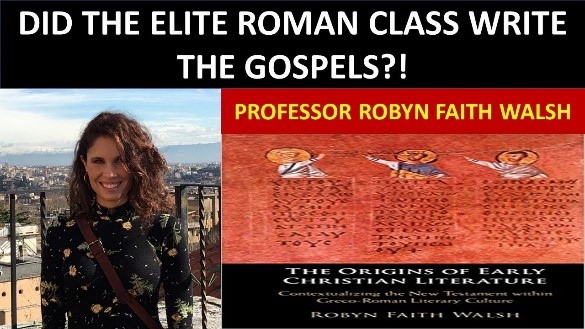
Jesus as Lord

In Mark, the shortest and probably the first of the Synoptic gospels, the very first verse identifies Jesus as the Son of God.  For Christians, ever since the Council of Nicaea in the early fourth century, “Son of God has been the key title for Christ.”  As such, it “has all the overtones of the full-blown Trinitarian formula— ‘Son of God’ means second person of the Trinity, ‘true God from true God, begotten not made,’ etc.”  But, as James Dunn points out, this was not the case in Jesus’ lifetime.  In the Hebrew Bible “it could be used collectively of Israel…or in the plural in reference to angels, the heavenly council…or in the singular of the king.”  Indeed, more generally still, the title could be used to characterize anyone “who was thought to be commissioned by God or highly favoured by God.”  Even in relation to Jesus, “initially at least, ‘son of God’ did not necessarily imply any overtones of divinity.”[xiv]  In time, of course, the title, as applied to Jesus, did suggest that he was divine in some sense.  But, even though first-century Jews “believed that there was only one God Almighty,” as Bart Ehrman reminds us, “it was widely held that there were other divine beings—angels, cherubim, seraphim, principalities, powers, hypostases.”  Moreover, there was no impassable gulf between the human and the divine.  “Angels were divine, and could be worshipped, but they could also come in human guise.”  Conversely, it was possible for humans to become angels or demi-gods.[xv]

What about Jesus?  In all three Synoptic gospels, when (1) Jesus is baptized by John; (2) the heavens were torn asunder; (3) a voice from heaven was heard; (4) the voice declared Jesus to be his Son; and (5) the Spirit descended.  Similarly, the temptation narratives which follow agree that (1) the Spirit led Jesus into the wilderness; (2) Jesus’ sojourn there lasted forty days; and (3) he was tempted by Satan.  Whether Matthew and Luke predate the gospel of Mark or expand upon it, their temptation stories provide essential insight into how Satan tempted Jesus in the desert.  They reveal the psychic fault line within Jesus’ messianic consciousness.  The Son of God is bound by filial loyalty to the Father; yet Jesus is also by right the uncrowned king of the Jews, and presumably of a restored Israel as well.  Hence, he is bound by religious obligations rooted in blood, law, and tradition to share and respect the worldly ambitions of his tribe and people.  In Mark’s mythic image of Paradise Restored, Jesus remains curiously passive while Satan actively works his wiles.  By contrast, in Matthew and Luke, Jesus resolutely resists three powerful temptations.[xvi]

Knowing that Jesus has fasted for forty days and nights and is bound to be famished, Satan challenges him to demonstrate that he really is the Son of God by commanding that the stones at his feet be made bread (Matt. 4:2).  Satan’s first temptation calls to mind John the Baptist’s rebuke to the Pharisees and Sadducees several verses earlier in the text.  There, John warns them “not to say within yourselves, We have Abraham to our father: for I say unto you, that God is able of these stones to raise up children unto Abraham (Matt. 3:9).  John expects the carnal pride displayed by these representatives of the Jewish religious establishment to be followed by a fall.  Anticipating Paul’s mission to the Gentiles (Rom. 11:11), John is certain that the ethnoreligious movement soon to be launched by Jesus will produce so many children of Abraham (according to the spirit) that Abraham’s seed (according to the flesh) will be provoked to jealousy.  In effect, when tempting Jesus to flaunt his miraculous powers as the Son of God, Satan serves as a stand-in for the Pharisees and Sadducees.
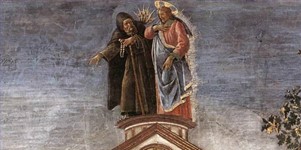
Having failed in his first attempt, the tempter holds out another enticement calculated to fire the imagination of first-century Jewish Zealots keen to restore Israel to her former imperial glory.  Satan takes Jesus to the top of the highest mountain, pitching the prospect of dominion over all the kingdoms of the world if only he will “fall down and worship me (Matt. 4:9; Lk. 4:7).  Jesus rejects this temptation as well.  Nor is he moved to weaken his determination not to tempt God when Satan sets him upon a pinnacle of the Jerusalem temple, inviting Jesus to prove that he is the Son of God by jumping off the edge, trusting in angels to save him from certain death (Matt. 4:5-7; Lk 4:9-12).

Matthew 4:1-11 and Luke 4:1-13 help us to see that Satan’s three temptations reflect the irrepressible conflict between the two personae incarnate in Jesus’ messianic consciousness, the exalted Son of God, and the historical king of the Jews.  During those forty days in the desert, Jesus struggled to reconcile those potentially contradictory roles.  In both gospel narratives, Jesus resolves his messianic identity crisis.  In doing so, he learns how to preach the Word to his people—the lost sheep of Israel (Matt. 10:6)—in accordance with the will of the Father.  He also learns that Satan will dog his footsteps to the cross and beyond.  Clearly, the temptation narratives in the Synoptic gospels encapsulate the world-historical conflict between the spiritual Israel of God and Old Covenant Israel according to the flesh.  In fact, the seismic shift in the foundations of the cosmic temple during the first century drove the entire cast of characters in the gospels towards the creation of a new heaven and a new earth.[xvii]

It is a mistake to read the temptation stories as an account of the sort of existential crisis that might face any human being in any time and any place.[xviii]  Jesus faced those temptations, not because he was a human being but as a remarkably gifted and devout Jewish holy man descended through the royal line of David from the seed of Abraham.  Scot McKnight demonstrates that “Jesus’ God is the national God of Israel, not some abstract universal deity.  He is the God of Abraham, Isaac, and Jacob; he is the God of David and of the prophet; he is the God of the Maccabees and of John the Baptist.”  Jesus’ vision of the kingdom of God was animated not “by an abstract religious feeling but [by] a concrete realistic vision for God’s chosen nation.”  It “concerned Israel as a nation and not a new religion”.  Accordingly, “[w]hen Jesus taught his disciples to pray for the kingdom to come (Matt 6:10), he surely had in mind more than an existential encounter with the living God that would give his followers an authentic experience”.  For McKnight, it follows that “[t]he most important context in which modern interpreters should situate Jesus is that of ancient Jewish nationalism.”[xix]

Both John and Jesus “had one vision for their contemporary Israel, and that was for Israel to become what God had called it to be.”[xx]  For Jesus, God was not a universal deity.  Israel stood in a covenantal relationship with the Father known to no other nation.  Throughout the narrative of the Hebrew Scriptures, “God never destroys his offspring…but rather pursues them in order to bring them to perfection.”[xxi]  The telos of that covenantal history was to be perfected in the Lord Jesus and the righteous remnant of Old Covenant Israel; they alone were the true Israelites, forever separated from the false Israelites when the nation faced its final judgement (Matt 13:41-43).  Jesus’ messianic mission was “to lead Israel away from a national disaster and towards a redemption that would bring about the glorious kingdom.”  From the time of his confrontation with Satan in the wilderness it became clear to him that he would have “to offer himself consciously and intentionally to God as a vicarious sacrifice for Israel in order to avert the national disaster.”[xxii]

But there was more than one vision of Israel’s destiny in the popular imagination of first-century Judaism.  Steeped in a tradition of chauvinistic religious rhetoric dating back to the Maccabean revolt in the second century BC, most first-century Judeans scoffed at the notion that “true Israelites” were not “destined to be part of God’s eschatological people…on the basis of heredity.”  They rejected the charge made by John the Baptist and Jesus that Israel according to the flesh had “forfeited their enjoyment of covenant blessings and was in exile “because of unfaithfulness and sinfulness.”  Certainly, they did not believe that “God was forming a new people” based solely on repentance, righteous obedience, and covenant faithfulness.”[xxiii]

Most first-century Jews were confident that the God of Israel would rest forever in a temple made by hands in Jerusalem.  Few took seriously Jesus’ warning that in their lifetime a newly inaugurated kingdom of God would pronounce final judgement on Old Covenant Israel and throw the “false Israelites” into the flames of hell. (Matthew 13:40-43).  Jesus knew his fellow Jews longed instead for the restoration of national Israel according to the flesh.  Indeed, inspired as he was by his own national vision for Israel, he shared the messianic longing resonating within the blood faith of his people.  In his heart of hearts, Jesus could not properly deny the satanic spirit of the Maccabees and the zealots a fair hearing.[xxiv]  Indeed, Jesus saw that spirit at work even in his disciples, most notably on the occasion in Mark 8:31–33 when he administered the sternest possible rebuke to Peter: “Get thee behind me, Satan; for thou savourest not the things that be of God, but the things that be of men.”[xxv]

To put the matter plainly, it was not his generic humanity tempting Jesus with bread, universal dominion, and independence from the Father.  Rather, it was his inner Jew.  The historical Satan emerged within the breast of the historical Jesus Christ.  As a charismatic personality, at ease in crowds, recognized in childhood as the king of the Jews, and by the Father as his Son, Jesus could hardly fail to empathize with all but the most grandiose aspirations of his own once-holy people.

Did Jesus Think He Was God?

In the New Testament, Jesus is often given the title “Christ,” a Greek translation of the Hebrew word for messiah, meaning “one who is anointed.”  As with a “Son of God,” to be anointed was to be “chosen and specially honoured by God…in order to fulfill God’s purposes and mediate his will on earth.”  Both titles could be “used to refer not to a divine angelic being, but to a human being.”  Some Jews “deeply committed to the ritual laws given in the Torah” had the idea that the messiah would appear as a great and powerful priest who would serve as a future ruler of Israel, interpreting and enforcing the law of God.  More commonly, first-century Jews looked forward to the appearance of a messiah as a mighty warrior who would overthrow the oppressors who had taken over the promised land, thereby restoring both the Davidic monarchy and the nation of Israel.  Others held to a more apocalyptic vision in which the coming of the messiah would bring a new creation, not just a political revolution, but “the Kingdom of God, a utopian state in which there would be no evil, pain, or suffering of any kind.”[xxvi]

According to Bart Ehrman, it seems likely “that Jesus’s followers, during his lifetime, believed that he might be this coming anointed one.”  But they certainly did not expect him to die and rise from the dead.  Nor did Jesus.  But he did think of himself as the messiah.  He did expect to become the king of Israel, not by means of political struggle or military victory, but when God intervened in history to destroy the forces of evil and to make Israel a kingdom once again ruled through his messiah.  He prophesied, publicly and privately, that the kingdom would arrive when the Son of Man came in judgement against everyone, and everything opposed to God.  In fact, Ehrman observes, “Jesus told his disciples—Judas Iscariot included—that they would be seated on twelve thrones ruling the twelve tribes of Israel in the future kingdom.”  Ehrman is convinced that “Jesus must have thought that he would be the king of the kingdom of God soon to be brought by the Son of Man.”  Everyone knew that the future king of Israel would be the anointed of God, the Messiah.  “It is in this sense that Jesus must have taught his disciples that he was the messiah.”[xxvii]

Both Jesus and his disciples expected that the messiah was destined to defeat the enemy; instead, the putative messiah was “arrested, tortured, and crucified, the most painful and publicly humiliating form of death known to the Romans.”  Such an outcome “was just the opposite of what Jews expected a messiah to be.”  But then “they came to believe that Jesus had been raised from the dead, and this reconfirmed what had earlier been disconfirmed.”  Their faith was restored: “He really is the messiah.  But not in the way we thought!”[xxviii]
Dr. Bart Ehrman

Ehrman hastens to add that, while the historical Jesus did think of himself as “a prophet predicting the end of the current evil age and the future king of Israel in the age to come,” he never—not in the Synoptic gospels at least—called himself God.  Of course, in the gospel of John, “Jesus does make remarkable claims about himself.”  For example, in John 8:58, “Jesus appears to be claiming not only to have existed before Abraham, but to have been given the name of God himself.”  Ehrman argues that not only was the gospel of John produced later than the Synoptics, but verses, such as Jesus’ proclamation that “I and the Father are one” (John 10:30), “simply cannot be ascribed to the historical Jesus.”  Instead, Ehrman tells us, “What we can know with relative certainty about Jesus in that his public ministry and proclamation were not focused on his divinity; in fact, they were not about his divinity at all.”  Rather, they were about what “the kingdom that God was going to bring.  And about the Son of Man who was soon to bring judgement upon the earth.”[xxix]

But, if the historical Jesus never claimed to be God, how did this messianic Judean prophet become a Hellenized cosmic Christ?  That story, Ehrman explains, begins with the crucifixion and death of Jesus.  “It was only afterward, once the disciples believed that their crucified master had been raised from the dead, that they began to think that he must, in some sense, be God.”[xxx]  Before his death, the followers of Jesus believed that he was the messiah, the king of the future kingdom.  After the discovery of the empty tomb, they were convinced that he had been exalted to the heavenly realm.  It was then that they knew he was the future king and fully expected him to come from heaven to reign as the Son of Man.  In his role as the Son of Man, Jesus would have been understood to be a divine figure.  Indeed, in one sense or other, in all four of his exalted roles—as messiah, as Son of God, as Son of Man, and as Lord—Jesus was divine.  But, in no sense did his followers understand Jesus to be God the Father.  Ehrman emphasizes that:

whenever someone claims that Jesus is God, it is important to ask: God in what sense?  It took a long time indeed for Jesus to be God in the complete, full, and perfect sense, the second member of the Trinity, equal with God from eternity, and “of the same essence” as the Father.[xxxi]

How Did Jesus Become God?

Even if Jesus did not become fully God until the fourth century, his divine status was assured at the resurrection.  As a historian, however, Ehrman does not think “we can show—historically—that Jesus was in fact raised from the dead.”  When “it comes to miracles such as the resurrection,” he declares, “historical sciences simply are of no help in establishing exactly what happened.”  In other words, Ehrman is not saying “that the resurrection is what made Jesus God.”  Rather, “it was the belief in the resurrection that led some of his followers to claim he was God.”  In short, Ehrman denies the historicity of the resurrection.  As far as he is concerned it never happened.  As for the empty tomb, it too is no more than legend.  Victims of crucifixion were not given proper burials.  Indeed, he claims there is good reason to accept “the rather infamous suggestion,” made by John Dominic Crossman, “that Jesus’s body was not raised from the dead but was eaten by dogs.”[xxxii]

Other historians make the similarly unorthodox suggestion that the facticity of the empty tomb and resurrection narrative may not have mattered, as such, to those who constructed it.  Richard C. Miller, for example, contends that the gospel resurrection narratives were never intended to demonstrate historical truth through research and evidence.  Sometime around 150 AD Justin Martyr admitted as much in his 1 Apology.  As summarized by Miller, the burden of Justin’s Christian apologia was as follows: “We, O Romans, have produced myths and fables with our Jesus as you have done with your own heroes and emperors; so why are you killing us?”  This appears to be an admission “that the earliest Christians had composed Jesus’ divine birth, dramatically tragic death, resurrection, and ascension within the earliest Christian Gospel tradition as fictive embellishments following the stock structural conventions of Greek and Roman mythology.”[xxxiii]  In other words, the gospel accounts of the risen Jesus differ in detail but not in kind from fables surrounding antique Mediterranean demigods such as Hermes, Dionysus, and Heracles, as well as emperors such as Caesar Augustus.

Indeed, Miller observes, Justin’s argument does “not even qualify as an ‘admission’ per se but merely arose as a statement in passing, as though commonly acknowledged both within and without Christian society.”  Justin’s point, however, was not just that there was “nothing unique” or sui generis about the “dominant framing contours of the Jesus narrative.”  His apology also “asserted that the classical pantheon was, in truth, a cast of demons.”  Nor was this assertion the product of a reasoned line of argument.  Rather, Justin flatly declared “that the gods were to be understood as wicked and impious.  Only out of ignorance did the classical world regard such demons as deities.”  It might seem that the Greeks were saying the same things as the Christians but, Justin affirms, the Greek legends “arose by the inspiration of ‘evil demons’ through the ‘myth-making of the poets’” By contrast, Justin simply pronounces the Christian narratives to be “true” without providing any further evidence or reasoned argument to support his claim.[xxxiv]

This was a rhetorical rather than philosophical or historical strategy.  Justin was attempting “to assign archaic precedence to Judeo-Christian tradition.”  He simply proposed “that demons inspired the classical writers to produce lies or fictions that proleptically mimicked the Christian Gospel narratives.”  Miller suggests that Justin’s apology marked a step beyond the task facing the gospel writers in the first century.  That is to say that, at first, the gospel “stories succeeded inasmuch as they were capable of appropriating, riffing on, and engaging the conventions of the classical literary tradition” in ways which appealed to an audience comprising both Hellenistic Jews and Gentile God-fearers in diaspora synagogues.  By the middle of the second century, however, “early Christians had their sights on a higher prize: a comprehensive cultural revolution of the Hellenistic Roman world.”  In this strategic context, it was no longer “enough that Jesus should join the classical array of demigods. … [H]e must obtain a sui generis stature, while condemning all prior Mediterranean iconic figures.”  Such ambitions placed new demands on the rhetorical style of Christian apologetics, requiring “an underlying shift in the proposed modality of the Gospel narratives, moving along the continuum from fictive mythography towards historical fact.”[xxxv]

At their appearance in the first century, however, the gospels, the letters of Paul, and the Acts of the Apostles already reflected a “fundamental metanarrative or theme” which amounted to “the systematic abrogation of nearly every isolationist, separatist practice of early Judaism.”  According to Miller, “the forms of these urban early Christian constructions were, more often than not, at their core lifted from the structures of classical antique culture, often with a mere outward Judaistic decor.”  The resurrection narratives of the New Testament were “first composed, signified, and sacralized in the Hellenistic urban world of Roman Syria, Anatolia, Macedonia, and Greece, these works typically reflected and played on crudely stereotypical myths of Jewish Palestine.”  Their syncretic language reflected the adaptation by early Judeo-Christian theology of antique Greco-Roman forms such as “Zeus-Jupiter, with his own storied demigod son born of a mortal woman.”[xxxvi]

So outlined in the neutral scholarly language of “comparative analysis,” it is easy to miss the explosive significance of Miller’s thesis.  But, simply by refusing to apply the definite article in reference to the allegedly “unimaginable miracle” which is collectively supposed to be “the singular impetus for the birth of Christianity, Miller challenges the fundamental presuppositions of contemporary Christian apologetics.  He denies that one can speak, in the context of Greco-Roman antiquity, of the Resurrection, the Empty Tomb, the Event, the Mystery.  He condemns the tacit agreement according to which classicists designate and relinquish to New Testament scholars a uniquely partitioned and sacralized discursive space surrounding “the question of the historicity of Jesus’ narrated resurrection.”  His own study identifies “a detailed, shared conventional system between the Gospel resurrection narratives” and what are known to classicists as “the extant translation narratives of Hellenistic and Roman literature.”[xxxvii]

Miller subsumes the “resurrection” language of the Gospels under the broader “translation topos” found in Hellenistic and Roman cultures.  He demonstrates how the latter “tradition functioned in an honorific capacity.”  In other words, “the convention had become a protocol for honoring numerous heroes, kings, and philosophers, those whose bodies were not recovered at death.”  He points to “the translation of Romulus … as the quintessential, archetypical account for a pronounced ‘apotheosis’ tradition in the funerary consecration of the principes Romani.”  The Romulus fable relates how the

legendary founding king of Rome, while mustering troops on Campus Martius, was caught up to heaven when clouds suddenly descended and enveloped him.  When the clouds had departed, he was seen no more.  In the fearsome spectacle, most of his troops had fled, but the remaining nobles instructed the people that Romulus had been translated to the gods.  An alternate account arose that perhaps the nobles had slain the king and invented the tale to cover up their treachery.  Later, however, Julius Proculus stepped forward to testify before all the people that he had been eyewitness to the translated Romulus, having met him travelling on the Via Appia.  Romulus, according to this tale, offered his nation a final great commission and again vanished.[xxxviii]

Miller provides a lengthy catalogue of similar translation fables and contends that such tales “provide a mimetic background for the Gospel narratives.”  Like Robyn Faith Walsh, Miller finds that Greek, Roman, and first-century Hellenistic Jewish writers competed, not just with each other, but with older authors such as Homer to mimic, improve upon, and embellish existing examples of the translation topos, or genre.  He argues, very persuasively, “that the textualized Romulus indeed figured prominently within early Christian resurrection narrative construction.”  He then discusses what such mimetic, rhetorical performances “achieved within the cultural milieu of a Romano-Greek East, that is, in the primitive centuries of the rise of Christianity.”  In a distinctly understated fashion, Miller remarks that his “book also tacitly delivers a rather forceful critique of standing theories regarding the likely antecedents of the early Christian ‘resurrection’ accounts.”  In particular, he takes careful aim at modern Christian apologetics which deny any antecedents.  He attributes such efforts to endow the Resurrection of Jesus Christ with a sui generis status to “a perspective typically arising out of ‘faith-based discourse.’” [xxxix]

Miller “sets forth a more satisfying thesis, a model that more comprehensively explains the available data, namely that such narratives fundamentally relied upon and adapted the broadly applied cultural-linguistic conventions and structures of antique Mediterranean society.”  In this cultural context, the early Christian resurrection tale functioned “as an ideology and not as an argued event of history.”  Early Christian writers, Miller writes, “did not attempt a case for the historicity of the resurrection of their founding figure.”  Instead, Jesus was deployed in the gospel resurrection narratives as “a mythic literary vehicle.”  Miller defines “myth” as “a sacred narrative or account” that served to frame the present for the Jesus movement.  The resurrection myth functioned, like the Greco-Roman translation fable, “to undo tragic loss, reclaiming the hero in a modal reverie of heroic exaltatio.”[xl]

Miller argues that the innovation of the Gospel postmortem accounts did not reside in the employment of the translation fable convention per se, but in the scandal of the application of the embellishment to a controversial Jewish peasant, an indigent Cynic, otherwise marginal and obscure on the grand stage of classical antiquity.”  Jesus emerges as a mythic literary figure in the gospels rather than as a historical actor.  As Miller puts it, the risen Jesus became the iconic “image of a counter-cultural ideology” through the conscious appropriation by the gospel writers of the literary protocols of the ancient Hellenistic Roman world.[xli]  In accordance with such protocols, Paul and the gospel writers presented Jesus as unique, not because he was exalted as a god following his death, but because he was better than the other gods of the classical world.


[I] James D.G. Dunn, A New Perspective on Jesus: What the Quest for the Historical Jesus Missed (Grand Rapids, MI: Baker Academic, 2005), 25, 31.

[II] Ibid., 41, 36, 43.

[iii] Ibid., 53, 125.

[iv] Ibid., 69-70.

[v] Robyn Faith Walsh, The Origins of Early Christian Literature: Contextualizing the New Testament within Greco-Roman Literary Culture (Cambridge: Cambridge University Press, 2021), xiii-xiv.

[vi] Ibid., 3-6.

[vii] Ibid., 5-6.

[viii] Eric Hobsbawm and Terence Ranger, (eds.), The Invention of Tradition (Cambridge: Cambridge University Press, 1984).

[ix] Walsh, Origins of Early Christian Literature, 32-33, 35.

[x] Ibid., xiii-xiv.

[xi] Cf. John A.T. Robinson, Redating the New Testament (Eugene, OR: Wipf and Stock, 1976) and Jonathan Bernier, Rethinking the Dates of the New Testament: The Evidence for Early Compostion (Grand Rapids, MI: Baker Academic, 2022).

[xii] Walsh, Origins of Early Christian Literature, 4-6.

[xiii] The term “organic intellectuals” was coined by the Italian Marxist, Antonio Gramsci (1891-1937), but it is not at all anachronistic when transposed into the context of an ethnoreligious movement with geopolitical ambitions in the first century.  See, Quintin Hoare and Geoffrey Nowell Smith, (eds. and trans.) Selections from the Prison Notebooks of Antonio Gramsci (New York: International Publishers, 1971), 5-23.

[xiv] Dunn, Partings of the Ways, 170-171.

[xv] Bart D. Ehrman, How Jesus Became God: The Exaltation of a Jewish Preacher from Galilee (New York: Harper One, 2015), 83.

[xvi] Andrew Fraser, Dissident Dispatches: An Alt-Right Guide to Christian Theology (London: Arktos, 2017), 424-446.

[xvii] On the Old Testament account of the creation of the cosmic temple, see John H. Walton, The Lost World of Genesis One: Ancient Cosmology and the Origins Debate (Dover Grove, IL: IVP Academic, 2009).

[xviii] See, e.g., Helmut Thielicke, Between God and Satan: The Temptation of Jesus and the Temptability of Man [orig. ed., 1938] (Farmington Hills, MI: Oil Lamp Books, 2010).

[xix] Scot McKnight, A New Vision for Israel: The Teachings of Jesus in National Context (Grand Rapids, MI: William B. Eerdmans, 1999), 69, 83, 6, 10.

[xx] Ibid., 6.

[xxi] Anthony D. Baker, Diagonal Advance: Perfection in Christian Theology (Eugene, OR: Cascade Books, 2011), 77.

[xxii] McKnight, New Vision, 147, 13.

[xxiii] Ibid., 62, 110-115.

[xxiv] Ibid., 136-137, 146-147, 96.

[xxv] Mark does not identify Satan’s three temptations in 1:13, but in 14:30 (just before standing trial before the Sanhedrin) Jesus predicts, accurately, that a satanic impulse will cause Peter to “disown me three times” before the cock crows twice.  Shortly afterward, the disciples fall asleep three times while on guard duty, revealing the tempter within at work again with a suite of counter-Trinitarian snares likely to entrap Jesus’ closest followers (Mark 14:37-41).

[xxvi] Ehrman, How Jesus Became God, 113-115.

[xxvii] Ibid., 115-119.

[xxviii] Ibid., 116-118.

[xxix] Ibid., 124-128

[xxx] Ibid., 128.

[xxxi] Ibid., 208-209.

[xxxii] Ibid., 132, 157.

[xxxiii] Richard C. Miller, Resurrection and Reception in Early Christianity (New York: Routledge, 2015), 2.

[xxxiv] Ibid., 1-3.

[xxxv] Ibid., 4-5.

[xxxvi] Ibid., 12-13.

[xxxvii] Ibid., 15-16 (emphasis added).

[xxxviii] Ibid., 16.

[xxxix] Ibid., 16.

[xl] Ibid., 16-17, 158, 162.

[xli] Ibid., 180.