Was “Eyes Wide Shut” a Cultural Watershed?
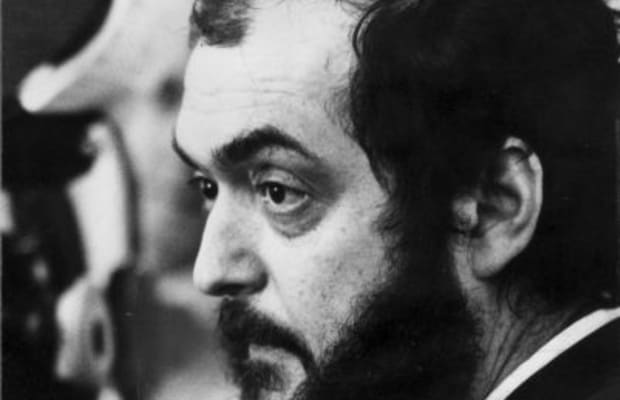
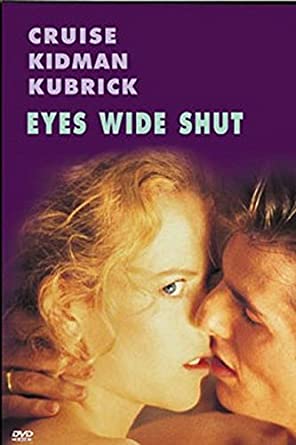 “Eyes Wide Shut,” released in 1999, was the last film of the legendary director Stanley Kubrick. He died of a heart attack six days after he submitted the final cut of the film to the film studio. Kubrick’s other films include “The Killing” (1956), “Paths of Glory” (1957), “Spartacus” (1960), “Lolita” (1962); “Dr. Strangelove or: How I Learned to Stop Worrying and Love the Bomb” (1964), “2001: A Space Odyssey” (1968), “A Clockwork Orange” (1971), “Barry Lyndon” (1975), “The Shining” (1980), and “Full Metal Jacket” (1987). A most impressive list. While I’m sure “Eyes Wide Shut” was a seriously intended expression, and by all accounts Kubrick gave it his best effort, it doesn’t contribute positively to his oeuvre.
At least ostensibly, “Eyes Wide Shut” is an erotic drama Kubrick produced, directed, and co-wrote with American-born British resident Frederick Raphael, starring Tom Cruise and his wife at the time, Nicole Kidman. It is based on the 1926 novella Traumnoville (Dream Story) by Arthur Schnitzler. Kubrick and Raphael changed the setting of the story from early twentieth-century Vienna to contemporary New York City. The film follows the—again, ostensibly–sexually charged night of medical doctor Bill Harford (Cruise). It includes his infiltrating a masked orgy by a secret society and the apparent murder of a woman attendee. The film grossed $162M world-wide, a very good return. “Eyes Wide Shut” is widely available now for purchase and streaming. It has its admirers and has become something of a cult film in recent years.
In the late ‘90s, “Eyes Wide Shut” received a great deal of attention in the media, both while in production and after its release, because of Kubrick’s excellent reputation and Cruise and Kidman’s association with the film. The pre-release media coverage was extended—the 400-day shooting schedule is the longest in film history. Kubrick was known for his multiple takes—up to a hundred for a scene. Harford’s encounter with a prostitute early in his roaming night—incidentally, the one good thing in the film—about seven minutes of screen time, took Kubrick two weeks to shoot.
Critics’ responses to the film at the time were mixed, though none of them was as scathingly negative as I’ll be here. I saw “Eyes Wide Shut” when it came out and remember being disappointed after all the hype and almost completely unaffected by it; it stayed “over there,” it didn’t engage me. I saw it again about ten days ago and this time, indeed, it was “right here” and not in a good way; I found it stunningly bad. Words that come to mind include artless, coarse, contrived, sophomoric, undisciplined, and vulgar. For all its sex talk, sexual situations, and nudity and couplings, this film curiously lacks eroticism. While I found its merits wanting to say the least, “Eyes Wide Shut” intrigued me enough in my second viewing to spend a good a deal of time thinking about it, reading about it online—reviews, analyses and such–and going through co-writer Raphael’s memoir about his experience with Kubrick during the development of the screenplay (Eyes Wide Open, Ballantine Books, 1999).
Why all this attention from me to this bad film? Because I speculate that “Eyes Wide Shut” may have been a watershed in our collective life, a turning point, an historical moment in the core culture. It may have set the stage for, paved the way to, pointed the direction to, legitimized, what is going on now in center-stage mass entertainment taken seriously by critics and the informed—or perhaps better, pseudo-informed—public. I’ll give over the next paragraphs to fleshing out that assertion and invite you to add your own best thinking to what I offer. To orient you to what’s coming up, the last word in “Eyes Wide Shut,” and thus the last word in Kubrick’s directing career, is “fuck.”
* * *
Kubrick
I’ll begin by recounting how I came to watch “Eyes Wide Shut.” I had streamed the 1967 French film “Belle de Jour” starring Catherine Deneuve and really liked it and was looking for a next film with that same theme. “Belle de Jour” deals with sexuality and is about a young woman who spends afternoons as a high-class prostitute while her medical doctor husband is at work. It was directed by the renowned director Luis Buñuel (“Un Chien Andalou,” “The Exterminating Angel,” and “The Obscure Object of Desire”), who co-wrote the screenplay with French writer Jean-Claude Carriere. I found “Belle de Jour” the opposite of what I later found objectionable about “Eyes Wide Shut”: it is artful, refined, true, mature, meticulous, and tasteful. Without any nudity at all, it was highly, and appropriately, erotic.
Looking around for a “next film” after “Belle de Jour, I read reviews of “Eyes Wide Shut,” and it seemed to be a good choice. The late Roger Ebert in his review when the film came out in 1999 wrote:
Tom Cruise and Nicole Kidman star as Dr. Bill and Alice Harford, a married couple who move in rich Manhattan society. In a long, languorous opening sequence, they attend a society ball where a tall Hungarian, a parody of a suave seducer, tries to honey-talk Alice (“Did you ever read the Latin poet Ovid on the art of love?”). Meanwhile, Bill gets a come-on from two aggressive women, before being called to the upstairs bathroom, where Victor (Sydney Pollack), the millionaire who is giving the party, has an overdosed hooker who needs a doctor’s help.
At the party, Bill meets an old friend from medical school, now a pianist. The next night, at home, Alice and Bill get stoned on pot (apparently very good pot, considering about a young naval officer she saw last summer while she and Bill were vacationing on Cape Cod: “At no time was he ever out of my mind. And I thought if he wanted me, only for one night, I was ready to give up everything.” There is a fight. Bill leaves the house and wanders the streets, his mind inflamed by images of Alice making love with the officer. And now begins his long adventure, which has parallels with Joyce’s Ulysses in Nighttown and Scorsese’s “After Hours,” as one sexual situation after another swims into view.
New York Times reviewer Janet Maslin concluded:
This is a dead-serious film about sexual yearnings, one that flirts with ridicule yet sustains its fundamental eeriness and gravity throughout. The dreamlike intensity of previous Kubrick visions is in full force here, in an adaptation of a 1926 Viennese novella that is stark and haunting in its own right. In Arthur Schnitzler’s ”Dream Story,” which the film follows with such surprising ease that its New York has a grandly Viennese flavor, a doctor and his wife are teased apart by sexual jealousy as the husband is drawn into ”a wild, shadowlike succession of gloomy and lascivious adventures, all without an end.” Step by step, this languorous yet precise film glides into a similarly mysterious realm.
Seeing “Belle de Jour” and “Eyes Wide Shut” back-to-back as I did, prompted me to compare Bunuel and Carriere as people with Kubrick and Raphael under the assumption that the art we create grows out of who we are and where we’ve come from. Raphael’s memoir made much of his and Kubrick’s Jewishness and the Jewishness of Schnitzler’s novella, the source material of what came to be called “Eyes Wide Shut.” Examples: “Jews are often real Jews only with each other. Gentiles never suspect this.” “SK [Kubrick] has said more than once, ‘What do we know about how Gentiles feel?’ Yet he wants to suppress any overt allusion to Jewishness in our story. He takes joy in the surreptitious.” A notable exception to this assertion is the character of Victor Ziegler, who at the end of the film informs Bill Harford (the Cruise character) “how it is.” The Ziegler name is often Jewish, and he is played by Jewish actor Sydney Pollack, who had replaced another Jewish actor, Harvey Keitel. This kind of thing, which pervades Raphael’s book, got me thinking about whether the fact that Kubrick and Raphael were Jewish and Buñuel and Carriere were Gentiles contributes to an understanding of the differences between “Belle de Jour” and “Eyes Wide Shut.” Does a Jewish sensibility infuse “Eyes Wide Shut”? Raphael’s memoir seems to be saying yes, it does. I’ll leave it to people who are more ethnically astute than I am to take this angle farther than I am able to.
In any case, it is important to look at who is producing art and entertainment for mass public consumption. They are teaching us what to attend to and what to make of it and how to be. In her New York Times review at the time, Michiko Kakutani notes that “Eyes Wide Shut”
underscores Kubrick’s deeply cynical view of the world, his unaccommodated view of mankind as a species driven to distraction by greed and violence and its own delusions.
Later in her review, she points out that in his films Kubrick has portrayed sex
as an all-consuming obsession (Humbert’s compulsive pursuit of a pubescent girl in ”Lolita”), an uproarious sight-gag (the scene of two planes copulating in ”Dr. Strangelove”) and a brutal violation (the rape scene in ”A Clockwork Orange”), but it has never been depicted as a complex, emotional involvement encompassing love.
Who is depicting the world to us?
* * *
I’ve decided that the best way to get across my take on “Eyes Wide Shut” is through the dialogue of its climactic scene, an exchange between millionaire Victor and Dr. Bill. At Victor’s party, Bill’s piano-playing medical school classmate Nick tells him about an upcoming engagement where invitees to secret gatherings wear costumes and masks and must provide a password, which he gives Bill. Bill rents a costume and mask and takes a taxi to the country mansion location. He provides the password and enters and discovers a sexual ritual is taking place involving fifteen or twenty masked women, nude except for thongs. They are virtually identical and resemble large-breasted store manikins. One of the women warns Bill that he is in terrible danger.
Bill is unmasked by the master of ceremonies and it seems that he is in dire straits; perhaps he will be killed. The woman who warned Bill intervenes and declares she will volunteer to take his undisclosed punishment. Bill is let off with a warning not to tell anyone about what happened. The next day, Bill reads an article in the newspaper, “Ex-beauty Queen Dies in Hotel Drug Overdose.” Could it be? He goes to the morgue and views the body and is sure that it is the woman who warned him and then took his punishment. It wasn’t drugs; she was murdered, he concludes. He is then summoned to the lavish residence of Victor; what about, he isn’t told. This sets up an exchange between Bill and Victor in Victor’s billiards room that provides the denouement of the film.
Before getting into the dialogue between Victor and Bill, a couple of quotes that I deem revealing from Raphael’s memoir. “Kubrick wanted to show, not tell. He preferred to leave motive and ‘psychology’ to be divined by the spectator.” Kubrick disparaging exposition in another film: “Know what they did? They explained everything. They told you what everything means. Killed it. You tell people what things mean, they don’t mean anything anymore.” These quotes exemplify what Kubrick and Rafael did throughout their collaboration on the screenplay for “Eyes Wide Shut”—talk a good game and then produce commonplace, even contradictory, results. See what you think, but to me this scene coming up is the longest, most heavy-handed, meandering, tell-not-show, drama-killing exposition movie scene of all time. After all the references to Harold Pinter and the eighteenth-century letters of Junius, Kubrick and Raphael produce this rubbish—you and I could write better dialogue than this. This scene is crude enough that after I typed it up, I went to brush my teeth.
So, millionaire Victor and Doctor Bill in Victor’s billiards room, the big climactic scene.
VICTOR. Bill, I appreciate you coming.
BILL. Sure.
VICTOR. Sorry to drag you out here tonight. Let me take your coat.
BILL. No, no. You know, I was out anyway. Thank you.
VICTOR. How about a drink?
BILL. Are you having one? Sure.
VICTOR. OK. What would you like?
BILL. Just a little scotch.
VICTOR. Good. How do you like it? Neat?
BILL. Please. That was a terrific party the other night. Alice and I had a wonderful time.
VICTOR. Well, good, good. It was great seeing you both. Cheers.
BILL. Cheers. Were you playing [referring to billiards]?
VICTOR. No, I was just knocking a few balls around.
BILL. Beautiful scotch.
VICTOR. That’s a 25-year-old. I’ll send you a case. No, please.
BILL. Sure. No.
VICTOR. Why not?
BILL. No, no, no.
VICTOR. You, uh, feel like playing?
BILL No, thanks. You go ahead. I’ll watch.
VICTOR. I enjoyed, uh . . . listen. Bill, the reason I, uh, asked you to come over tonight is I—I need to talk to you about something,
BILL. Sure.
VICTOR. It’s a little bit awkward. And I have to be completely frank.
BILL. What kind of problem are you having?
VICTOR. It isn’t a medical problem. Actually, it concerns you. Bill, I –I know what happened last night. And I know what’s been going on since then. And I think you just might have a wrong idea about one or two things.
BILL. I’m sorry, Victor, I, uh . . . what in the hell are you talking about?
VICTOR. Please, Bill, no games. I was there at the house. I saw everything that went on. Bill, what the hell did you think you were doing? I couldn’t—I couldn’t even imagine how you, how you even heard about it, let alone got yourself in the door. Then I remembered seeing you with that—that—that prick piano player Nick whatever the fuck his name is at my party. And it didn’t take much to figure out the rest.
BILL. It wasn’t Nick’s fault, it was mine.
VICTOR. Of course it was Nick’s fault. If he hadn’t mentioned it to you in the first place, none of this would never have happened. I recommended that little cocksucker to those people and he’s made me look like a complete asshole.
BILL. Victor, what can I say? I had absolutely no idea you were involved in any way,
VICTOR. I know you didn’t, Bill. But I also know that you went to Nick’s hotel the next morning and talked to the desk clerk.
BILL. How did you know that?
VICTOR. Because I had you followed.
BILL. You had me followed?
VICTOR. OK, OK. I’m sorry. All right? I owe you an apology. This was for your own good, believe me. Now, look, I know what the desk clerk told you. But what he didn’t tell you is all they did was put Nick on a plane to Seattle. By now, he’s—he’s probably back with his family, you know, banging Mrs. Nick.
BILL. The clerk said he had a bruise on his face.
VICTOR. OK, he had a bruise on his face. That’s a hell of a lot less than he deserves. Listen, Bill, I don’t think you realize the kind of trouble you were in last night. Who do you think those people were? Those were not just ordinary people there. If I told you their names—I’m not gonna tell you their names, but if I did, I don’t think you’d sleep so well.
BILL. Was it the second password? [He was asked for a second password and didn’t know it.]
VICTOR. Yes, finally. But not because you didn’t know it. It’s because there was no second password. Of course, it didn’t help a whole lot that those people arrived in limos and you showed up in a taxi, or that when they took your coat, they found the receipt from the rental house in your pocket made out to you know who.
BILL. There was a woman there who, uh, tried to warn me.
VICTOR. I know.
BILL. Do you know who she was?
VICTOR. Yes. She was a hooker. Sorry, but that’s what she was.
BILL. A hooker?
VICTOR. Bill, suppose I told you that everything that happened there, the threats, the—the girl’s warnings, her last-minute intervention—suppose I told you that was all staged. That it was a kind of charade. That it was false.
BILL. False?
VICTOR. Yes. False.
BILL. Why would she do that?
VICTOR. Why? In plain words? To scare the living shit out of you. To keep you quiet about where you’d been and what you’d seen.
BILL. Have you seen this? [The newspaper clipping about the hotel death,]
VICTOR. Yes, I have.
BILL. I saw her body in the morgue. Was she the girl at the party?
VICTOR. Yes.
BILL. Well, Victor, maybe I’m missing something here. You called it a fake, a charade. Do you mind telling me what kind of fucking charade ends with somebody turning up dead?
VICTOR. OK, Bill, let’s cut the bullshit, all right? You’ve been way out of your depth for the last twenty-four hours. You want to know what kind of charade? I’ll tell you exactly what kind. That play-acted “take me” phony sacrifice that you’ve been jerking yourself off with had absolutely nothing to do with her death. Nothing happened to her after you left that party that hadn’t happened to her before. She got her brains fucked out, period. When they took her home, she was just fine. And the rest of it is right there in the paper. She was a junkie. She OD’d. There was nothing suspicious. Her door was locked from the inside. The police are happy. End of story. Come on. It was always going to be just a matter of time with her. You remember? The one with the great tits who OD’d in my bathroom. Listen, Bill, nobody killed anybody. Someone died. It happens all the time. But life goes on. It always does. Until it doesn’t. But you know that, don’t you?
* * *
Legendary film director Stanley Kubrick’s contribution to the culture. I’ll leave it here and turn it over to you. I won’t get into the part about the father prostituting his thirteen-or-fourteen-year-old daughter to two eager middle-aged Asians which made me hit pause. What do you make of this? I’m thinking that “Eyes Wide Shut” was a watershed, a harbinger, it set a tone, portended the future, marked a cultural shift, validated a mindset, passed the baton onto a new set of tastemakers, however best to put it. Is there any validity to this idea, do you think? How about taking it further than I have, either with this film or some other artistic (or “artistic”) expression, a film or television show, whatever it is. Really, the only thing that’s come out of this consideration for me is a commitment to do my best to stay clear of creations as base as “Eyes Wide Shut.” If nothing else, I’ll save on tooth paste, and mouthwash too.






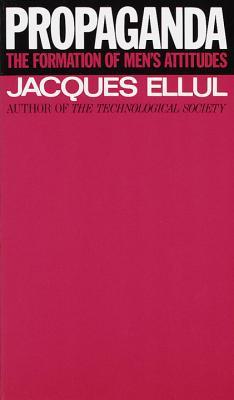 Like Mr. Antonio, I know what is happening, why and how. This could come straight from the pages of Jacques Ellul’s classic “Propaganda: The Formation of Men’s Attitudes.” One of Ellul’s greatest insights concerns the need for repetition of the propaganda message. At first, it takes great effort to sway men from their set thinking, but, in Ellul’s words,