Decline and Empire in Ancient Rome and the Modern West: A Review of David Engels’ Le Déclin, Part 1
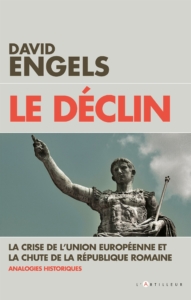
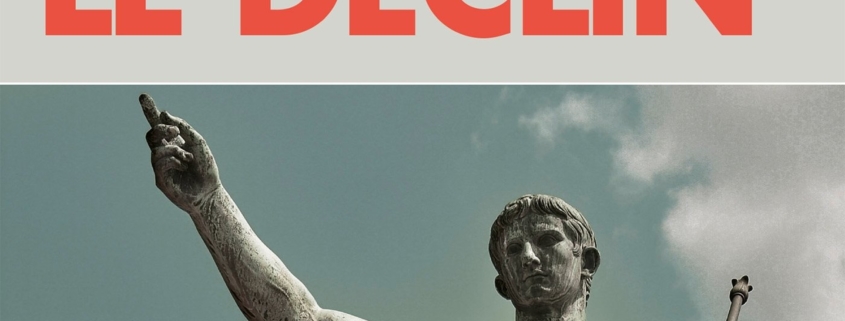
David Engels, Le Déclin: La crise de l’Union européenne et la chute de la République romaine—quelques analogies historiques
Paris: Éditions du Toucan, 2016, 3rd ed.
David Engels is a professor of classics at the French-speaking Free University of Brussels (ULB). While most academics and their works languish in relative obscurity, the 38-year-old Engels has already made a name for himself as a conservative cultural critic, known for his op-eds and interviews in the mainstream media, as well as for his best-seller comparing the decadence of ancient Rome and modern Europe: Decline: The Crisis of the European Union and the Fall of the Roman Republic—A Few Historical Analogies.[1]
Hailing from Belgium’s small German-speaking community, Engels writes about Europe from a refreshingly multinational perspective, drawing from English-language, French, and especially German sources, as well as, of course, the vast body of surviving Greek and Roman literature. With over 600 endnotes and numerous graphs and statistics, Engels’ book has been written with Teutonic scrupulousness.
Engels’ thesis is simple and compelling: there are many parallels between the late Roman Republic (the period roughly from the destruction of Carthage in 146 B.C. to Augustus’ founding of the Principate in 27 B.C.) and today’s European Union: There is above all a general ethno-cultural decline, which makes a shift towards autocratic politics inevitable. Engels frames his provocative thesis in just such a way as to still be considered respectable enough by academia and the media, and thus be treated as a responsible but critical interlocutor.
The parallel between the late Roman Republic and today’s European Union is somewhat forced in places, but really serves as a useful framing device for comparing and discussing the social trends in these two very different societies. Specifically, Engels structures the work by comparing European public opinion on various topics (identity, family, democracy…) as expressed in Eurobarometer polls with Roman developments as expressed in the surviving sources. This somewhat strange structure nonetheless works, and I would say Le Déclin is a fine introduction to late Roman republican history. Engels furthermore recognizes that many of Europe’s symptoms of decadence are also evident across the West in general (255).
Engels’ observations on contemporary EU politics—the hollowing out of democratic processes and civil rights, economic reductionism, a growing chasm between the elite and the people, rising ideological intolerance, and so on—are all on point, and have since almost become received opinion. I will then focus especially on Engels’ analysis of Roman decadence. As will become quite apparent, the Roman experience, one of the truly epic achievements of Western political history, offers many lessons for us today. Read more