Featured Articles

Review: A Fair Hearing: The Alt-Right in the Words of Its Members and Leaders
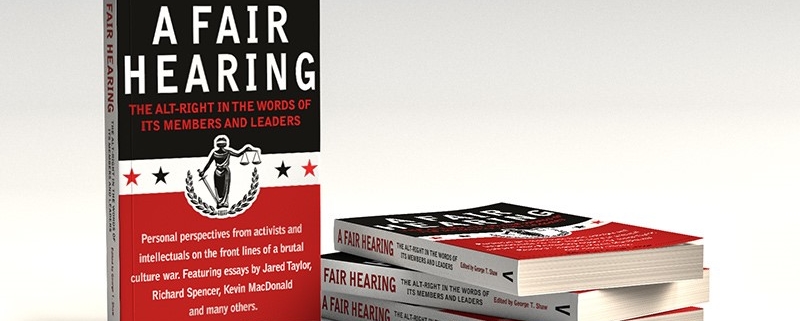
A Fair Hearing: The Alt-Right in the Words of Its Members and Leaders
George T. Shaw (ed)
Arktos, 2018

“After absorbing the initial impact the alt-right remained intact and forward-oriented, no nearer or further from its goals, but now more serious and matured.” Thus remarks Evan McLaren, former Executive Director of the National Policy Institute, in a profound personal account of Charlottesville and its immediate aftermath. McLaren’s account is one of 21 essays which together comprise the latest offering from Arktos: A Fair Hearing: The Alt-Right in the Words of Its Members and Leaders. His thoughts offer a succinct summary of the broader contents of the volume — the essays here are representative of a movement in some respects battered and bruised from legal and media entanglements, but also remarkably clear-headed and ideologically robust. Heightened media attention devoted to the Alt-Right, which peaked in 2017 and not always for the better, has been intense and fluctuating, dating probably from Hillary Clinton’s September 2016 “Basket of Deplorables” speech. At first this attention seemed oriented towards crowning an Alt-Right leader who could then be used as a focal point for both defining and maligning the movement. It now seems absurd that Milo Yiannopoulos was the first pick, though he gradually faded into obscurity as the 2016 NPI conference, along with the “Whitefish” incident, brought Andrew Anglin and then Richard Spencer to national prominence. Arguably, it was Whitefish that first offered an opportunity for the media to introduce fear of the movement, rather than simply horror or disgust, into its narrative. Tanya Gersh, one of the key protagonists in that affair, declared she was not being harassed by trolls or deplorables, but “terrorists.” The texture of media coverage quickly changed in the aftermath, absorbing the language introduced by Gersh and her backers in the Southern Poverty Law Center, and culminating on August 11–12, 2017 in Charlottesville, Virginia.

While the media has busied itself for two years with talk of trolls, deplorables, ‘Nazi’ salutes, tiki torch marches, and even domestic terrorism, the ideas and experiences which form the backbone of the Alt-Right remain off limits. You will search in vain for serious journalism in which the thought leaders of the movement are probed for opinions on matters of national or cultural significance. In short, the movement has never been given a fair hearing. The latest literary offering from Arktos is a corrective of sorts, addressing curious ‘normies’ as well as established movement members. A definitive statement of ideology is not found in A Fair Hearing, but rather something better. The volume deals with all of the key ideas around which the Alt-Right has coalesced, but also introduces personal paths of awakening, cultural commentary, essays by women about women, and even a guide to trolling. It’s a text which manages to convey the cultural as well as ideological complexities of the movement without compromising on even the most sensitive topics — a danger that is always present in any attempt to attract mass attention and support. For example, not only is there an excellent contribution on the Jewish Question from Kevin MacDonald, but several other contributors also touch on the subject, with editor George T. Shaw remarking candidly in his introduction: “Jews not only wield obscene levels of power in Western societies, they use that power to damage native White populations.” Read more

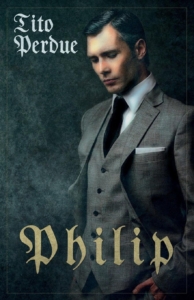
Doubling Down on the Art of Dying Review of Tito Perdue’s novel, “Philip”

Philip
Tito Perdue
Arktos, 2017

Each autobiographical novel conveys a writer’s hidden quest for his cryptic double. As a rule, the double always resides in the author’s close proximity. In the same vein a reader will fall in love with the author’s novel if he can detect in it bits and pieces of his own strayed-away double. In all of his novels Tito Perdue’s lead character, Lee Pefley, mirrors not just the author’s own feelings of gloom and doom, but also bears witness of what he sees as the unstoppable death of the West. Although the lead character is Purdue’s own double, he wisely avoids the personal pronouns ‘me’ or ‘I’, never indulging in his own hidden ego trips. Instead, Purdue uses a gallery of characters from everyday life—characters that an average reader can easily identify with. Surprisingly, in his latest novel, Philip, we do not meet much of Purdue’s double, i.e. his doppelganger Lee Pefley, although, toward the end of the novel, Lee does briefly show up, his main role being to berate Philip on ars moriendi—the art of dying.

The hero of the novel, Philip, who is past the age of 30, is a well-educated, well-groomed, and a good-looking Southerner. He holds the enviable position of a supervisor in a subdivision of a company dealing with international trade. Most of Philip’s employees are women who swoon each time he walks by their cubicles and who would be willing to strip naked in public in order to secure a romance with their boss. Philip, however, is not a womanizer; nor is he, despite his Southern charm, a sex-obsessed macho man. He is not after women; they are after him. Philip is quite content, however, with his choice—a rather aged New York hooker well-versed in the art of caring for his biological needs and who never ever bothers to investigate his hidden transcendental thoughts. Read more

Shakespeare’s Case for Marriage & (Eugenic) Procreation

Long before Darwin, our European ancestors often had a sense of the objective reality of heredity and of the moral duty of reproduction. A powerful example of this is provided by William Shakespeare’s so-called procreation sonnets (numbered 1–17), which ceaselessly exhort a mysterious, male young friend to marry and raise children.

Shakespeare argues that, for a good person, childlessness is a kind of selfishness: one’s personal qualities can only live on in one’s biological posterity. He tells his friend of “the true concord of well-tunèd sounds / By unions married” (8) and urges him to have a son and thereby “your sweet semblance to some other give” (13).

Shakespeare posits a eugenic instinct in men, whereby they are sexually attracted to beautiful women so as to perpetuate that beauty:

From fairest creatures we desire increase,
That thereby beauty’s rose might never die,
But as the riper should by time decease,
His tender heir might bear his memory (1)

For a good and beautiful person to not have children is a kind of selfishness, which Shakespeare compares to death, a barren tree, winter, and a loss for the world. The superficially pleasant and free life of the single means keeping one’s beauty all to one’s self; several times, the poet uses doubles entendre suggesting masturbation — and its barren end. This is selfish given that one’s personal qualities are a rare blessing from Nature:

Nature’s bequest gives nothing, but doth lend,
And being frank she lends to those are free:
Then, beauteous niggard, why dost thou abuse
The bounteous largess given thee to give? (4)

Shakespeare describes singles’ “self-love” as a “tomb” (3). He says of the unmarried: “of thee this I prognosticate / Thy end is truth’s and beauty’s doom and date [i.e., end-time].”  (14)

Read more

Did He Just Say That? A Review of “Someone Has to Say It: The Hidden History of How America Was Lost” by Tom Kawczynski

Someone Has to Say It: The Hidden History of How America Was Lost
Tom Kawczynski

Do you ever wonder what happened to America? Do you wonder how we went from a stable, prosperous land in the 1950s — a land whose cities were the jewels of the world with neighborhoods where no one locked their doors and an education system that was second-to-none — to a country where it isn’t safe to walk the streets at night, and where huge numbers of people graduate high school unable to read, but fully convinced that White heterosexual men (particularly those of the working class) are StupidEvilRacistSexistNazisWhoWannaKillSixMillionJews? Do you wonder where strident feminism came from? How about the “trans-gender” agenda? Do you wonder who’s behind the rise of militant black racism or open borders? Or why radical red guard-style communists, masquerading as “anti-fascists”, are free to roam our streets attacking any White person, they deem “racist”, or “sexist”, or “homophobic”, etc., with relative impunity? In short, have you wondered how we lost America?

In January of this year, Tom Kawczynski found himself at the epicenter of a manufactured national media firestorm designed to force him out of his position as the town manager of Jackman, a small community in rural northern Maine, for daring to ask these questions. Jackman’s loss was America’s gain. His forced resignation gave him the time to answer these questions and more.

In Someone Has to Say It: The Hidden History of How America Was Lost, Kawczynski weaves a tangle of apparently disparate threads into a sweeping historical account of the consolidation of globalist power that defines the history of the last century in the West; it tells the story of how we’ve become who we are. His slim (238-page), compelling “popular history” offers an expansive vision enhanced by his fluid style and sustained with remarkable clarity. It contains many insights, and touches upon every major issue of our time — from economics to the politics of identity, from the failure of our school system to the shadowy power of the “Deep State.” “This book is about the destruction of beliefs we once held”, Kawczynski writes, “and ideas that were important to us.” The following is a short list of just some of the topics about which our beliefs and ideas have been destroyed:

  • race
  • the battle of the sexes
  • the queer agenda
  • immigration
  • communism
  • socialism
  • World War II
  • hyper-taxation combined with federal mandates to local communities
  • the military-industrial complex
  • the security/police state
  • the controlled media
  • the myth of perpetual growth
  • invade the world/invite the world
  • the drug epidemic
  • the Kennedy assassination
  • respectable conservatives
  • technology
  • and much, much more

Read more

The Liberal/Left Tries to Shame/Guilt Everyone Associated with President Trump

Note: I wrote this a while ago—before the recent moral panic about Presidents Putin and Trump. But I thought I would post it because we should think about this phenomenon of trying to lay guilt trips (as it was termed in the 1960s) on anyone associated with Trump. It’s all part of the Civil War II scenario—polarization out of control; hatred and inability to communicate across the political divide. Turbulent times ahead.

*   *   *

Recently there’s been an upsurge in the left engaging in public displays of shaming and shunning public figures associated with the President Trump. Maxine “Impeach 45” Waters famously wants Trump allies to be shamed wherever they go—gas stations, department stores, and even their homes.

And the trend is catching on. Sarah Huckabee Sanders and Scott Pruitt were unceremoniously asked to leave restaurants. Kirstjen Nielsen (at her home) and Mitch McConnell and his wife, Transportation Secretary Elaine Chao got similar treatment. Jared and Ivanka have resorted to working out in a darkened gym to avoid the harassment. And then there’s the woman who confronted Steve Bannon in a bookstore, calling him a “piece of trash.” Right now it’s everyone from Kellyanne Conway to Stephen Miller facing hecklers wherever they go.

Sometimes it edges into violence. Breitbart tabulated 304 incidents of harassment or violence against Trump supporters since the election, all basically ignored by the media. Most of the victims are non-celebrities, like the teenager who was attacked by a Latino adult throwing soda at him and stealing his MAGA hat. Most pathetically, a woman who thanked Eric Trump for raising $16 million for St. Jude Hospital was subjected to “unreal hate” on social media. The trend is clear.

Put all that together, and it’s a powerful array against Trump. We’ll see what the polls say, but there’s no doubt that many pro-Trump voters will be troubled by accusations of treason and appeasing Russia in a way they wouldn’t about hostility toward Trump’s policies on immigration. As usual, this media furor is couched as a moral imperative. And although the public (especially Whites) are getting less and less susceptible to moralistic rhetoric, I suspect that this is not so much the case with accusations of disgraceful, treasonous behavior by the president. Read more

Labour’s Gas-Chamber Blues: Pink Berets vs “F***ing Anti-Semites”

You could call him a killing joke. I’m talking about Enver Hoxha, the communist dictator who ruled Albania with an iron hand from 1944 until 1985. Like Kim Jong-Un of North Korea, he was a joke outside his own domain and a murderous horror inside it. To outsiders, even his surname was comic: it was written with an x but was pronounced “Hojja.”

Maggie’s Choice: Protect children or assist paedophiles?

The pronunciation of his name spawned another joke. In the 1980s, the far-left London council of Islington was headed by a rich Jewish woman called Margaret Hodge. In tribute to her dictatorial ways, she was nicknamed “Enver.” But life was no joke for many children in the care-homes under Hodge’s control. The children were being abused by men like Peter Righton, the founder of the gay Paedophile Information Exchange (PIE), who once said: “Every Islington care-home manager knows I like boys from 12.” Righton’s tastes were shared by a network of homosexuals who flourished in the pro-minority regime of Islington Council.

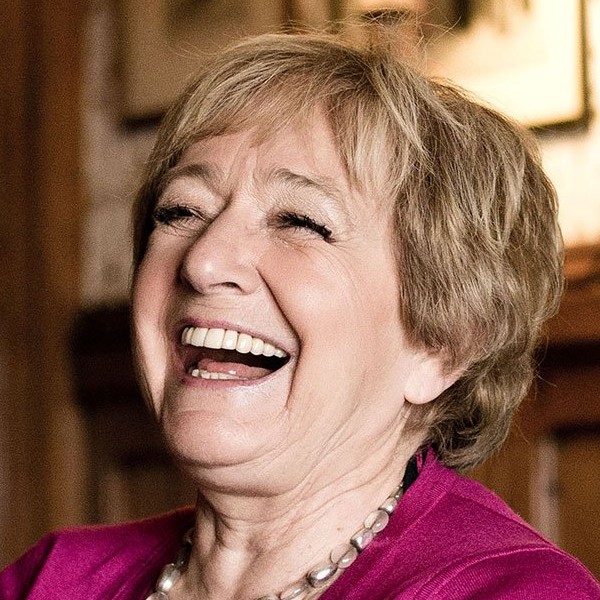
Dame Margaret “Enver” Hodge

When it comes to a choice between protecting children and assisting minority sex-criminals, Labour councils do not hesitate. They assist the sex-criminals every time. That happened in Rotherham with Muslim rapists and it happened in Islington with gay rapists. The Daily Mail reports that: “Staff who raised concerns were accused of racism and homophobia, and often hounded out of their jobs. Some … received death threats. Almost 30 council employees accused of child sex crimes were allowed to take early retirement (on generous pensions) instead of being subjected to formal investigations or referred to the police.” Hodge herself refused to fund proper investigations and condemned a newspaper report into the abuse as a “sensationalist piece of gutter journalism.” Read more

Investigating a Great (Though Flawed) Investigator

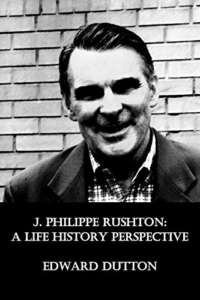
J. Philippe Rushton: A Life History Perspective


Edward Dutton
Thomas Edward Press, 2018
182 pages, $19.89 paper, free in Kindle

Ed Dutton has produced a significant critical study of the life and work of psychologist J. Philippe Rushton (1943–2012). As most readers of this site are aware, Rushton is famous for extending r-K Life History theory—originally developed for understanding animal behavior—to the three major races of mankind. As explained in his book Race, Evolution, and Behavior (1994), Black Africans have a faster (more “r”) “Life History Strategy” than the other races: they mature more quickly, do the least long-term planning, tend to produce a lot of offspring, but do not invest heavily in them. East Asians have the slowest (most “K”) strategy, with a late onset of sexual activity, more long-term planning, lower total fertility and a high-investment parenting style. Europeans are in between, but usually much closer to Asians than Africans. Higher intelligence tends to correlate with a slower life history.

Dutton’s study has two principle aims: to demonstrate that Rushton himself followed a fast life history strategy, and to assess his work in the light of biographical information and subsequent research. We shall begin with Dutton’s account Rushton’s family background and life, based upon his own genealogical research, interviews with many who knew Rushton, and access to Rushton’s unpublished autobiography.

Dutton’s research indicated that Rushton was not, as he believed, descended from the inventor Samuel Crompton. Moreover, his family history reveals a certain tendency to migration and out-marriage: his parents moved from the greater Manchester area to the southern coast of England, and his French name reflects his mother’s illegitimate birth to a French woman and a British soldier during World War I (the couple moved to England after the war, married, and had further children). Dutton argues that migration and out-marriage are consistent with the profile of “smart r-strategists.”

In 1948, Rushton’s family migrated to Durban, South Africa, where his father worked as a building contractor. In his autobiography, he mentions having an Afrikaner girlfriend during this period. Given that he was only eight when the family returned to England, this may not have been a terribly torrid romance, but Dutton notes that an early interest in girls is certainly characteristic of an r-strategist.

According to Rushton’s third wife, Elizabeth Weiss, “Phil mentioned that his parents left South Africa due to his father’s affair with the neighbor’s wife”—further evidence, according to Dutton, of r-strategizing in Rushton’s family background. Read more